

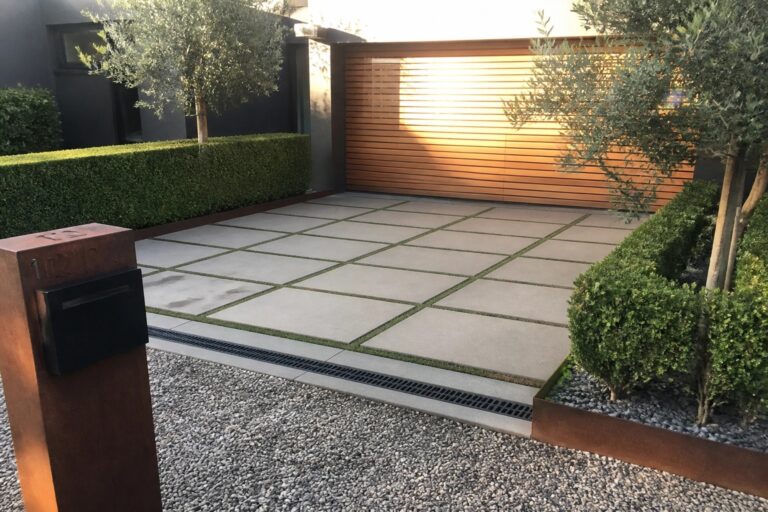
When I think about the front of a house, the parking area often sets the tone before anyone reaches the door.
Choosing tiles that handle cars and weather without looking worn takes some planning ahead of time.
Details matter more than expected.
It helps to see how these choices hold up once the seasons change and daily use begins.
I tend to test one material sample in my own space before committing to a full installation.
Concrete Pavers With Grass Joints
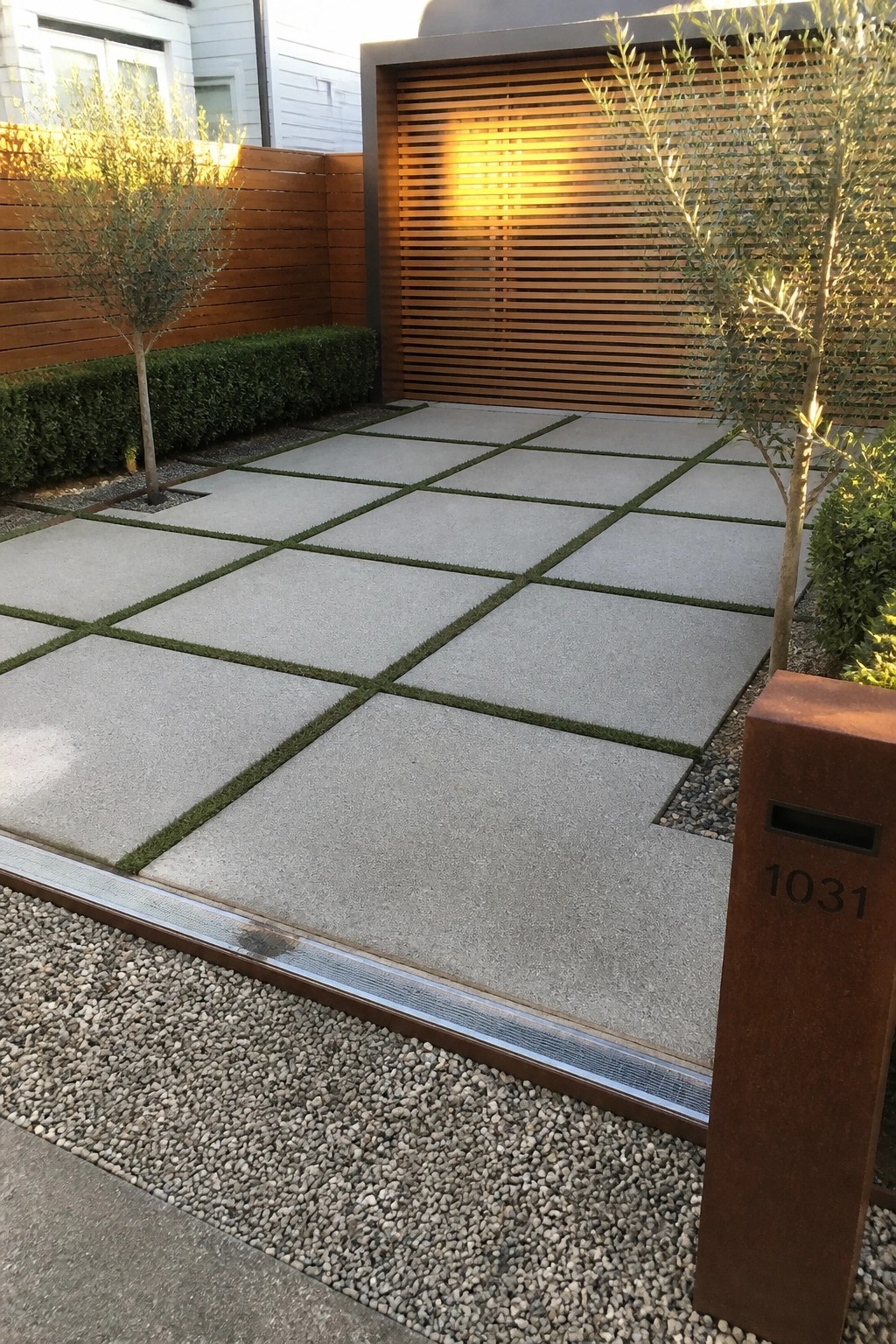
Large concrete pavers laid in a grid with grass running between them give a driveway a solid base without turning the whole surface into one big slab. The grass breaks up the gray and keeps the area from feeling too hard or industrial, especially when the rest of the yard has planting nearby.
This setup works best on homes where the parking area sits close to garden beds or lawn. Use thicker pavers rated for vehicle weight and pick a durable grass that can take occasional traffic. Keep the joints narrow enough so tires stay supported.
Stone Pavers For Driveways
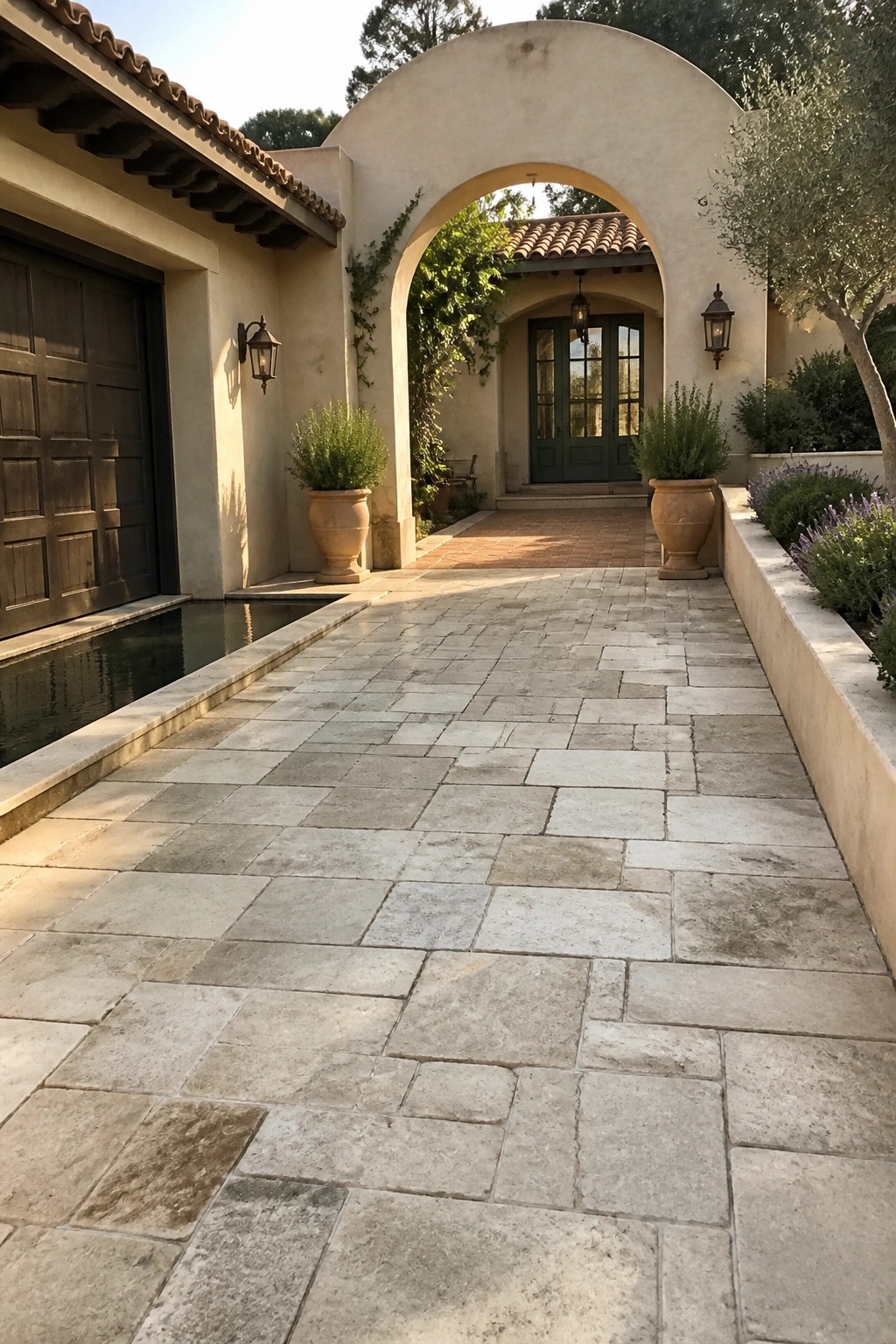
Many people default to concrete or asphalt for driveways because they seem practical. Stone pavers change that by giving the surface a softer, more natural look that still handles regular car traffic without trouble.
This works best on homes that already use stone or stucco on the exterior. The key is a solid base so the tiles stay level over time, and choosing a size and color that match the rest of the hardscape around the house.
Grid Tiles For Gravel Driveways

Gravel driveways often end up with ruts and scattered stones once cars start using them every day. Grid tiles underneath keep the surface stable while still letting water soak through instead of pooling.
They suit homes with long or sloped approaches where a solid pavement would feel too heavy. Lay the grids over a compacted base, fill with gravel, and the area stays firm without changing the loose look most people want.
Mixing Brick Pavers With Gravel For Driveways

Brick pavers hold up well under cars while still giving a driveway a finished look. The red bricks here create a solid surface that feels intentional, and the gravel strips on either side help with drainage and keep the whole thing from looking too heavy.
This approach works best on homes where the driveway sits right next to garden beds or stone walls. Keep the brick area just wide enough for tires and let the gravel handle the edges so water can move through instead of pooling. It suits older houses or properties with natural landscaping better than solid concrete.
Linear Tiles For Side Yard Paths
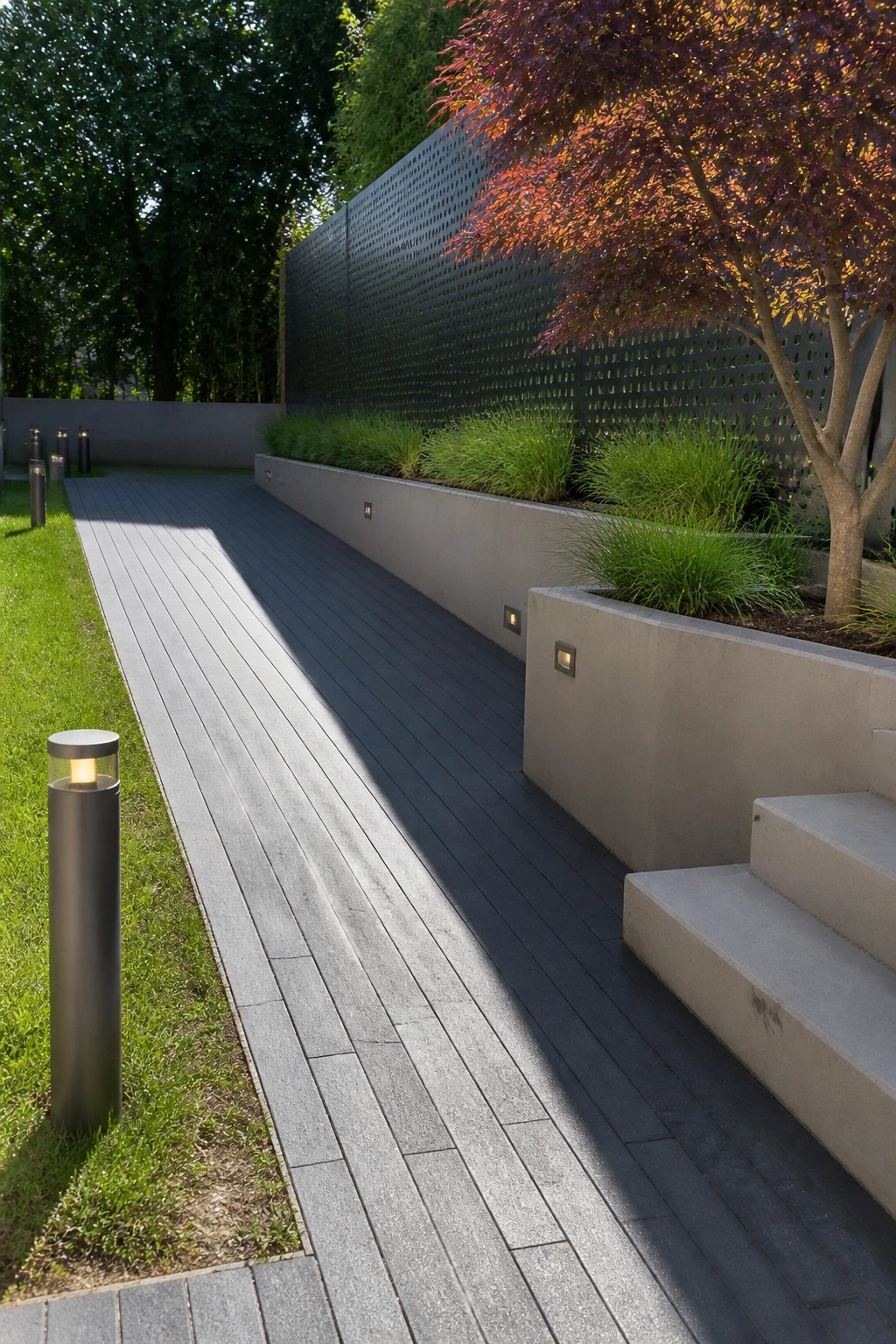
Linear tiles give a side yard or narrow garden path a clean, usable surface without making it feel too wide or heavy. The straight runs keep foot traffic directed and make mowing or edging simpler on either side.
This approach works best on long, slim lots where you need reliable access to the back but still want the area to look intentional. Keep the tile width modest and let low plantings or a single row of grass soften one edge so the path blends into the garden rather than dominating it.
Large Neutral Tiles Keep Patios Simple

Large stone tiles in a soft beige tone give an outdoor area a steady base without drawing attention away from the planting. They handle regular use, drain well after rain, and age evenly in sun.
This choice suits homes with dry gardens or Mediterranean-style layouts. Lay the tiles in a straightforward grid and let the beds and trees provide the main interest rather than adding extra patterns or borders.
Large Format Pavers For Driveways

Large pavers give a driveway a finished look without feeling too fussy. The smooth surface handles cars and weather well, and the simple gray tone blends with most house styles.
They work best on homes with a modern or minimalist feel. Add a built-in drain strip down the center to manage water, and keep the edges simple with gravel or low plants so the paving stays the main feature.
Hexagonal Tiles That Let Moss Grow

Hexagonal grid tiles work well when you want a solid surface for parking or walking but still like the look of greenery underfoot. The open centers let moss or grass take hold naturally, so the area feels softer than plain concrete while still handling regular use.
These tiles suit homes with shady side yards or driveways where full lawn would struggle. Keep the base level and well drained so the plants stay healthy, and sweep away heavy debris now and then to keep the pattern clear.
Stone Paths With Irregular Pavers
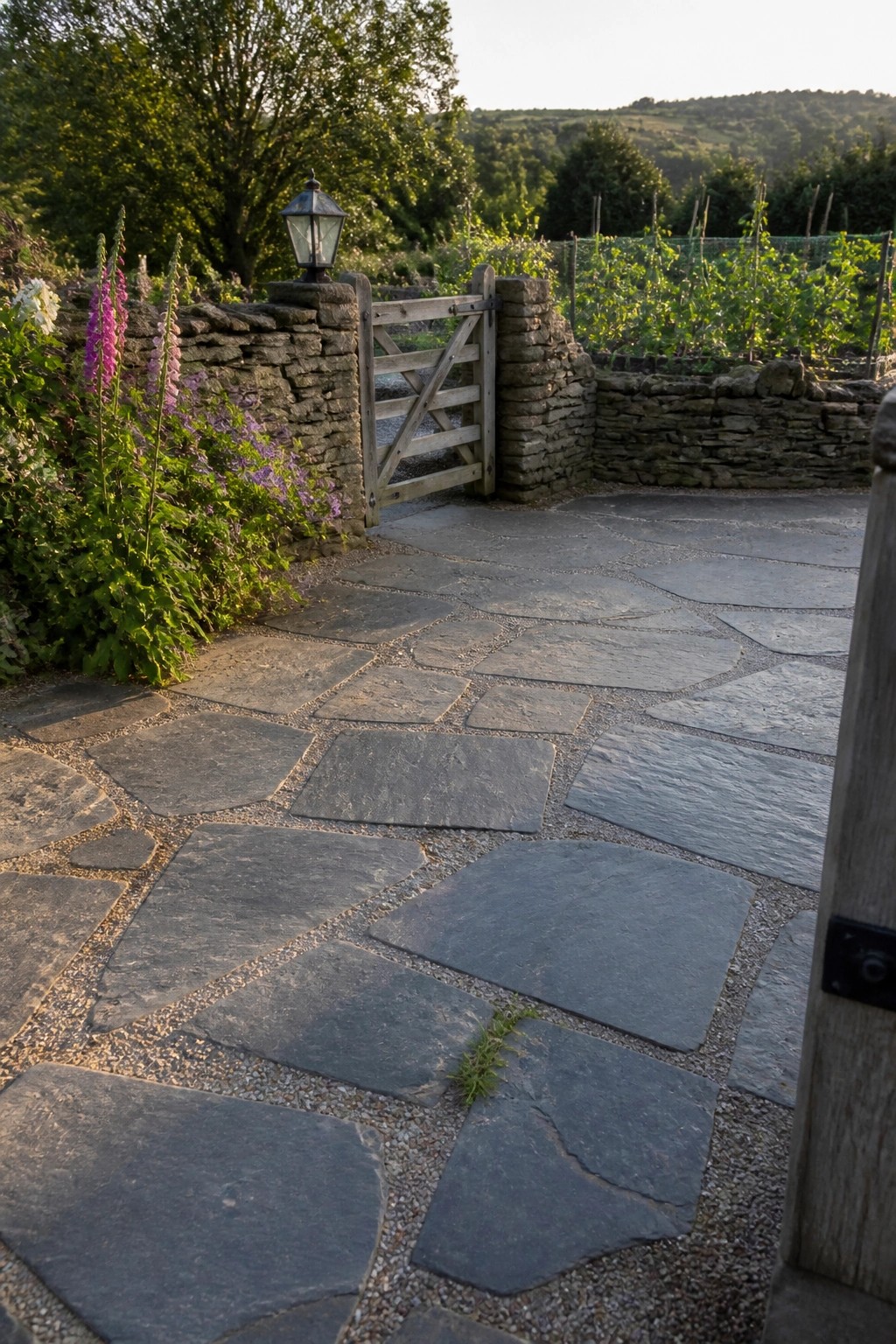
Irregular stone pavers work well for garden paths because they stand up to daily use while blending into the landscape. The uneven shapes and gravel joints help water drain away instead of pooling on the surface.
This approach suits homes with existing stone walls or larger garden areas where a natural look matters more than a perfectly straight line. It is worth checking that the base is properly compacted so the pavers stay level over time.
Grass Grid Pavers For Driveways

Grass grid pavers give you a parking surface that still feels like part of the lawn. The open grid lets grass grow through while the structure underneath supports regular car traffic without turning the whole area into a hard slab.
This approach works best on homes with space to blend the driveway into surrounding plantings rather than treating it as a separate paved zone. Make sure the base is compacted well so the tiles stay level over time.
Grass Infill Pavers For Entries
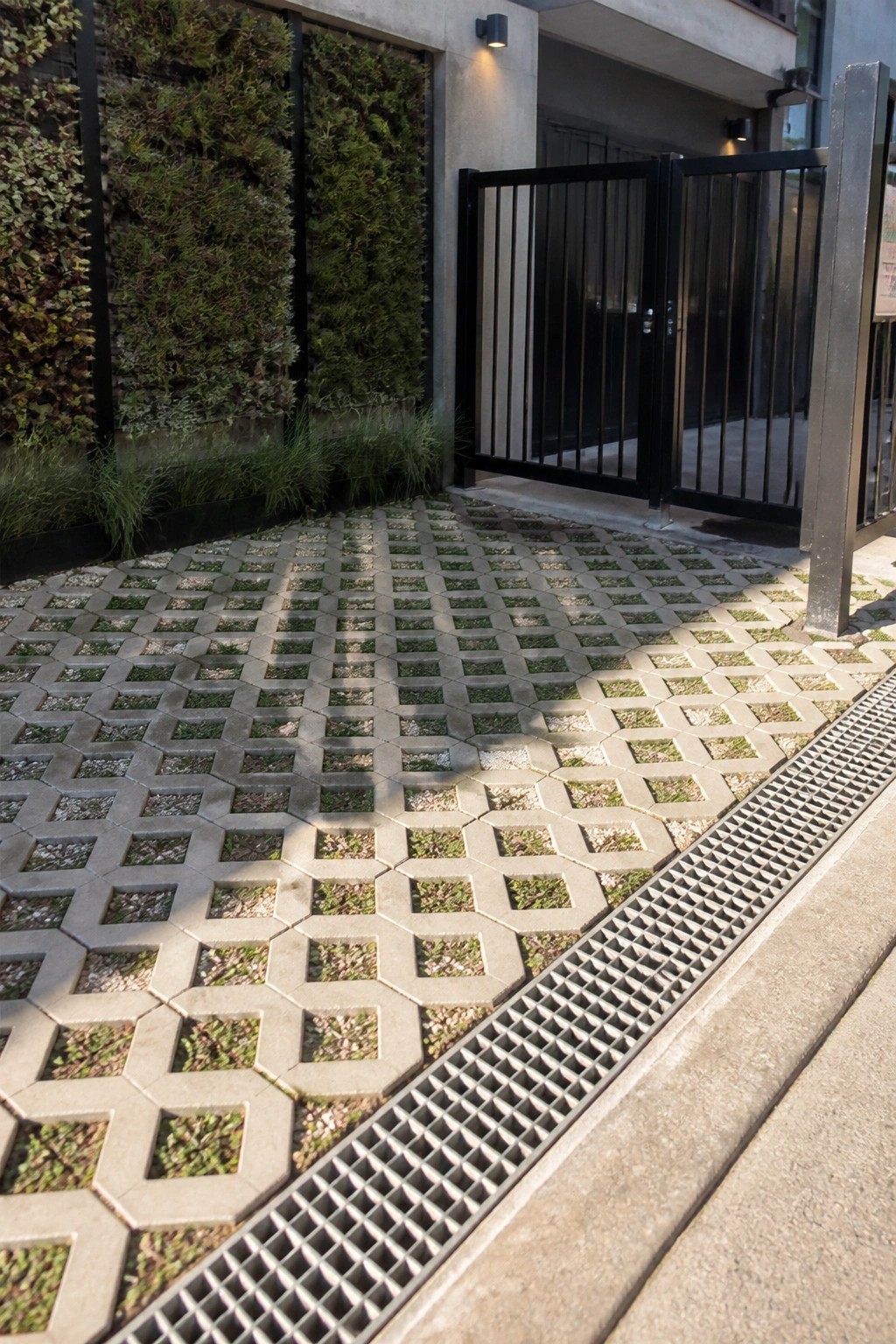
These grid style pavers let small plants and grass grow right through the open sections. That mix of hard surface and soft green keeps the area looking less stark while still handling regular foot traffic and light vehicle use. The built in gaps also help water drain straight down instead of pooling on top.
They work well along side entrances or narrow drive strips where you want something tougher than lawn but softer than solid concrete. Just make sure the base underneath allows proper drainage and pick plants that can handle some shade and occasional stepping on.
Brick Pavers For A Curved Driveway
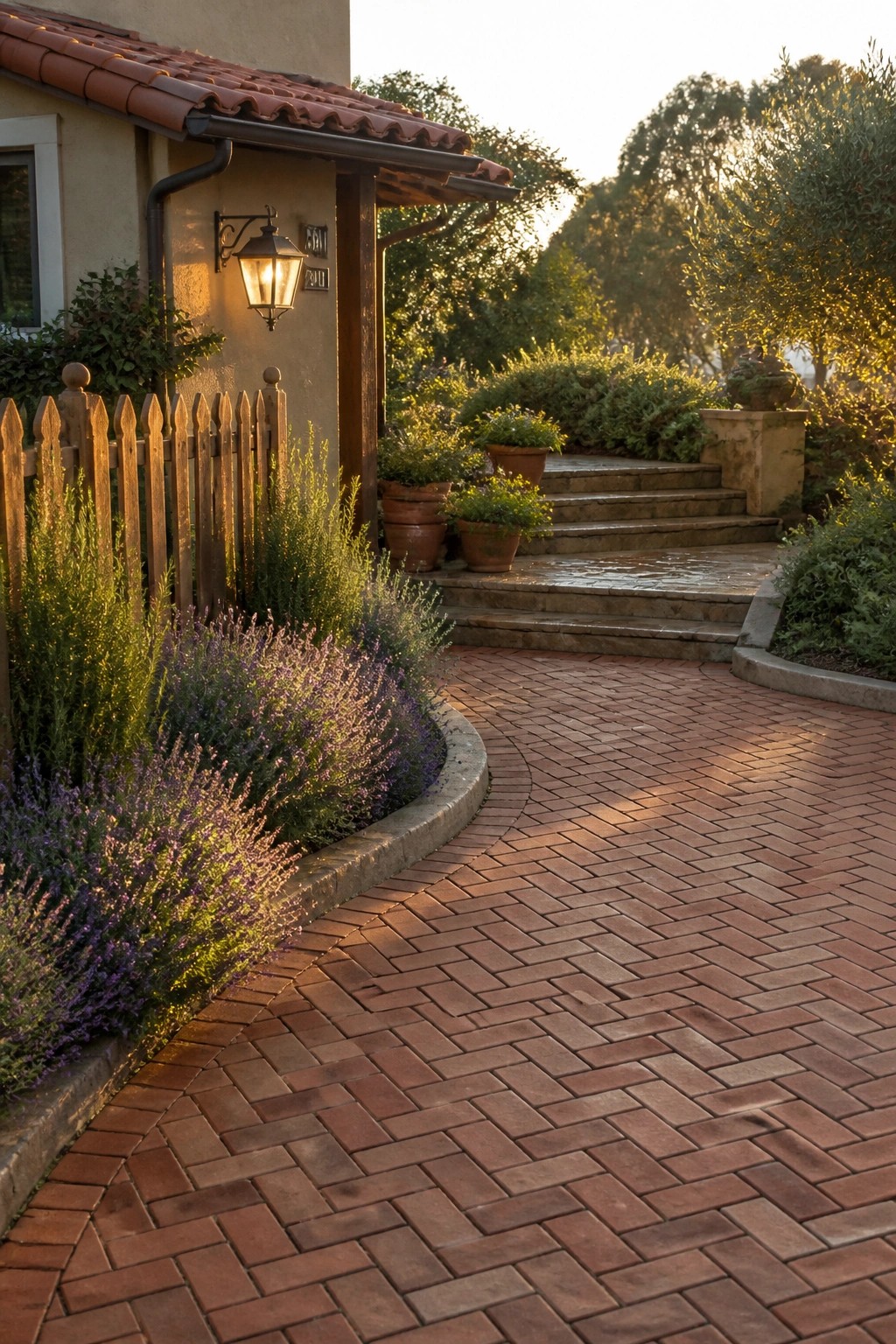
Brick pavers give a driveway both strength and a finished look that works with older homes. The pattern holds up under cars while the warm color softens the whole approach. Many people like how the material ages without looking worn.
This choice suits homes with stucco walls or simple landscaping. Keep the edge clean where the bricks meet planting beds so the curve stays neat. Avoid tight turns if your site has a steep slope, since the pavers need a solid base to stay level over time.
Driveway Paving With Built-In Drainage
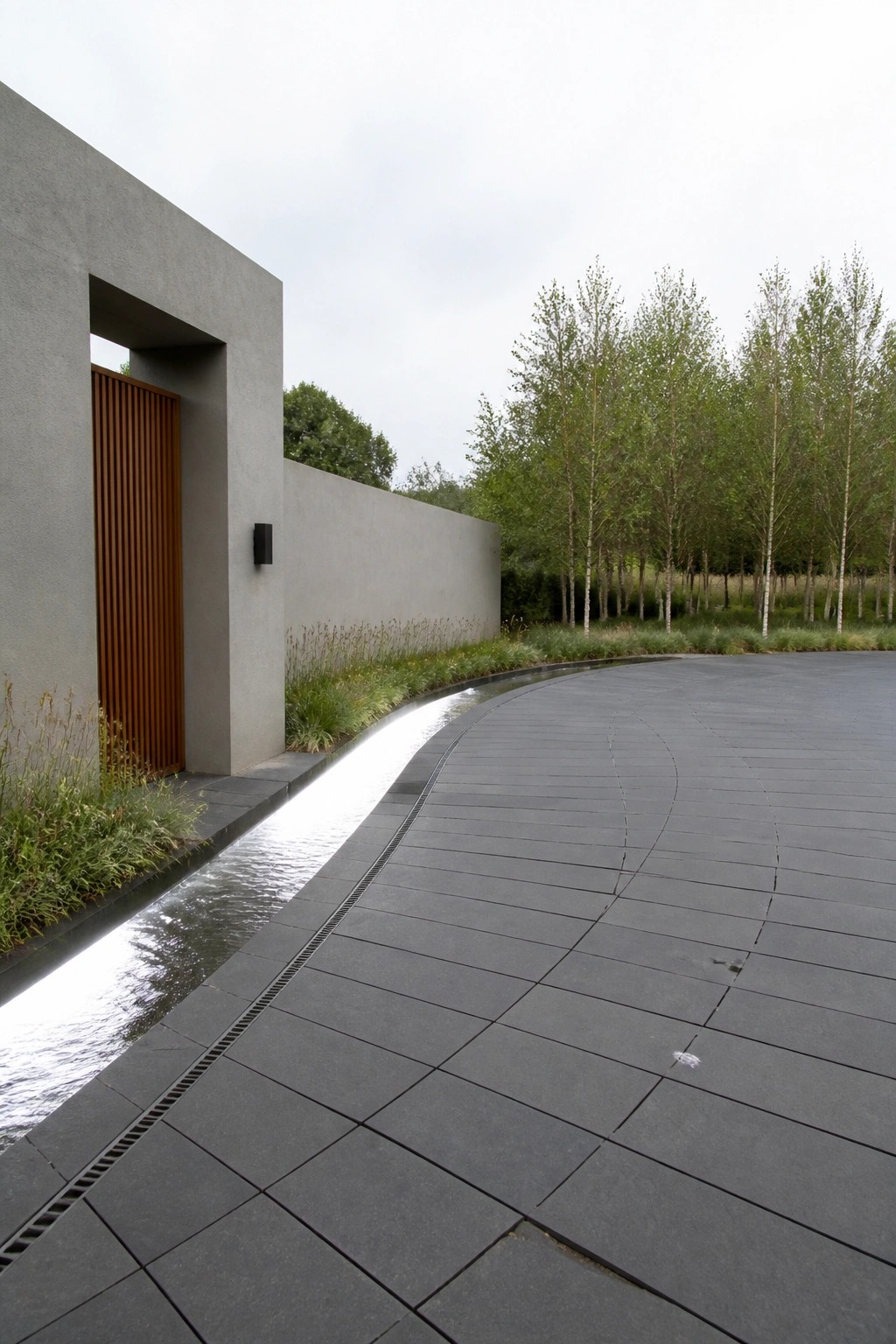
Large dark tiles can make a driveway feel more like an extension of the house rather than a separate surface. The color stays understated and the size of the tiles reduces the number of joints, which keeps the whole area looking smoother even after years of use.
This setup works best on modern homes that already use concrete or similar tones on the exterior. It handles water well when paired with a linear drain along the edge, though it needs a slight slope so runoff moves toward the channel without pooling.
Large Concrete Pavers With Gravel Strips

Many driveways look better when they are broken up into big sections rather than poured as one solid slab. The gaps let water drain through and stop the surface from feeling too heavy or plain.
This layout works well on modern homes with simple landscaping. Keep the pavers thick enough for vehicles and choose a gravel size that stays in place without much sweeping.
Blend Grid Tiles With Raised Beds
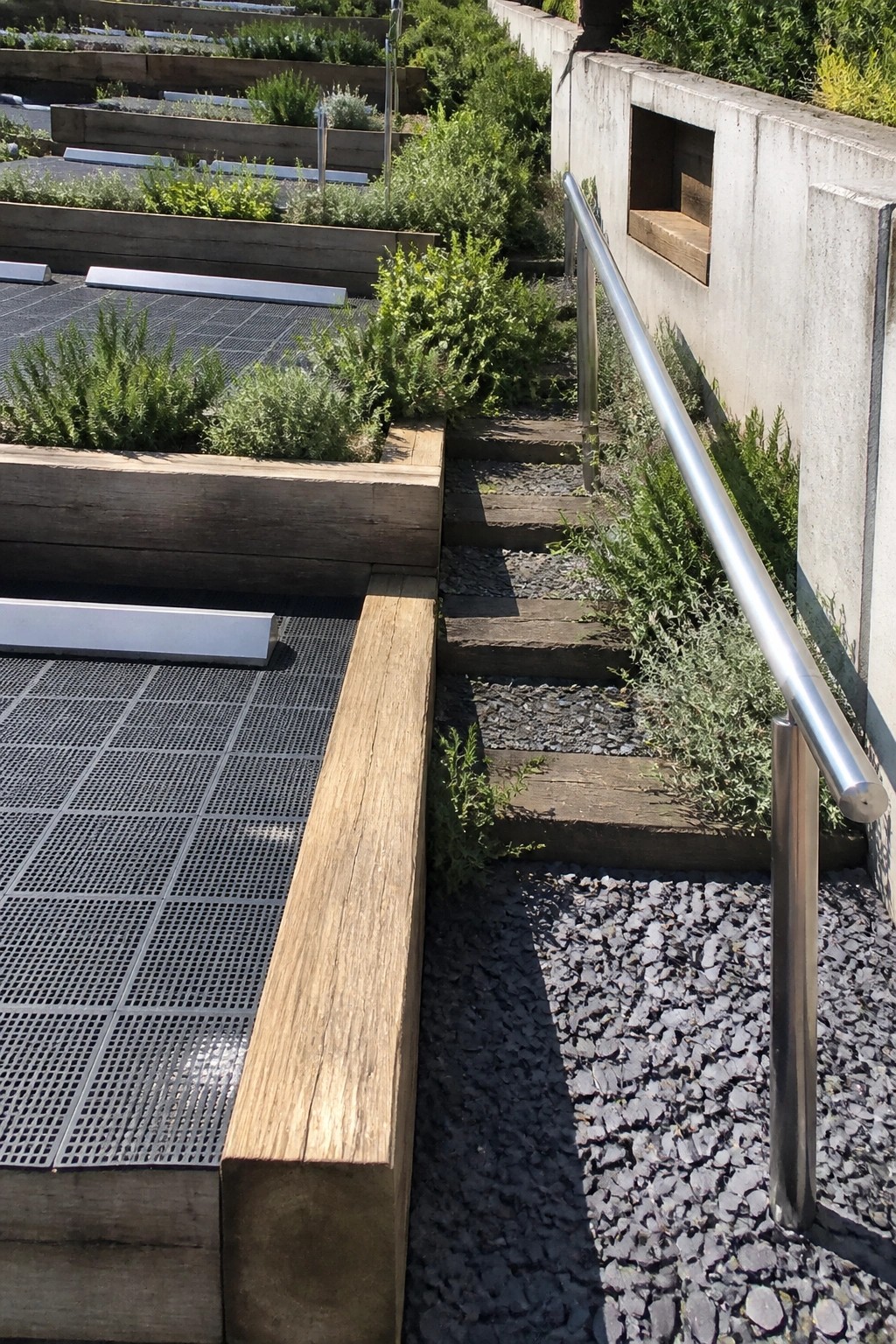
Grid tiles give you a solid surface that still drains well, which makes them useful right next to planted areas. In this setup the tiles sit flush with the wooden beds, so you get a clean walking or parking spot without losing the garden feel. The contrast between the dark grid and the wood keeps things simple and practical.
This works best on smaller lots or side yards where you need access but do not want a full concrete pad. Keep the beds low and line them up with the tile edges so the whole area reads as one space instead of separate zones.
Cobblestone Paving for Access Areas
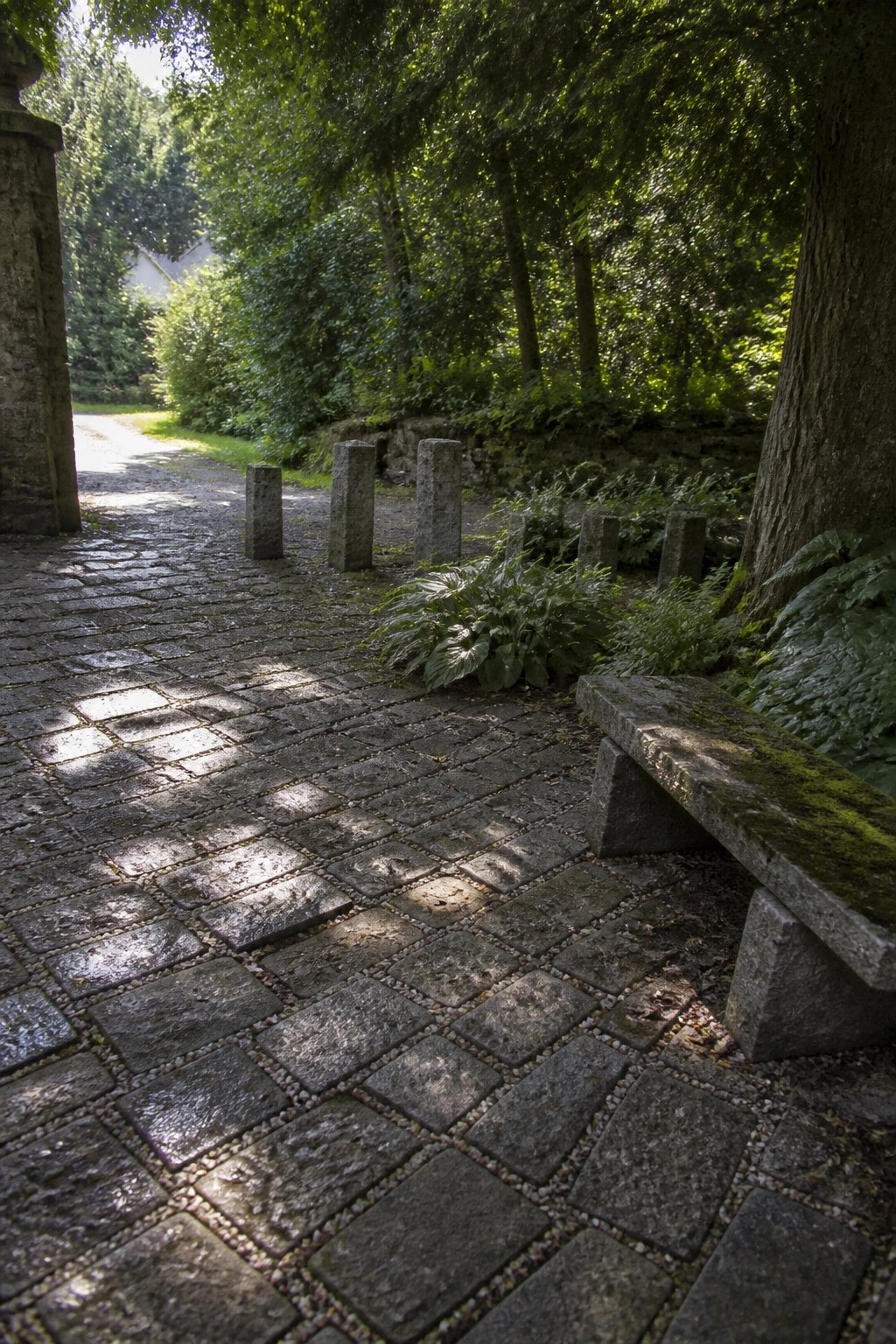
Cobblestone paving works well when you need a surface that can take regular foot traffic or light vehicle use without looking worn down quickly. The uneven texture and tight pattern help it stay stable over time while still feeling like part of the garden rather than a plain slab.
This approach suits older homes or properties where the driveway or side path needs to blend with trees and planting beds. Keep the stones consistent in size and color so the surface reads as one clean layer instead of a mix of materials.
Grid Pavers With Grass Infill

This approach uses a simple grid of concrete squares with grass growing in the gaps. It gives you a solid surface for cars or foot traffic while keeping the look of a lawn instead of a solid slab of pavement. Many people like it because it feels softer on the eyes and still handles daily use without turning into a mud pit in wet weather.
It works best on homes with a short driveway or a wide front approach where you want some greenery. Make sure the base is properly prepared so the pavers stay level over time, and choose a grass type that can handle occasional weight. The pattern in the photo shows how clean the lines stay when the spacing is kept even.
Solar Tiles Built Into Pathways
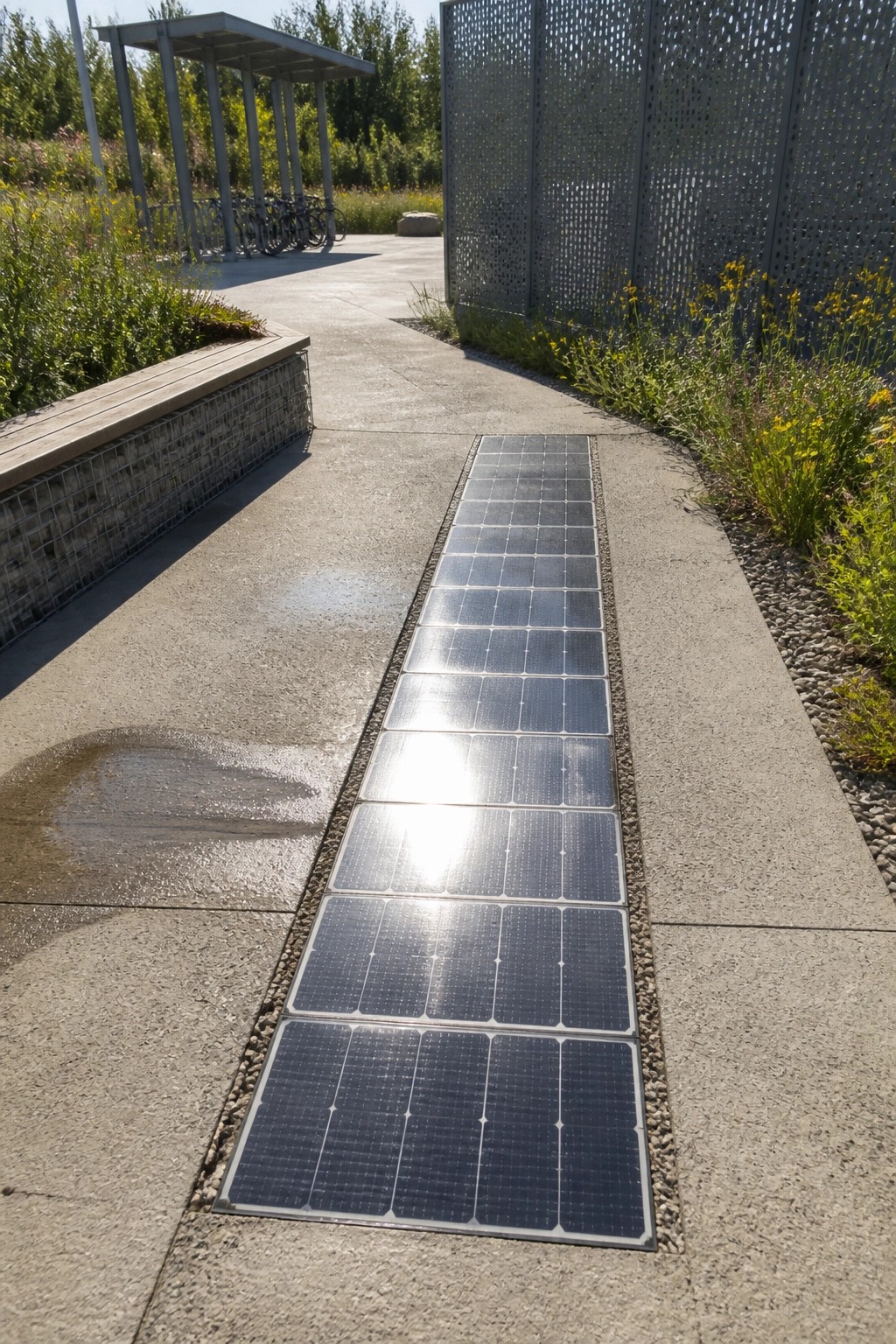
Solar tiles set right into a walkway give you a surface that produces power without taking up extra space. They work especially well in areas that already need paving, like garden paths or side entries.
This approach suits homes where you want renewable energy but prefer to keep the look clean and modern. Just make sure the site gets enough sun and that the tiles can handle foot traffic over time.
Natural Stone Pavers For Driveways

Natural stone pavers give a driveway real staying power without looking like a plain slab of concrete. The small rectangular blocks lock together tightly, handle car weight well, and sit comfortably next to stone walls and garden beds.
They suit older homes or cottages where the goal is to keep the whole front area feeling connected rather than split between house and parking space. Proper base preparation matters most here, since a solid foundation keeps the surface level for years.
Large Dark Pavers For Driveway Surfaces
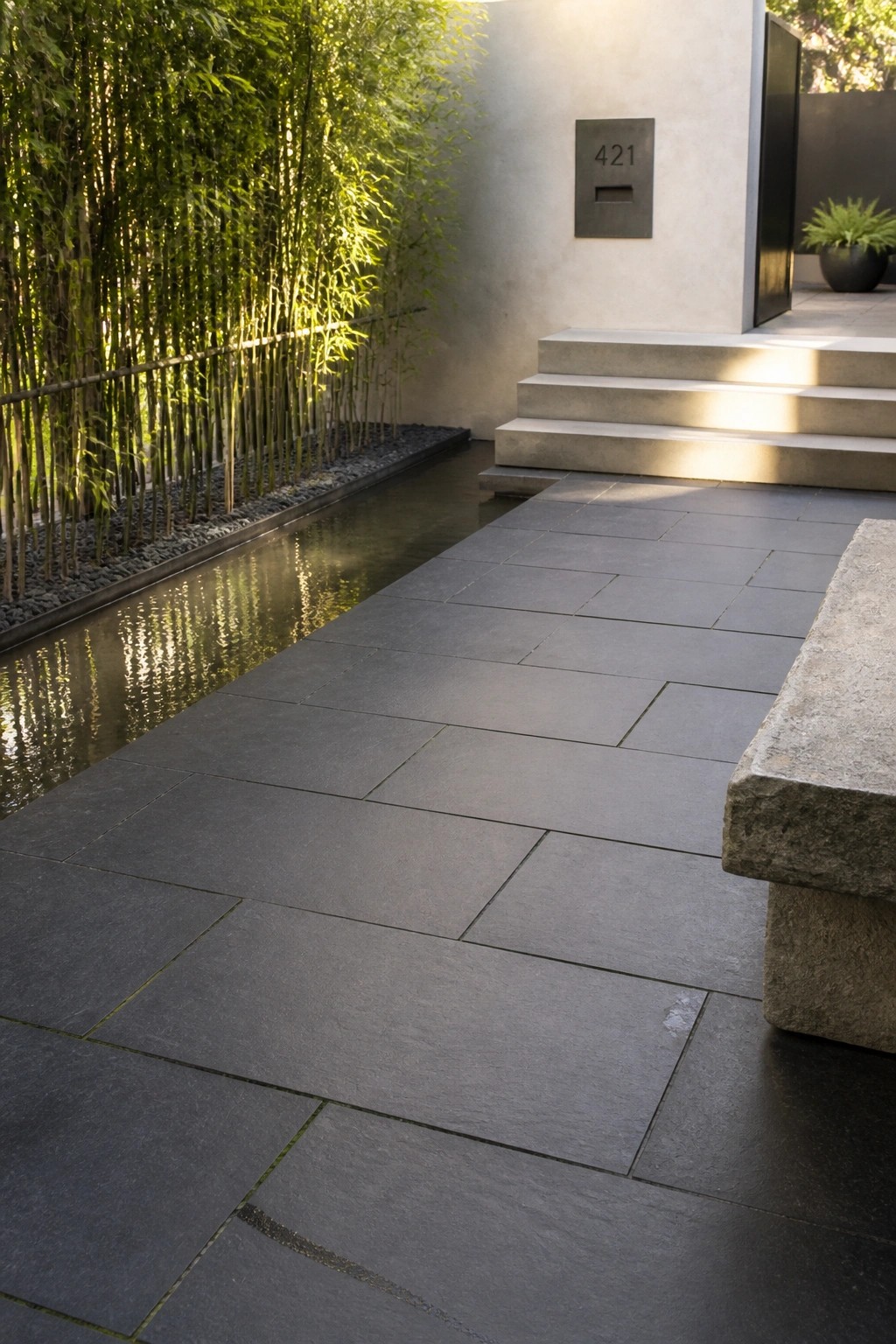
Large dark stone tiles give a parking area a solid, finished look without drawing too much attention. They handle daily use well and pair easily with nearby planting or water features, keeping the whole space feeling calm and put together.
These tiles work best on homes with modern or minimalist exteriors where you want the paving to blend into the landscape rather than stand out. Stick to a single color and keep the layout simple so the surface stays easy to maintain and does not fight with the rest of the garden.
Durable Stone Tiles For Driveways

Large format stone tiles make a parking area feel more like an extension of the garden than a separate hard surface. They hold up to regular car traffic while giving the space a clean, grounded look that pairs easily with nearby planting beds.
These tiles work best on homes with a modern or minimalist style where you want the driveway to blend into the landscape rather than stand out. Just make sure the base is properly prepared for weight and that the joints allow for drainage so water does not pool on the surface.
Frequently Asked Questions
Q: How do these tiles hold up in freezing weather?
A: Pick tiles rated for cold climates. They expand and contract without cracking. You just check the joints each spring.
Q: Can I mix different styles in one spot?
A: Start with a simple border of one style. Fill the middle with another that matches the color. This creates interest without clashing.
Q: Do I need special tools to cut them around curves?
A: Measure twice and mark the curve on the tile. Use a wet saw for clean edges. Then fit them snug so nothing shifts.
