

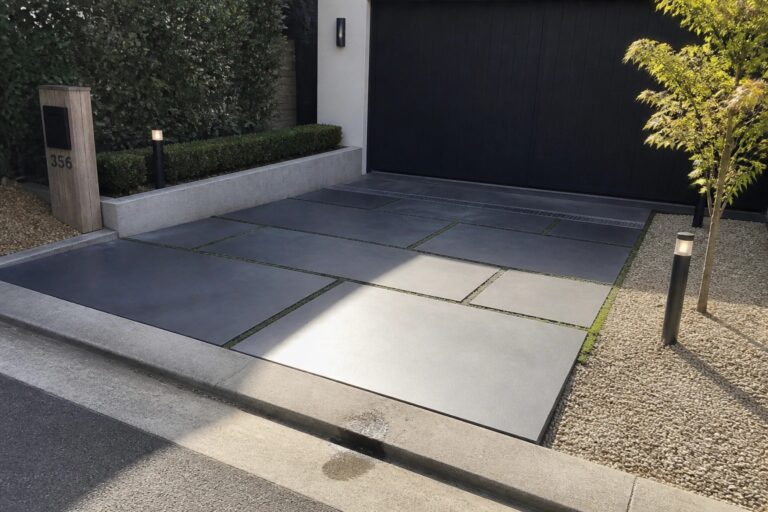
When I look at homes, the parking area often stands out more than the walls or roof because it sits right at the front.
Patterns in the tiles can shift how the whole front feels without touching anything else.
A simple grid works in some cases.
I have found that mixing directions or adding borders gives more depth once the cars are parked.
Testing a couple of these in your own space shows quickly which ones feel right for the way you use the area.
Oversized Pavers With Grass Joints
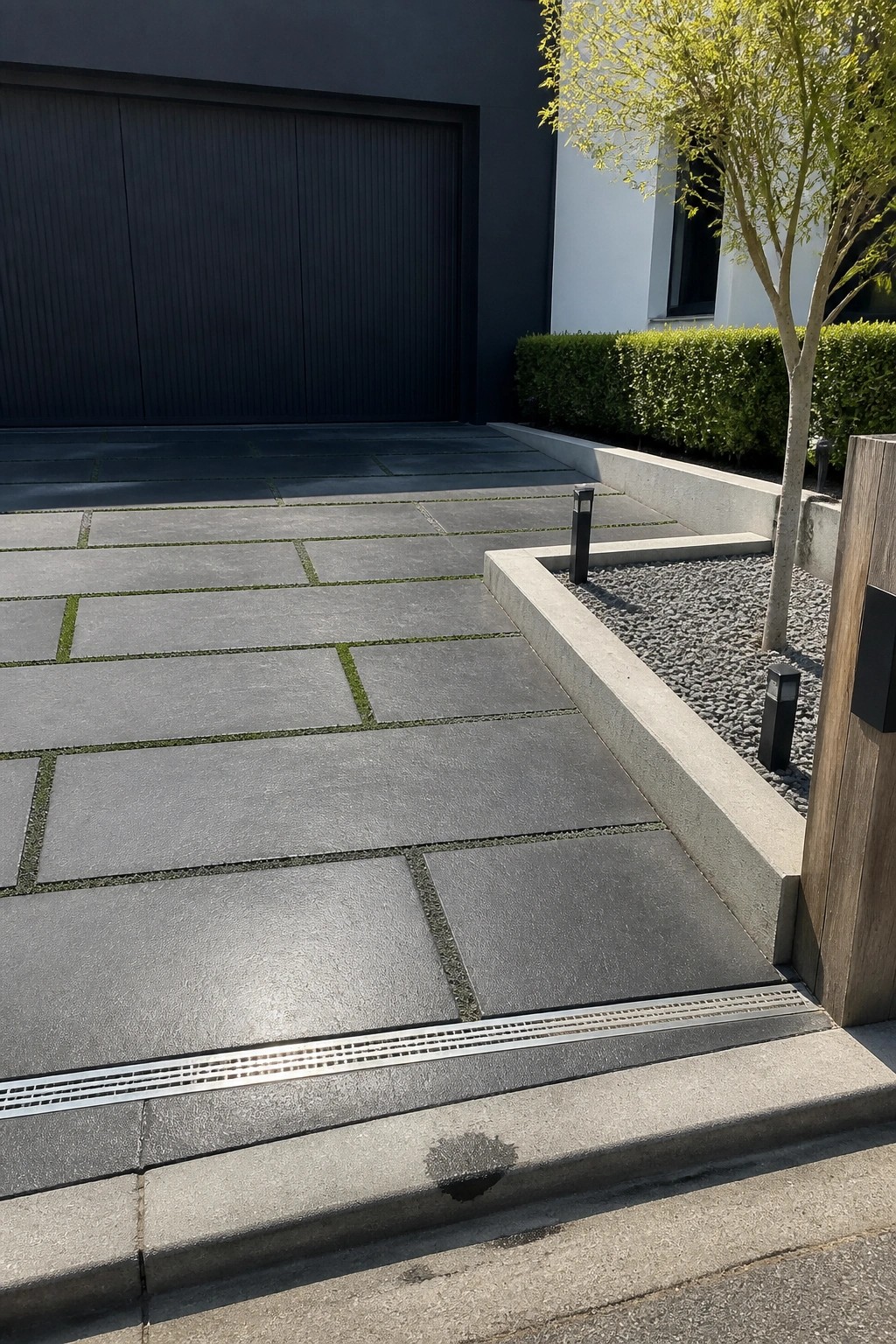
Large rectangular pavers laid in a grid give a driveway a clean, structured look without feeling too rigid. The narrow strips of grass between the tiles soften the surface and help it blend with nearby planting beds. This approach works especially well on modern homes where you want the hardscape to feel intentional but not overpowering.
It suits homes with straight architectural lines and smaller front yards where a full concrete slab would look too heavy. Keep the joints narrow so the surface stays stable for cars, and choose a paver color that matches the house exterior. The result stays practical while adding a bit of texture that plain asphalt or poured concrete usually lacks.
Circular Medallions In Paved Paths
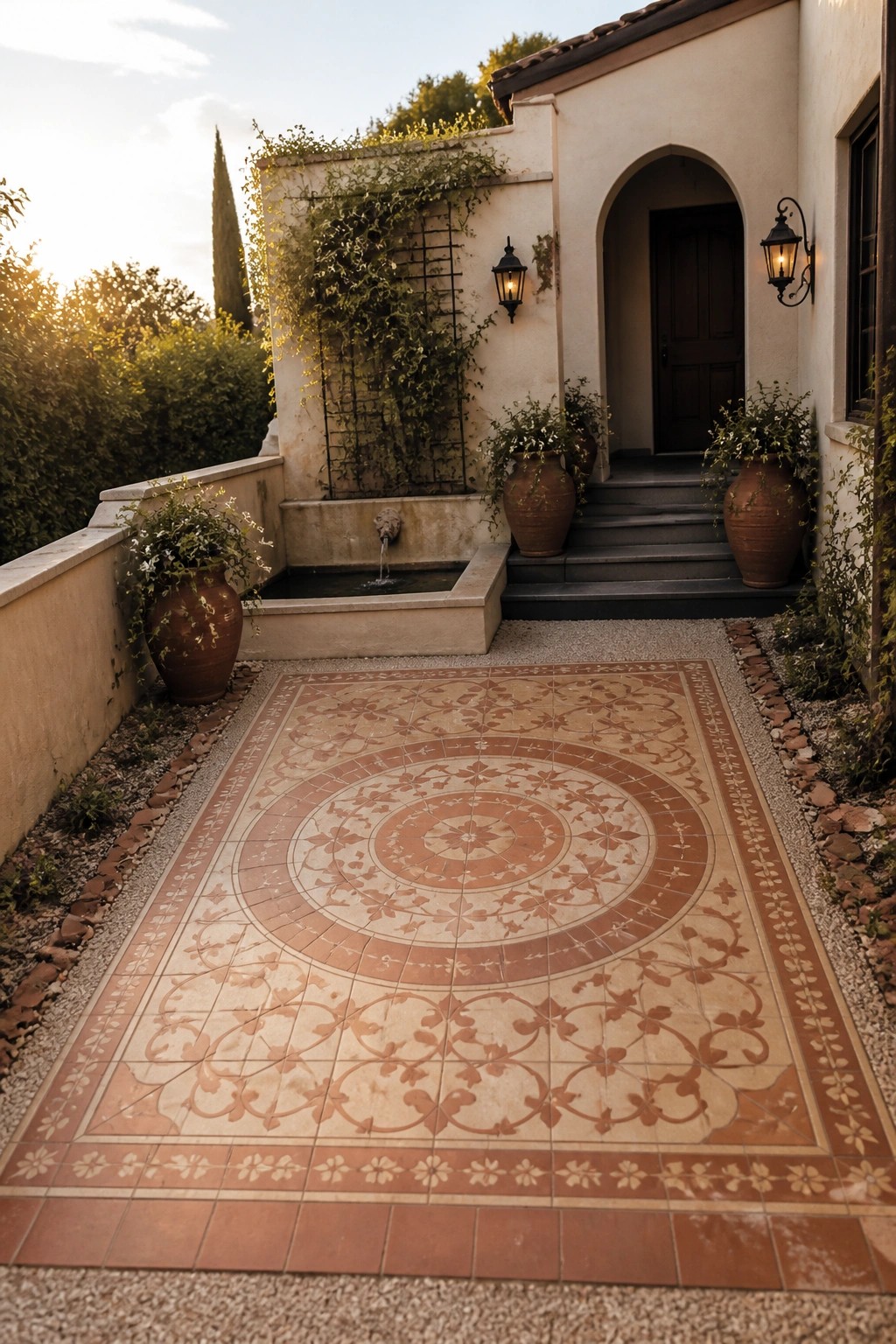
A large circular tile pattern like this one gives a walkway real presence without needing extra features or plants. The design draws the eye along the length of the path and makes the approach feel more intentional than a plain rectangle of pavers would.
This style works best on wider paths where the full circle can show, such as front entries or side courtyards on Mediterranean or traditional homes. Keep the surrounding tiles simple so the center medallion stays the main point, and make sure the grout color blends rather than fights the pattern.
Checkerboard Patterns in Brick and Stone
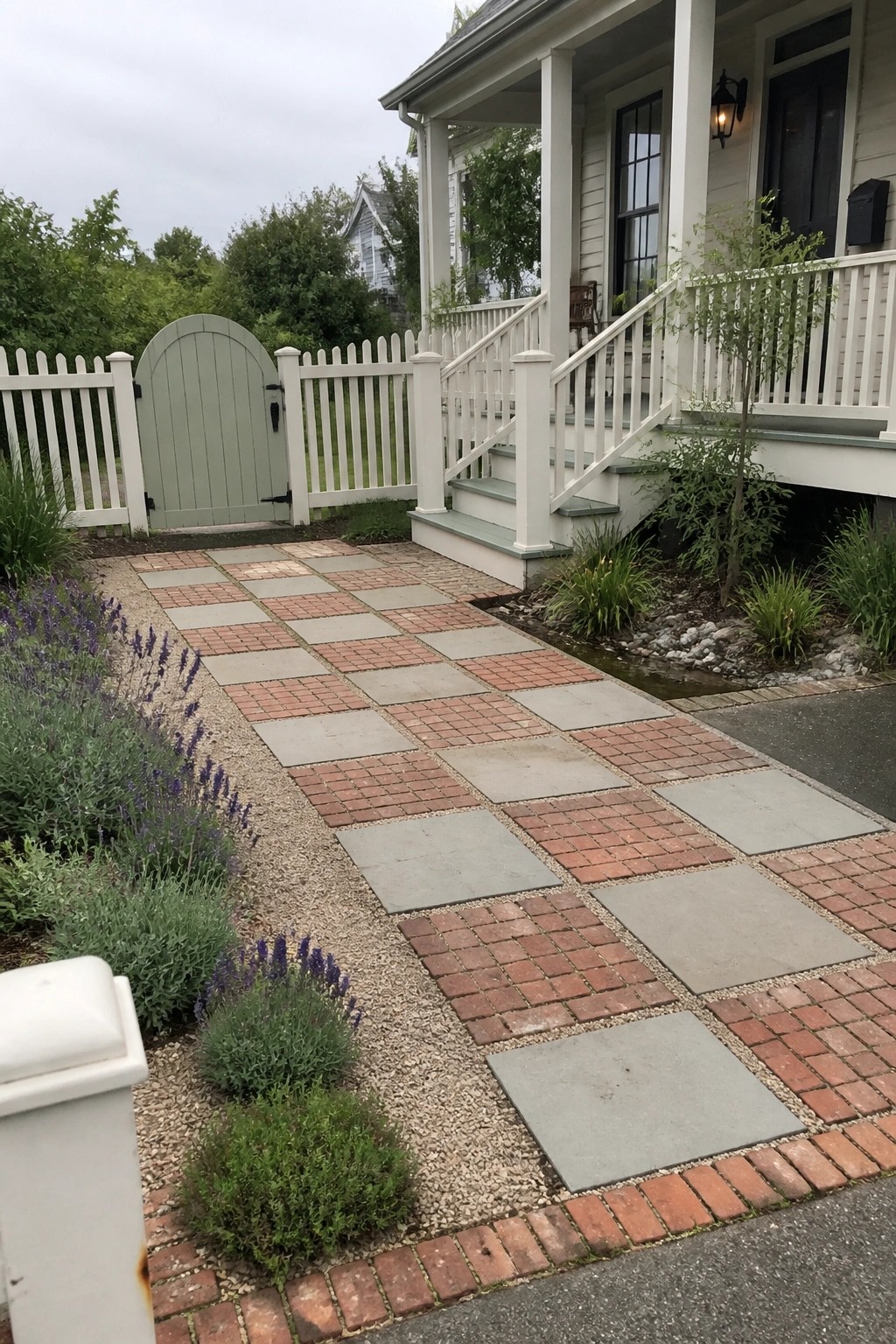
A grid layout like this one keeps a long path from feeling too plain while still looking practical for daily use. The mix of smaller brick sections and larger stone slabs adds some texture and helps the surface drain better than solid concrete.
This approach works best on straight walkways or narrow driveways where you want a bit of pattern without a lot of upkeep. Stick with materials that sit at the same height so the surface stays smooth for cars and feet.
Hexagonal Tiles In Cool Blues
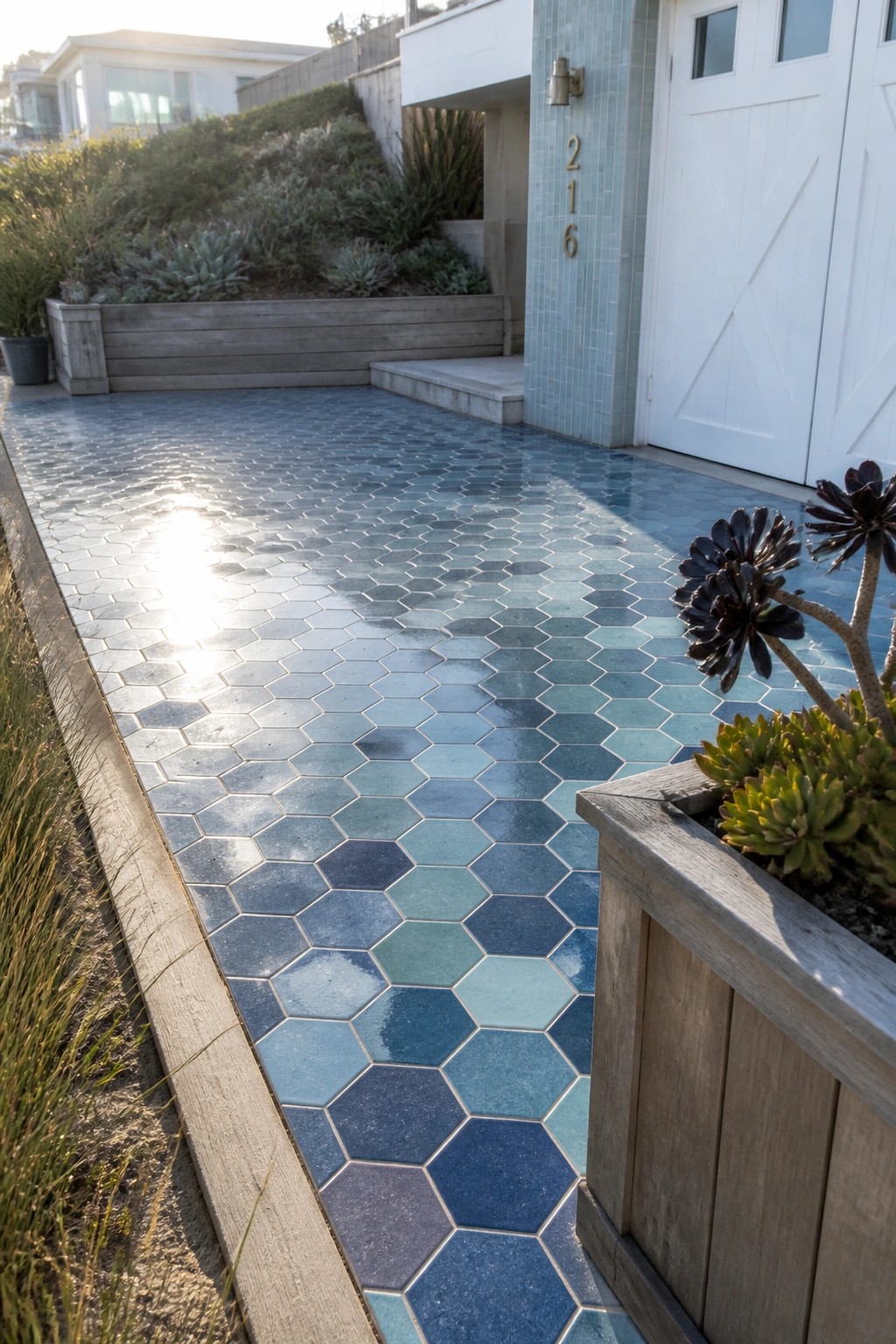
A driveway covered in small hexagonal tiles in different shades of blue turns a plain parking spot into something more interesting. The repeating pattern adds color without feeling busy, and the cool tones keep the whole entry area feeling calm and connected to the garden beds nearby.
This approach works well on homes with a modern or coastal style where you want the hardscape to stand out a little but still look practical. Choose outdoor-rated tiles that can handle cars, and keep the layout simple so the pattern does not fight with the house colors or nearby plantings.
Angled Pavers With Gravel Lines

Large concrete slabs set at angles and divided by narrow gravel strips can turn a plain walkway into something more interesting. The pattern breaks up the straight line of a narrow path and keeps the surface practical for regular use. It works especially well in side yards or access areas where a solid slab would feel too plain.
This approach suits homes that need a durable path but want a bit more shape without extra materials. Use bigger slabs so the angles read clearly and keep the gravel lines narrow and consistent. It holds up in most climates and stays low maintenance as long as the base is solid.
Striped Pavers For Driveways
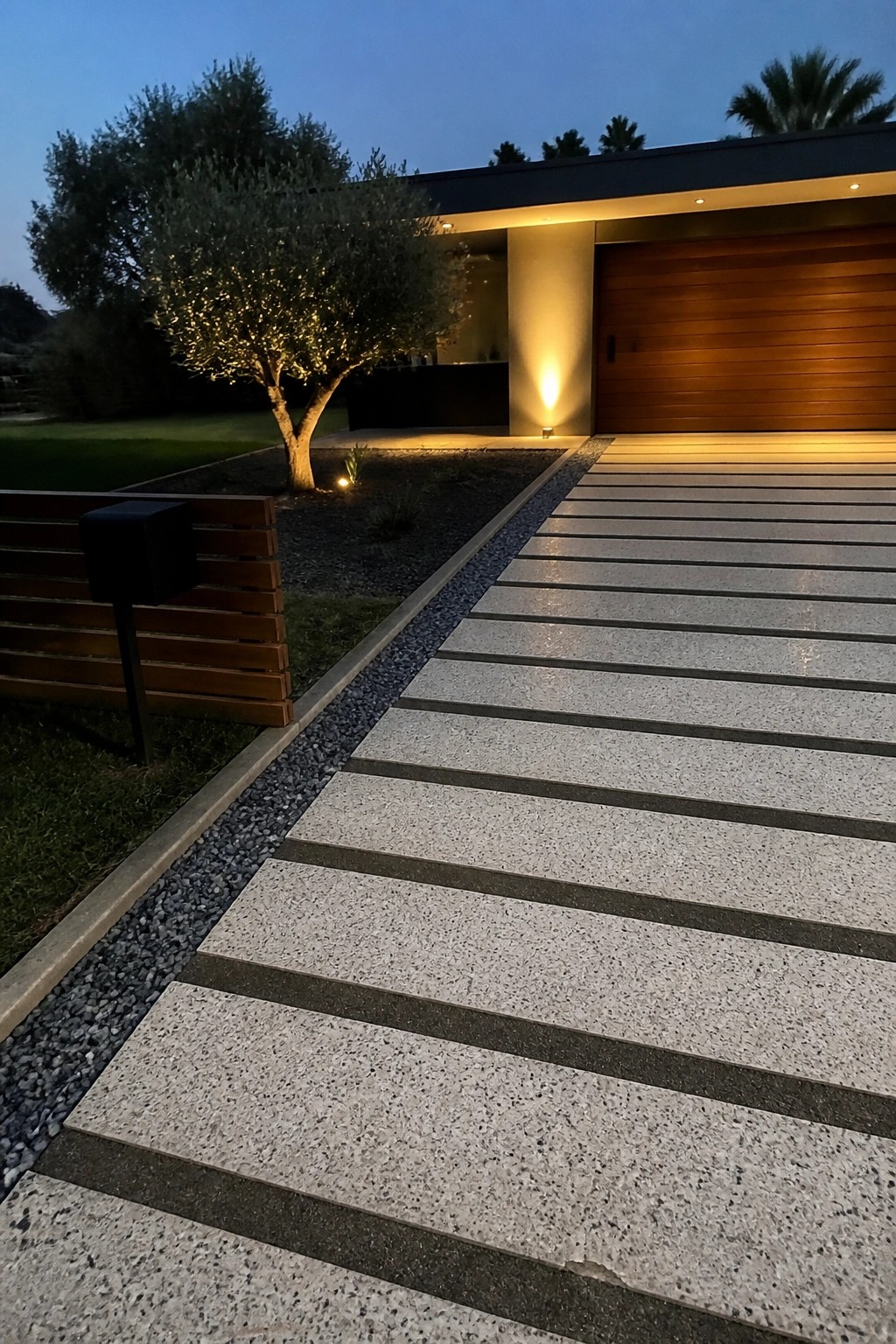
Many people use solid concrete for driveways because it is simple and durable. Adding parallel stripes breaks up the surface without adding much extra cost or maintenance. The pattern gives the driveway a bit more direction and keeps it from looking like a flat slab.
This works best on modern or minimalist homes where the lines can echo other straight details on the house. Keep the stripes fairly wide and space them evenly so the pattern stays calm rather than busy. A gravel or planted edge on either side helps the stripes stand out without extra decoration.
Herringbone Brick for Driveway Paving
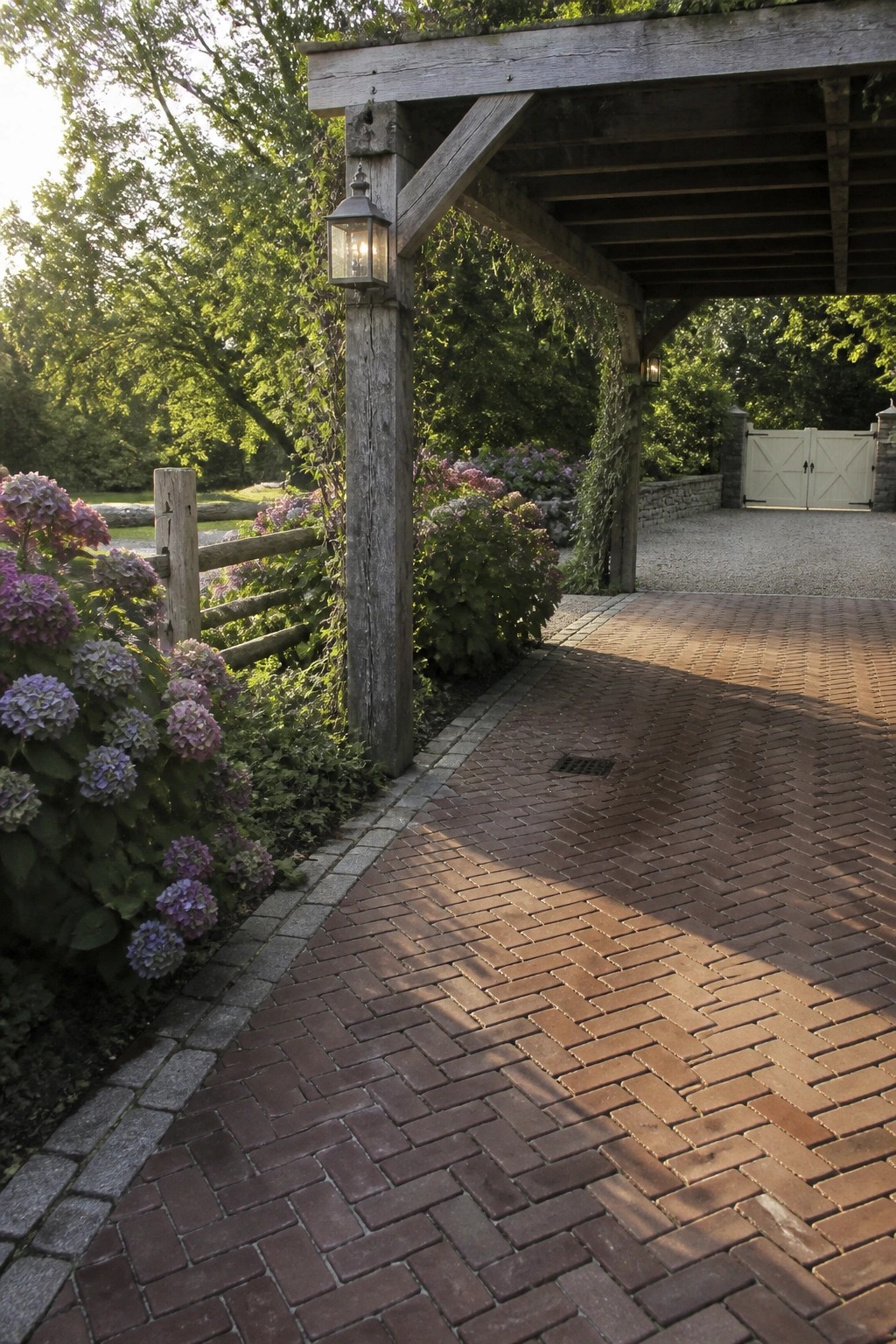
A herringbone brick pattern gives a driveway or parking area some texture without making it feel busy. The layout breaks up the surface in a way that still feels orderly, and it works especially well where cars turn or park often.
This approach suits homes with traditional or cottage details. It looks best when the bricks run right up to planting beds or gravel sections, and it helps the whole entry feel more pulled together if the edges are kept simple.
Staggered Square Tiles In Gravel Paths

Large square tiles laid in an offset pattern work well when set into gravel because the layout stays simple while still giving the path clear direction. The gaps filled with gravel help with drainage and keep the surface from feeling too rigid next to plants and rocks.
This style fits homes with dry landscapes or low-water gardens where you want something durable underfoot without a solid slab. Use the same tile size throughout and keep the gravel level even so walking stays comfortable.
Compass Rose Designs in Paved Paths
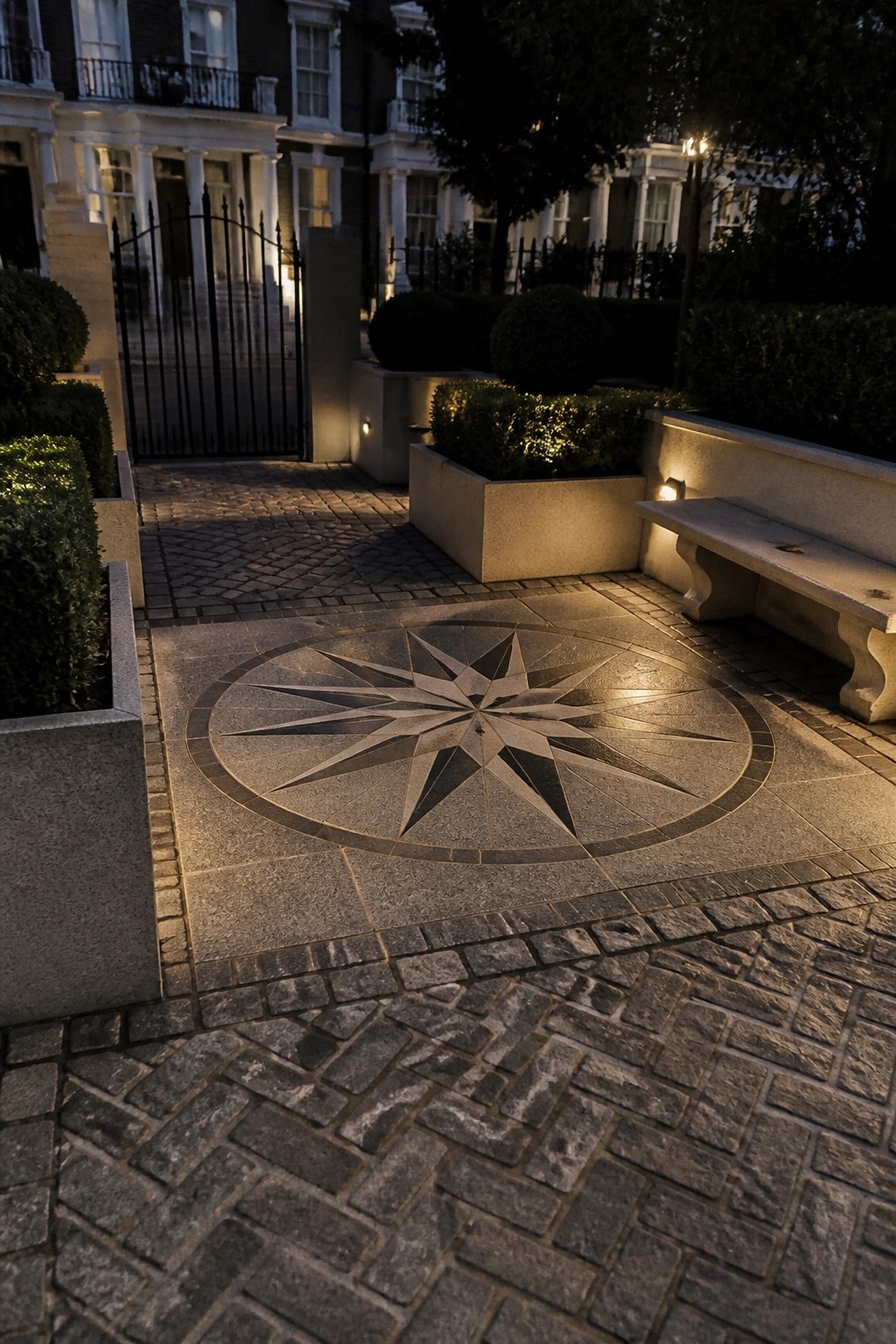
A compass rose set into cobblestone gives a paved path or small courtyard a clear center without needing extra furniture or plants. The pattern draws the eye downward and makes the surface feel more finished than plain stone would on its own.
This works best in front entrances, side passages, or small parking courts where the paving covers a decent amount of ground. Keep the surrounding stones simple so the medallion stays the main feature, and make sure the scale fits the width of the path so it does not feel cramped.
Checkerboard Paving For The Front Walk
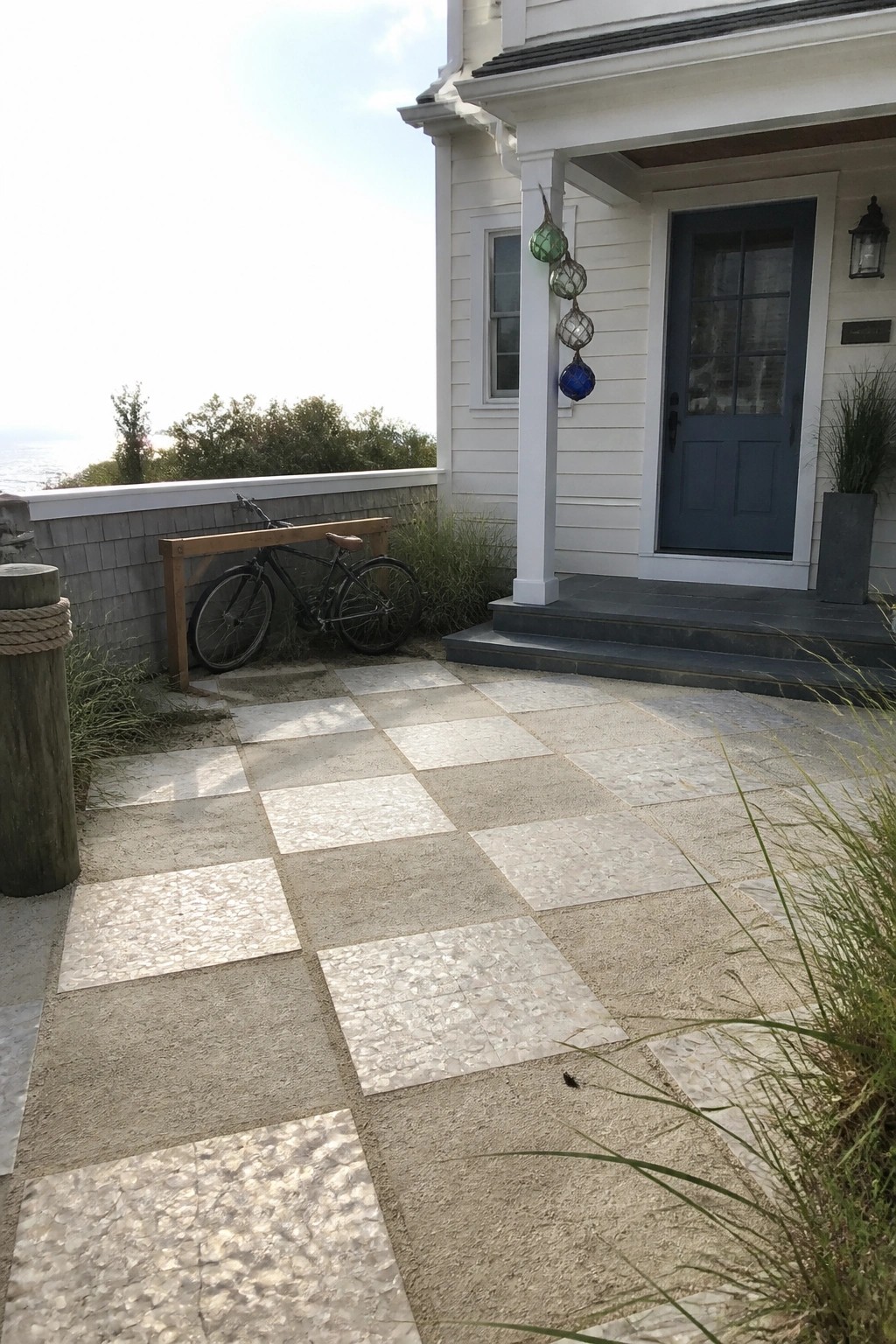
A checkerboard layout in paving tiles gives a plain entry area some structure without adding clutter. The simple two-tone repeat draws the eye along the path and makes the approach feel more intentional than a solid slab of concrete or stone.
This pattern works best on shorter walks or small parking pads near the house rather than long driveways. Keep the tile colors close in tone so the design stays calm, and make sure the edges are finished cleanly where the pattern meets grass or gravel.
Large Pavers Set Into Gravel
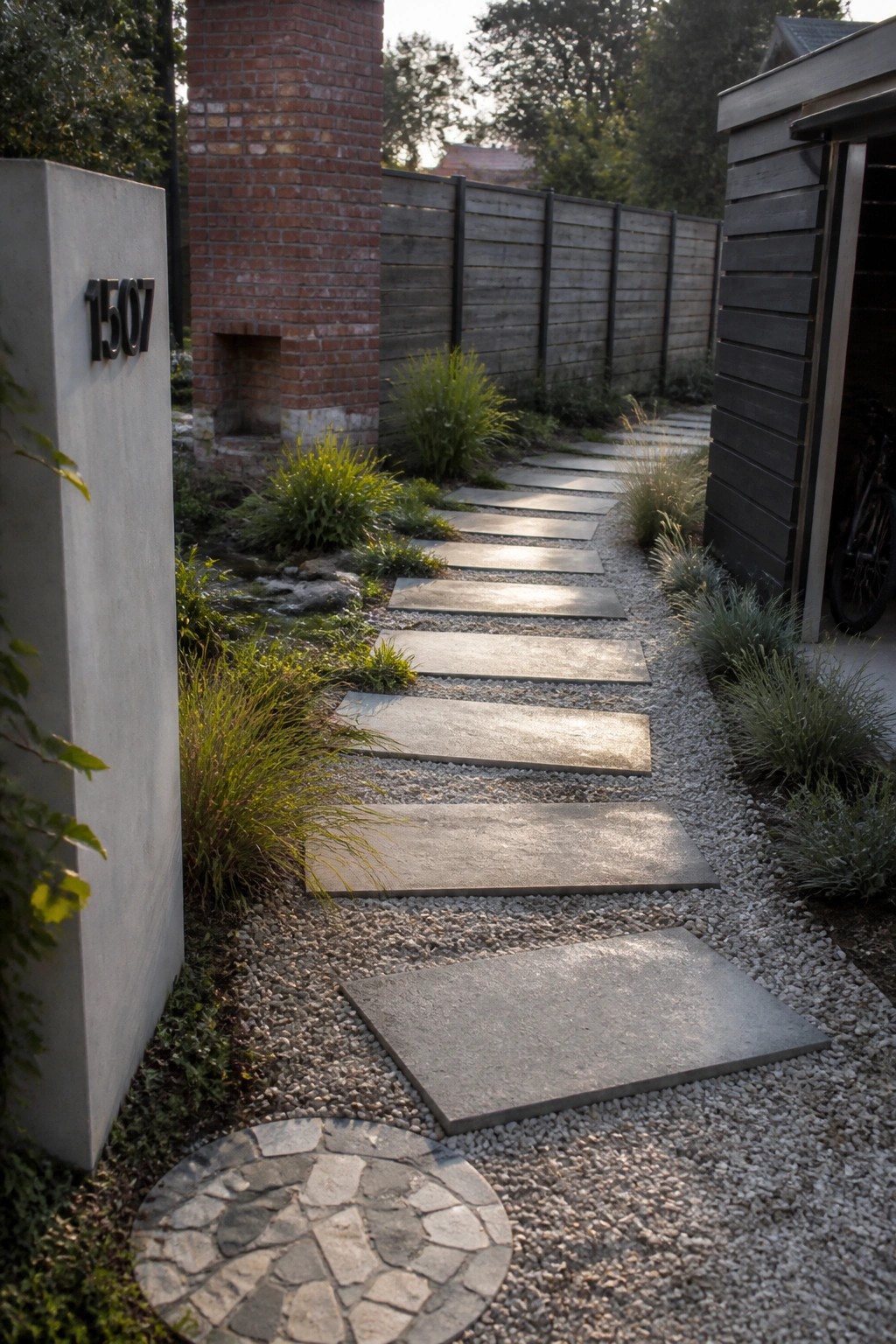
This kind of path uses big rectangular pavers placed with space between them and filled in with gravel. It keeps the walkway clear and simple while letting water drain through easily instead of pooling on a solid surface.
It works best along the side of a house or through a side yard where you want a defined route without a lot of concrete. The look suits modern or minimalist homes and stays low maintenance as long as the gravel stays contained.
Straight Laid Rectangular Pavers For Paths
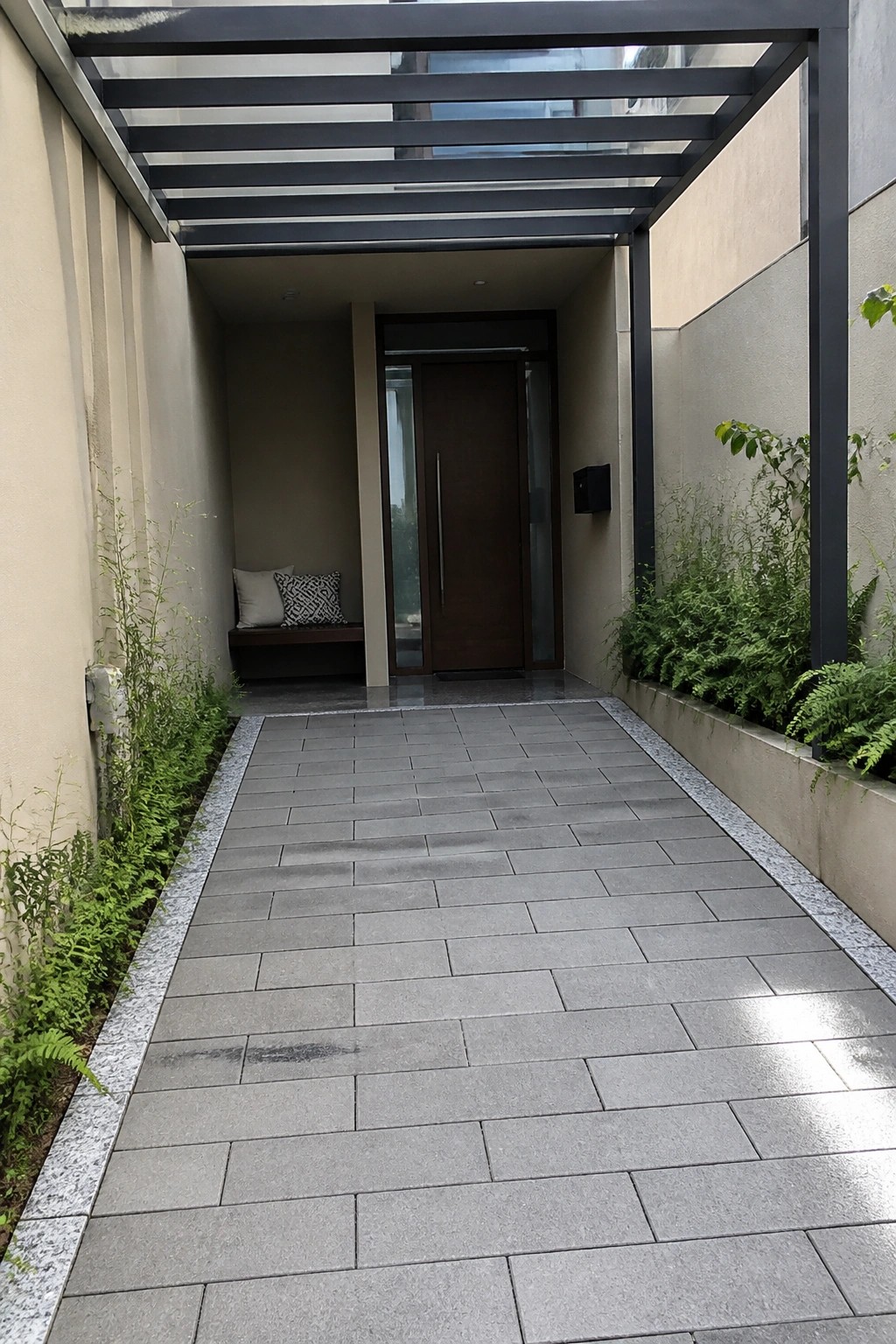
A simple straight layout with large rectangular pavers can make a narrow walkway feel more open and orderly. The uniform shape and clean lines keep the surface from looking busy, which works especially well in tighter side yards or modern entry areas where you want the path to recede a bit.
This approach suits homes with straightforward architecture and limited space. It is easy to install, simple to clean, and holds up without drawing too much attention. Just keep the grout lines consistent and avoid mixing too many sizes if you want the same calm effect.
Stepping Stones Set Into Gravel

Many gardens use flat stones placed directly into a bed of gravel to mark a path. The raked surface around the stones keeps the look simple and helps with drainage at the same time.
This approach works best in smaller gardens or along the side of a house where you want a low-maintenance walkway. Keep the stones level and space them evenly so the path feels comfortable to walk on.
Striped Tile Patterns For Driveways
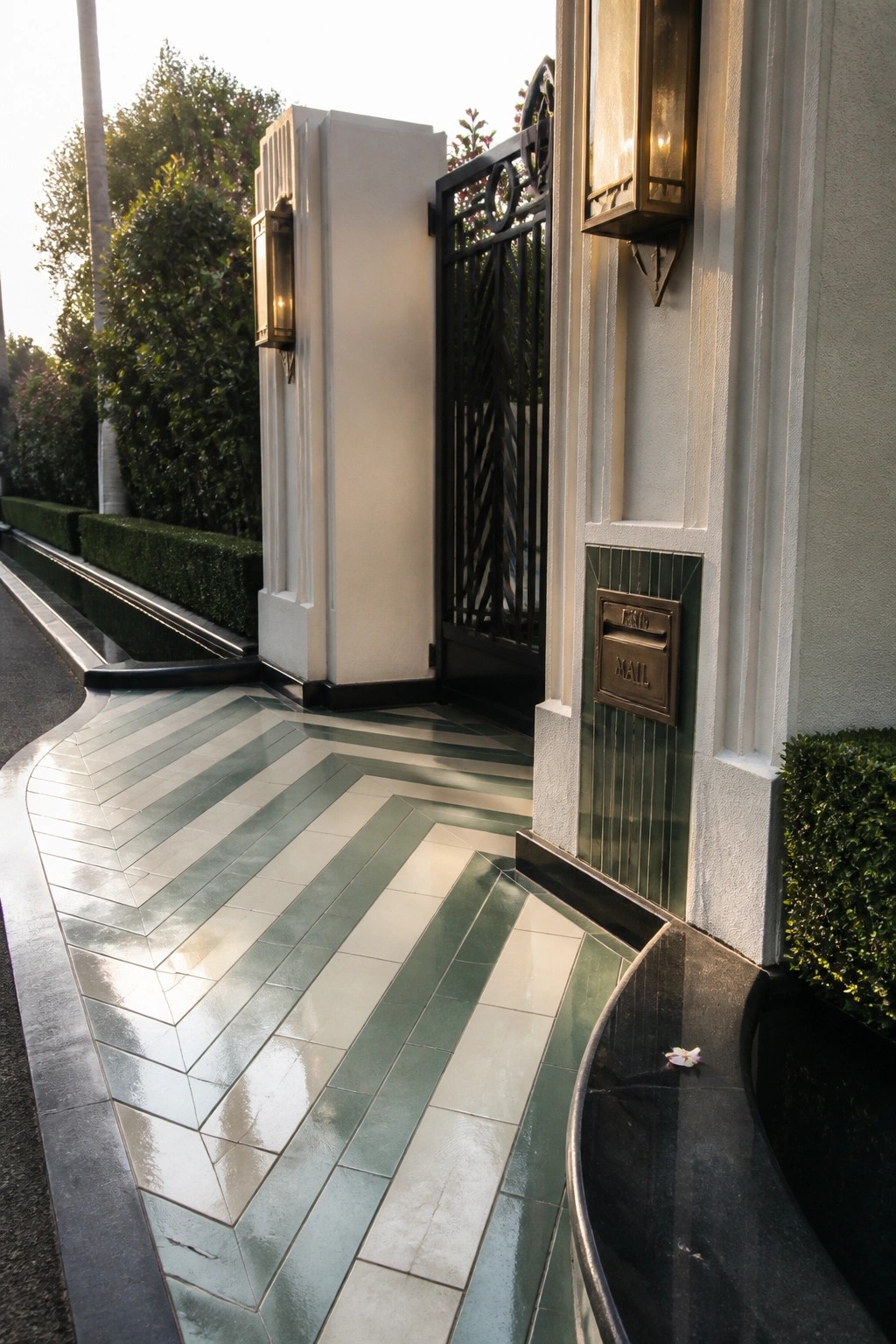
A striped tile layout on a driveway can turn a plain concrete slab into something that actually feels designed. The alternating bands draw the eye forward and give the whole entrance a sense of movement without needing extra decoration or plants right along the edges.
This approach works best on homes where the driveway is visible from the street and you want a clean, graphic look. Keep the colors fairly close in tone so it stays subtle, and make sure the tiles are rated for vehicle weight and weather exposure.
Paver Grids With Grass Infill
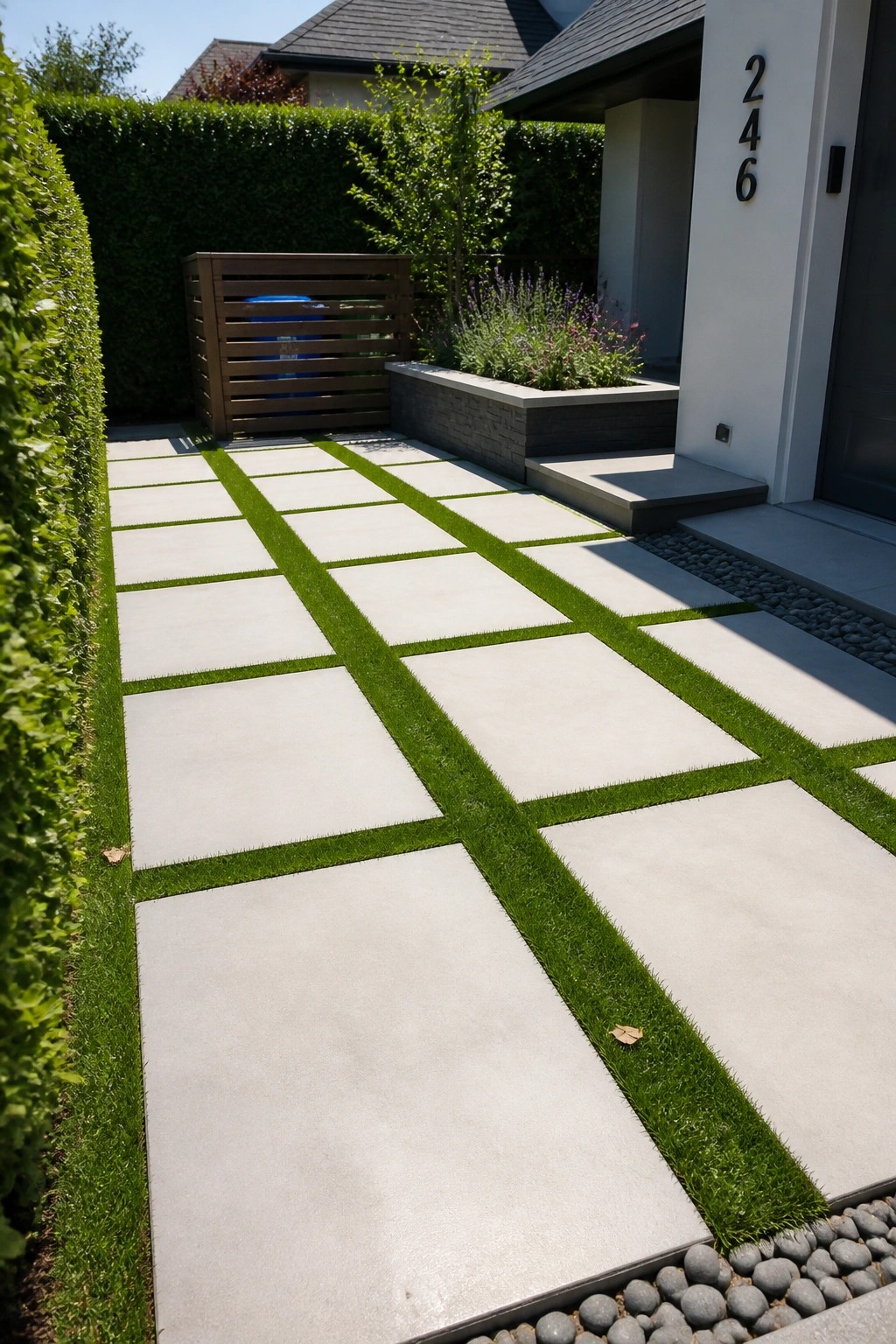
Large concrete pavers set in a grid with narrow grass strips between them give a walkway a clean, structured look without making it feel too hard or heavy. The pattern breaks up the surface nicely and lets a bit of lawn run through the design.
This works best on straight paths in front or side yards where foot traffic stays mostly in the center. Use it on homes with simple landscaping so the grid stays the main feature, and keep the grass strips thin enough to hold up over time.
Circular Mosaic Patterns on Patio Floors
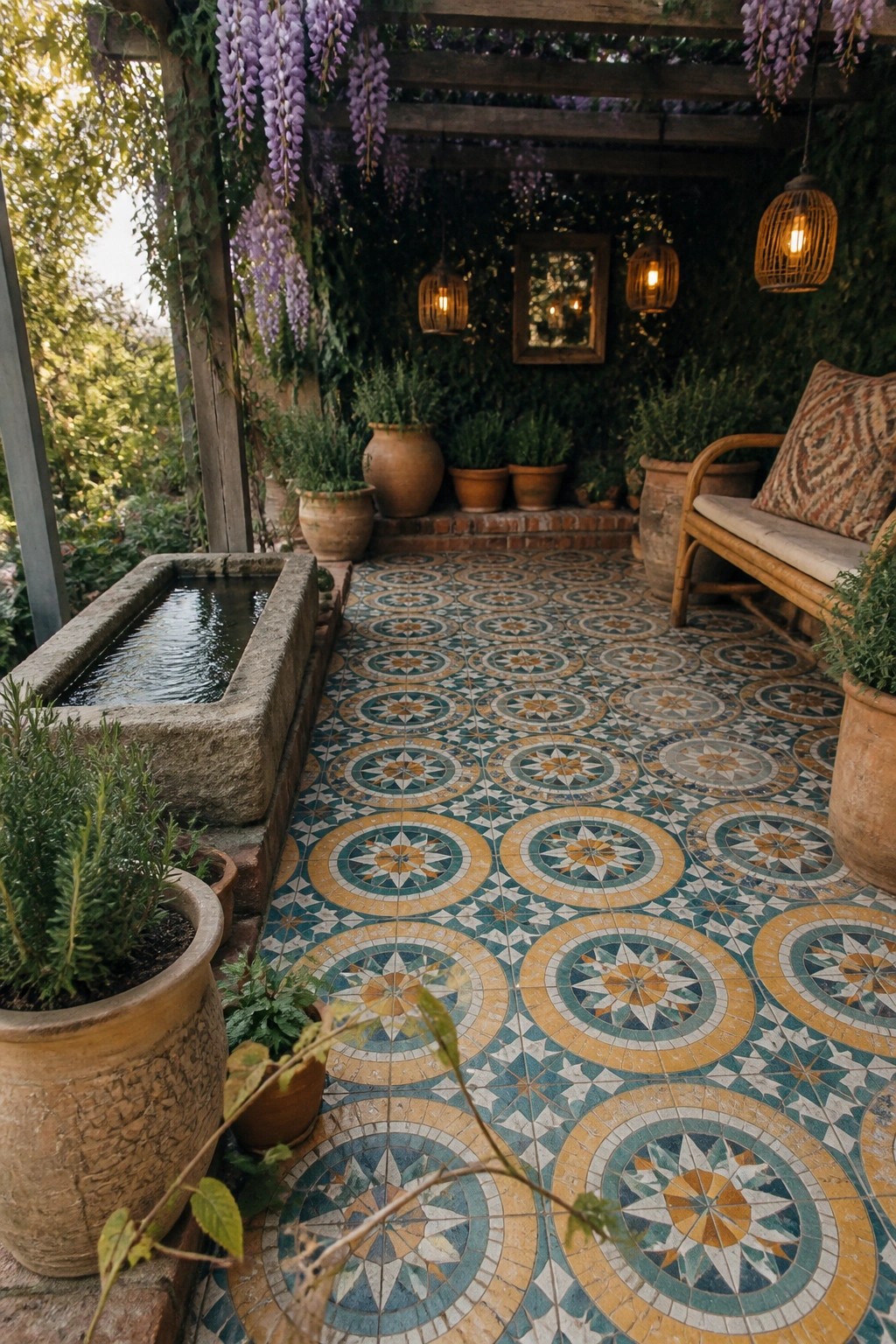
These circular mosaic tiles bring a steady rhythm to an outdoor floor without making the space feel busy. The repeating starburst design adds interest underfoot while still letting plants and seating stay the main focus.
This approach works best on patios that already have some shade and greenery nearby. Use it where the floor gets regular use so the pattern stays visible but does not overwhelm the rest of the setup.
Add a Center Strip to Your Paving

A center strip of smaller tiles running down a paved path gives the whole surface more character without much extra work. It breaks up the flat look of large slabs and adds a bit of texture that shows up nicely in different light. Many people like how it makes a long walkway feel more finished.
This works well on driveways or side paths where you want something practical but not plain. You can use contrasting sizes or slightly different colors for the strip, and it pairs easily with simple edging or low planting along the sides. Just keep the main field tiles consistent so the strip stays the focus.
Paver Paths With Pebble Accents
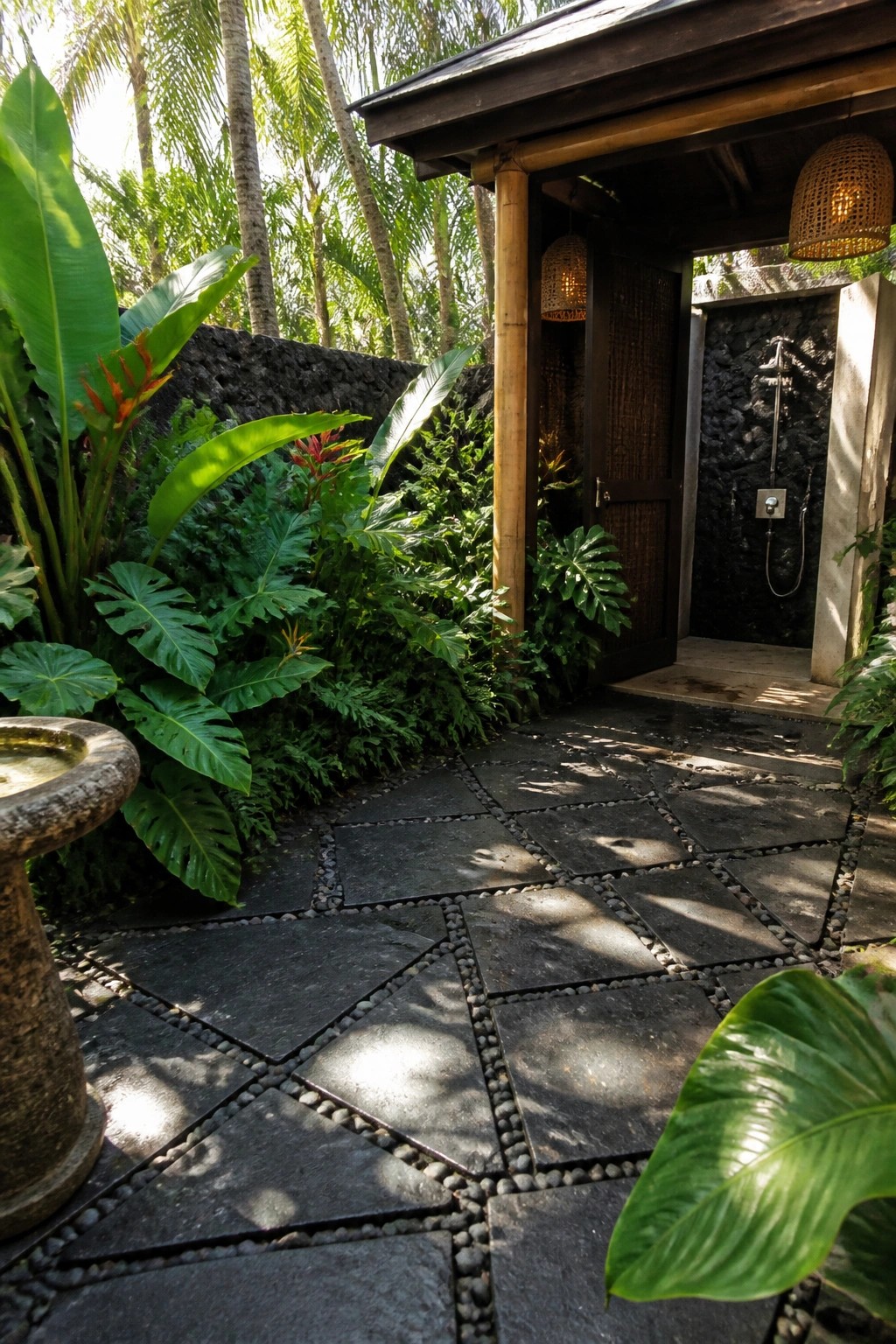
Large stone pavers set in a loose geometric layout with small pebbles filling the joints give a path a finished look without making it feel too rigid. The mix keeps the surface practical for wet areas while letting it sit comfortably among dense planting.
This approach works best in garden settings where the path needs to handle foot traffic but still feel natural. Use it to connect different zones like a shower area or seating spot, and stick to darker stones so the pattern stays low key rather than competing with the greenery.
Curved Brick Patterns For Courtyard Paths
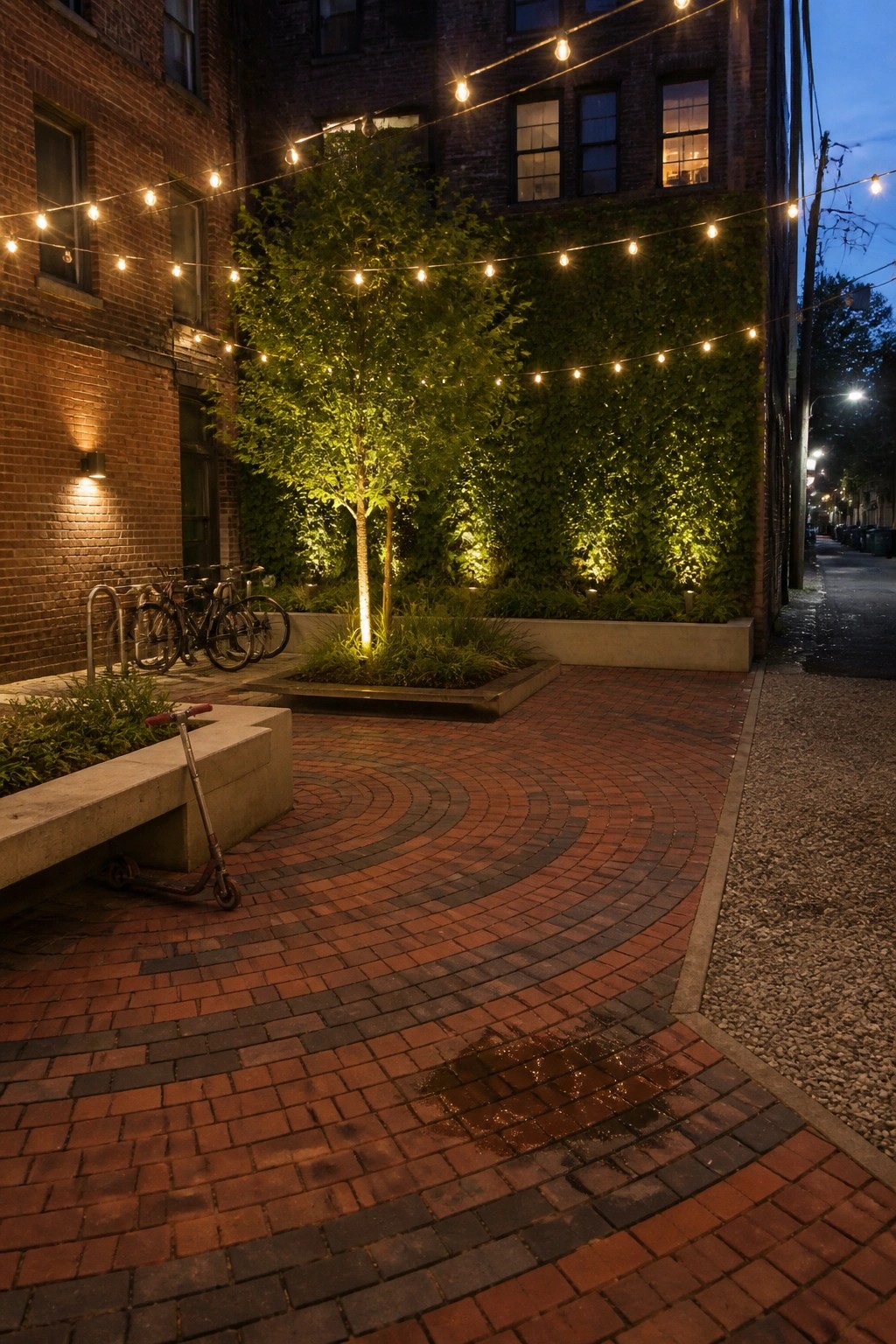
A curved brick layout can turn a plain paved area into something that feels more open and inviting. Instead of straight rows that run in one direction, the bricks here sweep around in gentle arcs that guide people through the space without needing extra signs or edges.
This approach works best in smaller urban courtyards or side yards where you want to soften the look of hard paving. It pairs well with raised beds and simple plantings so the pattern stays the main feature rather than competing with too many other elements. Keep the curve gradual so the bricks still sit flat and drain properly.
Mix Wood And Concrete In A Garden Path
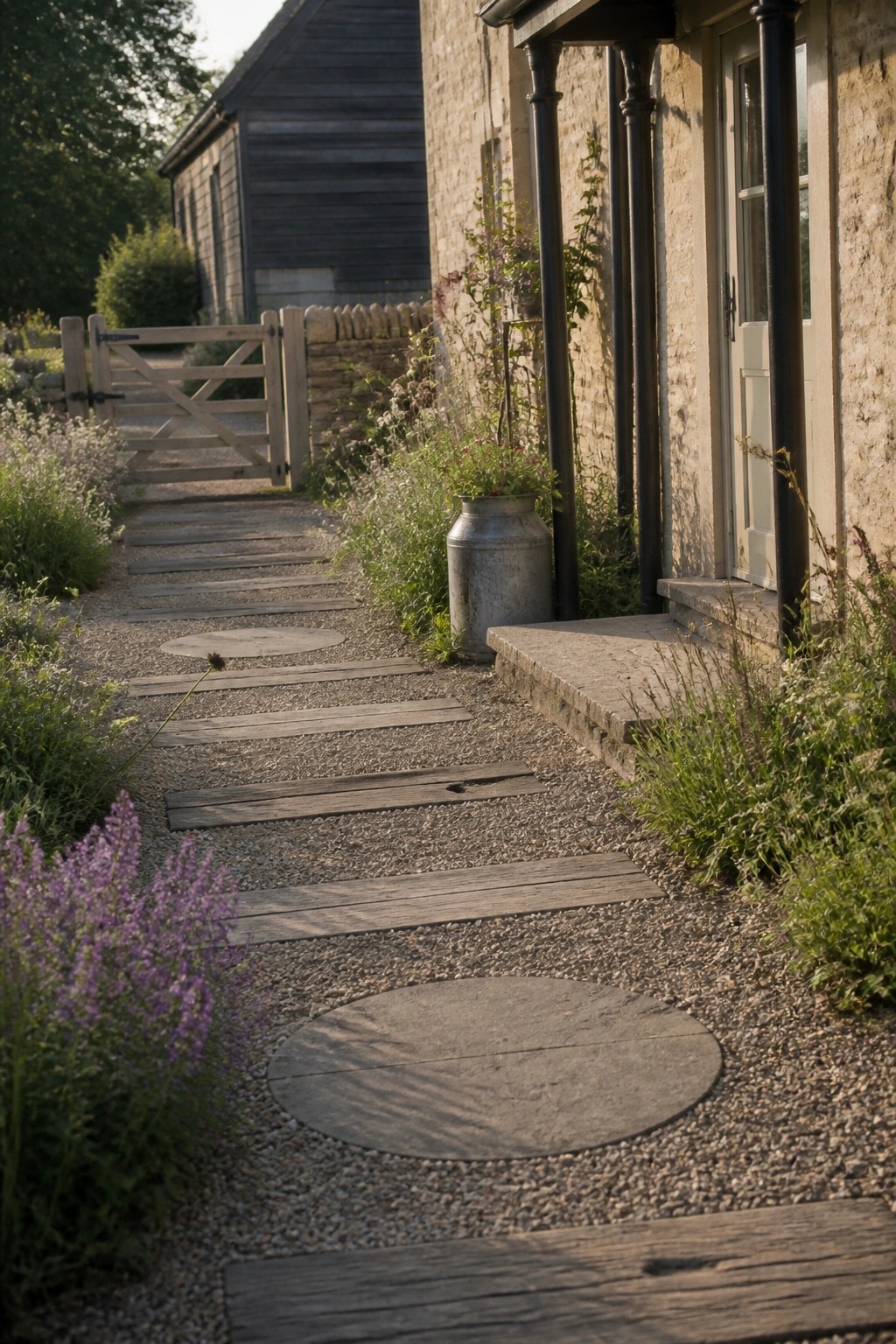
One easy way to make a path feel more interesting is to combine straight wood planks with round concrete pavers set into gravel. The mix breaks up the surface so it does not look flat or uniform, and the materials age in a way that fits older homes or cottage style gardens.
This works best in side yards or back entrances where you want something practical but not too formal. Keep the spacing even so the gravel stays in place, and choose wood that can handle moisture if the path sees regular use.
Irregular Paver Shapes For Narrow Passages
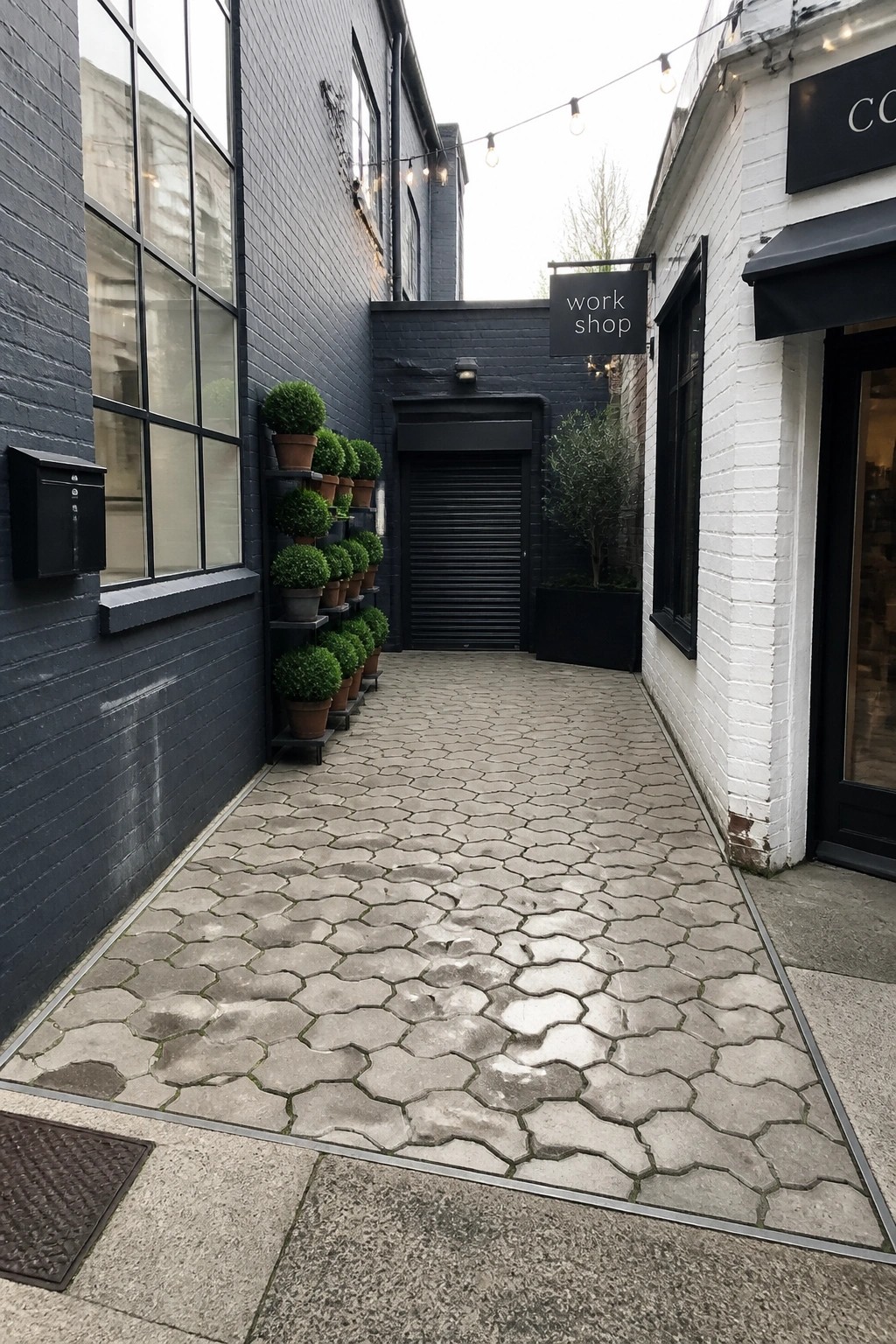
An irregular stone pattern like this works well because it breaks up the flat look of a basic path without adding any extra materials or fuss. The varied edges keep the surface interesting even in a tight space between buildings, and the light gray tones help the area feel a bit brighter.
This approach suits alleyways, side entries, or small courtyards where a standard grid would feel too plain. Stick to one or two paver sizes so the layout stays practical underfoot and does not require constant upkeep.
Diagonal Grids For Front Walkways
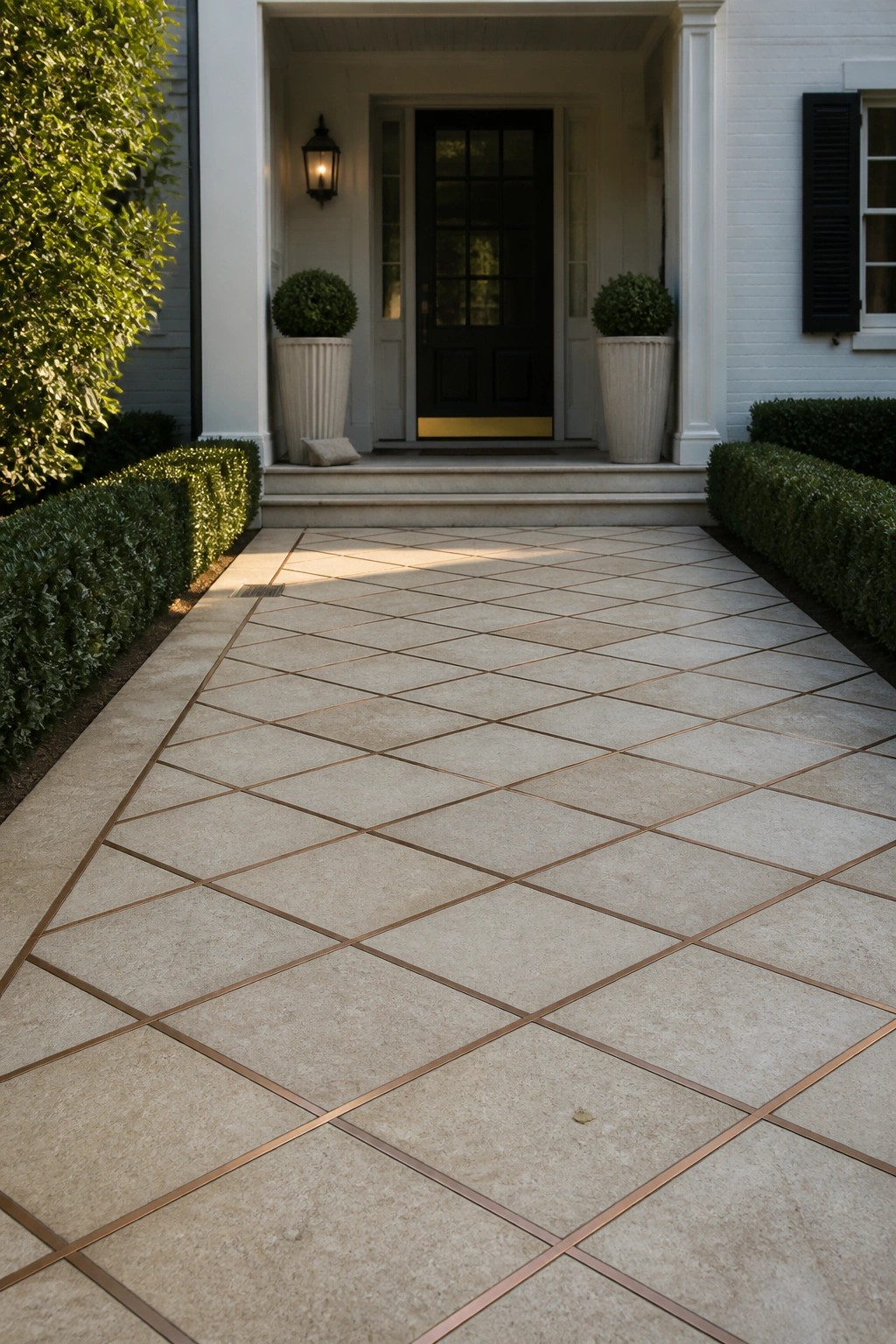
A diagonal grid layout on a front walkway gives the path more direction and keeps it from feeling flat. The angled lines draw the eye forward and make even a simple stone surface look more considered.
This approach works best on straight walks that lead directly to the door. It suits traditional or updated classic homes and pairs easily with low hedges along the sides. Keep the metal strips narrow so the pattern stays clean rather than overpowering the stone.
Grass Strips Between Pavers
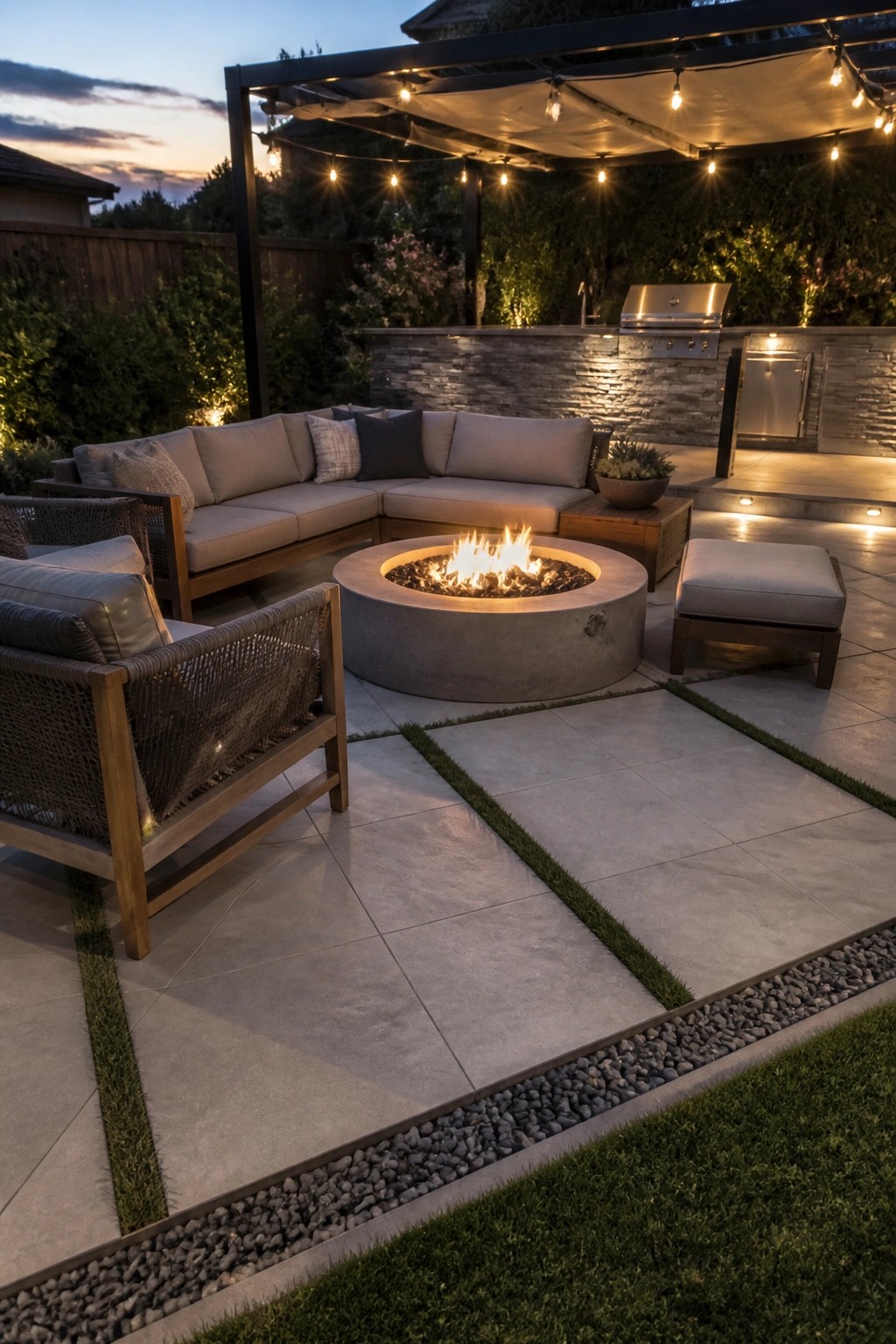
Large pavers laid in a grid with narrow grass strips between them keep a patio from feeling too solid and heavy. The lines add a bit of softness and help the surface blend into the surrounding lawn without needing lots of extra planting.
This works well on bigger outdoor spaces where you want defined areas for seating or dining but still like the look of green running through the hardscape. Just make sure the grass gets enough sun and that the paver edges stay clean so the pattern stays sharp over time.
Frequently Asked Questions
Q: Can I install these tile patterns on my own?
A: Start by leveling the ground well and laying a solid base. Work in small sections so you can check the alignment as you go. Most people finish a small area in a weekend with basic tools.
Q: Do the patterns hold up when cars drive over them daily?
A: Choose thicker tiles made for outdoor use. They stand up fine once the base is firm underneath. Check them every few months for any loose spots.
Q: What pattern works best in a tight parking spot?
A: Go for something simple like straight lines or a basic grid. It keeps the space from feeling smaller.
