


I have always noticed that the surface leading up to the front door shapes how the whole house reads from the street.
Choosing tiles for that area means thinking about both the weight of cars and the way light hits the material throughout the day.
In my experience the wrong choice can make a house look smaller or less cared for even when the rest of the facade is in good shape.
It pays to test how a few samples hold up to rain and oil stains before committing to a full layout.
Small details in the pattern often change the feel more than expected.
Large Format Tiles For The Driveway

Large concrete tiles laid in a simple grid give a driveway a clean, finished look that blends right into the house. The scale of the pavers keeps the surface feeling open and avoids the busy pattern you get with smaller blocks or bricks.
This approach suits modern homes where the parking area sits close to the main structure. It works best when the tiles match the wall tones and the edges are finished neatly with gravel or planting so water drains properly and nothing looks tacked on.
Linear Concrete Pavers With Grass Strips

This approach works well when you want a driveway that feels structured but still softens into the surrounding landscape. The long slabs sit in clean rows with narrow grass strips between them, which breaks up the hard surface without losing the sense of order. The recessed lights add a quiet functional touch for nighttime use.
It suits homes with a modern or minimalist style and works best on fairly flat sites where drainage can move through the grass joints. Keep the gravel edge narrow so it does not compete with the main pattern, and choose a slab color that matches the house base or walls for a more pulled together look.
Mixing Light And Dark Hexagonal Tiles On Driveways

A simple way to update a driveway is to use two shades of the same tile shape instead of one solid color. The mix of light and dark gray hexagons creates a soft pattern that still feels clean and modern. It breaks up the large surface without looking busy.
This approach works best on homes with straight lines and minimal landscaping. Keep the pattern flowing from the street all the way to the front steps, and add a thin strip of lighting along one edge if you want extra visibility at night. It suits newer builds and updated older homes alike, as long as the rest of the exterior stays fairly simple.
Permeable Pavers For Driveway Areas
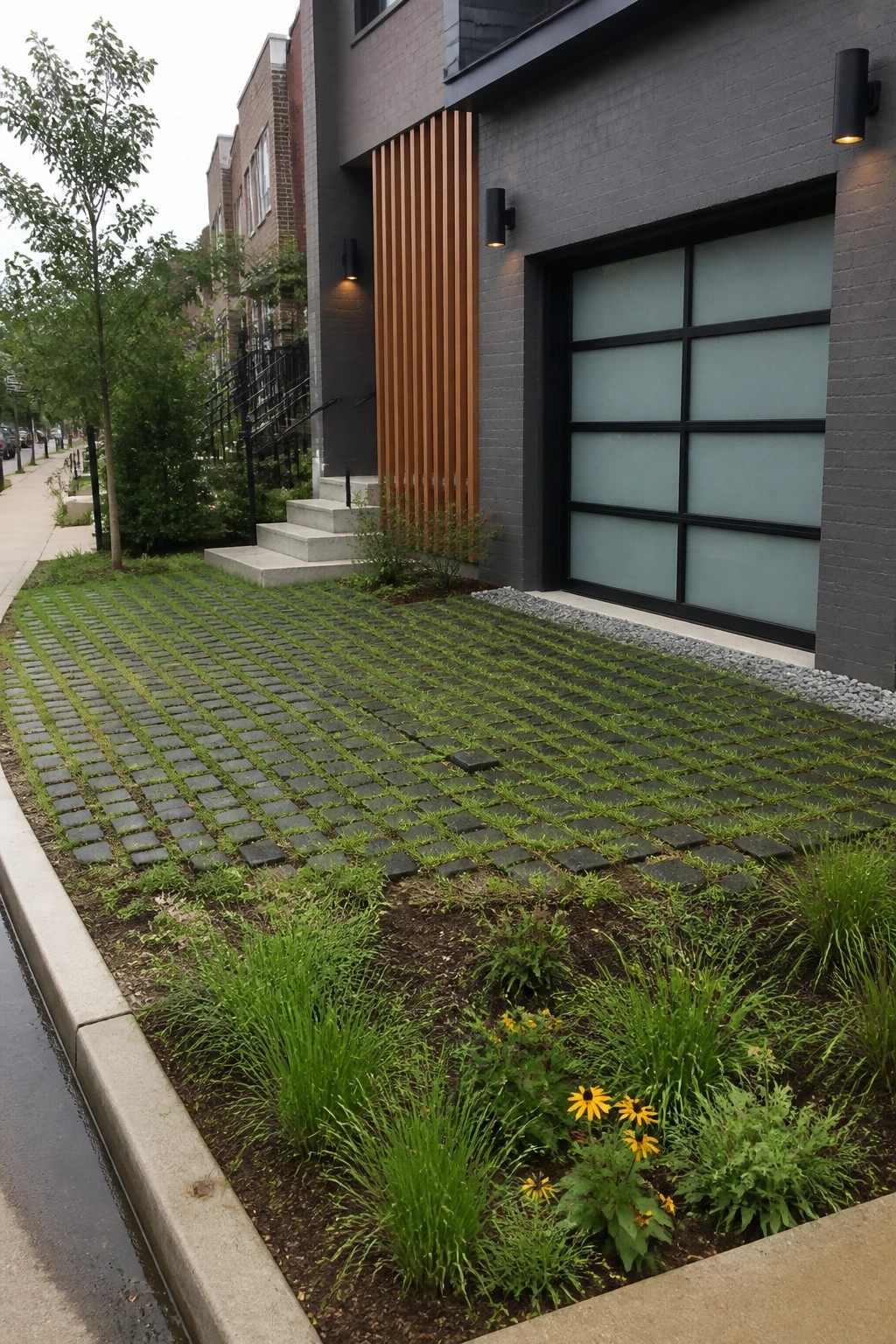
Many homes now use these grid style pavers for parking spots because they keep the surface from feeling too solid and heavy. The grass that grows between the blocks helps the area blend with the rest of the yard instead of standing out as a separate paved zone.
This setup works best on smaller lots where the driveway sits close to planting beds. It needs a solid base underneath so the pavers stay level under car weight, but once installed it stays low maintenance and handles rain better than solid concrete.
Checkerboard Pavers With Grass Sections

This layout uses large concrete slabs set in a repeating grid with grass filling the spaces between them. It keeps the surface solid enough for cars while letting some greenery show through, which softens the look of a full concrete driveway without losing function.
The pattern works best on flat driveways where you want a modern feel but still like the idea of some living surface. Make sure the grass sections are cut to the same size as the pavers and that the base underneath stays level so the whole area drains well and stays even under weight.
Stone Pavers for a Simple Driveway Upgrade
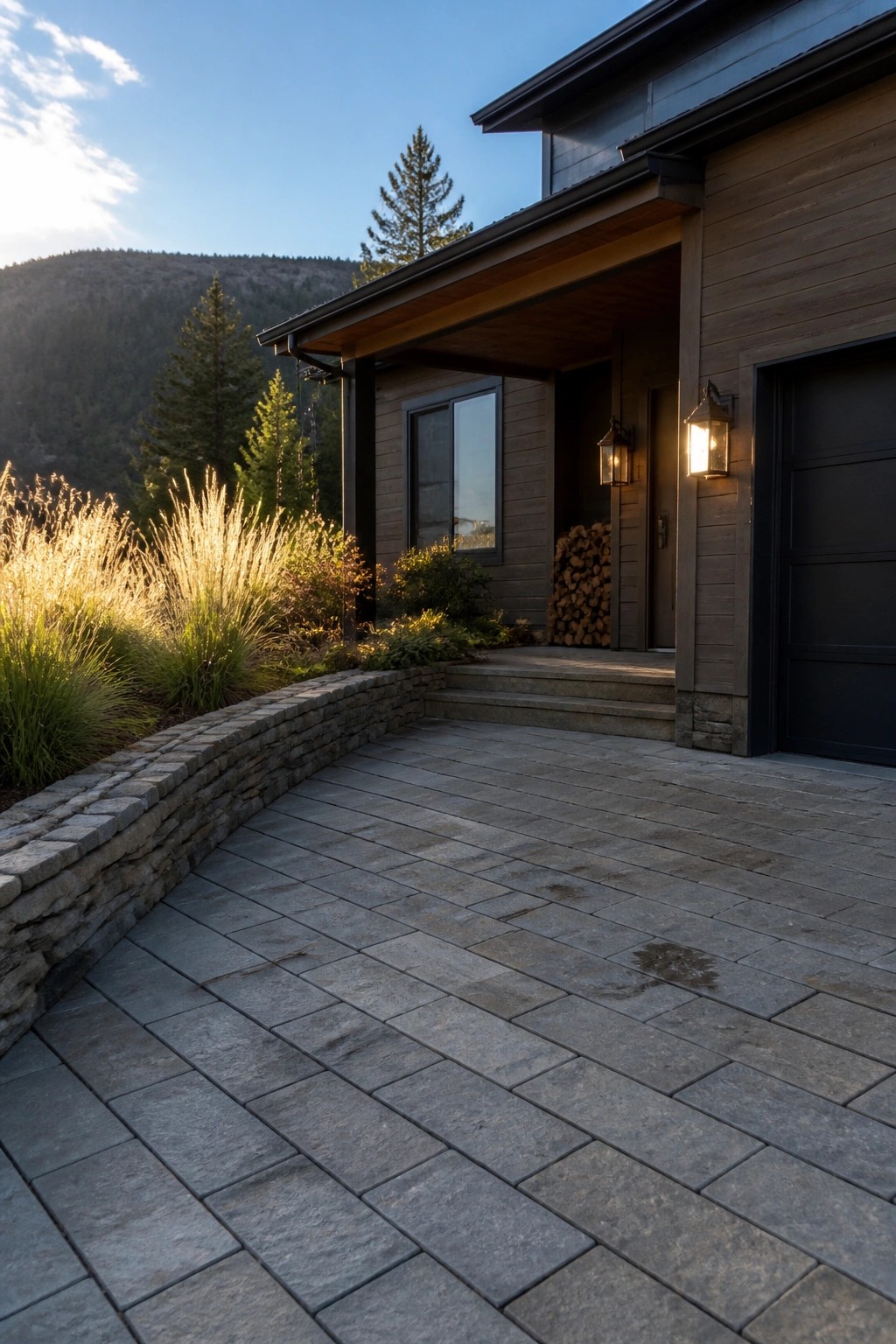
Large stone pavers give a driveway a more natural feel than poured concrete. The gray tones sit comfortably next to the wood siding and low stone wall without looking too formal or stark.
They suit homes that already use natural materials and need a surface that can handle daily car use. Proper base preparation matters most so the pavers stay even over time.
Large Pavers With Gravel Joints
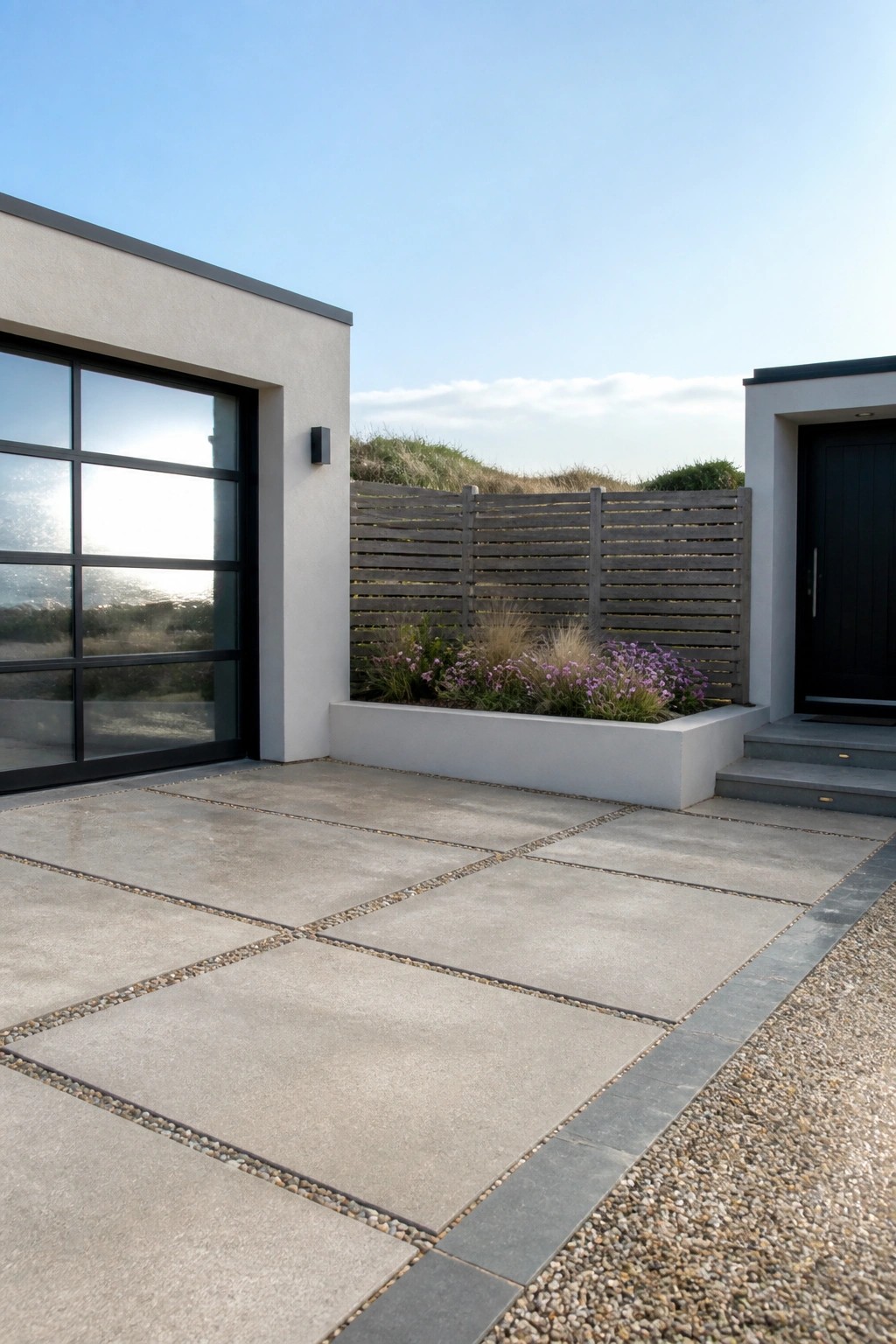
Large concrete pavers set with gravel in the joints create a clean, simple surface that still feels textured underfoot. This approach keeps the driveway from looking like one solid slab while avoiding the fuss of many small units. It works especially well on modern homes where the goal is a quiet, orderly look that still handles cars and foot traffic without issues.
The pattern suits homes with straight lines and minimal planting beds right at the edge. Keep the joints narrow enough for stability but wide enough to show the gravel clearly. Avoid this if your area gets heavy freeze-thaw cycles without proper base prep, since the gravel can shift over time.
Geometric Tiles for Narrow Side Paths
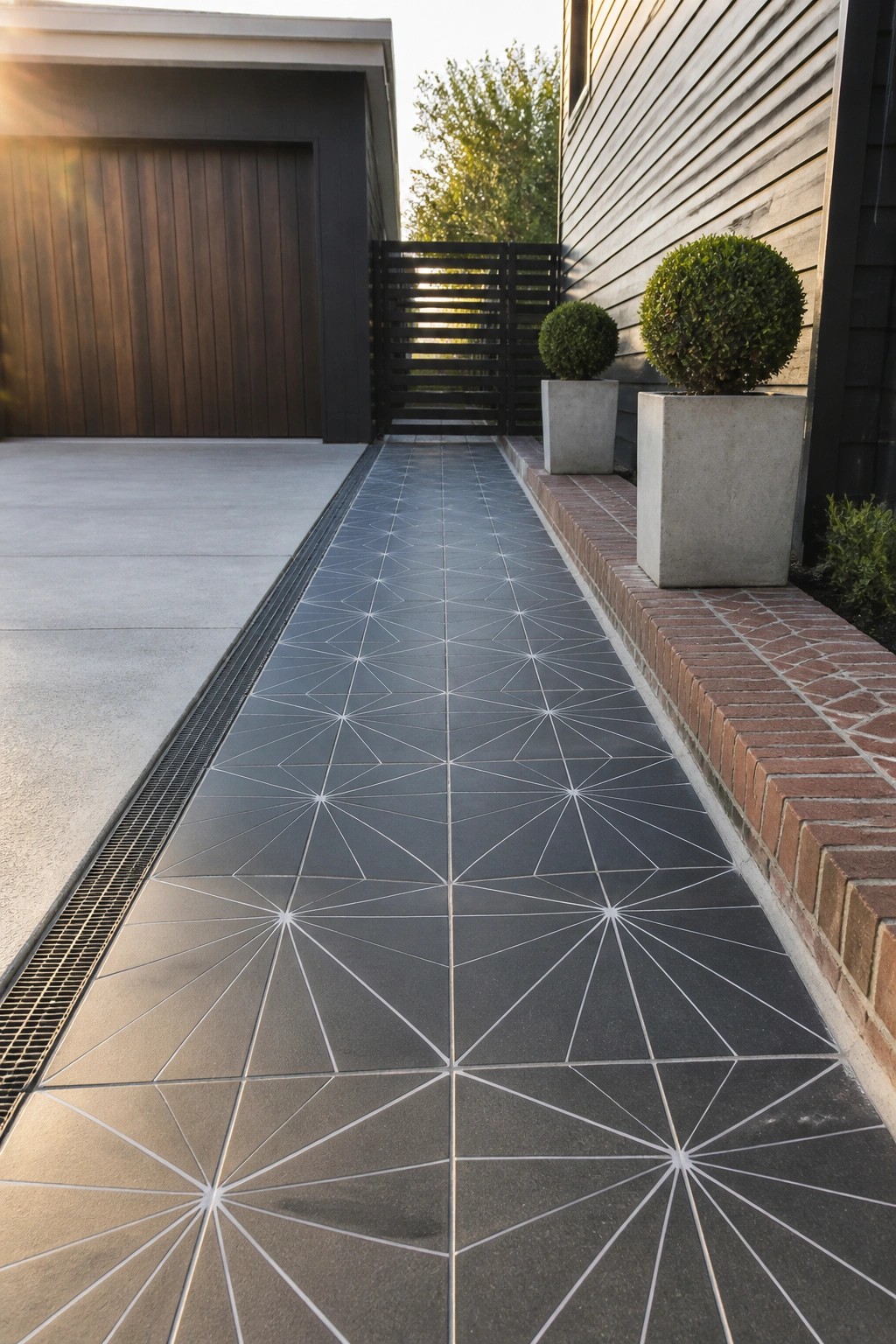
Many homeowners turn to strong geometric tiles when they want to give a long narrow path some real presence. The repeating star pattern in dark tones creates movement and keeps the eye moving forward, which makes the space feel more finished than a plain concrete strip would.
This approach works especially well on modern homes where the garage sits close to the house and you need something practical that still looks deliberate. Stick with a single bold pattern rather than mixing materials, and let the tiles run the full length so the path reads as one clean element instead of a leftover space.
Dark Paving in Circular Patterns

A circular layout in dark pavers gives a driveway more character without needing extra features. It draws the eye inward and makes the whole entrance feel more intentional, especially against a simple modern house. The textured surface also helps hide tire marks better than smooth concrete.
This approach works well on homes with straight lines and dark exteriors. Keep the pattern contained to the main drive area and let straight runs handle the rest of the approach. It suits newer builds or updates where you want the hardscape to stand out on its own.
Large Dark Tiles For Modern Driveways

Large dark tiles across a driveway can give the whole front a quiet, modern feel. They create one smooth surface that connects the street to the house without breaking up the view.
This approach works best on newer homes with simple shapes and dark accents. Make sure the tiles are thick enough for cars and that the surface slopes slightly so water drains away from the garage and door.
Large Format Pavers For Driveways

Large rectangular pavers make a driveway feel more intentional and less like a separate utility zone. The bigger size cuts down on visible seams, which keeps the surface looking smooth and calm even when the area is wide.
This approach works best on homes with simple modern lines where the paving can run continuously from the street into a side walkway. Just make sure the pavers are rated for vehicle weight and that the joints are properly filled so weeds do not become an issue over time.
Large Format Tiles For A Modern Driveway
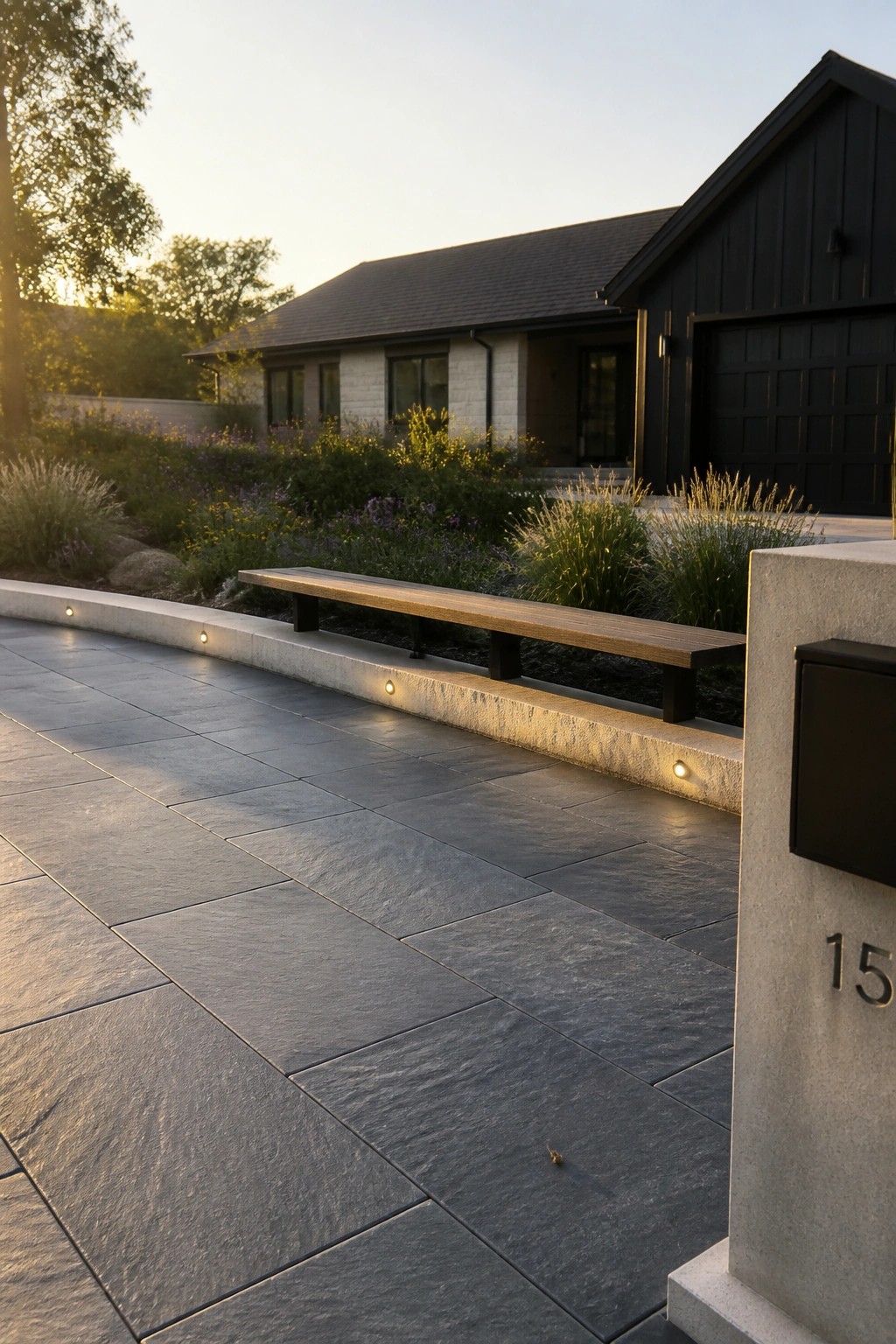
Large dark tiles give a driveway a much cleaner look than the usual concrete or asphalt. They turn the parking area into something that feels more connected to the house instead of just a place to park.
This approach works especially well on homes with simple architecture and low planting along the edges. Keep the tiles big and the grout lines tight so the surface stays smooth and easy to clean. Add a few low lights along the border if you want to keep the area usable after dark without adding extra fixtures.
Concrete Slabs With Pebble Inlays
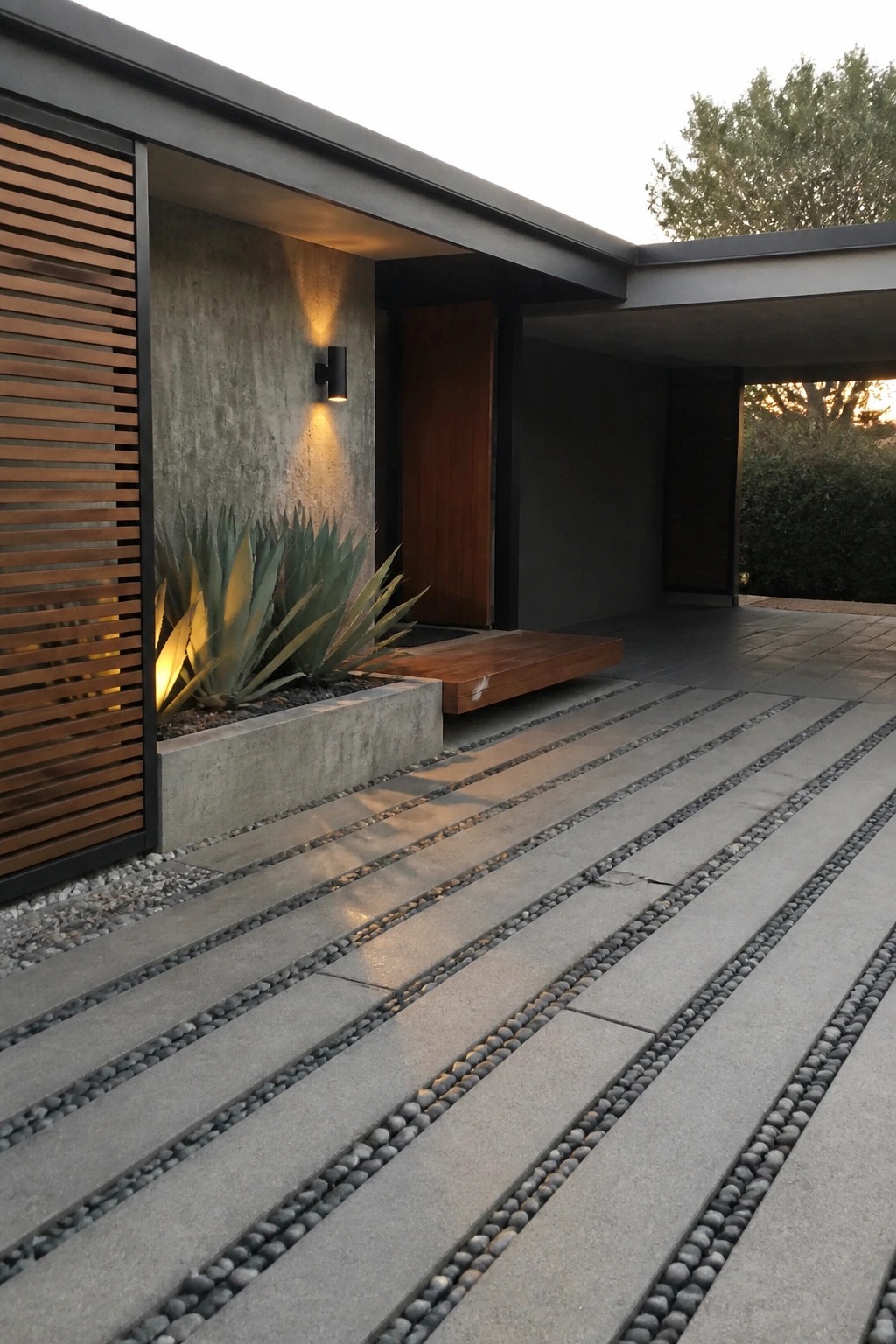
This approach keeps the surface flat and easy to walk on while adding a bit of texture through the narrow pebble strips. It works well in front of modern homes where you want the path to feel deliberate without looking overly busy or decorative.
The same pattern can run along a driveway or lead straight to the front door. It suits homes with clean lines and minimal planting, and it holds up better than solid gravel because the concrete sections give you solid footing. Just make sure the pebbles are set low enough so they do not shift underfoot.
Speckled Tiles For A Low Maintenance Patio

Speckled tiles work well outside because they hide everyday dirt and wear without looking tired after a few seasons. The even speckle pattern also helps the surface feel more uniform, which suits homes with simple concrete walls and minimal detailing.
They suit modern houses that need a tough floor for both cars and seating areas. Look for exterior-rated porcelain or concrete tiles with a matte finish, and keep the grout lines narrow so the whole area reads as one clean plane.
Hexagonal Pavers For Driveway Areas

Hexagonal tiles bring a steady pattern to a driveway without making it feel fussy. The shape gives the surface a bit more interest than plain rectangles while still keeping things clean and modern in front of the house.
This paving works well on homes that already have strong lines and simple materials. It handles daily car use fine as long as the base is solid, though the joints can collect a little dirt over time in wet climates.
Herringbone Brick Driveways

A herringbone layout in brick pavers gives a driveway more character than a straight running bond. The pattern adds movement and texture that still feels grounded next to a simple white house and dark trim. It works especially well when you want the parking area to feel intentional rather than just functional.
This style suits homes with farmhouse or traditional details and holds up in high-traffic zones without looking busy. Keep the paver color warm and slightly varied so it ages naturally with the rest of the exterior.
Linear Pavers For A Cleaner Driveway
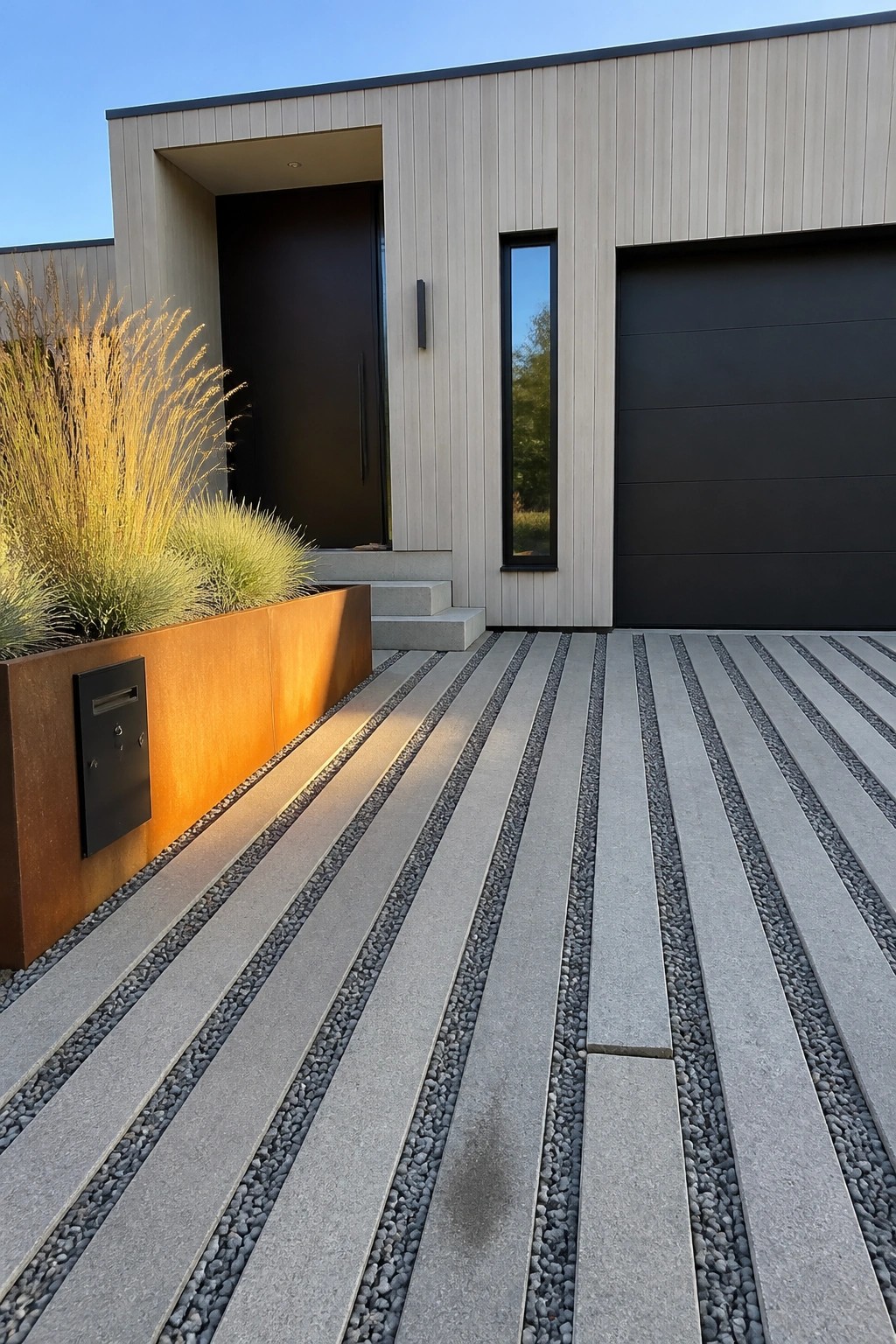
Long strips of concrete pavers set with gravel between them give a driveway a lighter look than a solid slab. The pattern breaks up the surface so it does not feel as heavy next to the house, and it still supports cars without any trouble.
This approach works best on modern homes with simple lines. It keeps the driveway from dominating the front and lets the gravel handle drainage between the pavers. Just make sure the paver spacing matches your vehicle width so tires stay on solid ground.
Large Tiles For A Modern Driveway

Large format tiles work well on driveways because they reduce the number of joints and create a smoother surface that feels more connected to the house. The light neutral color also helps the area look bigger and brighter instead of like a separate paved zone.
This style fits homes with simple architecture and minimal ornamentation. It works best when the tiles are thick enough for cars and installed on a solid base so they stay level over time.
Herringbone Tiles for Driveway Areas

A herringbone layout gives the paved entry a bit more structure than plain running bond or square tiles. The angled lines break up the surface without making it feel busy, and the neutral gray tones keep things simple and practical for daily use.
This works best on homes with clean architecture where you want the paving to feel intentional but not overdone. Pair it with matching steps and keep the edges crisp so the pattern reads clearly from the street. Avoid very dark grout if you want to reduce visible dirt over time.
Go With Gray Pavers in a Grid for the Driveway

A simple grid of gray pavers gives the driveway a clean, uniform surface that feels intentional rather than just functional. The color stays neutral enough to sit well with dark siding and stone details, while the pattern avoids any busy lines that could distract from the house itself.
This approach suits modern homes that already use straight lines and darker tones. It holds up well to daily use and makes the whole front look more pulled together without adding extra materials or patterns that might feel dated later.
Large Format Concrete Tiles For Driveways
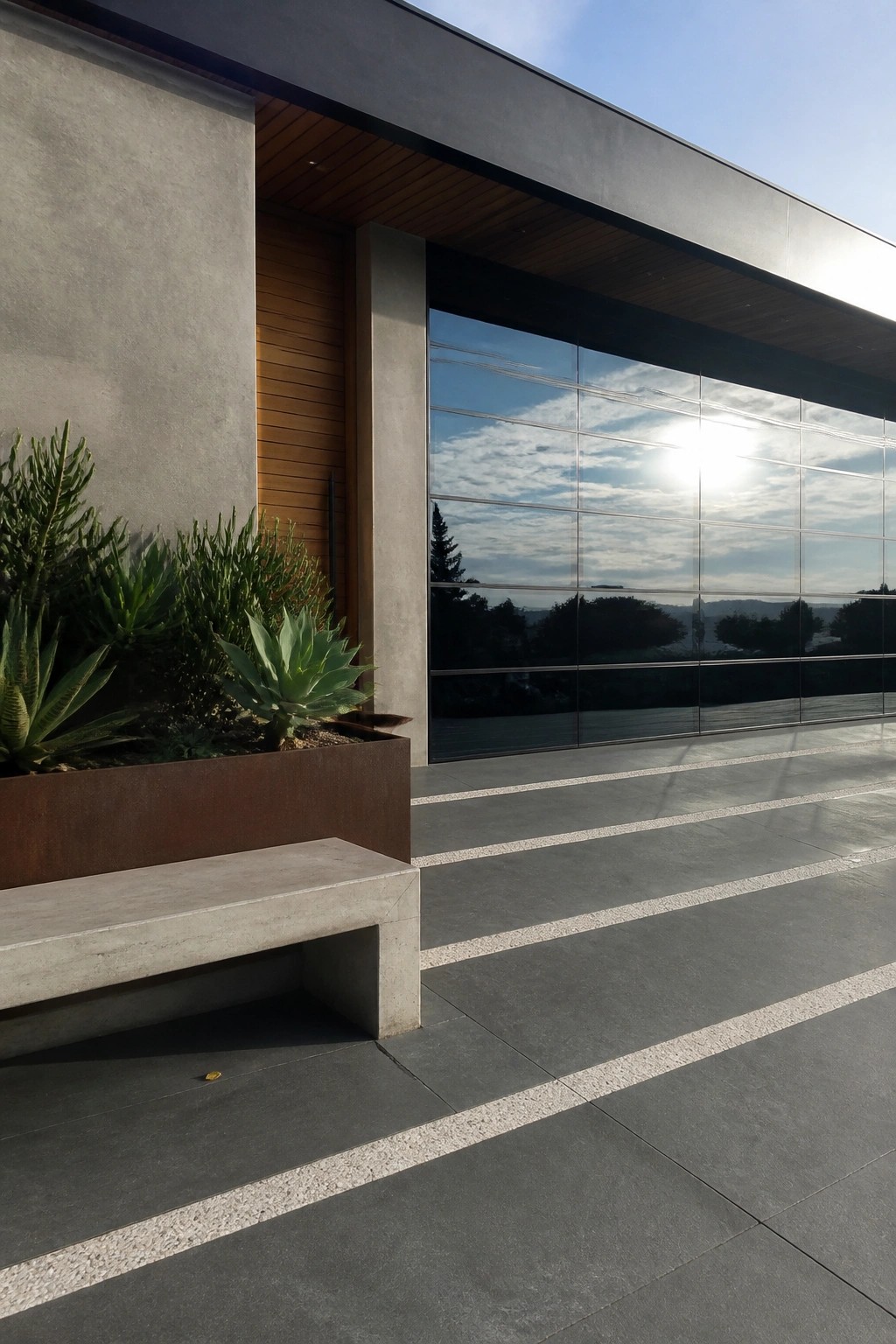
Large concrete tiles give a driveway a simple, finished look that fits modern homes. They reduce the busy pattern of smaller pavers and let the surface read as one clean plane that matches the architecture around it.
These tiles suit homes with flat entries and minimal trim. They hold up to cars when installed on a solid base, but they need proper slope and joints to keep water from pooling or pushing sections apart over time.
Wood Planks Over Gravel For Entry Paths

Wood planks laid across gravel make a simple and practical choice for the walk from the driveway or street. The spaced layout keeps the surface easy to drain while giving the front a clean, modern line that works with many house styles.
This approach suits homes with a dark or minimalist exterior and pairs well with low edging like metal planters. Keep the planks level and use a solid gravel base so they stay put through the seasons.
Frequently Asked Questions
Q: How do these tiles hold up when it freezes outside? A: Pick ones made for cold spots so they stay intact as temperatures swing. Seal the surface once a year to block moisture from creeping in. Your parking spots will stay level without extra fixes.
Q: Can I lay them myself if I want to skip hiring help? A: Build a firm base with gravel and sand first. Set the tiles in your pattern and check levels as you go. Most finish a basic section over a weekend.
Q: What if my budget only covers part of the driveway? A: Focus on the main parking area and leave the rest as is for now. Add simple gravel borders to tie things together without extra cost.
