

I have noticed that a cramped parking spot right up against the house can throw off the whole front view unless the tiles are picked to match the scale of the entry and walkway.
Over time I have found that materials need to handle daily car weight without shifting or showing wear too quickly, especially when the space has little room to spare.
Some patterns simply hold up better once the cars start rolling over them every day.
I would try laying out a small test section first because it is hard to judge how the surface will settle until you drive on it yourself.
The choices that keep the lines simple and tie into the existing paving around the house tend to make the tight area feel more intentional instead of leftover.
Large Pavers With Gravel Strips

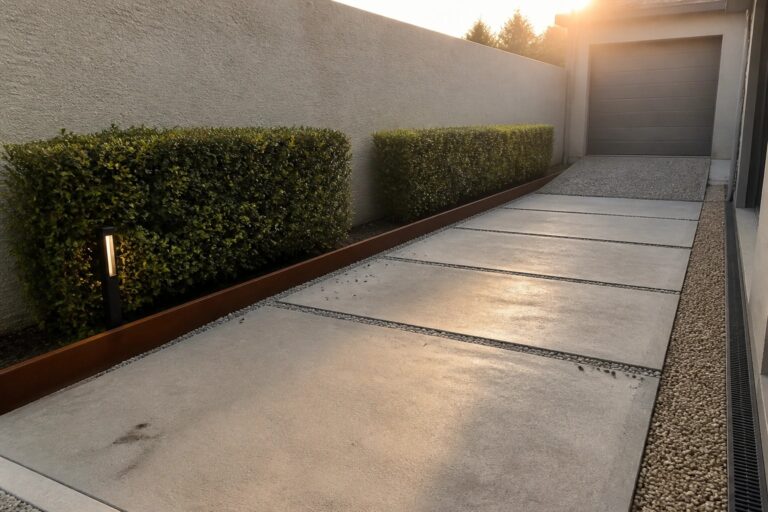
Large concrete pavers laid with gravel running between them work well in narrow driveways or side paths. The format keeps the surface solid enough for cars while the gravel sections break up the width and help with drainage in tight spots.
This setup suits modern homes where full concrete would feel too heavy. Keep the pavers big and the gravel lines narrow so the whole thing stays simple and easy to maintain. A low metal edge along the planting side helps hold the gravel in place.
Hexagonal Tiles For Narrow Parking Spots

Hexagonal tiles lock together to create a stable surface that holds up in tight outdoor passages. The pattern spreads weight evenly, which helps when cars or delivery vehicles pass through regularly.
This approach works best on side yards or slim driveways where space is limited. Prepare a solid base first so the tiles do not shift, and add wheel stops if you need to mark parking spots clearly.
Checkerboard Stone And Grass Driveways
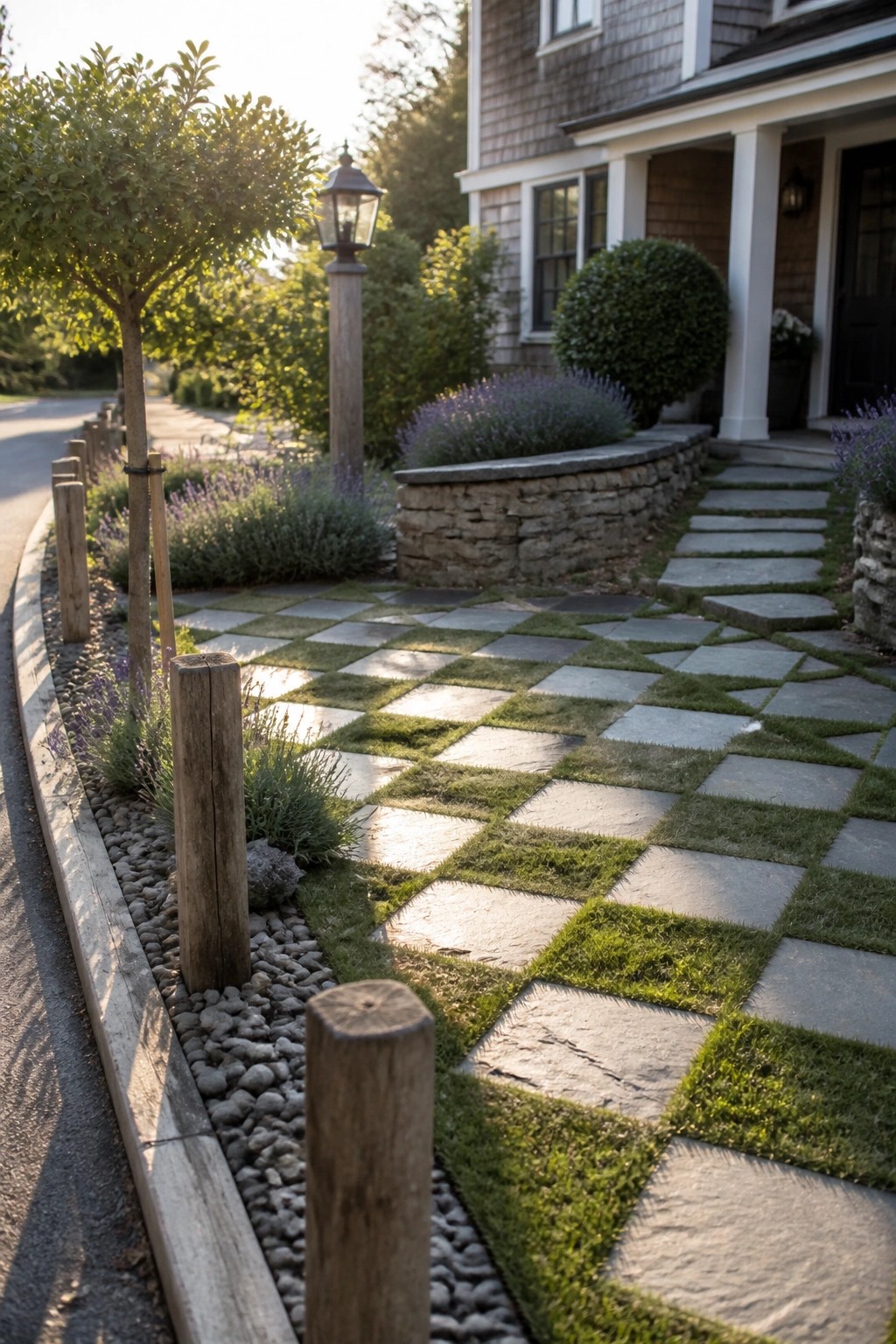
A grid of stone pavers set into grass creates a stable surface that still feels open. The pattern lets rain soak through instead of pooling, and it keeps the driveway from looking like a solid slab of concrete.
This works best on narrow lots or side entries where you need parking but want to avoid a full paved width. Space the pavers to match car tires and choose grass that holds up to some traffic.
Terracotta Pavers With Pebble Edging
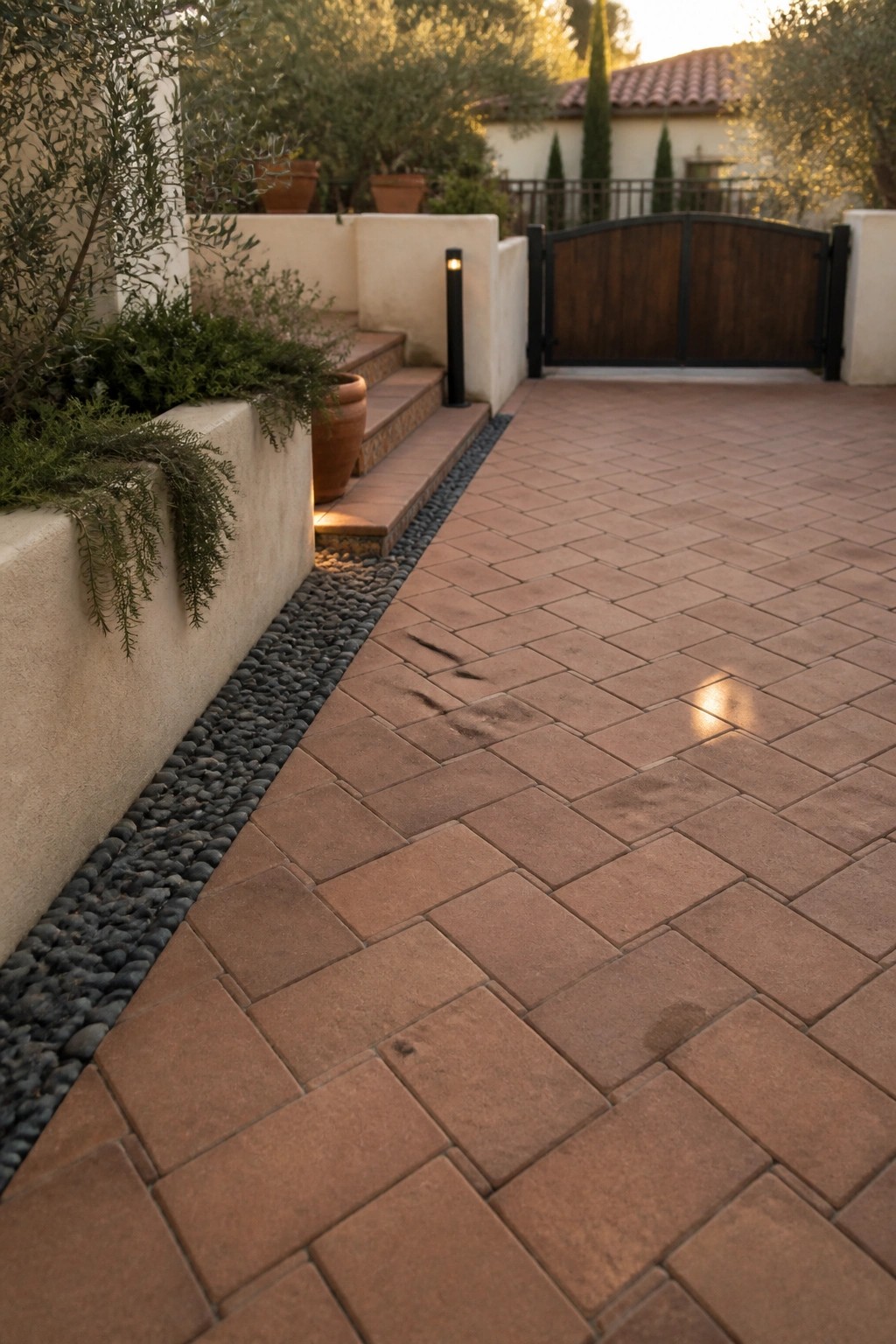
Terracotta tiles work well for small driveways because the warm color hides dust and the pattern gives the surface some texture without looking busy. The dark pebble strip along the edge helps with drainage and keeps the paving from feeling like it runs right into the wall.
This setup suits homes with narrow side access or tight front parking spots where you want something durable but not stark. Keep the pebble border narrow so it does not eat into the usable space, and make sure the tiles have a slight texture for traction when wet.
Grid Pavers Filled With Gravel
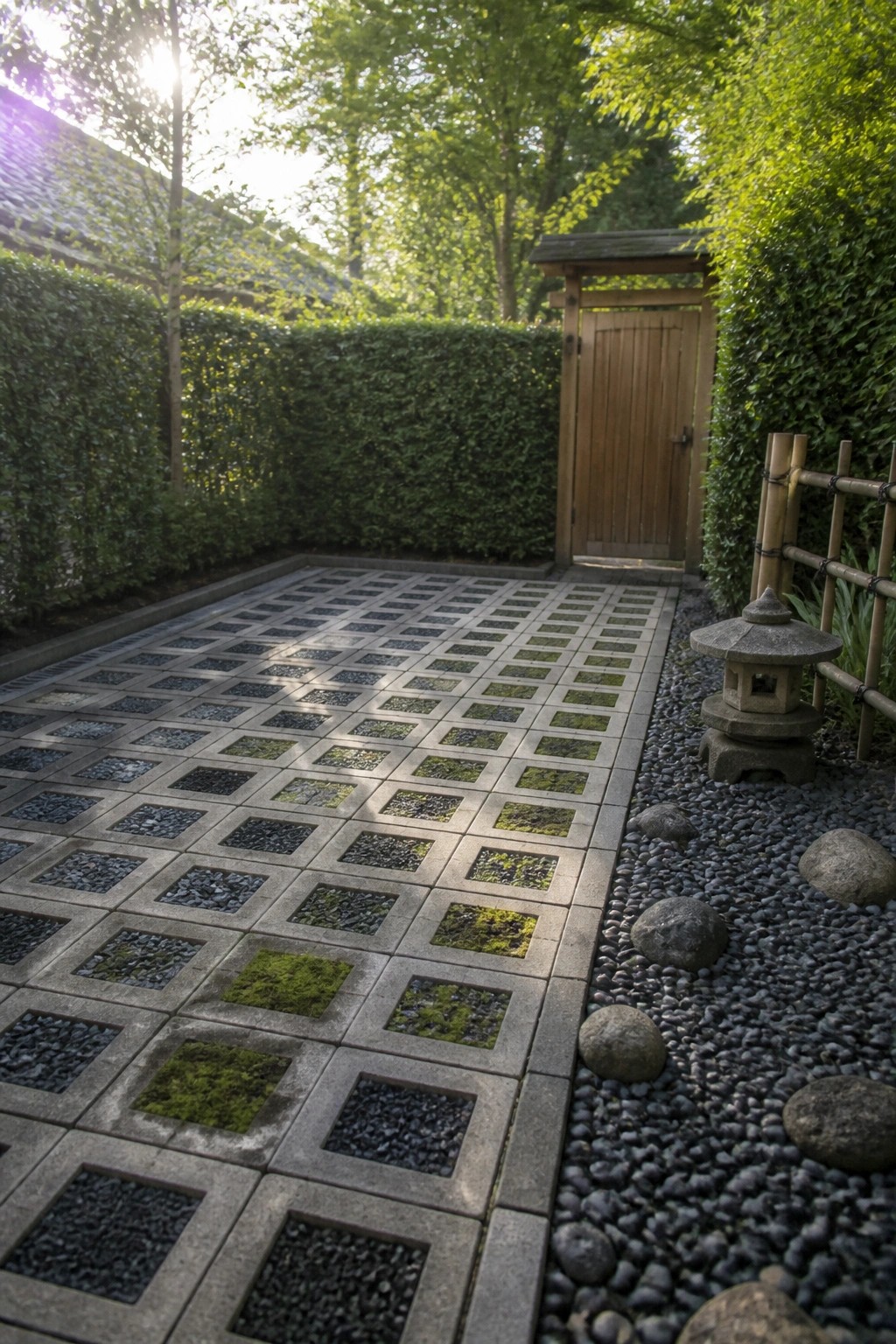
Grid pavers give you a solid walking surface without turning a small path into a solid slab of concrete. The open squares let gravel settle in and hold everything in place, while a bit of moss can grow where it gets some shade. This keeps the area looking softer and helps with drainage so water does not pool after rain.
The style works best along the side of a house or in a narrow courtyard where you need a path but do not want to lose every bit of green. Just make sure the base is level and the gravel is packed firmly into the grids so it does not shift underfoot over time.
Permeable Pavers For Narrow Driveways

Many homeowners turn to this style when the driveway has to fit between walls or fences without feeling cramped. The open sections let water drain straight through instead of pooling on the surface, which keeps the area looking cleaner over time.
It suits homes with limited front space and works best when the pavers are sized to match the width of the path. Check that the gravel stays level so cars do not shift it around, and keep the pattern simple so the whole stretch does not look busy.
Pavers With Wooden Edging For Small Parking Areas

Large pavers laid in a simple grid give a parking spot a solid base without taking up extra room. The wooden border keeps everything in place and stops the gravel from spilling over into the planted areas.
This setup works best on small lots or near the coast where you need something durable that still feels tied to the landscape. Use treated timber so the edge lasts and pick light-colored pavers to keep the space from feeling too heavy.
Herringbone Tiles For Narrow Paths
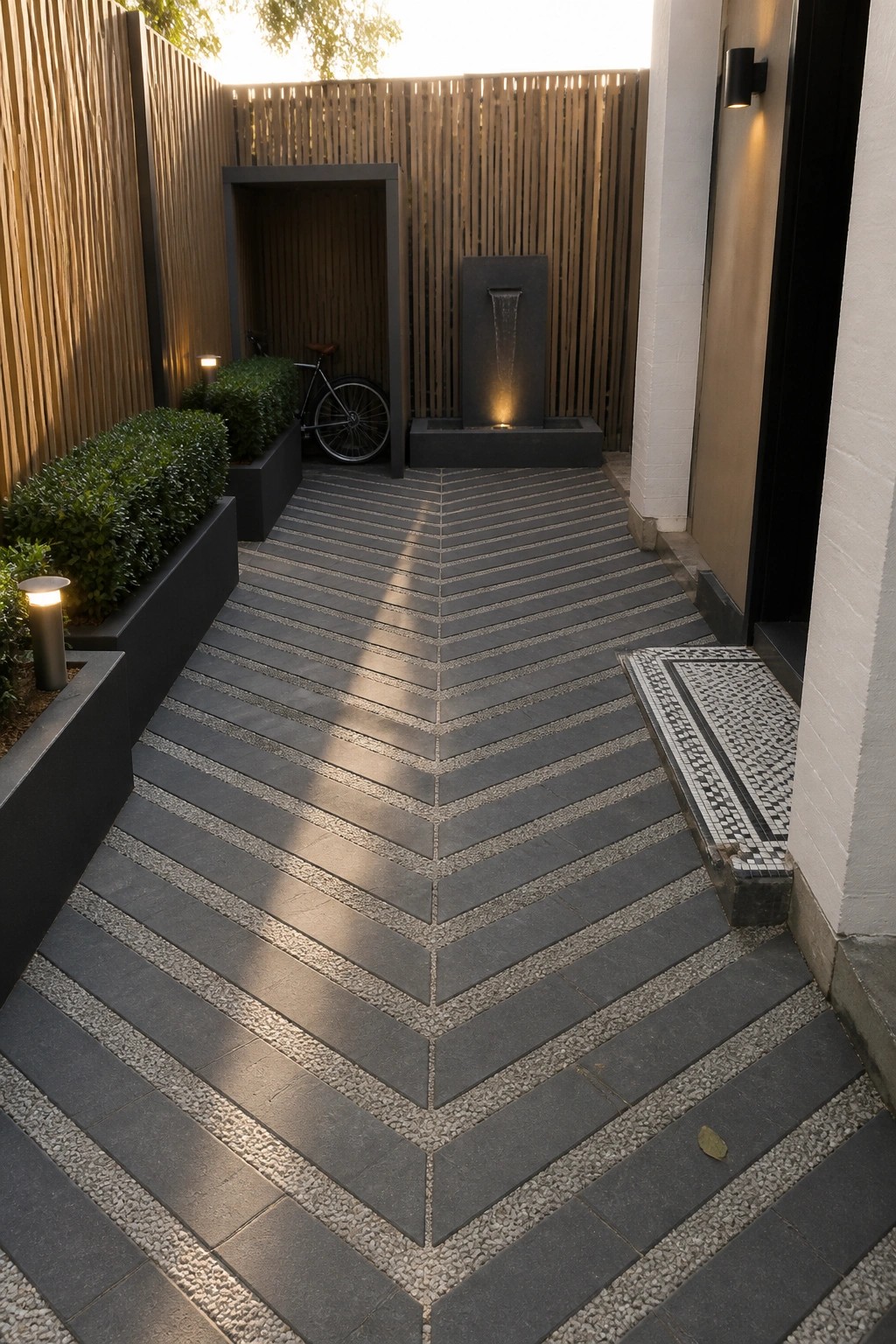
Herringbone tiles give a narrow path more visual interest without widening the space. The angled pattern breaks up the straight lines that can make tight walkways feel cramped, and it works especially well when the rest of the area stays simple.
This layout suits side yards or small courtyards where you need a clear walking surface but still want some character. Dark tiles hide wear better than light ones, and a gravel edge helps with drainage while keeping the pattern from feeling boxed in.
Grass Pavers Along Narrow Driveway Edges
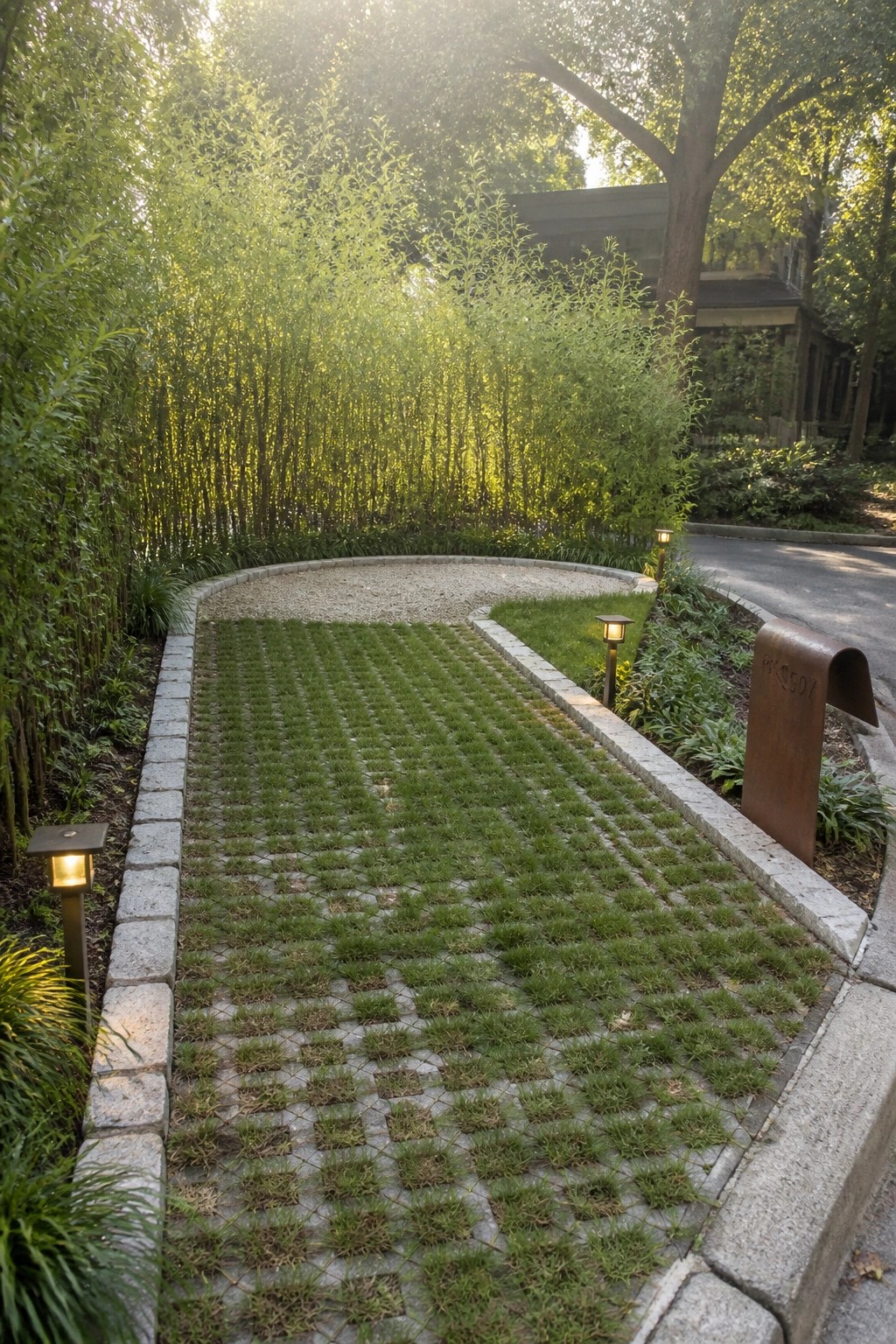
Grass pavers give you a firm surface for light vehicle use while keeping the area green instead of solid pavement. The grid holds the soil in place so grass can grow through, which helps with drainage and keeps the look softer in small side yards or tight access spots.
They work best on homes where the driveway runs close to planting beds or where you only need occasional parking overflow. Make sure the base layer is compacted well and pick a sturdy grid style if cars will sit on it regularly.
Incorporate A Pebble Band In Small Tiled Parking Areas

A narrow strip of pebbles set into the paving gives a simple way to break up a solid tiled surface in a tight entry or parking spot. The band adds texture and helps with drainage while keeping the space looking neat and open.
This works best on compact driveways or front paths where full gravel would feel too loose. It pairs well with larger rectangular tiles and leaves room for planting beds along the edge without crowding the area.
Herringbone Brick For Narrow Driveways

Herringbone brick stands out in tight spots because the angled pattern keeps the surface from looking too plain or cramped. It adds structure and direction without needing extra width, which helps small driveways or side paths feel more finished.
This layout works best on homes with limited frontage or side access where a straight run of pavers can feel dull. Keep the edges clean with a simple border and choose a brick tone that matches the house so the path blends in rather than dominates the space.
Interlocking Tiles For Narrow Access Paths
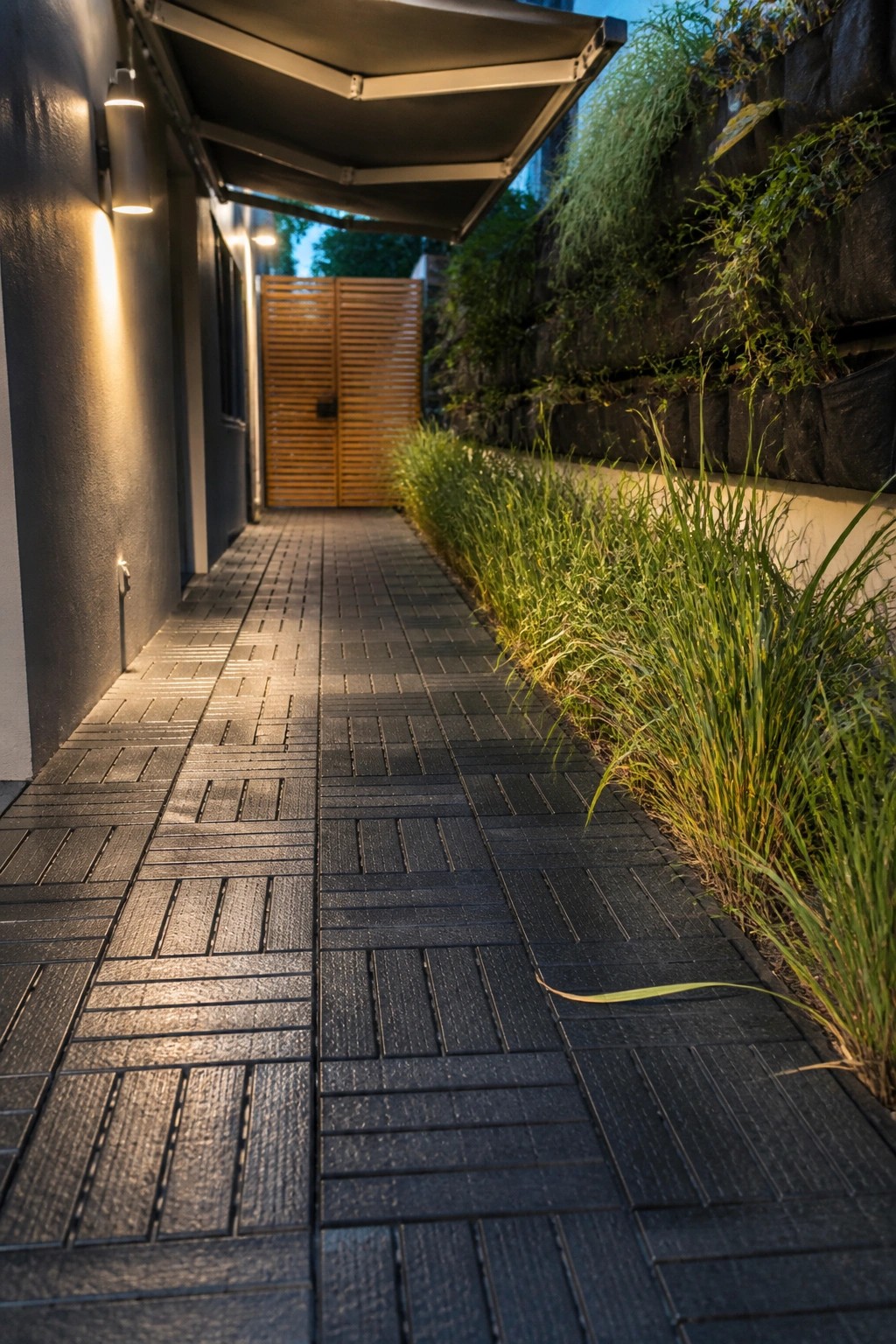
Interlocking tiles give you a solid walking surface that holds up in a tight strip between a house wall and a garden bed. The dark color keeps the narrow space from feeling too bright or stark while the pattern adds a bit of texture underfoot.
They work best on homes where the side yard doubles as a service path or occasional parking spot. Level the base well and leave a slight slope so water runs off into the planting rather than pooling on the tiles.
Patterned Tiles With A Narrow Planting Strip
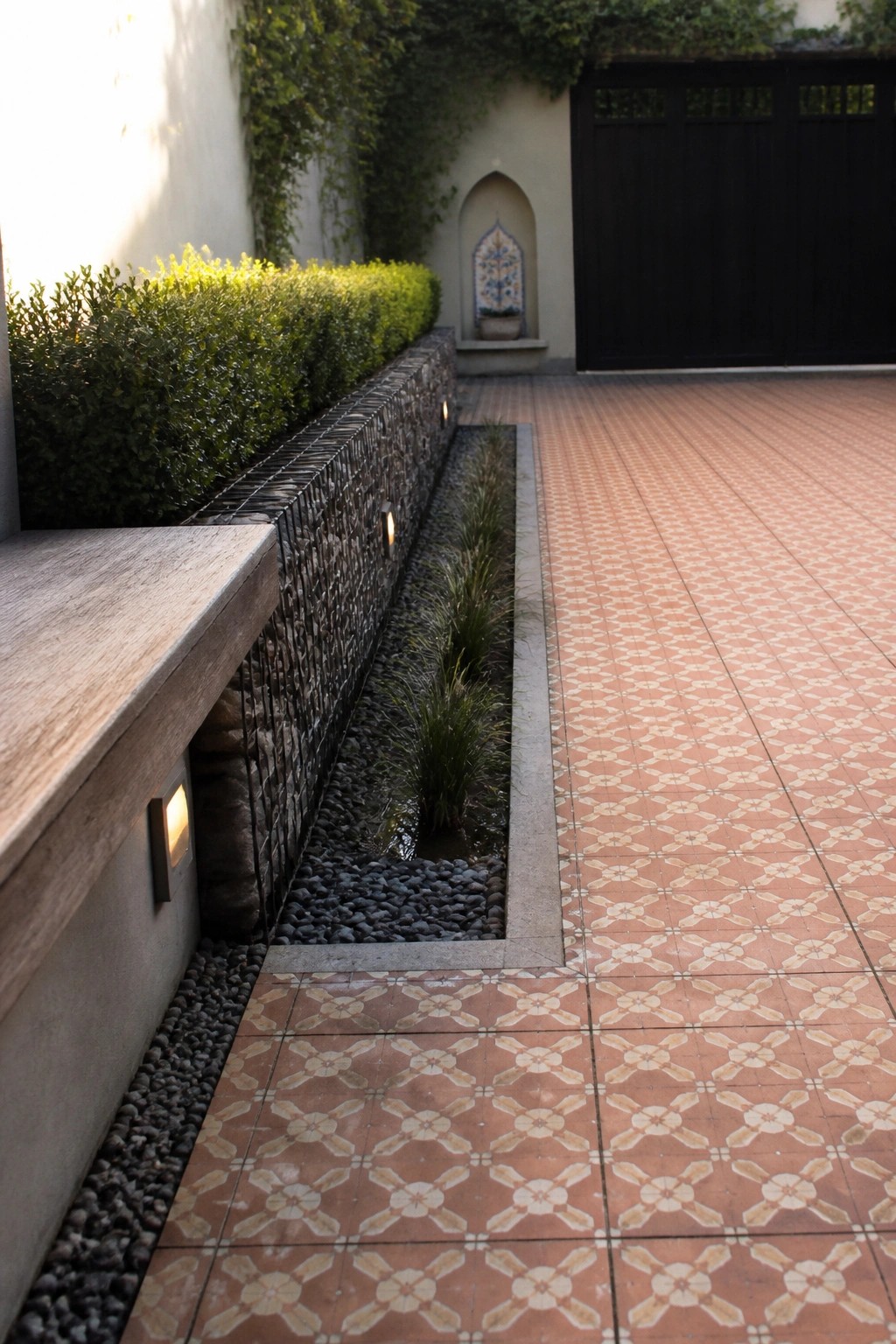
Many people use plain concrete or pavers in small driveways because they worry patterns will feel busy. But a repeating tile design can actually make a tight space feel more open and intentional. The tiles create a steady rhythm that draws the eye forward instead of making the area look cramped.
This approach works best on narrow lots where you want to keep the surface easy to clean and drive on. Pair the tiles with a slim planted channel down the middle for drainage and a bit of green. It keeps the whole setup practical while softening the look of all that hard surface.
Metal Strips Between Pavers
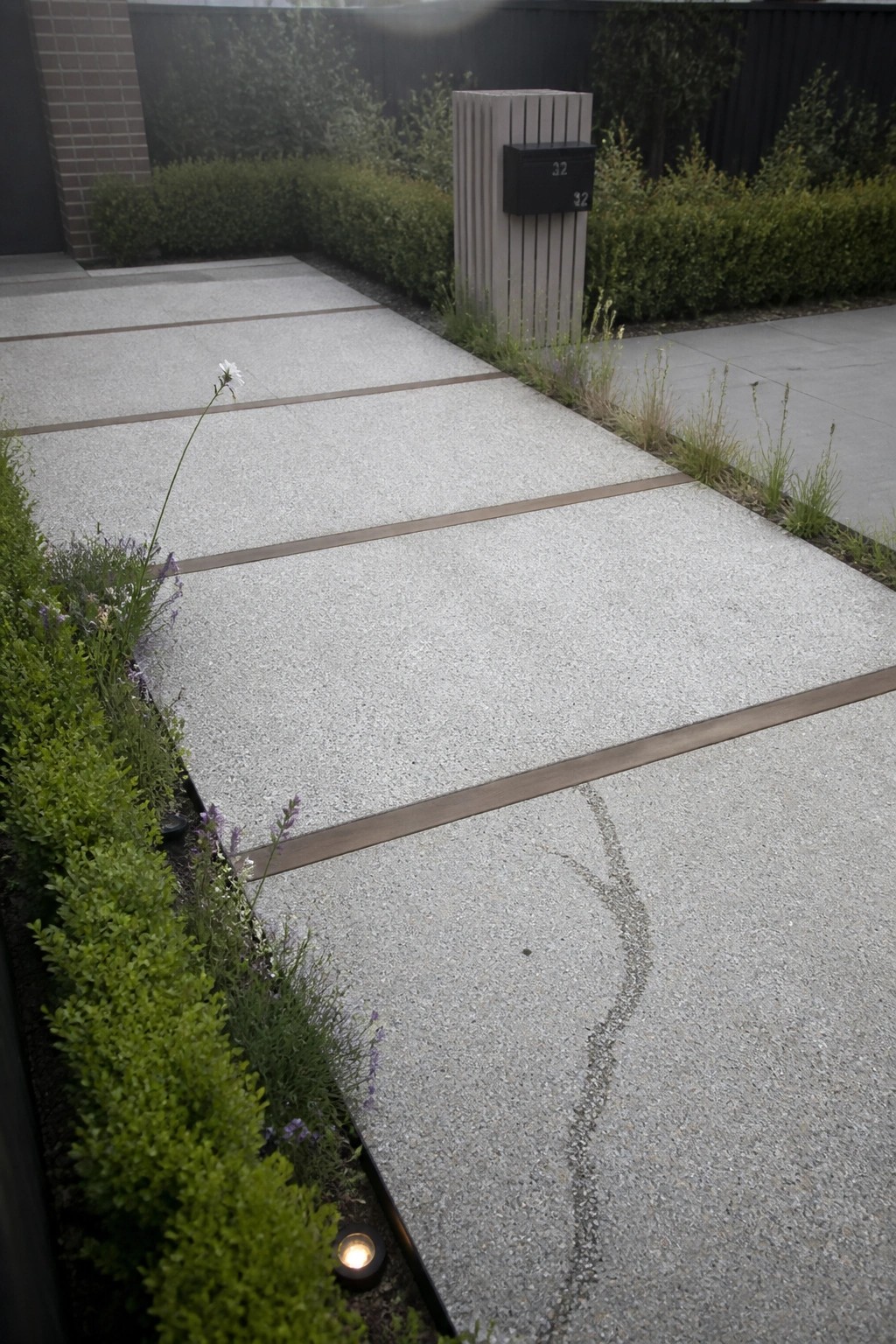
Metal strips set between large concrete pavers give a narrow path a clean, finished look without adding clutter. The thin lines break up the surface just enough to keep it from feeling like one solid slab, which helps a tight driveway or entry path look a bit wider and more organized.
This works well on homes where the parking area sits close to the house or garden beds. Keep the pavers large and the strips narrow so the surface stays easy to walk and drive on. Avoid too many different materials along the edges if the space is already small.
Large Format Tiles For Narrow Paths
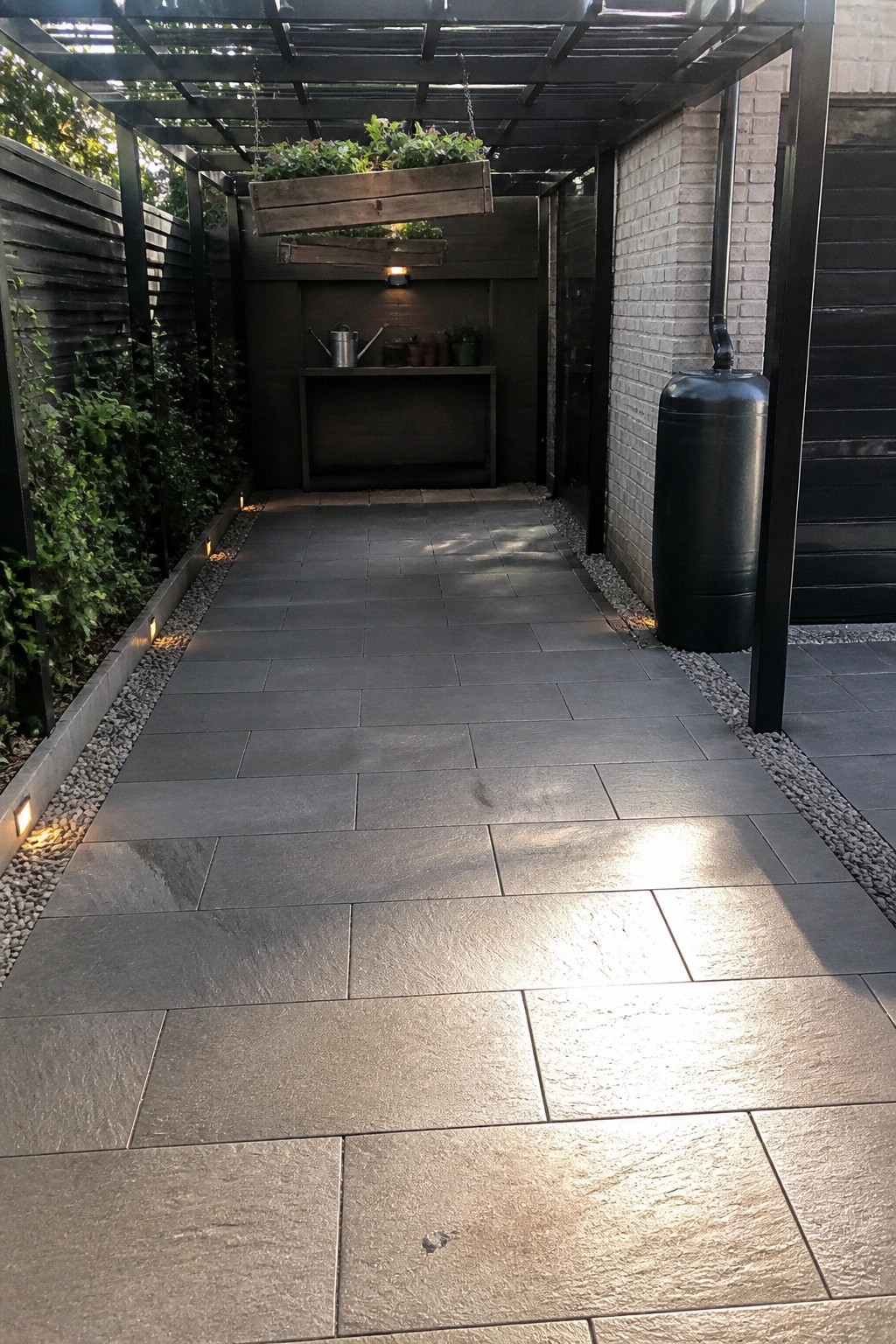
Large format tiles can help a narrow outdoor walkway feel more open and practical. Fewer grout lines keep the surface looking clean, and the bigger scale stops the space from feeling chopped up or cramped.
This approach works best along side yards, small courtyards, or tight passages between buildings. Pair the tiles with simple gravel edges to keep drainage easy and maintenance low.
Linear Tiles For Narrow Paths
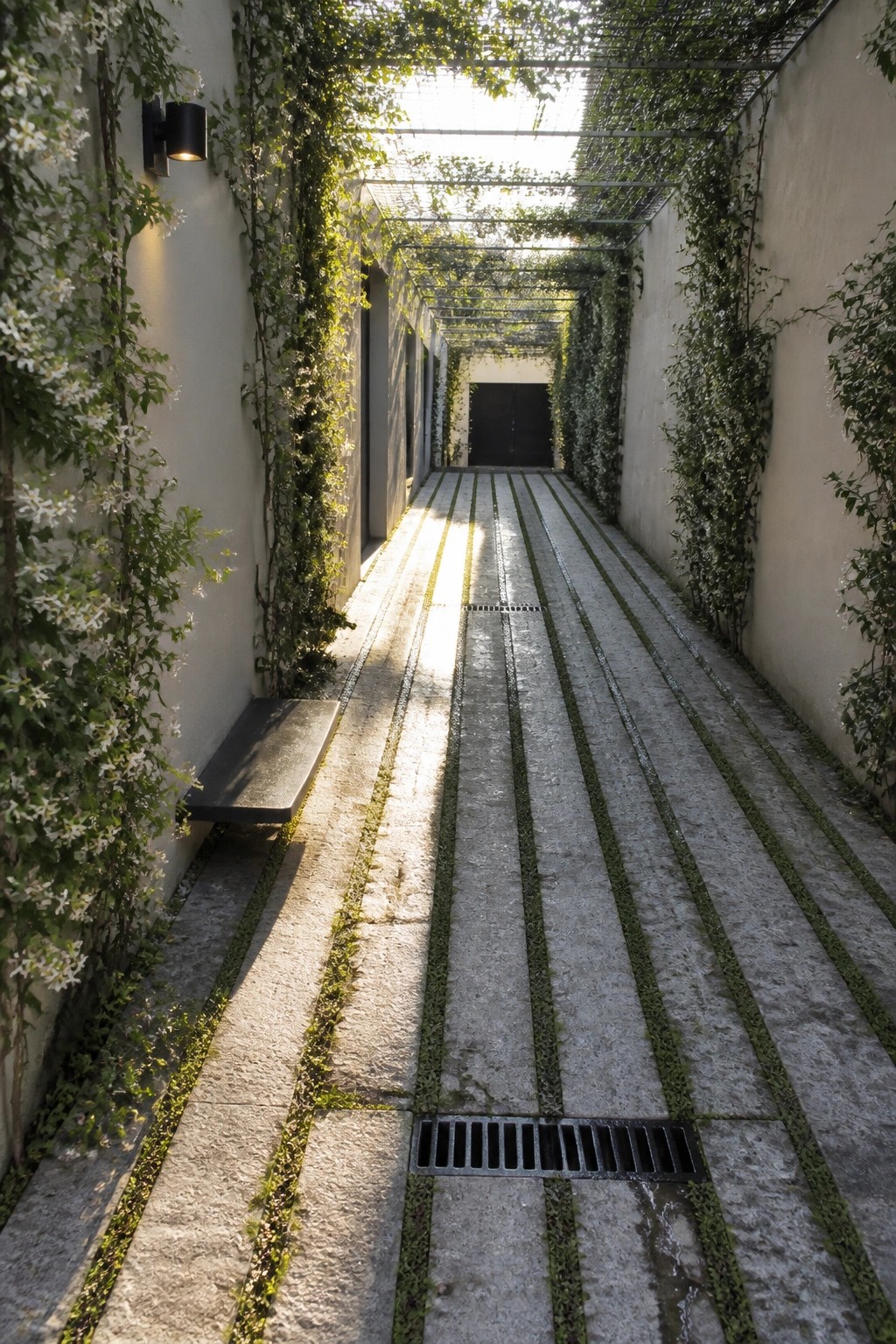
Linear stone tiles laid in long parallel rows work well in tight side passages because they stretch the eye forward and keep the surface from feeling chopped up. The narrow gaps between the rows let a little green come through, which softens the hard surface and helps water drain away instead of pooling.
This layout suits homes with slim side yards or covered walkways where every inch counts. Keep the joints planted with low ground cover and make sure the tiles slope slightly toward a drain so the path stays usable after rain.
Large Pavers With Gravel Joints Open Up Narrow Paths
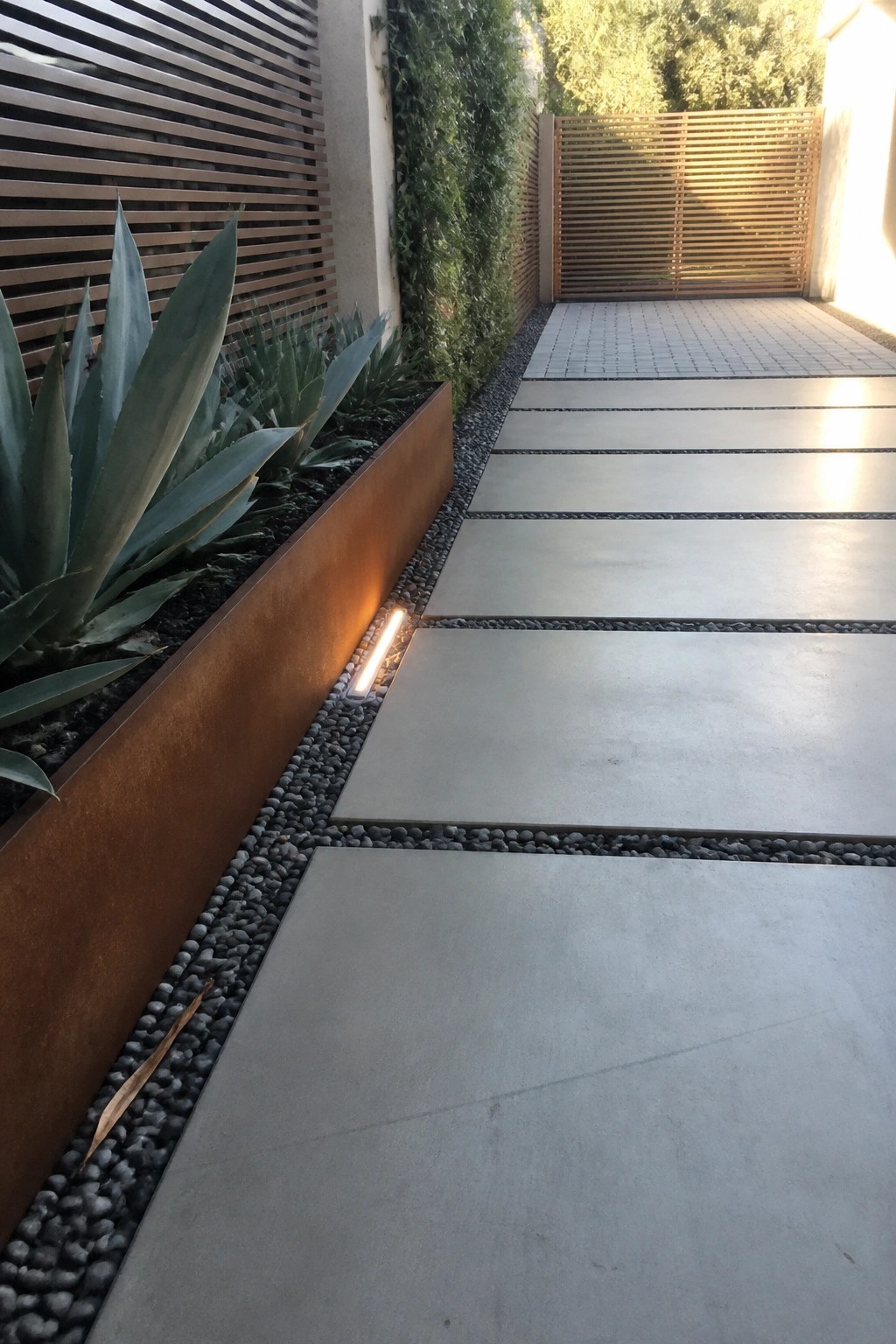
Large concrete pavers set with narrow gravel strips between them give a tight walkway more breathing room. The bigger tile size reduces the number of seams, so the path feels less broken up and easier to walk on.
This layout works well along the side of a house or in a small side yard where every inch counts. It also helps with drainage and pairs cleanly with a raised bed or low border planting on one side.
Large Tiles For Narrow Outdoor Spaces

Large format tiles work well in tight side yards and narrow passages because they cut down on grout lines and give the surface a cleaner look. Fewer seams also mean less weeding and easier sweeping when the space is used for storage or quick access.
Lay the tiles lengthwise so the narrow area feels longer rather than chopped up. This approach suits homes with limited outdoor room where you still want a solid, low-maintenance surface that handles foot traffic and occasional equipment.
Speckled Tiles For Narrow Paths

Speckled paving tiles give a narrow walkway a solid, finished surface without making the space feel cramped. The varied tones in the tiles help mask everyday dirt and wear that shows up quickly in tight areas.
This approach works well along side entries or small garden paths where you need a durable walking surface but do not have room for wide materials or heavy edging. Pair the tiles with a slim planted strip and simple lighting to keep the whole area practical and easy to maintain.
Frequently Asked Questions
Q: How do these tiles hold up when it rains a lot?
A: Choose tiles made for outdoor use with drainage holes. They let water run off instead of pooling. Sweep them clean now and then to keep the holes open.
Q: Can I install them without help in a tight spot?
A: Start from one corner and work your way out. Snap each tile into the next as you go. You will finish faster than you think.
Q: What about turning the car on them every day?
A: Go for tiles with a textured surface. This gives tires better grip during turns. Smooth ones can make the car slide a bit on tight maneuvers.
