

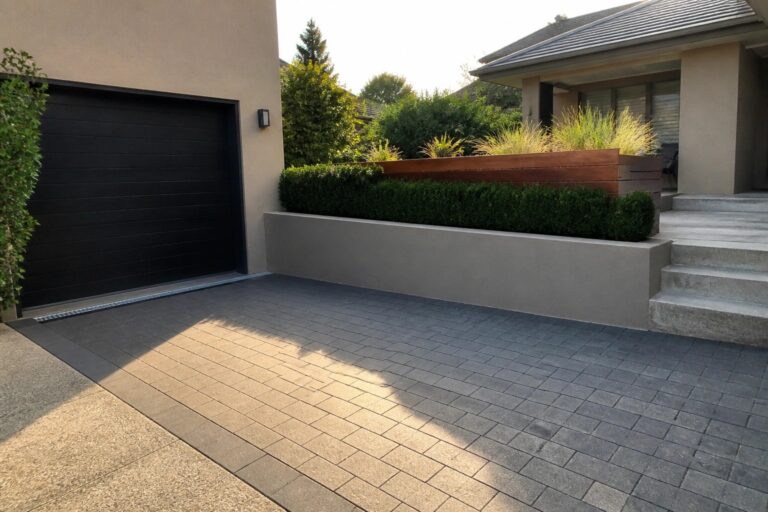
I often notice that the surface leading up to a house shapes how the whole place reads from the street, especially once cars start using it every day.
Over time I have learned that easy installation only helps if the tiles stay level through rain, freeze, and regular weight without needing constant fixes.
Some options end up looking uneven after a season or two, which is why I check how the pieces connect before committing to a full area.
Durability comes down to the material and the pattern.
I would probably try one of the simpler layouts in a side section first to test how it performs before covering the main driveway.
Using Interlocking Tiles on Your Driveway
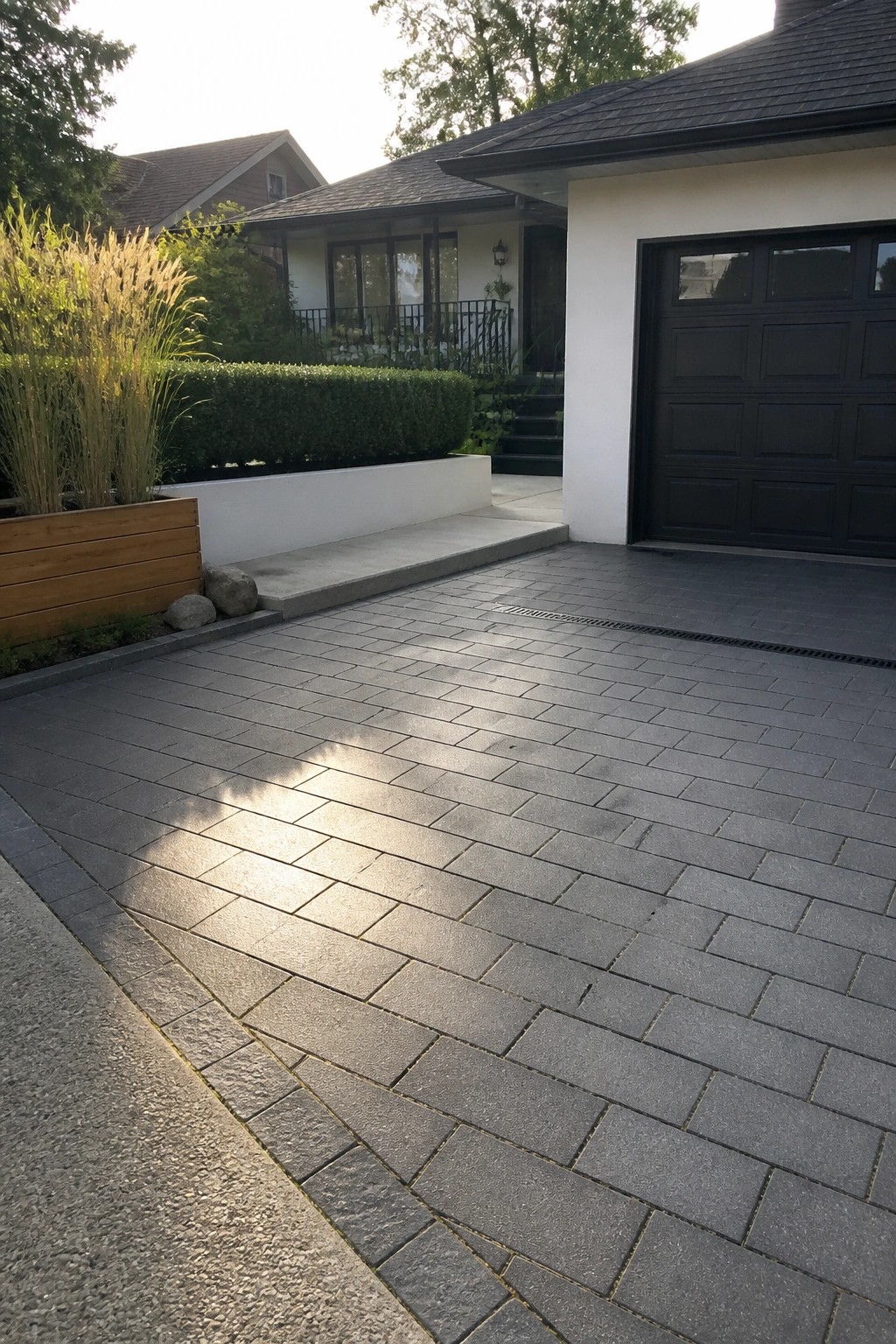
Interlocking tiles work well for driveways because they handle daily car traffic without shifting or cracking over time. The pattern stays tight even after years of use, and the surface drains properly when installed with the right base. Many people like this approach because it looks finished without needing constant upkeep.
These tiles suit homes with straight driveway layouts and modern or simple exteriors. Lay them in a running bond pattern for the most stable result, and keep the color neutral so it blends with the house rather than standing out. Avoid very dark shades if you live in a sunny area since they show tire marks more easily.
Interlocking Hexagonal Tiles For Walkways
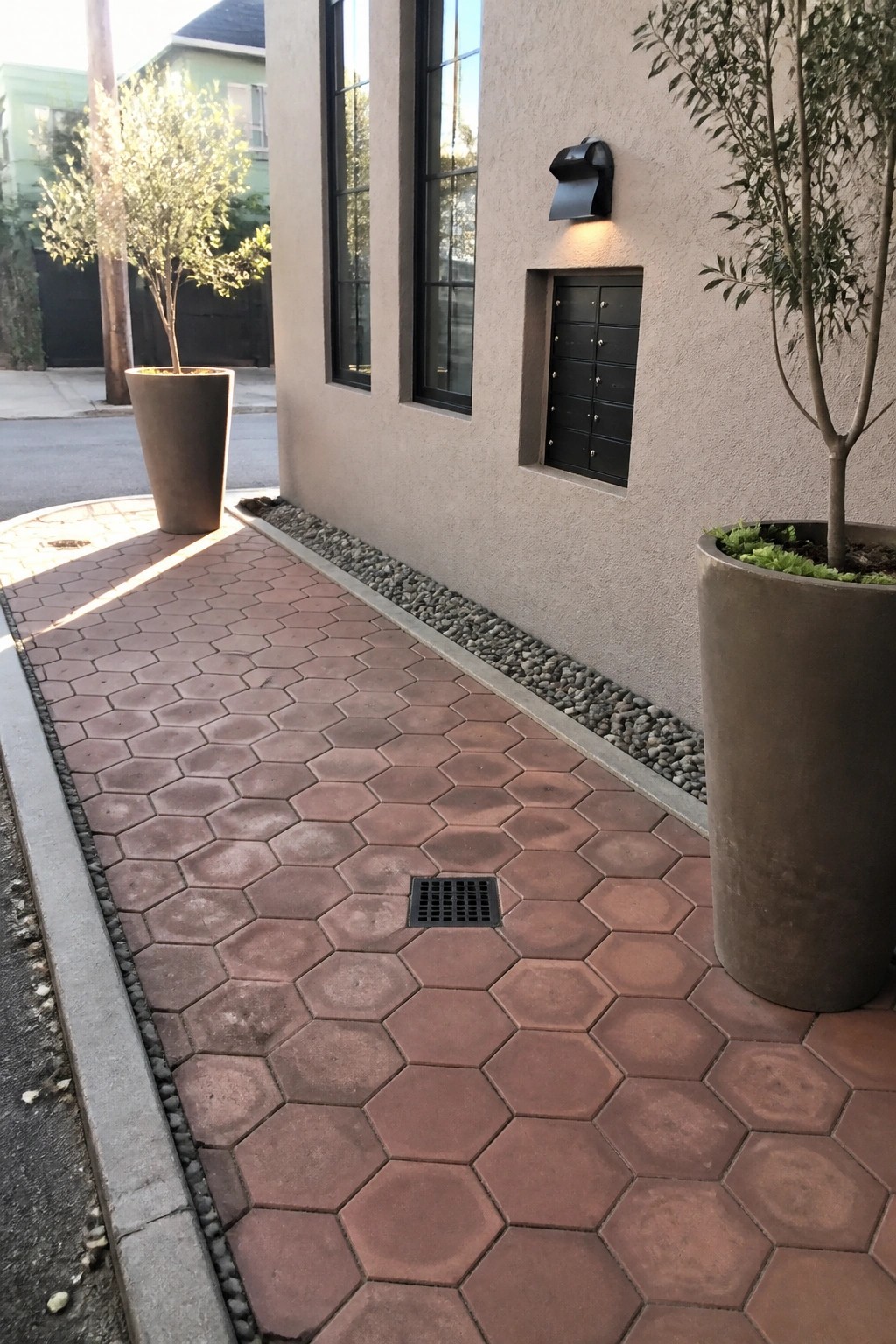
Interlocking hexagonal tiles hold up well in high traffic spots and handle water better than solid surfaces. The pattern locks together without much shifting over time, which cuts down on repairs. A simple gravel border along the edge keeps the whole thing neat and stops soil from washing onto the path.
These tiles work best on narrow side paths or entry approaches where you want something tougher than gravel but easier than poured concrete. Make sure the base is level and add a drain grate if water tends to pool. They suit homes that already use clean lines on the exterior and need a surface that lasts without constant upkeep.
Grid Pavers With Grass Infill for Driveways

These tiles create a firm driving surface while still allowing grass to grow through the open squares. They handle regular car traffic without turning into a mud pit or looking like a plain slab of concrete.
They suit homes with smaller front yards or those wanting to keep some greenery in the parking area. The key is to lay a good gravel base first and choose a grass type that tolerates some shade and foot traffic.
Interlocking Pavers For Curved Driveways
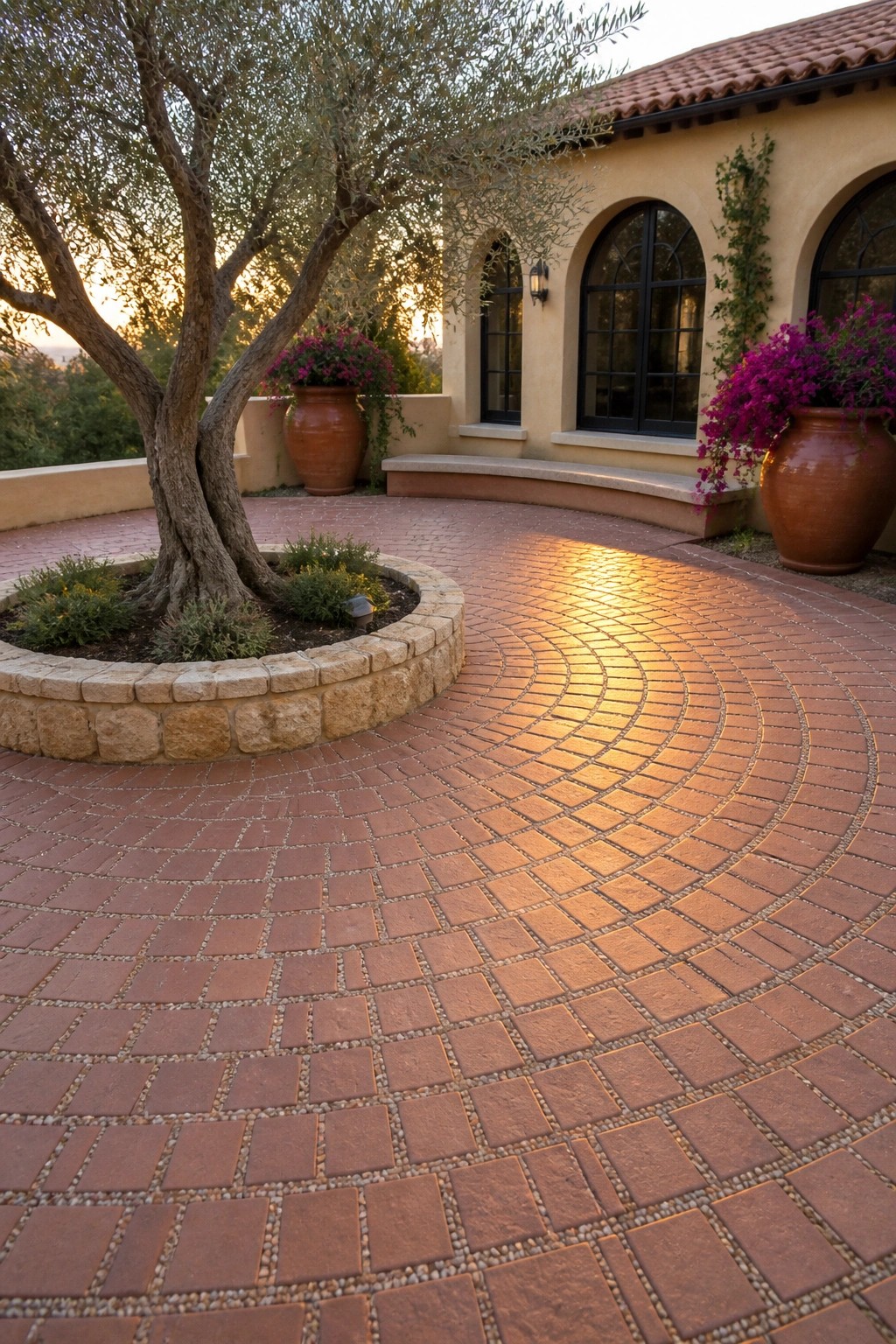
Many people like interlocking pavers because they handle curves without a lot of cutting or extra work. The pattern here shows how the tiles can be laid in a fan shape to follow the flow of the space while still staying solid under car weight.
This approach works well on homes with wider entry areas or turnaround spots. It keeps the surface even, drains well, and holds up over time without needing constant repairs. Just make sure the base is prepared right before laying the tiles.
Large Format Tiles For A Practical Driveway
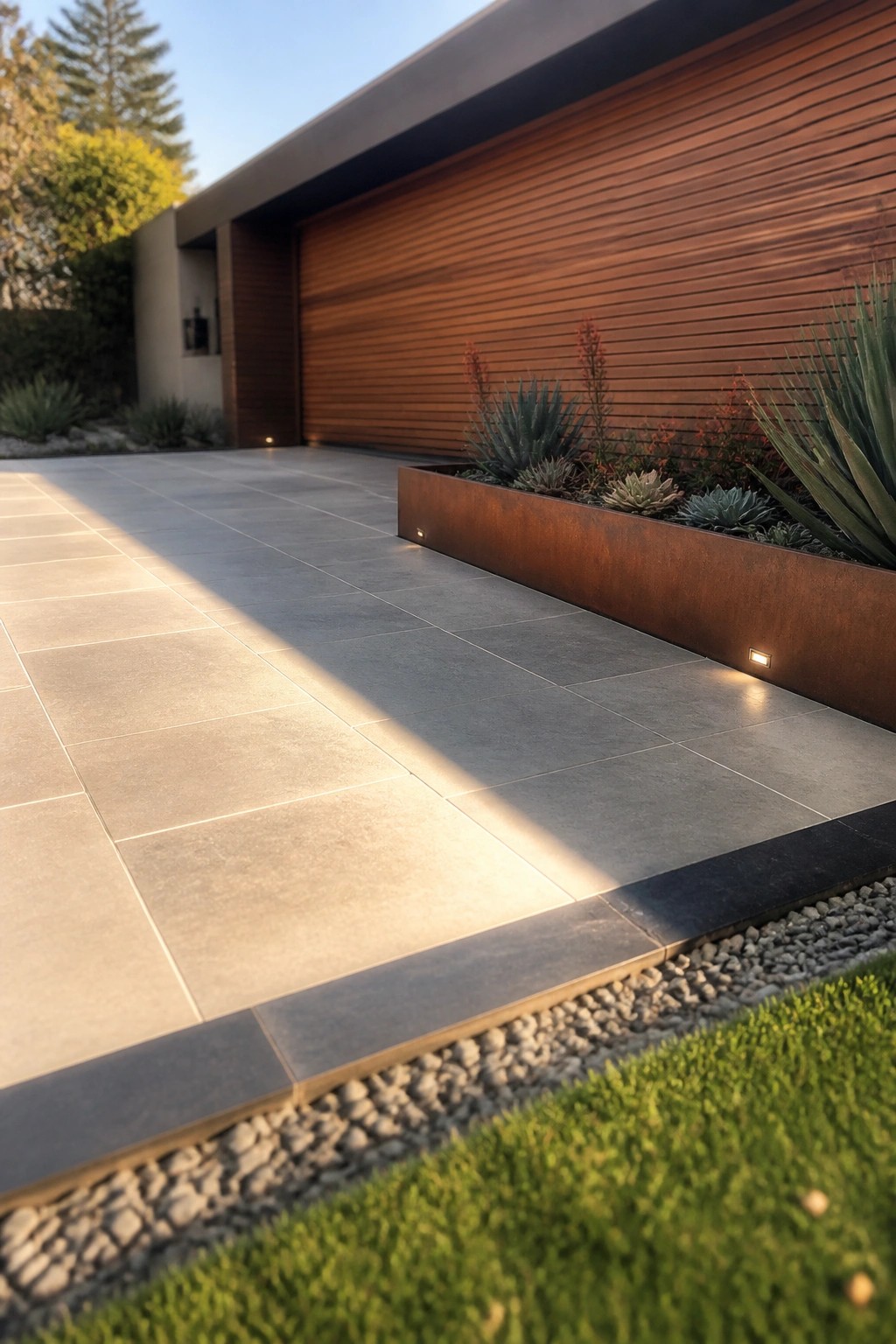
Large gray tiles like these give a driveway a solid, even surface that stands up to daily use. They cut down on weeds and shifting that you often get with gravel while still looking simple and clean next to the house.
They suit modern homes where you want something low maintenance but not as stark as plain concrete. Lay them over a stable base and they should stay level for years without much extra work.
Brick Pavers For A Driveway That Lasts
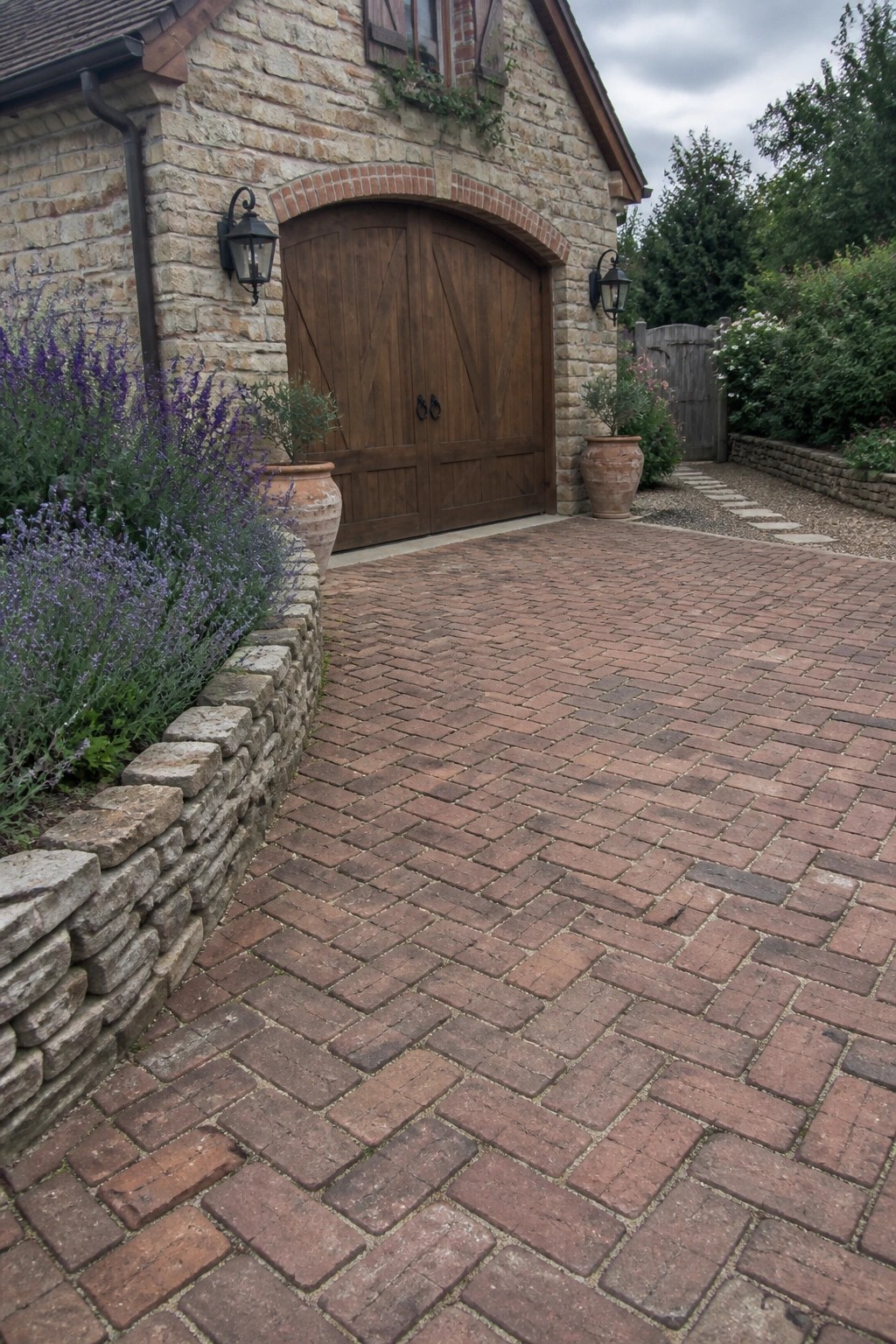
Interlocking brick pavers stand out because they handle daily car use without shifting or cracking the way poured concrete often does. The pattern locks each piece in place, which helps the surface stay even even after years of weather and weight.
This works well on homes that already use brick or stone details, since the material ties the driveway into the rest of the property. Just make sure the base layer is compacted and sloped for drainage so the pavers stay level over time.
Interlocking Tiles For A Low Maintenance Patio
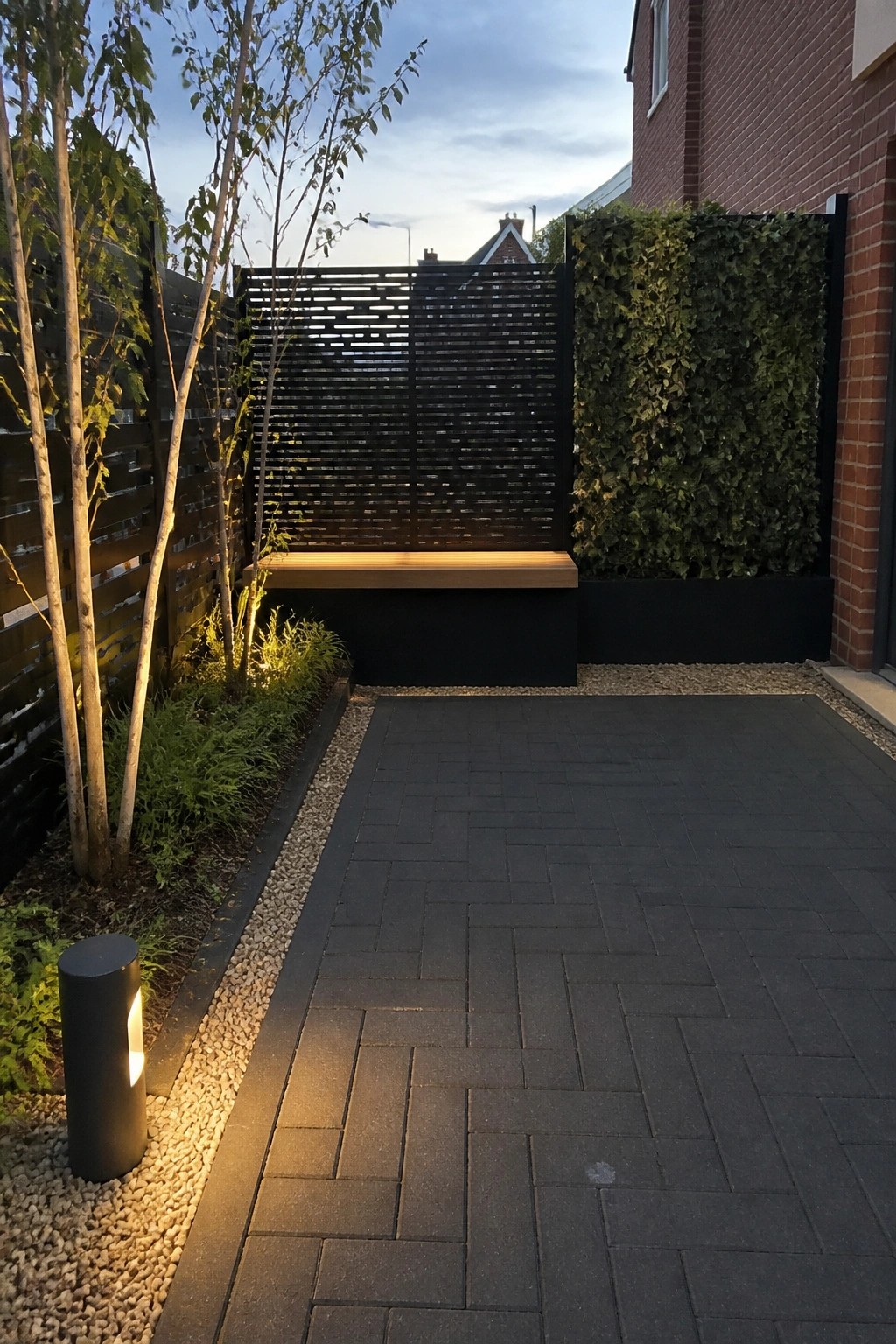
Interlocking tiles make a good choice when you want something solid underfoot that does not need much upkeep. The dark color in this example helps hide dirt and wear, which is useful in a space that gets regular use from people walking through.
These tiles work best in smaller yards or side areas where you need a flat surface next to planting beds. Lay them over a proper base so they stay even, and they will hold up without much fuss for years.
Interlocking Lattice Tiles For Driveways
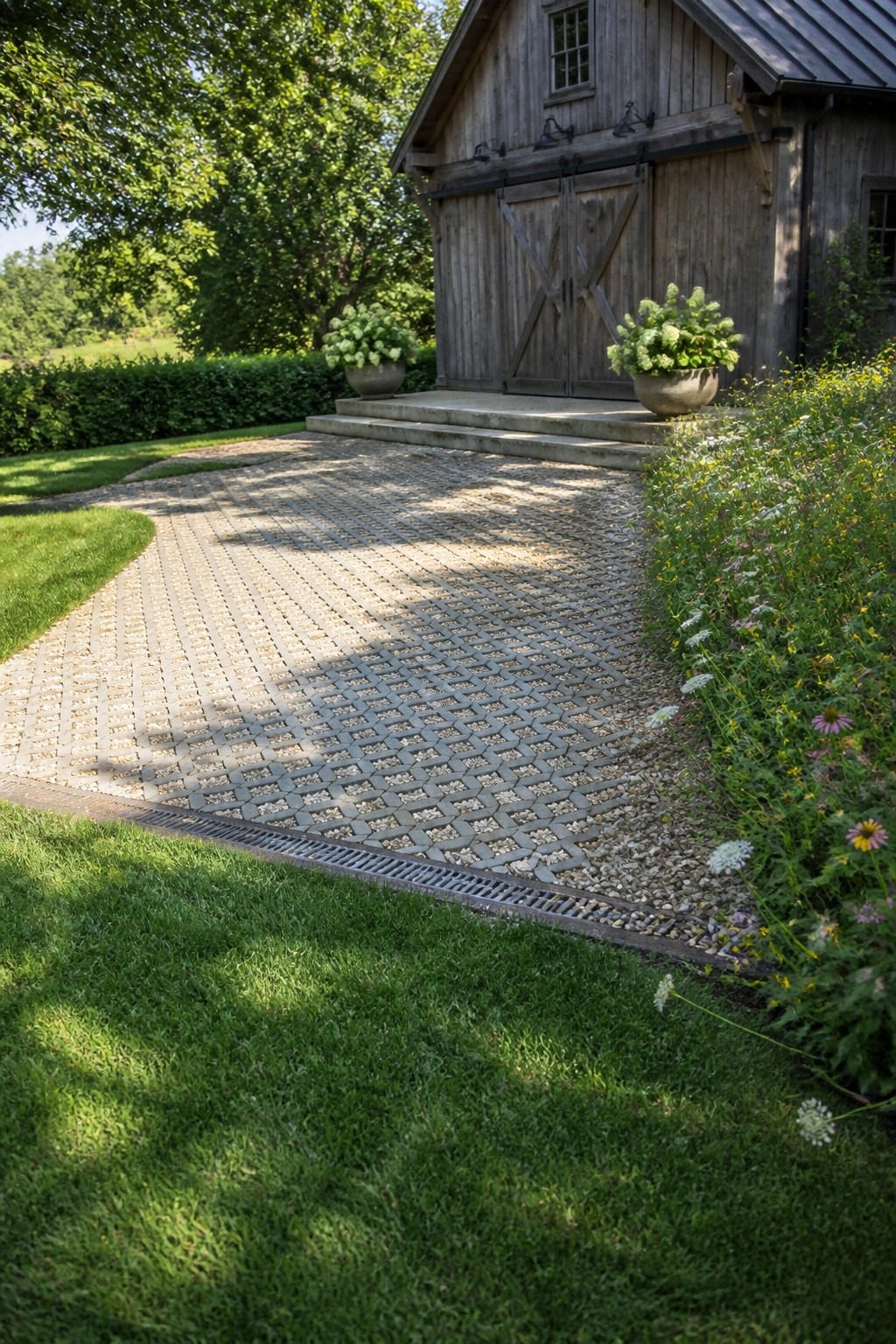
These lattice style pavers create a firm driving surface while letting water drain straight through. The grid holds gravel in place so the driveway stays level even after heavy use or rain. Many people choose this setup because it avoids the cracking that comes with solid concrete.
The look works well on rural properties or homes with gravel yards. Just lay the tiles over a compacted base and fill the openings. Keep the edges clean so grass does not creep in too fast.
Interlocking Tiles For Garden Paths
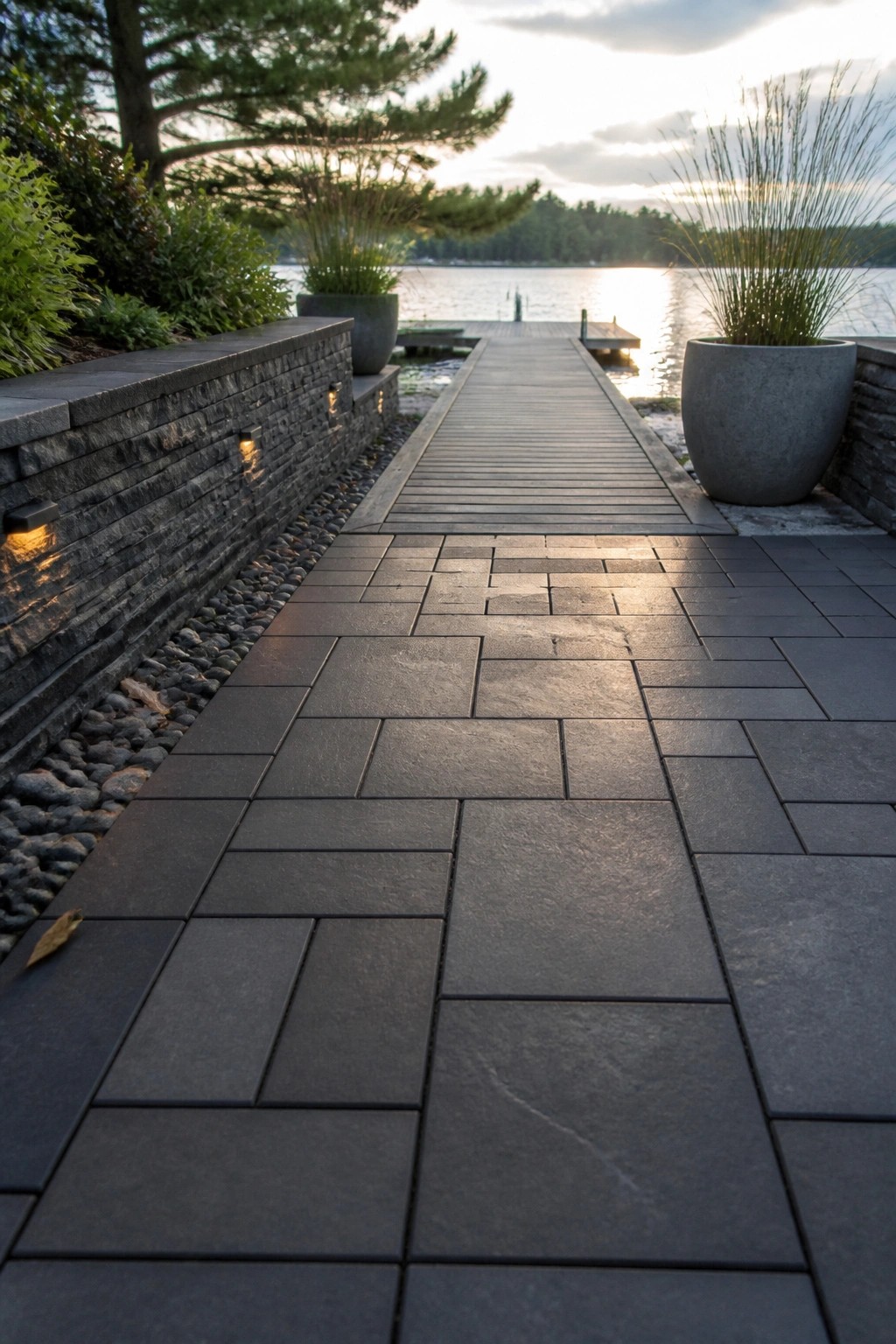
Interlocking tiles hold up well when used for paths that see regular use. They stay in place once set and handle rain or foot traffic without shifting much.
These tiles suit homes with side yards or areas near water where a simple hard surface is needed. Level the ground first and choose a dark tone if you want it to blend with stone walls or edging.
Interlocking Tiles for Parking Areas
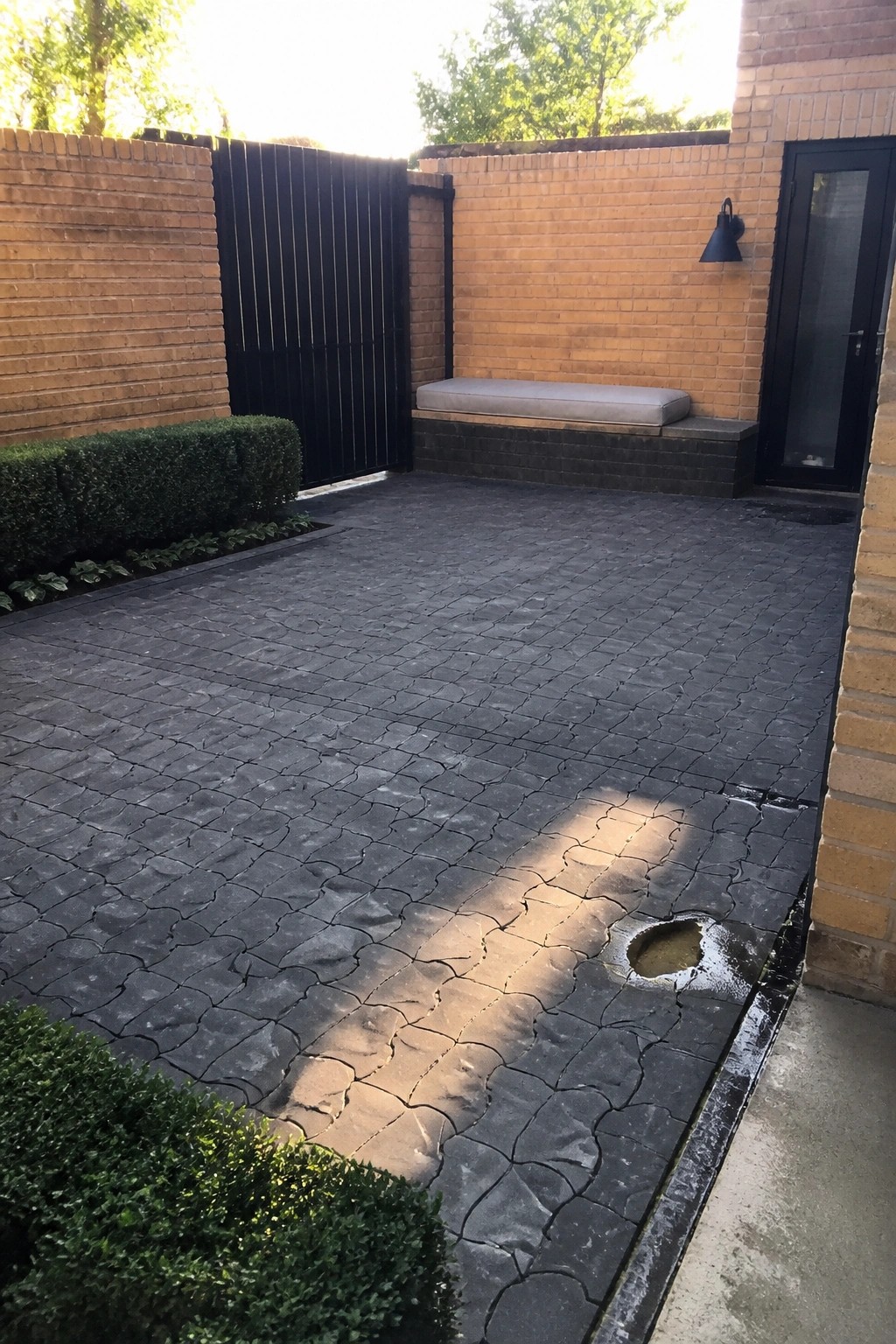
Interlocking tiles stand out for parking spots because they lock together into a firm surface that handles weight without shifting much. They go down faster than poured concrete and still leave room for water to drain through the joints.
These tiles suit homes with side courtyards or short driveways where cars turn or sit daily. A solid base layer matters most, since that keeps the surface even after years of use.
Paver Walkways Hold Up Over Time
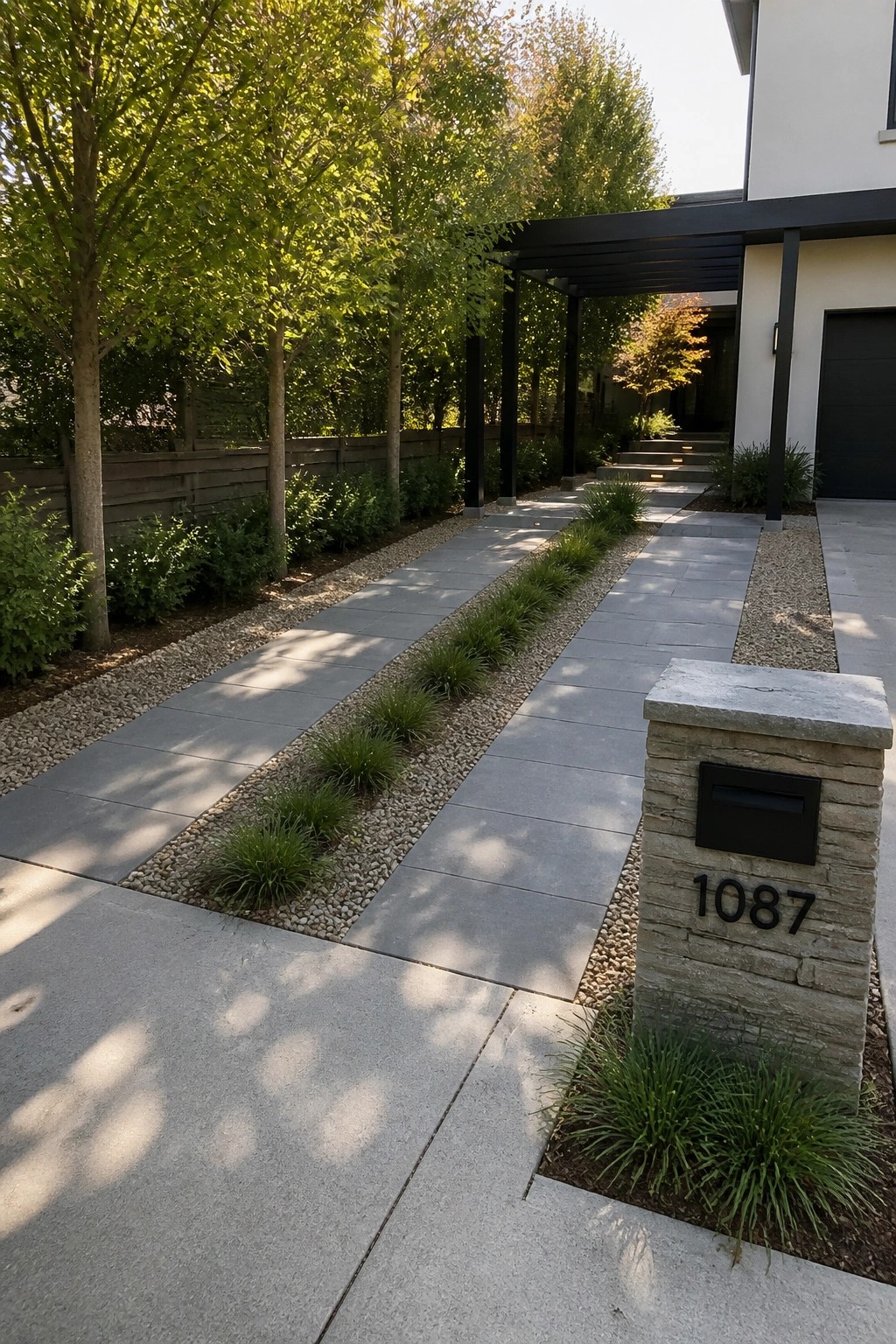
Large concrete pavers make a good choice for front walkways because they go down fast and handle foot traffic without shifting. The gravel strips between them help with drainage and cut down on weeds, so the path stays looking neat with little work.
This approach suits modern homes that want a clean line from the street to the door. Keep the paver sections wide enough for easy walking and choose low grasses that stay contained in the gravel.
Interlocking Tiles Create A Durable Side Path
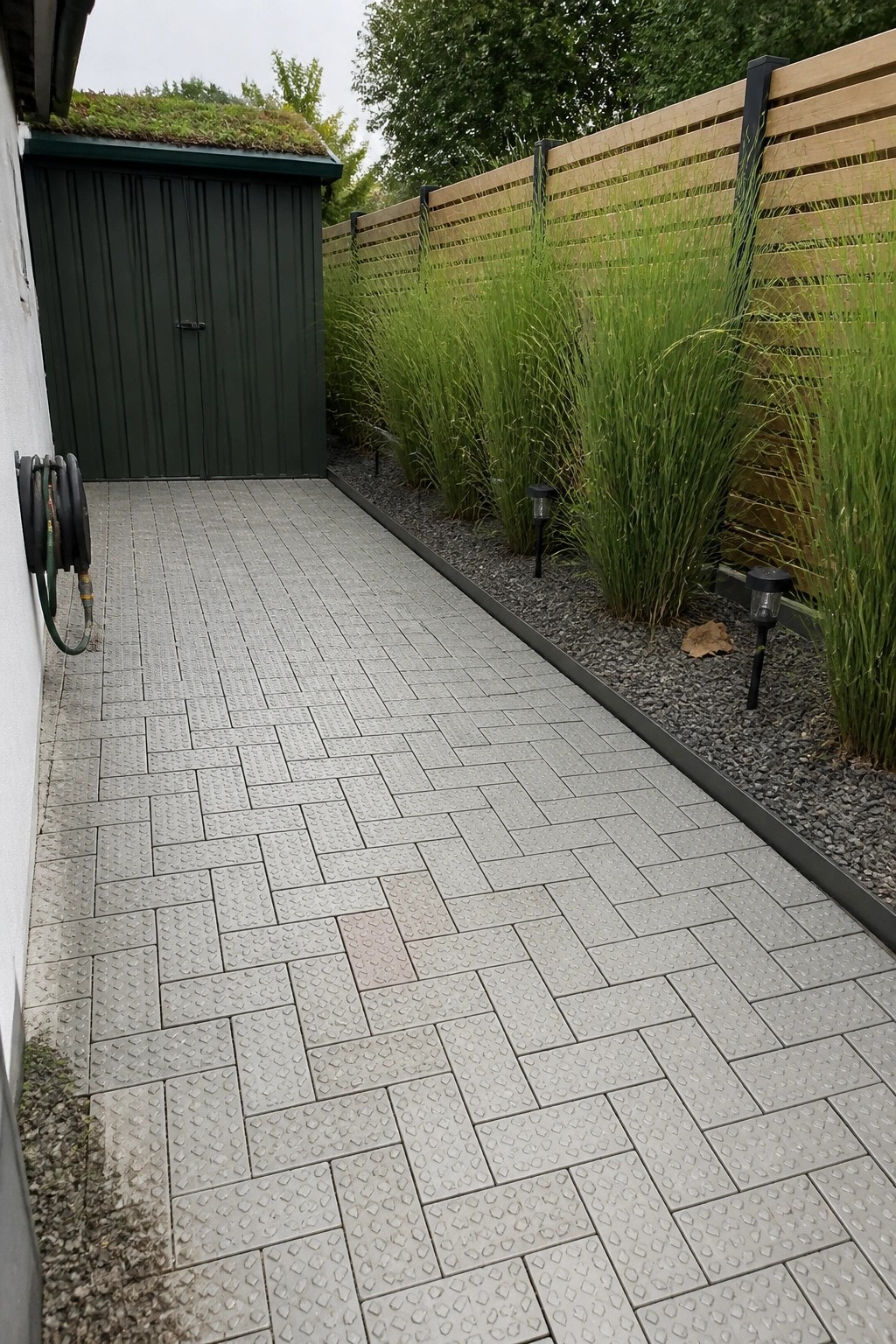
Interlocking tiles stand out for narrow spaces like this because they install fast and stay put without much fuss. The herringbone layout adds stability so the surface does not shift underfoot or with weather changes.
These tiles suit homes with side access areas or garden paths that need to handle regular use. Level the base well and add a simple gravel edge so water drains away from the house.
Interlocking Pavers With Grass Joints
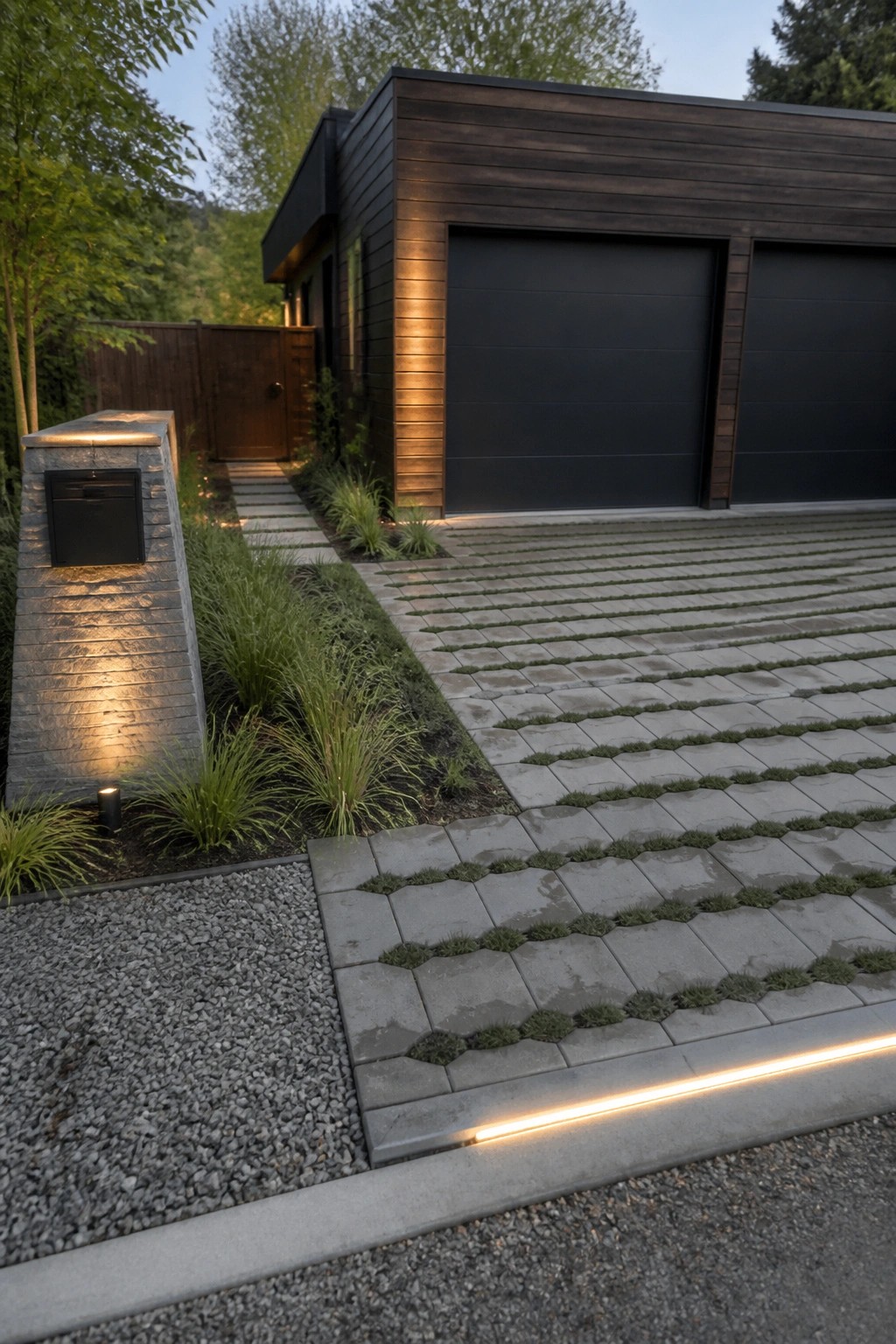
Interlocking pavers with grass growing in the joints give a driveway a softer look while still handling regular car traffic. The pattern breaks up the solid surface and lets a bit of green run through the whole area.
This setup works well on homes with larger driveways where you want the paving to blend into the surrounding lawn and beds. A solid base under the tiles keeps them from shifting, and the grass strips need occasional trimming but little else.
Interlocking Tiles for Outdoor Courtyards
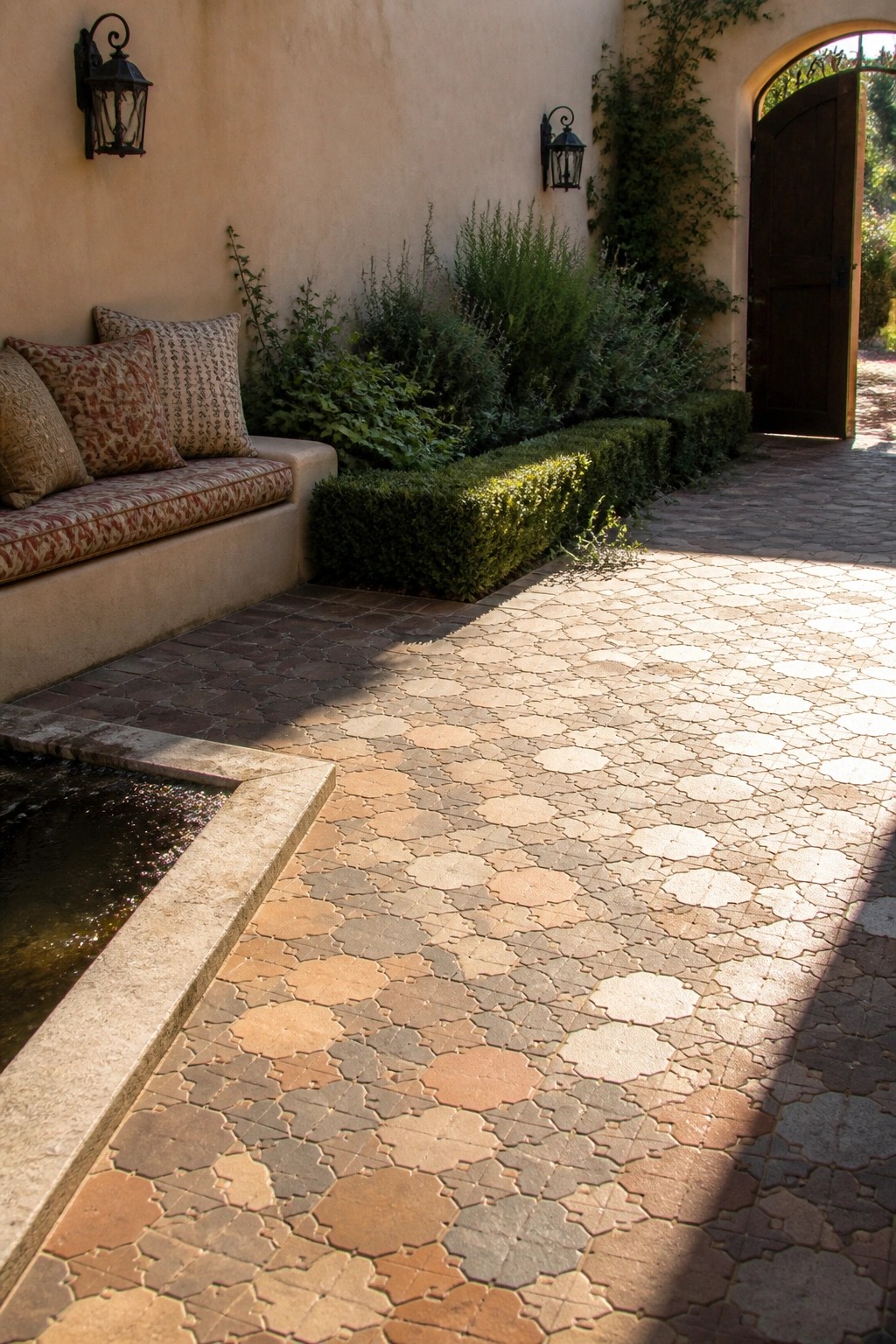
Interlocking tiles make a good choice when you want a surface that stays put and does not need much upkeep. The pattern locks the pieces together so they hold up under regular use, and the mix of tones helps hide dirt and wear over the years.
This approach suits homes with paved courtyards or side yards that see daily traffic. Keep the edges simple with low shrubs or a low wall, and make sure the base is level before laying the tiles so water drains properly.
Interlocking Tiles for Parking and Access Areas
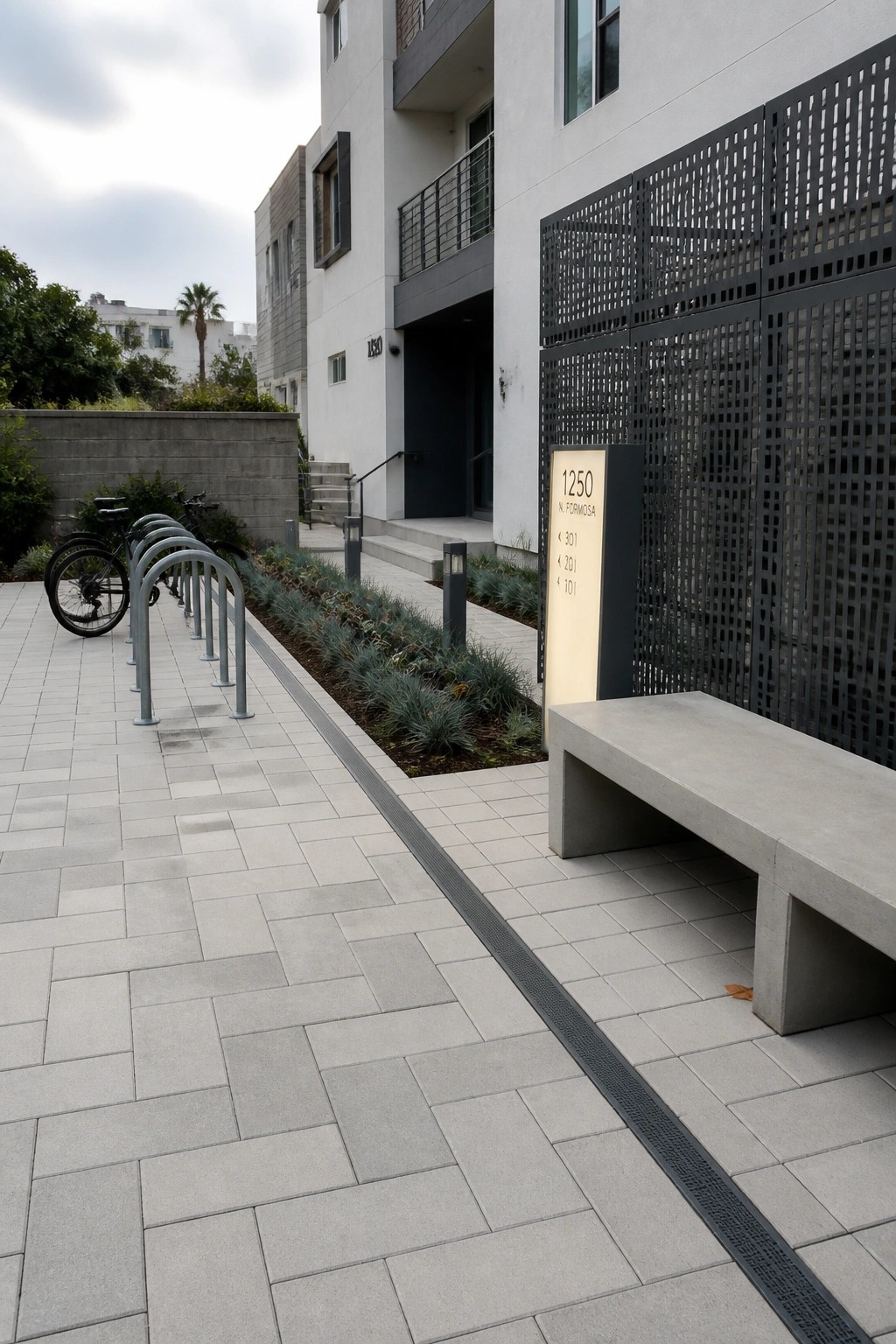
Interlocking tiles give you a solid surface that stands up to daily use from bikes and cars without cracking the way a solid slab might. The pattern locks the pieces together so the whole area stays flat even after heavy traffic or seasonal shifts in the ground.
These tiles work best on smaller residential lots where you need both parking and walking space in the same zone. Install them over a good base and plan for drainage channels so water moves off instead of sitting on the surface.
Interlocking Tiles For Sloped Walkways
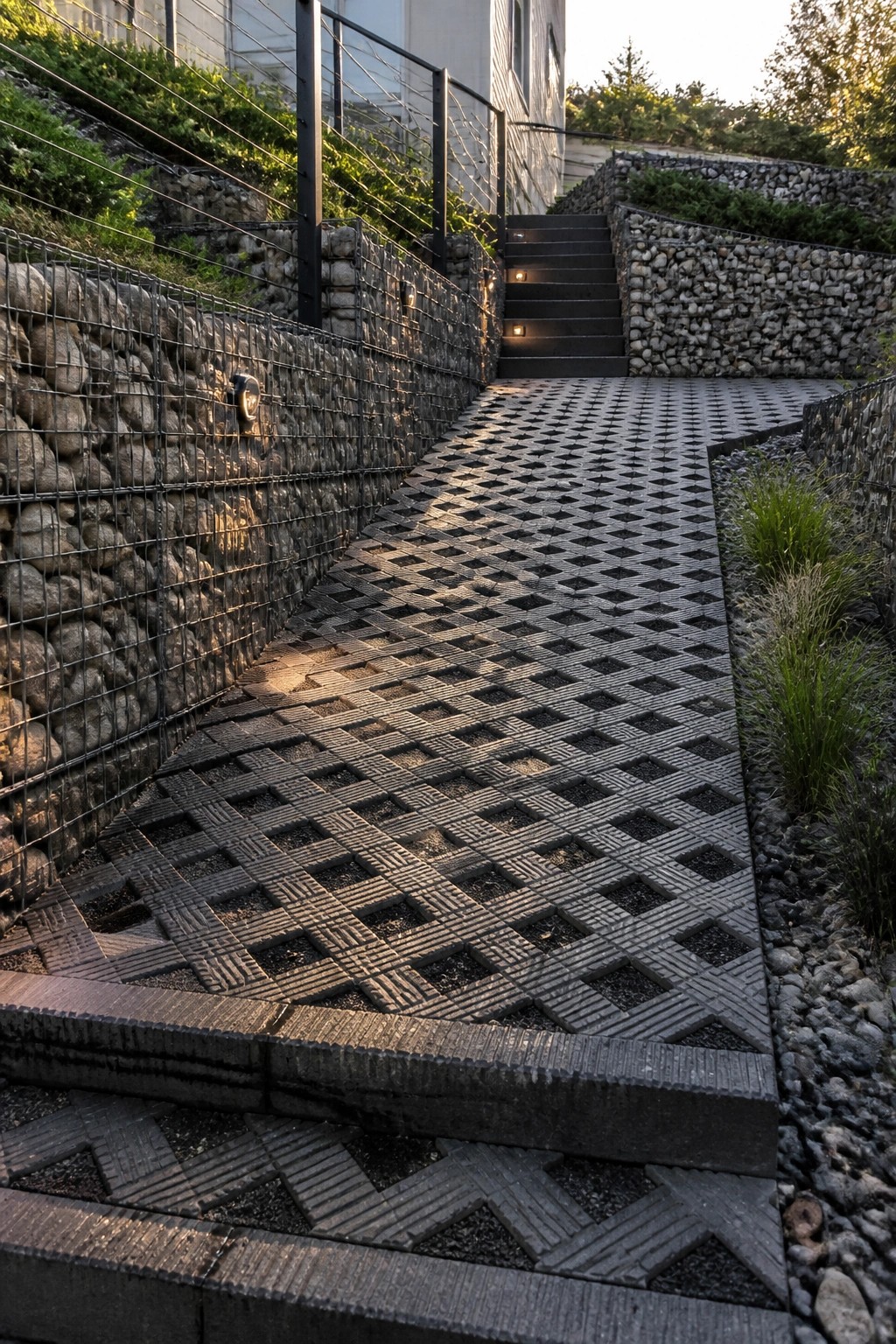
Interlocking tiles hold up well on paths that run along a slope. The grid pattern locks the pieces in place so the surface stays stable even when the ground drops away on one side.
This approach works best on residential lots with changes in level. Prepare a solid base first and add edging to keep everything in line over time.
Dark Pavers With Metal Edging For Driveways

Dark interlocking pavers stand out when you want a driveway surface that holds up to daily use without constant repairs. The tight brick pattern and the thin metal strips that run between sections keep everything in place and give the surface a clean finish that still feels practical.
This setup works best on homes with narrow side yards or tight turning areas, since the pavers can be laid in straight runs and the metal edges help control drainage. Keep the joints tight and choose a paver thickness meant for vehicle weight if you park cars here regularly.
Interlocking Pavers For Entry Paths
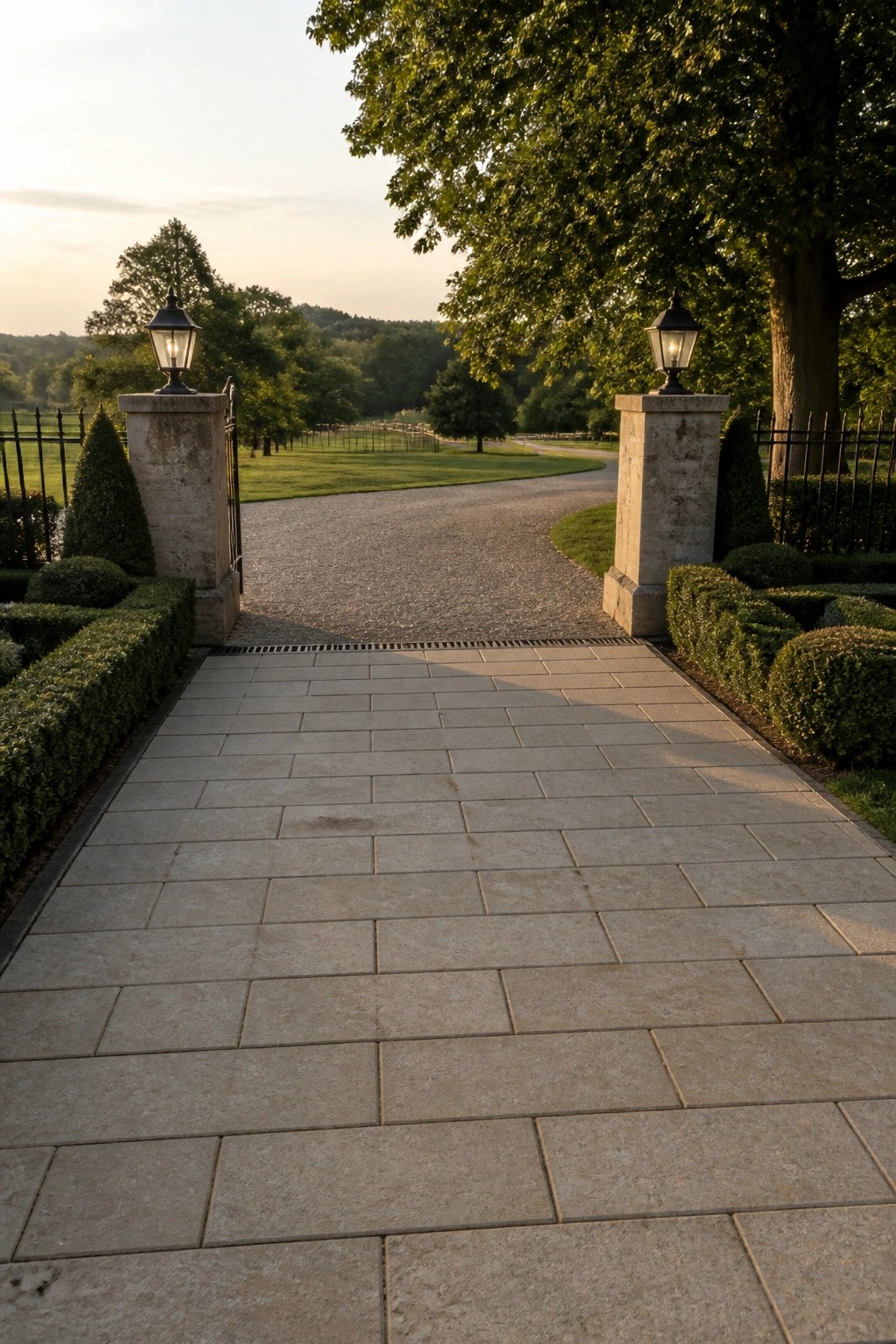
Interlocking pavers give a solid walking surface that stays in place even with regular use. They handle the change from a paved section to a gravel drive without looking messy or wearing down fast.
These tiles work best at the front of a property where you want something firmer than loose gravel but still simple to install. Make sure the ground underneath is leveled and compacted first so the surface stays even over time.
Checkered Interlocking Tiles For Outdoor Courtyards
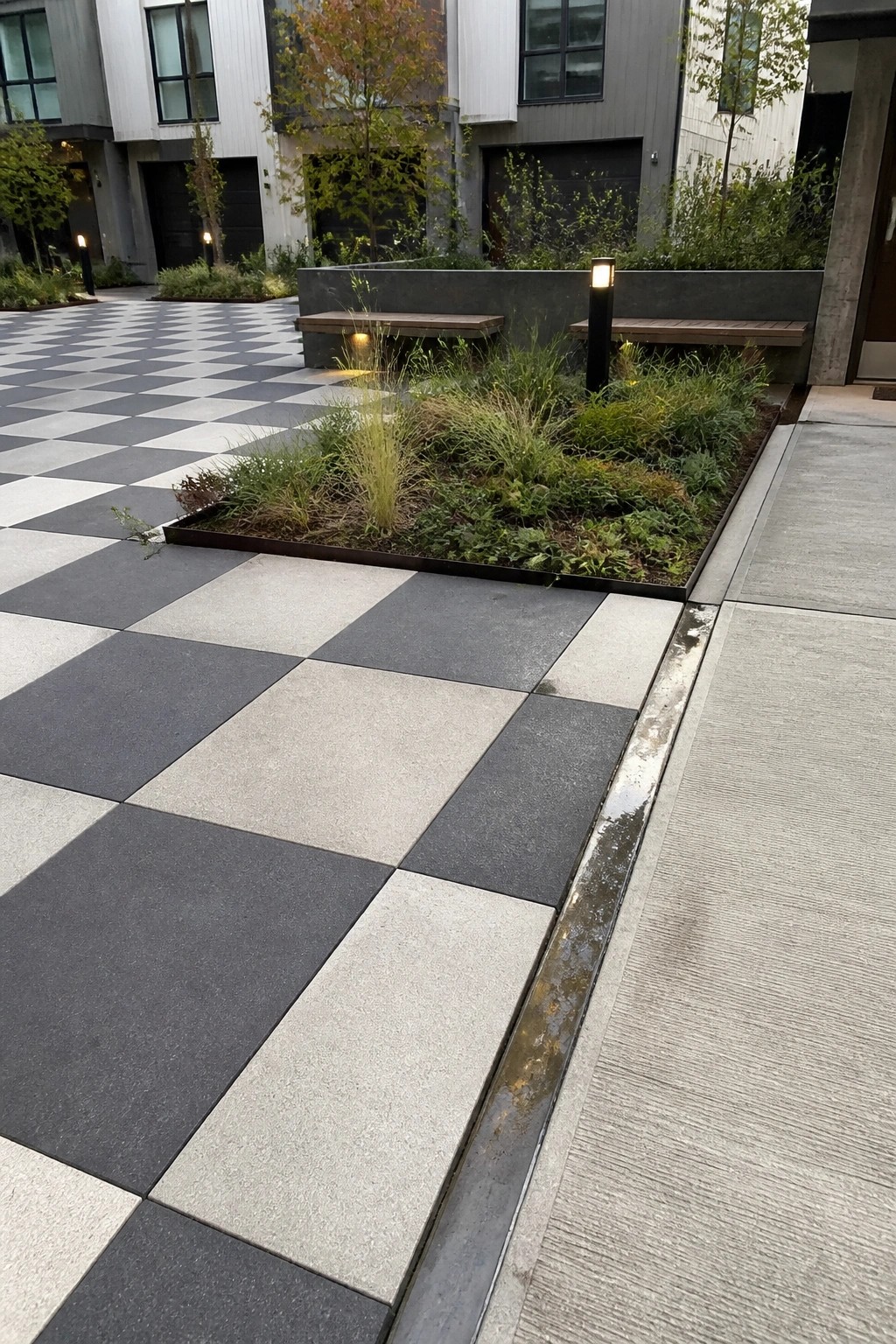
A checkered layout with large interlocking tiles gives an outdoor space a simple, structured look while keeping the surface easy to install and maintain. The pattern helps the ground read as one clean plane, which works especially well when the area sits next to planted beds or seating zones.
This approach suits townhouse courtyards, small plazas, or any shared outdoor space that sees regular foot traffic. The tiles hold up well over time and make future repairs straightforward since individual pieces can be swapped without disturbing the whole surface.
Stone Pavers Create Durable Garden Walkways
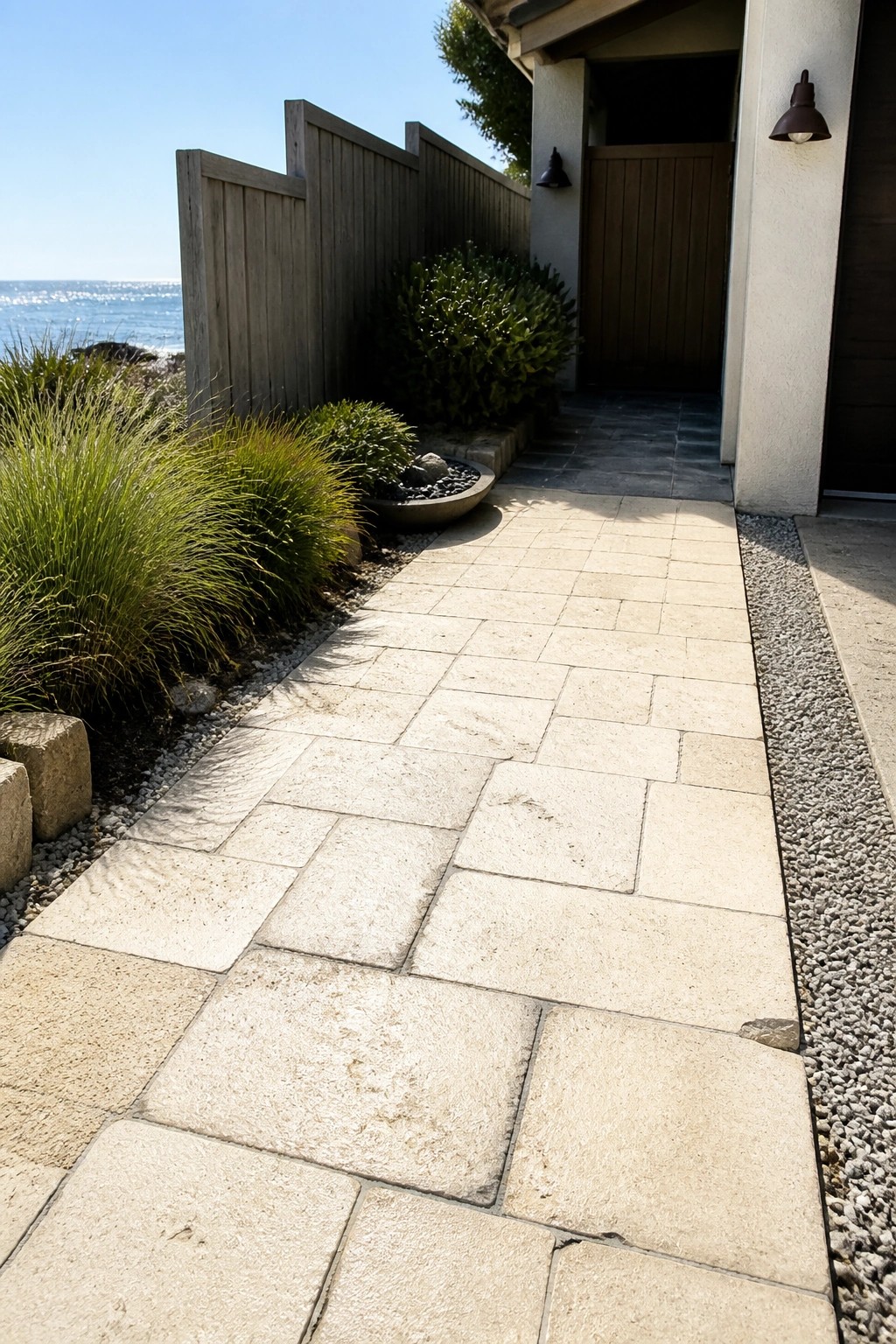
Large stone pavers laid in an offset pattern give a path that holds up well over time with very little upkeep. They handle foot traffic without shifting and blend into the surrounding beds without needing constant repairs.
This style works best along the side of a house or in a side yard where drainage matters. Add a gravel edge to keep the pavers in place and let water move away from the foundation.
Dark Interlocking Tiles for a Low Maintenance Driveway
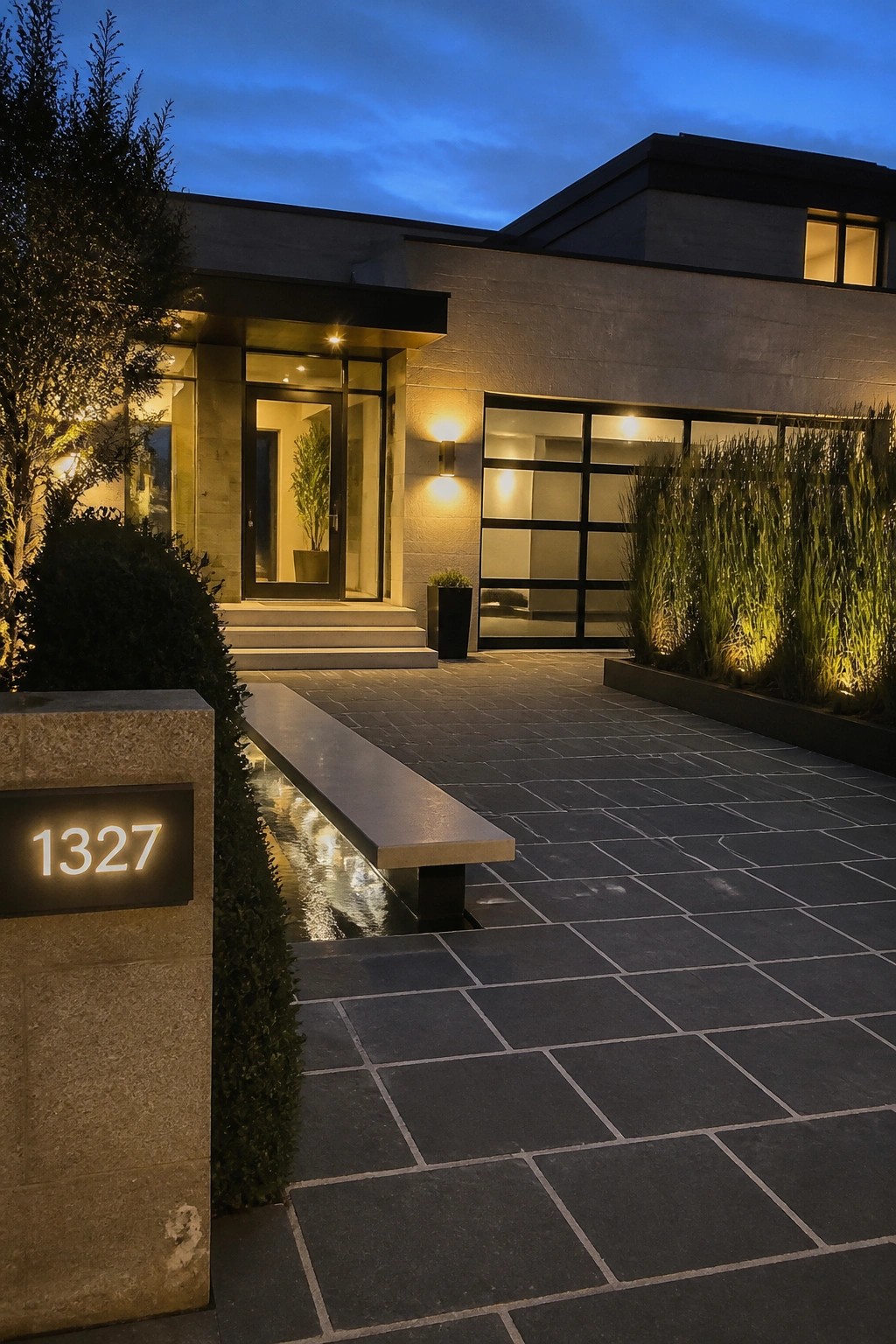
Dark interlocking pavers stand out because they hide tire marks and everyday wear far better than lighter options. They also create a clean, solid surface that fits right in with modern homes without needing constant upkeep.
These tiles suit homes with straightforward driveways where you want something durable that can handle regular car traffic. They go down in sections, which makes repairs simpler later if one area ever shifts. Just focus on a solid base so the surface stays even.
Interlocking Pavers For Front Walkways
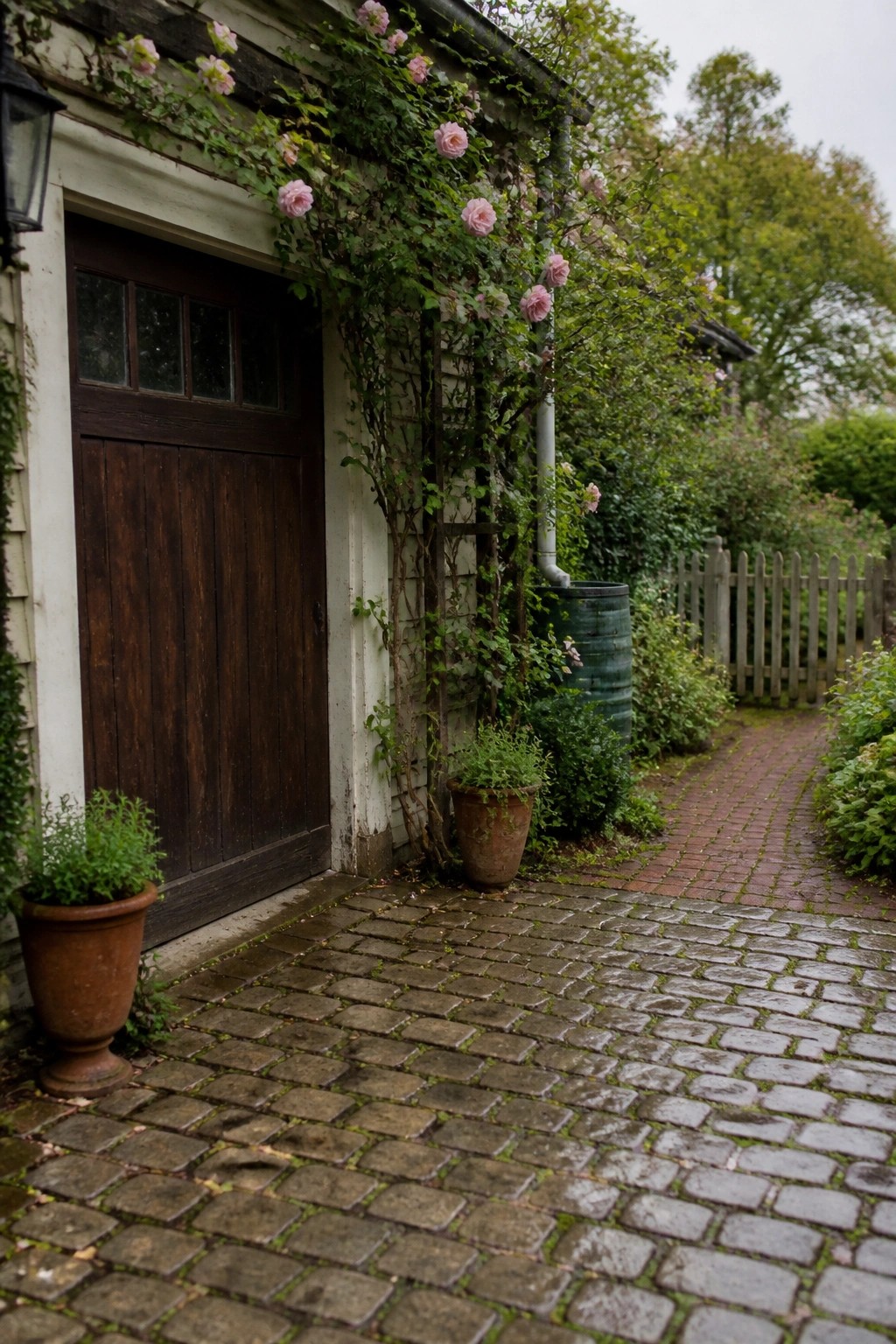
Interlocking brick pavers work well for a front path because they stay in place even after years of foot traffic and weather. The pattern in this example shows how the small rectangular blocks fit together tightly without needing mortar, which keeps weeds down and makes repairs easier later on.
They suit older homes or cottage style entries where you want something practical but still traditional looking. Lay them over a compacted base with a slight slope so water drains away from the house, and edge the sides with a simple border to hold everything steady.
Interlocking Tiles With Grass Strips
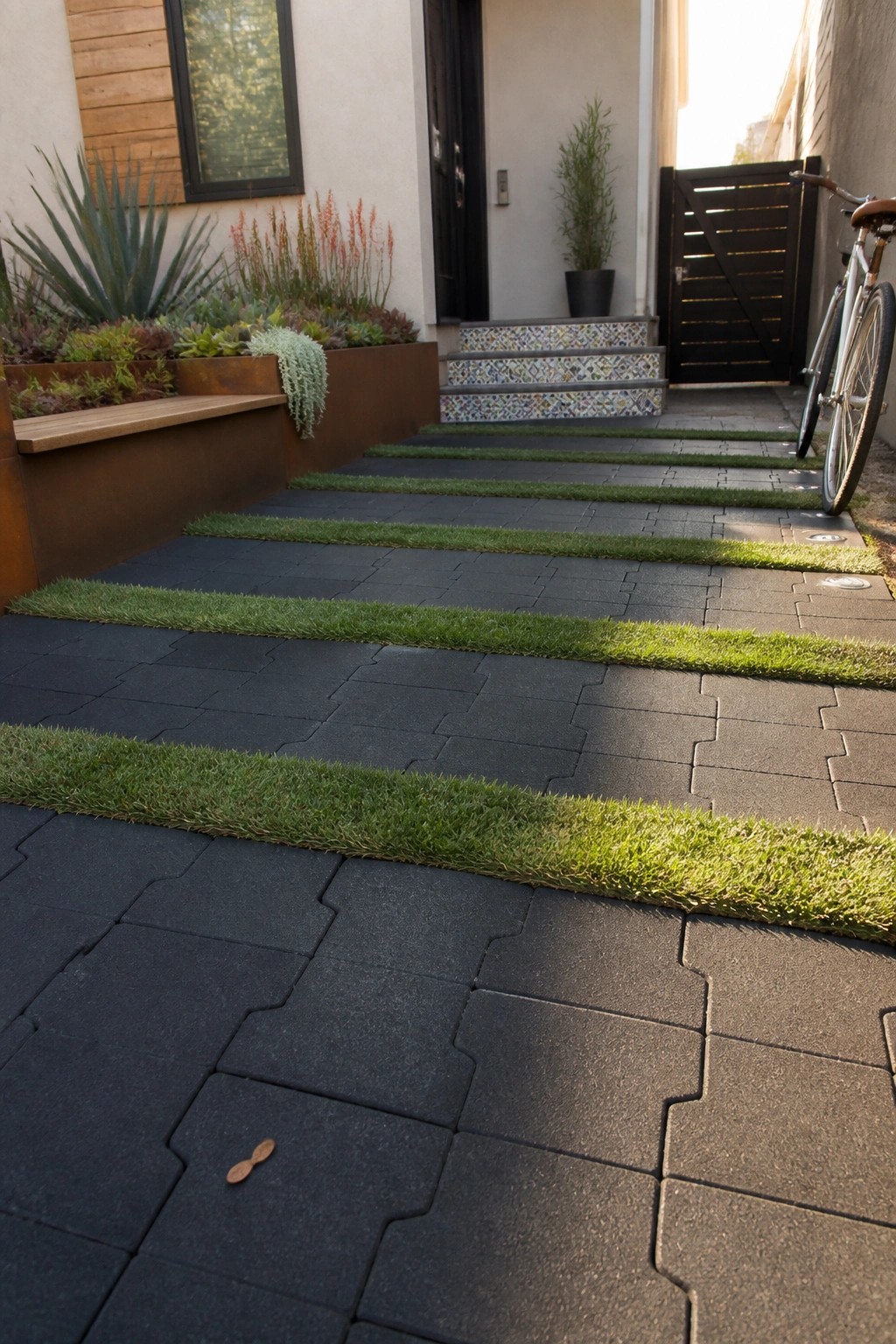
Many people use interlocking tiles with grass strips running between them for paths and driveways. The setup gives a firm surface that handles foot traffic and light vehicles while letting a bit of green break up the look.
This approach works well on side entries or narrow front paths where you want durability without covering everything in solid pavement. Keep the grass strips narrow enough to mow easily and choose tiles that lock together tightly so the whole surface stays level over time.
Interlocking Hexagonal Tiles For Driveways
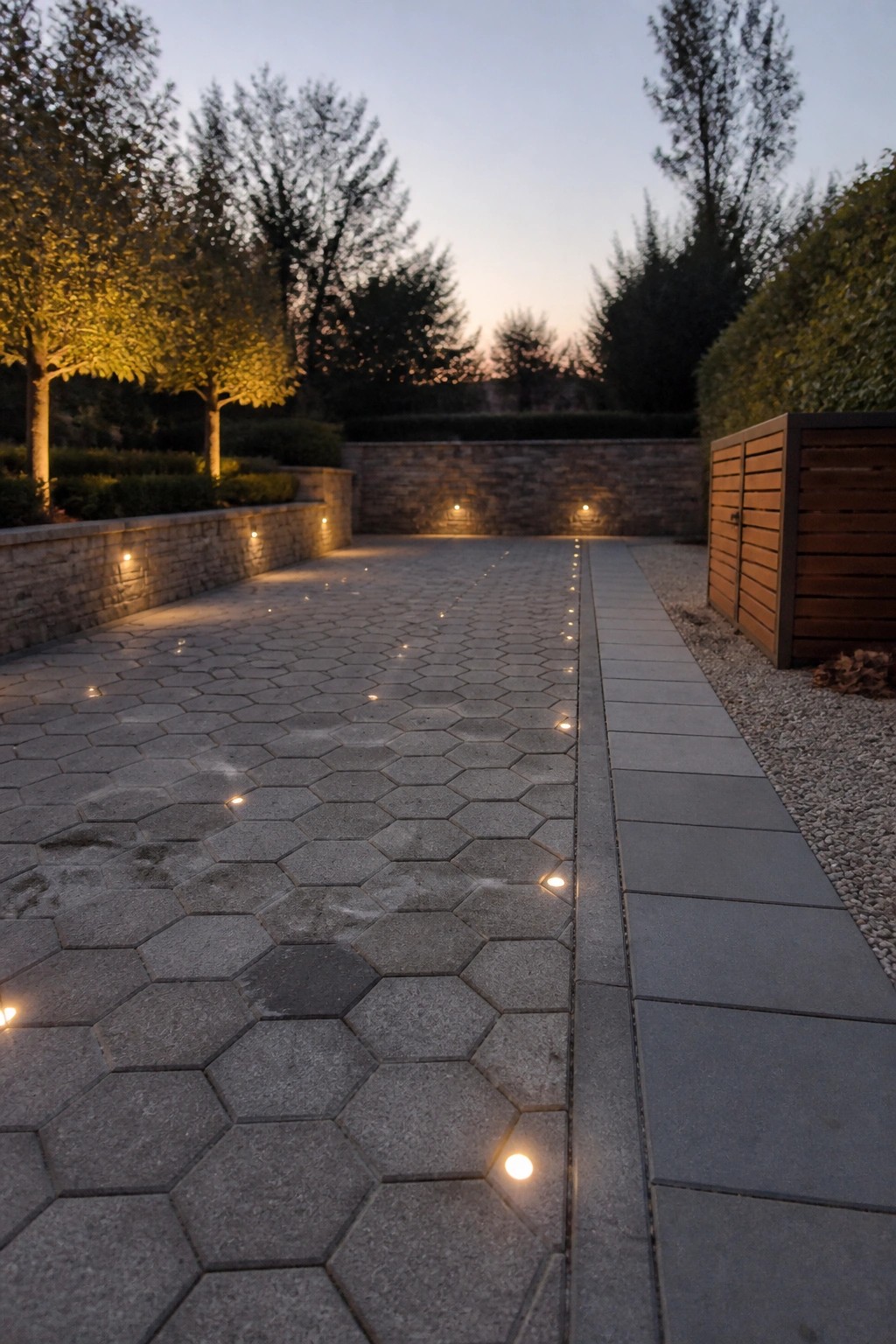
Hexagonal interlocking tiles give a driveway a clean, solid surface that stays level even with regular car use. The shape helps the pavers lock together tightly, which cuts down on shifting or cracking over time compared to loose gravel or basic concrete.
This style works well on homes that already have stone walls or gravel side areas since the pattern blends in without looking too formal. Just make sure the base is prepared properly so water can drain and the tiles do not heave in cold weather.
Frequently Asked Questions
Q: How thick should the gravel base be for parking cars?
A: Aim for at least four inches of compacted gravel under the tiles. This gives enough support so the surface stays flat even with regular use. Tamp it down firmly in layers before you start laying tiles.
Q: What if water pools on the surface after rain?
A: Interlocking tiles usually have gaps that let water drain through to the base. You can add a slight slope when you prepare the ground to help it flow away. Check the area after a storm and adjust sand in low spots if needed.
Q: How often do these tiles need cleaning?
A: Sweep them off now and then to remove leaves and dirt. A quick hose down takes care of most stains from cars.
