


I have noticed that the approach to a house often sets the tone for how the whole property feels from the street. Choosing tiles that hold up under tires and weather without showing every mark can make a real difference in how the entrance reads over time. It pays to look at how the color and texture will sit against the facade and any existing paving rather than picking in isolation. A few choices only prove themselves after a full season of use. I tend to sketch out how the layout will guide a car in and out before settling on a pattern.
Large Format Tiles For Driveways

Large format tiles give a driveway a smoother, more finished look because they cut down on the number of seams. Fewer lines mean less chance for dirt to settle and the surface stays easier to keep clean over time.
They work best on modern or minimalist homes where the entry needs to feel open and uncluttered. Keep the surrounding planting low and simple so the tiles stay the main element instead of getting lost in heavy landscaping.
Gray Pavers For A Simple Driveway
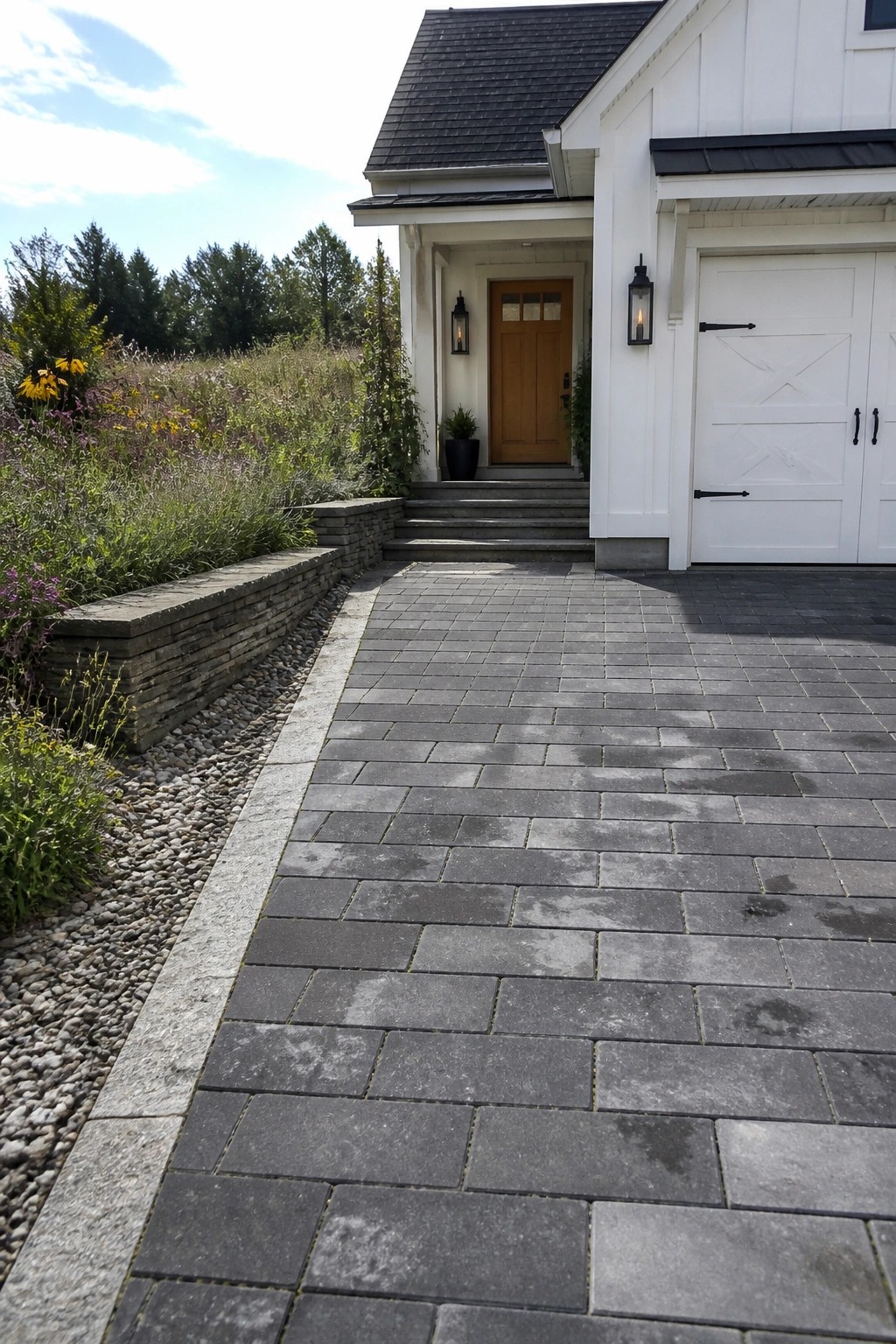
Using the same rectangular gray pavers across the full width of a driveway creates a steady, even surface that stays looking clean. The material handles daily use well and does not show tire marks or small cracks the way some other options do.
This approach works best on homes with light siding and a straightforward entry. It pairs nicely with basic edging like the low stone wall shown here, but the base needs solid prep so the pavers do not shift later.
Patterned Tiles for Outdoor Courtyards

Patterned tiles work well in outdoor courtyards because they turn a plain walking surface into something that feels finished and intentional. The repeating geometric design keeps the area from looking bare while still letting plants and walls stay the main focus.
This approach suits homes with Mediterranean or traditional details where the ground needs to connect the architecture and the garden. Stick to one main pattern and a limited color range so the space stays calm rather than busy.
Grass Filled Grid Pavers For Parking Areas
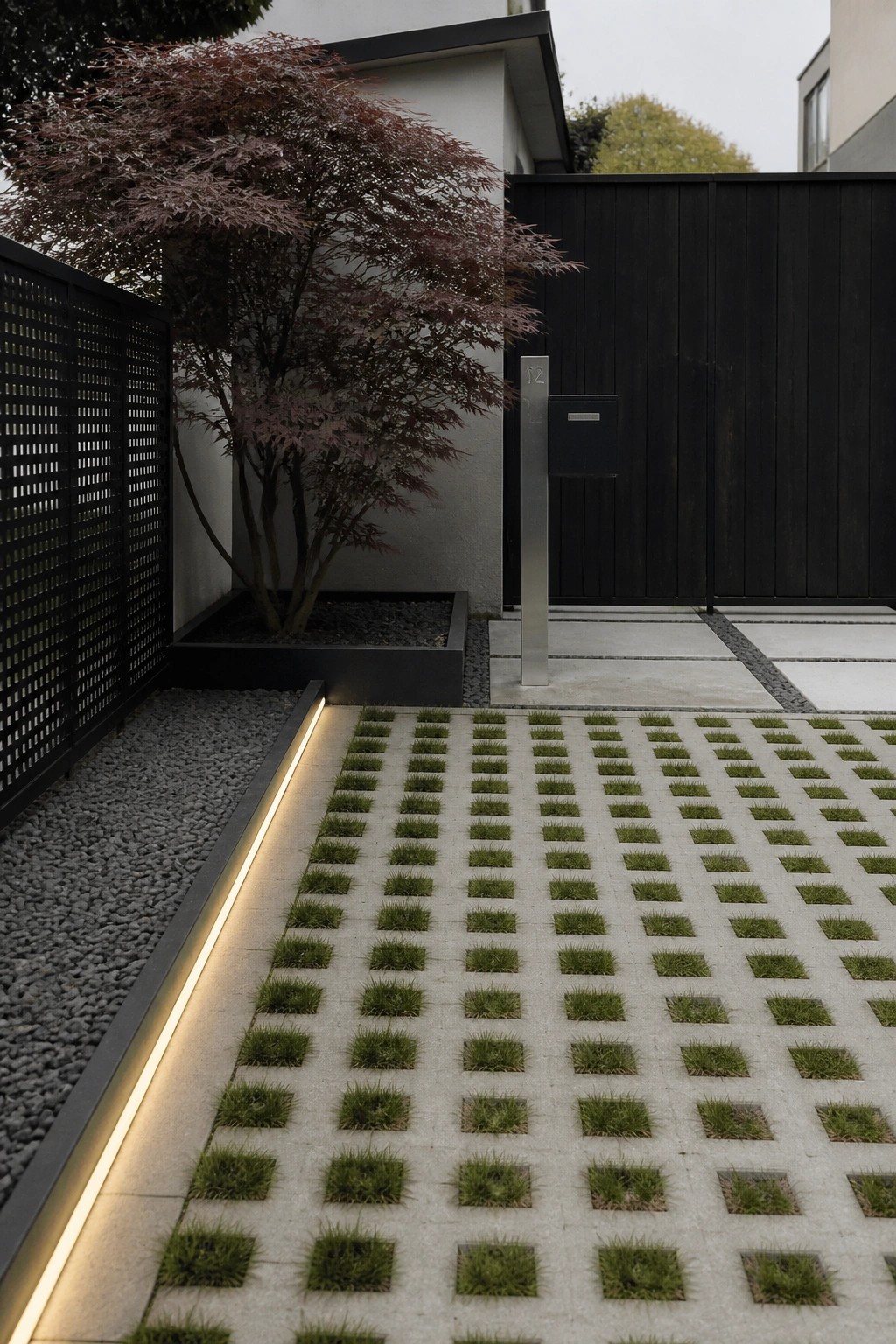
Grass filled grid pavers give a parking spot a clean surface while letting a bit of green come through. The pattern stays orderly and avoids the solid slab look that can feel too heavy next to a house.
This works best on homes with simple landscaping and room for some planting around the edges. It handles regular car use and still drains well, though the grass needs occasional trimming to keep the lines sharp.
Herringbone Brick Driveways
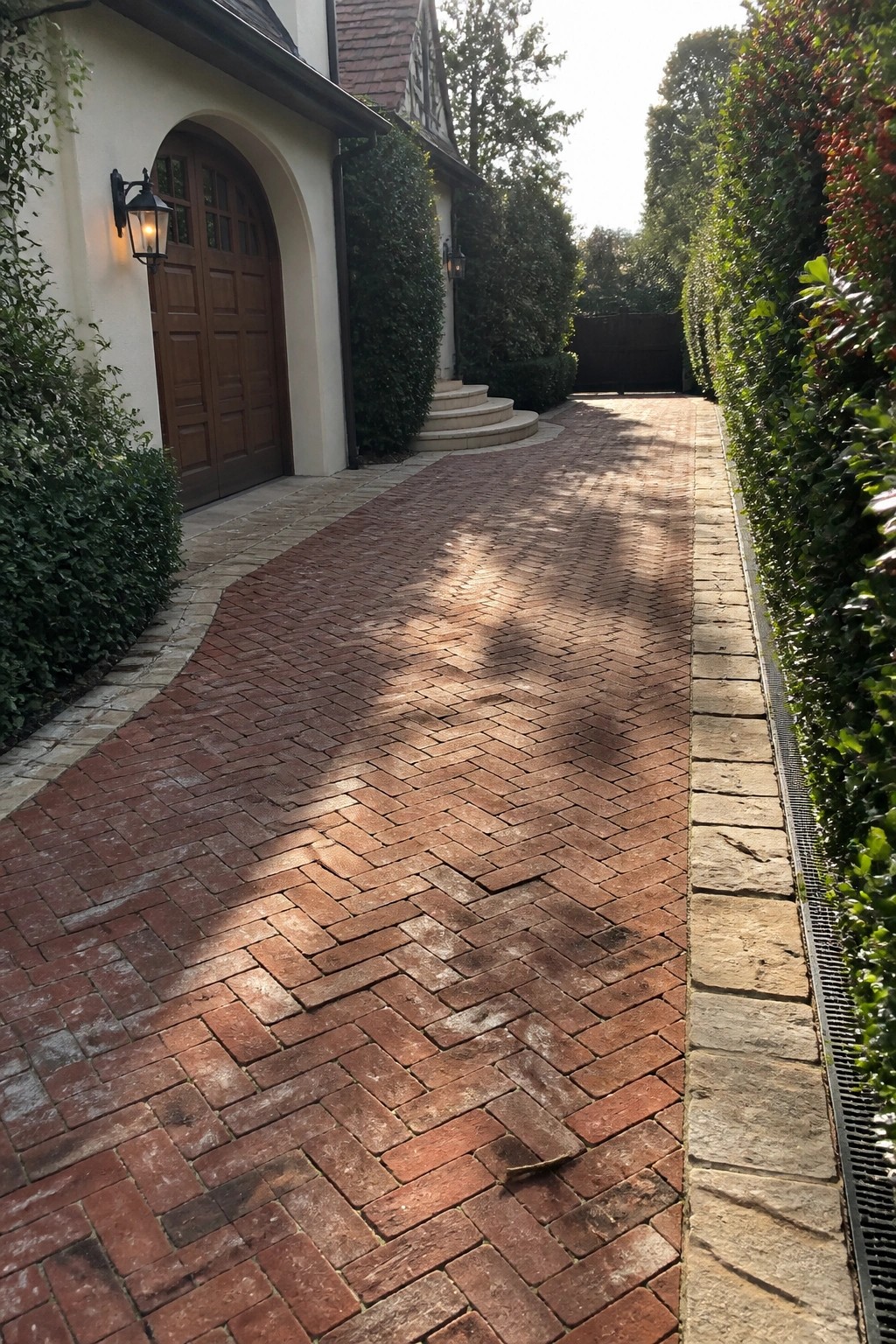
Herringbone brick paving gives a driveway a clean and orderly appearance that holds up well over time. The pattern locks the bricks together so the surface stays even even with regular car traffic.
This approach works best on homes with traditional architecture where the red tones can echo the brick or stone on the house itself. Keep the edges simple with a contrasting border so the pattern stays neat and does not look messy at the sides.
Large Neutral Tiles for a Simple Entry

Large format tiles in a soft beige tone give the space right outside the front door a calm, finished look. They stretch across the entry without too many seams, so the whole area feels open and easy to walk on.
This choice works best on modern homes where you want the paving to sit quietly next to gravel paths and low planting. It stays practical in wet weather and needs very little upkeep once it is down.
Large Dark Tiles With Gravel Strips

Many people like this approach because it gives a driveway a solid, finished surface while still keeping some texture underfoot. The wide dark pavers sit flat and even, and the thin gravel bands break up the expanse without making the whole thing feel busy.
This layout suits modern homes with simple lines and works best on straight or gently curved drives. Just make sure the gravel stays contained so it does not scatter onto the pavers over time.
Circular Paver Patterns For Driveway Turnarounds

A circular layout made from stone pavers gives a parking area a finished look without feeling overly formal. The pattern draws the eye inward and makes even a small turnaround feel more intentional than a plain rectangle of concrete or gravel. It works especially well when the rest of the hardscape stays simple.
This approach suits homes with curved entries or modest front yards where a full rectangular driveway would dominate the space. Keep the outer rings in a single color and let the center carry a small design detail so the whole thing stays easy to maintain. Just make sure the base is properly compacted so the pavers stay level over time.
Speckled Pavers For Garden Paths
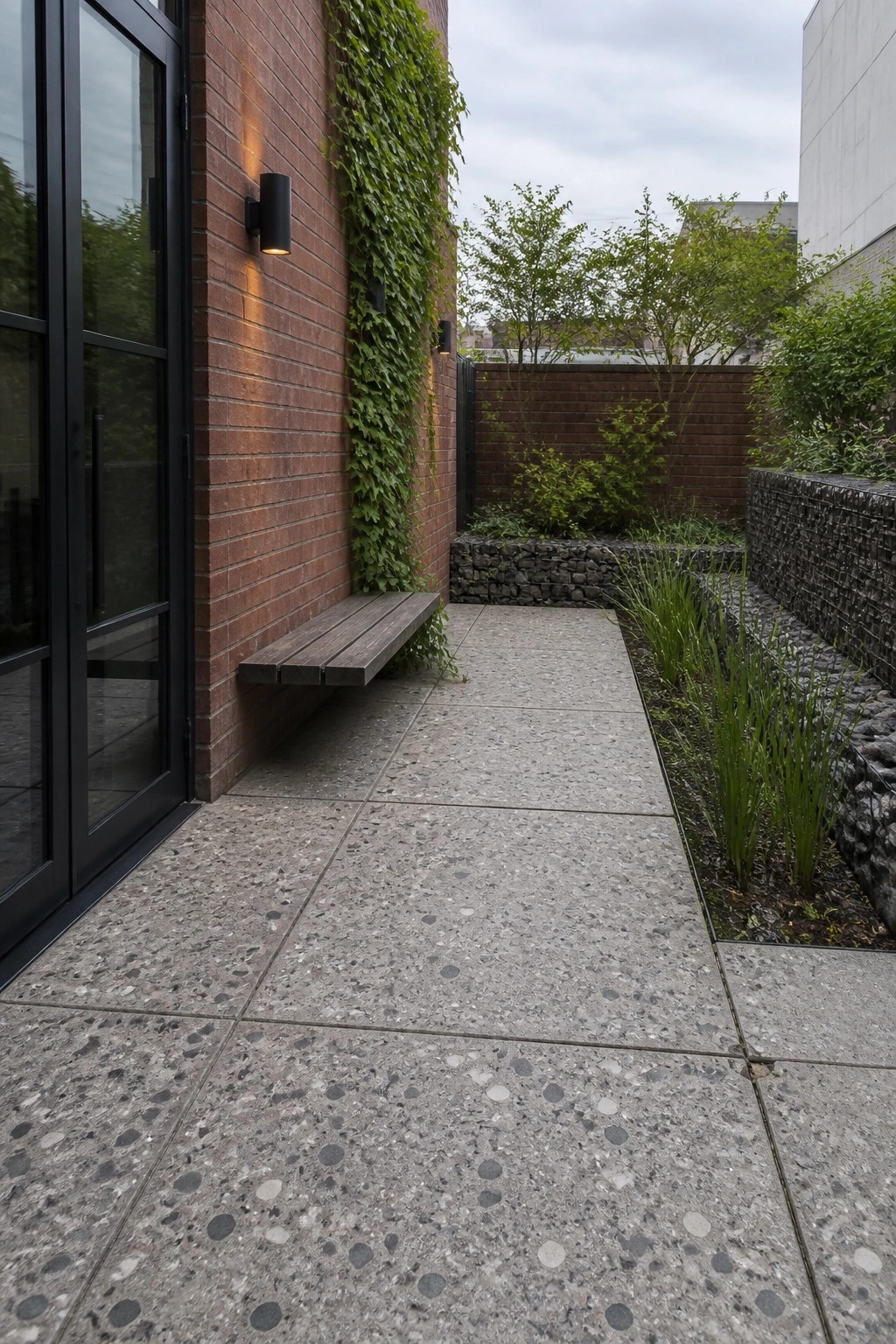
Large speckled pavers give an outdoor path a clean surface that still feels grounded. The texture hides dirt and wear better than smooth stone, and the size cuts down on the number of joints that can shift over time.
This approach works well along the side of a house or in a narrow courtyard where you want something practical but not stark. Pair it with simple edging and low planting so the path stays the main feature without competing with the rest of the garden.
Large Format Tiles For A Clean Pathway
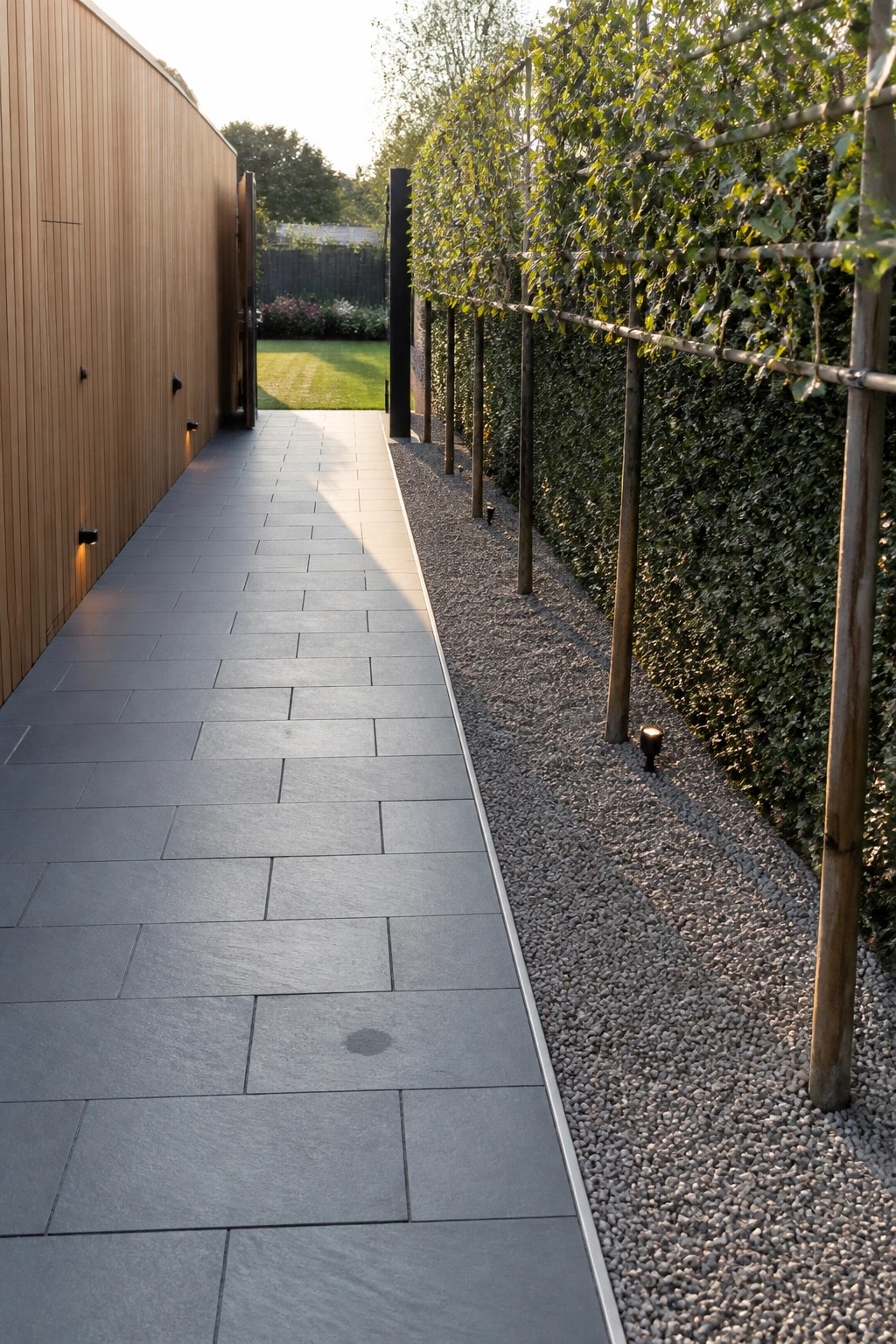
Large tiles like these give a path a solid, finished look that feels easier to walk on and simpler to keep clean. Fewer joints mean less chance for weeds to take hold, and the dark gray color stays understated next to gravel or planting.
This style suits side yards, garden entrances, or any narrow space where you want the surface to feel intentional without drawing too much attention. Just choose tiles meant for outdoor use and set them level so water drains away from the house.
Hexagonal Pavers With Grass Infill

Many people turn to this style of path because it gives a clear walking surface without making the garden feel chopped up. The grass between the stones keeps everything connected to the planting beds on either side.
It suits front yards and side passages where you still want some greenery underfoot. Keep the pavers fairly large so the grass strips stay narrow and easy to mow, and make sure the base drains well so the grass does not get soggy.
Herringbone Brick Driveways
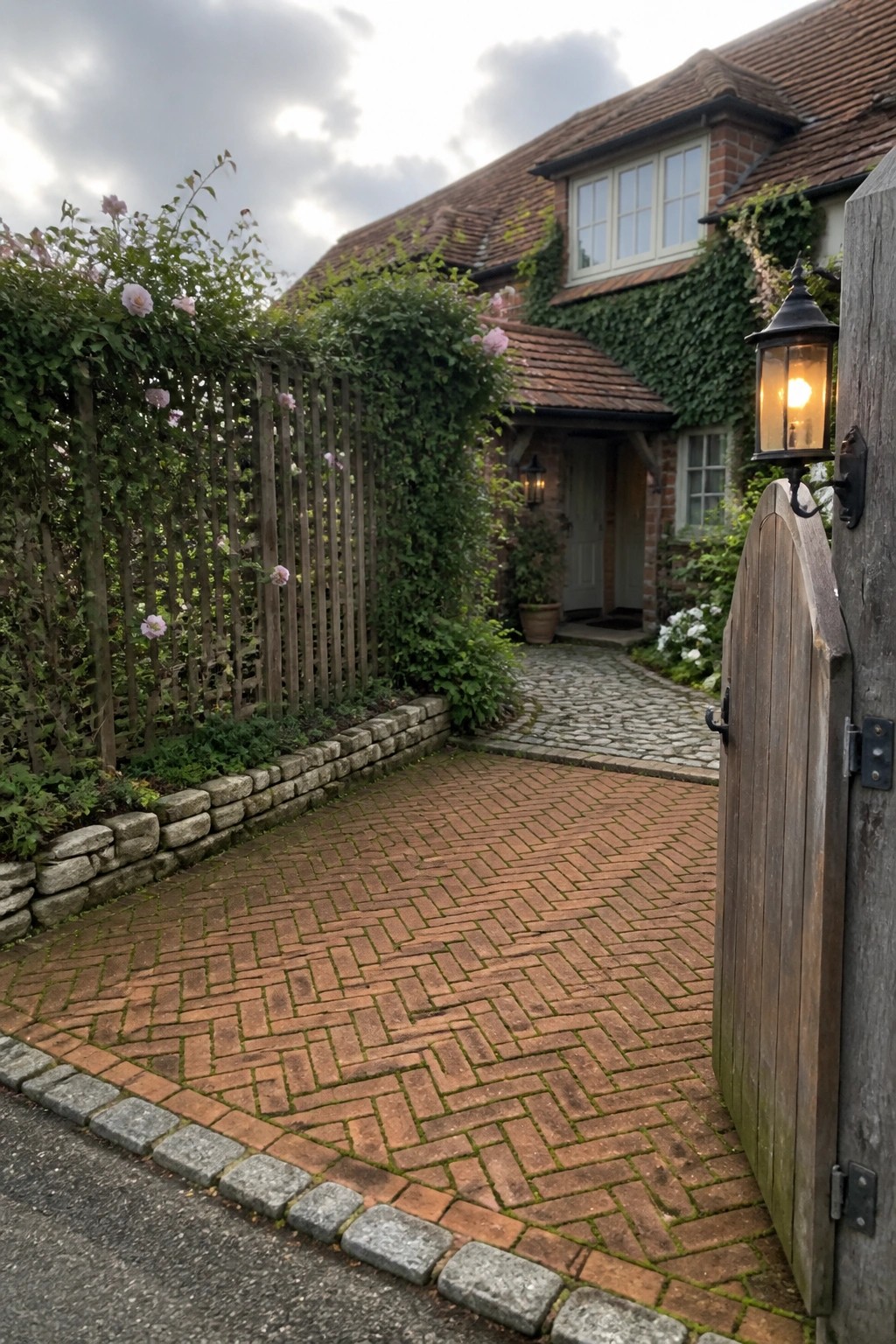
Herringbone brick stands out in a driveway because the pattern locks together well and gives the surface a finished, orderly look. It handles daily car traffic without shifting much and pairs easily with older homes that already use brick or stone details.
This layout works best on smaller driveways or side entries where you want something more interesting than plain concrete. Use a low stone border to keep the edges clean, and choose bricks that match the house color so the whole front stays consistent.
Large Tiles With Linear Gravel Strips
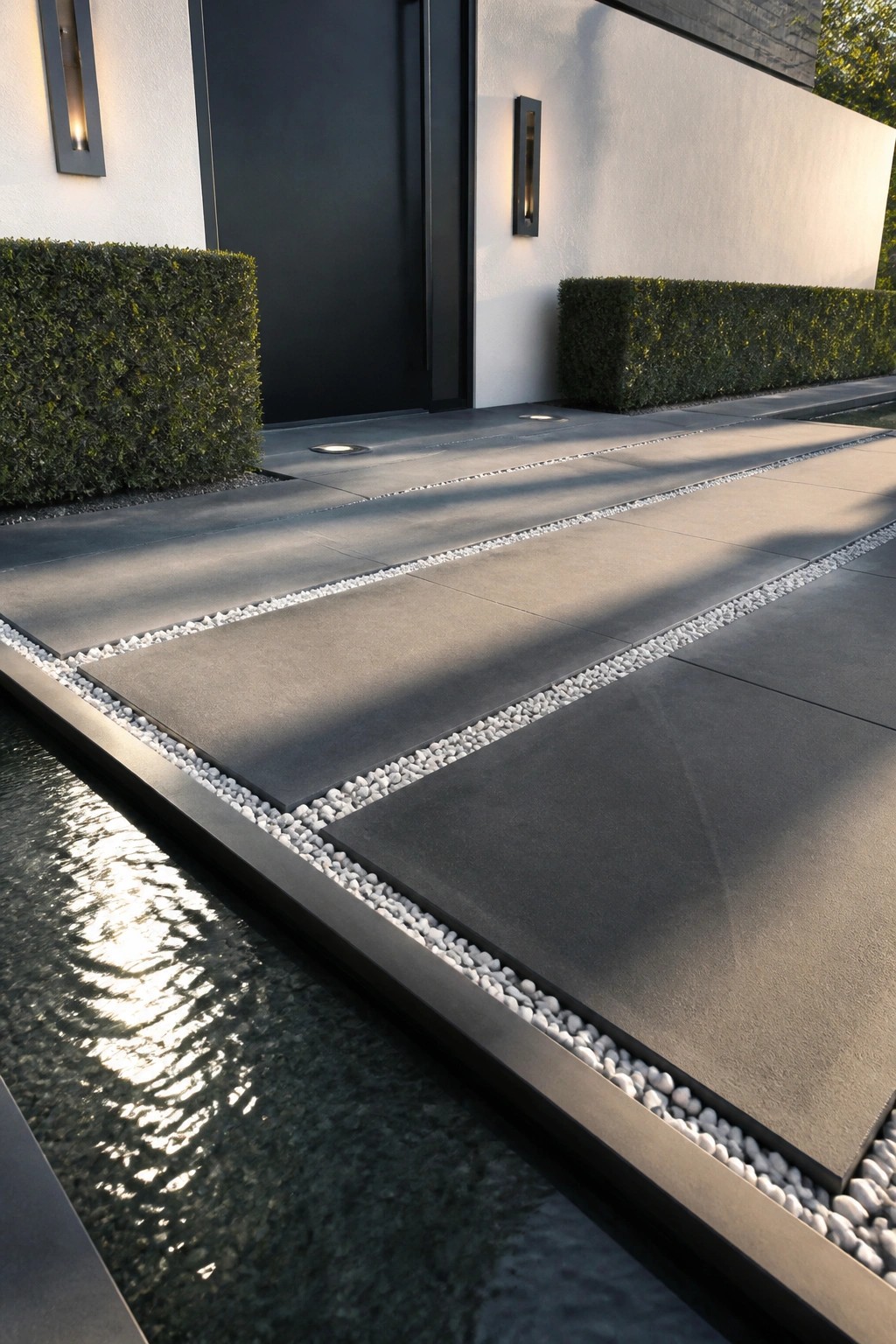
Large format tiles laid in a simple grid can look flat on their own, so many people add narrow bands of small white stones between them. The gravel lines break up the surface, help with drainage, and keep the whole area from feeling too solid or heavy.
This works best on modern homes with a clean entry or side parking zone. Keep the tiles in a dark neutral tone and use the gravel only as thin dividers rather than wide fields, so the path stays easy to walk on and simple to maintain.
Large Stone Tiles For A Simple Entry Path
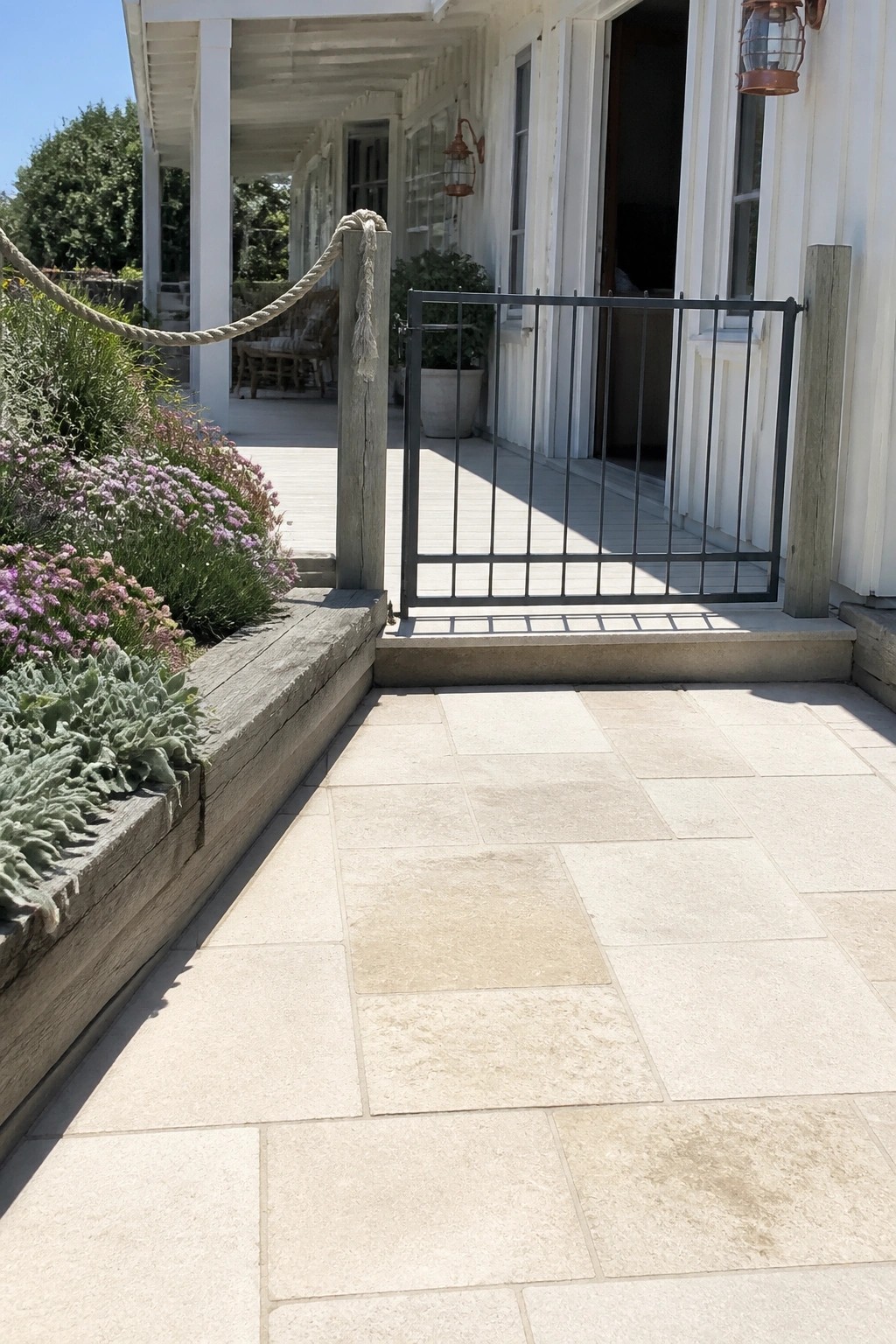
Large stone tiles give an entry a solid, low fuss surface that holds up well to daily use. They create a clean look without needing constant upkeep, and the light color helps the area feel open even on bright days.
This works best on homes where the front has room for a paved spot or short drive approach. Pair the tiles with a simple border like wood edging to keep the plants from spilling over, and choose a matte finish so it does not show every mark.
Dark Tiles For a Clean Driveway Look

Large dark tiles can make a driveway feel more finished without much extra effort. They hide tire marks and water spots better than lighter options, and the uniform surface keeps the whole area from looking patchy over time. Many people like how the color grounds the space next to the house and makes any planting or lighting stand out more.
This approach works well on homes with a modern or simple exterior where you want the parking area to blend in rather than stand out. Just make sure the tiles have a decent slip rating for wet weather and that the base underneath is solid so the surface stays even.
Natural Stone Pavers For Entry Paths

Natural stone pavers work well when you want an outdoor surface that feels solid underfoot and still looks at home with the rest of the yard. The irregular shapes and warm tones help the path blend into the surrounding garden instead of standing out as a separate surface.
They suit homes that already use stone on walls or steps, and they hold up fine next to gravel drives or grass edges. Just make sure the base is well compacted so the stones stay level over time.
Large Format Stone Tiles For Outdoor Paths

Large format stone tiles give an outdoor walkway a clean, finished look that holds up well over time. The speckled surface hides minor dirt while the wide joints and simple layout keep everything feeling orderly rather than busy.
They work best on modern or minimalist homes where the path needs to connect the street or driveway to the entry without extra pattern or color. Pair them with a narrow water channel or low planting beds if you want a bit more interest, but keep the overall layout straight and uncluttered.
Speckled Tiles for the Parking Surface

Speckled tiles work well on a parking pad because they hide tire marks and small stains better than plain concrete. The textured finish also gives the area a finished look instead of a purely functional one, especially when the rest of the yard uses natural stone and planting.
This approach suits homes where the driveway sits close to the garden. Pick a mid-tone speckled option so it blends with gravel paths and foliage rather than standing out as a separate zone. Keep the layout simple and let the material do the work.
Frequently Asked Questions
Q: How often should I clean parking tiles to keep them looking sharp?
A: Wipe them down with a mild soap and water mix once a month. This removes dust and prevents buildup from tires.
Q: What works if the ground underneath shifts over time?
A: Pick flexible grout that moves with the base. Check the area every few seasons and fix any loose spots early.
Q: Are there tiles that stay cool in hot weather?
A: Light colored options reflect heat better. They make walking barefoot easier during summer.
