

When I look at the front of a house the parking area often stands out because it shapes the first sense of how the whole place handles daily use.
Choosing tiles that stay grippy even after rain has changed how I think about driveways since it prevents those small slips that always seem to happen when you are carrying something.
Safety matters here more than style alone.
I would test a few different textures in my own setup before committing because some surfaces look fine on paper but wear differently once cars drive over them regularly.
Small material choices like these end up affecting how comfortable the entry feels every single day.
Large Format Tiles For Driveway Grip

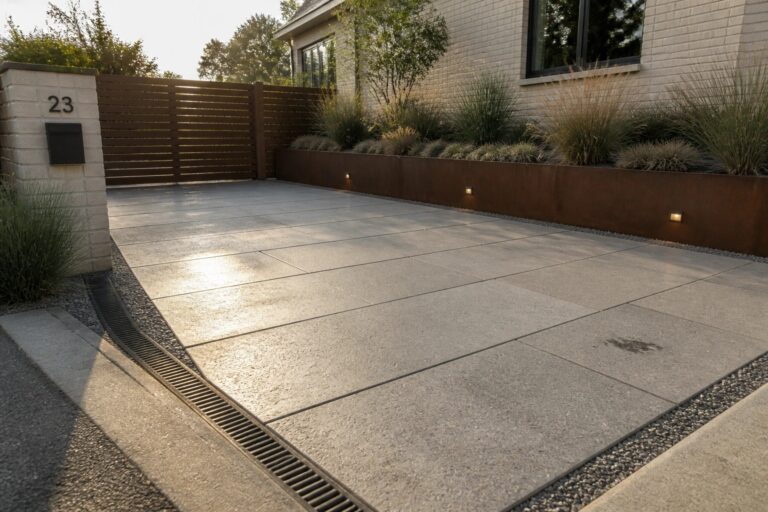
Large tiles give a driveway a solid, even surface that holds up better under cars and feet. The slight texture on these pavers helps reduce slips when the surface is wet, and the built-in drainage channel keeps water from sitting on top.
This approach works best on straight, modern driveways where you want something low-maintenance and practical. Make sure the base is well compacted and the joints are sealed so the tiles stay level over time.
Grass Pavers For Everyday Driveways
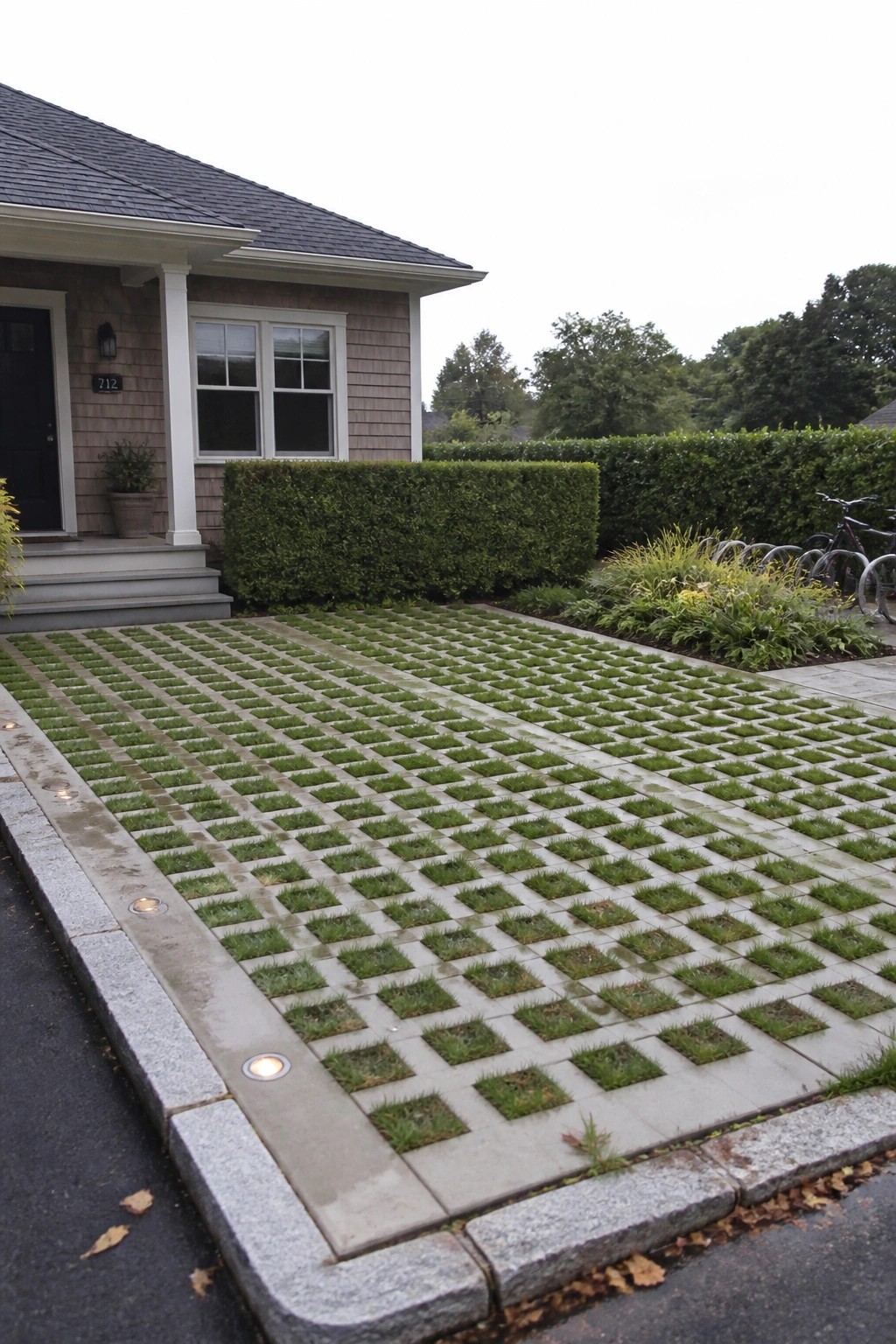
Grass pavers give a parking area a firm grid that stays easy to walk on even when wet. The squares let grass grow through so the surface does not turn into a slick slab of concrete.
They suit homes with a front driveway that sees regular use but still needs to feel part of the yard. Keep the base compacted and level so the grids stay in place over time.
Textured Pavers For Better Outdoor Grip
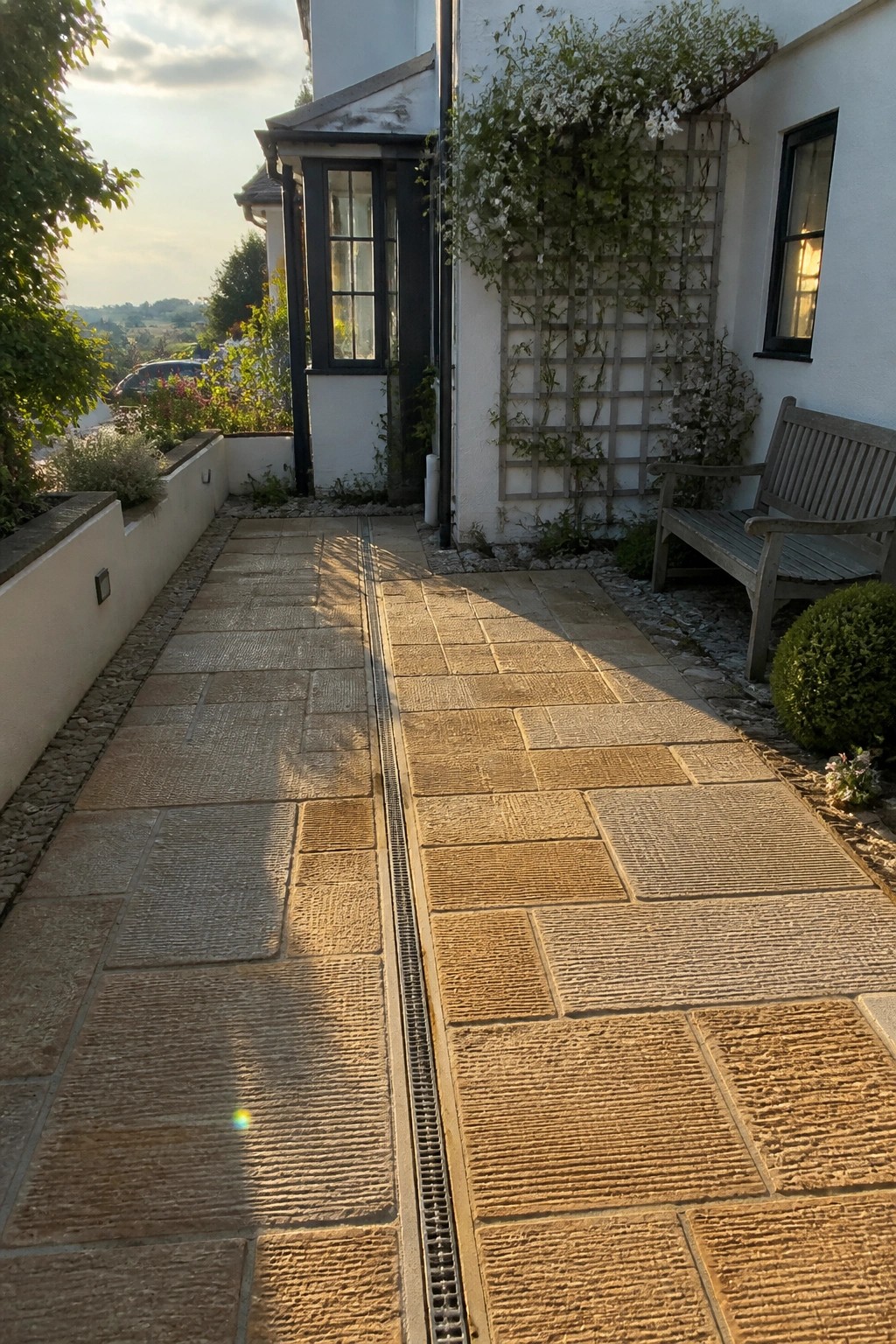
Stone tiles with visible grooves give outdoor paths a built-in advantage when the surface gets wet. The texture helps shoes hold on instead of sliding, which makes a big difference on walkways that see daily use or sit in partial shade.
This approach works well on homes where the path runs slightly downhill or near garden beds that stay damp. Keep the grooves running in the direction of travel and pair them with a simple drain channel down the middle so water clears quickly rather than pooling.
Dark Textured Tiles For Safer Driveways
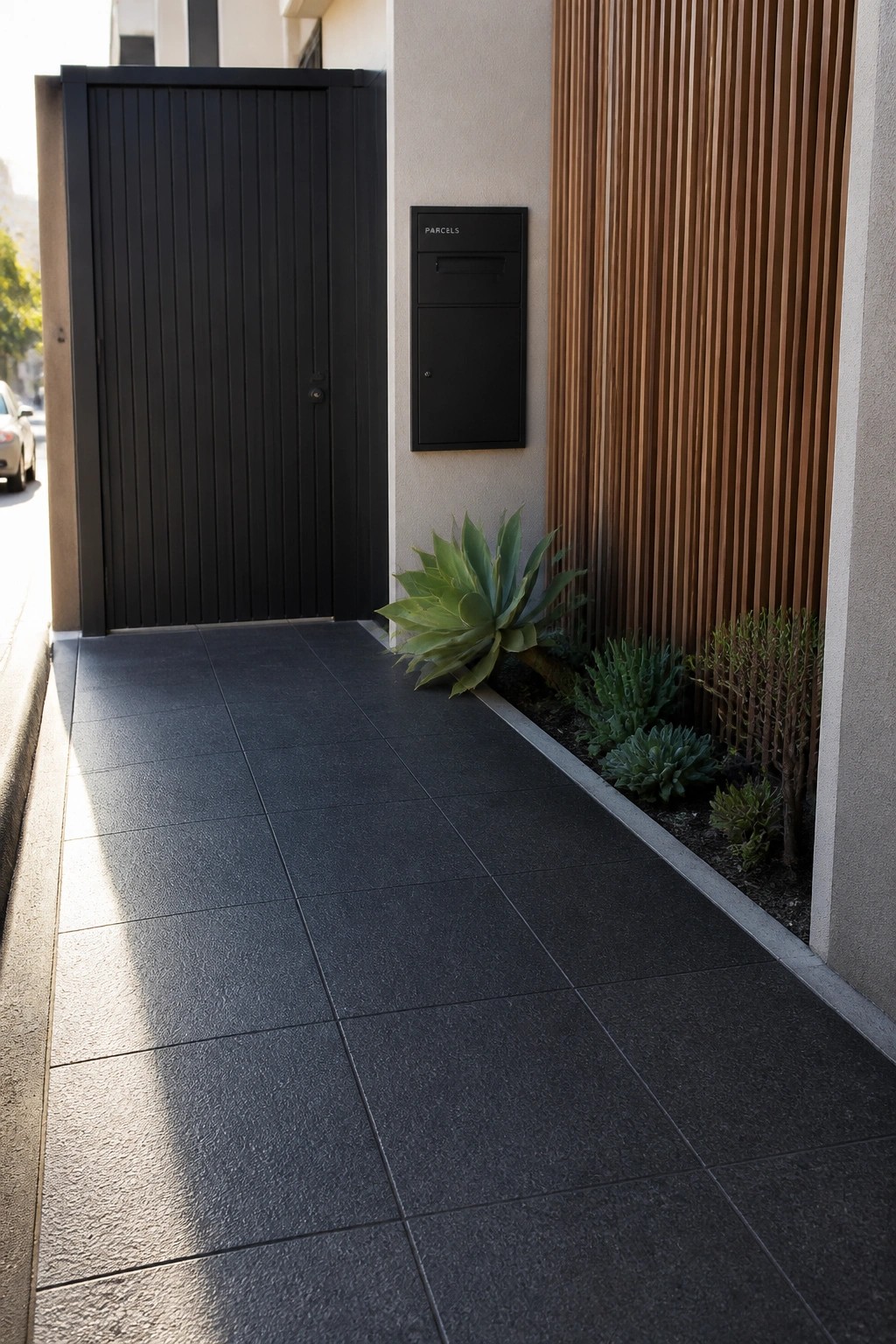
Dark tiles with a bit of texture make a driveway feel more secure underfoot. They cut down on slips when the surface gets wet, and the color hides tire marks and everyday wear better than lighter options.
This approach suits homes with clean modern lines and works best on straight or gently curved entries. Keep the tile size consistent and match the tone to nearby fencing or gates so the whole front stays simple rather than busy.
Terracotta Tiles For Safer Patio Surfaces

Terracotta tiles work well on outdoor patios because the surface has enough texture to stay safe when it gets wet. This matters in spaces that see daily foot traffic and occasional water from rain or nearby features like fountains.
They suit homes with warm climates and simple courtyard layouts. Look for tiles rated for exterior use and check the slip resistance before buying, especially if the area stays shaded for long periods.
Grid Pavers With Grass Joints
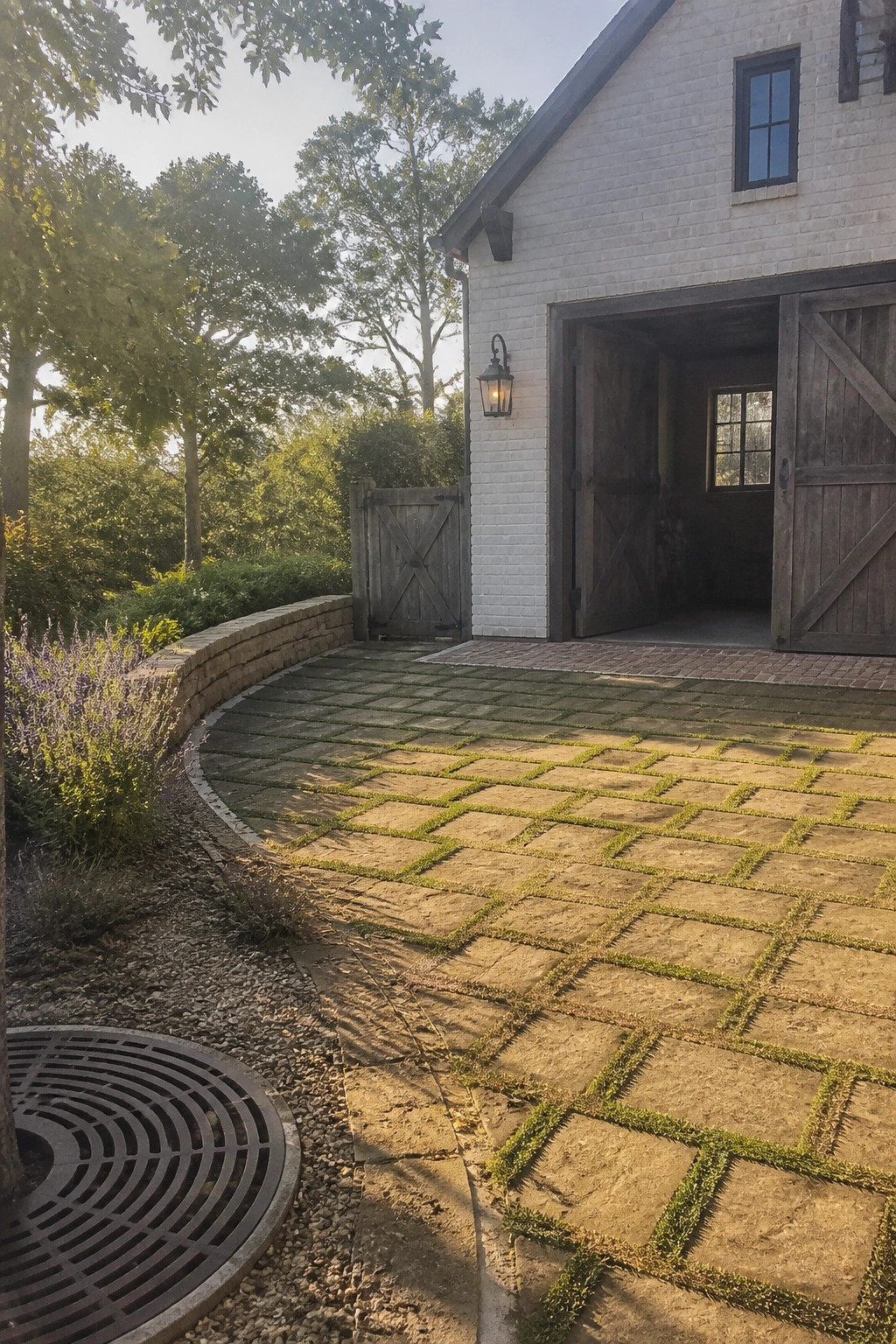
Grid pavers with grass between them make a practical choice for driveways and parking areas. The surface gives decent traction when wet and allows water to drain through instead of pooling.
This approach suits homes with space for a softer look than solid concrete or asphalt. Choose thick pavers rated for vehicle weight and pick a durable grass type that can take occasional traffic without wearing out.
Hexagonal Pavers For Entry Walkways
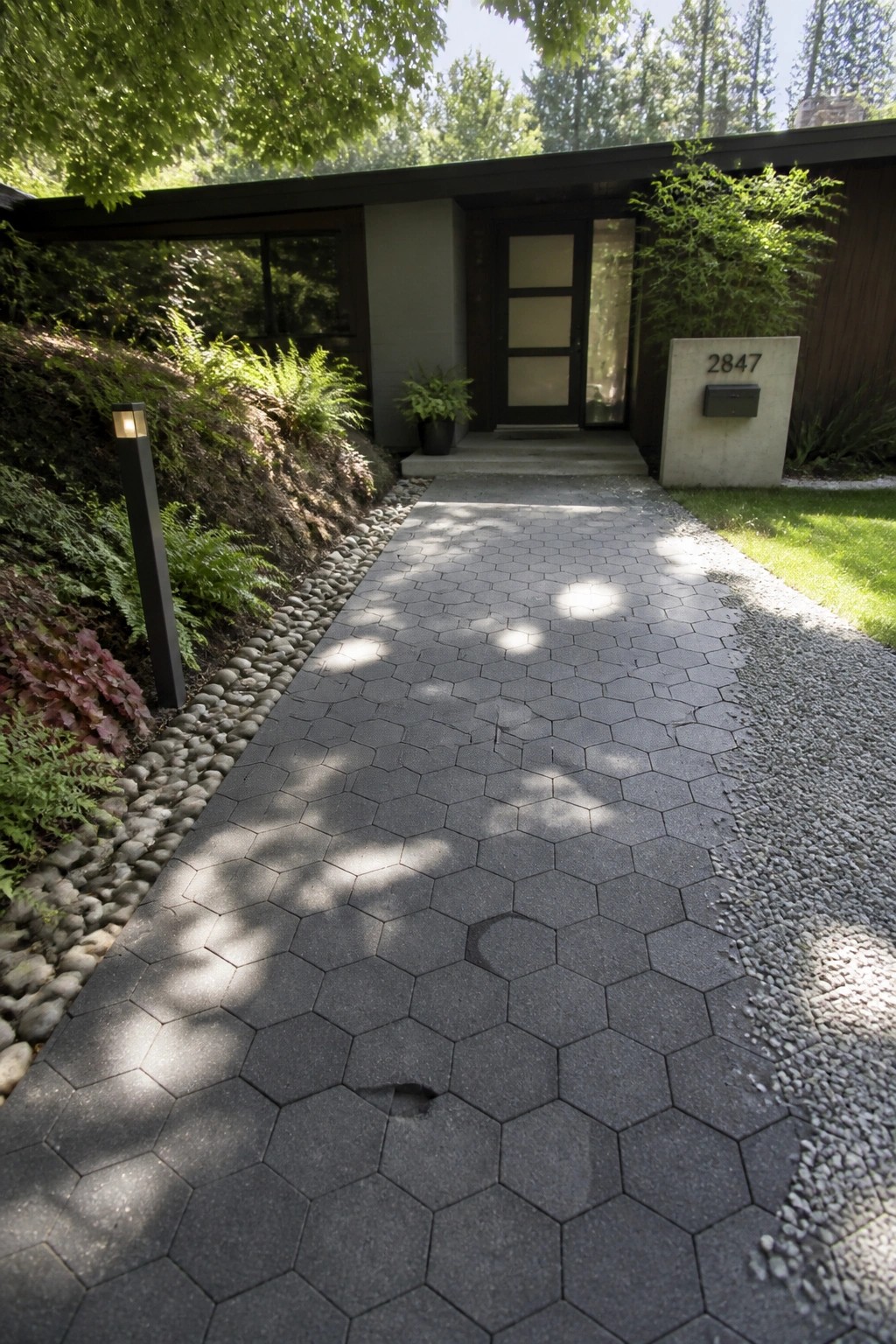
Hexagonal pavers give an entry path a solid, even surface that holds up well under foot traffic and weather. The small scale of each tile creates plenty of grip without looking overly industrial, which makes them a practical choice for areas that see regular use.
They work best on gentle slopes or spots where water can collect, since the joints help with drainage. Keep the layout simple and add a gravel border to handle overflow and reduce the chance of weeds pushing through.
Textured Tiles Improve Driveway Safety
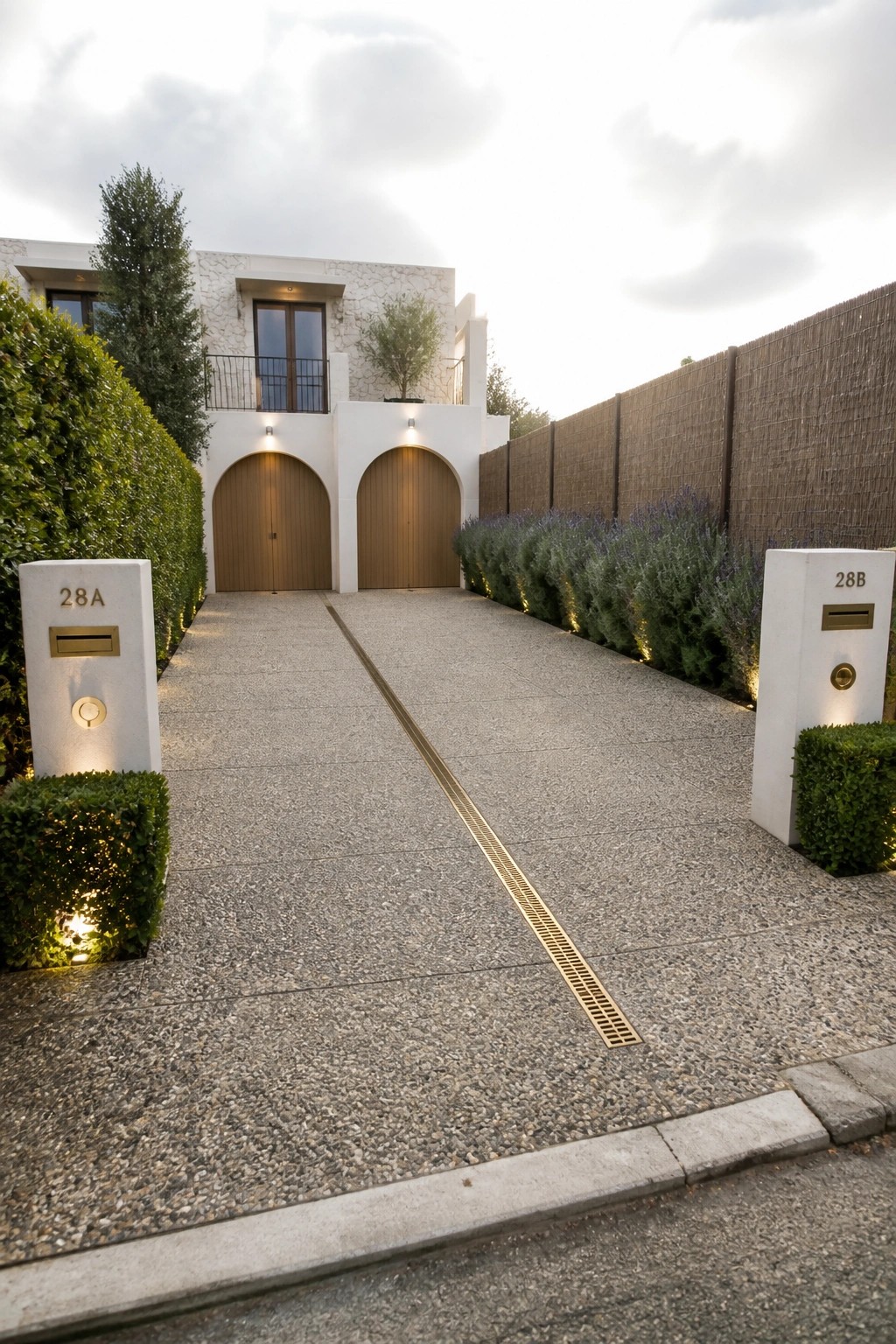
Many driveways look fine on a dry day but turn risky when wet or covered in leaves. Textured tiles with a slightly rough surface give tires and feet more grip without looking industrial.
These tiles suit homes with long or sloped driveways where water can collect. Add a narrow central drain channel to move water away quickly and keep the surface usable year round.
Textured Tiles For Driveway Traction

Many driveways get dangerously slick once they are wet, especially in areas that see frequent rain. Grooved tiles like the ones laid here give tires and shoes something to grip without adding extra patterns or colors that stand out.
These tiles suit homes with exposed parking areas that double as walkways. Keep the grooves running along the main direction of travel so water can drain and the surface stays usable year round.
Paver Paths With Gravel Joints

Many people like this style of path because the solid concrete slabs give steady footing while the gravel between them helps with drainage and adds a bit of texture. It feels practical for side yards or narrow passages where you want something that stays put in wet weather.
This layout works well on homes with limited space or sloped ground, since the pavers can be laid in straight runs without needing a full concrete pour. Just make sure the gravel is packed firmly so it does not shift underfoot over time.
Cobblestone Driveways For Everyday Traction
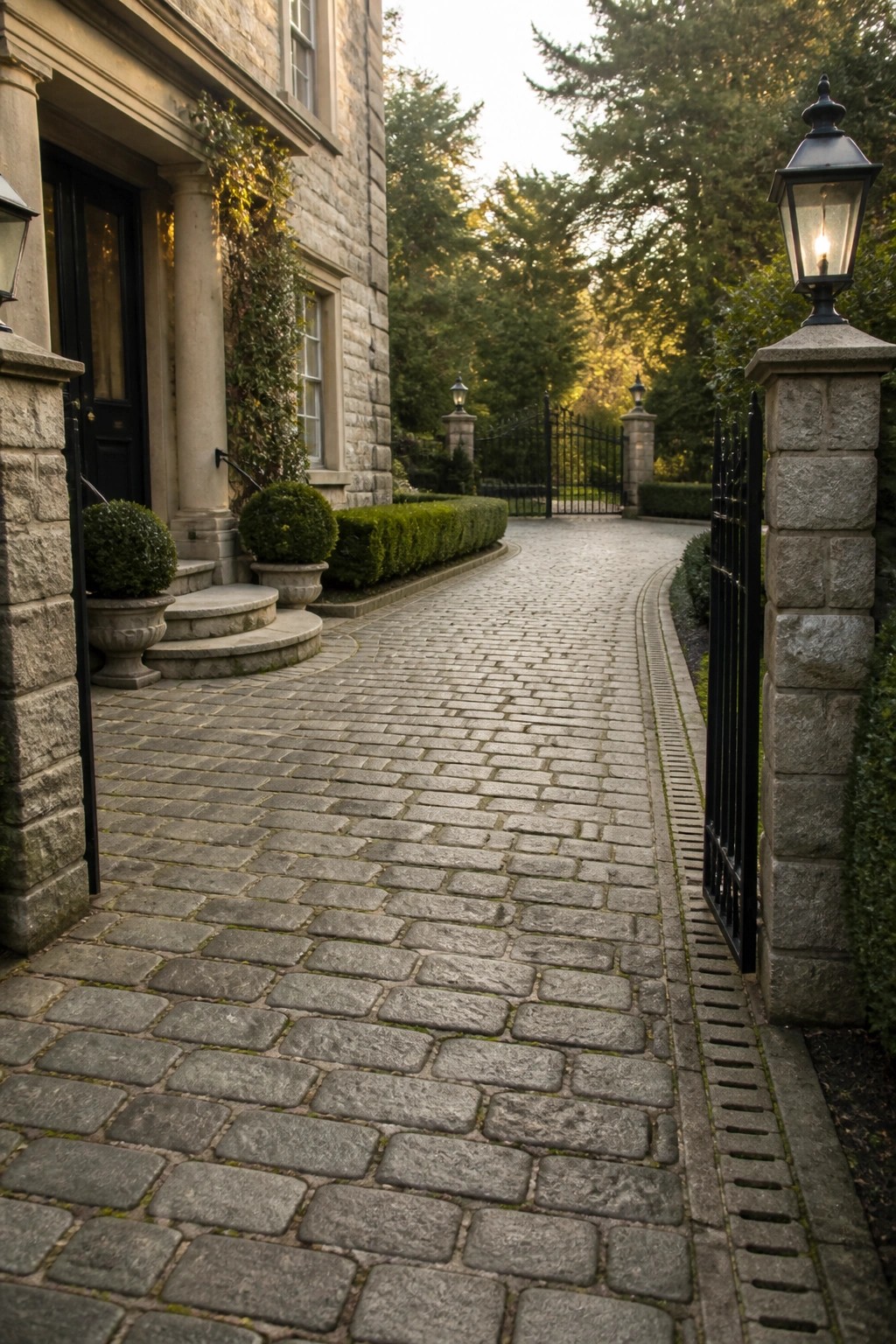
Cobblestone has long been used on driveways because the natural texture helps tires grip better than smooth concrete or asphalt. It works especially well on curved approaches or spots that stay damp after rain.
This surface suits homes with traditional stone or brick exteriors. It can be laid in sections near the house or along the full length of a driveway where cars park and turn most often.
Plank Tiles For Covered Parking Areas
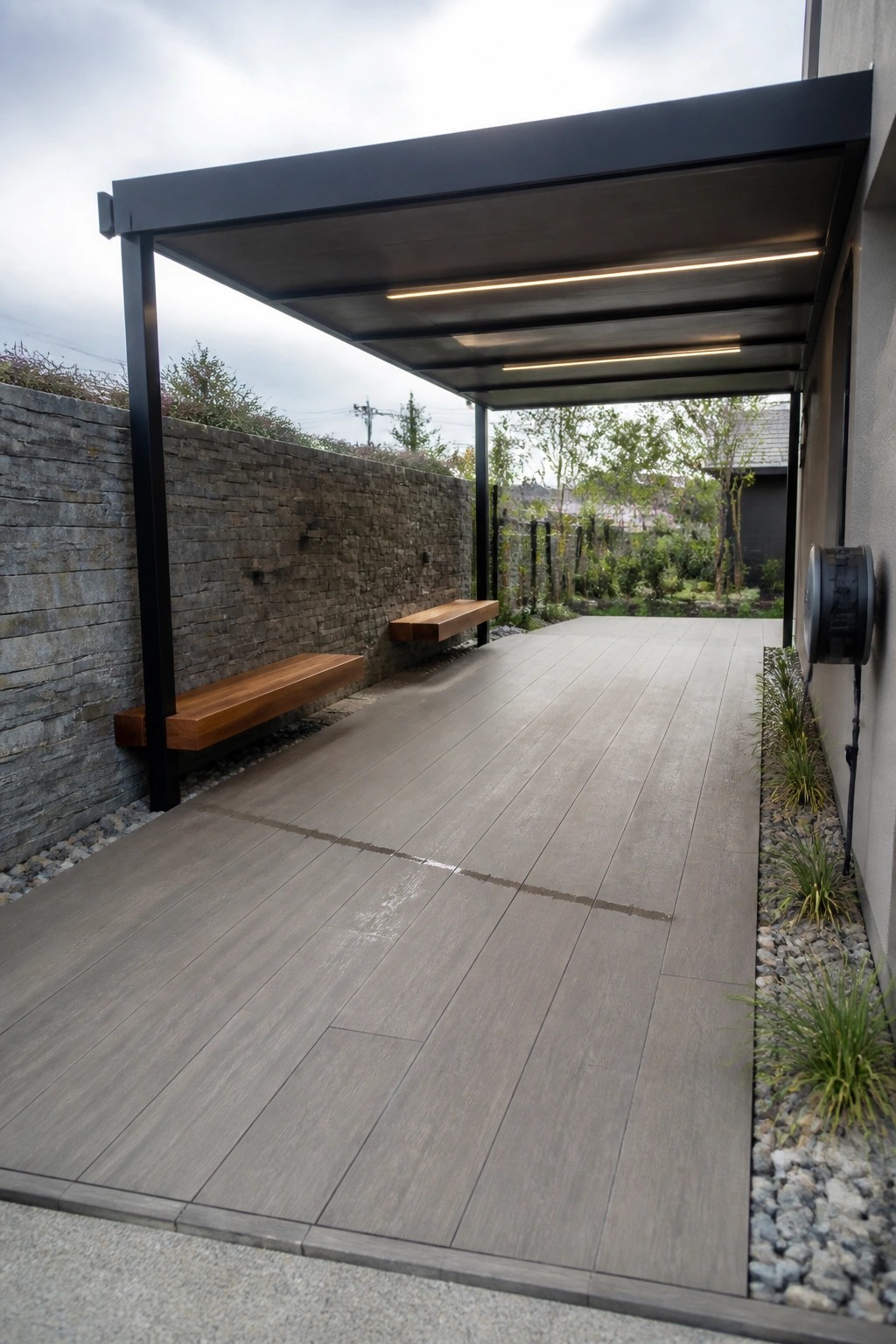
Wide plank tiles like these give a solid, low-maintenance surface under a carport or covered entry. The matte finish and subtle texture help reduce slips when the ground gets wet from rain or car tires.
They suit homes that need a clean look without the upkeep of real wood or loose gravel. Keep the layout simple and straight, and add gravel strips along the edges so water drains away easily.
Permeable Pavers For Driveway Areas

These grid-style pavers with gravel in the joints give solid footing while letting rainwater drain straight through. That keeps the surface from getting slick after storms and cuts down on runoff near the house.
The pattern works best on wider entry zones or side parking spots where you need to curve around trees or beds. It suits homes with open front yards that get regular car traffic but still want something that blends with the surrounding ground rather than a solid slab.
Textured Pavers For Driveway Safety
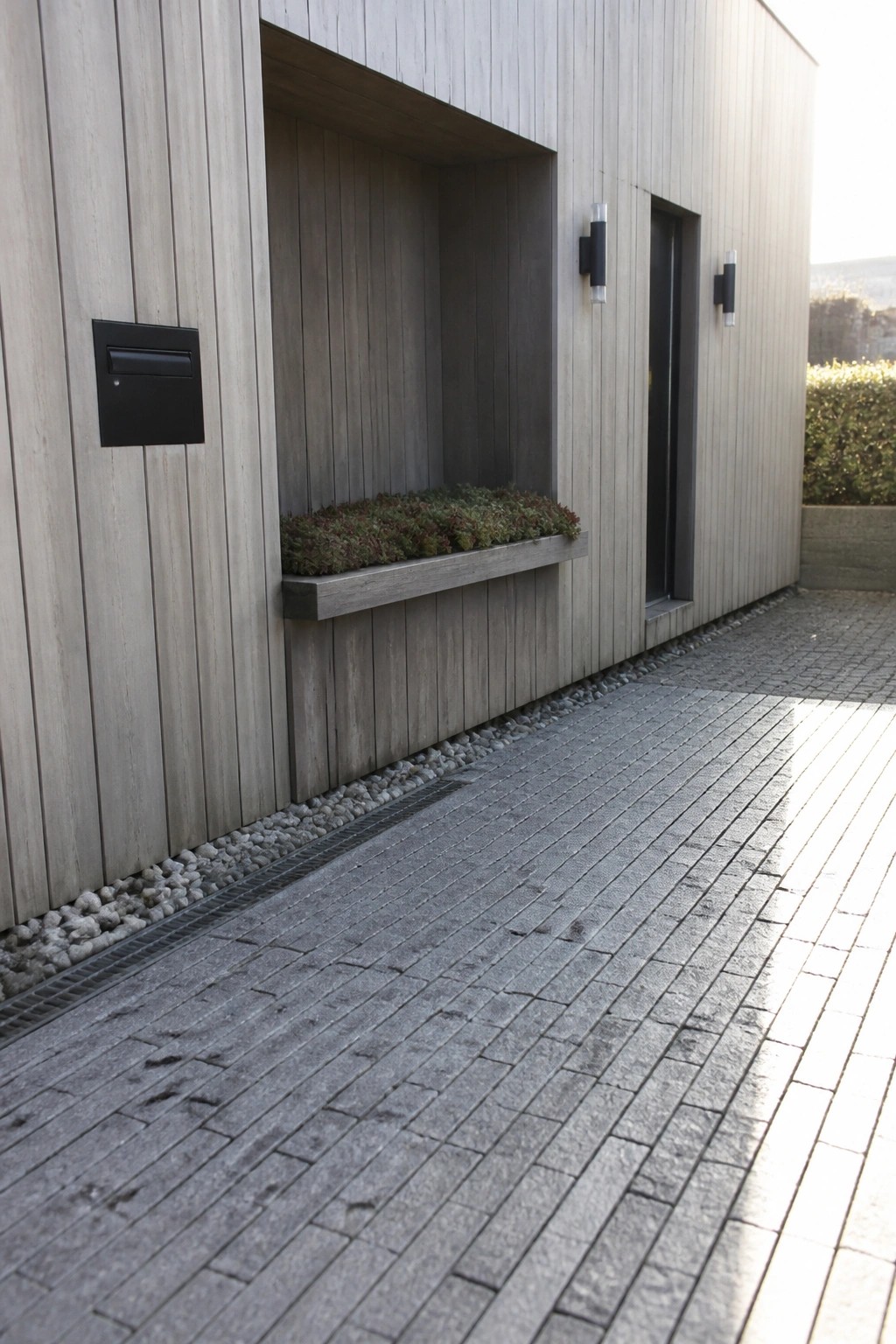
Textured brick pavers work well for driveways because they give tires and feet better grip than smooth surfaces. The gray rectangular pavers in this setup show how a simple material choice can handle rain without becoming slippery.
These pavers suit homes where the driveway also serves as a walkway. Adding a linear drain along the edge helps water move away quickly and keeps the surface drier overall.
Textured Pavers For Everyday Outdoor Paths
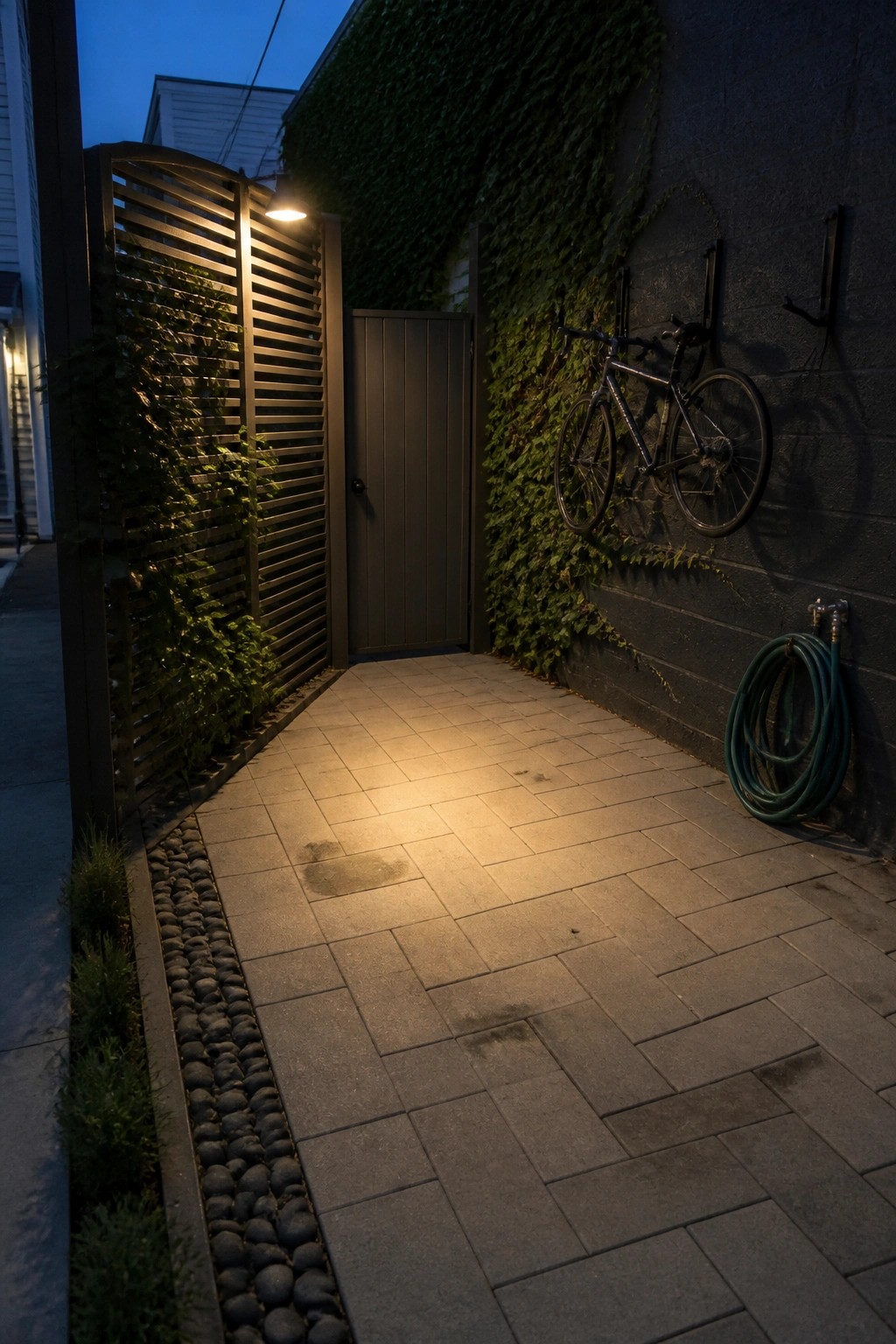
Many homeowners pick smooth tiles for walkways and then wonder why they feel slippery after rain. These gray pavers have a slightly rough finish that gives better traction without looking industrial.
They suit narrow side passages or service areas where you need something practical that still looks neat. Keep the joints filled so water drains instead of sitting on the surface.
Textured Tiles On Outdoor Stairs
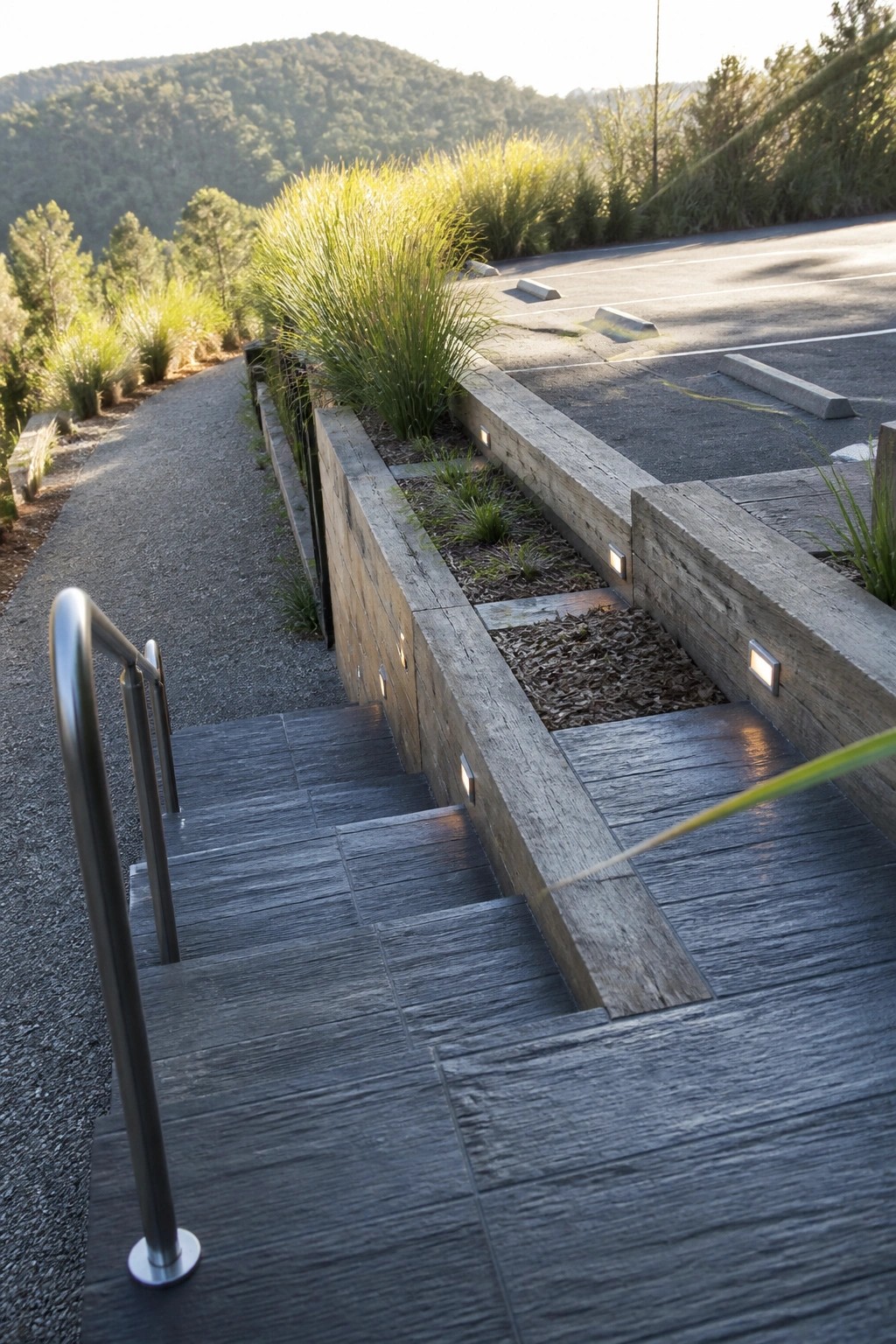
Textured tiles on stairs give a solid grip when you step out of the car and head toward the house. They handle wet leaves and morning dew without becoming slick, which matters on any sloped site that leads to parking.
These tiles suit homes where the path from the parking area meets a change in level. Keep the color and finish close to the surrounding path so the stairs feel like part of the same surface rather than an afterthought.
Textured Pavers For Better Grip On Driveways

Many homes need paving that stays safe underfoot even after rain or with regular car traffic. Textured tiles with a speckled surface give that extra traction while keeping a clean, low-key look that fits modern exteriors.
These tiles work best on straightforward driveways or entry courts. They handle daily use well and pair easily with brick walls or simple plantings without needing much extra upkeep.
Textured Stone Pavers For Driveways
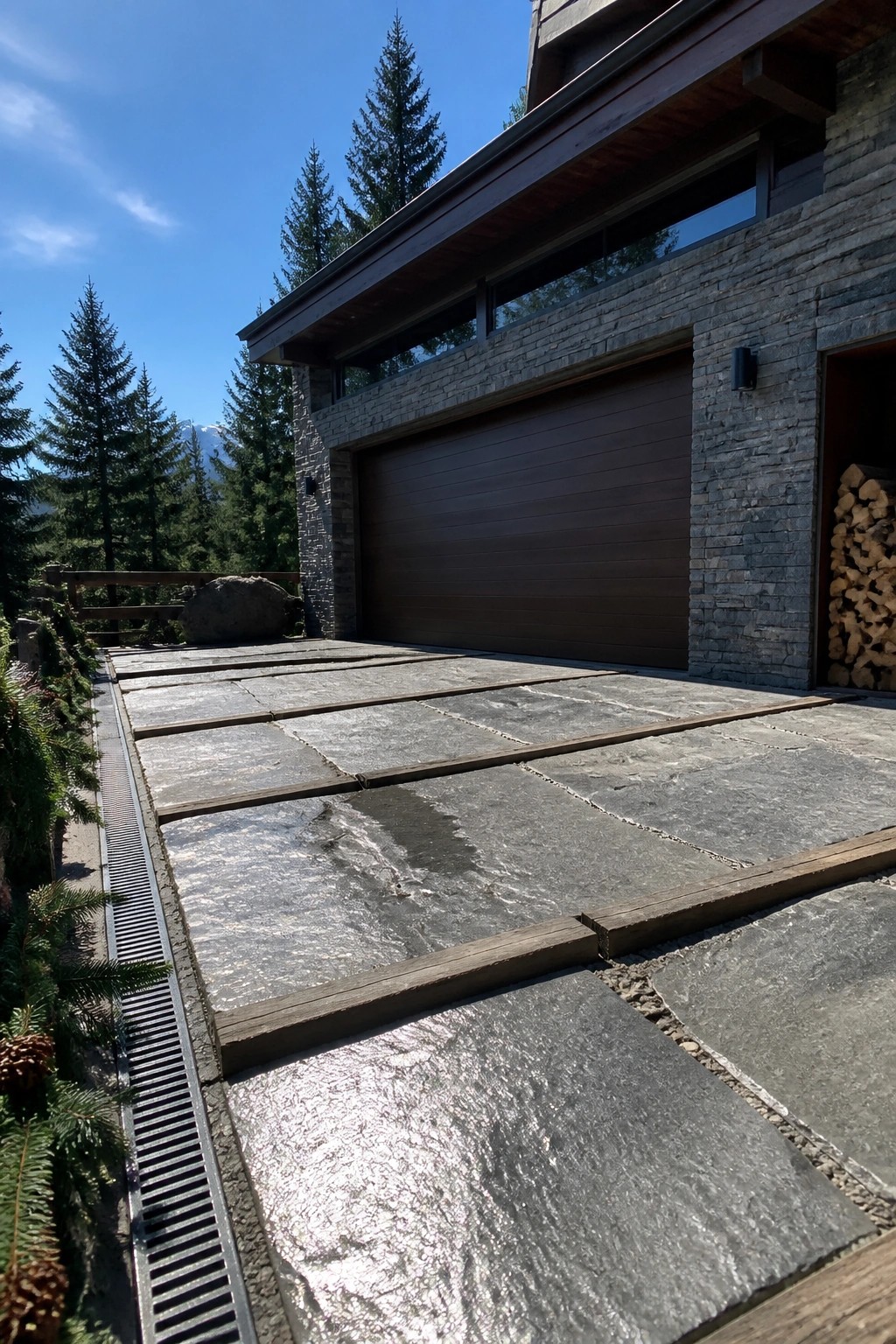
Large stone tiles can give a driveway solid traction without looking too industrial. The rough surface helps tires and feet stay steady even after rain, and the gaps between them let water drain away instead of sitting in puddles.
This approach suits homes in wooded or hilly spots where wet weather is common. Pair the tiles with a simple channel drain along one side so runoff moves off the surface quickly and the area stays safer year round.
Large Concrete Tiles For Driveway Areas
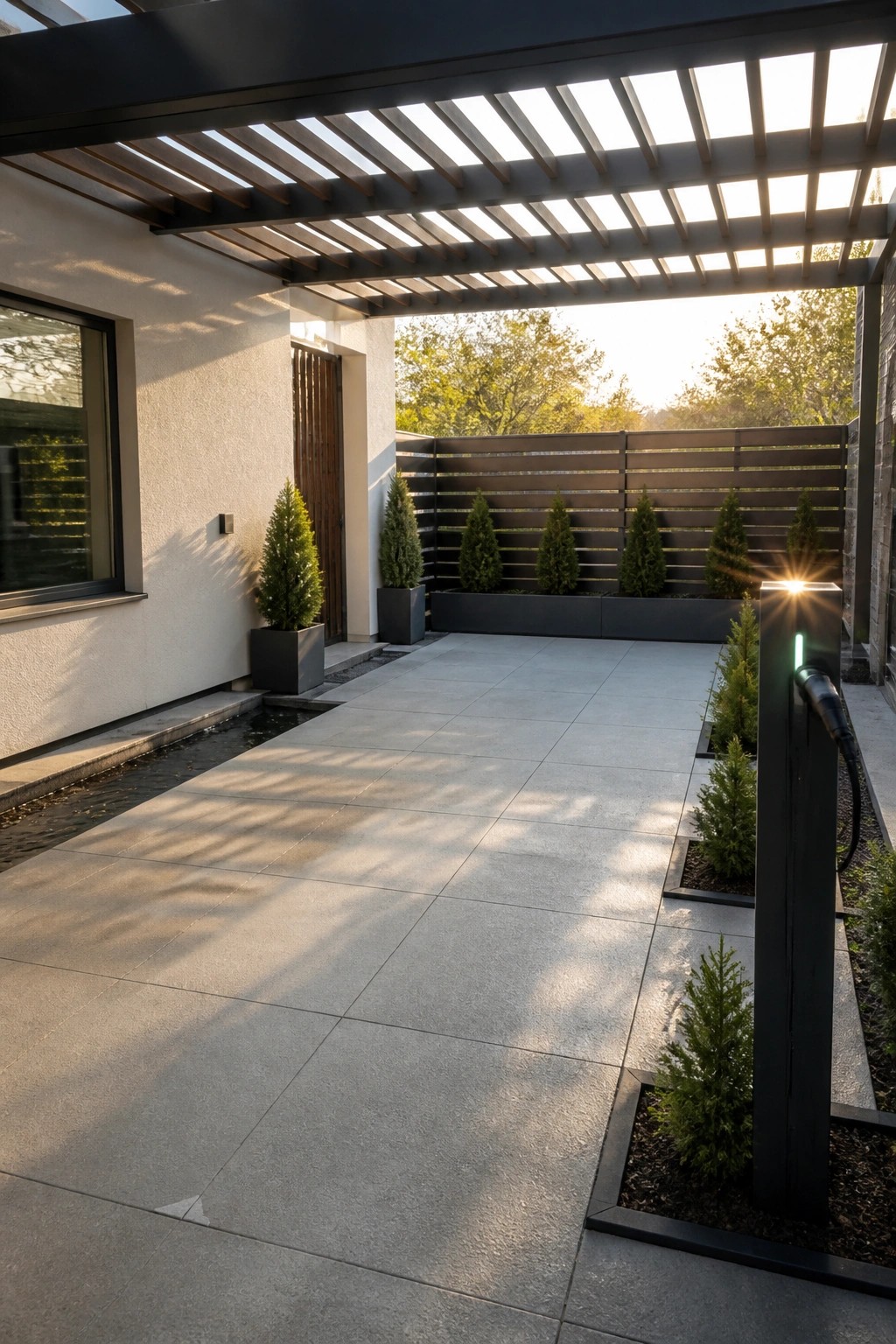
Large concrete tiles give a simple way to cover a driveway or parking spot without worrying about too many seams or loose gravel. They hold up under regular car use and still look neat once the job is done.
These tiles work best on homes that already have a modern or minimal style and need one surface that can handle both vehicles and foot traffic. A light texture on the top helps with grip when the ground gets wet.
Gravel Grids For Stable Parking Areas

A grid system under loose gravel keeps the surface from shifting under tires or feet. It creates a firm base that still looks natural and blends with garden edges rather than feeling like a hard paved lot.
This approach works well on driveways or side parking spots next to a house where drainage matters and a fully paved look feels too heavy. The grid holds the stones in place through wet weather and regular use, so you avoid ruts while keeping the softer appearance many homes prefer.
Frequently Asked Questions
Q: How do I keep the surface clean without making it slippery again?
A: Sweep regularly with a stiff broom and rinse with a hose. Avoid harsh chemicals that might wear down the texture over time. A quick scrub with mild soap works fine for most dirt.
Q: What if one tile gets damaged after a year or two?
A: Replace just that one tile instead of the whole area. Most non slip options come in standard sizes so finding a match stays simple. This keeps your parking spot safe without much hassle.
Q: Will heavy cars wear down the grip faster than expected?
A: The right tiles handle vehicle weight without losing texture quickly. Focus on ones rated for driveways and check the surface every few months. Rotate where you park if you notice uneven wear in spots.
