

I have noticed that the area where cars pull in often shapes the first impression of a house more than people expect.
When I updated the parking spot in front of my place, the tiles I chose ended up cutting down on weeding and sweeping far more than the old gravel ever did.
Materials that stay flat and resist oil marks help the whole front of the home look settled instead of neglected.
It helps to check how the surface drains after heavy rain before laying anything permanent.
Simple patterns hold up better than they first appear.
Large Tiles Keep Parking Areas Low Maintenance

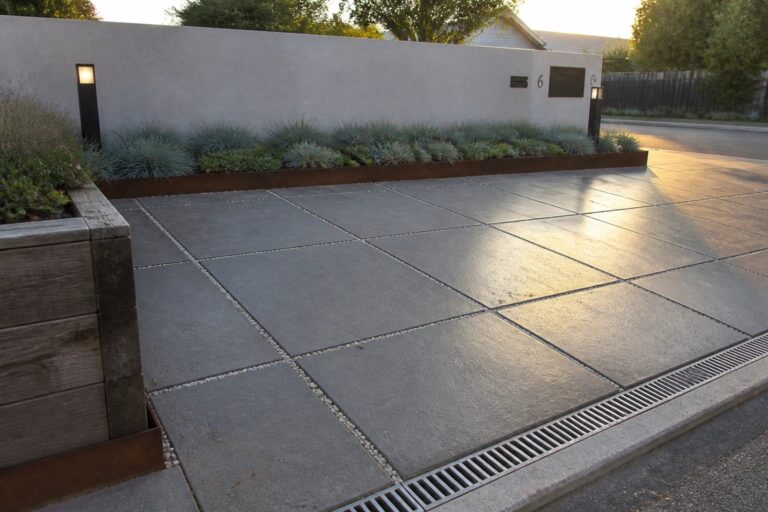
Big square tiles cut down on the number of joints you have to sweep or weed. That makes the surface quicker to clean and keeps it looking tidy with very little effort over time.
This approach suits homes that want a simple, modern driveway without a lot of pattern or upkeep. Just add a drain along one edge and keep the planting low and structured so water flows away easily and nothing overgrows the paving.
Grid Tiles With Grass Infill
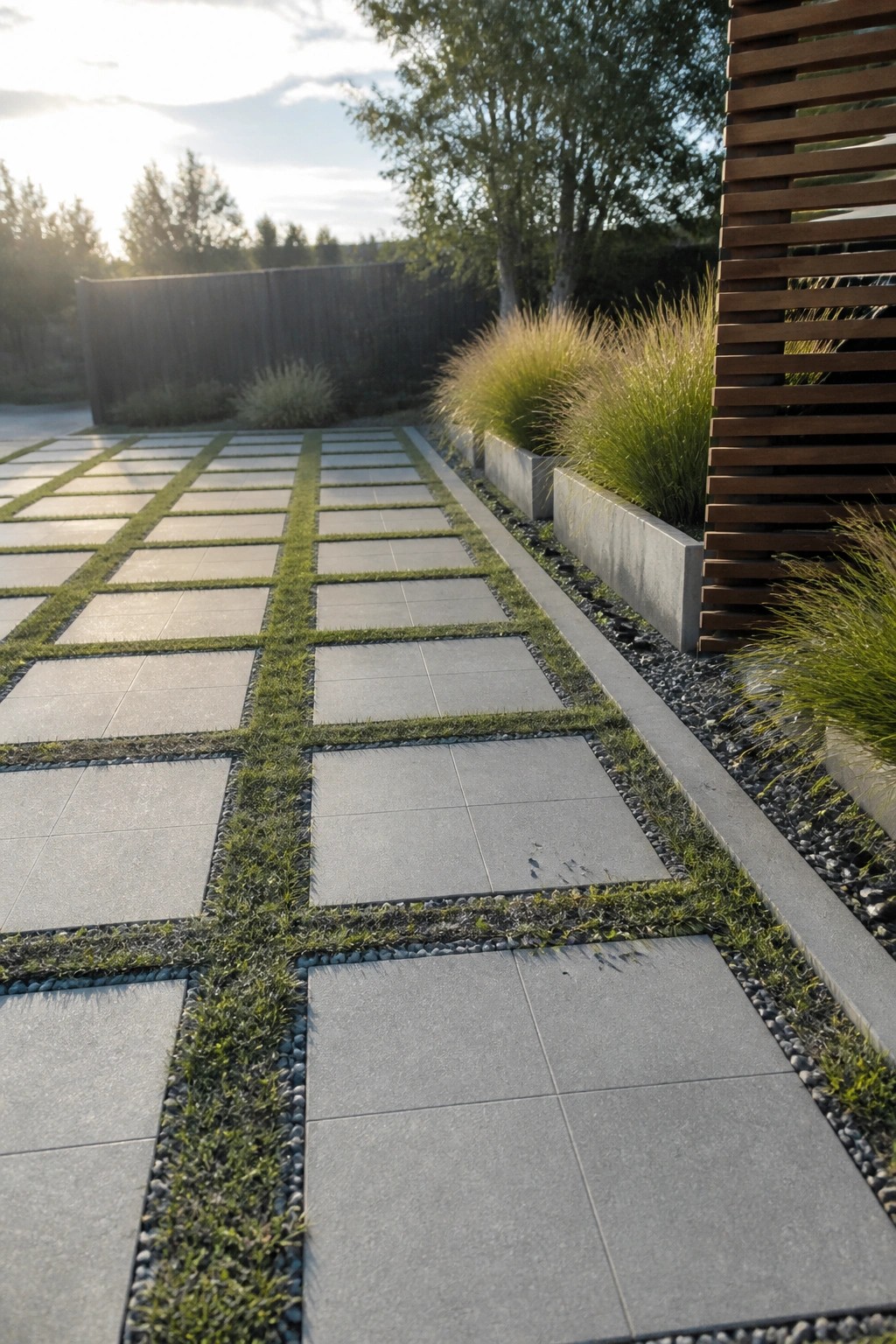
A grid of large concrete tiles with grass running between the joints gives a parking area or driveway a cleaner look without turning it into a solid slab. The pattern keeps things structured while the narrow strips of green and gravel help with drainage and reduce the overall hard feel.
This approach suits homes that already have a simple garden layout and need a low maintenance surface that can handle cars. Keep the base well compacted and choose a tile size that matches the scale of your space so the whole area stays even over time.
Concrete Pavers Keep Access Areas Simple
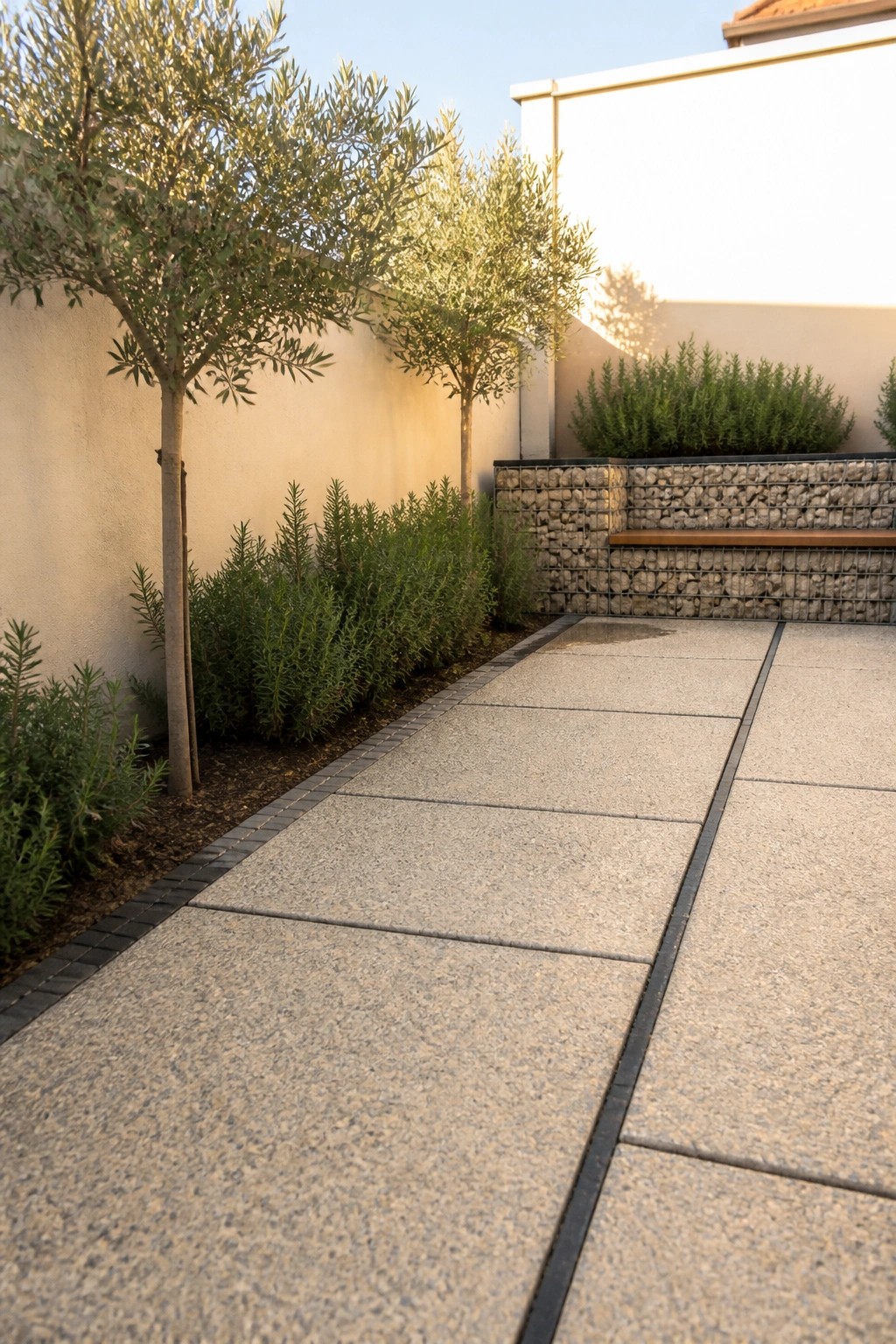
Large concrete pavers give you a flat, durable surface that stays looking clean with almost no effort. They handle foot traffic and light vehicle use without cracking or needing constant repairs, and the dark joints between them help hide dirt and weeds.
These tiles work best along the side of a house or in a narrow parking spot where you want something practical but not fussy. Keep the edges simple with low shrubs so water drains away easily and the whole area stays low maintenance over time.
Hexagonal Tiles For Simple Parking Areas

Hexagonal pavers stand out because they create a clean pattern that still feels grounded. The small pebbles tucked between each tile help with drainage and keep the surface from looking too rigid.
This approach works best on driveways or side parking spots where you need something durable but low maintenance. A solid base under the tiles prevents shifting, and the layout pairs easily with gravel beds or simple concrete edging.
Grass Strips Between Linear Pavers

This setup uses long rectangular tiles with narrow bands of grass running between them. The result stays simple and modern while cutting down on the amount of solid surface that needs cleaning or sealing.
It suits side entries, narrow drive strips, or small parking pads where full concrete feels too heavy. Pick a tough, low-growing grass and keep the joints narrow so the surface stays easy to walk or drive on.
Large Pavers Set In Gravel
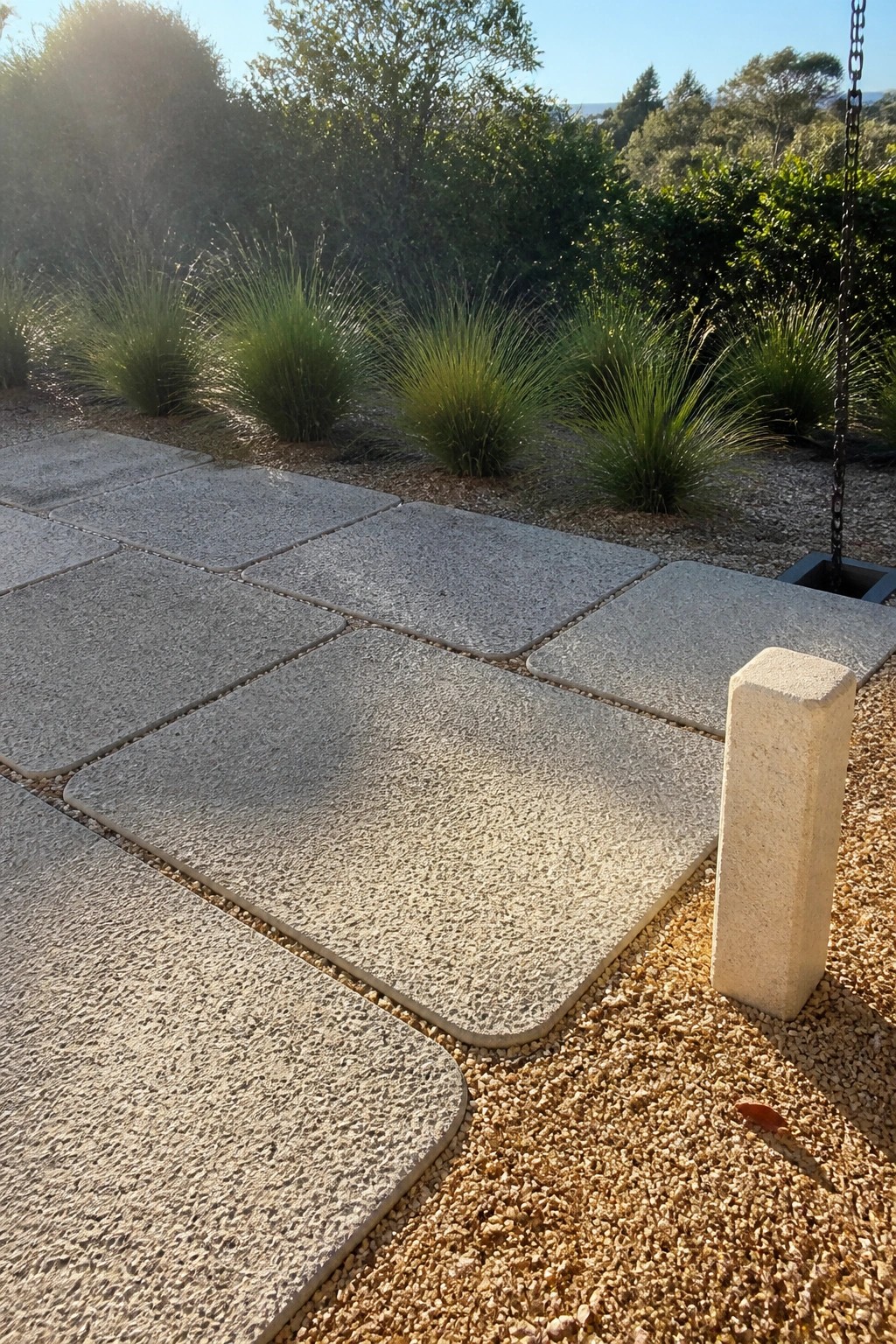
Large pavers set into gravel make a practical choice for parking areas that need to stay simple. The wide slabs give solid footing for cars while the gravel handles drainage and keeps the surface from feeling too rigid. This mix cuts down on weeding and sweeping compared with solid concrete or asphalt.
It works best on homes that already use gravel in other parts of the yard or driveway. Keep the pavers at least two feet across so tires do not sink into the gaps, and choose a light color if you want the area to stay cooler in summer.
Large Concrete Pavers With Gravel Joints
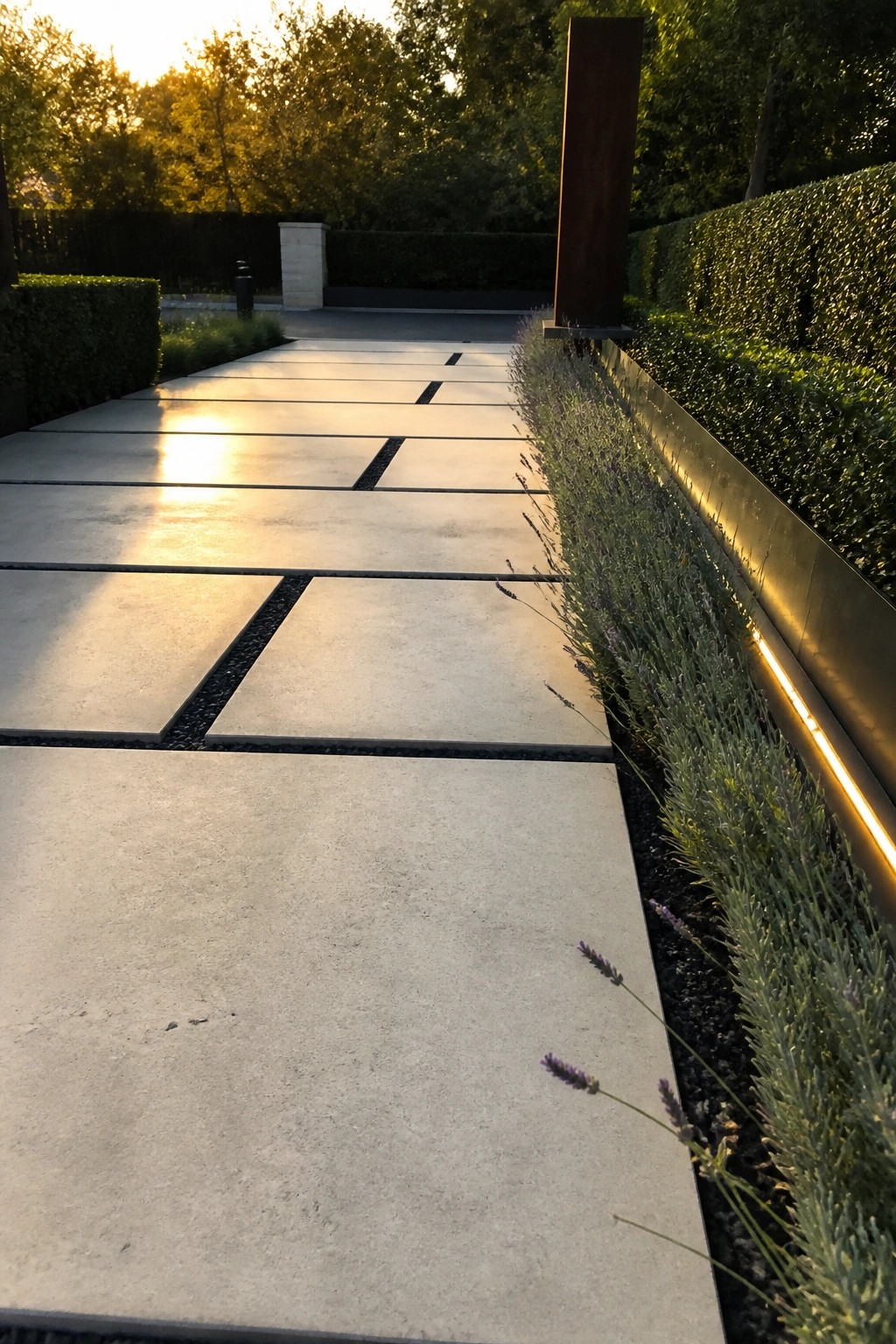
Large concrete tiles set with narrow gravel lines between them give a clean surface that stays low maintenance over time. The gaps help with drainage and reduce the chance of cracks forming across wide areas.
This layout suits driveways or side paths on modern homes where you want something simple to sweep and hose off. Add a slim metal edge with a light strip along one side to keep the edges sharp without adding extra upkeep.
Grass Pavers Reduce Upkeep Along the House
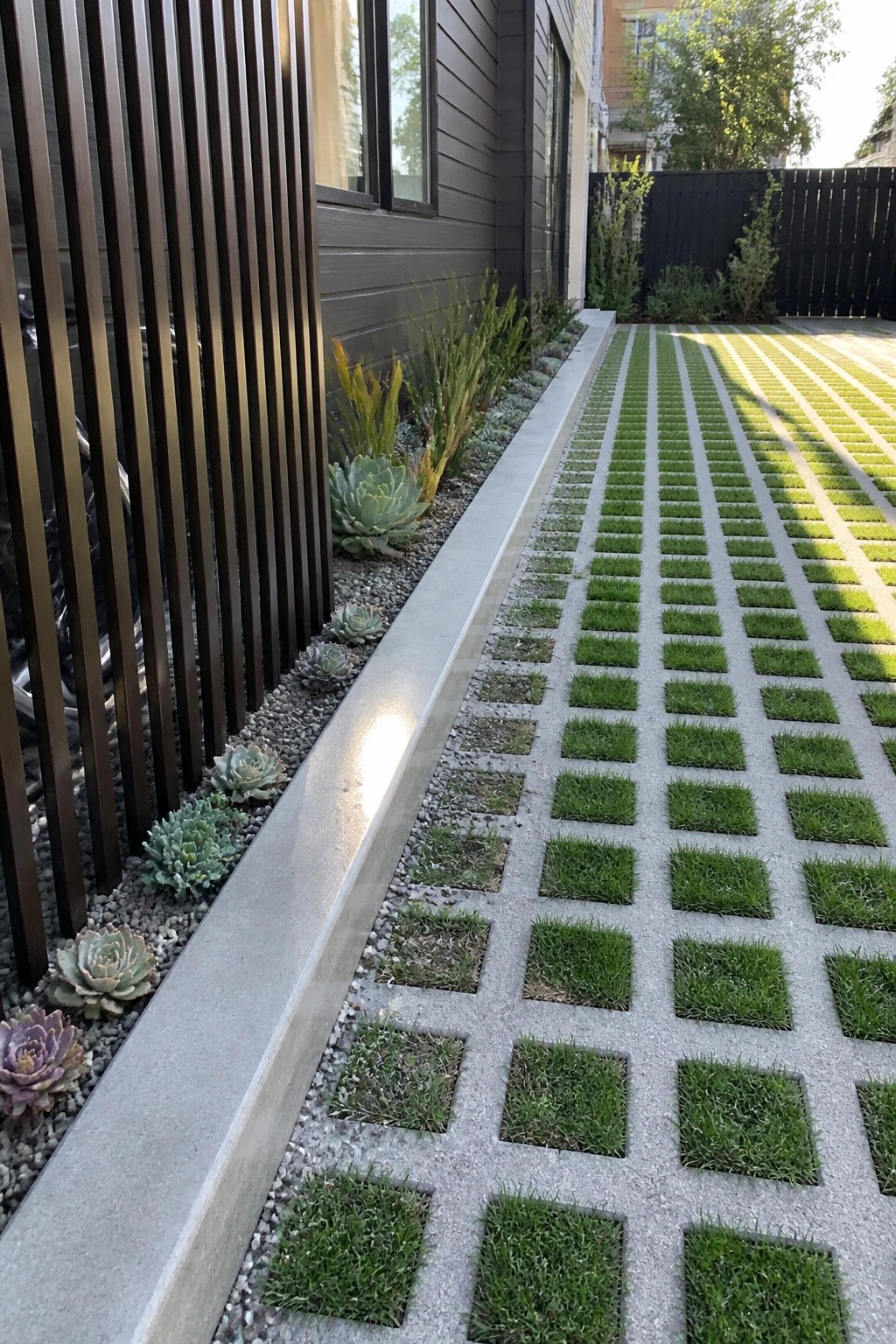
Grass pavers work well when you want a solid surface that still lets some green through. They give structure without turning the whole area into a plain slab of concrete. The grid format holds the grass in place so it stays even and does not get worn down from foot traffic or light vehicle use.
These tiles suit narrow side yards or edges of a driveway on homes that already have clean lines. Keep the surrounding beds simple with gravel and low plants so the whole strip stays easy to care for. Just make sure the base underneath drains properly or the grass can get patchy in wet spots.
Dark Stone Pavers Simplify Driveway Upkeep
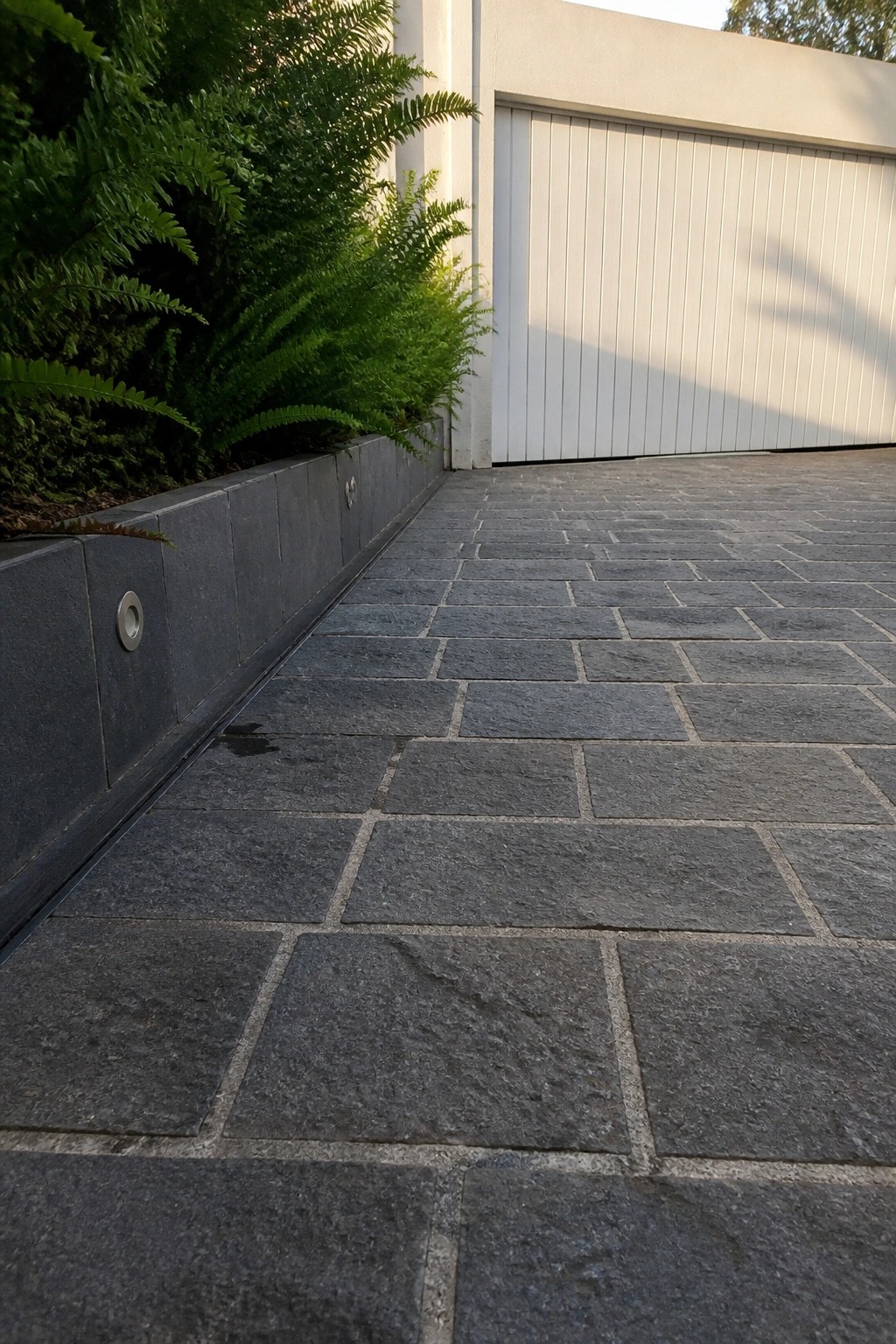
Large dark pavers like these cut down on the usual driveway chores. They stay looking neat with just a quick sweep now and then, and the color hides everyday dust and water spots better than lighter materials would.
This approach works well on homes with clean lines and a simple color scheme. Pair the pavers with a low border wall to keep the edges tidy and stop soil from washing onto the surface.
Pavers Set Into Gravel

Large concrete pavers placed directly into gravel create a surface that stays neat with almost no work. The pavers give solid footing for cars while the gravel fills the gaps and handles drainage, so you skip the problems that come with a full concrete slab. This setup looks simple and keeps weeds down if you use the right base.
It works best on driveways or side parking spots where you want something firmer than loose gravel but still easy to install. Just make sure the pavers sit level and the gravel layer stays thick enough to stay put over time.
Striped Paving for Simple Driveways

Striped paving works well when you want a driveway that looks organized without much effort. The alternating bands of light tile and darker stone keep the surface interesting while the straight lines help the space feel longer and more open. This approach suits narrow side access or front drive areas where you need clear direction but still want low maintenance.
It works best on modern homes with clean walls and minimal planting along the edges. The materials hold up to cars and weather, and the pattern hides minor dirt or wear better than a single solid surface. Stick to two or three tones max so the look stays calm rather than busy.
Speckled Tiles For Low Maintenance Entries
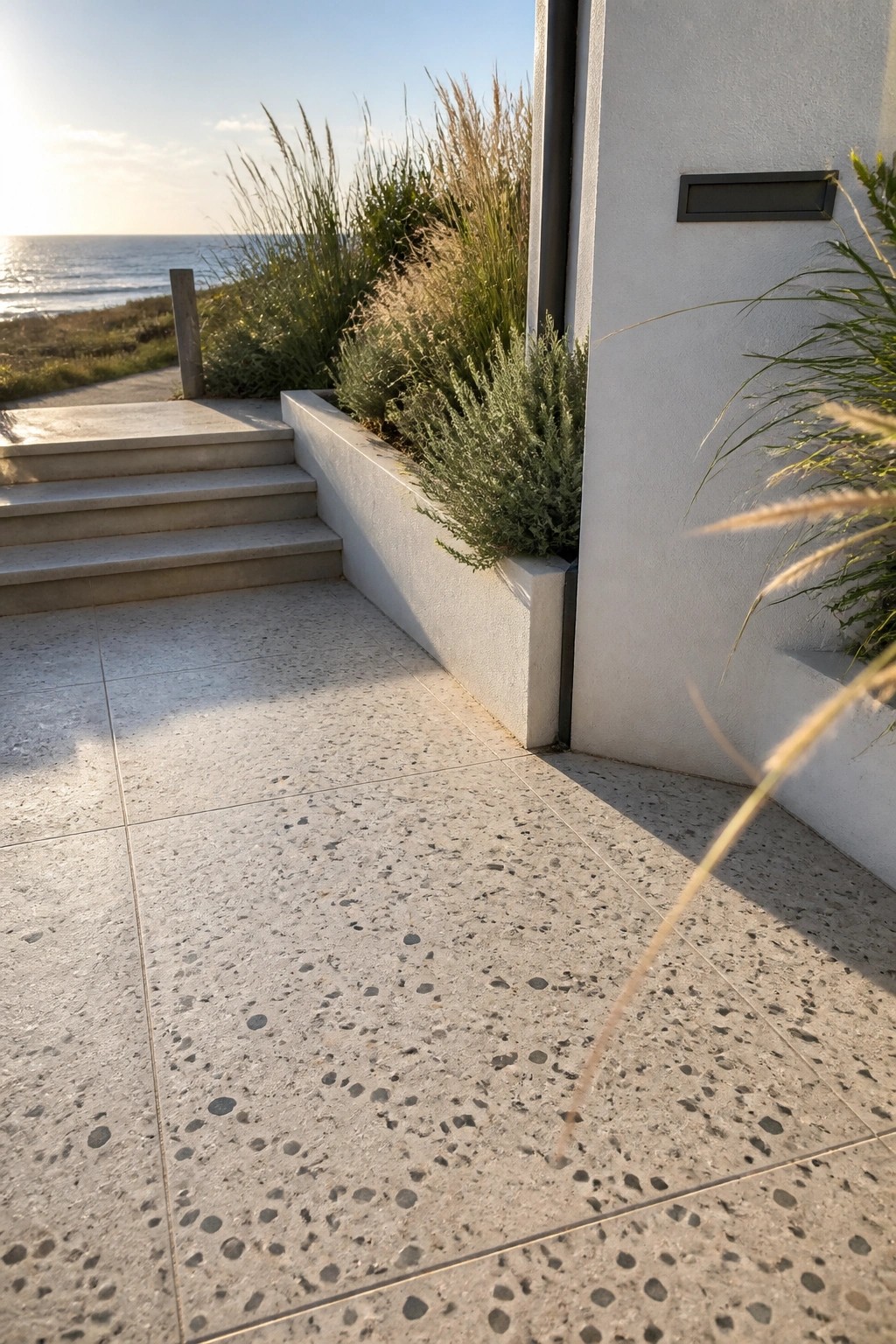
Speckled tiles like these give an entry a simple, uniform surface that holds up well over time. They cut down on weeding and sweeping compared to gravel or pavers with lots of joints, and the pattern hides minor dirt and wear.
They suit modern homes with clean lines and work best when the tile size stays large and the color stays neutral. Keep the layout straightforward so the paving stays in the background rather than competing with the house or planting beds.
Paving Strips Set Into Gravel
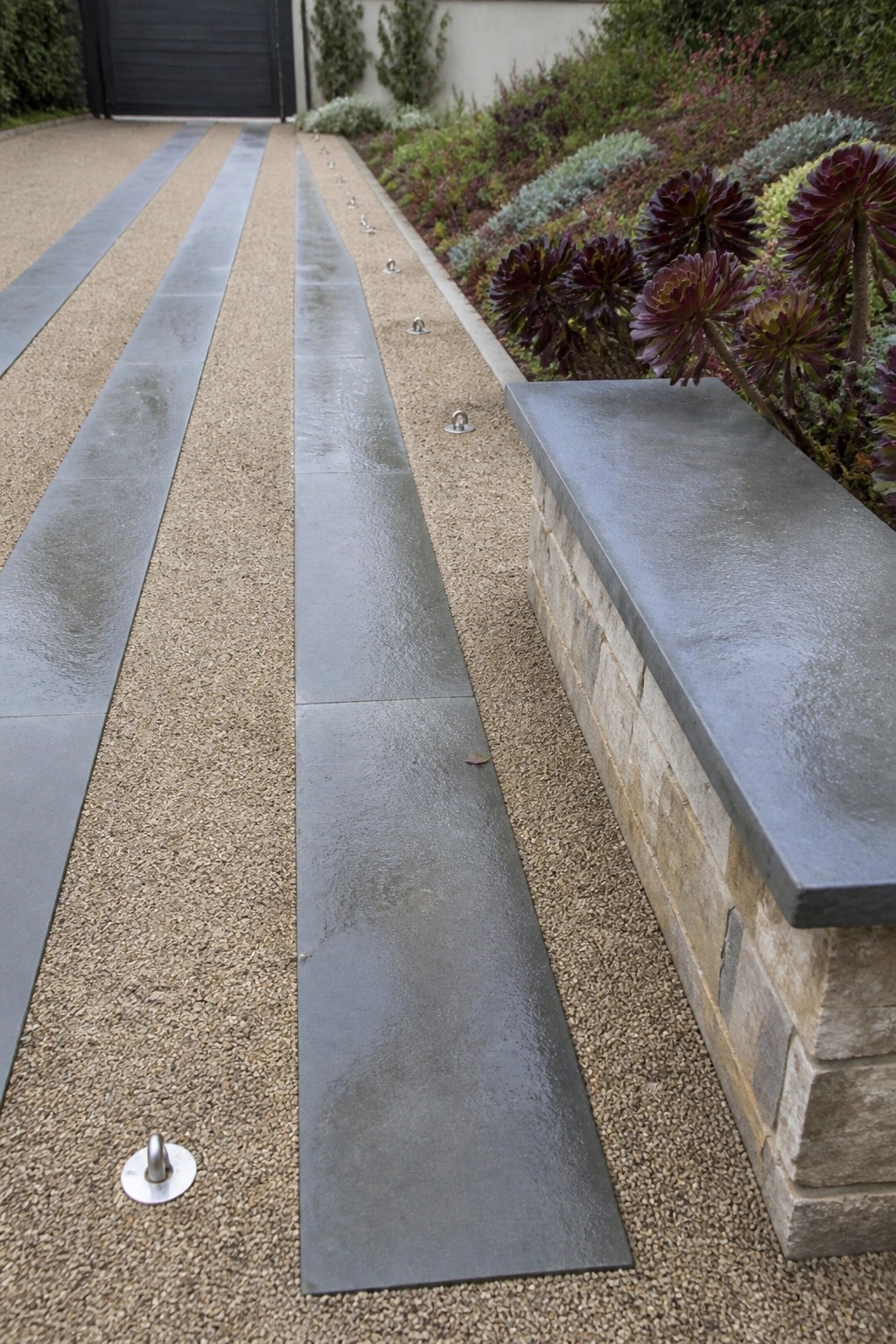
Many homeowners choose this layout because it gives a driveway or parking area structure without turning the whole surface into solid paving. The long tiles create clear paths for tires while the gravel handles the rest, which cuts down on weeding and sweeping.
This setup suits homes with a modern or simple style and works best on fairly level ground. Space the strips to match typical car tracks, and pick a tile thickness that can handle regular vehicle weight without shifting.
Large Tiles Set in Gravel
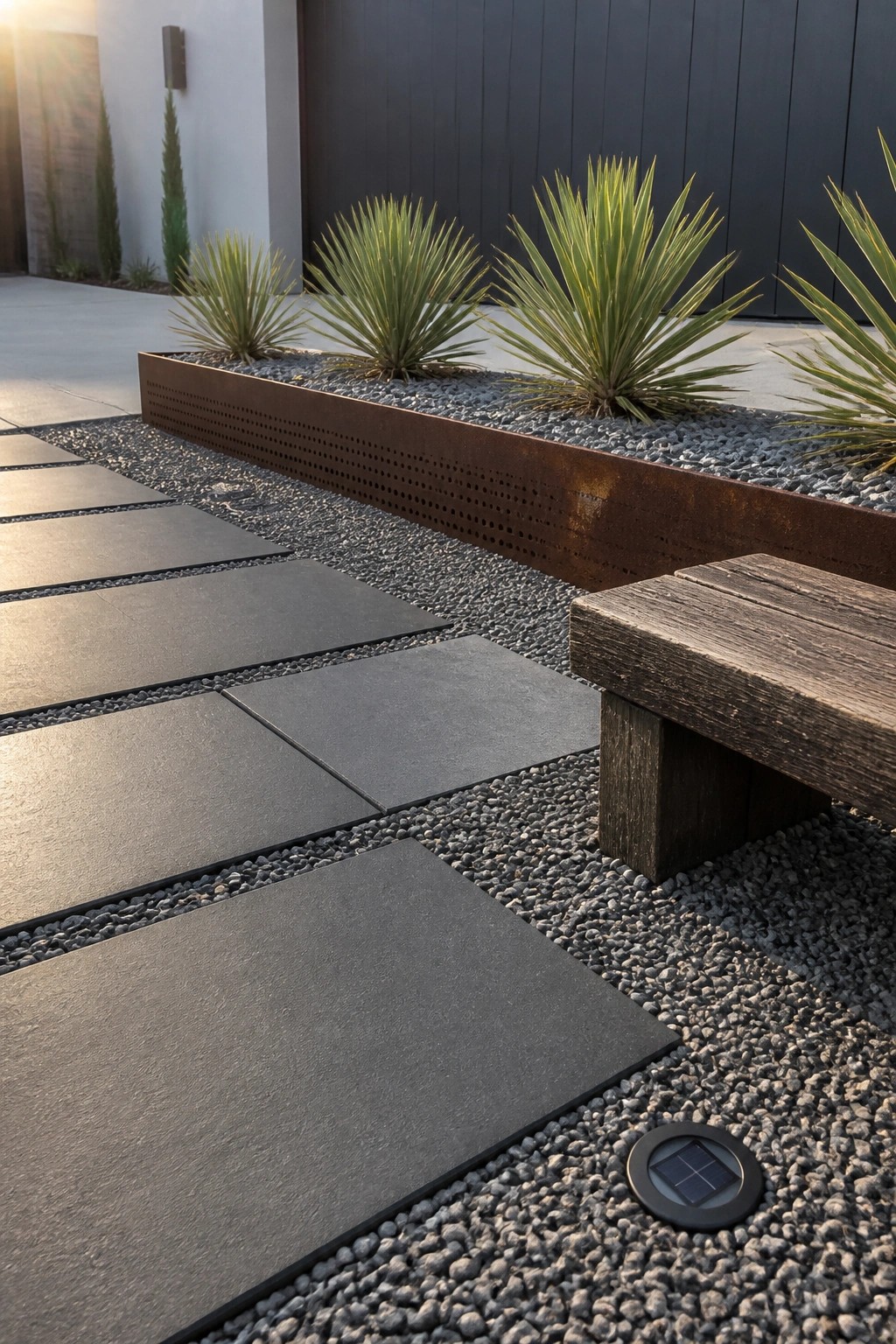
Large rectangular tiles laid into a gravel bed give you a firm surface that still feels open and simple. The gravel handles drainage and weeds stay low if you use the right base, which makes the whole area easier to keep up than solid paving or concrete.
This setup works best along a garage wall or at the edge of a driveway where you need steady footing but do not want a heavy look. Keep the tiles spaced evenly and use a low metal edge like the one shown to hold the gravel in place and stop it from spreading.
Permeable Grid Pavers For Driveways
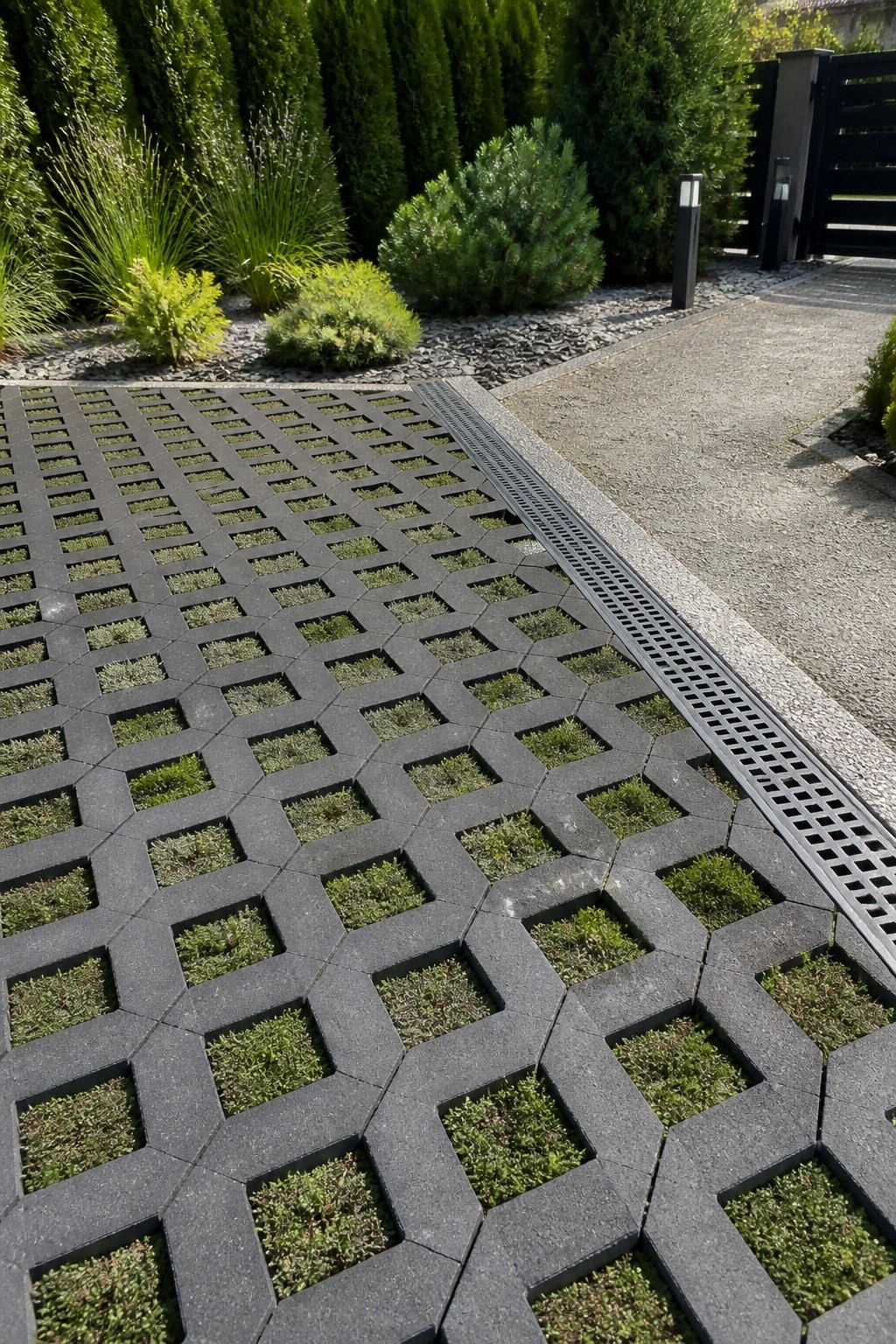
These grid pavers create a stable driving surface while letting grass fill the open sections. The result is a parking area that handles cars without turning into a solid slab of concrete or asphalt.
They suit homes with modest front entries or side parking zones where drainage matters. The built in gaps help water soak through instead of pooling, and the grass needs only occasional trimming to stay neat.
Neutral Paving Tiles Cut Down on Path Upkeep
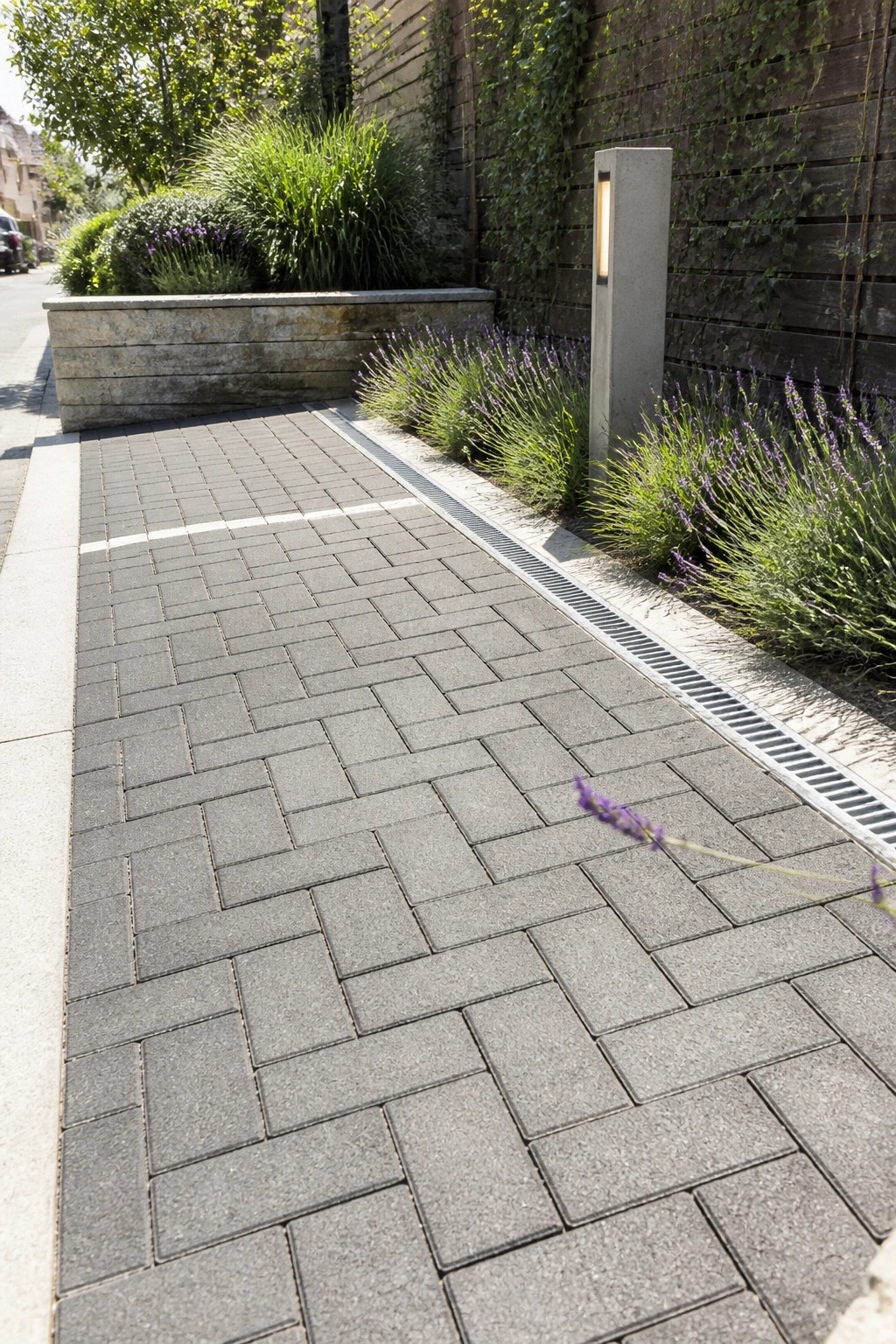
Gray rectangular tiles laid in a running pattern hold up well under foot traffic and weather. They stay looking decent without constant sweeping or sealing, which makes them a practical pick for anyone who wants less weekend work outside.
This approach fits side entries or front paths on homes with simple gardens. Pair the tiles with a built-in drain along the edge so water moves away quickly and the surface stays even longer.
Raised Beds Along Paver Paths
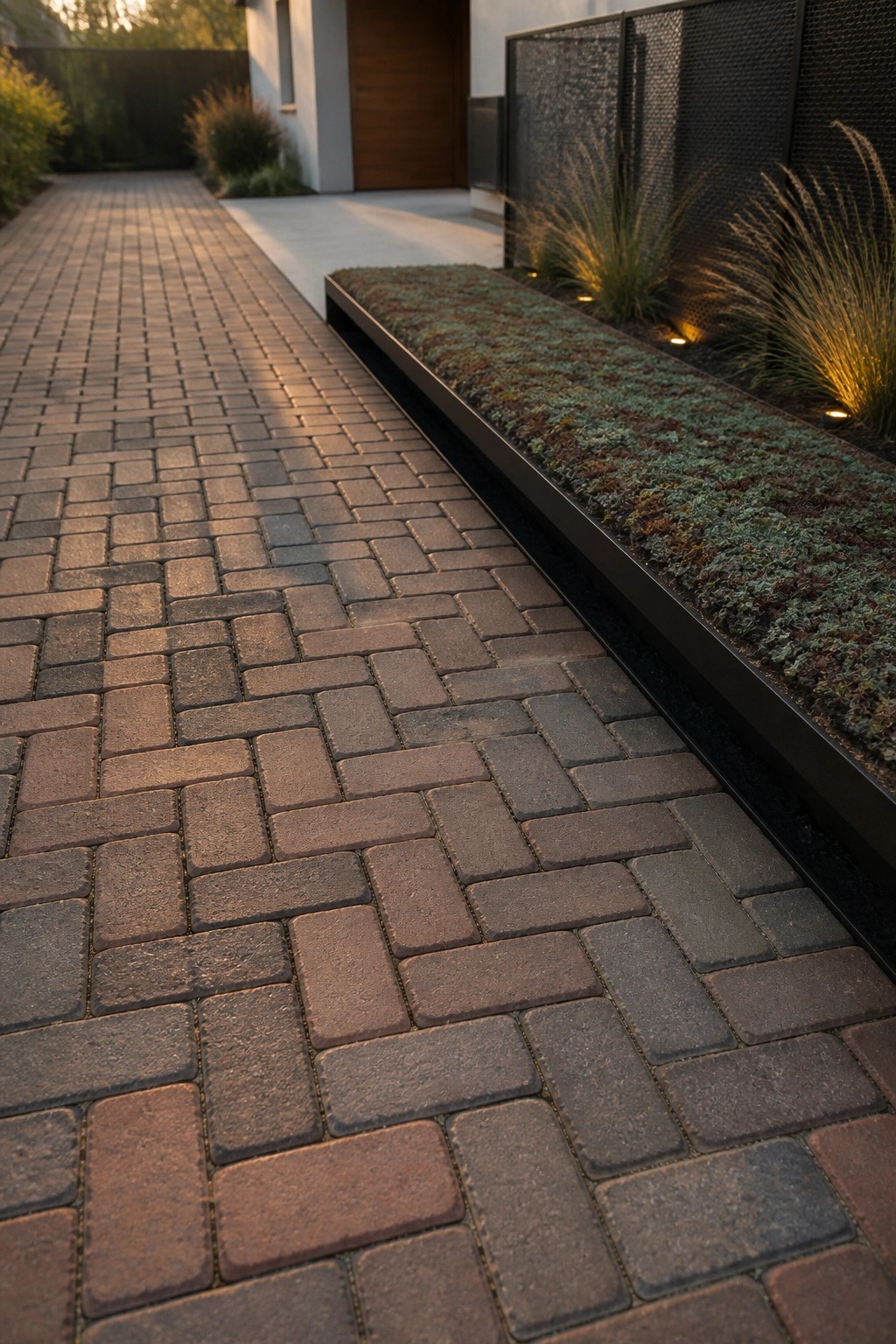
A raised metal bed next to paver paving gives the driveway a finished edge without extra trim or frequent weeding. The plants stay contained, the pavers stay clear of soil, and the whole setup stays simple to sweep or hose off.
This works best on narrow side approaches or front drive strips where you want separation from planting beds but still need a hard surface for cars. Keep the bed height low so it does not block views, and choose ground covers that do not drop a lot of debris onto the pavers.
Wide Pavers for Low Maintenance Driveways

Large pavers cut down on the number of seams that need attention over time. They create a solid surface that handles cars and foot traffic without showing wear as quickly as smaller materials would.
This approach suits homes where the driveway or side path runs alongside garden beds. Keep the pavers in a simple grid and use gravel or low plants at the edges to reduce weeding and sweeping.
Large Format Tiles For Simple Upkeep
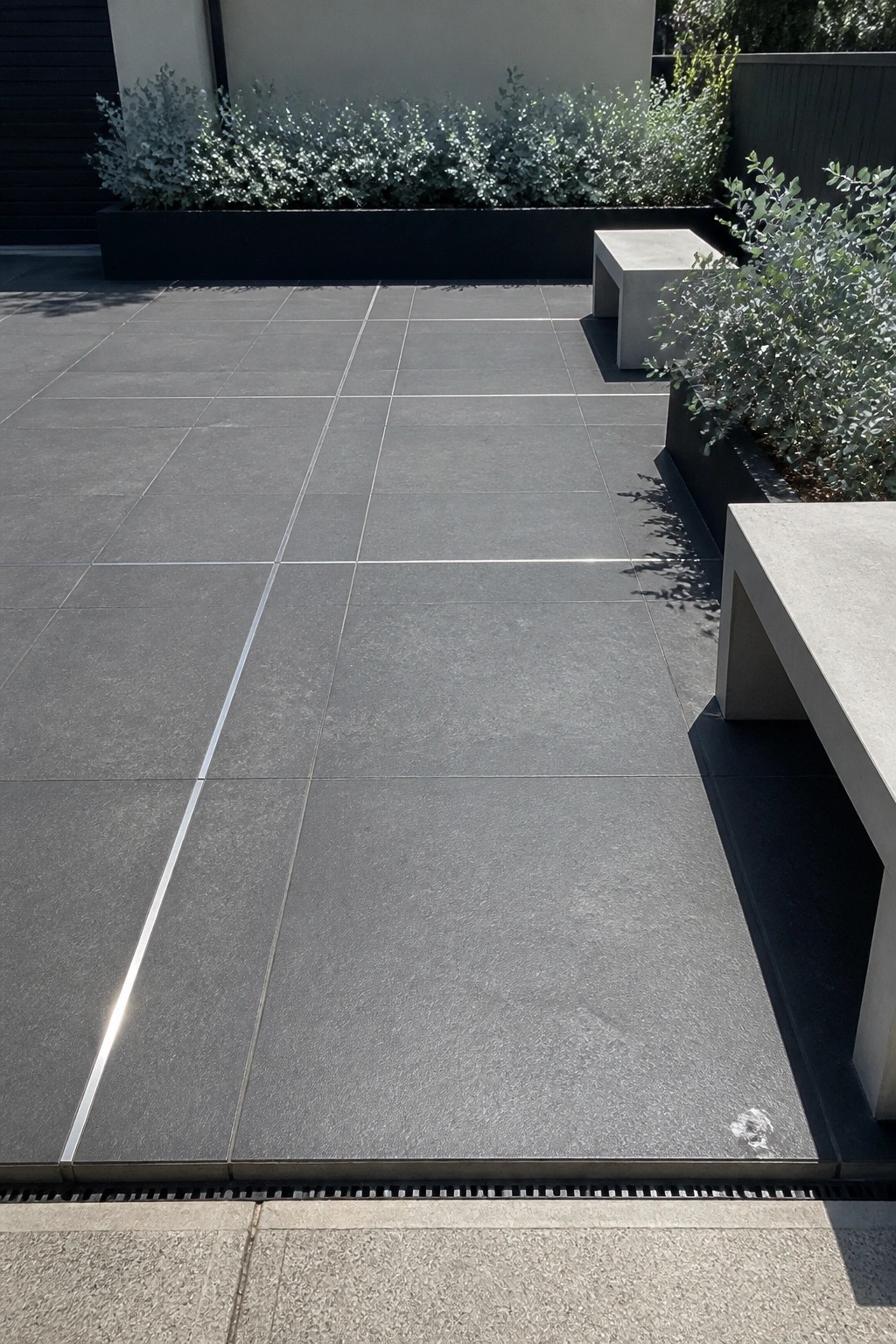
Large tiles like these cut down on the number of seams, which means less room for dirt to settle and weeds to take hold. The dark gray color also hides tire marks and everyday wear better than lighter options, so the surface stays looking neat with minimal effort.
This approach works well on modern homes where the parking area sits right next to living spaces or planting beds. Just make sure the base is solid and the tiles are rated for vehicle weight so nothing shifts over time.
Stone Pavers Set In Gravel

Large irregular stone pavers placed over gravel give parking areas a simple, durable surface that needs little work. The stones handle weight from cars while the gravel fills gaps and helps with drainage, so you avoid the cracking that often comes with solid pavement.
This setup suits homes where you want a low key look that blends into the landscape. Keep the pavers at least two inches thick and use a compacted base so the surface stays even after years of use.
Striped Tiles For Driveways
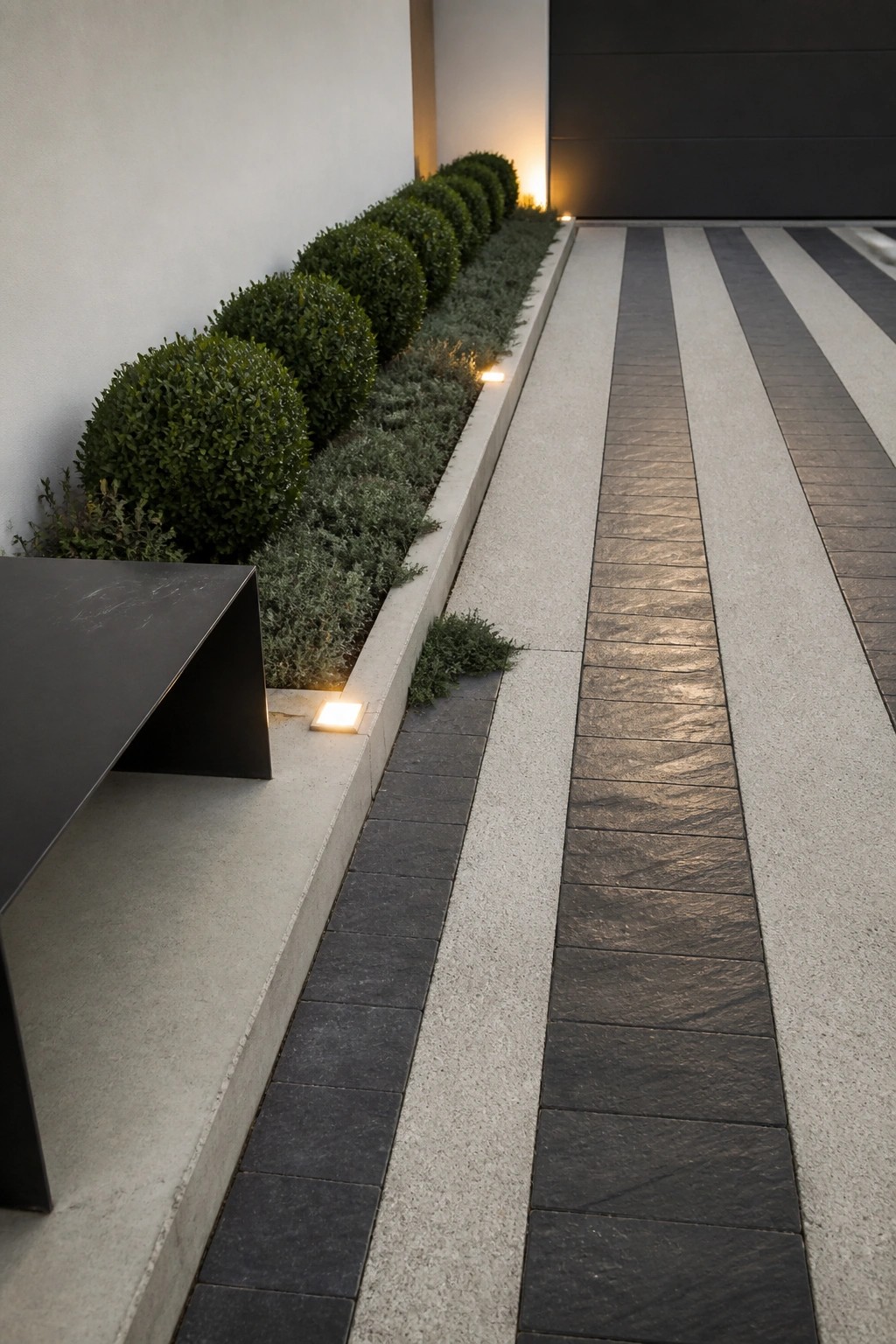
Striped paving gives a driveway a neat, orderly look while cutting down on visible wear. The alternating bands help disguise tire marks and small stains, which keeps the surface looking cleaner between cleanings.
This approach suits long, narrow entries on modern homes where you want low upkeep. Keep the surrounding edges simple and add minimal planting along the sides so the whole area stays easy to manage.
Frequently Asked Questions
Q: Will the tiles stay put if I drive over the same spot daily?
A: Lay them on a compacted gravel base first. That keeps them from shifting even with regular use. Check the edges every few months and nudge any that start to creep.
Q: How do I handle weeds without pulling out every tile?
A: Sweep a polymeric sand into the joints after installation. It hardens just enough to block most growth while still letting water drain.
Q: What happens if one tile cracks under the weight of my truck?
A: Pop out the broken piece and drop in a spare. The rest of the grid stays solid so you avoid a full redo.
