


I have noticed that the way a driveway meets the rest of the house often sets the tone for the entire exterior before anyone even steps inside.
When parking areas feel disconnected from the facade or entry, the whole property can look a bit scattered even if the rest of the design is solid.
Choosing tiles that carry through the same materials or tones as the walkways and borders helps everything read as one continuous space from the street.
Samples on site always tell a clearer story than a catalog page.
Small adjustments in layout can pull the parking zone into the overall flow without making it the main feature.
Grass Filled Grid Pavers For Driveways

Grid pavers with grass growing through the openings give a driveway a softer look than solid concrete or asphalt. They break up the hard surface and let the green continue from the lawn right up to the house, which helps the whole front feel more connected.
This approach works best on homes where the driveway runs close to garden beds or grass areas. The base needs good drainage so the grass stays healthy, and a gravel edge like the one shown here helps keep everything in place without a harsh border.
Circular Paver Layouts for Tree Wells

A circular pattern of pavers lets you keep a tree in place while still creating a solid, usable surface for parking or turning a car. The rings of different tones and textures break up the expanse without making the area feel chopped up. It works especially well on smaller lots where you need the space to do double duty.
This approach suits homes with existing mature trees near the entry or side yard. Keep the inner ring narrow and use a slightly different color or texture for the outer bands so the eye follows the curve naturally. Just make sure the base under the pavers is well compacted so the pattern stays flat over time.
Large Pavers With Grass Lines
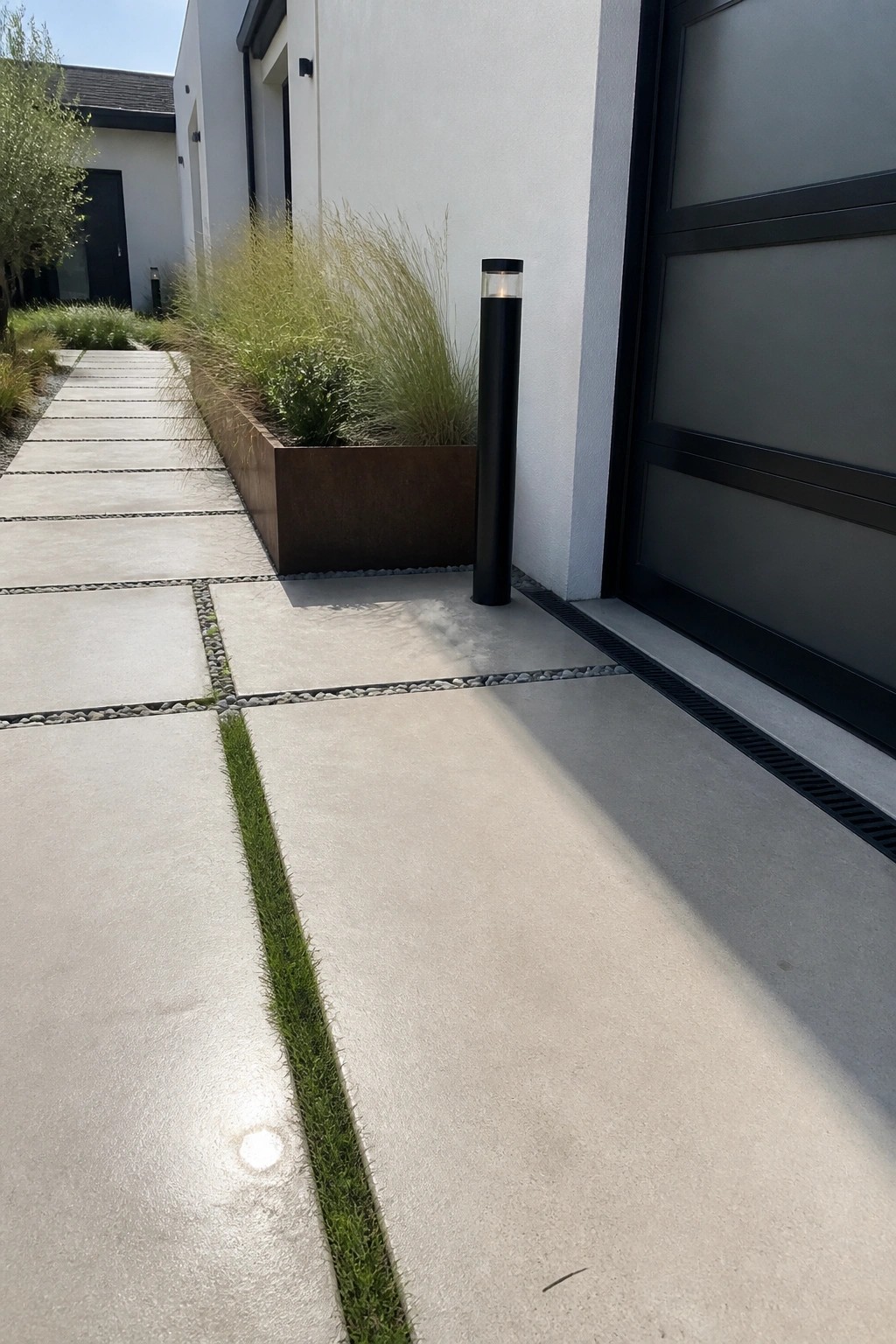
Large concrete pavers work well when you want a clean parking surface that still feels tied to the rest of the yard. The wide slabs cut down on the number of joints, so the area reads as one continuous surface instead of a patchwork of small blocks. A narrow strip of grass between them softens the look without breaking up the flow.
This setup suits modern homes with flat or gently sloped driveways where you need good drainage. Keep the grass strips narrow so tires do not catch the edges, and make sure the pavers sit on a solid base so they stay level over time. A linear drain along the side helps move water away from the house.
Brick Pavers That Blend With Gravel

Brick pavers work well when they sit right next to a gravel section in a driveway. The change in material still feels connected because the colors stay close and the edge stays simple.
This approach suits homes where the drive also serves as a walking path. Keep the paver pattern straightforward so it does not fight the loose gravel next to it.
Alternating Concrete And Gravel Driveway Strips
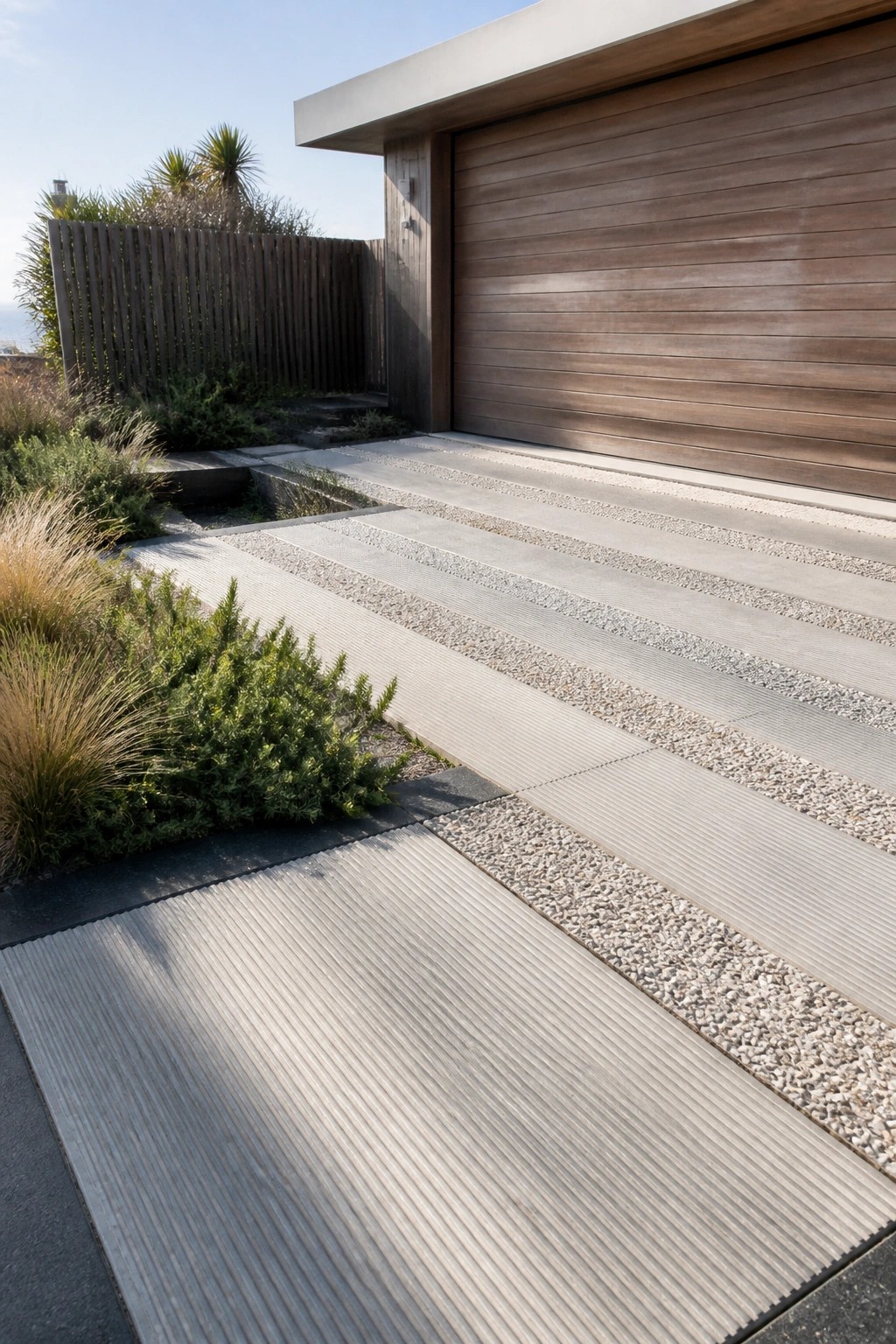
Running strips of ridged concrete next to bands of gravel gives a driveway a clear sense of movement without looking busy. The pattern guides cars in and keeps the surface interesting while still feeling calm next to the house and the side plantings.
This approach works best on modern homes with straight lines and simple landscaping. Keep the gravel contained with edging so it stays neat, and match the concrete tone to the garage or path materials so everything reads as one surface.
Grass And Stone Grids For Driveway Areas
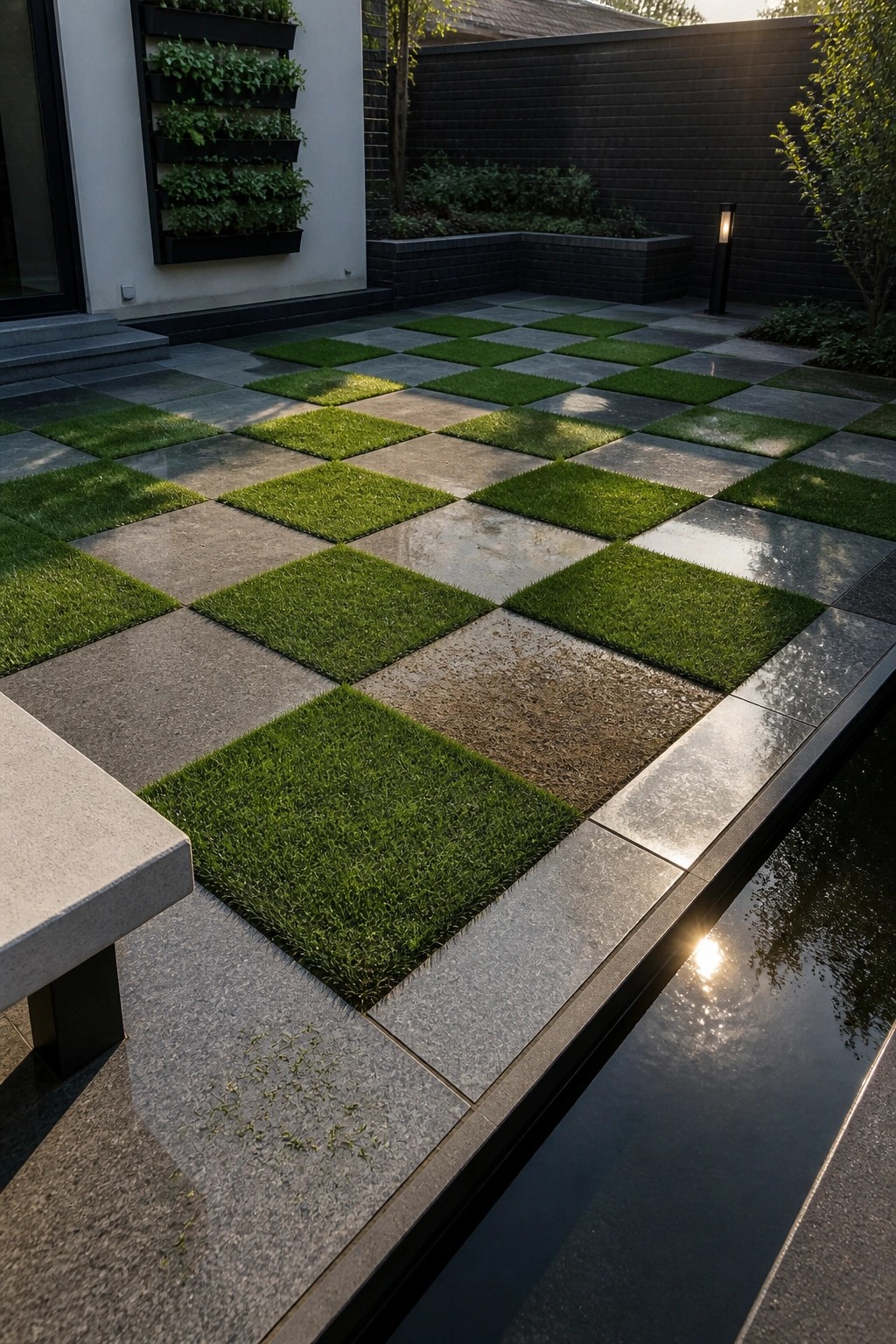
A simple grid of grass squares and stone tiles can turn a parking spot or driveway into something that feels more like part of the garden. It keeps the surface usable for cars while letting some greenery stay visible instead of covering everything in solid pavement.
This layout works best on homes with a flat entry or side yard where you want the driveway to blend into the surrounding landscape. Just make sure the stone sections sit level and the grass gets enough sun so it does not wear out too quickly under regular use.
Brick Walkways With Stone Borders
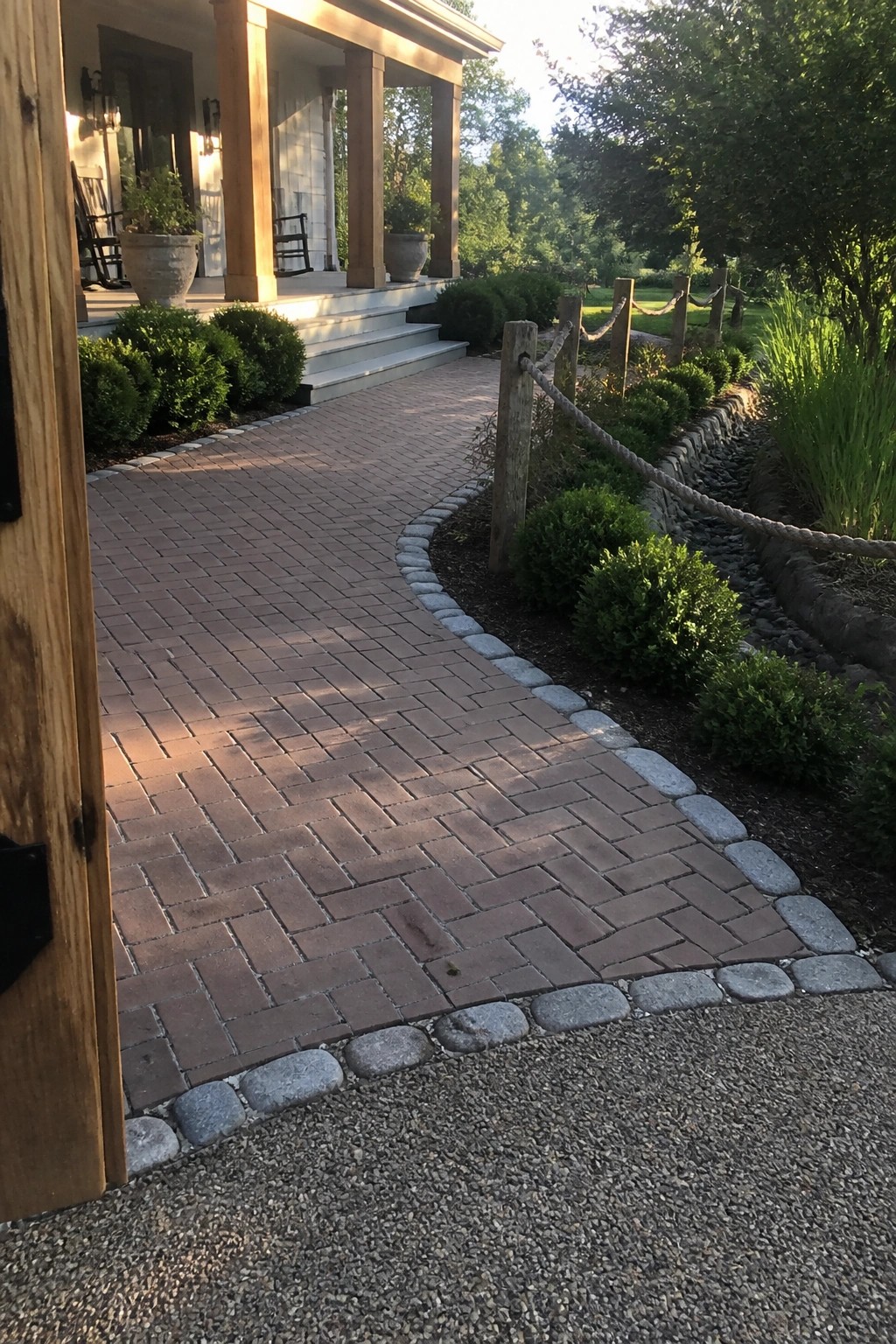
Brick pavers laid in a simple pattern work well when you want a clear walking surface that still feels connected to a gravel parking area. The stone border keeps the edges tidy and helps the two materials meet without a hard line.
This setup suits homes where the driveway stays gravel but the path to the door needs to feel more finished. Keep the border stones low and rounded so the transition stays smooth and easy to maintain over time.
Embedded Lighting In Dark Tile Paths
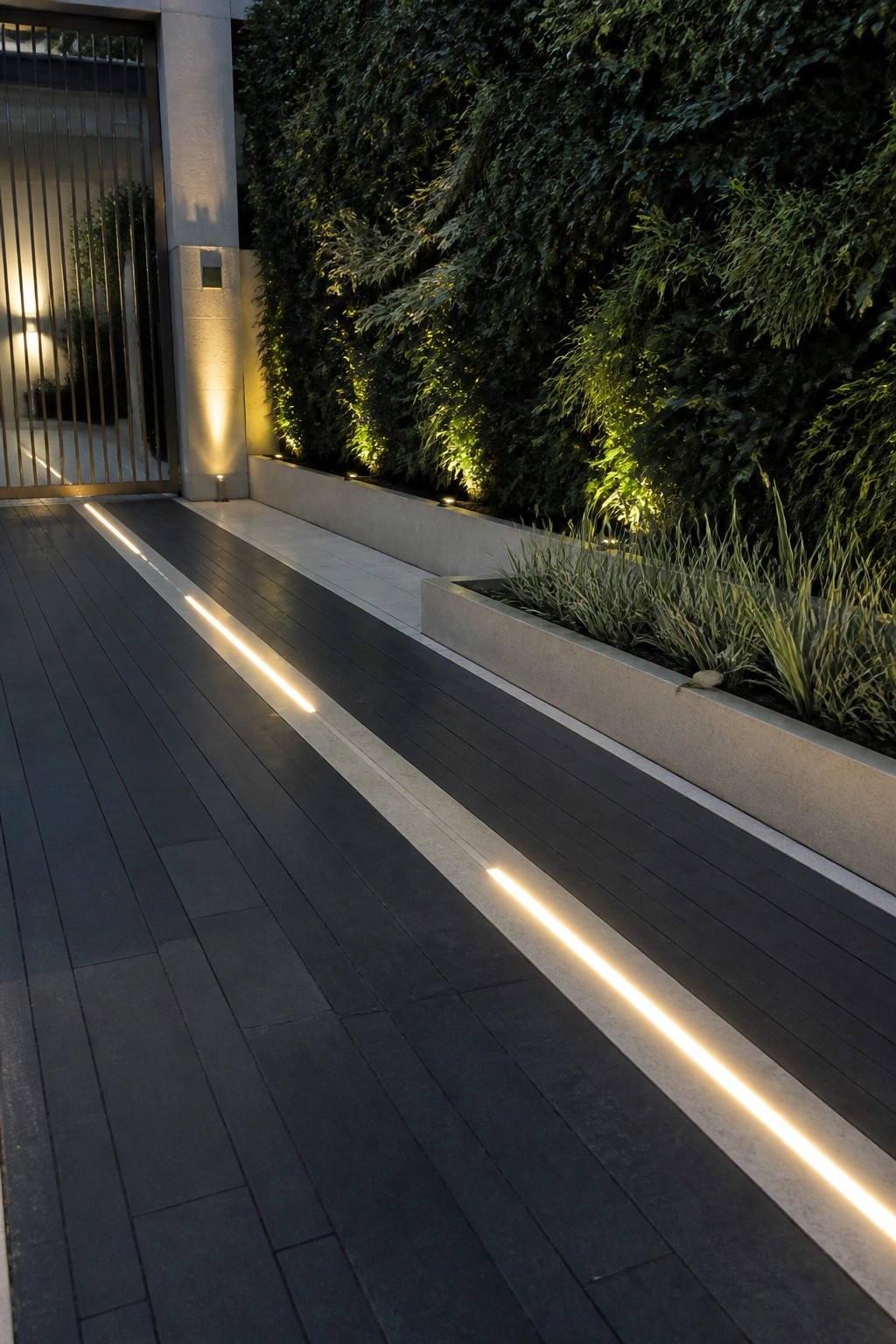
Many people like adding thin glowing strips directly into their outdoor tiles. It marks the path clearly at night while keeping the surface smooth and uncluttered.
This approach works well on modern homes where the walkway needs to connect the entry to the rest of the exterior without extra fixtures or clutter. Keep the lights low and evenly spaced so they guide movement without overpowering the planting beds nearby.
Curved Cobblestone For Driveway Flow

Curved sections of cobblestone can make a driveway feel less like a straight slab and more like part of the landscape. The rounded layout helps the parking area meet the concrete and garden edges without harsh lines or sudden changes in direction.
This approach works best on properties where the driveway turns or slopes. Lay the pavers in a fan pattern and keep a clean concrete border so the surface stays practical while still looking connected to the rest of the yard.
Grass Pavers Keep A Parking Spot From Looking Like One
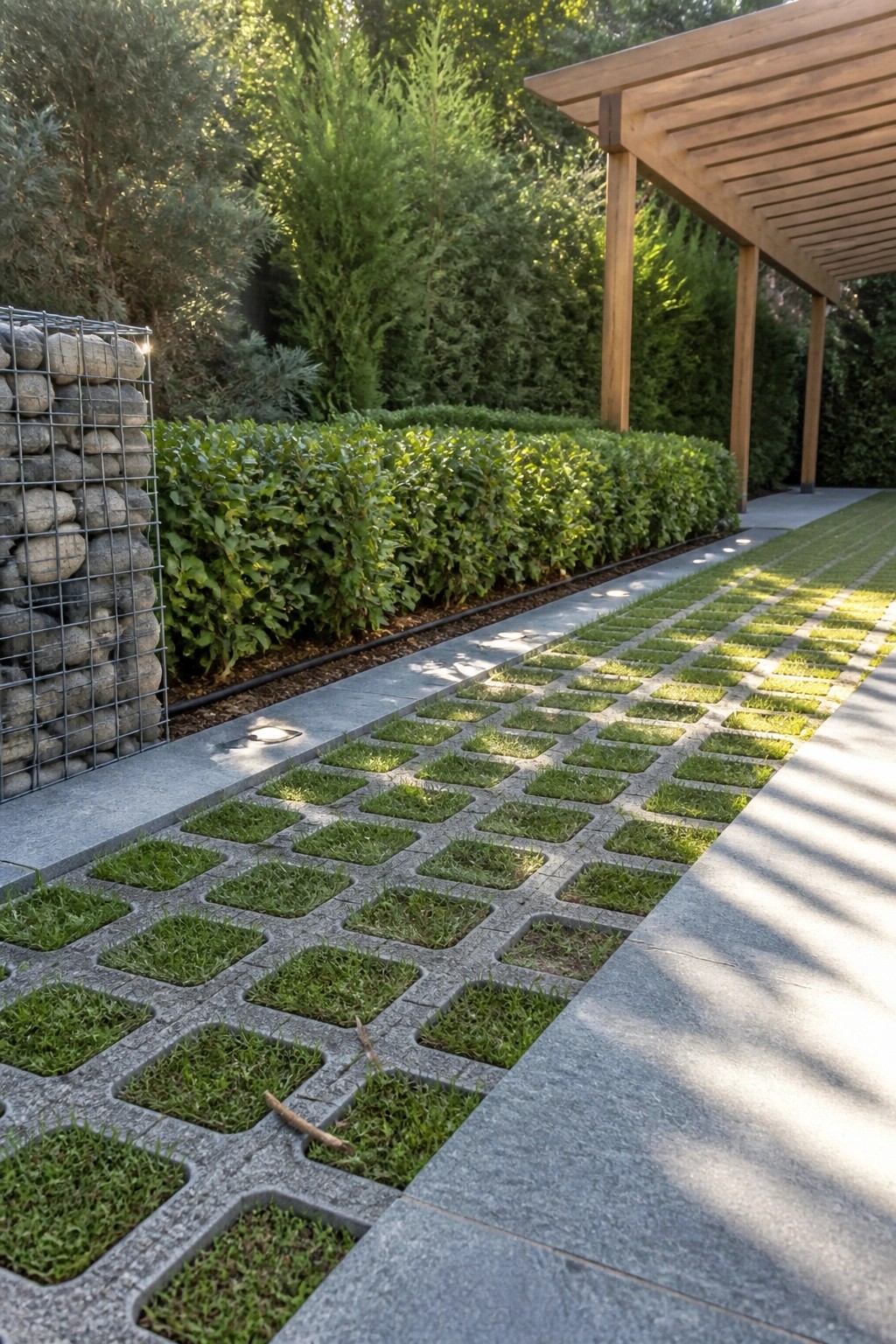
Many homeowners like grass pavers because they let you park a car without turning the whole side yard into a hard surface. The concrete grid holds the weight while grass fills the squares, so the area still reads as lawn from a distance.
This setup suits smaller properties or homes where the driveway needs to sit right next to planting beds. Make sure the base layer is compacted well so the pavers stay level over time.
Mixing Paving Materials Along Walkways
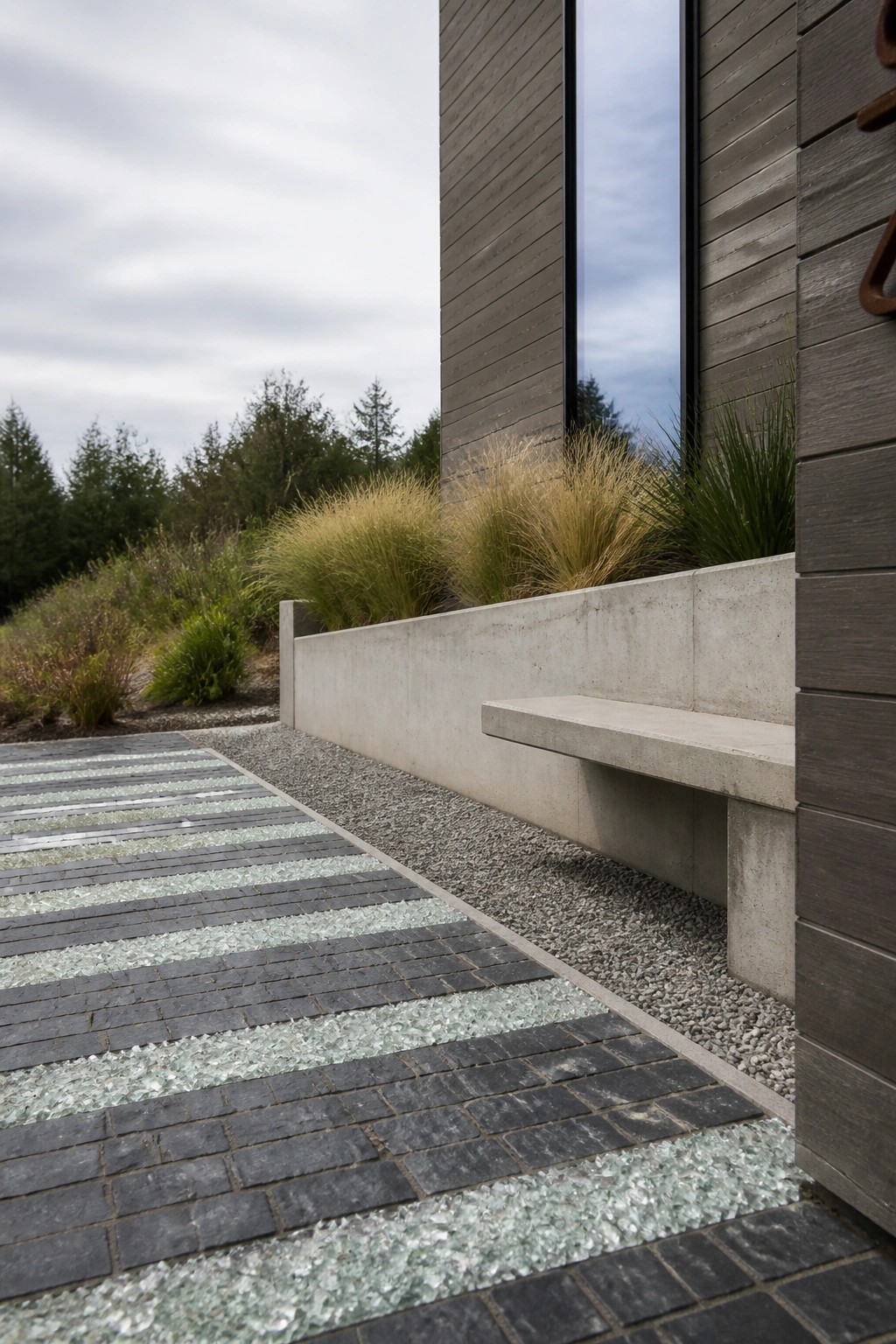
One idea that works well is blending different hardscape materials to keep paths from feeling too separate from the rest of the yard. Using dark pavers with sections of lighter glass pieces creates a gentle rhythm that ties the walkway into the gravel edges without making everything match exactly.
This approach suits homes with modern landscaping where you want movement to feel natural rather than forced. It works best when the materials stay in a similar color range so the path guides people along without pulling too much attention away from the planting.
Pavers With Grass Joints For Natural Flow

Large stone pavers laid with grass between the joints give a path that feels connected to the ground around it. The gaps break up the hard surface and let the walkway blend into surrounding plantings instead of standing out as a separate feature.
This approach suits homes where the driveway or entry path needs to look part of the garden rather than an added layer. Keep the pavers fairly large and set them on a stable base so the grass stays even and easy to mow.
Hexagonal Pavers With Pebble Inlays
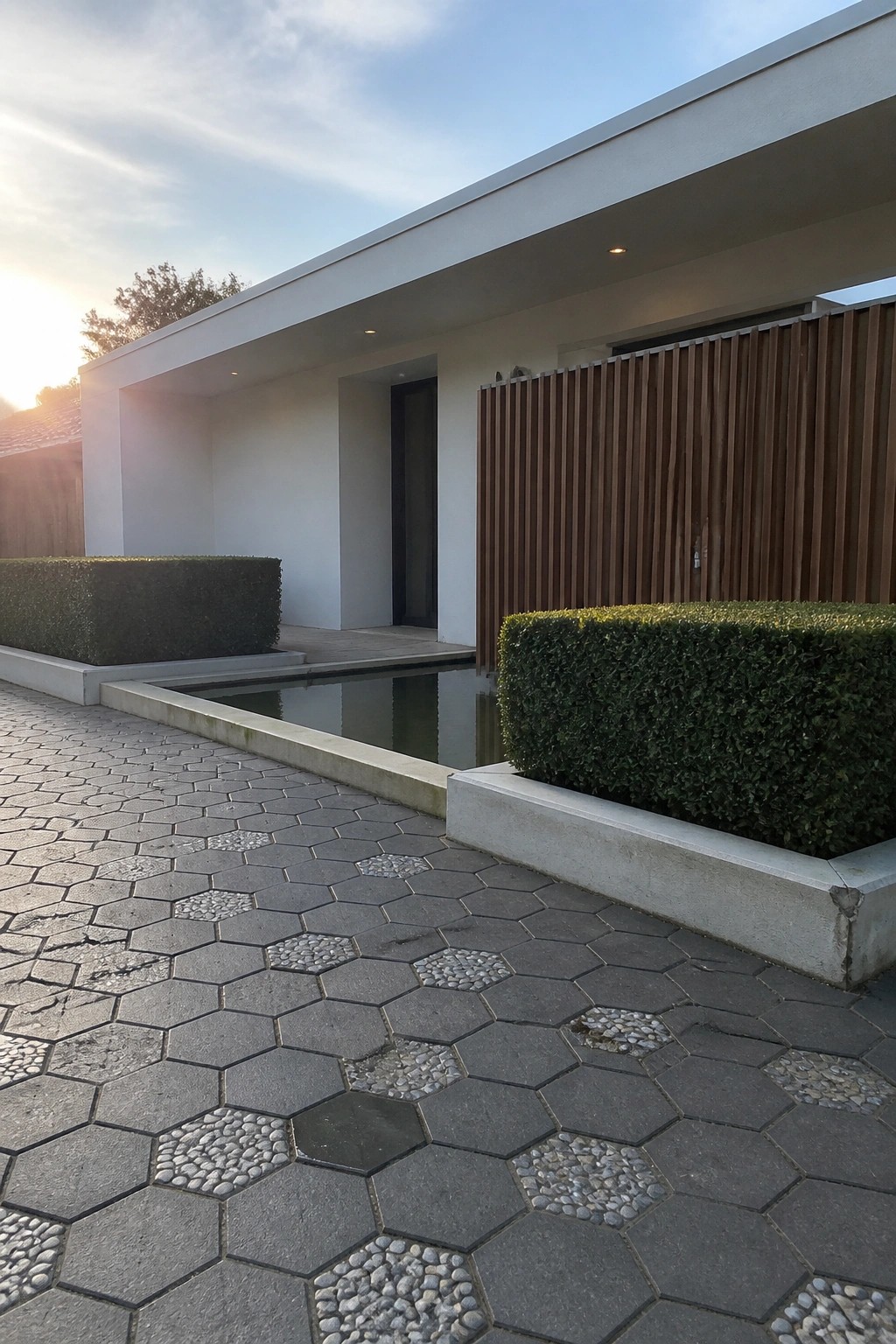
Hexagonal tiles stand out because they give a parking area real structure without looking overly rigid. The small pebble insets add just enough texture to keep the surface from feeling flat while still letting the whole area read as one continuous surface.
This approach works best on homes with simple modern lines where you want the driveway and entry to blend together. Keep the tile color close to the surrounding hardscape and let the pattern do the work of pulling everything into one flow.
Stone Pavers That Blend Into the Garden
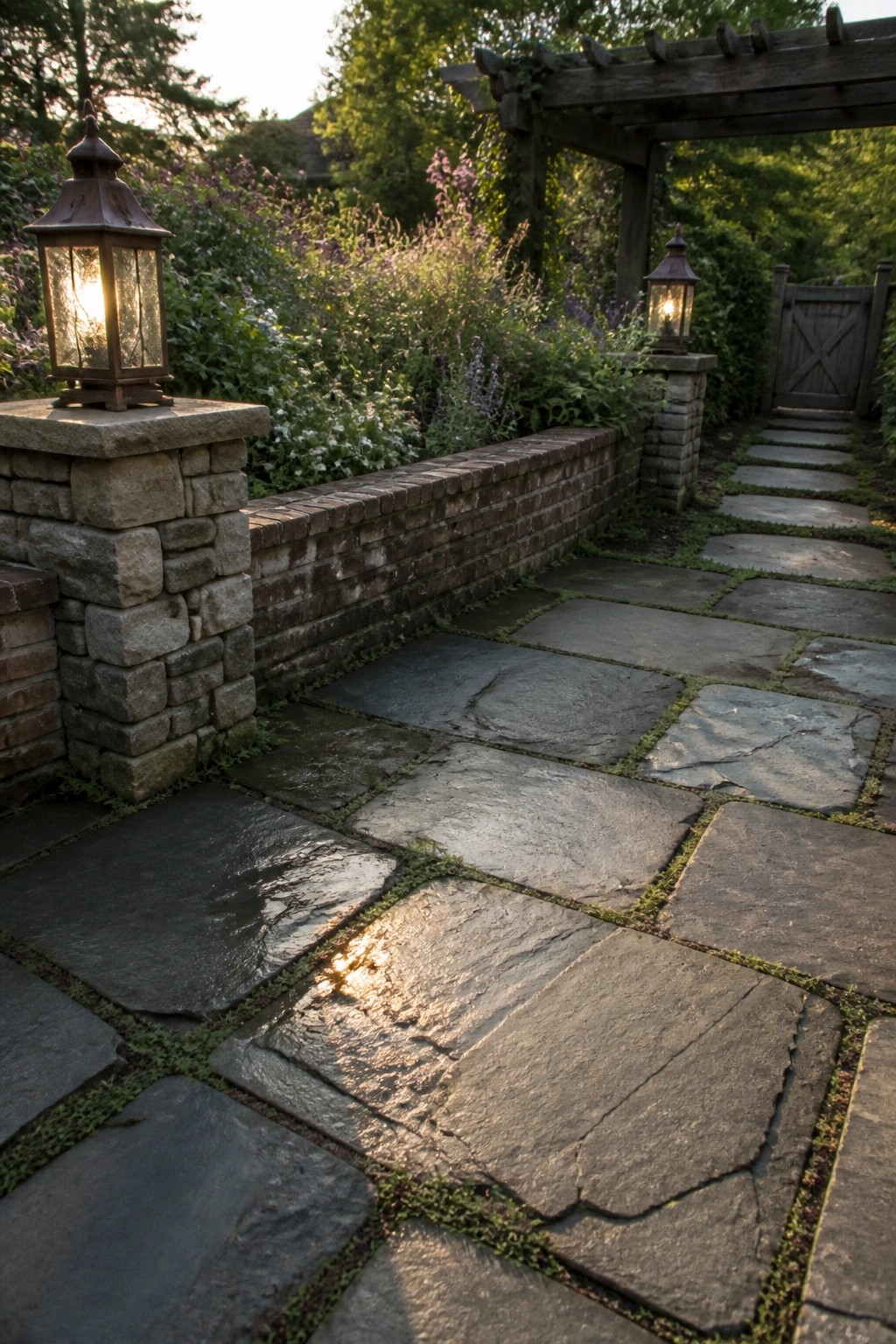
Large irregular stone pavers work well when you want a path to feel like it grew with the landscape rather than sitting on top of it. The gaps filled with moss and low plants keep the surface from looking too rigid and help the walkway tie into the surrounding beds.
This approach suits homes with established gardens or shaded side yards where a softer edge matters more than a clean grid. Lay the stones with enough space between them for creeping thyme or similar ground cover, and keep the shapes varied so the path does not fight the planting around it.
Alternating Paving Bands in the Driveway
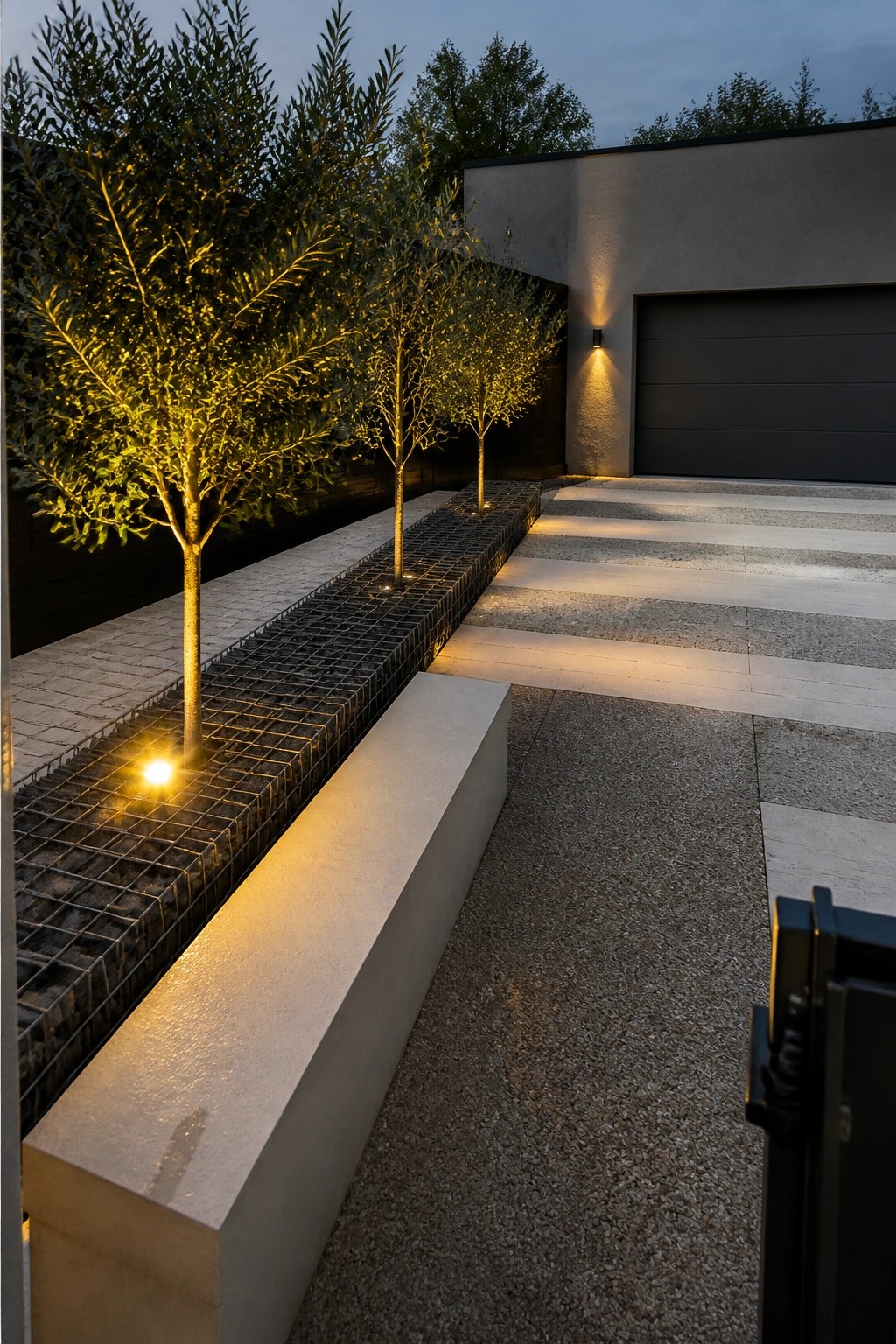
One simple way to make a driveway feel more connected to the rest of the yard is to run alternating bands of different paving materials down its length. The stripes break up the surface without adding clutter and help the whole area read as part of the landscape rather than just a place to park.
This approach suits modern homes where clean lines already show up on the house itself. Keep the materials similar in tone so the change feels intentional instead of busy, and choose surfaces that hold up to regular car traffic.
Terracotta Tiles For The Driveway
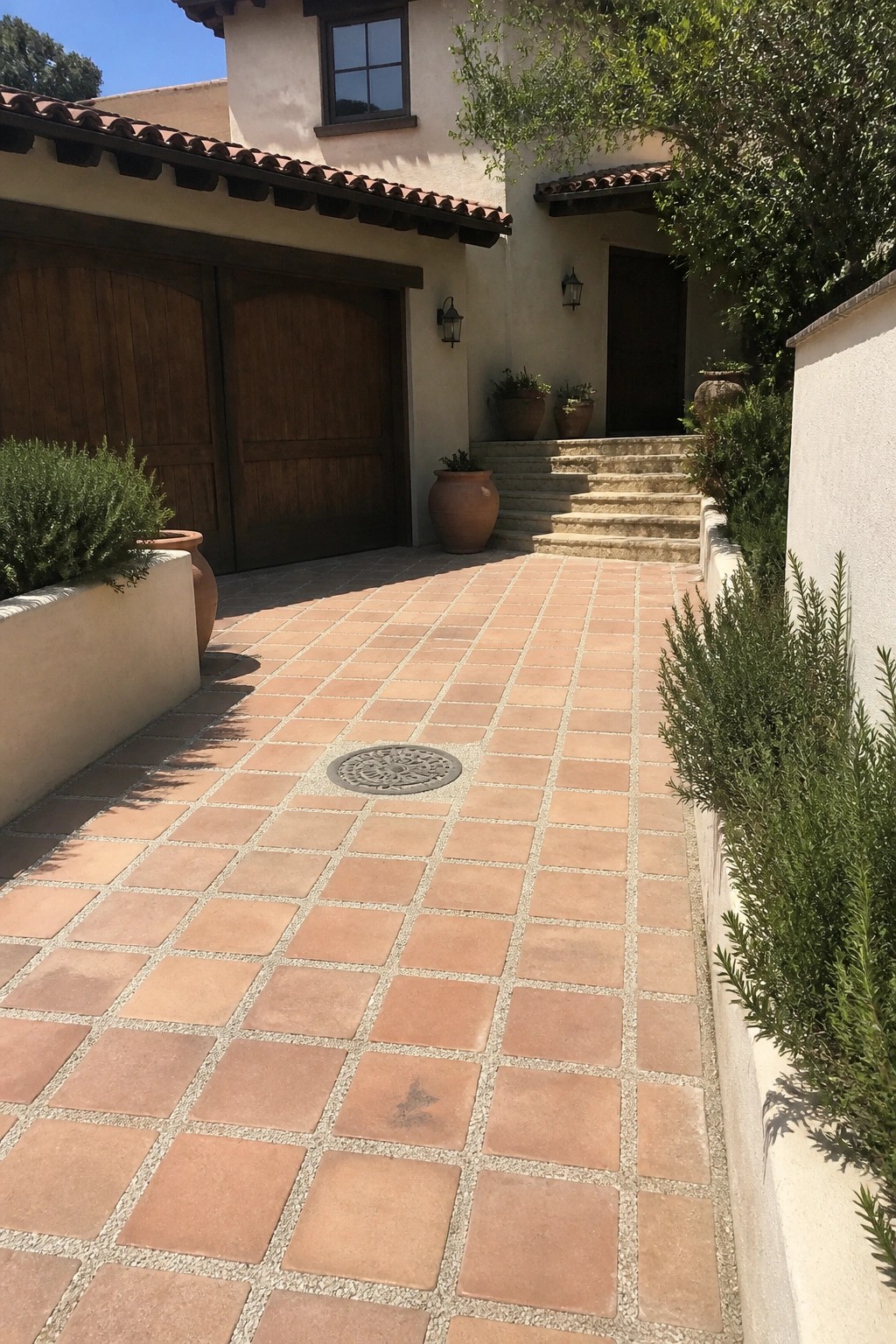
Terracotta tiles work well on a driveway when the goal is to keep everything connected visually. The warm color blends with stucco walls and wood doors, so the paved area does not stand out as a separate zone. It turns the drive into part of the overall entry instead of just a place to park.
This approach suits homes with Mediterranean or Spanish details and works best on smaller or mid-size driveways. Keep the tile size consistent with nearby paths and steps so the surface feels continuous. Watch the slope and drainage early, since the material can show wear if water pools.
Paver Strips With Grass Between Them
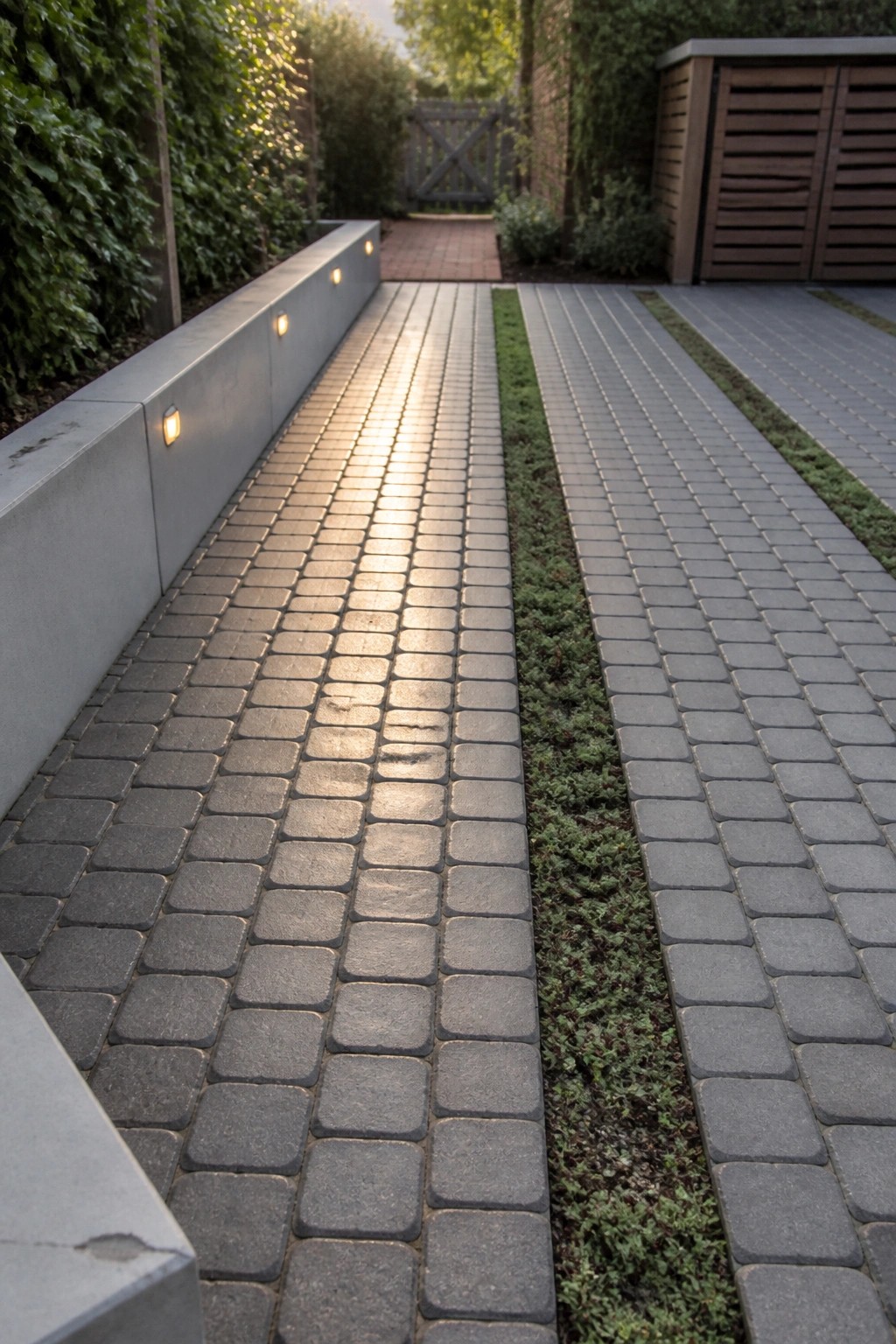
Laying pavers in long parallel strips with narrow grass running between them gives a driveway or parking area a lighter feel. The grass breaks up the solid surface and lets the paving tie into the rest of the garden instead of sitting on top of it like a separate slab.
This layout suits homes where the parking space sits close to planting beds or lawn. It improves drainage and keeps the hardscape from overwhelming the space. Just keep the strips wide enough for tires and make sure the pavers sit flush so cars roll over them smoothly.
Gravel And Pavers For A Smoother Driveway Edge

Mixing gravel with concrete pavers gives a parking area or driveway edge a softer look while still handling cars and foot traffic. The pavers create stable stepping points and keep the gravel from shifting too much under regular use. This approach works well when you want the hard surface to blend into the garden instead of stopping at a hard line.
It suits homes with side or front driveways that connect to lawn or garden paths. Lay the pavers in a loose pattern so the gravel fills the gaps and the whole surface drains properly. Keep the pavers level with the surrounding gravel to avoid tripping points or water pooling.
Frequently Asked Questions
Q: Will these tiles hold up if cars park on them every day?
A: Go with thicker concrete or porcelain options that handle weight well. Test a small area first to see how they settle over time. Avoid anything too thin if you have trucks coming through.
Q: How do I stop grass from creeping up between the tiles?
A: A good weed barrier underneath stops most growth right away. Top it with packed sand to finish the job.
Q: What size should the tiles be for the best flow into my walkway?
A: Match the tile dimensions to your existing path sections. Bigger squares often create smoother transitions than tiny ones. Try laying a few out on the ground to check the pattern before buying.
