

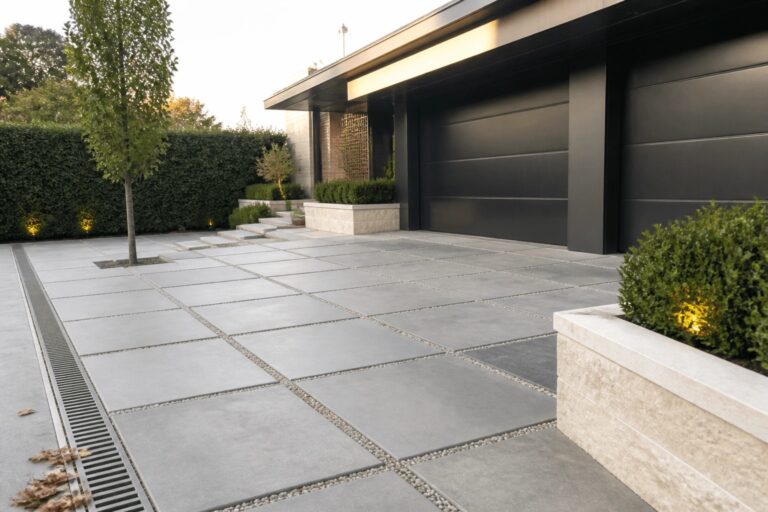
When you pull up to a house the parking area is usually the first surface you notice and it shapes how the whole exterior feels right away.
Tiles that hold up to cars and weather without constant scrubbing or sealing make a real difference in how much time the space demands.
I once chose a design that looked fine on paper but showed every oil spot and needed extra work after each season which quickly became frustrating.
Paying attention to how the material ages under daily use helps the driveway stay part of the home’s overall look instead of turning into its own chore.
Simple options often prove more practical in the end.
Large Format Tiles Cut Driveway Maintenance

Large concrete pavers with gravel joints give a driveway a clean surface that is quick to sweep or hose off. The fewer seams mean less chance for weeds or dirt to settle in, and the gravel helps water drain away instead of pooling.
This approach suits modern homes that need a durable parking area without constant sealing or repairs. Make sure the base is solid and the tiles are thick enough for vehicle weight so they hold up well over the years.
Stone Pavers That Make Driveway Upkeep Easier
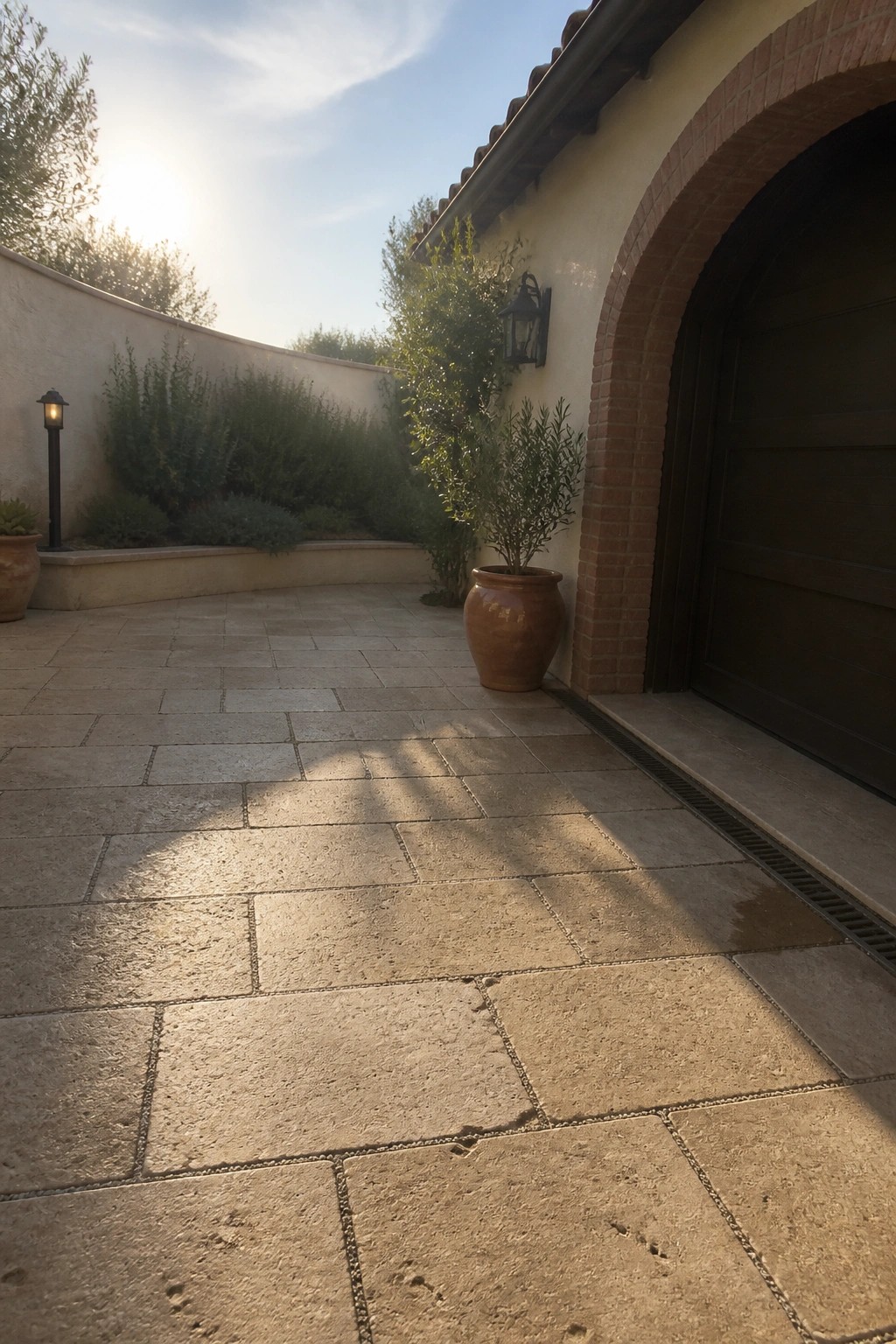
Large stone tiles like these cut down on the usual driveway chores. They handle car traffic without cracking or shifting much, and they do not need frequent sealing or cleaning the way concrete often does. The gaps between the pavers also help with drainage so water does not pool after rain.
This style works best on homes that already use natural materials on the outside. It pairs well with stucco walls and simple landscaping because the pavers blend into the surroundings instead of standing out as a separate surface. Just make sure the base is properly prepared so the tiles stay level over time.
Grass Pavers For Driveways
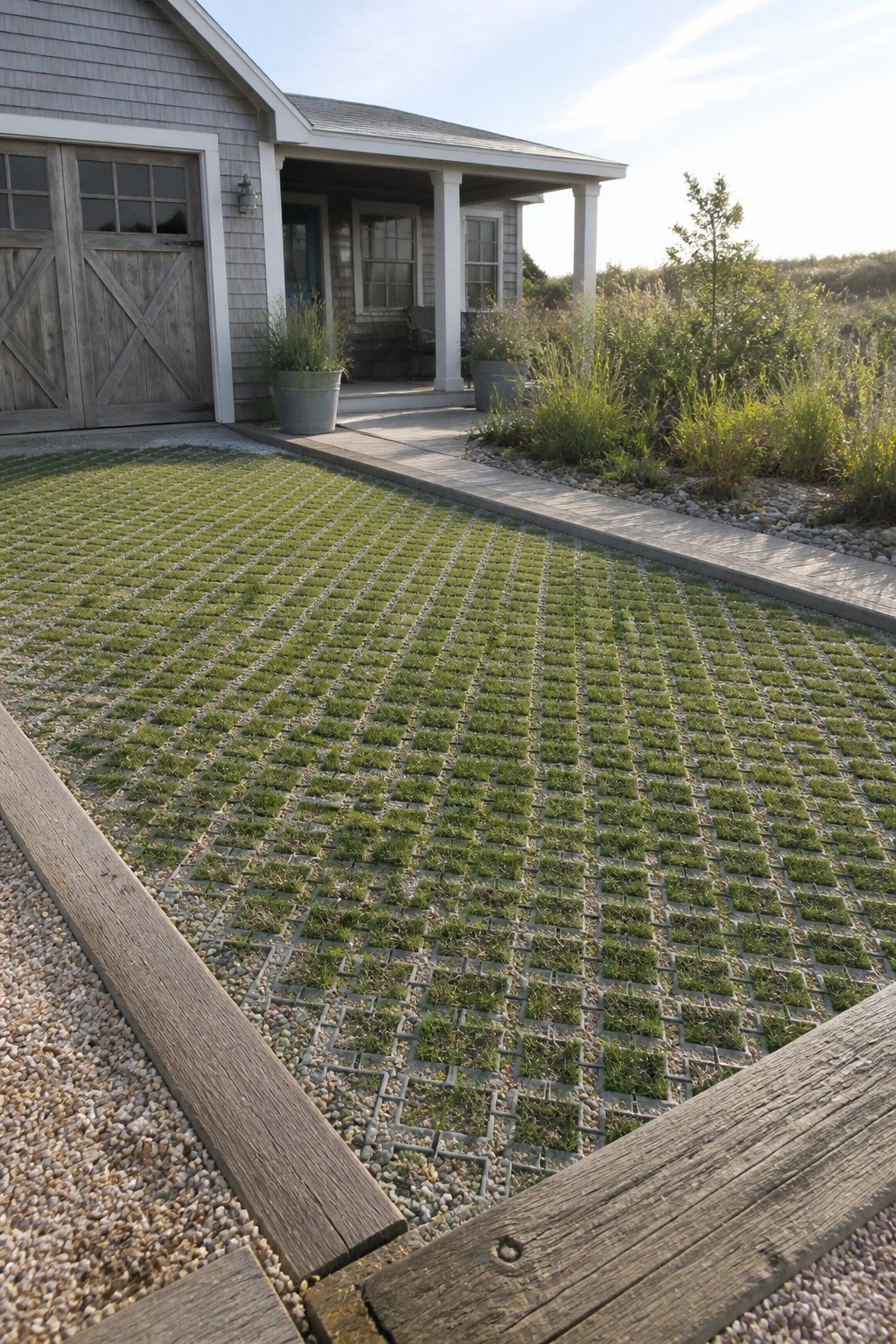
Grass grid tiles let you park cars without losing the look of a lawn. The plastic or concrete grids hold the soil in place so the grass stays level and drains well after rain. Many people like this setup because it cuts down on the amount of hard surface that needs sweeping or sealing.
The approach works best on homes with room for a wide pull-in area rather than a narrow city driveway. Lay the grids over a gravel base and seed or sod them so the grass roots lock in. Keep an eye on the edges where the grids meet gravel or wood borders, since those spots can shift if the base is not compacted well.
Large Tiles With Recessed Edge Lights

Large concrete tiles cut down on maintenance because they leave fewer joints for weeds to settle in. The recessed lights sit right in those narrow gaps, so you get evening visibility without extra fixtures that need cleaning or replacing.
This approach works best on side paths or entries that see steady foot traffic. It suits homes that already lean modern and gives a clean surface that is simple to sweep or hose off when needed.
Checkerboard Pavers For Driveways

A grid of concrete slabs set with grass between them creates a driveway that needs less sweeping and weeding than a solid surface. The pattern lets water drain through naturally and keeps the look neat without constant work.
This setup works well on homes with a modern or simple exterior where the drive sits next to gravel borders. Just make sure the base is solid so the pavers stay level over time.
Large Stone Pavers With Gravel Joints
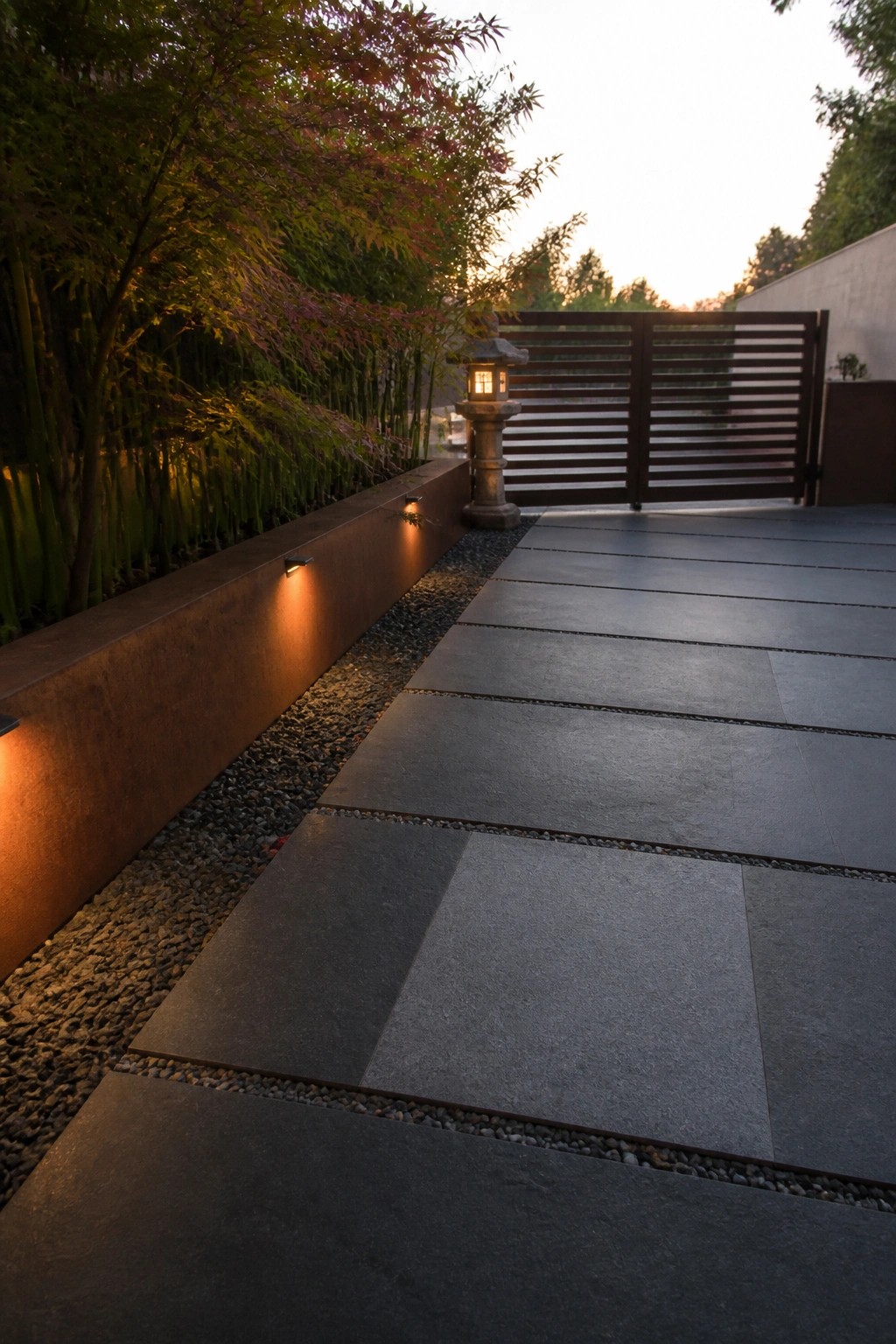
Large stone pavers cut down on weeding and sweeping because there is less grout to crack or collect debris. The wide slabs also handle foot traffic without shifting much over time.
This approach works well along side yards or entries where you want a clean look but do not want to deal with frequent repairs. It suits homes with modern or simple landscaping and pairs easily with existing gravel or mulch beds.
Hexagon Pavers For Simple Pathway Care
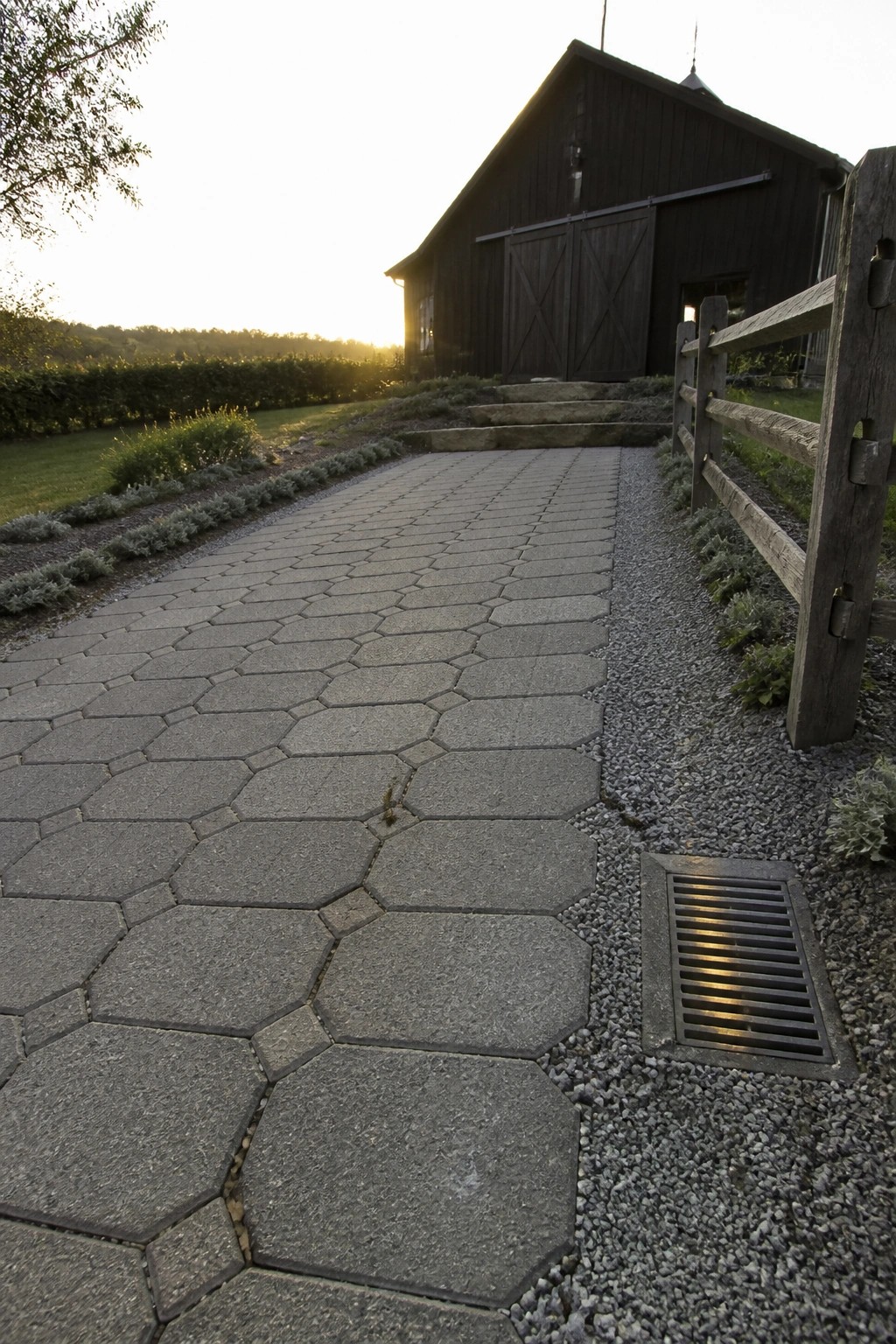
These large interlocking tiles create a firm walking surface that holds up well to weather and daily use. The tight fit leaves little space for weeds, which cuts down on the time spent pulling them or applying treatments.
They suit homes with side paths or service routes where you want something sturdy but not fussy. Adding a narrow gravel strip along the edge helps with drainage and keeps the whole setup looking tidy without extra edging work.
Large Stone Tiles For Simple Upkeep
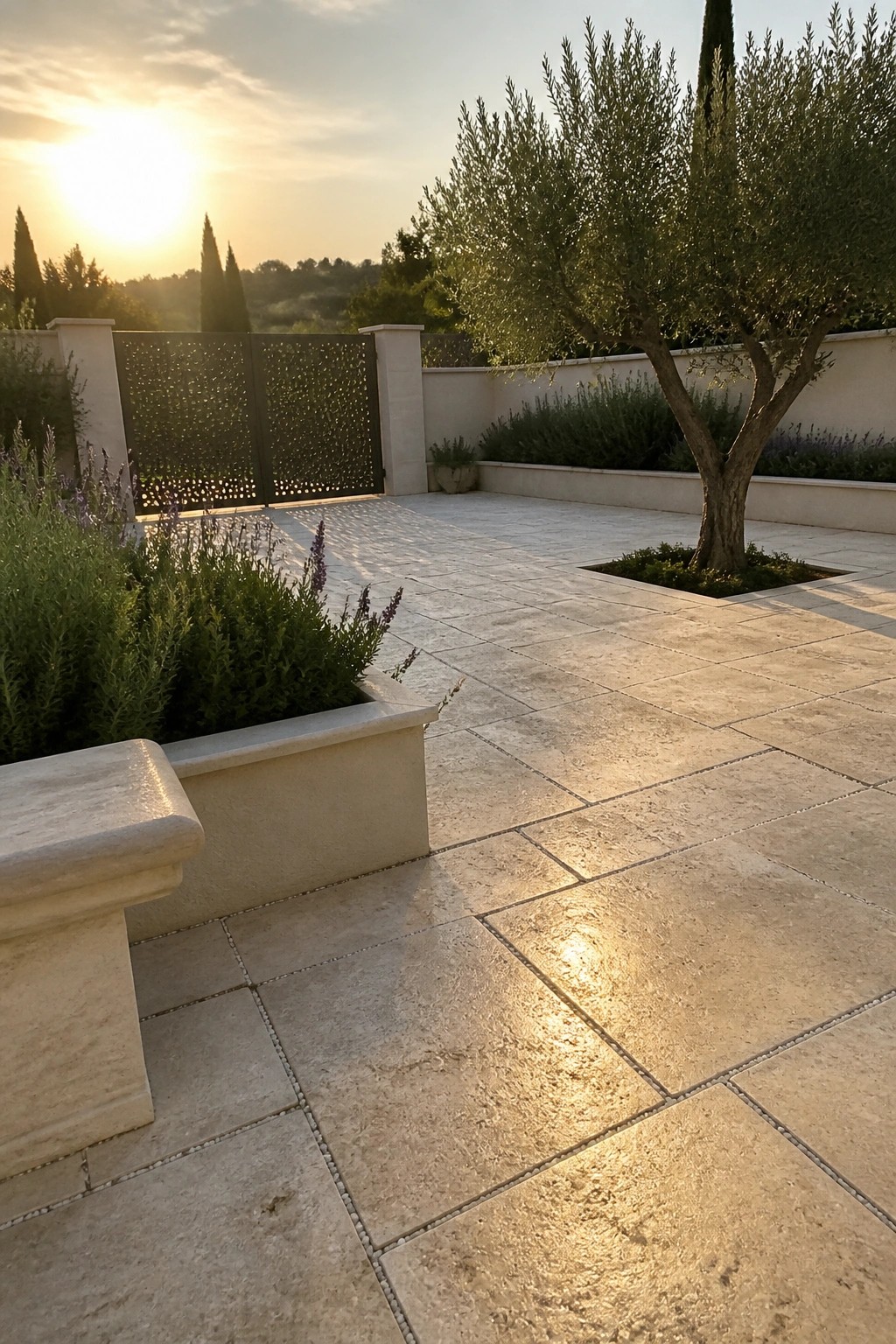
Large stone tiles like these work well in areas that see regular use because they resist stains and wear without needing special cleaners. The textured surface helps hide minor marks while the wide format means fewer grout lines to deal with over time.
They suit homes where a driveway or side yard also serves as extra outdoor space. Keep the layout open and add a few planted cutouts if you want a softer edge without extra maintenance.
Durable Pavers For Everyday Driveway Use

These textured tiles work well because they stand up to regular car use and weather without needing much attention. The surface hides minor dirt and scuffs, so a quick sweep or hose down is often enough to keep the area looking tidy.
They suit homes with a clear front parking spot where you want solid ground under the cars but still prefer minimal upkeep. Keep the surrounding planting simple and low so the pavers remain the main feature without extra edging work.
Hexagonal Pavers With Gravel Infill
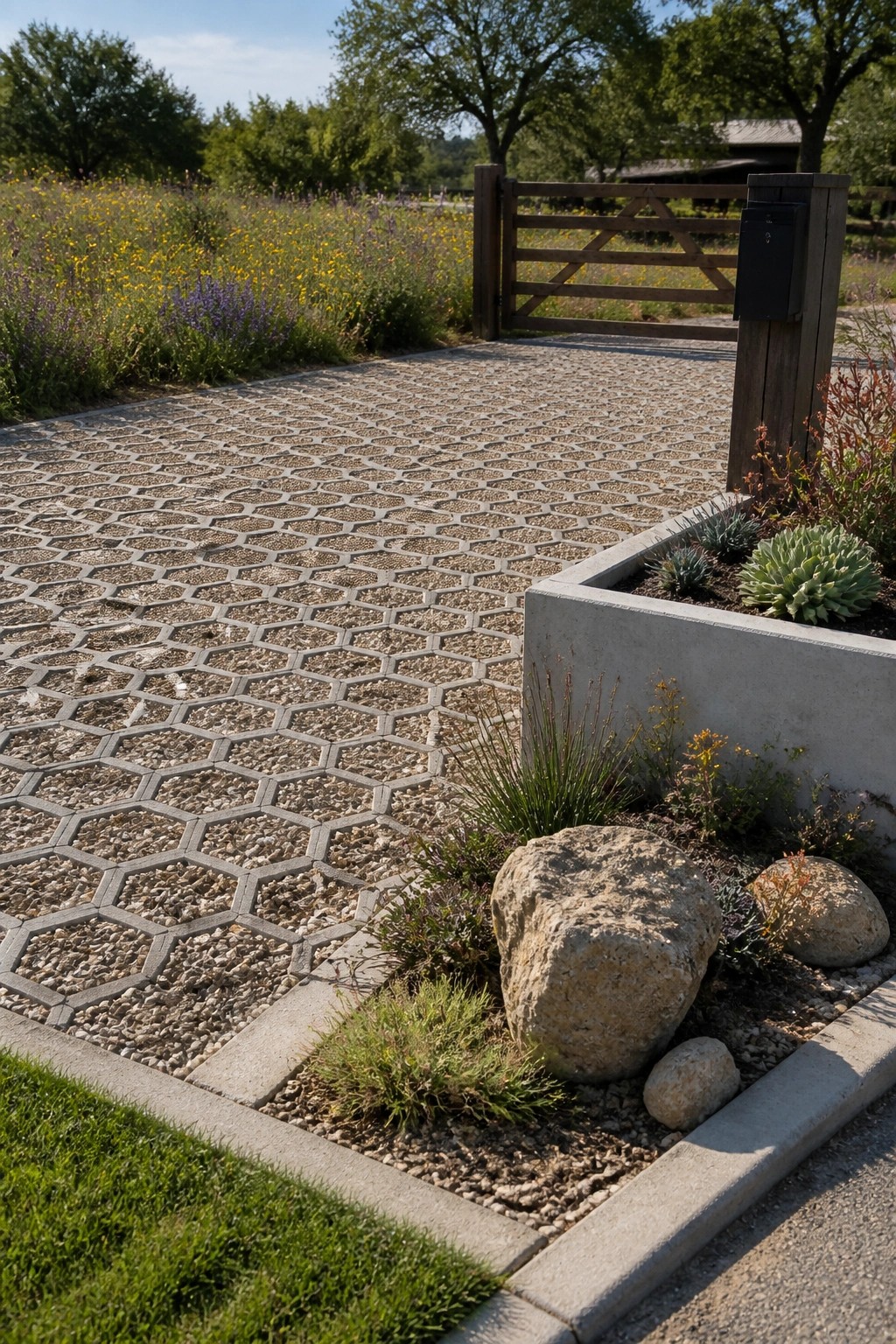
These pavers give you a solid driving surface without turning the whole area into a slab of concrete. The open grid lets water soak through instead of pooling, and the gravel stays in place so you spend less time raking or fixing washouts after rain.
They suit homes with long driveways or side parking spots where regular mowing is hard. Keep the base compacted and add a weed barrier underneath if your soil tends to push up growth. The look stays neat with very little ongoing work once the pavers are down.
Large Pavers With Gravel Joints

Large pavers set with narrow gravel lines between them give a driveway a tidy look without constant work. The big tiles cover more ground, so there are fewer seams to clean or repair over time, and the gravel helps water drain away instead of pooling.
This approach suits homes with clean lines and straight architecture. It works best on flat or gently sloped driveways where you want something durable that you can sweep or rinse off quickly instead of scrubbing small joints or pulling weeds.
Terracotta Tiles For Low Maintenance Patios

Terracotta tiles stand out in outdoor spaces because they handle sun, water, and daily use without much fuss. The warm color hides dust and small marks, and the material itself resists fading over time.
These tiles work best in courtyards or side yards where you want a simple surface that stays looking decent with occasional sweeping. They suit homes in drier climates and pair well with basic planting beds around the edges.
Gray Pavers For Low Maintenance Side Paths

Rectangular pavers like these stand out because they create a solid surface that handles foot traffic and rain without needing constant attention. The straight layout and simple color keep the area looking neat even after wet weather or fallen leaves.
They work well along the side of a house or in a narrow access path where bigger driveway materials might feel too heavy. Just make sure the base is properly prepared so the pavers stay level over time.
Large Pavers With Gravel Borders
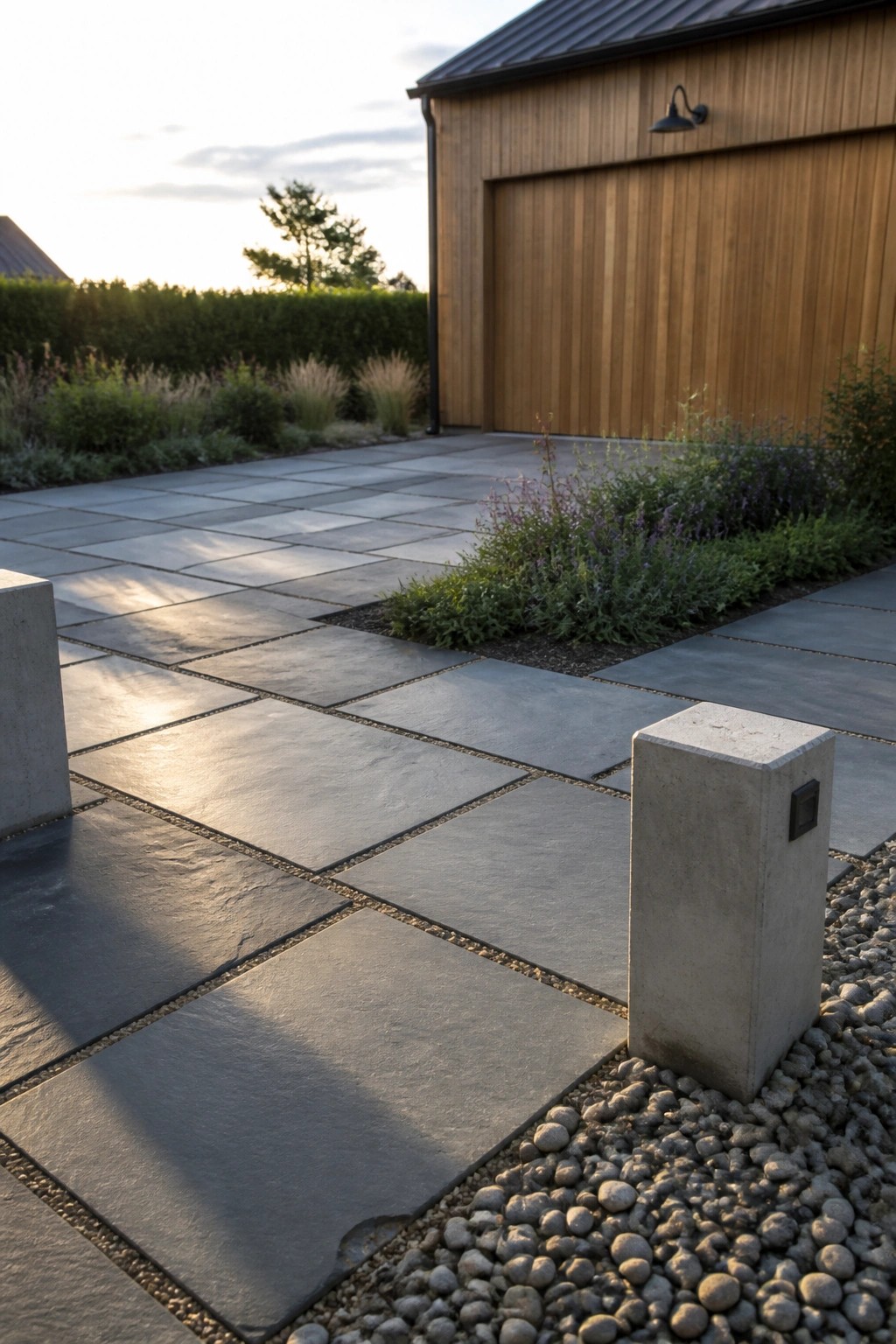
Large stone pavers laid in a simple grid make a driveway that stays looking neat with almost no work. The gaps filled with gravel let water drain away easily and cut down on weeding or sealing jobs that smaller tiles often need.
This layout works well on homes where the parking area sits right next to garden beds. Keep the paver size consistent and let the gravel run along the edges so the whole surface feels open but still solid under tires.
Large Tiles Make Driveway Care Much Easier

Large tiles on a driveway cut down on the usual maintenance because they leave fewer gaps for weeds and dirt to collect. A simple sweep or hose is often enough to keep the surface looking tidy, which is useful for homes where the parking area sits right at the front.
This works best on properties with a flat approach and solid drainage underneath. Choose tiles made for vehicle use and make sure the base is firm so the surface stays level over time. The linear drain in the middle helps water move away without pooling.
Stone Paver Paths Set In Gravel

Large stone pavers laid with gravel between them create a path that handles foot traffic without turning into a maintenance chore. The gaps let water drain away quickly, so puddles do not form and weeds have fewer places to settle compared with solid concrete or tightly jointed surfaces.
This setup works best on gentle slopes or beside garden walls where you already have some gravel in the landscape. It suits homes that want a natural look without daily sweeping or sealing, though you may still need to top up the gravel every few years.
Modular Tiles Make Driveway Care Easier
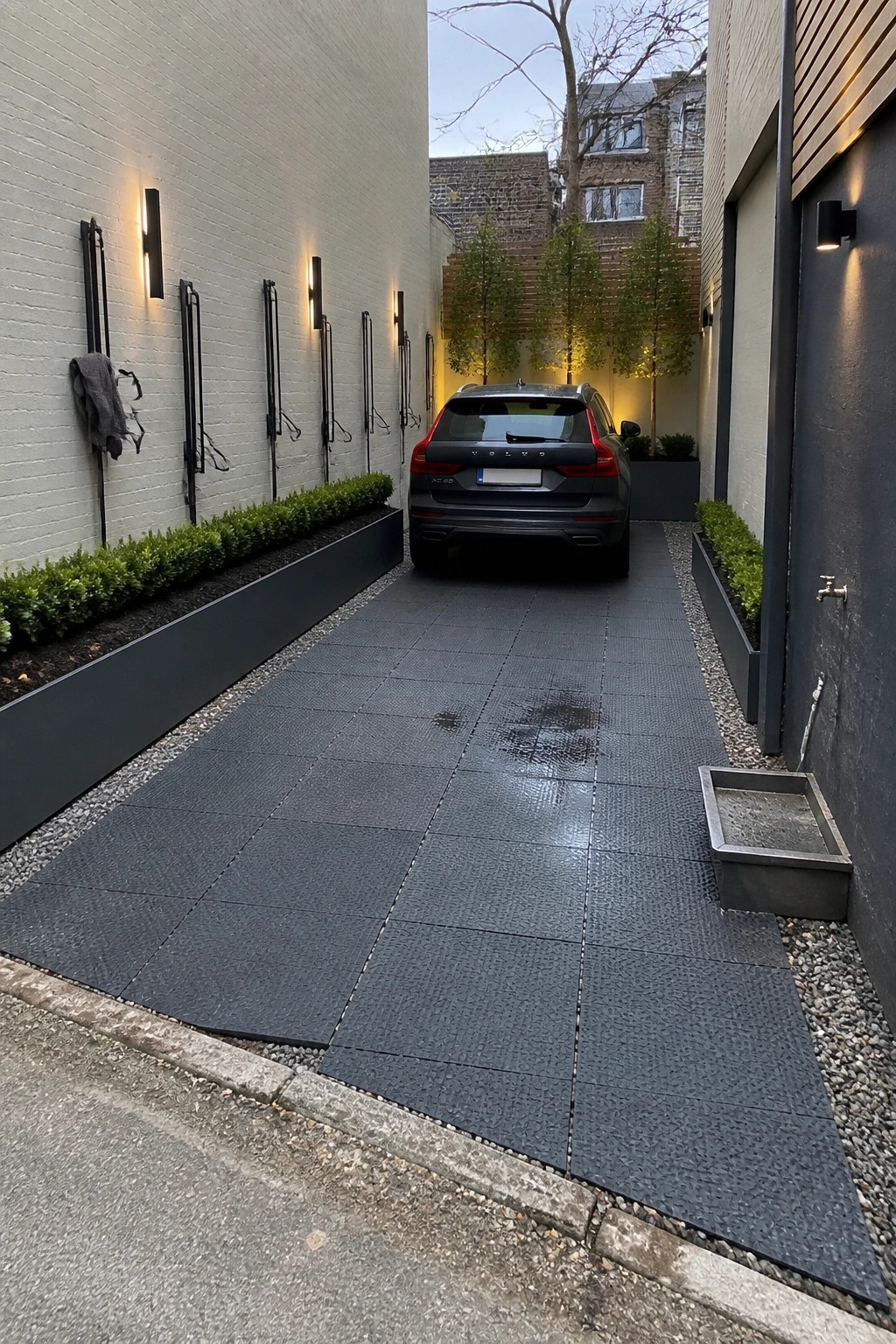
Dark square tiles laid in a simple grid give a parking spot a finished look without constant sweeping or weeding. The textured surface handles tire marks and light rain well, and the edges sit neatly against gravel so water drains instead of pooling.
This setup suits narrow side drives or townhouse lots where space is tight. Keep the tiles uniform and let the gravel strips on each side do the rest. Avoid mixing too many materials if you want the lowest upkeep.
Large Concrete Pavers With Gravel Infill

Large concrete pavers give you a solid walking surface while keeping the work low. The gravel around them handles water flow and cuts down on weeding, so the path stays usable without much sweeping or patching. This mix works especially well along driveways or side access areas where you need something durable but not fussy.
Lay the pavers in a simple row and keep the gravel edges wide enough for drainage. The setup suits homes on slopes or near retaining walls because it manages runoff without extra drains. Just compact the base properly at the start so the surface stays even after rain.
Large Tiles Cut Grout Lines On Driveways

Large tiles work well for driveways because they leave fewer seams that collect dirt and need regular attention. The wide paved surface in front of this garage shows how a simple grid can handle daily use without looking worn or neglected over time.
This approach suits homes with straightforward parking areas where you want something durable that still feels neat. Stick to a single neutral tone and keep the layout plain so the surface stays easy to sweep or hose off.
Raised Planters With Paving Tiles

Many people like the look of a clean paved surface for parking but still want some greenery without the hassle of extra lawn or flower beds to mow. A simple concrete planter set right into the paving lets you add trees and shrubs while keeping the whole area easy to sweep and hose down.
This setup works well on modern homes or townhouse driveways where space is tight and you want to avoid scattered pots or weedy borders. Stick to tough plants that need little water and choose a planter height that matches the paving so nothing sticks out or gets in the way of cars.
Frequently Asked Questions
Q: How often do I need to clean these tiles if I park my car there every day? A: Rinse them with a hose every two weeks to clear off dust and leaves. Most designs shed dirt fast because of their smooth finish so you spend less time scrubbing.
Q: What should I do if my tires leave marks after a long drive? A: Wipe the spots with a damp cloth and mild soap right away. The sealed surface on these tiles usually lifts the marks without special cleaners.
Q: Will heavy rain cause puddles to stick around on the parking area? A: Choose tiles with a slight slope built in so water drains off quickly. Sweep away any debris that blocks the flow and you keep the space dry with almost no effort.
