

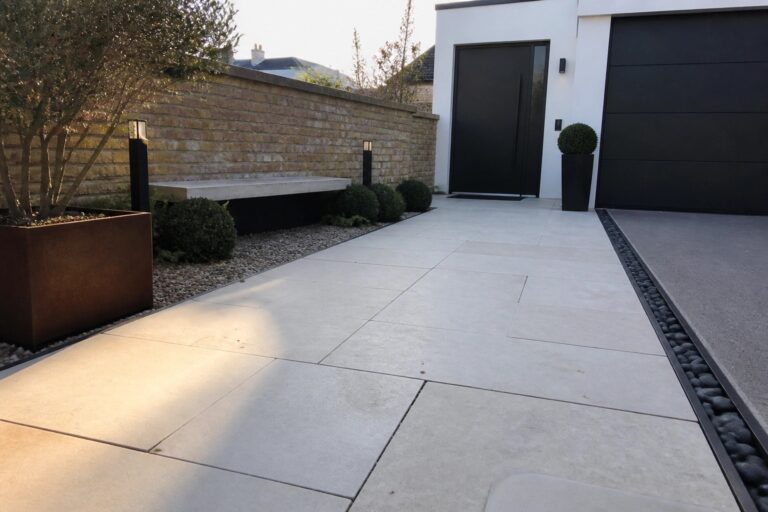
The surface under your car as you pull up can change how the entire front of the house feels right away.
I spent time last year replacing a cracked concrete drive and learned that the right tile choice ties the entry steps and garage door together in a way plain paving never did.
Not every pattern works once you see it against your actual siding and roofline.
A simple grid layout often looks cleaner than something too busy.
I would try a couple of the more understated versions first if I were starting over on my own place.
Large Format Pavers for a Driveway
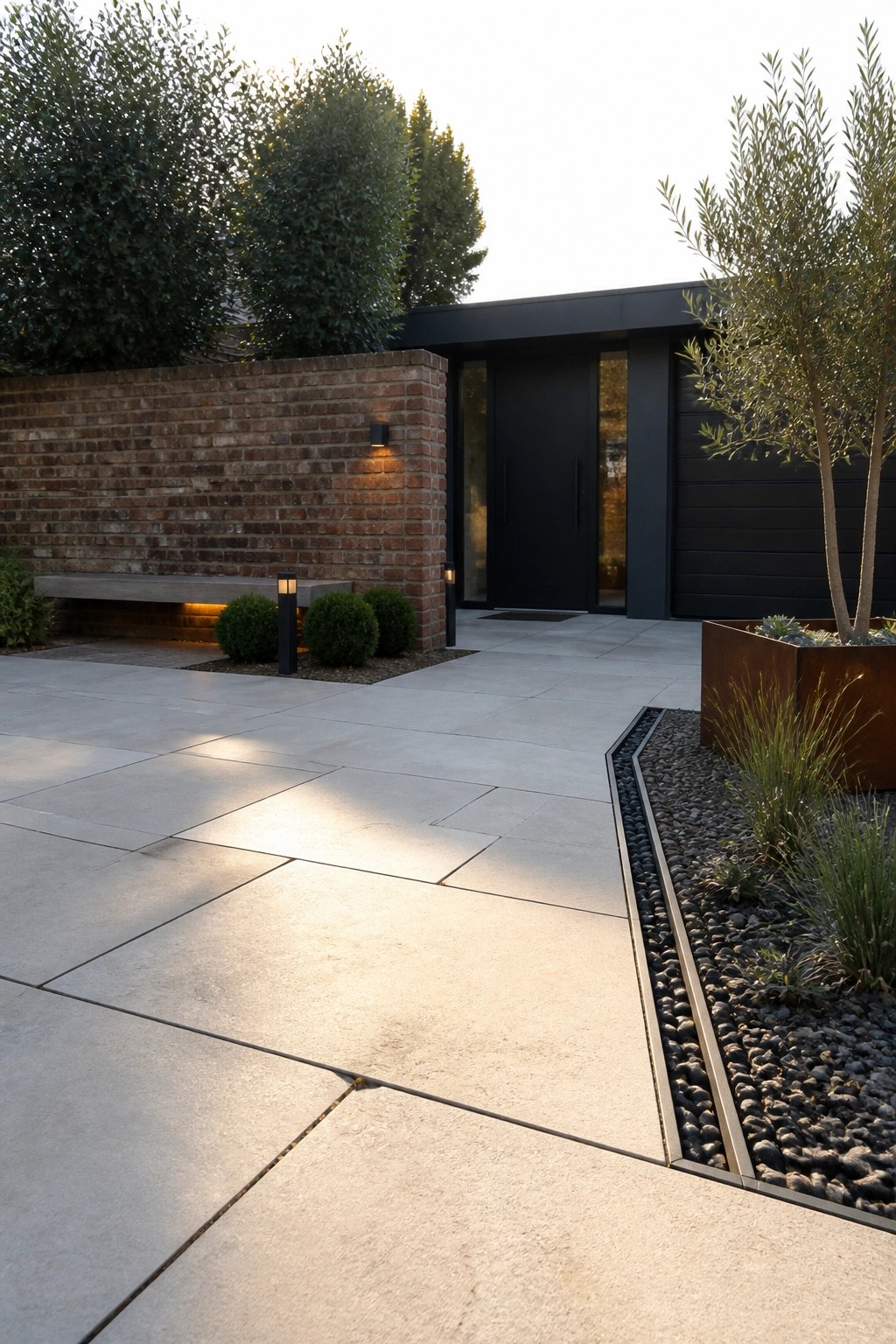
Large pavers give a driveway a much cleaner and more open look than smaller blocks or poured concrete. The light tone helps the space feel brighter and keeps the whole entry area from feeling cramped, especially when the house sits close to the street.
This style works well on modern homes where the goal is a simple, low-maintenance surface. Keep the layout straightforward, add a narrow gravel strip along the edge for drainage, and make sure the pavers sit level so water does not pool.
Herringbone Brick Driveways
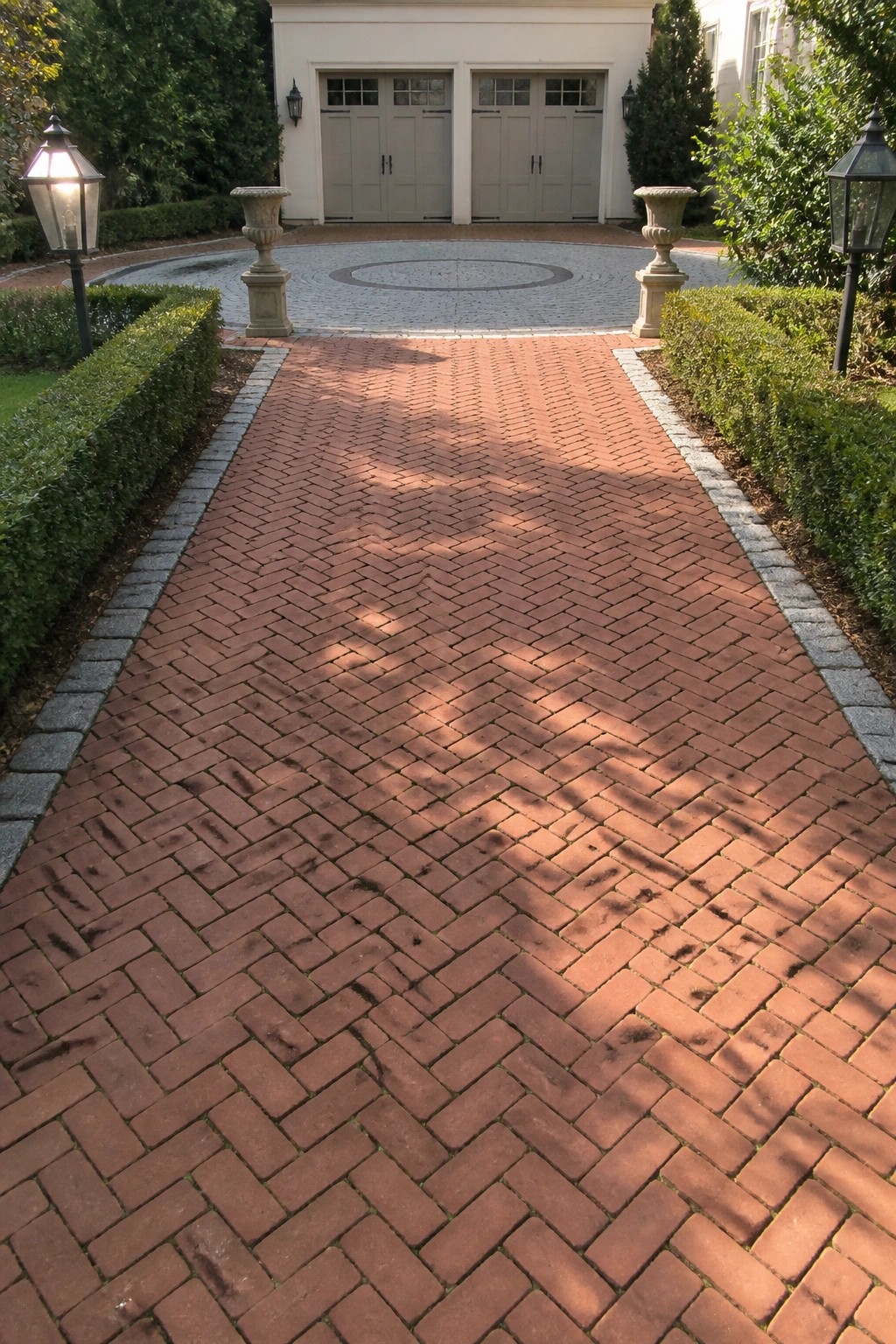
A herringbone brick driveway adds texture and a settled look that plain concrete never quite matches. The pattern breaks up the surface so the drive feels more like part of the landscape instead of just a place to park.
This style works best on homes with some traditional detailing where the brick can tie into other hardscape elements. Use a simple stone border to keep the pattern from feeling busy and choose a brick tone that sits well with the house color.
Dark Pavers With Gold Inlay Lines
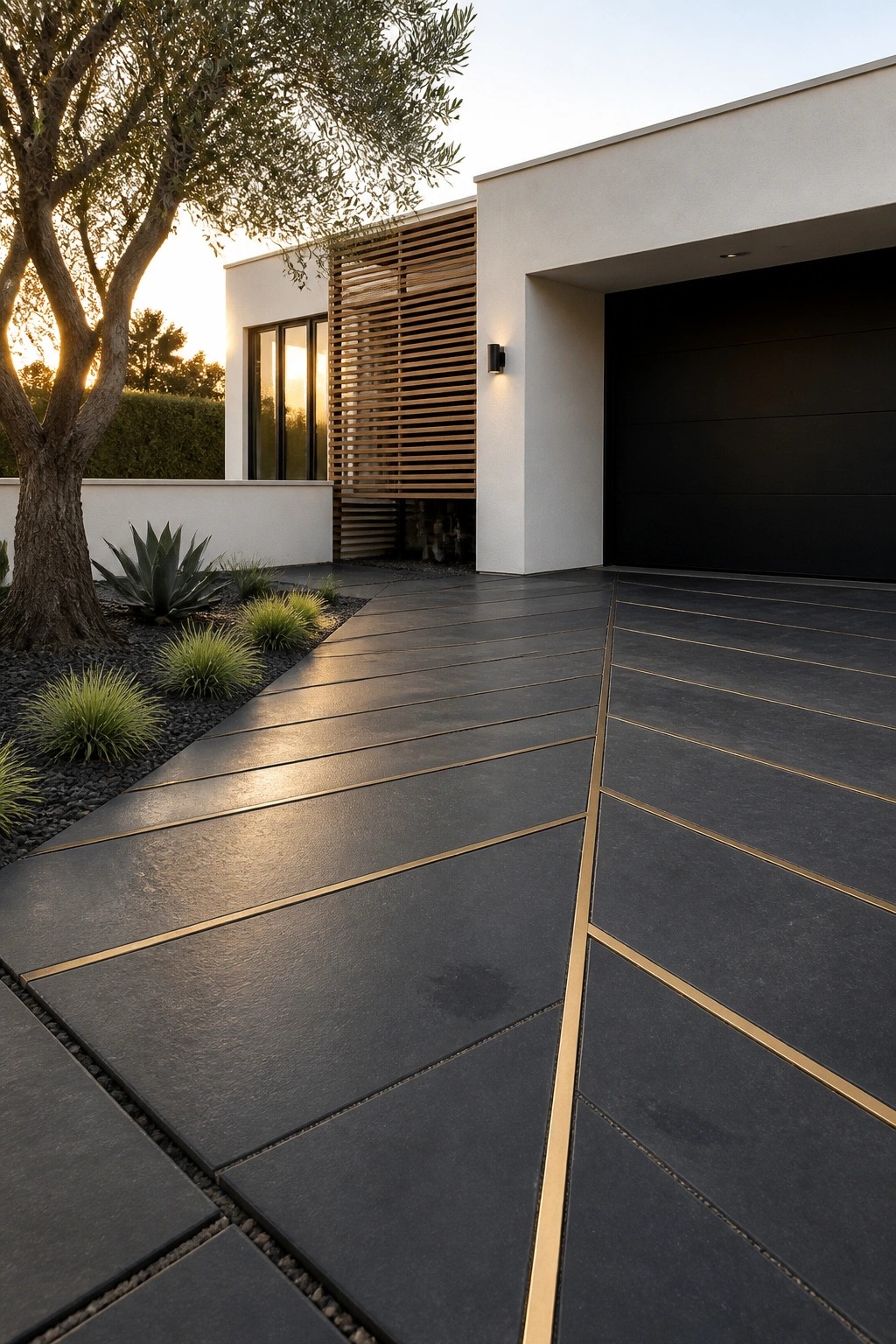
Dark driveway tiles with thin gold lines running through them give the whole entry a custom look without needing extra features. The contrast keeps the surface interesting while still feeling calm and modern. It works especially well when the house itself has clean lines and simple materials.
This approach suits newer builds or updated homes where the driveway is wide and visible from the street. Keep the lines narrow so they read as detail rather than decoration. Avoid using them on very large areas unless the gold stays subtle in natural light.
Patterned Tiles For The Entry Courtyard
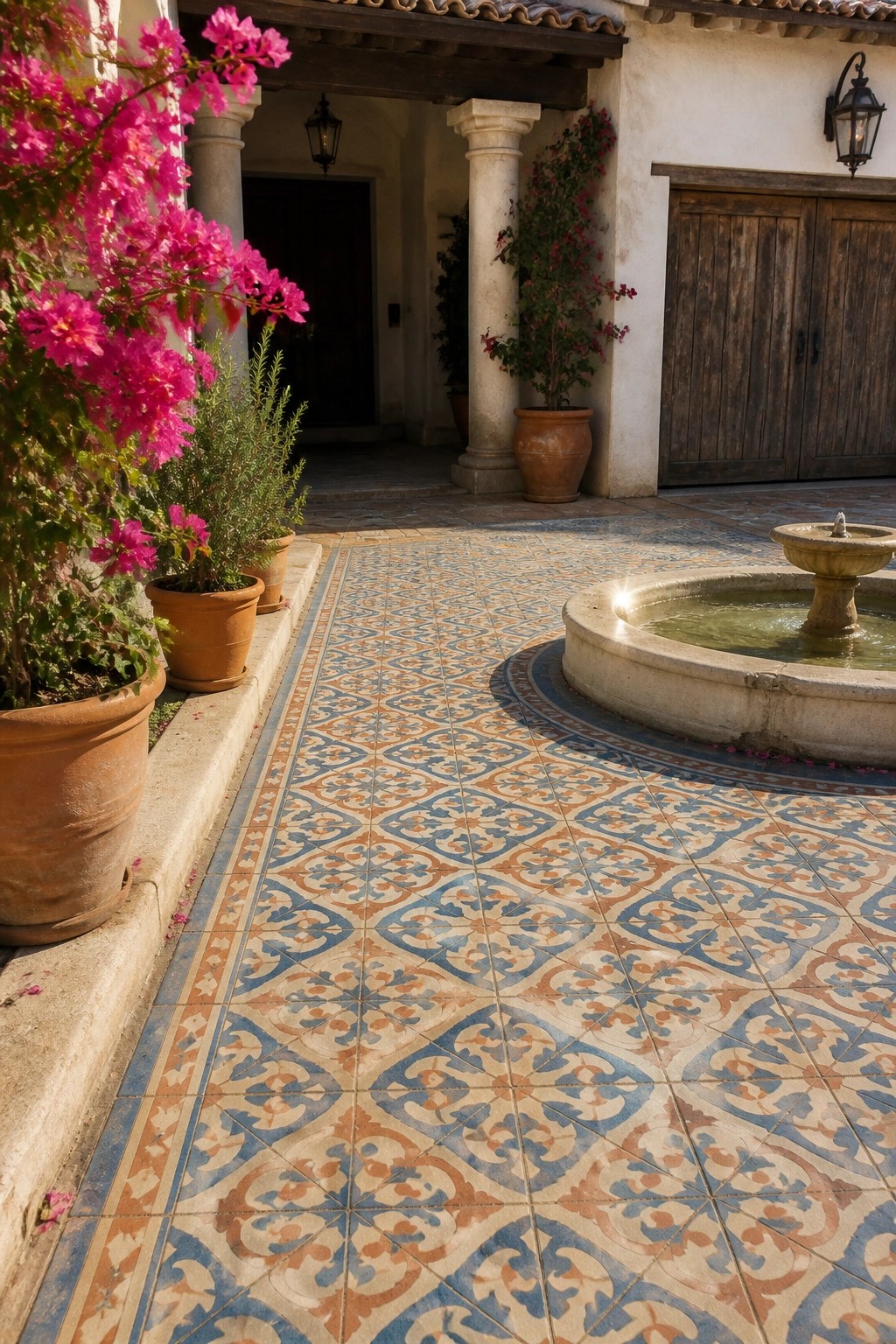
Many homes treat the driveway as just a place to park, but patterned tiles can turn it into something that feels finished and intentional. The repeating geometric design in soft earth tones gives the space a custom look that holds up well under daily use.
This approach works best on homes with a Mediterranean or Spanish influence where the tiles can echo other details like columns or clay pots. Keep the pattern scale in mind so it does not feel too busy when you see it from the street.
Large Format Tiles For The Driveway
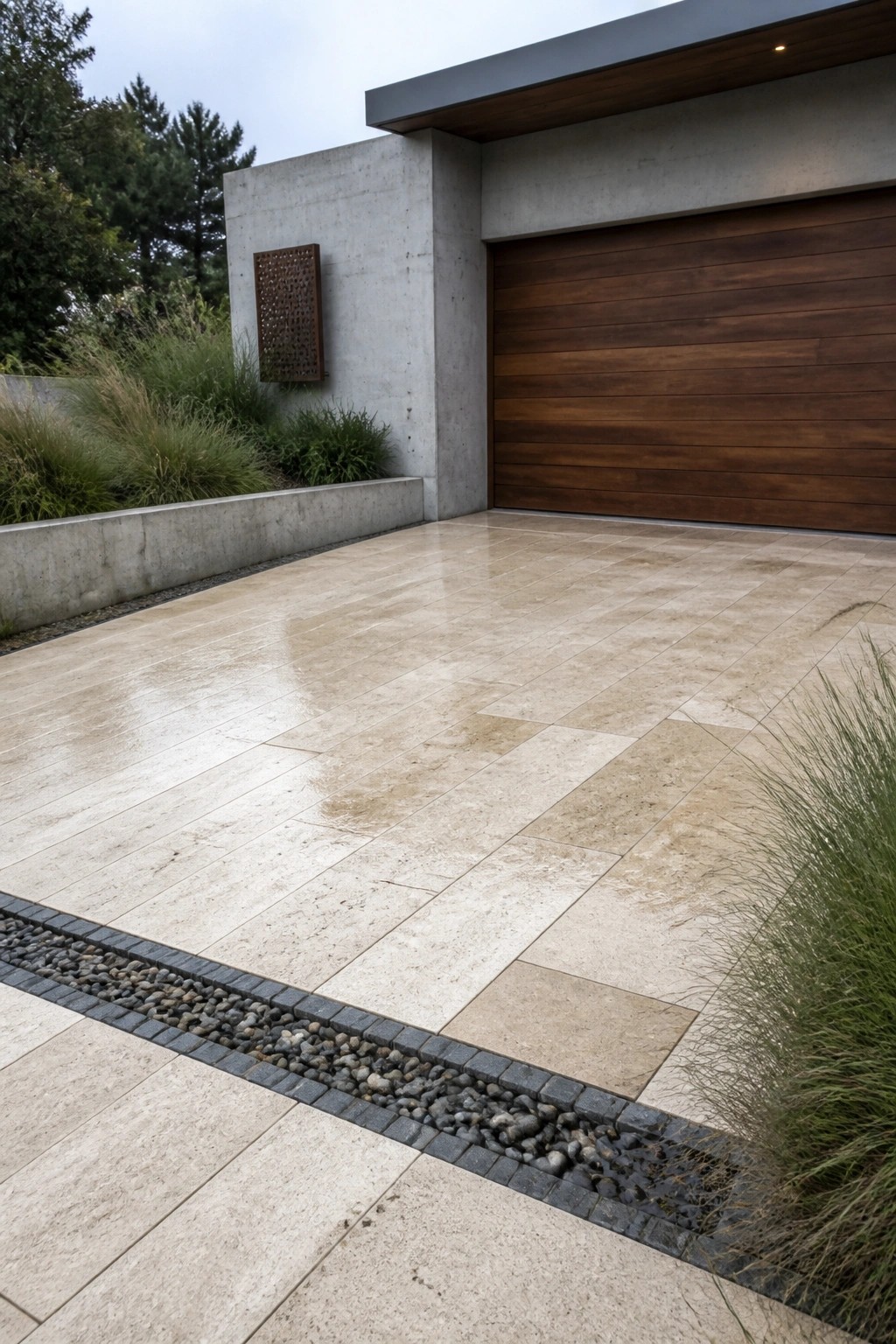
Large stone tiles can make a driveway feel more finished without trying too hard. They create a clean surface that pairs well with simple concrete walls and wood garage doors, and they hold up better to daily use than smaller pavers that shift over time.
This approach works best on modern homes where the driveway sits right next to the main entrance. Use a neutral color that matches the house materials, and add a narrow pebble strip along the edge for drainage so water does not pool on the tiles.
Driveway Pavers With Built-In Lights
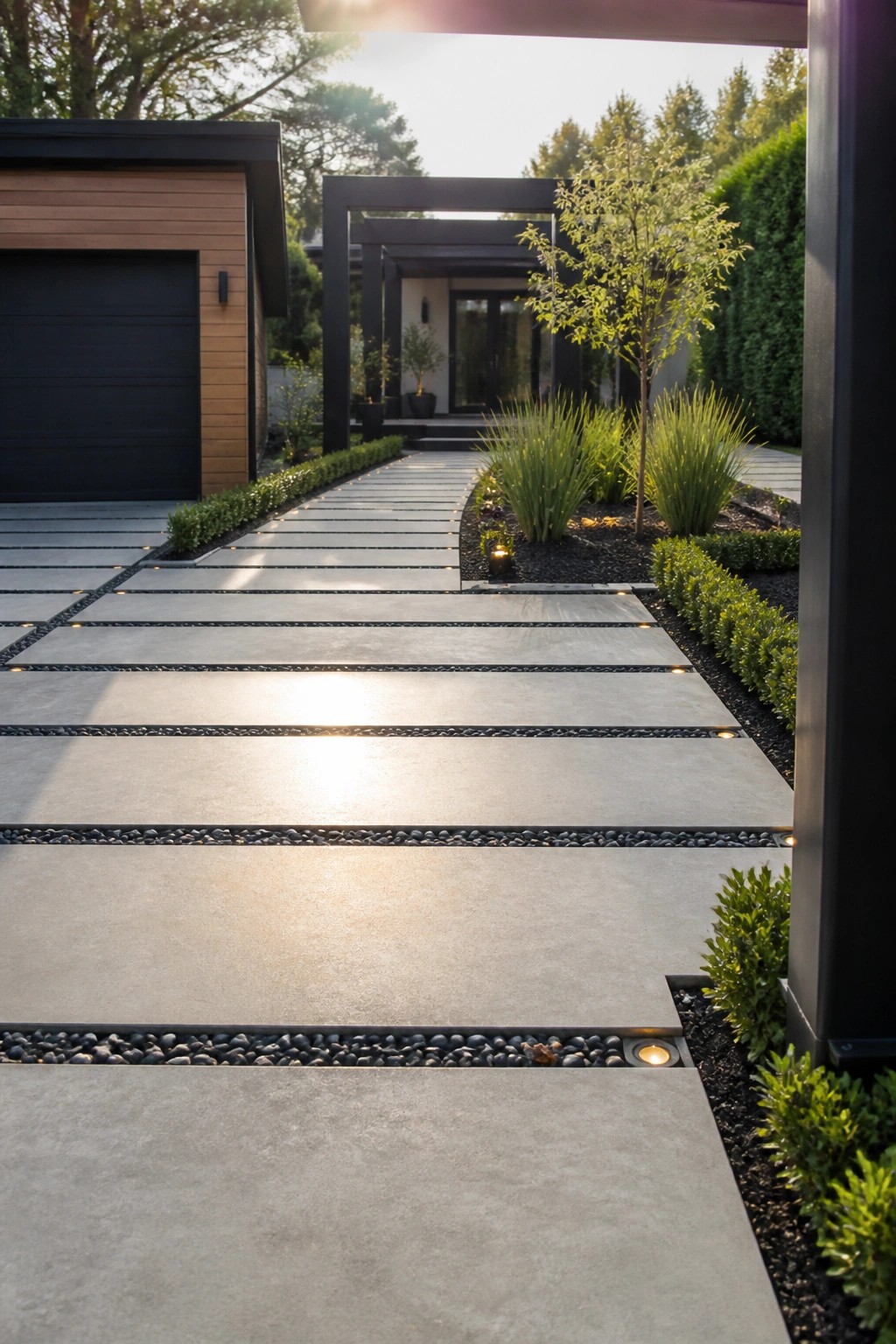
Large format pavers that include small lights along the joints give a driveway a clean, modern look while making it safer to use after dark. The effect stays subtle during the day and becomes more noticeable at night without needing extra fixtures on poles or walls.
This approach works best on straight entry paths in contemporary homes where the paving can run uninterrupted. Use a neutral paver color and keep the surrounding gravel or planting simple so the lights remain the main detail.
Cobblestone Pavers for the Driveway
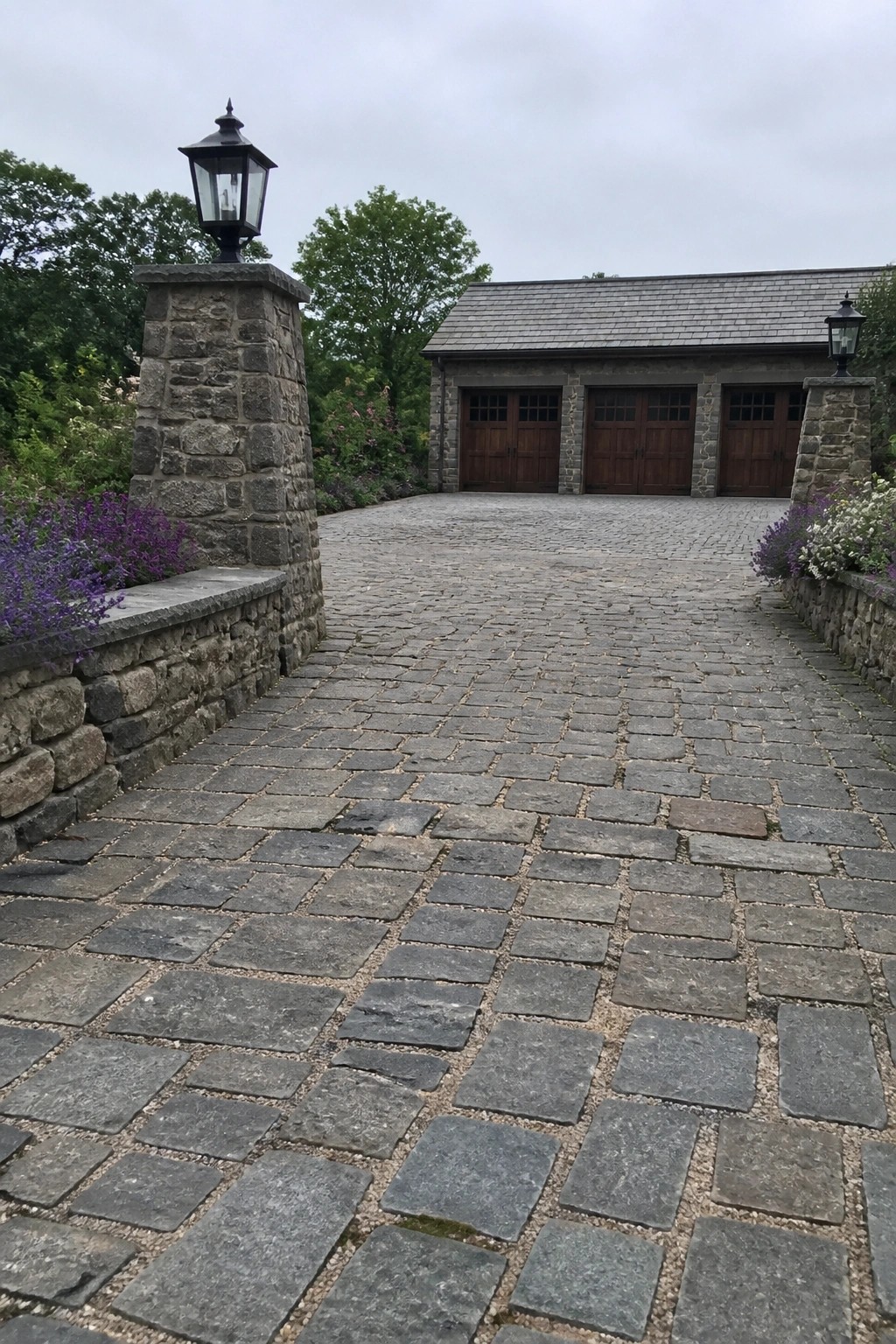
Many homeowners choose cobblestone or irregular stone pavers for driveways because the surface feels more substantial than smooth concrete. The varied shapes and natural texture help the entry look established rather than brand new.
This style works well on traditional or classic homes where the rest of the hardscape already uses stone. Just be sure the base is solid so the pavers stay level under regular car traffic.
Stone Pavers Set In Gravel For The Drive
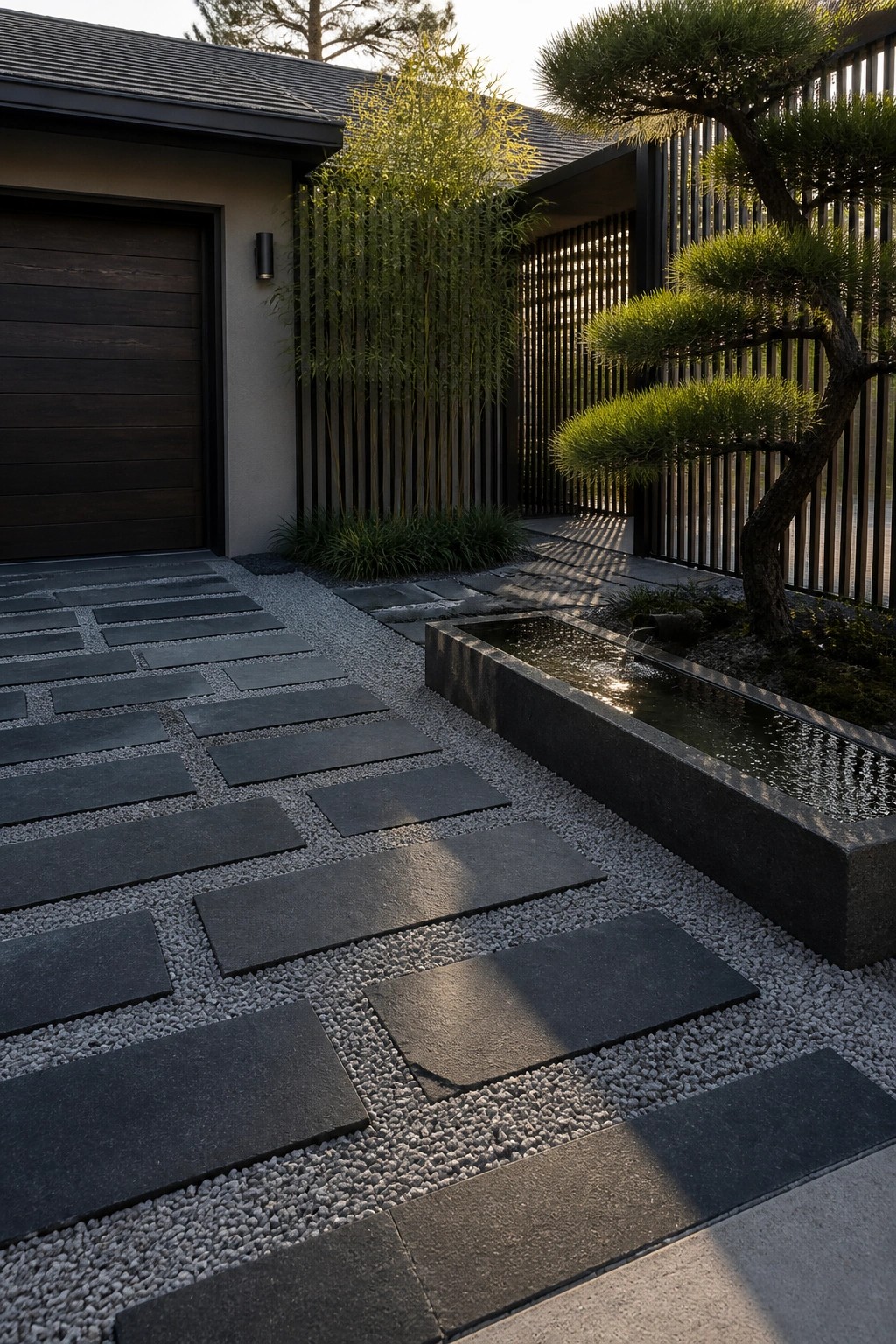
Large stone pavers placed over a gravel base give a driveway or entry path a settled, natural feel without looking overly finished. The staggered layout lets the gravel show through, which softens the hard surface and helps it blend with surrounding plants and beds.
This setup works best on homes that already have a strong landscape around the entry. Use thick pavers rated for vehicle weight, compact the gravel well underneath, and keep the pattern loose so water can drain through.
Hexagonal Terracotta Tiles for Driveway Courtyards
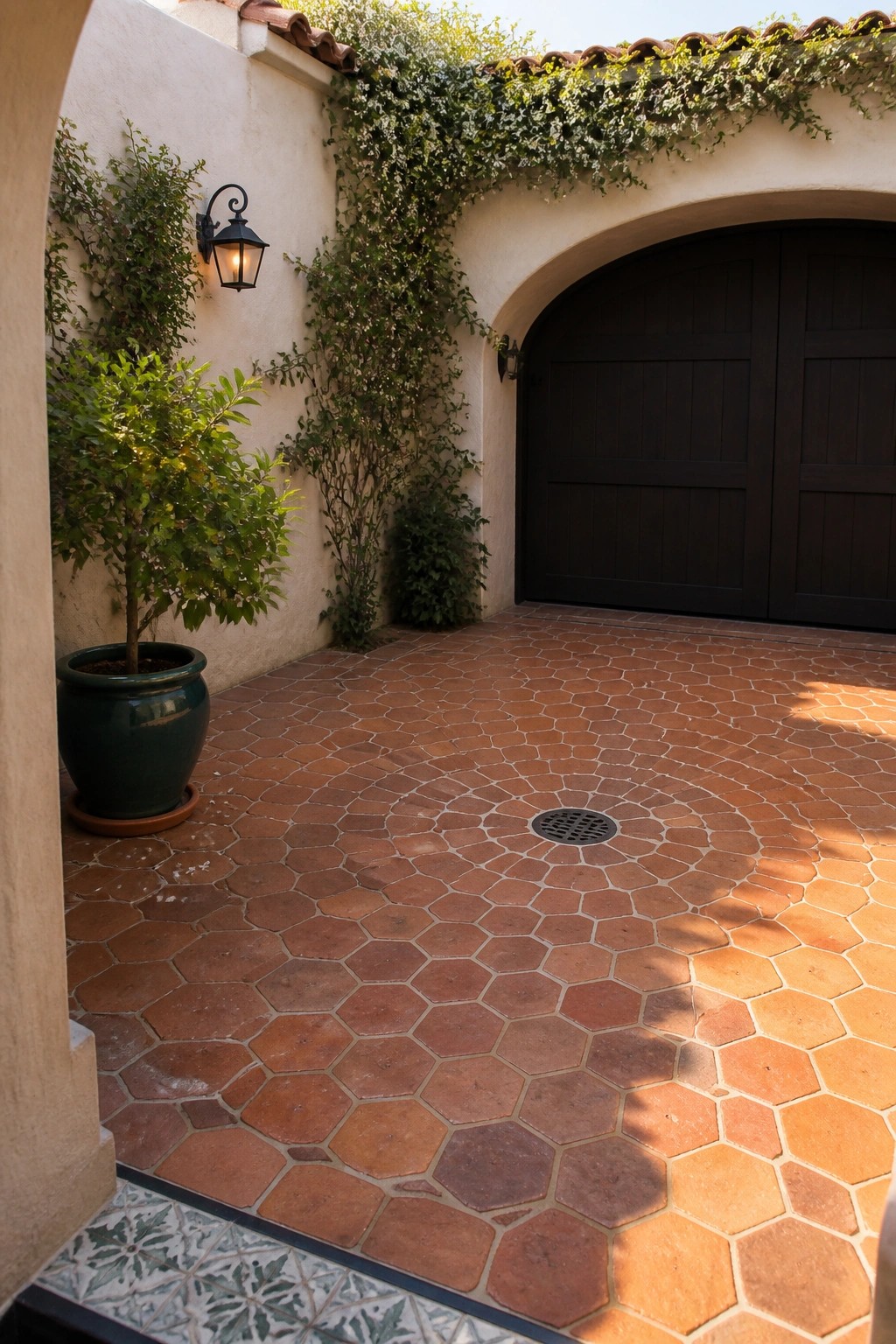
Hexagonal terracotta tiles stand out in a driveway because the shape and warm color give the surface more character than plain concrete or rectangular pavers. The pattern also helps the space feel more finished and less like a simple parking spot.
This approach works best on homes with stucco walls or Mediterranean details. Check that the tiles are rated for vehicle weight and consider how the layout handles drainage points so the pattern stays even.
Brick Pavers With Gravel Borders
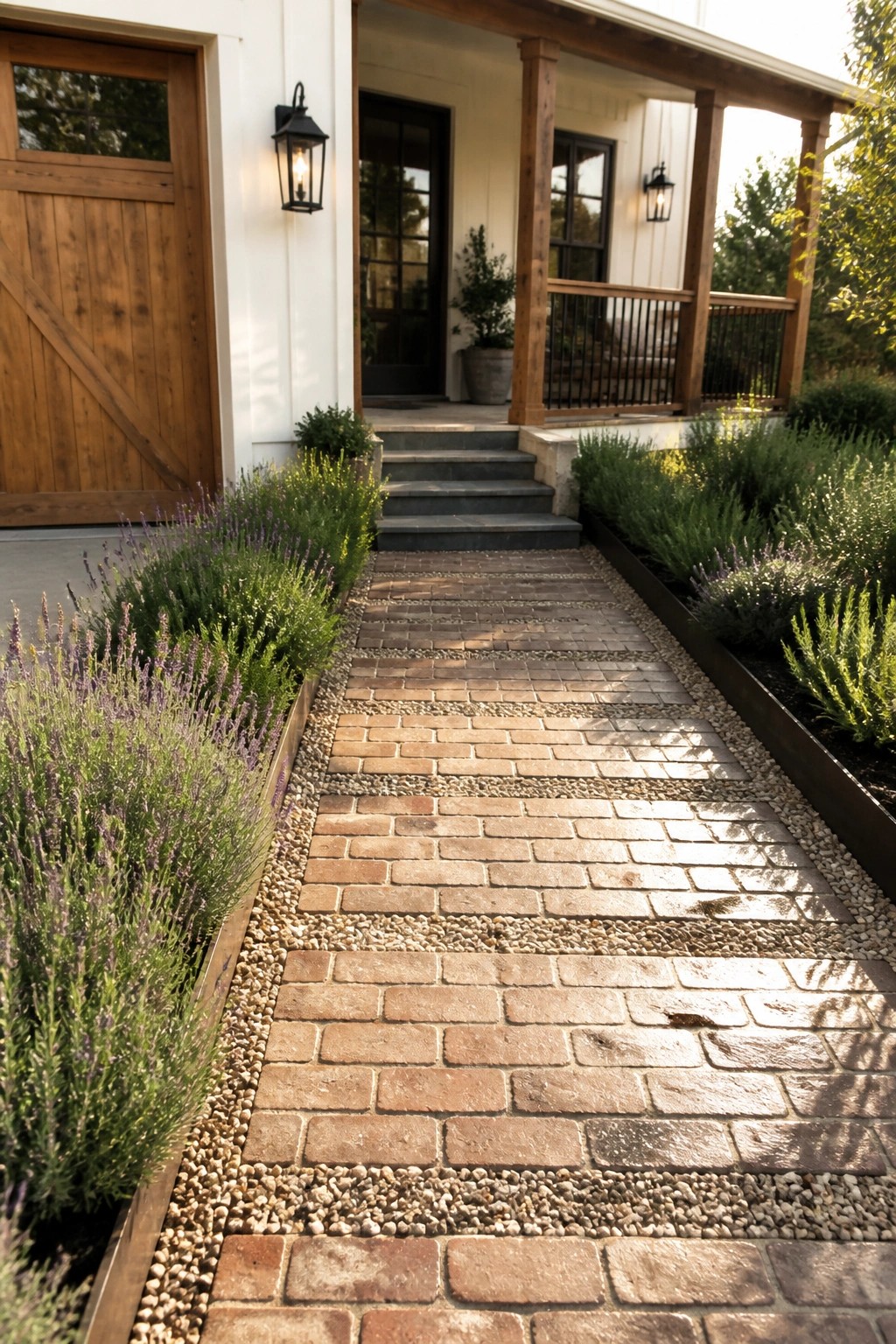
Brick pavers laid in a running bond pattern make a solid choice for an entry walk. The gravel strips on each side keep the edges tidy and give the path a finished look that holds up in different weather.
This setup works best on homes where the walkway runs through planted beds. It suits traditional styles and keeps maintenance low as long as the gravel stays edged.
Large Pavers With Narrow Gravel Joints
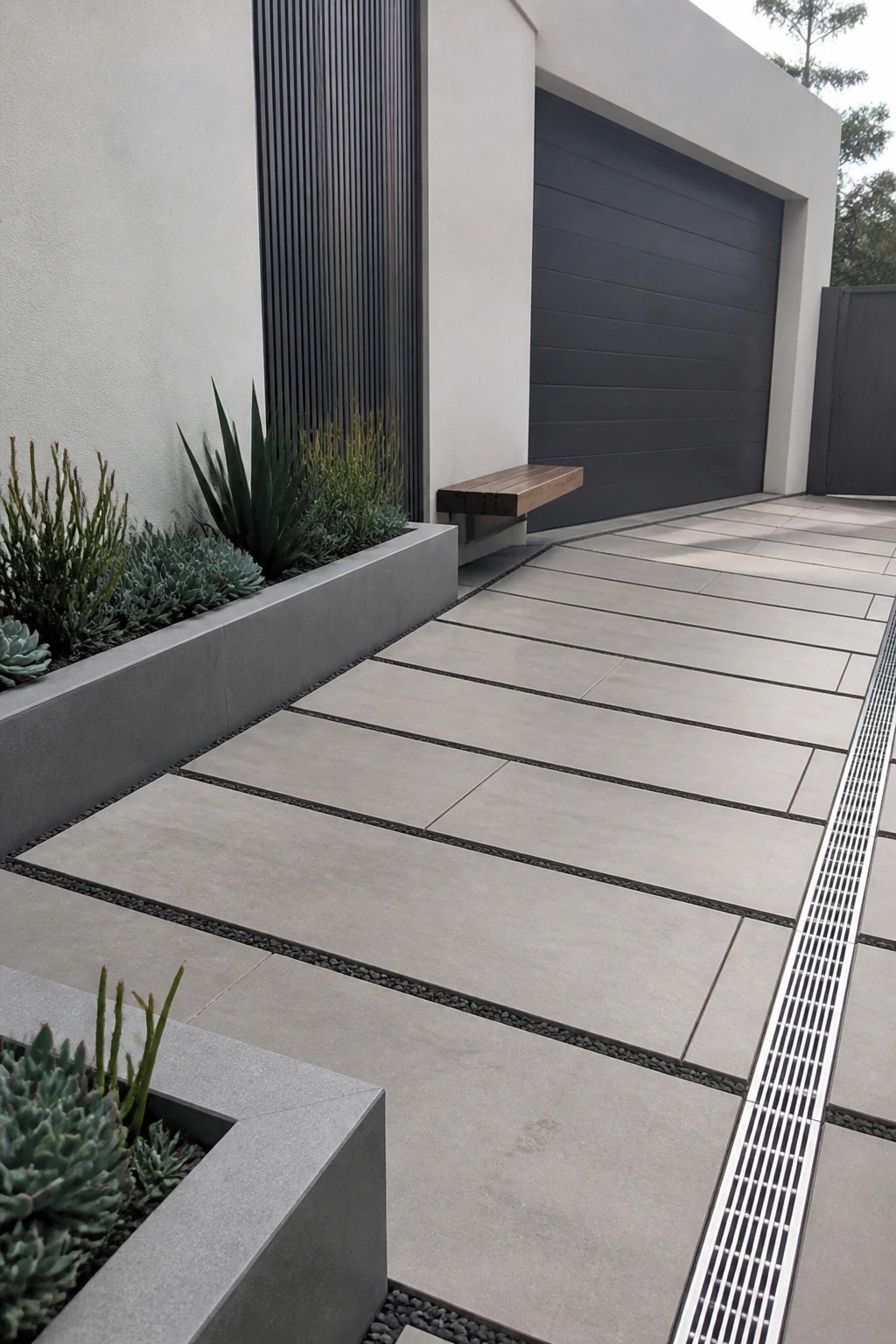
Large concrete pavers laid in a simple running pattern make a driveway feel more solid and less busy. The narrow strips of dark gravel between them keep the surface from looking too flat while still letting water drain through.
This style suits modern homes with clean lines and works best when the pavers run straight toward the garage rather than in a more decorative layout. It also pairs well with simple planting beds along the edges so the driveway does not compete with the rest of the front yard.
Mixing Tile Sizes With a Pebble Border
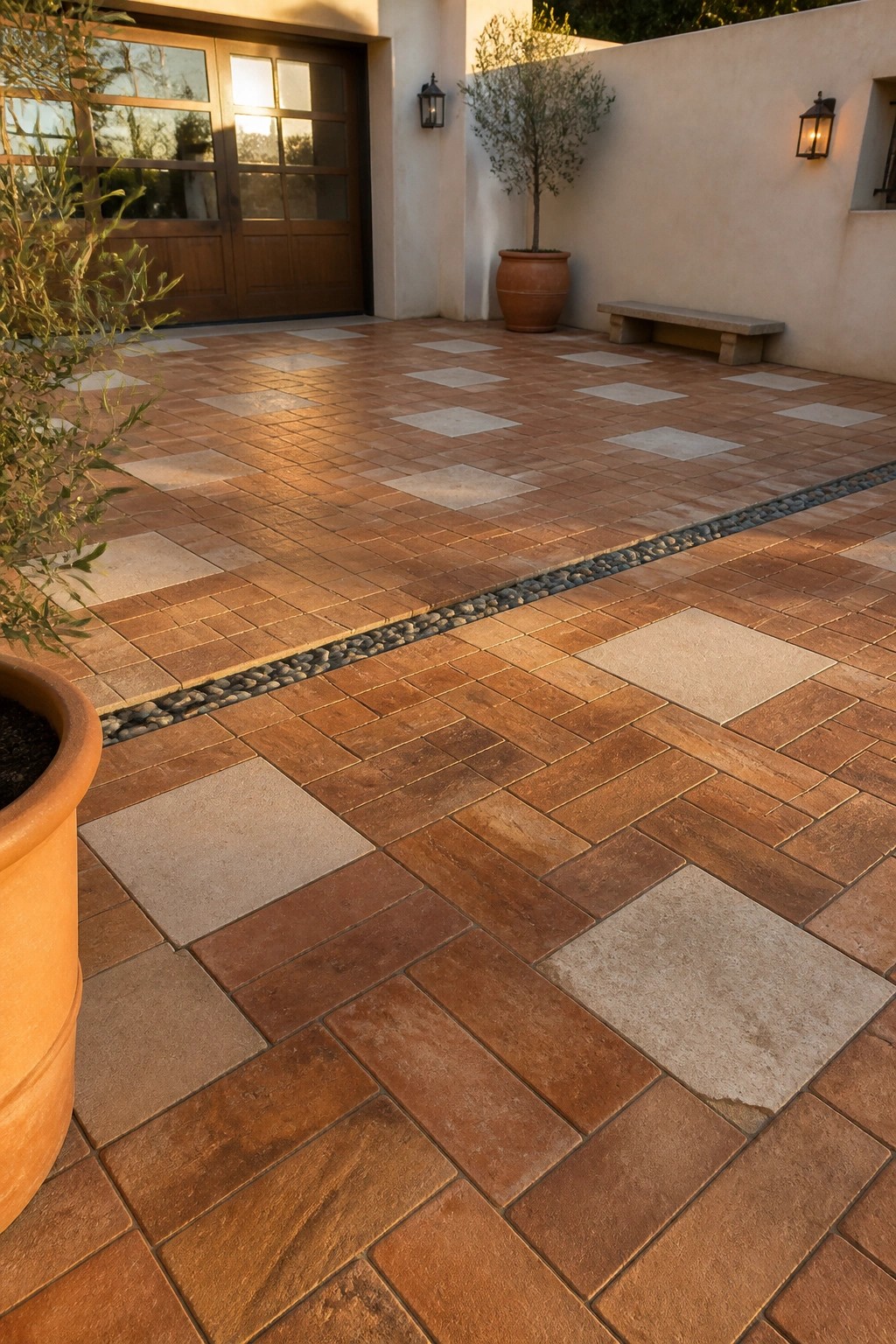
Many driveways end up looking flat when they are paved all in one pattern. Adding a narrow pebble strip between sections of different tile sizes breaks that up and gives the surface a bit more structure without adding extra materials.
This approach works best on larger entry courts or parking areas where you have room for a few different layouts side by side. It suits homes that already use warm terracotta tones and pairs well with simple stucco walls and clay pots. Just keep the pebble line straight and fairly narrow so it stays clean over time.
Circular Paver Layouts for Driveways
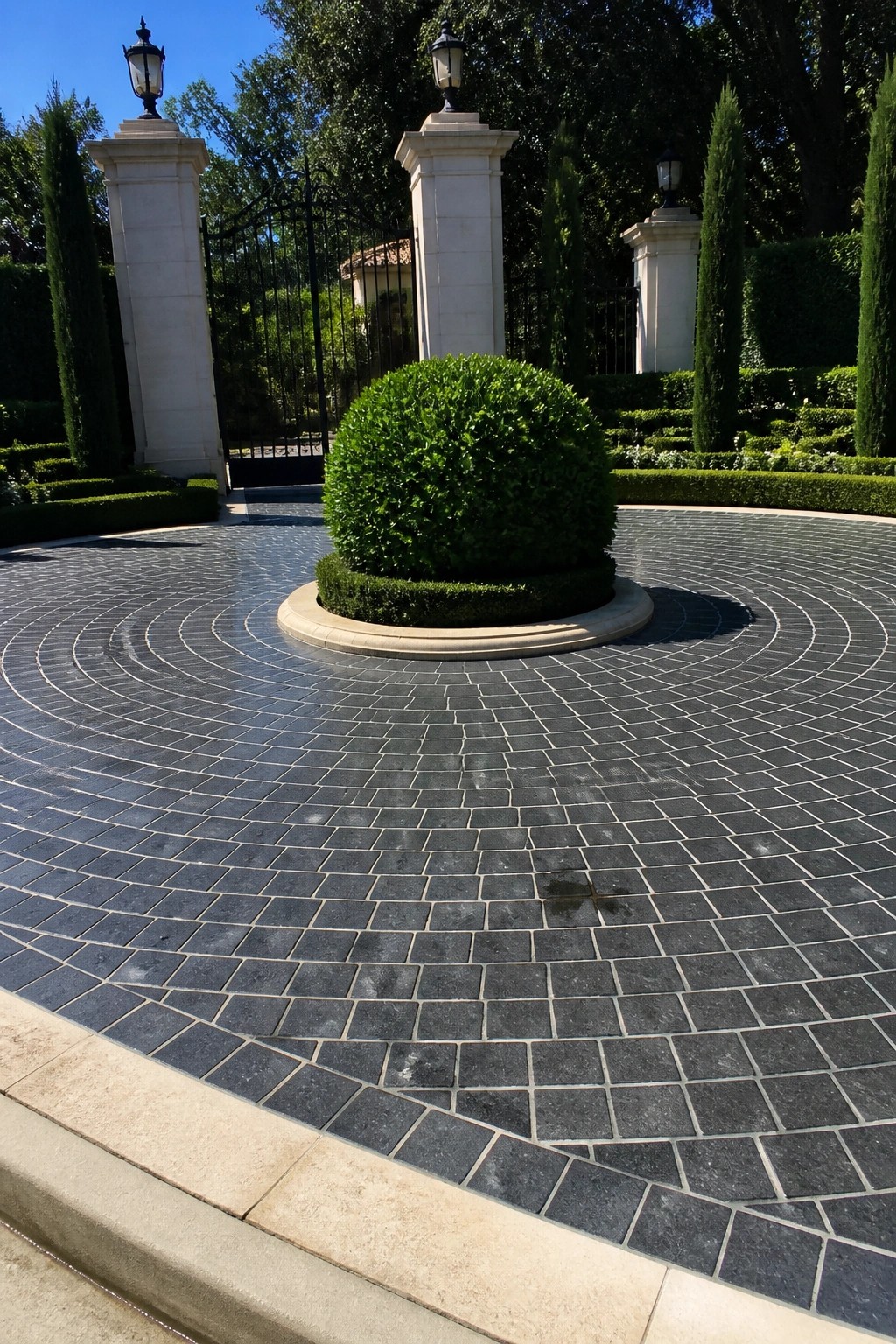
A circular paver pattern gives the driveway a clear sense of structure. The rings pull the eye inward and make the whole entry feel more finished than a standard straight layout.
This approach works best on properties with enough space for the pattern to show. It pairs well with a central planting bed or low hedge, and the dark pavers help it read as substantial without needing extra ornament.
Natural Stone Pavers For Side Entry Paths
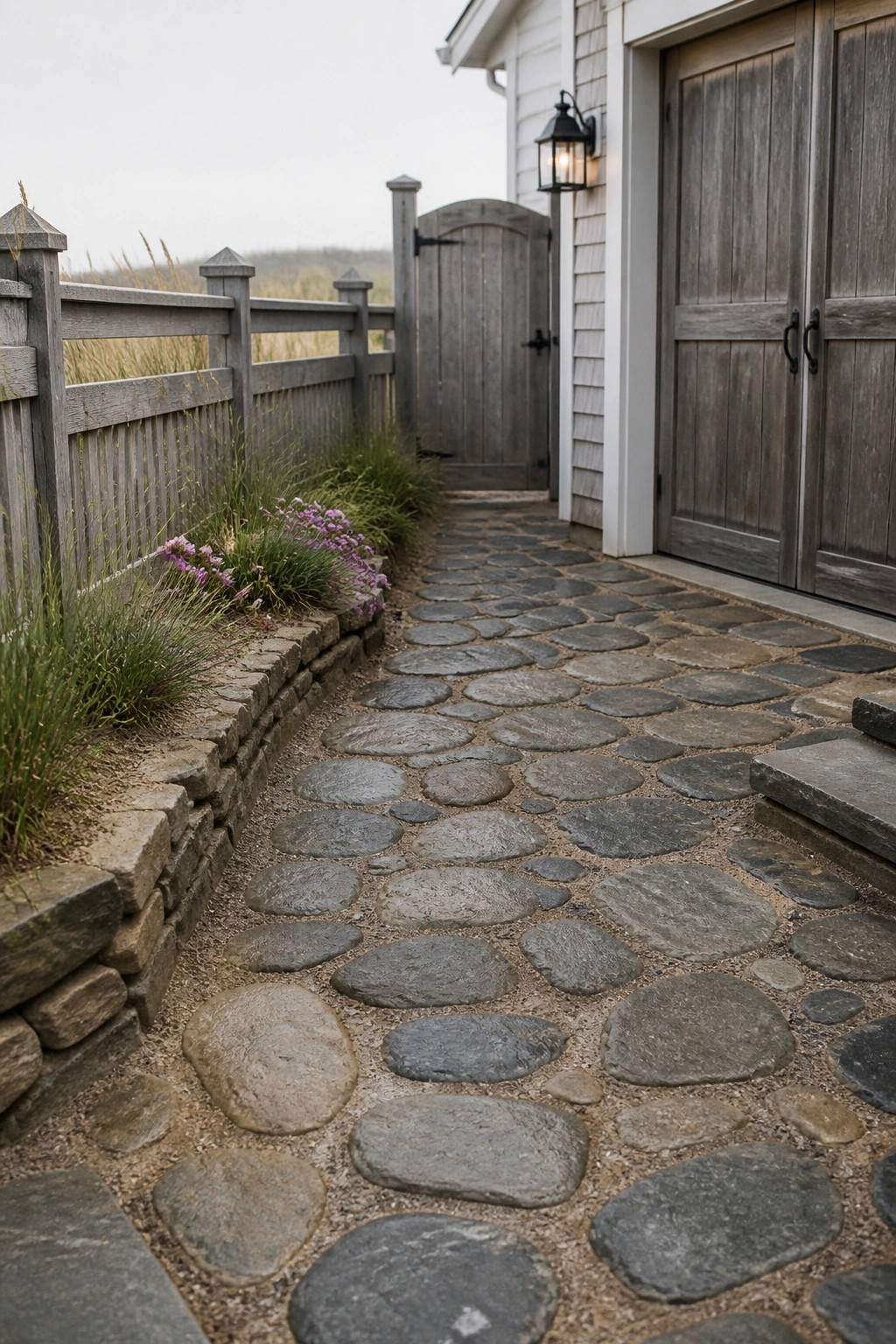
Natural stone pavers laid in an irregular pattern work well when you want a path that feels solid and settled rather than overly designed. The varied sizes and tones help the walkway blend into the surrounding ground instead of standing out as a separate feature.
This style fits homes with wood siding or simple fencing where you want the hardscape to feel connected to the landscape. Set the stones in a compacted base so they stay level, and keep the edges clean with a low border to avoid spreading over time.
Large Stone Pavers For The Driveway
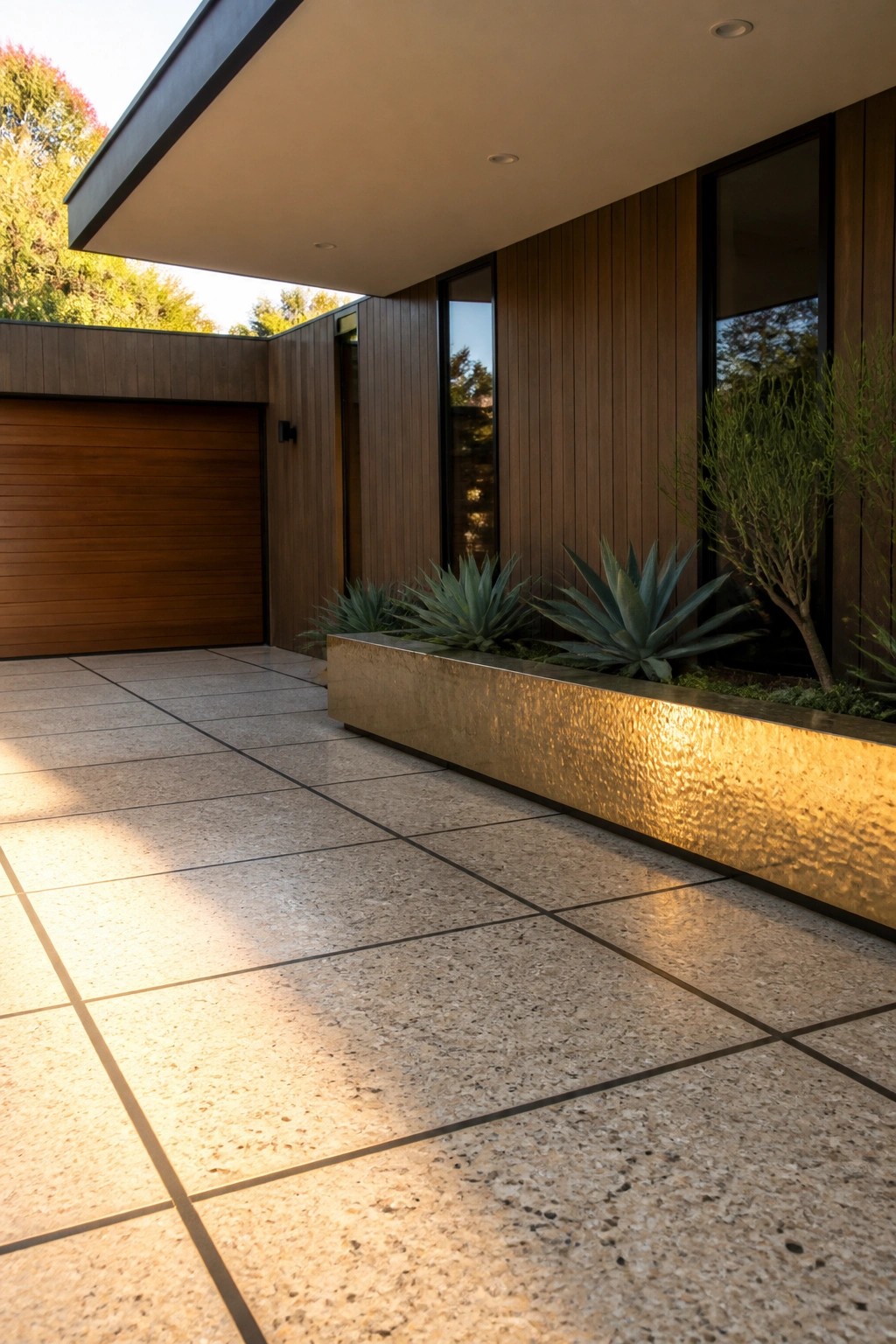
Large stone pavers give a driveway more presence without needing extra decoration. The speckled surface and simple grid layout keep the area looking clean even after daily use and weather exposure.
This choice suits modern homes with straight lines and minimal trim. Keep the edges simple and add low planting beds along one side so the pavers remain the main feature rather than competing with other details.
Natural Stone Pavers For Driveway Entries
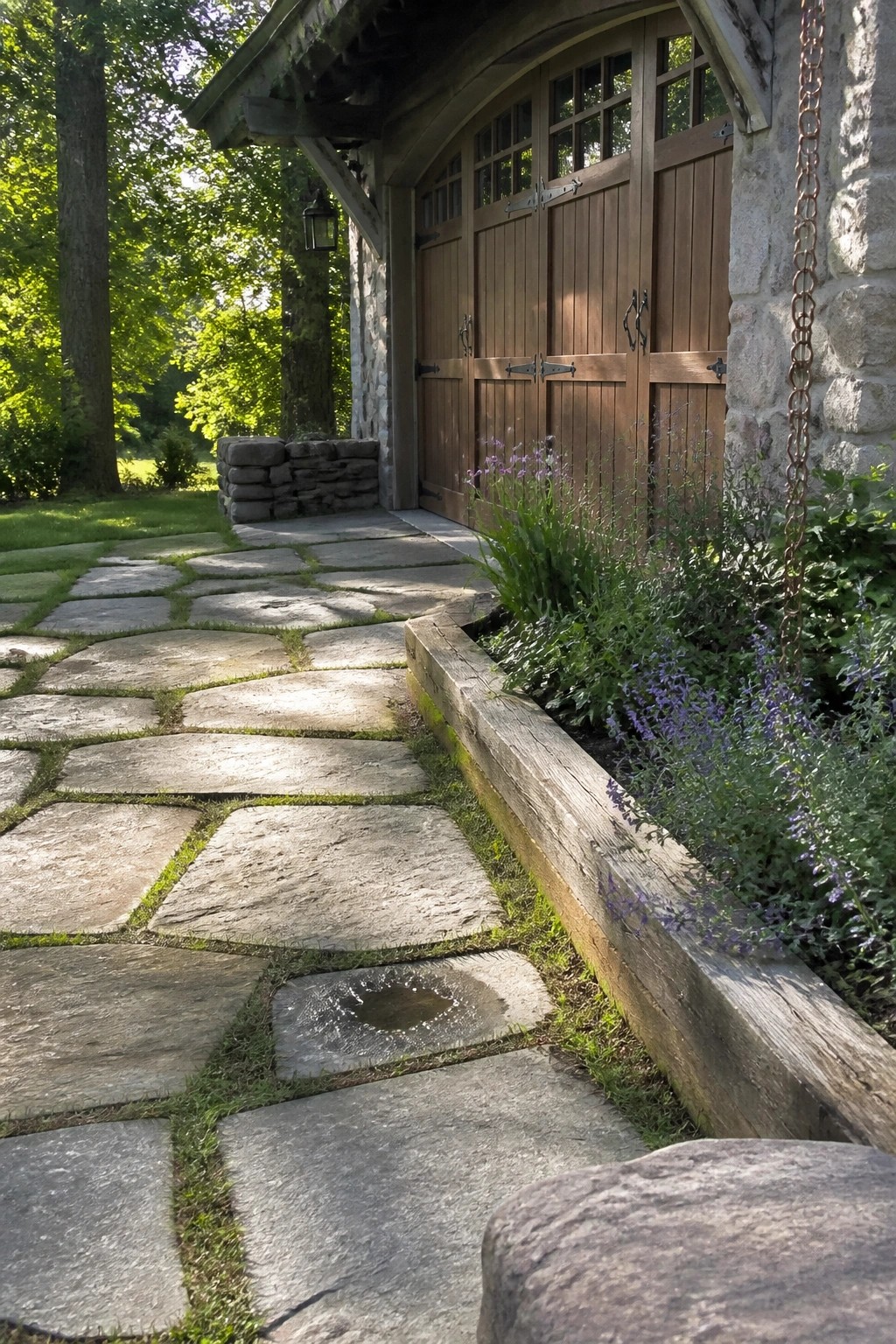
Natural stone pavers work well for driveways because they feel more grounded than poured concrete. The irregular shapes let the path follow the land instead of forcing a straight line, and the surface still holds up to regular car traffic without looking too formal.
This approach suits homes with a bit of yard space where the path can blend into grass and planting beds. Keep the joints filled with soil or low ground cover so the stones do not stand out too sharply. Skip it on tight urban lots where a smoother surface is easier to maintain.
Dark Stone Tiles For The Driveway
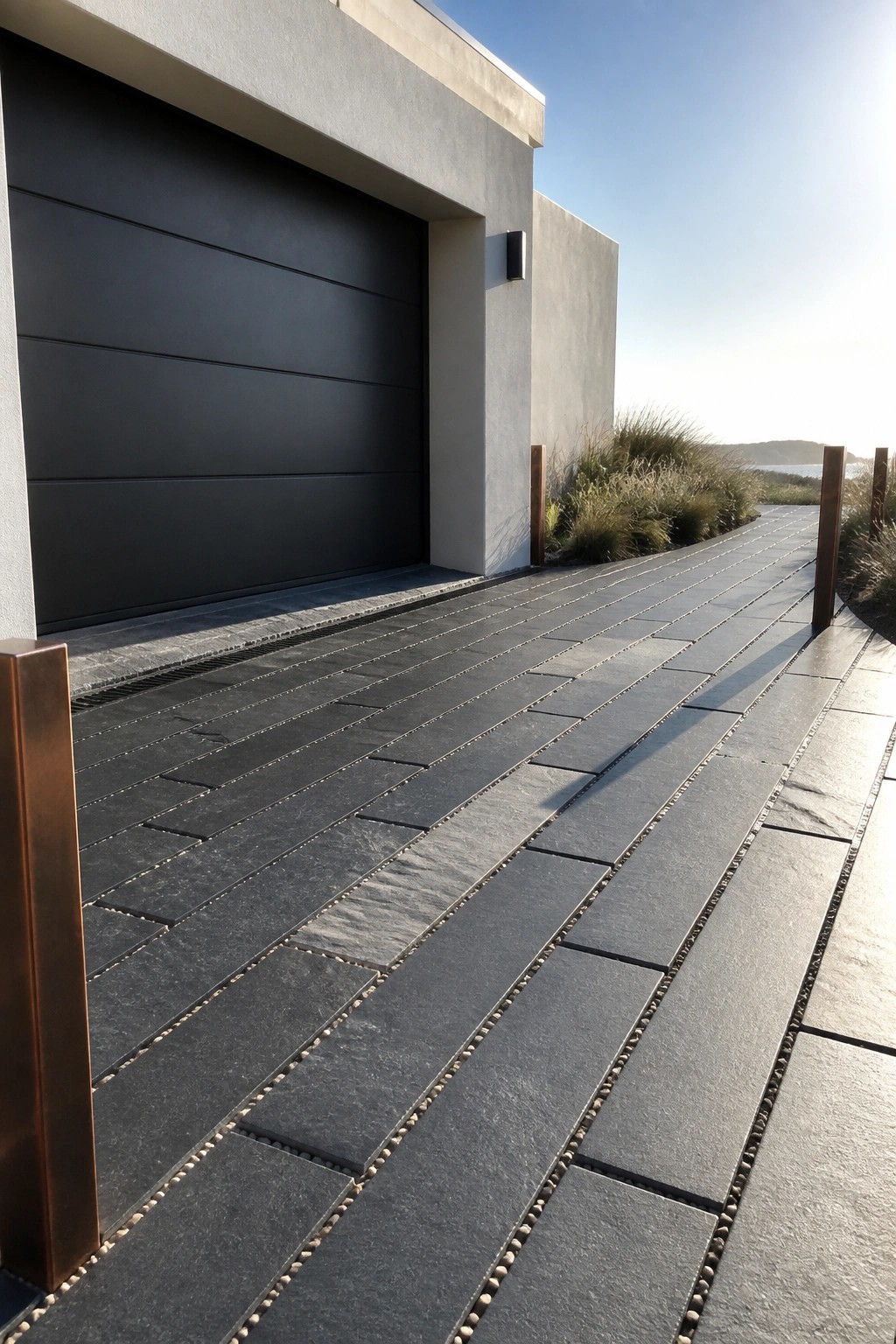
Many homes use dark stone pavers across the driveway because the material feels solid and holds up to daily use. The color also ties the ground surface to the rest of the house without extra effort.
This works best on modern homes with simple shapes and darker finishes. Keep the layout straight and use a light joint material so the pattern stays clear even after years of traffic.
Stone Pavers on the Driveway
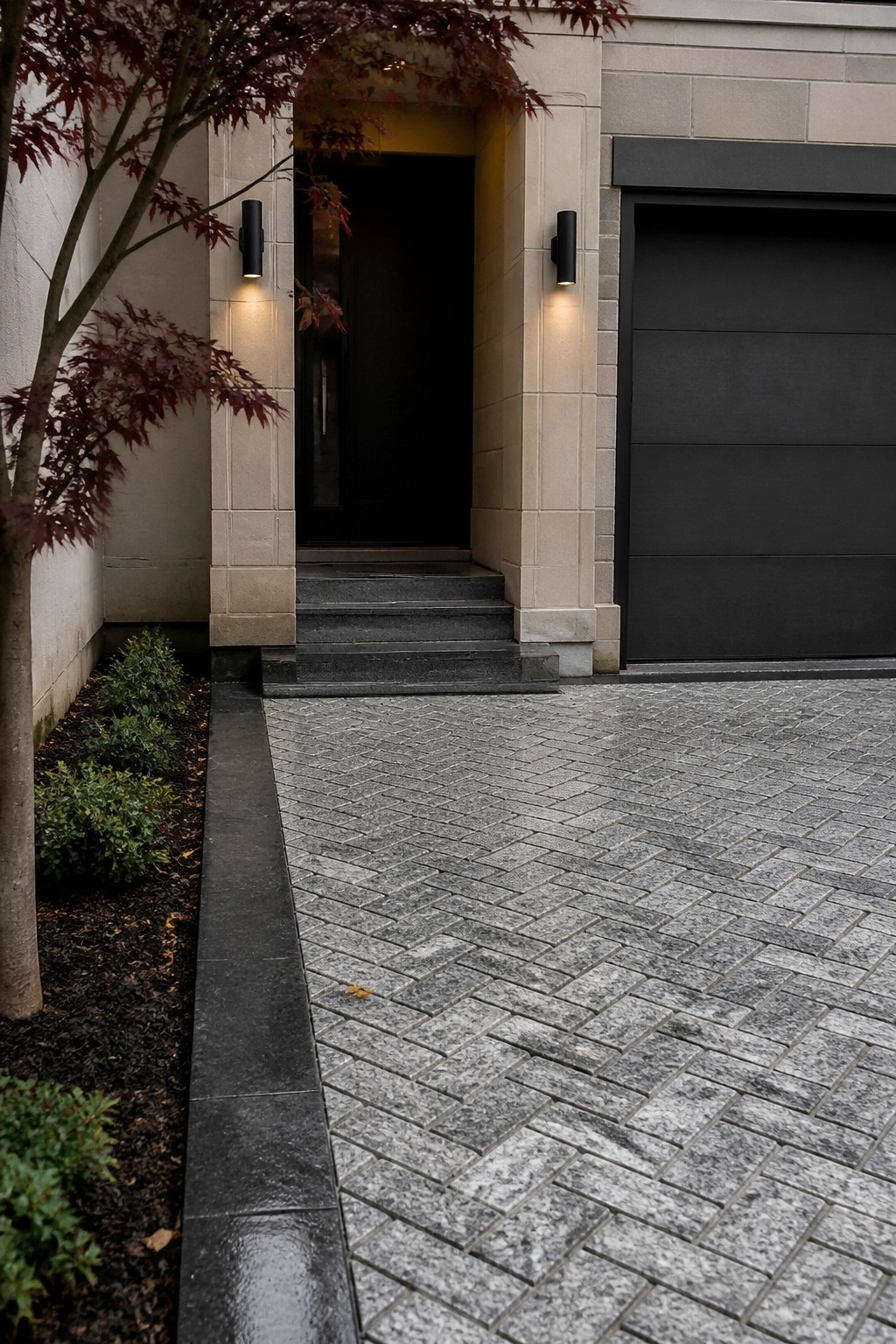
Stone pavers give a driveway more presence than a plain slab of concrete. They add texture underfoot and help the whole front approach feel more finished without looking overly formal.
This works well on homes where the entry and garage sit close together. Keep the pavers in a neutral gray or warm taupe so they stay easy to match with the house materials. Just make sure the base is properly prepared, or the surface can shift over time.
Large Stone Pavers With Gravel For Driveways
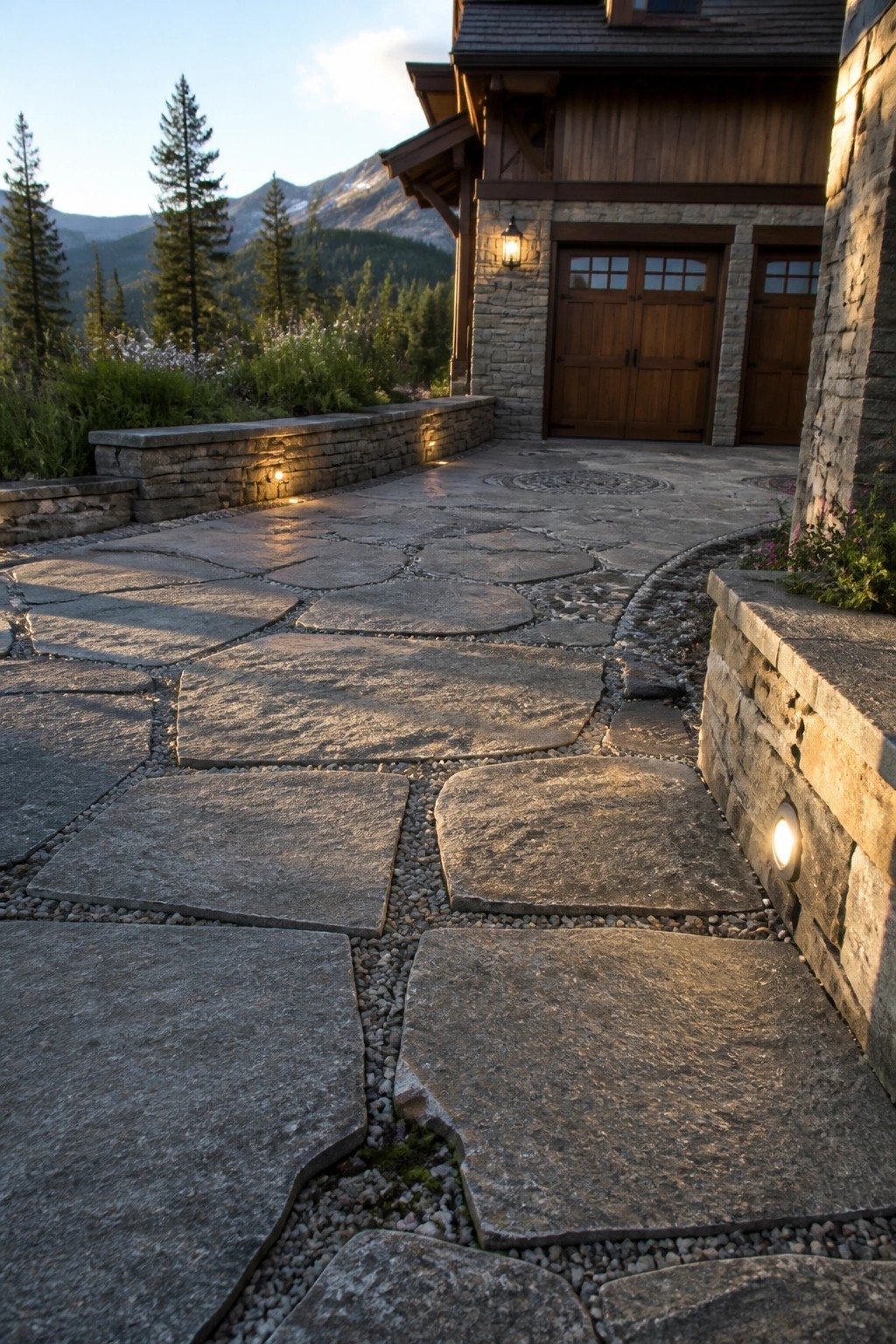
Large irregular stone pavers set into gravel give a driveway a solid but natural look. The mix avoids the flat feel of poured concrete while still standing up to regular car traffic.
This approach works well on homes with stone or timber exteriors. Use thick pavers and compact the gravel base well so the surface stays level over time.
Large Pavers With Gravel Infill
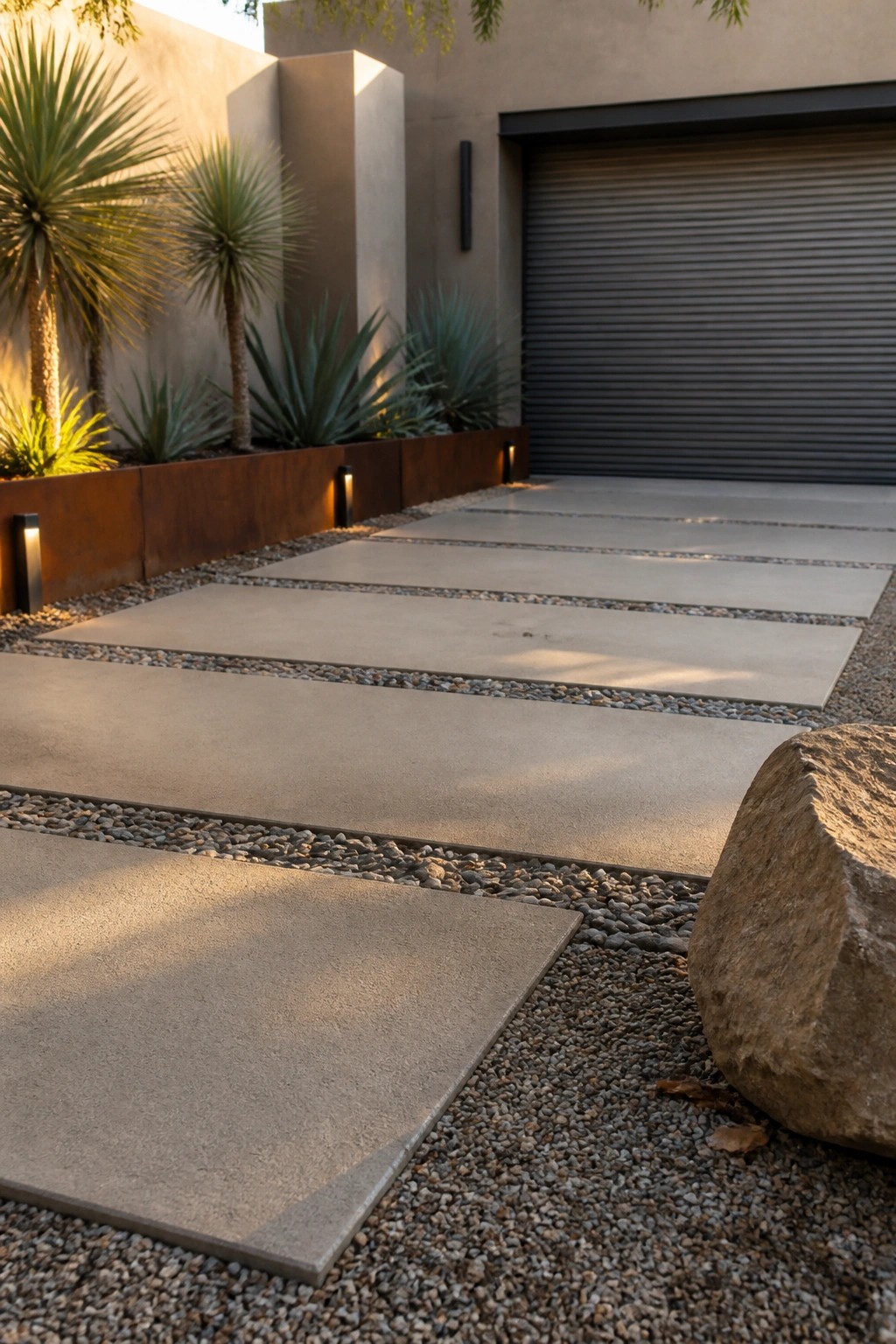
Large pavers set with gravel between them give a driveway a structured look without making it feel too heavy or solid. The gaps break up the surface and let the material feel more connected to the surrounding ground, which works especially well on longer approaches or wider parking areas.
This layout suits homes that already lean modern or minimalist, since the clean edges of the pavers pair easily with simple plantings and low lighting. Just keep the gravel level and compacted so tires do not push it around over time.
Frequently Asked Questions
Q: How do I keep these tiles from showing every tire mark after a few weeks? A: Go for textured surfaces that hide scuffs instead of smooth ones. Sweep them weekly and hose off any dirt before it settles in. That routine keeps the premium look going without extra work.
Q: What if one tile gets damaged from a sharp object? A: Swap it out on your own since most systems let you lift just the bad piece. Order a couple spares when you buy the rest so the match stays perfect. No need to redo the whole driveway.
Q: Do these tiles work if my area gets freezing winters? A: Pick ones rated for freeze-thaw cycles so they do not crack when temperatures swing. Seal them once a year to block moisture from getting inside. That step prevents the usual winter damage people see on cheaper options.
