

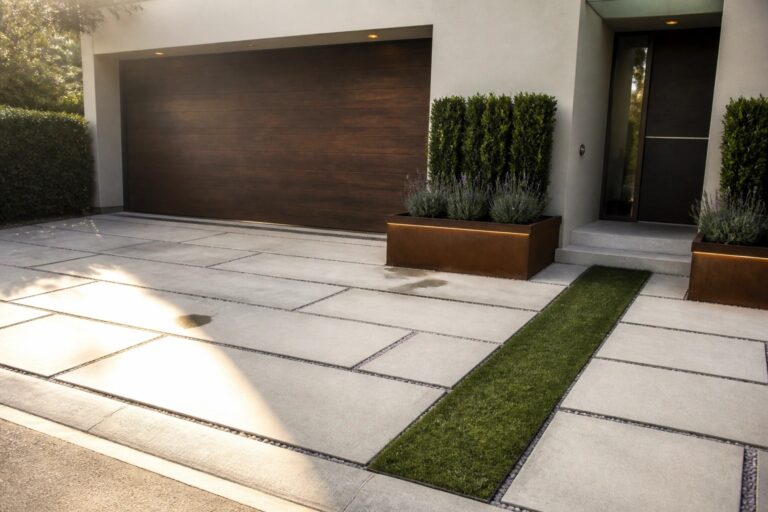
I have noticed that the surface leading up to the front door shapes how the entire house reads from the street long before anyone steps inside.
Parking areas often get treated as an afterthought yet they sit right in the middle of the view that neighbors and visitors see every day.
Testing a few samples in place usually reveals whether a tile will blend with the existing walls or fight against them once the sun hits.
Weather and tire marks change the look faster than most renderings suggest so it helps to see real examples on homes nearby.
I tend to focus first on how the material will age rather than how it appears in the first week.
Large Pavers With A Grass Strip
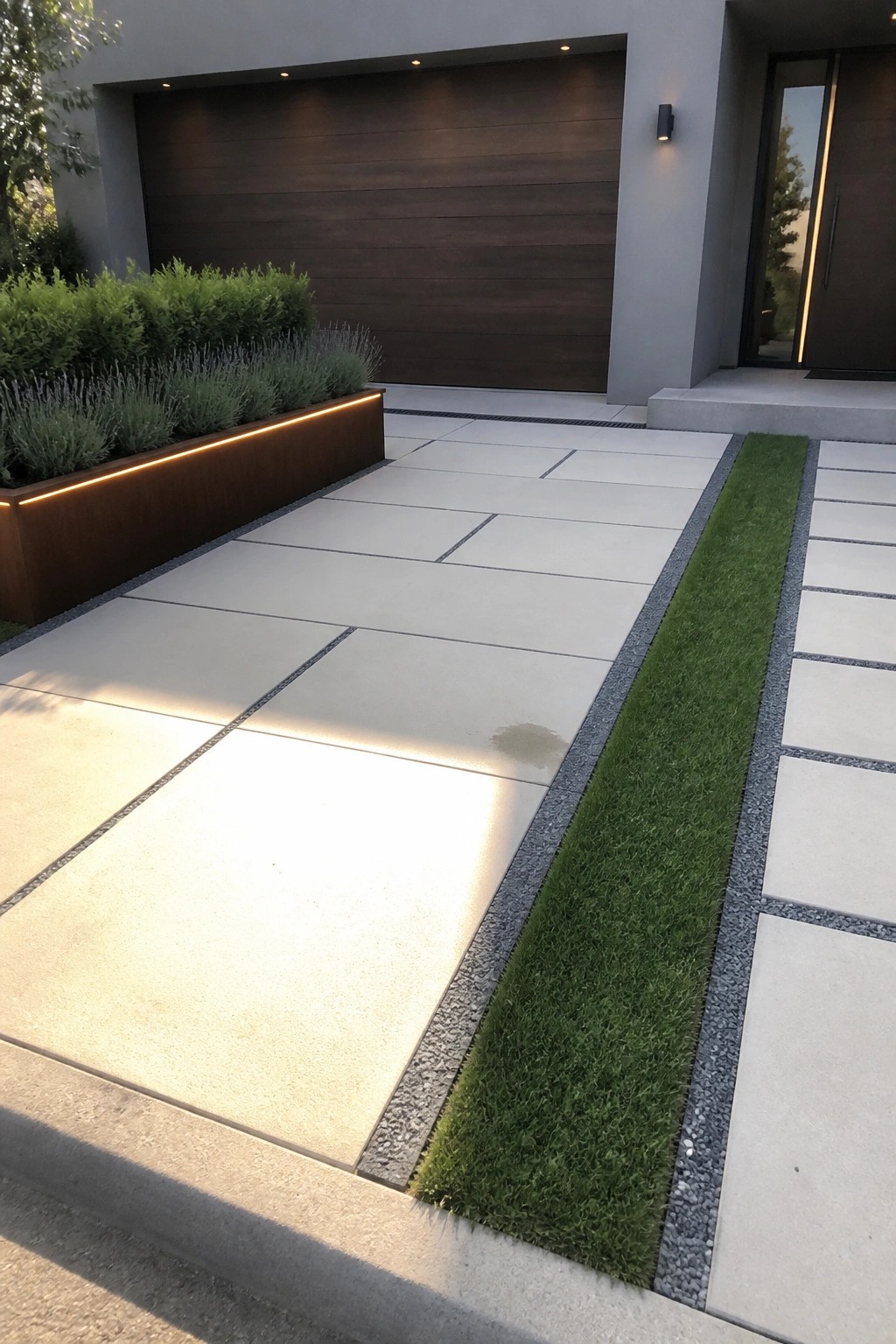
Large pavers give a driveway a much cleaner look than the usual smaller blocks. The light color and simple layout keep the whole front area feeling open instead of busy.
This setup works best on modern homes where you want the hardscape to stay quiet. Just make sure the grass strip stays narrow so cars and foot traffic do not damage the edges.
Herringbone Pavers for Driveways

A herringbone layout in dark pavers gives a driveway more structure without looking busy. The pattern holds up well under cars and still feels intentional next to a clean modern house.
This approach works best on homes with simple lines and limited color palettes. Keep the pavers one solid tone and let the gravel edge or stepping stones handle any transition to planting beds.
Circular Inlays in Outdoor Tile Floors

A circular tile inlay gives a large paved area a clear center point without adding clutter. The contrast between the main floor and the darker circle keeps the space from feeling like one flat slab, which works especially well in open courtyards or entry courts.
This layout suits homes with generous outdoor paving where you need a simple way to break up the surface. Use a matte finish on both tones so the pattern stays subtle rather than flashy, and keep surrounding plantings low so the circle remains the main feature.
Hexagonal Pavers For Driveways

Hexagonal tiles give a driveway a clean, updated look that still feels practical. The repeating shape adds some interest without turning the surface into a focal point, and it works nicely with simple house styles.
This approach suits homes where the parking area sits right next to the main structure. Keep the base well compacted so the tiles stay flat, and pair them with low plantings along the edge to soften the transition.
Large Format Tiles With Grass Joints
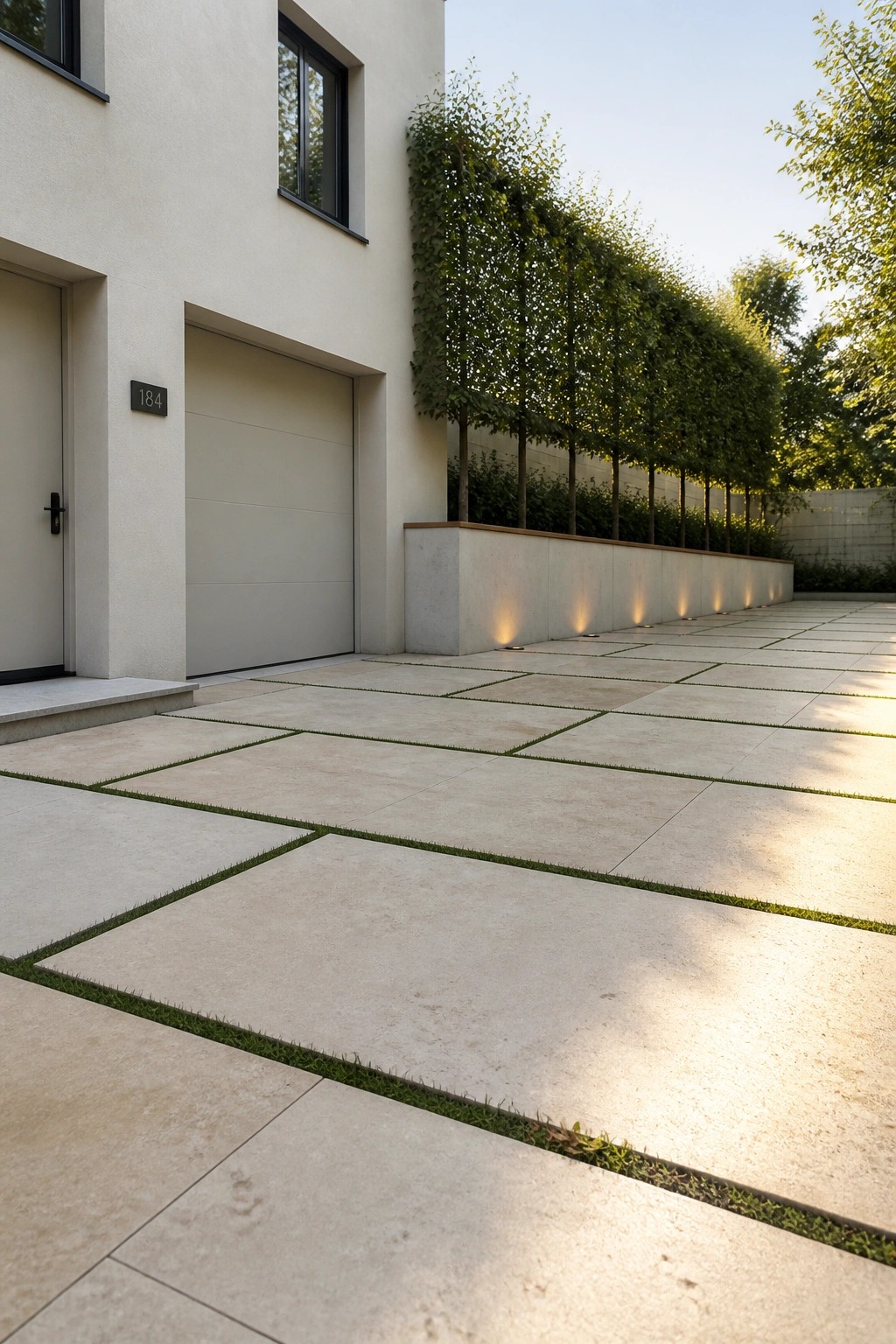
Large square tiles with narrow strips of grass between them give a driveway a quieter, more open feel than solid concrete or asphalt. The pattern breaks up the surface without adding clutter, and the grass helps with drainage while softening the overall look.
This approach suits modern or minimalist homes where the driveway sits right in front of the house. Use light neutral tiles and keep the grass lines narrow and even so they stay simple to mow and maintain.
Use a Compass Inlay in Driveway Tiles
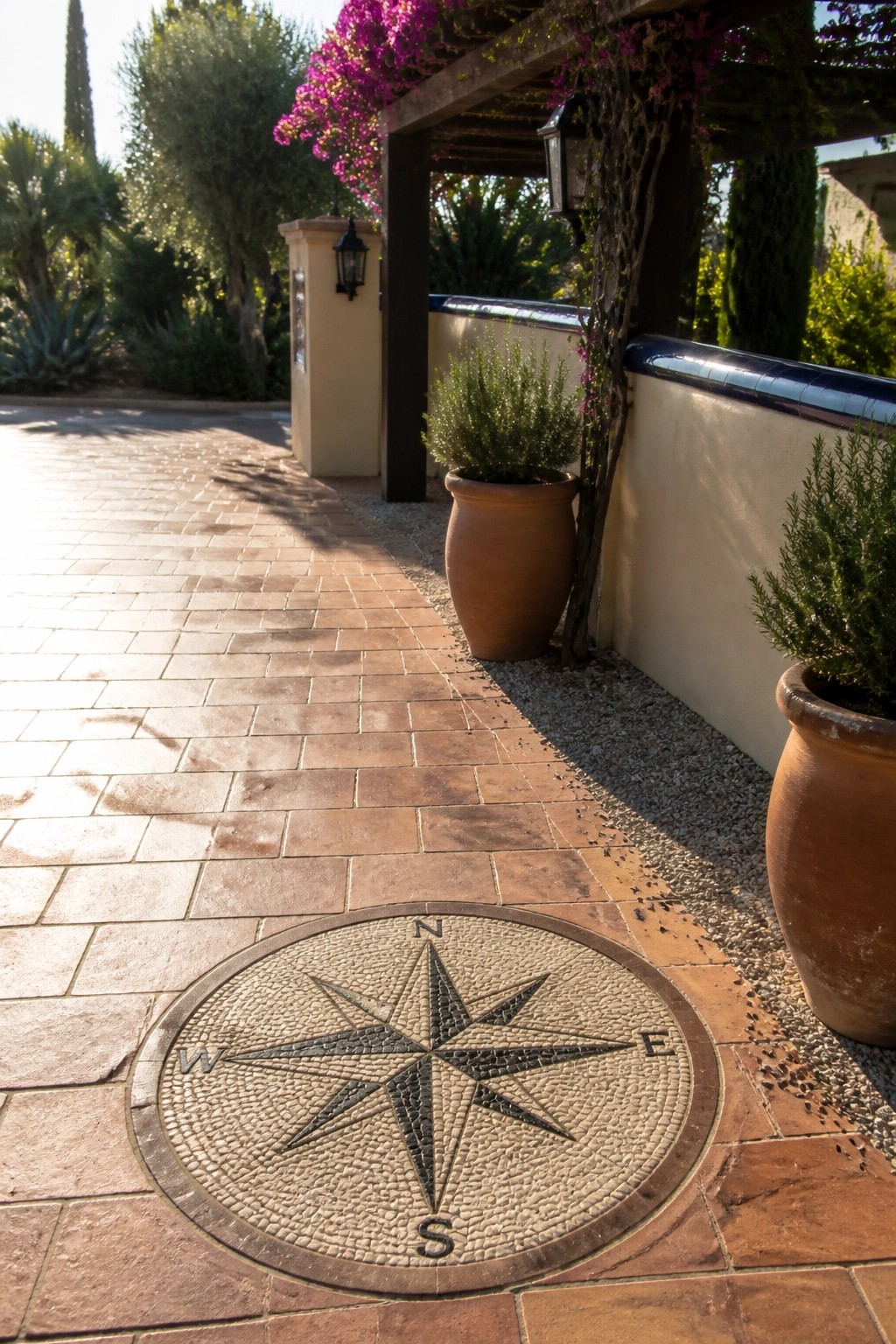
A compass rose set into the paving gives the whole entry area a clear focal point without needing extra structures or ornaments. It turns a plain stretch of tile into something that feels more finished and thoughtful, especially on larger driveways where the surface can otherwise look flat.
This works best on homes with Mediterranean or traditional styling where the tiles already lean warm and earthy. Keep the pattern simple and centered so it reads from the street without competing with the rest of the hardscape.
Wide Pavers For Curved Paths

Large stone tiles give a path a solid, grounded feel that still looks natural. They handle daily use well and cut down on weeding or shifting gravel compared with smaller materials.
This approach suits homes with a gentle curve from the street or gate to the garage. Pair the tiles with a simple gravel edge so water drains easily and the layout stays low maintenance.
Large Dark Tiles for Driveways

Large dark tiles are becoming a popular choice for driveways because they create a smooth, unified surface that feels more intentional than standard concrete or small pavers. The oversized format reduces the number of joints, which keeps the look cleaner and makes the front of the house feel more modern overall.
This works best on homes with simple lines and minimal planting near the driveway. It pairs well with recessed lighting set into the surface for nighttime visibility, though you will want to check that the tiles can handle vehicle weight and freeze-thaw cycles in your area.
Brick Pavers For Contemporary Parking Areas

Brick pavers work well when you want a surface that handles cars and foot traffic without looking like a plain slab. They give a bit of texture underfoot and help the whole area feel more finished than poured concrete would.
This approach suits modern homes that have shared access points or small courtyards. Keep the layout simple and let the plants along the edge do the softening. Just make sure the base is solid so the pavers stay level over time.
Wood Look Tiles For Driveways

Wood look tiles have become a popular choice for driveways because they bring a softer, warmer feel to the front of the house. They give the parking area some texture without making the whole space feel cold or industrial.
These tiles work best on homes with clean lines and simple landscaping. They hold up well to cars and weather while still looking like natural wood from a distance. Just make sure the base is solid so the planks stay level over time.
Stone Tiles for Circular Driveways

Large stone tiles laid in a wide circle make a driveway feel more open and intentional. The simple radial pattern keeps the surface from looking busy while still giving plenty of room to pull in and turn around without crowding the front of the house.
This approach works best on homes with enough frontage to support the shape. Keep the tile color light and matte so it does not compete with the house, and let a small central planting bed or low border do the rest of the work.
Checkerboard Pavers For Driveways

A checkerboard layout of concrete and grass squares gives a driveway some visual break without making it look too busy. It softens the hard surface while still keeping the area practical for cars.
This pattern suits homes with simple modern garages and clean exterior lines. Keep the grass sections narrow enough to handle light traffic, and choose a tough variety that recovers quickly if you park on it often.
Irregular Stone Pavers For Entry Paths
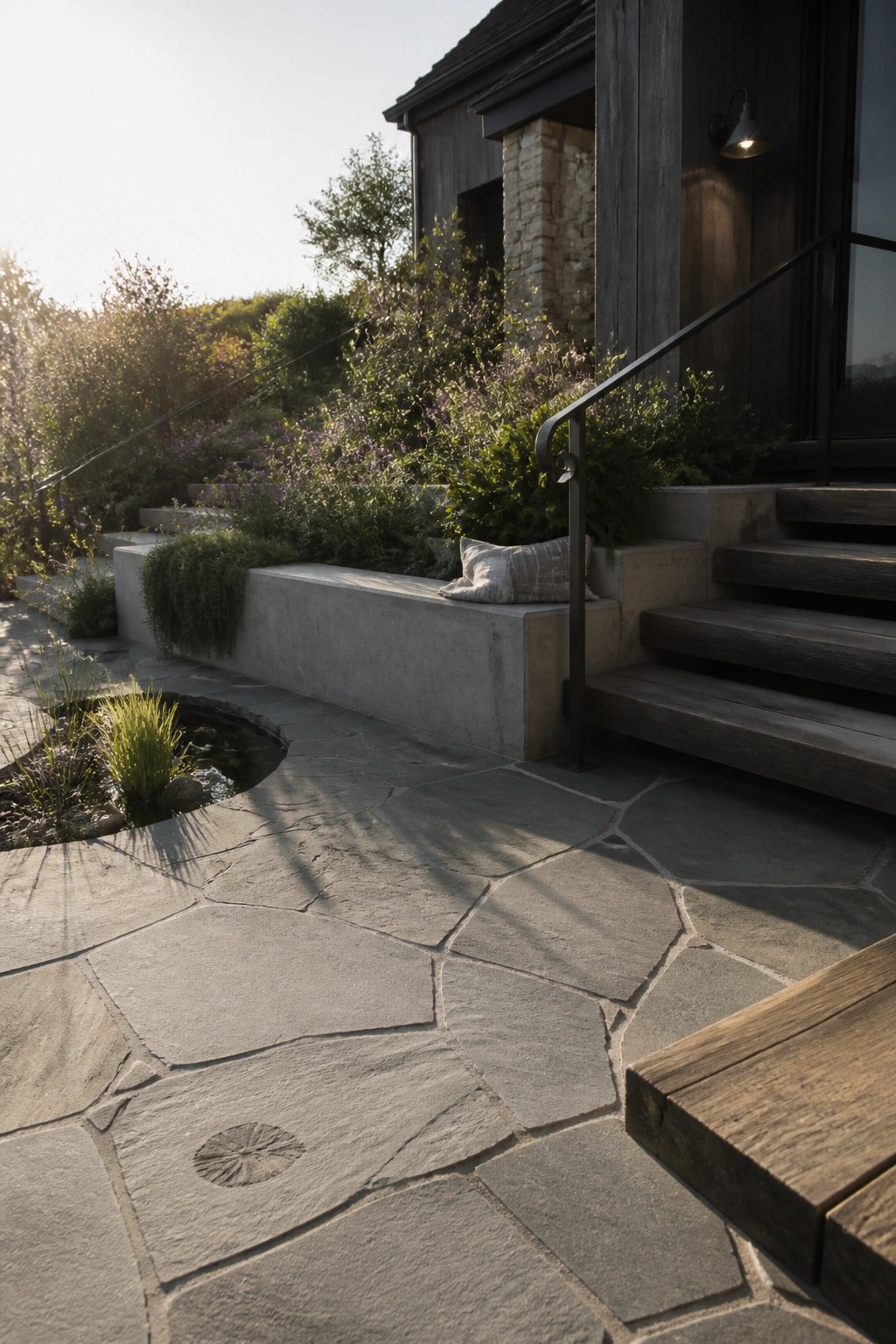
Large irregular stone pavers give an entry a grounded feel without looking overly designed. They work especially well when the path needs to connect the house to the surrounding landscape in a simple way.
This approach suits homes with natural materials and varied plantings. Keep the stones fairly large so the surface stays easy to walk on and the overall look stays calm rather than busy.
Curved Stone Tile Driveways

Large dark stone tiles laid in a gentle curve give a driveway a cleaner, more finished look than the usual straight grid. The material feels substantial underfoot and holds up well to cars while still looking like part of the house rather than an afterthought. Many people like how the curve softens the approach without adding extra ornament.
This style works best on modern or contemporary homes where the architecture already has simple lines. Keep the joints tight and add a slim linear drain along the edge so water moves off the surface quickly. It suits homes with a bit of space in front since the curve needs room to read properly.
Pavers With Grass In The Joints
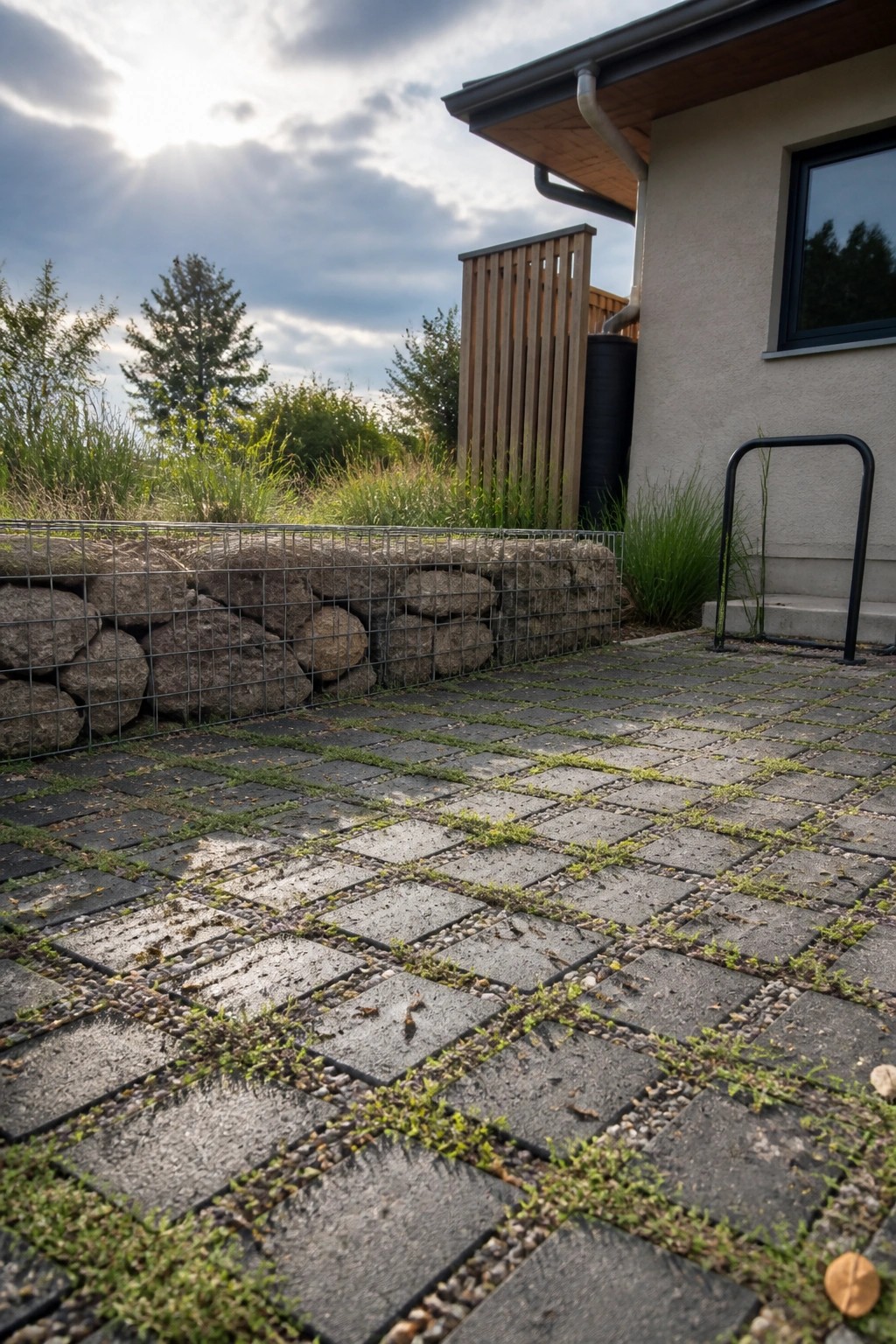
Many people like this style of paving because it softens the look of a large hard surface without losing its function as a parking or driveway area. The gaps let small plants take hold, which helps with drainage and keeps the space from feeling too stark next to the house.
It works best on homes where the driveway sits close to garden beds or natural planting. Just make sure the base stays stable and the gaps are wide enough for whatever you want to grow there. Avoid it if you need a completely smooth surface for heavy vehicles or snow clearing.
Herringbone Tiles For Driveways
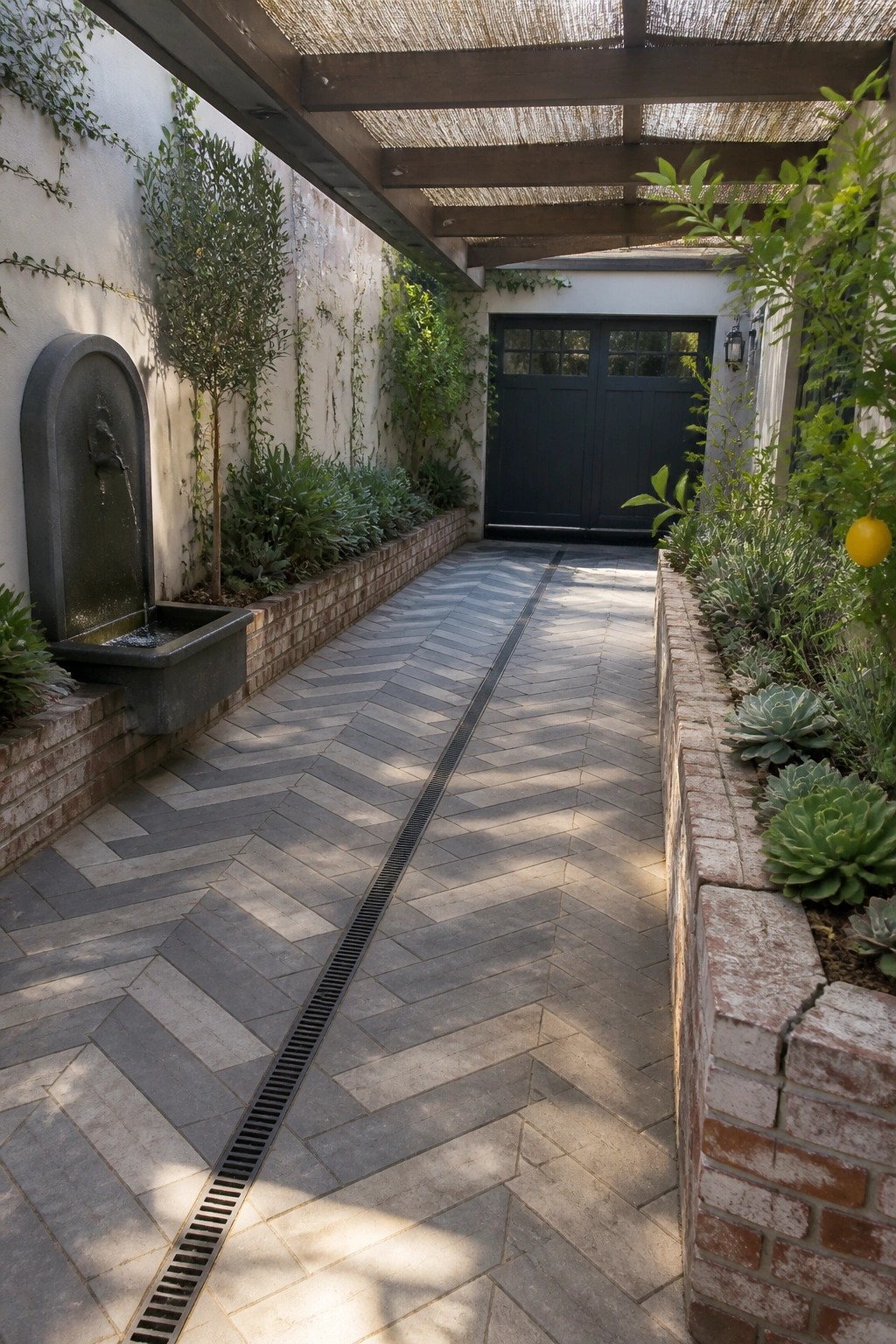
Herringbone paving gives a driveway a bit more character than plain concrete or straight runs of tile. The pattern breaks up the length and makes the surface feel more finished without adding extra colors or materials.
It suits homes with narrow side drives or visible parking areas where you want something practical but still neat. Use a simple color in the pavers and keep the edging clean so the pattern stays easy to look at over time.
Curved Concrete Paths With Gravel Borders
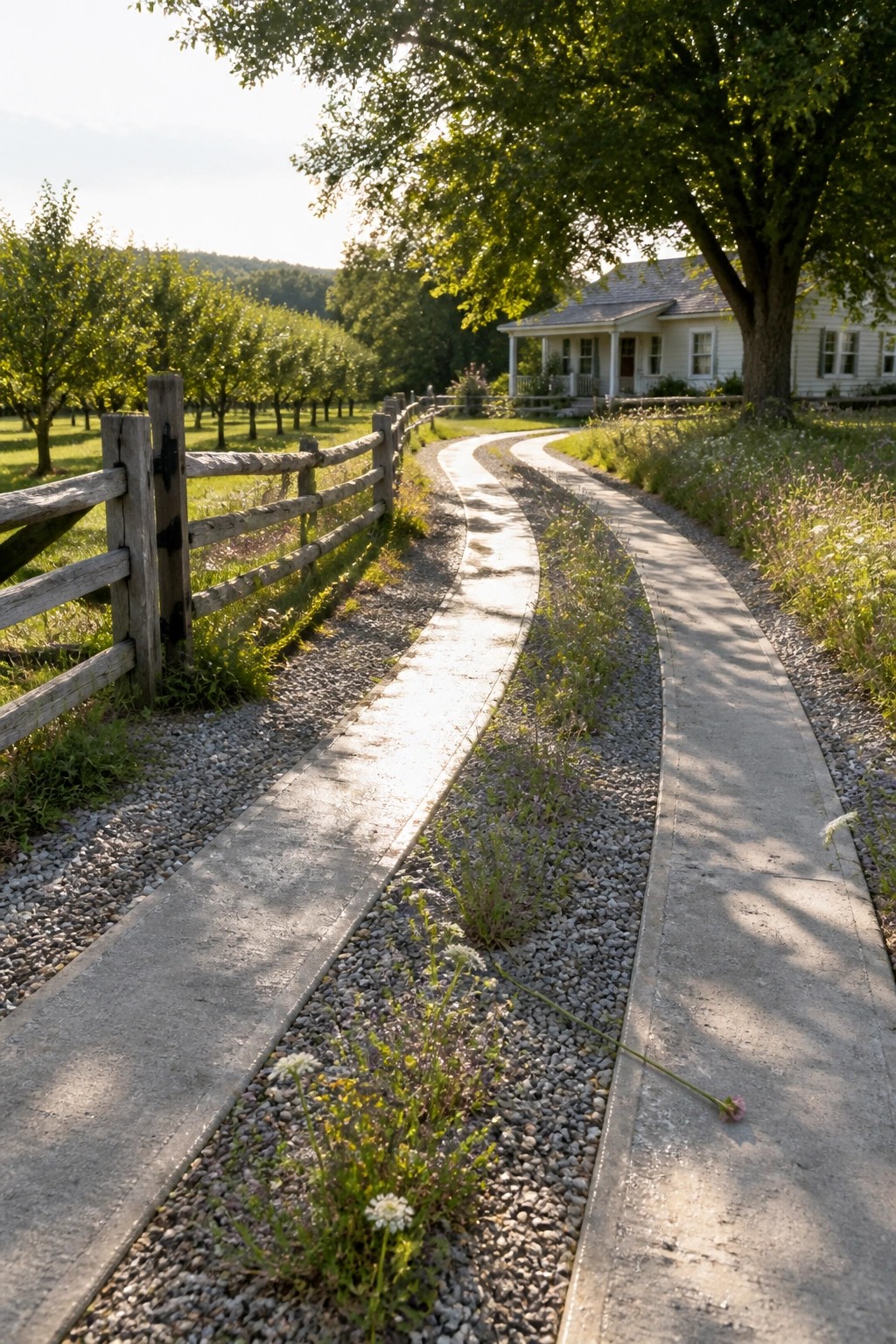
A gentle curve in a concrete path keeps the walk from feeling too rigid. It lets the path follow the natural slope of the land and gives the edges room to blend with grass and low plants instead of cutting a hard line.
Gravel along both sides helps with drainage and softens the look even more. This setup works best on larger lots or homes with open yards where a straight formal walkway would feel out of place.
Speckled Terrazzo Tiles For Entry Paving

These tiles give a driveway or front entry a clean updated look without feeling overly polished. The speckled pattern hides dirt and wear better than solid colors, and the large format keeps the surface from looking too busy next to stone walls.
They work especially well on homes with light masonry or concrete siding because the neutral tones tie the hardscape to the building. Just make sure the base is well compacted so the tiles stay level over time in high traffic spots.
Stone Pavers for the Driveway

Large stone pavers work well on driveways because they feel solid underfoot and hold up to daily use. They also tie the parking area into the rest of the house when the same stone shows up on steps or walls.
This choice fits homes with natural materials and sloped lots. Keep the pavers thick, space the joints evenly, and fill them with a stable material so the surface stays level over time.
Frequently Asked Questions
Q: Will the thinner trendy tiles hold up under daily car traffic?
A: Pick thicker options if you park heavy vehicles often. Standard residential tiles measure at least two inches deep. That thickness handles most family cars just fine.
Q: What happens if oil leaks onto the tiles over time?
A: Blot fresh spills right away with an absorbent cloth. Then scrub the spot with a mild detergent and water. Most contemporary tiles resist staining once sealed properly.
Q: Can I combine two different tile patterns in my parking spot?
A: Try a border of one style around a main field of another. Keep the colors close so the change feels natural.
