


When I look at homes from the street, the parking surface often shapes the first impression more than the front door itself.
Picking tiles that handle cars and weather without showing every mark has always felt like a practical choice rather than a decorative one.
Details matter here.
I have seen driveways that quietly tie the facade together by repeating tones already present in the siding or roofline.
Testing a small section in place before ordering the rest usually reveals whether the material will read right from the curb once it is down.
Large Format Tiles For Driveways

Large rectangular tiles give a driveway a cleaner, more structured look than standard concrete or asphalt. The scale keeps the surface from feeling busy, and the staggered layout adds just enough movement without overcomplicating things.
This works best on homes with simple architecture where you want the parking area to feel like part of the landscape instead of a separate slab. Keep the joints narrow and let a little ground cover grow between them for a softer edge.
Herringbone Brick Driveways

Brick set in a herringbone pattern gives a driveway more texture without looking fussy. The angled layout breaks up the surface so it does not feel like one flat slab, and the bricks hold together better under daily use.
This approach suits smaller front yards or older homes where a simple asphalt strip would look too plain. Keep the border simple, like a low stone edge, so the pattern stays the main focus.
Large Neutral Pavers For The Driveway

Large neutral pavers give a driveway a finished look that feels connected to the house instead of just an afterthought. The simple color and scale keep the surface from competing with the architecture while still adding texture and warmth underfoot.
They work best on homes with stucco or light masonry where the tones can echo the walls. Stick with a matte finish and wider grout lines if the area gets heavy use so it stays practical without looking too polished.
Hexagonal Pavers for Entry Paths
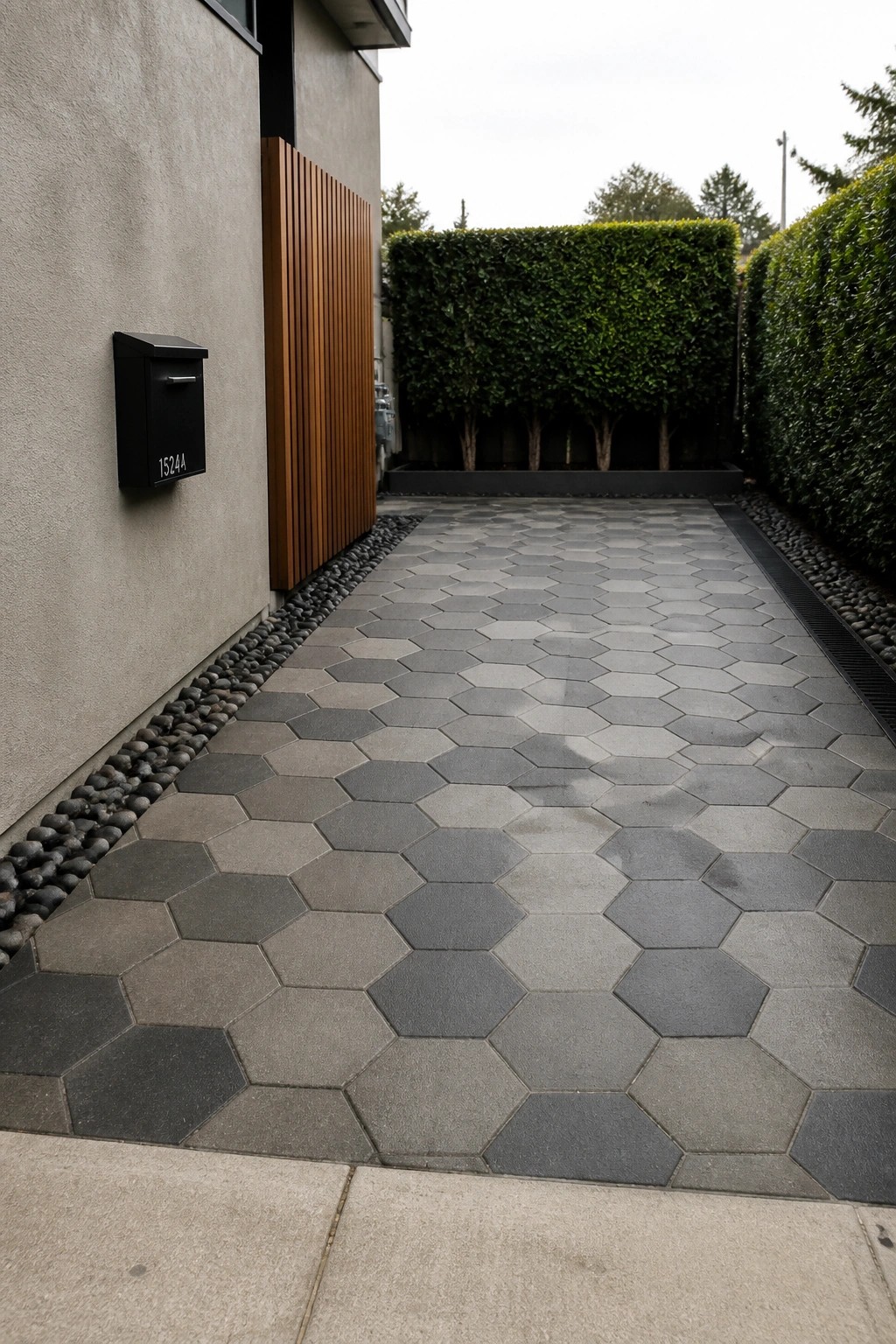
Hexagonal tiles give an entry path a neat, structured look without feeling too formal. The repeating shape handles curves and long runs well, and it stands up to regular foot traffic and light vehicle use better than smaller units.
This works best on homes with clean wall surfaces and simple landscaping. Keep the gravel border narrow so it stays easy to sweep and does not spread onto the tiles over time.
Light Wood Decking Near The Garage
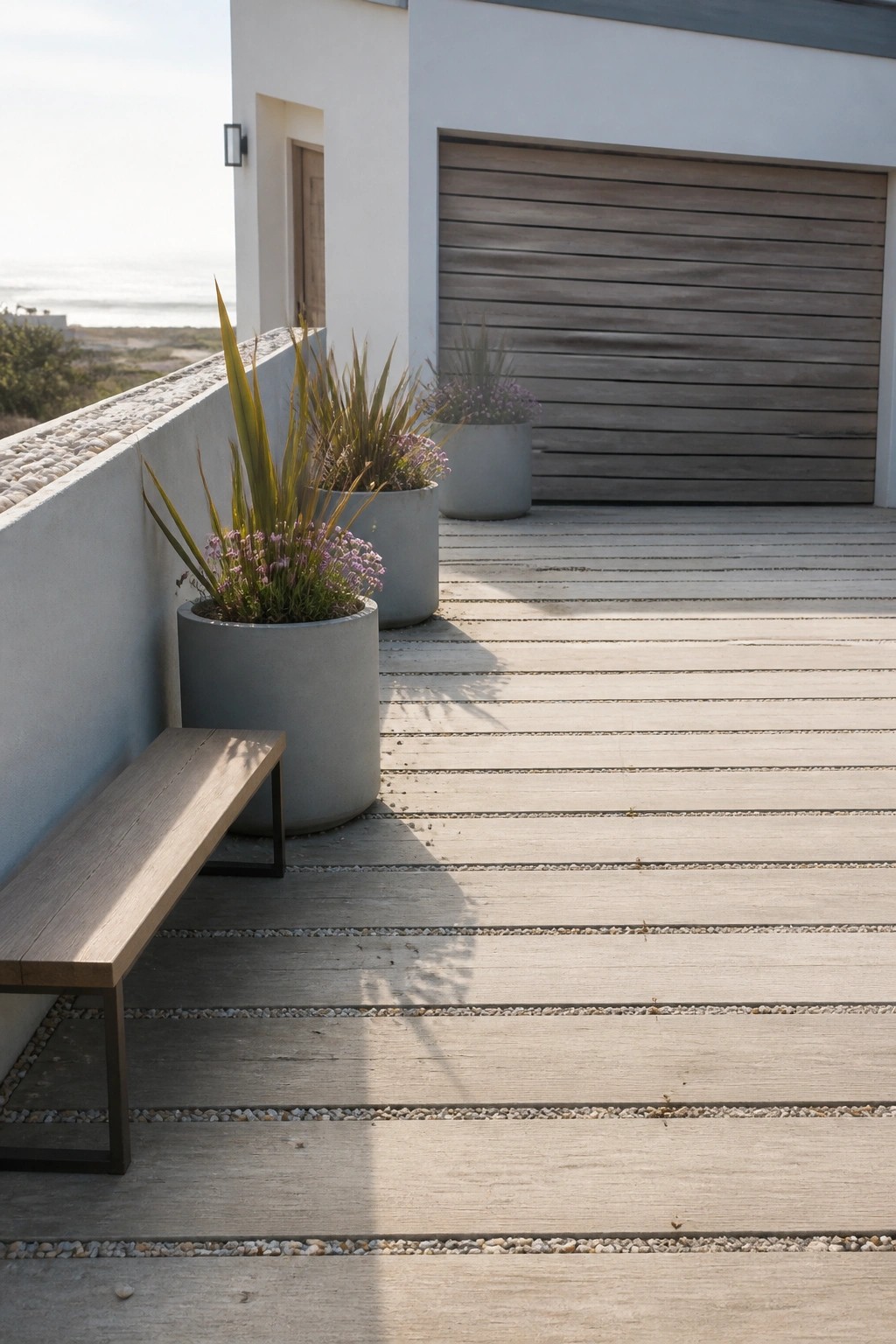
Light wood decking gives the space right outside a garage a cleaner and more open feel. It avoids the heavy look of concrete and lets the area read as part of the home rather than just a parking spot.
This approach works well on homes where the driveway or garage entry sits close to living areas. Treated wood holds up better if cars will drive over it, and it pairs easily with simple planters or benches to keep the look calm.
Patterned Tiles For The Driveway

A repeating pattern on driveway tiles can turn a plain stretch of pavement into something that actually adds to the look of the house. The geometric design here keeps the surface interesting without feeling busy, and it works especially well with the brick details around the entry.
This approach suits homes that already have some texture on the exterior, like brick or stone. It is worth testing a small section first, since the pattern needs to read clearly from the street and hold up to daily use.
Large Stone Tiles For Driveway Surfaces
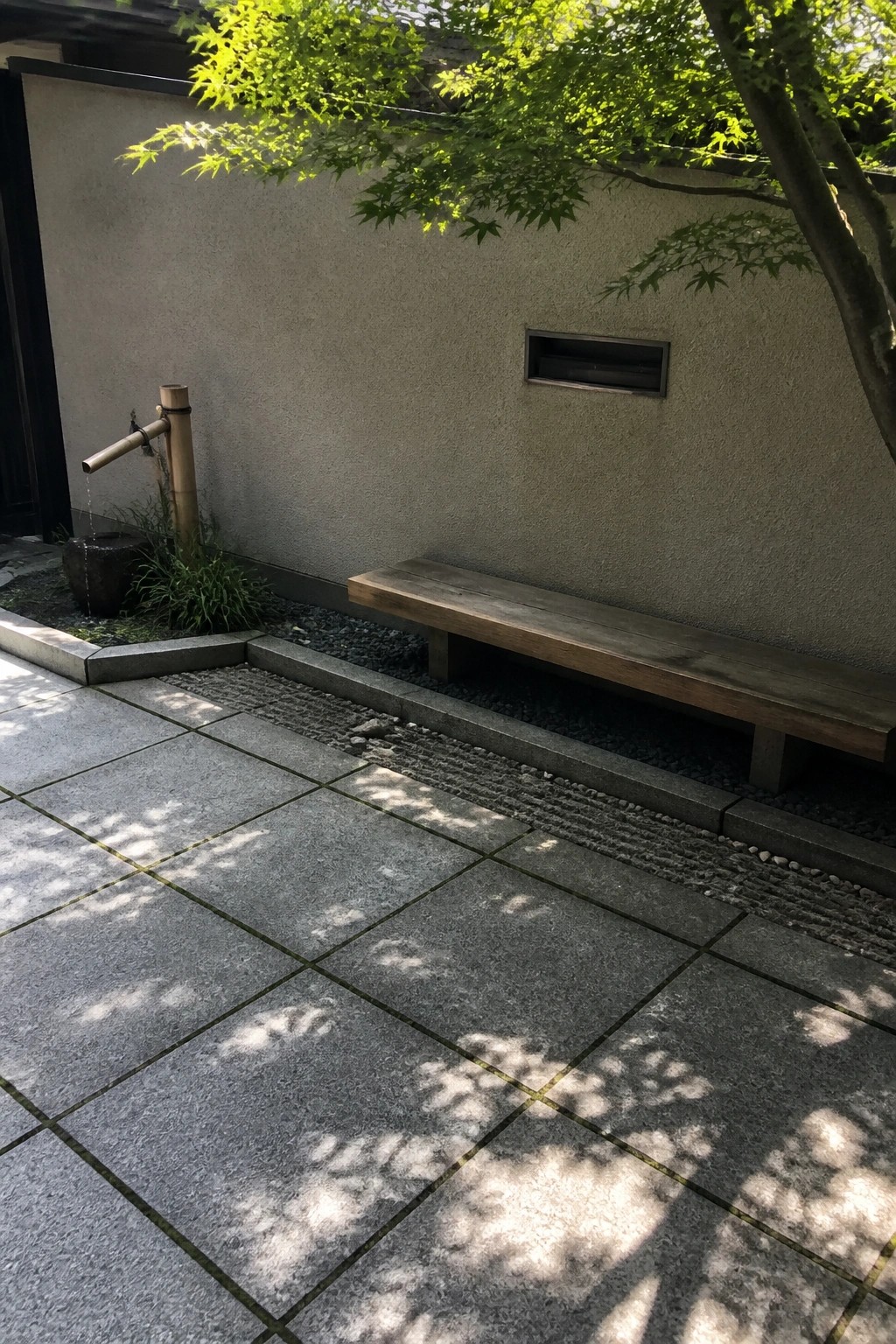
Large stone tiles give a driveway a solid, finished look that holds up better than gravel or concrete alone. They cut down on loose material tracking into the garage and create a surface that feels intentional rather than just functional.
This works well on homes where the driveway sits close to the main entrance or garden areas. Keep the tiles big and the joints tight so the whole thing stays easy to sweep and needs little upkeep over the years.
Stone Pavers With Grass In The Joints
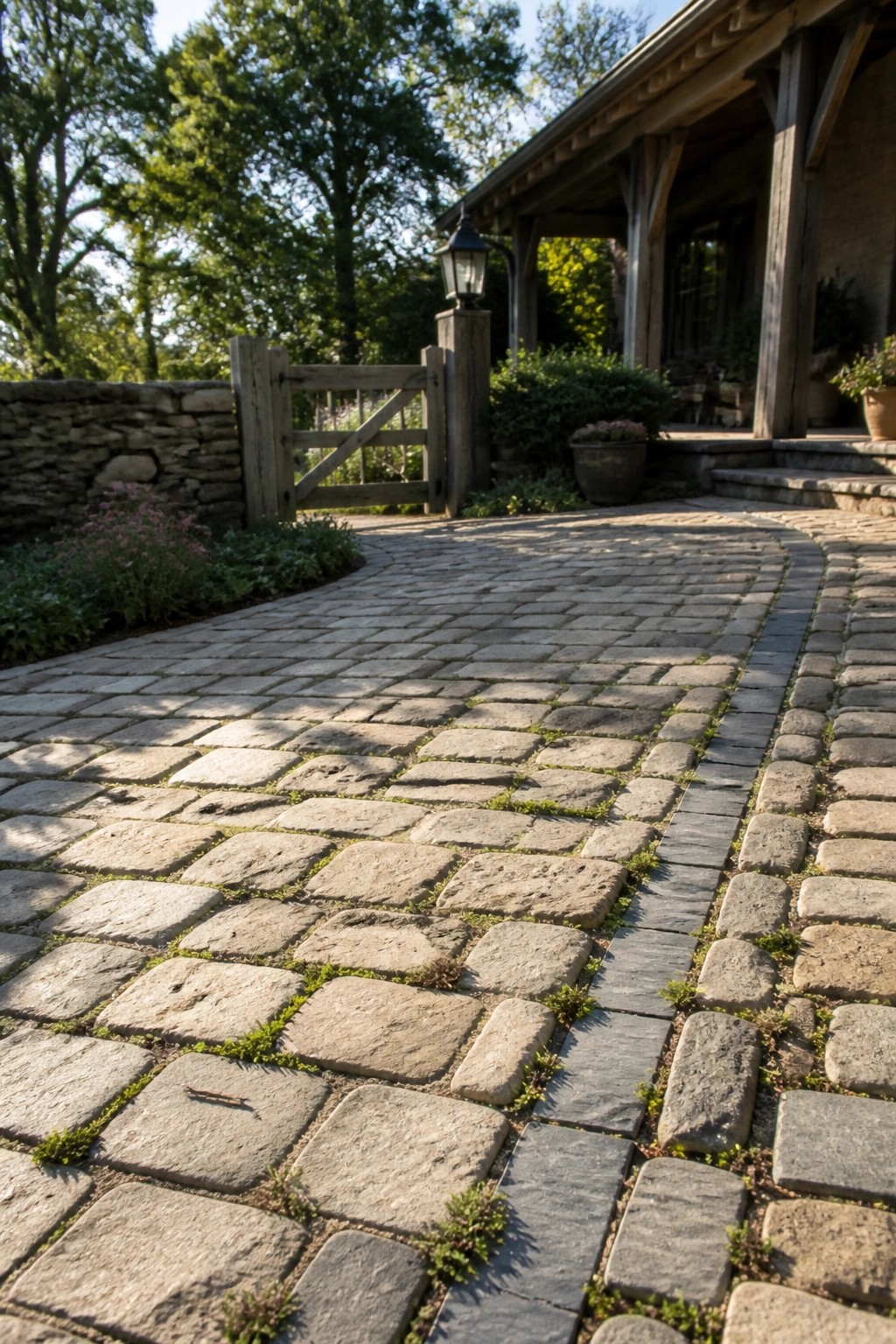
Stone pavers with grass growing in the spaces between them give a driveway or path a softer edge than solid pavement. The look blends the hard surface into the surrounding planting without needing extra borders or edging.
This approach works well on homes where the drive curves or sits close to garden beds. It suits older houses or those with natural stone walls, but it does need occasional weeding to stay tidy.
Mix Paver Shapes For A Casual Entry Path

Mixing round and rectangular pavers in gravel creates a path that feels relaxed without looking messy. The round stones break up the straight lines and keep the walkway from feeling too rigid or formal, which works especially well with simple modern homes.
This layout suits homes where the front yard already has grasses and rocks. Space the pavers far enough apart for easy walking but close enough to feel connected. Let the gravel show through and keep the edges soft with planting so the path blends into the rest of the yard.
Create Interest With a Patterned Driveway
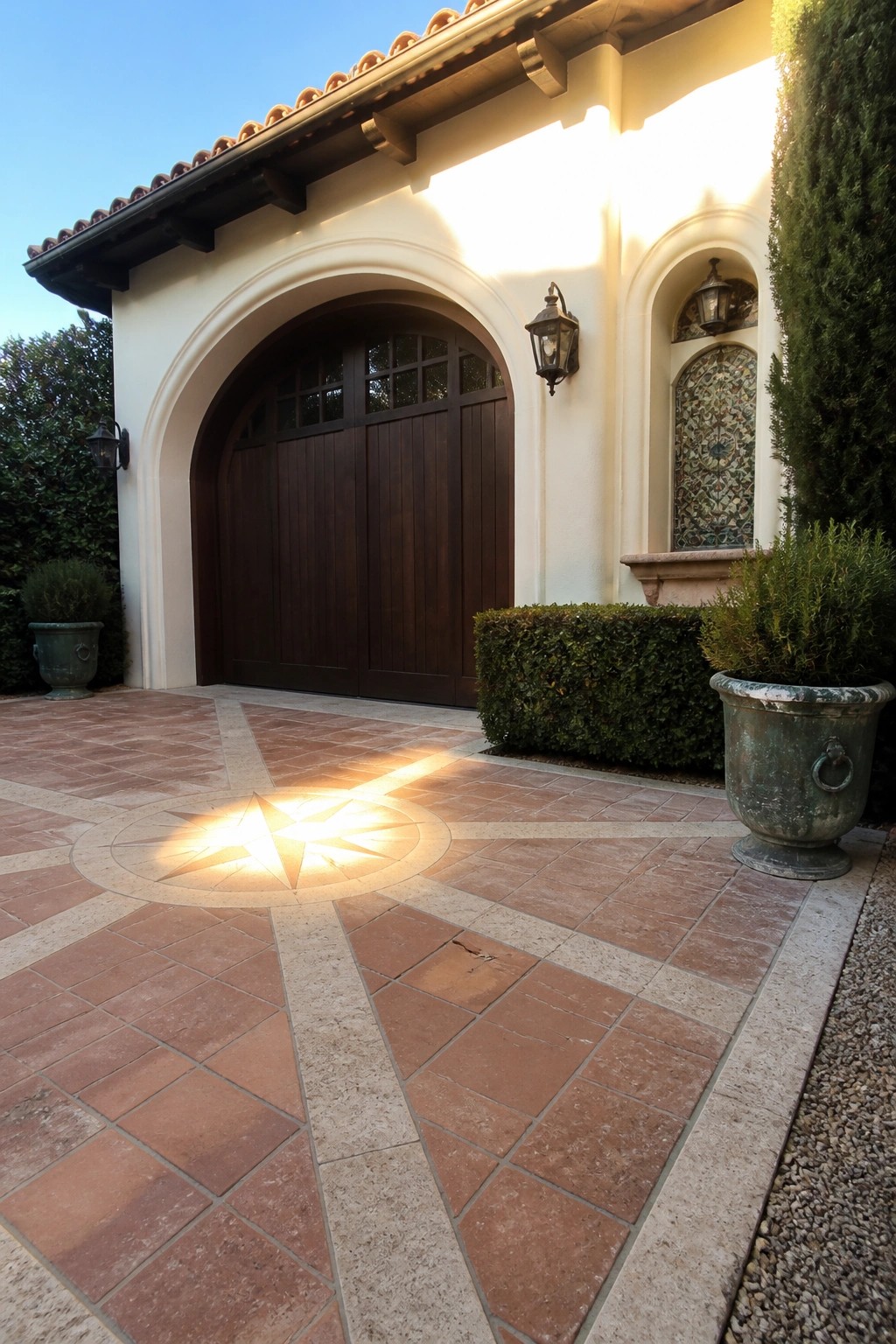
A simple motif set into the driveway tiles can lift the whole front of a house without any big changes. It turns a basic parking spot into something that feels more finished and welcoming right at the curb.
This works best on homes with a fairly open entry area where the pattern can be seen from the street. Keep the design modest in size and color so it adds focus without fighting the rest of the facade or the garage doors.
Concrete Slabs With Gravel In Between
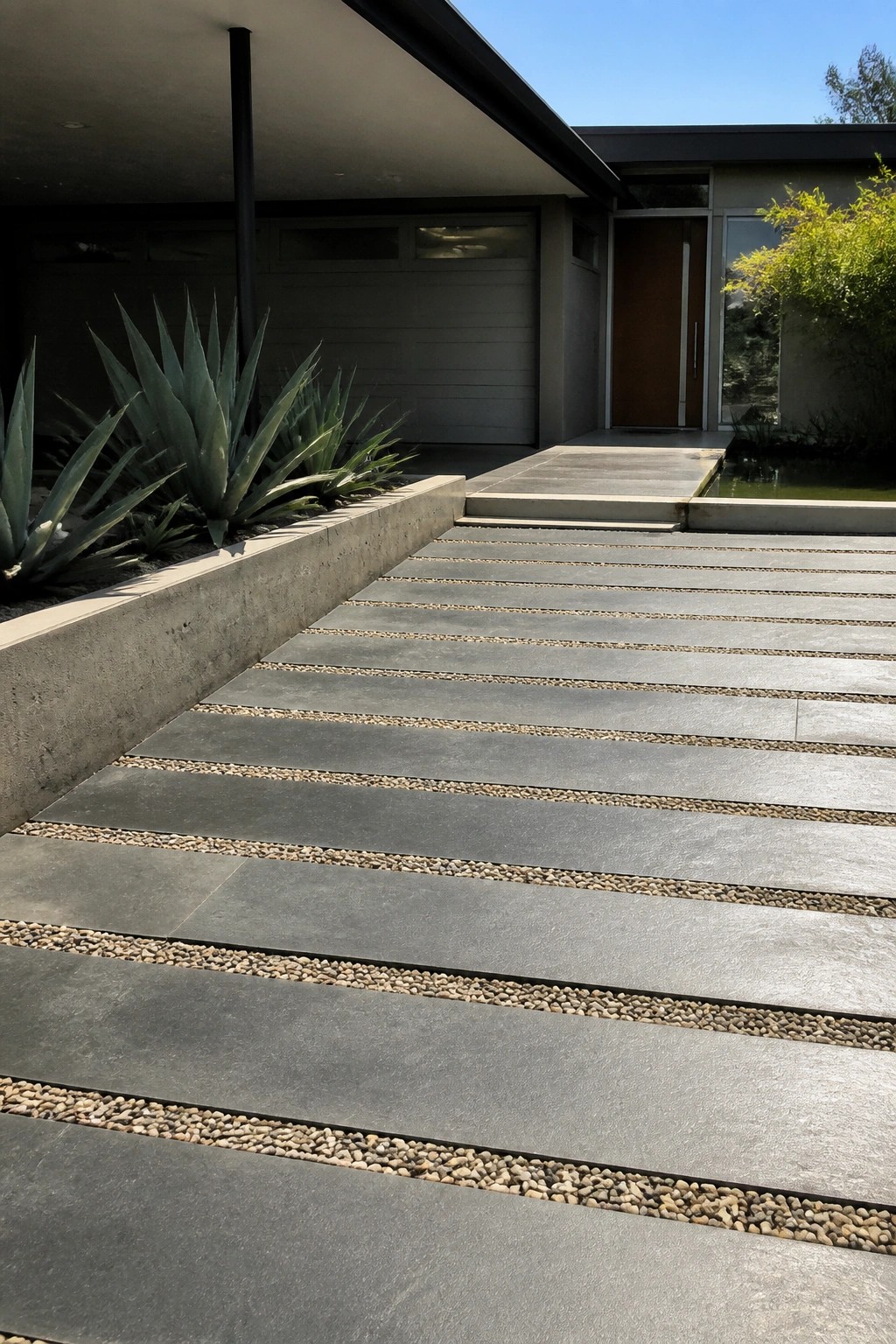
Large concrete slabs laid with narrow gravel strips between them create a clean driveway that still feels connected to the ground. The wide tiles give a solid place to drive and walk while the gravel lines add texture and help water drain away instead of pooling.
This approach works best on modern homes where the driveway sits right next to planting beds. Use thick enough pavers to handle cars and keep the gravel low so it does not shift onto the walking surface.
Patterned Tiles on Entry Paths
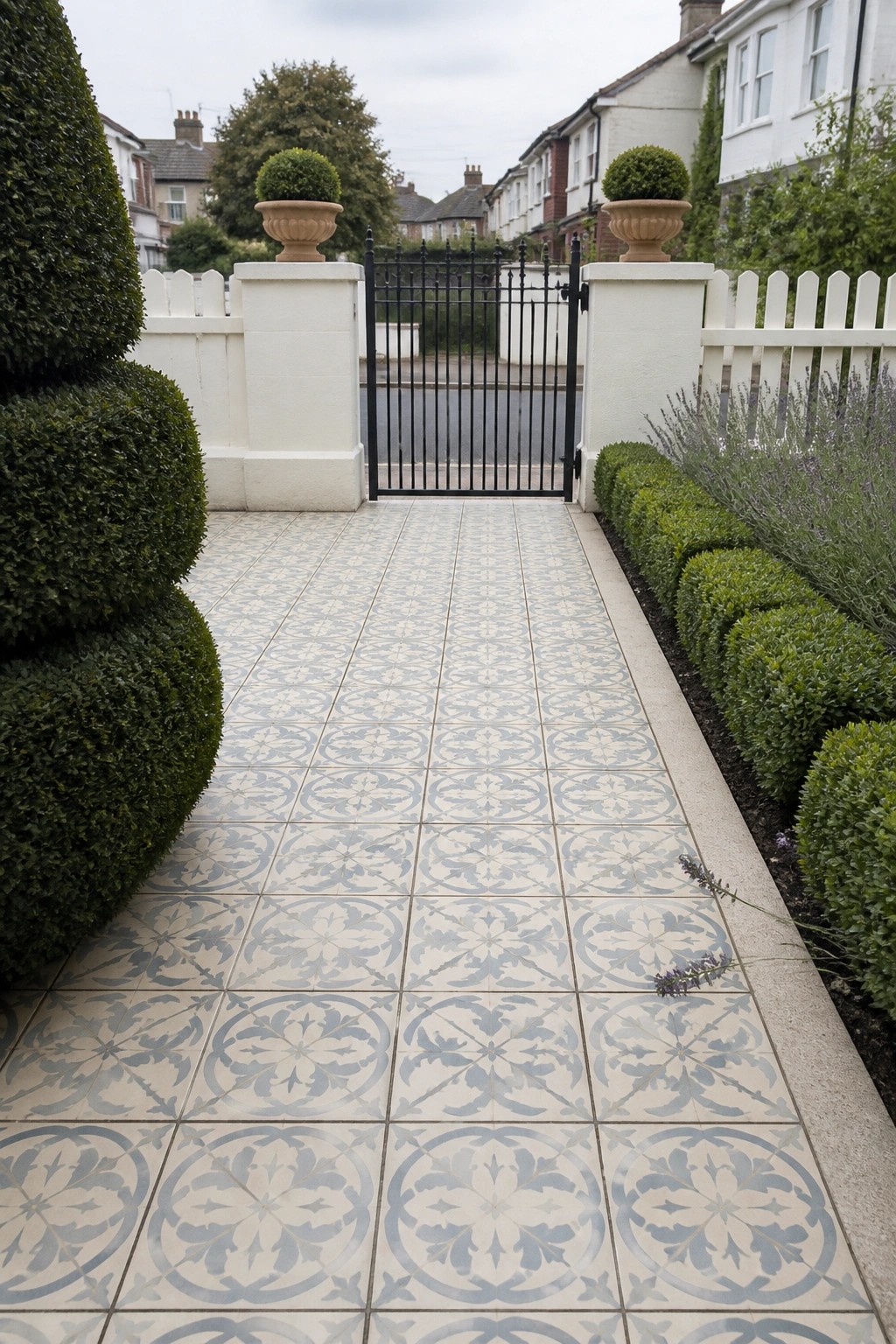
Patterned tiles give a front walkway a bit more character than plain concrete or stone. The repeating design draws the eye forward and makes the path feel like part of the garden rather than just a route to the gate.
This approach suits older homes or any property with a straight, narrow approach. Keep the tiles light in color so they stay bright, and edge the path with low shrubs so the pattern stays the main feature.
Large Stone Pavers For The Front Path
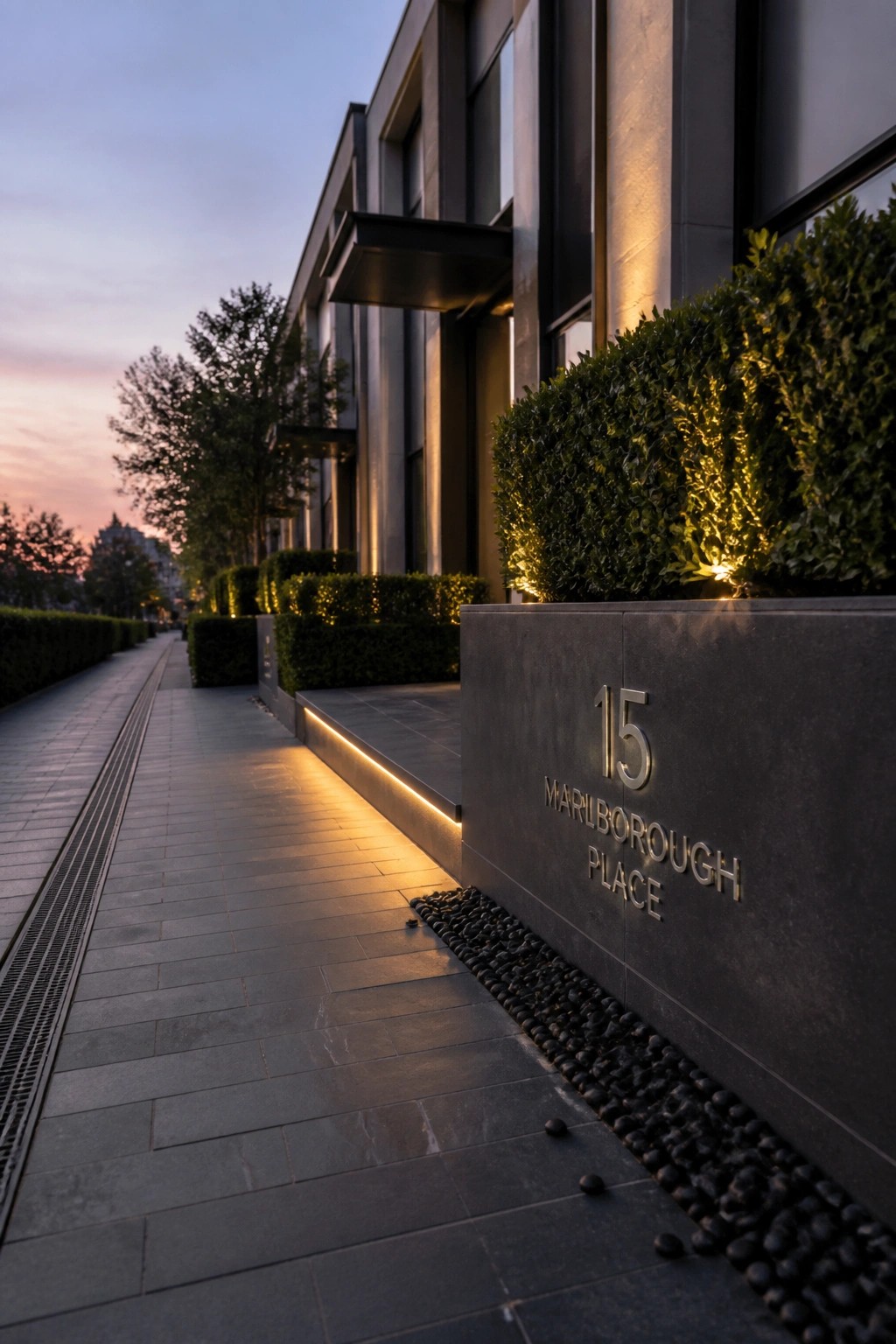
Large stone pavers give an entry a solid, finished look that stands out right away. They turn a simple walkway into something that feels more intentional and helps the whole front hold together without extra decoration.
These tiles work best on modern homes or any place where you want a clean surface that pairs well with low walls and plantings. Keep the scale in mind so the pavers do not overwhelm a smaller house or look lost on a bigger one.
Textured Pavers For The Driveway Path
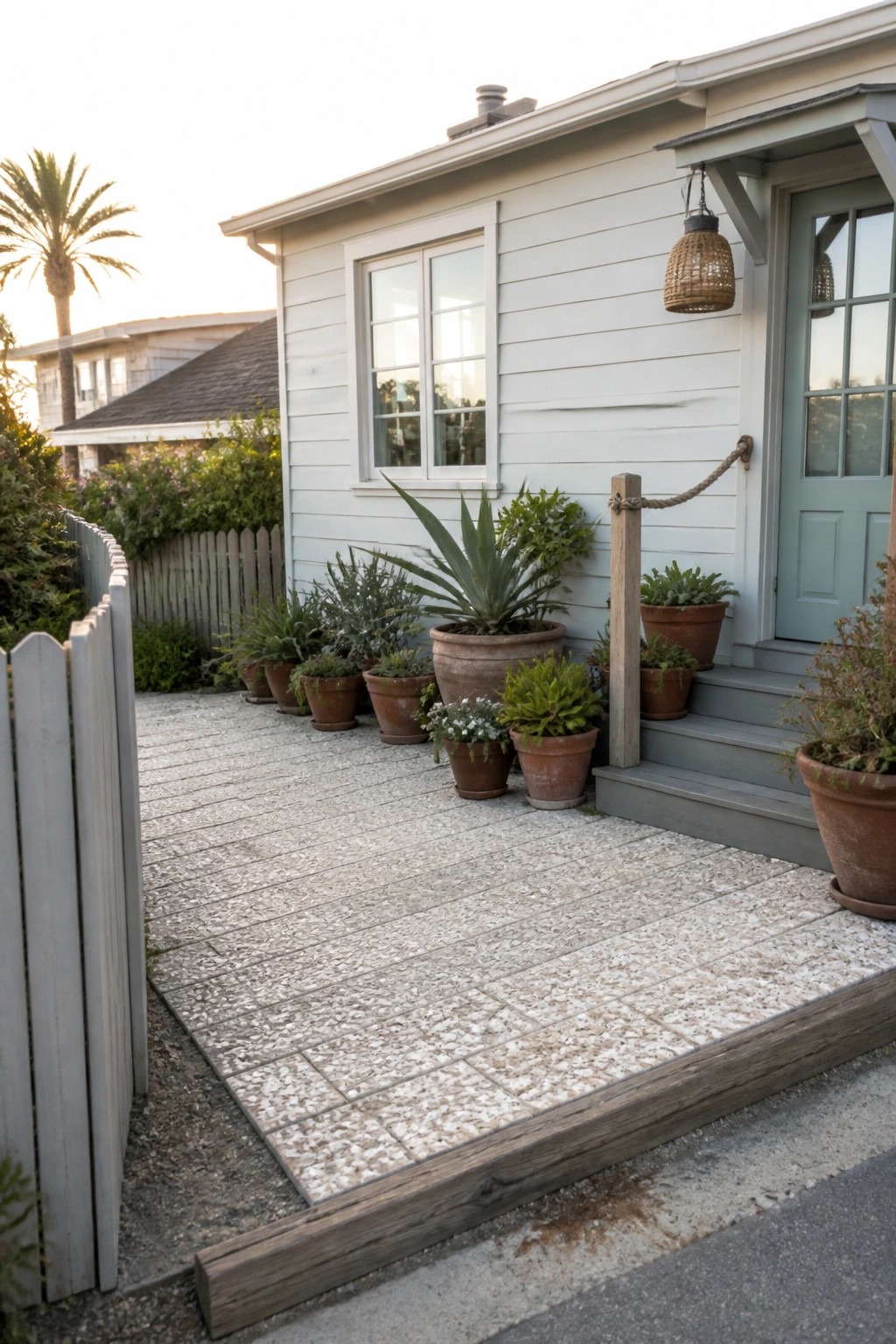
Textured pavers give a driveway or entry area more interest than plain concrete while still handling regular car traffic. The slight variation in the surface keeps the look from feeling too flat and helps the path blend with the rest of the yard.
This approach works well on smaller front areas or side parking spots. Keep the edges simple with wood or gravel so the tiles stay contained and the plants along the sides can soften the whole view.
Terrazzo Tiles For A Parking Court

Terrazzo works well in a parking area because it handles cars and weather without looking plain. The speckled pattern hides dirt and tire marks better than solid colors, and it gives the space a finished look instead of just a utility surface.
This works best on homes where the garage or carport sits right next to living areas. Keep the tiles large so there are fewer grout lines to maintain, and make sure the base is properly sealed against moisture. It suits modern or minimalist houses that already use clean lines and simple materials.
Checkerboard Paths With Grass Squares
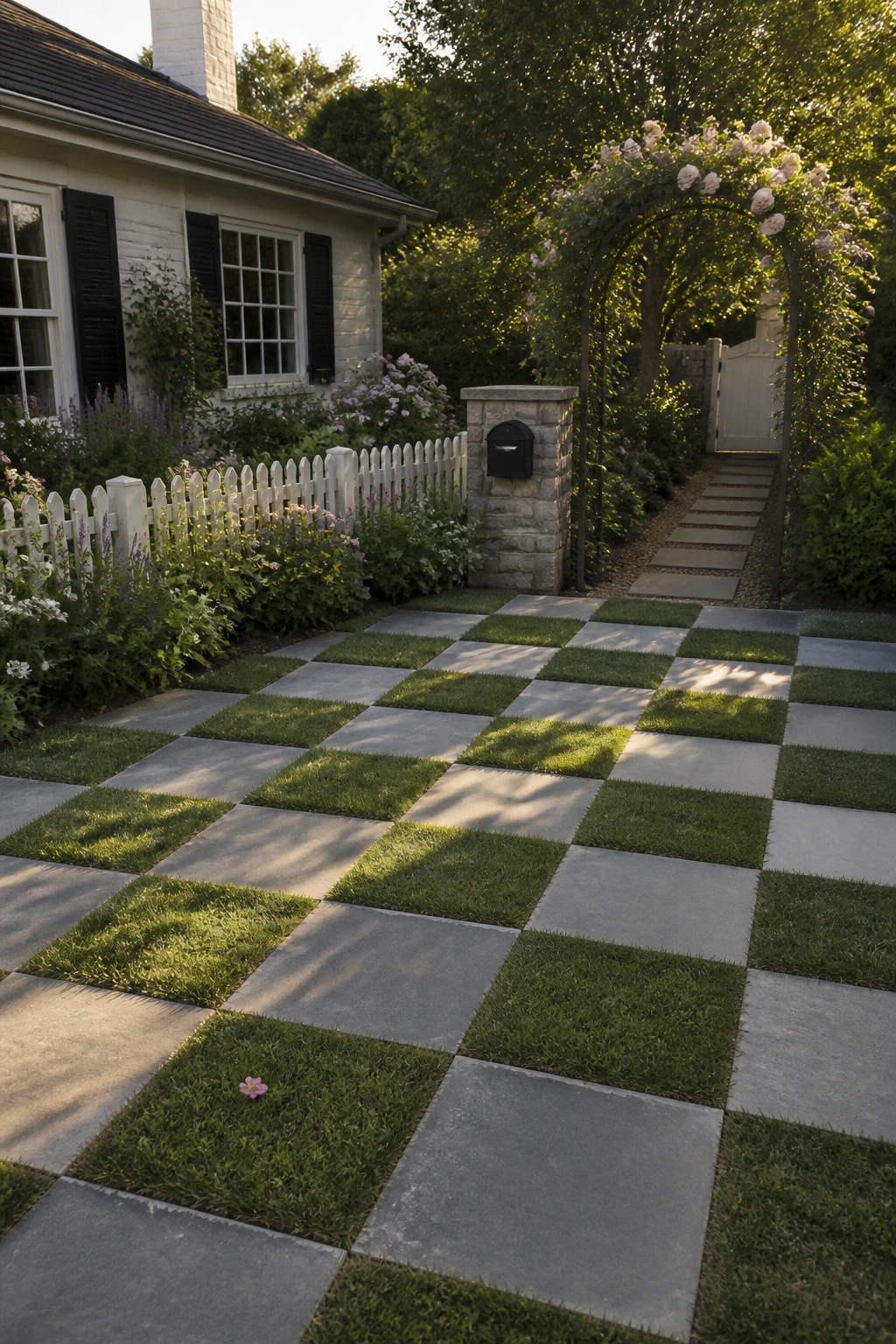
This pattern works well because it turns a plain driveway or path into something more interesting without covering everything in solid pavement. The alternating squares let some greenery stay while still giving tires a firm place to roll.
It suits homes with a bit of room in front and a more traditional or cottage style. Make sure the paver edges stay level with the grass so mowing stays simple and the pattern stays crisp over time.
Large Concrete Pavers With Metal Strips

Large concrete pavers laid in a grid with thin metal strips between them give a driveway a simple, modern finish. The scale of the tiles cuts down on visible seams and makes the surface feel more open and put together than standard poured concrete or small pavers.
This approach works best on homes with clean lines and darker materials. Use pavers thick enough for cars, keep the metal strips narrow so they do not catch on tires, and choose a finish that will not show tire marks too quickly.
Herringbone Brick Driveway Pavers

Herringbone brick pavers give a driveway a structured look that feels more finished than plain concrete or asphalt. The pattern holds up well under regular use and adds subtle texture that shows off the material without needing extra decoration.
This works best on homes with stone or masonry exteriors where the warm brick tones can tie into the architecture. Pair it with a simple stone border to keep the edges clean and help the whole entrance feel more cohesive.
Blending Pavers With Narrow Planting Strips
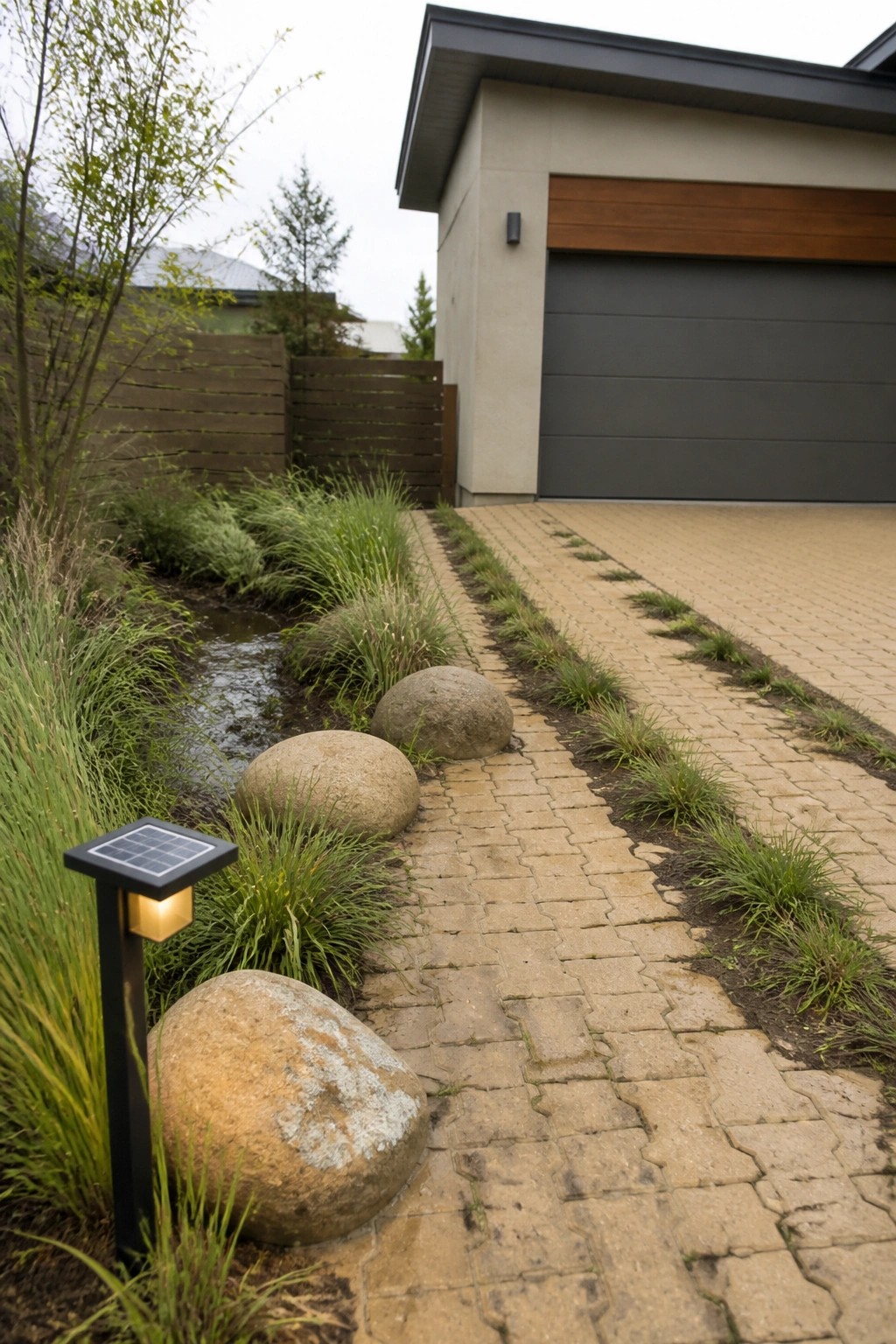
A narrow strip of grass or low plants along the edge of driveway pavers helps break up all that hard surface. It gives the whole approach a softer look without losing the clean lines of the paving. The rocks tucked into the bed next to it add a bit of weight and keep the planting from feeling too loose.
This setup works best on homes where the driveway sits close to garden beds. Keep the planted strip fairly narrow so it does not interfere with tires or snow removal. It suits modern houses that already use simple materials and need one more layer to feel finished.
Frequently Asked Questions
Q: How do I pick tiles that won’t crack under car weight? A: Go for thicker porcelain or concrete options made for driveways. They handle daily traffic without breaking apart or shifting over time. Check the thickness rating before you buy so you avoid thin styles that fail fast.
Q: Is it okay to mix different tile styles in one parking spot? A: Keep it to two similar textures from the same material family. This keeps the surface even and safe to walk on while still adding some visual interest. Avoid random combos that create uneven spots where water pools.
Q: How often should I seal the tiles after installing them? A: Apply a good sealant once a year if you live in a wet climate. It protects the color and stops stains from sinking in from oil or dirt. Reapply sooner if you notice fading or water no longer beads up on the surface.
Q: What if my parking area gets lots of shade? A: Choose lighter colored tiles to brighten the space and reduce moss growth. They also show less dirt between cleanings.
