

I have noticed that driveways and parking spots often end up as an afterthought even though they shape the first impression of the whole property.
Choosing a surface here means thinking about how it handles rain, oil spots, and regular car traffic without turning into a maintenance headache.
Texture can make all the difference here.
The right pattern or finish can tie the entry area to the rest of the exterior materials while still keeping the ground from feeling slick underfoot.
I usually like to lay out a couple of samples on site first so I can see how they look next to the actual house and garage doors before committing.
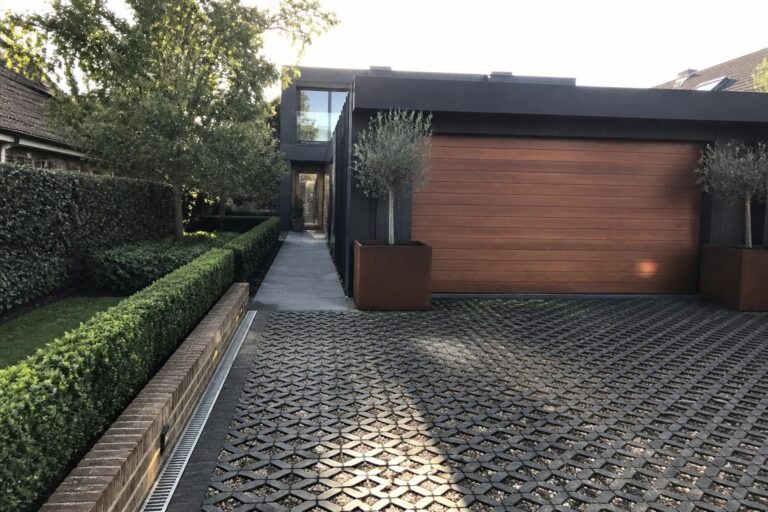
Gravel Filled Grid Tiles For Driveways

These grid tiles stand out because they give a driveway solid grip without looking overly industrial. The open pattern holds gravel in place so tires do not sink or slide, and water drains straight through instead of running off the edges.
They suit modern homes that already use clean lines and simple materials. Keep the base well compacted and choose a gravel color that matches the surrounding hardscape so the whole area feels intentional rather than patchy.
Herringbone Tiles For Driveways
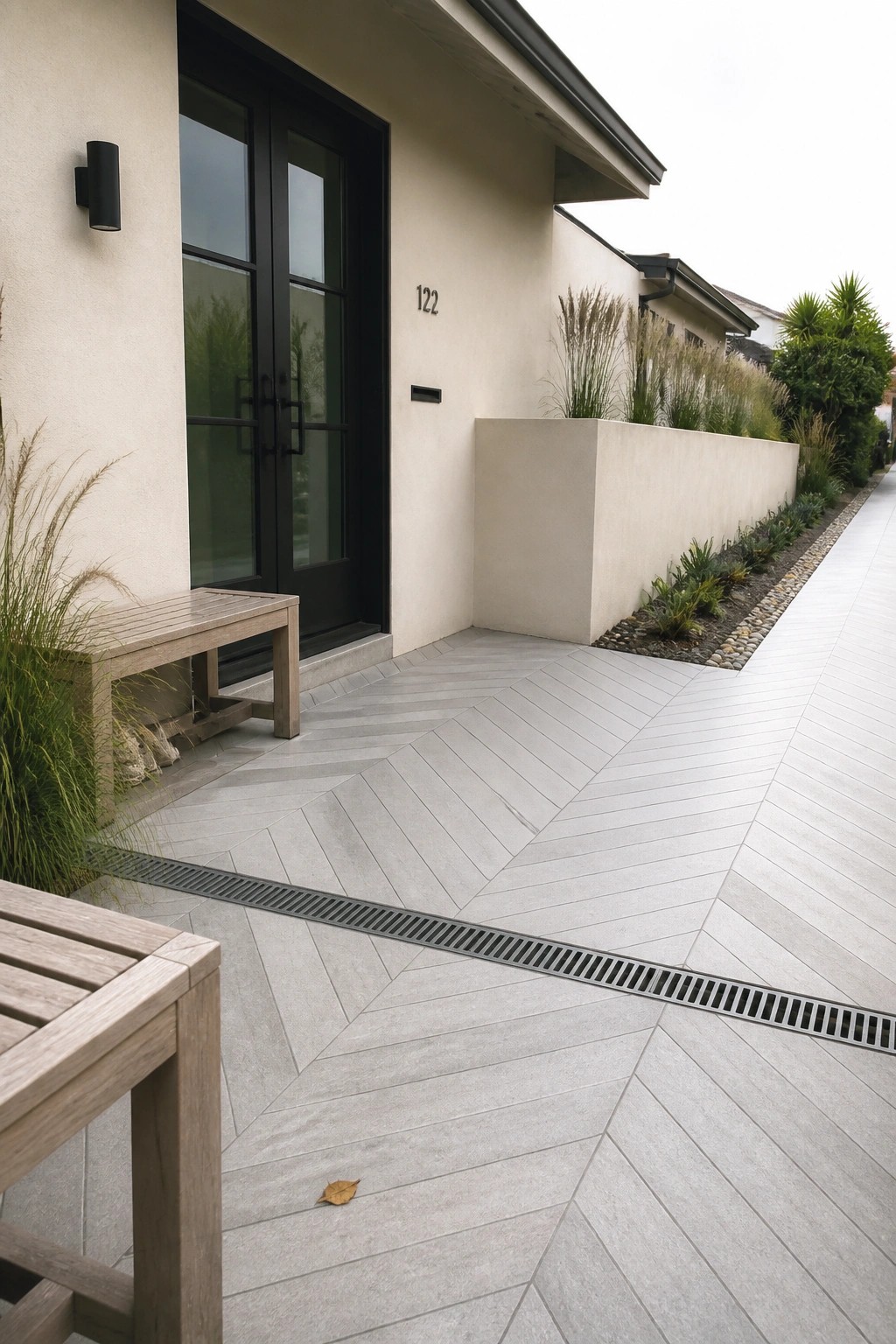
Herringbone tiles stand out on driveways because the angled layout adds texture without looking busy. The pattern also helps with grip when the surface gets wet, which matters on a surface that sees regular car traffic.
This approach suits homes with clean modern lines where a flat expanse of paving would feel too plain. Keep the tiles in a neutral tone so the pattern reads as quiet detail rather than a strong statement, and add a linear drain to manage runoff.
Textured Tiles For Better Driveway Grip

Ribbed concrete tiles give a driveway more traction than smooth surfaces, which helps in rain or when the ground is damp. The raised lines catch light and create a clear visual change from the smoother sections nearby.
This works best on modern homes where the entry area needs to feel deliberate rather than plain. Keep the pattern simple and make sure the tiles are thick enough for cars.
Pavers With Grass In The Joints

Large square pavers with grass running between them give a driveway a firmer surface while still letting some water soak through. The texture on the pavers helps with grip, especially on slopes or after rain, and the grass softens the look so the whole front doesn’t feel like one big slab of concrete.
This setup suits smaller lots or homes where the driveway sits right next to the lawn. Keep the base well compacted and choose pavers thick enough for car weight, or they can shift over time.
Brick Pavers For Driveways
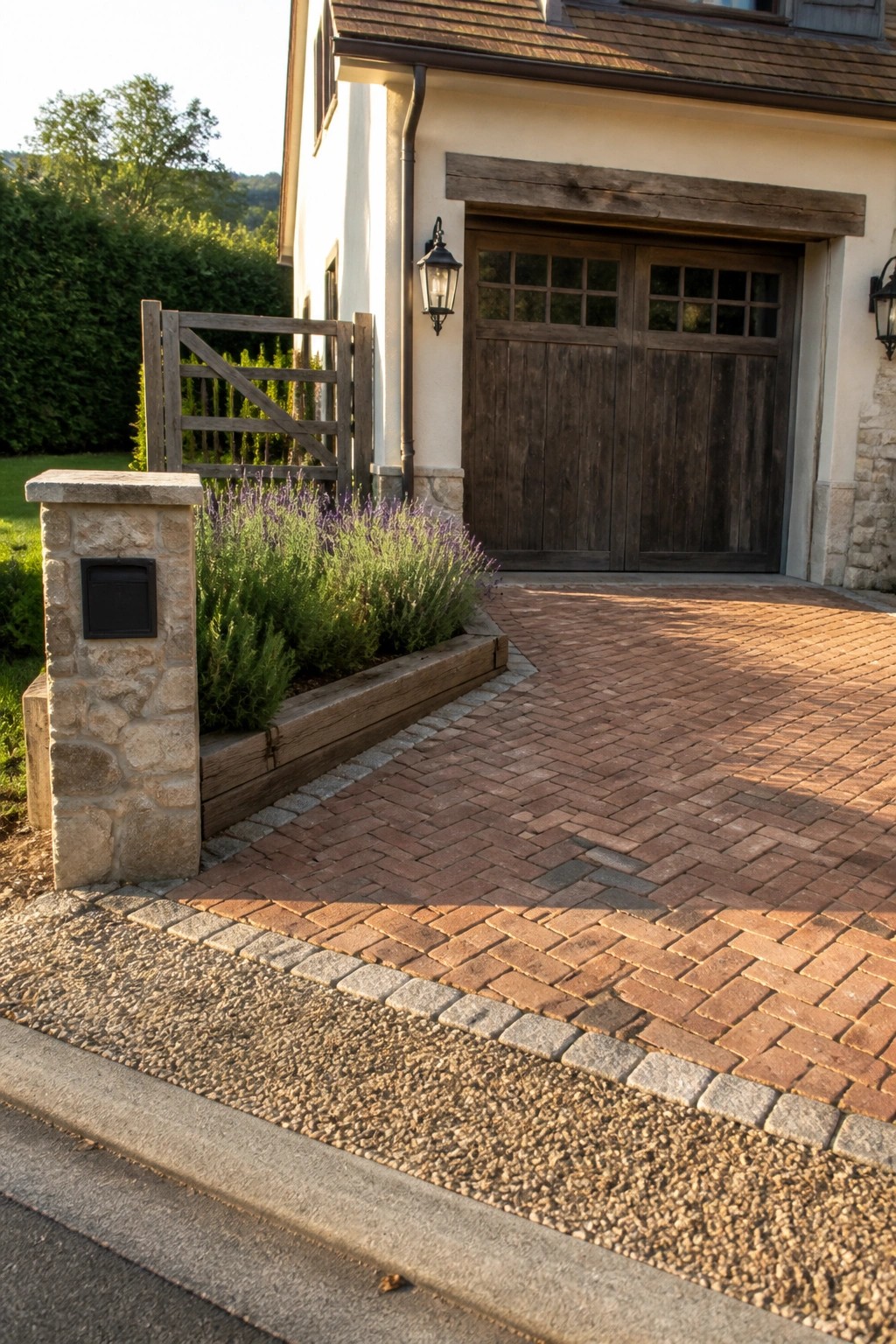
Brick pavers give a driveway real texture and decent grip without looking too slick or plain. The pattern breaks up the surface so it feels more interesting underfoot and under tires, and it handles wet weather better than smooth concrete in most cases.
They suit homes with stone or wood details and work especially well when the driveway edges into gravel or garden beds. Just plan for a solid base from the start so the bricks stay even after a few seasons of use.
Brick Pavers Add Grip To Entry Paths

Brick pavers give a walkway a steady surface that holds up well over time. The slight texture helps feet stay planted even after rain, and the pattern breaks up what could otherwise feel like a flat stretch of ground.
This choice works best on homes with a simple or traditional look where you want something practical underfoot. Keep the layout straight and let the material do the work rather than adding extra patterns or borders.
Textured Concrete Pavers For Driveways

These ridged concrete tiles stand out in parking areas because the raised lines give tires extra grip without looking overly industrial. The pattern also helps water run off instead of sitting on the surface.
They work best on homes with clean modern lines or mixed materials like brick and metal. Lay them in large squares with grates between rows so drainage stays hidden but effective. Keep the layout simple and let the texture do the work.
Textured Pavers For Driveways
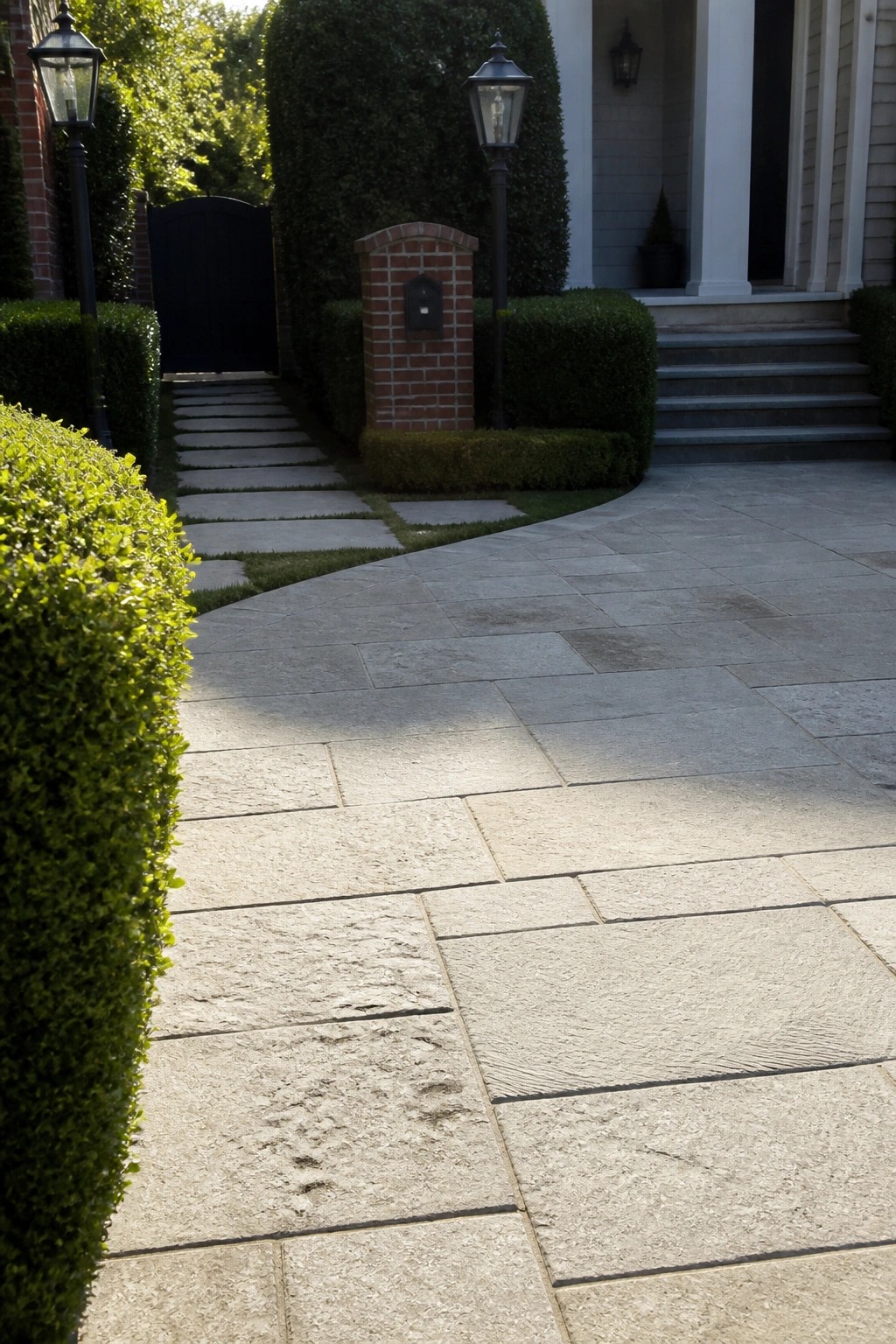
Stone pavers with a rough finish give a driveway more grip than smooth concrete or asphalt. The surface handles rain better and keeps the whole entry area from feeling too plain.
This approach works best on homes with traditional details where the driveway curves around planting. Lay the pavers on a compacted base and keep the joints tight so tires do not shift them over time.
Textured Stone Tiles For Driveways
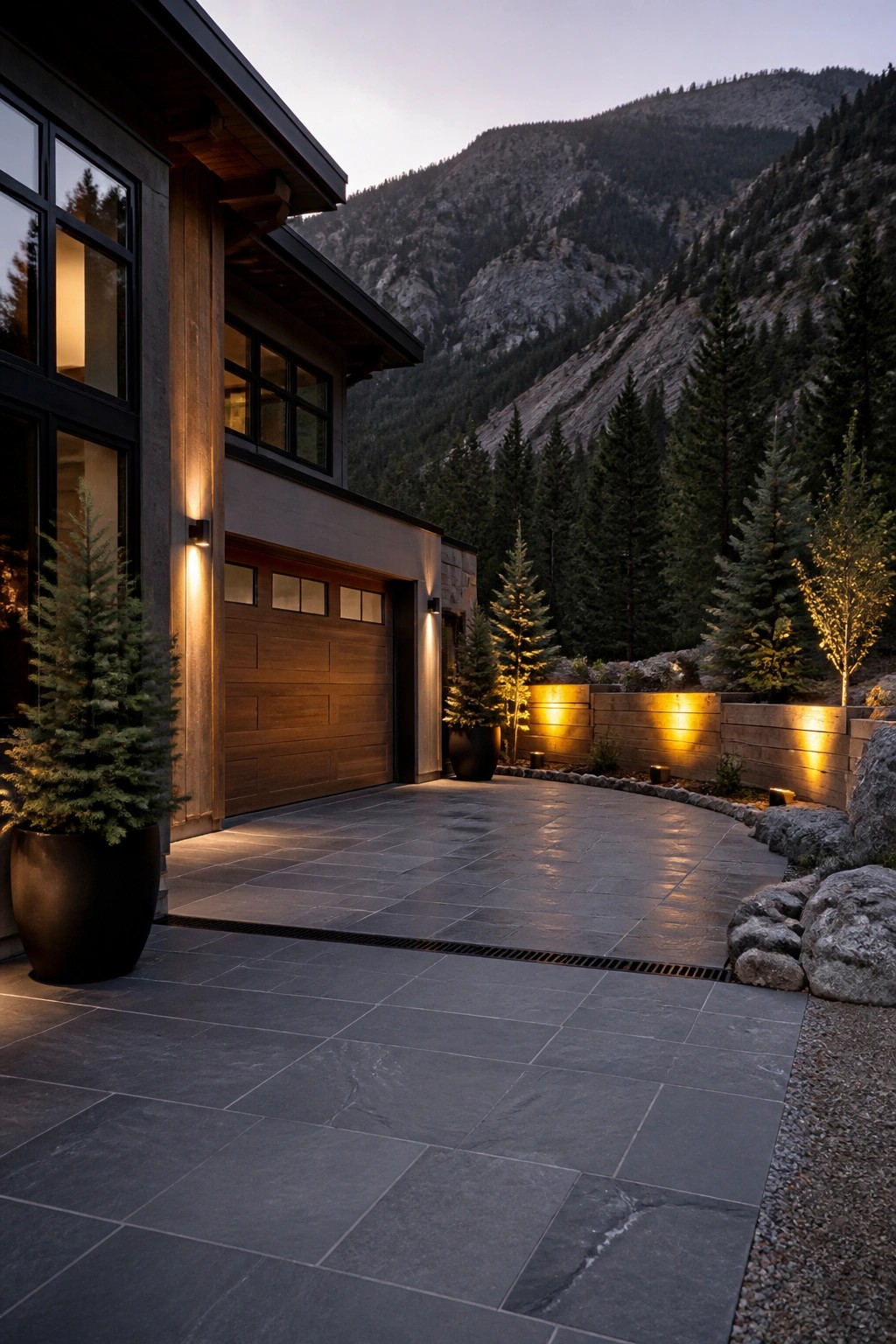
Large textured tiles can make a driveway feel more substantial and safer to walk on. The rough surface gives decent grip when the ground is wet or icy, and the natural color variations help the area look less like a plain slab of concrete.
This approach works best on homes that already use stone or wood outside, since the tiles tie the parking area into the rest of the hardscaping. Check that the thickness and finish are rated for cars, and leave a small gap between sections so water can drain away instead of pooling.
Gravel Between Pavers For Better Grip

Large pavers set with gravel in the joints give a path real texture and traction. The gravel fills the gaps so the surface stays stable underfoot and drains well after rain. It also breaks up the look of solid concrete without adding extra materials.
This approach works best on side paths or entries where you want something low maintenance. It suits homes with modern or simple landscaping since the gravel softens the hard lines of the pavers. Just keep the gravel level even so it does not shift too much over time.
Stone Tiles With Moss In The Joints

Large stone tiles already give a path some natural texture, but leaving room between them for moss changes how the surface feels underfoot. The moss fills the gaps and gives extra grip when the stones are wet, which happens often in shaded garden areas.
This approach works best on side paths or entries where cars are not the main traffic. Keep the joints wide enough for the moss to take hold, and make sure the base stays well drained so it does not get slick over time.
Textured Stone Pavers For Garden Paths

Large stone pavers with a rough surface work well on paths that see regular foot traffic. They provide grip when the stones get damp and they settle into the garden without looking too polished or new.
This approach suits older homes or any space where you want the hardscape to feel part of the planting rather than separate from it. Keep the joints tight and use a simple gravel or moss fill so the path stays practical over time.
Grooved Tiles With Grass Strips
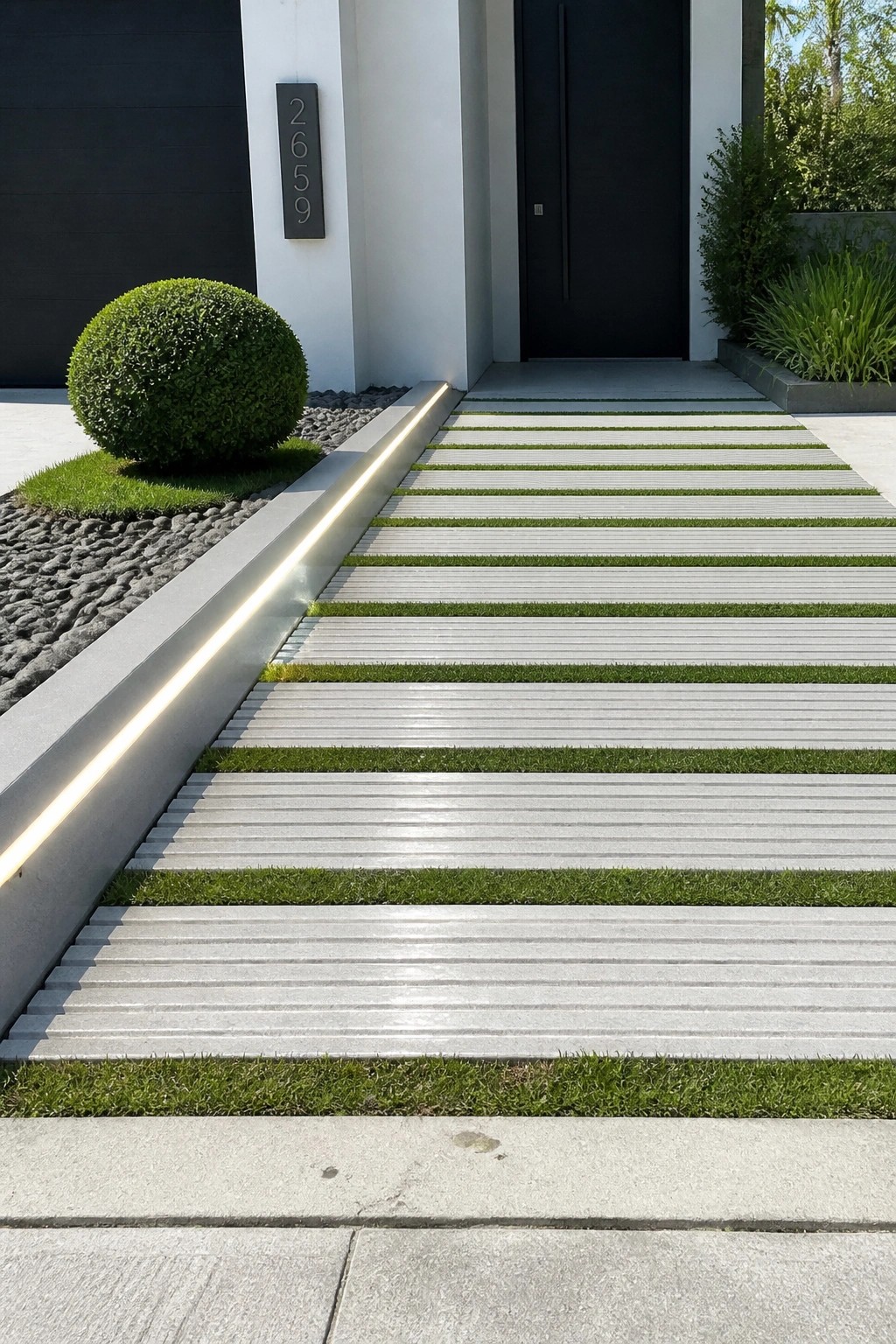
Many people like grooved tiles for paths because the ridges give better traction underfoot and add some texture without looking busy. The grass growing between each row softens the hard surface and helps the path blend into the surrounding garden instead of standing out as a solid slab.
This works well on modern homes where the entry path needs to feel intentional but not overly formal. Keep the grooves running in straight lines and choose a light color if you want the path to stay cooler in summer. Just make sure the grass strips are narrow enough to mow easily and do not collect too much debris.
Textured Hexagonal Tiles For Patios
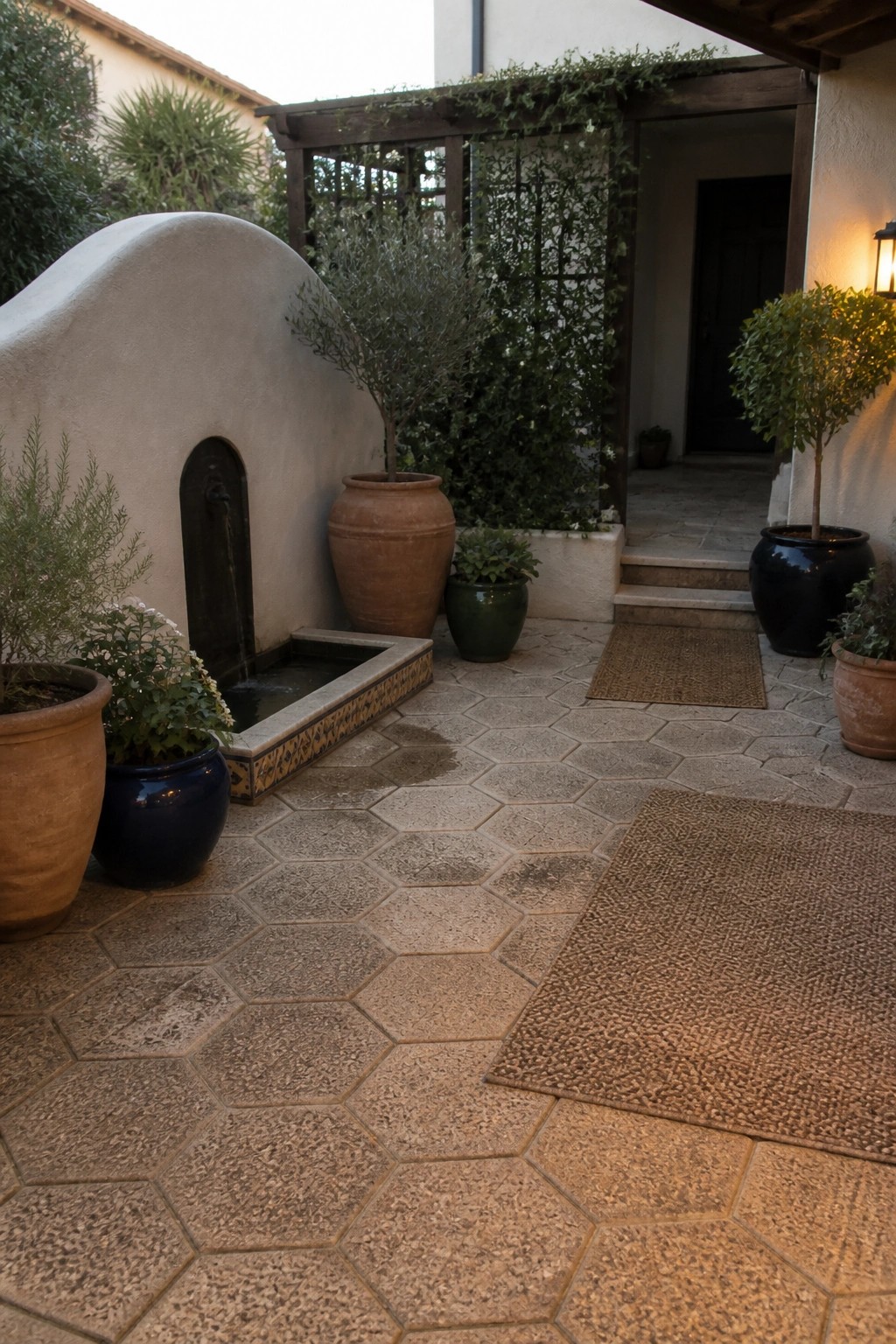
Hexagonal tiles with a rough surface give a patio floor both better traction and more visual interest than smooth pavers. The pattern breaks up the flat look of a large paved area while still feeling practical underfoot.
These tiles suit homes with Mediterranean or Spanish-style courtyards where the surface needs to handle wet weather and daily use. They work best in moderate climates and pair easily with simple plantings and a few large pots.
Frequently Asked Questions
Q: Will rain make these textured tiles slippery?
A: The textures channel water away from the surface so tires stay in contact. You still want to sweep off leaves or mud after storms to keep that grip reliable.
Q: Can I install these tiles over my old concrete driveway?
A: Check that the concrete is level and crack free first. Clean it well then use a good outdoor adhesive to set the tiles. This keeps them from shifting under car weight.
Q: How do I keep the grip from wearing smooth over time?
A: Avoid power washing too often since it can erode the texture. A stiff broom and occasional mild soap does the job instead.
