

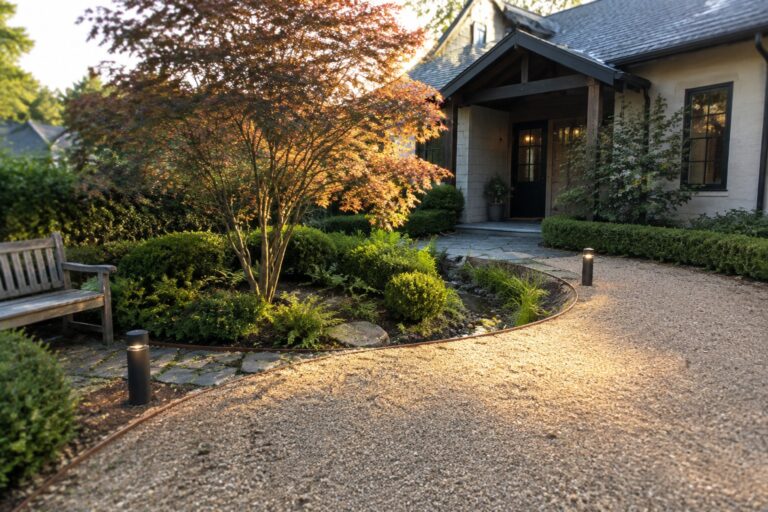
Living with limited parking space right at the front often shapes how the whole house reads from the street long before anyone reaches the door.
I have found that a half circle layout can ease the daily back and forth without crowding the foundation plantings or clashing with the siding.
Small changes here matter more than they first appear.
Choosing gravel or pavers that echo the roof color tends to pull the entry together better than a plain slab ever does.
I usually sketch a couple of these options on site first to see which one actually leaves room for a clean walkway up to the porch.
Gravel Suits Small Half Circle Driveways
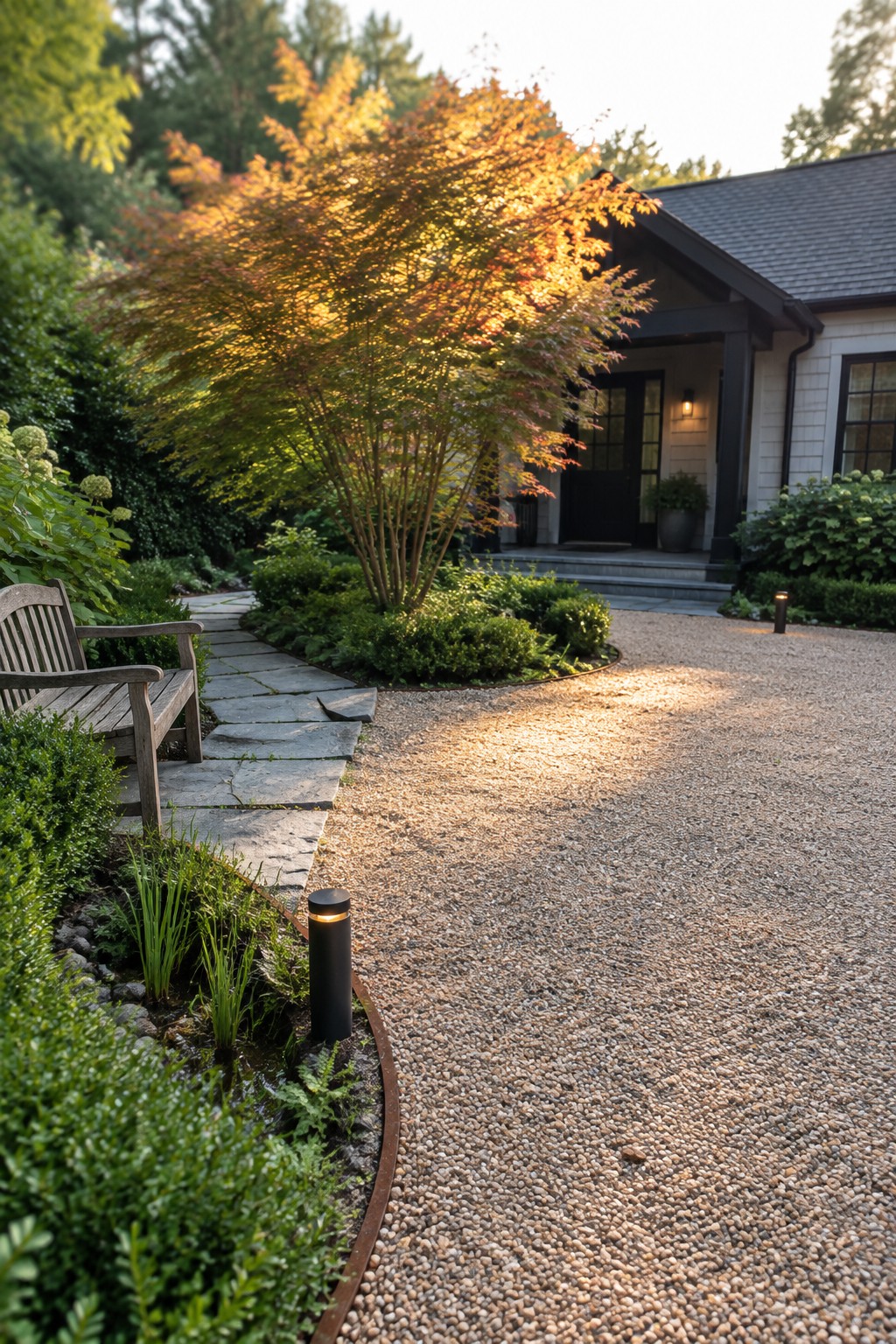
A gravel half circle driveway gives you room to turn and park without needing a huge paved area. The loose surface drains well after rain and feels more at home next to garden beds than a solid slab of concrete would.
This setup works best on houses with limited frontage where you still need two or three parking spots. Keep the curve wide enough for easy turns, add a simple metal or stone edge to hold the gravel, and run a separate path for foot traffic so people do not have to walk on the stones.
Create a Permeable Half Circle Driveway With Grass Pavers
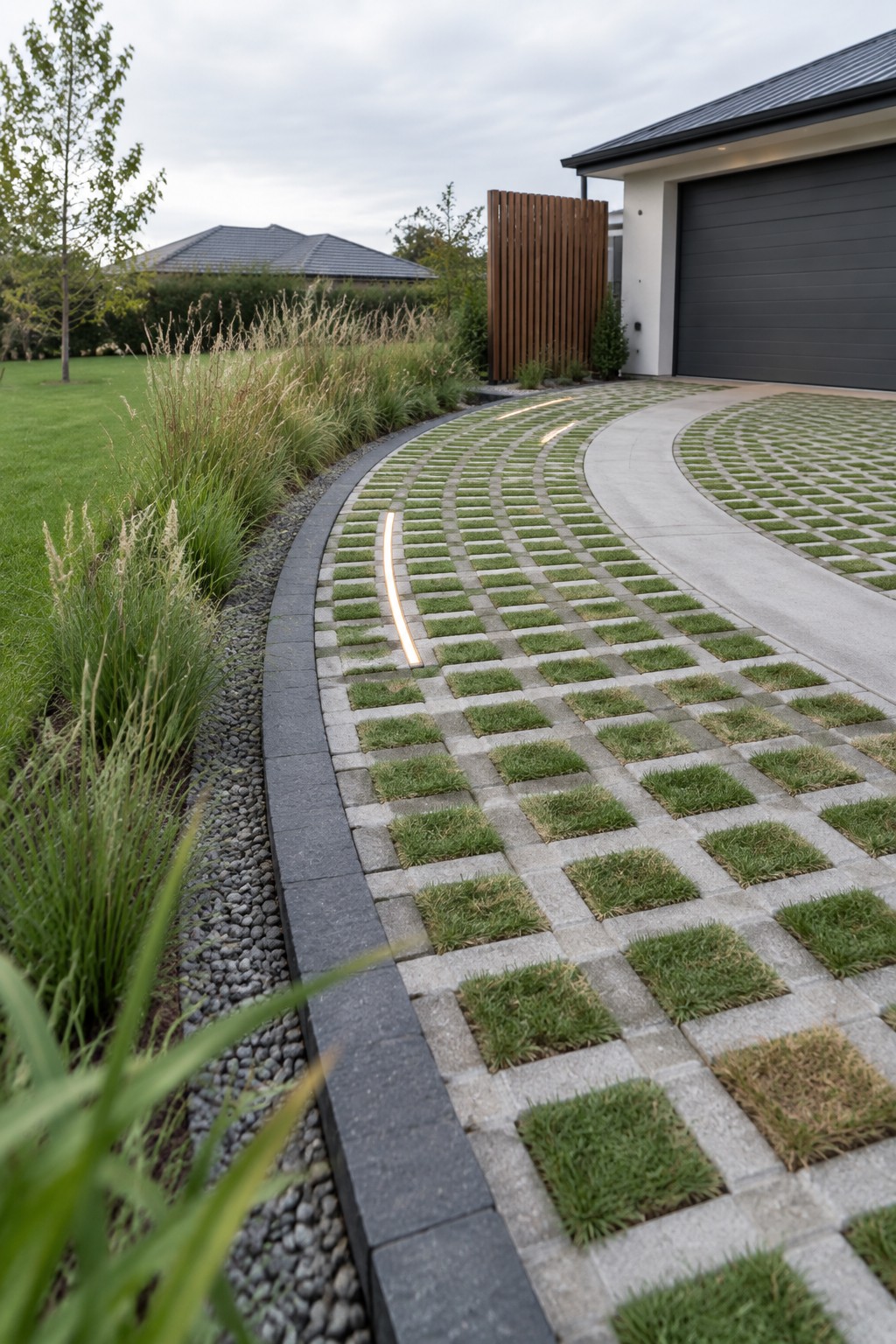
A grid of pavers with grass growing between them lets you shape a compact driveway that still feels open. The pattern breaks up the hard surface so the whole area does not read as one solid slab, and it handles water better than a fully paved curve.
This works best on smaller lots where every extra foot of pavement starts to crowd the house and lawn. Keep the curve gentle, match the paver color to your edging, and let the grass stay a little taller so the green squares stay visible even after cars park.
Curved Brick Driveways With Stone Edging
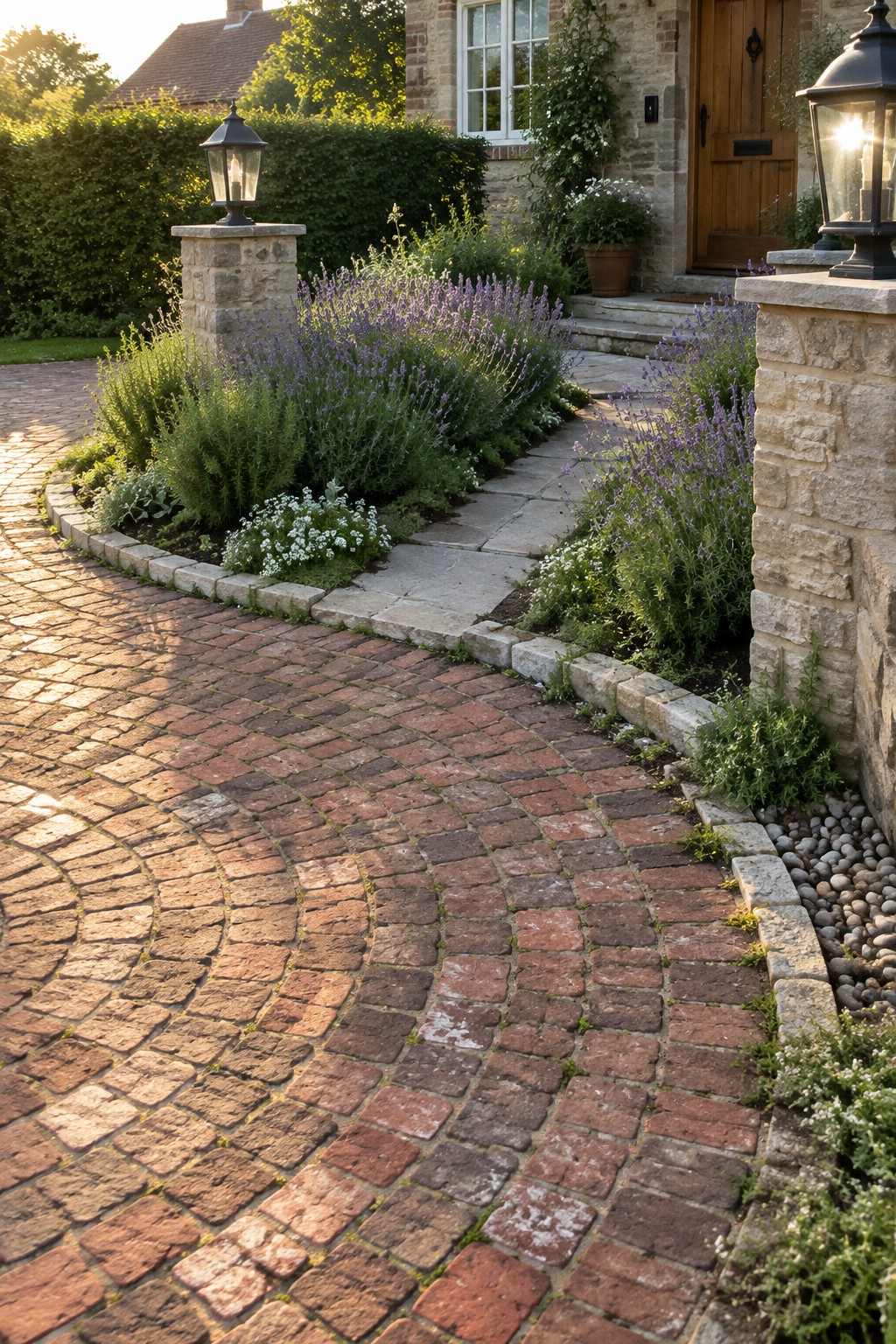
A curved brick driveway helps small front yards feel more open because the shape guides cars in without needing a wide straight run. The low stone edging keeps everything neat and stops the planting beds from spilling onto the drive.
This layout suits older homes or cottages where the driveway should blend with the garden instead of standing out. Keep the curve gentle so cars can turn easily, and use plants like lavender along the edge to soften the look.
Curved Brick Pavers For A Small Driveway
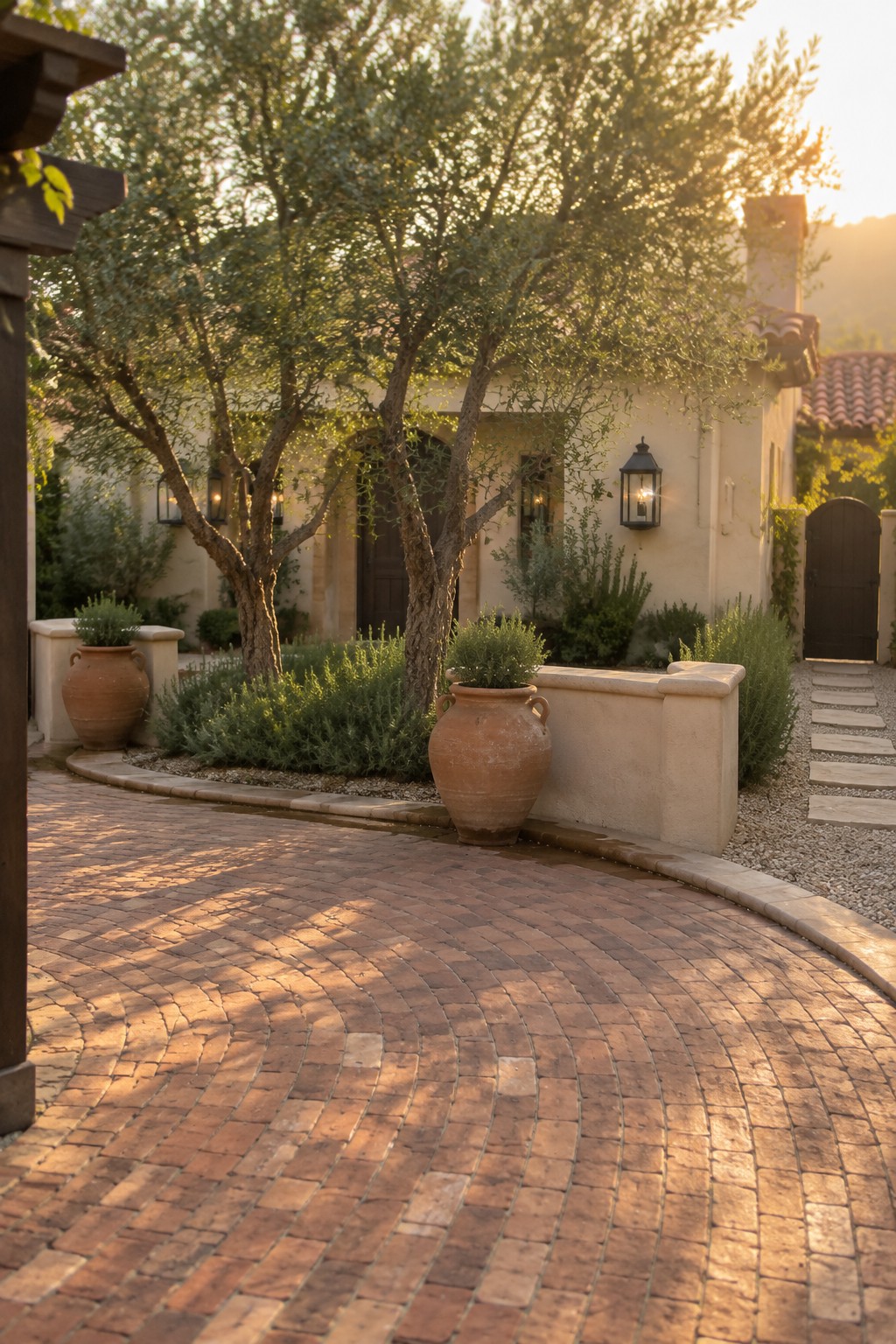
A curved layout in brick pavers works well when space is tight because it lets the driveway turn gently instead of running straight across the front. The pattern also gives the surface a bit more interest without adding extra width.
Large pots placed along the inner edge help hold the curve visually and keep cars from drifting too close to the planting. This setup works best on older homes or lots with a narrow front strip where a full circle would never fit.
Central Planting Beds Work Well in Small Driveways
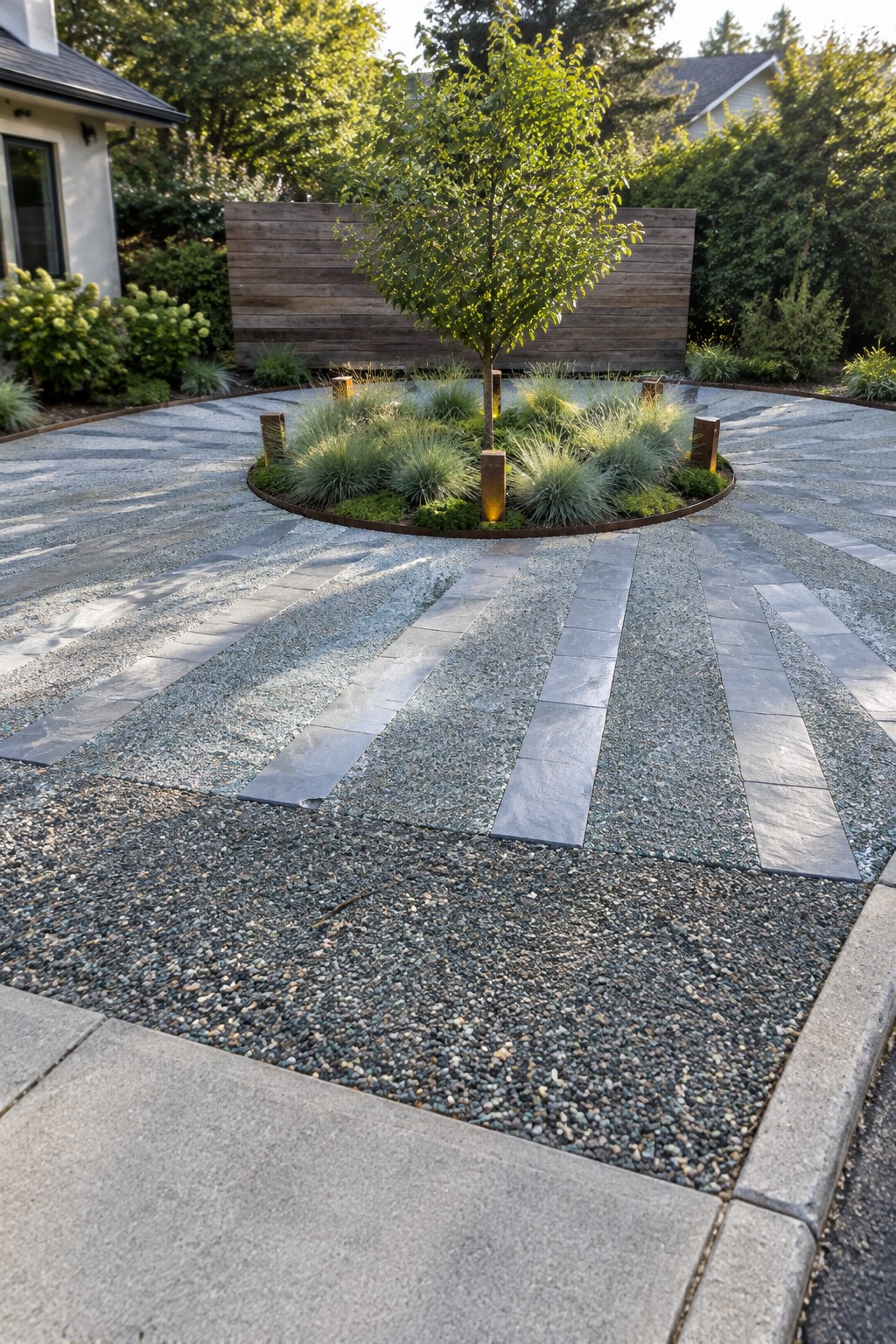
A central bed gives a half circle driveway a clear shape without crowding the parking space. The bed keeps the layout from feeling like one big slab of hard surface and gives you room to add a bit of greenery where it matters most.
This approach suits homes with tight front yards or narrow lots. Keep the plants low and simple so they do not block car doors or sight lines, and use the surrounding pavers to guide traffic around the edge.
Add a Center Island to a Small Half Circle Driveway
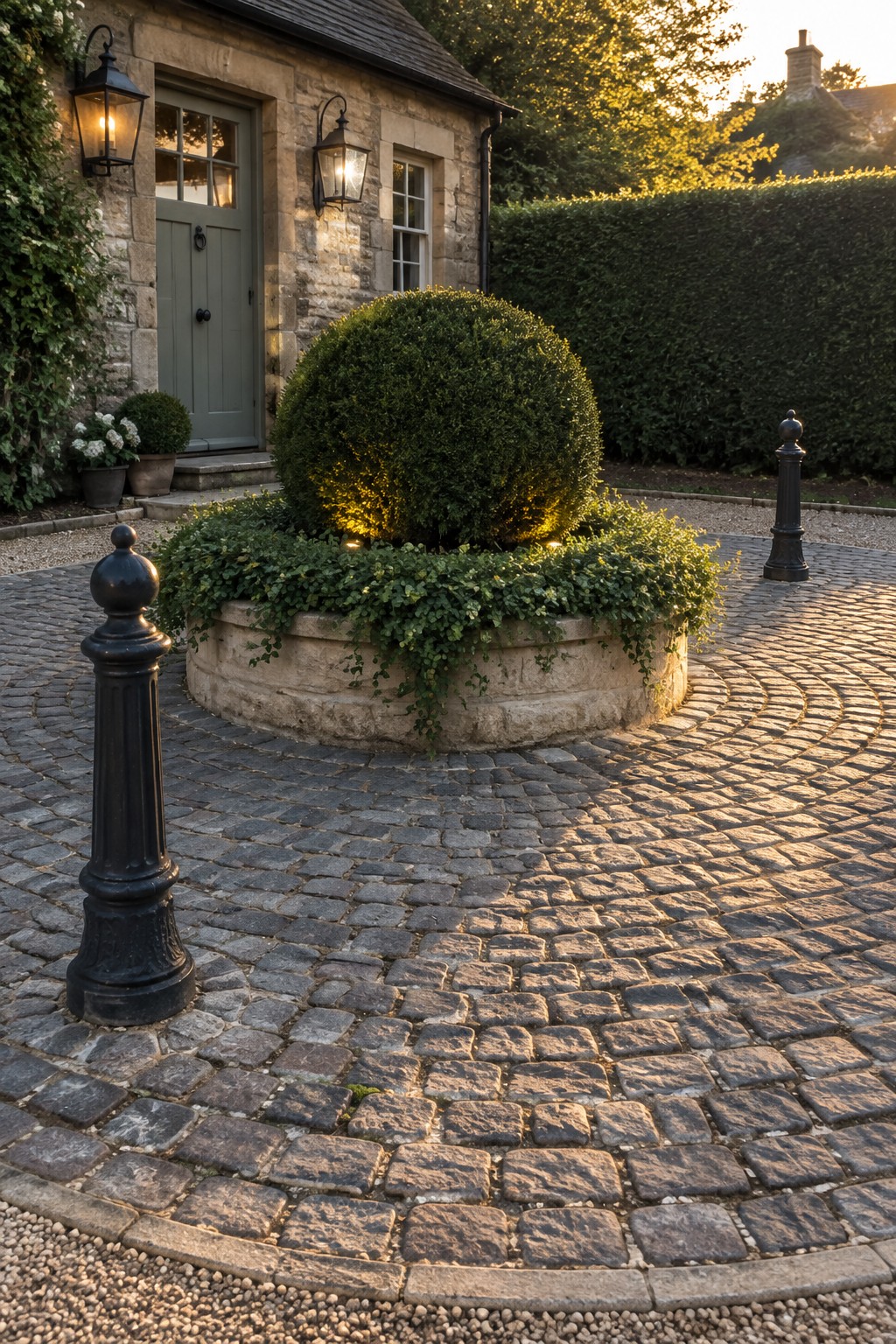
A round planting bed set in the middle of a half circle driveway gives the space a clear shape without needing a lot of extra room. The cobblestone surface curves naturally around the bed, which keeps the turn tight and adds some greenery right where the car pulls in. This setup works especially well when the front yard is narrow and you want to avoid a plain stretch of pavement.
It suits older homes or cottages where the driveway sits close to the house. Keep the bed low so it does not block the view from the windows, and choose tough plants that can handle a bit of reflected heat from the stones. Make sure the outer edge has enough room for a car to pass without scraping the curb.
Wooden Edging Shapes Planting Beds Along Gravel Driveways
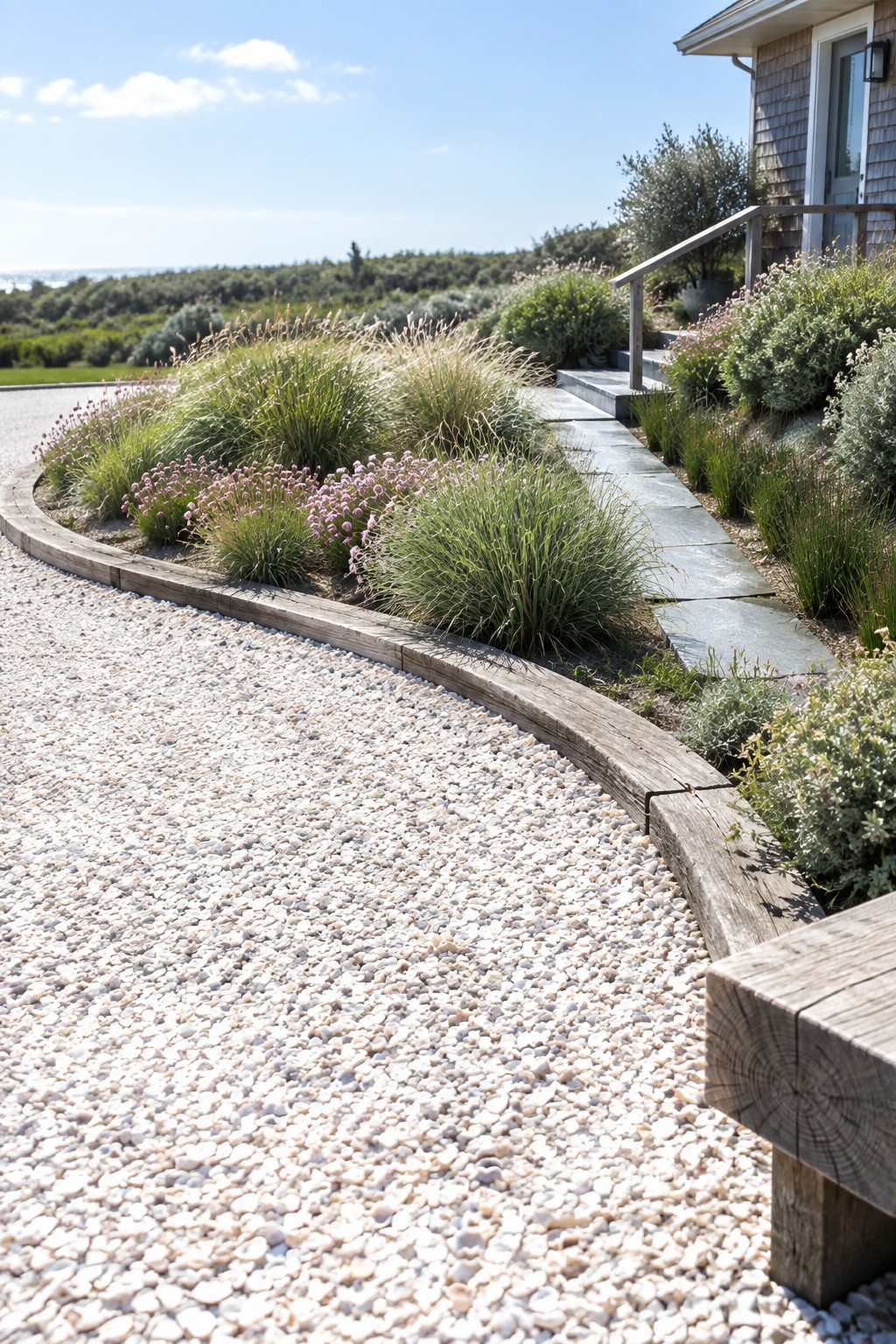
Wooden edging gives a clean way to hold a planting bed in place next to a gravel driveway. The low border follows the curve without adding bulk, so the bed stays neat while the gravel remains open for parking.
This approach works well on small lots where space is tight. Use pressure treated or naturally rot resistant wood, set it low, and keep the bed narrow so the driveway still feels open and easy to use.
Half Circle Driveway With Central Planting
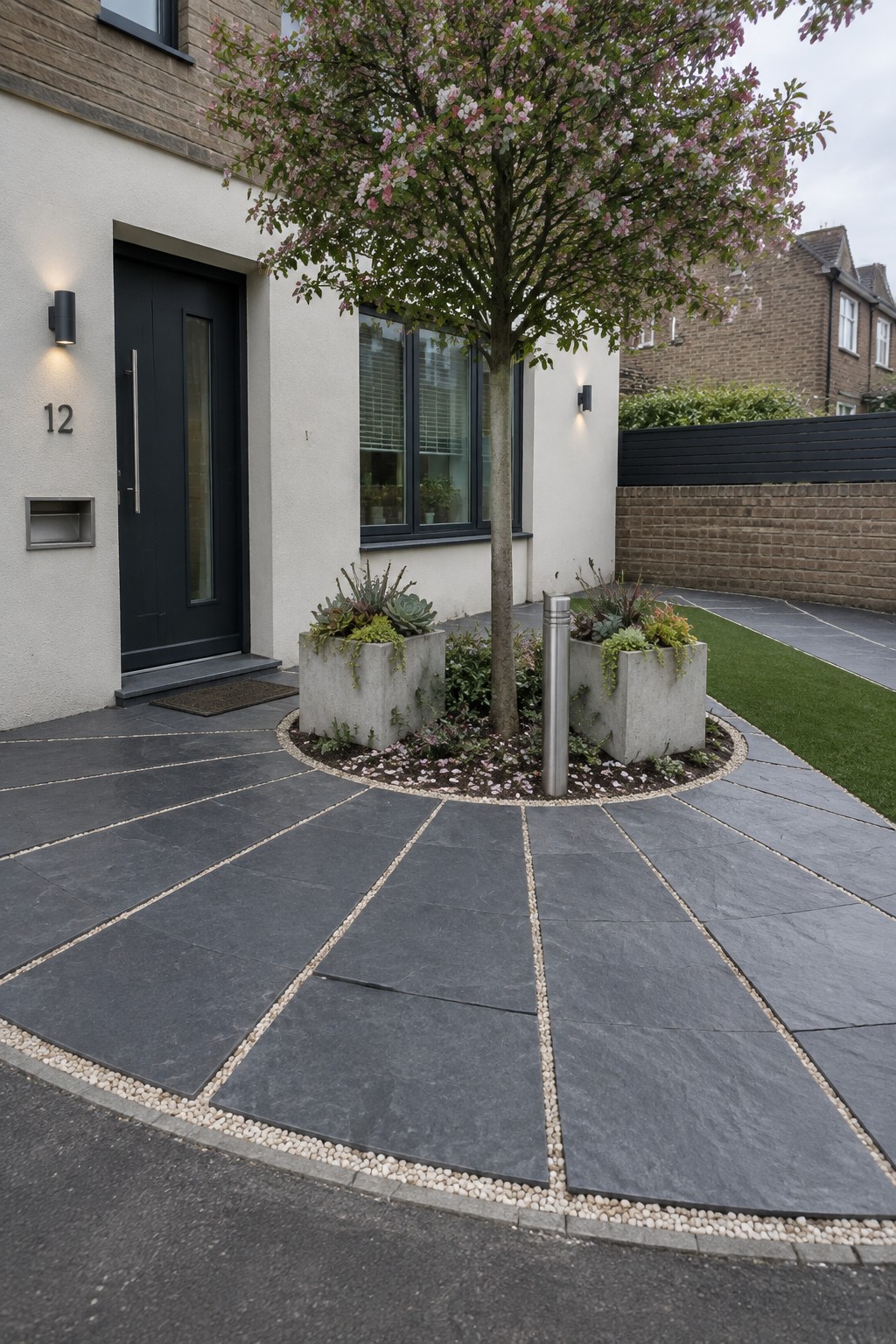
A half circle driveway works well when space in front of the house is tight. The curved layout gives you room to turn around without needing a long straight run, and placing a tree or shrubs right in the middle keeps the area from feeling like a plain parking pad.
This setup suits homes with a narrow front garden or a small setback from the street. The key is to keep the paving simple and let the central planting do the work. Just make sure the tree you choose will not outgrow the space or drop too much debris on the cars.
Curved Stone Paths For Small Entries
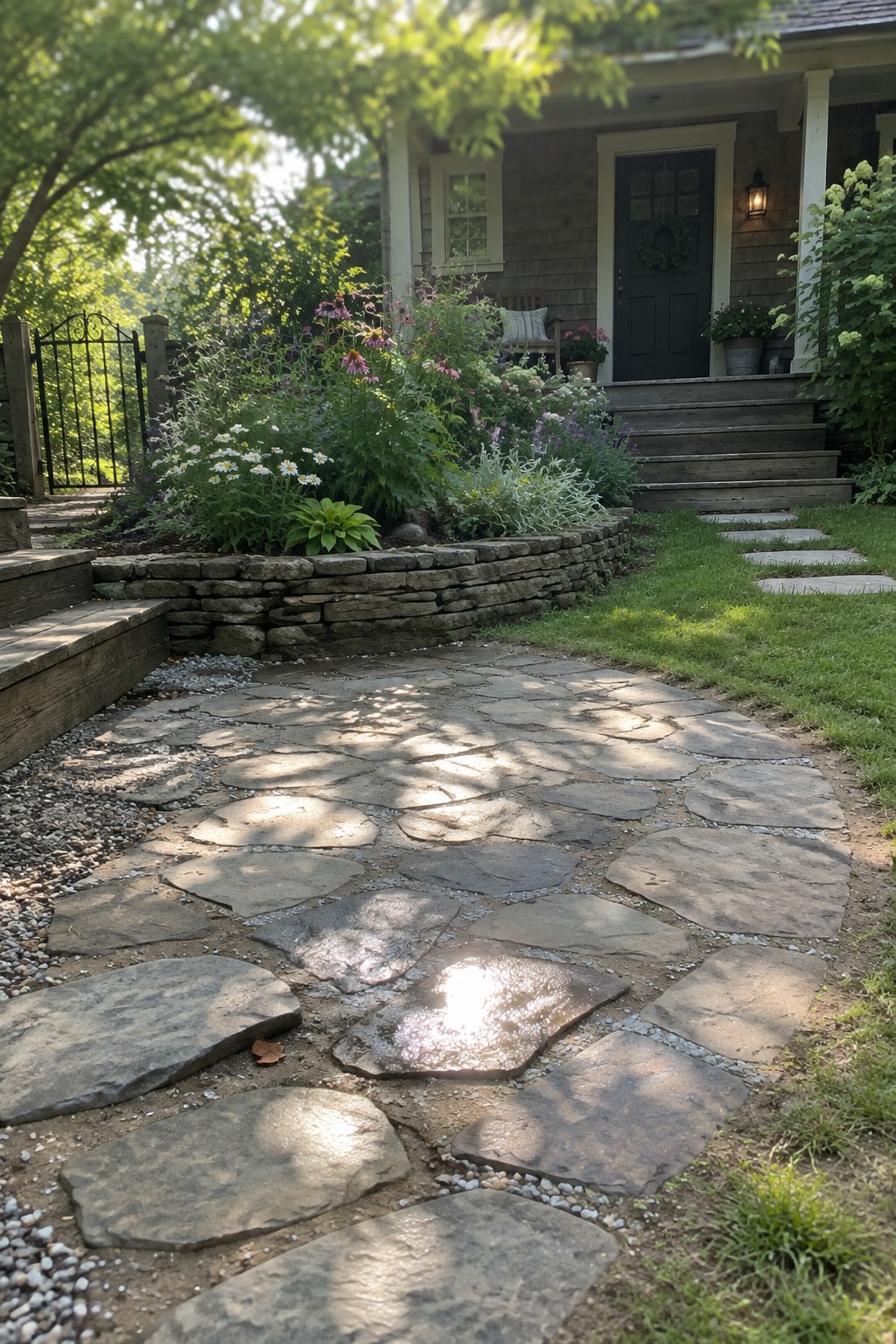
A curved layout using irregular flagstones gives a small entry area enough room to turn or park without needing a full driveway. The stones sit at different angles and sizes so the path feels natural instead of rigid, and the curve keeps the whole thing compact while still guiding visitors to the steps.
This approach works best on lots where the front space is tight and you still want some garden room on either side. Keep the stones set in gravel or sand so water drains easily, and let low plants soften the edges without crowding the walking surface.
Anchor the Curve With a Circular Planter
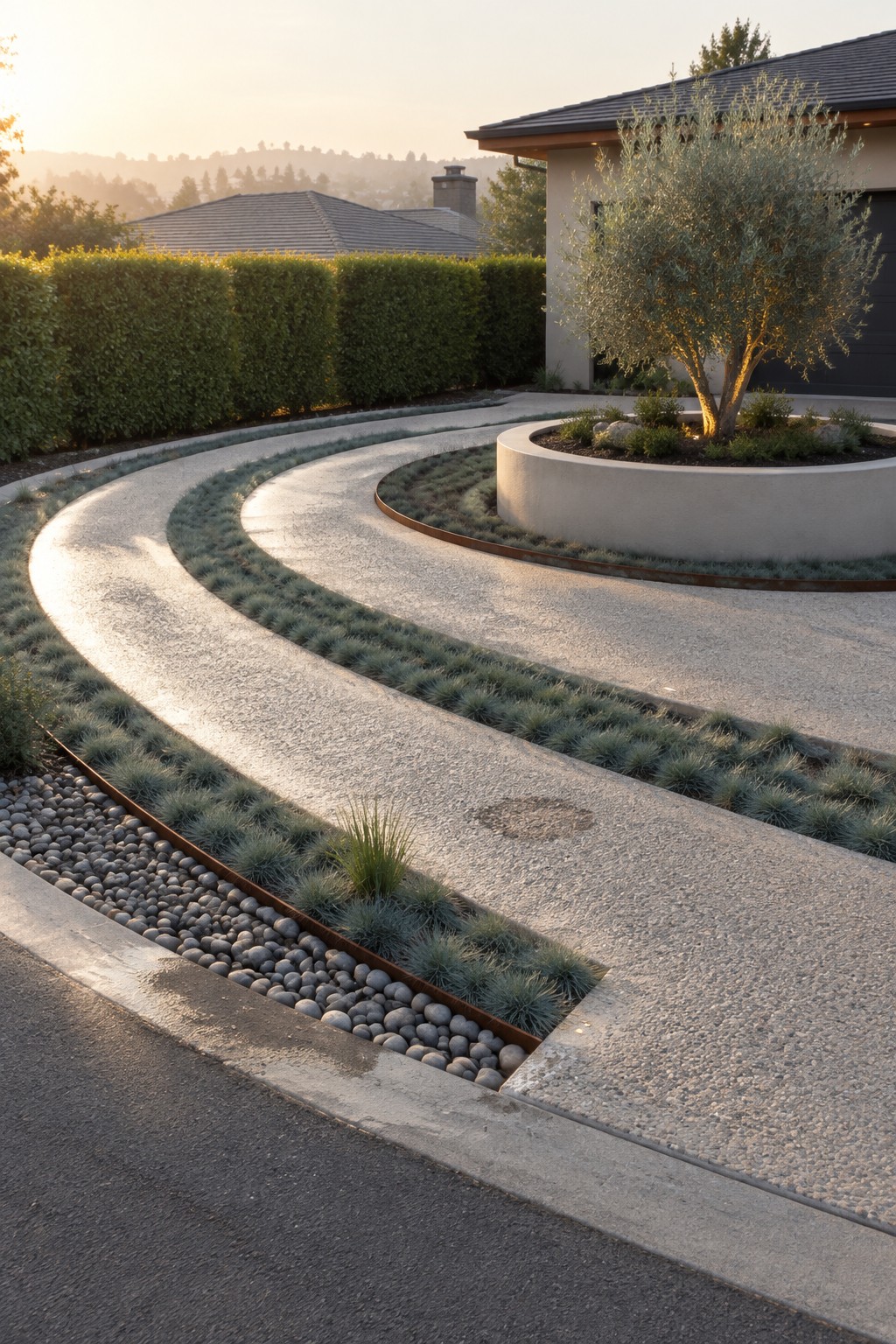
A circular planter set right where the driveway turns gives a small half-circle layout some breathing room without eating into parking space. The raised bed keeps plants contained, adds height where the ground is flat, and helps drivers see the edge of the turn more clearly. Many people like this setup because it works on narrow lots where a full island would feel cramped.
This approach suits homes with a short frontage or tight side setbacks. Keep the planter diameter modest so cars can still swing around it, and choose low-water plants that will not drop leaves all over the concrete. Gravel strips along the outer edges can handle extra runoff and reduce the amount of hard surface you need to maintain.
Stone Edging Shapes A Compact Driveway Curve
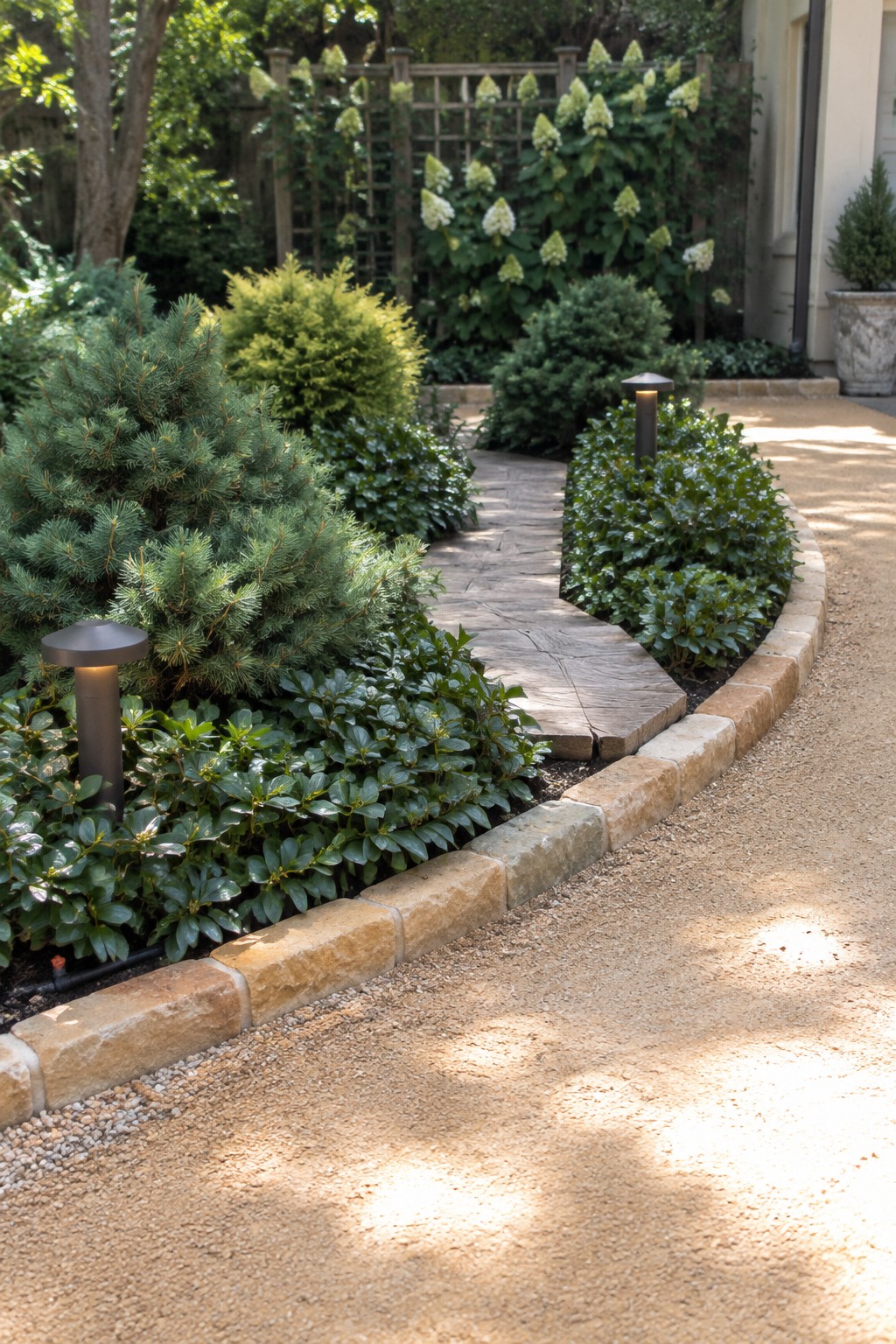
A low stone border gives a gravel driveway a clear edge without eating into limited space. It holds the curve in place, keeps the gravel contained, and creates a simple separation between the drive and the planting beds along the side.
This works best on smaller lots where you need the driveway to feel intentional rather than loose. Match the stone to any nearby path or wall so the whole area reads as one tidy layout instead of separate pieces.
Low Curved Walls For Half Circle Driveways
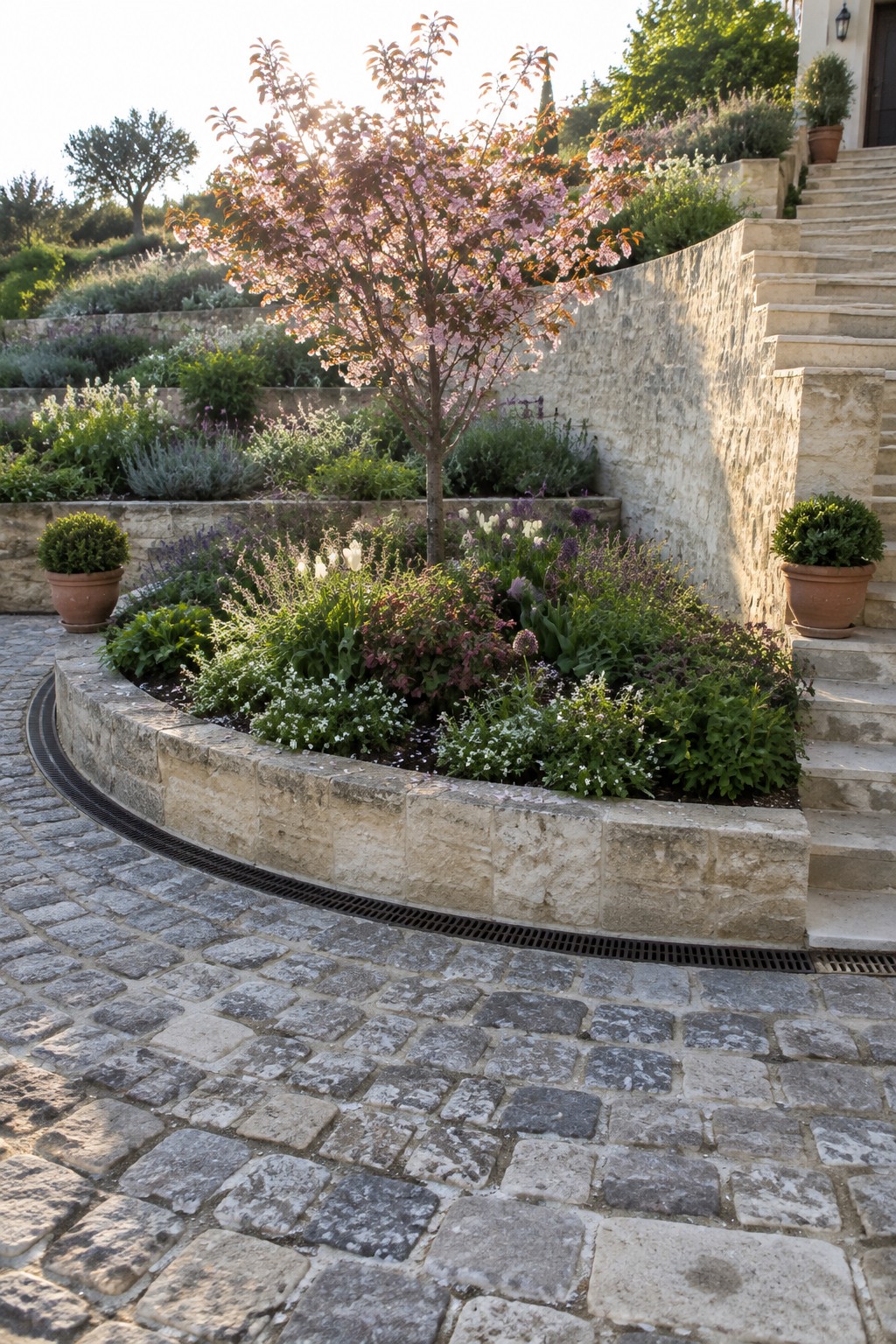
A low curved stone wall gives a small half circle driveway a clean edge while creating room for a planting bed right beside the parking area. It follows the curve naturally and keeps the plants contained without eating into the limited space you have for cars.
This setup works best on homes where the driveway sits a bit lower than the surrounding garden or where you need to manage runoff. Add a drainage channel along the base so water moves away from the paving instead of pooling.
Curved Edging Along Driveway Borders
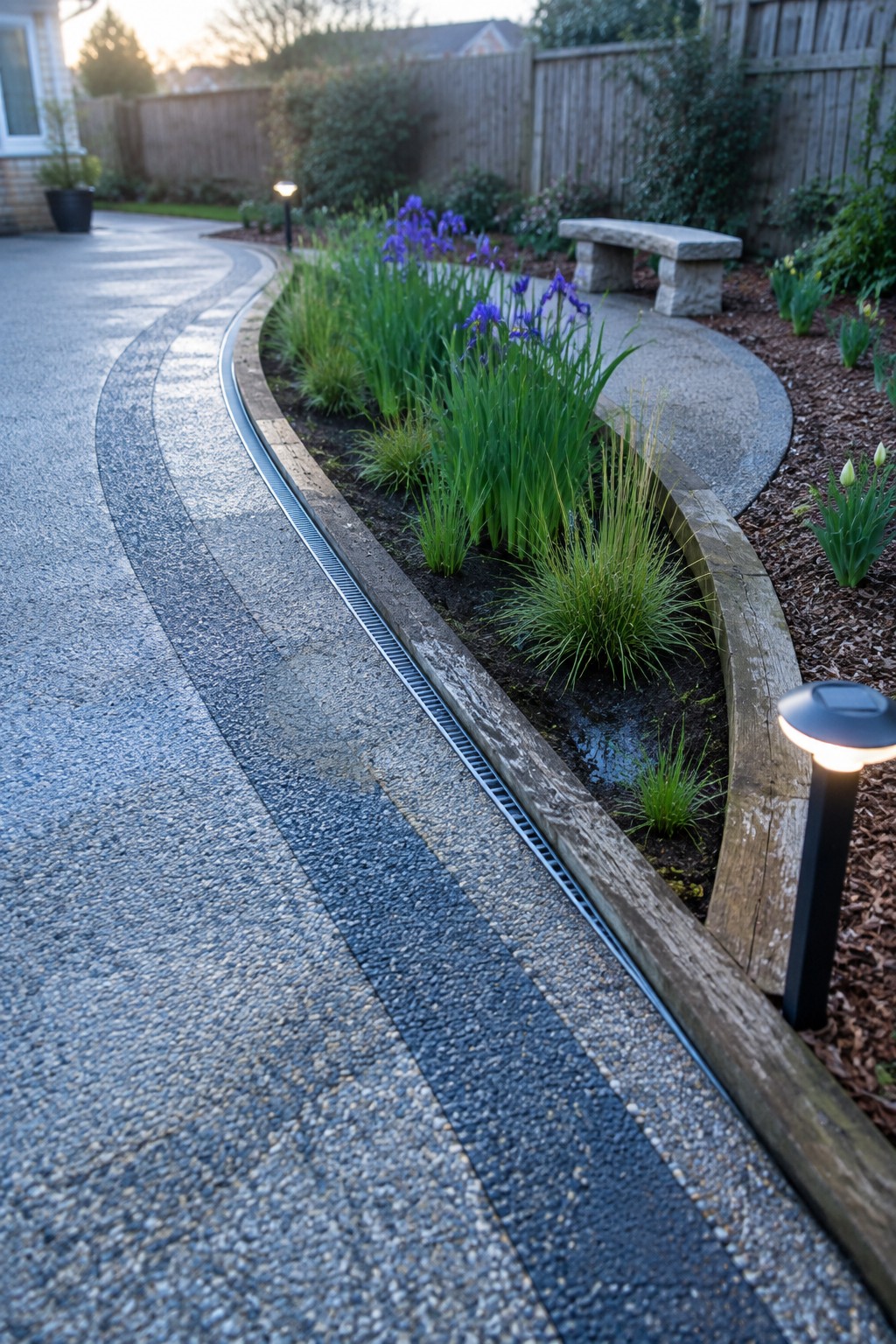
A curved planting bed with wooden edging gives a small half circle driveway a clean edge without eating into parking space. The border keeps soil and mulch in place while the linear drain right next to it handles runoff so water does not pool on the pavement. This setup works especially well on tight lots where you need both greenery and a place to turn around.
It suits homes with modest frontage and limited parking because the curve softens the look of asphalt while the raised wood keeps plants from spilling onto the drive. Just make sure the edging sits level and the drain slopes properly toward an outlet.
A Brick Driveway With a Gentle Curve
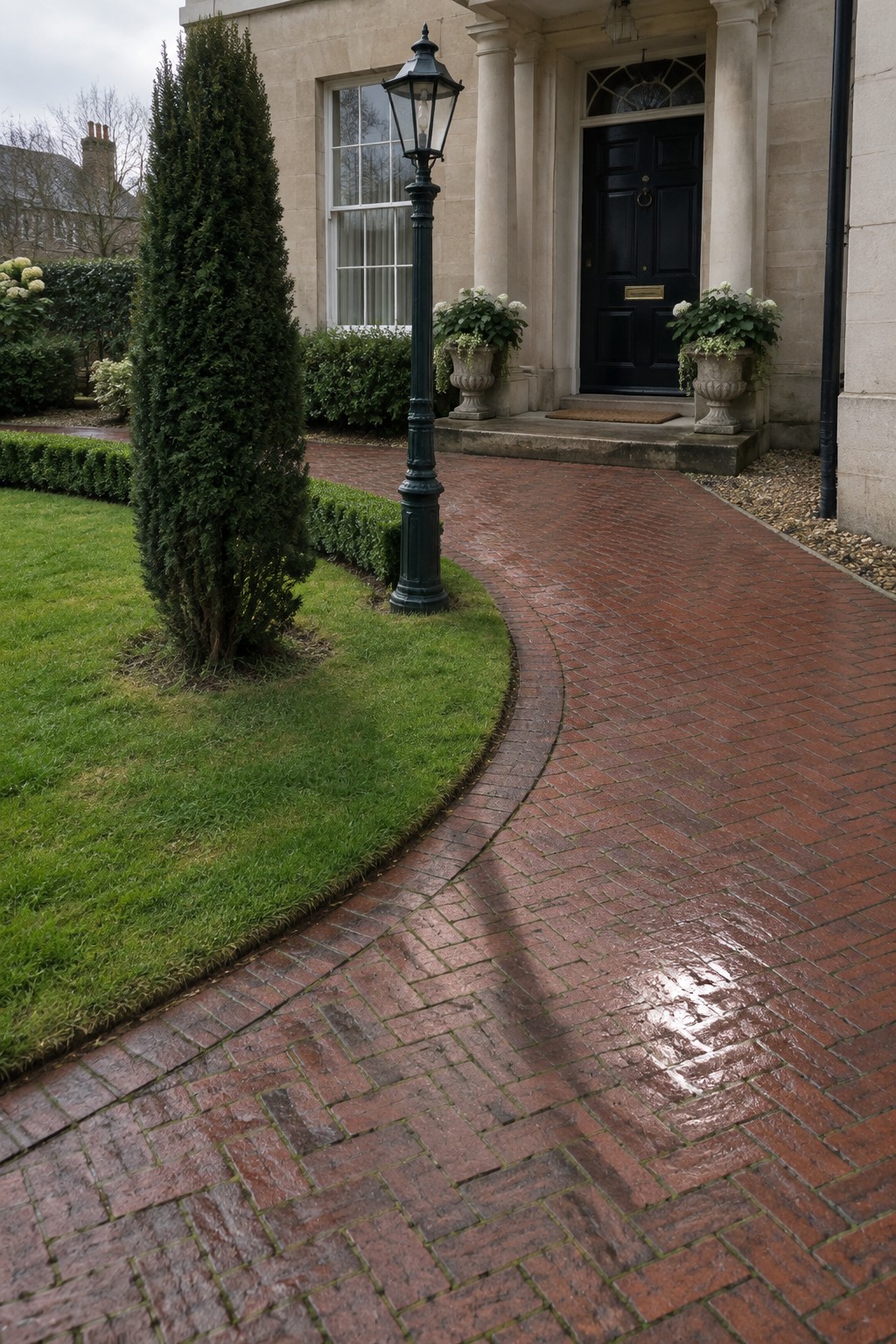
A curved brick driveway gives a small front yard more room to work with. The arc keeps the surface practical for turning while softening the look of the whole entry. It also separates the lawn from the house without needing extra barriers.
This layout suits older homes or any place where space is tight. Lay the bricks in a simple herringbone pattern and keep the outer edge low so the curve stays easy to maintain. Avoid adding too many plants right along the drive or the shape gets lost.
Curve Your Driveway Around A Raised Planter
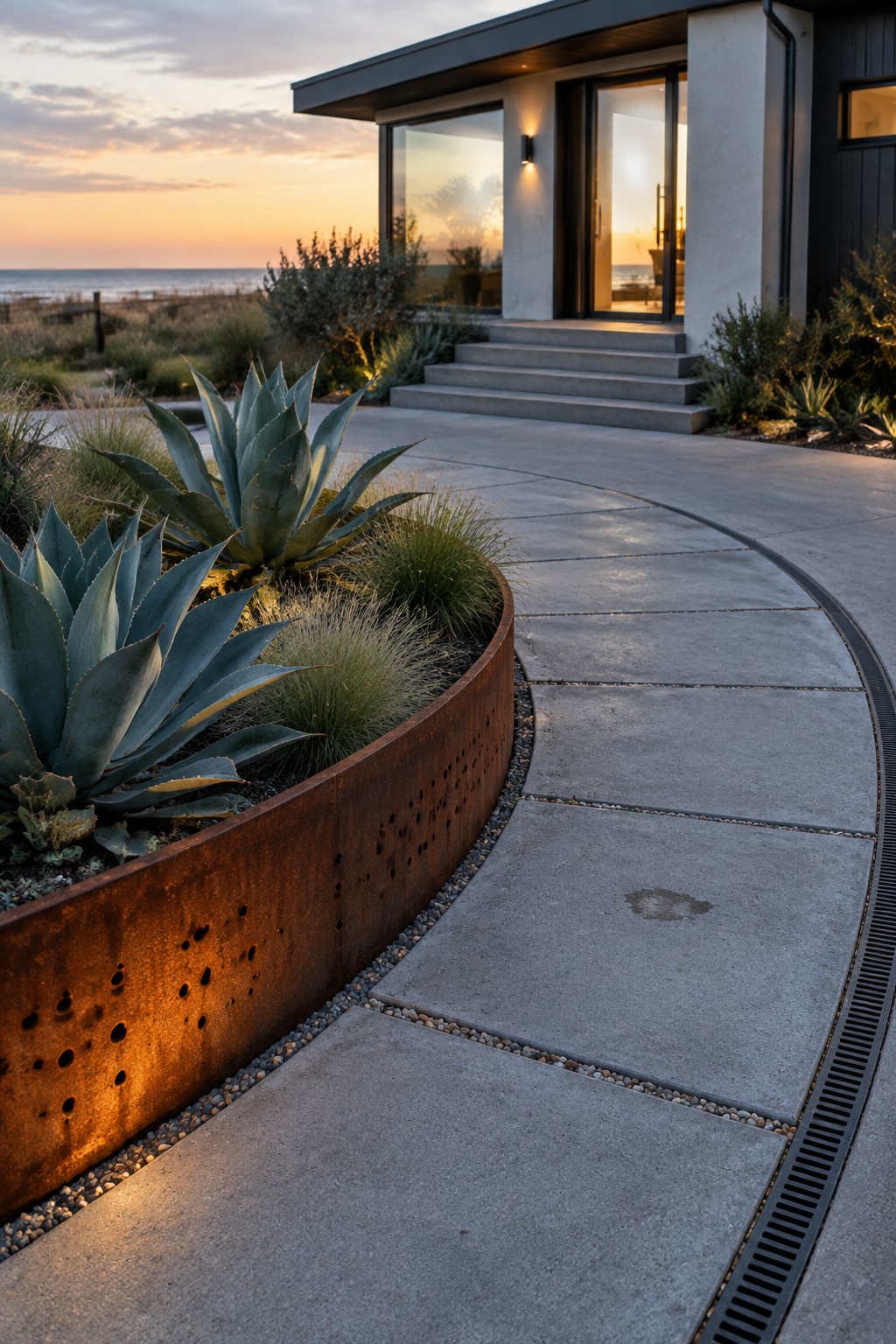
A raised metal planter can help shape a small half circle driveway without eating into limited space. The curve keeps the turn tight and practical while the planter gives you a spot for tough plants right along the edge. This setup works well when you want parking that feels intentional instead of just a slab of concrete.
It suits homes with a modern or coastal feel where you need clear access but still want some greenery. Keep the planter height low enough for easy car doors and choose a material like corten steel that holds up outdoors. Avoid overcrowding the bed so the driveway stays easy to use every day.
Frequently Asked Questions
Q: Will a half circle driveway fit my two cars without them bumping? A: Measure the curve radius to match your vehicle lengths. Park them at an angle that overlaps the space efficiently. Test the layout with cones before building.
Q: How do I keep weeds from popping up in a gravel half circle? A: Spread landscape fabric under the gravel layer. Rake the surface every few months to disrupt growth. This keeps it looking clean with little effort.
Q: Do I need special permits for this kind of driveway? A: Check your local rules first. Most small projects skip permits if you stay on your property.
