


When I look at a small driveway the way it meets the front garden often decides whether the whole front feels open or closed in.
I have found that adding low edging plants along the sides can make the space feel wider without taking up much room.
Small changes add up fast here.
Trying out a simple path integration with the garden beds has changed how welcoming my own entrance feels over time.
It is worth sketching a few options on paper before committing to any hardscaping changes.
Define Driveway Edges With a Low Stone Wall
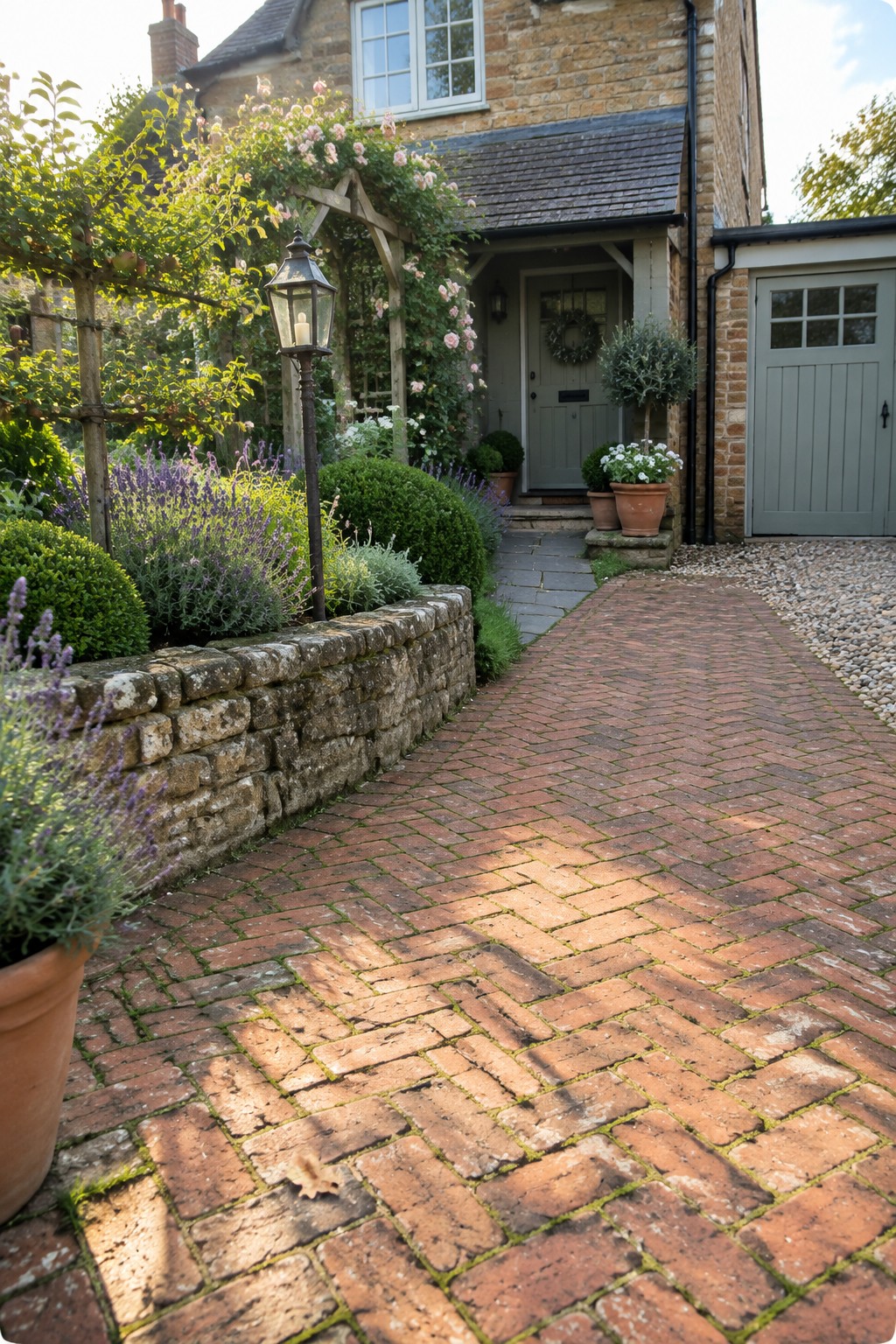
A low stone wall gives the front garden a clear shape while keeping everything neat along the driveway. It stops plants from creeping onto the path and creates a simple border that works even when space is limited.
This approach suits smaller homes where the driveway sits close to the house. Keep the wall under two feet high, layer taller shrubs behind lower flowers, and let a few plants spill over the edge. The brick path stays open and easy to walk on while the garden still feels full.
Split the Driveway With a Grass Strip
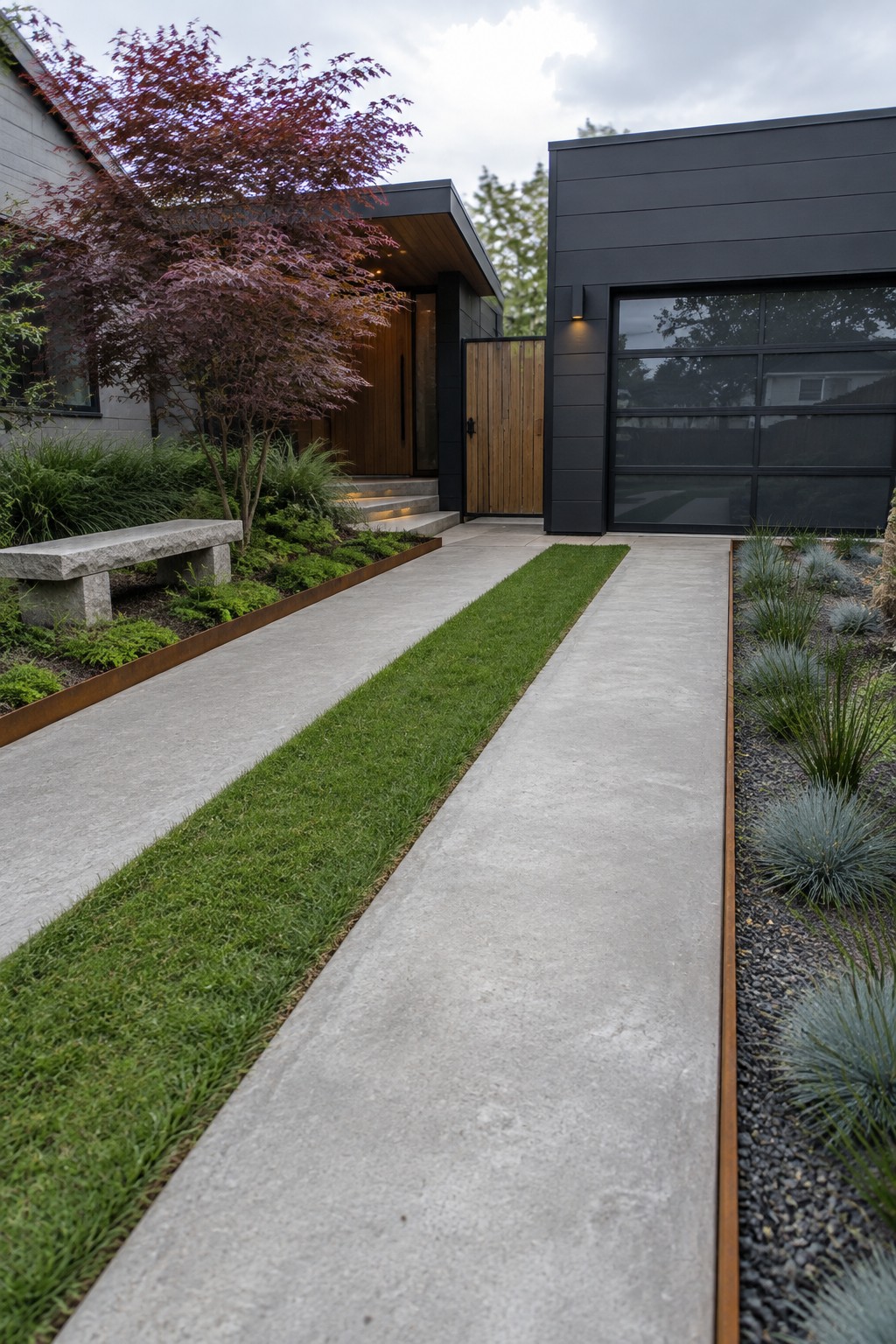
A simple grass strip down the center of a concrete driveway can keep the whole front approach from feeling too hard and heavy. It breaks up the surface, adds a bit of softness, and lets the landscaping feel connected instead of pushed off to the sides.
This idea works best on homes with a fairly narrow driveway and light daily use. Make sure the strip is wide enough to mow easily and that the edging is kept tidy so the grass stays looking intentional rather than like an afterthought.
Run a Planted Strip Down the Center of the Path
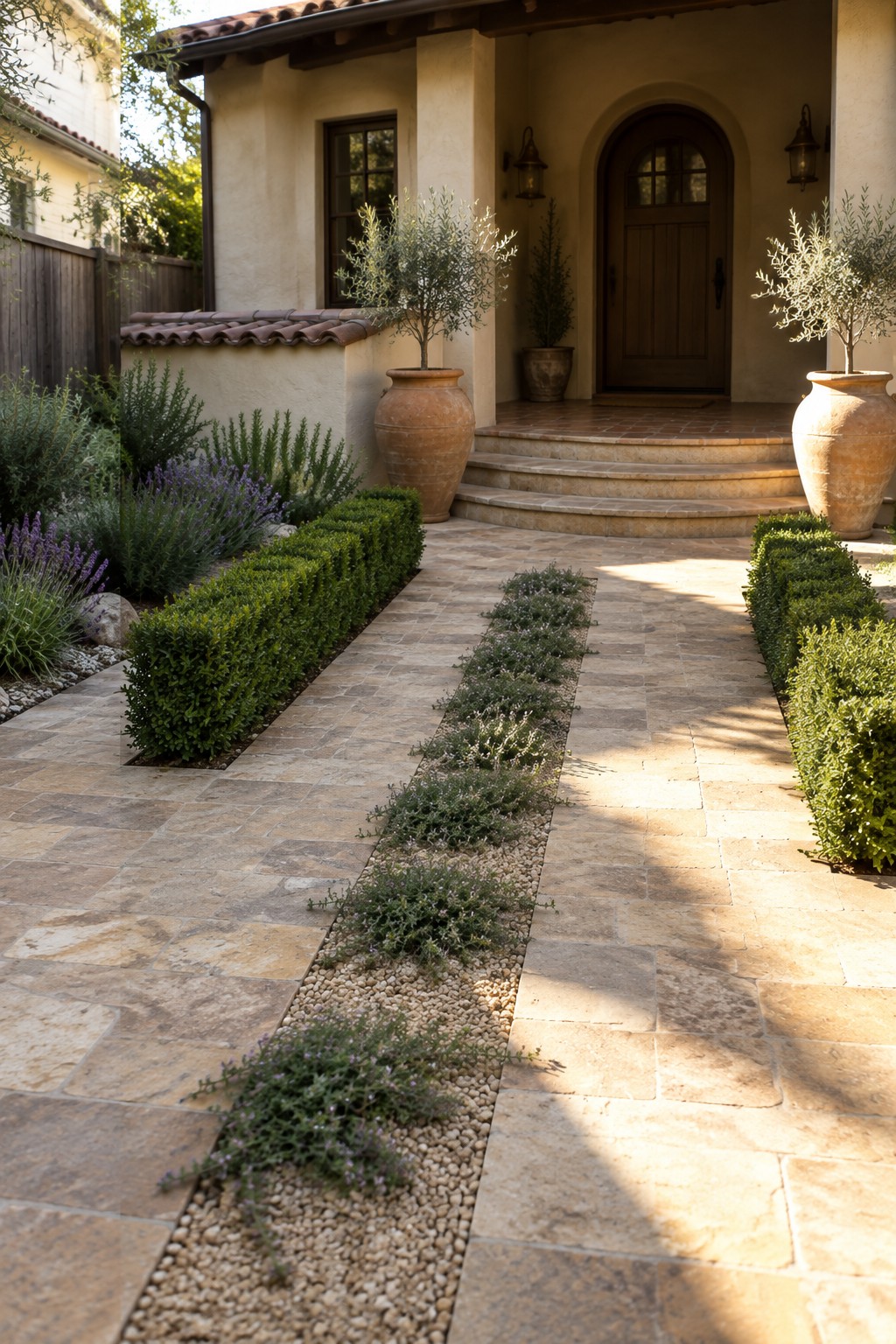
A narrow band of gravel and low plants running straight through the middle of a paved path keeps the surface practical while breaking up the hard look. It adds rhythm without crowding the edges, and it works especially well on smaller driveways where you still need room to walk or pull in a car.
This approach suits homes with straight approaches and modest front space. Keep the plants low and the gravel contained so nothing spills onto the main paving. Trim the side hedges regularly and the whole thing stays neat with little extra work.
Pavers With Planted Gaps Blend The Path Into The Garden
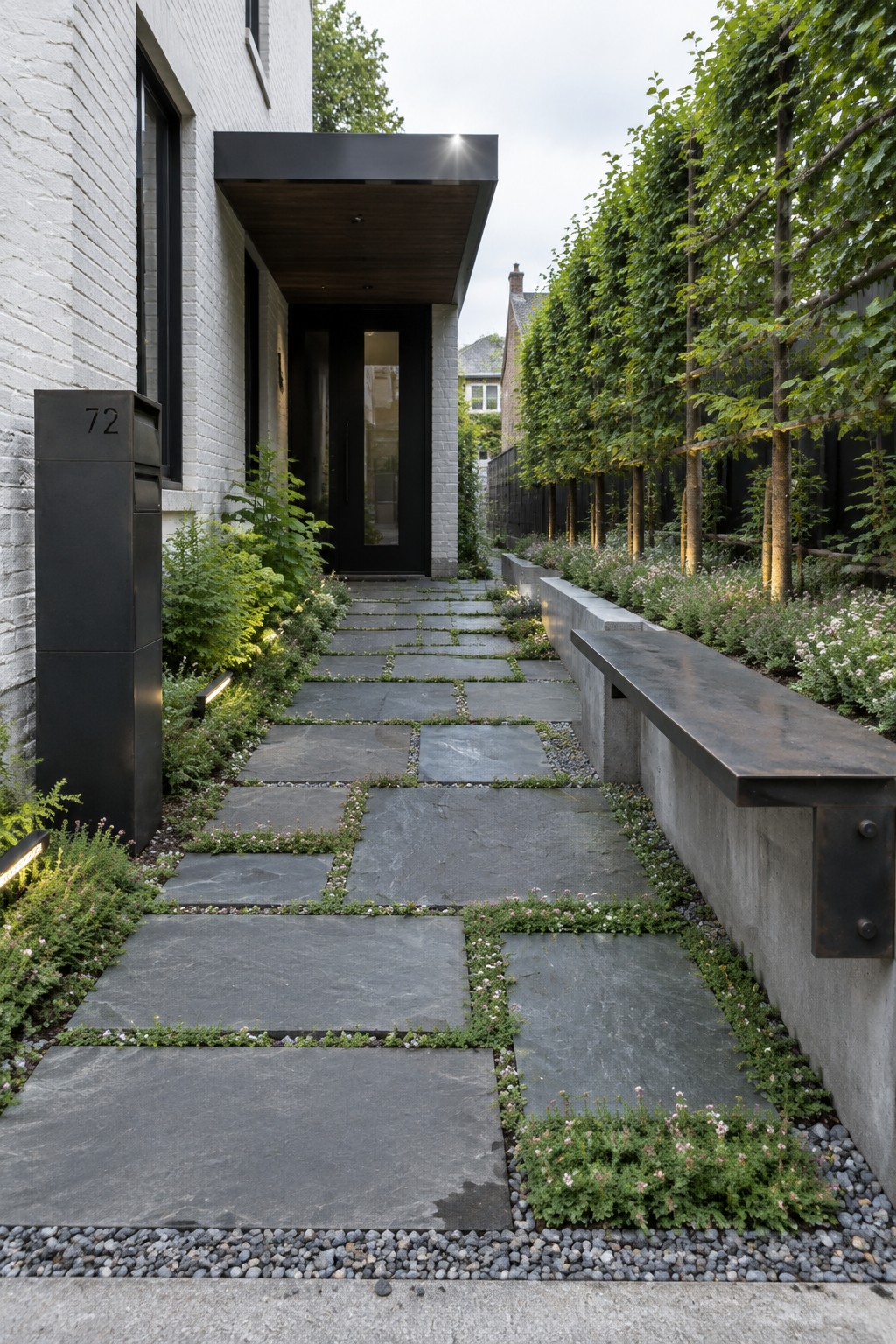
A path made of large pavers with space left between them lets plants grow right into the walkway. This keeps the entry from feeling like a solid slab of hardscape and instead turns it into part of the garden. The gaps break up the surface and let low groundcover soften the look without taking up extra width.
This works best on narrow entries or side approaches where a full driveway would feel too wide. Use it on homes with small front setbacks or where you want the garden to reach closer to the door. Just make sure the pavers are set on a stable base and pick plants that can handle some foot traffic and dry spells between rains.
Edge A Small Driveway With Low Stone Walls
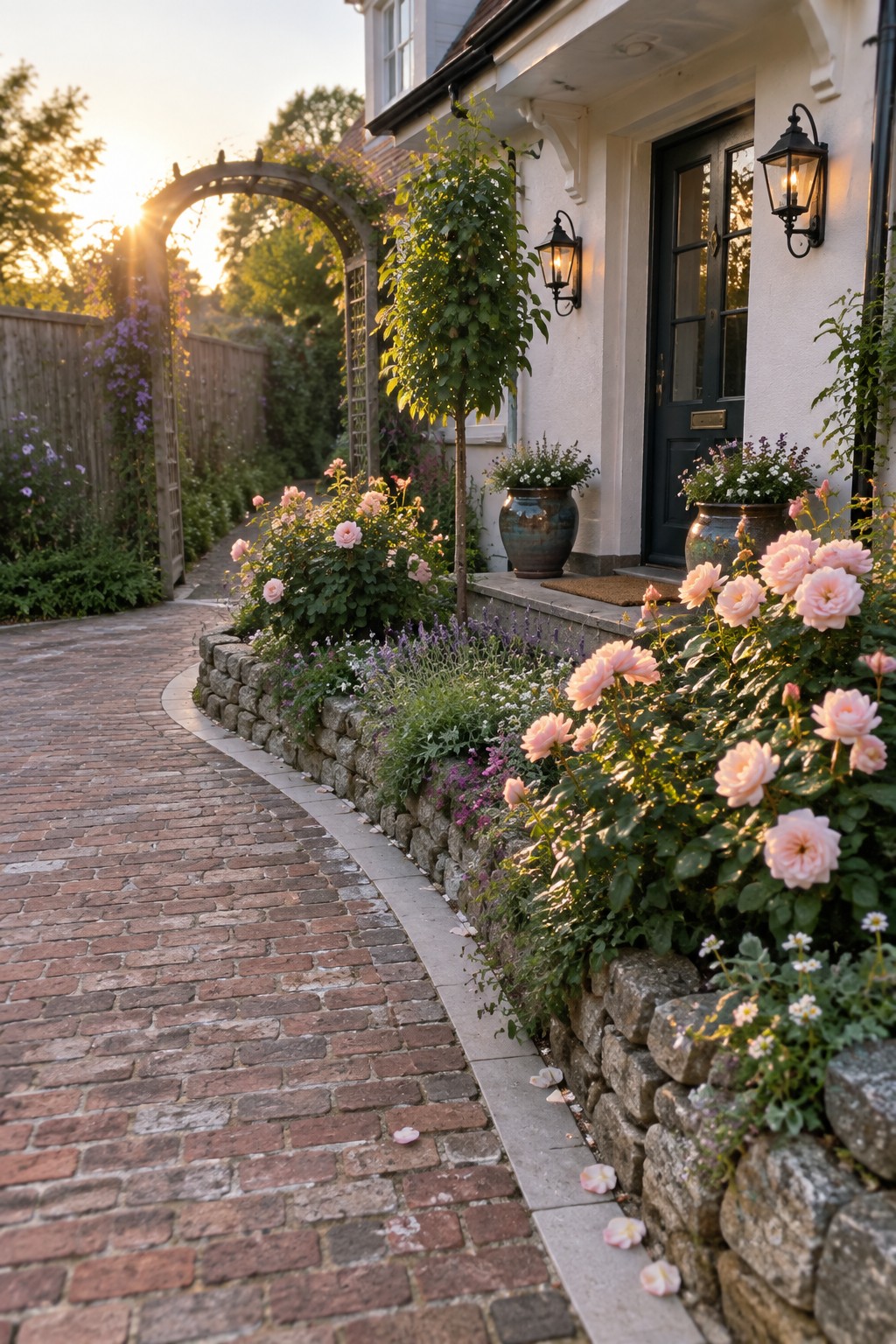
A low stone wall along the edge of a driveway gives you room for real planting without eating into the path or the lawn. It turns what could be a plain strip of ground into a proper garden border that still feels open and easy to walk past.
This setup suits older homes or any place where the drive sits a little lower than the beds. Keep the wall under knee height so it does not close things in, and use a mix of low flowers and a few taller plants behind them to add depth without blocking the way.
Gravel Driveways With Stepping Stone Paths

A gravel driveway can feel more welcoming when you run a simple stone path through it. The path gives a solid place to walk and keeps the gravel from looking like a big empty patch in front of the house.
This setup works best on smaller lots where you want the garden to reach right up to the entry. Keep the beds low and loose along the edges so the path feels like it belongs to the planting rather than cutting through it.
Let Grass Grow Between Pathway Pavers
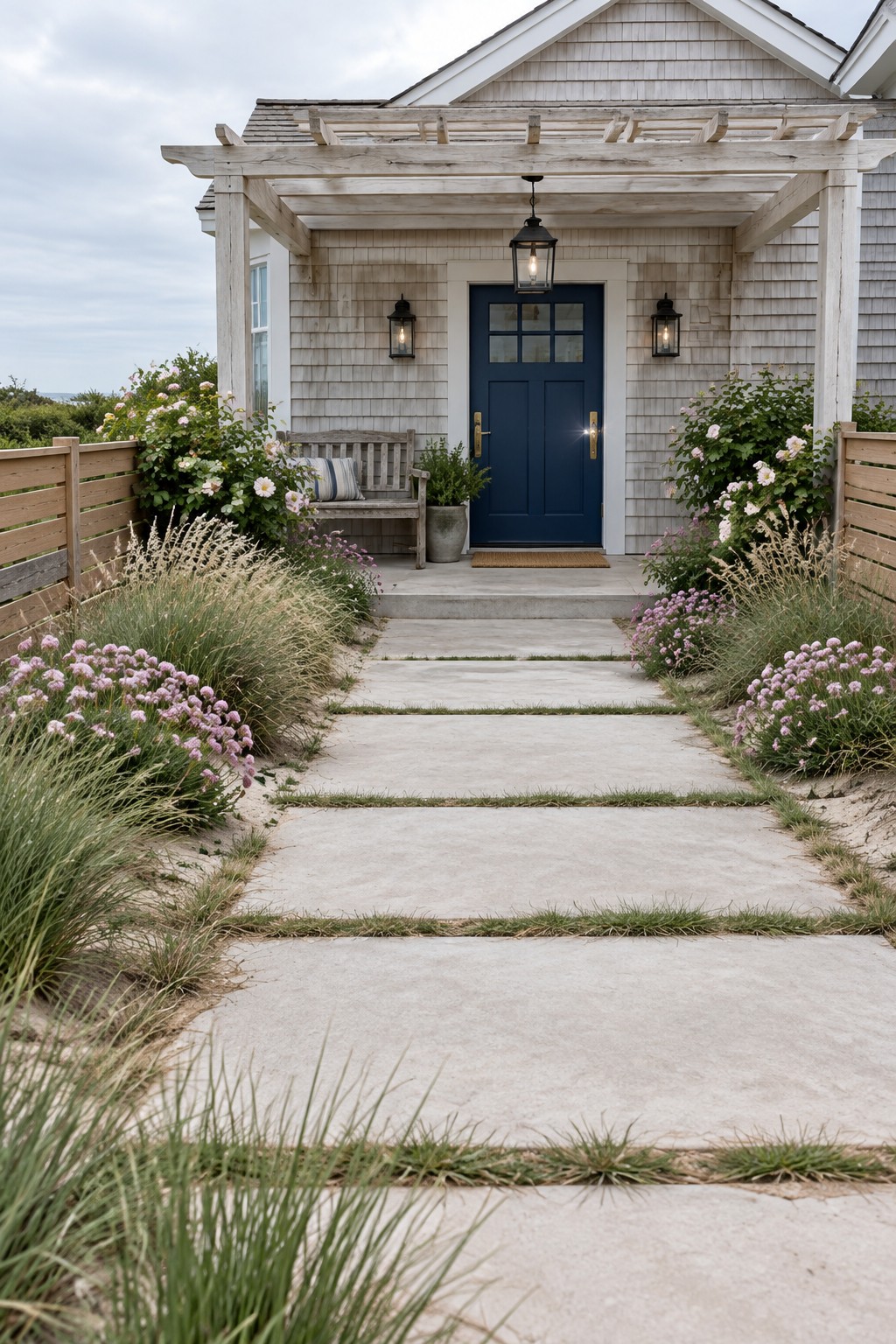
This simple choice keeps the walkway from feeling like a heavy strip of concrete cutting through the garden. The grass strips break up the surface and let the planting on either side feel continuous, which makes a small front area look more open and welcoming.
It suits homes with modest driveways or entry paths where you want to avoid a solid paved look. Space the pavers evenly, keep the gaps narrow enough to walk on comfortably, and pick a tough grass or ground cover that can take occasional foot traffic without wearing out.
Edge Your Driveway With A Narrow Water Channel
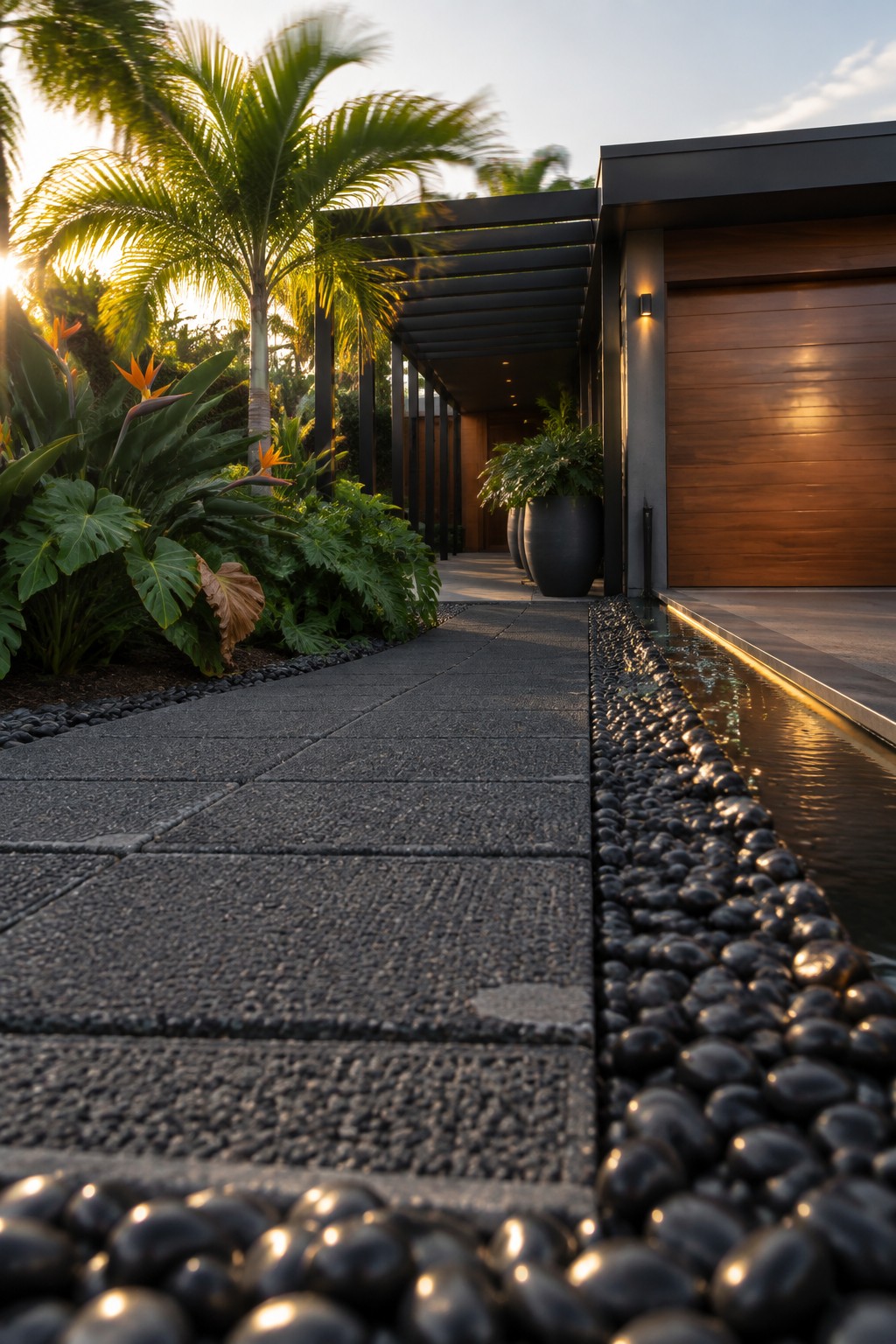
A narrow water channel running alongside a paved path gives a small driveway a finished look without taking up much space. The dark pebbles along the edge keep the water contained and add texture that works well with both modern and simple house styles. It turns what could feel like a plain slab of concrete into something more considered.
This approach works best on narrow driveways where you want to add interest without crowding the space. Keep the channel shallow and use a simple pump system so it stays low maintenance. It suits homes with clean lines and tropical or subtropical planting, but it can feel out of place in very cold climates where freezing is an issue.
Curve the Path With Border Planting
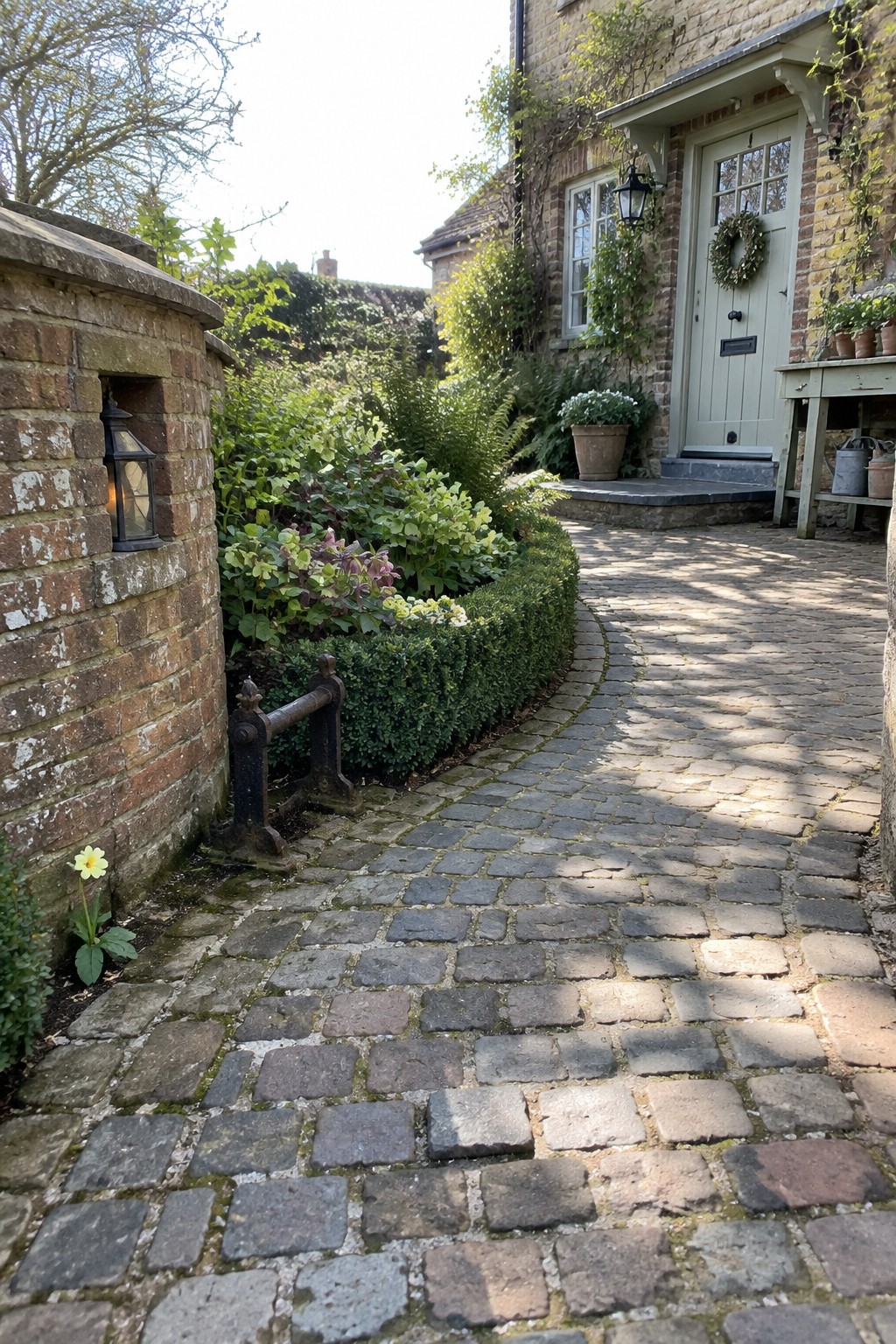
A gentle curve in a cobblestone path helps a small driveway feel less like a straight run and more like part of the garden. The low hedge along the edge keeps the planting contained while still softening the hard surface and guiding visitors toward the door.
This works best on narrow frontages where a straight path would feel too stark. Keep the hedge low so it does not crowd the walkway, and let a few taller plants sit just behind it for depth. Brick or stone edging on the other side helps hold the curve in place without adding much width.
Create a Soft Edge With a Lit Pebble Strip
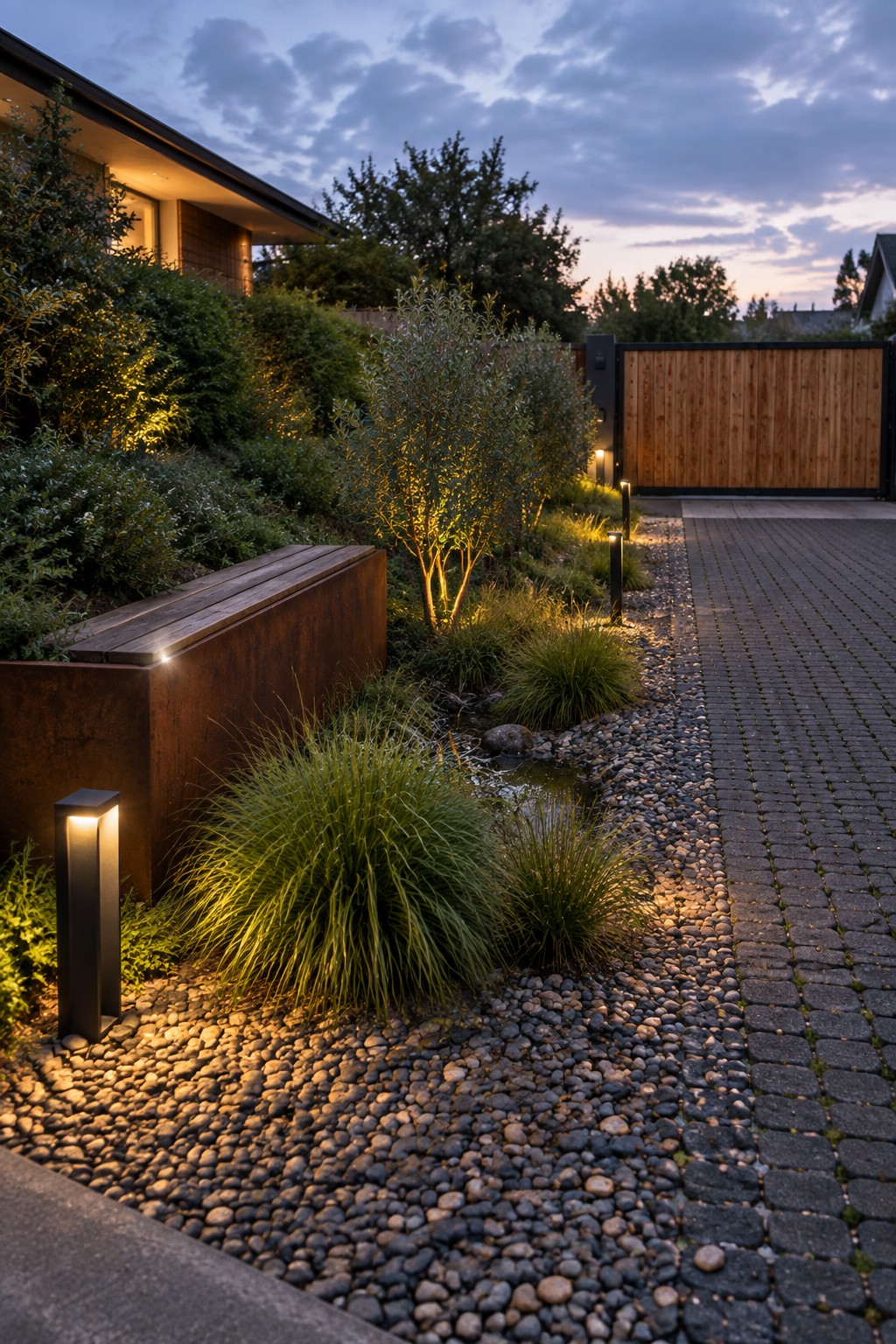
One simple way to make a small driveway feel more connected to the garden is to run a narrow pebble strip along the edge and add a few low lights and grasses. The pebbles keep the surface tidy while the plants and lighting soften the line between driveway and planting bed.
This works best on homes where the driveway runs close to the house or fence line. Use tough grasses that stay neat with little trimming and place the lights so they mark the path without creating glare. It keeps the whole front looking calm and pulled together even when space is tight.
Stone Pavers With Moss For Natural Pathways
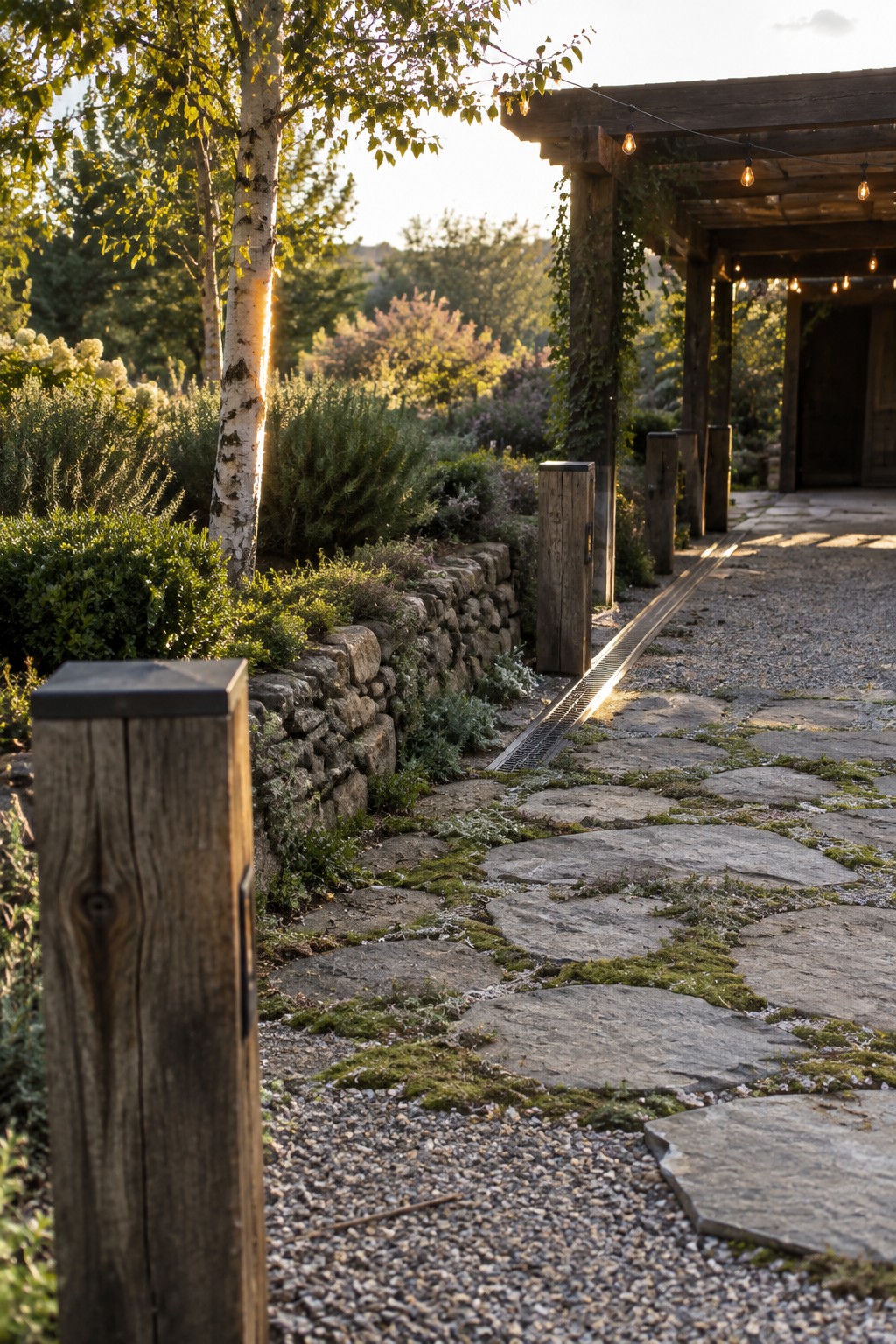
Many homeowners like the way large irregular stones let a path feel like part of the garden rather than a separate surface. Moss growing in the joints softens the look and helps the walkway tie in with nearby planting beds and gravel edges.
This works best on smaller properties where the driveway or entry path needs to feel welcoming without taking up much space. Keep the surrounding beds low and let the moss spread on its own for a low-maintenance result that still looks tended.
Gravel Driveways With Raised Planter Beds
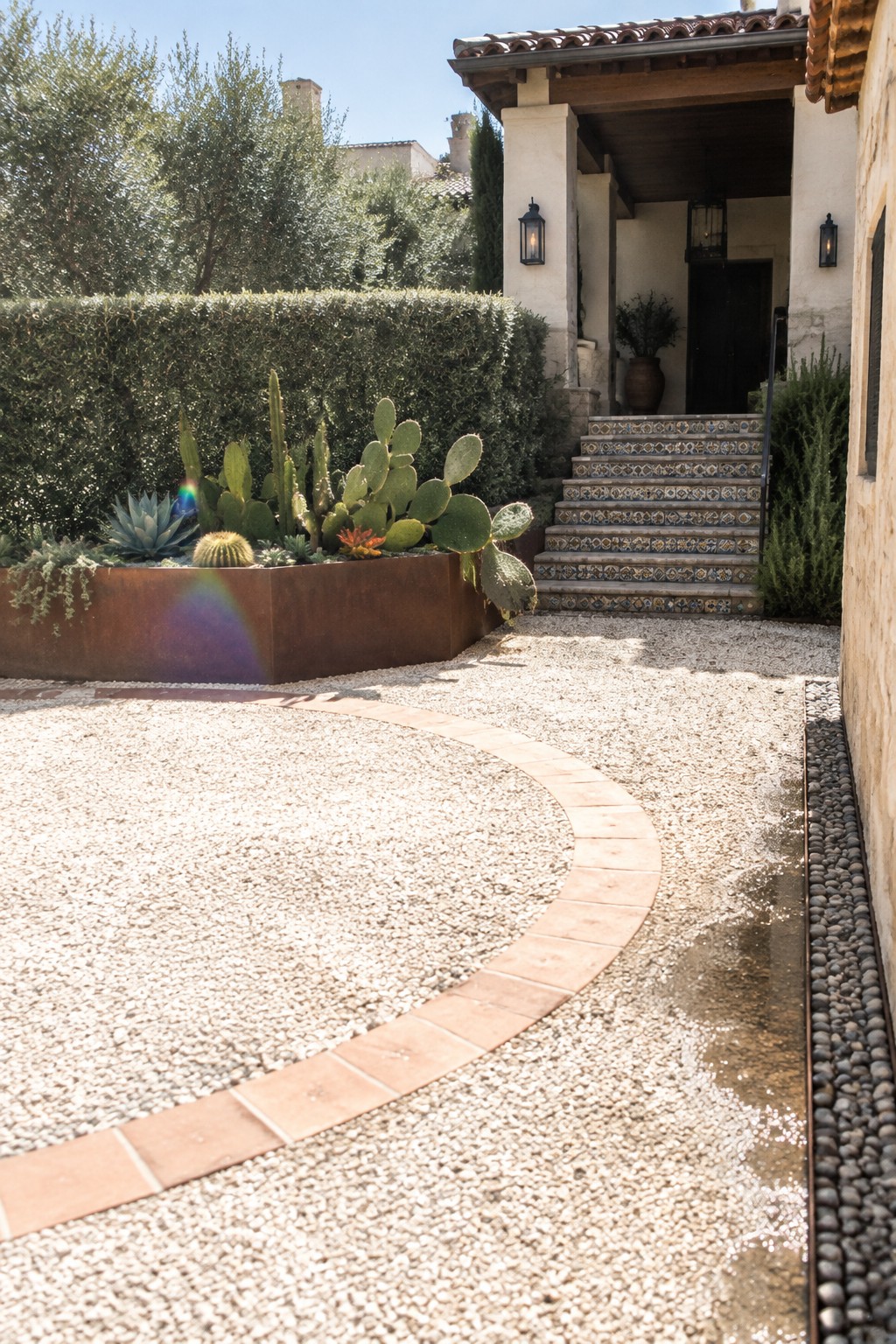
A raised metal planter tucked along the edge of a gravel driveway gives the space some structure without crowding it. The metal holds the soil in place and lets you grow a few plants right where the hardscape meets the house, which keeps the whole area from feeling too flat or bare.
This setup works best on smaller lots where a full garden bed would take up too much room. It suits homes that already lean toward low water use, since the planter makes it easy to group succulents and similar plants together and keep maintenance simple.
Keep a Narrow Grass Strip Down the Driveway
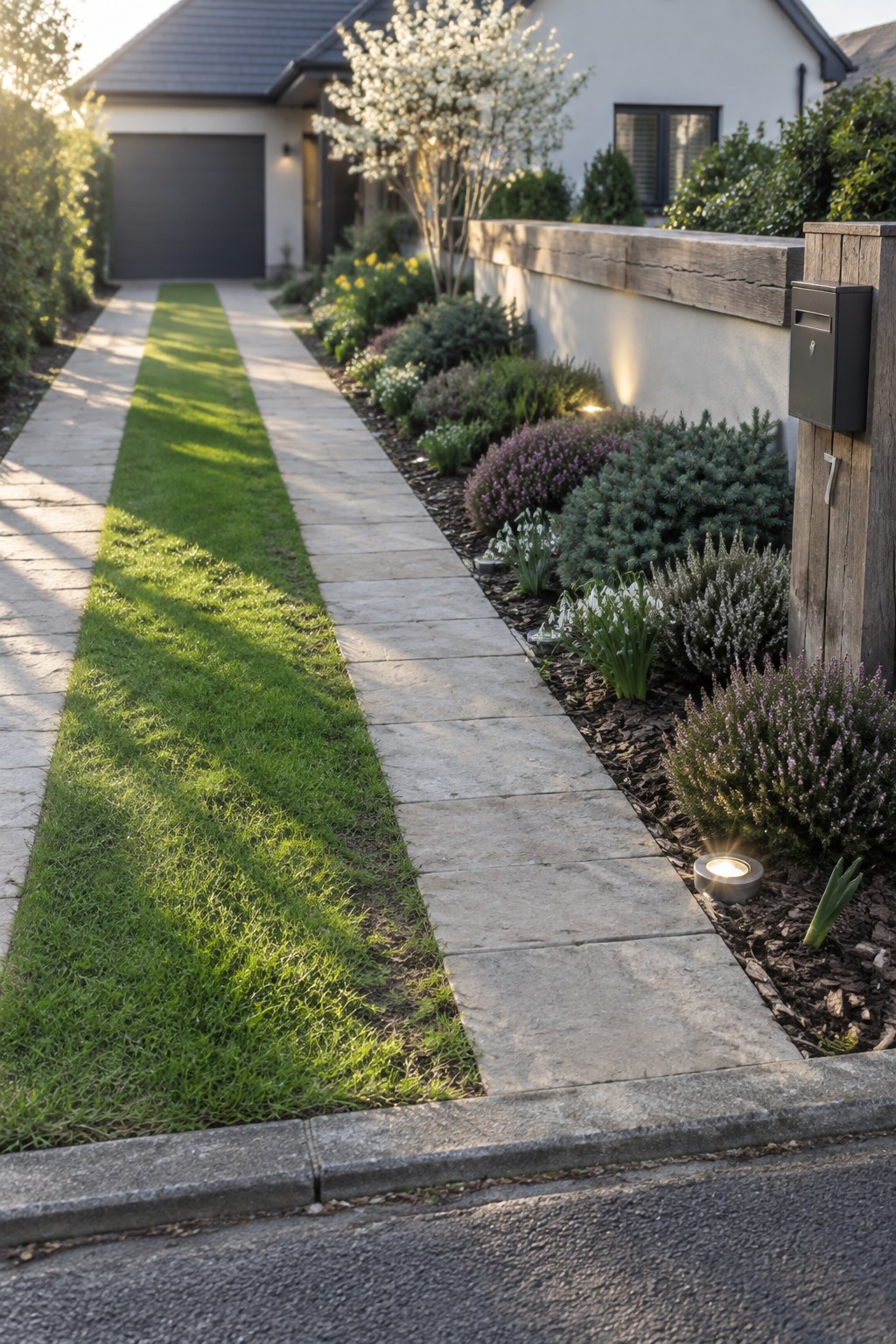
A long strip of grass running through the middle of a paved driveway or path breaks up the hard surface in a simple way. It adds a bit of softness and green without taking over the space, which works especially well on smaller lots where every foot counts.
This layout suits narrow frontages or side entrances best. Keep the beds along the edges low and layered with compact shrubs so the path stays easy to walk and the overall look stays neat rather than overgrown.
Line Your Driveway With Mixed Planting Beds
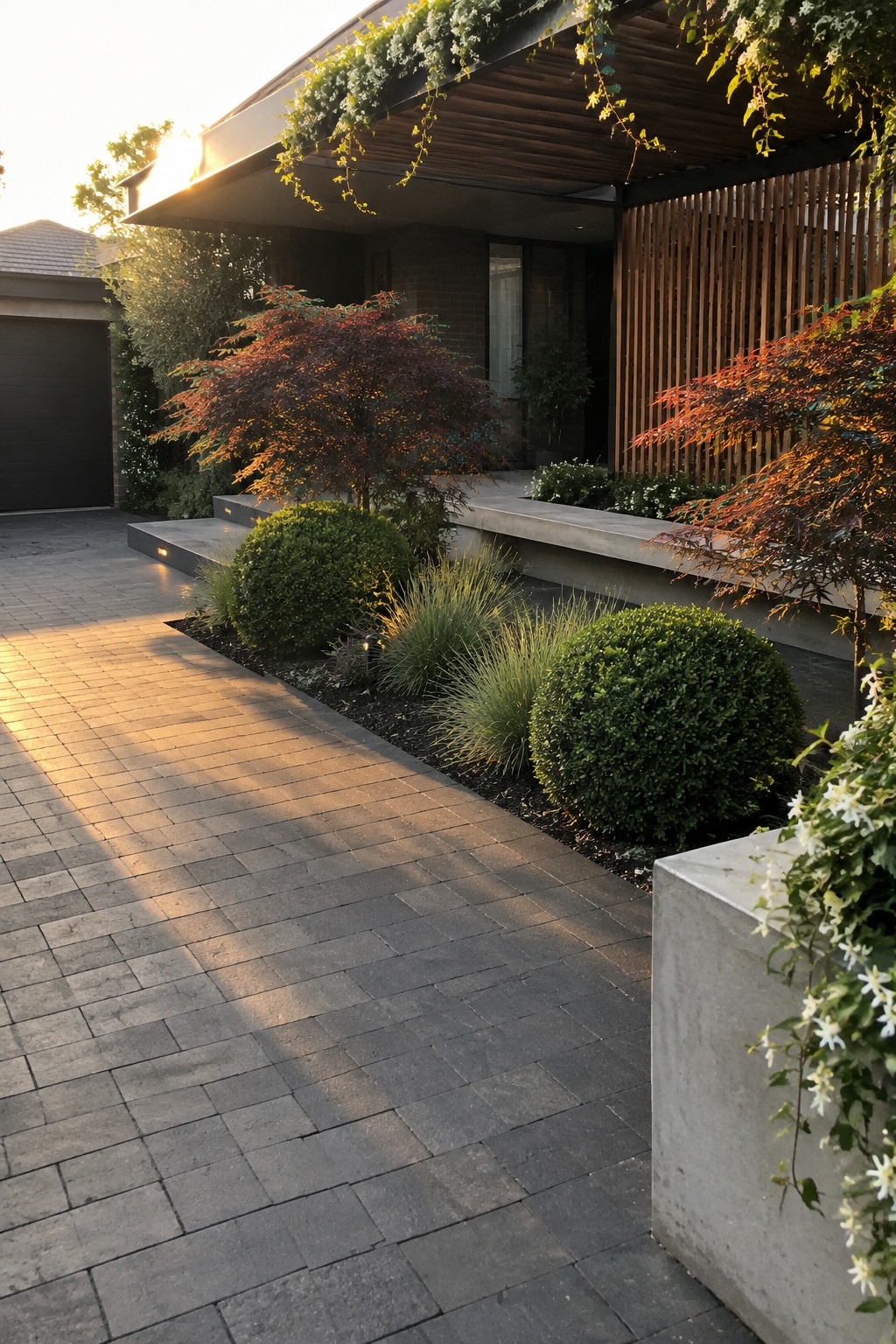
Planting beds that run right along the edge of a driveway can turn a plain paved area into something that feels more like a garden. The mix of low rounded shrubs, taller grasses, and a few small trees with color gives the space structure without crowding the walkway or making it feel narrow.
This works best on homes where the driveway sits close to the front door or entry steps. Keep the beds fairly narrow and choose plants that stay tidy so they do not drop leaves or branches onto the pavement. It suits both modern and traditional houses as long as the bed shape follows the line of the drive.
Define the Driveway Edge With Stone
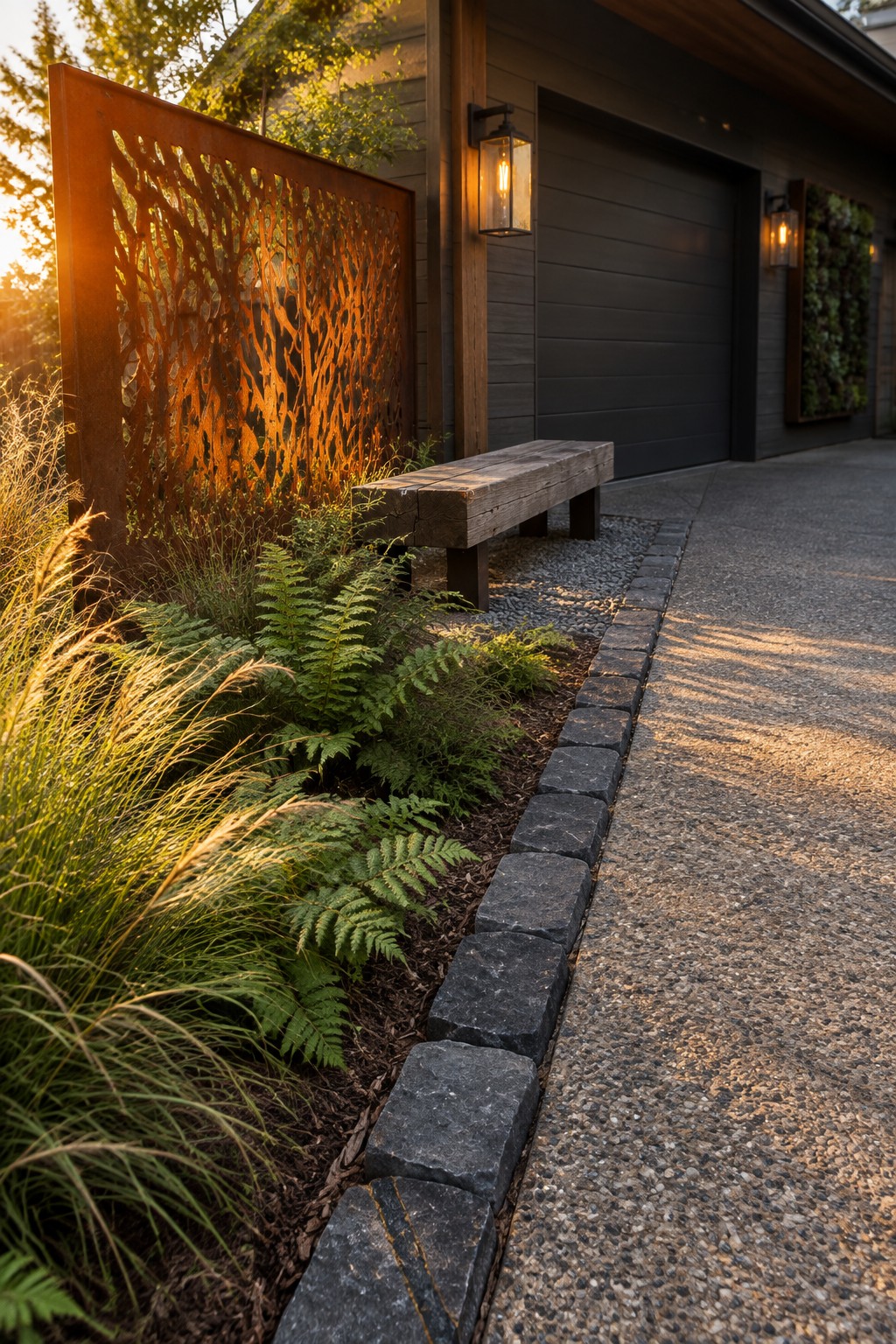
A low stone border gives the garden bed a clear shape and stops mulch from washing onto the driveway. It also makes the planting look more intentional, even when the bed is narrow.
This works best on small front yards where you want a mix of grasses and ferns without the whole thing looking scattered. Keep the stones simple and let the plants do most of the work.
A Garden Strip Built Into The Driveway
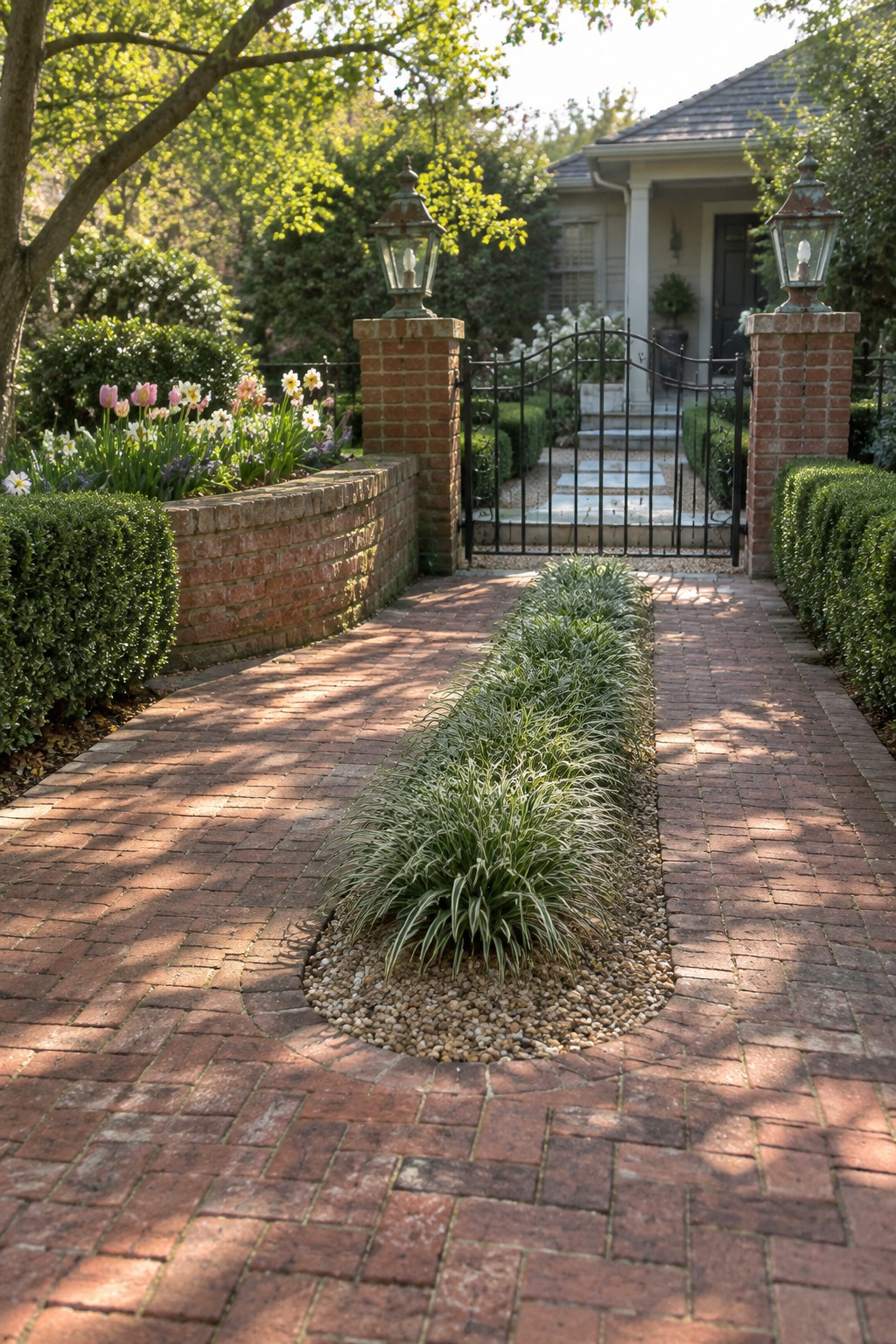
A narrow planting bed running down the center of a brick driveway adds softness without eating into the usable width. The greenery breaks up the hard surface and makes the whole approach feel less like a parking area and more like part of the garden.
This works best on straight drives that lead to a gate or front walk, especially on smaller lots where every foot counts. Choose tough, low-growing plants that can take a bit of shade from the house and occasional light traffic, and keep the bed narrow enough that cars still have room on either side.
Edge Your Driveway With a Low Planter Wall

A low concrete wall running along one side of the driveway gives you a clean way to add planting without eating into the usable space. It creates a clear boundary, holds a strip of greenery, and can even include a short bench section where someone can sit while waiting or unloading the car. The gravel between the pavers keeps the whole area feeling open rather than solid and heavy.
This setup works best on narrow driveways where you need structure but still want some garden presence. Keep the plants low to medium so they do not block the path or the garage. Choose tough varieties that handle reflected heat from the paving, and make sure the wall height stays low enough that it does not feel like a barrier.
Frequently Asked Questions
Q: How do I pick plants that stay out of the way when cars pull in and out?
A: Go for compact options like creeping thyme or low sedum that hug the ground. These fill gaps between pavers without growing tall or wide. Trim them back once in spring and they stay tidy all season.
Q: What happens to the garden beds when rain hits hard?
A: Shape the soil so it slopes gently away from the drive edge. Lay a line of small rocks right along that border to hold everything in place. The water drains off without carrying dirt onto the pavement.
Q: Can these ideas work if I only have room for a narrow strip on one side?
A: Yes, line that strip with a single row of pavers and tuck in a few ground covers. It softens the look without taking up parking space. Focus the planting on the front corner where it greets visitors first.
