


When I look at a contemporary home the driveway often sets the tone for the whole front before anyone even reaches the door.
Choosing materials that match the siding and entry details can make a small space feel more intentional rather than just a strip of pavement.
Small changes here matter more than people expect.
I have seen driveways that tie into the facade lighting and planting edges pull the entire exterior together in ways that photos rarely show.
Testing a few of these layouts on site has helped me spot which ones actually work once the cars are parked and the daily comings and goings begin.
Add a Grass Strip Down the Center
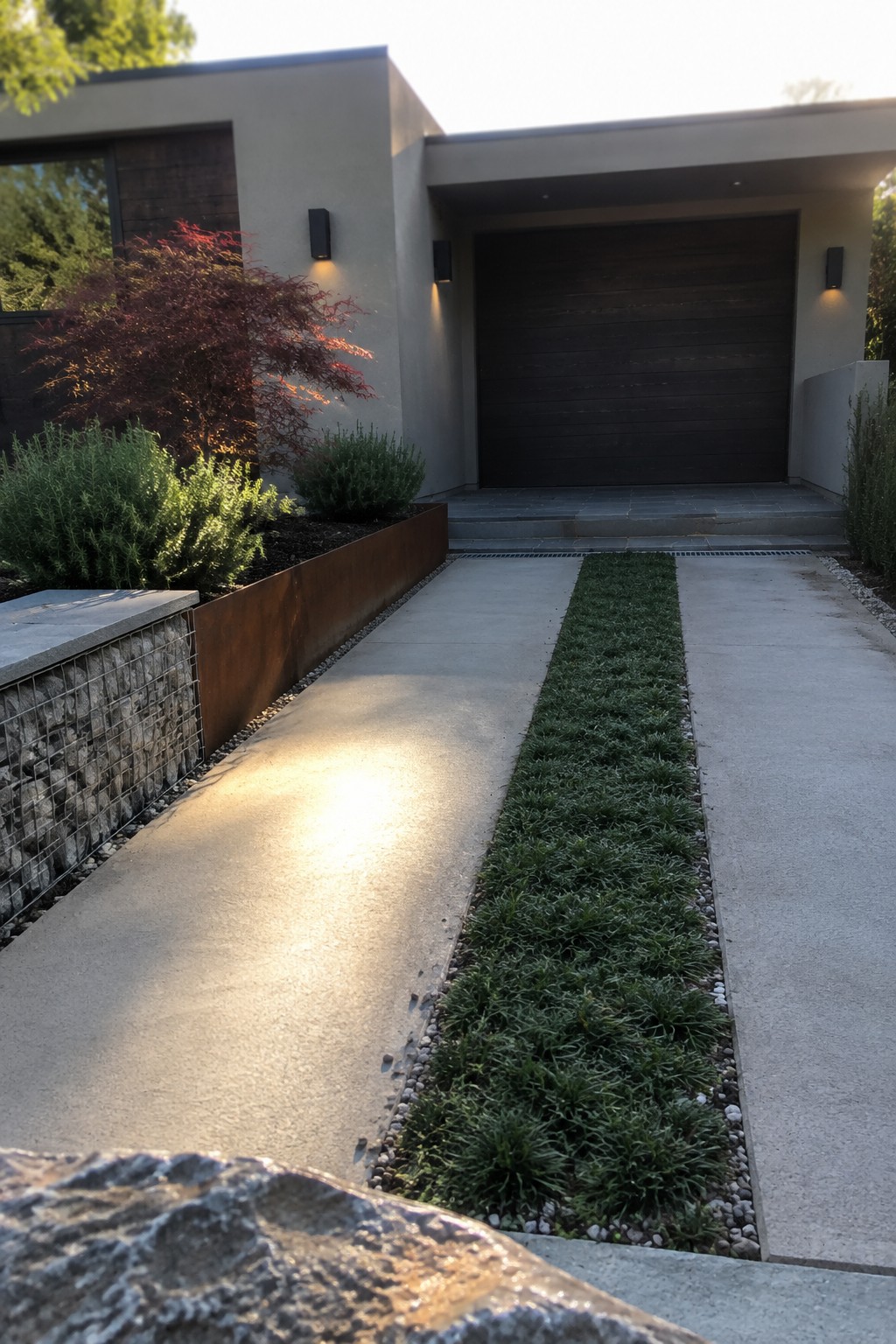
A central strip of grass or low planting breaks up the concrete in a small driveway and keeps the whole front from feeling too hard. It softens the look without taking up extra space and gives the eye something natural to follow toward the house.
This works best on narrow or single-car driveways where you want to cut down on pavement. Keep the strip narrow enough for tires to clear on both sides, choose tough low-growing plants that can handle some foot traffic, and match the width to the scale of your house so it feels intentional rather than leftover.
Mix Pavers And Grass For Your Driveway
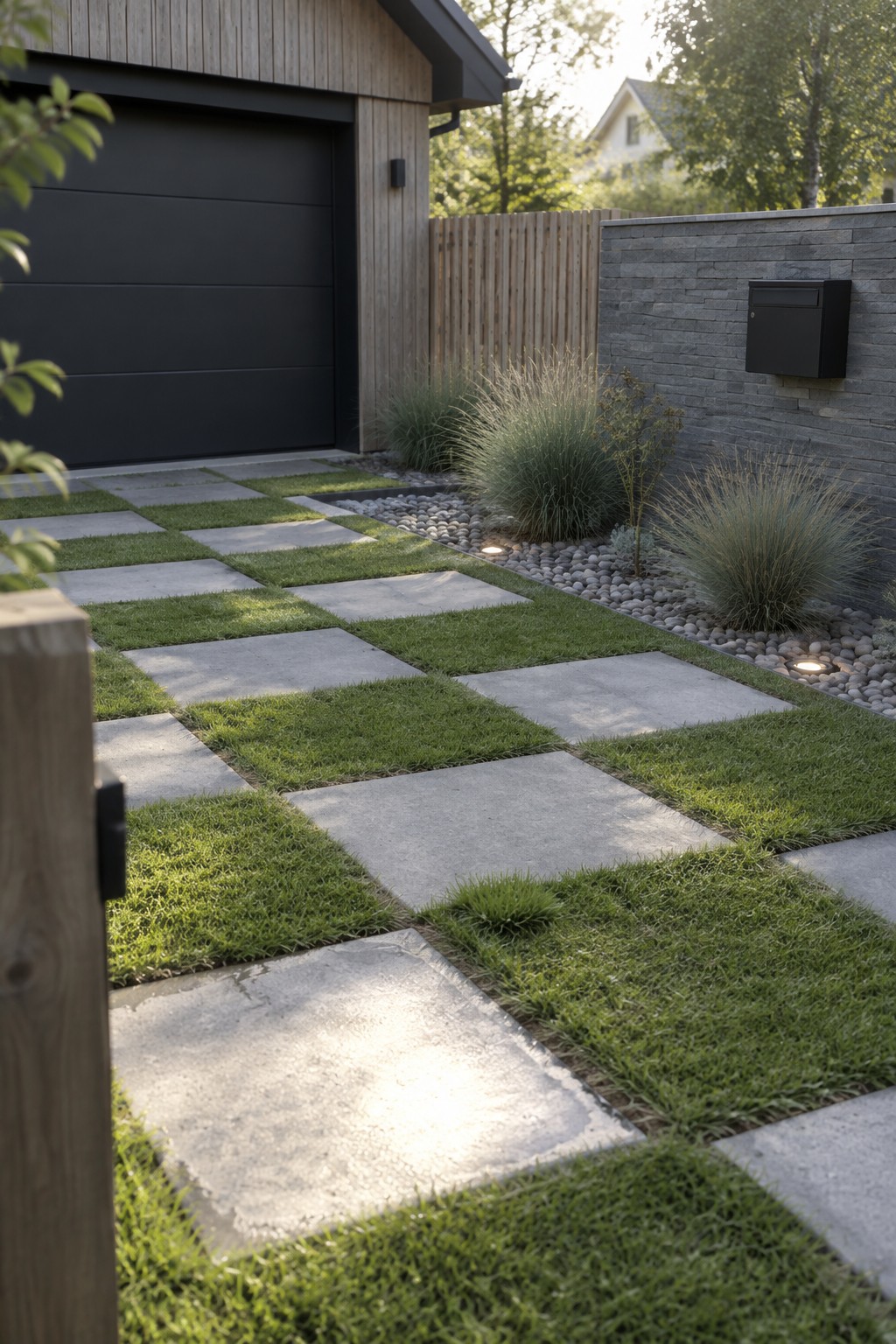
This layout uses large concrete pavers set into turf so the driveway stays functional but does not read as one solid slab. The grass breaks up the surface, cuts down on runoff, and keeps the whole entry feeling lighter and more open.
It suits smaller front yards on contemporary homes where you want to keep paving to a minimum. Just make sure the pavers sit on a solid base and the grass variety can handle some foot and tire traffic without wearing out.
Break Up Driveway Paving With Grass Strips
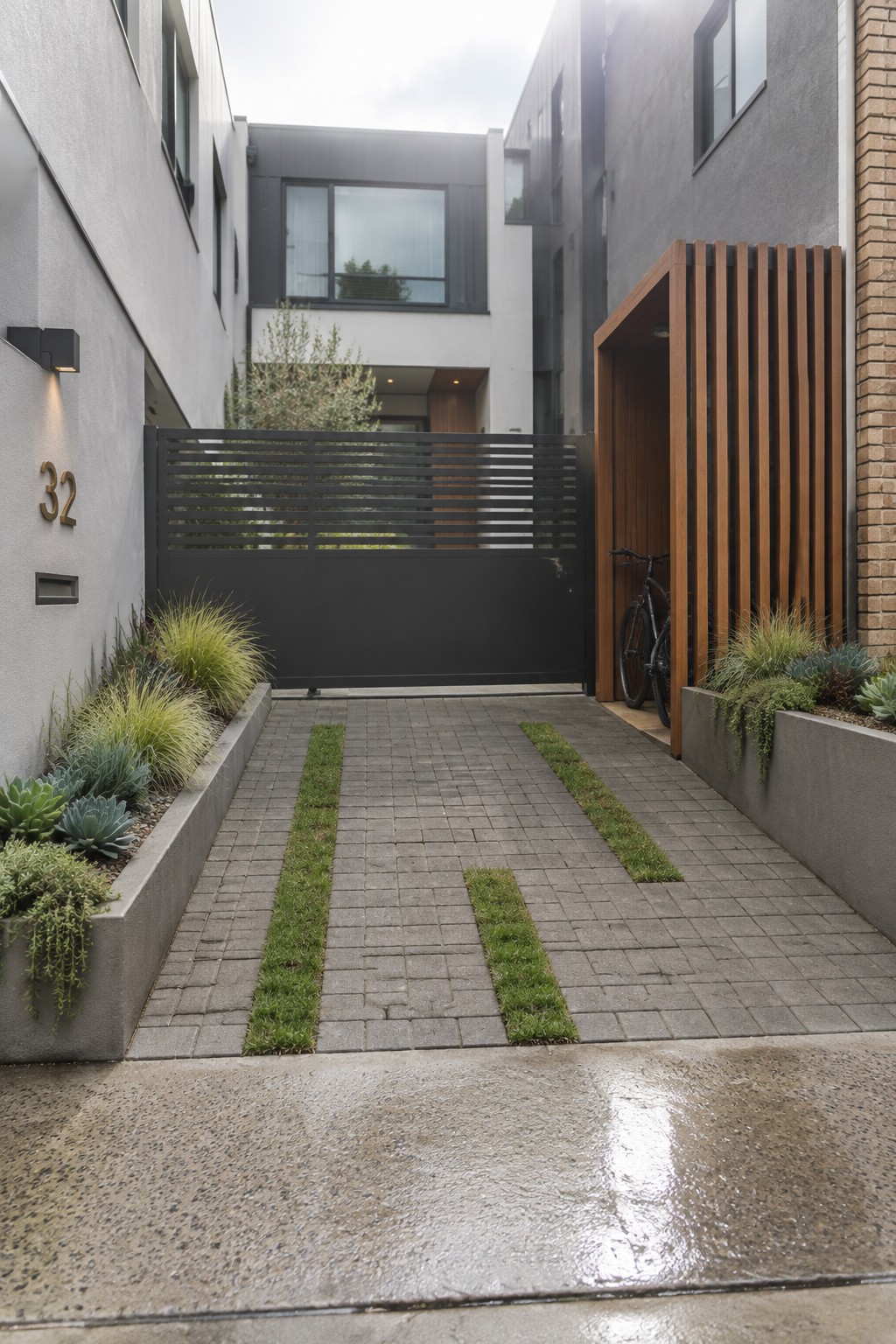
Running narrow strips of grass through a paved driveway gives a small space more visual breathing room. The lines break up the solid surface and tie the hardscape to the surrounding planting without needing extra width or fancy materials.
This approach suits narrow modern driveways where you still need to drive and park. Keep the grass strips at least a foot wide so they stay easy to mow, and choose a paving color that sits quietly next to the green.
Use Paver Strips To Break Up Concrete
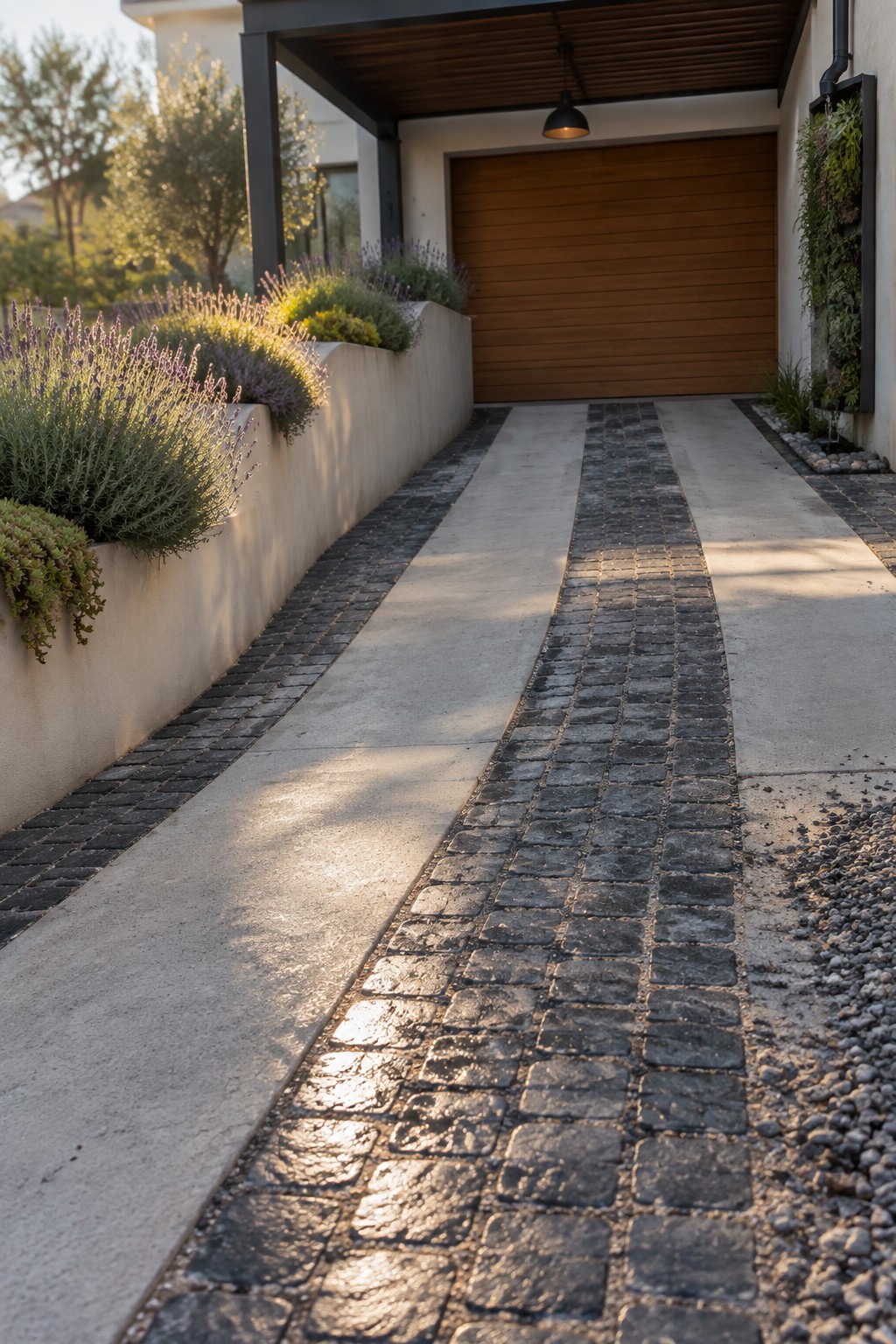
Many people end up with a wide slab of plain concrete for their driveway and then wonder how to make it feel less flat. Adding strips of cobblestone or pavers down the center gives the surface some texture and breaks the length into narrower sections. It keeps the driveway practical for cars while making the whole front look more finished.
This approach works especially well on smaller lots where you do not want the concrete to dominate. Keep the paver strips about the width of a tire track and let the rest stay smooth concrete. The contrast adds enough detail on its own, so you can keep the planting along the edges simple and low.
Narrow Concrete Driveways With Gravel Borders
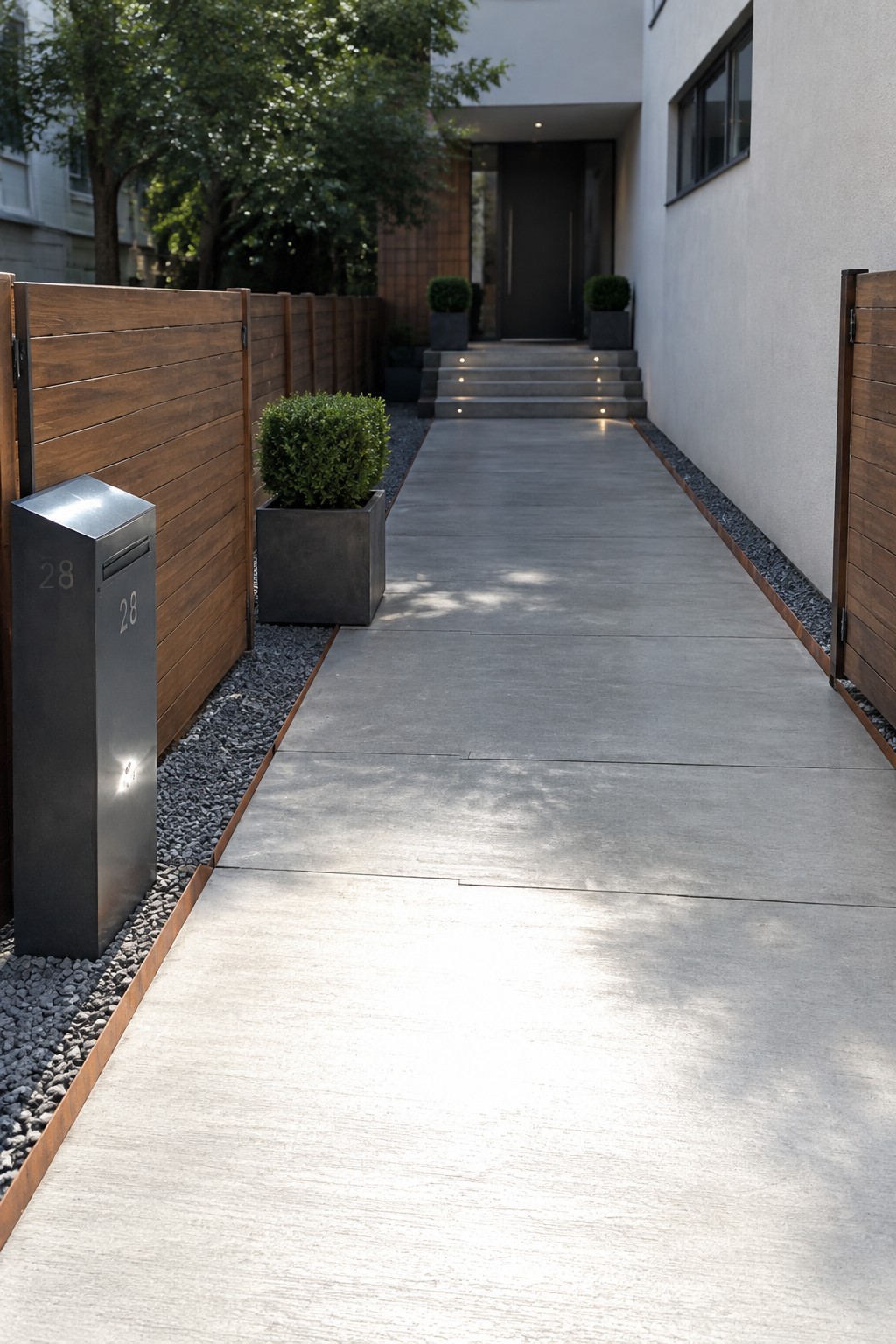
A narrow concrete path can work well for small driveways because it keeps the front area from feeling crowded. The clean lines and gravel edges give it a modern look without needing a lot of extra space or materials. This setup also makes maintenance easier since there is less paved surface to deal with.
It suits homes with tight front yards or side entries where a full-width driveway would overwhelm the space. Just make sure the concrete is thick enough for cars and add some low lighting along the edges if the path leads to steps.
Pavers Set In Gravel For A Small Driveway
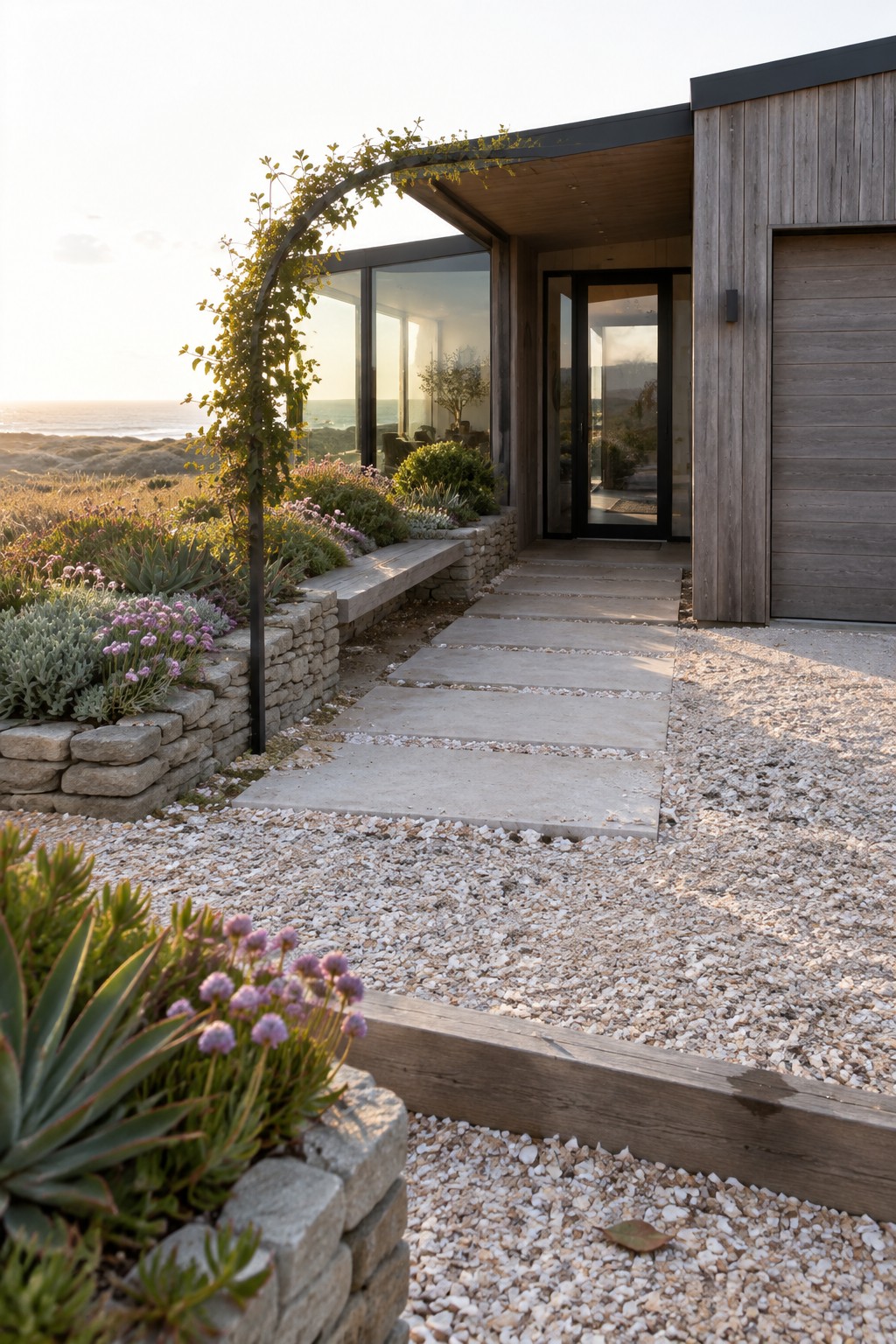
Large concrete pavers laid into gravel give a driveway or entry path a clean, modern look without needing a full paved surface. The gravel helps with drainage and keeps the area from feeling too hard or heavy, while the pavers create a clear walking route to the door. This approach works especially well on smaller lots where a traditional driveway would take up too much space.
It suits contemporary homes that already use natural materials like wood and stone. Keep the pavers simple and rectangular, space them evenly, and let low planting beds border the edges so the gravel blends into the landscape instead of standing out on its own.
Add Planting Strips Along the Driveway
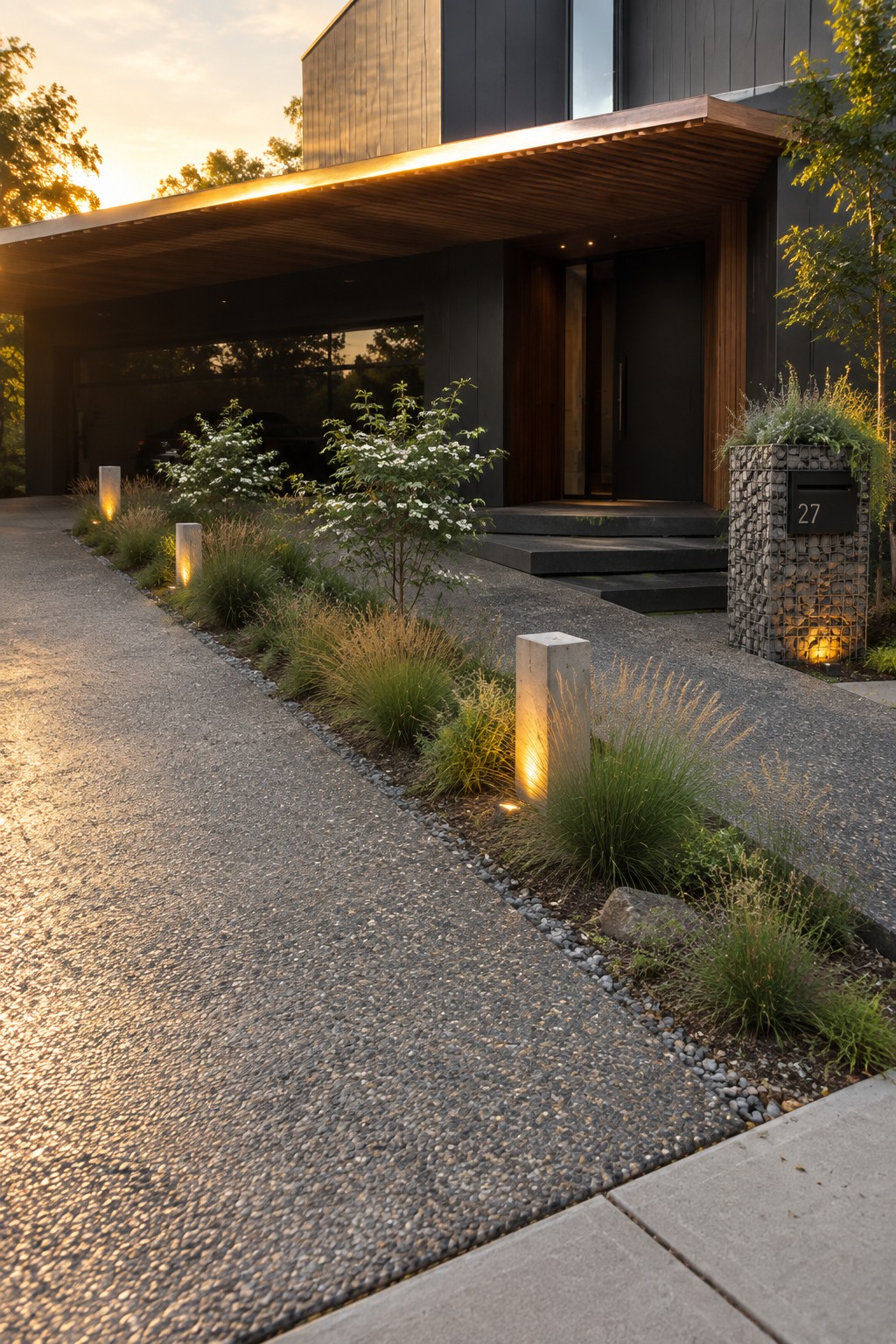
A narrow band of plants and gravel next to the paved surface breaks up the hard look of a small driveway without taking up much room. The grasses and low lights create a gentle transition from the walkway to the house, which helps the whole front feel more balanced and less stark.
This works best on contemporary homes where the architecture is simple and clean. Keep the plants low and mostly evergreen so they stay neat year-round, and use the same type of light along the length to avoid a scattered effect. Watch the width so it does not crowd the walking area or make snow clearing harder in winter.
Built-In Benches For Small Courtyard Spaces
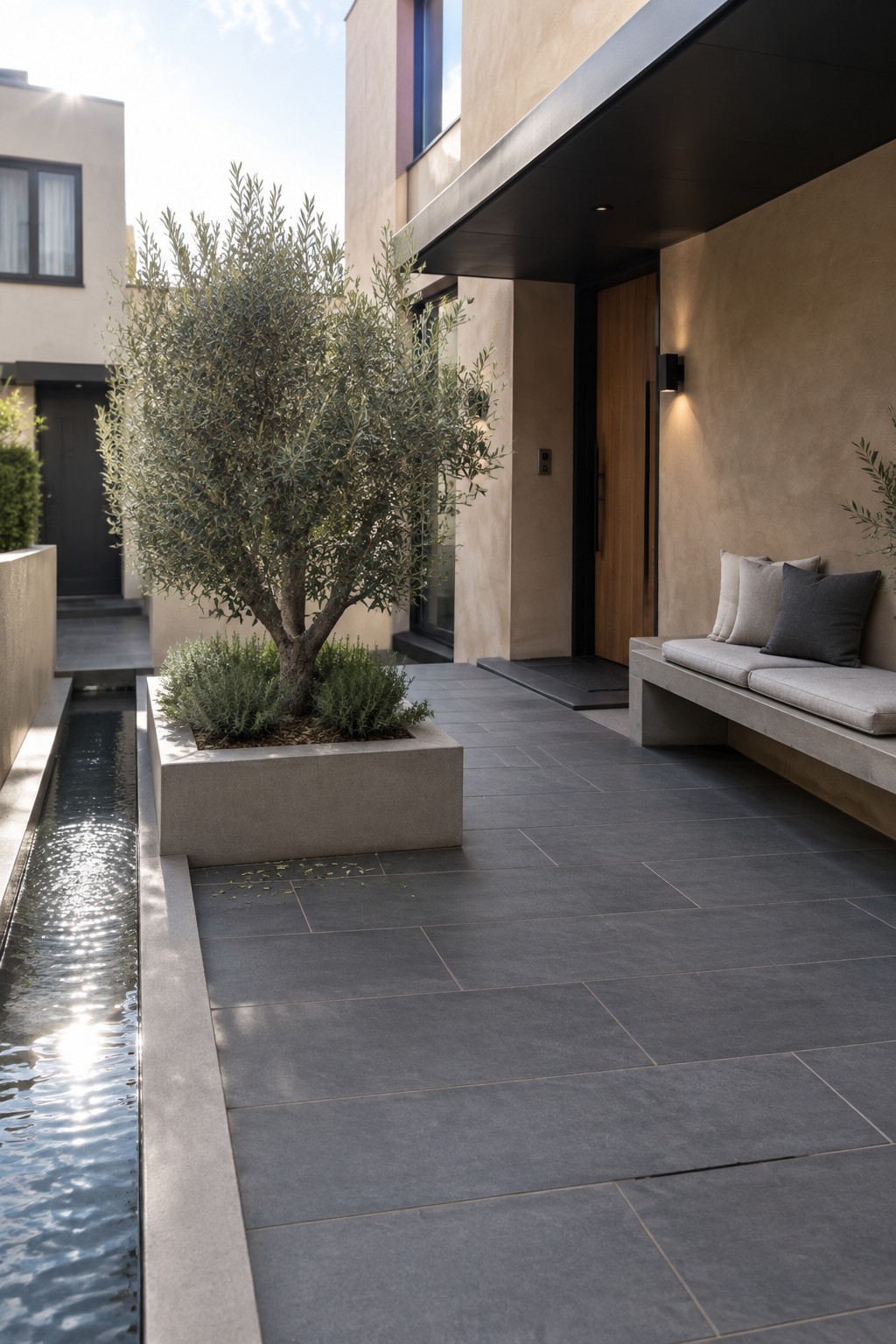
A built-in bench gives you seating in a tight entry or driveway area without adding extra furniture that can make the space feel smaller. The concrete form stays low and simple, so it fits the clean lines of a modern house while still being useful for sitting or setting down bags.
This approach works best on homes with straight walls and minimal planting nearby. Keep cushions neutral and limit other pieces so the bench does not compete with the architecture or the path.
Linear Lighting Along Driveway Edges
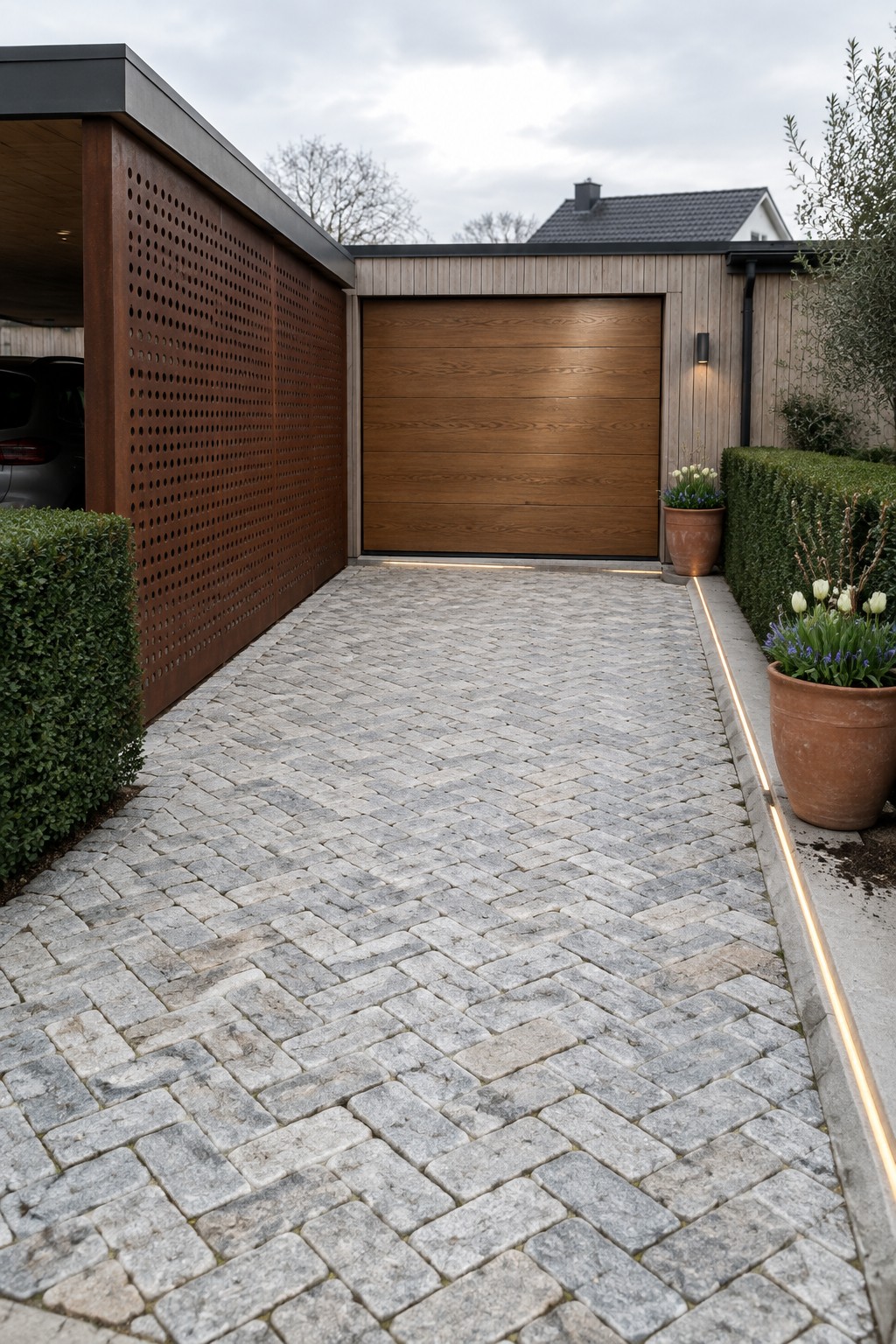
Many small driveways end up looking plain or forgotten once the car is parked. Running a thin strip of light along each edge gives the surface a finished look and makes the whole area feel more intentional at night.
This works best on homes with clean lines and simple materials. Keep the lights low and warm so they guide the car without shining into windows or bothering neighbors. The paving itself can stay modest, since the light does most of the work defining the space.
Circular Driveway with a Central Bed
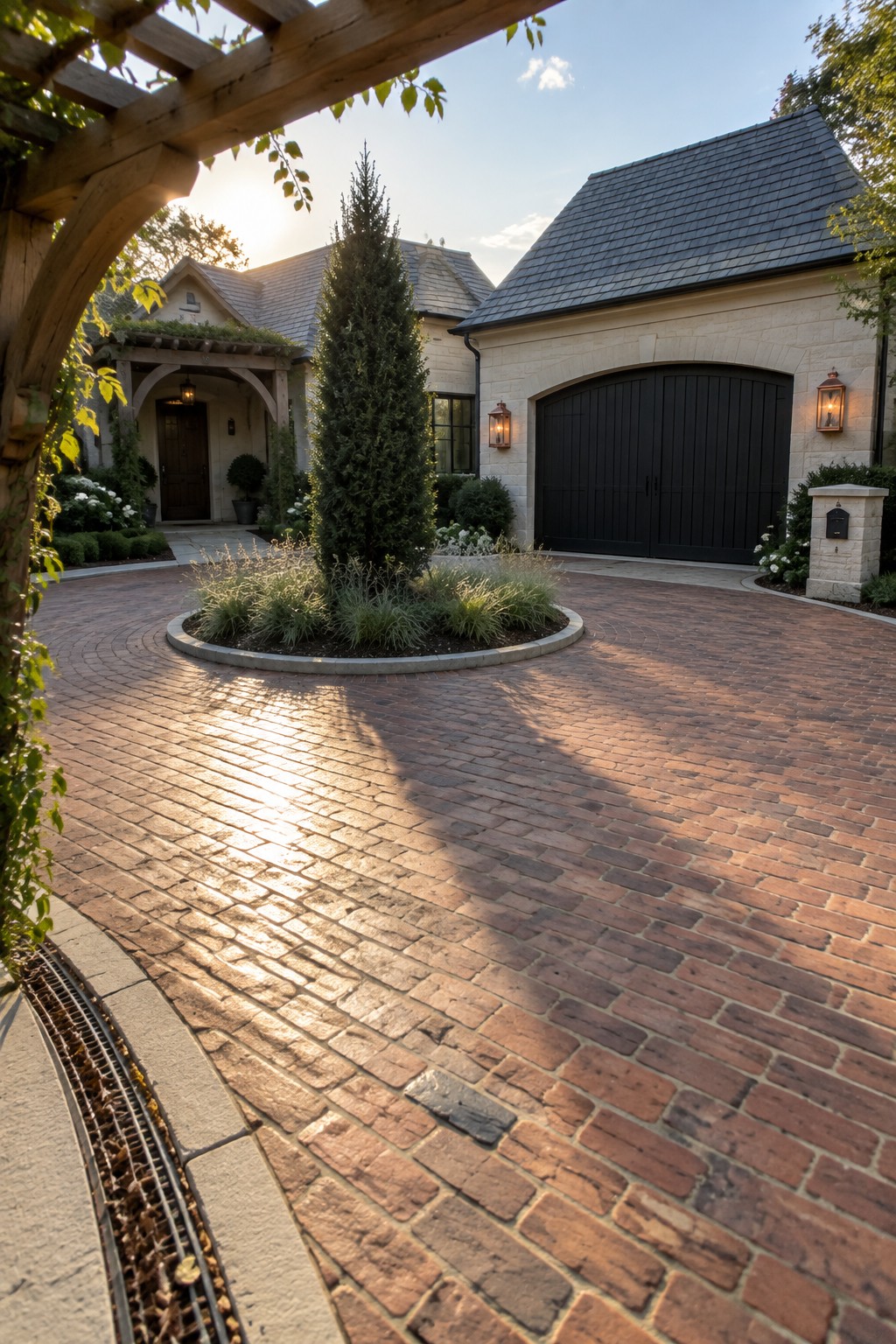
A circular layout helps a small driveway feel more balanced and less like a straight strip of pavement. The brick surface curves naturally around a planted island, which breaks up the hardscape and adds some softness right where the eye lands first. This works especially well when the front area is tight but you still need room to turn a car.
It suits homes with a modest setback from the street and pairs best with simple plantings that stay low. Keep the circle wide enough for easy maneuvering and choose materials that match the house rather than trying to match the street. The result feels more intentional than a basic rectangle of concrete.
Gravel Driveway With Concrete Runners
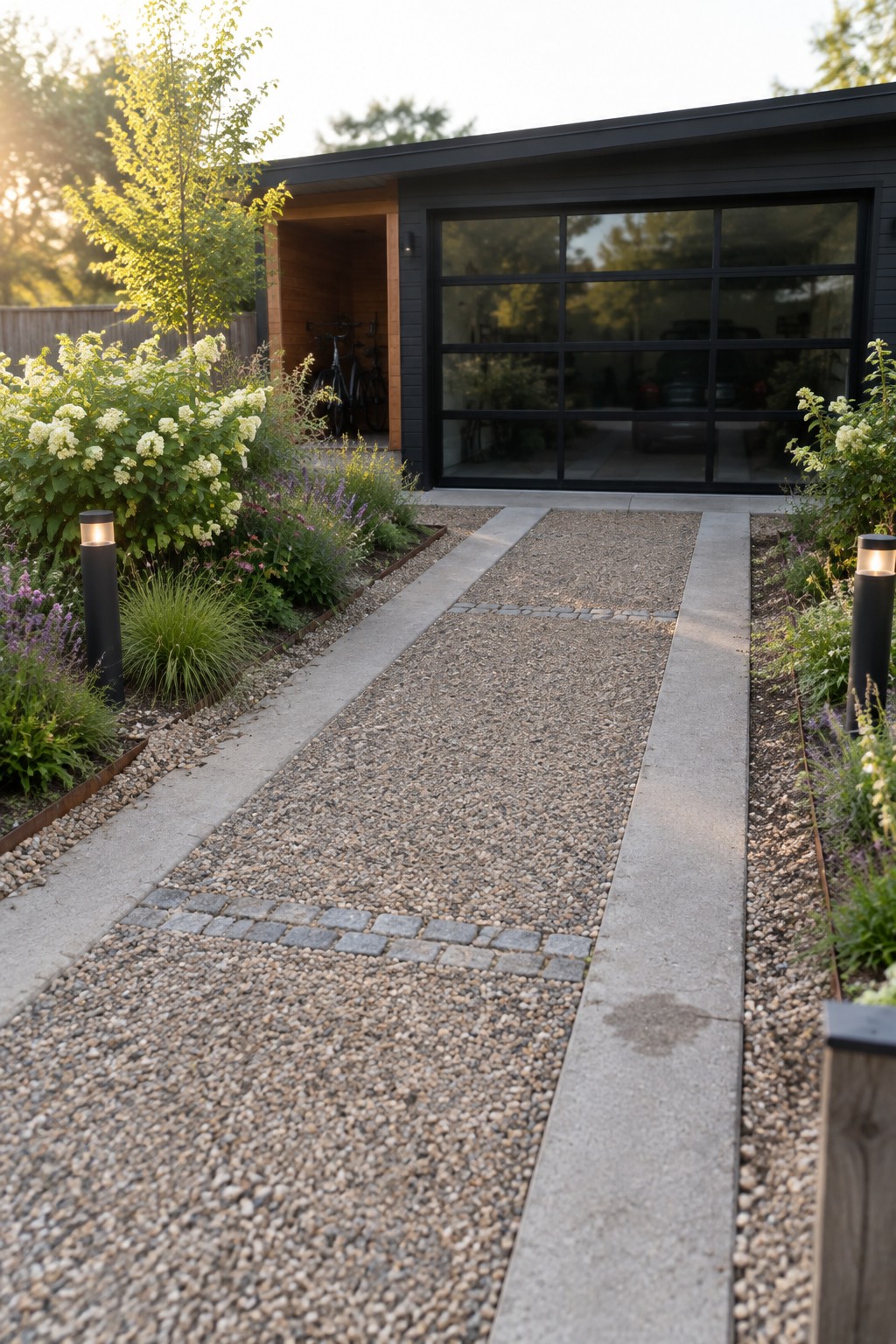
Many homeowners like this setup because it keeps a small driveway from looking too solid or overwhelming. The concrete strips give tires a firm path while the gravel between them cuts down on the amount of paved surface and lets the driveway blend into the surrounding garden.
This works best on narrow lots or modern homes where you want a lighter look. Keep the planting beds low and simple along the edges so the path stays easy to maintain and does not compete with the house.
Moss Between Stone Pavers
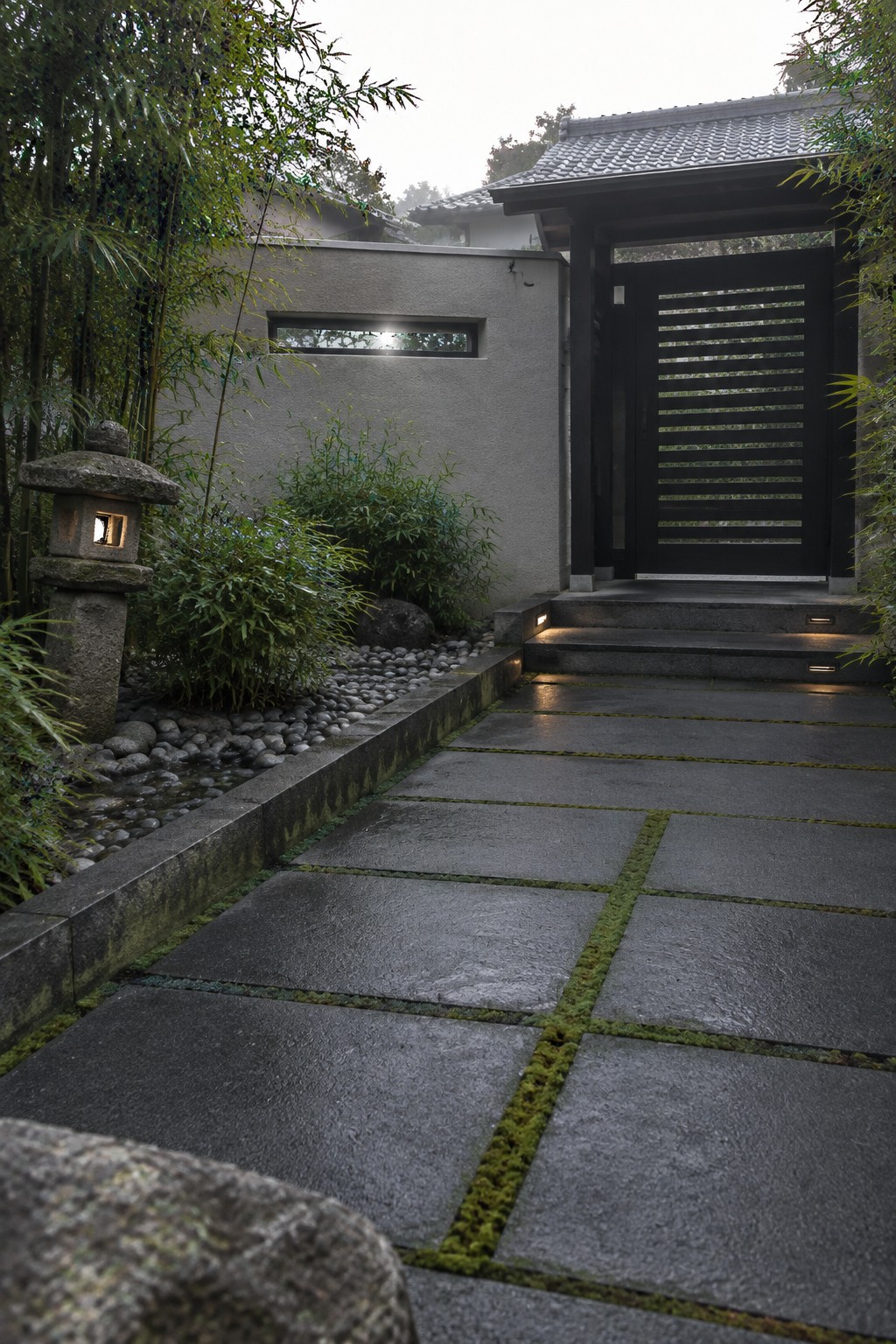
Moss between pavers gives a small driveway or entry path a softer, more settled look. The green joints break up the hard surface and make the stones feel like they belong with the surrounding plants instead of sitting on top of them. It works especially well when the path sits in part shade and does not see constant heavy traffic.
This approach suits contemporary homes that already lean toward simple, natural materials. Keep the pavers large and the gaps fairly wide so the moss has room to take hold. Just make sure the base stays well drained so the moss stays green rather than turning slippery.
Gravel Borders For A Slim Entry Path
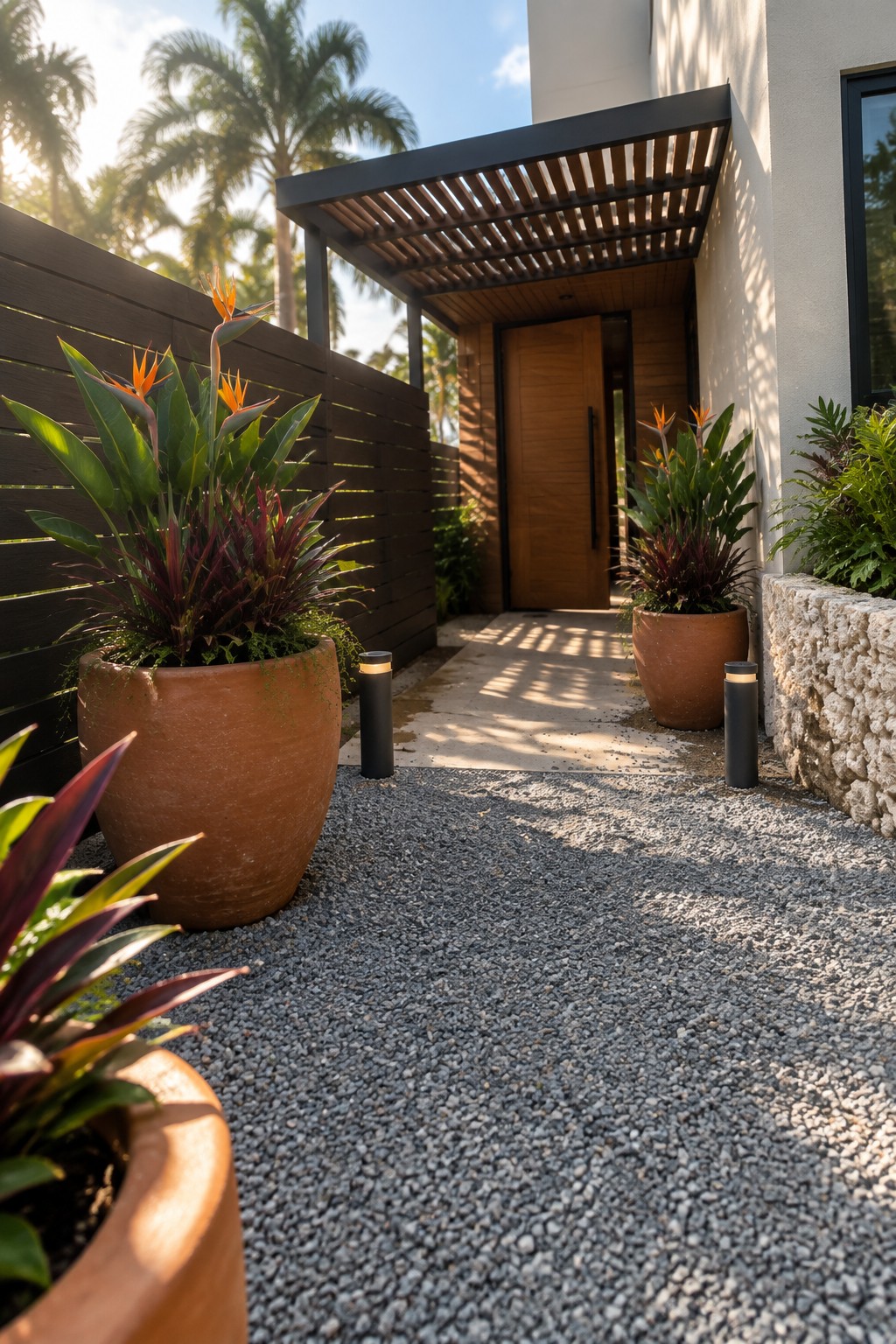
Gravel works well next to a narrow concrete path because it adds texture and helps the walkway feel wider without actually taking up more space. It also improves drainage and keeps the look simple and modern, which suits many contemporary homes that have limited room in front.
Large pots placed along the edge bring in color and height without needing permanent garden beds. This setup works best on small lots where you want a clean path to the door but still need some greenery. Just keep the gravel contained so it does not spill onto the concrete over time.
Timber Planks In Gravel Driveways
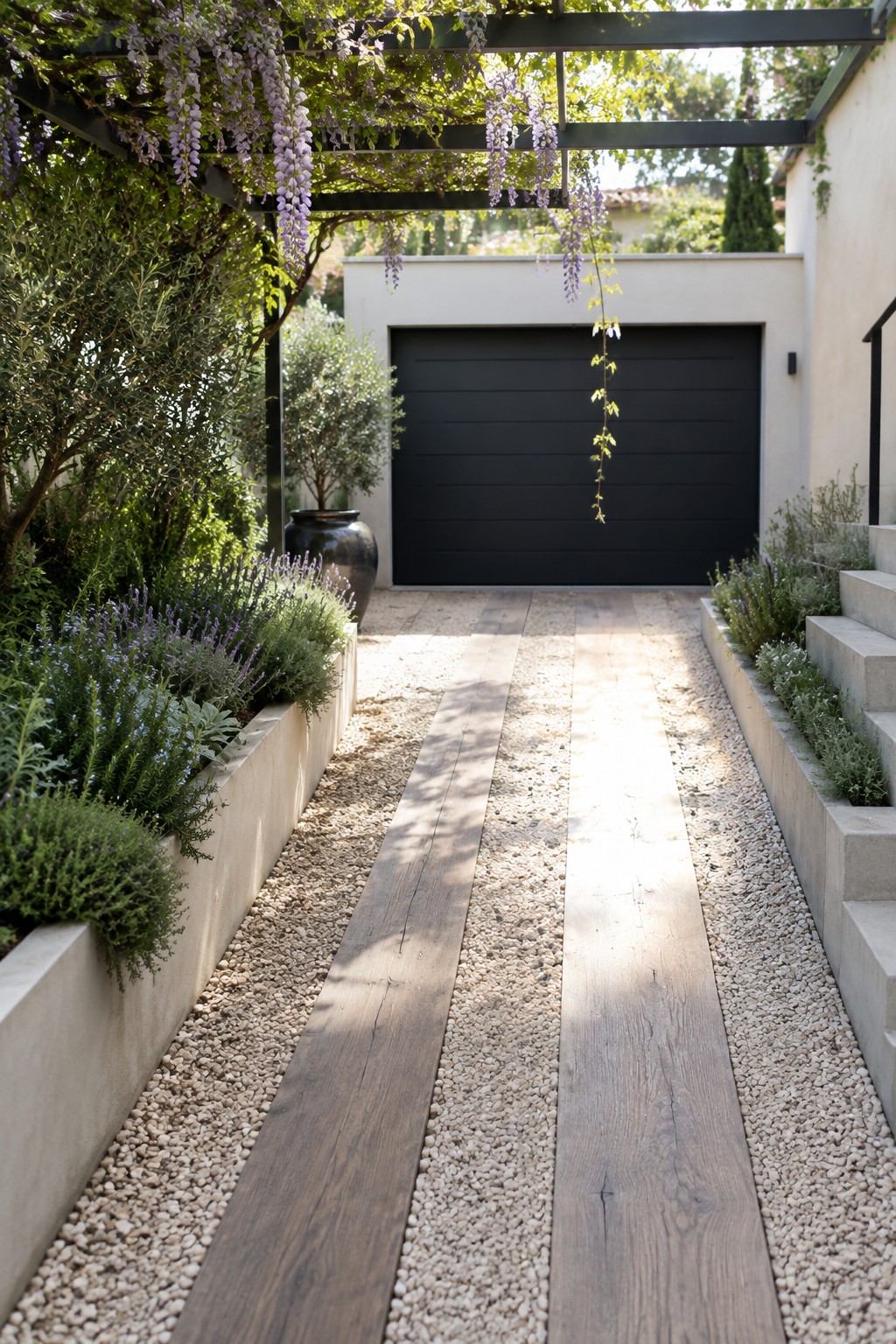
Many homeowners like the look of wood set into gravel because it creates a clear path without covering the whole surface in pavement. The planks give structure and direction while the gravel keeps the feel open and low key. It works especially well on narrow driveways where a solid slab would feel too much.
This idea suits contemporary homes that already use natural materials elsewhere. Treat the wood for weather exposure and compact the gravel properly so the planks stay level. Avoid using it on steep slopes where drainage might become an issue.
Add an Accent Strip Down the Middle of the Driveway
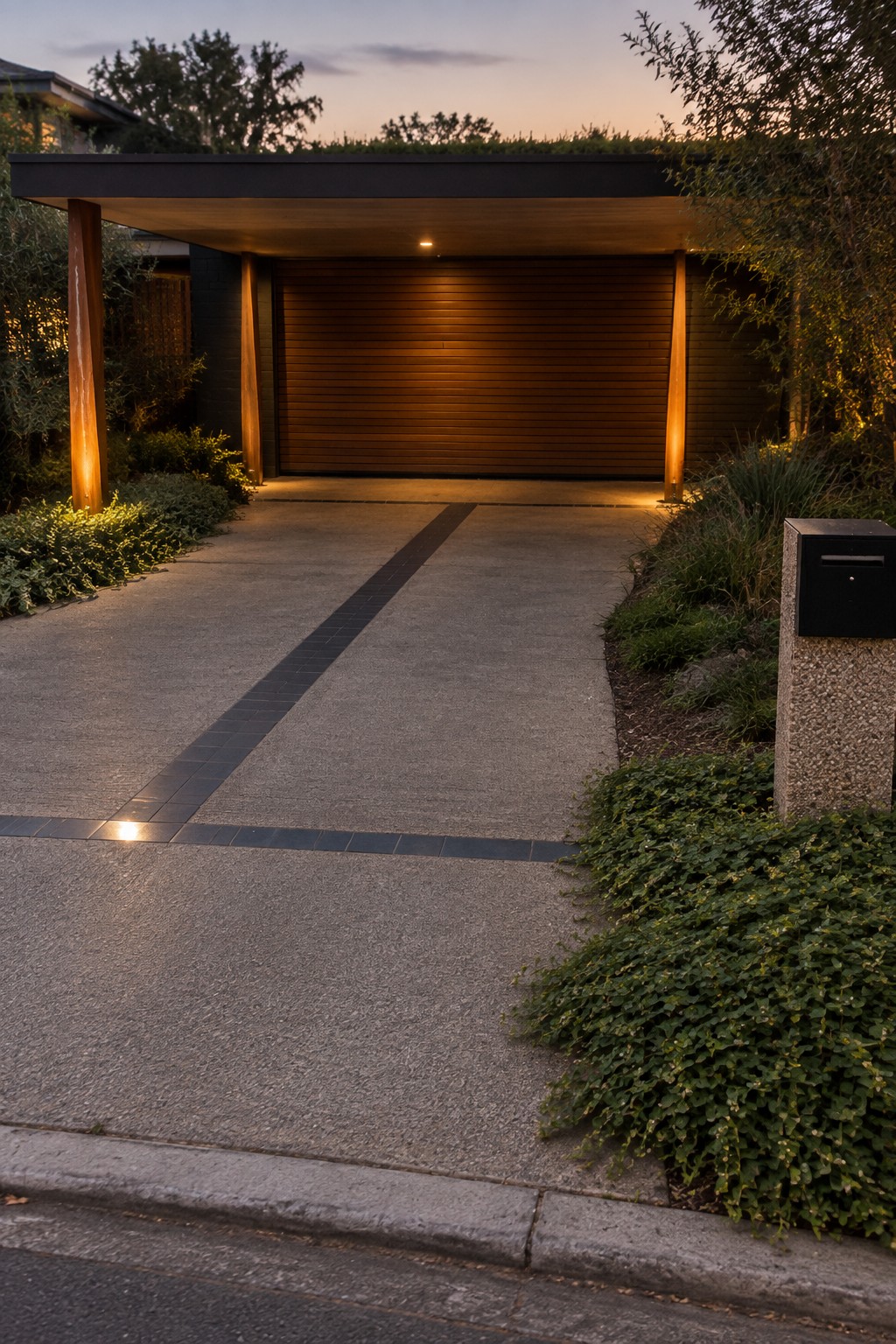
A dark center strip is one of the easiest ways to give a small driveway more structure. It breaks up the concrete without adding extra paving or complicated patterns, and it keeps the whole approach looking neat and intentional.
This works best on straightforward modern homes where the rest of the materials stay simple. Match the strip to the garage door or other dark details on the house, and let the concrete stay plain on either side. The key is not to overdo the width or add too many other elements that compete with it.
Pebble Edging For Small Driveways
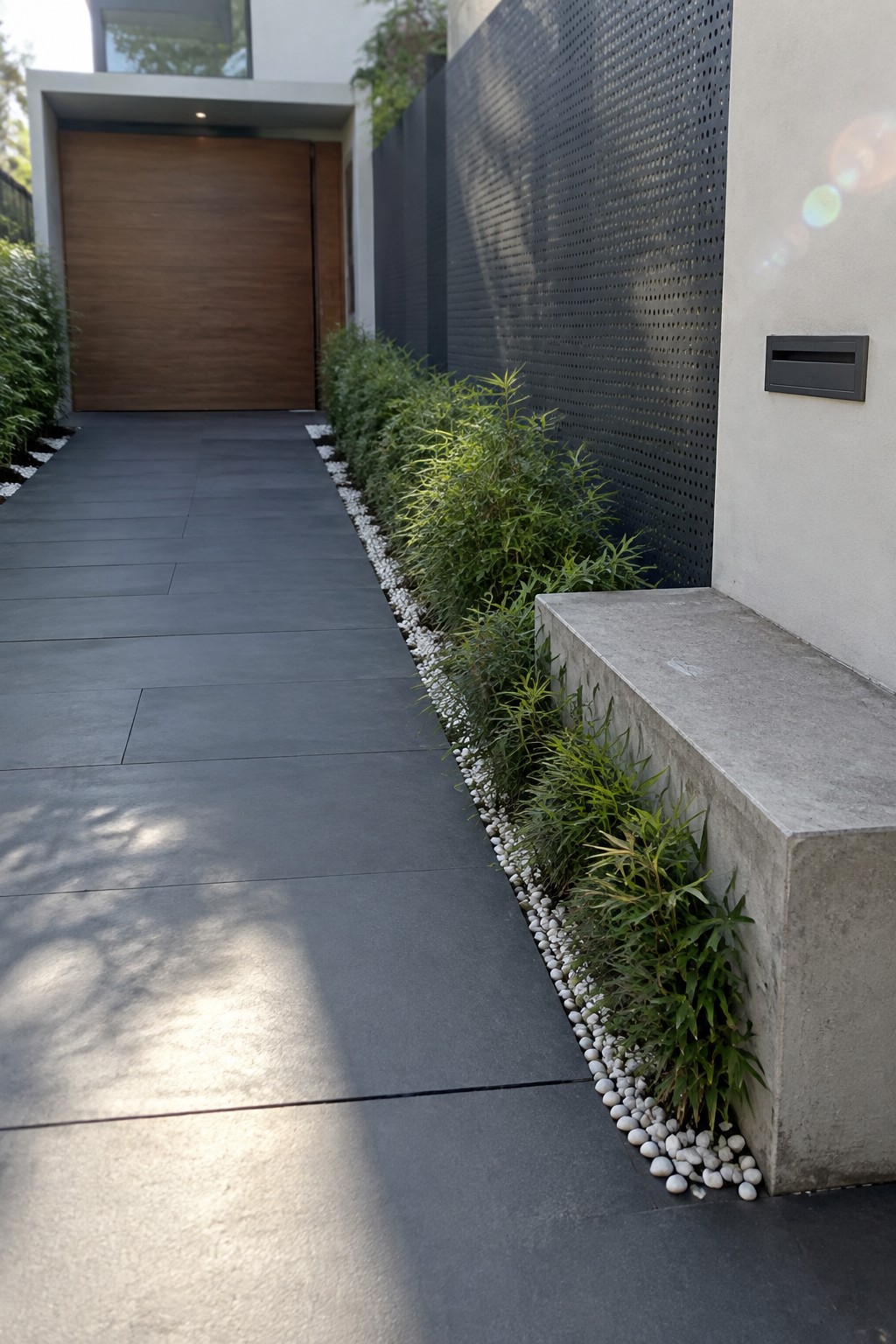
A strip of white pebbles with low green plants running along one side gives a small driveway some breathing room without eating into the paved surface. The dark pavers stay clean and simple while the border adds texture and a bit of softness that keeps the whole entrance from feeling too stark or cramped.
This works best on narrow modern homes where the driveway sits tight against the house or a side wall. Keep the planting low and the pebbles light so the border stays low maintenance and does not throw off the scale of the space.
Large Pavers For A Cleaner Driveway
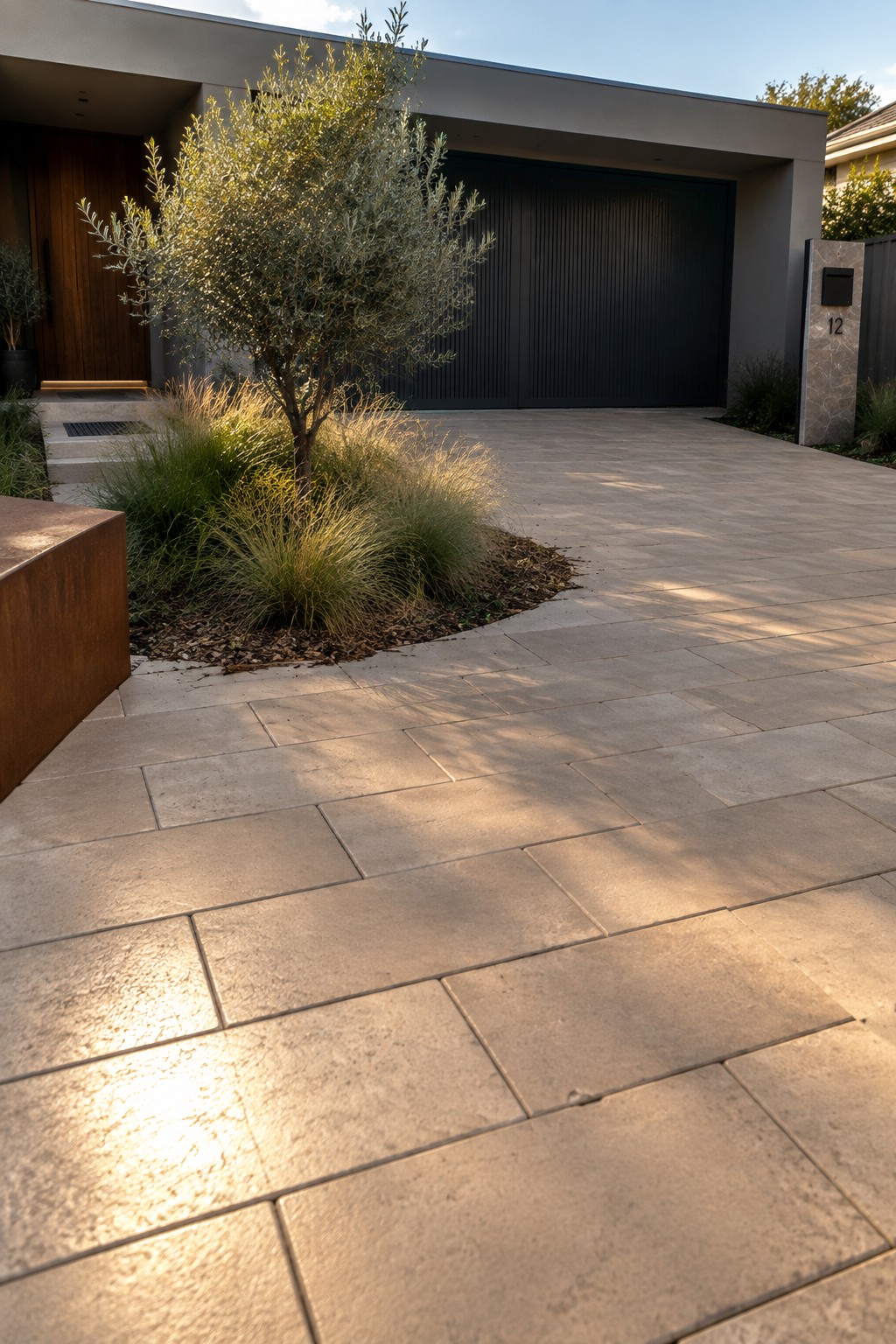
Large pavers give a small driveway a more finished and modern look without adding extra width or complicated patterns. The bigger scale keeps the surface from feeling chopped up, which helps the whole front feel calmer and more open.
This approach works best on contemporary homes where you want the paving to sit quietly next to simple planting. Keep the joint lines straight and limit the number of different materials so the driveway stays the main feature rather than competing with everything around it.
Narrow Paver Paths With Gravel Edging
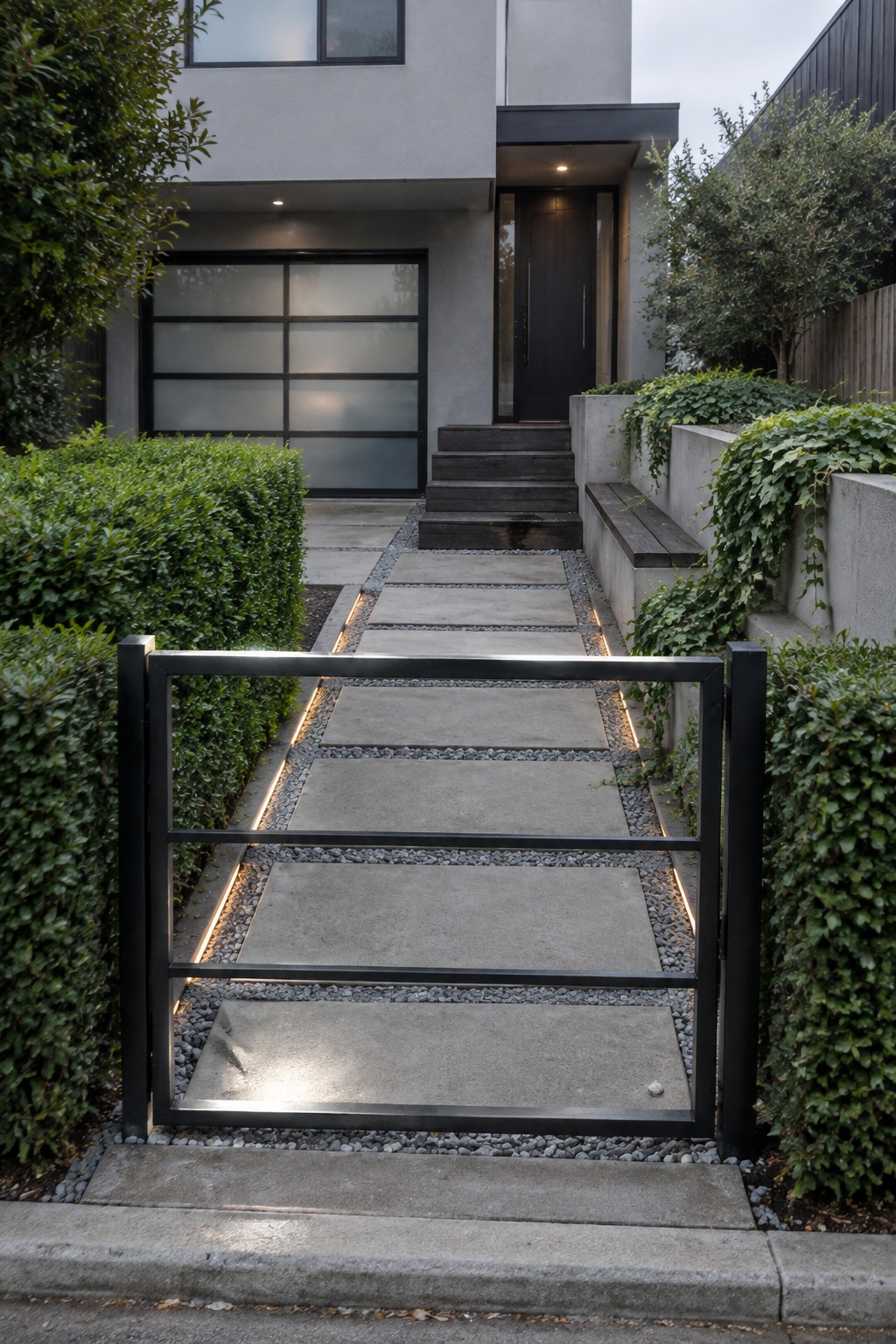
Many contemporary homes use a row of large concrete pavers set into gravel to handle a tight entry or driveway. The look stays clean, the lines read modern, and the gravel keeps the whole thing from feeling too solid or heavy on a small lot.
This setup works best on narrow frontages where a full slab driveway would crowd the space. Place the pavers with consistent spacing, add low path lights along the edges, and let low shrubs frame both sides. Keep the gravel raked and level so it stays neat over time.
Grass Strips Between Concrete Pavers
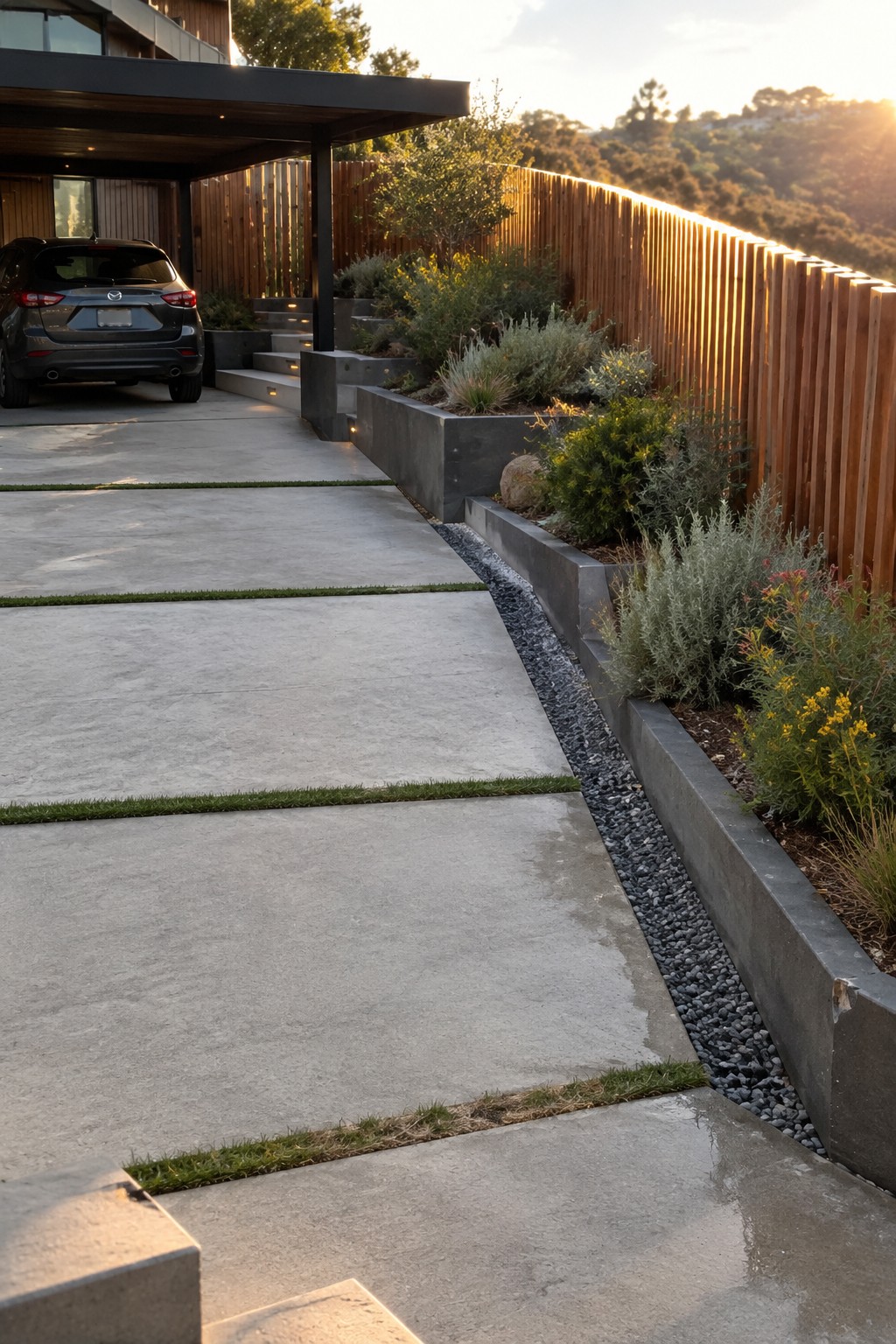
This layout breaks up a wide concrete surface into narrower sections divided by strips of grass. The result feels less like a parking lot and more like part of the garden, which helps smaller driveways look lighter and less dominating.
It suits contemporary homes that already use clean lines and simple materials. Keep the pavers large and the grass strips narrow so cars can still drive over them without issue, and add a gravel edge or low planters along one side to contain the planting and keep the whole thing tidy.
Frequently Asked Questions
Q: How do I pick the right surface for heavy rain areas?
A: Pick permeable pavers so water drains straight through. They cut down on puddles and keep the driveway stable. You can pair them with a simple gravel base underneath.
Q: What about adding some greenery without taking up space?
A: Tuck low plants along the edges. They soften the look and need little watering once settled. Stick to native varieties for easy care.
Q: Is concrete too plain for a contemporary home?
A: Stamp or score patterns into it for interest. This keeps the clean lines you want while adding texture. Seal it yearly to protect against stains.
Q: How much space do I really need for turning around?
A: Measure your car first. Most small driveways work fine with a straight pull-in if you plan the layout right.
