


I have found that the right garden border along a cottage driveway can change how the whole front of the house reads from the road.
When the edging and plants follow the natural slope and width of the drive, the space feels like it belongs rather than sitting on top of the lawn.
Some layouts hold up better once the seasons change.
I usually sketch the border depth first because it affects how easy it is to turn in and out without clipping the plants.
Over a couple of years the choices that balance low growth with clear definition tend to need the least fixing.
Add a Rose Arch to Your Cottage Driveway
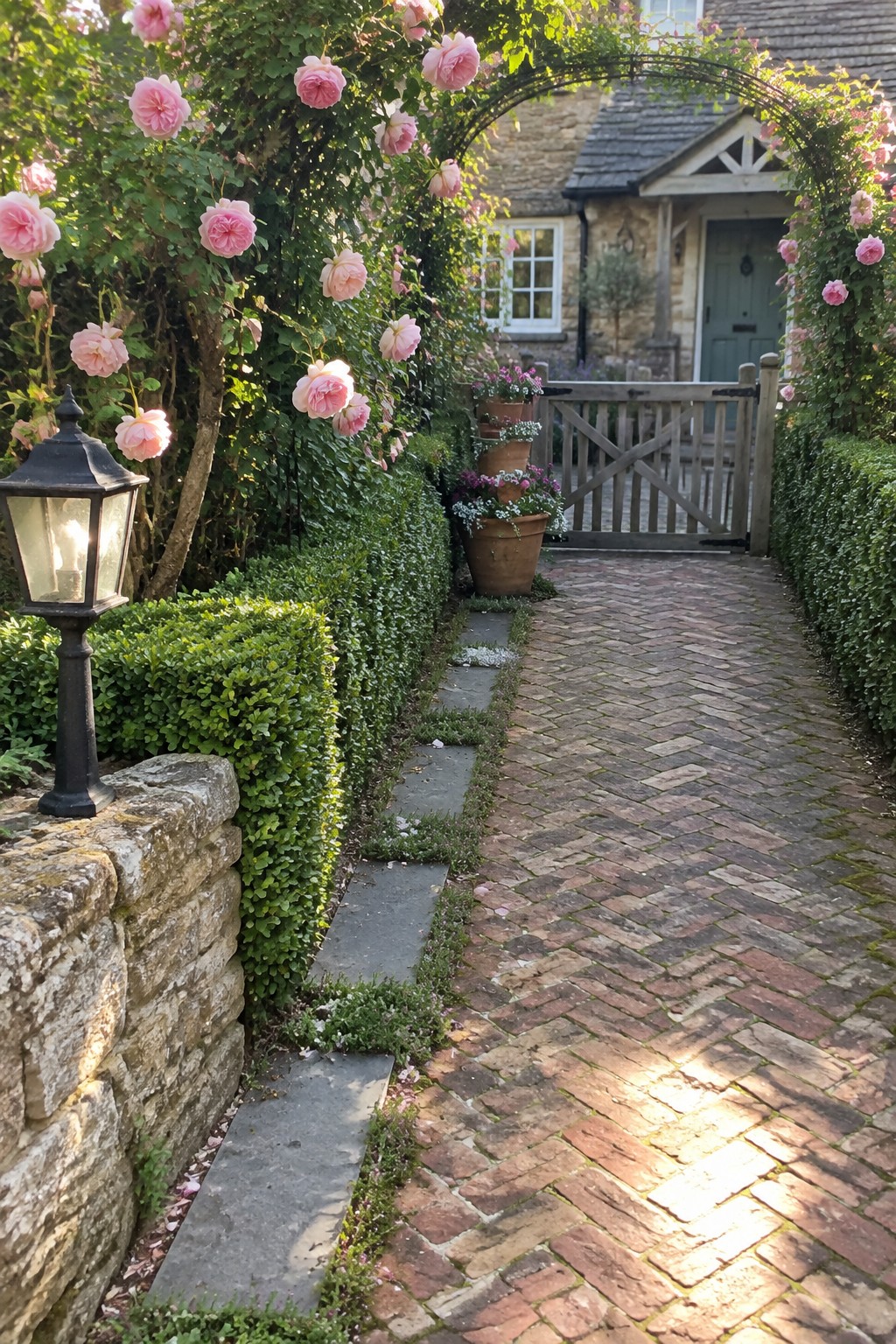
One simple way to give a small driveway more charm is to place a rose-covered arch right at the entrance. The climbing flowers draw the eye upward and soften the edges of the path while the low garden borders on both sides keep the whole space feeling tidy and enclosed.
This approach suits narrow brick or gravel drives on older cottages best. Choose a sturdy metal or wood arch that matches your gate, plant the roses on the sunniest side, and keep the borders low so they do not crowd the walkway.
Stone Edging For Gravel Driveways
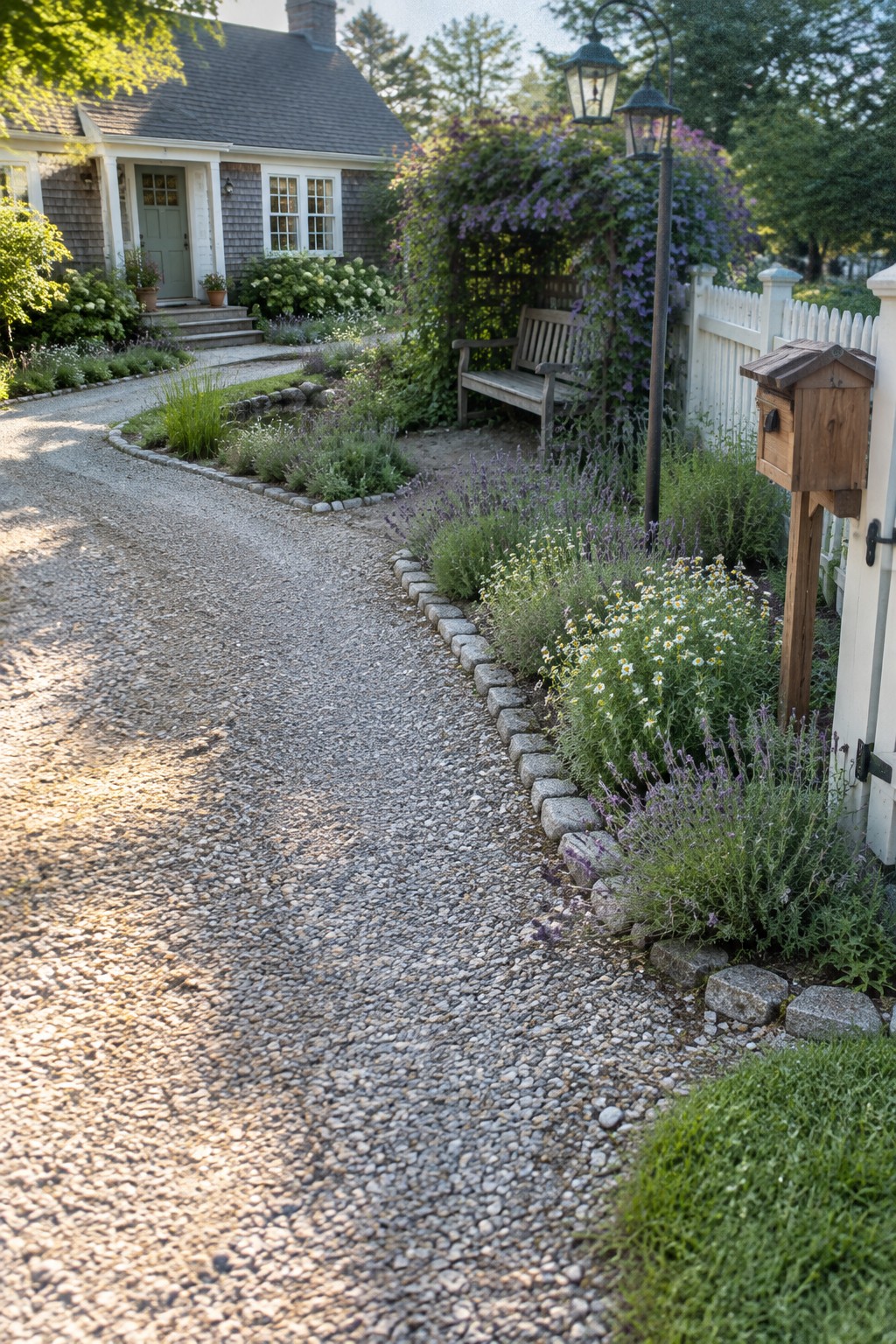
A low stone border gives a gravel driveway a clean edge without making it feel stiff. It holds the gravel in place while letting the garden plantings spill right up to the path, which keeps the whole entrance looking soft and natural.
This approach works best on smaller lots where the driveway runs close to the house and garden beds. Keep the stones low and set them firmly so they do not interfere with mowing or walking.
Cobblestone Driveways With Garden Borders
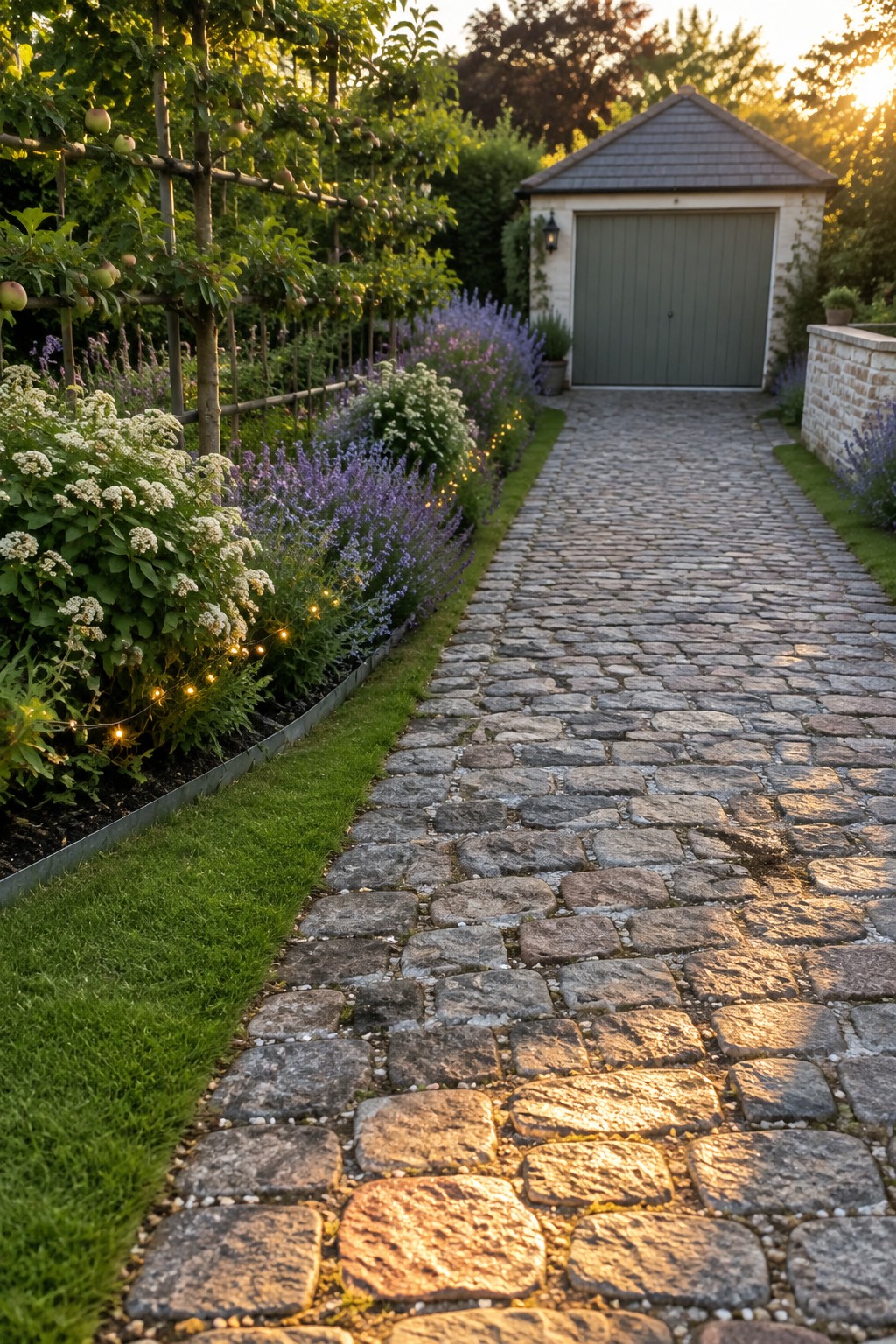
A cobblestone driveway gains a lot of character when it is edged with garden borders instead of plain grass or gravel. The low planting on both sides softens the hard surface and makes the whole approach feel more like part of the garden than a separate access road. It is an easy way to add cottage style without needing a large front yard.
This works best on smaller properties where the driveway is also the main view from the house. Keep the borders fairly narrow so they do not crowd the path, and choose a mix of low shrubs, lavender, and summer flowers that stay tidy. The edging also helps keep gravel or soil from spilling onto the stones after rain.
Stone Paths With Planting Between The Pavers
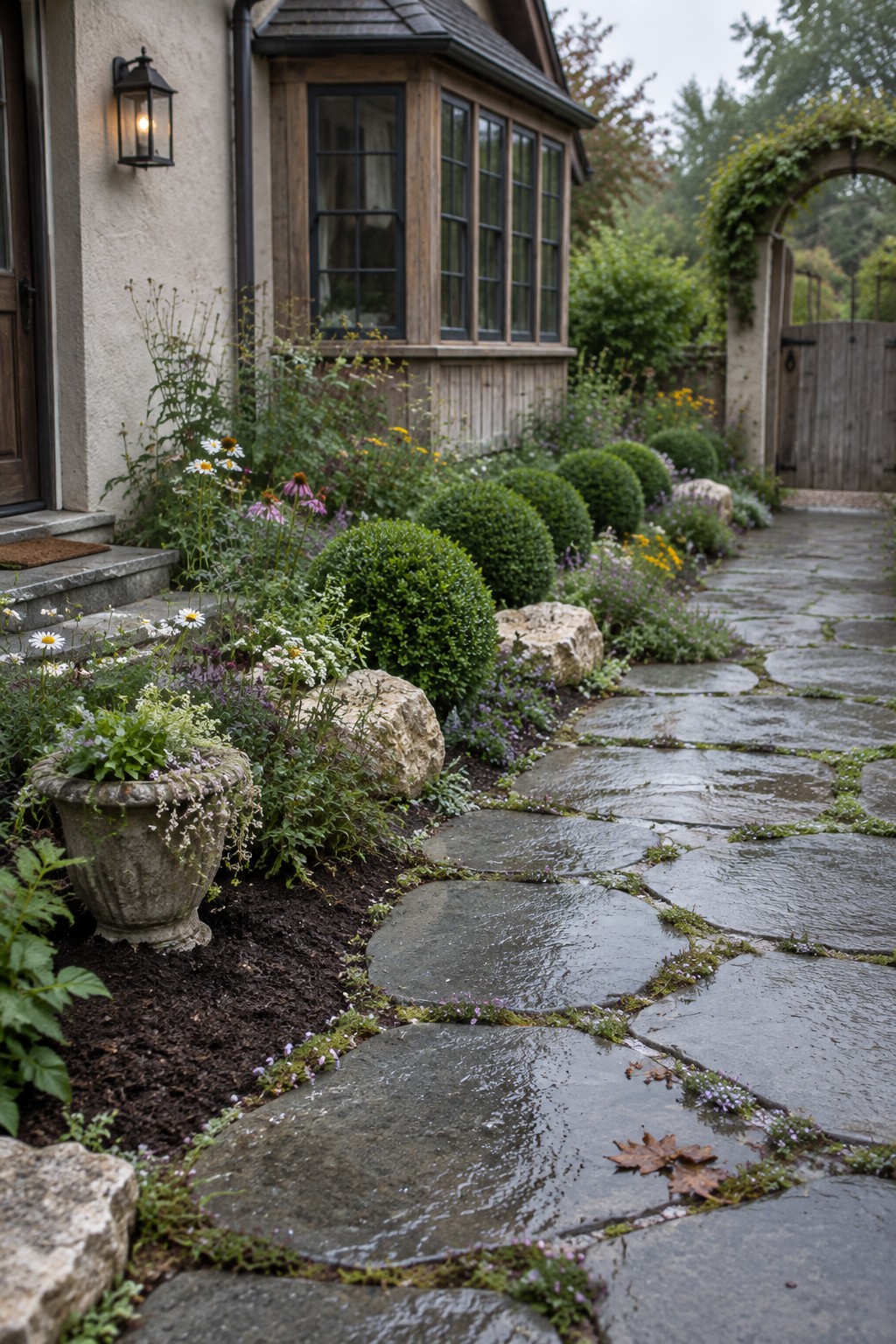
Many people like the way a stone path feels softer when small plants are allowed to grow in the gaps. It turns a simple walkway into something that blends right into the garden instead of sitting on top of it like a separate surface.
This approach works well on smaller cottage properties where the driveway or entry path needs to feel connected to the beds on either side. Use large irregular stones set in soil rather than tight grout, and choose tough low growers that can take occasional steps.
Grass Pavers Set Into Gravel
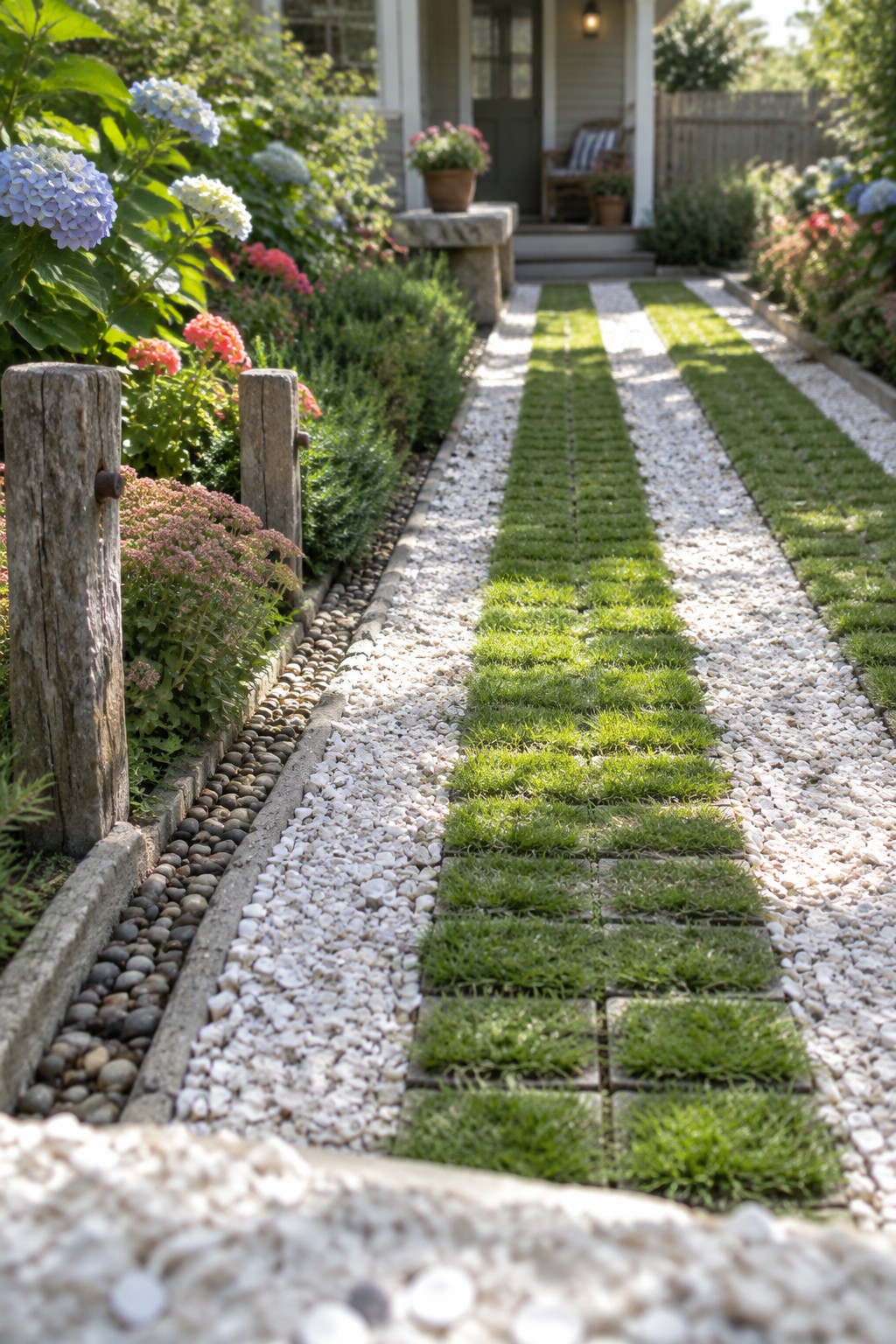
Grass pavers set into gravel give a driveway or path a softer look while still handling light traffic. The green strips break up the hard surface and let the whole thing feel more like part of the garden instead of a separate paved area.
This works best on small cottage properties where the path needs to sit comfortably between flower beds. Use sturdy pavers that can take occasional wheels, and keep the gravel edges neat so the grass stays defined and easy to mow.
Low Stone Borders Along Gravel Driveways

Low stone walls make a gravel driveway feel more grounded and intentional. They give the edge a clear line while still letting the garden spill over in a relaxed way, which suits smaller cottage properties where space is tight but you still want it to look established.
This setup works best when the walls stay low and the planting stays layered. Tuck in a mix of shrubs and taller flowers right behind the stone so the border feels soft but stays contained. It pairs especially well with older stone houses and keeps the driveway from looking like a plain strip of gravel.
Mixing Stone And Gravel For Cottage Driveways
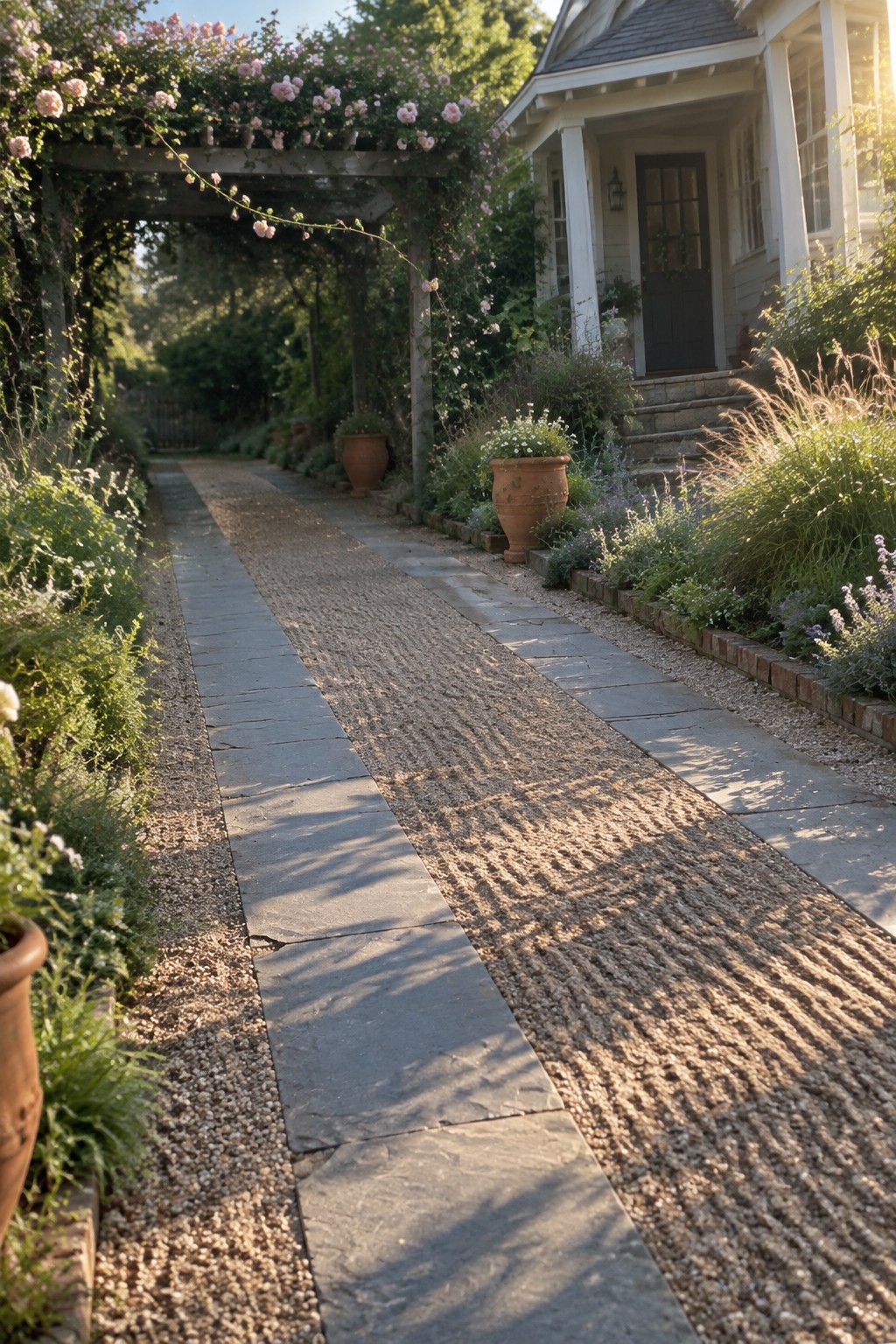
A central strip of stone pavers with gravel on either side gives a driveway a settled, cottage feel without covering the whole surface in hard material. The stone keeps the path firm underfoot while the gravel softens the edges and helps with drainage, so the whole thing feels lighter than a solid paved drive.
This layout works especially well on narrow lots or where you want the garden to feel connected to the entrance. Keep the borders planted low so they frame the path without crowding it, and choose stone that matches the house rather than trying to match the gravel exactly.
Brick And Gravel Strips For Cottage Driveways
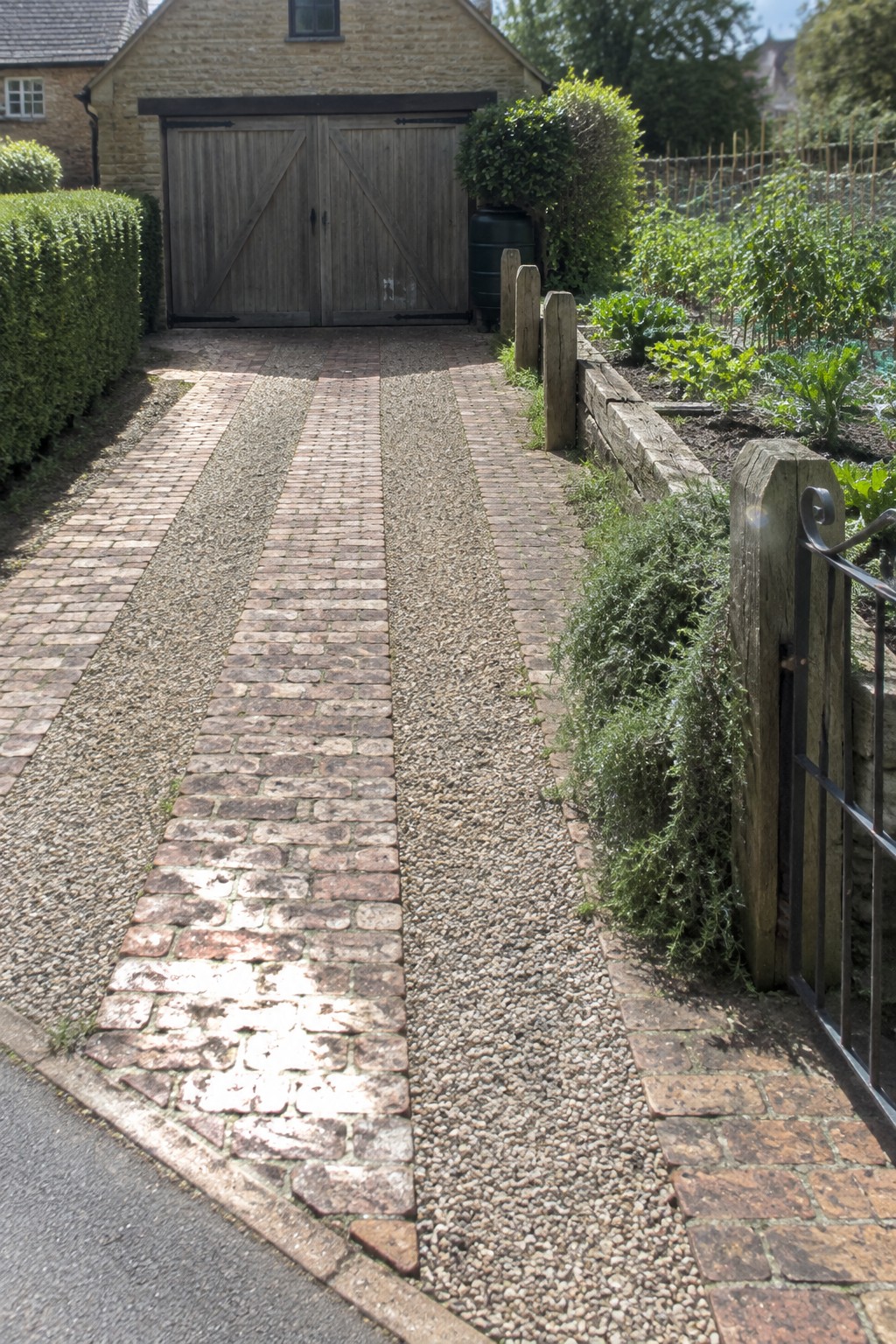
This layout uses a narrow brick strip down the middle with gravel filling the sides. It gives the driveway a defined walking path while still allowing water to drain and keeping the surface from feeling too hard or formal.
The style suits small cottages because it leaves room for garden borders right up against the edges. Low hedges or simple wooden posts work well to hold the gravel in place and keep the whole approach looking tidy without constant work.
Stone Edging For Gravel Driveways
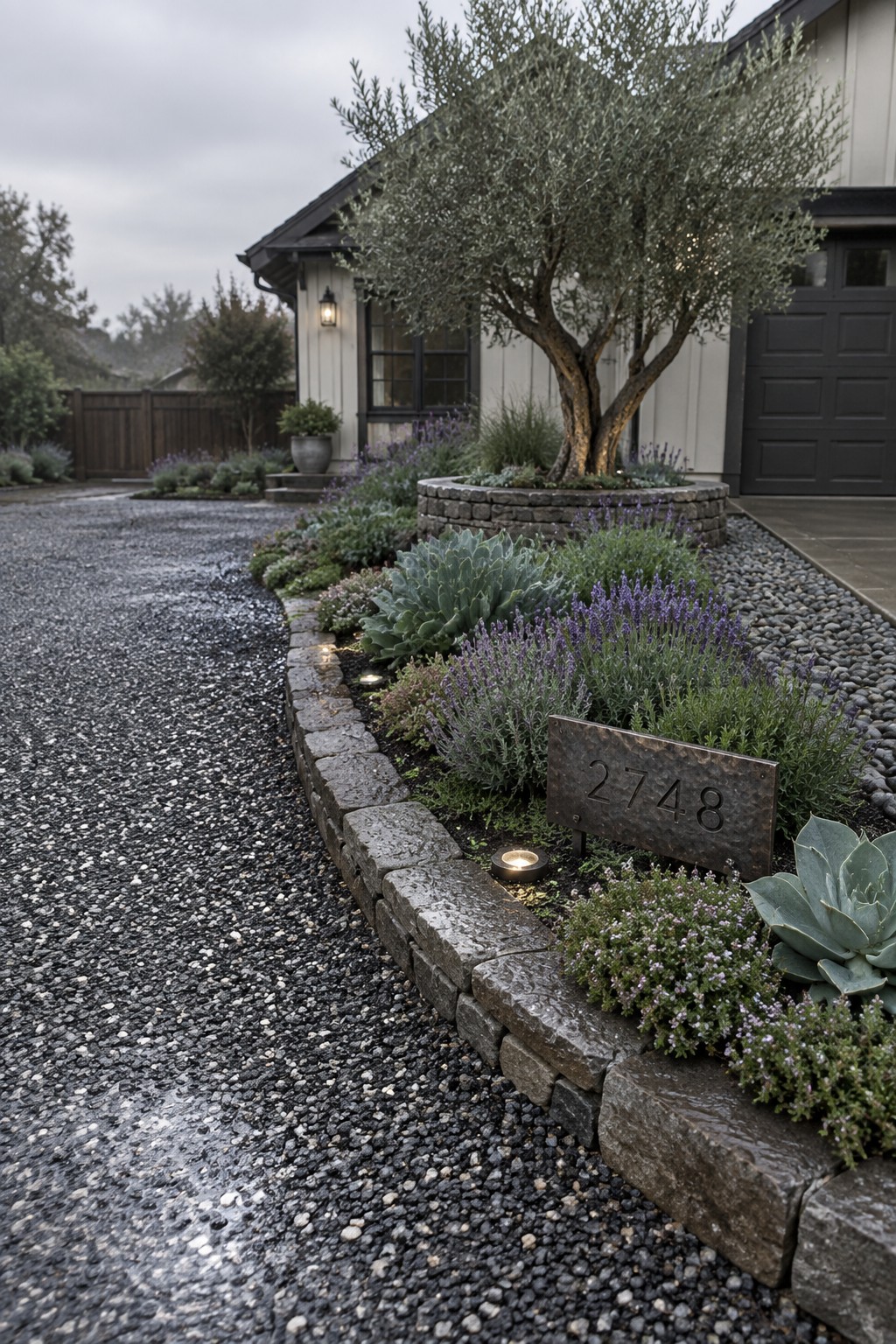
Stone edging gives a gravel driveway a finished look without making it feel stiff. The low border holds everything in place and creates a simple line that lets the plants soften the edge on their own. It also helps keep the gravel from spreading into the beds after rain or heavy use.
This approach fits small cottage driveways best. It works well when you want some structure but still need space for low plants and ground cover right along the drive. Just set the stones level and choose a height that stays easy to step over.
Edge a Brick Driveway With Layered Flower Borders
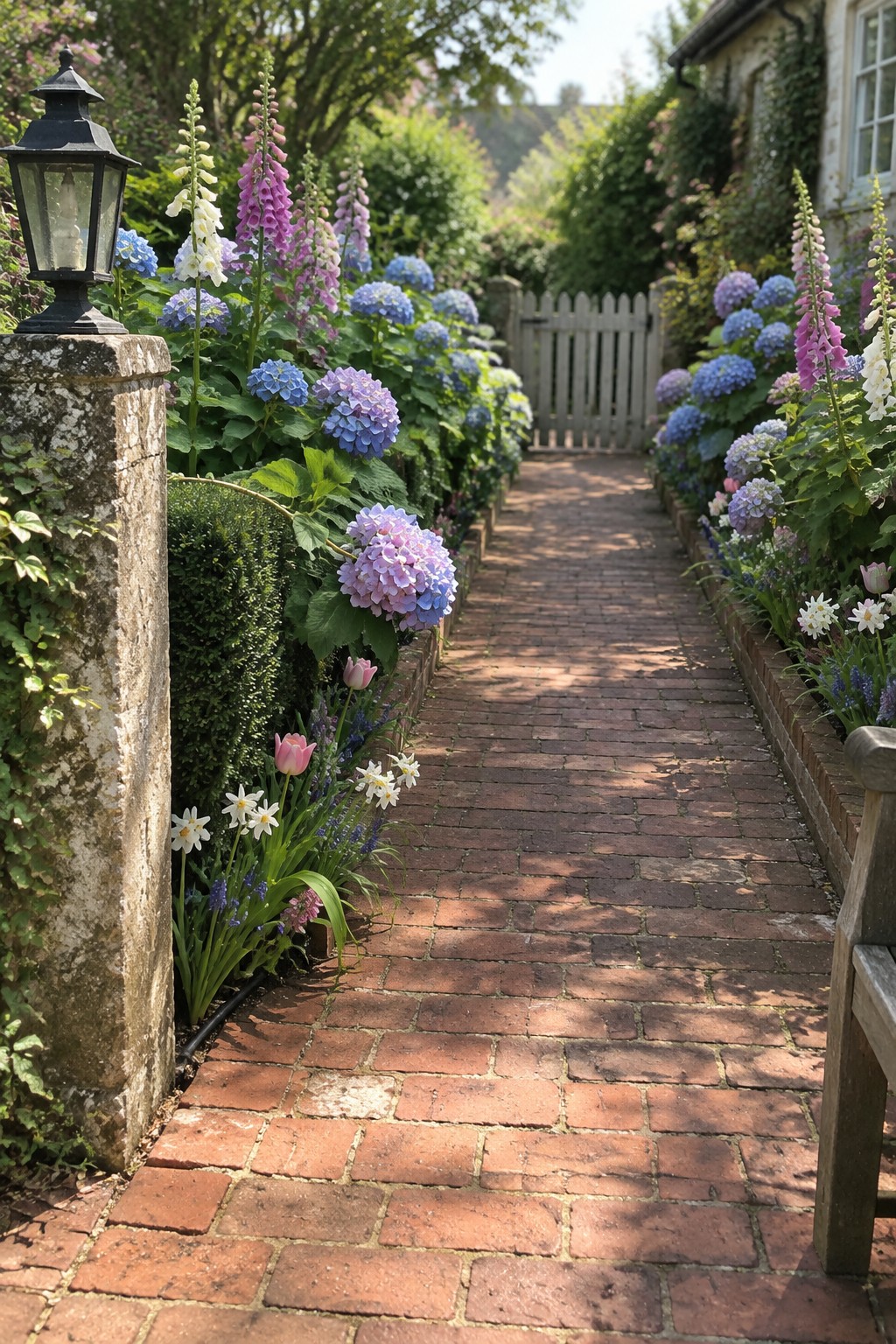
A brick path gains a lot of character when it is edged with mixed flower borders instead of plain grass or gravel. The layers of shorter blooms along the front and taller spikes behind them create a soft frame that makes the walkway feel more inviting without narrowing it too much.
This approach suits small cottage properties where the driveway doubles as a garden feature. Choose plants that bloom in succession so the borders stay colorful for months, and keep the edging low enough that it does not interfere with car doors or foot traffic.
Pavers Set In Grass For A Cottage Driveway
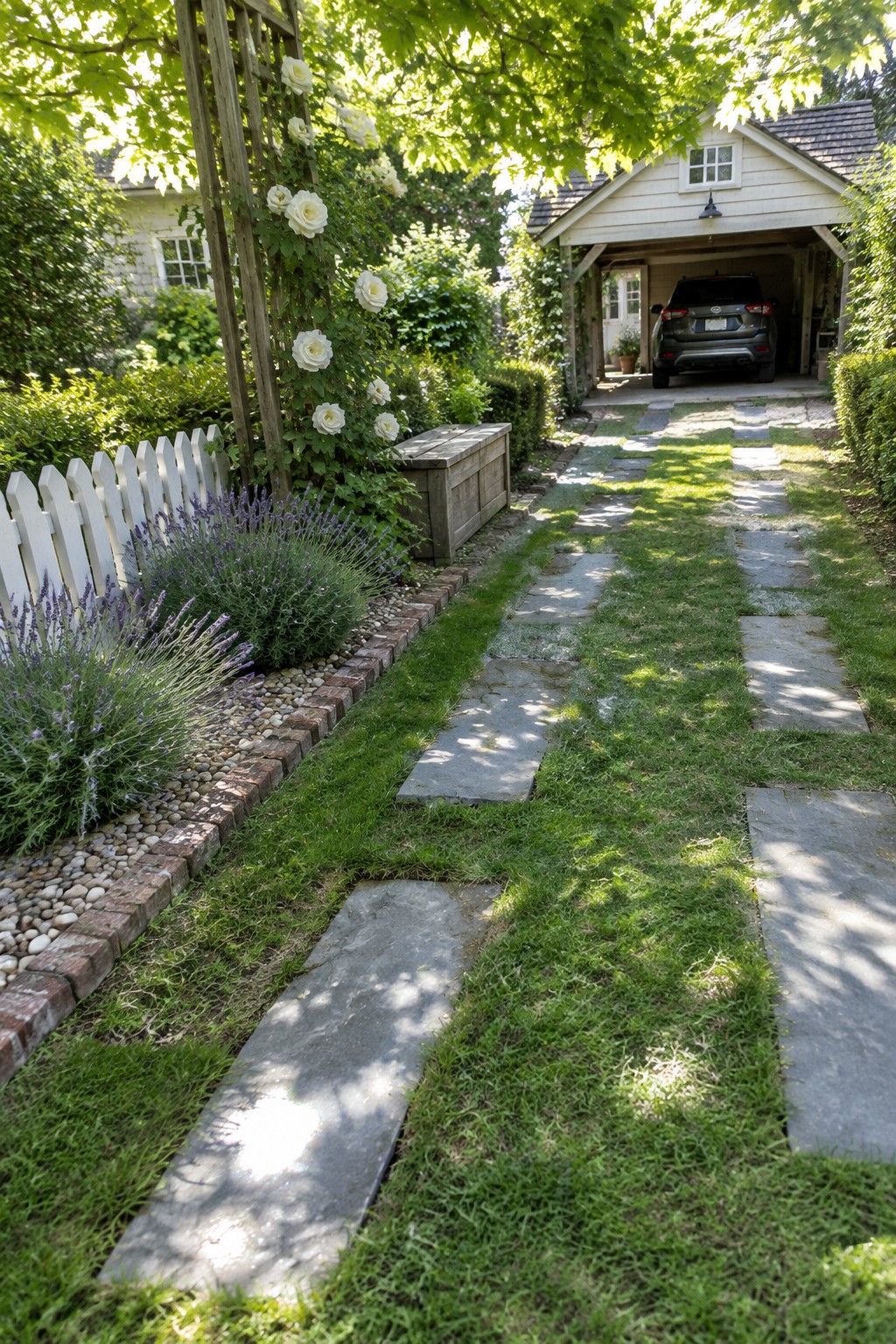
Stone pavers placed with grass growing between them give a driveway a softer, more relaxed feel. This approach works especially well on smaller properties where a full paved surface can feel too heavy. The grass breaks up the hard lines and keeps the whole entrance looking tied to the surrounding garden.
It suits older cottages or homes with informal landscaping best. Keep the pavers large enough for tires and space them evenly so the grass strips stay narrow. Brick or stone edging along the sides helps contain everything and gives the border plants a clear line to follow.
Line a Stone Path With Oversized Pots
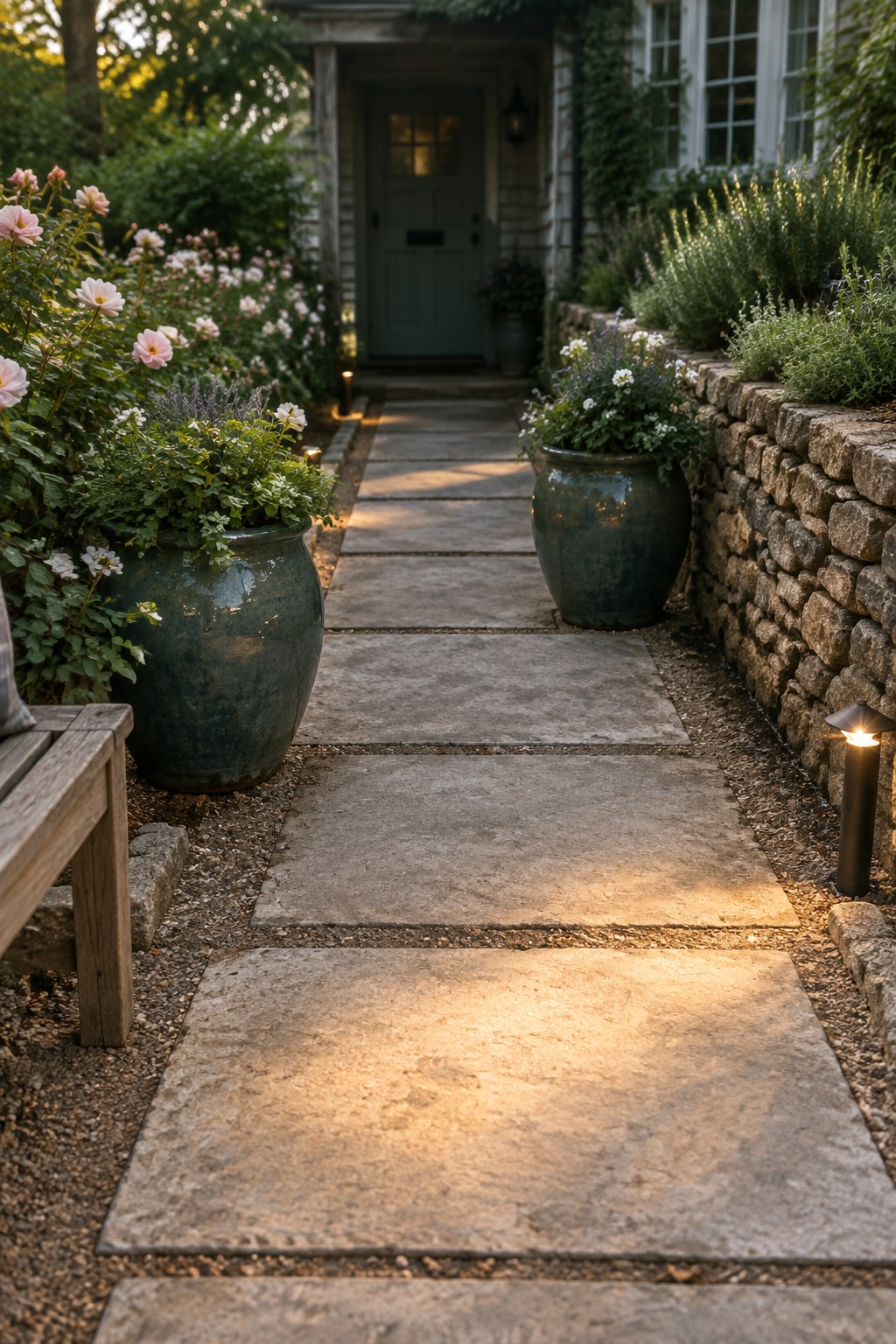
Large pots placed along a stone path give a small cottage driveway a finished look without needing a wide garden bed. They add height and color right where the path meets the house, and the containers keep everything tidy even when space is tight.
This approach works well on narrow entries or gravel approaches where you want some planting but cannot dig up much ground. Stick with two or three large pots in the same finish, and choose plants that spill a bit over the edges so the path feels softer as you walk toward the door.
Gravel Paths With Stepping Stones

Gravel paths with stepping stones work well for small cottage driveways because they feel relaxed and let the garden do most of the framing. The loose stone keeps things simple and drains easily, while the flat pavers give you a clear walking surface without turning the whole area into solid pavement.
This layout suits homes with casual gardens or coastal settings. Space the stones evenly, keep the gravel light in color, and let the border plants and rocks soften the edges so the path blends into the planting rather than cutting through it.
Cobblestone Paths With Plants In The Gaps
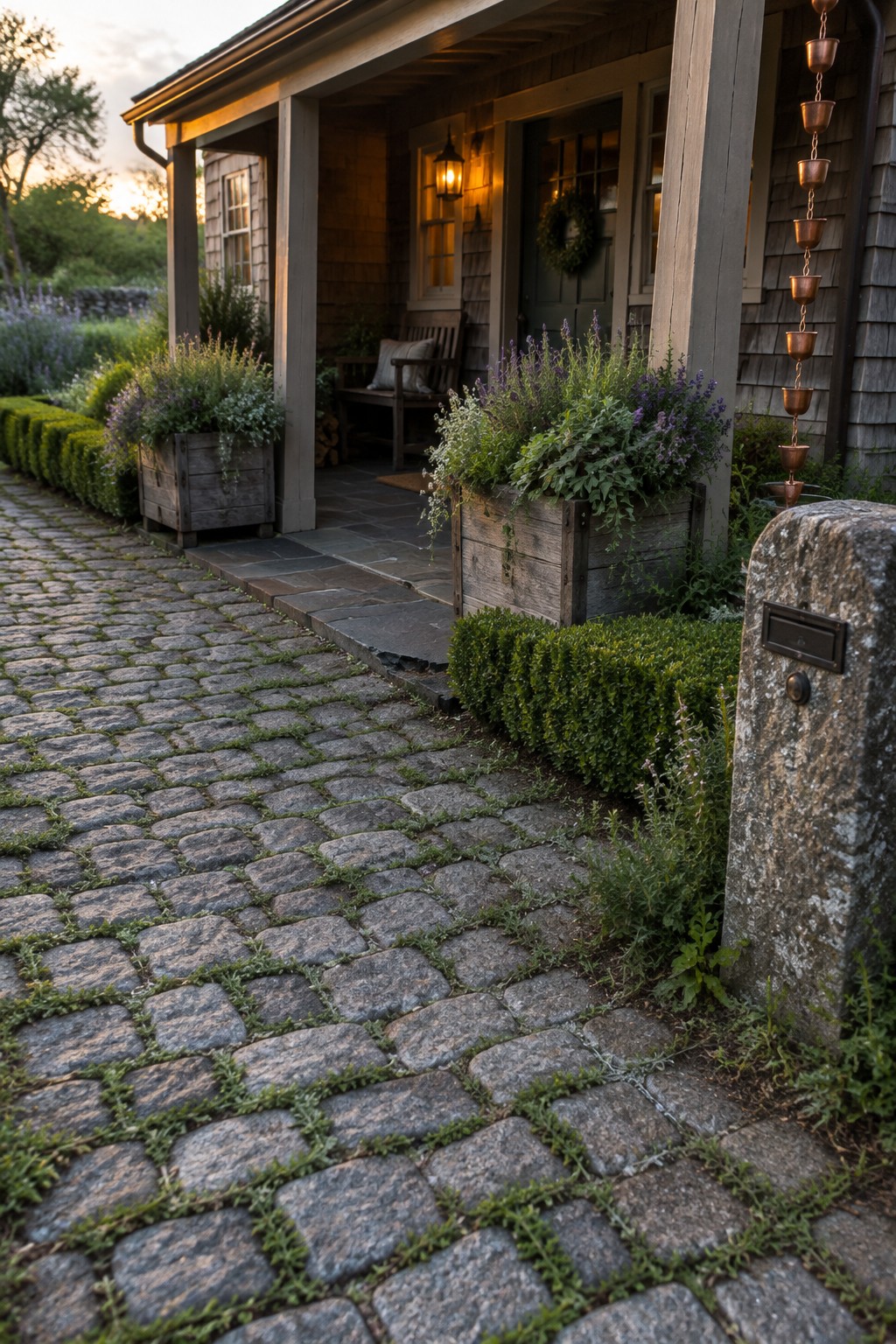
One simple way to make a small cottage driveway feel more like part of the garden is to use cobblestones and let low plants grow in the spaces between them. The greenery softens the hard surface and keeps the path from looking too solid or heavy.
This approach works best on homes where the driveway sits close to planting beds. Choose tough, low-growing varieties that can take some traffic, and keep the edges clean with a low hedge or a few wooden planters so the whole thing stays easy to walk and drive on.
Central Planting Strip For Narrow Driveways
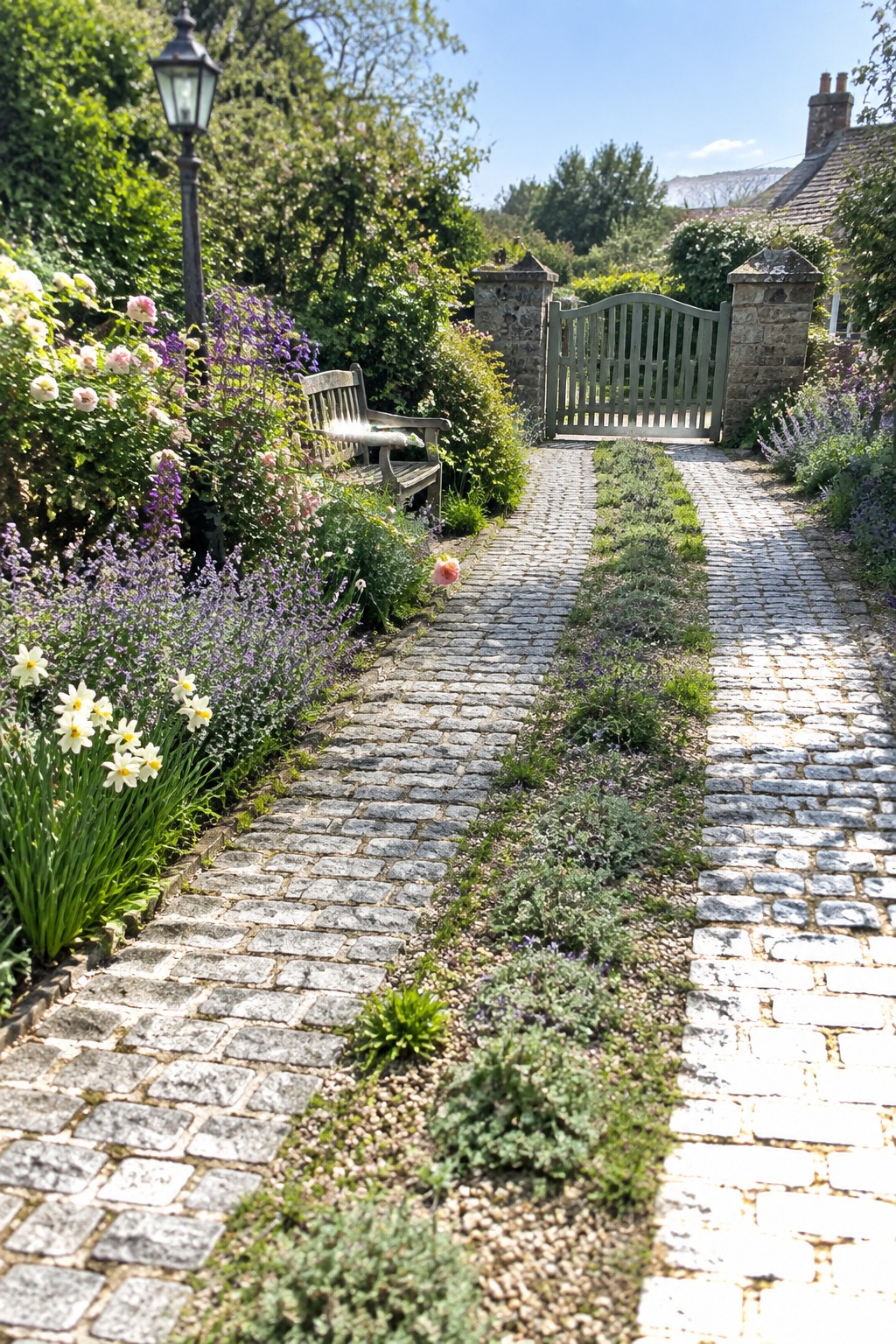
A narrow planted strip running down the middle of a path or driveway helps break up the hard surface and keeps the whole thing feeling softer. It works especially well on smaller properties where a full width of paving would feel too heavy. The low plants in the center also add a bit of movement and color that changes with the seasons.
This idea suits cottages or older homes with modest front areas. Use low growing perennials or herbs that can handle some foot traffic, and make sure the strip is narrow enough for car tires to stay on the paving. Keep the borders planted with taller flowers so the center stays the main focus.
Stone Paths With Grass Between Slabs
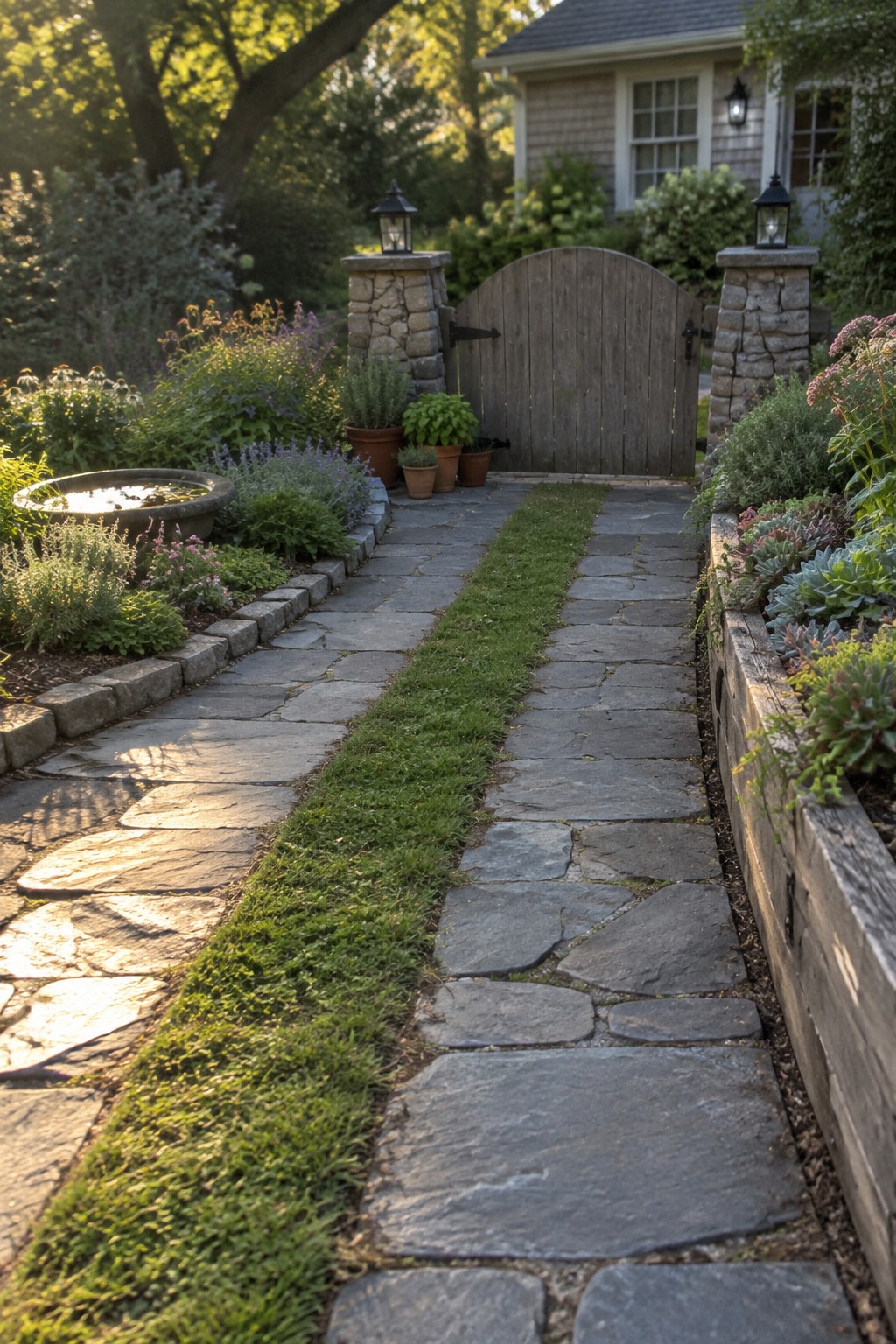
A stone path that leaves room for grass down the middle feels more relaxed than a solid paved surface. The grass softens the look of the stones and keeps the whole entrance from feeling too formal or heavy, which suits a small cottage driveway especially well.
This works best on level ground where mowing stays simple. Keep the grass strip narrow so it does not compete with the walking surface, and use stones that are large enough to stay stable underfoot.
Frequently Asked Questions
Q: What plants work best for borders without spreading everywhere?
A: Pick low growing perennials like lavender or thyme. They stay compact and add nice scent when you drive by. Trim them lightly once a year to keep the shape tidy.
Q: How can I stop weeds from taking over the garden edges?
A: Lay down a thick layer of mulch right after planting. It blocks light and keeps moisture in the soil too. Check every few months and pull any that sneak through by hand.
Q: My driveway slopes a bit. Will borders cause drainage problems?
A: Angle the soil slightly away from the pavement when you build the beds. This lets water run off naturally into the garden. Add some gravel at the base if rain pools often.
