

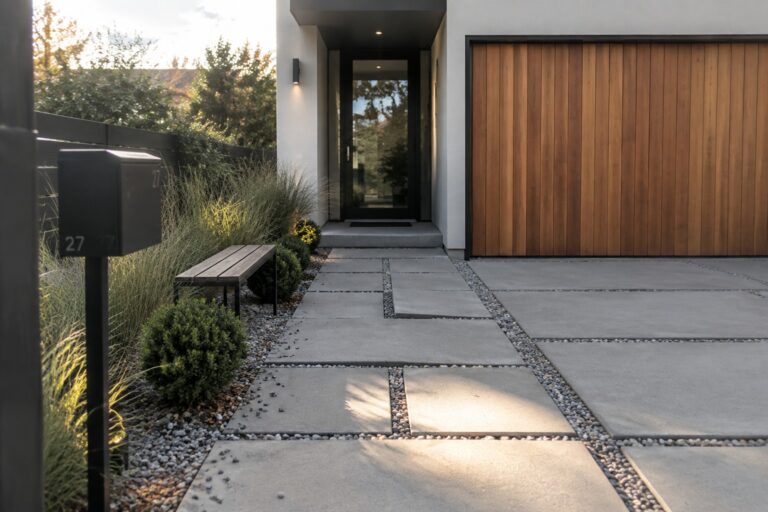
When your front entrance sits close to the street the driveway often decides how the whole house reads from the curb.
I have noticed that some homes look wider once the driveway material lines up with the siding or brick rather than cutting across it.
Small choices add up fast in these spots.
Testing a few layouts on paper first usually reveals which ones leave enough room for walking beside the car without feeling squeezed.
The ideas that respect the existing roofline and entry door tend to settle in better over time.
Stepping Stones In Gravel For Tight Front Entries
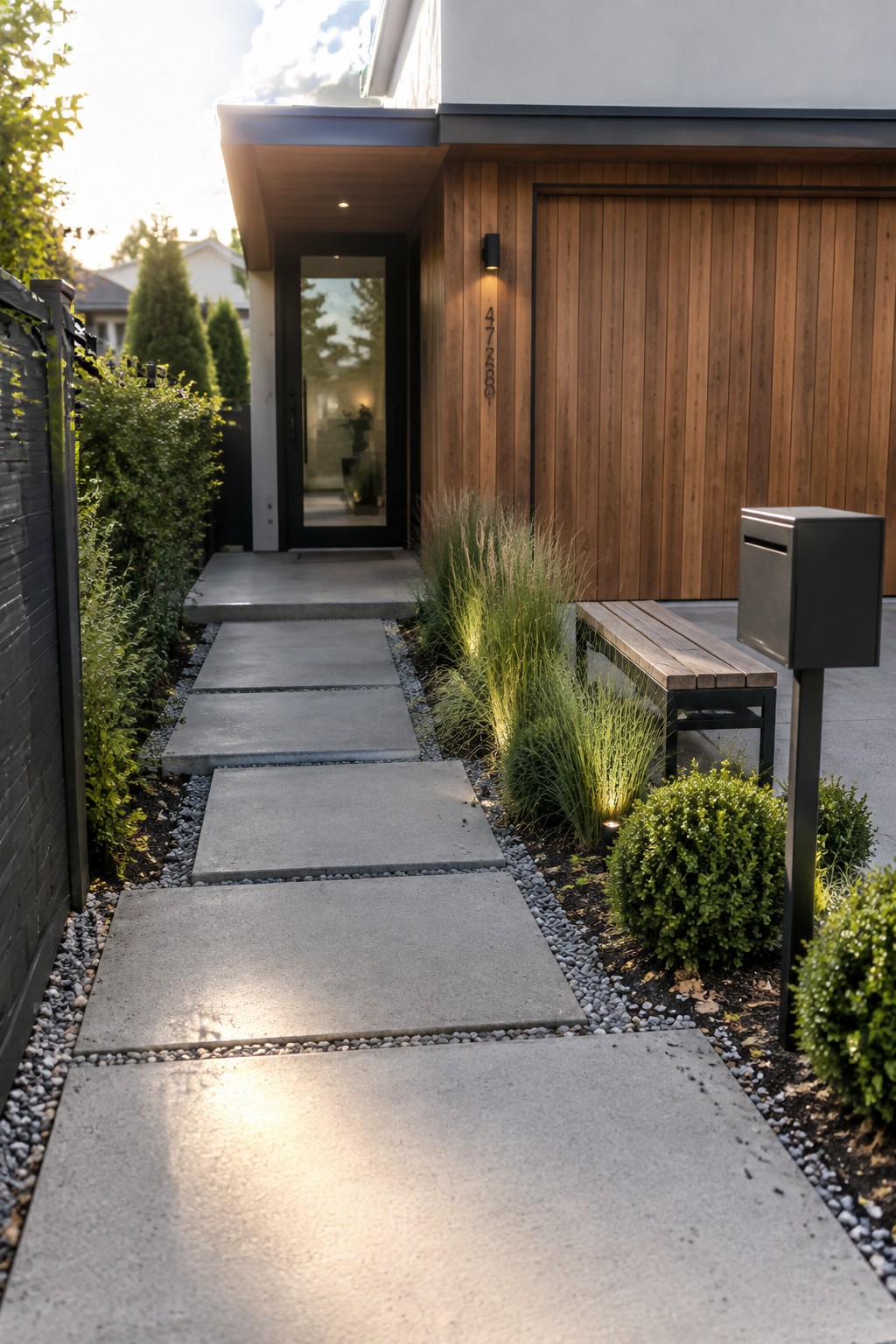
Many compact homes skip a full concrete driveway and use large pavers set in gravel instead. This keeps the entry path narrow, improves drainage, and leaves room for planting beds right next to the walkway.
The look works best on smaller lots or modern homes where you want the front to feel open rather than paved over. Space the pavers evenly for comfortable steps, keep the gravel layer thin, and line the sides with low grasses or shrubs so the path stays practical without taking over the whole entrance area.
Combine Gravel With Pavers For A Narrow Path
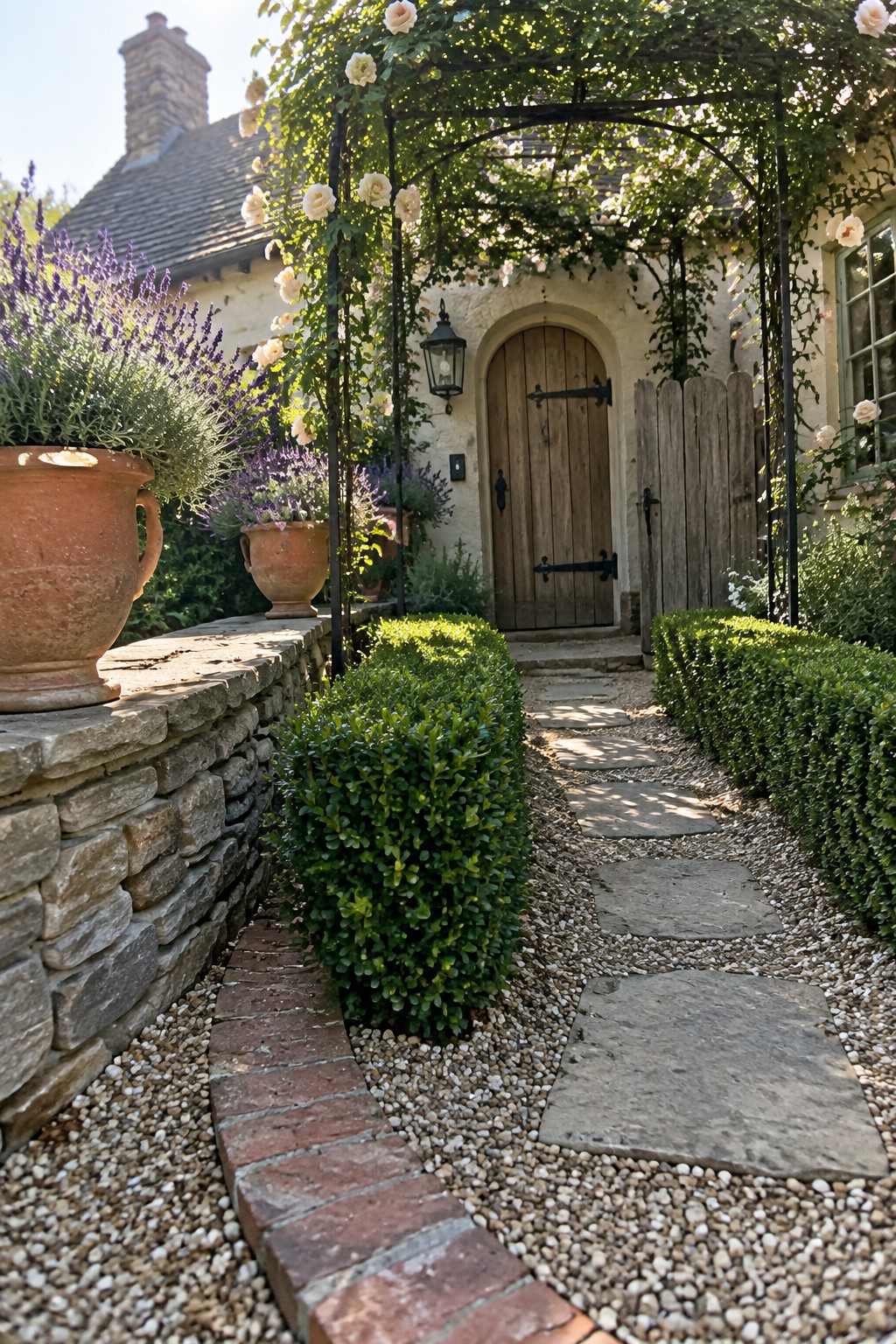
A gravel base with larger stones set into it makes a path that feels simple and drains well. It takes up less space than a full paved surface and still gives you something solid to walk on.
Brick edging along one side and a few low boxwoods help keep the gravel in place and give the path some shape. This works best on older homes or smaller lots where you want the entrance to feel defined without looking too formal.
Horizontal Wood Slats Add Privacy to a Small Entry

A simple row of horizontal wood slats can give a compact front entrance some breathing room and privacy at the same time. The screen creates a soft boundary that separates the entry from the rest of the yard without needing extra width or depth.
This approach suits homes with short driveways because the slats bring in warmth and texture while the concrete path stays clear and functional. Keep the spacing even so light still reaches the door area, and pair it with a low planter to soften the edge without crowding the walkway.
Stepping Stone Paths For Compact Entries
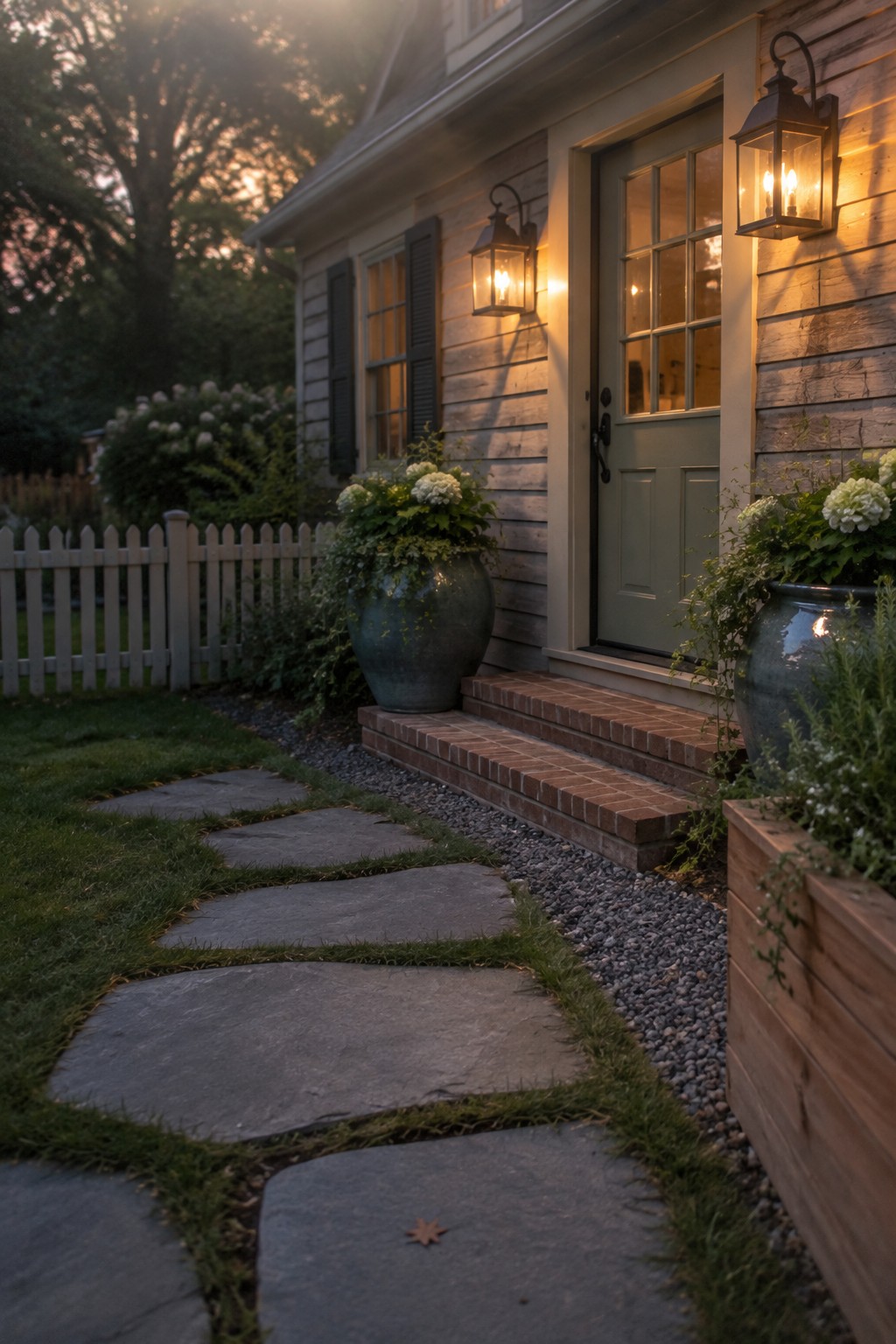
A full driveway often eats up too much space on a small front lot. Setting large flat stones into the grass creates a clear path to the door while leaving most of the yard open and green.
This setup works best on homes where the entrance sits close to the street and parking can stay on the road or at the side. Space the stones evenly for comfortable steps and keep the edges simple so the path does not feel fussy or hard to maintain.
Paver Paths for Compact Entrances
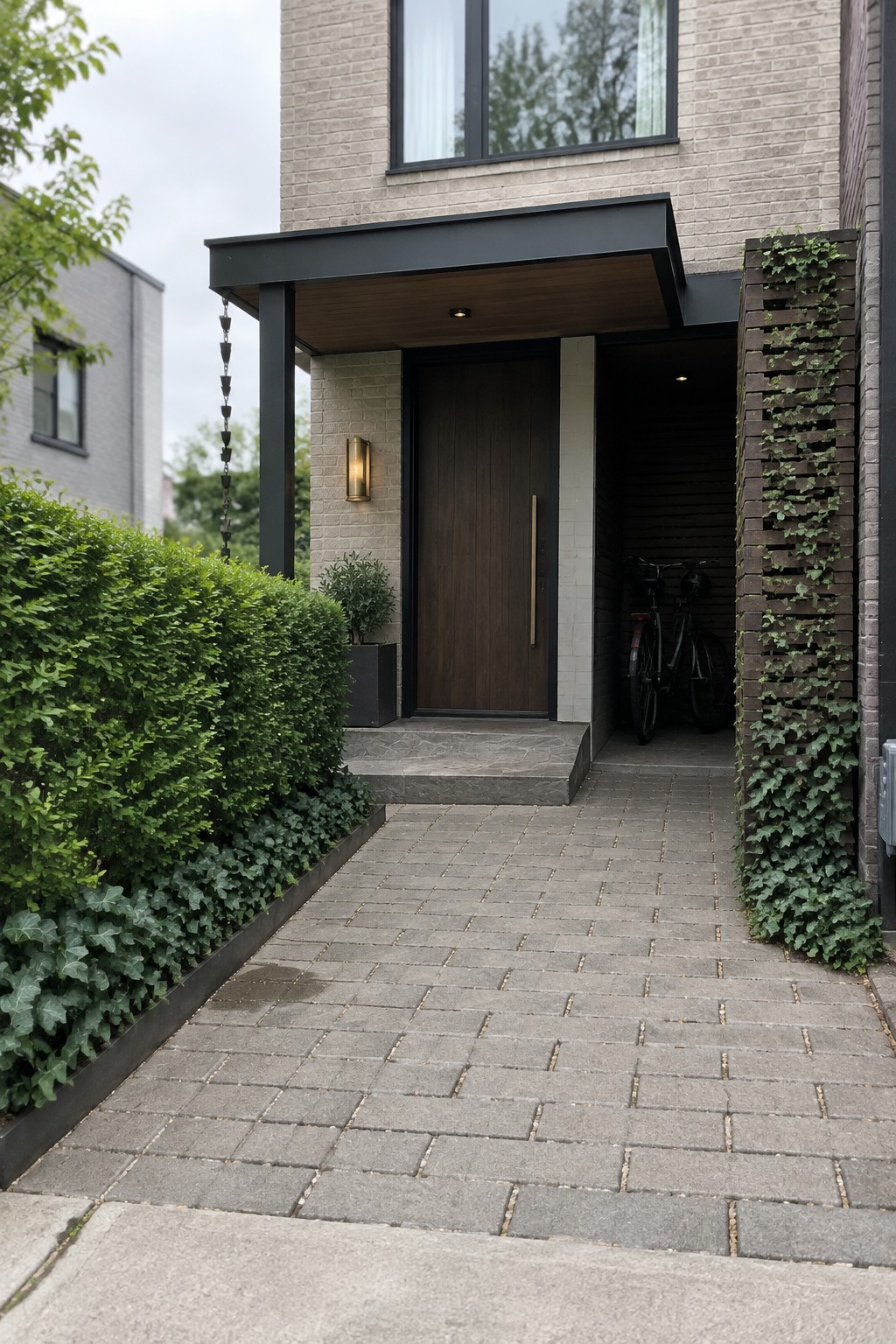
A narrow path of gray pavers gives a small front entrance a clear route to the door without eating up the whole yard. It keeps the space looking tidy and avoids the heavy look of a full driveway slab.
This works best on tight lots where every foot counts. Lay the pavers in a simple running pattern, add a low border on each side, and keep the planting low so the path stays the main feature. Make sure the base is solid so it holds up to foot traffic and the occasional bike or delivery cart.
Stepping Stones In Gravel

A gravel path lined with flat stepping stones gives a compact front entrance a clean, simple look without taking up much room. It works especially well when space is tight and you want to avoid a wide paved surface that would crowd the area.
This setup suits smaller homes or side entries where a full driveway is not needed. Keep the stones level and spaced evenly so the path feels steady underfoot, and choose gravel that packs down firmly to reduce shifting over time.
Pavers Set In Gravel Create A Neat Front Path

Concrete pavers spaced out with gravel between them give a short entry a clean, modern look without taking up much room. The gaps let water drain easily and cut down on the amount of hard surface you need to install. It works especially well when the path leads right up to a simple front door like the one in this photo.
This approach suits homes with tight front yards where a full driveway would feel too heavy. Keep the pavers in a straight line and fill the spaces with gravel and low grasses so the whole thing stays low maintenance. Just make sure the gravel stays contained so it does not spill onto the pavers over time.
Pavers Over Gravel For Compact Entries

A straight run of terracotta pavers set into gravel gives a clear walking path without the need for a full concrete or stone surface. This keeps the front area feeling open and helps with drainage, which matters when space is tight right up to the door.
It suits older homes or simple cottages where a wide driveway would crowd the entrance. Keep the pavers in a single line or two, and let the gravel fill the rest so the whole thing stays easy to maintain and does not overwhelm the house.
Line Gravel Paths With Edge Lighting

Gravel paths handle short driveways better than solid paving in many cases. They drain well, cost less, and keep the entry feeling open instead of cramped. A simple line of lighting tucked along one edge makes the path easy to follow after dark without adding poles or bulky fixtures.
This setup works best on narrow lots where you need to guide people straight to the door. Keep the edging low and solid so the gravel stays put, and pair it with tough plants that do not need constant watering. The light strip itself stays hidden during the day and only shows up when it is needed.
Pavers With Grass Between Them
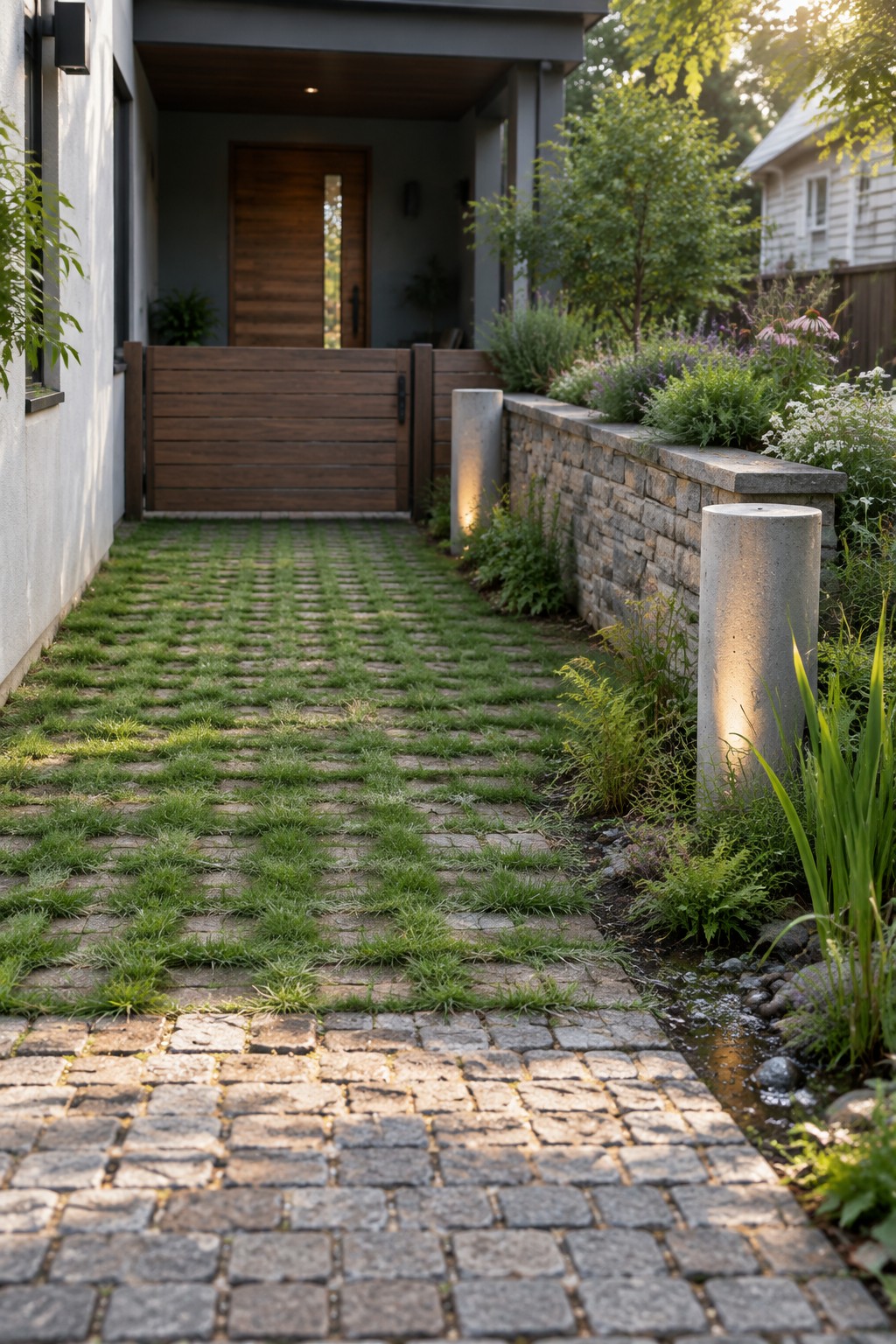
This layout uses a simple grid of pavers set with grass in the spaces between. It cuts down on the amount of hard surface while still giving a clear path for walking or a car. The grass softens the look and helps water soak in instead of running off.
It suits small front yards where a full paved driveway would feel too wide or heavy. Choose a sturdy grass type and space the pavers evenly so tires have solid ground. Keep an eye on weeding in the first season until the grass fills in.
Narrow Brick Paths With Low Borders
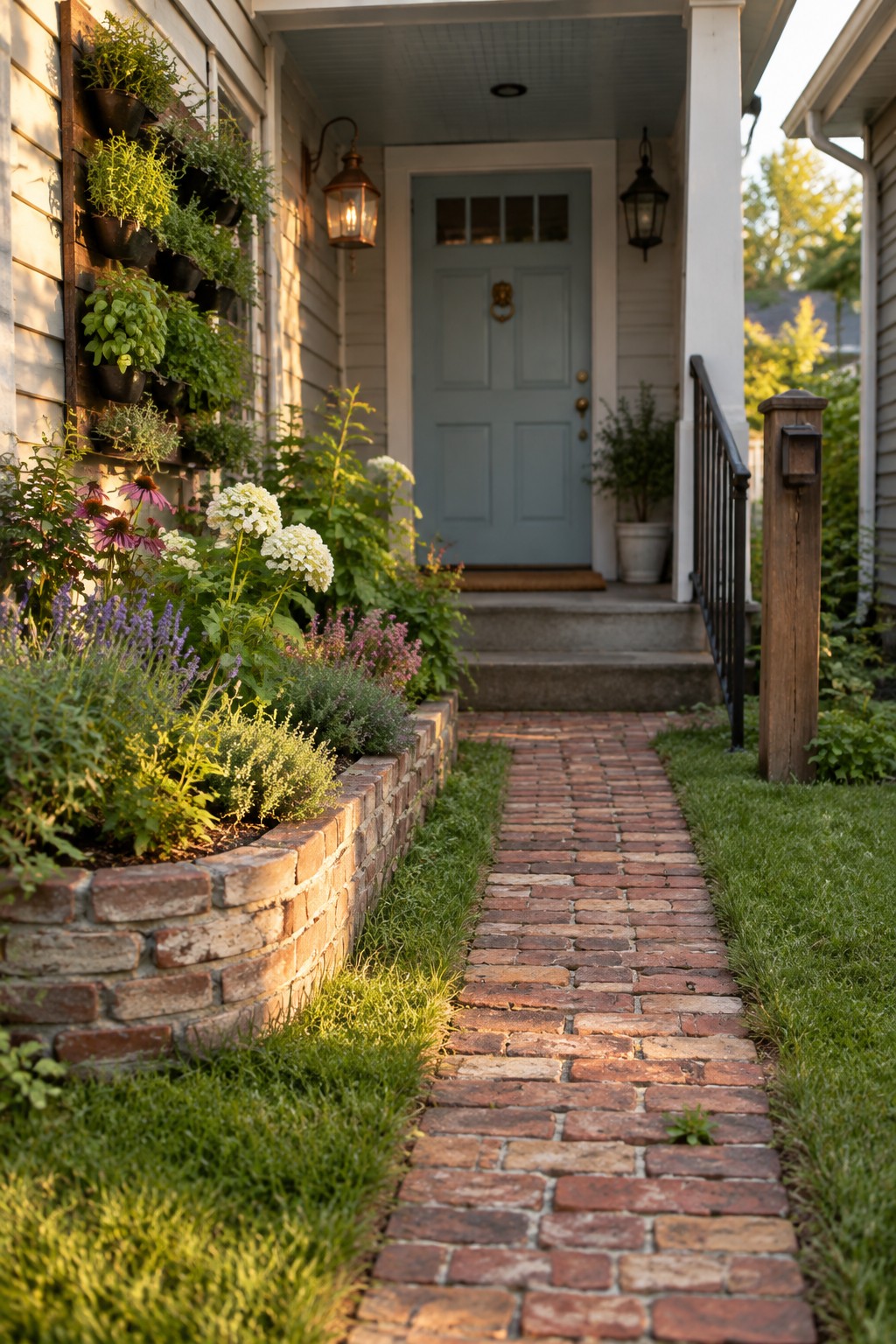
A narrow brick path lined with low brick borders makes a small front entrance feel more open and welcoming without needing a wide stretch of pavement. The borders hold the soil and plants in place so the walkway stays clear and defined even in a tight space.
This approach suits older homes or compact lots where you want some planting right beside the entry. Keep the path about three feet wide and use the same brick for the edging so everything reads as one simple structure rather than a collection of separate pieces.
Spaced Pavers With Ground Cover Between Them
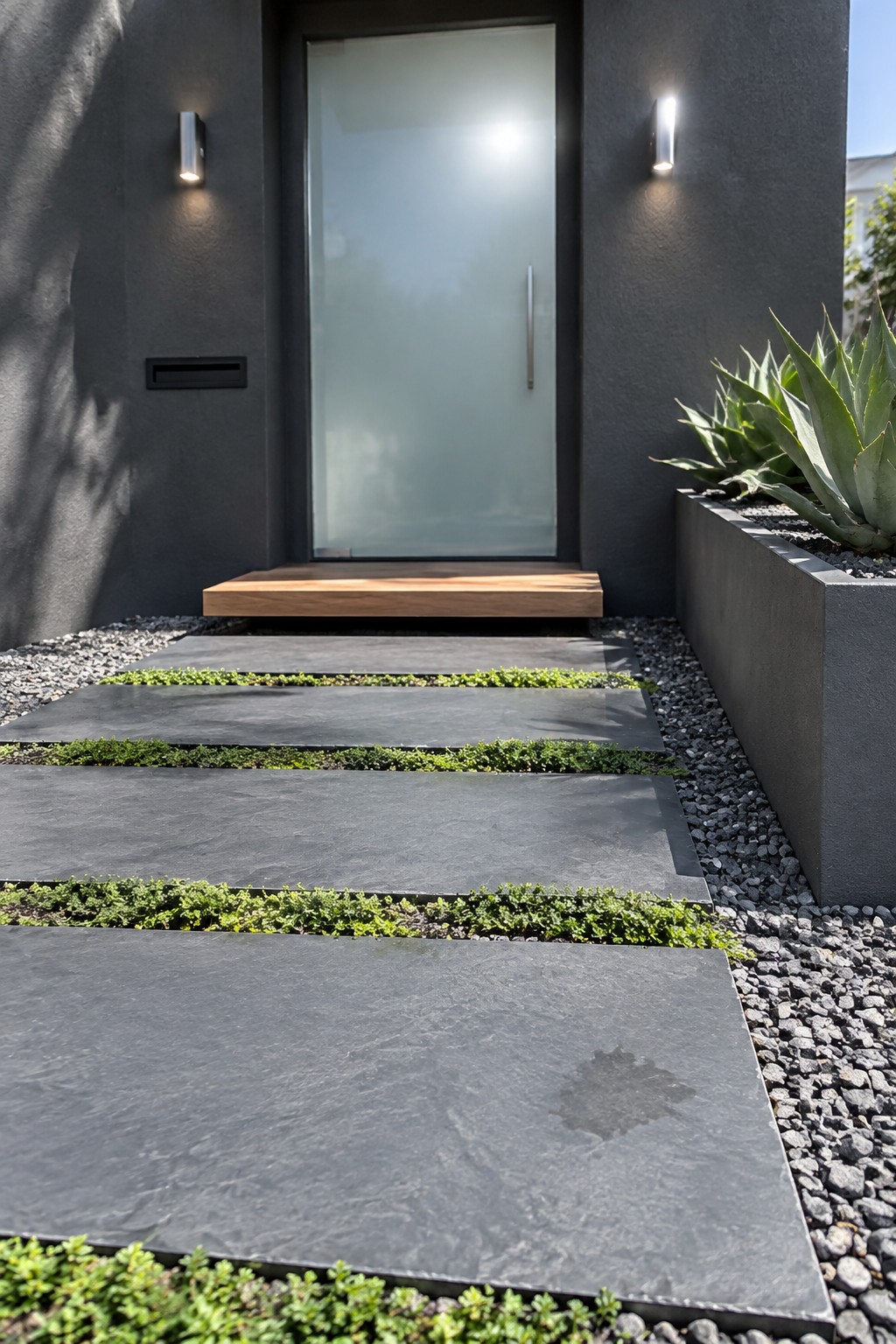
Large pavers set with strips of low plants running between them give a short entry path some breathing room. The gaps break up the hard surface so the walkway feels less heavy and more connected to the surrounding gravel and planting. This setup works especially well when the front space is tight and you still need a clear, stable route to the door.
It suits modern homes where you want to keep the paving simple but avoid a solid slab look. Choose plants that stay low and handle some foot traffic, and make sure the pavers are wide enough to feel steady underfoot. The mix of stone and green strips also helps with drainage on narrow driveways or walkways.
Layer Planting Along a Gravel Drive

Many short driveways end up looking bare when they are fully paved or left as plain gravel. Adding planting beds along the edges changes that. The lavender spilling onto the gravel here softens the approach and makes the entry feel more welcoming without taking up extra space.
This idea works best on homes with limited frontage where every inch counts. Keep the beds fairly narrow and choose plants that stay low or trail slightly so the surface remains usable. It suits older cottages and simple brick homes especially well.
A Wooden Plank Path Over Gravel

A narrow wooden plank walkway set into gravel gives a compact front entrance a clean, simple route without needing a full paved driveway. The boards stay level and easy to walk on, while the gravel handles drainage and keeps the whole area low maintenance. Many people like this setup because it feels less heavy than concrete or brick and still looks intentional.
This works best on smaller lots or side entries where you want to guide people straight to the door without eating up yard space. Keep the planks a consistent width and let the gravel run right up to the edges so the path reads as part of the landscape rather than something added on later.
Narrow Stone Paths With Ground Cover

A narrow stone path bordered by low ground cover gives a compact front entrance some breathing room. Instead of covering the whole area in hard paving, the plants soften the edges and keep the space from feeling cramped or overly formal.
This works best on homes with tight setbacks or small lots. Keep the path just wide enough for walking, use simple dark pavers, and let the planting run right up to the edges. It stays low maintenance and still directs people clearly to the door.
Line a Short Drive With a Narrow Water Channel

A narrow water channel next to the pavers gives a short driveway a clear sense of direction without taking up extra room. The steady line of water breaks up the hard surface and adds a quiet bit of movement that feels calm rather than busy. It works especially well when the rest of the entrance needs to stay simple and open.
This setup suits modern homes on narrow lots where every foot counts. Keep the channel fairly slim, use dark stones at the bottom, and run it the full length of the drive so it feels intentional. Just check that the slope allows water to move properly and that the edges sit flush with the paving so cars and feet pass over easily.
Curve a Raised Planter Along Brick Paving

A raised planter with a gentle curve gives a short entry path more structure without crowding the space. The brick paving stays practical underfoot while the planter adds a planted edge that softens the hard surface and guides visitors toward the door. Many people like this setup because it turns a plain strip of paving into something that feels more like part of the garden.
This approach works best on narrow frontages where a straight border would feel too rigid. Keep the planter height low so it does not block the view from the street, and choose plants that stay neat rather than sprawling. Match the planter material to the house siding or trim if you want the whole entrance to read as one calm composition.
Frequently Asked Questions
Q: My front entrance is tiny. Will any of these ideas actually leave room for a car to turn around?
A: Pick a simple loop at the end using pavers set in a gentle curve. This lets you back out without hitting plants or the house. Measure your car’s turning radius first so the space works in real life.
Q: How do I stop rainwater from pooling right at the door on a short driveway?
A: Slope the surface slightly away from the house and add a narrow channel drain near the entrance. Gravel or permeable pavers let water soak through instead of running toward the steps. Test the slope with a hose before you finish the base.
Q: Gravel looks cheap but tracks into the house. Is there a better low-cost fix?
A: Lay a solid strip of concrete or brick just where the car stops and walks to the door. The rest can stay gravel if you like the look. Sweep or rinse that strip now and then to cut down on mess.
