

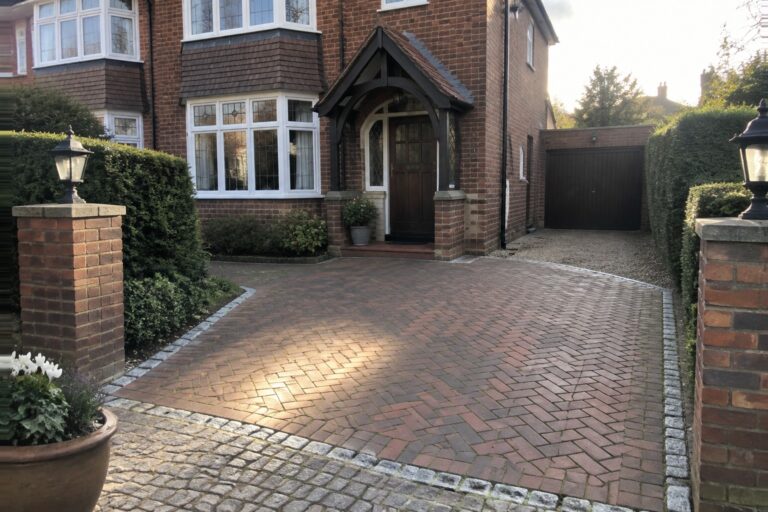
I have always noticed how the driveway shapes the first impression of a 1930s house long before anyone steps inside the gate.
Matching the paving to the original brick tones and subtle patterns helps the front of the house feel settled rather than patched together.
The right choice changes everything.
Over the years I have seen too many period homes lose their quiet character when a modern surface cuts across the facade without any nod to the era.
Trying out a couple of sample panels on the actual ground shows me how the light and wear will settle over time.
Brick Driveways With Contrasting Edging
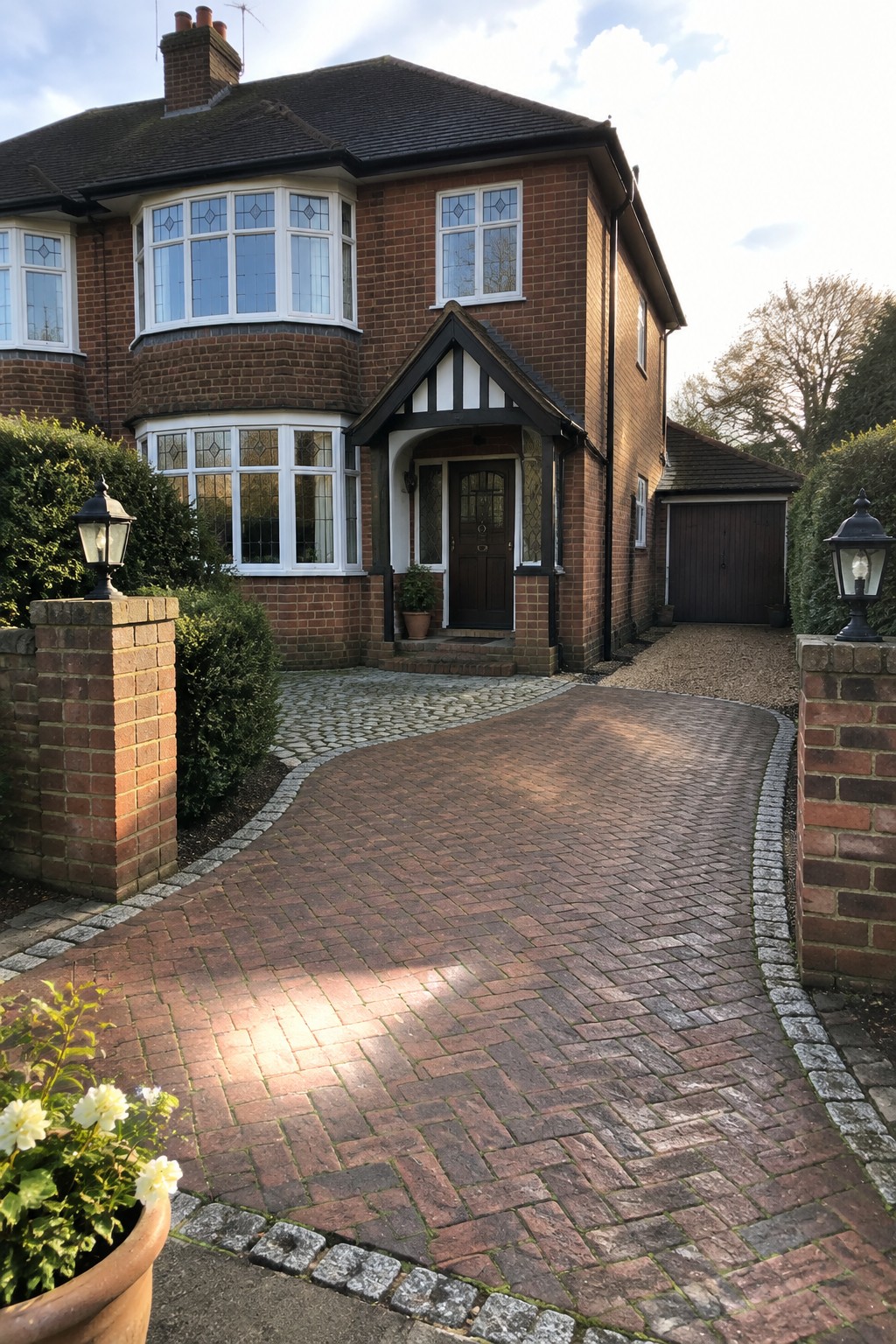
A curved brick driveway works well on a 1930s house because it echoes the solid, traditional look of the brickwork without trying to copy it exactly. The red bricks laid in a simple pattern give a warm, settled feel that suits the age of the property, while the lighter stone border keeps the edges neat and stops the surface from looking too flat.
This approach suits homes with established front gardens where you want the drive to feel like part of the original layout rather than a later addition. Keep the curve gentle so it does not fight the straight lines of the house, and match the edging tone to any stone or brick details already on the facade.
Cobblestone Driveways With A Central Bed
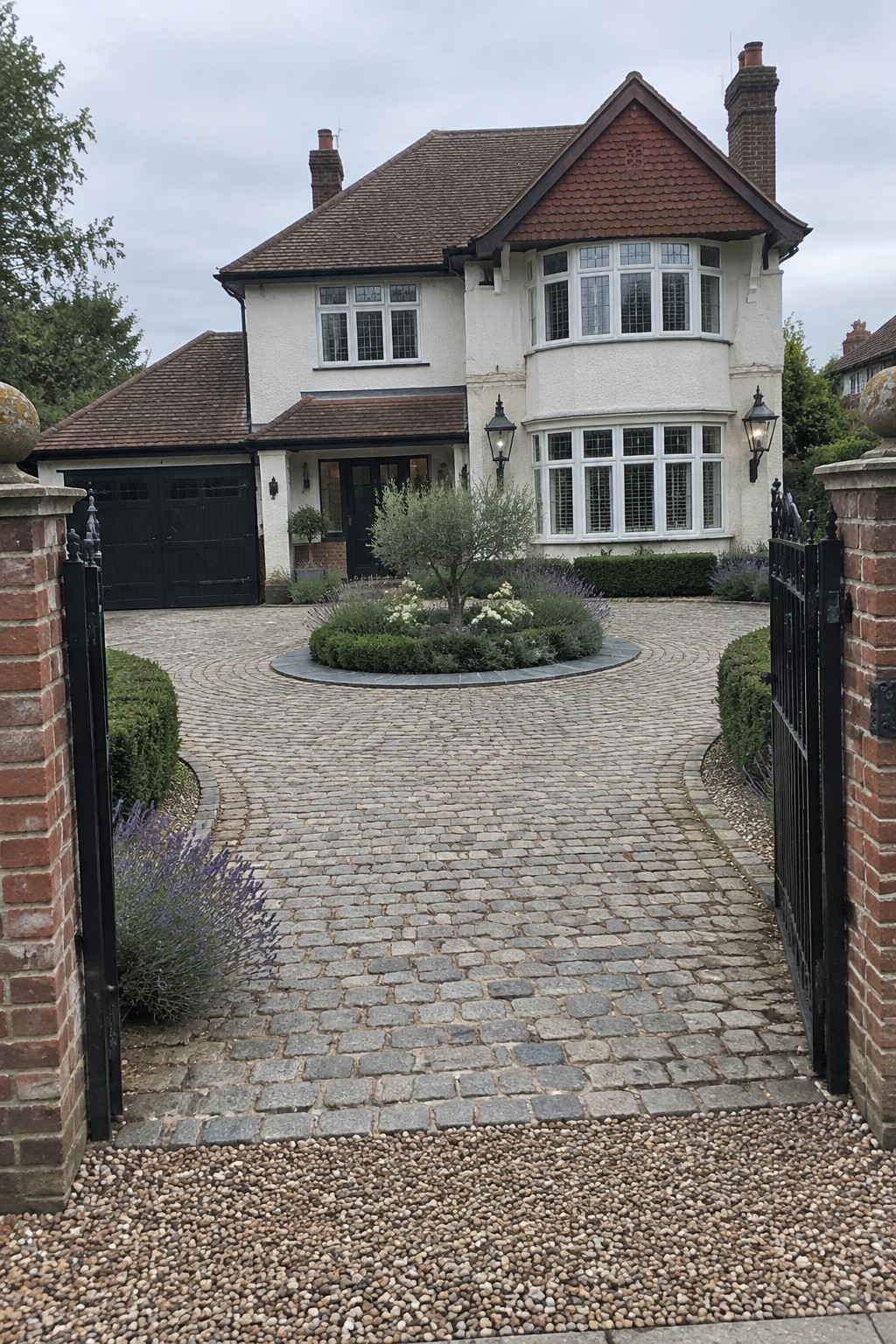
A cobblestone driveway adds instant period character to a 1930s house. The textured surface feels right for the era and the gentle curve softens the approach without looking fussy. A small planted island in the middle breaks up the expanse and gives the eye somewhere to rest.
This layout works best on wider frontages where there is room for the circle to sit comfortably. Keep the planting low and simple so it does not fight with the house. Avoid overly ornate edging or modern pavers that clash with the traditional sett look.
Gravel Driveways With Brick Inlays
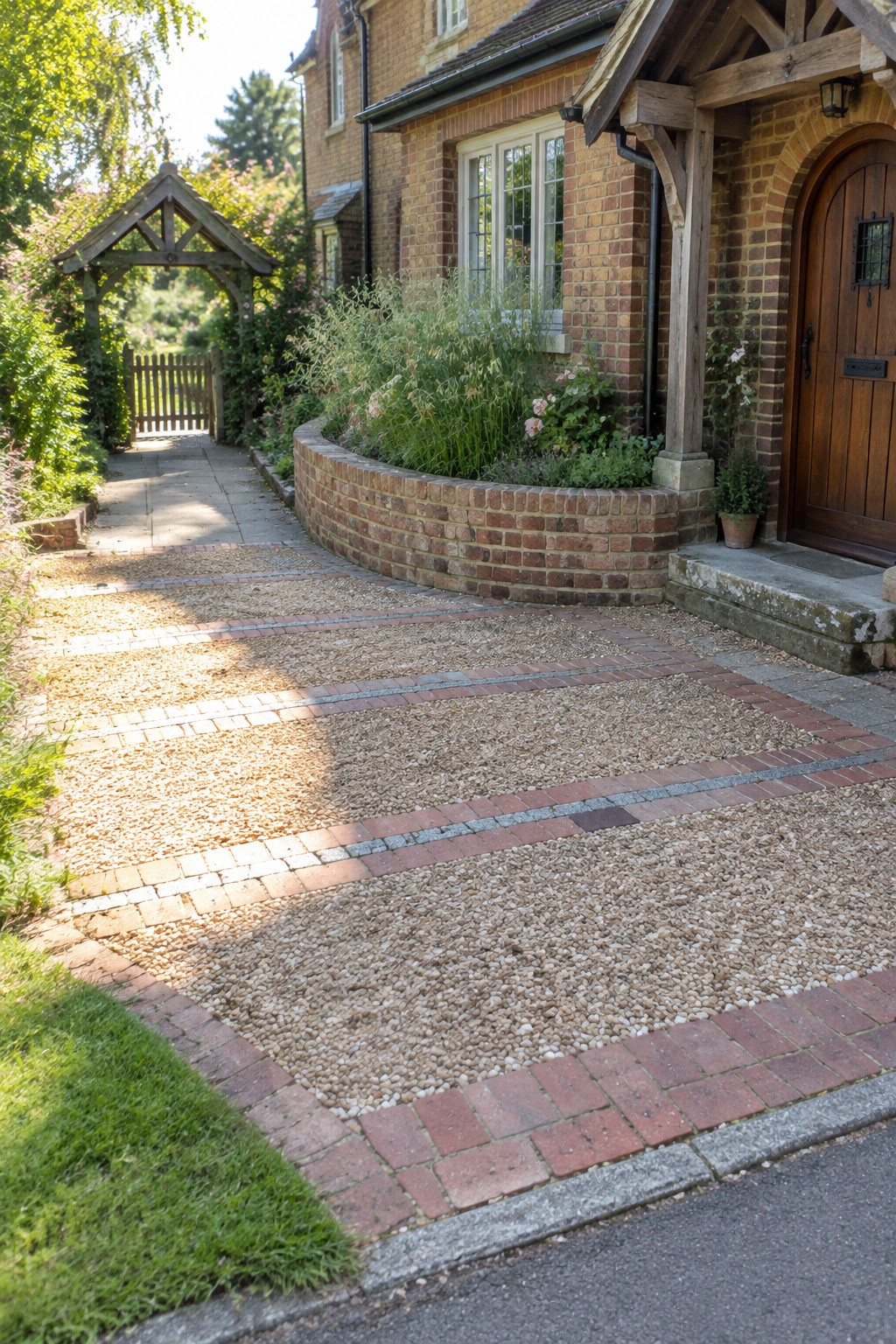
Many 1930s homes look better with driveways that mix loose gravel and brick rather than solid paving. The brick lines add structure and period detail without making the surface feel too formal or heavy.
This works well on homes that already use brick on the facade. Keep the brick bands fairly narrow and let the gravel fill most of the space so the pattern stays subtle and easy to maintain over time.
Curved Brick Driveways With Cobblestone Borders
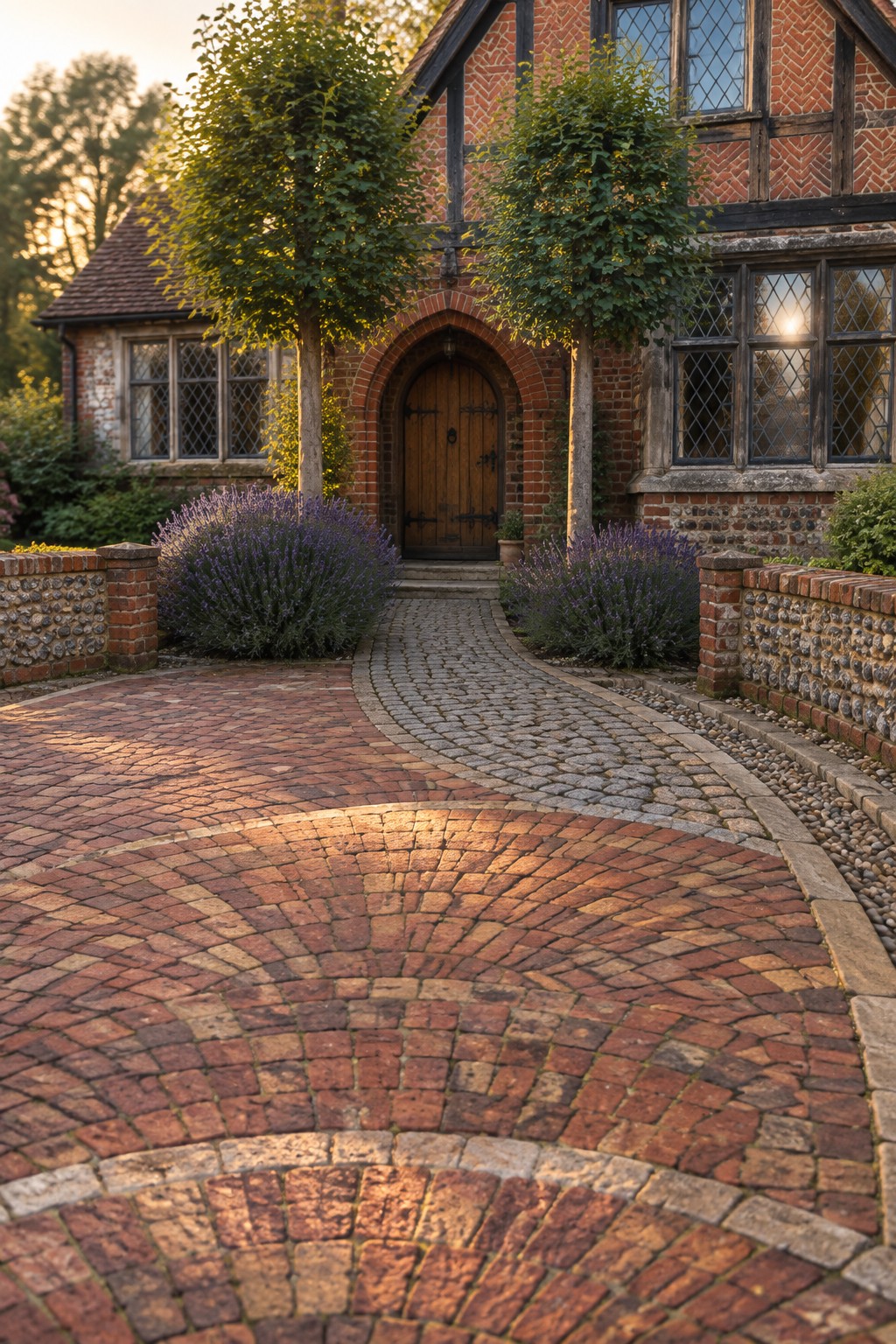
A gentle curve in a brick driveway can make the whole front approach feel more relaxed and in keeping with a 1930s house. Instead of a straight run up to the door, the bend creates a softer line that works well with the period architecture and avoids a too-formal look.
This layout works best on homes where there is a little space to let the path sweep naturally. The contrast between the main brick surface and a lighter cobblestone border helps define the curve without adding extra features. It suits red brick houses especially, though it can work on other styles if the materials stay simple and the curve stays modest.
Checkerboard Paving With Grass Infill
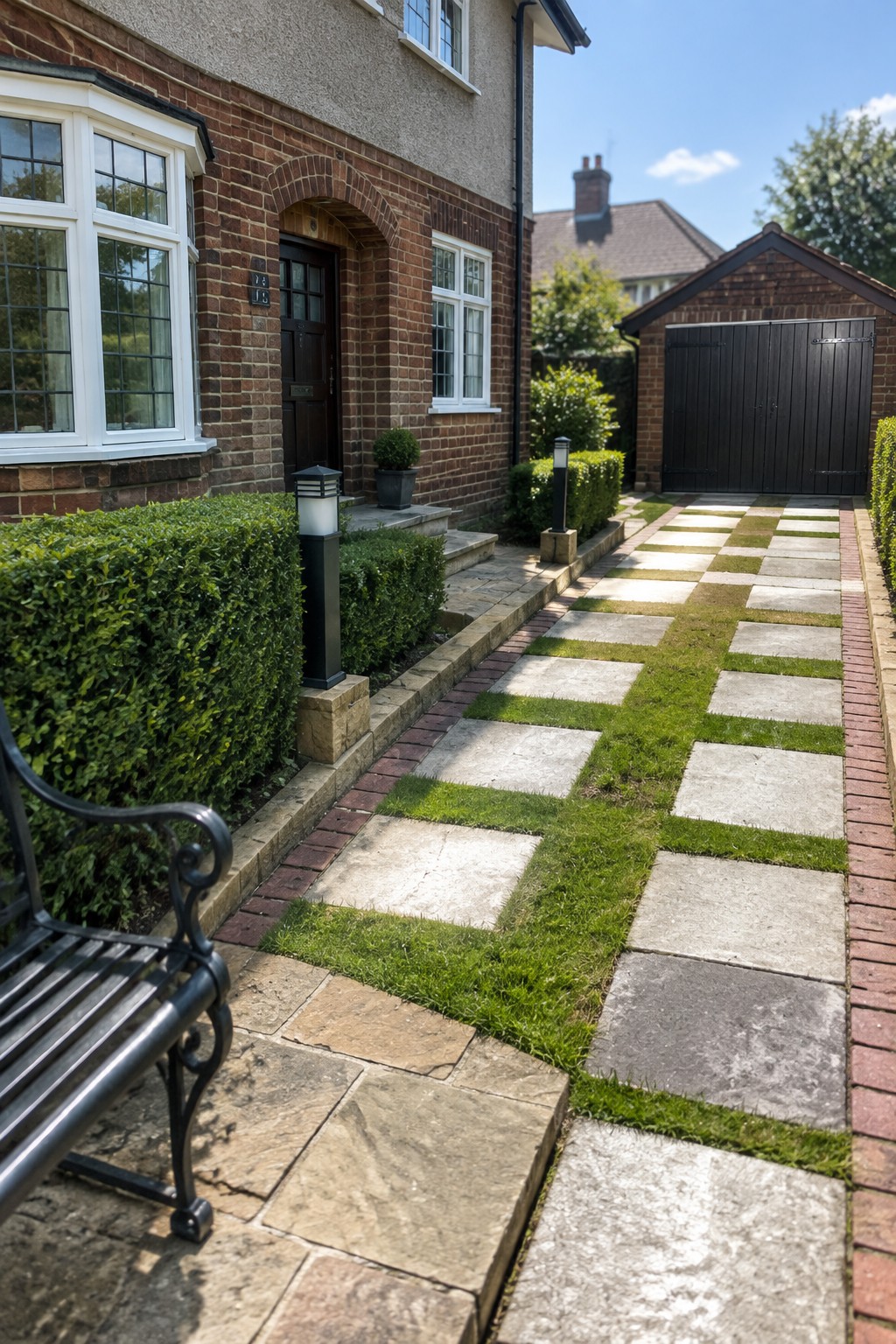
This style of driveway uses large stone slabs set in a grid with strips of grass running between them. The pattern keeps the surface usable for cars while softening the look and echoing the garden style common on 1930s homes.
It suits properties where the front garden needs to feel open rather than fully paved over. Make sure the slabs are thick enough to take regular use and choose a grass mix that tolerates some shade from the house walls.
Hexagonal Clay Pavers For The Drive
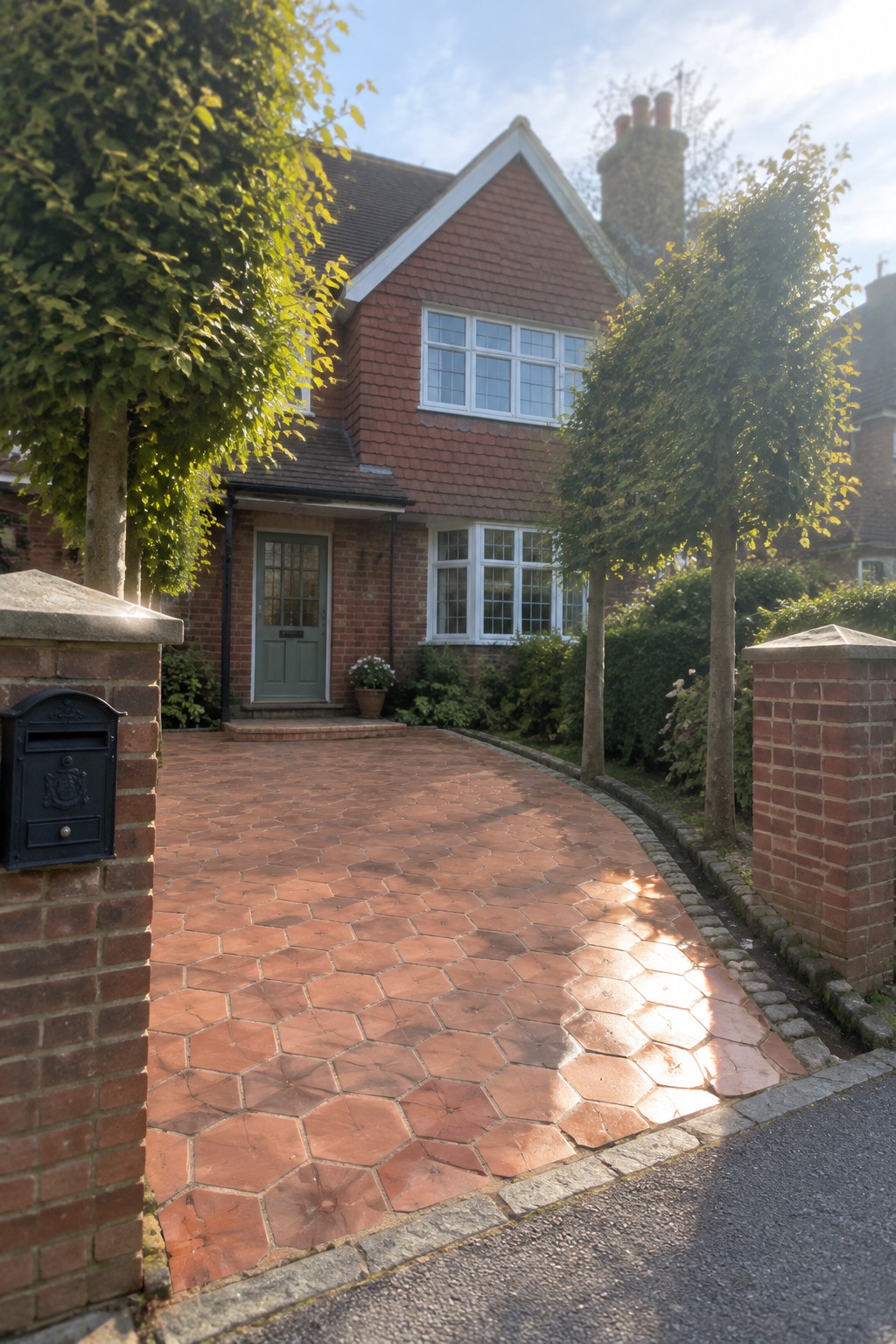
Hexagonal clay pavers bring a simple pattern to a driveway that suits 1930s homes without trying too hard. The shape breaks up the surface and gives the entrance a bit more character than plain rectangles or tarmac.
This paving works best on properties with brick walls and period details. It handles daily car use well as long as the base is laid properly, and it pairs nicely with low brick walls or pillars at the entrance.
Matching Brick Paving For The Driveway
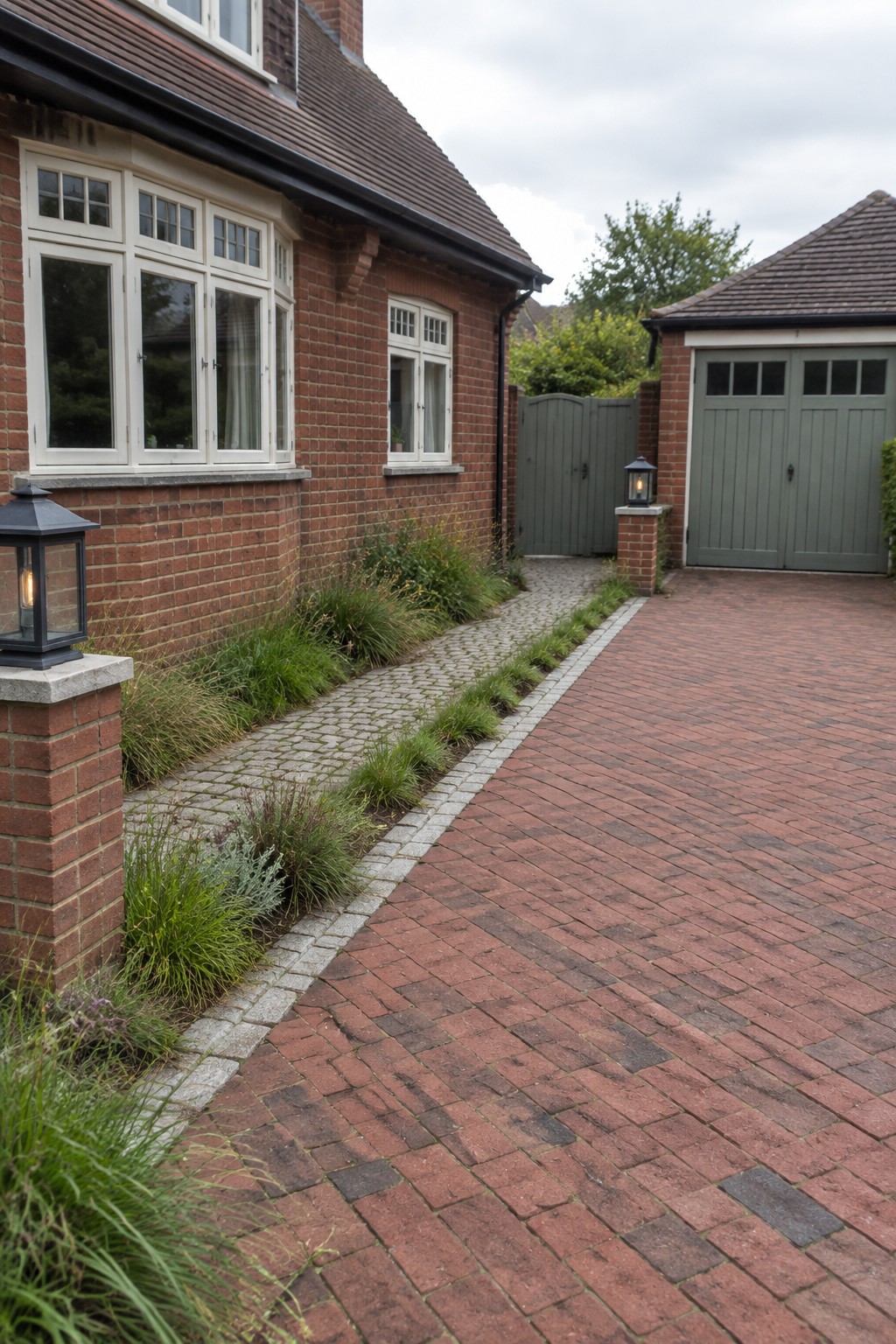
One of the simplest ways to keep a 1930s house looking pulled together is to run the same brick across the driveway. It makes the whole front feel like one material rather than a separate road tacked on. The red tones link the walls and the ground without any extra effort.
This works best on homes that already have exposed brick. Keep the driveway pattern fairly simple so it does not fight the house, and leave a narrow planted strip along the edge to soften the width. It suits period homes that still have their original brickwork and avoids the common mistake of choosing a completely different paving that breaks the look.
Mix Gravel With Stone Setts
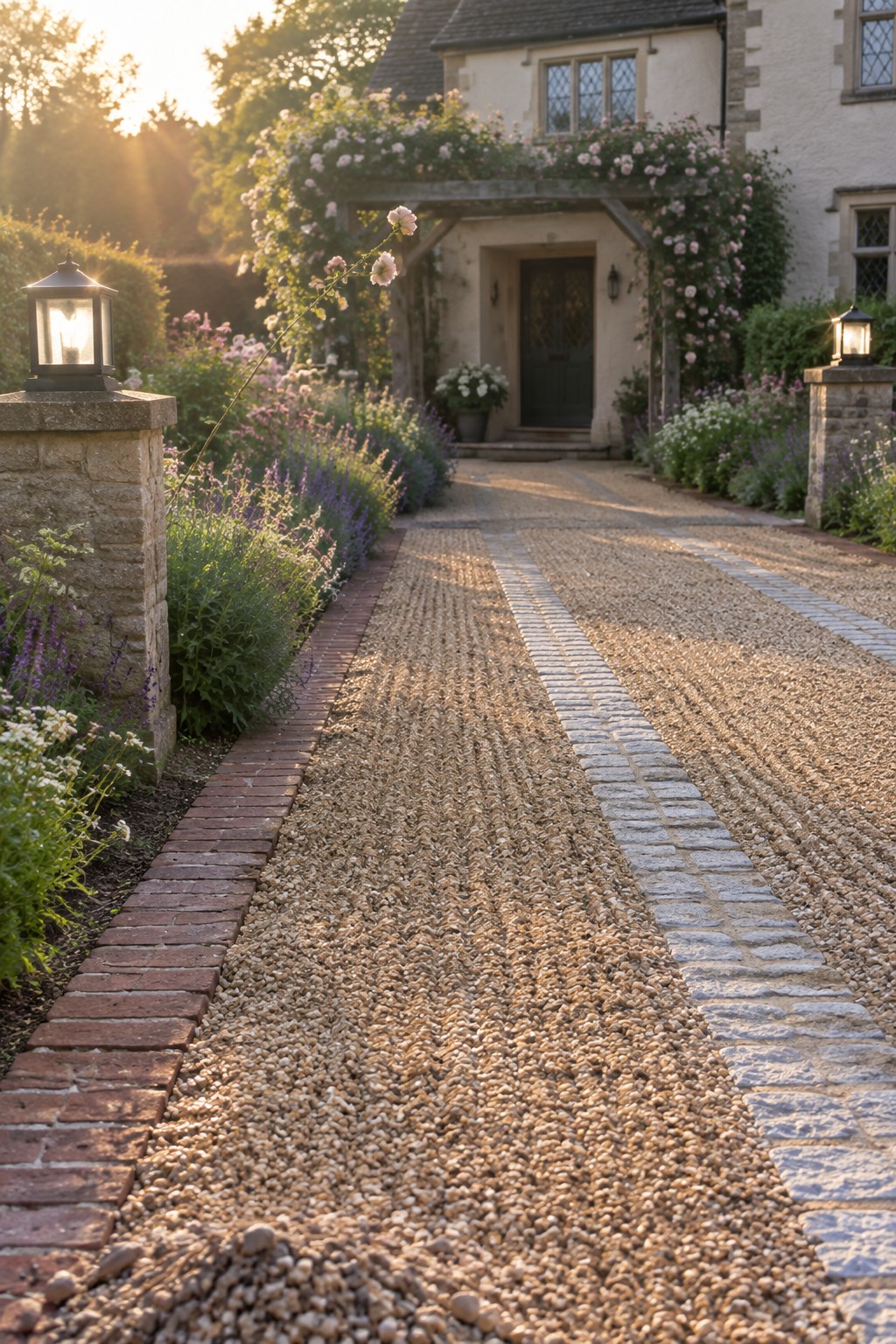
Many 1930s homes look best with driveways that use more than one material. A central band of stone setts running through loose gravel gives the surface some order while keeping the overall feel soft and in keeping with the period.
This layout works well on longer drives where you want to lead the eye toward the house without making the surface feel too hard or formal. Brick edging along one side helps hold the gravel in place and adds another traditional detail that suits the architecture.
Stone Slab Paths With Gravel Borders

Large stone slabs give a 1930s house path a solid, settled look that fits the age of the building. The rectangular shapes and visible joints add just enough pattern without feeling fussy, while the gravel strips on either side keep the whole thing practical and easy to maintain.
This layout suits brick homes with narrow front approaches. Lay the slabs in a straightforward line, leave room for low planting along the edges, and let the gravel do the rest. It avoids the need for perfect symmetry and still looks intentional years later.
Run Grass Strips Between Your Paving Slabs
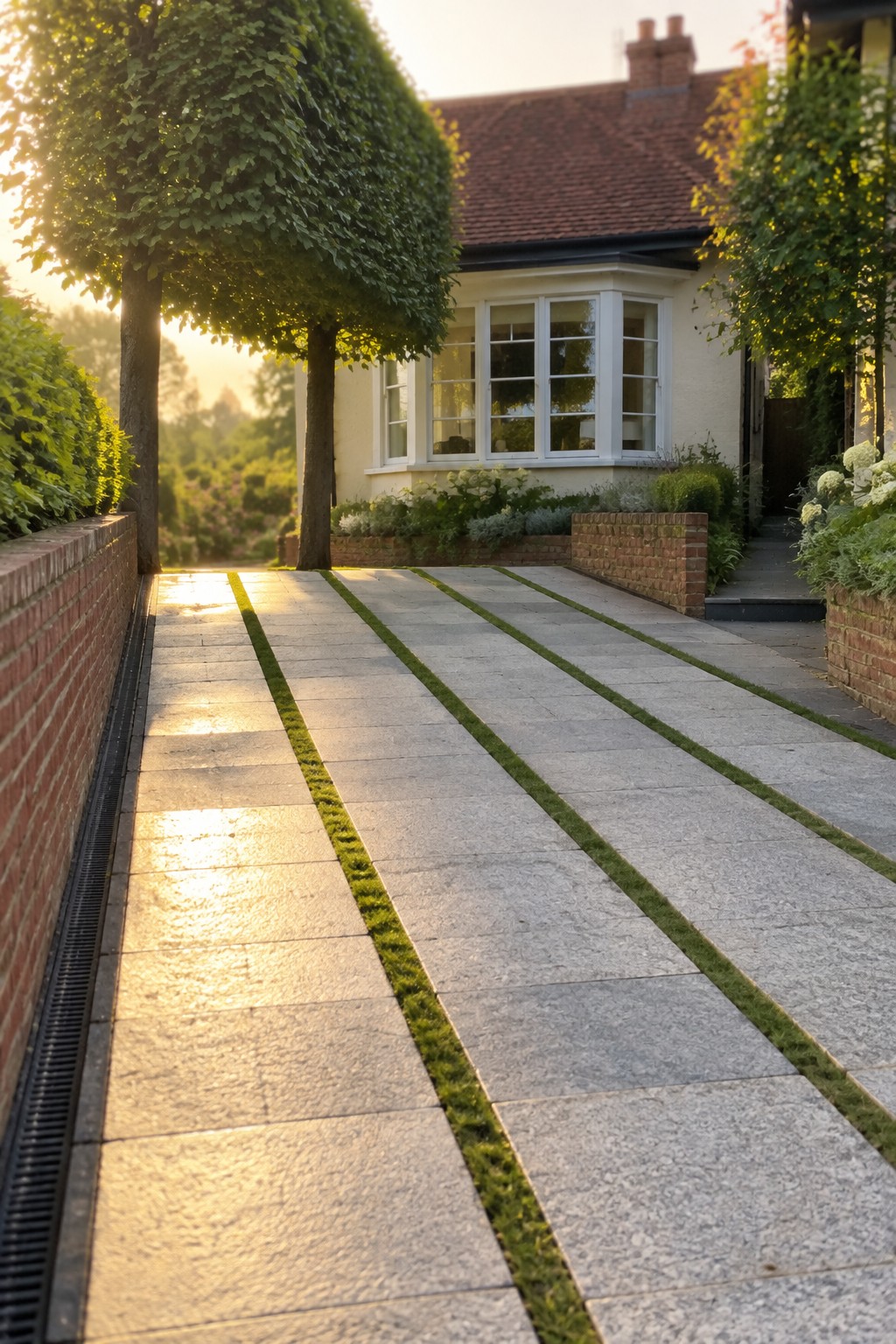
This layout keeps a driveway practical while letting a bit of green run right through it. The narrow strips break up the expanse of stone and stop the surface from feeling too solid or heavy.
It suits 1930s homes especially well because the pattern echoes the period’s preference for simple geometry mixed with planting. Keep the strips narrow so they are easy to mow, and choose slabs that sit level with the surrounding ground so the whole thing reads as one continuous surface.
Natural Stone Paths For 1930s Homes
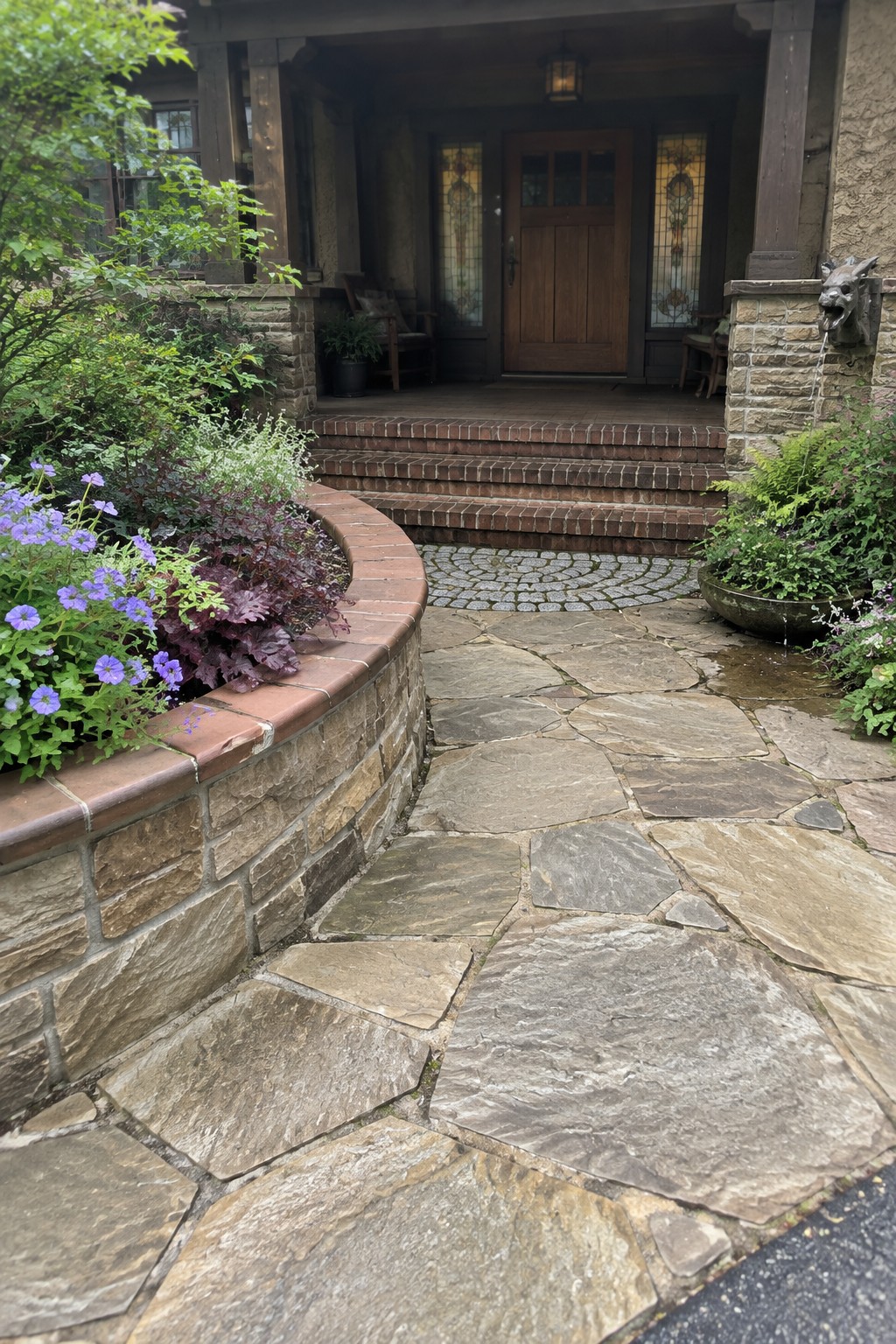
Irregular stone paving gives a driveway approach more character than plain concrete or tightly laid brick. The varied shapes and sizes let the path feel like it has been there for years, which fits the handmade quality of many 1930s houses.
This works best when the stones are kept fairly large and the edges are softened with planting. A simple brick border along the beds, like the one shown here, helps tie the hard surface back to the house without making the whole entrance feel too formal. Watch the scale though. Too many small pieces can start to look fussy rather than relaxed.
Cobblestone Paving For The Driveway
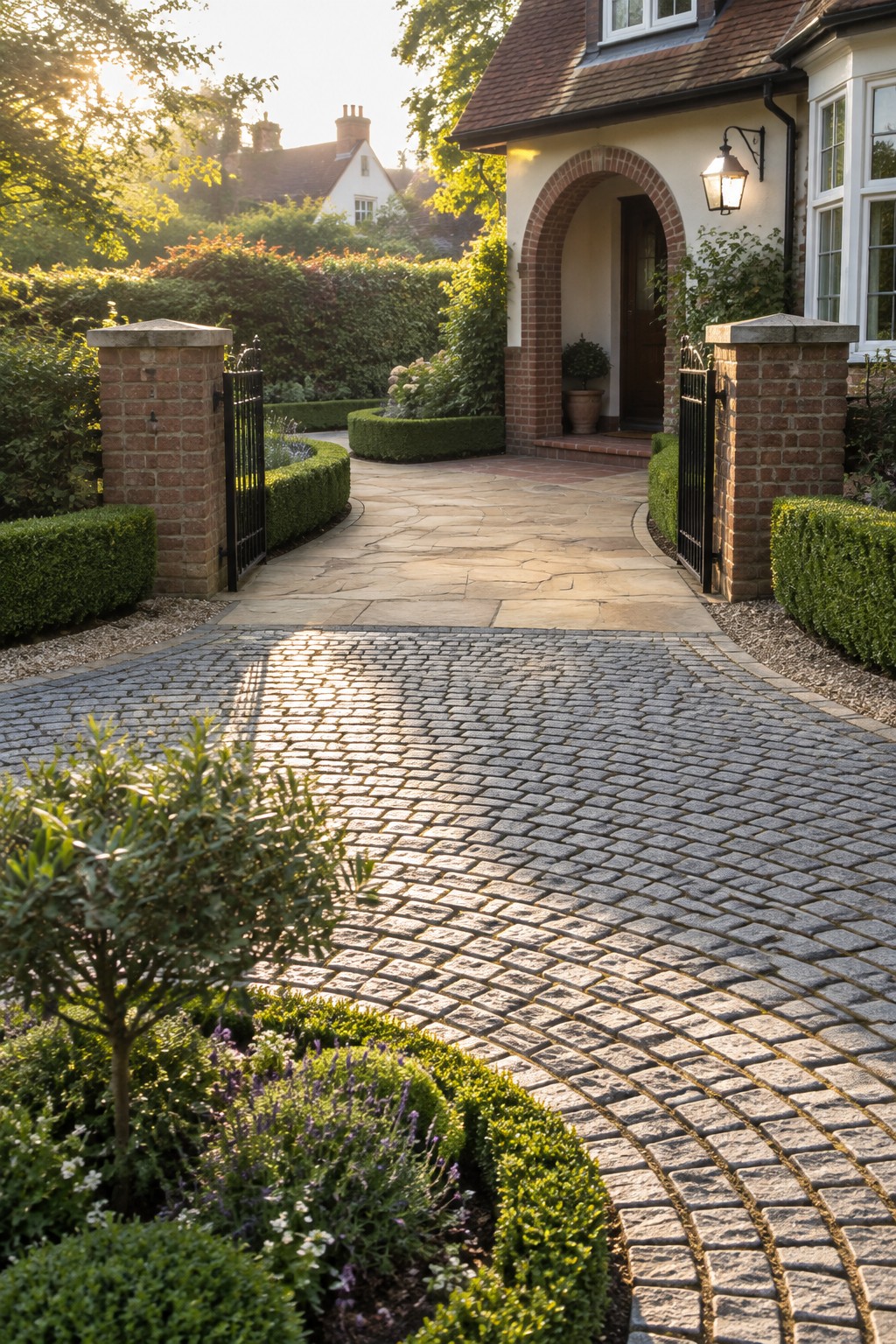
Cobblestone driveways work well on 1930s houses because the small stones give a textured surface that feels rooted in the past. The curved layout also softens the approach and keeps the whole entrance from looking too rigid or modern.
This style suits homes with brick details or traditional gates, and it pairs best with a smoother path right up to the door so visitors have an easier walk. Just make sure the stones are properly bedded, or they can shift over time with heavy use.
Mixing Stone Pavers With Gravel Edging
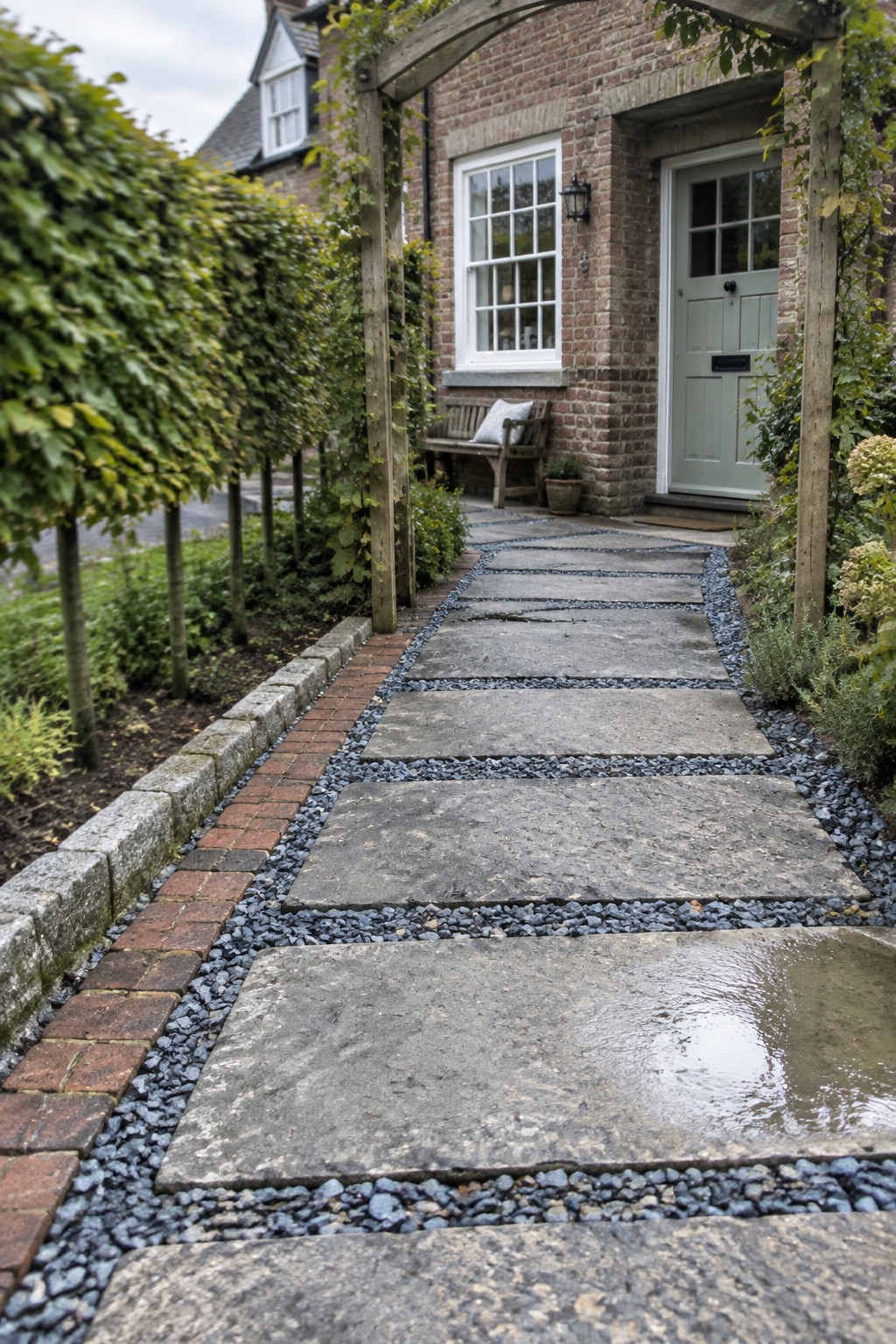
Large stone slabs set among gravel strips give a 1930s driveway or path a relaxed but structured look. The mix keeps the surface interesting without feeling too formal, and the gravel helps with drainage while softening the hard lines of the stone.
This approach works best on homes that already have brick or mixed materials on the facade. Keep the gravel contained with a low brick border so it stays neat over time. It suits older properties where the goal is to link the house to the garden rather than create a solid paved expanse.
Brick Inlays For A 1930s Driveway
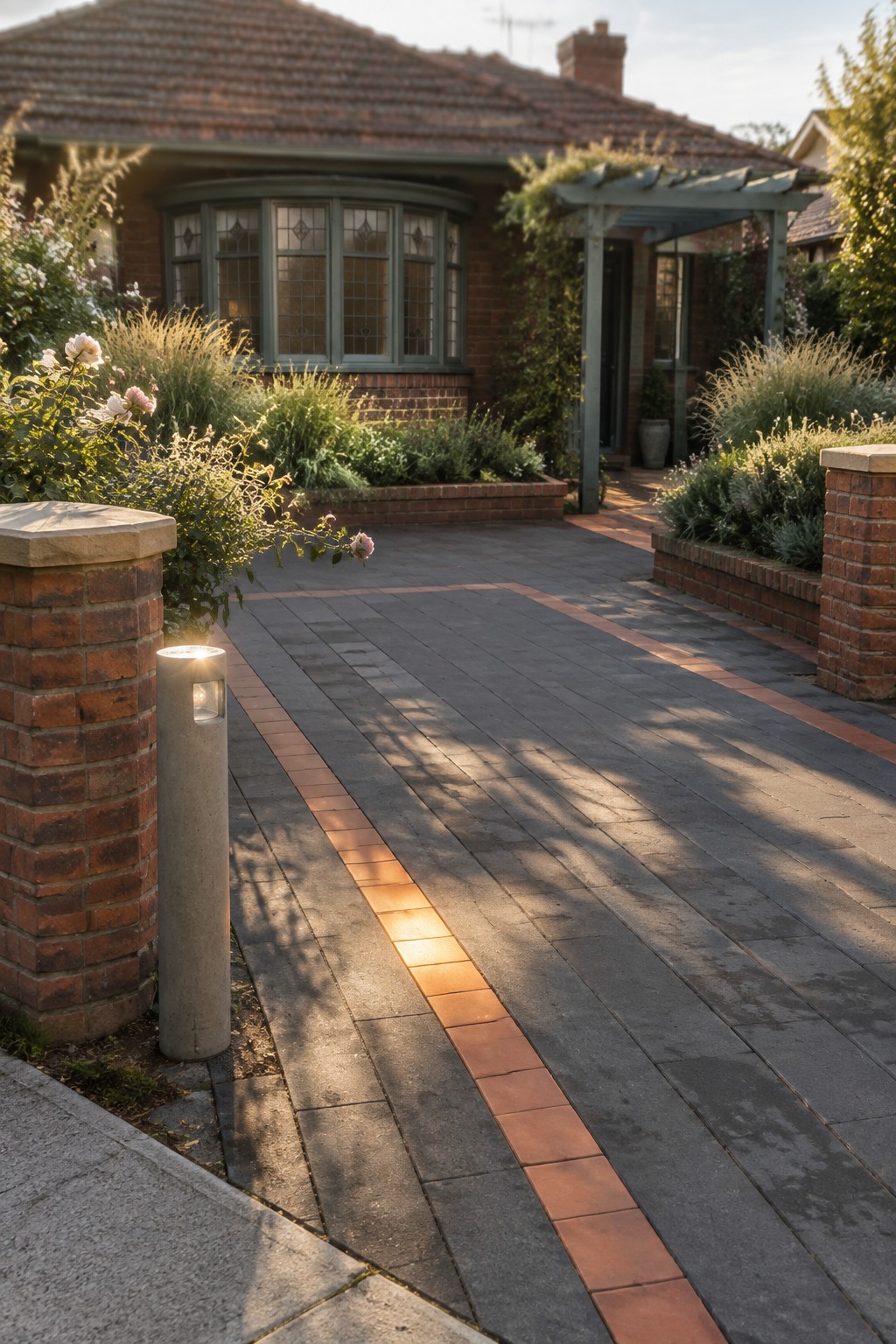
A narrow strip of terracotta brick running down the center of a dark driveway adds just enough period detail without overcomplicating the surface. It breaks up the expanse and gives a nod to the brickwork already present on the house and boundary walls.
This approach suits homes from the 1930s where the original builders often used simple material contrasts rather than elaborate patterns. Keep the inlay modest in width and match the brick tone to any existing garden walls so the whole entrance feels consistent.
Match Your Driveway Paving to the House Brick
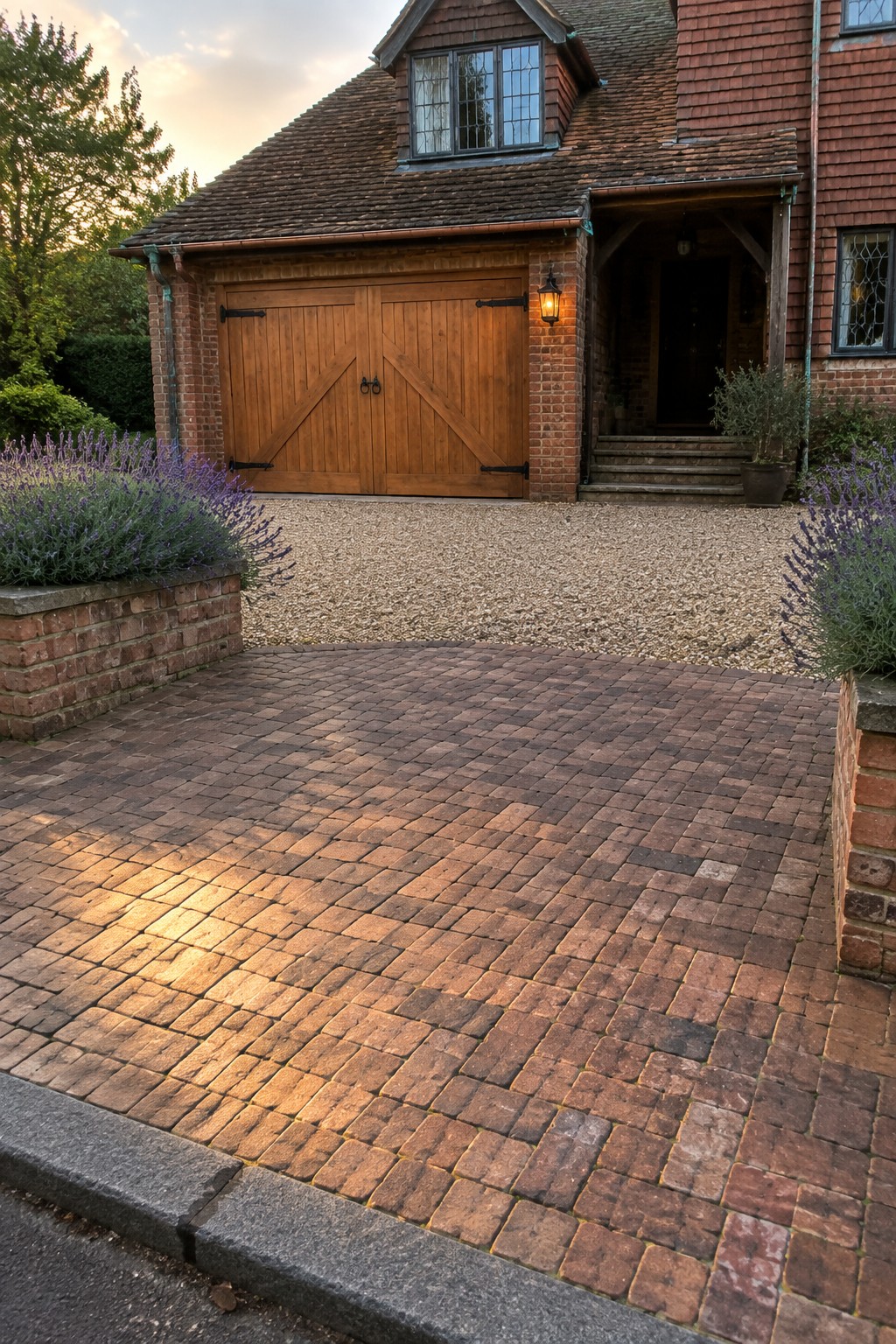
One simple way to keep a 1930s house looking pulled together is to run the same brick out into the driveway. When the paving uses the same color and texture as the walls, the whole frontage feels like one build rather than a house with a separate hard surface added later. The herringbone pattern also gives a quiet nod to traditional laying methods without looking fussy.
This works best on homes where the brick is already a main feature. Keep the area closest to the house in brick for that solid link, then switch to gravel farther out if you need a cheaper or more permeable surface. Just make sure the brick you choose is the right thickness for cars so it does not crack over time.
Frequently Asked Questions
Q: Can I mix different paving types without it looking messy?
A: Stick to two materials at most. Pair bricks with a border of stone setts for example. This gives interest while staying true to the 1930s style.
Q: What happens to the look if I add a modern car to the driveway?
A: Park it on a section of plain paving at the back. The period details up front still show off the house character. Most visitors notice the path more than the vehicle.
Q: How wide should the driveway be for everyday access?
A: Aim for at least three meters across. That lets you open car doors without stepping on borders. Narrower paths work fine if you mainly use it for walking.
