


The driveway often sets the tone for how the entire front of the house comes across to anyone passing by.
Natural stone pavers tend to age well and add a layer of character that concrete slabs rarely match.
I keep coming back to how the pattern and edging choices can either blend the driveway into the landscape or make it stand out awkwardly against the foundation.
Small spaces leave little room for error.
In my own experience, testing material samples against the existing siding and roof has saved me from choices that would have looked off once installed.
Linear Lighting Along Stone Paver Edges
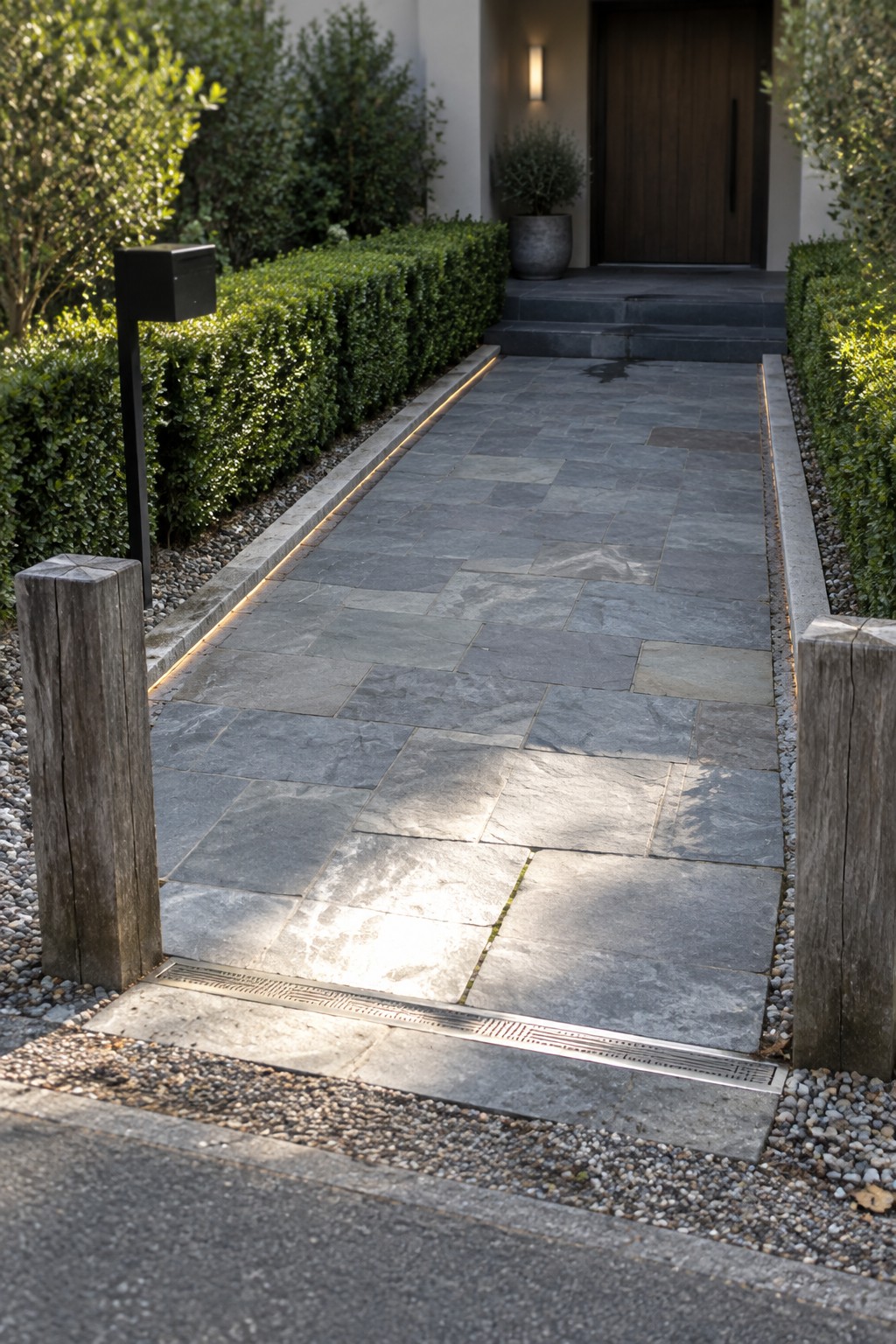
Running a thin line of light along the edges of stone pavers gives a small driveway or entry path a clear shape without adding clutter. The glow outlines the surface at night and lets the natural texture of the stone stand out during the day.
This approach works best on narrow layouts where space is tight. It pairs well with gravel shoulders and simple planting on either side, and it keeps the overall look low key. Just check that the fixtures sit flush so they do not catch on tires or feet.
Natural Stone Pavers For Small Driveways
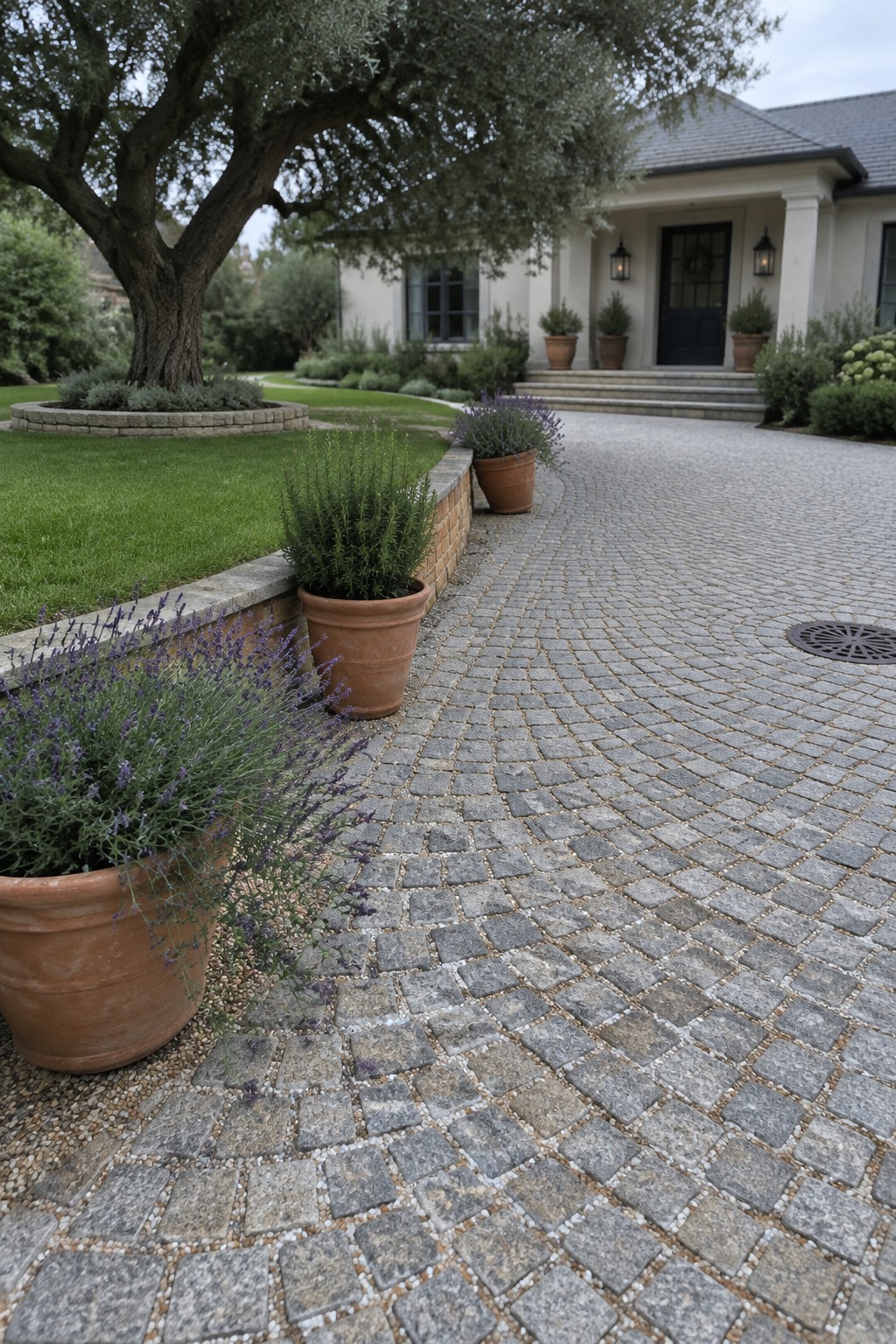
Natural stone pavers work well on smaller driveways because they add texture without looking heavy. The varied tones in the stone keep the surface interesting while the tight pattern handles curves and turns without needing extra cuts or complicated layouts. Many people like how the material ages and settles into the surrounding garden over time.
This approach suits homes where the driveway sits close to lawn or planting beds. Keep the pavers in a simple running or grid pattern and let low pots or border plants soften the edge. Avoid very dark stone if the driveway gets full sun, since it can feel hot underfoot.
Use a Grass Strip Between Stone Paver Rows
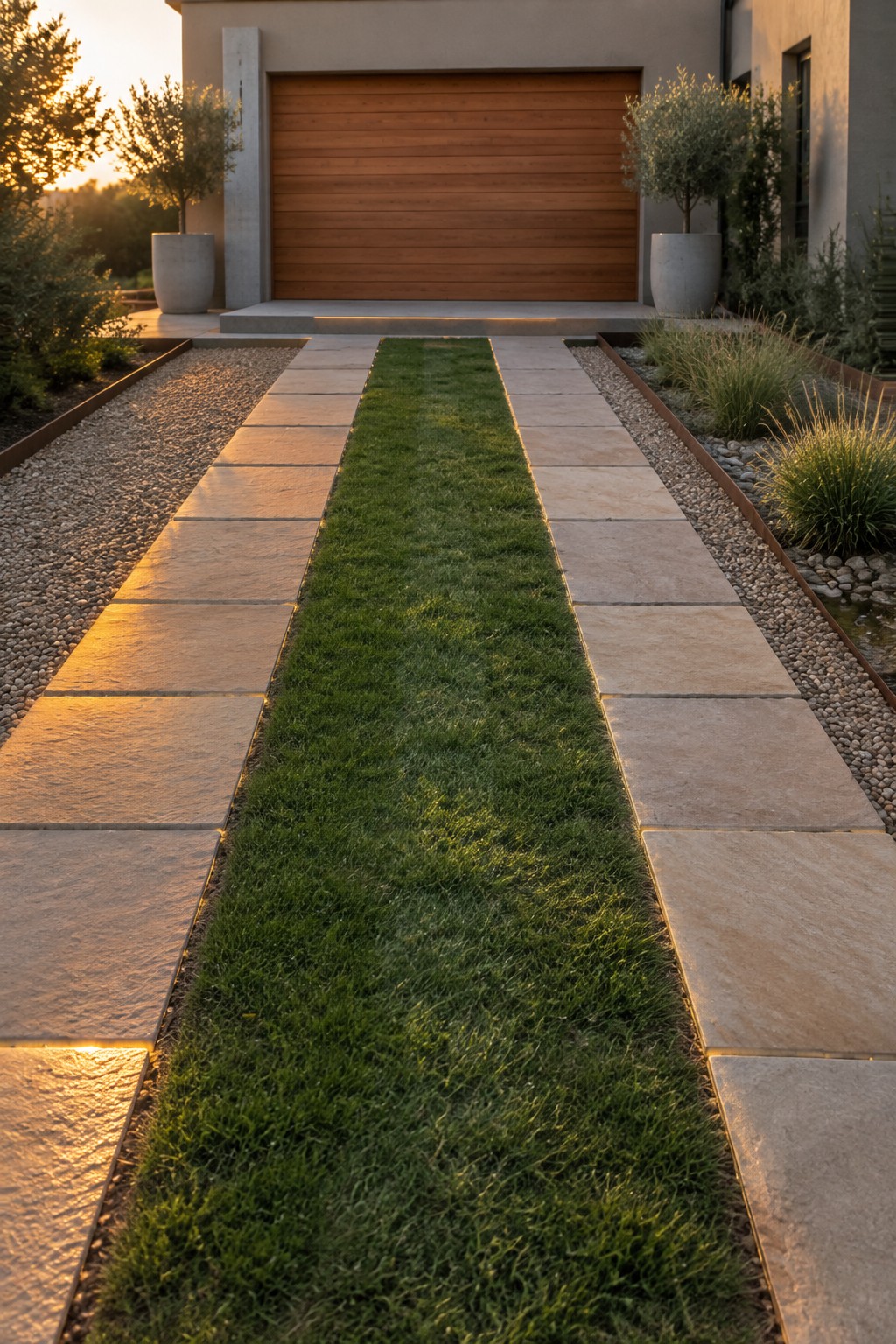
A simple way to soften a small driveway is to split the pavers into two narrow tracks with a strip of grass down the center. This keeps the hard surface to a minimum and gives the whole approach a lighter, less heavy look.
The layout works best on straight drives in front of modern or contemporary homes. It suits places where you want the driveway to feel more like part of the garden than a wide slab of stone, and the grass strip also helps cut down on the amount of paving needed.
Cobblestone Pavers That Follow The Garden
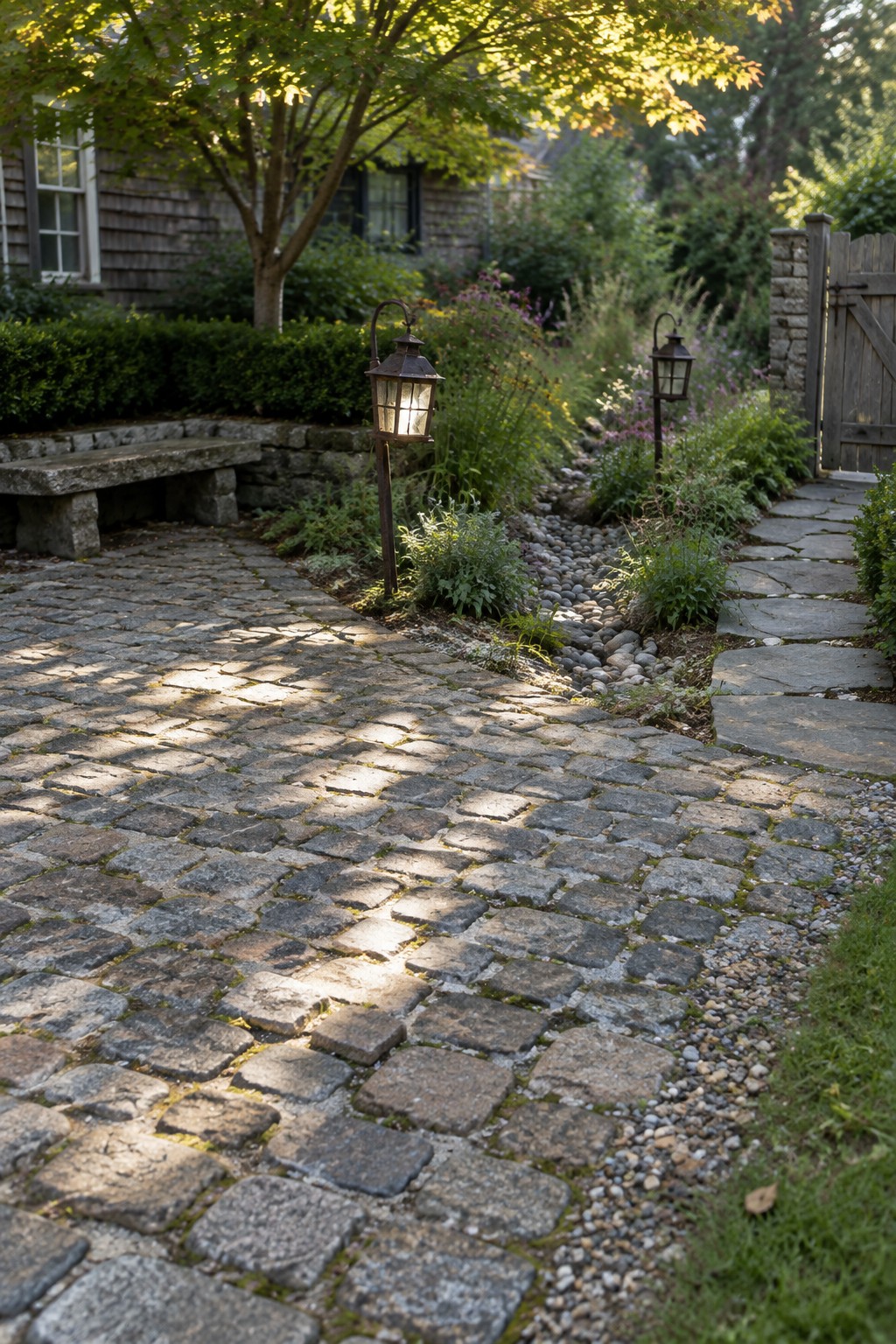
Cobblestone pavers give a small driveway an informal, settled look that fits right into the surrounding plants. The irregular shapes and mixed tones keep the surface from feeling too rigid or new.
This works well on properties where the drive needs to curve around beds or trees. Keep the edges loose with gravel or low plantings, and add simple lights so the path stays easy to follow at night.
Planting Between Stone Pavers
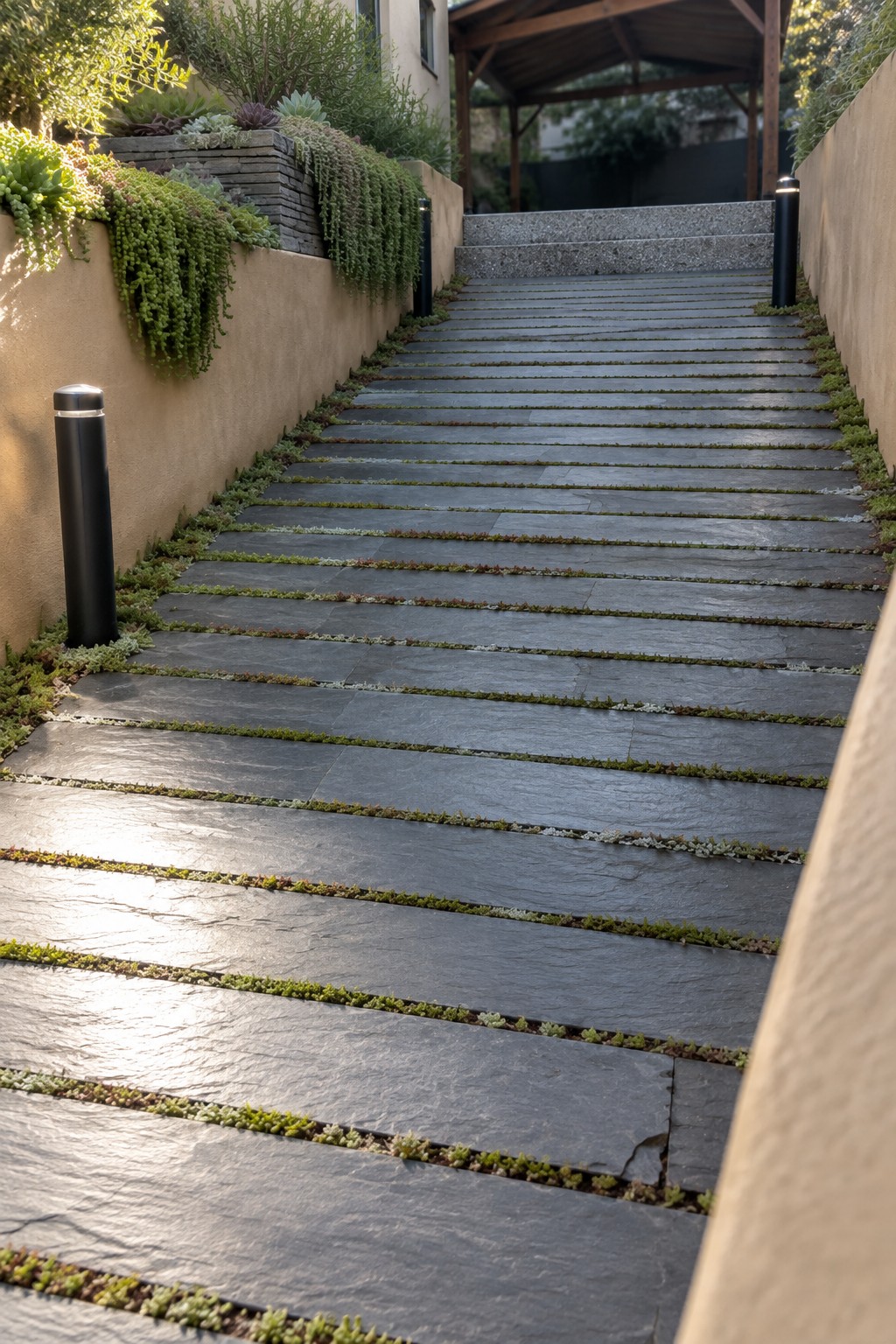
Stone driveways can feel a bit stark when they are all hard surface. Letting small plants grow in the joints softens the look and helps the paving blend into the surrounding garden without any extra structures or borders.
This works best on narrow driveways or side paths where the stones sit a little apart. Use low, tough plants that handle occasional tires or feet, and keep the gaps wide enough to hold some soil so the plants can settle in over time.
Herringbone Stone Pavers For Narrow Entries
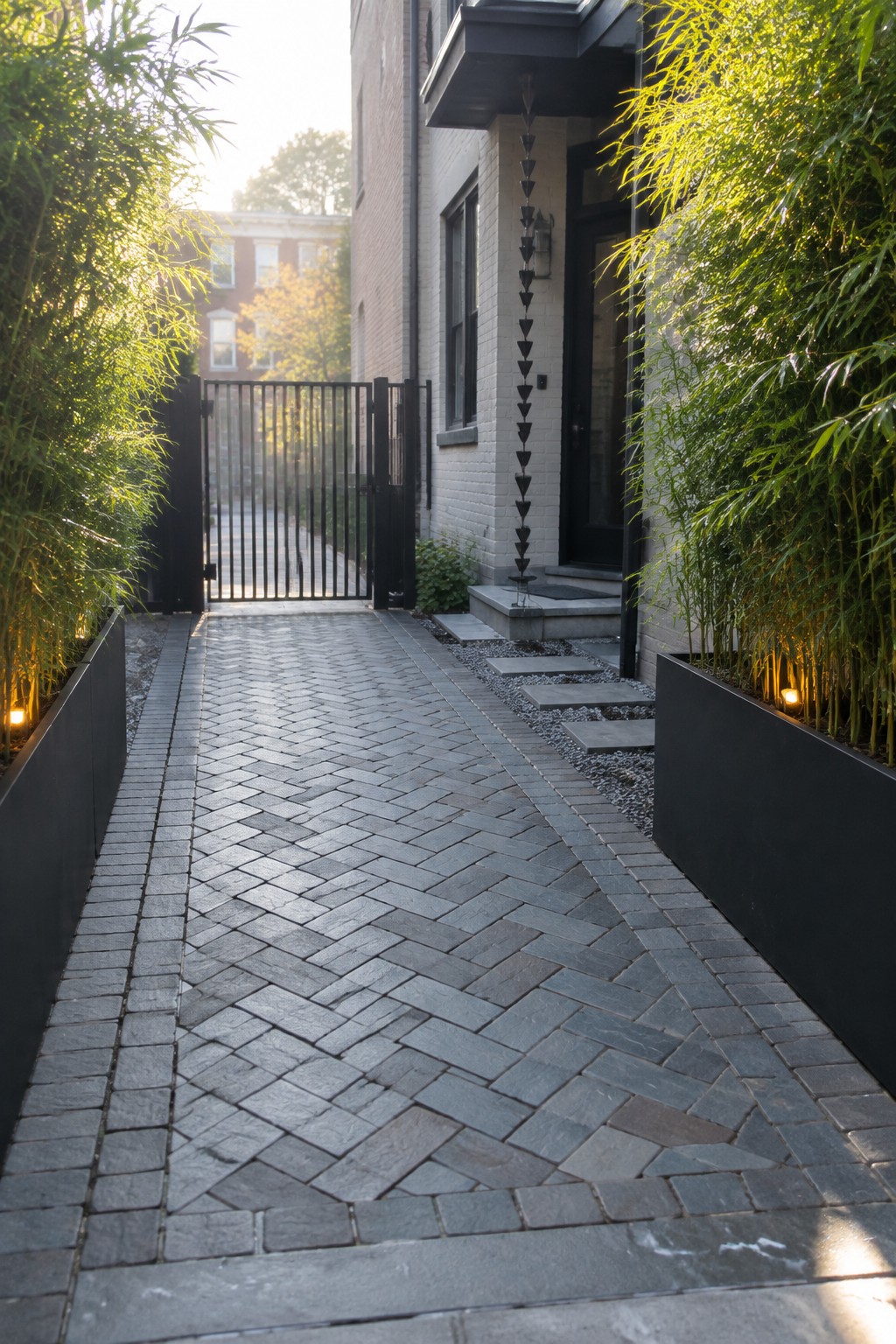
Herringbone layout gives a small driveway or entry path more visual weight without making it feel wider. The angled pattern breaks up the length and adds texture that flat running bond just does not deliver. It works especially well when the space is tight and you still want the surface to feel intentional rather than squeezed in.
This approach suits homes where the driveway runs close to the house or between planters and fencing. Keep the pavers in a similar gray or charcoal tone so the pattern stays the focus, and let simple edging or low planters do the rest. Avoid overly busy borders that compete with the herringbone itself.
Try a Circular Inset in Stone Pavers
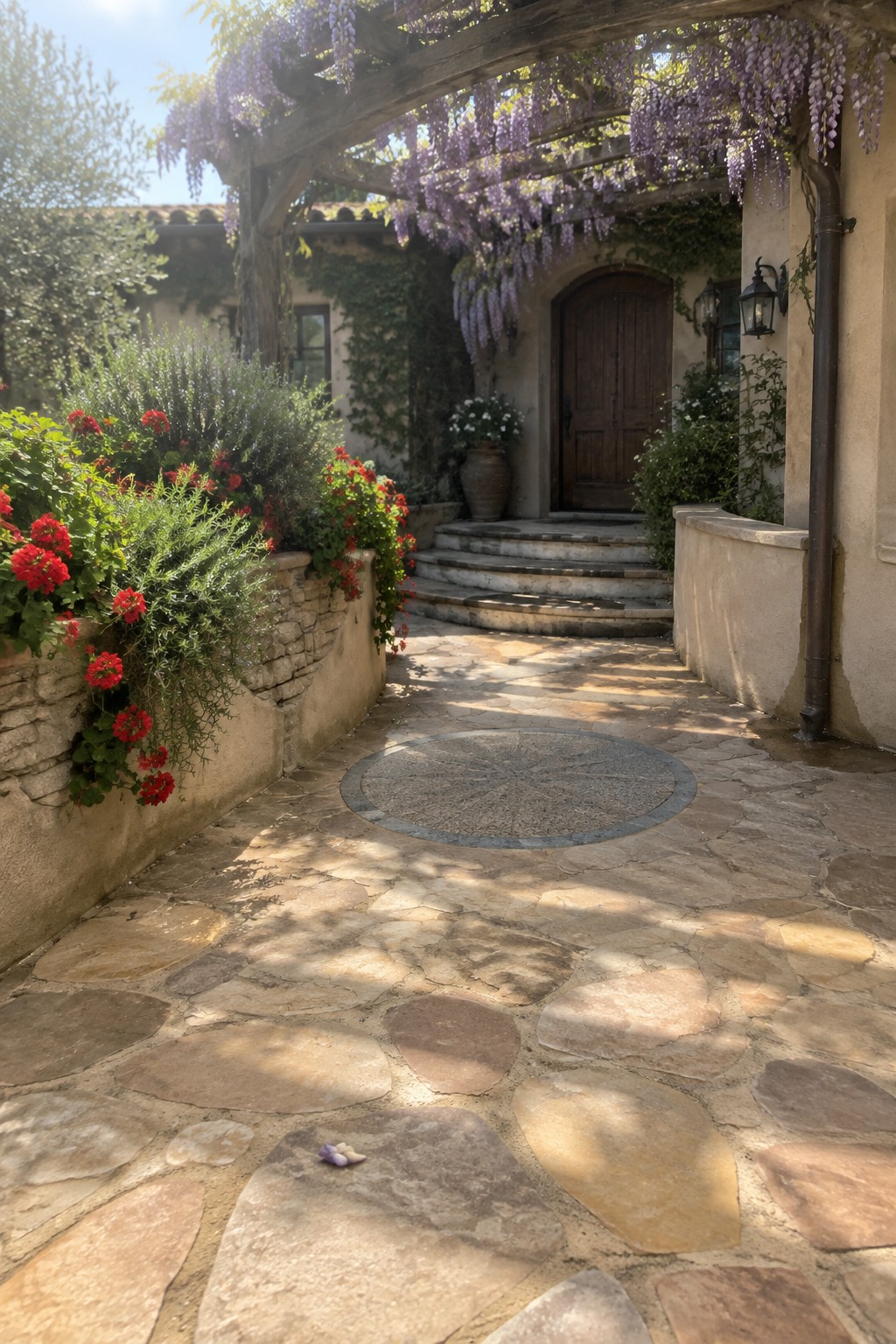
A round medallion set into irregular stone pavers gives a small driveway path a quiet focal point. It breaks up the surface without adding clutter, and the shape draws the eye forward toward the house.
This works best on narrow entries or short drives where a simple pattern can feel intentional. Keep the surrounding stones in warm, varied tones so the circle reads as part of the whole rather than a separate feature.
Natural Stone Pavers For Small Driveways
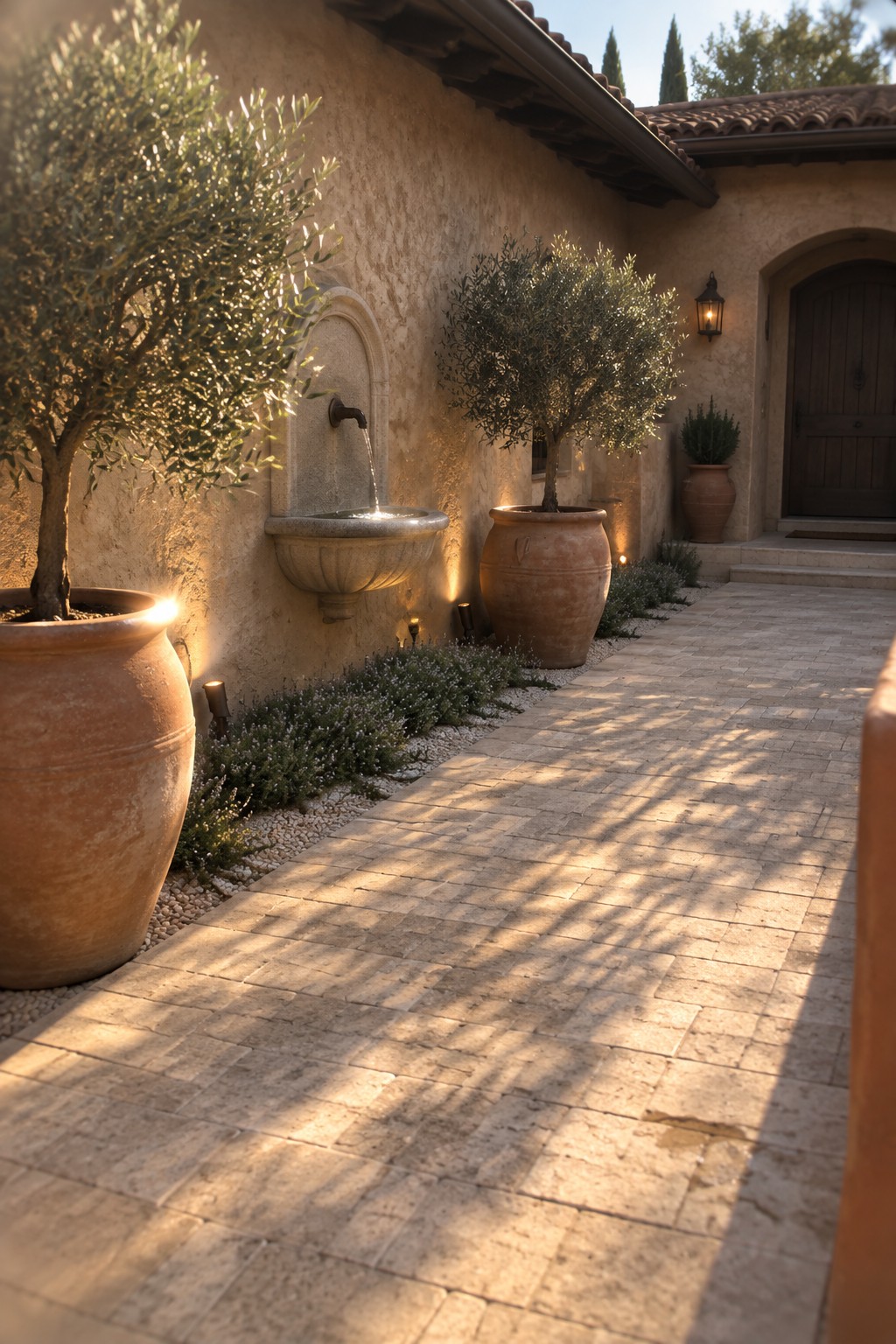
Natural stone pavers give a small driveway or entry path a solid, grounded feel that works especially well with stucco walls and simple landscaping. The irregular texture and warm tones help the surface blend into the surrounding garden instead of standing out as a separate hard surface.
This approach suits older homes or Mediterranean-style houses where you want the driveway to feel like part of the landscape rather than just a place to park. Keep the paver layout straightforward and let low planting and a few large pots soften the edges so the whole front stays balanced.
Irregular Pavers Work Well In Tight Spaces
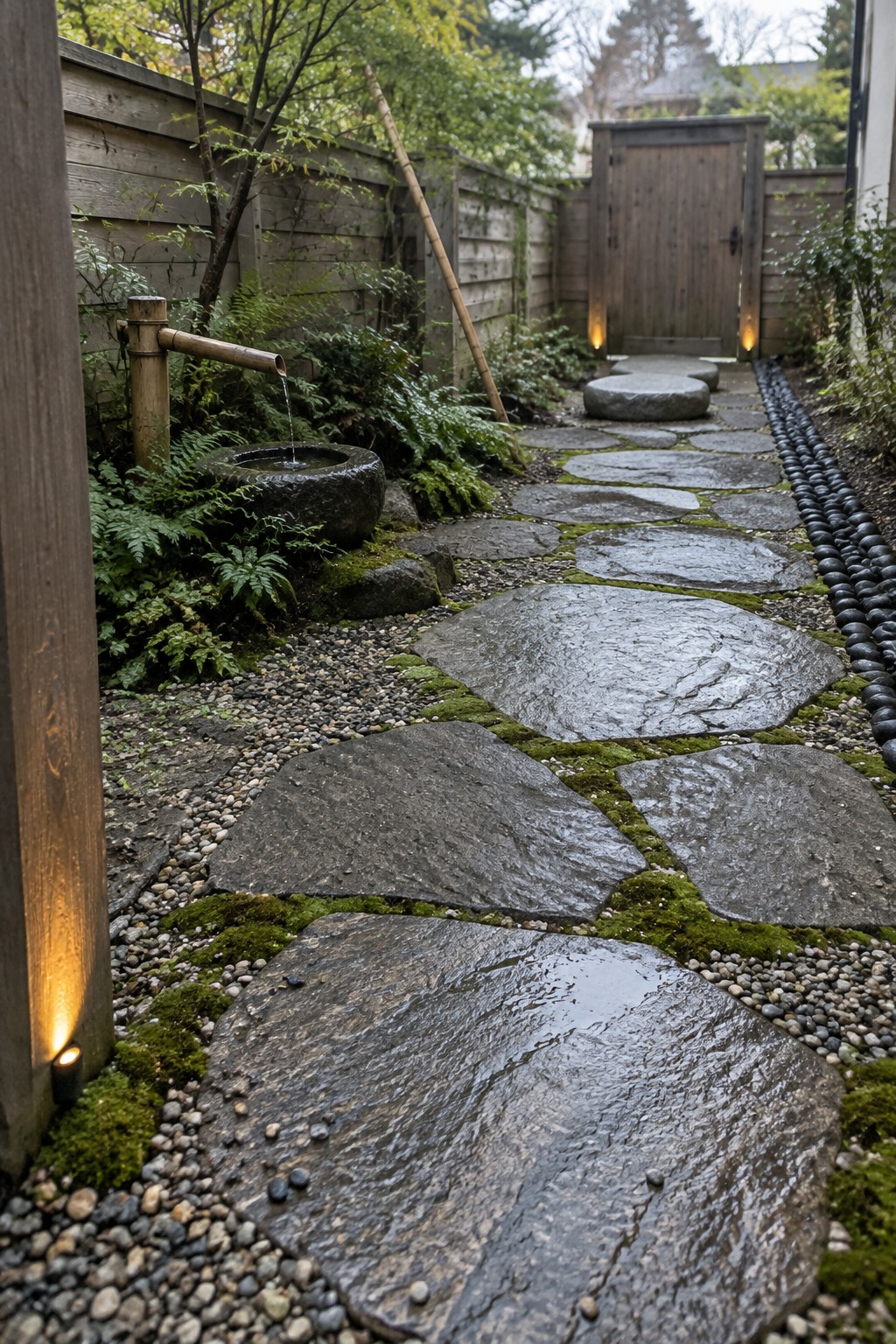
Natural stone pavers cut in uneven shapes give a small driveway or entry path a softer look than neat rectangles. They sit low in the ground and let gravel and moss fill the gaps, so the whole surface feels like part of the garden instead of a hard addition. This approach keeps the area from looking too formal while still providing a solid place to walk or drive.
It suits older homes or any property that already has planting close to the house. Keep the pavers large enough for a stable step and make sure the gravel base drains well so moss does not take over the walking surface. A simple layout like this needs little edging and ages nicely with just occasional weeding.
Integrate A Linear Drain With Stone Pavers
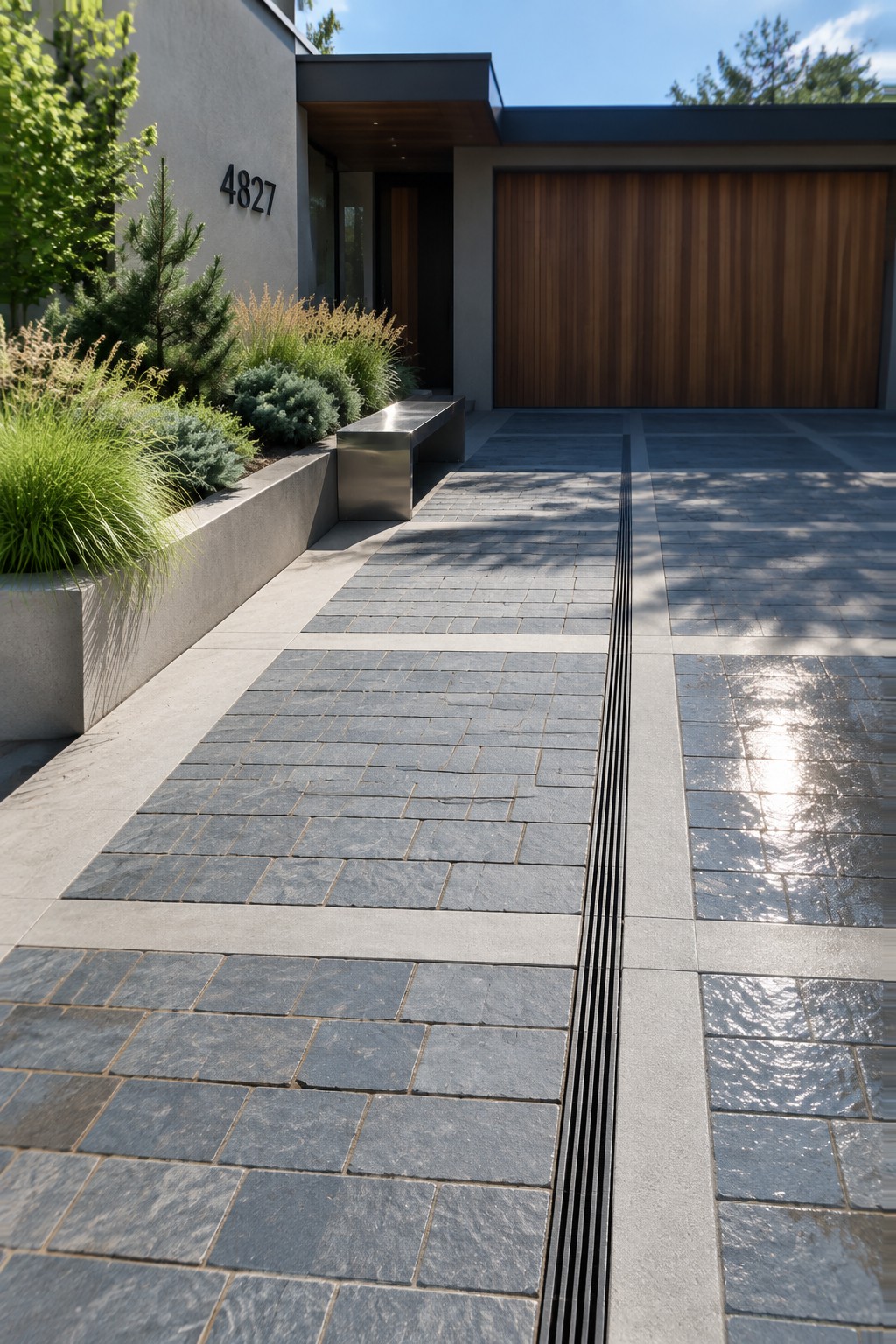
A linear drain running down the center of a stone paver driveway solves a common problem. It moves water away quickly without forcing the whole surface to slope, and it keeps the paver pattern looking clean and unbroken.
This approach works best on smaller driveways where you want a modern look without extra clutter. Keep the pavers level on both sides of the drain and choose a narrow metal grate that blends with the stone color.
Natural Stone Pavers With Pebble Edging
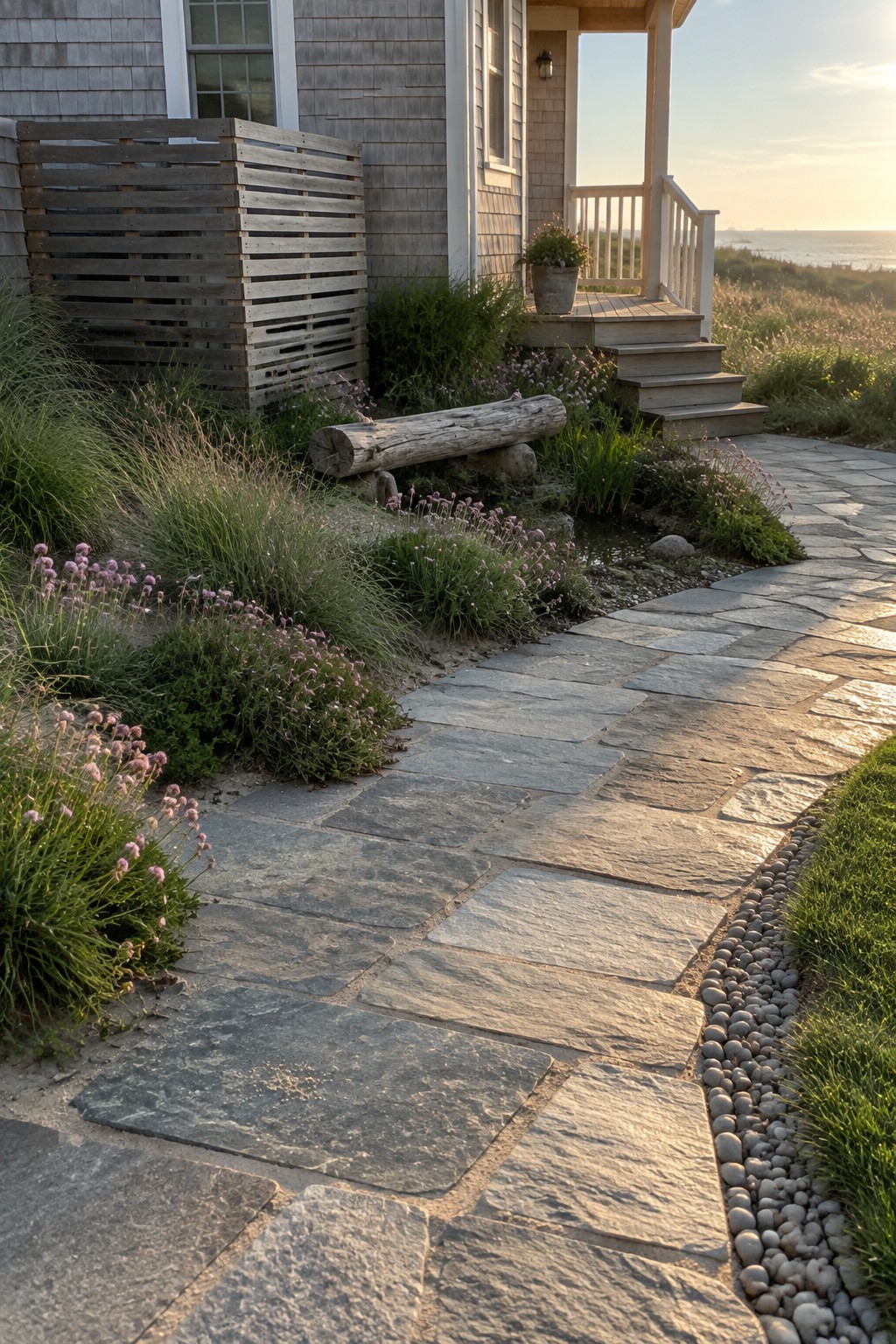
Large irregular pavers can make a small driveway or path feel less like a solid slab and more like part of the ground. The key is keeping the stones varied in shape and adding a narrow border of small pebbles along one side. This softens the edge and lets the path blend into grass or garden beds without a harsh line.
This setup suits homes where the driveway sits close to planting or where you want the surface to feel relaxed rather than formal. Set the pebbles in a shallow bed so they stay put, and choose pavers in a similar tone to the surrounding stone or gravel. It keeps maintenance low while still giving a clear route for cars.
Irregular Stone Pavers for Small Driveways
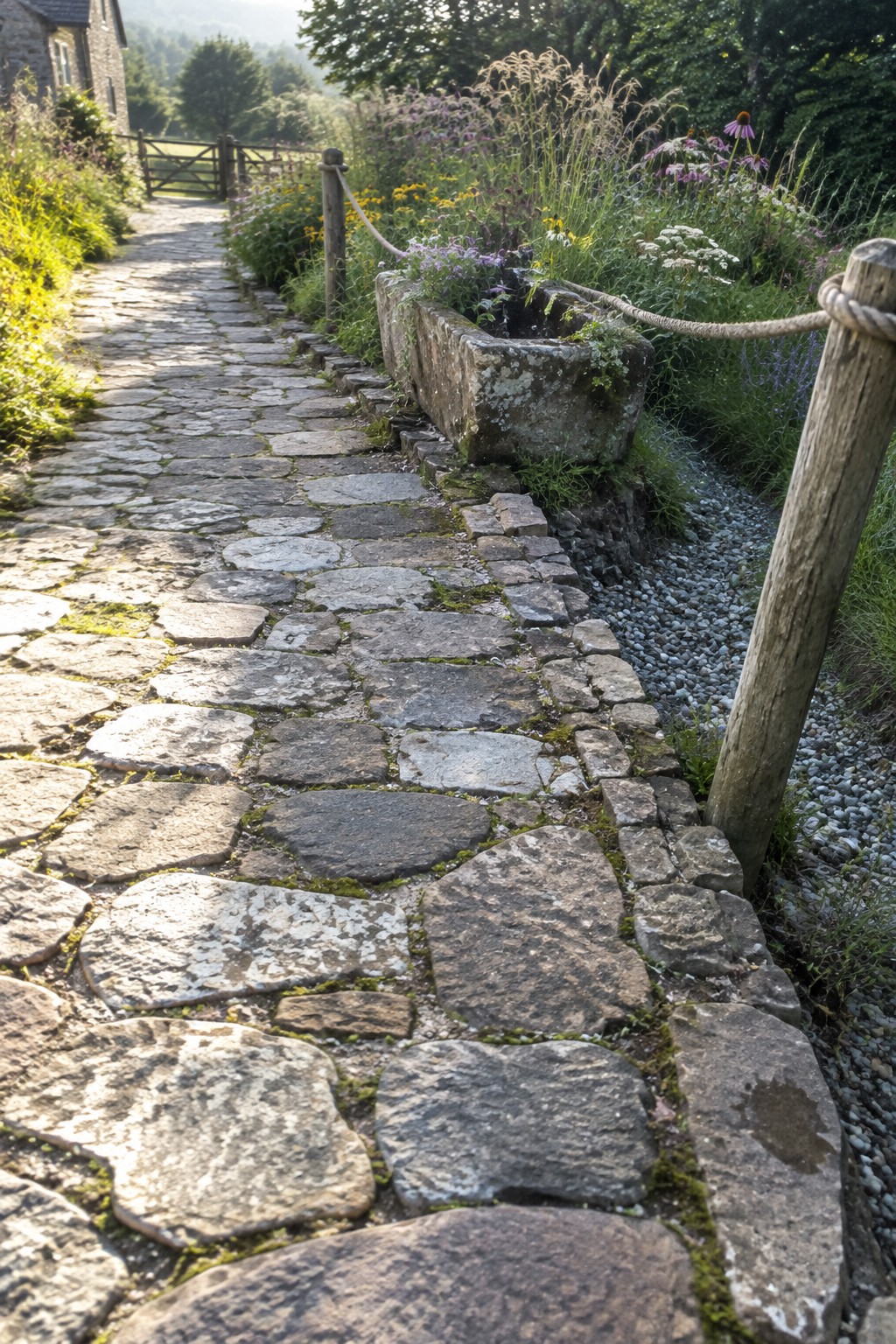
Irregular stone pavers work well for small driveways because they feel less formal than uniform blocks and settle naturally into the landscape. The uneven shapes let the path curve gently and avoid a rigid look that can make a narrow entrance feel cramped.
This approach suits older homes or properties with established gardens where you want the driveway to blend into the surroundings rather than stand out. Keep the edges simple with gravel or low planting so the stones remain the main feature without extra edging materials that need upkeep.
Recessed Lights In Stone Steps
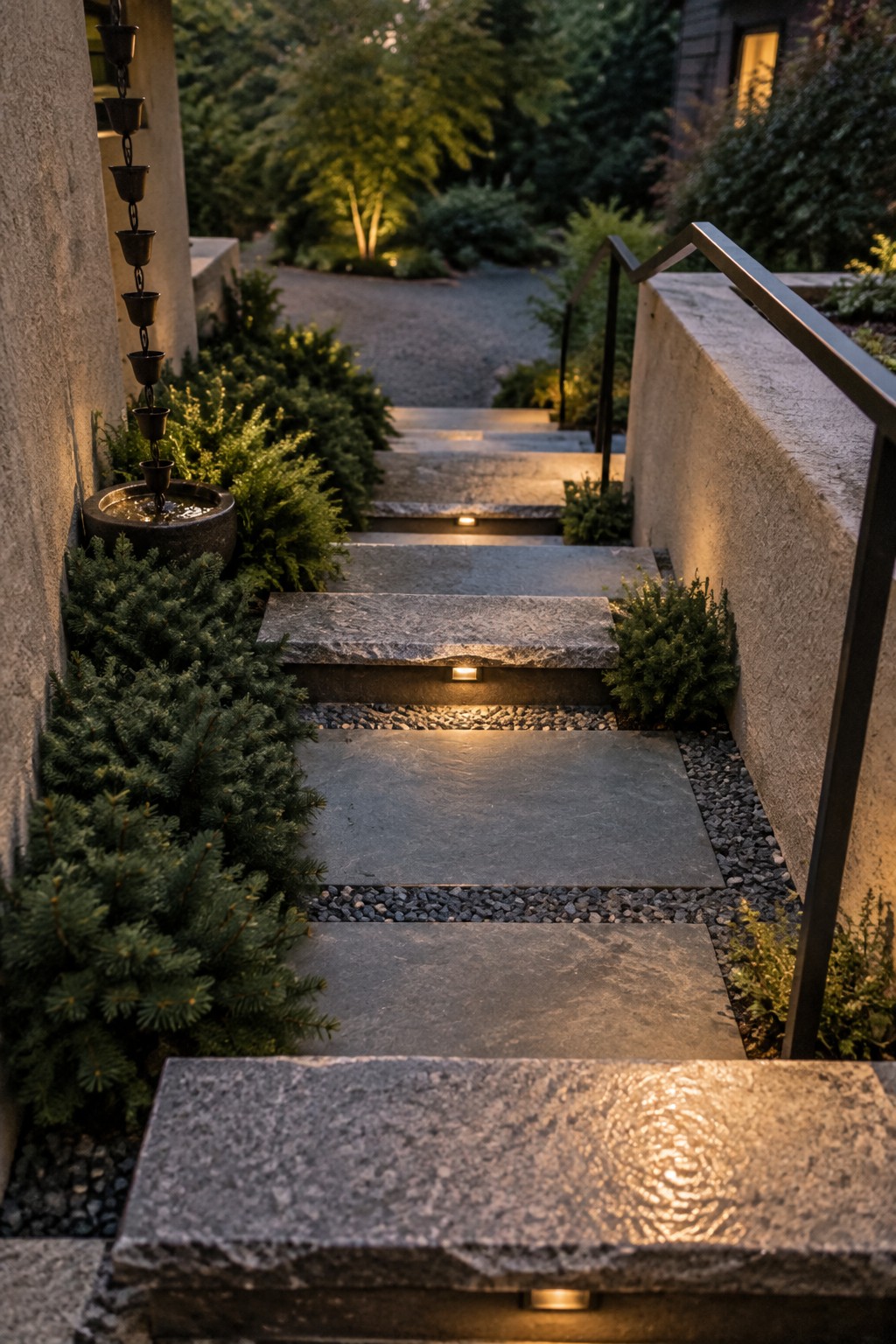
One simple way to improve stone paver steps is to build small lights directly into the risers. The lights stay low and out of the way while still showing each tread clearly after dark. This keeps the surface looking clean and avoids the clutter of separate fixtures along the sides.
The approach works best on sloped entries or short runs of steps that connect a driveway or path to the house. It suits homes where the stone already carries the main material look and you want the lighting to feel like part of the paving rather than an add-on. Just make sure the lights are rated for outdoor use and positioned so they do not create glare for people walking up.
Curved Stone Paver Paths
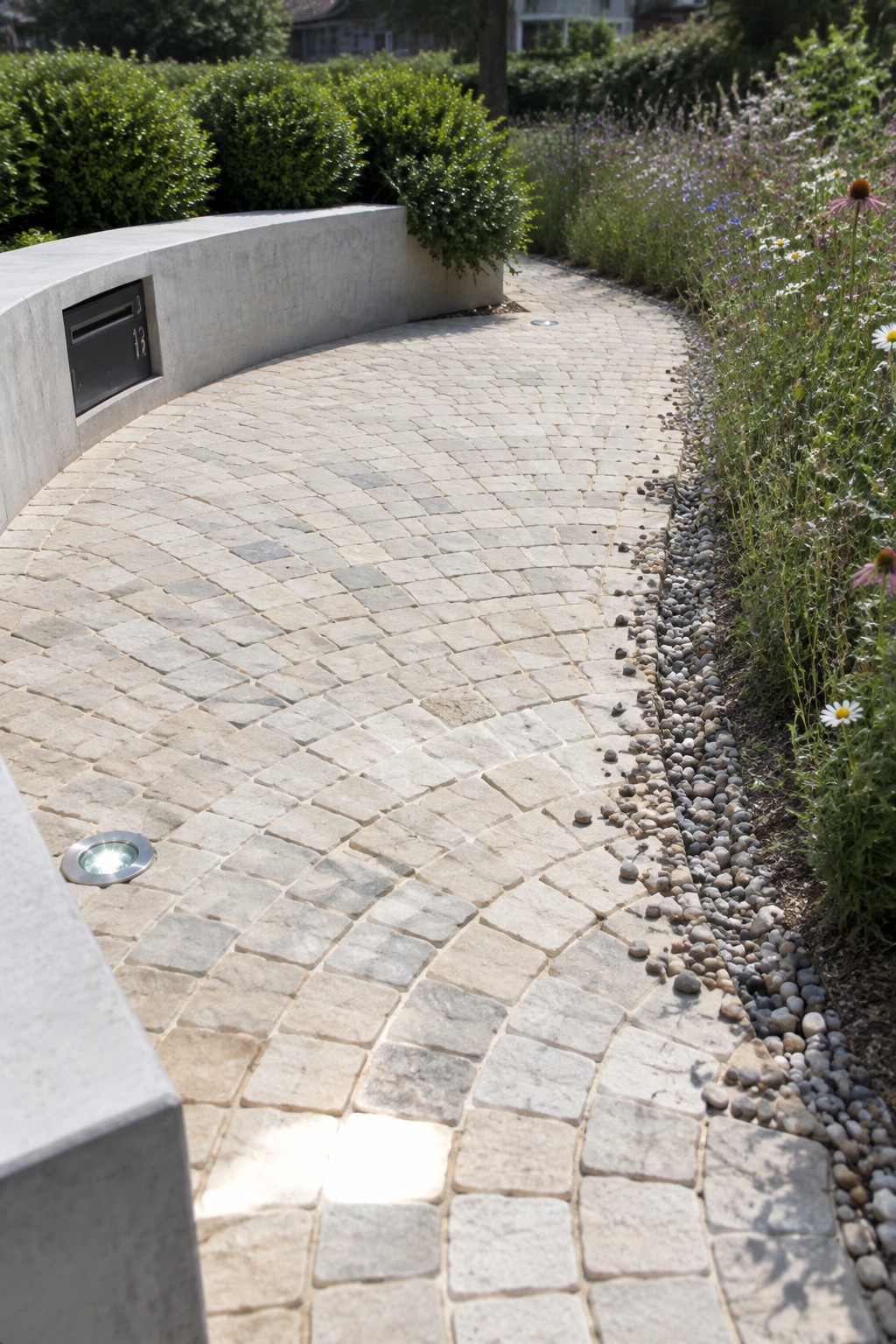
A gentle curve in the pavers can make a small driveway feel less like a direct line and more like it belongs with the garden. The bend softens the approach and keeps the front of the house from looking boxed in by straight lines and hard edges.
This layout works best on narrow lots or homes where the driveway sits close to the street. Keep the curve simple, use a gravel strip along one side for drainage, and let low planting follow the edge so the pavers remain the main feature.
Natural Stone Pavers Set In Gravel
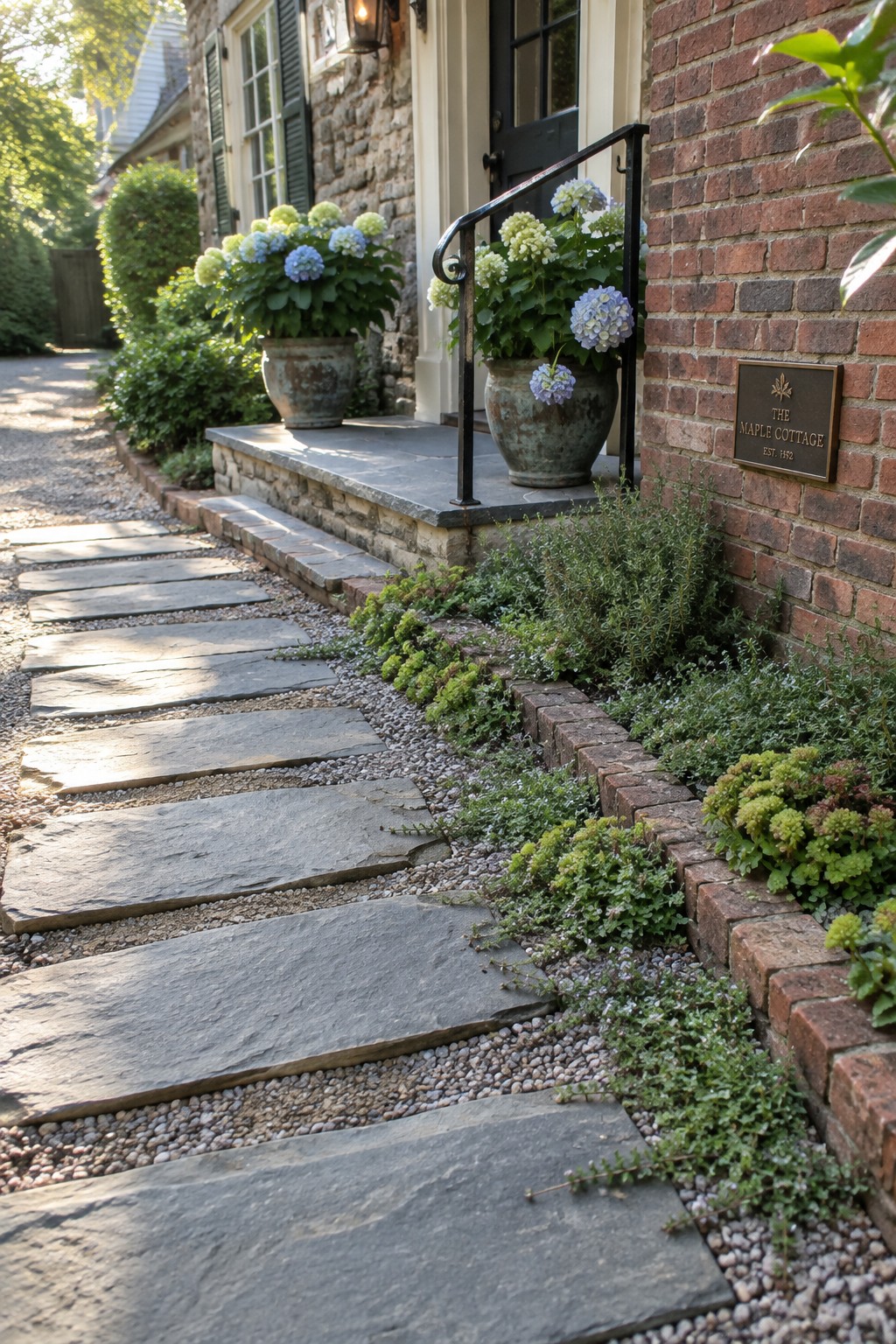
Large stone slabs placed with gravel between them give a path a settled, natural look without covering the whole surface. The gaps let water drain easily and keep the design from feeling too formal or solid, which works well when space is tight.
This layout suits older homes or cottages where the front already has some stone or brick. Keep the slabs fairly large and run them in a loose line, then add low plants along the sides to soften the edges without crowding the walkway.
Blend Large And Small Pavers In Your Driveway
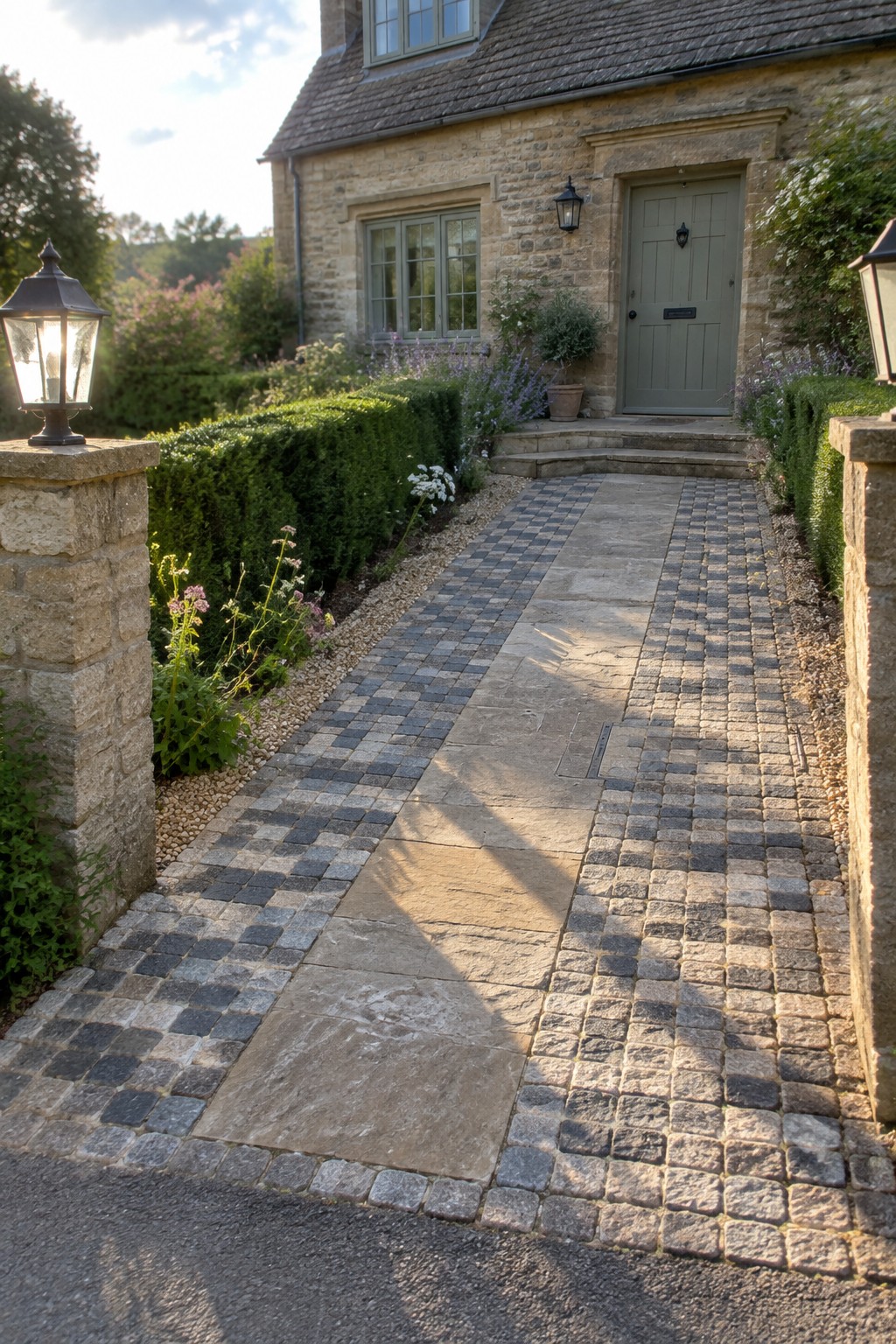
Mixing slab sizes gives a small driveway more character without making it feel busy. The larger stones handle the main surface and keep things simple to walk and drive on, while the smaller pavers add texture along the edges and help the whole thing settle into the surrounding gravel and planting.
This approach works best on narrow drives where a single material can look flat. Keep the big slabs in the center for a clear path and use the smaller ones as a border or accent strip. It suits older homes or any place where you want the driveway to feel like part of the garden rather than a separate paved area.
Frequently Asked Questions
Q: How deep should the base go under the pavers?
A: Dig down six inches or so and pack in gravel tight. This keeps the stones level even with cars driving over. Skip this step and things shift fast.
Q: Is it realistic to do the job without pros?
A: Yes for a small space. You need a plate compactor and some strong backs for a weekend. Take your time on the base and the pavers fall into place.
Q: What happens if one stone gets damaged?
A: Pull it up and drop in a replacement from your extras. Store a handful of the same pavers when you buy them. The fix blends right in and saves calling anyone.
