

When you drive up to a house the first thing that registers is how the paving meets the street and leads to the front door.
I have noticed that a plain slab often makes even a well-kept facade feel unfinished because the eye has nothing to rest on.
Small pattern shifts change that quickly.
Choosing blocks that echo the brick or stone already on the house helps the whole front read as one thought-out surface rather than separate pieces added over time.
I would test a simple running bond first because it handles daily car traffic without showing wear as fast as more open layouts.
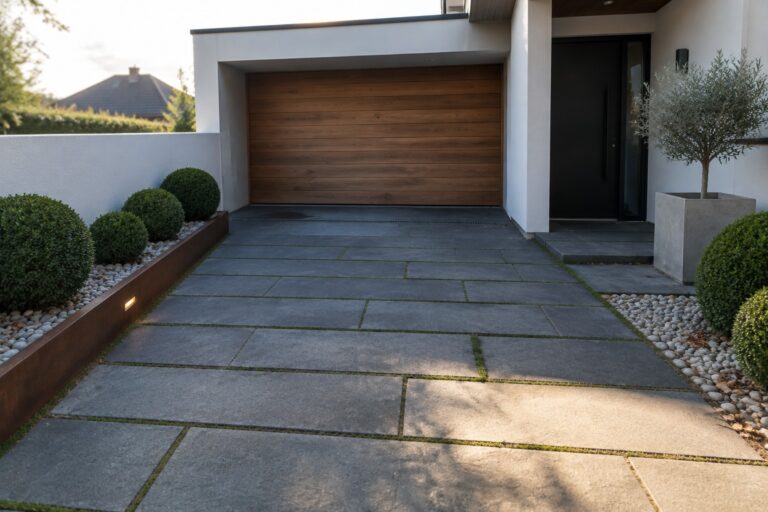
Large Slab Pavers With Grass Joints

A simple grid of large rectangular pavers works well on a small driveway because it avoids the busy look that comes with too many small blocks. The wide stones read as calm and modern, and the narrow strips of grass between them soften the surface without adding clutter. This setup keeps the whole front approach feeling open rather than cramped.
It suits homes with a modern or minimalist style and works best when the pavers are kept to one or two sizes. Make sure the grass joints are narrow enough to drive on comfortably, and consider a low border of gravel or edging to hold the pattern in place.
A Grass Strip Down the Center of the Driveway

A narrow strip of grass running through the middle of a concrete driveway softens the look without losing any function. It breaks up the hard surface, adds a touch of green, and keeps the whole thing feeling lighter and more modern on smaller lots.
This works best on straight, narrow driveways where you still need room for cars but want to avoid a full slab of paving. Use sturdy turf or a low ground cover that can handle light traffic, and keep the edges clean with gravel or simple borders so it stays neat over time.
Brick Paving Patterns for Compact Driveways
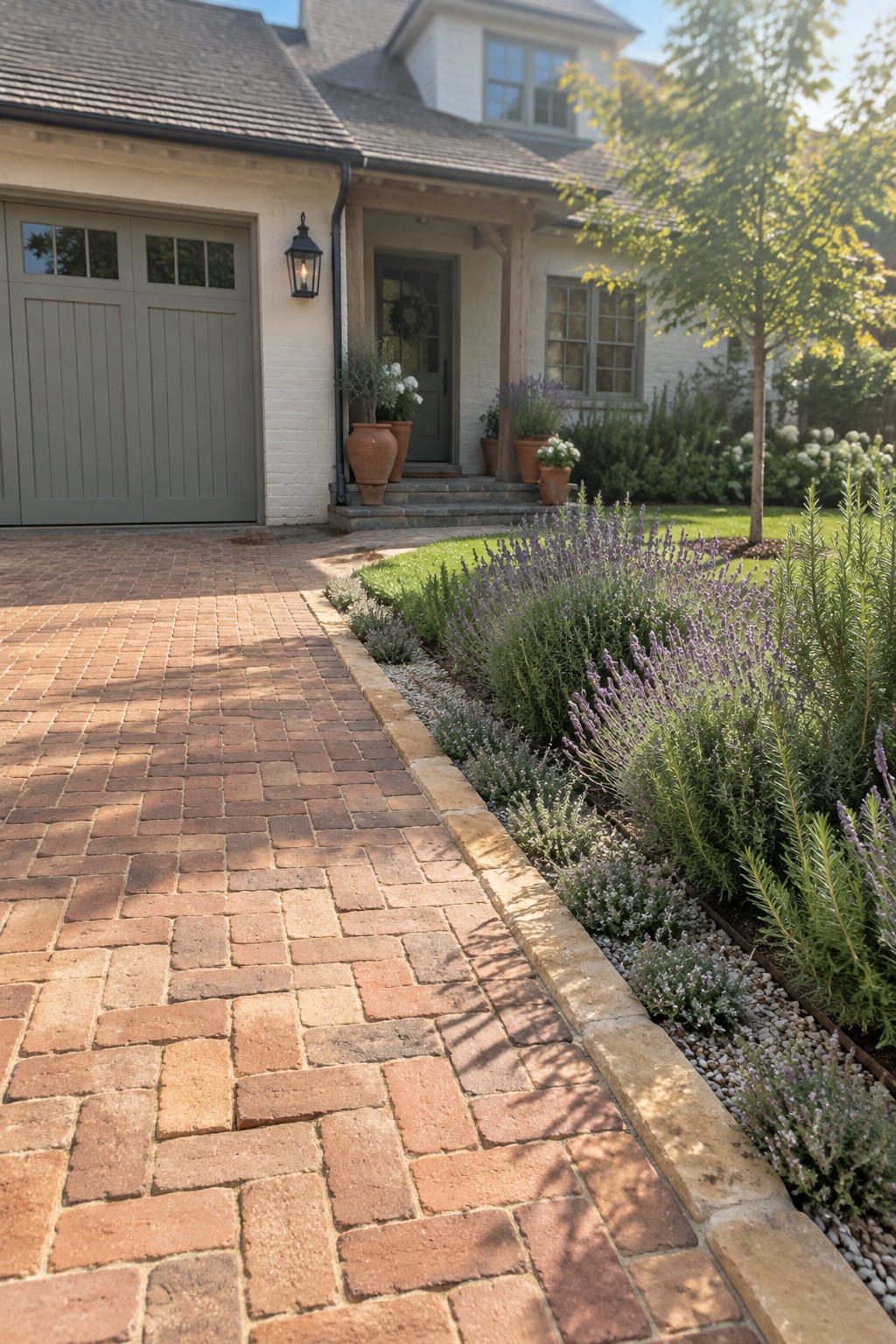
A simple repeating brick pattern gives a small driveway more structure without crowding the space. The layout draws the eye forward while keeping the surface practical for daily use.
This works best on homes where the driveway sits close to the street or entry. Pair the paving with a clean stone border and low planting along the edge so the pattern stays visible but not overwhelming.
Grid Paving With Pebble Joints
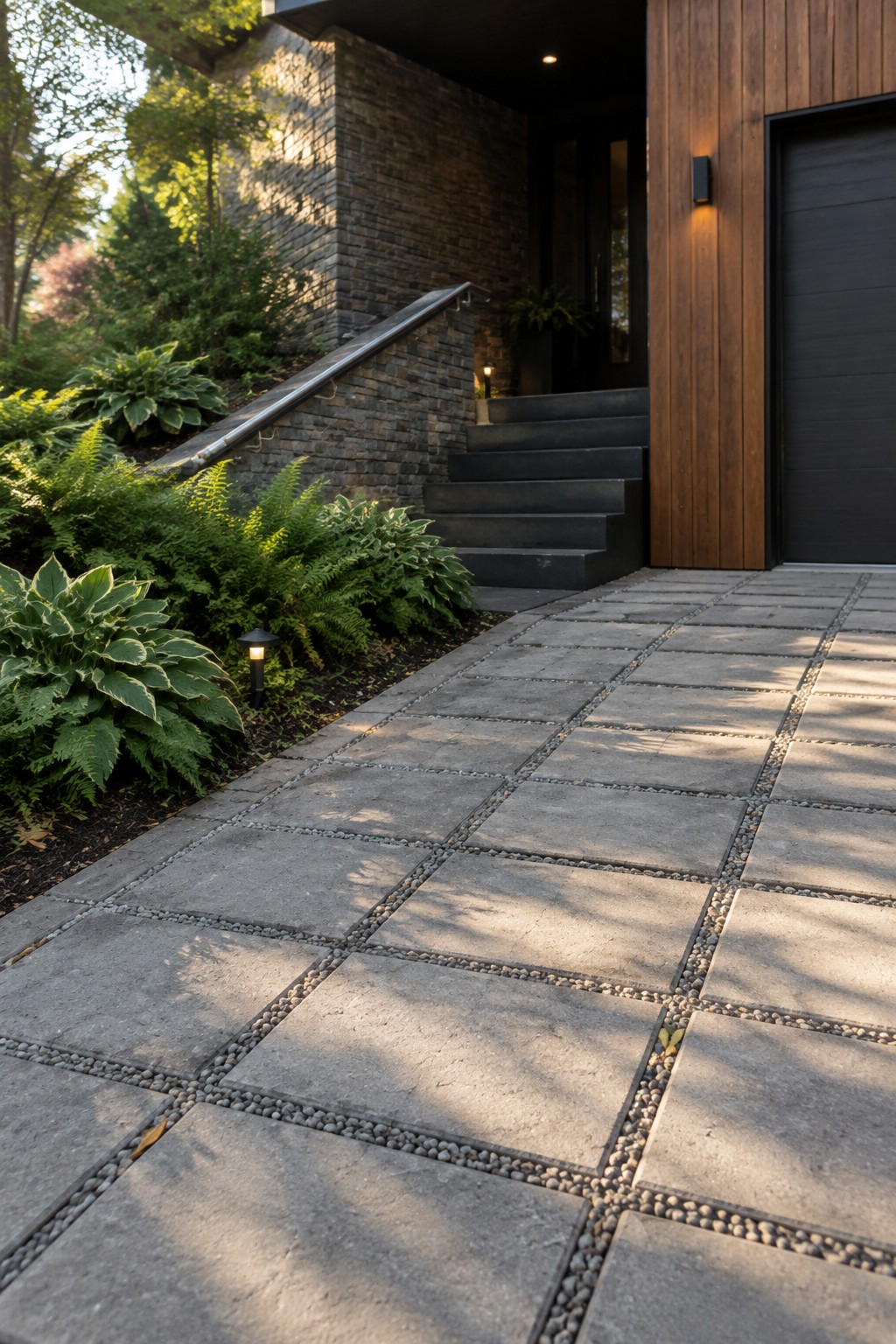
A grid of large rectangular pavers separated by narrow lines of small pebbles gives a driveway or front path a clean, structured look without feeling fussy. The pattern keeps the surface interesting while still reading as simple and modern, which helps smaller entries feel more intentional rather than cramped.
This works best on homes with straightforward architecture where the paving can sit alongside stone or wood siding. Keep the paver color fairly neutral so the pebble lines stay subtle, and make sure the joints are filled evenly to avoid weeds later on.
Radial Paving For Small Driveways
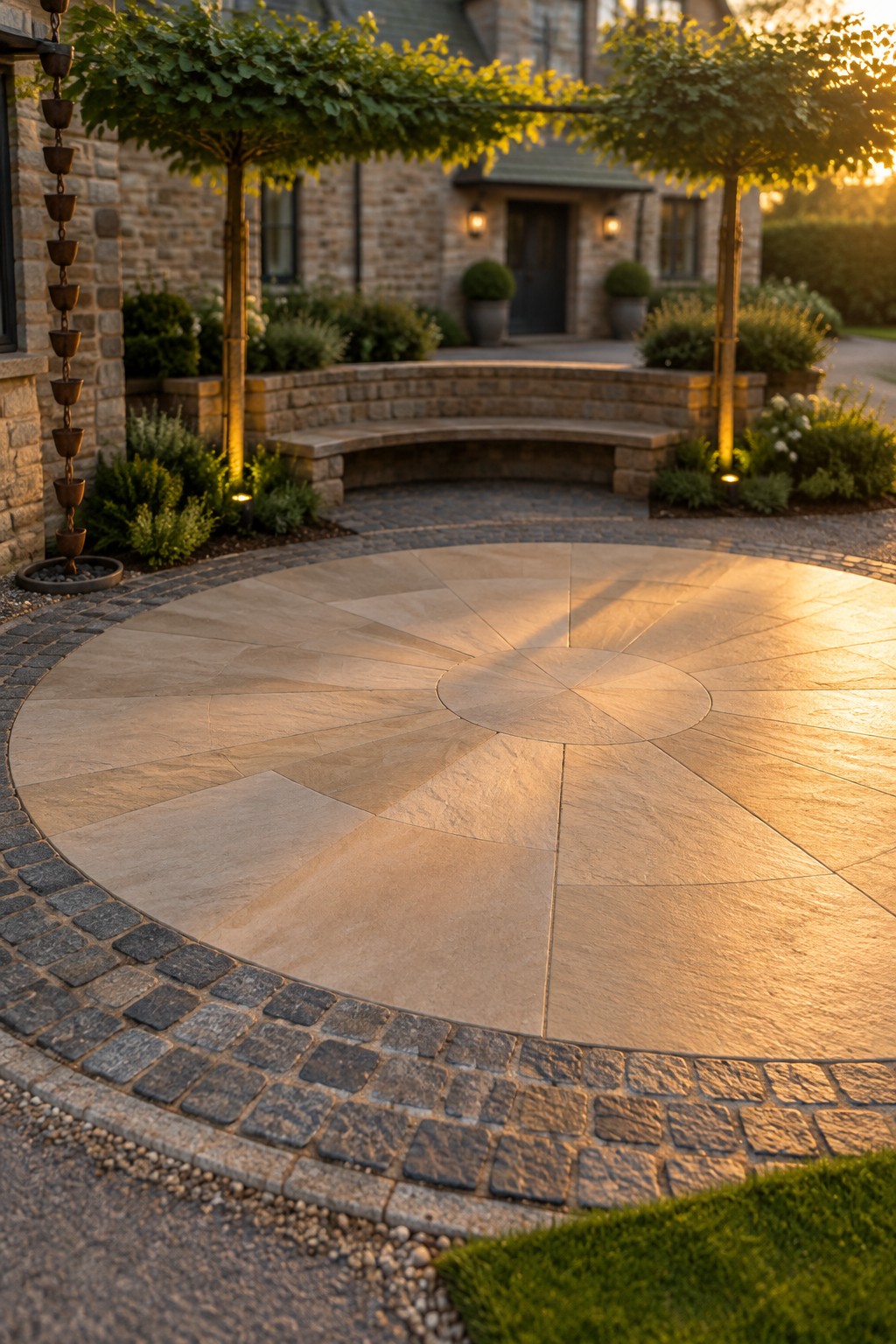
A radial pattern keeps a small circular driveway from feeling cramped. The lines pull the eye inward and make the space look more organized without adding extra elements.
This layout works best on homes where the entrance sits close to the road. Keep the center clean and let the pattern do the work. A simple border in a darker block helps it hold its shape over time.
Hexagonal Paving Adds Quiet Interest to Narrow Driveways
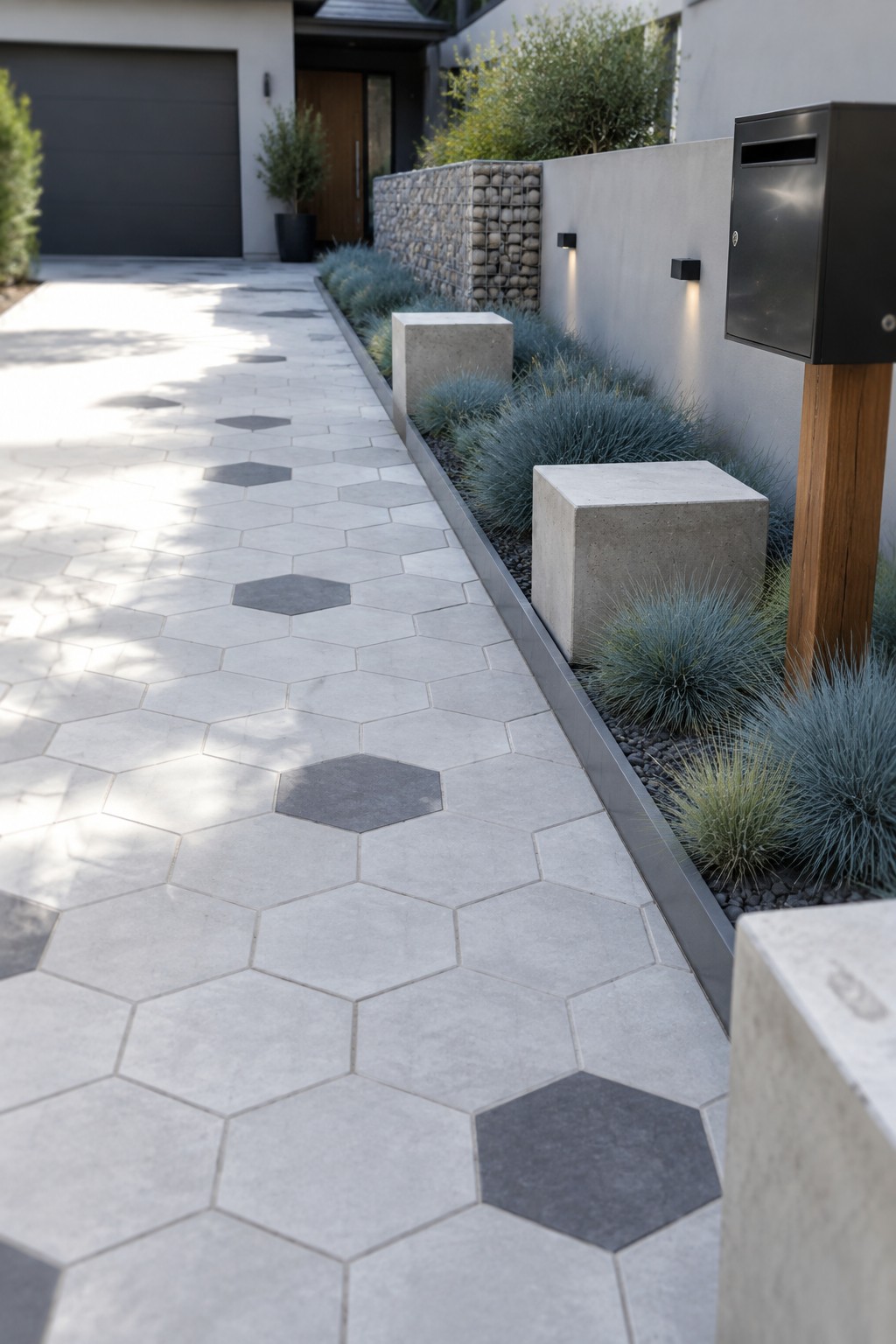
Hexagonal pavers give a small driveway a clean, modern feel without making it look busy. The repeating shape keeps the surface orderly, and the few darker tiles scattered through the pattern add just enough contrast to hold your eye without turning into a focal point.
This layout works best on straight or gently curving driveways beside contemporary homes. It stays practical because the joints are tight, water drains well, and the surface stays easy to sweep. Pair it with simple low planting along the edge so the paving remains the main feature.
Herringbone Paving Gives Small Driveways More Structure

A herringbone pattern in dark blocks keeps a narrow driveway from feeling like a flat strip of pavement. The angled layout adds direction and breaks up the surface, so the space looks more finished even when there is not much width to work with.
This approach suits modern homes with clean lines and simple planting along the edges. Stick to one dark block color throughout and let the pattern run straight to the door so the whole entry stays neat and easy to maintain.
Block Pavers With Gravel Edging
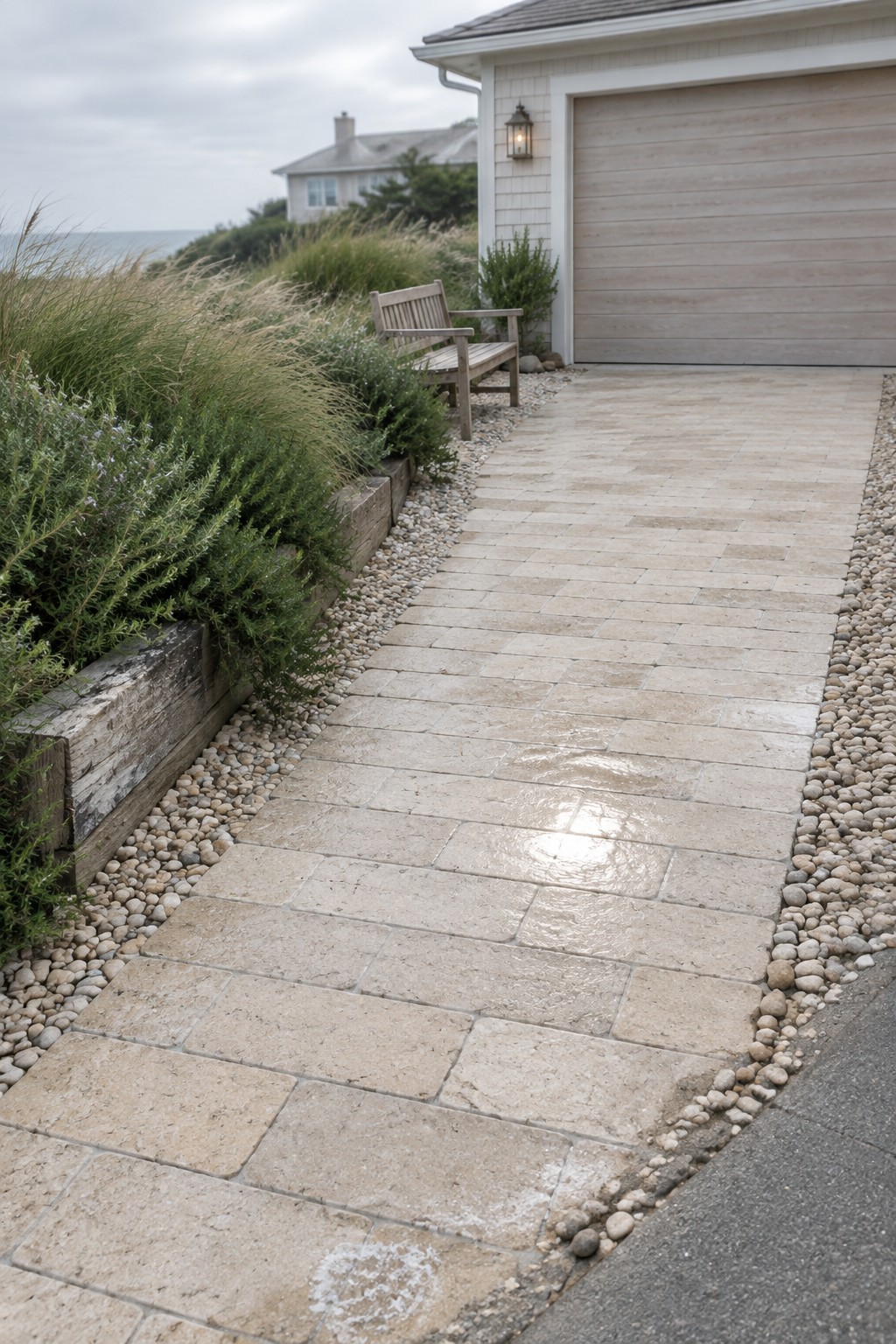
Block pavers laid in a simple running pattern give a small driveway a tidy look without making it feel too rigid. The gravel border along each side helps the paving sit comfortably next to planting beds and keeps the whole thing from looking like one solid slab.
This approach suits homes where the driveway sits close to the garden or near the coast. Use a light stone tone that blends with the gravel, and keep any plants along the edge fairly low so they do not spill onto the driving surface.
Grid Pavers With Grass Infill For Small Driveways
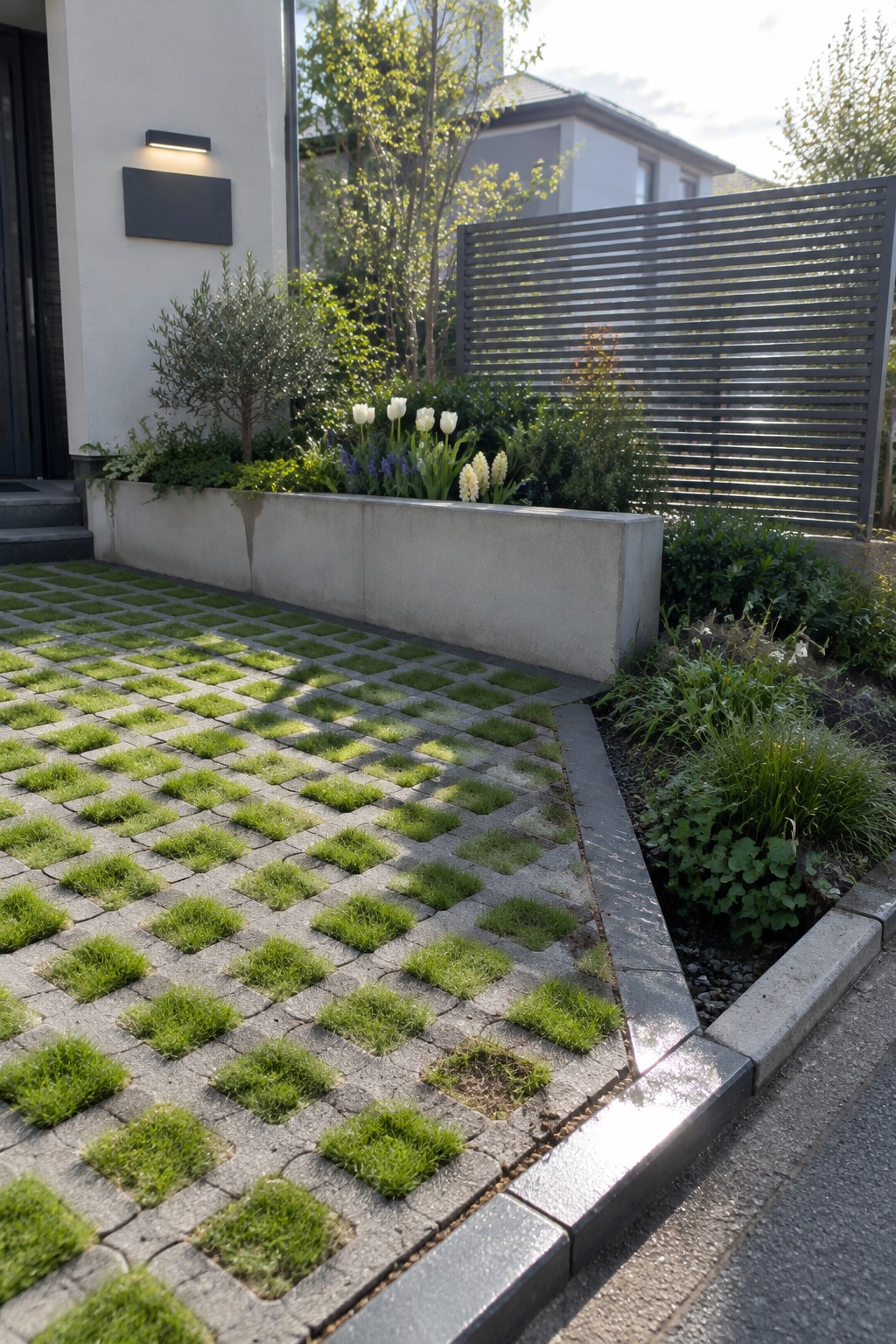
Grass pavers give a driveway a tidy, structured look while still letting some green come through. The square pattern keeps the surface feeling open rather than solid and heavy, which helps smaller front areas look less cramped.
This approach works well on homes with simple landscaping right beside the drive. Just check that the base layer is firm and level so the blocks stay even under regular use.
Cobblestone Paving Along Low Brick Edges

Cobblestone block paving gives a small driveway real staying power. The irregular stones settle into a textured surface that handles daily use without looking worn down quickly, and the pattern works especially well when the drive sits right against the house. It adds some weight and character that plain concrete often lacks.
This approach suits older stone homes or any place where you want the driveway to feel like part of the original build rather than an add-on. Keep the edges clean with a low brick wall like the one shown here, and make sure the paving sits slightly lower than the wall cap so water drains away from the house.
Wide Concrete Pavers With Gravel Between

Large concrete slabs laid in a simple grid with narrow gravel strips between them give a driveway a clean, modern look without feeling fussy. The pattern keeps the surface mostly solid for easy driving and walking while the gravel lines add just enough texture to break up the expanse. This approach works especially well on smaller driveways where too much pattern or too many materials can start to feel busy.
It suits modern homes that already use simple materials and straight lines. Keep the slabs a consistent size and color, and match the gravel tone to the pavers so the whole thing reads as one quiet surface. The main thing to watch is drainage, since the gravel strips need to stay clear so water does not pool on the slabs.
Use One Repeating Paving Pattern
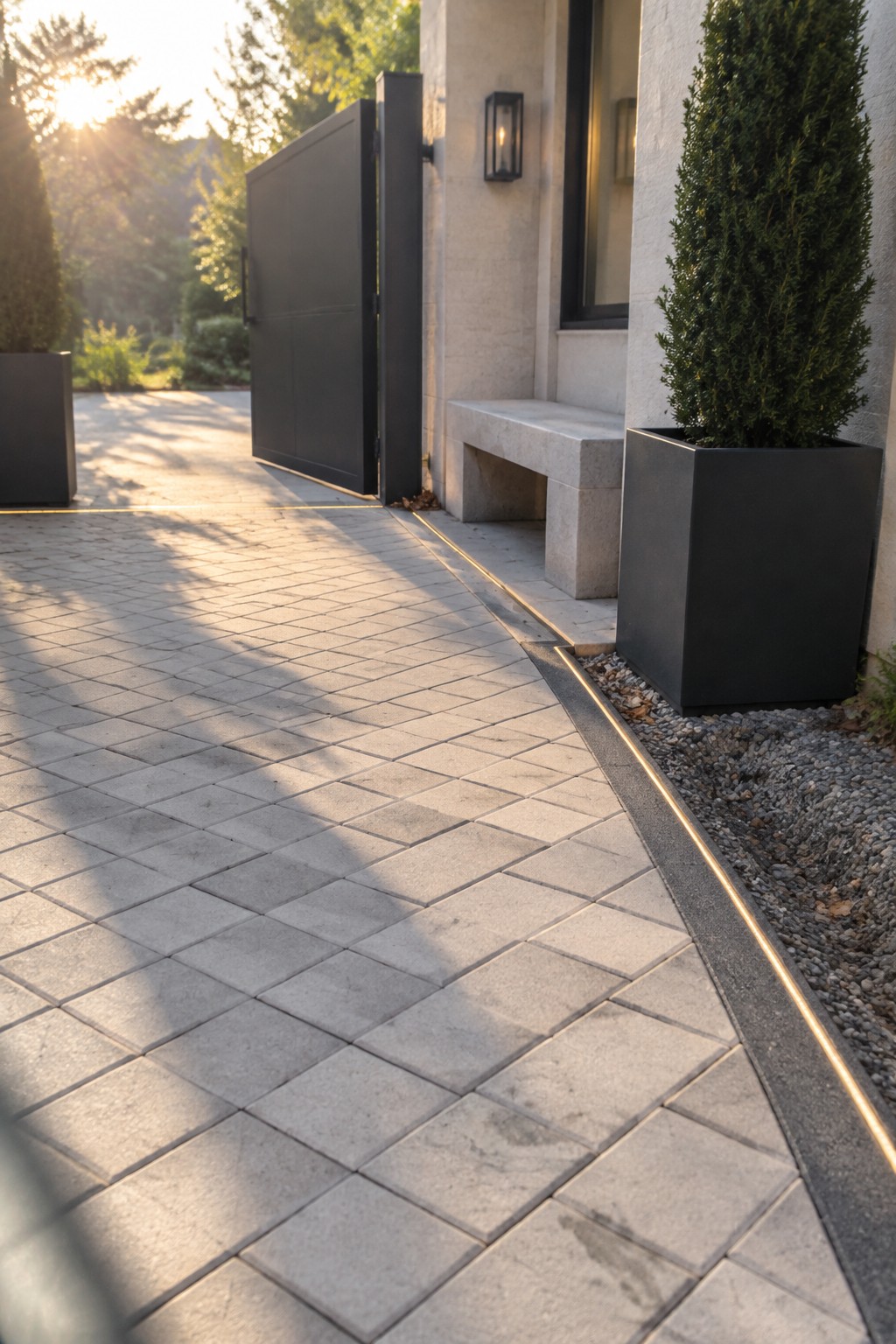
A single block pattern keeps a small driveway from feeling chopped up or crowded. The uniform layout gives the surface a calm, orderly look that works especially well when space is tight and you want the area to feel wider than it actually is.
This approach suits modern homes with simple architecture and limited frontage. Stick to one size and color of block, and run the pattern all the way through rather than adding borders or changes in direction. The only extra you might add is a thin strip of lighting along the edge to mark the boundary without breaking the flow.
Use Alternating Shades For A Striped Paving Pattern
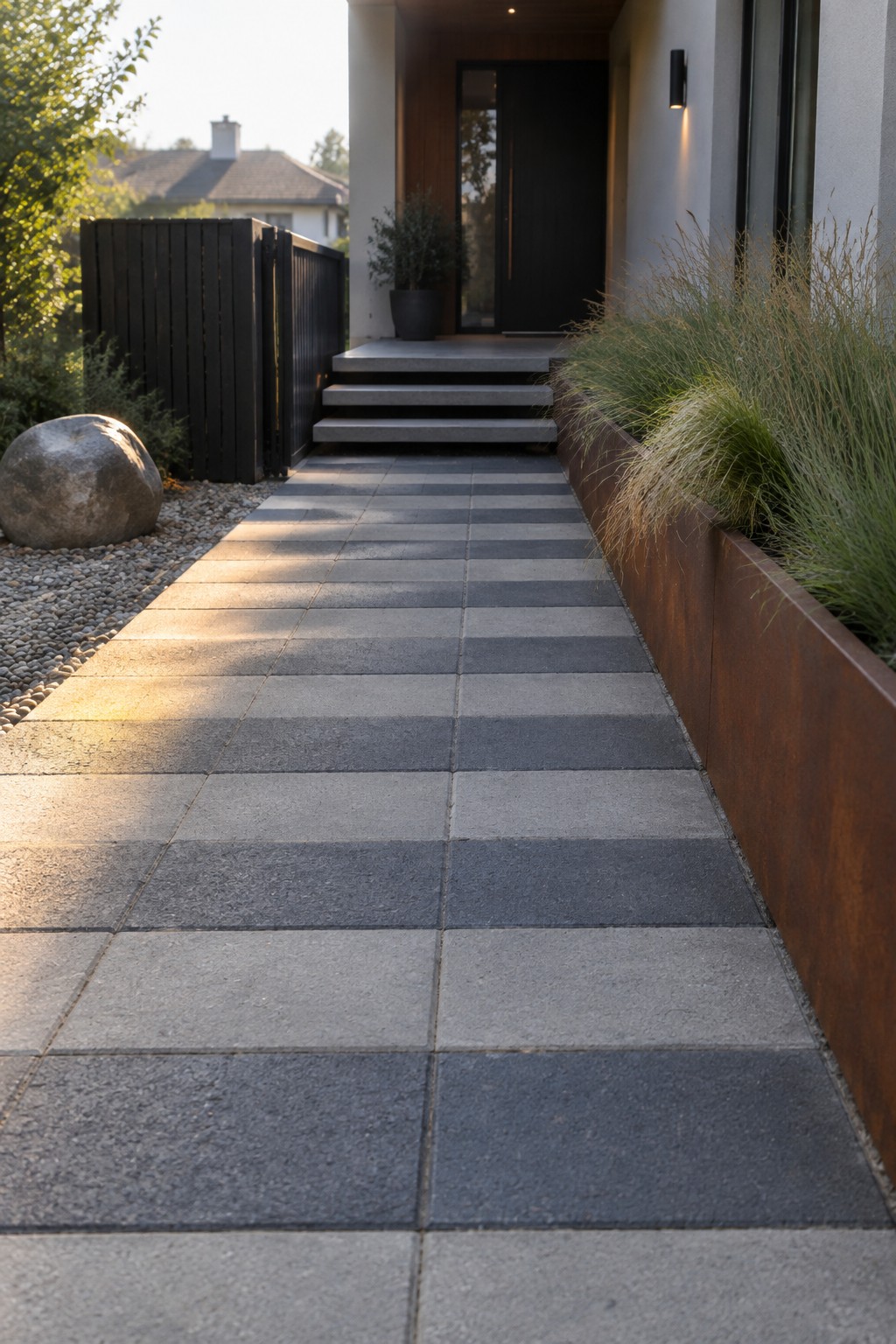
A simple run of light and dark gray blocks laid across the path creates stripes that keep a narrow driveway looking clean and orderly. The pattern adds just enough movement without needing curves or extra materials.
This works best on straight runs where the stripes can run uninterrupted from the street to the door. Stick with two tones that sit close together so the effect stays calm rather than busy, and let low planting or a single metal edge do the rest of the framing.
Add Interest With A Central Paving Medallion
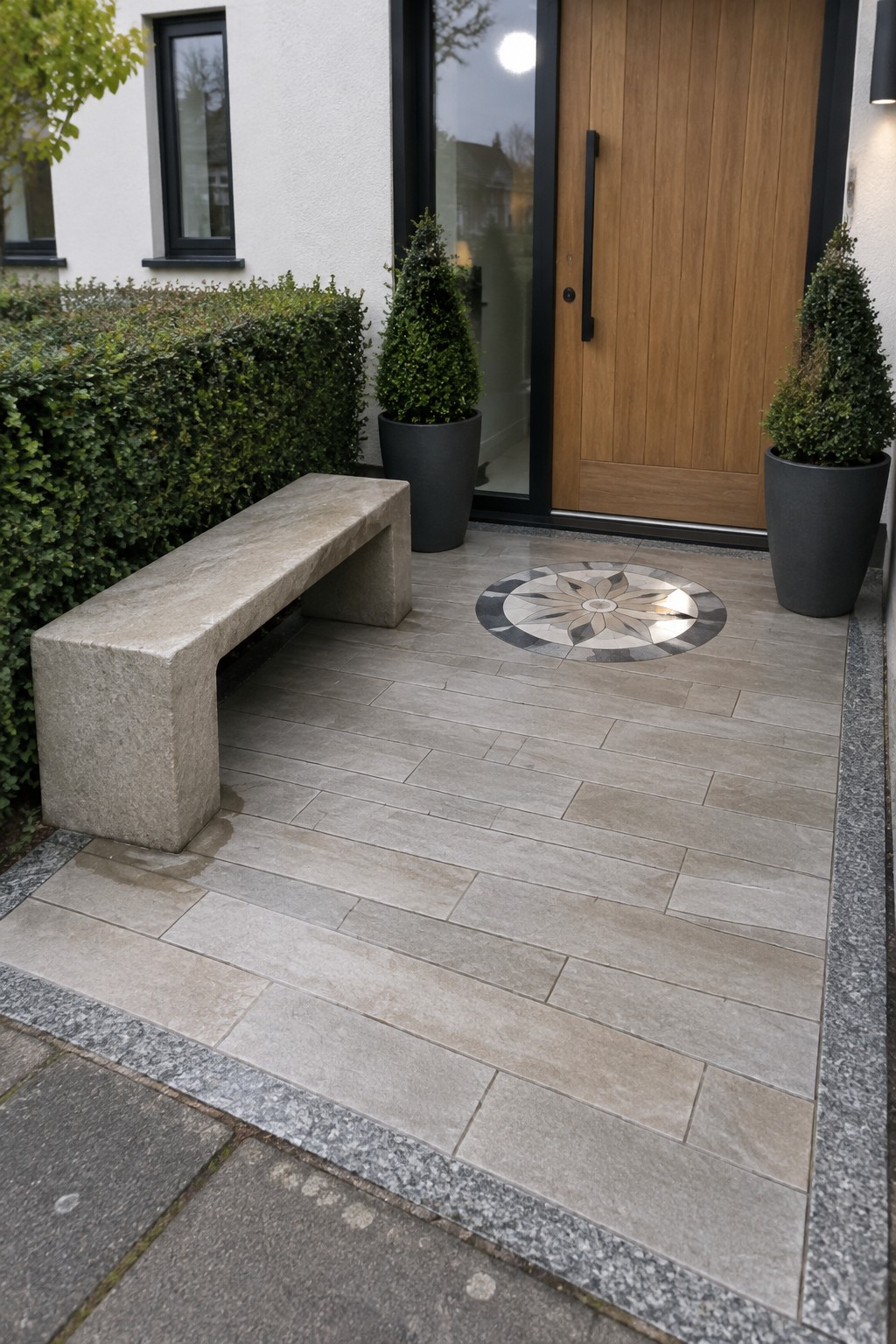
A single patterned medallion set into block paving gives a small driveway or entry area a clear focal point without adding clutter. The rest of the surface stays simple and uniform, so the space still feels open and easy to maintain.
This approach suits modern homes where the paving runs right up to the front door. Keep the pattern modest in size and color so it sits quietly within the overall layout rather than competing with the architecture.
Flowing Curves in Block Paving
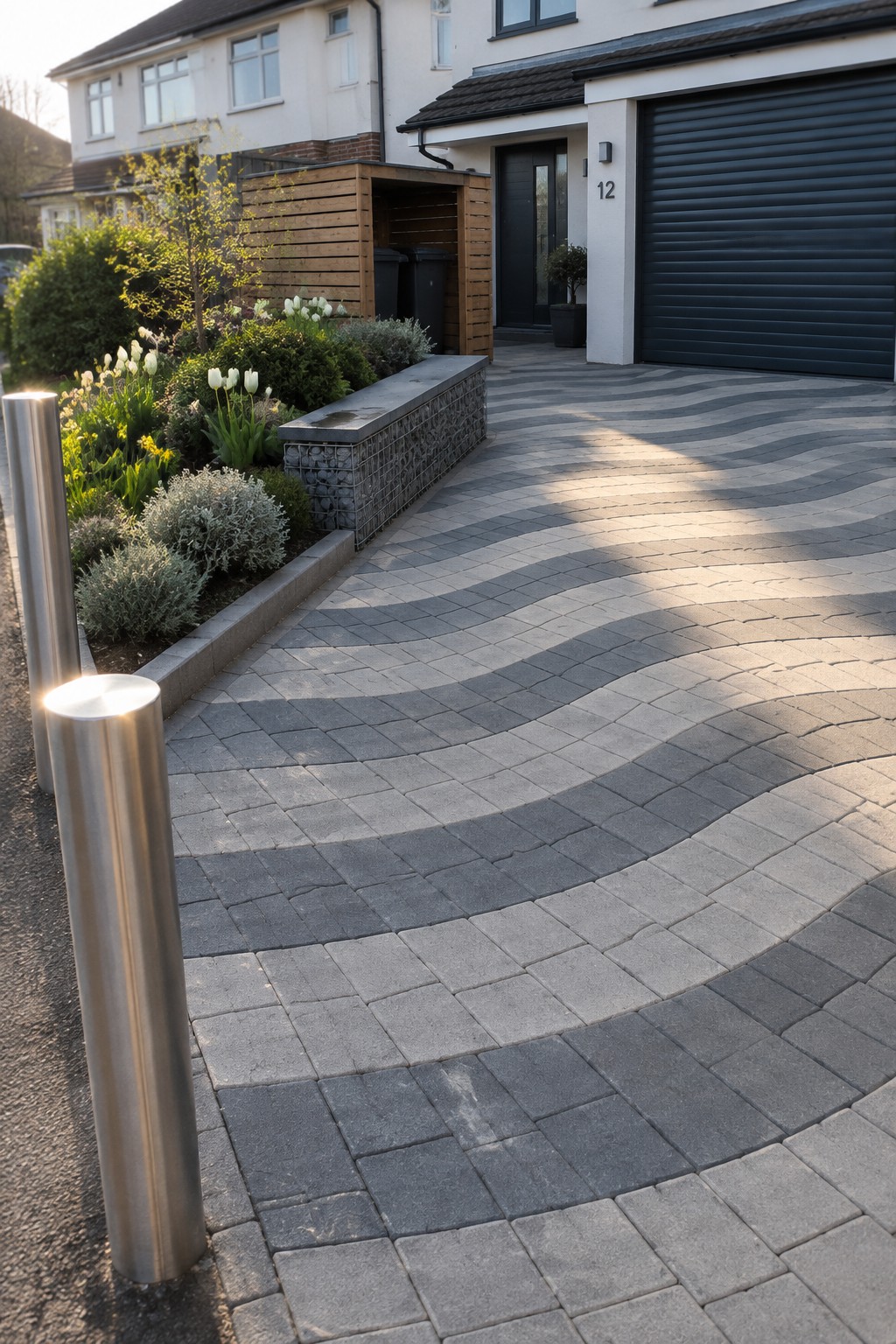
A simple way to make a small driveway feel more interesting is to lay the blocks in a gentle wave instead of straight lines. The curves add movement and break up the flat look without adding any extra width or cost.
This approach works best on homes with a short driveway that sits right at the front. Keep the bends wide and gradual so cars can still drive over it easily and the pattern stays simple to clean and maintain over time.
Radial Paving Layouts For Compact Driveways
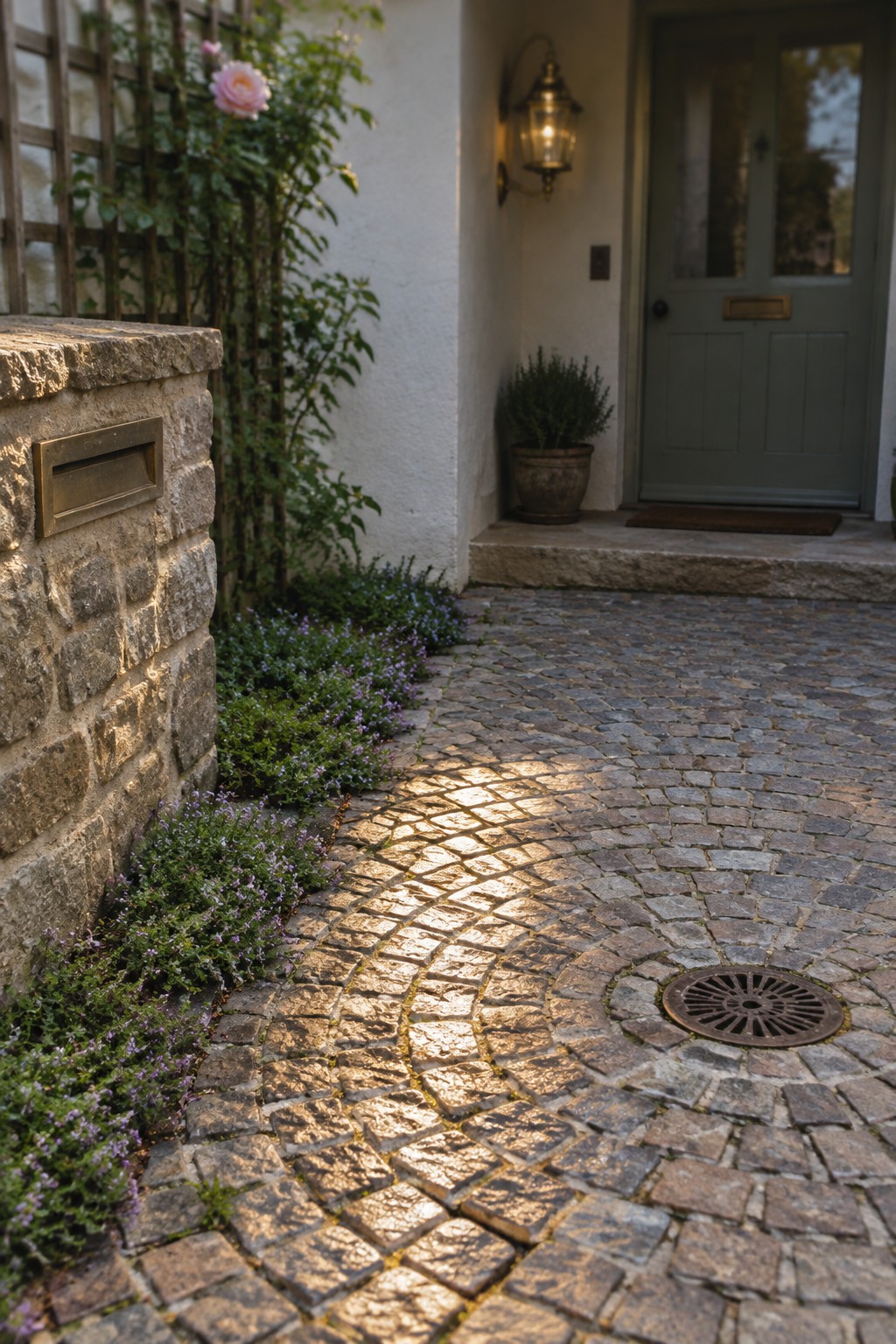
A radial block pattern works well when space is tight because it turns a basic turnaround area into something more deliberate. The curved layout keeps the eye moving without needing extra width or length, and it lets a drain grate sit right in the middle instead of fighting the design.
This approach suits older homes or narrow lots where a straight run of pavers can feel flat. Match the stone tones to the house or boundary wall so the pattern feels connected rather than added on later.
Frequently Asked Questions
Q: How do I stop weeds from popping up between the blocks over time? A: Fill the joints with a fine sand that locks in place after the first rain. This cuts down on gaps where seeds settle and makes future weeding a quick job.
Q: What if my small driveway sits on a slope? A: Choose a running bond pattern that follows the fall of the ground. It helps water move off the surface without creating low spots that collect puddles.
Q: Can the paving handle car tires turning in a tight space? A: Go with thicker blocks rated for driveways and lay them on a compacted base. The extra depth keeps edges from shifting when wheels pivot in a narrow area.
