


When your lot is tight the way you handle parking right up front can either help the house feel settled or make the whole entry look squeezed.
I have walked up to homes where the driveway just worked because it stayed narrow and let a strip of planting soften the edge.
Curb appeal really starts there.
Some approaches use gravel or pavers to keep things permeable while still looking intentional rather than thrown together.
If I had to pick one thing to try first on my own small lot it would be anything that leaves a little breathing room between the cars and the front door.
Line the Driveway With a Slim Planted Strip
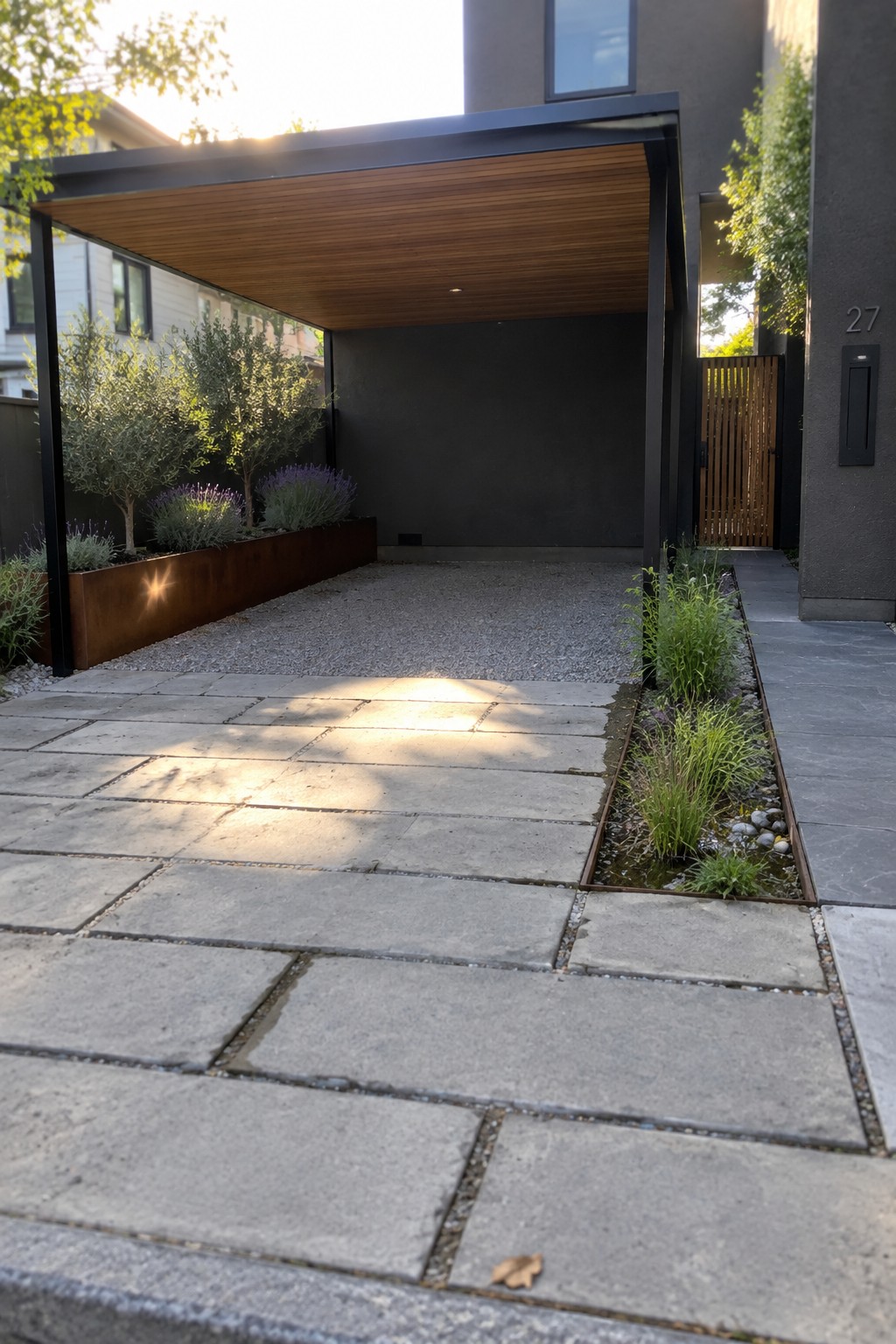
A narrow bed of grasses and ground cover running along one side of the driveway keeps the space feeling open while handling runoff. On small lots this simple edge keeps the hardscape from looking too flat and helps water soak in instead of pooling on the surface.
It suits homes with tight front setbacks or shared driveways where every foot counts. Keep the bed eight to twelve inches wide, use sturdy plants that tolerate occasional tire spray, and add a few pebbles at the base so the strip stays neat without constant trimming.
Herringbone Brick Driveways
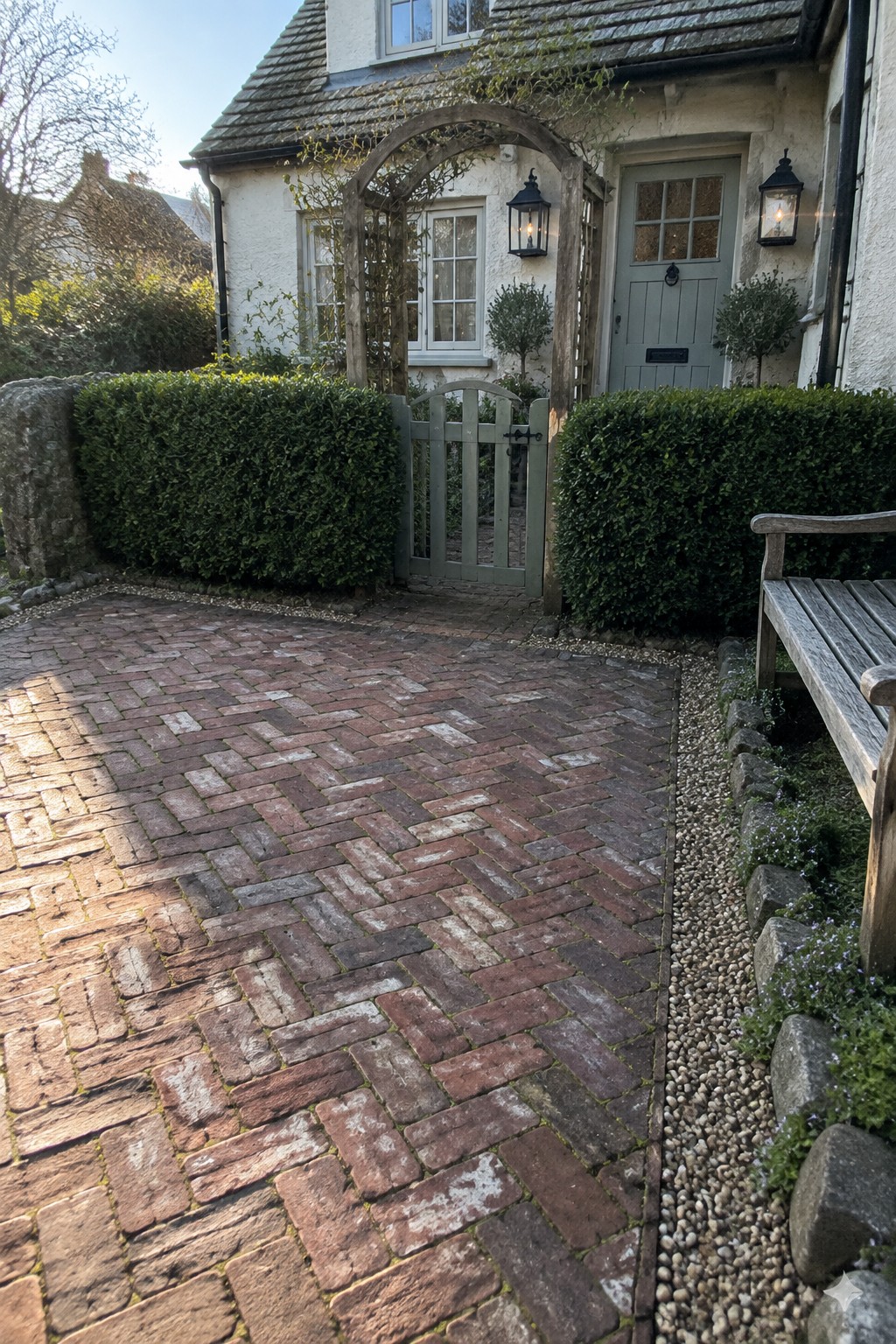
Herringbone brick paving works well on small lots because the pattern adds texture and makes a narrow driveway feel more finished. It handles daily use without looking worn down quickly and pairs easily with simple edging like gravel or low hedges.
This approach suits older homes or cottages where you want the driveway to blend into the garden rather than dominate it. Keep the layout tight, avoid extra curves, and let the brick do most of the work so the space stays practical and easy to maintain.
Spaced Pavers Keep Narrow Driveways Functional

Large concrete pavers laid in a single row with gravel between and around them give a narrow driveway enough structure to handle daily use without taking over the whole side yard. The gaps let water drain straight through instead of pooling, which helps on small lots where every inch counts.
This setup works best when the driveway runs along one side of the house and you still want some planting room next to it. Keep the pavers wide enough for tires and fill the rest with gravel so the whole thing stays simple to maintain and does not feel like a solid slab of concrete.
Stone Benches Built Into Small Driveways

Many small lots leave little room for both parking and any kind of seating. A low stone wall placed right along the driveway edge solves that by turning the side boundary into usable bench space without eating into the parking area.
This setup works best when the paving stays simple and the bench height stays low enough to sit on comfortably. Keep the plantings in front soft and low so they do not block the seat, and make sure the stone matches the paving so the whole thing reads as one surface rather than separate pieces. It suits tight urban properties where every square foot needs to count.
Edge Compact Driveways with a Narrow Water Rill

A slim water channel running alongside the driveway adds quiet movement and a clear edge without taking up extra width. On small lots this keeps the parking area straightforward while giving the eye something to follow, so the space feels more considered instead of just a strip of pavement.
It suits homes where the driveway sits close to the house or garden beds. Keep the channel narrow, set it in the same paving material or a simple stone border, and use a few large pots or low planting to soften the opposite side. Just check that the slope handles runoff properly and that leaves or debris won’t collect.
Use Weathered Metal to Frame Narrow Driveways
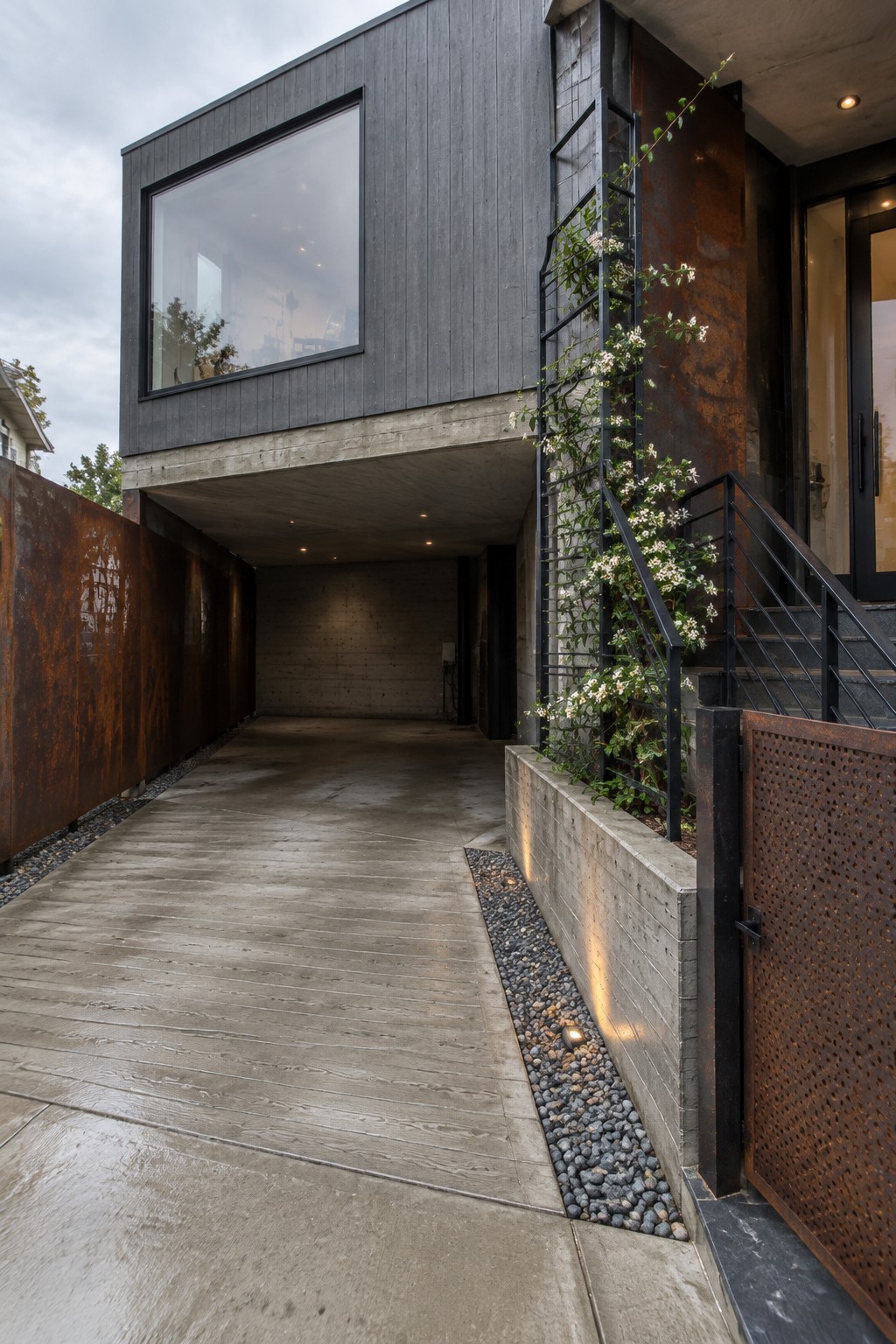
Weathered steel gives a small driveway real presence without taking up extra room. The material stands up to weather, needs little upkeep, and adds texture that concrete alone often lacks.
It works best on homes with simple shapes and clean lines. Pair it with basic concrete paving and keep plantings minimal so the metal stays the main detail.
Raised Planters That Edge A Narrow Driveway

One practical way to handle a small lot is to run raised wooden planters along both sides of the driveway. The planters give the narrow concrete path some clear boundaries and keep the planting from spilling onto the driving surface.
This setup works best on modern homes where you want simple lines and low maintenance. Keep the plants low and choose lighting that stays tucked into the planter edges so it does not add clutter or extra poles.
Grass Pavers for Small Lot Parking
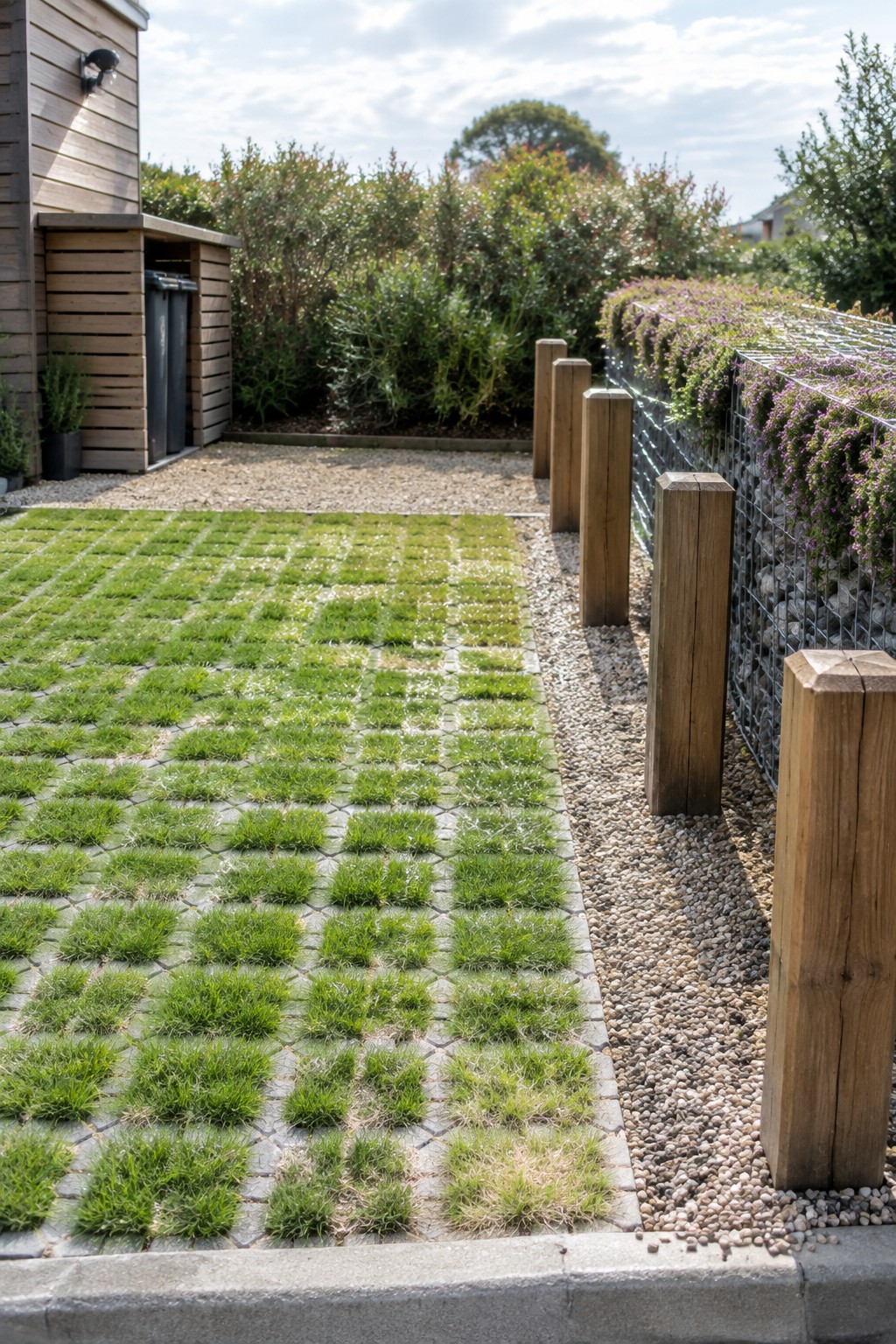
Grass pavers give you a solid spot to park without covering the whole area in hard pavement. The grid lets grass grow right through the surface, so the driveway blends into the rest of the yard instead of standing out as a big gray patch.
This works best on tight lots where you still want some green space. Keep the pavers in the main tire tracks and use gravel or simple posts along the edges to keep the parking area defined and easy to maintain.
Brick Edging That Defines a Small Driveway
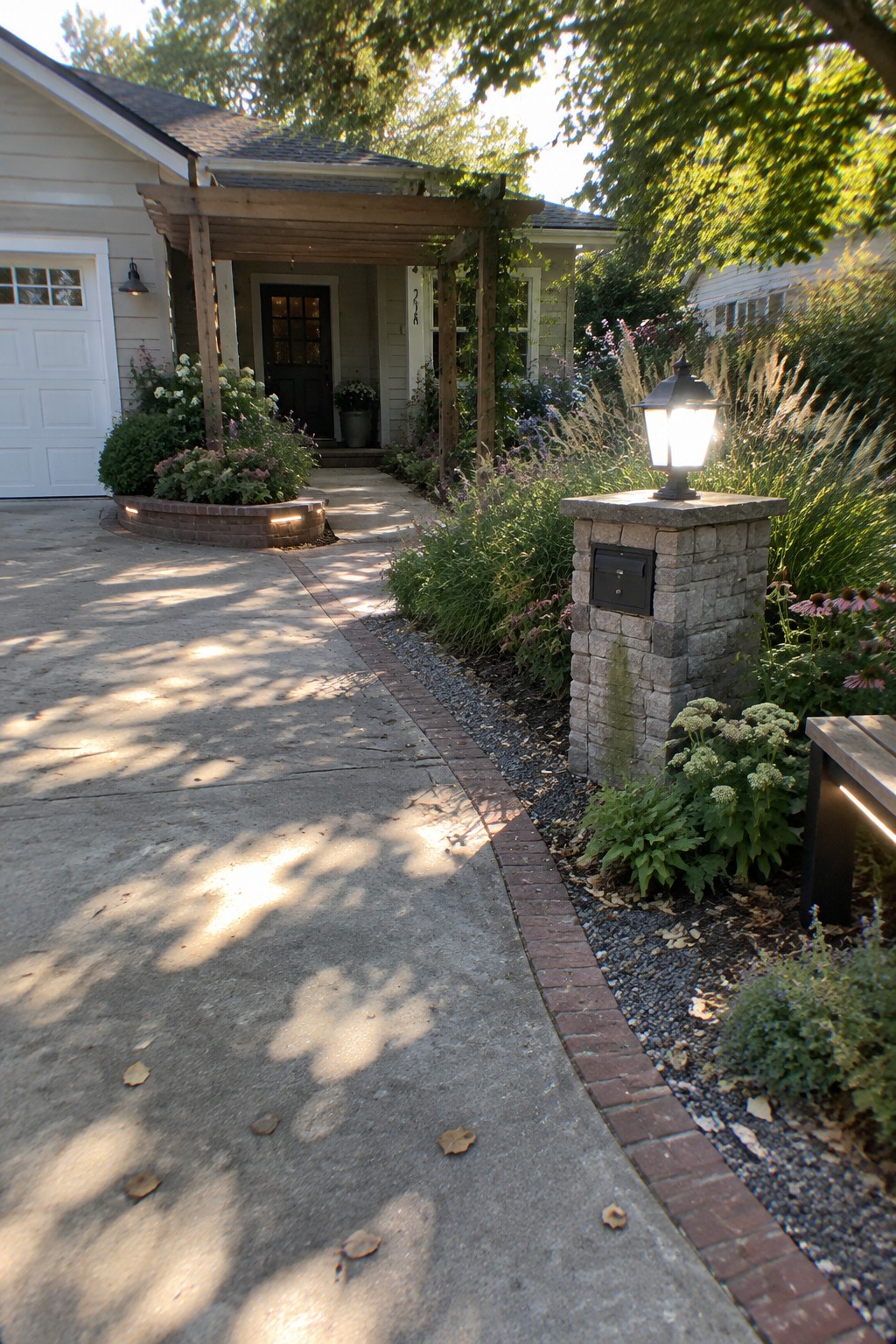
A curved brick border along the edge of a concrete driveway helps a tight lot feel more intentional without taking up extra space. It creates a clean separation between the parking surface and the planting beds, so the whole front looks finished rather than just paved over. The slight curve also softens the straight lines of the house and garage.
This approach works especially well on narrow lots where a straight edge would feel too abrupt. Keep the planting low and layered right up to the brick so the border reads as part of the garden rather than a hard barrier. It is easy to add later if your driveway is already in place, and it pairs nicely with gravel strips or simple path lighting.
Add a Living Wall Next to the Garage

A living wall works well on small lots because it brings in greenery without eating up any ground space around the parking area. The vertical garden here sits right beside the garage and softens the hard surfaces while keeping the driveway layout simple and open.
This approach suits modern homes with tight front setbacks or narrow side yards. Keep the planting mix mostly ferns and trailing greens so it stays full without much trimming, and make sure the wall has good drainage so it does not leak onto the paving below.
Gravel Driveways Edged With Timber

Gravel works well on small lots because it drains quickly and costs far less than a full concrete pour. It also keeps the front area from feeling too hard or cramped when you only have room for one or two cars.
A simple timber border holds the gravel in place and gives a clean edge against the grass. This approach leaves space for a carport overhead and a few large pots near the steps without crowding the entry.
Stepping Stones Set In Gravel
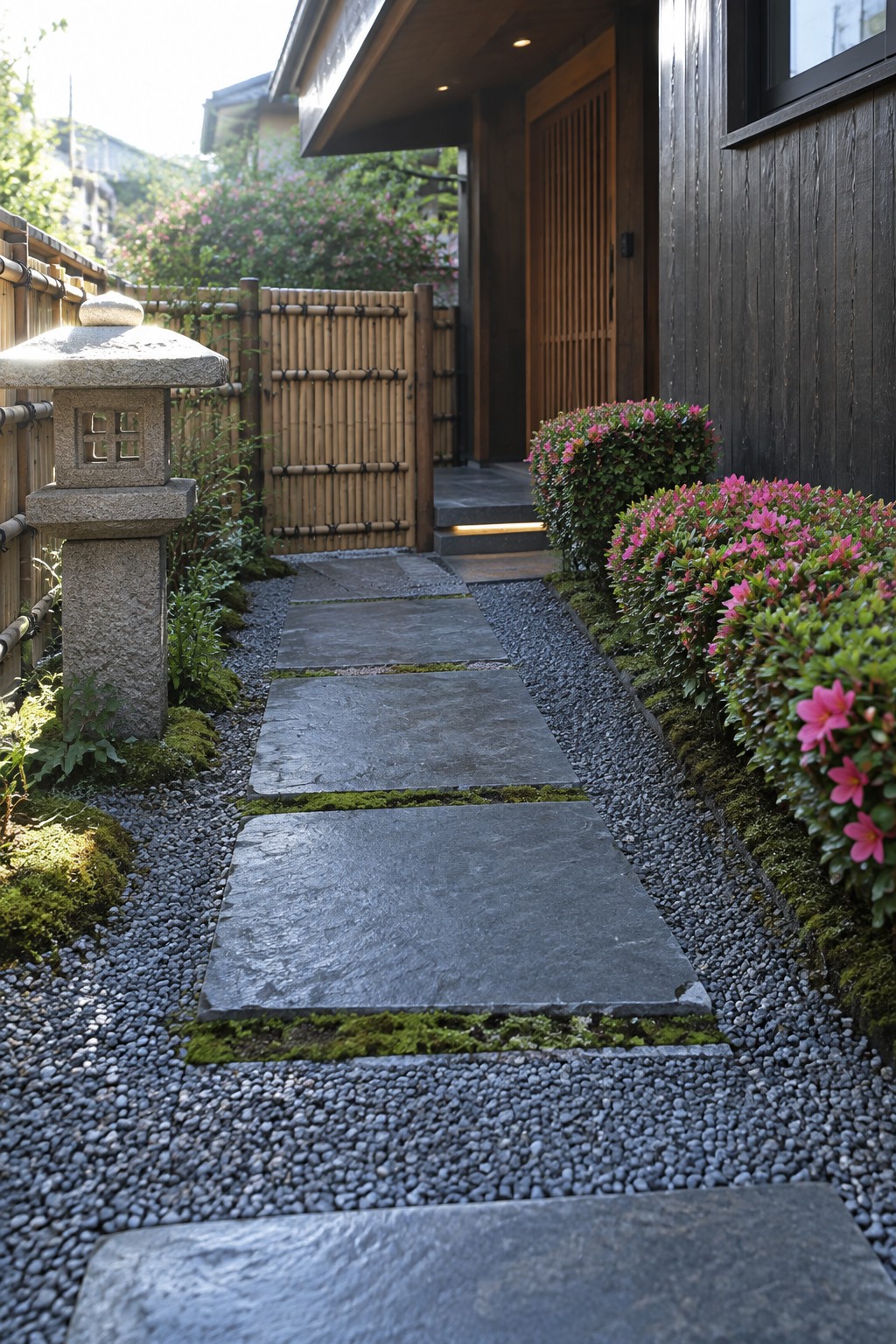
One way to handle a tight entry is to lay large stone slabs right into a gravel bed. The moss that fills the spaces between them softens the surface and helps water drain away. This keeps the path narrow and simple without crowding the rest of the yard.
It suits small lots where you need a clear route to the door but cannot spare space for a wide driveway. Keep the stones fairly even underfoot and let low shrubs run along the edges so the path feels like part of the garden.
Border a Compact Driveway With a Slim Water Channel

A narrow strip of water running right along the edge of the driveway gives the whole entrance a calmer feel without eating into parking space. On small lots this works especially well because it adds movement and light reflection where a wider garden bed would not fit.
The key is keeping the channel simple and low maintenance. Pair it with clean pavers and a few large planters so the water stays as the quiet focal point rather than competing with lots of plants or ornaments. This setup suits modern homes where the driveway sits close to the house or fence line.
Turf Strips For Tight Lots

A narrow strip of turf can handle driveway needs without eating up the whole front yard. On small lots this keeps the space looking open and green instead of covered in concrete or pavers. The concrete edges help contain the turf and give it a clean shape that still feels simple.
This works best on homes where you only need room for one car or occasional access. Keep the turf strip just wide enough for tires and add low planting beds on each side so the whole approach stays neat. Avoid this if you have heavy daily traffic or need extra parking space.
Tall Trees in Planters Line a Gravel Path
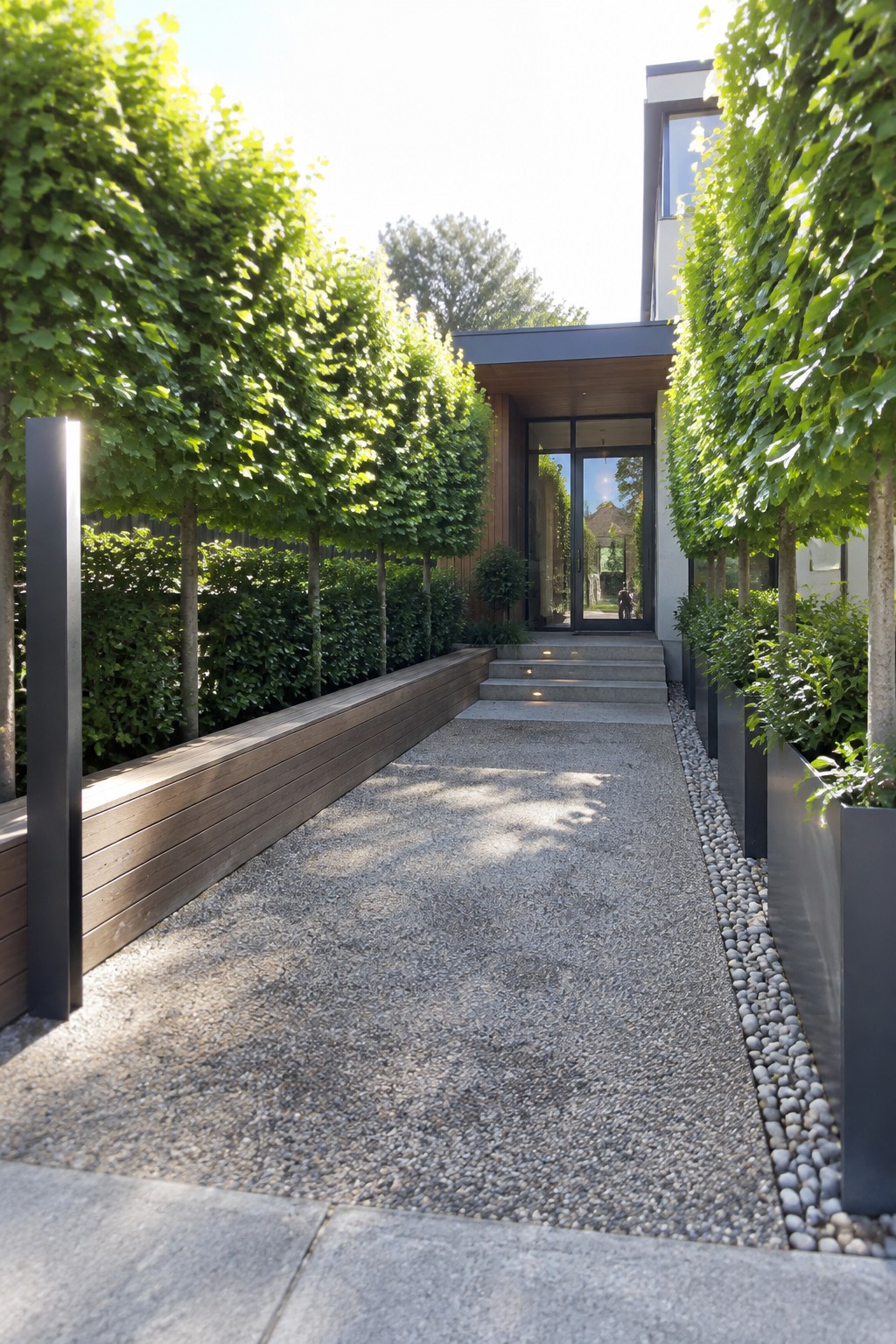
One simple way to handle a tight driveway is to run a gravel path between rows of tall, narrow trees set in slim containers. The vertical lines add structure and a bit of privacy without eating into the usable space or making the approach feel cramped.
This setup suits smaller modern homes where you want greenery along the walk to the door but still need room for a car. Stick with trees that stay columnar and planters that can handle the weight and drainage so the whole thing stays neat over time.
Frequently Asked Questions
Q: How do I keep a gravel driveway from washing away on a sloped small lot?
A: Mix in some larger stones at the base to anchor everything. Rake it level after storms and add fresh gravel once a year. This keeps the surface solid without much work.
Q: Will these driveway ideas work if I need to turn a car around in the space?
A: Many compact designs include a small turn pad at the end. You can back in or use the extra bit to swing around easily. Test your turning radius with cones before you build.
Q: Do I need special tools to install pavers myself?
A: Basic ones like a tamper and level do the job fine. Start with a good base layer and go slow.
