

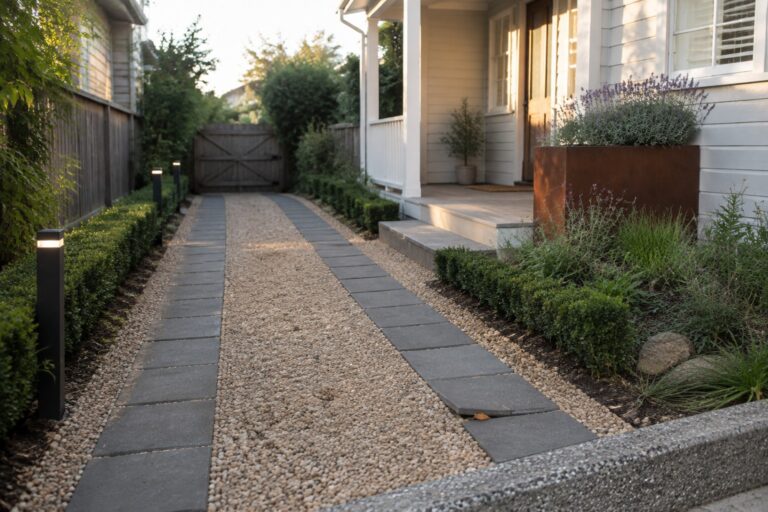
When I drive past houses in my neighborhood the driveway is often the first surface that catches the eye and shapes how the whole front feels.
Mixing gravel with block paving can help manage water runoff while giving the entry a bit more definition against the house walls and garage doors.
Some layouts work better than they appear in drawings.
I have found that keeping the blocks close to the foundation and letting the gravel take the center section tends to keep the look balanced without fighting the existing roofline or siding colors.
A few of the combinations seem worth trying on a small scale first to see how they settle after a season of use.
Gravel And Block Paving Work Well For Narrow Side Paths
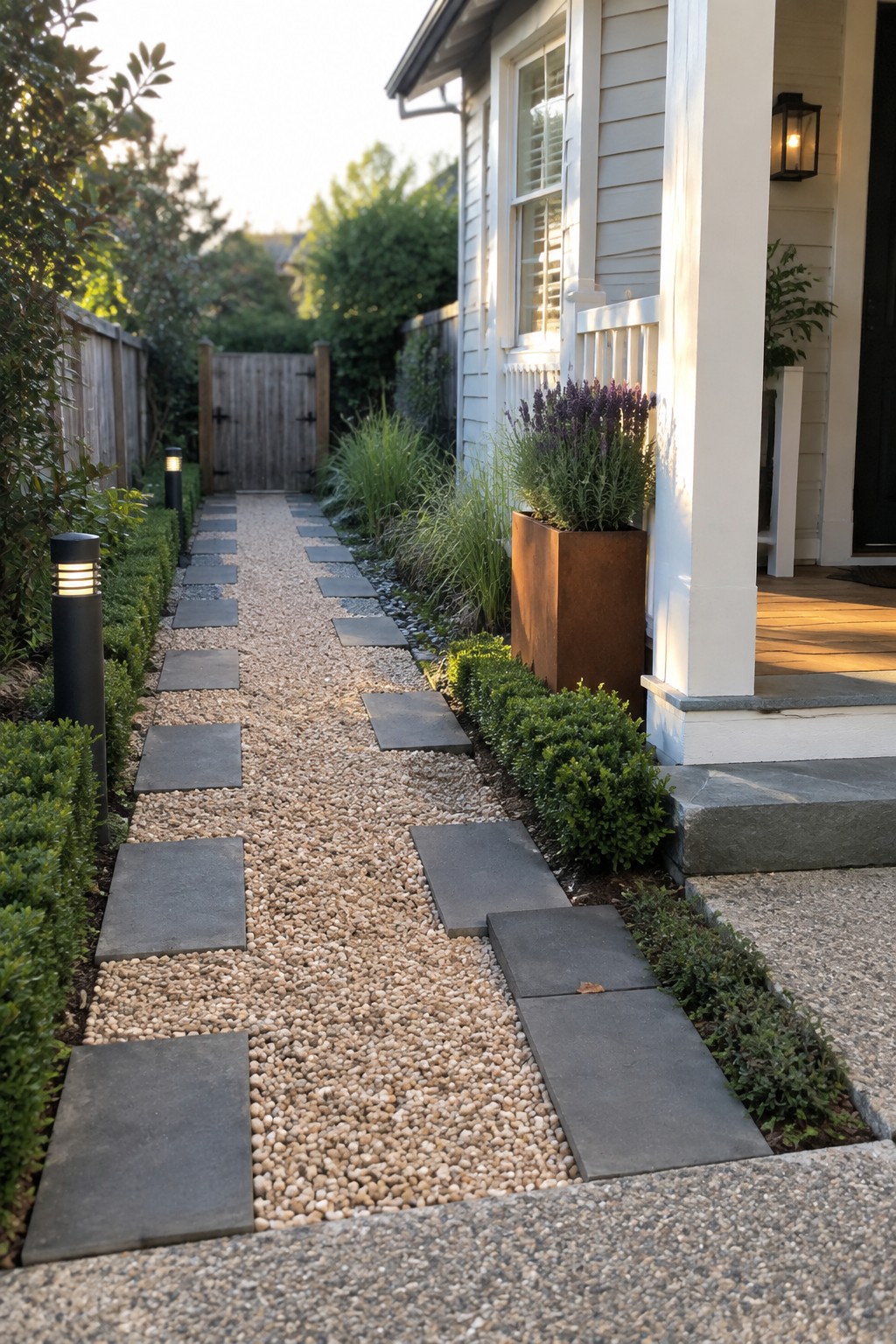
This mix keeps a path looking neat without much upkeep. The gravel sits between the pavers so water drains easily and weeds have less room to grow, while the blocks give you solid footing.
It works best on long, slim side yards or entries that lead to a gate or back door. Space the pavers about a step apart, keep the gravel layer thin, and add a low hedge or shrubs along one edge if you want a bit more structure.
Brick Strips Through Gravel Driveways

This approach uses two narrow bands of brick pavers set into a gravel surface. It gives the driveway a clear path for tires while keeping the overall width small and the look simple. The gravel handles the rest of the surface, which cuts down on the amount of paving needed and helps with drainage.
The style works well on smaller lots or homes where a full paved driveway would feel too wide. Keep the brick bands just wide enough for car tires and use a low border like the pebble edge shown here to hold the gravel in place. It suits homes with a relaxed or coastal feel and stays practical as long as the gravel is topped up every couple of years.
Mixing Pavers With Gravel In Small Driveways
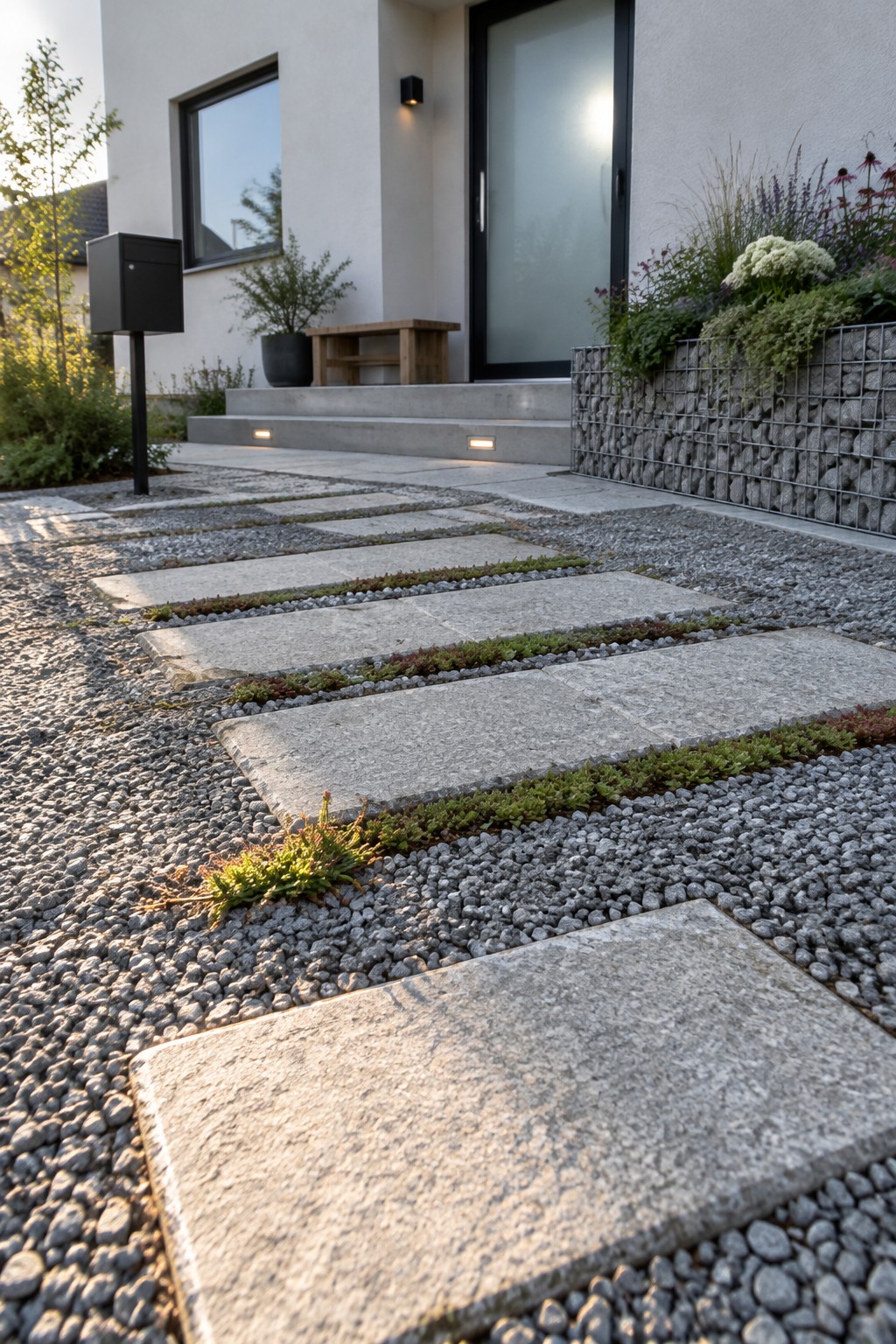
Large rectangular pavers laid in a staggered pattern through gravel create a clean path that still feels open and simple. The gravel fills the gaps and handles drainage well, while a bit of low planting softens the edges without adding much work. This approach keeps the surface practical for cars or foot traffic and avoids the look of a solid slab covering the whole area.
It works best on narrow driveways or side paths where you want some structure but not a full paved surface. The pavers give clear stepping points, and the gravel keeps costs down and maintenance low. Just make sure the base is solid so the pavers stay level over time.
Mix Gravel and Block Paving for Driveway Edges
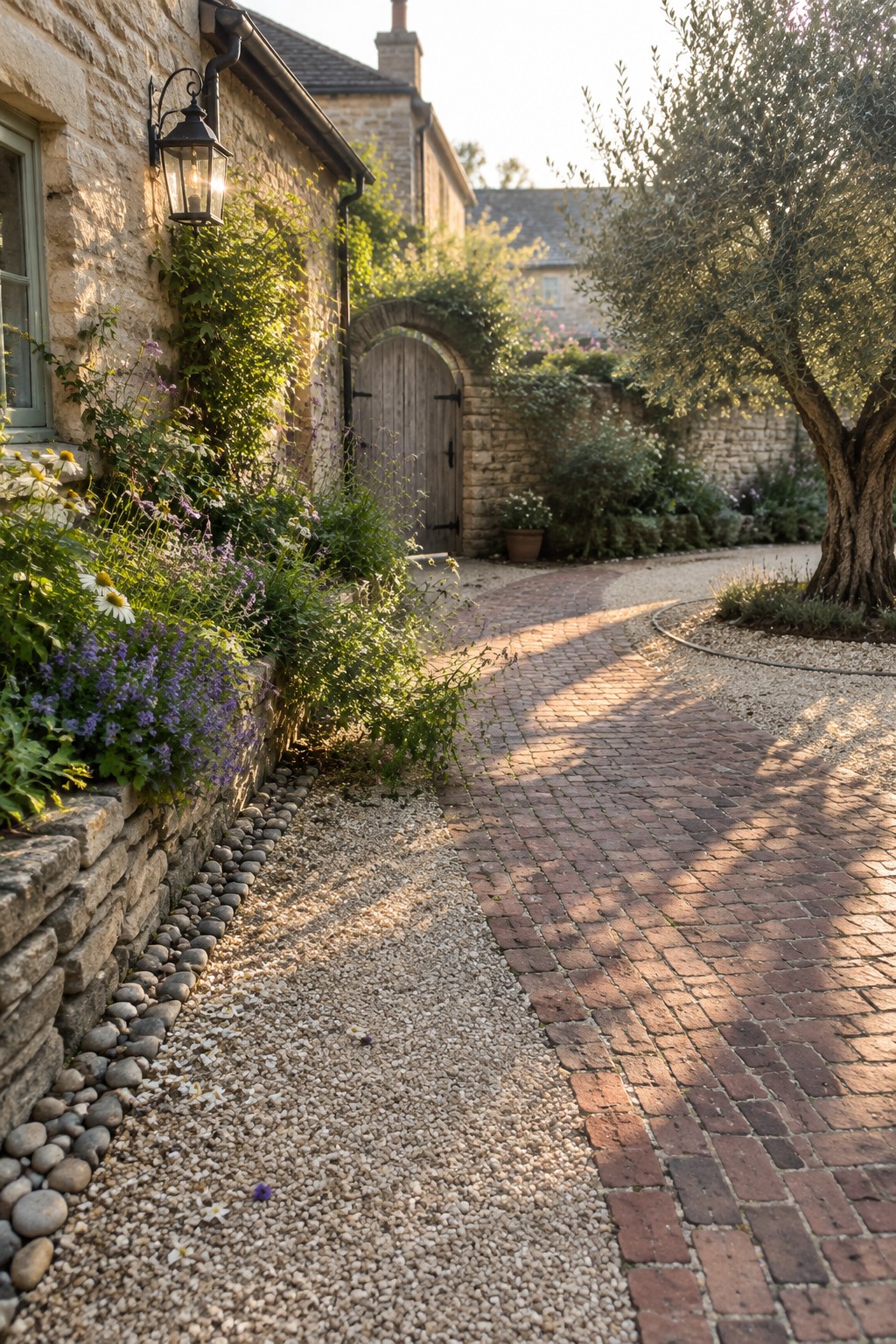
Many small driveways look better when the main surface stays practical but the edges feel softer. Using block paving down the center with gravel running along both sides gives the path a clear route while letting water drain easily and giving plants room to spill over without crowding the surface.
This works well on narrow approaches or curved entries where a full width of paving would feel too heavy. Keep the gravel strip narrow enough to stay neat, and use a low wall or planting to hold the edge in place so the gravel does not scatter onto the main drive.
Pavers With Gravel Between Them
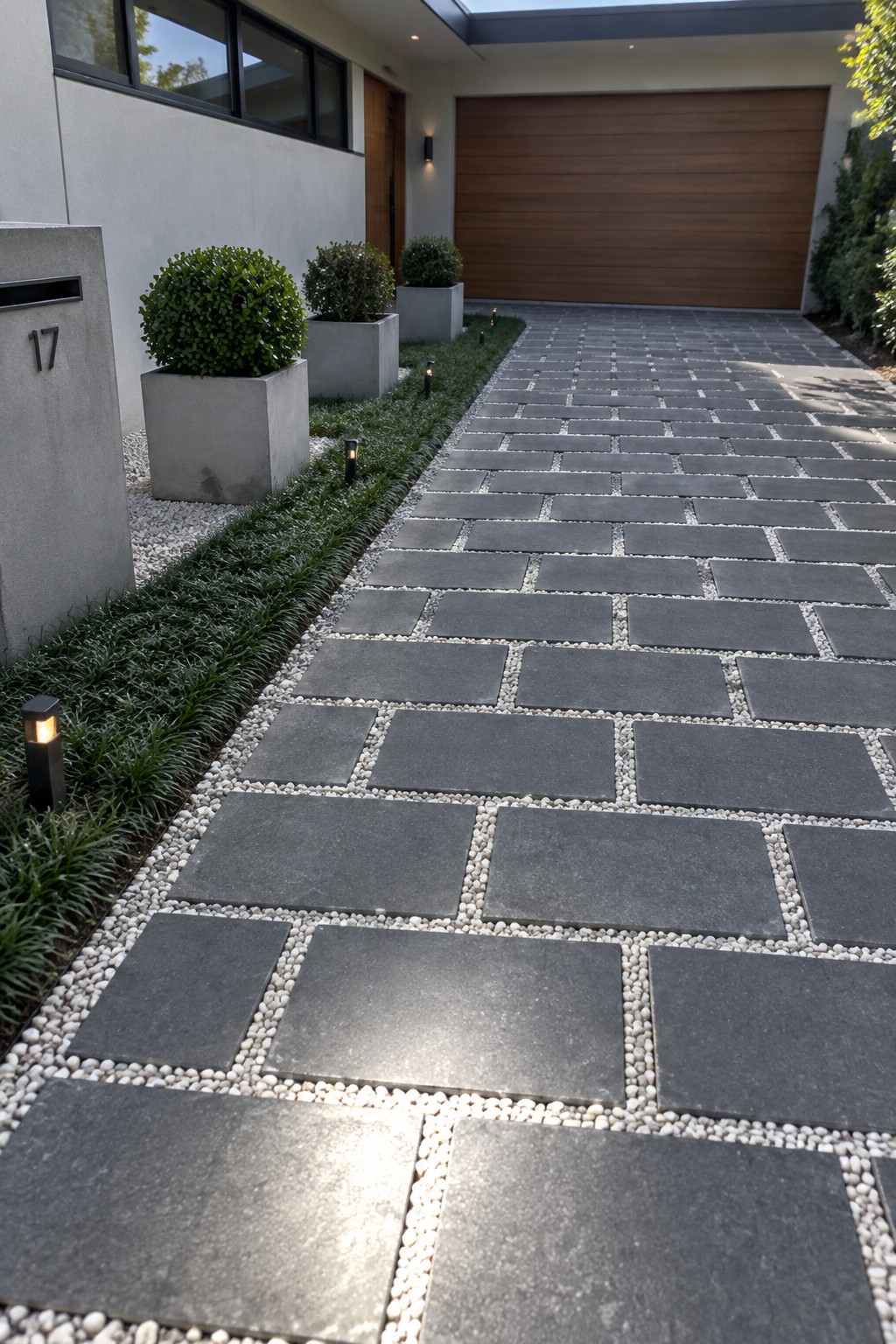
This approach uses large rectangular pavers set in a staggered pattern with gravel filling every gap. It gives the driveway a neat, structured look while still letting water drain through the joints instead of pooling on the surface. The contrast between the dark pavers and light gravel also helps the whole path feel a bit wider.
It works well on narrow driveways where you want something more finished than plain gravel but do not want the cost or upkeep of a fully solid paved surface. Keep the gravel light in color so it stays visible and sweep it back into place once or twice a year to stop it from scattering onto the lawn edges.
Stepping Stones Set In Gravel

This layout keeps the soft, permeable surface of gravel while adding solid stepping stones that make the path easy to walk on. The large slabs break up the loose material and create a clear route from the street to the door without covering the whole area in hard paving.
It works best on narrow frontages or homes that want drainage and a relaxed look. Space the stones evenly, keep them big enough for comfortable steps, and let low planting along the edge soften the line where the gravel meets the house.
Mixing Gravel With Block Paving For Side Paths
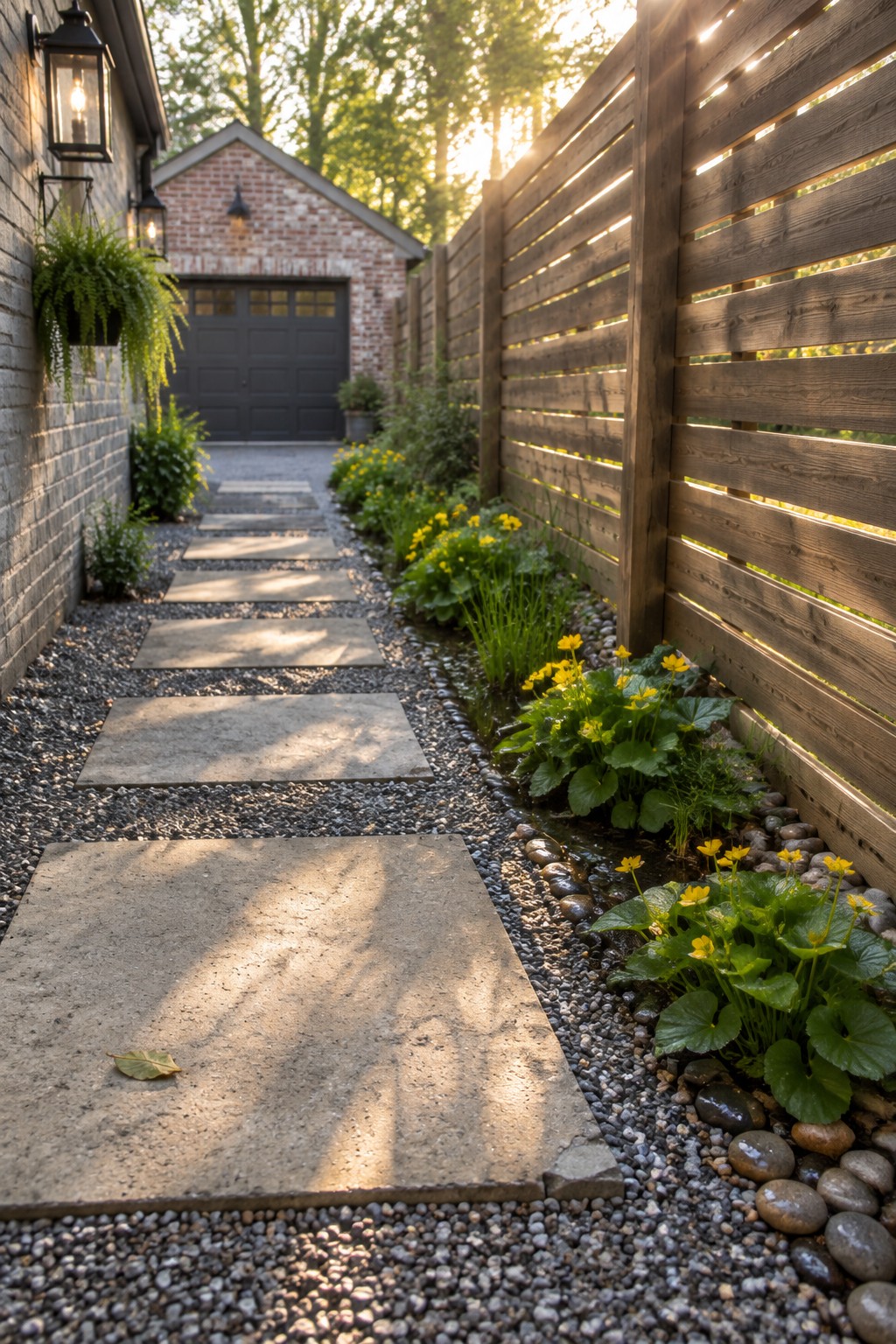
This setup works well for narrow side access areas where a full driveway would feel too wide. The large concrete blocks give steady footing while the gravel handles drainage and keeps the surface from looking too heavy.
It fits homes with tight side yards or secondary entrances. Space the blocks evenly, keep the gravel layer thin, and let a simple planting strip run alongside to prevent the gravel from spreading into the beds.
Create A Central Paver Path With Gravel On Both Sides
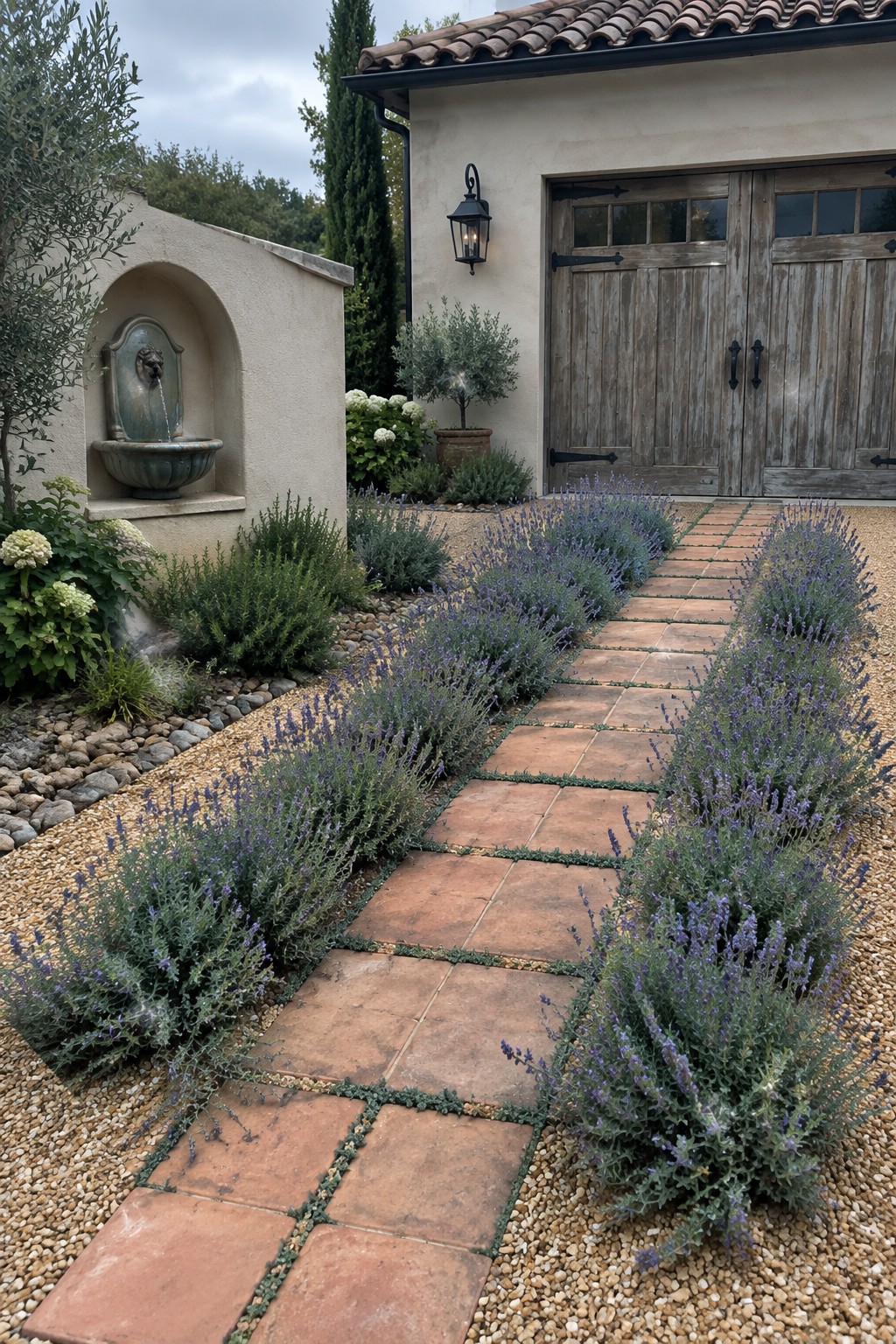
A paved strip down the middle gives you a solid, easy surface to walk or drive on while the gravel on either side handles drainage and softens the look. The terracotta pavers stand out against the lighter gravel, and the low lavender planting keeps the edges from feeling too hard. This setup works especially well on narrow driveways where a full paved surface would feel heavy.
It suits homes with a Mediterranean or simple country style and needs very little maintenance beyond occasional weeding. Just make sure the gravel layer stays level so the pavers do not shift over time.
Paved Strip With Gravel Borders

A narrow band of dark blocks running down the center gives you a solid walking surface while the gravel on either side takes care of drainage and keeps the whole thing from looking too solid. This mix works well on small front paths because it avoids the cost and weight of a full paved driveway yet still feels intentional.
Run the blocks straight toward the door and let the gravel taper naturally at the edges. The look suits modest homes with simple planting and needs very little maintenance beyond the occasional rake.
Set Pavers In A Grid Through Gravel
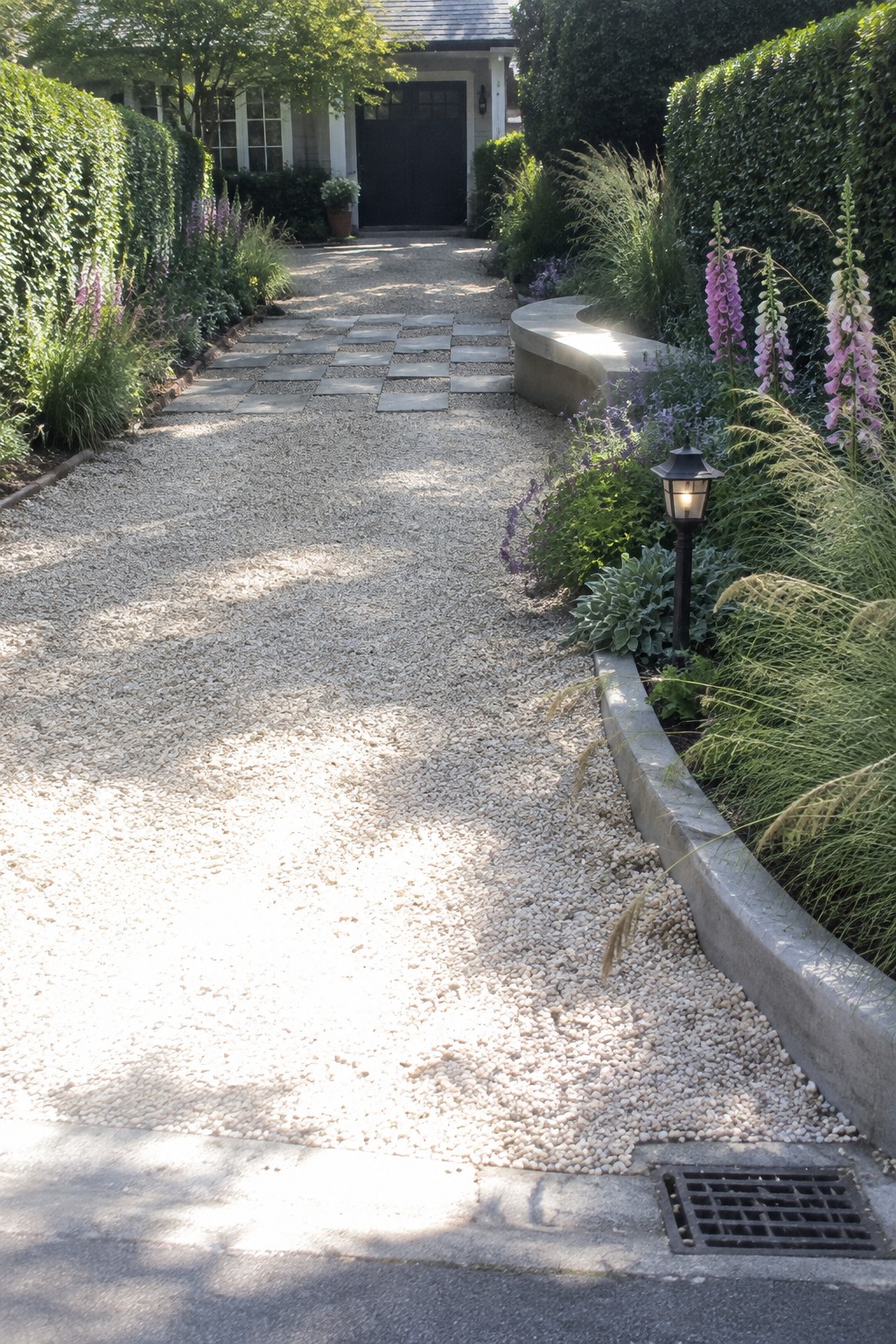
One simple way to handle a small driveway is to lay square pavers in a loose grid right through the gravel. The pavers give you a firm place to walk and guide wheels, while the gravel keeps the surface permeable and easy to maintain.
This approach suits narrow driveways where full paving would feel too heavy. Place the pavers down the center or in a staggered pattern, and keep the gravel depth consistent so the surface stays level over time.
Fan Pattern Brick With Gravel
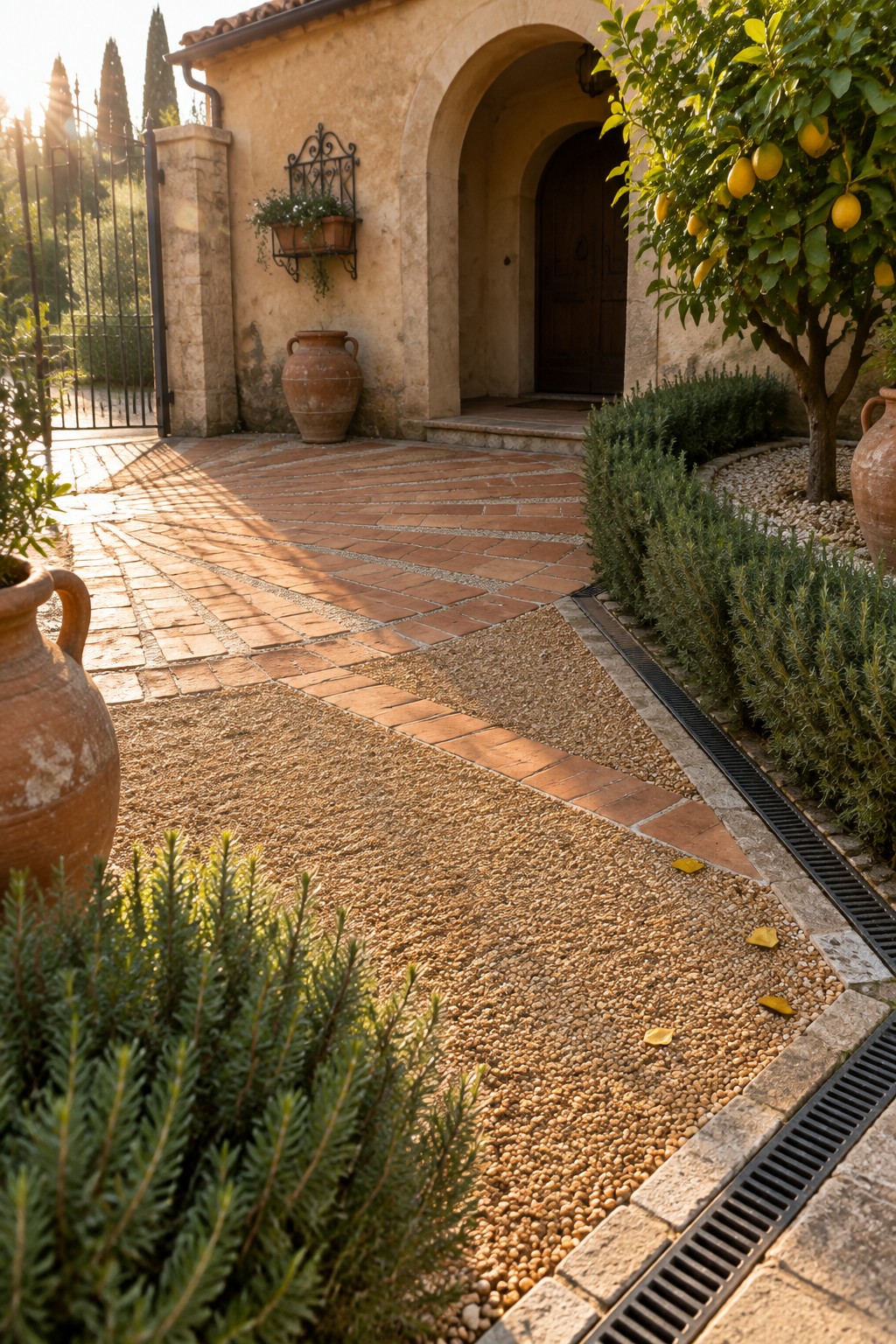
One simple way to handle a small driveway is to lay block pavers in a radiating fan pattern and fill the remaining space with gravel. The pattern adds structure and leads the eye toward the entrance while the gravel keeps the surface mostly permeable and low maintenance.
This layout works best on homes with a clear central doorway or arch where the bricks can point inward. It suits older or Mediterranean style houses that already use terracotta tones, and it avoids the cost of paving the entire width. Just make sure the gravel sections sit slightly lower so water drains toward the channel at the edge.
Alternate Pavers With Gravel Strips

This layout keeps a small driveway from feeling like one solid slab while still giving a clear path to the door. The long concrete pieces sit right in the gravel, which makes the whole approach look organized without needing a lot of extra edging or borders.
It suits homes where the driveway also serves as the main walkway. Keep the pavers wide enough to walk on comfortably and make sure the gravel layer stays level so it does not shift underfoot over time.
Stone Slabs Set In Gravel
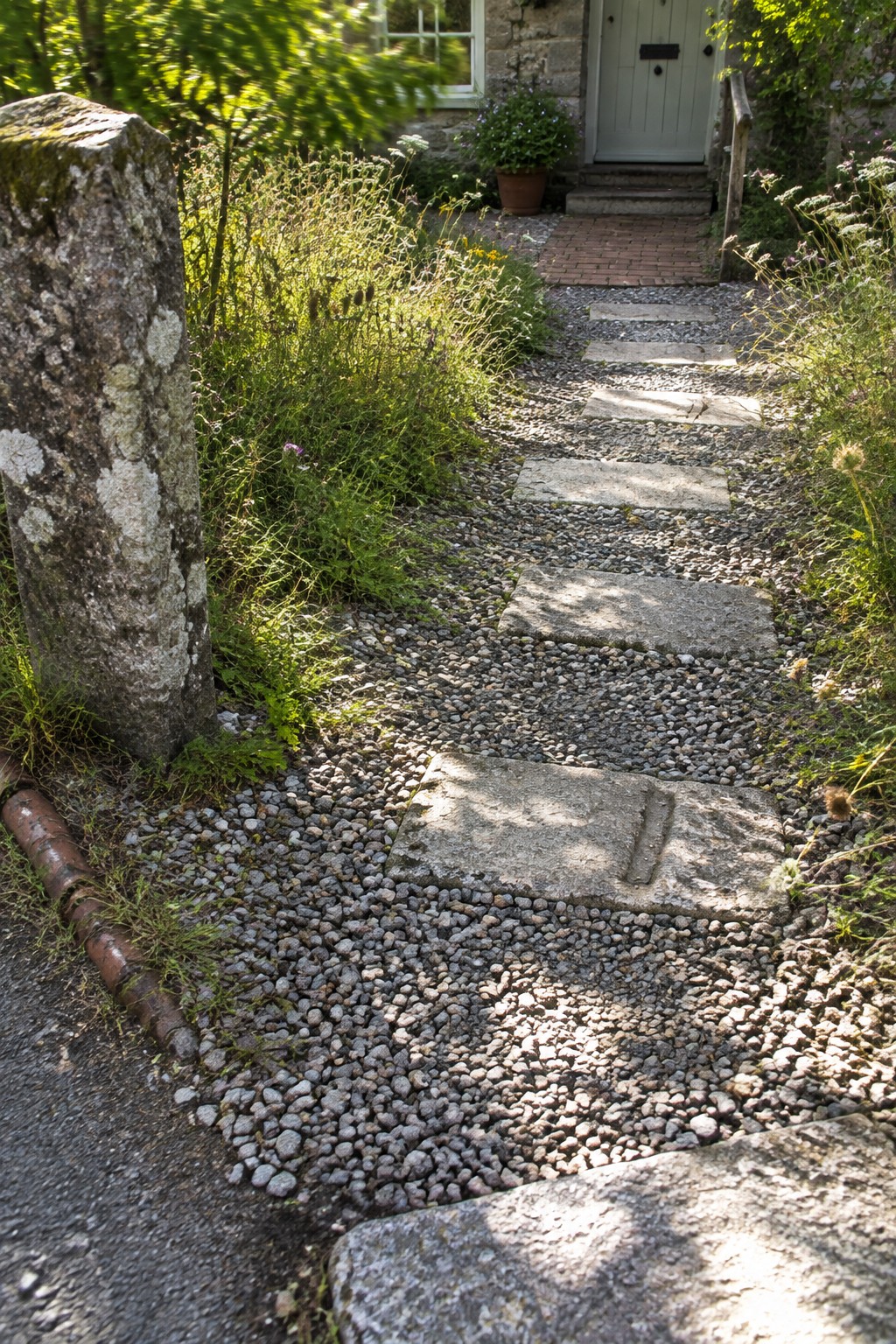
This layout keeps the path practical while letting the gravel do most of the work. The large slabs give you firm places to step or drive, and the gravel fills the gaps so water drains away instead of pooling. It feels less heavy than a solid paved surface and blends into the garden around it.
The approach suits small driveways or side entries on older homes where you want something that looks settled rather than brand new. Space the slabs evenly and use a compact gravel mix so the surface stays stable. Keep the edges simple so plants can soften the sides without taking over the path.
Stepping Stones In Gravel
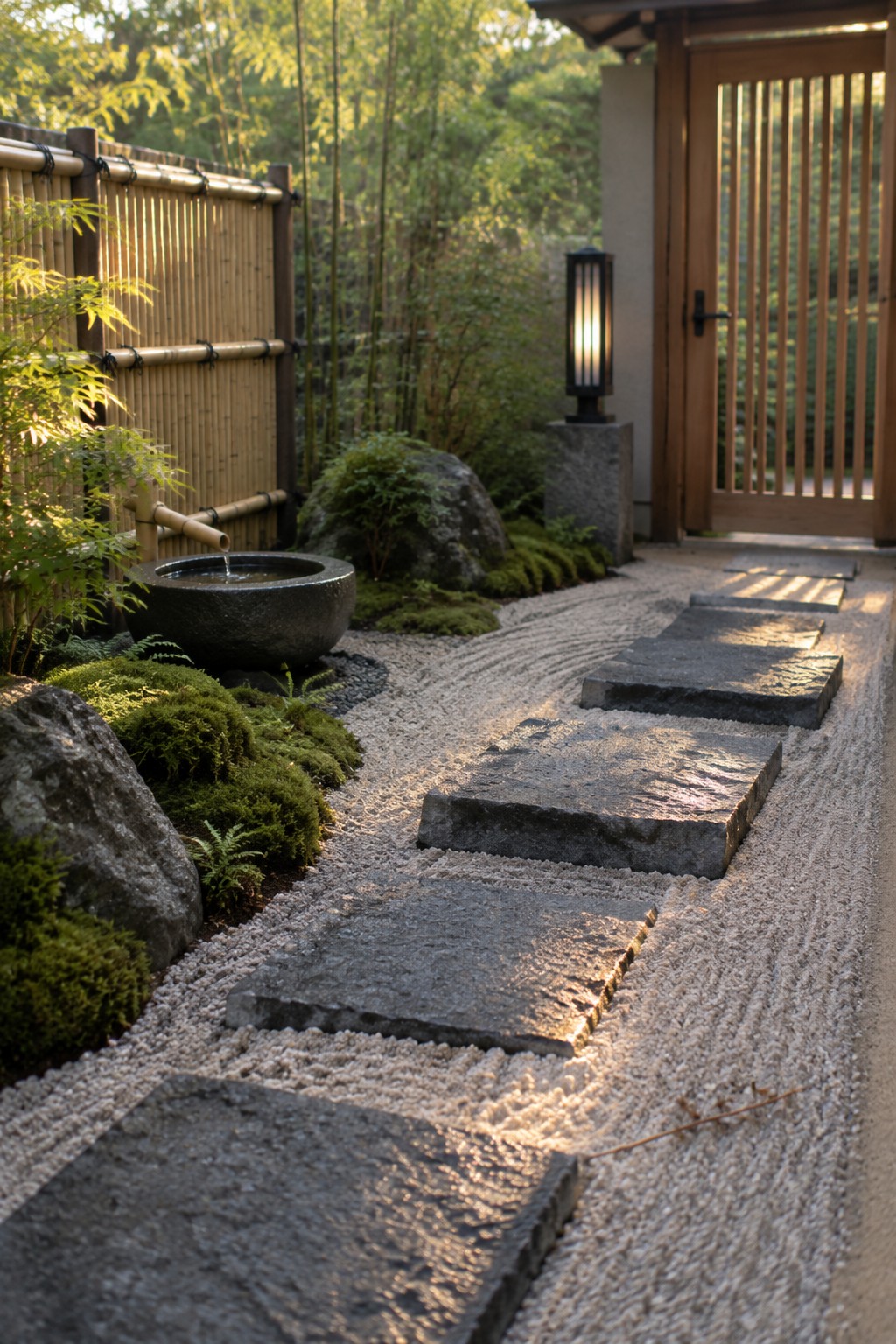
One simple way to handle a narrow driveway or entry path is to set large stone slabs into a gravel base. The stones create firm footing while the gravel fills the spaces between them, letting water drain through instead of pooling on the surface.
This setup works best on smaller lots or along the side of a house where a solid paved drive would feel too wide. Keep the stones spaced evenly for walking comfort and use edging to hold the gravel in place over time.
Large Pavers Set In Gravel For Narrow Paths
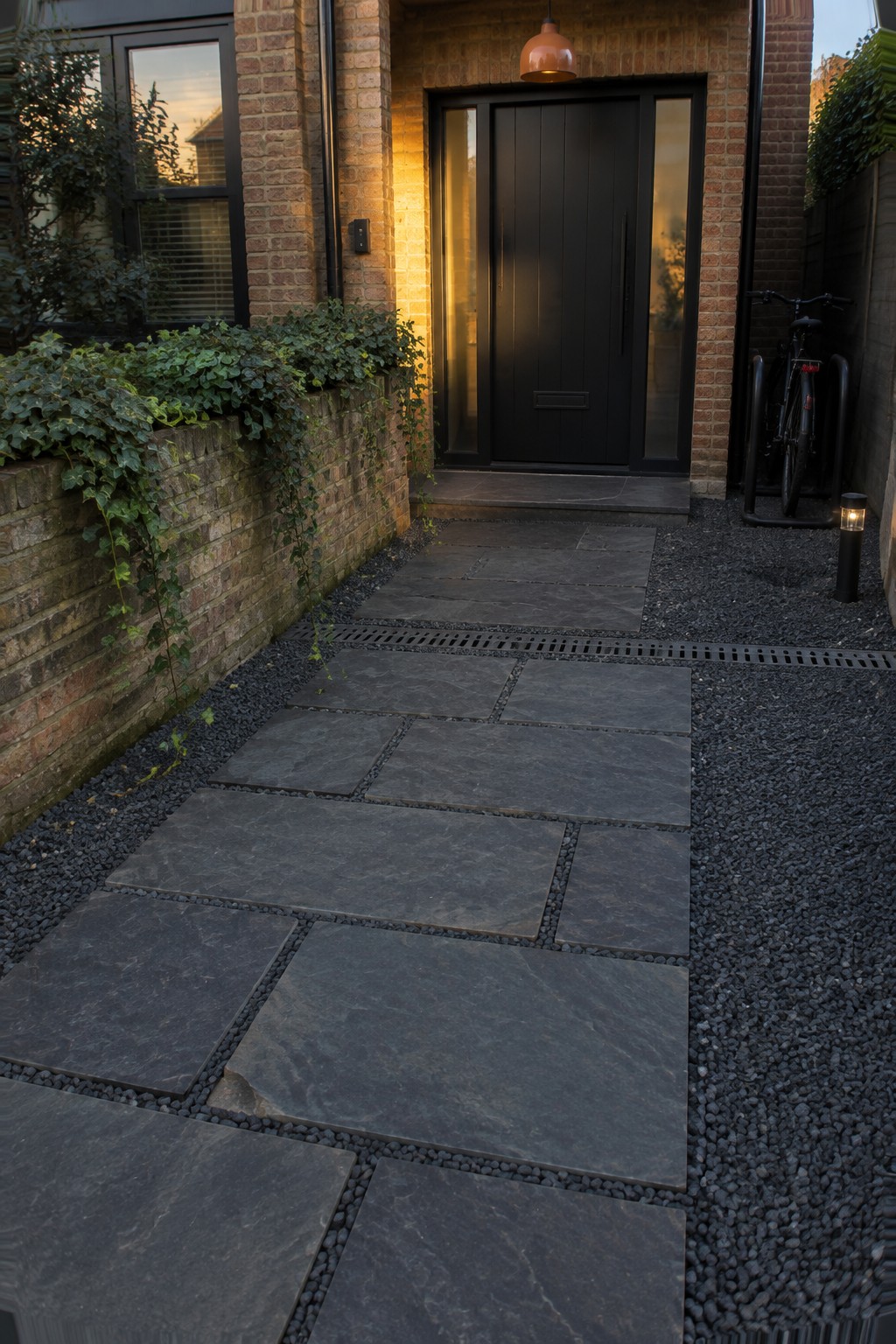
Large stone slabs laid through a gravel bed give a small driveway or entrance path a solid feel without covering the whole surface. The mix keeps the area looking open and helps with drainage, which matters in tight spaces where a full paved driveway would feel cramped.
This works best on homes where the path runs alongside planting beds or a brick wall. Use fairly large slabs and let the gravel fill the gaps so the layout stays simple and low maintenance.
Brick Edging Frames Gravel Paths

A low brick border gives gravel a tidy edge without making the whole surface feel too hard or structured. The bricks hold the gravel in place and add a bit of warmth and texture that plain gravel often lacks.
This approach works well on narrow driveways or side entrances where you need something practical that still feels garden-like. It suits older homes and cottage styles, and using reclaimed bricks helps the whole thing settle in faster.
Large Pavers Set In Gravel

This approach works well for small driveways because the wide concrete pavers give a solid surface for cars while the gravel keeps things simple and drains well. It avoids the look of a solid slab and lets you add a bit of planting along the edges without much extra work.
It suits homes with a modern or minimalist style and works best when the pavers are large enough to feel substantial. Keep the gravel layer fairly level so it stays comfortable to walk on, and add a low border or lighting if you want to define the path at night.
Central Paving Strip With Gravel Sides

A central strip of stone pavers set into gravel gives a driveway a clear driving surface without covering the whole width in hard paving. It keeps the look softer and more natural, especially on longer rural approaches where a full paved drive can feel too formal.
This works best on properties with room on either side for planting or meadow grass. Keep the pavers wide enough for tires and use some kind of edging so the gravel stays in place. The mix also helps with drainage and makes the driveway easier to maintain over time.
Pavers Set in Gravel
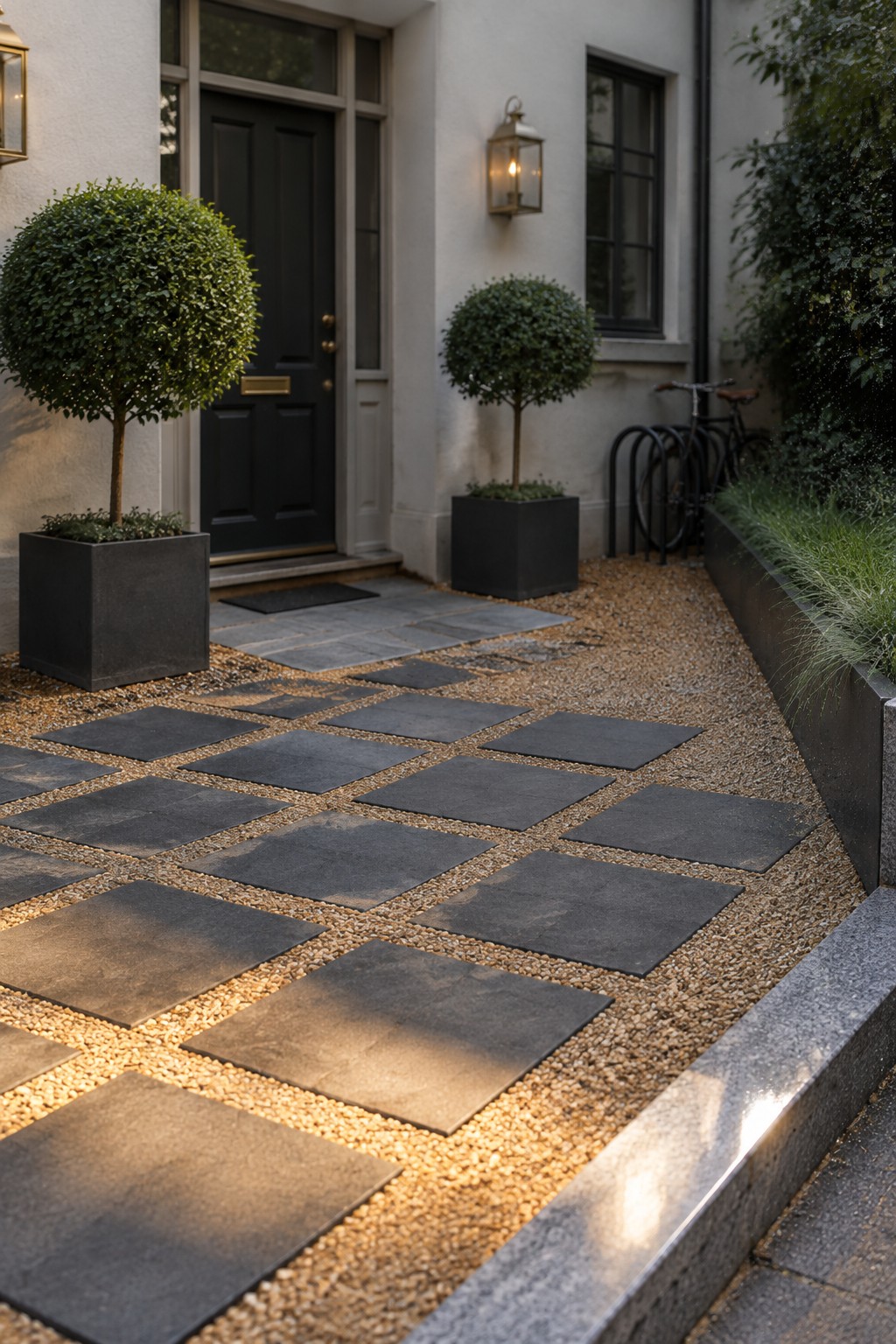
Setting square pavers into a gravel base gives a small driveway or path a tidy look without making the surface feel too solid. The gravel fills the spaces between the blocks, which helps with drainage and keeps the whole thing from shifting much over time.
This approach suits narrow front entries or homes where you want something practical but not completely paved over. The dark blocks stand out against the lighter gravel and only need occasional raking to stay neat.
Frequently Asked Questions
Q: How do I stop the gravel from spreading into my yard over time? A: Lay a solid border around the edges using the same blocks or some landscape timber. This keeps everything contained without much extra work. Rake the surface every few months to even things out.
Q: What happens to drainage when you combine these two materials? A: The gravel sections let water soak through quickly so puddles do not form. Place the blocks in a way that guides runoff toward the gravel areas. This setup works well even in wet seasons.
Q: Do the blocks need a special base under the gravel mix? A: Dig down and add a layer of crushed stone first for stability. Then set the blocks and fill gaps with gravel.
