


When I look at homes the driveway is usually the first surface that shapes how the whole front reads from the street.
For smaller driveways the material choice affects both drainage and how the entry area sits against the house.
That balance matters more than it seems.
I keep coming back to pervious pavers because they handle runoff without forcing a complete redesign of the entry layout.
In my own yard I would start by checking how these patterns hold up to daily use before making any final decisions.
Permeable Pavers With Gravel Joints

This setup uses large square pavers spaced apart and filled with gravel so rainwater drains straight through instead of running off the surface. It keeps the driveway looking structured while handling water on the spot, which matters more now that many towns want less runoff from hard surfaces.
The approach suits small modern driveways where you want something durable but not completely solid. Keep the gravel topped up every couple of years and choose a base layer that drains well underneath. It pairs cleanly with simple house exteriors and low-water landscaping.
Permeable Brick Pavers For Small Driveways

Brick pavers with open joints let rainwater drain straight through instead of running off into the street. The gaps between the bricks allow moisture to reach the soil below, which cuts down on puddling and helps manage runoff in a simple way. This setup works especially well on narrow driveways where every bit of space counts.
Homeowners like this approach because it combines a classic brick look with better drainage. It suits older homes or smaller lots that already have some garden space along the edges. Just make sure the base layer underneath is prepared for good infiltration, and keep an eye on weeds in the joints over time.
Pavers With Gravel Joints For Permeable Driveways
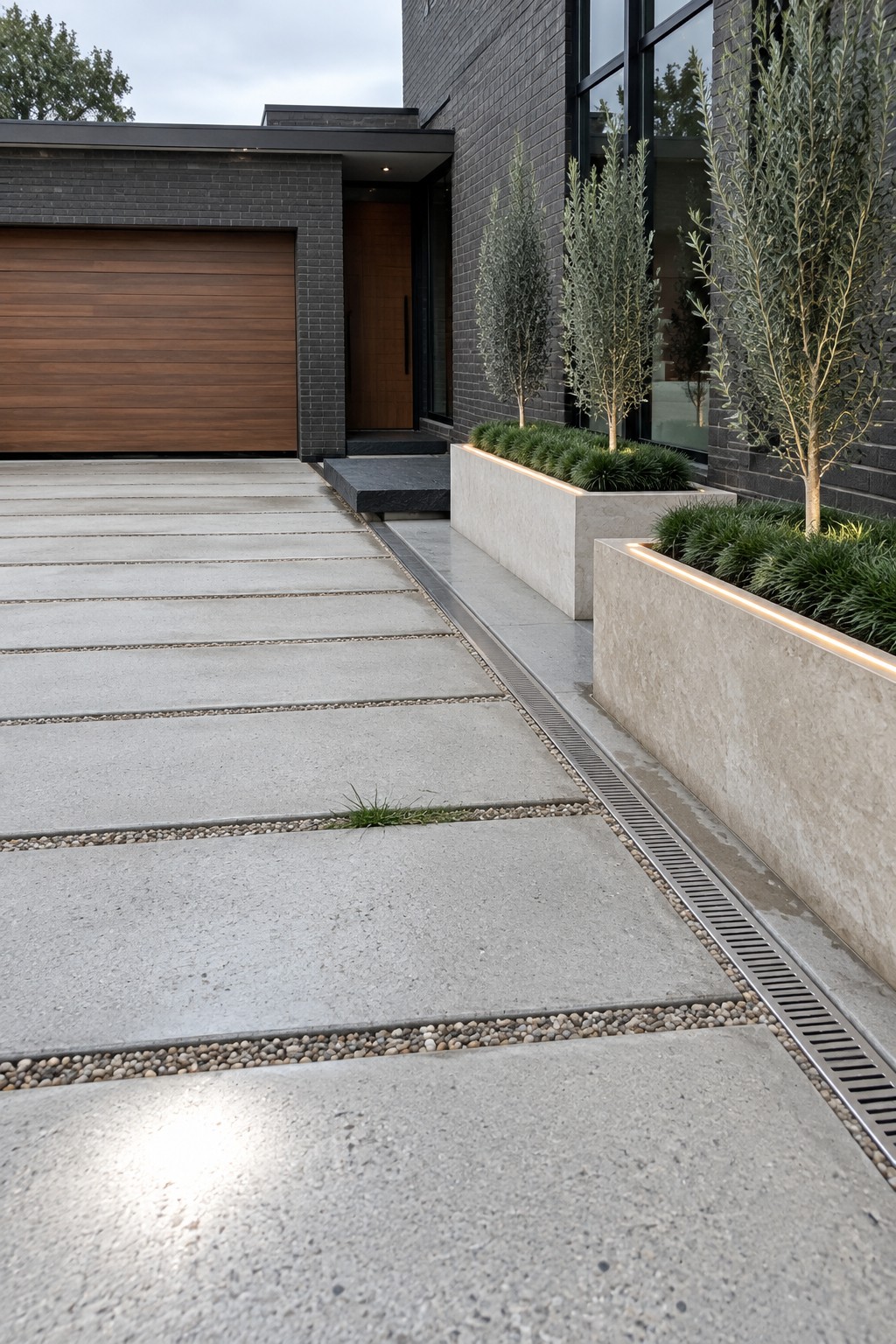
This setup lets water drain through the surface instead of running off into the street. The gaps between the large concrete slabs are filled with gravel, which slows down runoff and helps reduce puddling during heavy rain.
It suits smaller driveways on modern homes where a clean, low-maintenance look matters. Make sure the base is compacted well before laying the pavers, and add a linear drain along one edge if your area sees frequent storms.
Pervious Pavers With Moss In The Joints

Pervious pavers work well because the gaps let water drain straight through instead of pooling or running off. Moss in those joints adds a soft look while still keeping the surface stable and functional for light foot traffic or occasional vehicle use.
This approach suits small driveways or entry paths on homes with garden landscaping. It pairs best with gravel borders and simple edging so the whole area stays permeable and easy to maintain over time.
Permeable Brick Pavers With A Drainage Grate

Many homeowners like permeable brick pavers for small driveways because they reduce runoff without needing a big concrete slab. The gaps between the bricks let some water drain straight down, and a metal grate running down the middle catches the rest and moves it away from the house.
This setup works best on narrow entries or homes where the driveway sits close to the foundation. It suits older properties or places that get sudden downpours, but the base needs to be dug and leveled well so the pavers stay even over time.
Add Plants Between Your Driveway Pavers

Pervious pavers with room for plants cut down on runoff and give the surface a softer look. The gaps let rainwater soak through instead of pooling or rushing toward the street, which matters on smaller driveways where every square foot counts. This setup also breaks up the hard expanse so the whole front feels less like a parking lot.
It works best on homes with a modern or simple exterior where the pavers can sit low and level. Keep the plants low-growing and drought tolerant so they do not get crushed by tires or need constant trimming. Just make sure the base stays stable so the pavers do not shift over time.
Fill Paver Gaps With Grass And Groundcover

This style of path uses large stone pavers set with deliberate gaps so grass and low plants can grow between them. The open joints let rainwater soak into the ground instead of running off, which helps on small driveways or side paths where solid pavement would create drainage problems.
It works best on homes with a casual or cottage style where a fully paved surface would feel too heavy. Space the pavers far enough apart for mower wheels or string trimmers to pass through, and choose tough, low-growing plants that can handle some foot traffic.
Gravel Creates A Simple Pervious Driveway

Gravel stands out as a practical choice for small driveways because it lets rainwater soak straight through instead of pooling or running off. This keeps the surface drier after storms and helps reduce the load on local drainage systems without needing special pavers or complex installation.
It works best on narrow paths or short driveways where traffic stays light. Stone edging along the sides holds the gravel in place over time, and the look suits homes with gardens or a more relaxed setting. Just make sure the base is properly prepared so it does not shift too much with regular use.
Pavers With Grass Between Them

Large stone slabs separated by strips of grass create a path that lets water soak straight into the ground instead of running off. This simple layout keeps the surface permeable while still giving you a solid place to walk or drive.
It suits small driveways and side entries on homes where you want something low-key and easy to maintain. Choose a tough grass variety, set the pavers on a proper gravel base, and keep the strips narrow enough that tires do not sink.
Permeable Pavers With Gravel Joints

Many homeowners are turning to large concrete pavers set with gravel between them. The gaps let water drain straight through instead of running off the surface, which helps reduce puddling and keeps the ground drier over time.
This setup suits small driveways or entry paths on homes where you want something sturdy but still permeable. Keep the gravel clean and the base well compacted so it stays level and continues to drain properly through the seasons.
Grid Pavers Create a Permeable Driveway Surface

This setup uses a simple grid of black pavers that hold both grass and gravel in place. It handles rainwater well because the open structure lets water soak through instead of running off, and the grass sections add a bit of green without needing a full lawn.
It suits small driveways or side paths on homes where space is tight. Keep the grid pattern consistent and choose low-growing grass that can handle some foot traffic. Avoid overloading the edges with heavy vehicles if the base is not reinforced.
Permeable Pavers That Handle Rainwater

Many small driveways end up sending water straight toward the house or the street. Permeable pavers change that by letting rain soak through the surface instead of running off. The textured sections in this driveway show how the material can still look solid while working with the ground underneath.
This approach suits homes with limited space and heavy rainfall. It works best when the pavers sit next to planting beds that can absorb extra moisture. Just check that the base layer is deep enough and the joints stay clear so water keeps moving through over time.
Let Grass Grow Between The Pavers

Spacing pavers apart lets the surrounding grass and wildflowers keep growing right through the path. This keeps the surface permeable so water drains straight down instead of pooling or running toward the house.
The approach suits small driveways on properties with an existing meadow or casual lawn. Just set the pavers level, leave enough room between them for mower blades or foot traffic, and choose plants that can handle occasional stepping.
Mix Concrete Pavers With Gravel

This setup shows how concrete pavers and gravel can work together on a small driveway or entry path. The pavers give a solid surface for cars while the gravel spaces let rainwater soak in instead of running off. It keeps the area looking clean without needing a full solid slab.
The approach works well on narrow driveways where you want something low maintenance and practical. Just make sure the gravel layer underneath is deep enough for good drainage and that the pavers sit level. It suits homes that already use simple hardscaping and want to avoid extra paving costs.
Plant a Strip of Greenery Down the Middle of the Driveway
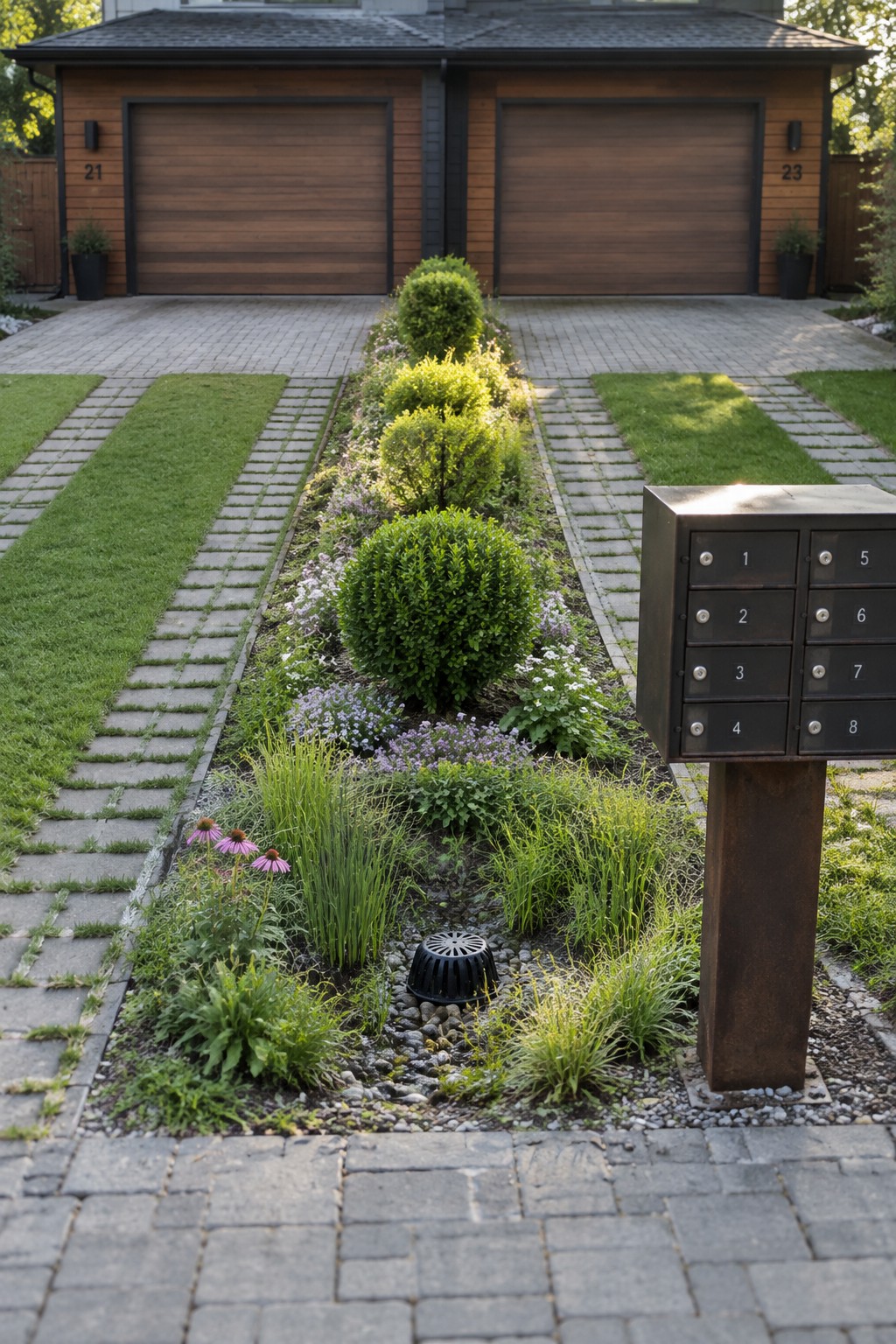
A central planted strip breaks up a long stretch of pavement and lets more water soak into the ground instead of running off. It also gives you a place to add low shrubs, grasses, and flowers without taking up extra yard space on either side.
This layout works best on straight, narrow driveways where the two tire tracks can sit on pavers and the middle stays open for planting. Keep the bed narrow enough for car doors to open and choose tough, low-growing plants that can handle a little shade from the cars.
Permeable Pavers With Built In Drainage

Permeable pavers let rainwater soak through instead of running off into the street. This setup works well on small driveways or entry paths where space is tight and you still need good water management. The grid style shown here handles light traffic without looking industrial.
Place them over a gravel base so water can drain properly. Add a narrow channel drain along one edge if your area gets heavy rain. This approach suits homes with modest front yards or side entries where a full concrete slab would feel too heavy.
Frequently Asked Questions
Q: Can these pavers hold up under daily car traffic without sinking over time? A: You build a solid base of compacted gravel first so the pavers stay stable. Most pervious options handle regular vehicles fine once installed right. Check the load rating on the ones you pick.
Q: How do I keep weeds from taking over the gaps between pavers? A: Sweep a polymeric sand into the joints right after laying them. It hardens enough to block most growth while still letting water through. Pull any stragglers by hand before they spread.
Q: What if my yard slopes and water already pools near the house? A: Grade the base slightly away from the foundation during install. The pavers then direct runoff into the ground instead of toward your walls. Test the slope with a hose before you finish the edges.
