


When I look at homes on smaller lots the driveway often ends up dominating the front view more than I expect. That can change how the whole house reads from the street in ways that go beyond just parking. Materials matter here. Some layouts make the entry feel more open even when space is tight and I have seen this work well in practice. I would test a couple of these approaches on my own place before committing to anything permanent.
Spaced Pavers With Grass Infill

Many small lots benefit from breaking up the driveway surface instead of pouring one solid slab. Concrete pavers set with grass between them cut down on the amount of hardscape while still giving tires a solid place to land. The strips of grass also help with drainage and keep the front yard from feeling too paved over.
This approach suits narrow driveways where a full concrete width would dominate the space. It works best when the pavers are thick enough for regular car use and the gaps are wide enough for whatever grass or ground cover you choose. Just check that the base stays firm so the pavers do not shift over time.
Run a Grass Strip Down Narrow Paving

A thin band of grass running between stone pavers gives a small driveway or walkway a softer look without eating into usable space. The green strip breaks up the hard surface and adds a bit of life to an otherwise tight entry.
This works best on lots where the path has to stay narrow but you still want some planting. Keep the grass tough and low so it handles foot traffic, and use simple edging to keep the gravel in place on either side.
Cobblestone Pavers for Narrow Driveways
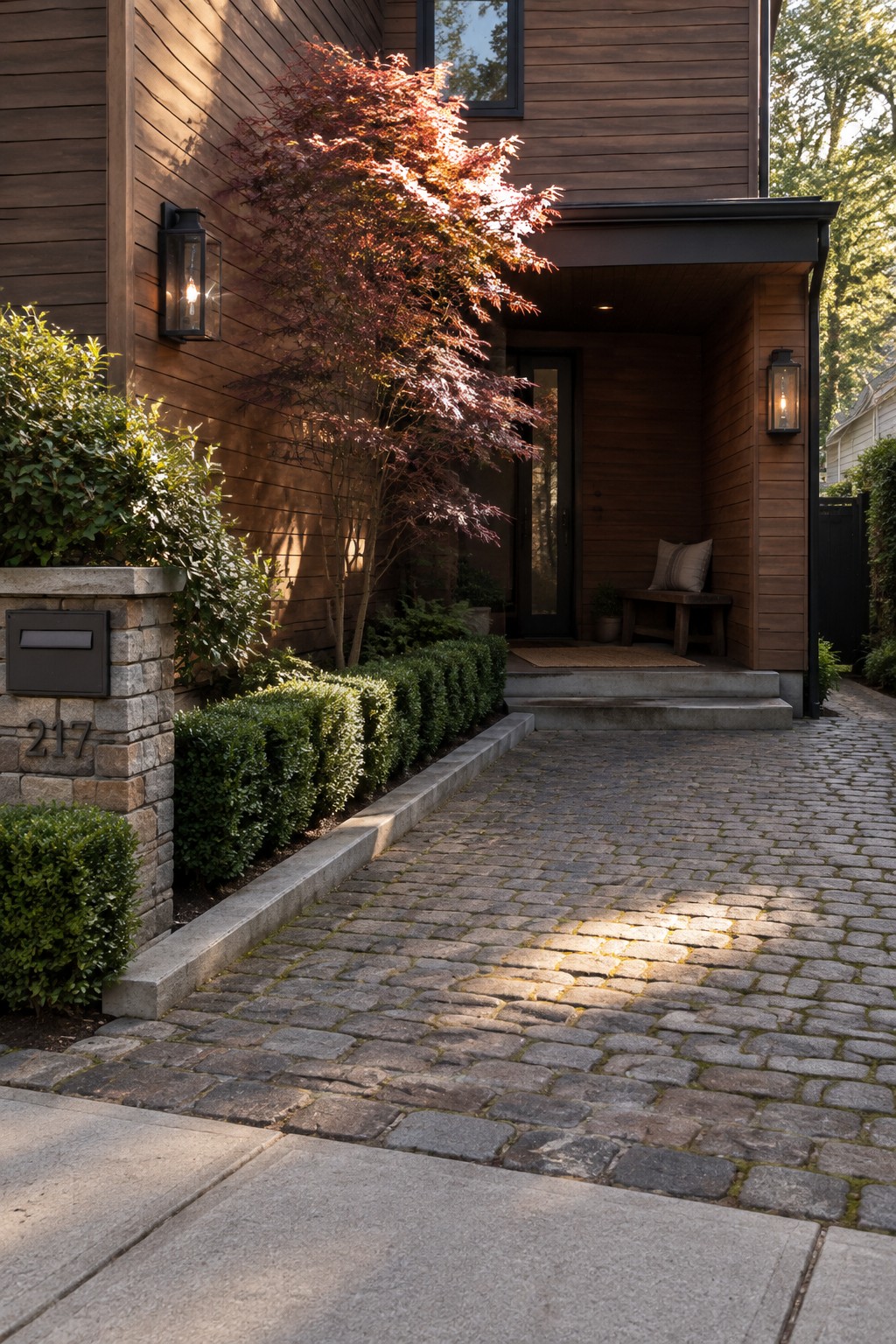
A cobblestone driveway gives a small front yard a finished look without spreading out too far. The textured surface breaks up the expanse of pavement and helps the drive feel more like part of the landscape than a separate slab of concrete.
This works especially well on lots where the drive also serves as the main walking path. Keep the width tight, use a simple border of low shrubs to soften the edges, and make sure the pavers match the scale of the house so the whole entry stays balanced.
Use Grass Pavers for a Narrow Entry Path

Grass pavers work well when space is tight because they let you keep a solid walking surface while still leaving room for green. The grid pattern breaks up the hardscape so the path does not feel like a wide slab of concrete, and the grass softens the look without losing function.
This approach suits small front yards or side entries where a full driveway would crowd the house. Keep the pavers level with the surrounding gravel so water drains through and mowing stays simple. It works best on fairly flat ground and in climates where the grass can handle occasional foot traffic.
Wood Planks Over Gravel Make An Easy Entry Path
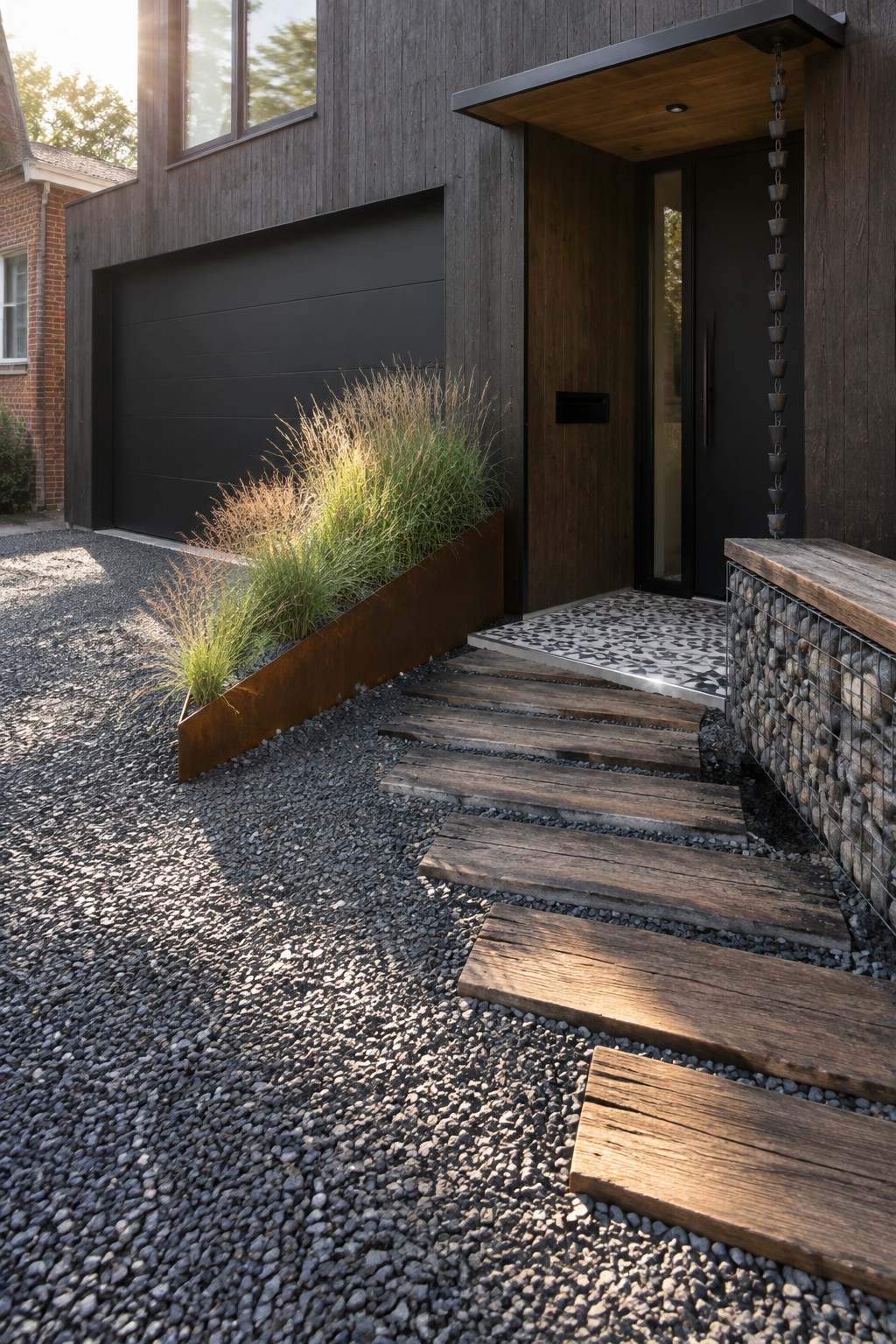
Many small lots do not have room for a full paved driveway, so some homeowners use wood planks set into gravel to mark the way to the door. This keeps the surface simple, drains well, and avoids the look of a solid slab of concrete taking up most of the front.
The approach works best on short entries or gentle slopes where you need a clear walking line but do not park heavy vehicles every day. Treat the wood for weather and set the planks level with the gravel so they stay put and do not shift underfoot.
Wide Pavers With Gravel Joints

Large concrete slabs set with narrow gravel lines between them give a driveway a clean, orderly look without turning the whole surface into one solid mass. The gaps break up the visual weight, which helps a small front area feel less cramped while still providing a solid place to drive and park.
This layout suits modern homes on tight lots where a full concrete pour can feel too heavy. Keep the pavers big and the gravel strips narrow so the surface stays easy to maintain and the overall approach stays simple rather than busy.
Stone Slabs In Gravel Make A Slim Entry Path

Many small lot homes do better without a full driveway. A path made of large stone slabs set into gravel takes up far less room and still gives a clear way to the door. The loose gravel helps with drainage and keeps the whole approach from feeling too solid or heavy.
This works well on homes where street parking is easy or where you only need space for one car. Keep the slabs spaced a little uneven so the path feels natural rather than rigid. Plant low shrubs and ferns along the sides to hold the gravel in place and add some softness without crowding the walkway.
Linear Drains Keep Narrow Paths Usable
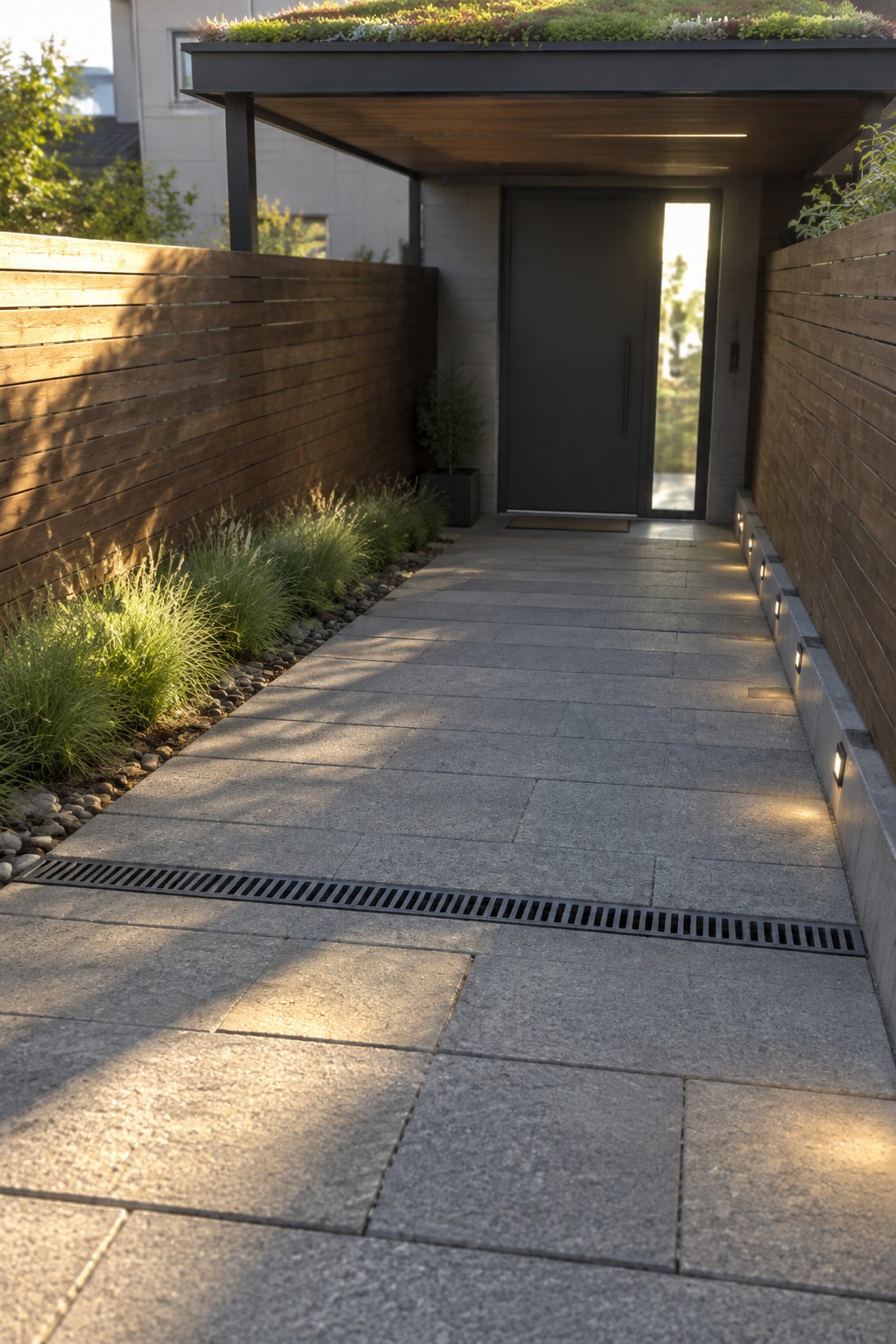
A linear drain set into the paving lets water move off the surface without forcing extra width or awkward slopes. In small lots this keeps the entry flat and easy to walk or drive across while still handling runoff from rain.
It works best on tight front paths or slim driveways where every inch counts. Place it near the lowest point so water flows straight into the grate, and pair it with simple side plantings to soften the edges without crowding the space.
Use A Striped Path For Small Lots
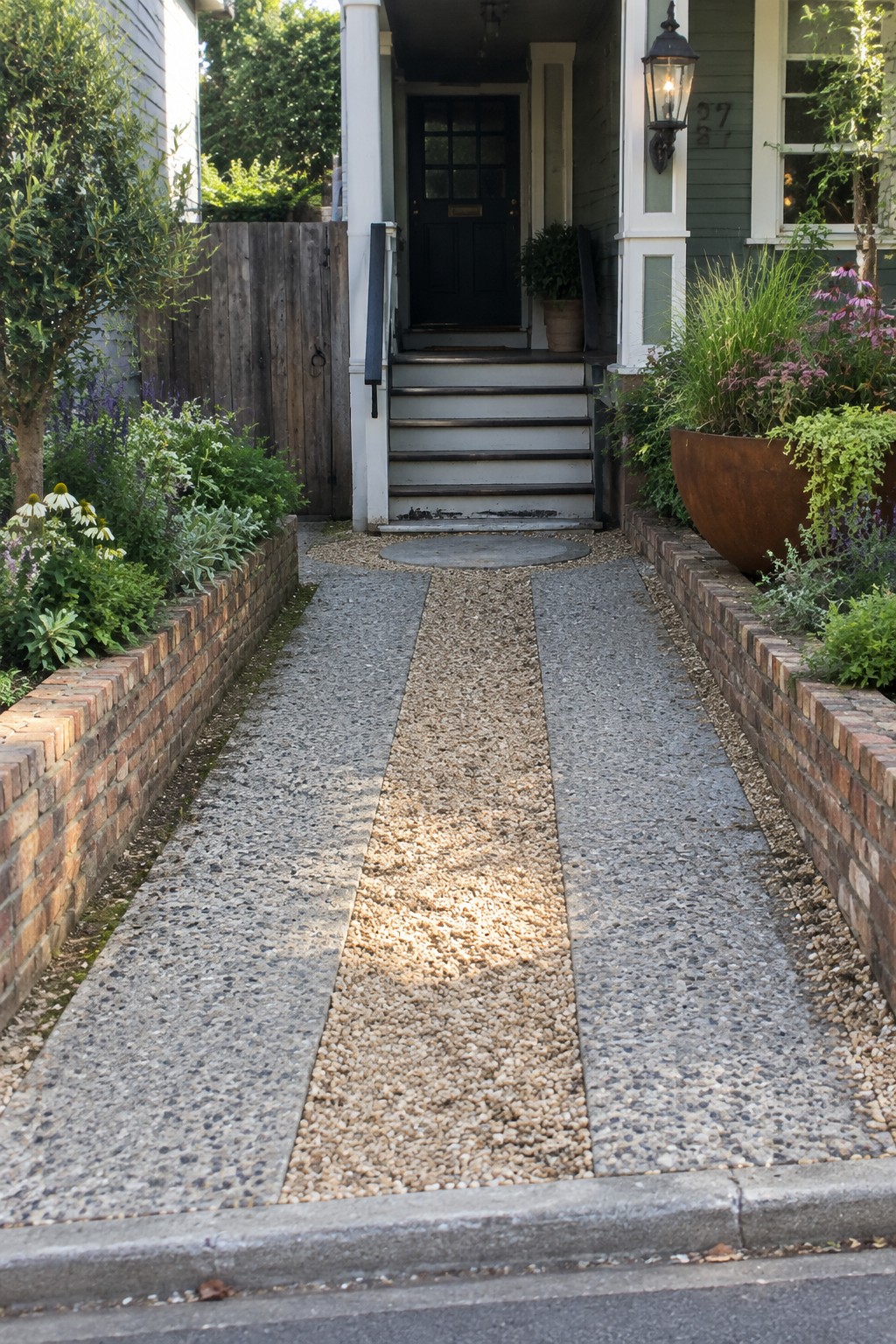
A striped path gives you a practical way to handle access on a tight lot without pouring a full driveway. The mix of materials breaks up the surface visually so the space feels less cramped and more intentional. It also keeps costs down and leaves room for planting beds along the edges.
This approach works best on narrow frontages where a solid slab would dominate the view. Keep the center strip in gravel for drainage and texture, then flank it with concrete for solid footing. Brick or low edging helps contain everything and ties the path to the house without adding width.
Patterned Tiles for Narrow Entries

Patterned tiles work well in tight entry paths because they add visual interest without needing extra width. The repeating design makes a small space feel more finished and helps the path stand out against plain brick or concrete walls.
This approach suits older homes on small lots where the walkway runs close to the house. Use durable outdoor tiles in a muted mix of colors and keep plantings low along the edges so the pattern stays visible.
Line Narrow Paths with Planting Strips

This setup keeps the walkway clear and easy to use while slipping in greenery on both sides. The beds stay slim so they fit a small lot without crowding the path or the house.
It suits homes where the front approach is tight. Stick to low grasses and shrubs that stay neat, and add simple bollard lights if you want evening visibility without extra fixtures taking up room.
Paver Paths With Gravel Borders

Large concrete pavers set with gravel between them give you a solid walking surface that still drains well. This keeps the path from feeling too heavy in a tight side yard and avoids the need for a solid slab that would crowd the space even more.
The look works best on small lots where you need access along the house but do not want to lose planting room. Keep the pavers big and the gravel strips narrow so the whole path stays easy to walk on and simple to maintain over time.
Narrow Concrete Strips With Grass Between

Many small lots look better when the driveway is broken into separate strips instead of one solid slab. This keeps the paved area smaller, leaves room for planting, and still gives tires a firm place to land.
The strips work best on flat or gently sloped entries where cars do not need a wide turning radius. Fill the gaps with a tough groundcover that tolerates some shade and occasional traffic, and keep the strips at least as wide as your tires for easy driving.
Give the Driveway a Soft Curve

A gentle curve in the driveway helps a small lot feel less cramped. The bend softens the approach and gives you room to add planting beds along the edges without crowding the path.
This layout works well on narrow front yards where a straight line would feel too direct. Pavers hold the shape nicely and let the driveway blend into the surrounding garden instead of cutting through it.
Use a Planting Strip to Separate Walkway and Drive

A narrow bed of tall grasses works well when space is tight and you still need a clear walking path next to the main paved area. It gives the entry a soft edge without eating into room for cars or bikes, and the plants help keep the concrete from feeling too stark against the brick.
This setup suits small lots where the driveway doubles as a side yard. Keep the bed only a couple feet wide, choose low-water grasses that stay upright, and make sure the path stays wide enough for comfortable footing. Avoid anything too tall that might block the door or drop too much debris on the walk.
Frequently Asked Questions
Q: How do I stop weeds from taking over a gravel driveway on a small lot? A: Lay down landscape fabric before you spread the gravel and top it off with fresh stone once a year. This keeps most weeds down without constant pulling.
Q: What works best if I need to turn a car around in a tiny driveway? A: Shape the end into a gentle curve or add a small hammerhead turn. You gain room to maneuver without eating into the rest of the yard.
Q: Can I park on grass pavers without them sinking over time? A: Choose reinforced plastic or concrete units and compact the soil well before installing. They stay level under regular car weight once the base settles.
