

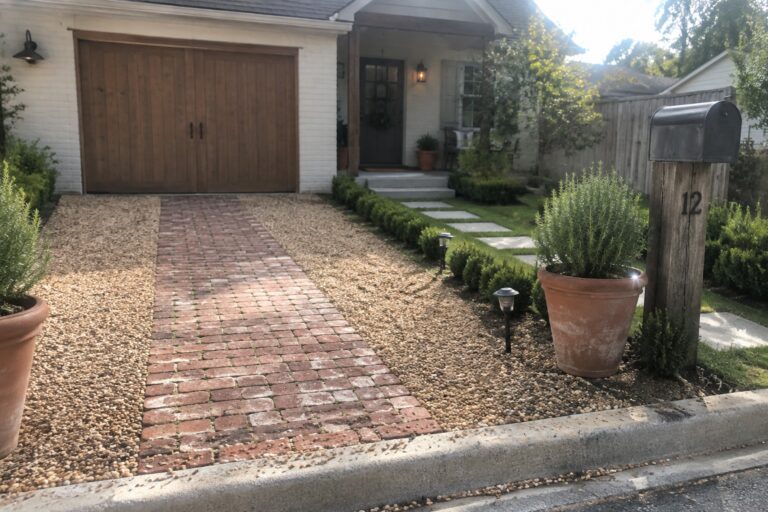
I have found that driveways often get overlooked until the surface starts to crack or the weeds take over the edges.
Paying attention to how water drains and where plants can take hold turns a plain strip into something that feels more settled with the rest of the property.
I always check drainage first.
Once that is settled the rest of the layout falls into place more easily and the plants have a better chance of staying healthy.
In the end it comes down to choosing materials that age well and fit the scale of a smaller space rather than trying to copy larger designs.
Mix Pavers With Gravel For Small Driveways
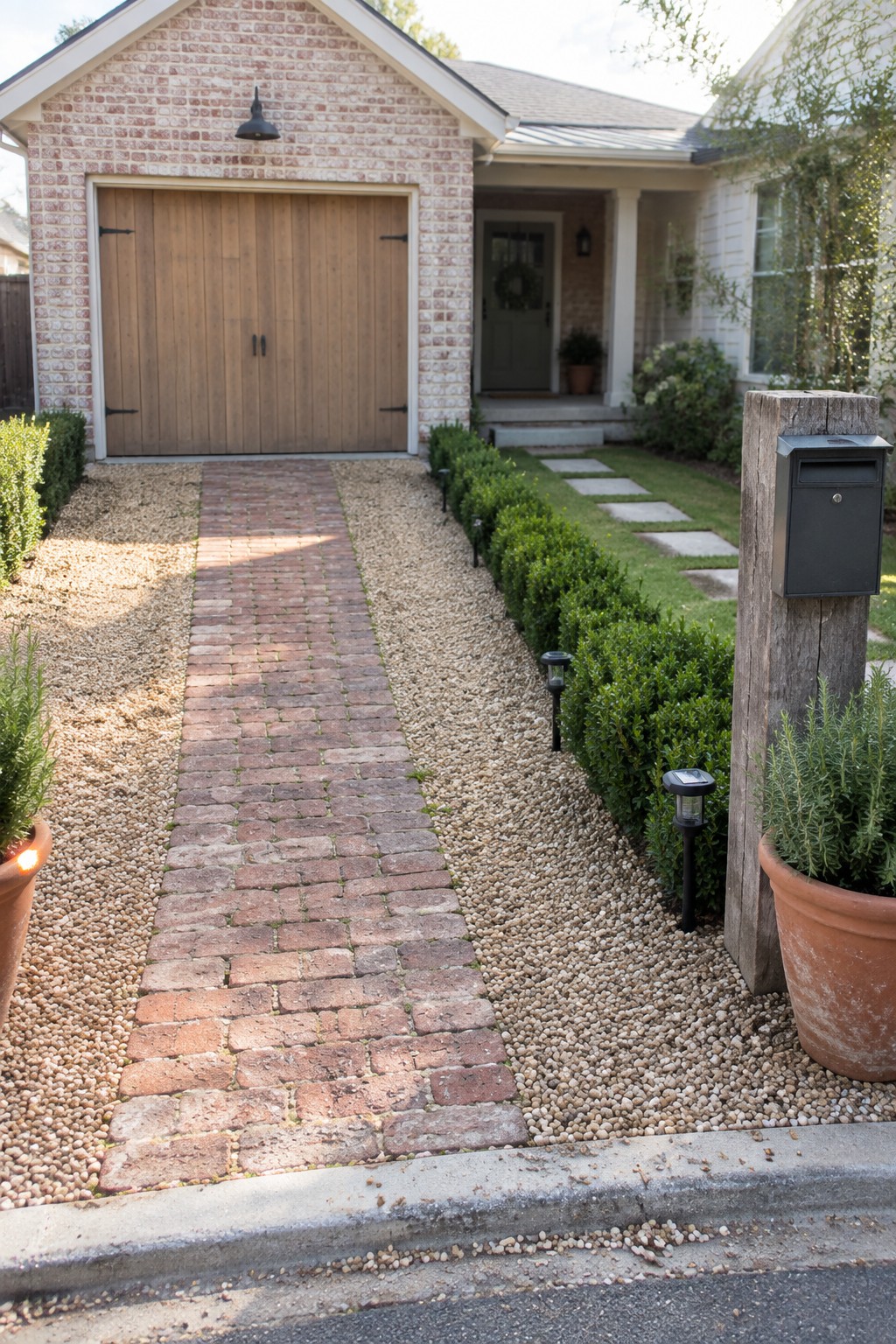
A central strip of brick pavers with gravel on the sides gives a small driveway structure without the cost of a full paved surface. The pavers create a clear path for cars while the gravel handles the rest and helps with drainage.
This setup works best on narrow lots or homes with limited front space. Keep the gravel in place with simple edging and choose a paver color that matches the house so the whole area feels pulled together.
Run a Grass Strip Down the Center
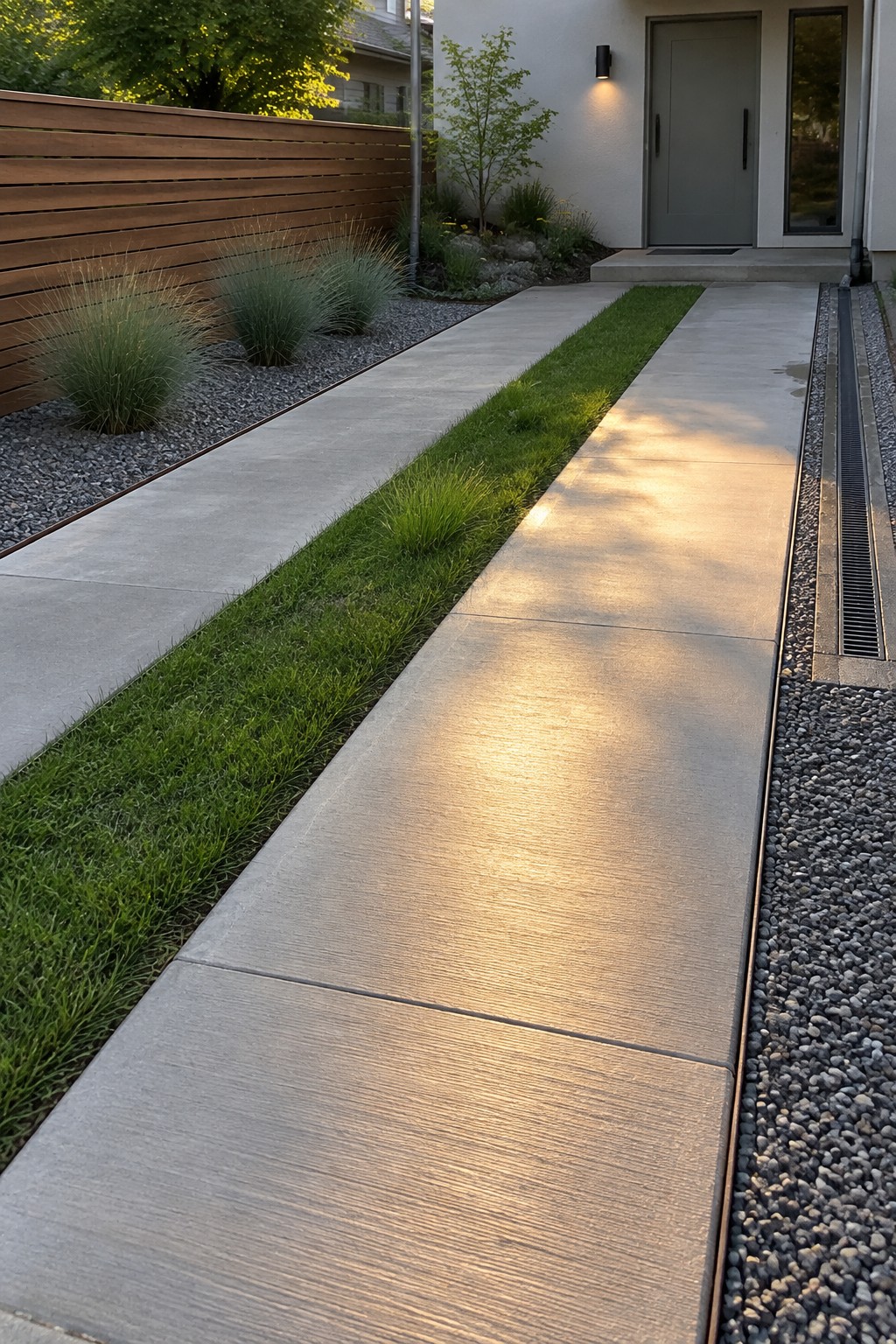
A grass strip set into the middle of a concrete path cuts down on paving costs while softening the look. It breaks up the hard surface and gives the eye something natural to follow along the length of the drive or walkway.
This works best on narrow side entries or small front drives where full-width concrete feels too wide and expensive. Keep the grass strip about a foot or two across so a mower can handle it easily, and use gravel or low plants along the edges to keep everything tidy.
Brick Paths With Timber Edging
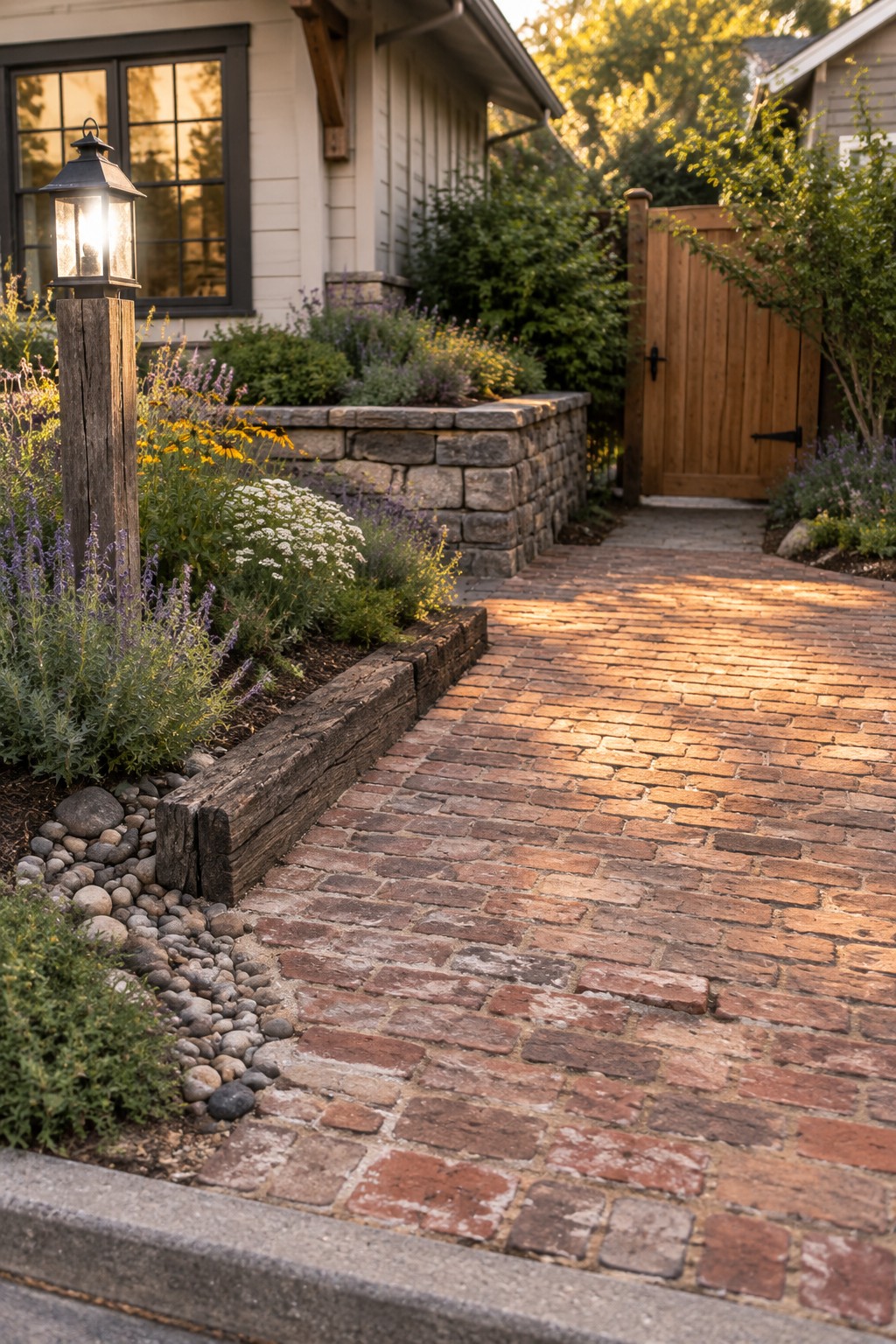
Brick paving paired with simple timber edging gives a small driveway a finished look without spending much. The wood border holds the bricks steady and creates a clean line between the path and the planting beds, which helps the whole front feel more organized.
This setup works best on narrow driveways or side entrances where full concrete would feel too heavy. Use salvaged bricks when possible and pressure-treated wood for the edging so it lasts. Keep the planting low and casual so the path stays the main feature.
Gravel Driveway With Planted Borders
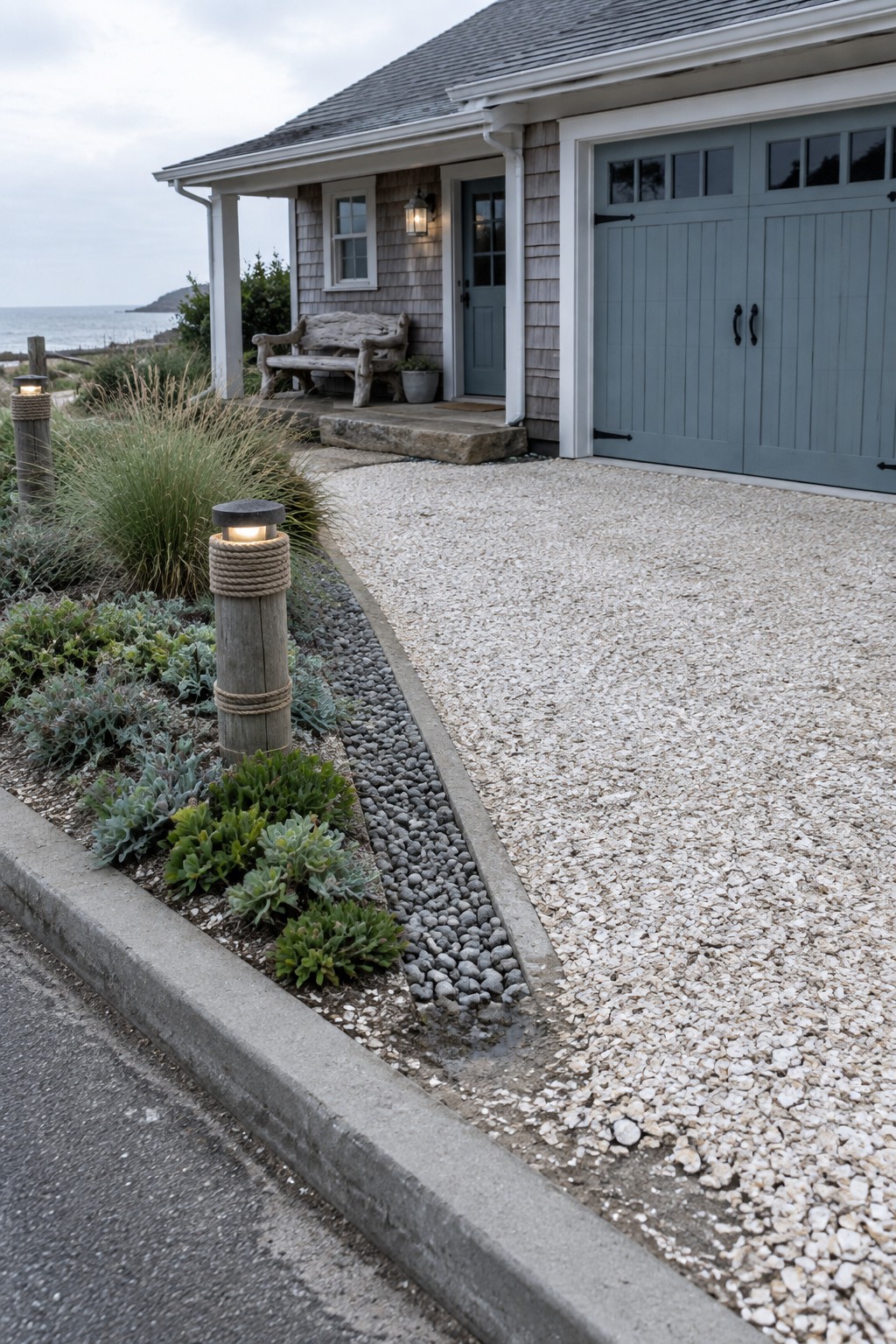
Gravel remains one of the simplest and least expensive surfaces for a small driveway. Adding a planted border along the edge helps keep the gravel in place while softening the look and cutting down on the amount of hard surface you need.
This setup works especially well on narrow lots or homes where the driveway sits close to the street. Stick with low, tough plants that handle dry conditions and occasional foot traffic. The border can be as narrow as a foot or two and still make a noticeable difference in how finished the whole area feels.
Grass Pavers Keep Small Driveways Simple
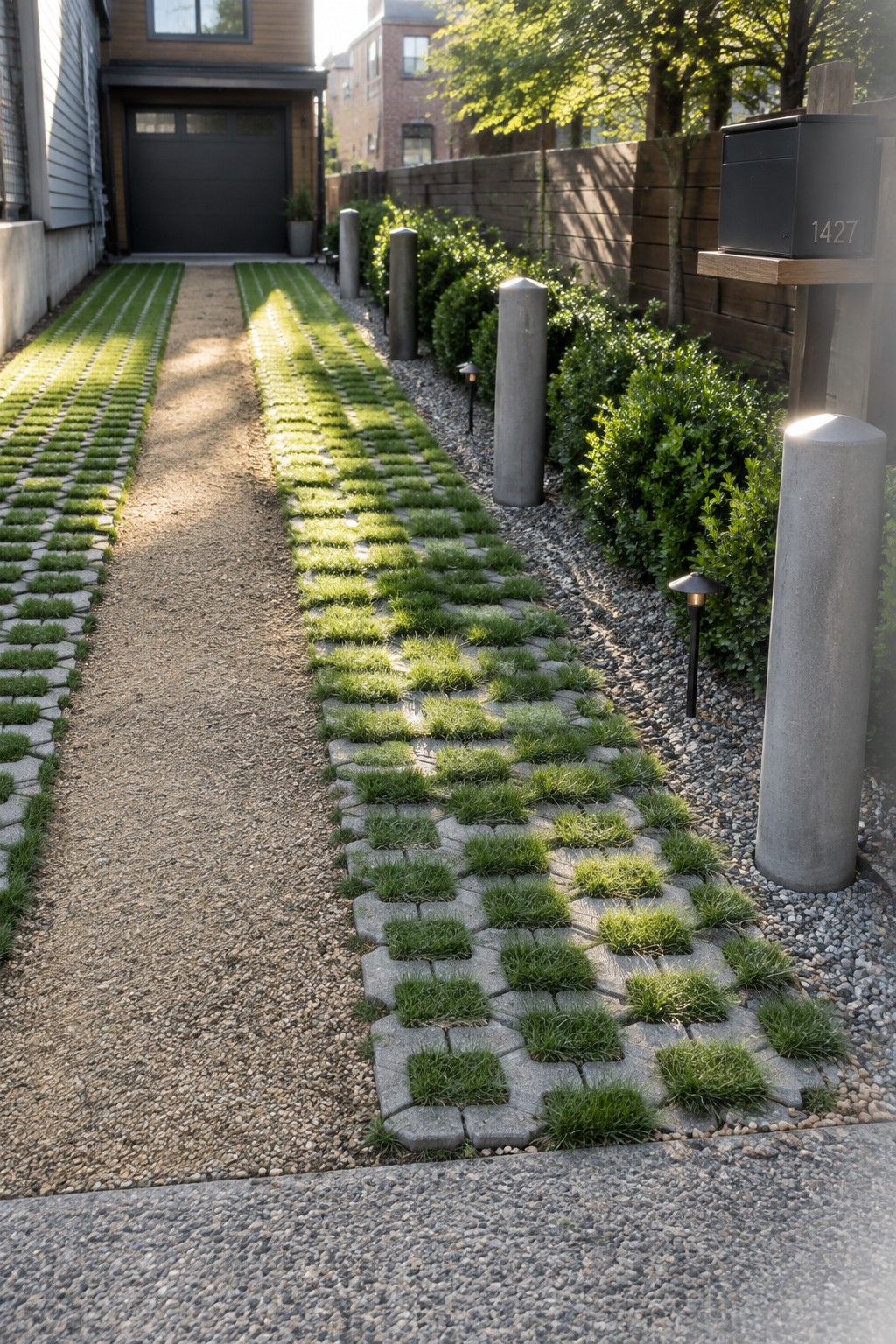
Grass pavers give a driveway a softer look without spending much on materials. The grid holds the grass steady so cars can drive over it, while the open spaces let water soak in instead of pooling on the surface.
This works best on narrow driveways or side entries where a full concrete slab feels too heavy. Prepare a solid gravel base first, then set the pavers level so the grass stays even and the surface does not shift.
Use Recycled Bottles as Driveway Edging
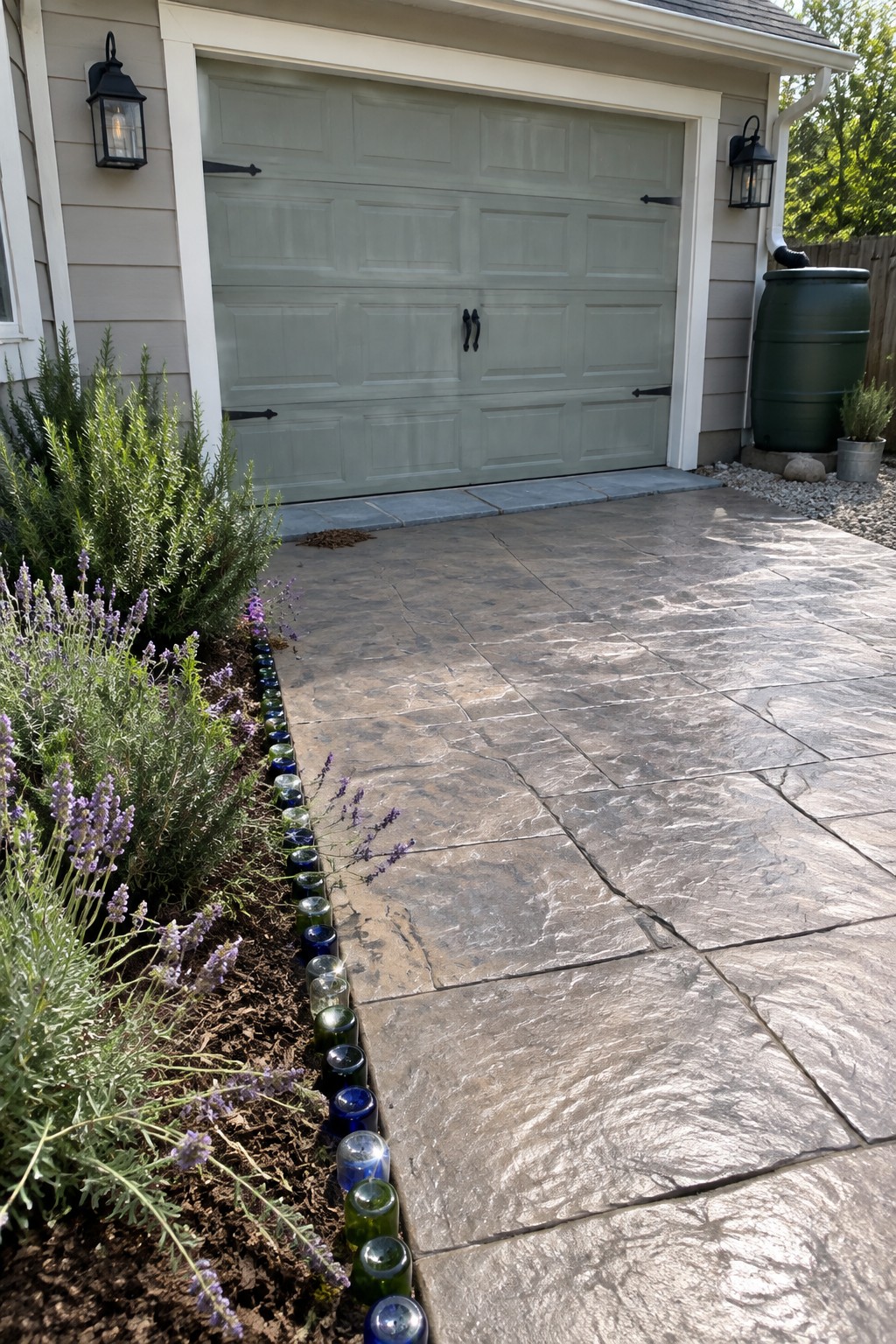
Lining the edge of a driveway with old glass bottles is a simple way to keep plants in place without spending much. The colored glass creates a clear line between the garden bed and the concrete, and it costs almost nothing if you collect bottles over time. This kind of edging works especially well on small driveways where you want something neat but not too formal.
It suits homes that already have low planting beds along the drive. Just bury the bottles neck down so they stand upright and stay stable. Make sure the row sits level so it does not catch on tires or look uneven after a season or two.
Gravel Driveways With Flower Borders
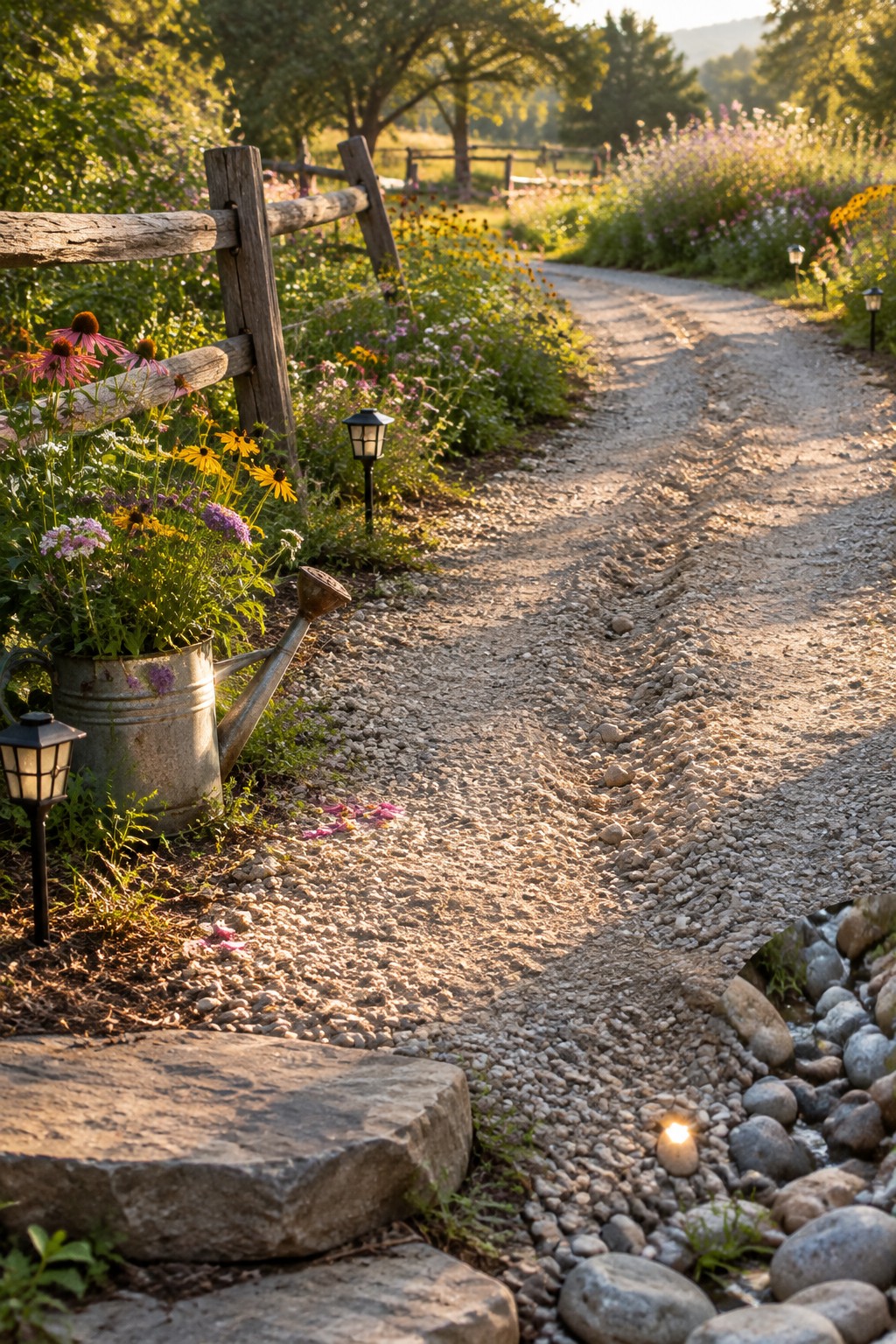
Gravel stays one of the easiest and cheapest surfaces for a small driveway. It drains well after rain and lets you add planting right up to the edge without much extra work.
This approach works best on homes with a bit of open ground and a relaxed style. Keep the beds simple with tough flowers that spread on their own, and use low lights along the sides so the path stays easy to follow at night.
Gravel Between Concrete Paths

This layout uses two narrow concrete strips with gravel filling the space between them. It reduces the amount of poured concrete required, keeps costs lower, and still gives a solid surface for driving and walking.
The approach works well on small or narrow driveways where a full slab would feel too heavy. Gravel also improves drainage and makes it simple to edge the whole thing with a raised bed or low plants without extra framing.
Metal Edging With Drought Tolerant Plants
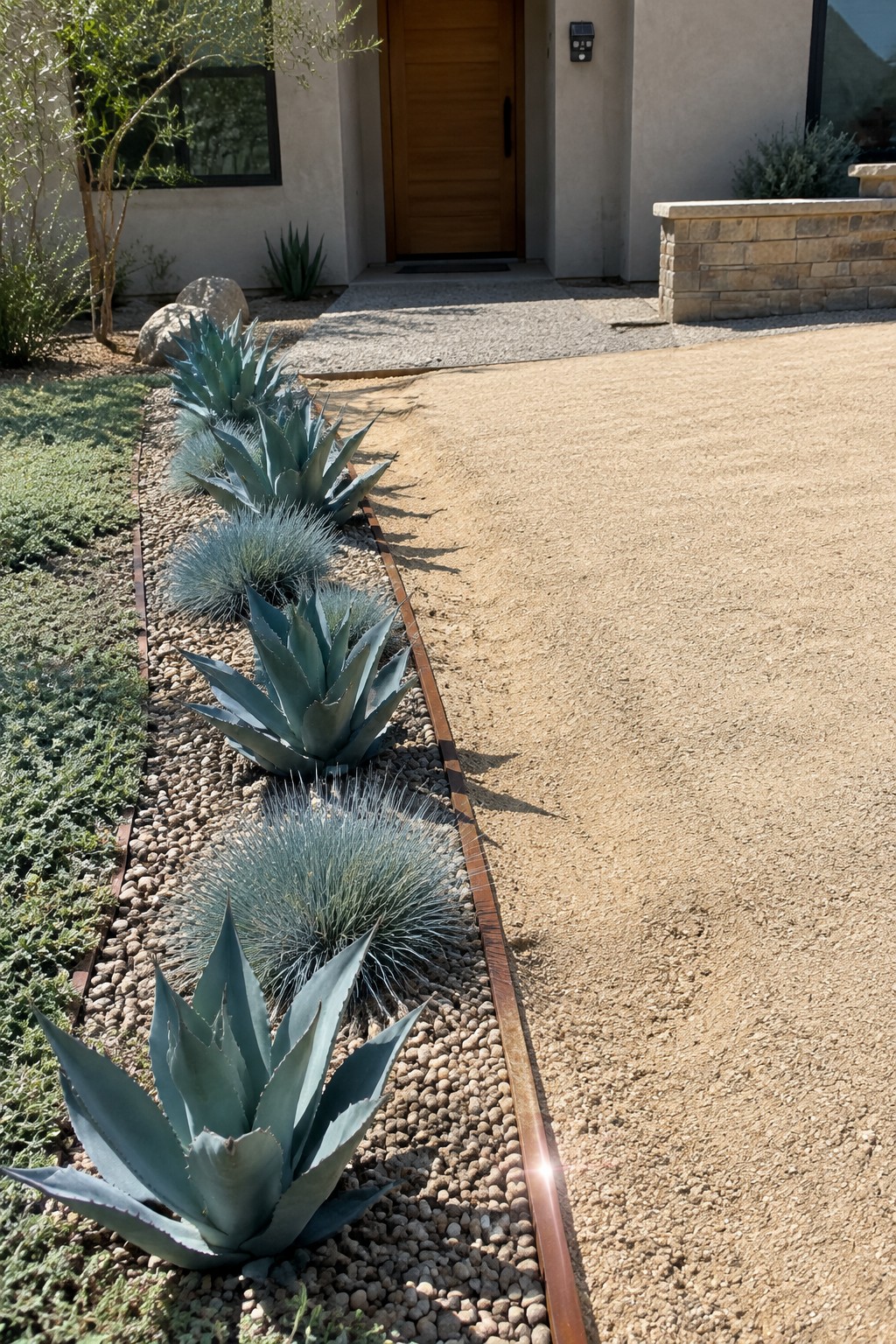
Metal edging gives a driveway border a clean stop without much cost or upkeep. It holds the gravel in place while letting the plants stay contained in a narrow strip, which keeps the whole edge looking intentional rather than messy.
This works best on smaller driveways or in drier regions where people want to cut back on watering and mowing. Set the edging first, add gravel, then space out a few larger agaves with smaller grasses in between for contrast.
Add a Grass Strip Through Brick Paving
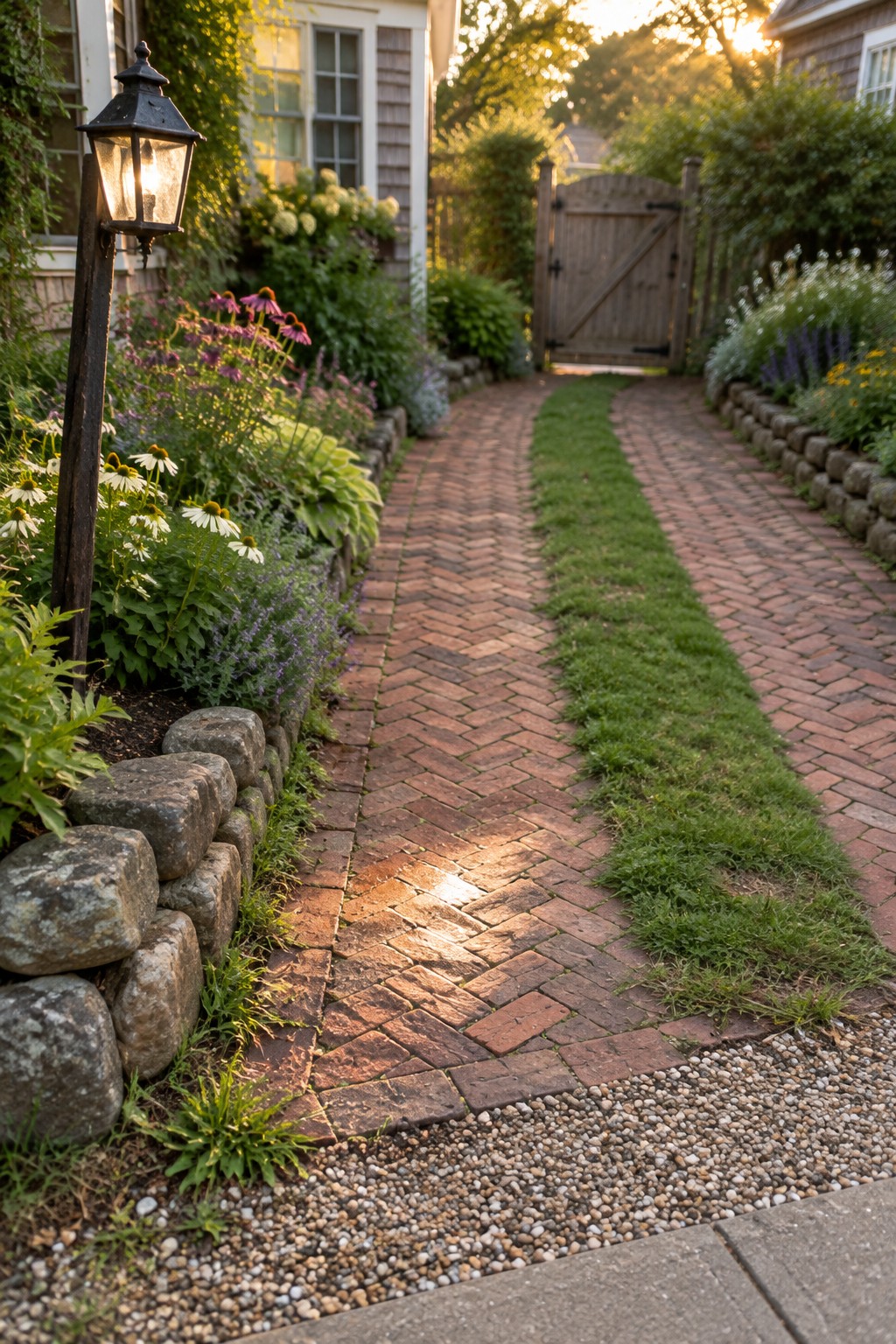
A grass strip running down the center of a brick path cuts the amount of hard surface you need to buy and install. It also softens the look and gives rainwater a place to soak in instead of running off.
This works best on narrow driveways or side paths where full-width paving is not required. Keep the grass strip narrow, use a simple edging to hold the lawn in place, and choose a tough grass that can handle occasional tires.
Gravel Paths With Solar Lights
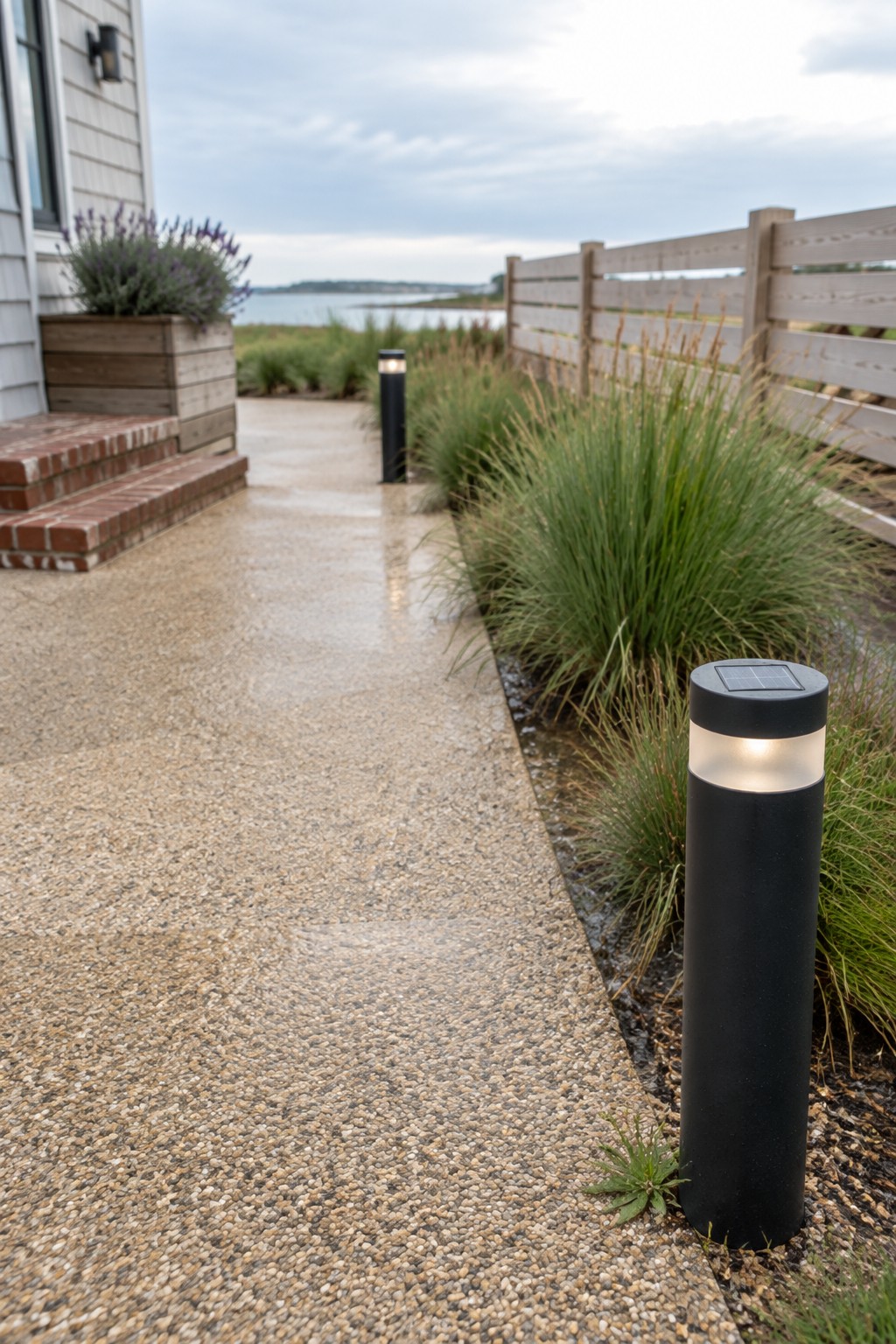
Gravel or pebble surfacing gives small driveways a simple, low-cost finish that drains well and stays easy to repair. Many people like it because the material feels less heavy than solid paving and works on narrow or oddly shaped entries.
Solar lights placed along the edge keep the path usable after dark without any wiring or high electric bills. Ornamental grasses planted beside the gravel help contain the surface and add a bit of softness that suits most suburban homes.
Pavers in a Grass Strip Offer an Affordable Path
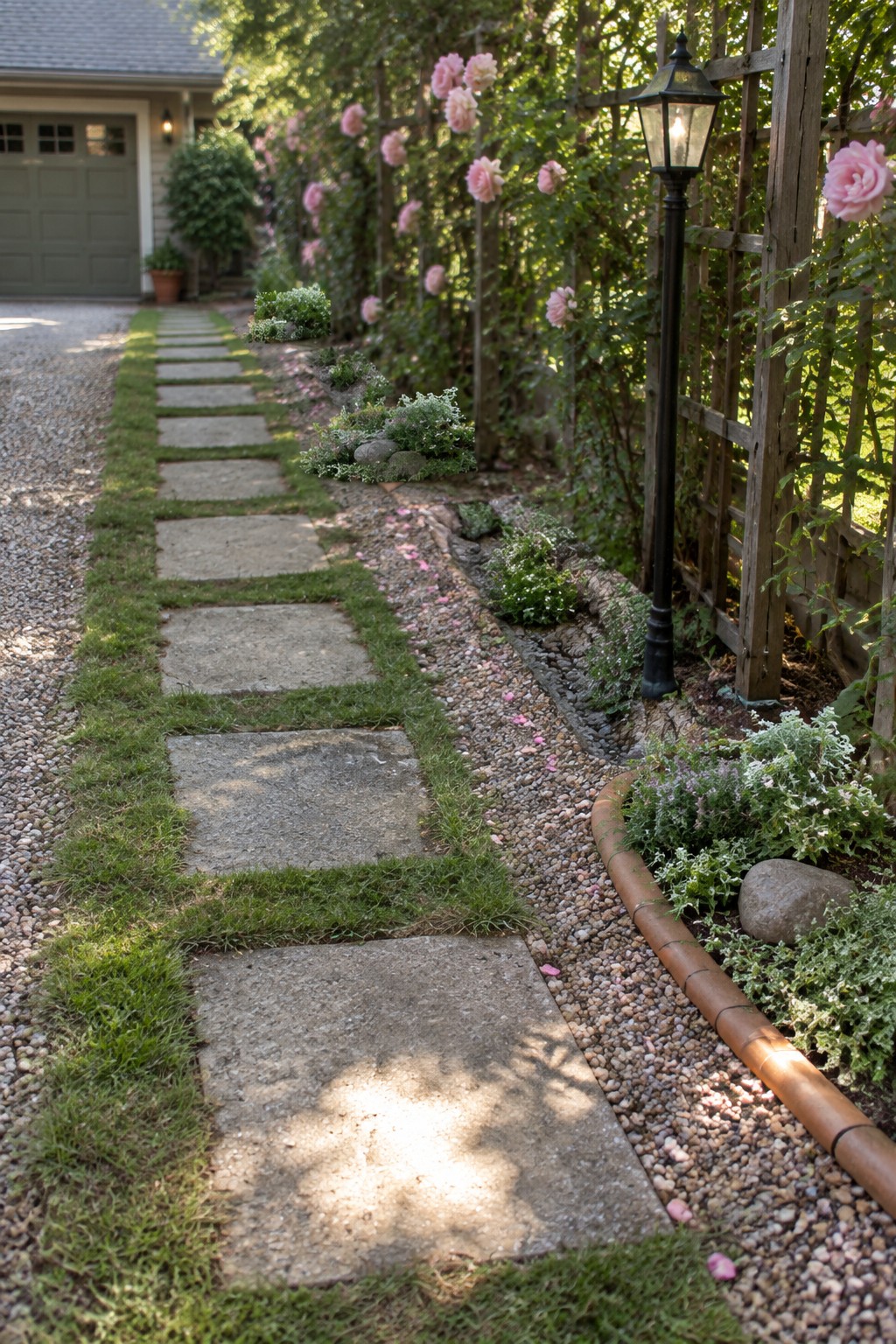
Many people set concrete pavers into a narrow band of grass instead of pouring a full driveway or covering everything in gravel. The mix keeps costs down and leaves a strip of green that feels softer than solid pavement.
This setup works best on narrow side access areas or small lots where you need a clear route but do not want to pave the entire width. Keep the pavers level, space them evenly for walking, and use gravel or low plants along the edge to hold the grass in place.
Gravel Grids Keep Small Driveways Tidy
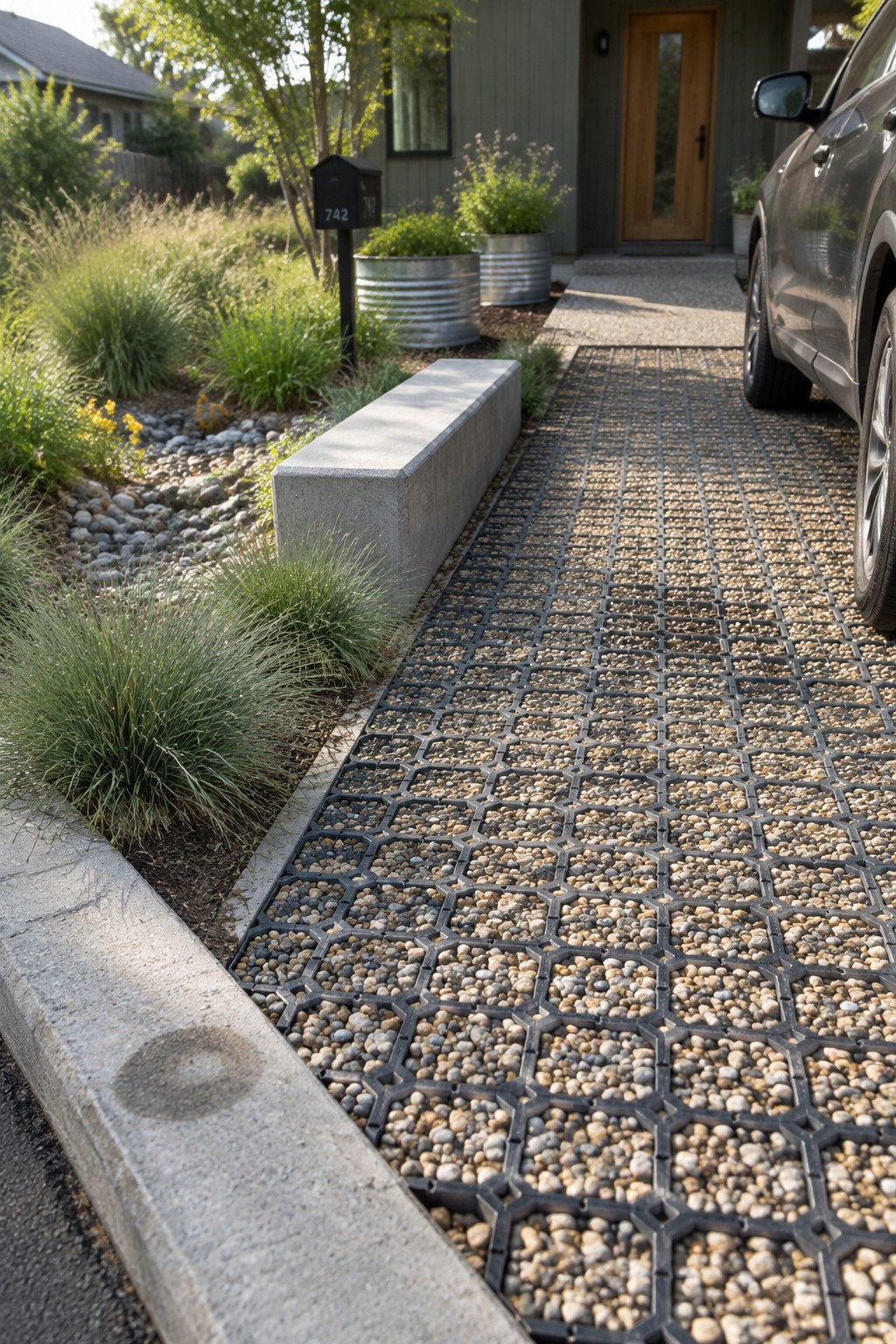
Gravel grids give you a firm surface that stays put even when cars drive over it every day. The plastic cells hold the stones in place so you avoid ruts and scattered gravel, which makes the whole driveway look cleaner with less upkeep.
This works best on narrow front driveways where you want something affordable but still practical. Put down a simple base, lay the grids, and fill them with whatever local gravel is cheapest. The result holds up in rain and looks intentional next to basic landscaping.
Gravel With Concrete Block Edging
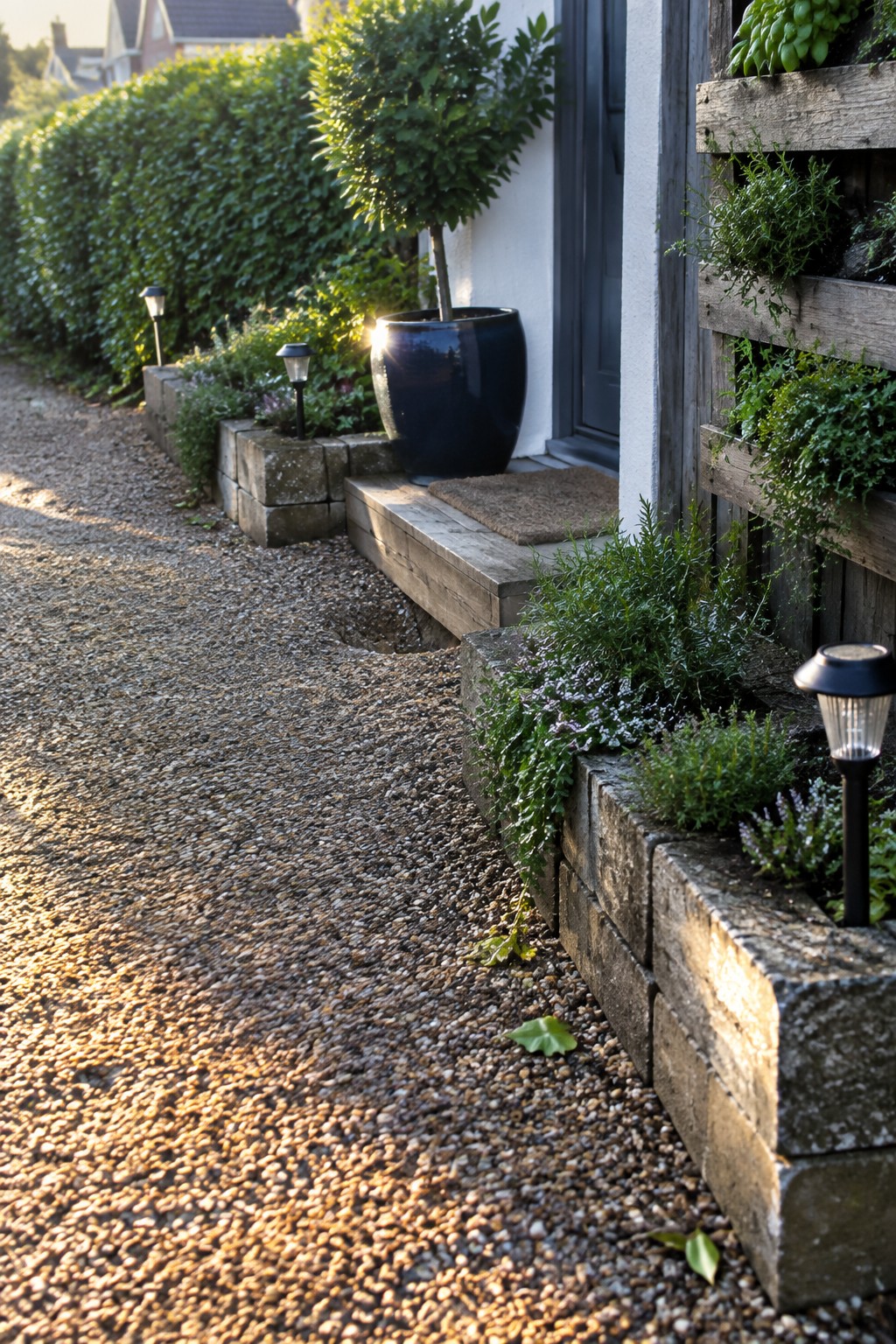
Gravel works well for small driveways because it drains easily and costs less than solid paving. Pairing it with concrete block borders gives the surface a clean edge while creating space for low plants right along the sides. The blocks keep the gravel in place and add a bit of height for planting without needing extra beds or walls.
This setup suits narrow side entries or short driveways where you want some greenery but do not have room for wide borders. Use the blocks to form simple raised sections, fill them with tough shrubs or ground cover, and keep the gravel layer thin. It stays practical in most climates and needs little upkeep beyond occasional weeding.
Edge Small Driveways With Succulent Planters
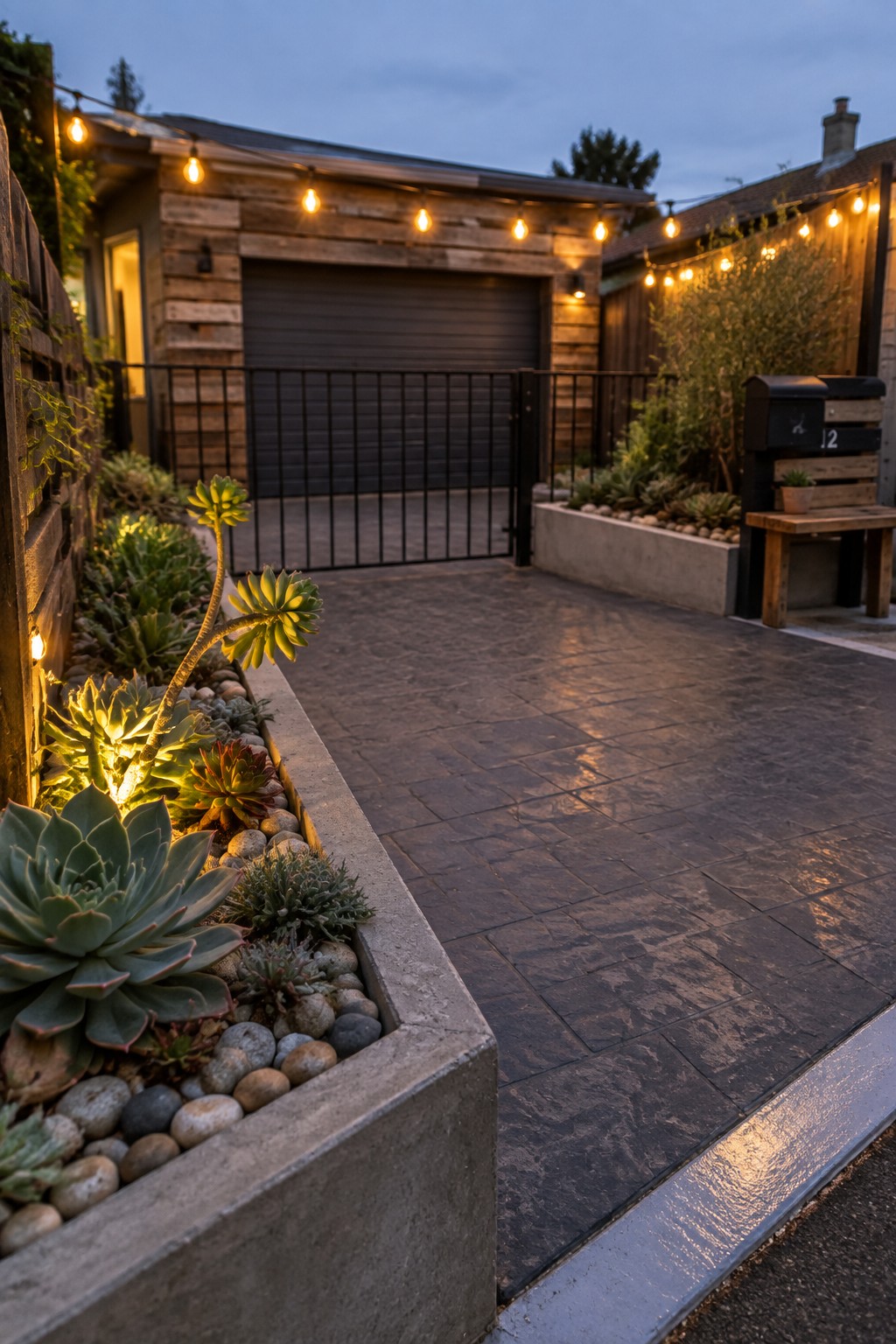
A raised concrete border planted with succulents gives a small driveway a finished look without eating into usable space. The plants stay low, need almost no watering once established, and the gravel fill keeps weeds down while letting water drain.
This approach suits narrow driveways or side entries where a full garden bed would feel cramped. Keep the planter height around twelve to eighteen inches so it does not interfere with car doors or foot traffic, and choose a simple gray mix that matches the paving color.
Concrete Pavers With Pebble Borders
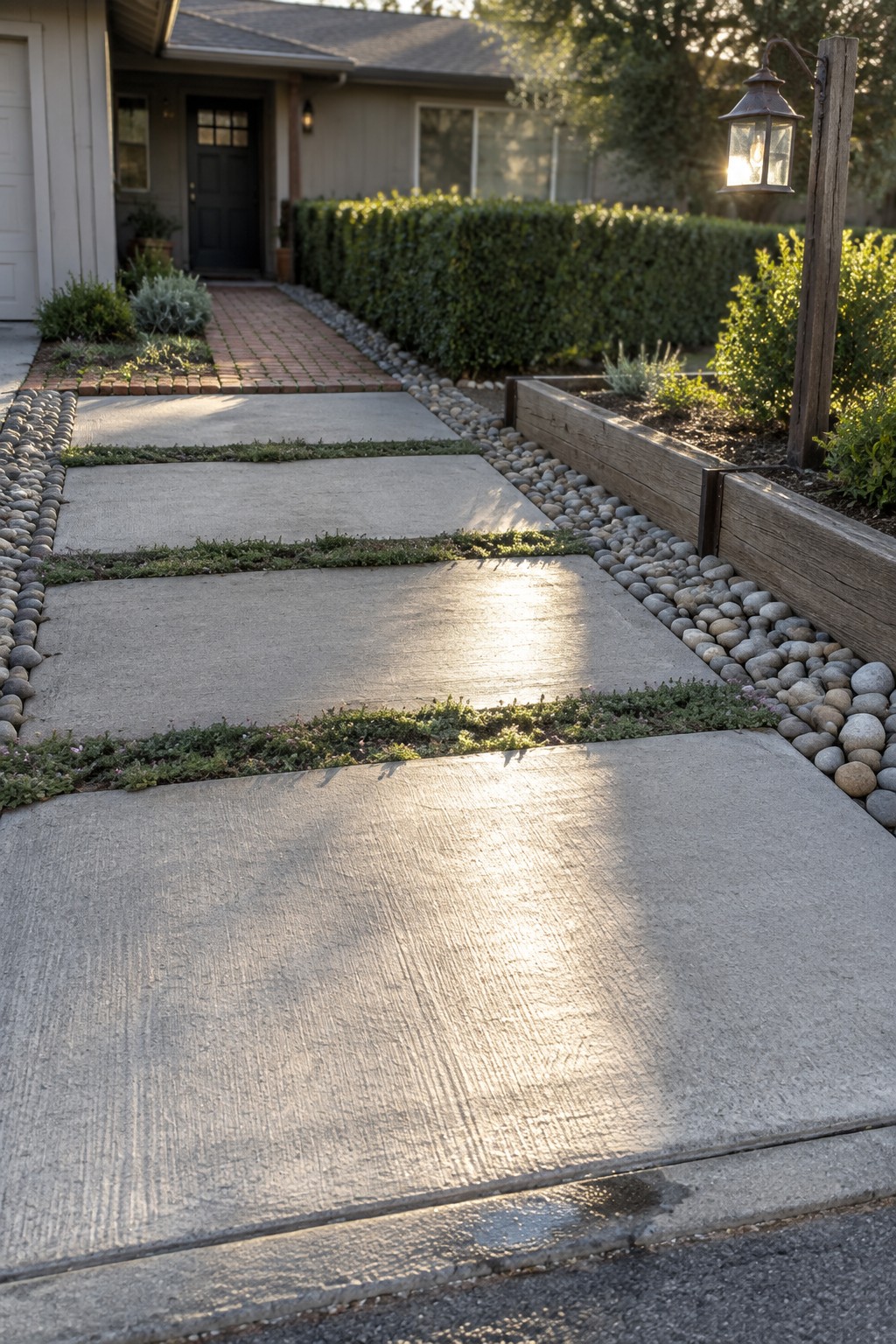
This path style keeps things simple and low cost by using large concrete sections instead of a full poured driveway. The pebbles along the edges help with drainage and give the path a finished look without extra materials or labor.
It works best on narrow driveways or side entries where full paving feels like too much. Space the slabs with room for ground cover between them and keep the pebble strip narrow so mowing stays easy. The result stays practical for most homes and holds up well over time.
Bamboo Edging For Gravel Paths
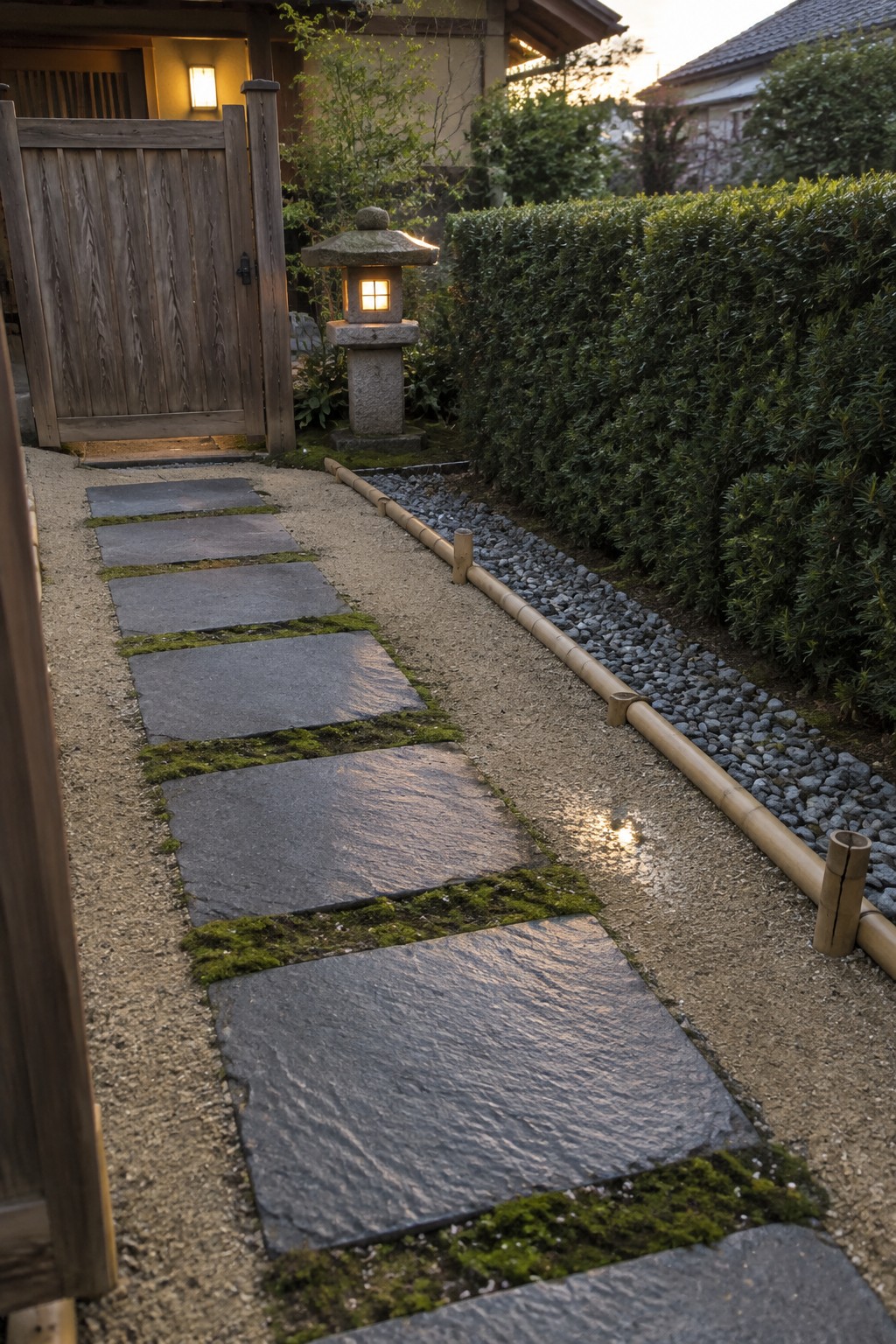
Many people like this setup because it keeps the path simple and cheap while still looking neat. Gravel fills most of the space, a few large stones give you solid footing, and the bamboo poles create a straight edge that holds everything in place.
It suits narrow side paths or small front entries on homes that need good drainage and low upkeep. Just lay the stones first, spread the gravel, then set the bamboo along the side. Watch that the bamboo stays secured so it does not shift over time.
Irregular Stone Paths For Small Entries

Irregular stone paths give a relaxed look without costing much. The flat pavers sit right in a gravel or sand base and let water drain through, which keeps the surface from getting slick after rain. Many people like them because the stones can be sourced locally or bought in small lots, and the layout does not need perfect spacing.
This approach works best on narrow side entries or short runs from the street to the door. Keep the beds along the edges simple with mulch so plants can soften the sides without crowding the walking surface. Check the base depth in the first year to make sure frost or settling does not tilt the stones.
Frequently Asked Questions
Q: How do I stop weeds from popping up through a cheap gravel driveway? A: Lay down a thick fabric barrier before you spread the gravel. Rake the surface every few months to bury any early sprouts. This keeps the driveway clear without pulling out a ton of plants later.
Q: What works best for a small driveway that sees heavy car traffic? A: Go with interlocking pavers set on a sand base. They shift less under wheels than loose stone does. Check the base depth before you start so it stays level over time.
Q: Can I add plants along the edges without them getting crushed? A: Pick low ground cover like creeping thyme and plant it just outside the driving area. Water it well the first month so roots take hold. The plants soften the look while staying out of tire paths.
Q: How do I handle snow removal on these budget surfaces? A: Use a plastic shovel instead of metal to avoid gouging the material. Push snow to the sides rather than lifting it. Store a bag of cheap salt nearby for icy spots.
