

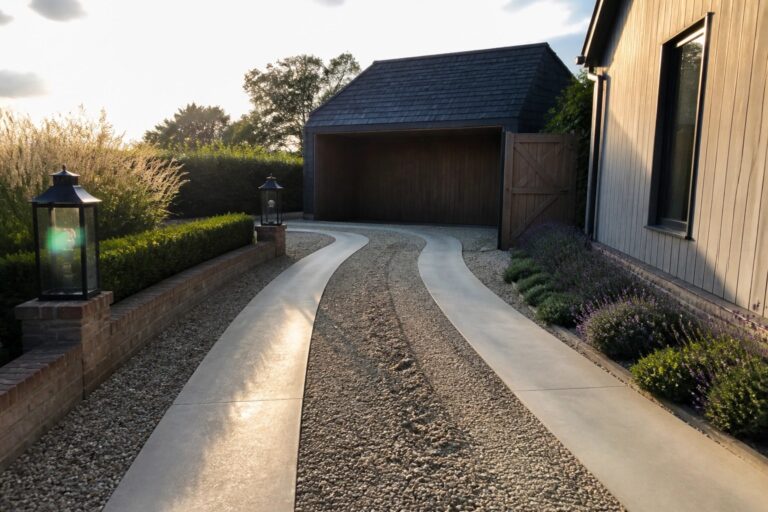
I have always noticed how the first stretch of driveway shapes the way a house presents itself from the street long before anyone steps out of the car.
Choosing gravel that stays put through rain and freeze cycles matters more than picking a color that looks good in a photo.
A solid base and some thought to drainage keep the surface from turning into ruts after the first real winter.
I would try a short test section first.
Proper edging also stops the gravel from creeping into the lawn and makes the whole approach feel more deliberate.
Concrete Edging For A Defined Gravel Driveway
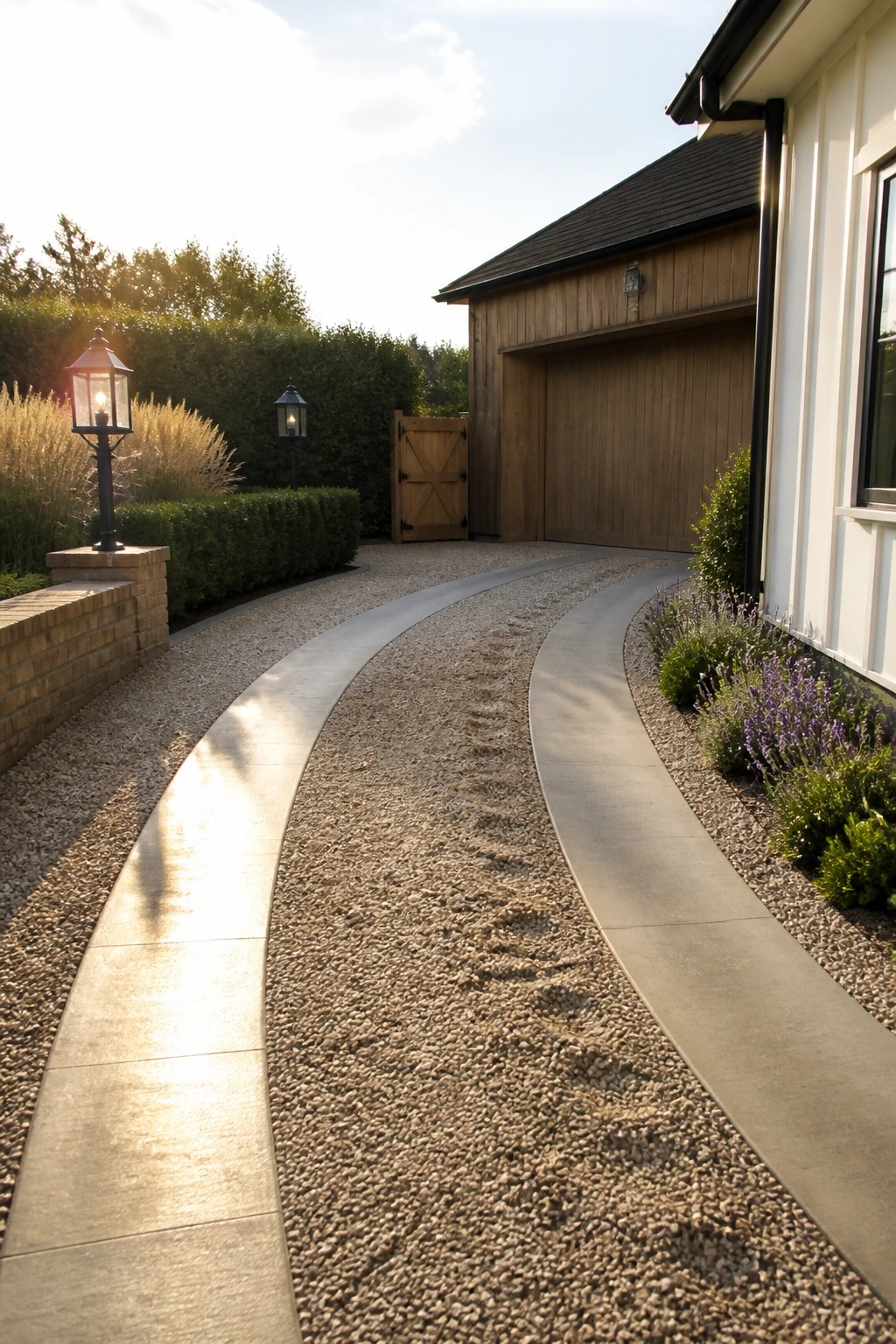
Concrete borders give a gravel driveway a cleaner shape and help keep the stones from spreading into the grass or beds. They also make the whole path feel more intentional without adding much cost or work.
This setup suits homes with gentle curves or sloped lots where the drive needs to stay contained. Pour the borders first using simple wood forms, then fill the center with gravel once the concrete has set.
Stepping Stones In Gravel
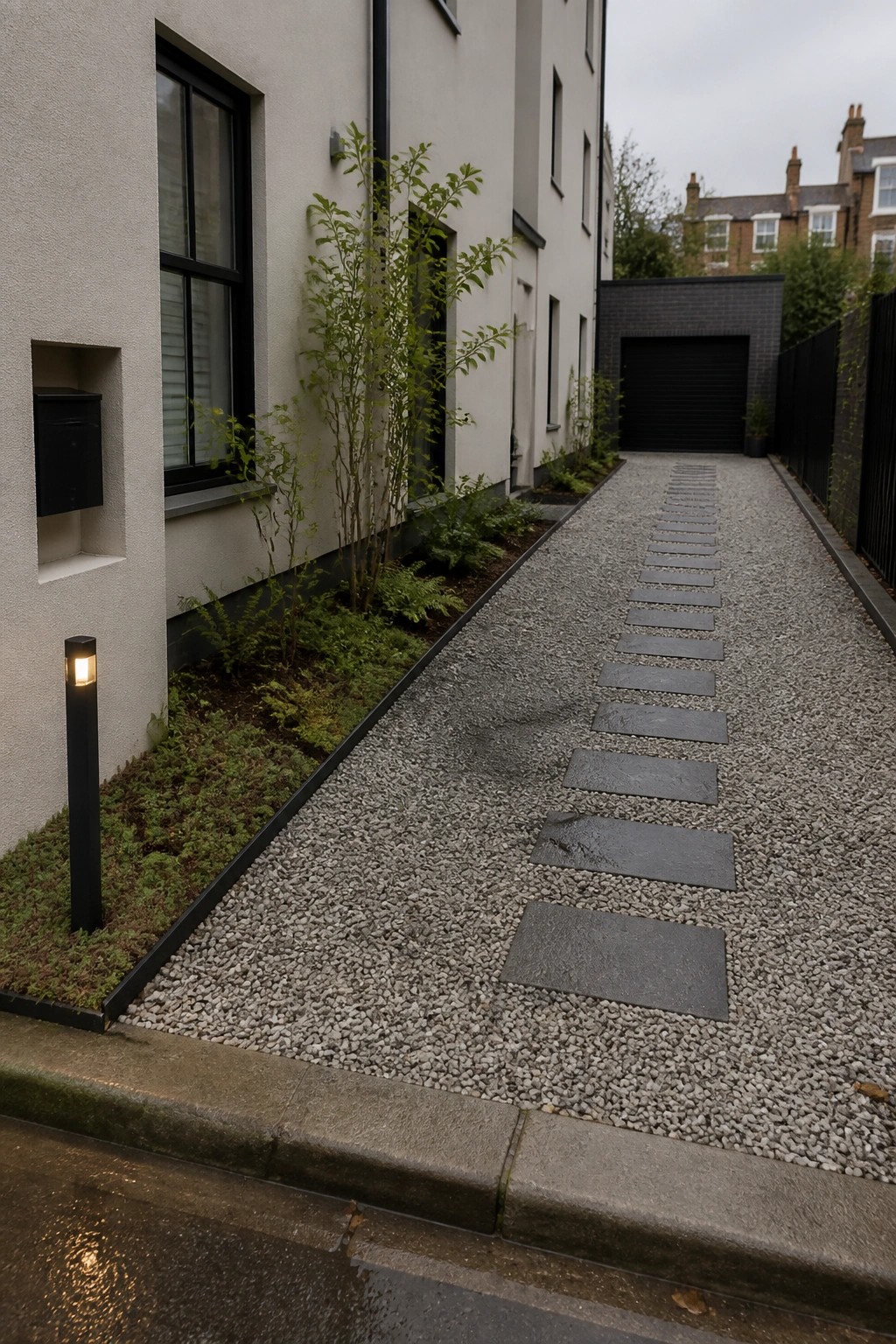
Many people add a line of flat stones right into their gravel driveway or path. It gives you firm spots to walk on while keeping the loose gravel look that feels simple and low key.
This works best on narrow side paths or long driveways where cars do not pass often. Level the stones with the gravel surface so they stay stable and do not shift over time.
Wood Edging Keeps Gravel Driveways Neat

Gravel tends to wander without a firm edge. A straight timber border holds the stones in place and gives the whole driveway a finished look instead of a scattered one.
This works best on homes where the driveway sits next to planting beds. The wood ties the gravel to the garden without adding much cost or fuss. Just set the planks low enough to mow over and treat them so they hold up to rain and sun.
Gravel Strips Between Concrete Slabs
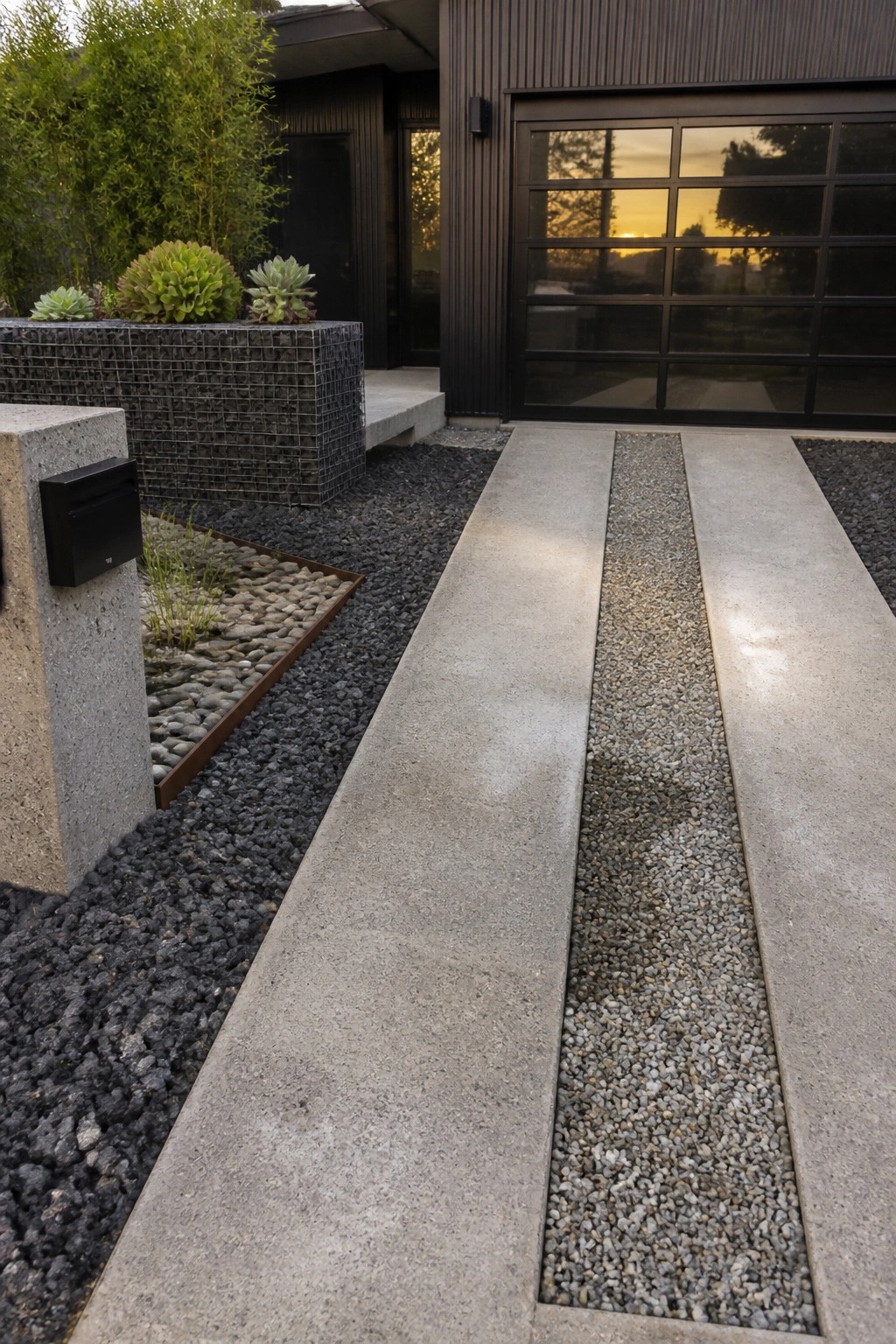
This layout keeps the driveway functional for cars while using gravel to cut down on the amount of concrete needed. The strips add texture and help with drainage, which is useful in areas that get rain or snow.
It works best on homes with a modern or simple style where a full paved surface would feel too heavy. Lay the slabs first on a solid base, then fill the gaps with compacted gravel so the surface stays even over time.
Use Timber Edging to Contain the Gravel

One simple way to improve a gravel driveway is to run timber edging along both sides. The wood keeps the stones from spilling into the surrounding beds and gives the path a clear, finished border that still feels natural.
This works best on homes with a casual or wooded setting where you want something sturdy but not too formal. Lay the timbers on a slight slope so water can drain off the drive, and secure them well so they stay put over time.
Mix Pavers With Gravel Borders
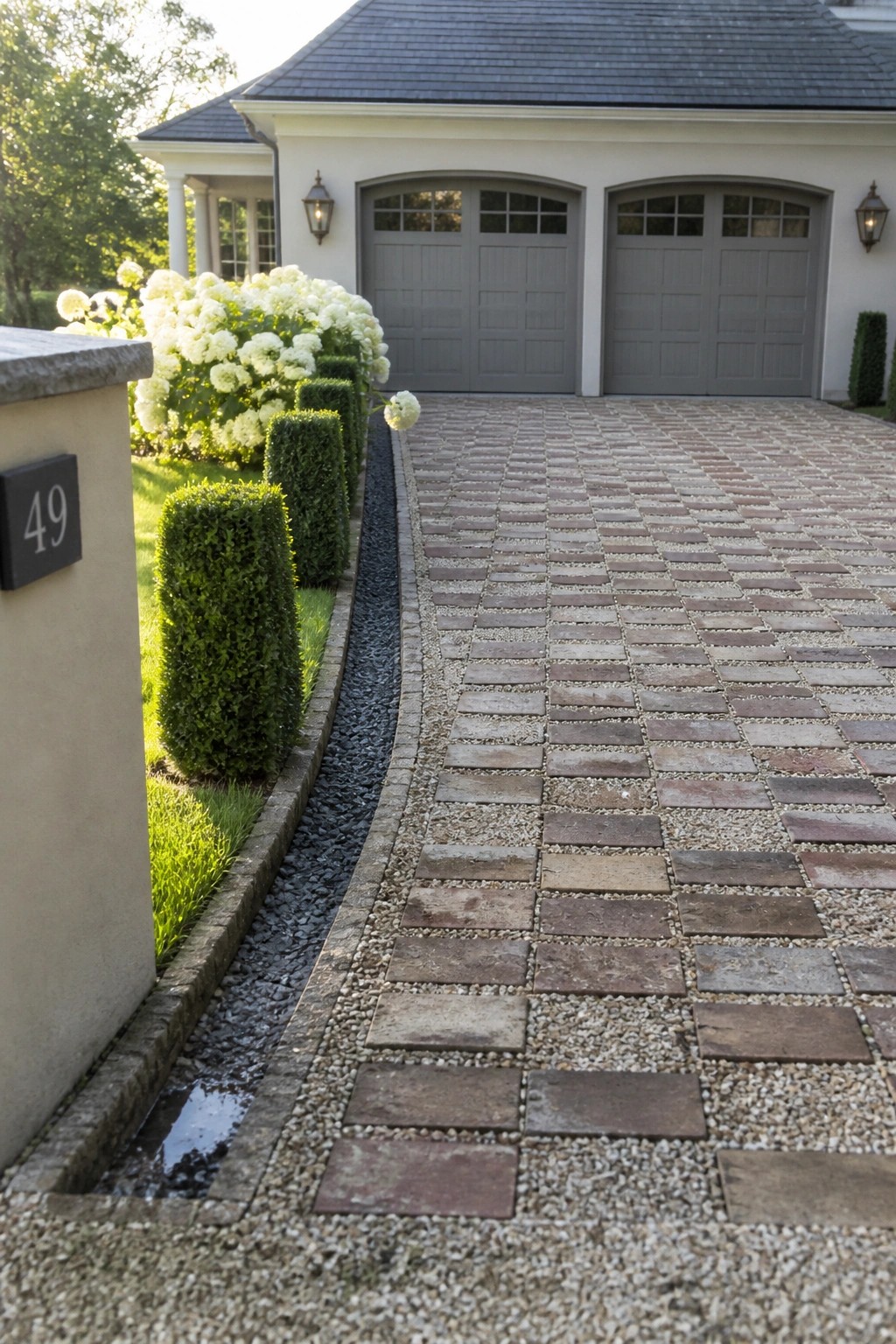
A grid of pavers set into gravel gives a driveway more structure while still keeping the loose, natural look most people want from gravel. The pavers handle the weight of cars without rutting, and the gravel fills the gaps to help with drainage and keep costs down.
This setup works best on a flat or gently sloped approach where you want something that looks finished but does not require a full concrete pour. Keep the paver sections in straight rows or a simple pattern, and use a solid edge like brick or stone to hold the gravel in place along the sides.
Edge Gravel With Large Stones
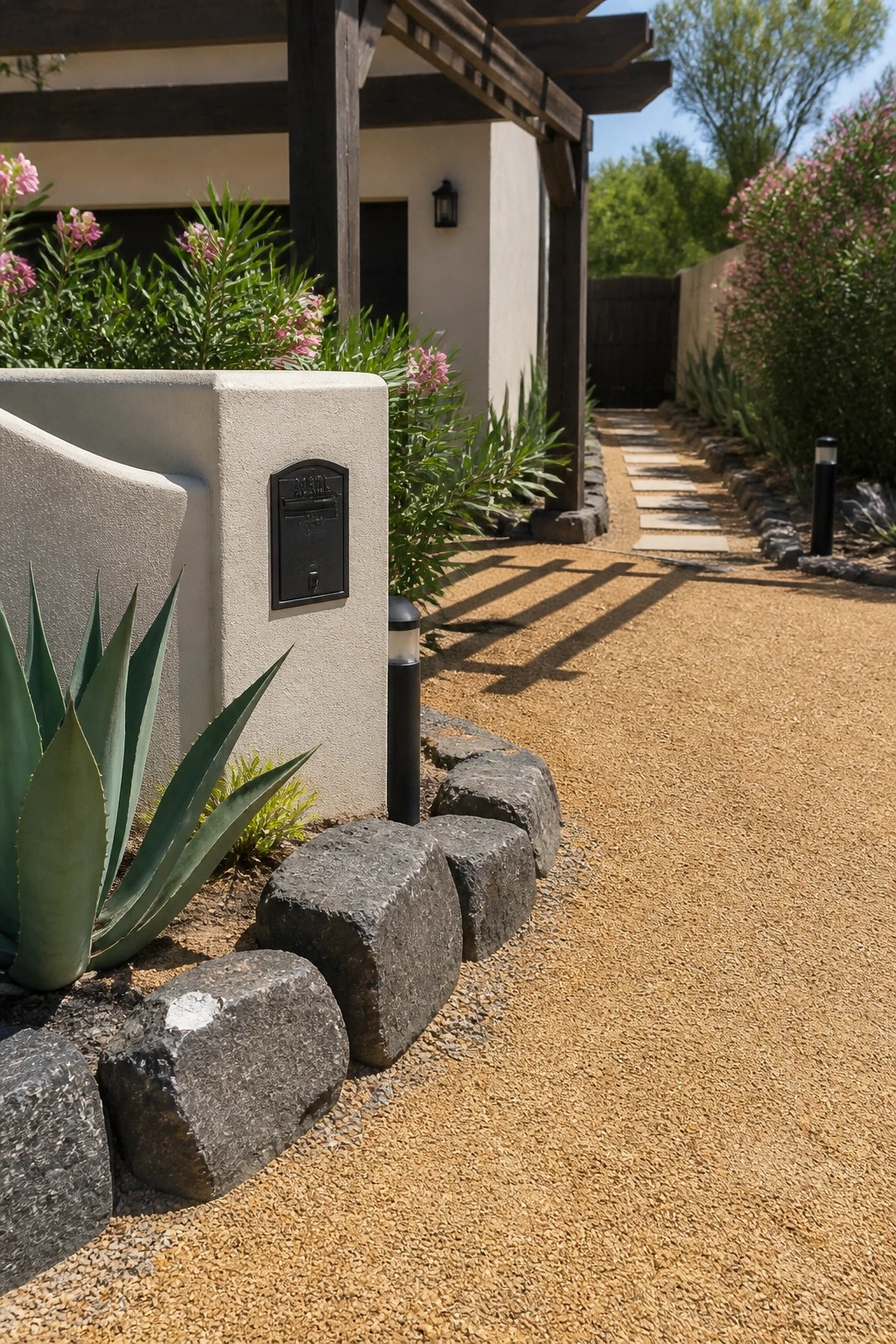
Large stones give gravel a clean edge that stays put over time. They keep the surface material from spilling into beds or lawns and add a natural weight that feels settled rather than temporary.
This works best on side paths or driveway aprons where you want low upkeep. Set the stones directly on compacted base so tires do not push them out of line, and pair them with tough plants that handle the same dry conditions.
Grass Strips Through A Gravel Driveway
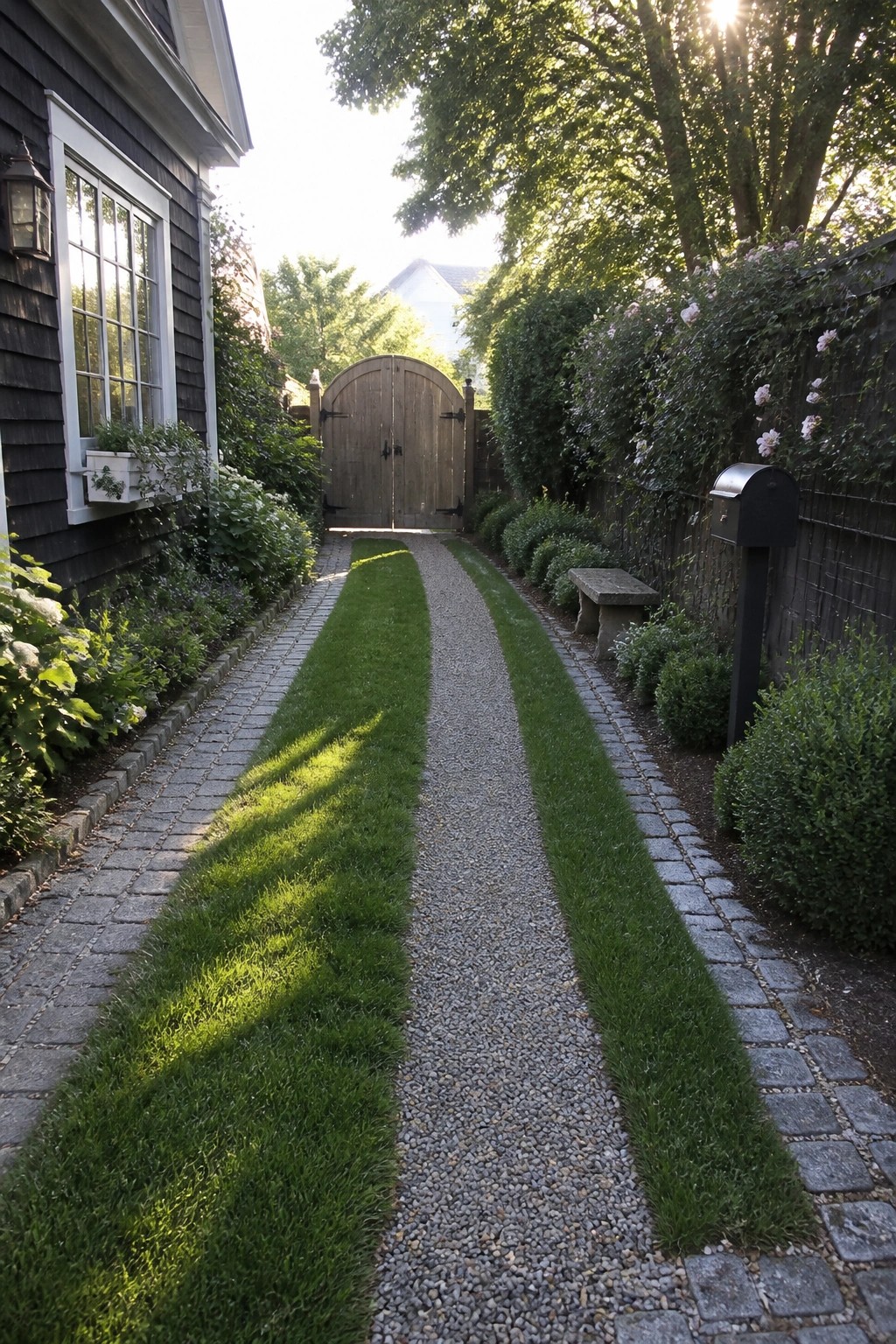
A gravel driveway with grass running down the center gives you a softer look without losing the practical benefits of gravel. The grass breaks up the surface, helps with drainage, and keeps the path from feeling too hard or industrial.
This layout works best on straight or gently curved driveways where you can keep the grass strips even. Edge the sides with brick or stone so the grass does not spread into the gravel, and choose a tough turf variety that can handle occasional tire traffic.
Gravel Driveway With Curved Stone Edging
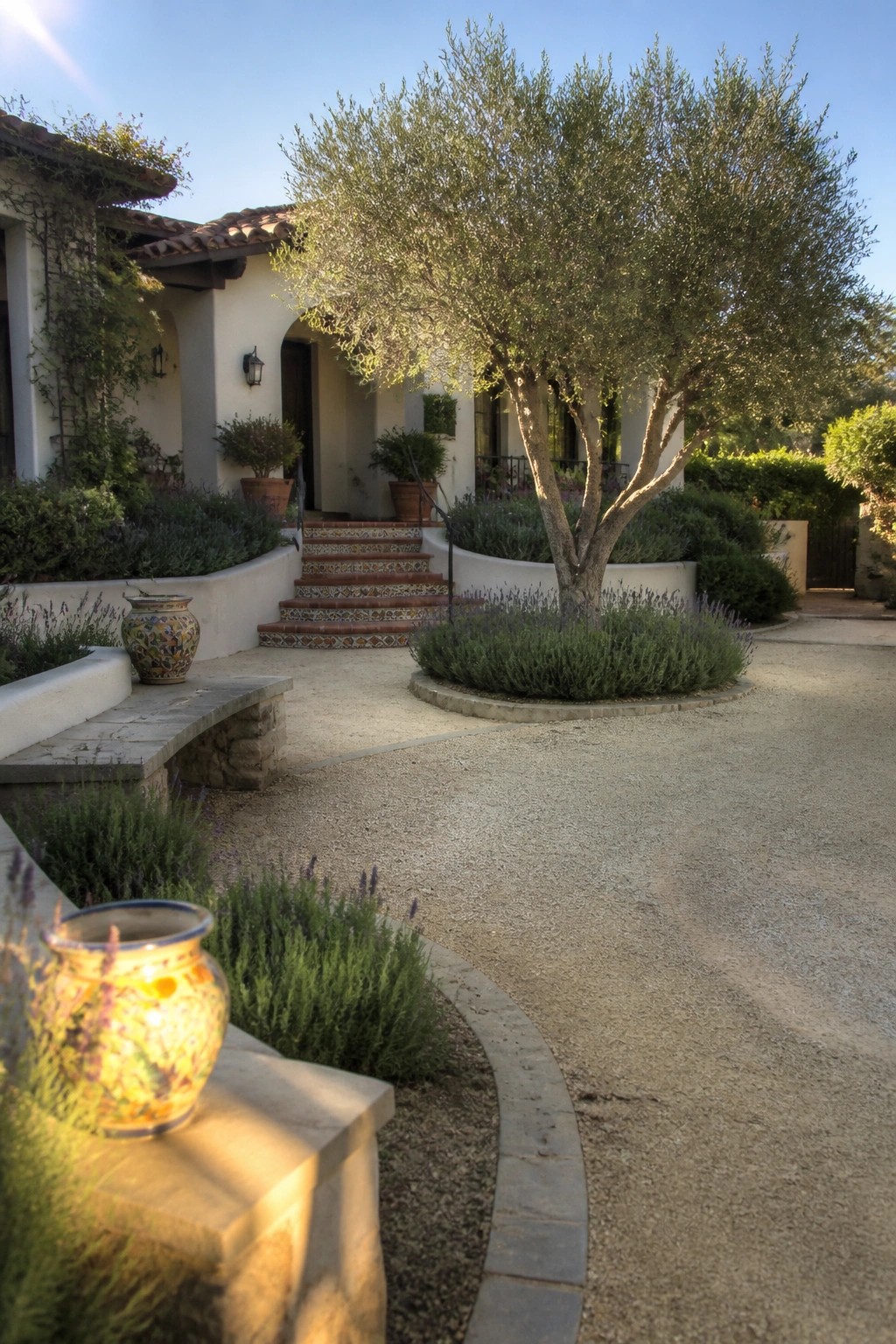
A gravel driveway feels more natural when it follows a gentle curve instead of cutting straight across the front. The curve lets the drive work with the shape of the yard and keeps the gravel from looking like an afterthought.
Stone edging along the curve holds everything in place and stops the gravel from drifting into the beds. This layout works best on homes with some space between the house and the street, where the drive can wind past a few planted areas without feeling cramped.
Border Your Gravel Driveway With Wood
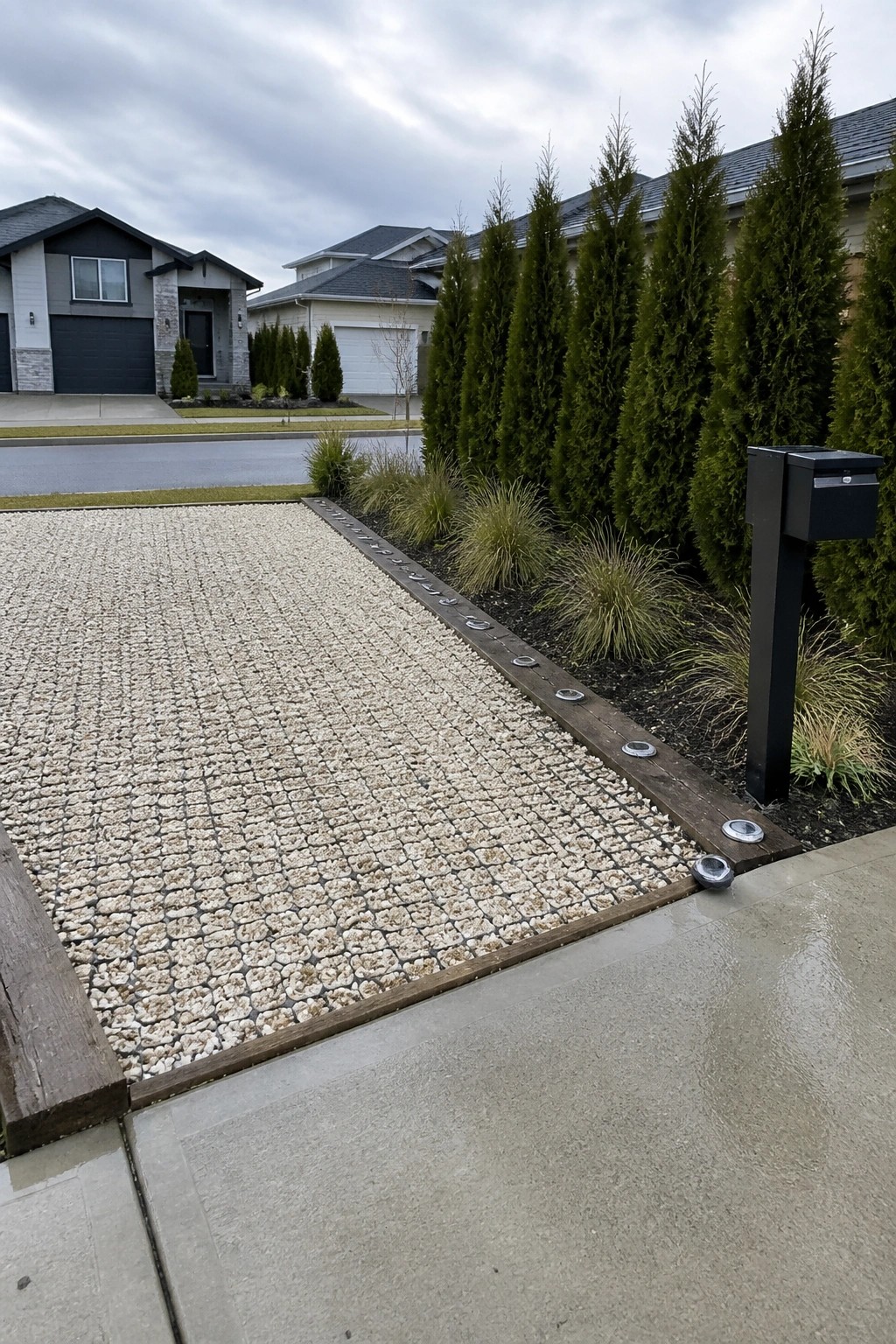
A simple wood border keeps gravel from spilling into the grass or beds and gives the whole driveway a finished look without much work. It also creates a clean line that helps the space feel more organized next to plantings.
You can tuck small solar lights right into the wood so the edge stays visible after dark. This setup works best on straight or gently curved driveways where you want low upkeep and a bit of definition without adding concrete or pavers.
Gravel Paths Edged With Brick
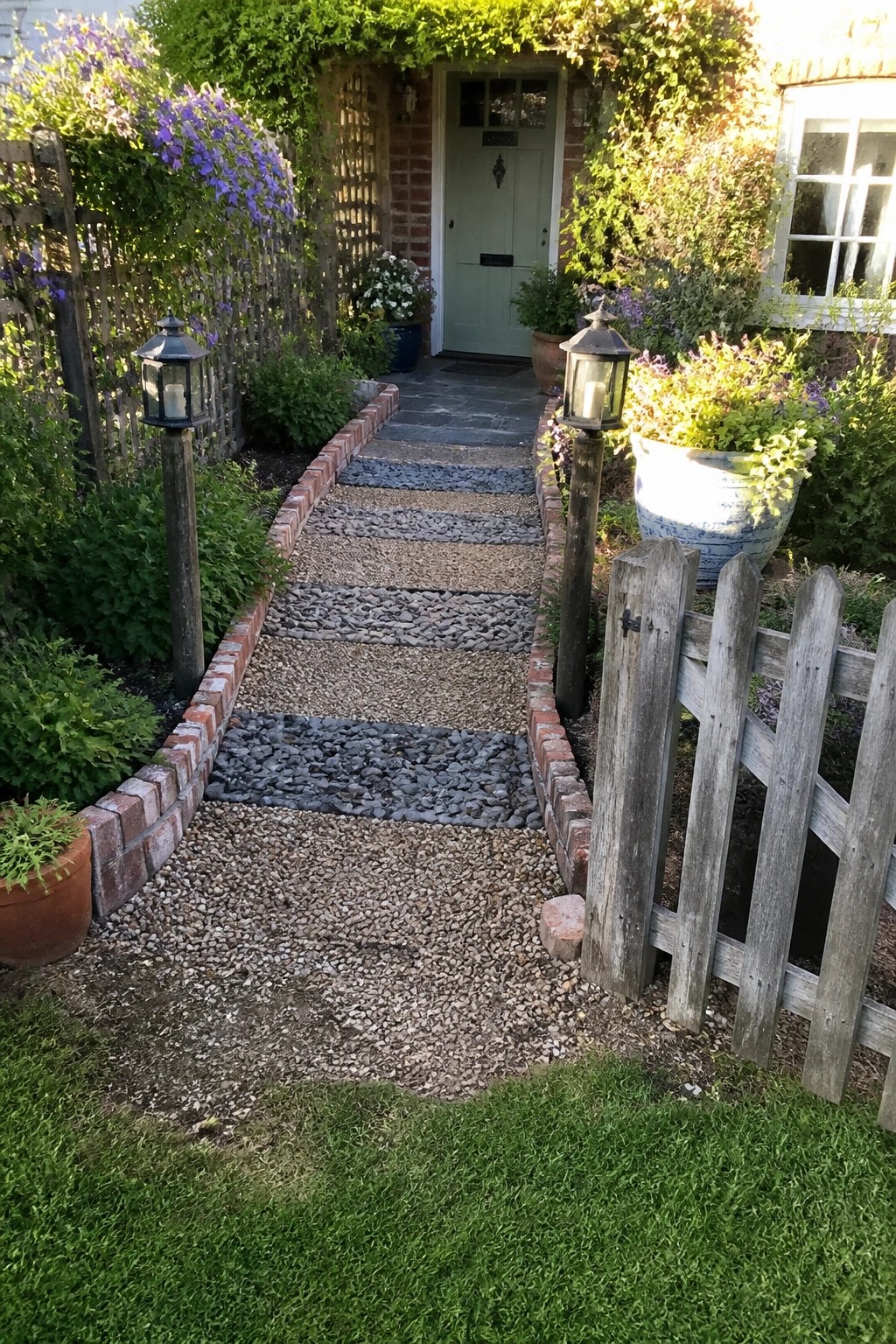
Gravel paths work well because they drain easily and cost less than solid paving. The brick border holds everything in place and gives the walkway a clean edge that still feels relaxed in a garden setting.
This approach suits older homes or cottage style yards where you want something practical that does not require constant weeding or repairs. Set the bricks on a solid base so they do not shift after a few seasons.
Stepping Stones Set in Gravel
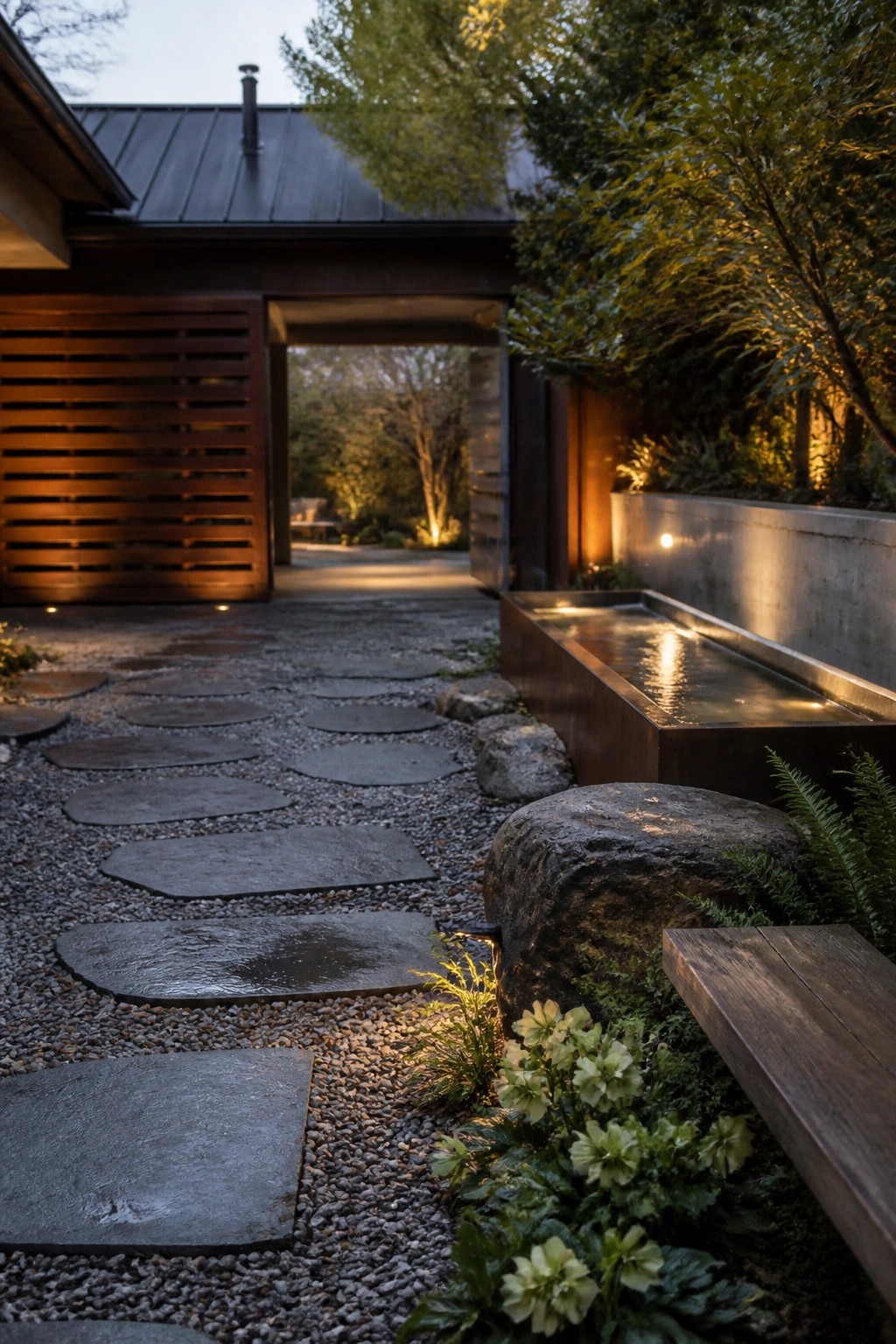
Stepping stones laid into gravel make a simple path that feels natural and easy to walk on. The stones give you solid footing while the gravel handles drainage and fills the spaces between them without much extra work.
This setup works well for side entries or garden paths around a house. Space the stones to match your stride, keep them level, and let the gravel settle around the edges. It suits homes with open yards where you want something low key that still directs foot traffic.
Use Wooden Edging For A Tidy Gravel Driveway
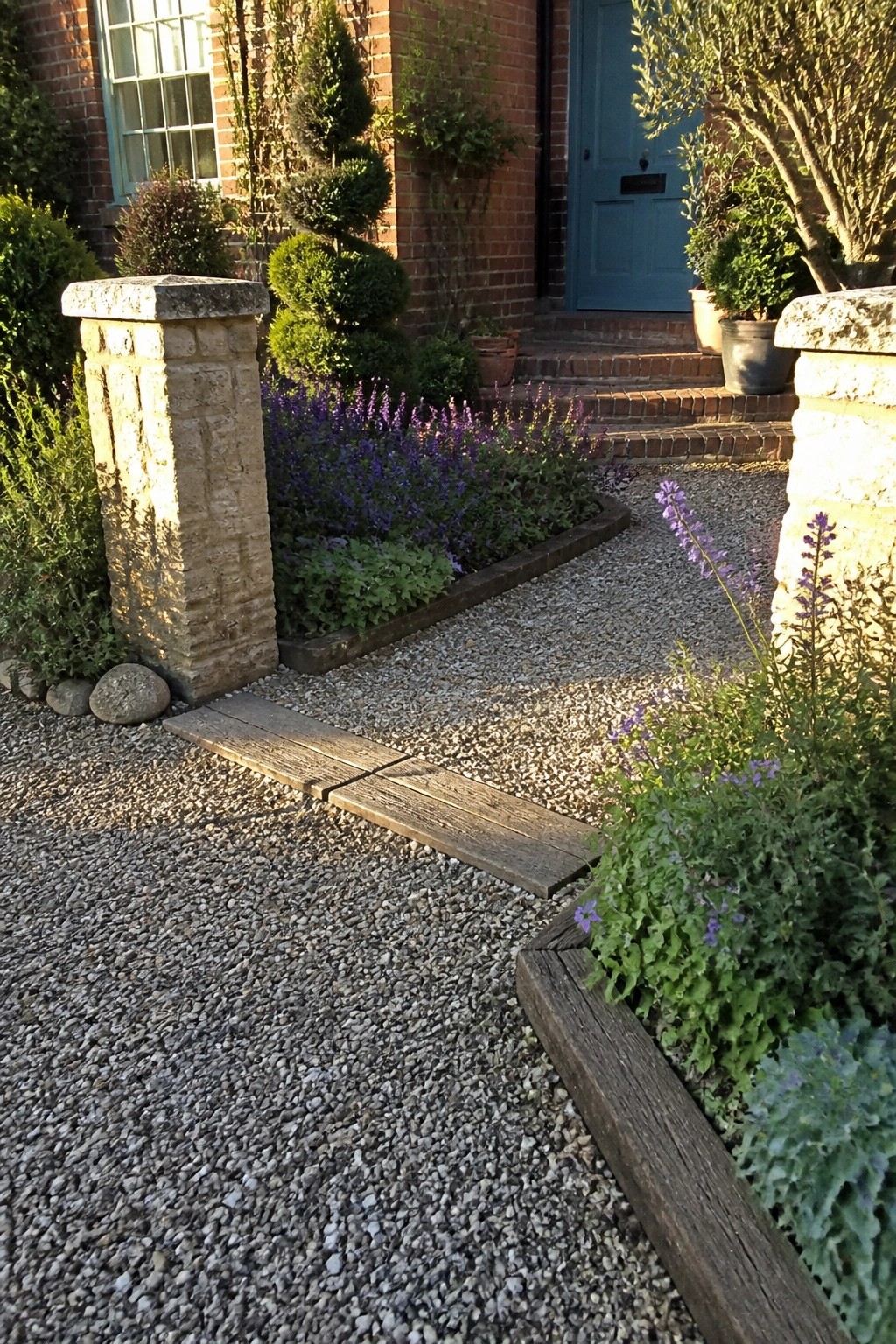
Wooden edging helps hold gravel in place and gives the surface a clean line without much fuss. It works especially well in smaller driveways or side paths where you want to stop the stones from spilling into the beds or lawn.
You can use old planks or new timber cut to length and set them on edge along the gravel. This approach suits older homes or cottages where you want something simple that still looks finished. Just make sure the wood sits level and secure so it does not shift over time.
Add Wooden Planks To Gravel Paths
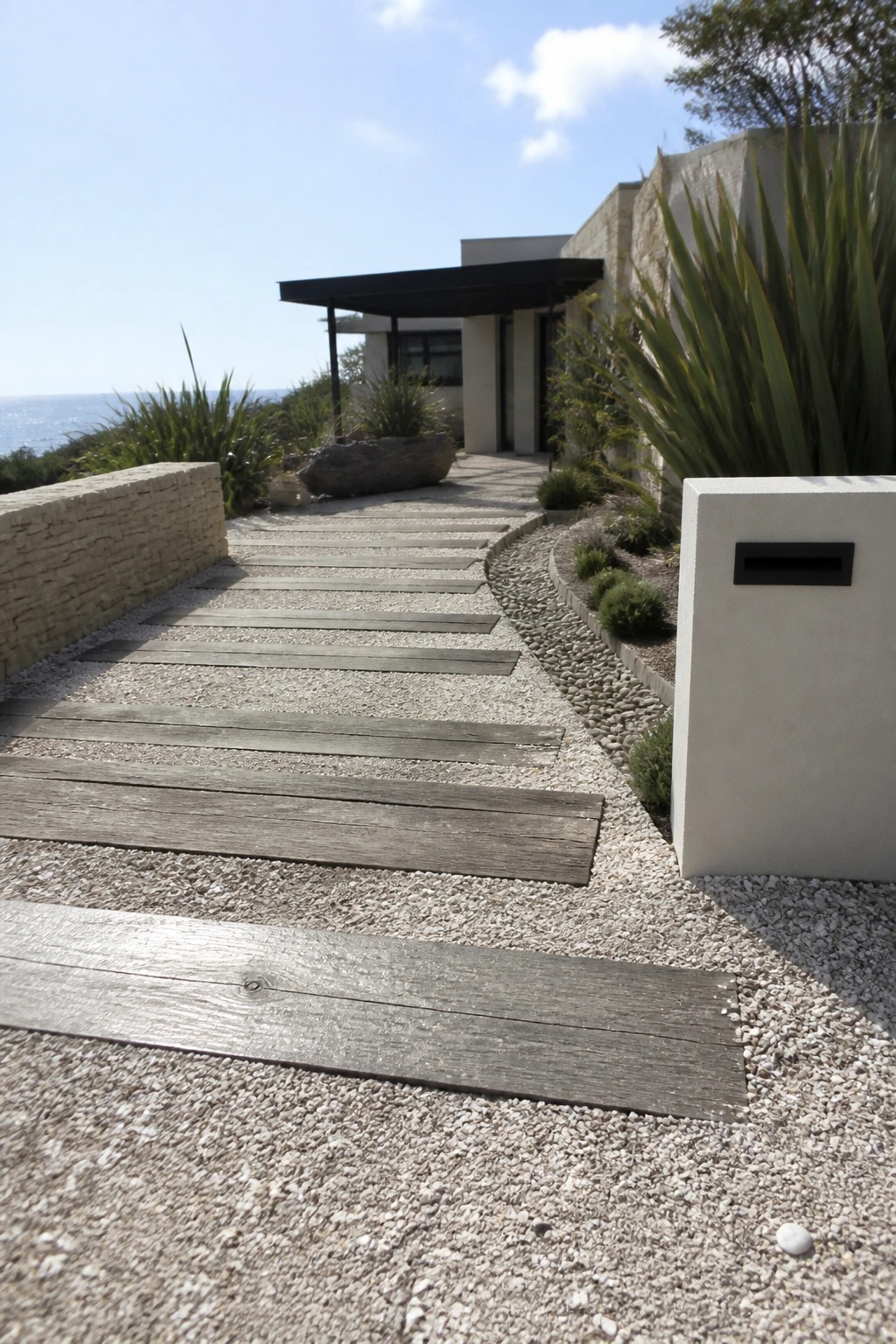
Mixing wood planks into a gravel path gives you a solid place to walk while keeping the loose look of gravel. The planks break up the surface and stop the stones from shifting as much underfoot.
This approach works best on gentle slopes or along the edge of a house where you want a clear route without paving the whole area. Use pressure-treated timber, set the planks level with the gravel, and leave enough space between them so the gravel still shows through.
Use A Fence To Edge Your Gravel Driveway
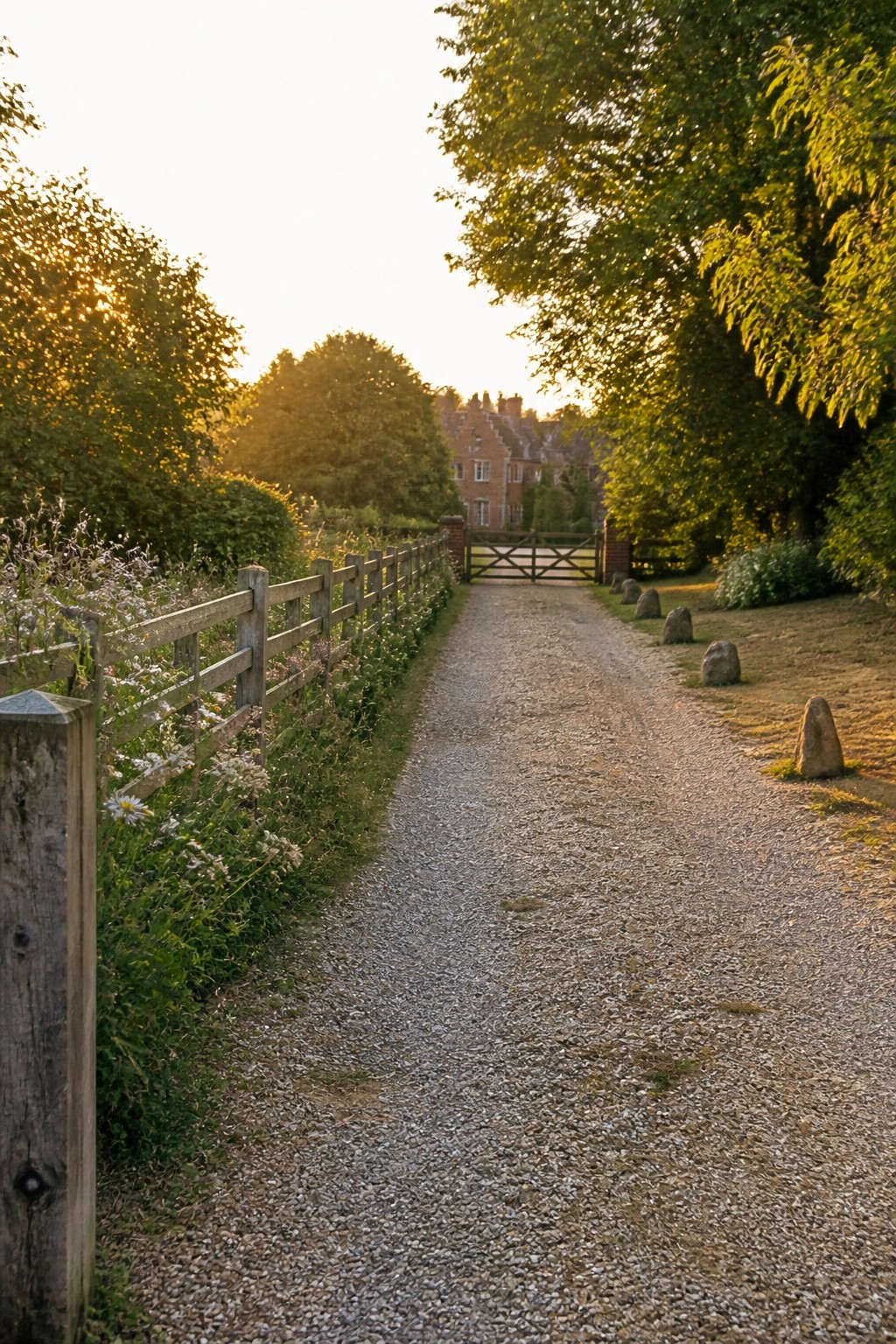
A simple wooden fence makes a gravel driveway feel more finished and keeps the stones from spreading into the grass or beds. It adds just enough structure without needing fancy materials or constant upkeep.
This approach works best on homes with a bit of land where a casual look fits the setting. Set the posts straight, attach the rails, and let the fence do the work of holding the edge. Keep the height modest so the drive still feels open.
Gravel Paths With Concrete Strips
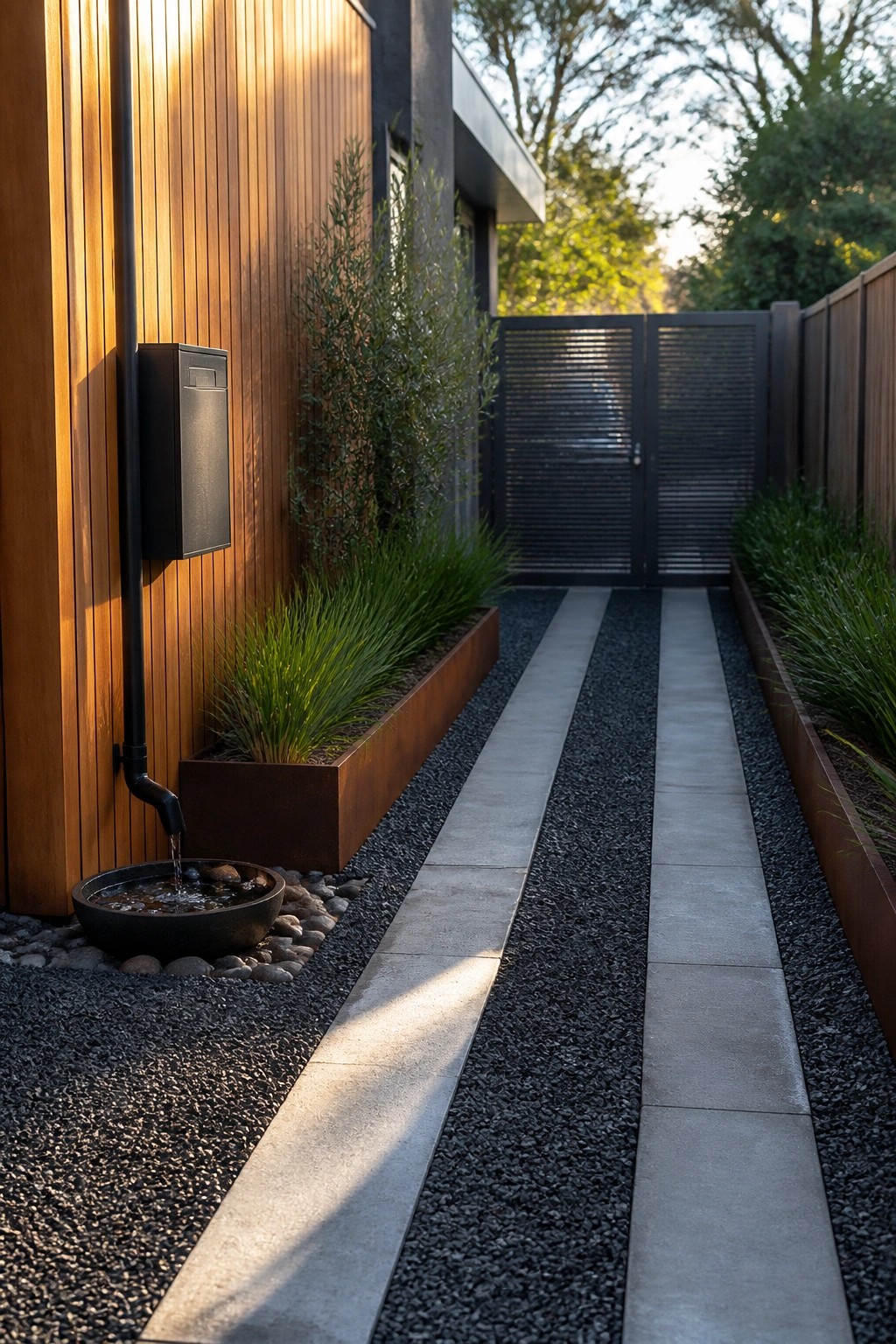
Mixing gravel with long concrete strips gives paths and driveways a neat structure while still letting water drain through. The strips keep the surface stable underfoot or under tires, and the gravel fills in the rest without much extra work.
This setup suits homes with modern or simple exteriors where you want something practical and easy to maintain. Lay the pavers in straight parallel lines first, then spread the gravel evenly between them. It works best on flat ground and needs a solid base so the strips stay level over time.
Pattern Your Gravel Driveway With Different Colors

Mixing two or three gravel shades in simple repeating shapes gives a driveway more visual structure than a single color ever does. The patterns help the surface feel intentional instead of just functional, and they are easy to lay out as long as you work in sections.
This approach suits homes with straight or gently angled driveways where the pattern stays visible from the street or house. Use temporary boards to keep the edges clean while you compact each color, then remove them once everything is set.
Terracotta Pipe Edging For Gravel Paths
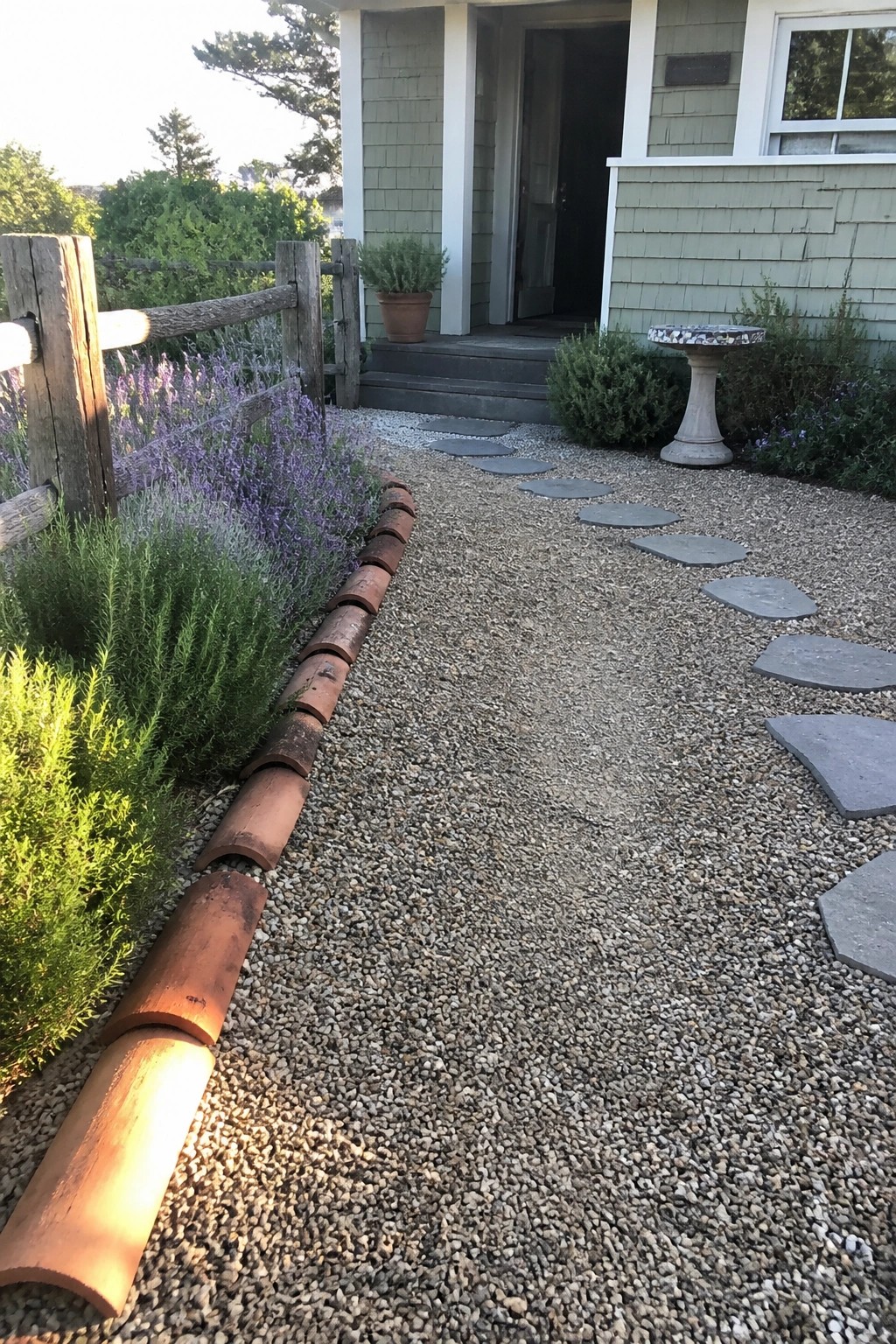
Terracotta pipes work well as edging because they hold the gravel in place without looking too finished. The rounded shape creates a soft line that still feels sturdy, and the material blends with most garden settings.
This approach suits homes with simple gravel paths or side entries where you want a low-cost border that lasts. Just bury the pipes halfway so they stay put and let the gravel settle naturally against them.
Add Stacked Stone Edging To Your Gravel Driveway
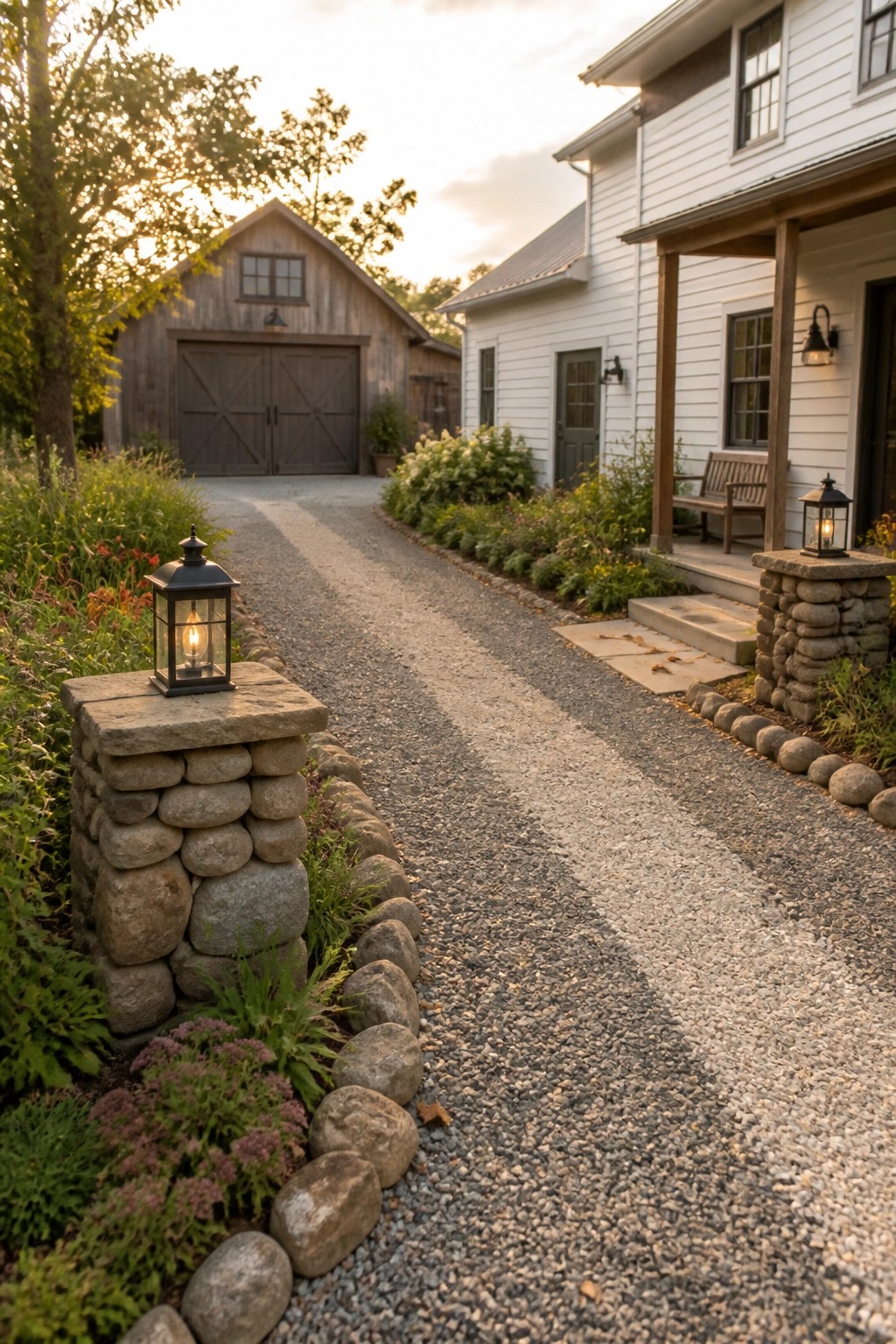
Stacked stone edging gives a gravel driveway a finished look without much fuss. The low border holds the gravel in place, keeps grass from creeping in, and adds a natural weight that matches older homes or simple farmhouses. It works especially well when the stones are rounded and vary a bit in size.
You can build it yourself by digging a shallow trench and stacking the stones two or three high. This style suits long driveways or side paths where you want clear lines but still like the loose feel of gravel. Just make sure the base under the gravel is solid so the stones stay put over time.
Frequently Asked Questions
Q: How do I keep the gravel from washing away after heavy rain? A: Shape the driveway with a slight crown down the middle so water runs off to the sides. Add a layer of crushed rock underneath to lock things in place. Check the edges after each big storm and rake loose stones back where they belong.
Q: What if I already have an old dirt path and want to switch to gravel? A: Scrape off the top layer of loose soil first. Then pack down a base of smaller stones before adding your gravel on top. This stops the new surface from sinking in the first year.
Q: Do I really need edging or can I skip it? A: You can skip it on a flat driveway that sees light use. Just spread the gravel a few inches wider than the driving area so tires stay on the rock. Rake it back into shape once or twice a year.
