

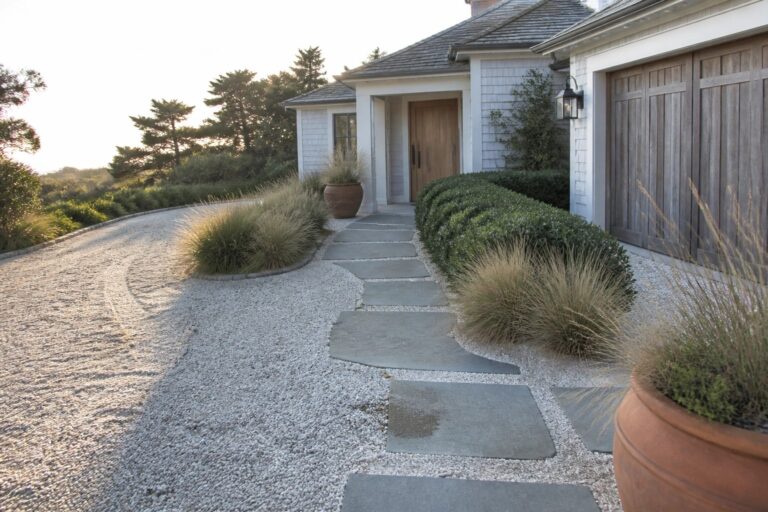
I have noticed that the way a driveway meets the yard often sets the tone for the whole property before anyone reaches the door.
Over time gravel tends to spread if there is no clear edging or planting to contain it and that can make the entrance feel messy rather than settled.
Small changes in edging make a bigger difference than expected.
I would test one or two plant combinations near the edges first to see what holds up to the traffic and weather in my own yard.
Planning the layout with both function and the view from the road in mind usually leads to entrances that feel more lasting.
Stepping Stones Set in Gravel

One simple way to handle a gravel driveway is to set flat stepping stones right into the surface. This gives people a solid, obvious path to the door without needing to pave the whole area or add a separate walkway.
It works best on homes where the entrance sits back from the drive and you want to keep the loose gravel look. Just space the stones evenly, make sure they sit level, and let the surrounding plants soften the edges so the path feels natural rather than rigid.
Gravel Paths With Stepping Stones
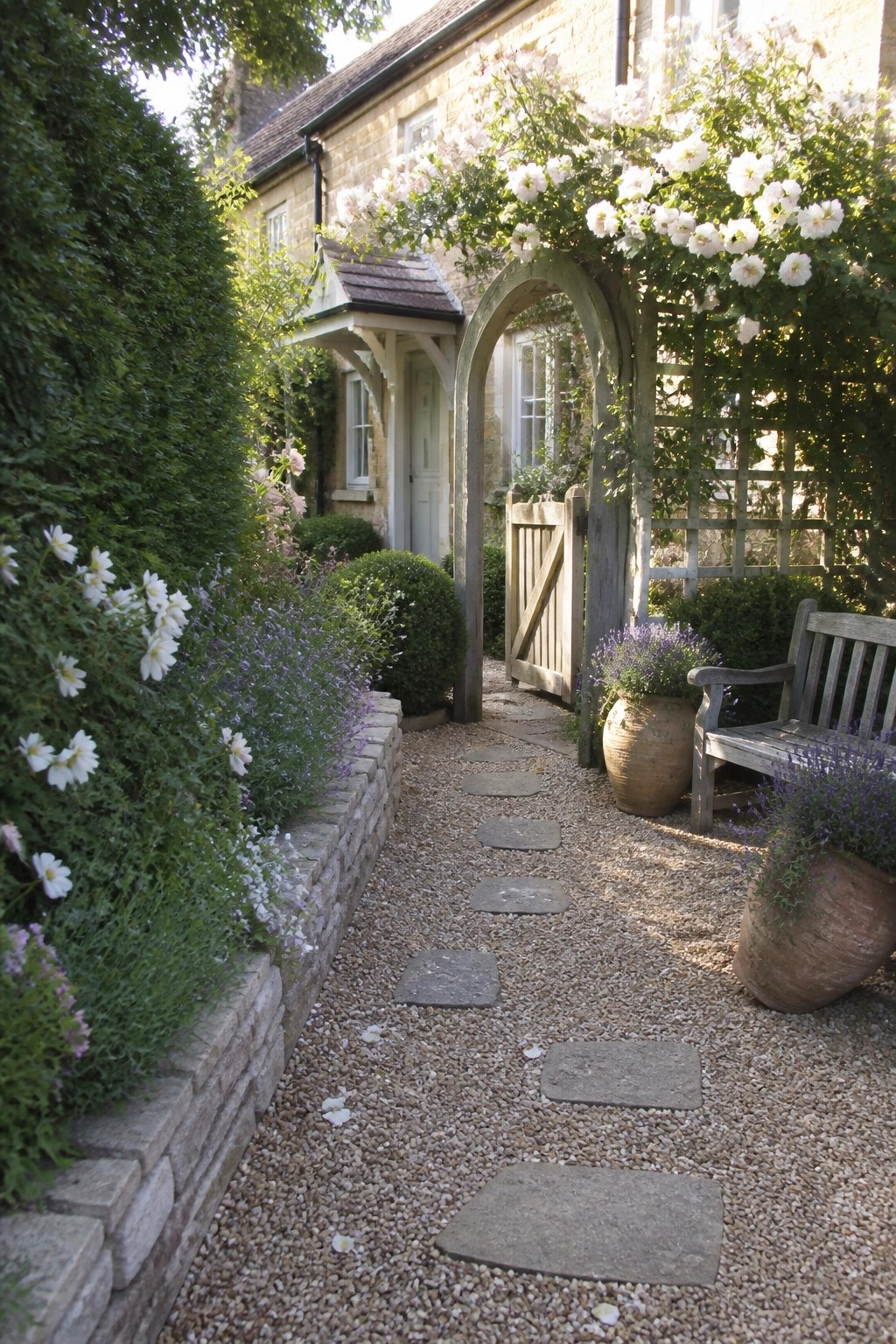
Gravel paths feel practical in a garden because they handle rain well and stay cooler than solid paving. Flat stepping stones give a clear line to follow without turning the whole walkway into a hard surface.
This approach works best on smaller properties or along the side of a house where you want something simple that still looks intentional. Use low edging to hold the gravel in place so it does not spill into the beds.
Place Large Pots Along Gravel Edges

Large clay pots give a gravel driveway some weight and structure without needing a lot of extra planting. They sit right in the beds and help the whole edge feel more finished while still keeping things simple and natural.
This approach suits homes that already have a warm, slightly rustic look. Set the pots among low shrubs and a few small trees so the gravel stays the main surface but does not feel bare. Make sure the pots are big enough to hold their own against the open driveway space.
Stepping Stones In Gravel Offer A Simple Pathway

Stepping stones set into gravel give you a clear walking route while still letting the garden feel open and natural. The stones break up the surface so you do not end up with a wide slab of pavement, and the gravel fills in around them to keep things looking soft.
This approach works well on smaller lots or side entrances where you want low maintenance and good drainage. Place the stones at a comfortable stride length and rake the gravel now and then so the pattern stays tidy without much effort.
Stepping Stones Guide Visitors Along Gravel Driveways

Stepping stones offer a simple way to mark a walking path beside a gravel driveway without adding more pavement. They keep feet out of loose stone while creating a clear route from the road edge toward the house or mailbox. This approach works especially well on sloped sites where a full walkway would feel too formal.
Place the stones in an easy arc that follows the driveway curve and pair them with low plantings like ferns to soften the edges. Stone retaining walls help hold the slope and keep the look natural. The combination suits wooded homes or any property where you want the driveway to feel less stark and more connected to the surrounding landscape.
Plant a Circular Hedge Island in Your Gravel Driveway

A planted circle right in the middle of the gravel gives the driveway a clear center without making it feel crowded. It breaks up the flat surface and adds some living structure that makes the whole entrance feel more finished.
This idea suits larger driveways where you have room for a turnaround. Stick with low, clipped evergreens that stay tidy and let cars move around them without trouble.
Adding Stone Pavers to a Gravel Driveway

Gravel driveways give a relaxed look, but they can feel a bit unfinished right up against the house. Setting a few large stone pavers into the gravel creates a simple walking path that feels more intentional and makes the entrance easier to use every day.
This approach works well on homes with some yard space where the drive comes in at an angle. Keep the stones close to the porch or main door and let low plants and rocks along the edges help everything blend together. It stays practical since the gravel still handles drainage and the pavers take the wear from regular foot traffic.
Gravel Surfaces That Handle Slopes
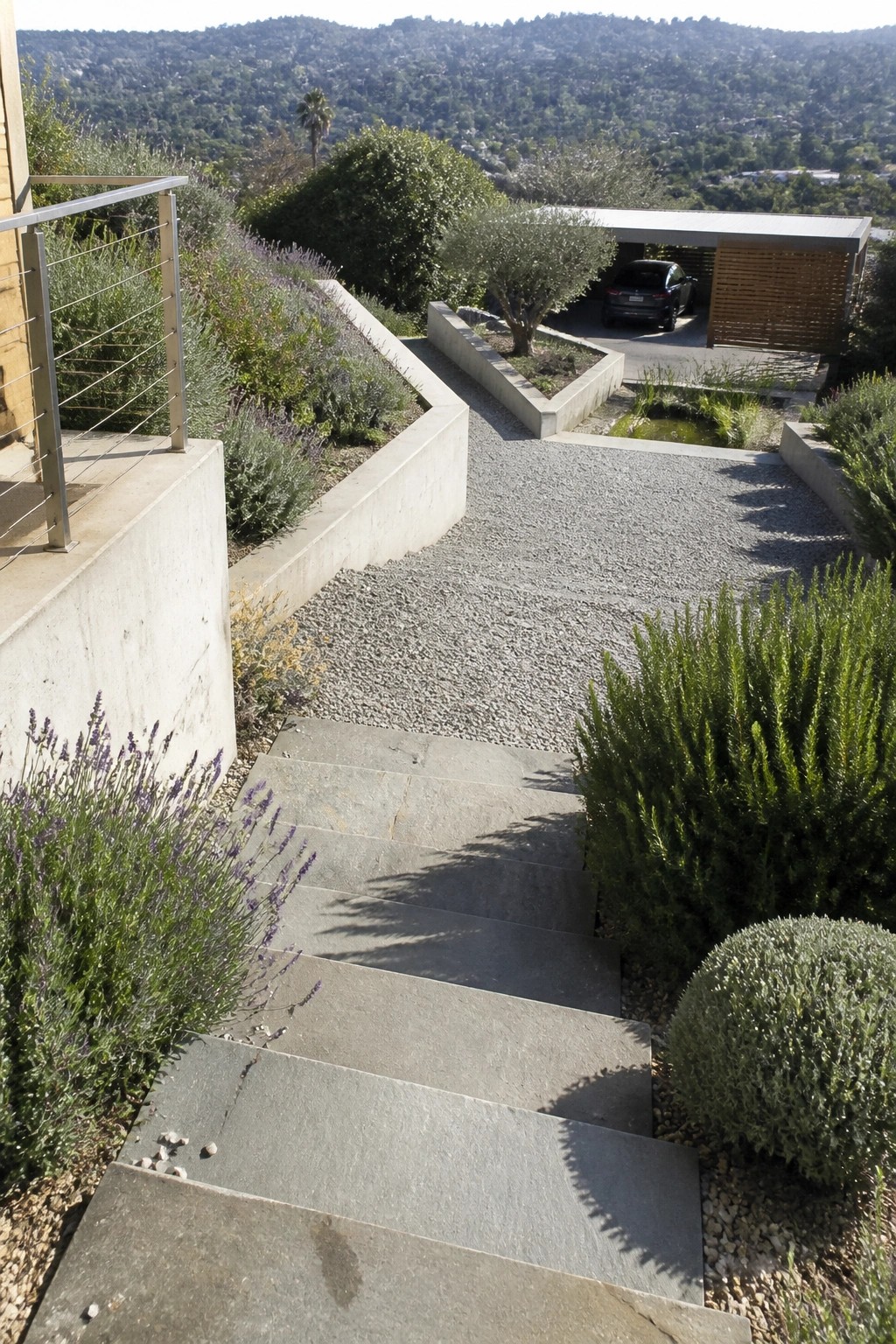
Gravel works well on driveways where the ground drops or rises. It drains easily and stays looking natural next to plants instead of fighting them.
Stone steps can be set right into the gravel where people need to walk. This combination suits homes on hills or uneven lots, and the concrete walls help keep everything in place without a lot of extra work.
Mix Pavers Into Gravel For A Simple Path
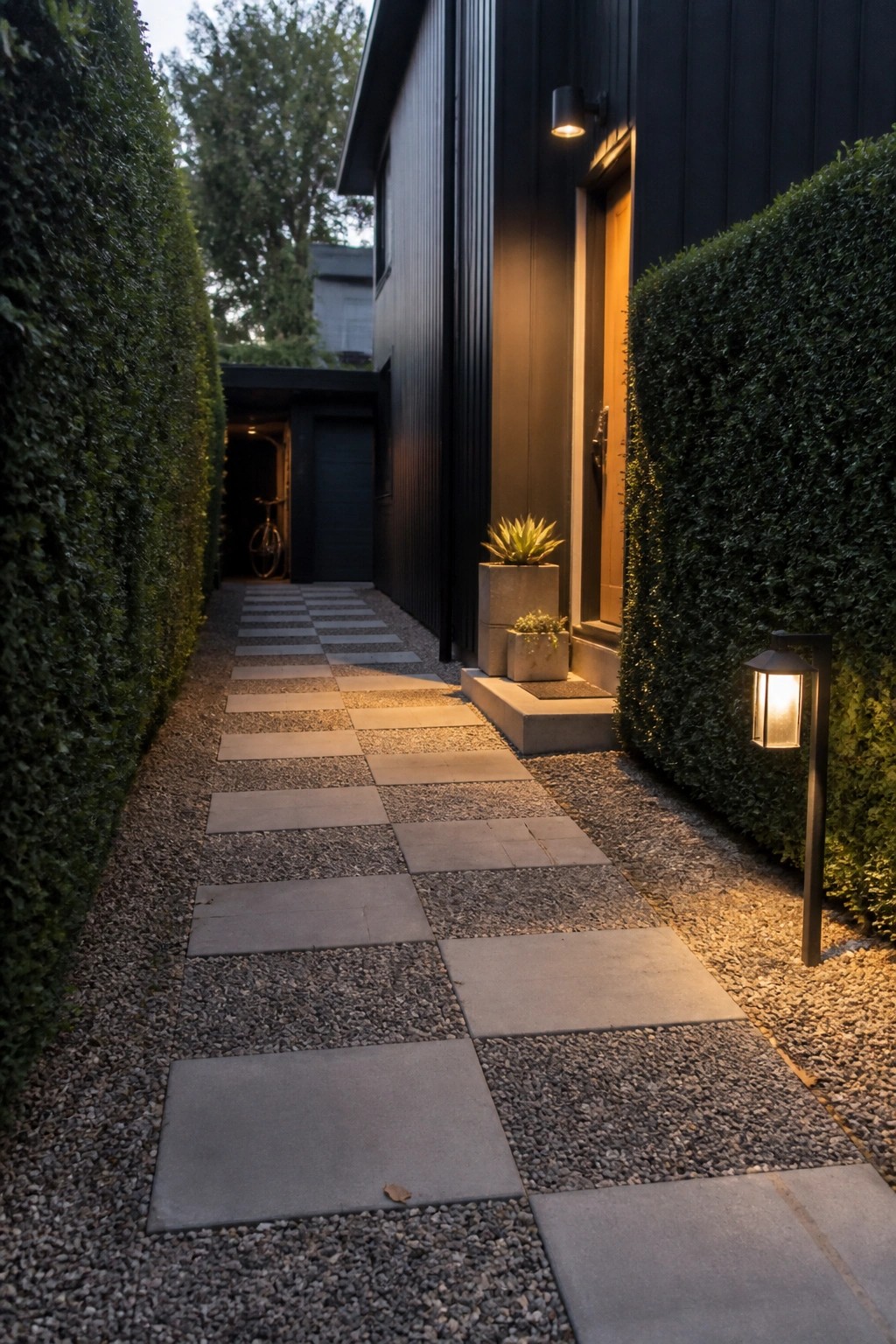
Many homeowners like this approach because it gives a walkway some structure without covering the whole area in solid paving. The large squares keep the surface easy to walk on while the gravel fills in around them for drainage and a softer look.
This style works best on side entrances or narrow paths where you want low maintenance and a bit of contrast with surrounding plants. It suits homes with clean architecture and pairs well with tall hedges or shrubs that frame the route.
Plant a Central Island in Your Gravel Driveway

A planted island in the middle of a gravel driveway adds structure and greenery without making the space feel closed in. The circle of soil and low plants around a single tree creates a natural focal point that softens the wide gravel area.
This layout works best on driveways with enough width to keep the bed clear of tire tracks. Choose compact plants for the edge so the island stays tidy, and pick a tree that stays small enough not to interfere with overhead lines or views of the house.
Stone Edging Around Gravel Paths

Stone edging gives a gravel path or driveway a clear boundary that keeps the surface neat over time. It also frames the planting beds so the flowers stand out instead of blending into the gravel.
This setup suits older homes or cottage-style properties where you want a bit of structure without a hard, formal edge. Keep the stones low and use plants of varying heights right behind them so the border feels soft rather than rigid.
Pavers Set in Gravel Create a Simple Path

Many people like this look because the large flat stones give steady footing while the gravel keeps things low maintenance and drains well after rain. It avoids the need for a full solid surface yet still feels intentional and easy to walk on.
This approach suits modern homes or any entry where you want a clean line without high upkeep. Space the pavers evenly and keep surrounding plants low so the path stays open and welcoming.
Structured Tree Rows Along a Gravel Driveway
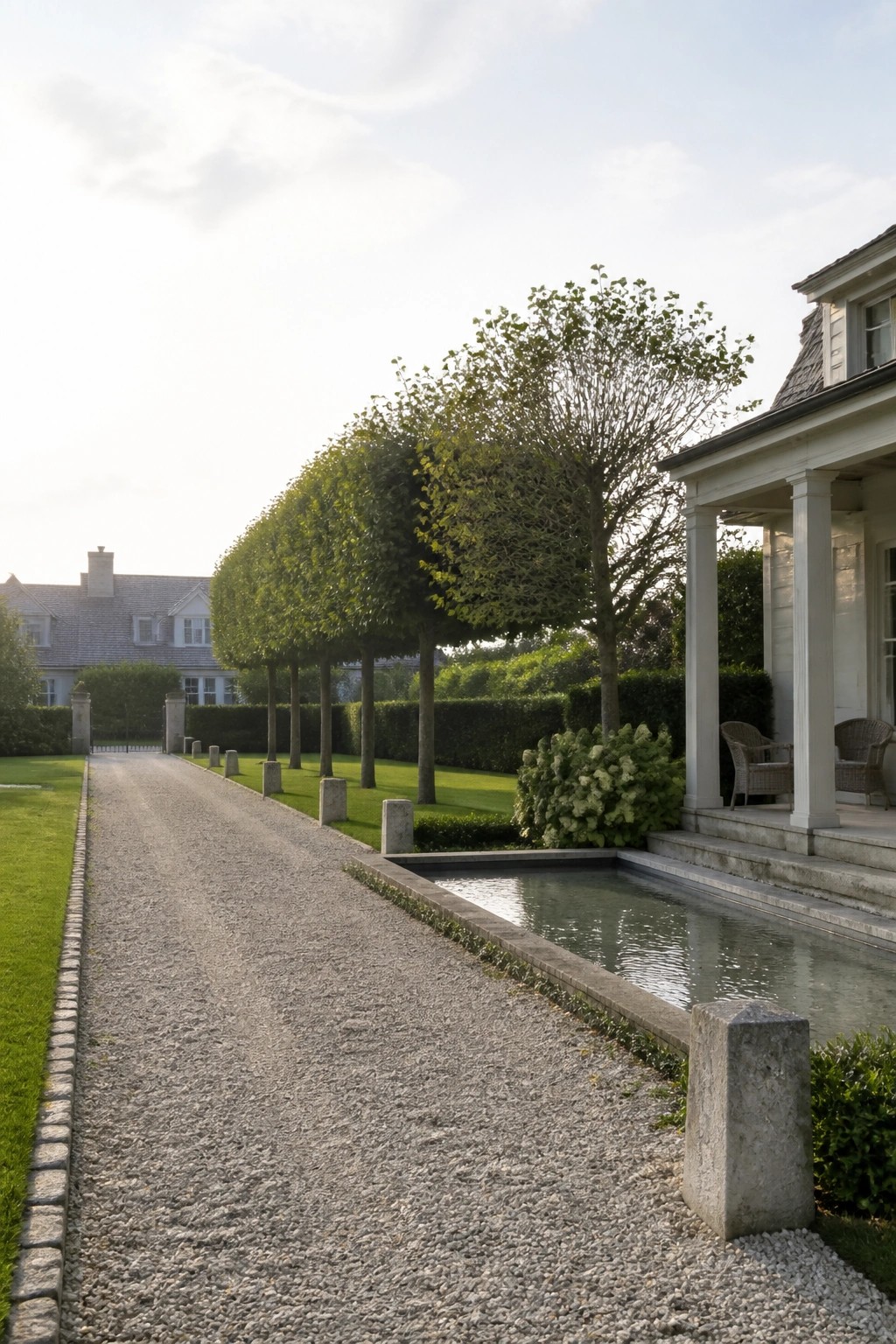
Rows of evenly spaced trees give a gravel driveway a clear shape and direction. The simple line keeps the entrance feeling orderly while the gravel itself stays soft underfoot and easy to maintain.
This approach works well on properties with enough length to let the trees mature without crowding the house. Keep the gravel contained with a low stone edge so it does not spill into the lawn over time.
Tall Grasses Along Gravel Driveway Edges

Tall ornamental grasses work well beside a gravel driveway because they add height and movement without crowding the space. The narrow bed keeps things simple while the grasses soften the hard surfaces around them.
This approach suits modern homes with clean walls and straight lines. Use a metal edge to contain the bed and choose grasses that stay upright so they do not flop onto the driveway. It stays low maintenance once the plants are established.
Run a Water Rill Beside the Gravel Drive

A narrow water channel set right next to a gravel driveway gives the entrance a calm, steady feel without much fuss. The water adds light movement and a soft sound that gravel alone does not provide.
This works best on straight or gently curved drives where you can keep the channel simple and low. It pairs well with drought-tolerant planting along the edges and suits homes that already lean toward Mediterranean or dry-climate gardens.
Striped Gravel for a Patterned Driveway
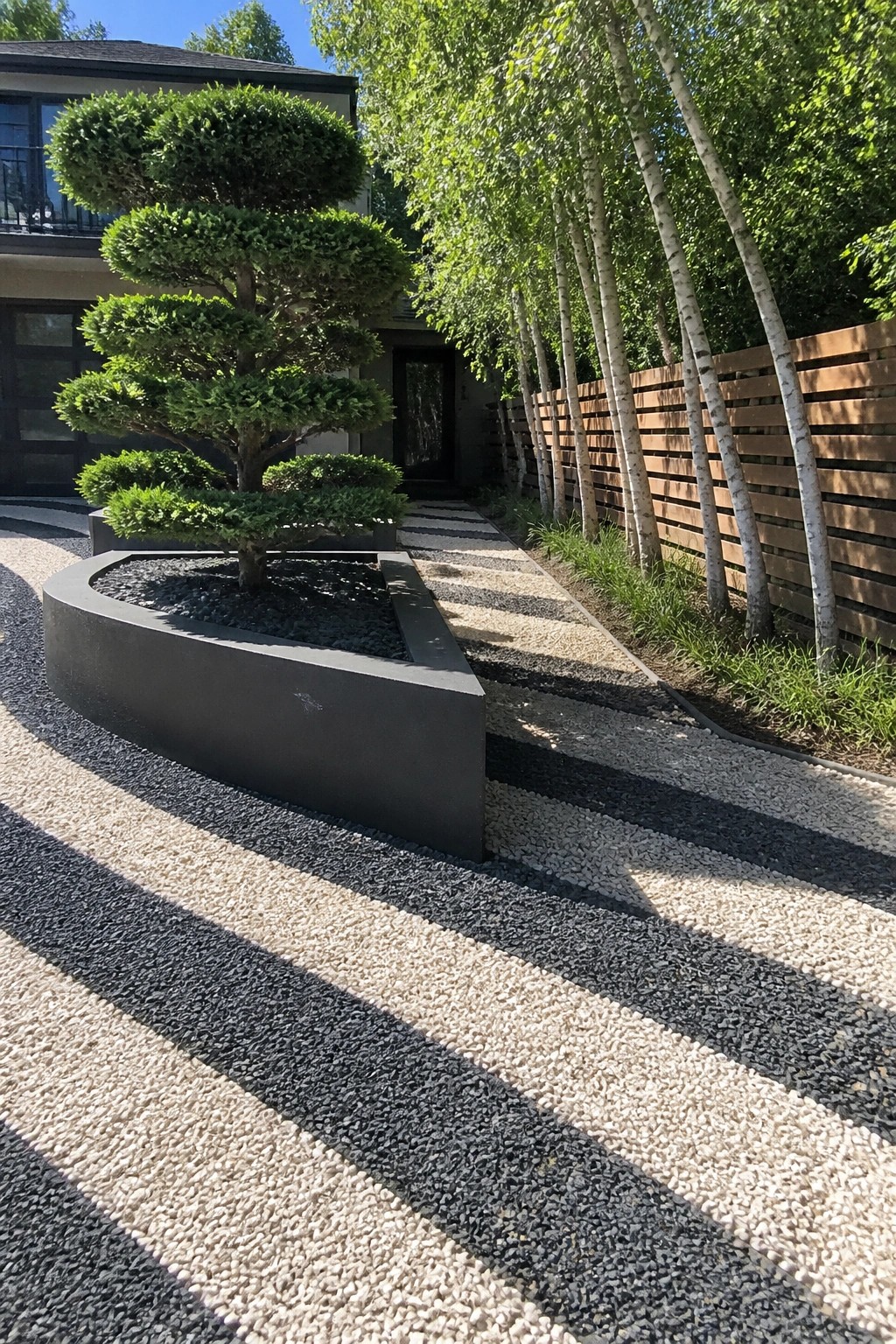
Striped gravel gives a driveway more structure without adding extra features. The alternating bands of light and dark stone create a clear path that feels purposeful and helps the entrance stand out.
This idea works best on straight or gently curved driveways where the pattern can run the full length. It suits modern homes and pairs well with simple edging or a single bold planter to keep the overall look clean.
Stepping Stones Through Gravel
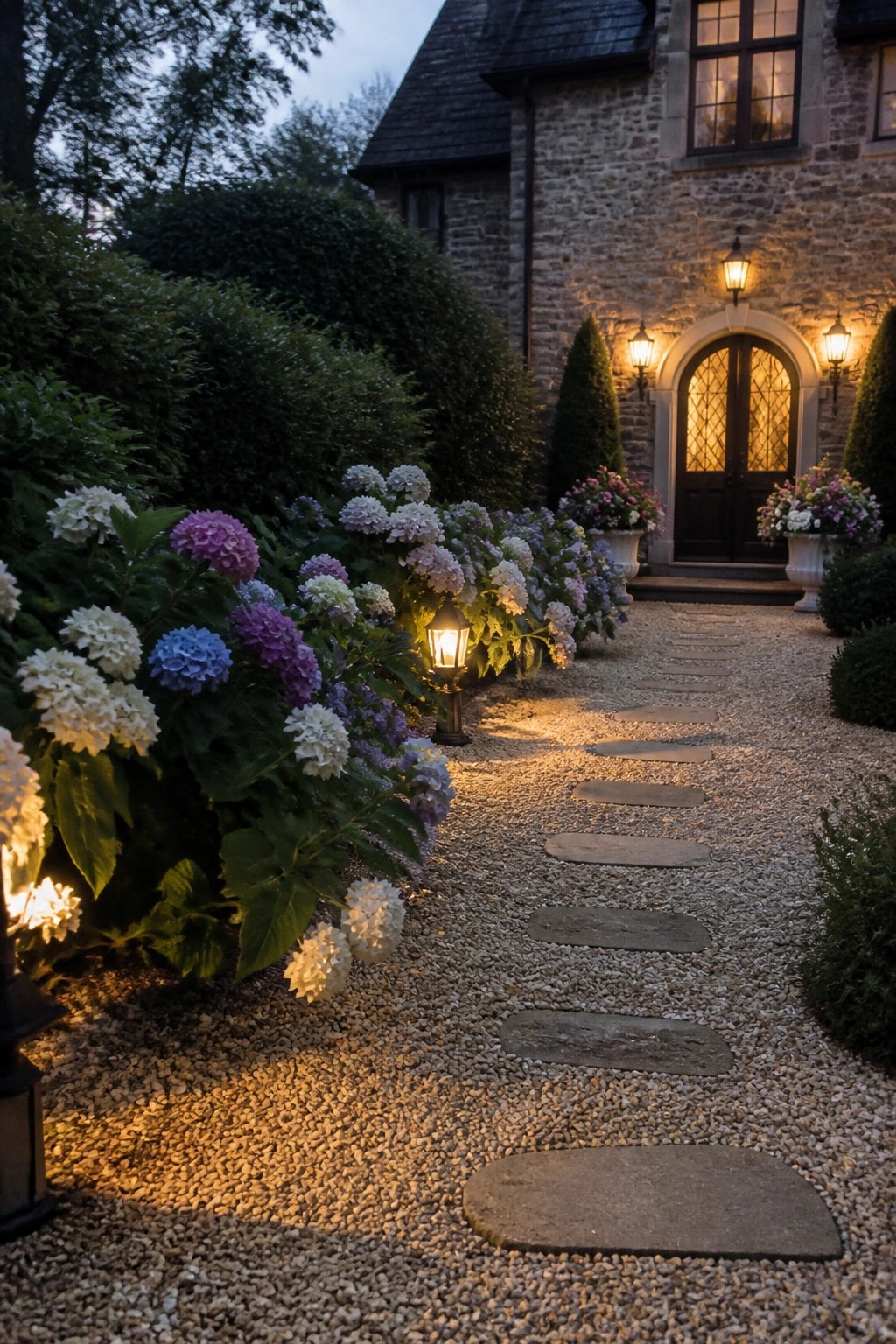
Many people like gravel for a driveway because it drains well and feels softer than solid pavement. Setting flat stones into the gravel creates a clear walking path that keeps feet out of loose stone and gives the whole entrance a bit more order.
This setup works best on homes with a short approach to the front door. Line both sides with flowers to soften the look and add color, but keep the stones level and spaced evenly so the path stays easy to follow.
Stepping Stones Over Gravel For A Clear Path
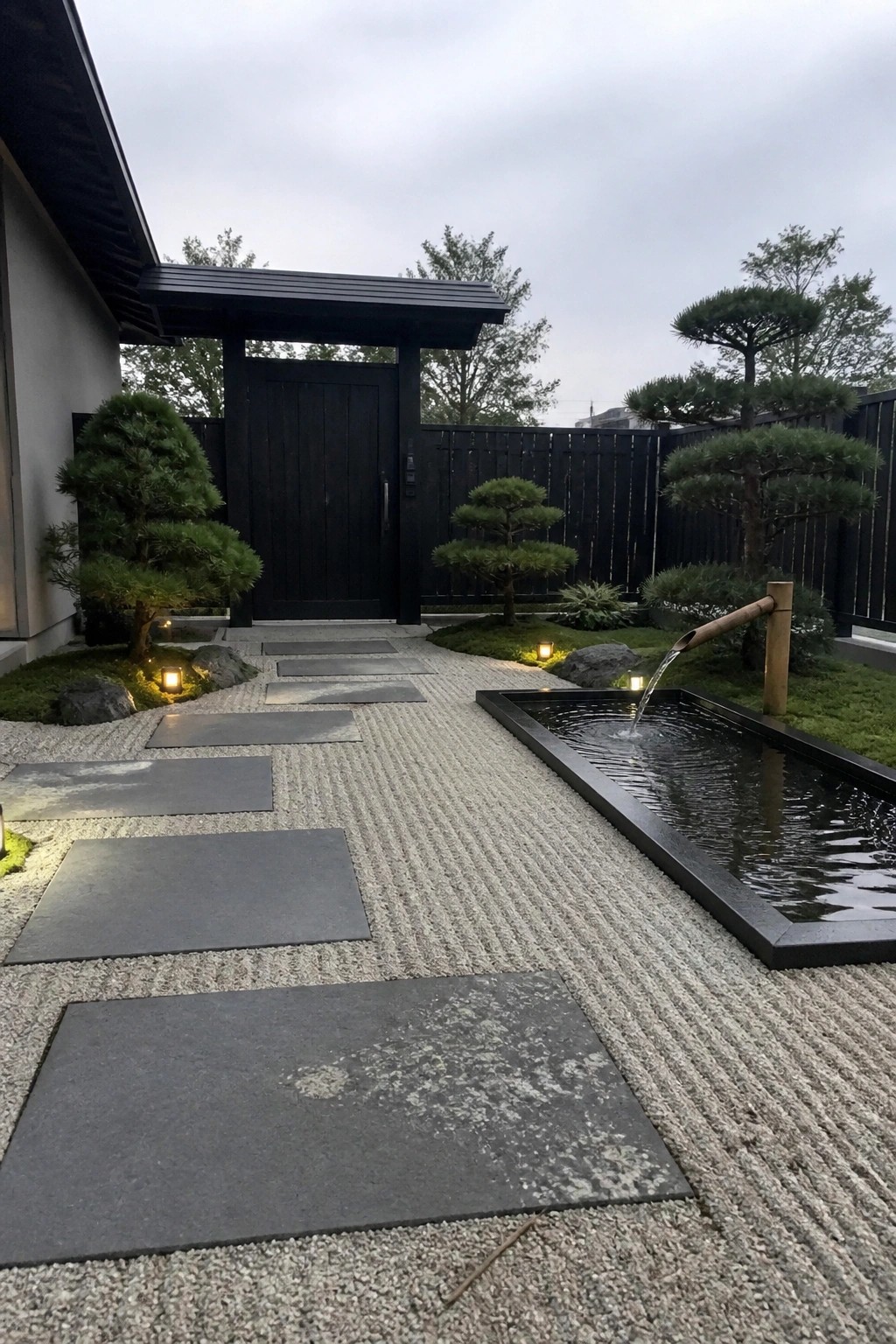
Gravel makes a good surface for driveways because it drains well and needs little upkeep. Laying large flat stones across it gives people a solid place to step so they do not sink or track loose bits inside.
This works best on homes with simple modern or Asian garden styles where the stones can be spaced for a natural walking rhythm. Just keep the gravel raked now and then so the lines stay neat.
Gravel Paths With Brick Edging
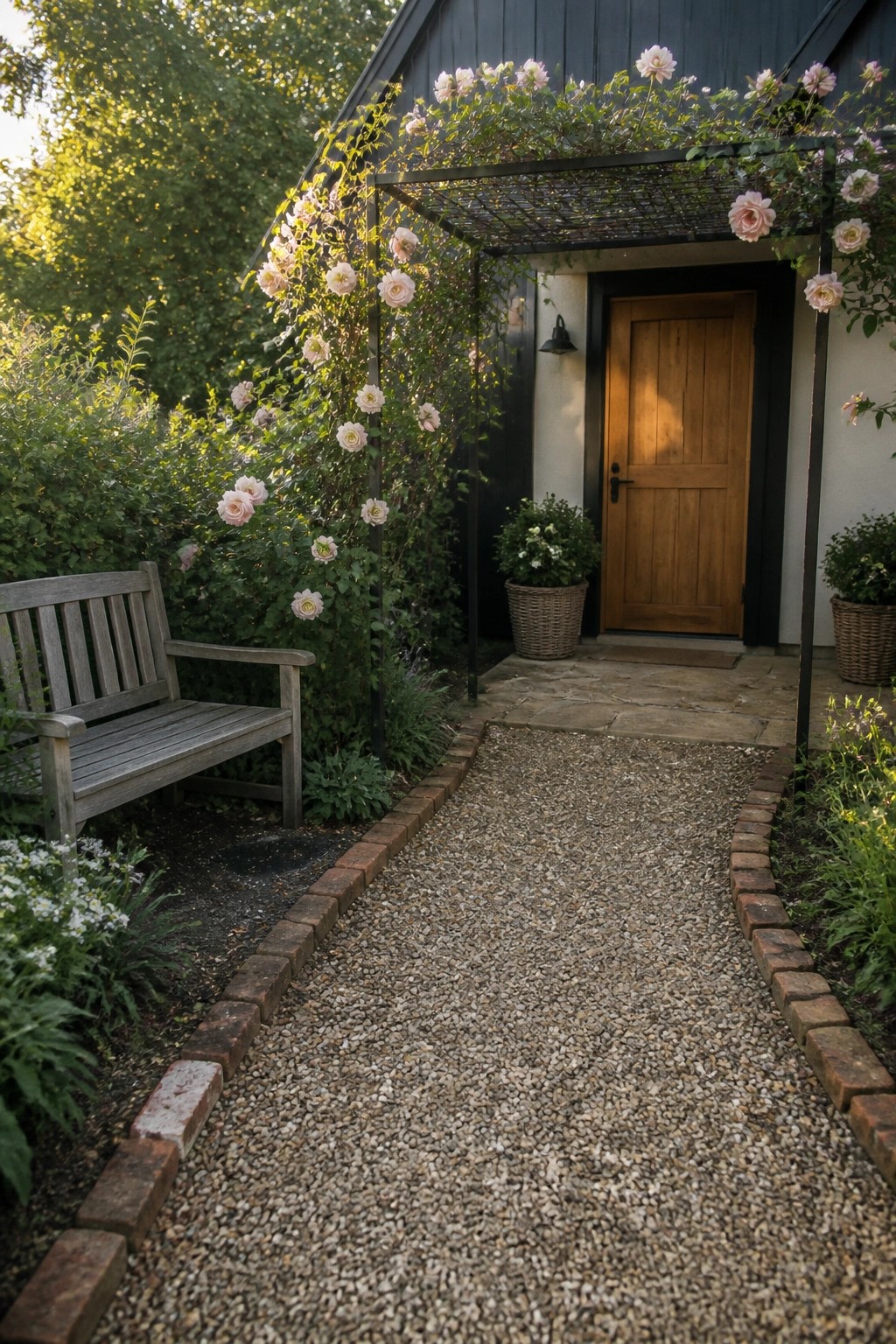
A gravel path with brick edging keeps things simple while still looking intentional. The border stops the gravel from spreading into the beds and gives the walkway a finished edge that feels right at home in front of many house styles.
This works especially well on smaller lots or cottage style homes where you want low maintenance without losing structure. Level the bricks so the path stays easy to walk on, and keep the gravel depth even to avoid dips over time.
Wood Steps In Gravel Paths Handle Slopes Well
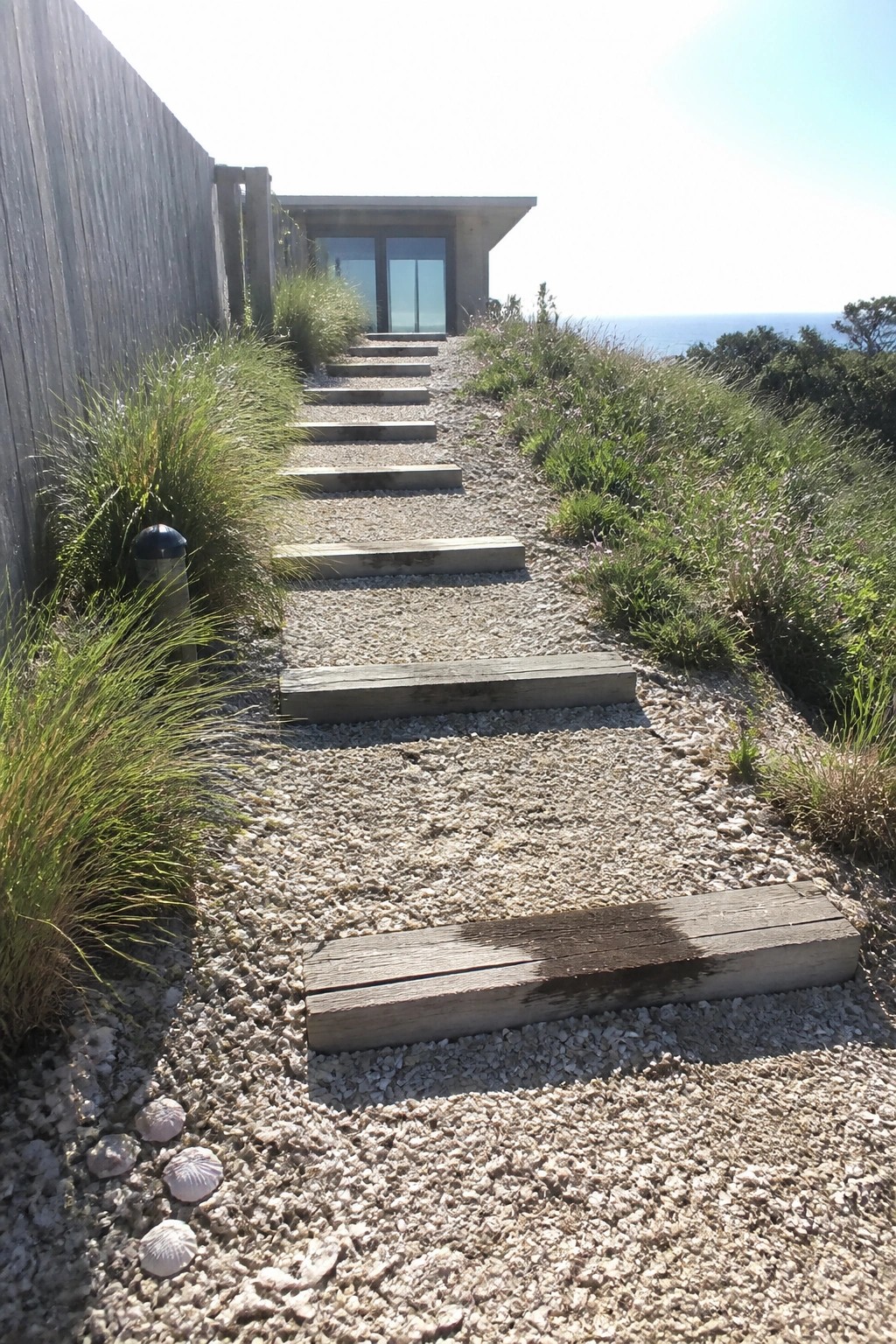
Wood steps set right into a gravel path give steady footing on uneven ground without turning the whole entrance into a formal staircase. The mix keeps things simple and blends the hard surface with the surrounding plants.
This setup works best on gentle hills or coastal lots where drainage matters and you want low upkeep. Use pressure-treated timber, space the steps evenly, and let grasses spill along the edges so the path feels part of the landscape rather than added on.
Stone Edging Defines Gravel Paths
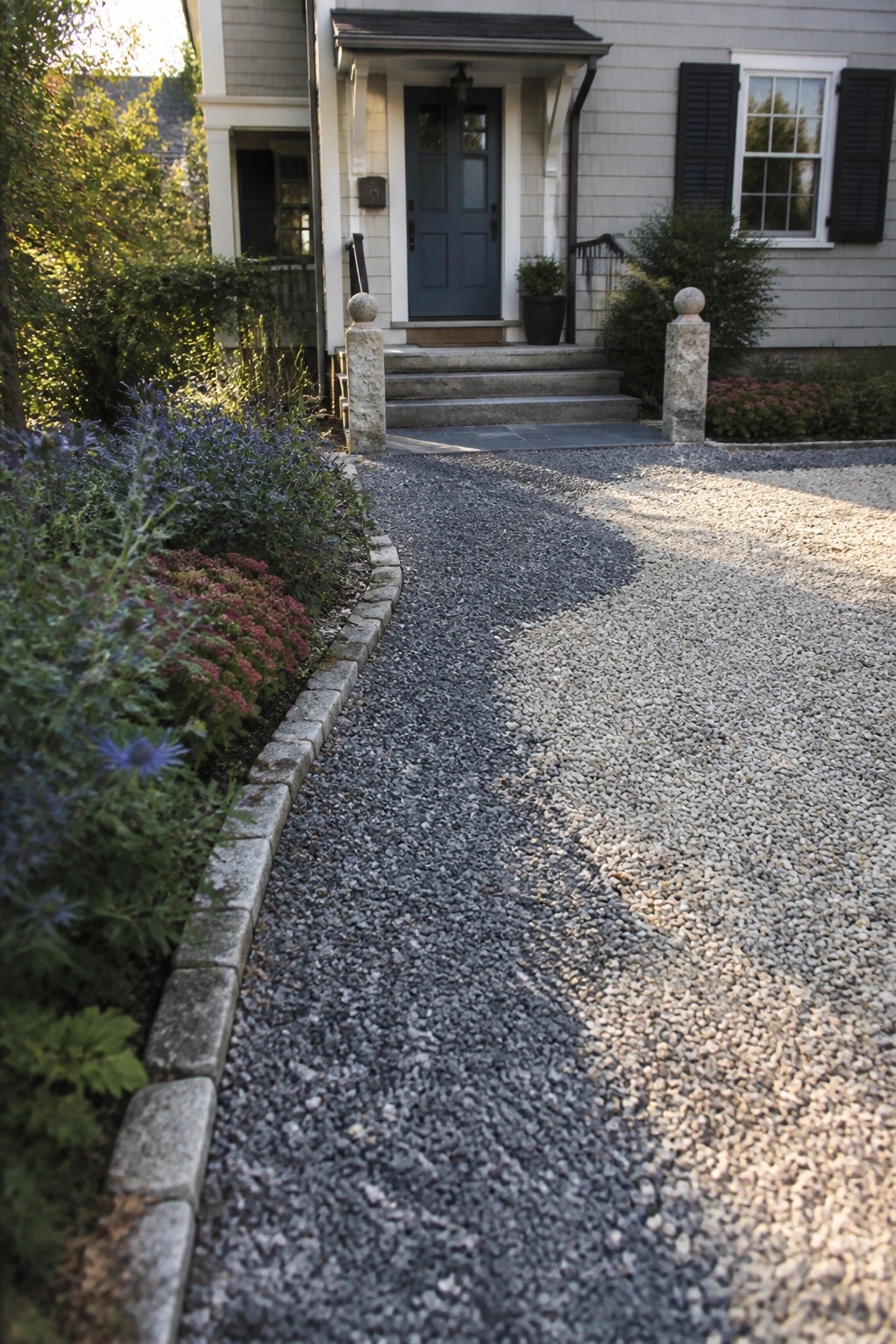
Gravel driveways hold up better when they have a firm border. Stone edging stops the gravel from spreading into the beds and gives the whole entrance a settled look that feels intentional rather than loose.
This approach suits homes with mixed plantings and natural textures. Keep the stones low so lawn equipment can pass over them and choose a gravel size that packs down well under regular traffic.
Gravel Paths With Wildflower Borders

Gravel paths work well because they drain easily and feel less formal than paved options. Adding wildflowers right along the edges softens the look and brings in color and movement without needing constant trimming or edging.
This approach suits homes with open yards or properties near fields and wetlands. Stick to native plants that spread naturally, and keep the gravel layer thick enough to stay stable underfoot through the seasons.
Frequently Asked Questions
Q: How do I keep weeds from taking over the gravel areas? A: Lay down a solid weed barrier fabric before you spread the gravel. Top it with a few inches of fresh stone every couple of years to block new growth. Hand pull any stragglers early before they spread seeds.
Q: What edging keeps the gravel from drifting into the lawn? A: Set heavy timber or stone borders right at the edge of the drive. They hold the material in place even after heavy rain. Make sure the top sits level so you can mow right up to it without catching.
Q: Which plants stay healthy right next to the gravel without extra fuss? A: Pick tough choices like lavender or sedum that handle dry soil and foot traffic. Plant them in pockets of good soil mixed into the gravel bed. Water them well the first year then let nature take over.
