

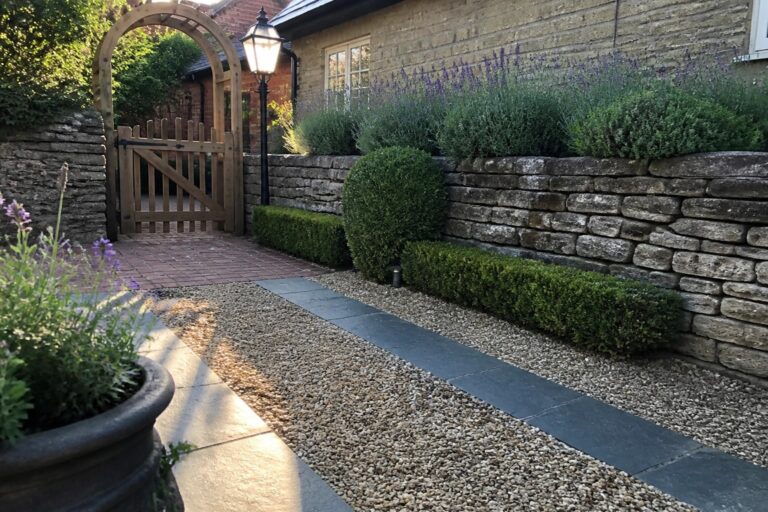
When your driveway has to fit into a narrow slice of the front yard, the material choice starts to shape how the whole house meets the street.
I have stood in front of homes where a poorly planned gravel stretch made the entry feel cramped even though the house itself had plenty of width.
Gravel can settle into the existing grade without needing heavy edging, which keeps the focus on the facade rather than on a new border running along the drive.
Some approaches hold up better once the seasons change.
It is worth testing how the stones will look against your siding and walkway before you commit to a full layout.
Mix Gravel With Stone Slabs For Narrow Paths
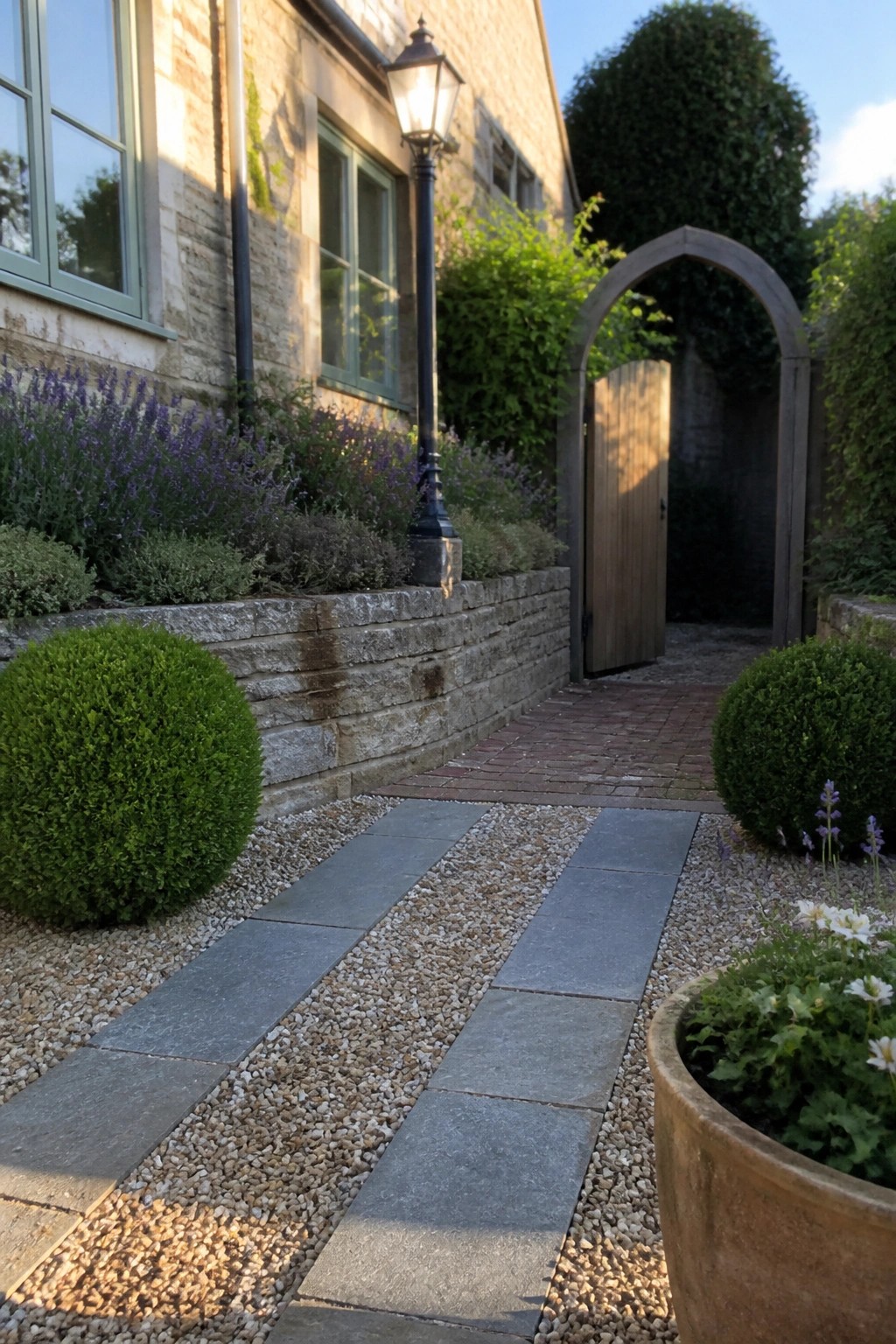
Mixing gravel with large stone slabs gives a path that feels solid underfoot while still looking soft and simple. The slabs create steady footing and keep the gravel from spreading everywhere, which helps in tight spots where a full driveway or wide walk would crowd the space.
This approach suits older homes or side entries where the path needs to stay narrow. Keep the slabs level and leave enough gravel between them so water drains well and weeds stay down.
Add a Tree Island to Your Gravel Drive
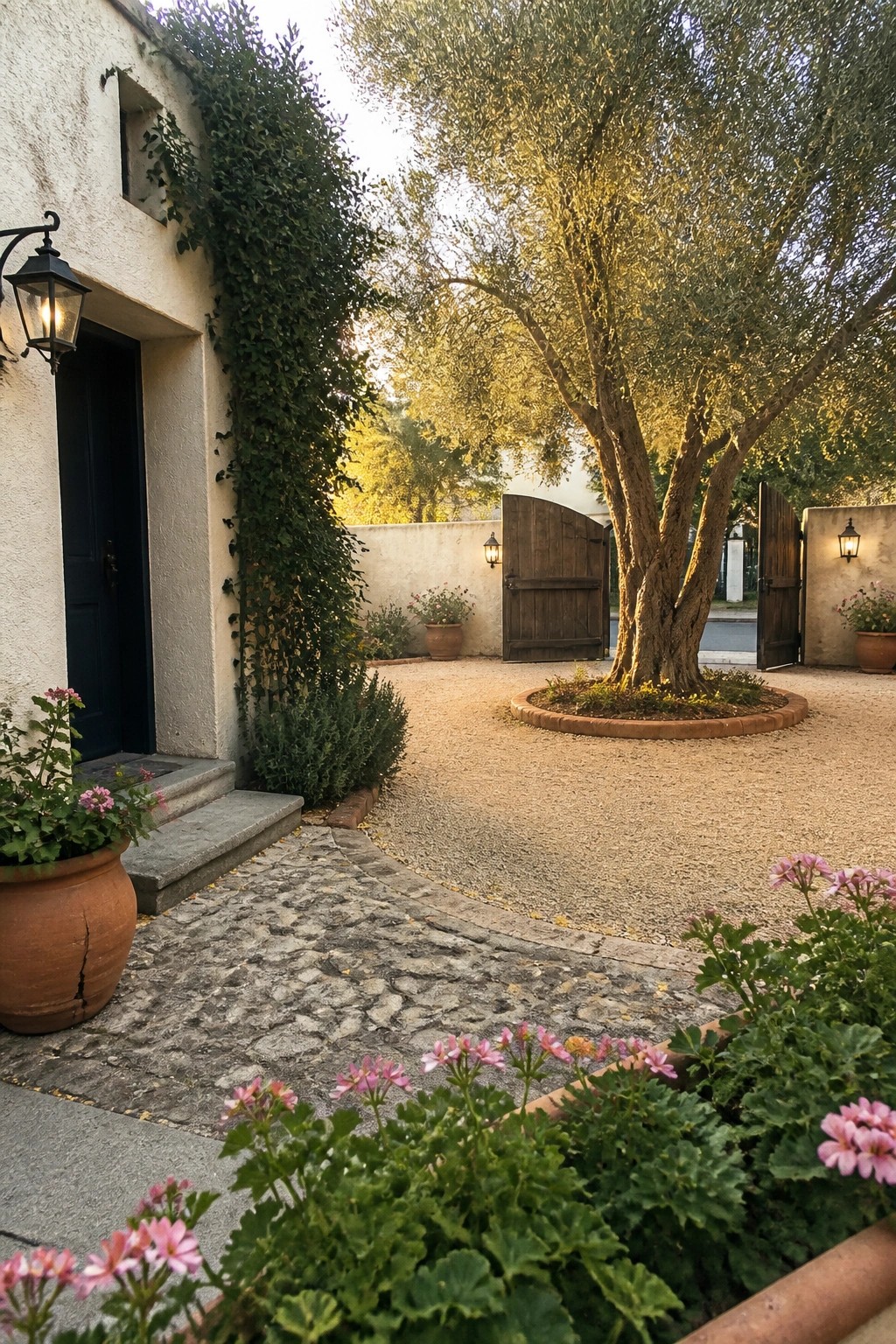
A small gravel driveway can feel more settled when you place a single tree in its own bed right in the middle. The planted circle breaks up the flat surface without eating into usable space, and it gives the eye something to rest on instead of just a stretch of gravel.
This setup works best on narrow lots or courtyard entries where you need a focal point but do not want to add walls or extra paving. Keep the bed low and simple with a clean edge, and let the gravel run right up to it so the whole area still reads as one open surface.
Edge Small Gravel Driveways With Wood Planks
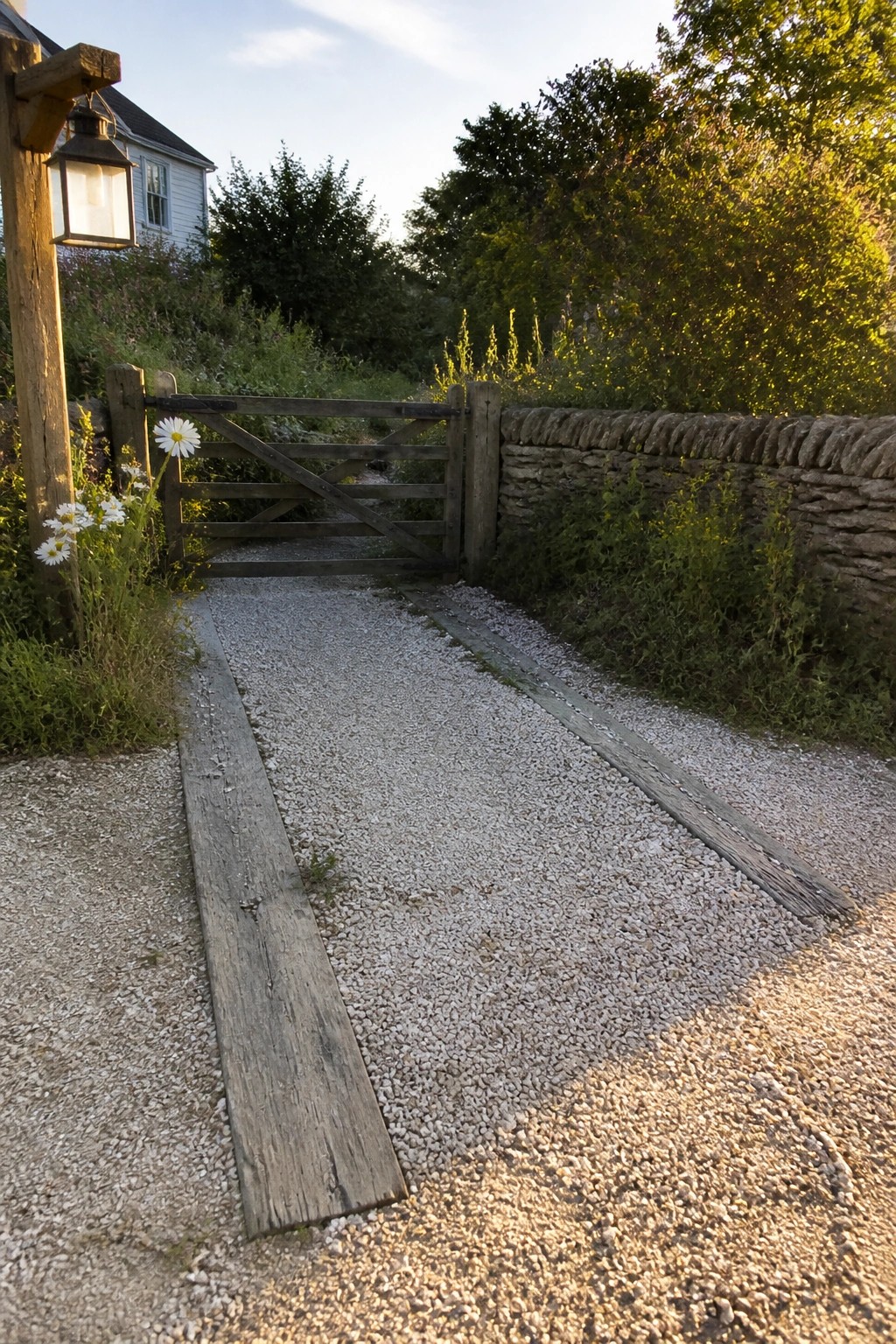
Wood edging helps keep gravel in place on narrow driveways where space is tight. The planks create a clear boundary that stops the stones from drifting into grass or flower beds, and they give the whole entrance a finished look without taking up extra room.
This approach works best on older properties or cottage-style homes where a simple, natural border fits the setting. Use pressure-treated timber or reclaimed wood set level with the ground so cars and feet can pass over it easily. Check the edges once a year to make sure the planks stay secure.
Stepping Stones In Gravel For Narrow Paths
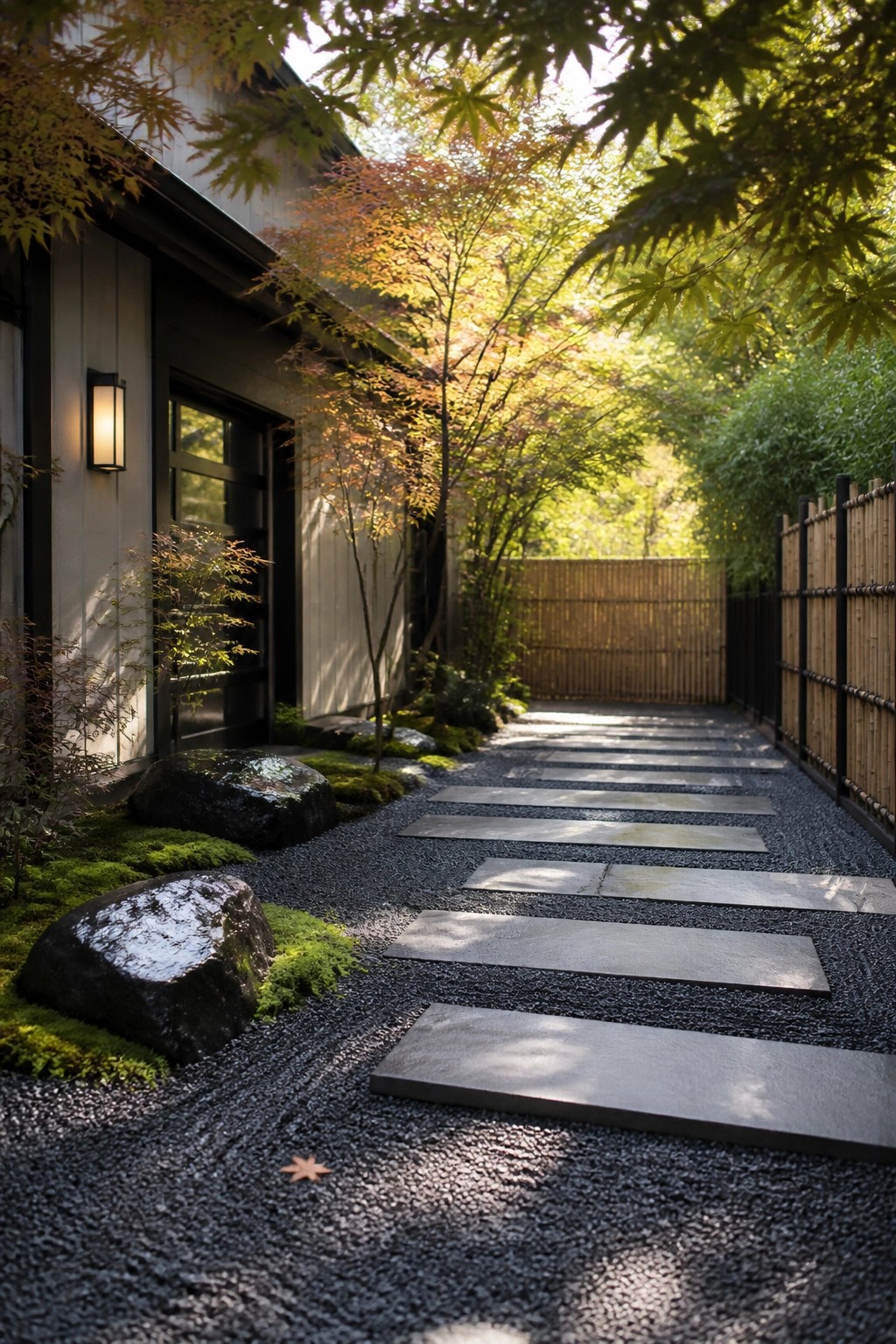
A path made from flat stones set into gravel works especially well when space is tight. It gives you a clear walking surface without covering the whole area in solid paving, and the gravel helps with drainage while keeping the look simple and low key. This approach suits side yards or entries where a full driveway would feel too wide.
It works best on homes with limited side access or small front setbacks. Keep the stones spaced evenly for comfortable steps and use a dark gravel to help hide footprints and leaves. The stones can be adjusted later if the ground settles, which makes the whole thing practical to maintain over time.
Gravel Paths With Low Stone Borders
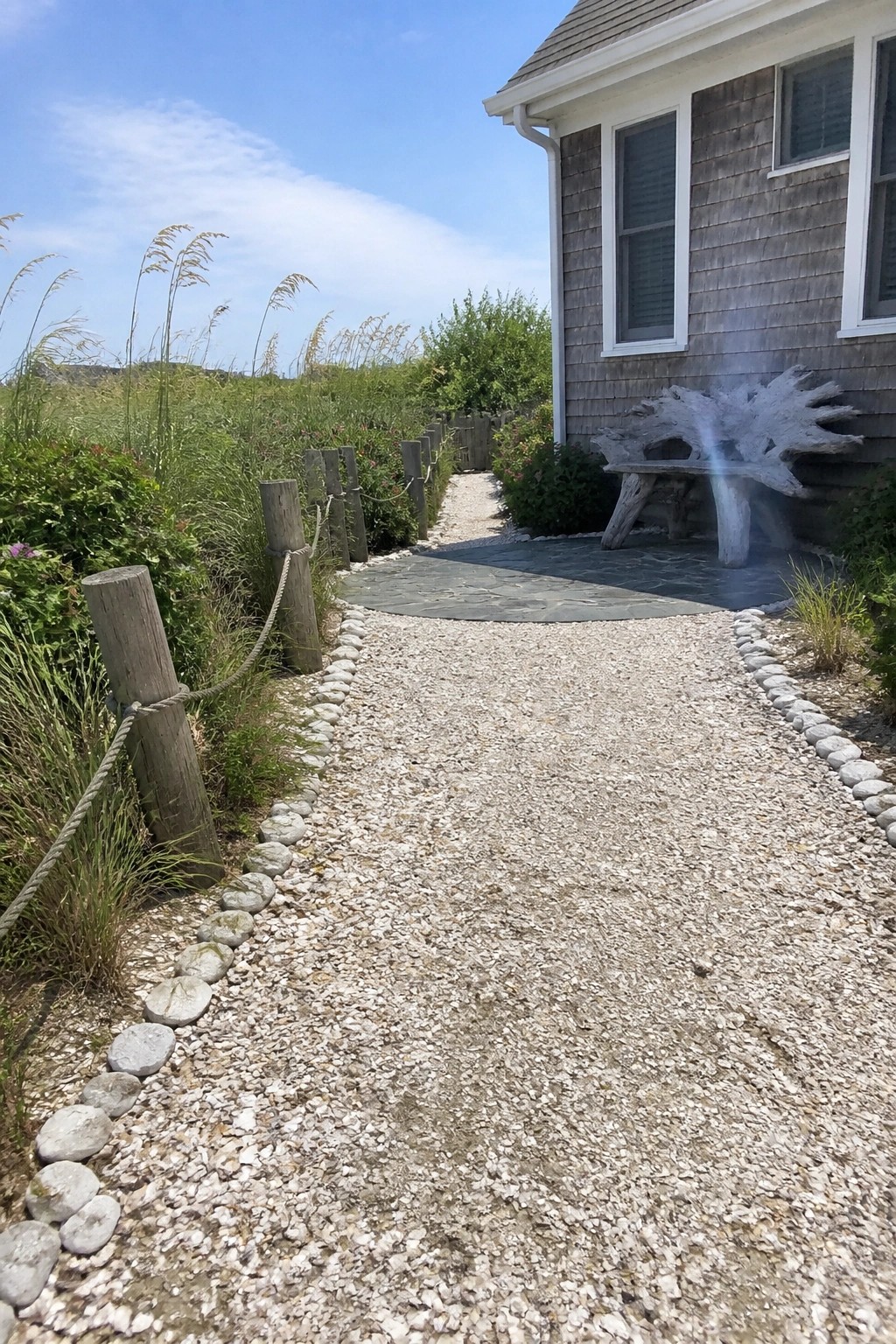
Gravel paths edged with round stones give a small driveway or walkway a clear shape without eating up space. The edging holds the material in place and keeps the look simple and open at the same time.
This approach works best on tight lots or coastal homes where you want something practical but still natural. It leaves room for planting along the sides and needs very little upkeep once the stones are set.
Gravel And Stepping Stones Work In Narrow Side Yards
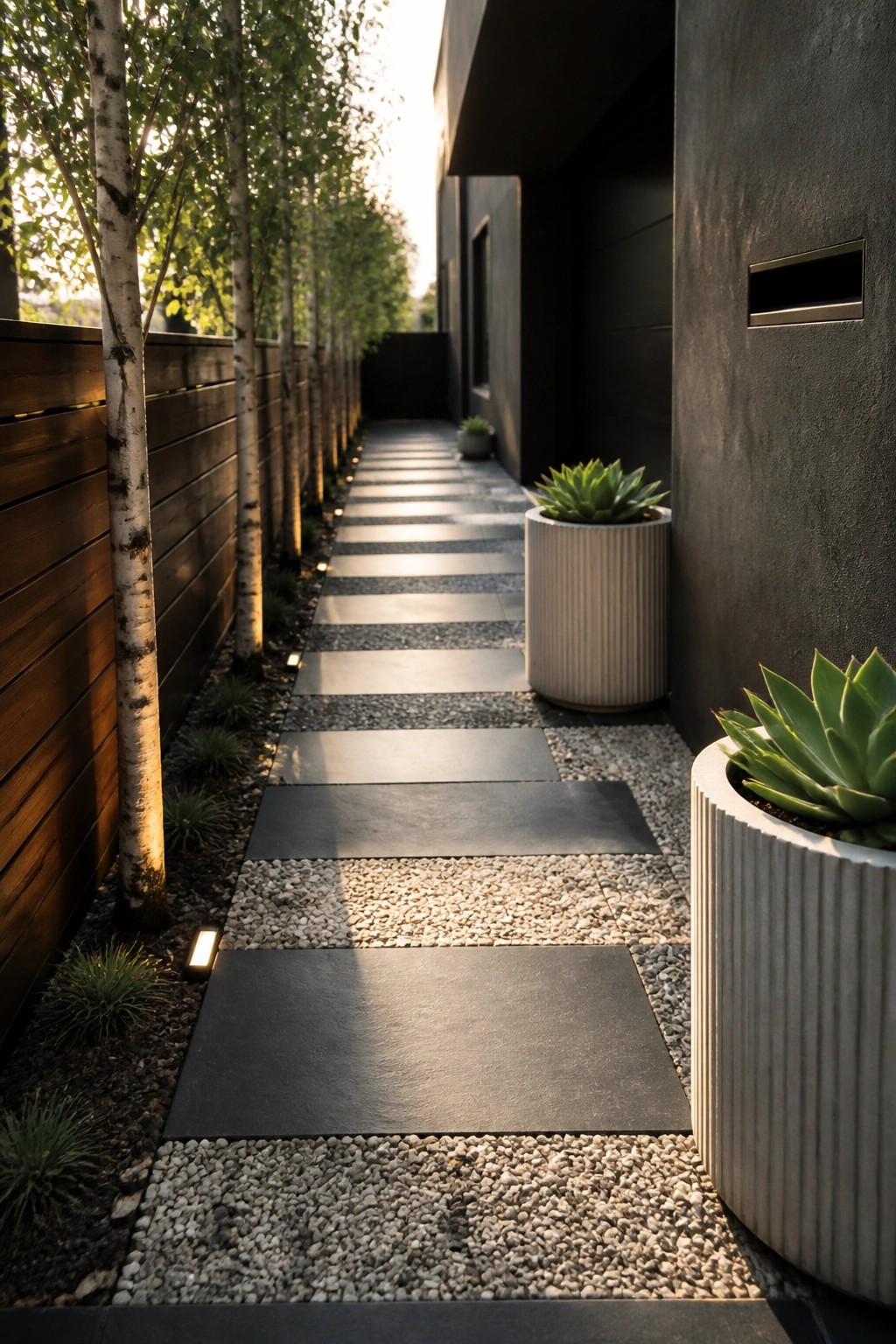
A path made of large flat stones set into gravel gives solid footing without needing much width. The gravel fills the gaps, handles drainage, and keeps the whole thing looking simple instead of overbuilt. This setup feels practical in tight spots where a full driveway would crowd the house.
It suits homes with long, slim side yards or narrow access points. Space the stones evenly so they line up with normal steps, and choose gravel that packs down well so it does not shift underfoot. Keep nearby planting low so it does not spill onto the walking surface.
Define Small Driveways With a Paver Transition
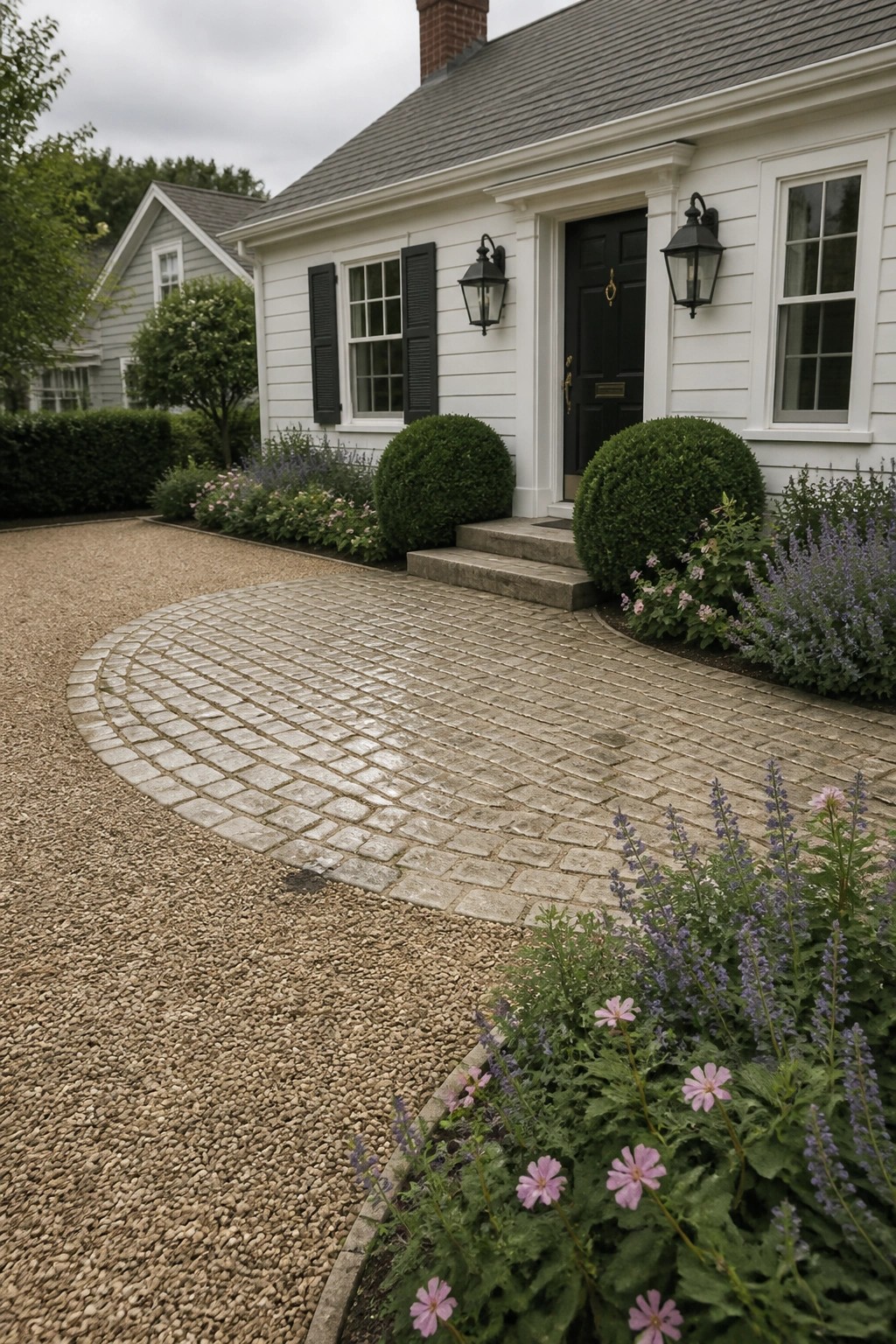
Gravel works well for compact driveways since it is affordable and drains easily. Adding a short run of pavers where the gravel meets the house or curves around the entry gives the surface a clean edge and keeps the stones from scattering onto the walk.
This approach suits older homes on modest lots because the pavers create a simple border without needing a full paved drive. Keep the paver section narrow and follow the natural curve of the space so the gravel still handles most of the area.
Metal Edging Keeps Narrow Gravel Driveways Tidy
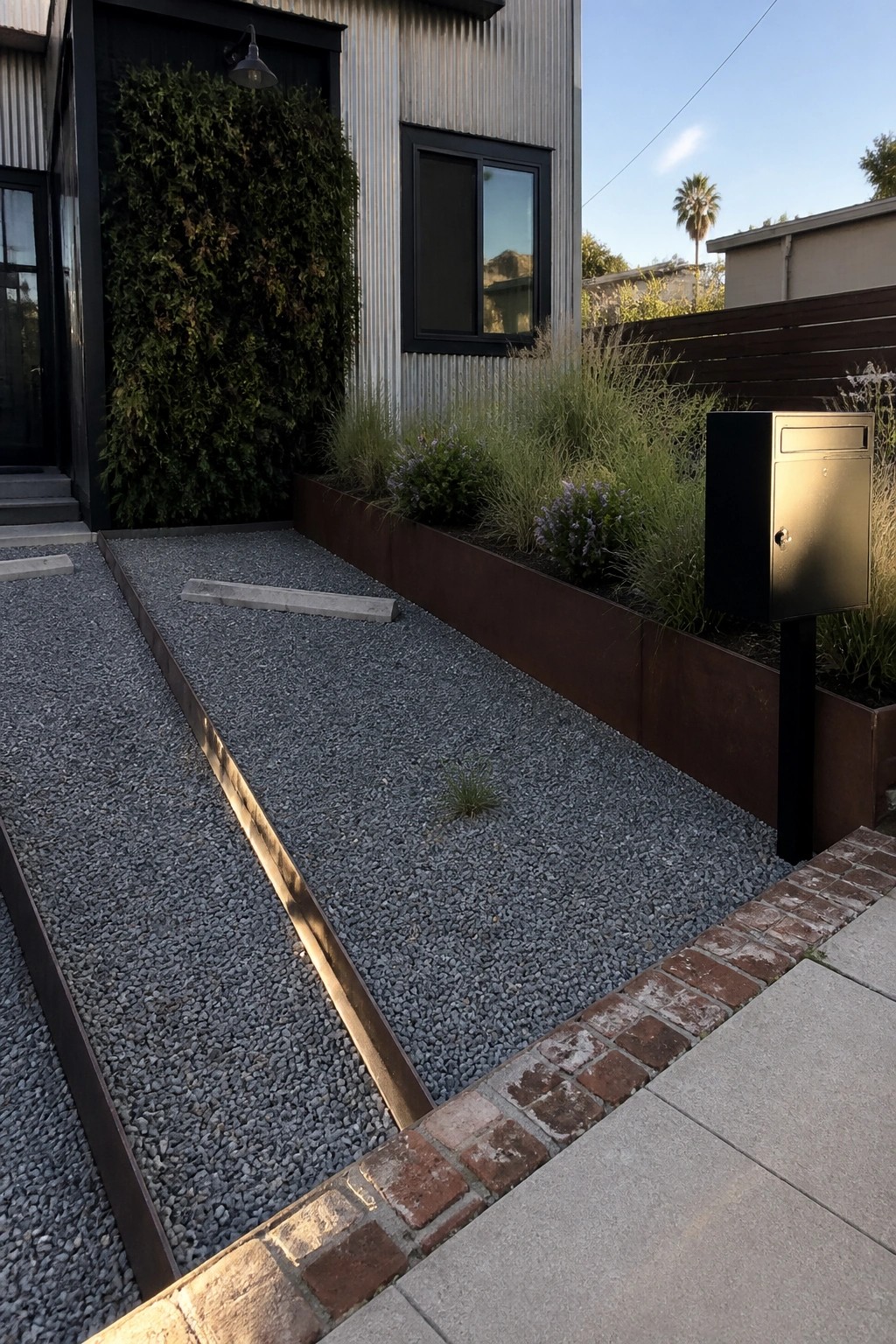
Gravel works well in tight front yards when it stays put. Metal edging gives the material a clean edge so it does not spill onto walks or plantings, and it holds up better than wood or plastic in most climates.
This approach suits homes with limited driveway space or side entries. Pair the edging with raised beds along one side to add planting without taking up more ground, and keep the gravel layer thin so it drains quickly after rain.
Add a Stone Circle to the Gravel

A circular stone inlay gives a small gravel driveway a clear center point without eating up any extra room. It breaks the flat surface into something more structured and helps the eye settle instead of wandering across an empty stretch of gravel.
This works best in tight urban courtyards or narrow side drives where you need one strong focal detail. Keep the rest of the surface plain gravel and add only a few pots or low plants along the edges so the circle stays the main feature.
Use Gravel Strips Between Pavers For Better Drainage
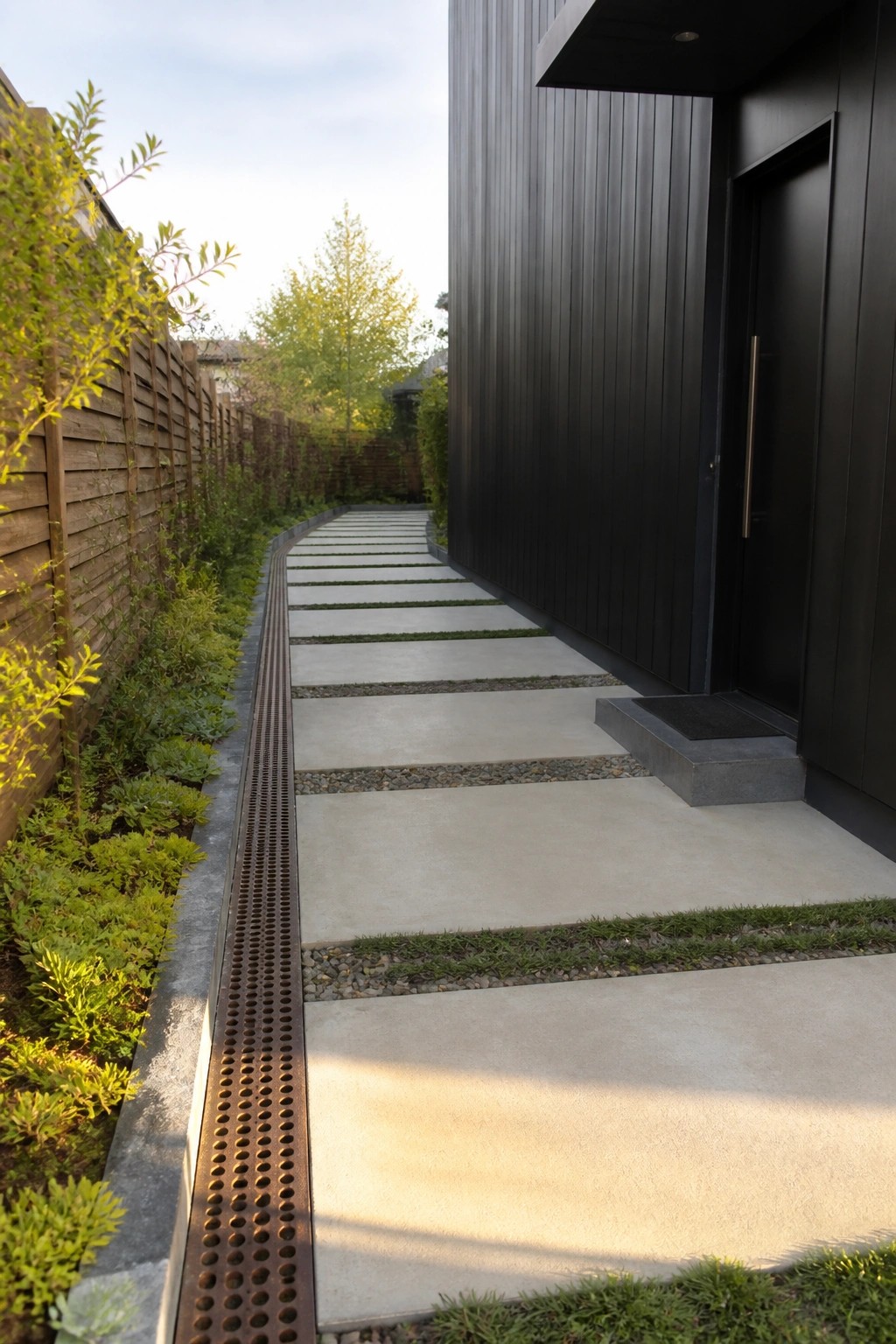
Narrow side paths often collect water and look messy fast. Adding strips of gravel between concrete pavers gives the water somewhere to go and keeps the surface cleaner over time. The metal linear drain at the edge takes care of heavier runoff without needing a wide trench.
This setup works well along the side of a house where space is tight. It keeps the path looking simple while handling rain better than solid concrete alone. Just make sure the gravel sits a little lower than the pavers so it stays in place.
Use A Central Paver Strip In A Gravel Driveway
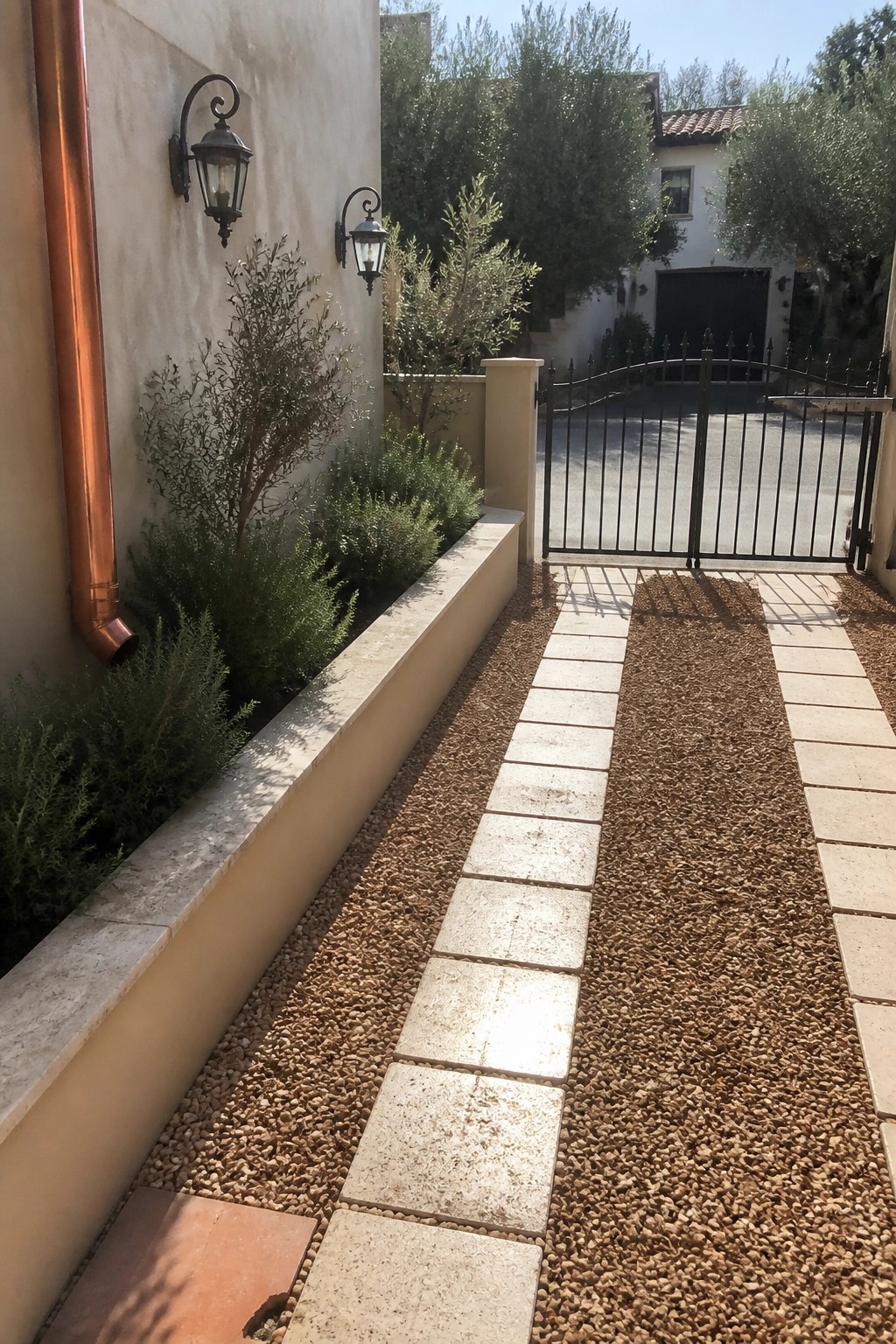
A row of pavers running down the middle of gravel gives a clear path to follow while the gravel handles the rest of the surface. This keeps the whole area looking simple and helps water drain instead of pooling on a solid slab.
It suits homes with narrow side entries or short driveways where a full paved surface would feel too heavy. Just keep the paver width wide enough for tires and add a low border if you want to hold the gravel in place.
Mix Gravel Colors for a Defined Center Path
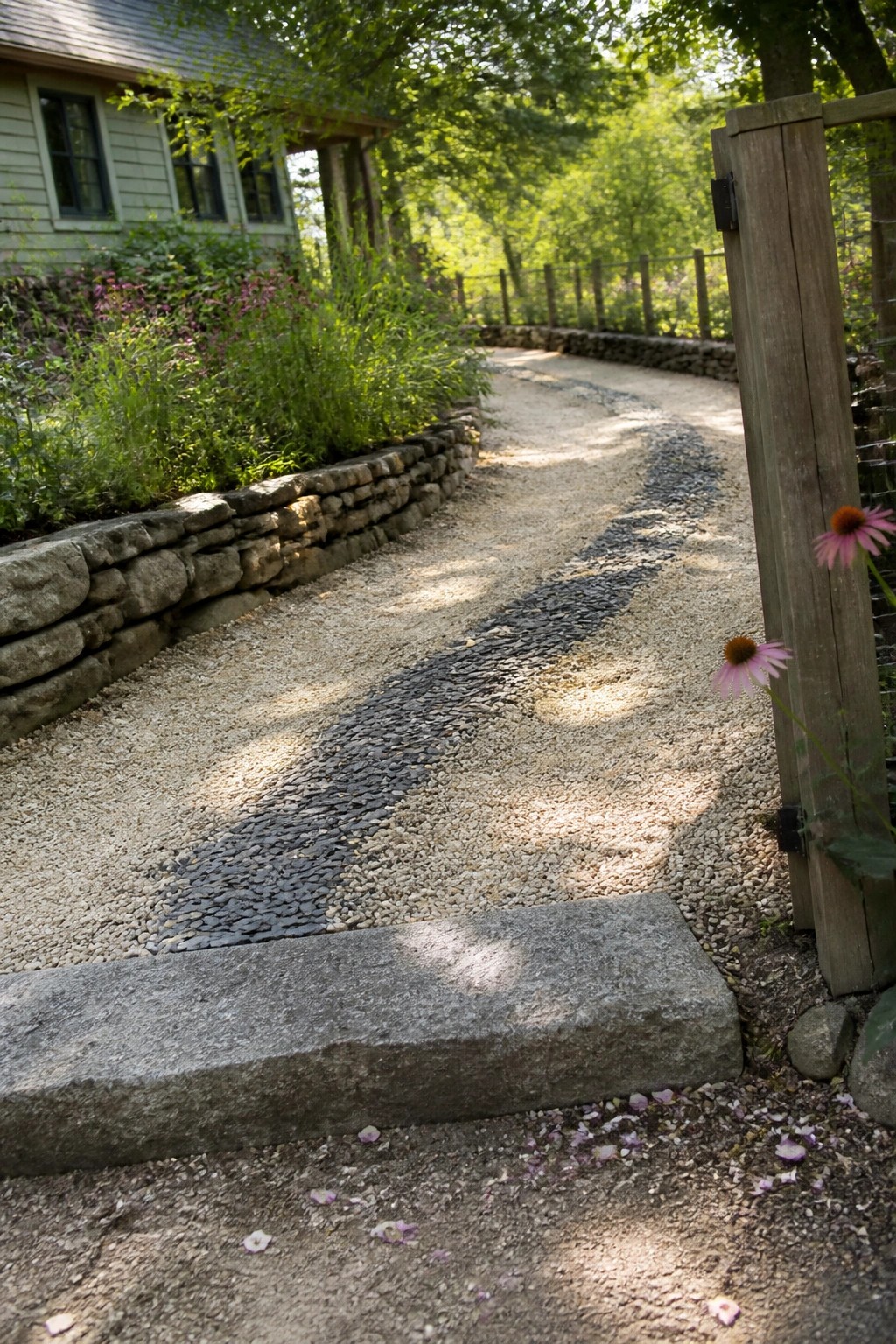
A strip of darker gravel running down the middle of a lighter base gives a driveway more structure without adding width. The contrast helps the path read as intentional and keeps it from looking like a flat spread of stone, which is useful in tighter yards.
This approach suits older homes or compact lots where you want the drive to feel guided rather than open. Use a simple stone edge to hold everything in place and keep the two gravel sizes close so the strip stays neat over time.
Pavers Set In Gravel Define A Narrow Driveway Path
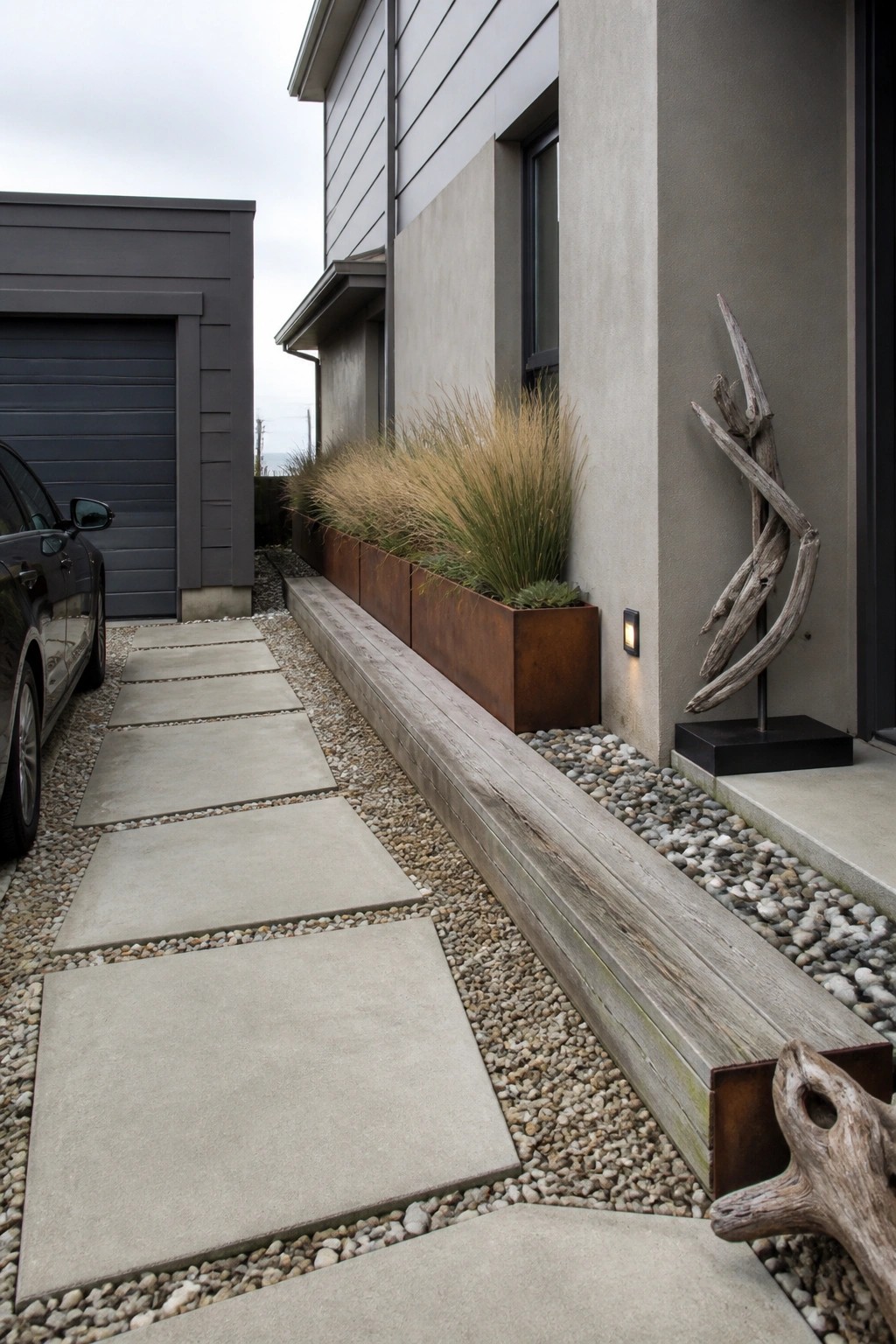
Gravel driveways work well in tight spots because they drain easily and do not require much material. Adding a row of large concrete pavers gives a solid place to walk and keeps the surface from looking messy where people step most.
This layout suits side driveways next to the house. Lay the pavers in a straight line along the main walking route and let the gravel fill the rest. Raised planters can edge the space without eating into the width.
Line A Narrow Gravel Path With A Raised Planter
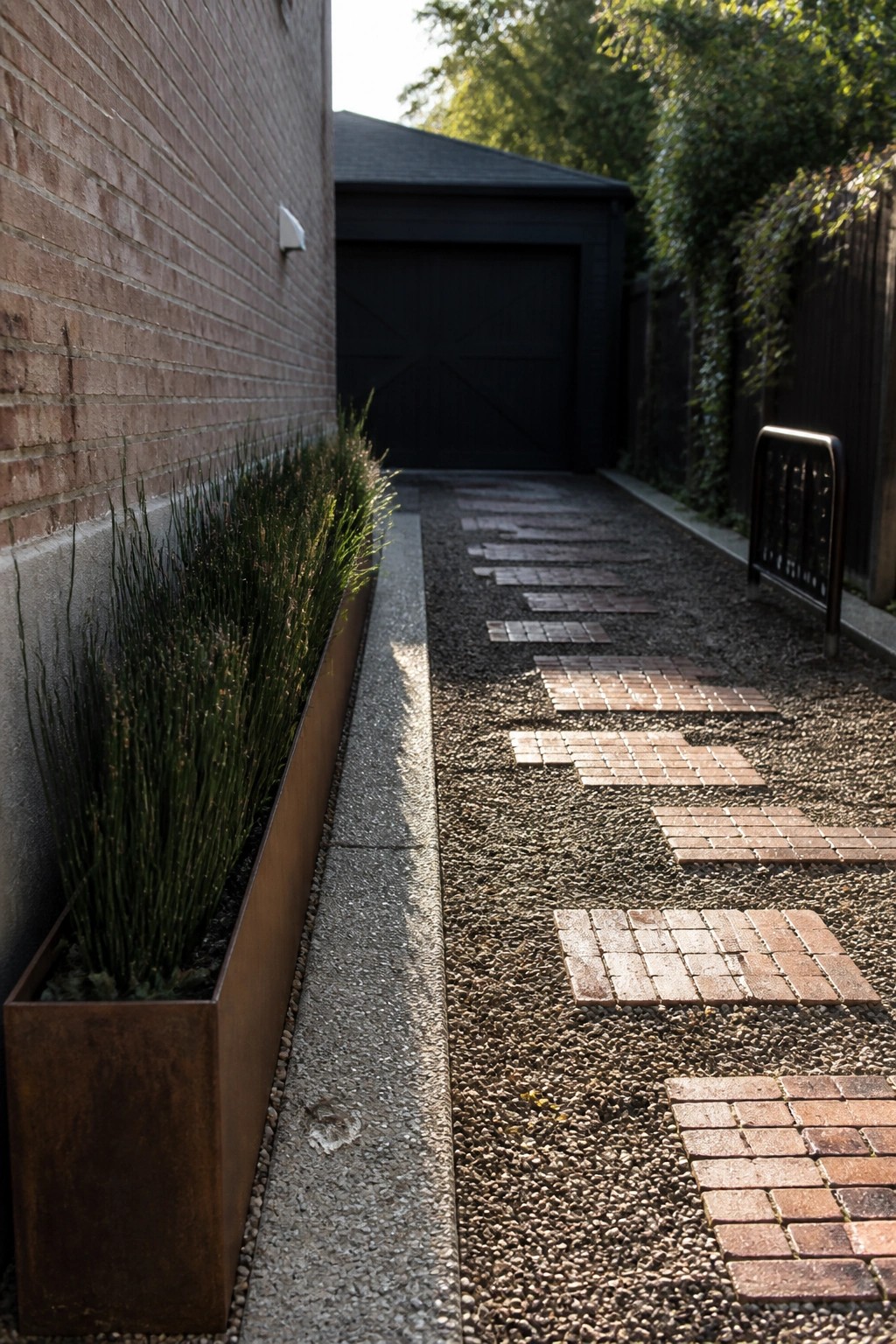
Gravel works well in small driveways because it is cheap, drains fast, and needs little upkeep. A long raised planter set right along one edge gives the path a clear border and adds some height without eating into the usable width.
This layout suits homes where the driveway runs tight against a wall or fence. Keep the pavers staggered so the eye moves forward and the space feels less cramped. Stick to one simple planter material so the whole strip stays neat and easy to maintain.
Concrete Strips In Gravel Driveways
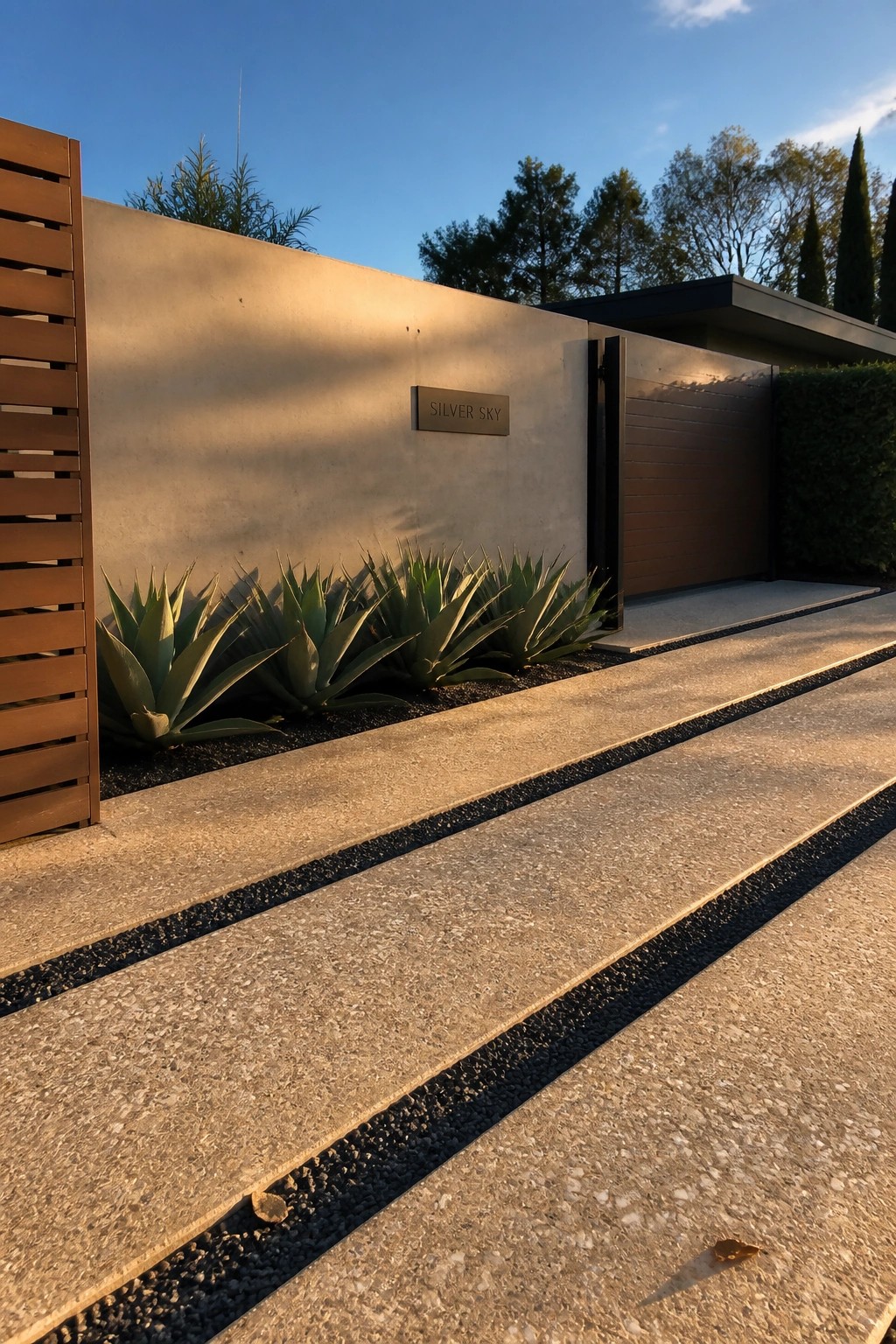
Setting concrete strips into gravel gives a driveway a clear path for cars while still letting the surface drain and look softer than a full slab. The strips keep the gravel from shifting too much under wheels and make the whole entry feel more organized in a small space.
This works best on narrow lots or side entries where a wide paved drive would crowd the front. Keep the planting simple along the edge with a few tough succulents so the bed stays low and does not block the path.
Gravel Courtyards With Tiled Edges
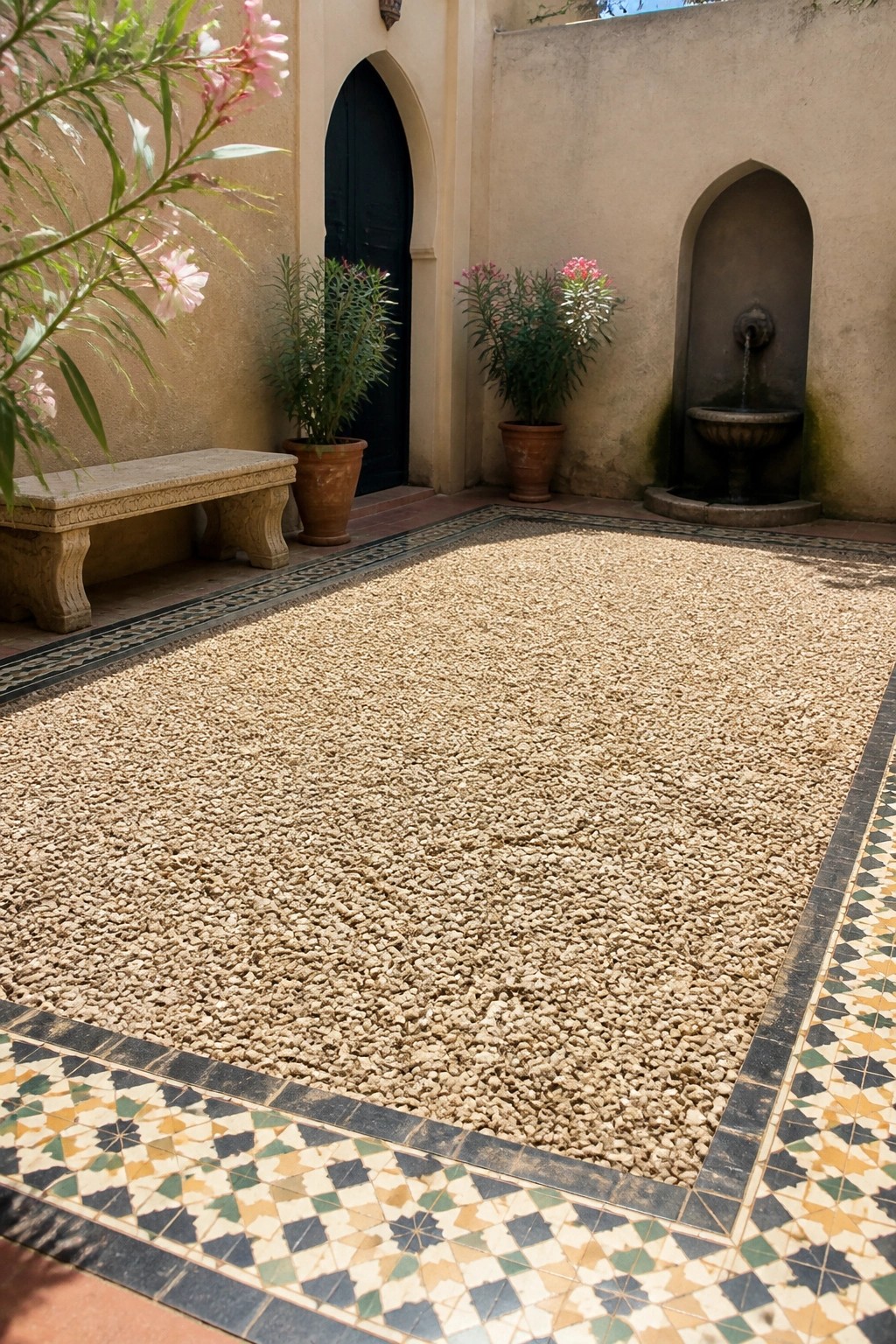
Gravel works well in small enclosed spaces because it drains easily and stays cooler than solid paving. The tile border keeps the gravel contained and gives the area a finished look without needing a lot of extra materials.
This approach suits older homes or tight courtyards where you want something practical but still defined. Keep the border simple or patterned depending on the style of the house, and make sure the gravel layer stays even so it does not shift too much over time.
Run A Raised Planter Along One Side Of A Narrow Driveway

A long raised planter next to a gravel path gives you room for small trees or shrubs without eating into the width you need for walking or driving. The concrete edge also keeps the gravel in place and creates a clean line that makes the whole area feel more finished.
This setup works best on side access paths or short driveways where space is tight. You can top the planter with wood to create extra seating, and the drainage channel along the base helps keep water from pooling on the gravel. Just make sure the planter height stays low enough that it does not block light from nearby windows.
Mix Gravel With Stone Slabs For A Clear Path
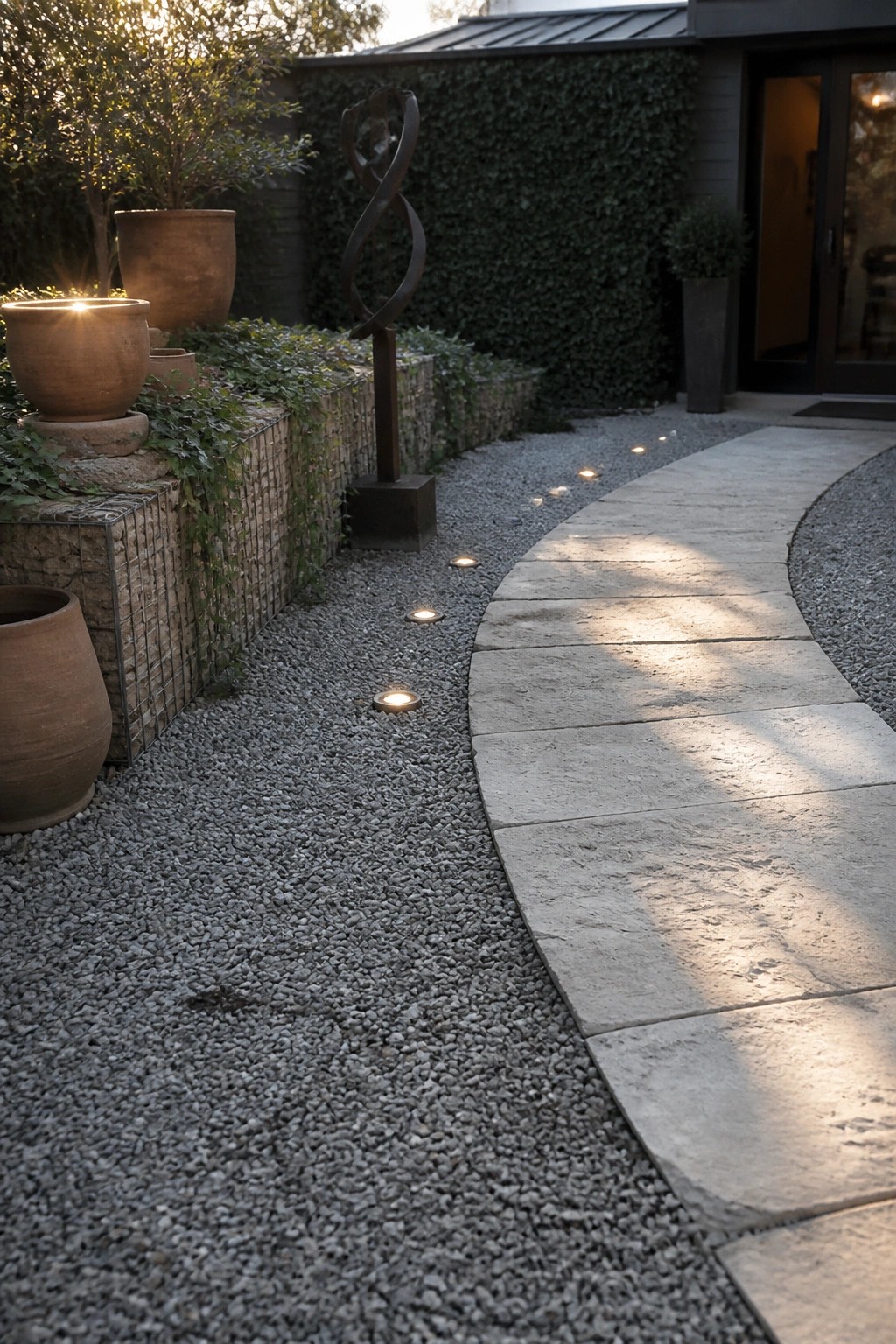
Gravel works well in small driveways because it handles drainage and keeps the surface from feeling too solid. Laying a few wide stone slabs across part of the gravel gives you a firm place to walk and stops the whole area from looking messy.
This setup works best when the slabs follow a gentle curve toward the door. You can add a few low lights right in the gravel so the path stays easy to use at night without needing extra fixtures along the edges. It suits homes where space is tight and you want something practical that still feels finished.
Stepping Stones In Gravel
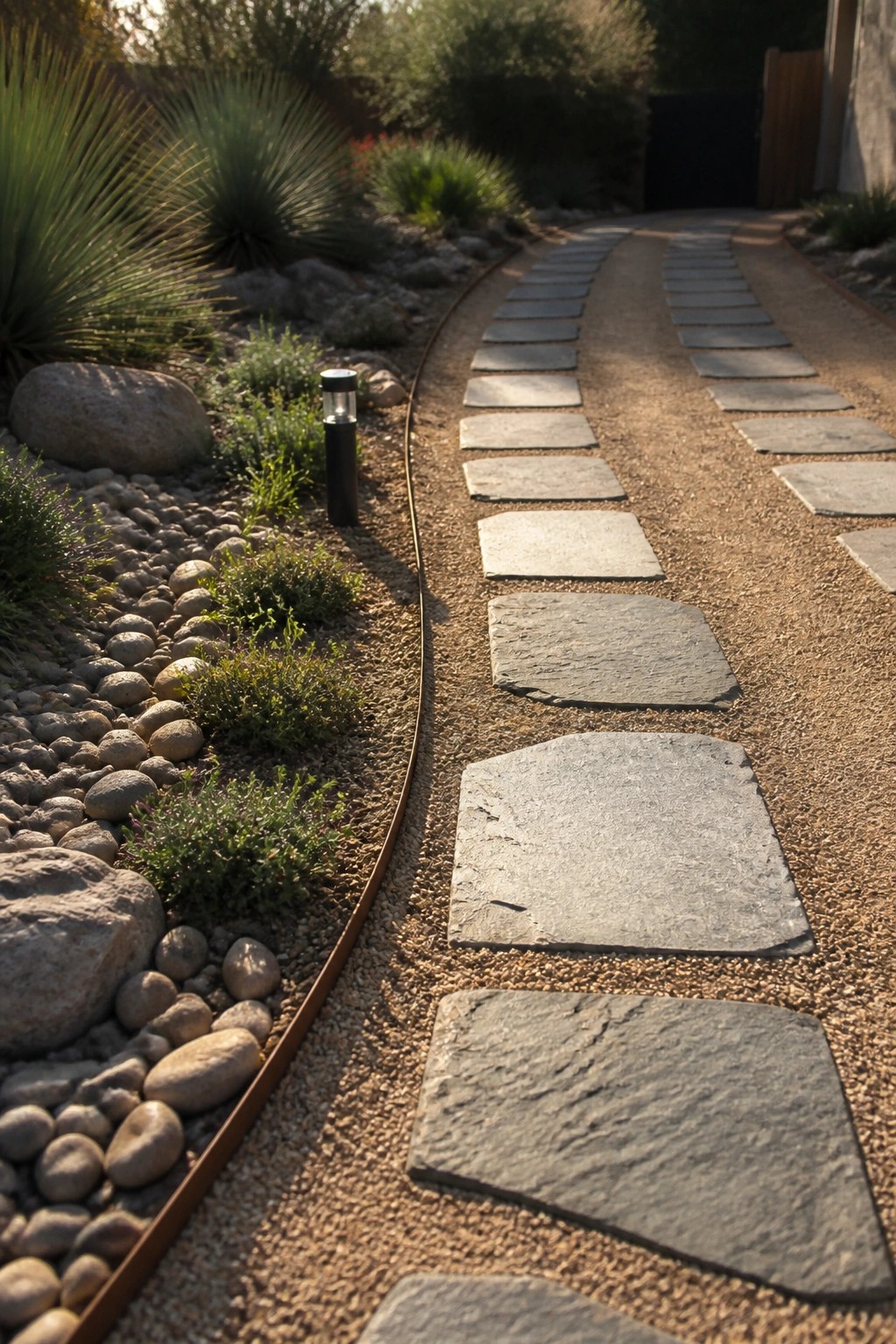
Stepping stones set into gravel give you a clear walking surface without covering the whole driveway. The stones keep feet out of loose gravel and make the path feel more intentional while the gravel still handles drainage and fills the gaps.
This works well in narrow side yards or short driveways where you want to limit the amount of paving. Keep the stones large and irregular so they feel natural, and use edging to hold the gravel in place along the sides.
Frequently Asked Questions
Q: Will the gravel stay put when cars turn in a tight spot? A: Add a grid layer underneath the top stones. It holds everything steady so you avoid constant raking after each use.
Q: How do I keep weeds from growing through in a small area? A: Put down fabric before you spread the gravel. It blocks most sprouts while water still drains away easily.
Q: What size gravel holds up best for daily driving? A: Medium stones around half an inch work well. They pack down firm without feeling loose or sinking under tires.
Q: Does gravel need much upkeep in winter? A: Rake it level once the snow melts. Add a thin layer in any low spots that show up.
