


I have always noticed that the way a driveway meets the house can quietly set the tone for everything else on the property.
Choosing gravel that matches the scale of a rustic farmhouse takes some trial because the color and size affect how the whole front reads from the road.
The wrong mix stands out fast.
I would test a few options in a small section first to see how they look after a season of rain and use before committing to the full length.
That kind of practical step often shows which ideas actually hold up once the driveway becomes part of daily life.
Gravel Driveways with a Grass Center Strip
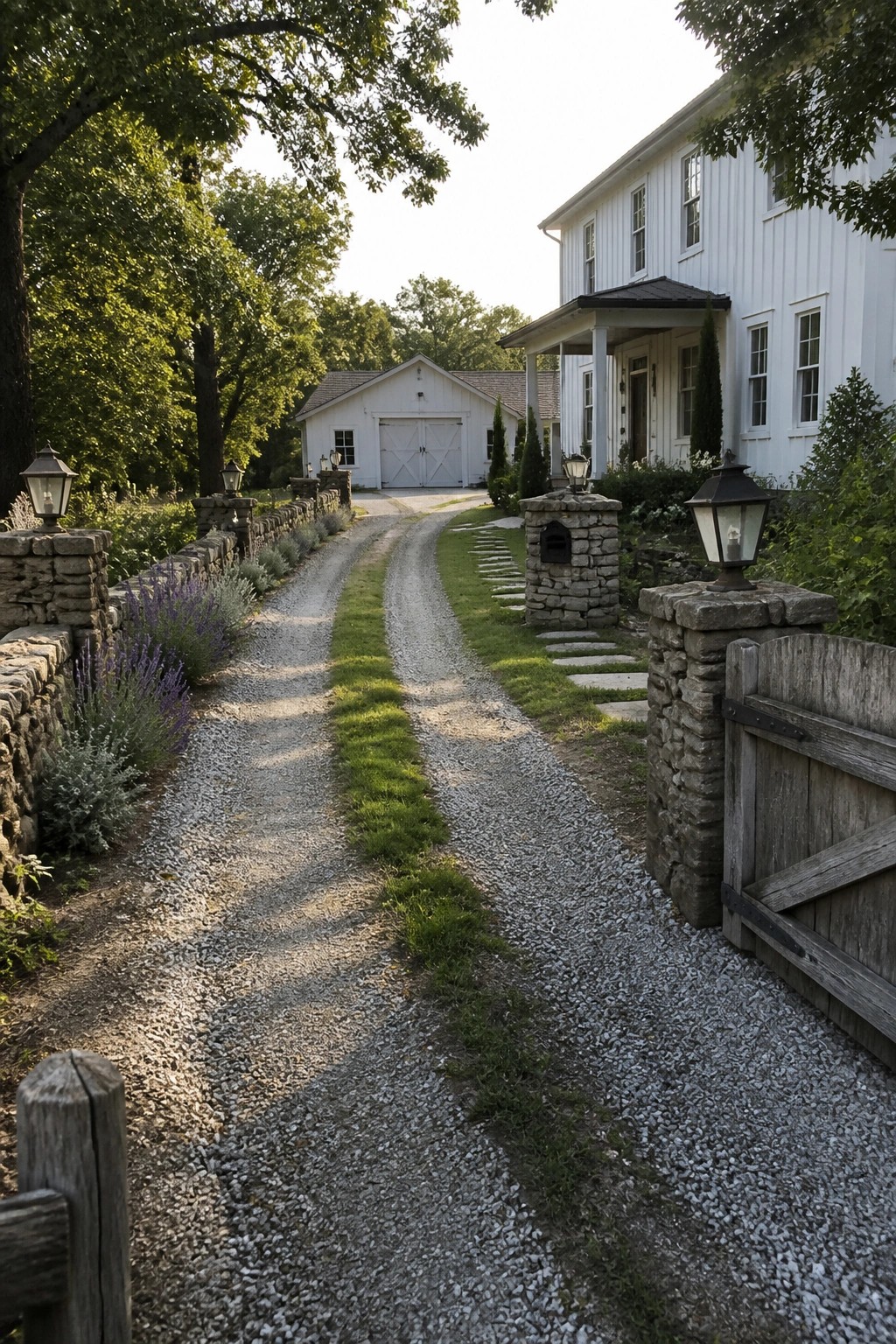
A gravel driveway with a strip of grass running down the middle softens the whole look and keeps it from feeling too wide or heavy. The grass breaks up the stone and helps the drive blend into the surrounding yard, which works especially well on a farmhouse property.
This setup suits longer approaches where you want low maintenance but still some green. Keep the gravel edges tidy and let the grass grow a bit taller in the center so it feels natural rather than overly manicured.
Stone Pillars and Lanterns Define the Driveway Entrance
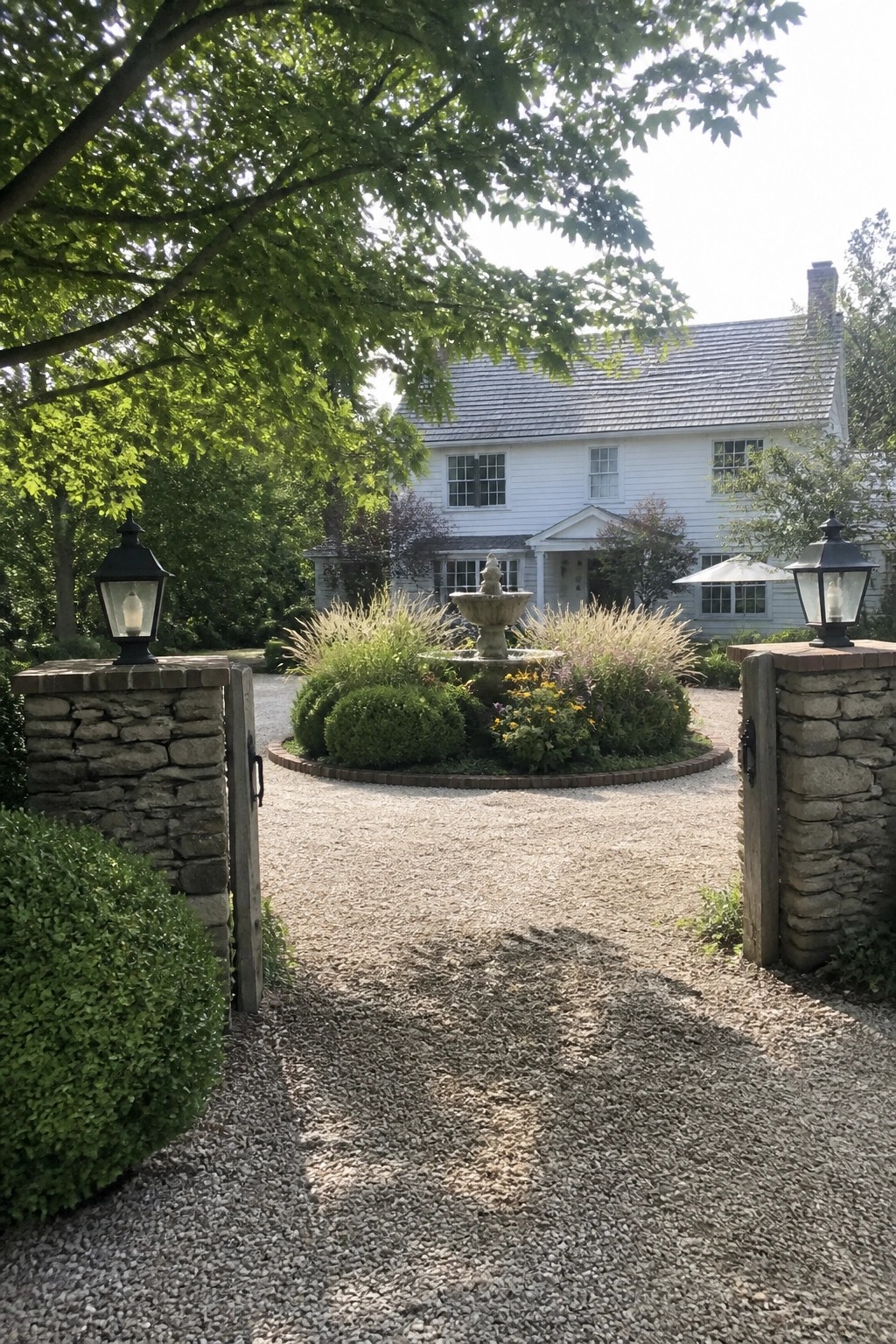
Stone pillars with lanterns give a gravel driveway a clear starting point that feels both solid and welcoming. The mix of rough stone and simple wood gates keeps things rustic while making the entrance easy to spot from the road.
This approach works well on larger lots where the driveway opens into a wider space. Use natural stone that matches any other hardscaping on the property and stick with classic lantern styles so the look stays practical rather than overly styled.
Border Your Gravel Driveway With Perennials
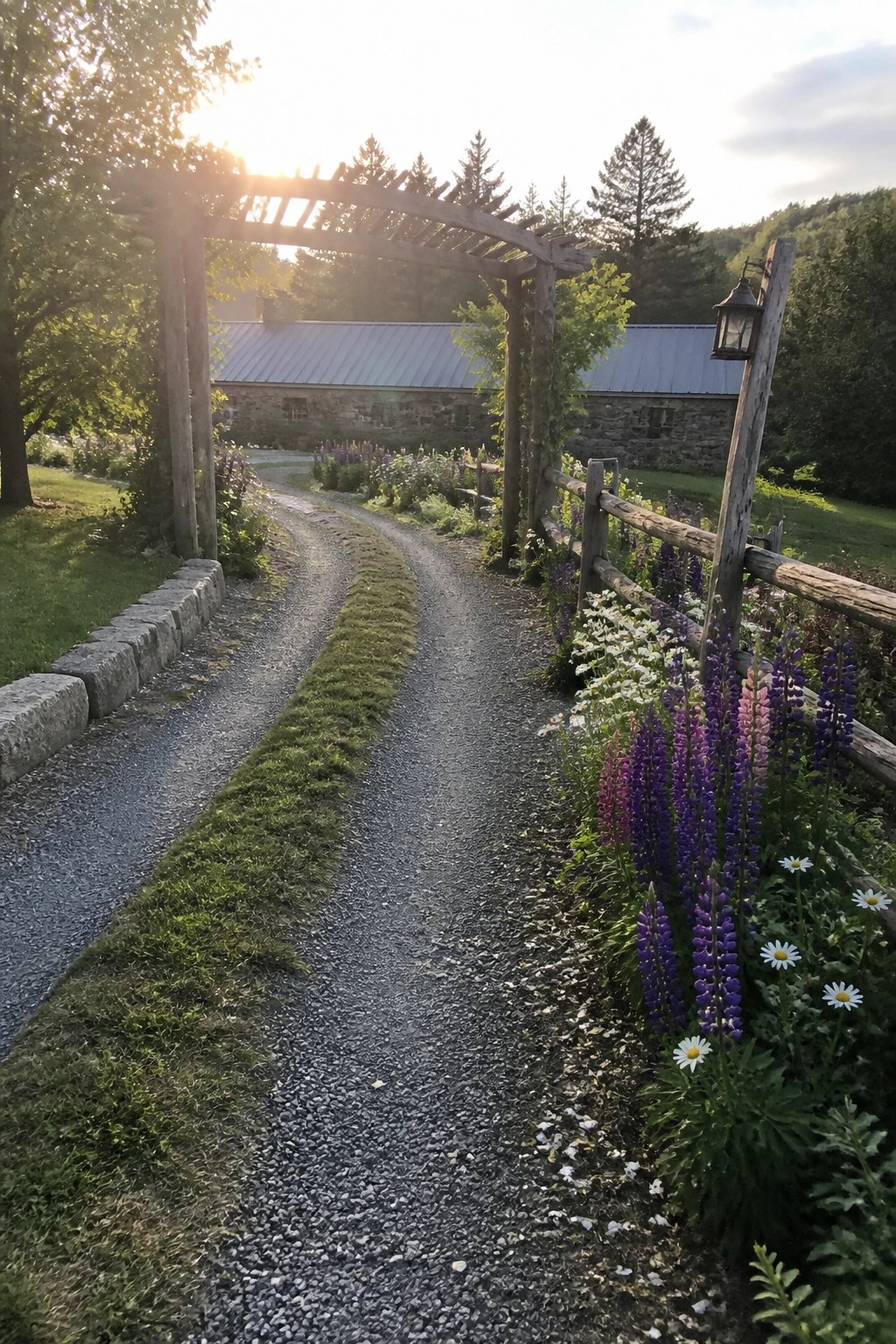
A gravel driveway can feel a bit plain on its own. Adding a loose border of perennials along one side gives it color and life without making the space look too planned or formal.
This approach works best on rural or farmhouse properties where the goal is a relaxed, natural entry. Stick with tough plants that return each year and let them spread a little so the look stays easy rather than neat.
Gravel Driveways Keep Things Simple
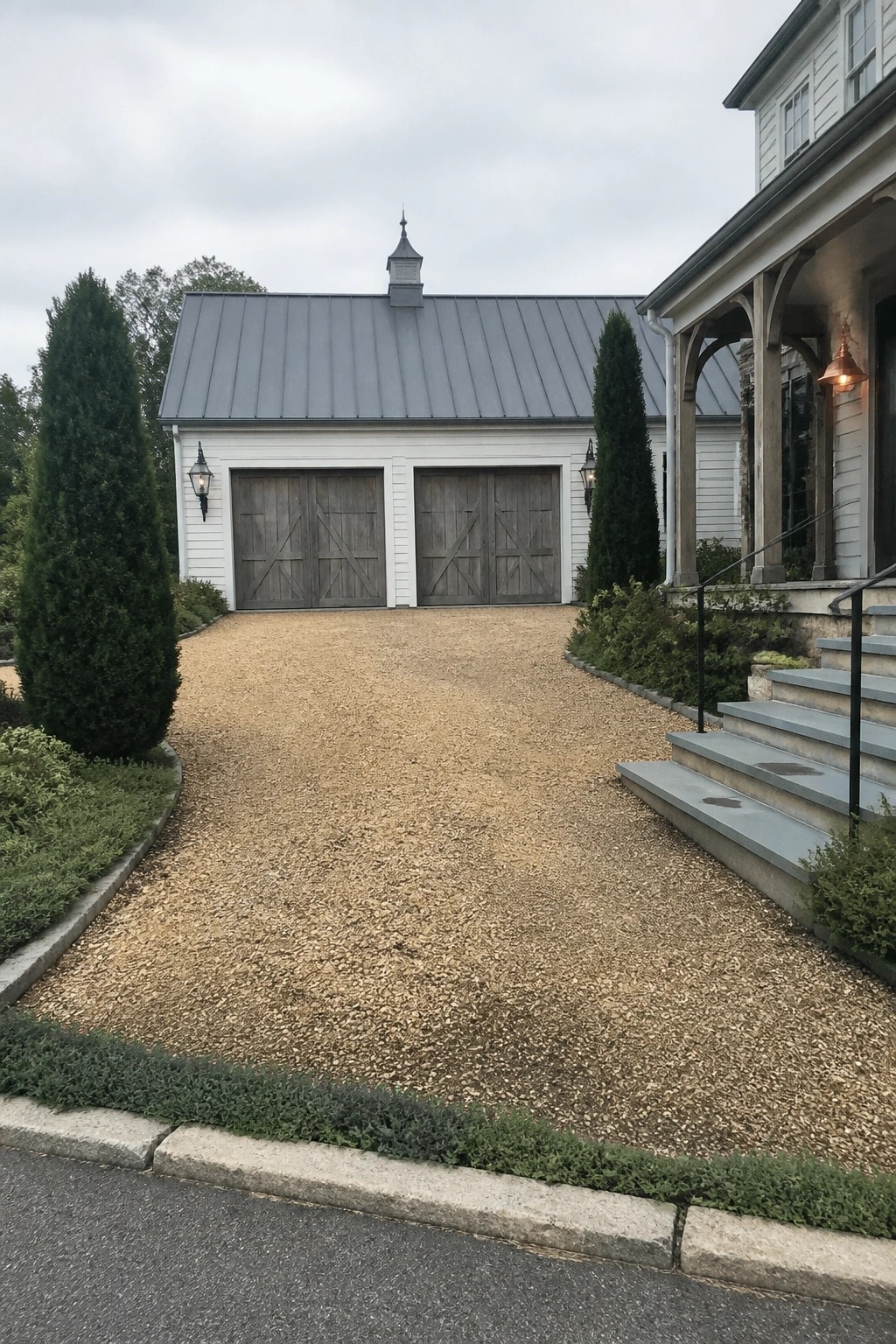
Gravel gives a driveway an easy, unfussy look that fits right in with farmhouse style. It feels softer than pavement and lets the garage and house stand out without competing.
This works best on homes with some land where a casual approach makes sense. Just add solid edging along the sides so the gravel stays in place and does not spill onto the lawn or road.
Gravel Driveways Keep the Entry Simple
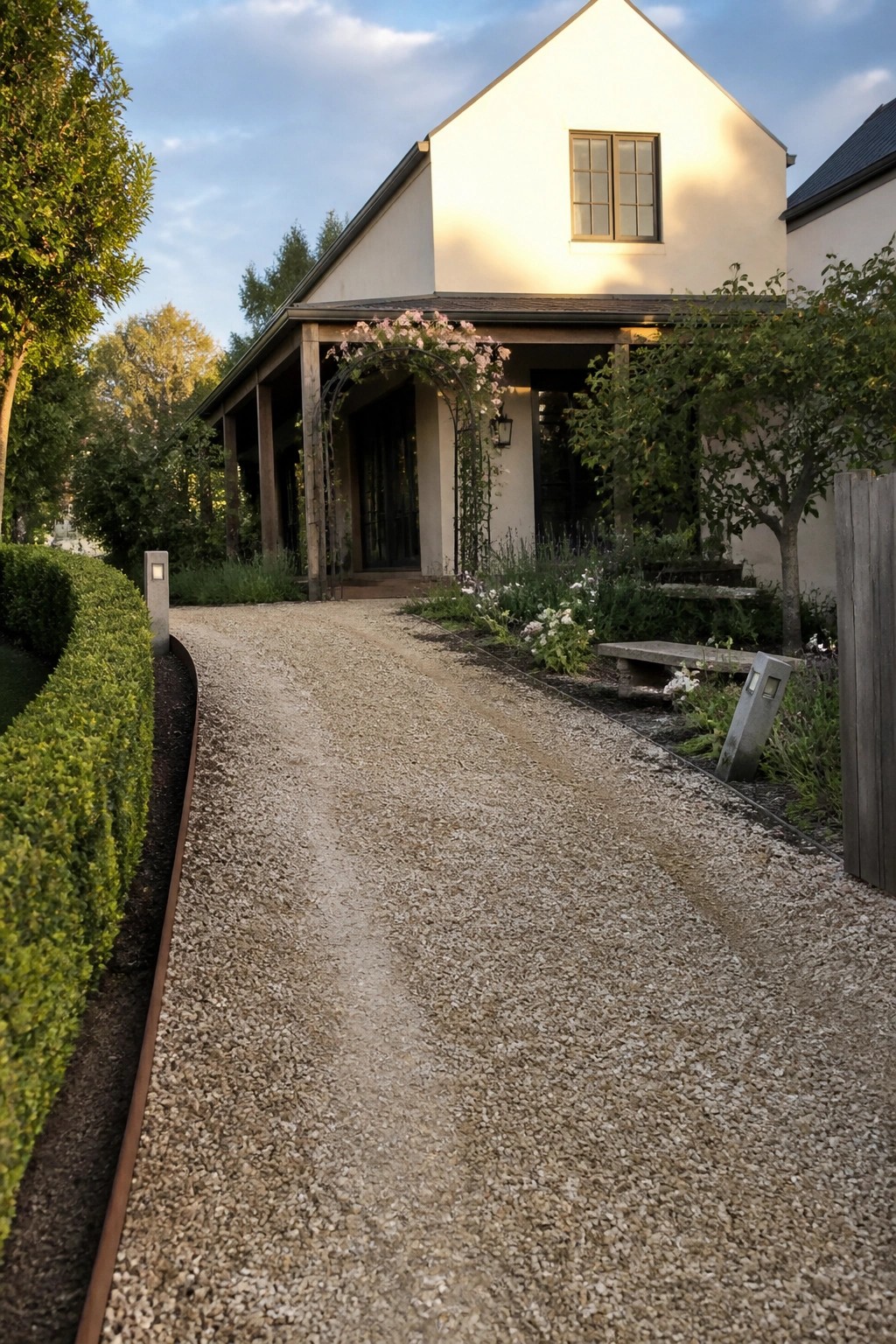
Gravel works well for driveways because it feels softer than concrete or asphalt and lets the surrounding garden come right up to the house. The material also drains easily and costs less to install or repair over time.
Edge the gravel with a low metal strip or a clipped hedge to hold the stones in place and give the path a tidy look. This approach suits farmhouses or older homes where you want the landscape and the building to feel connected rather than separated by a hard surface.
Stone Paths Beside Gravel Driveways
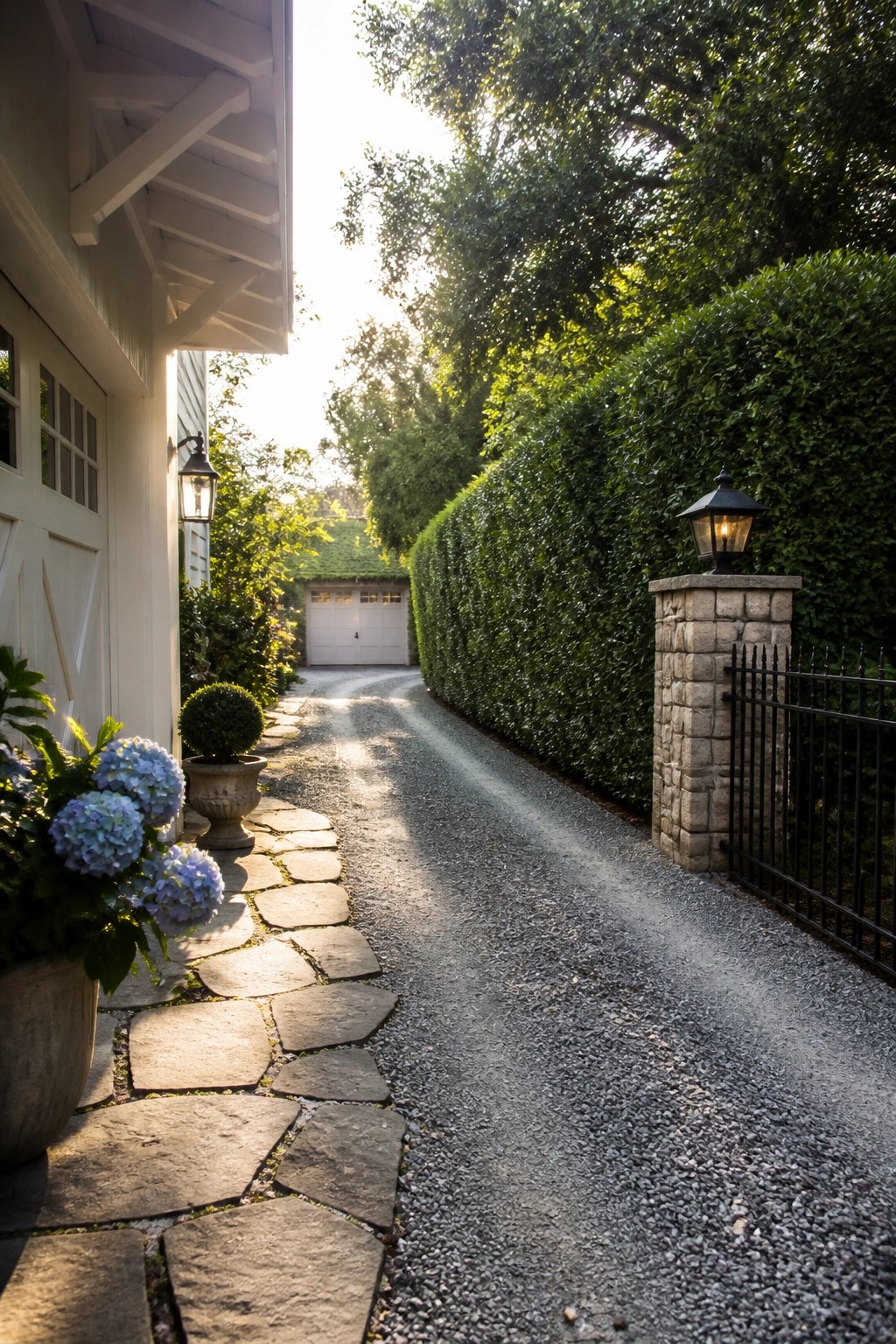
A gravel driveway works better when you add a stone path right next to it. The gravel handles cars and gives that loose, country look, while the stone gives a solid spot for walking that stays cleaner in wet weather.
This works well on homes with a longer approach and some planting along the edge. Keep the path simple and let the gravel take up most of the width so the whole thing still feels relaxed rather than too formal.
Pair Your Gravel Driveway With A Wooden Gate
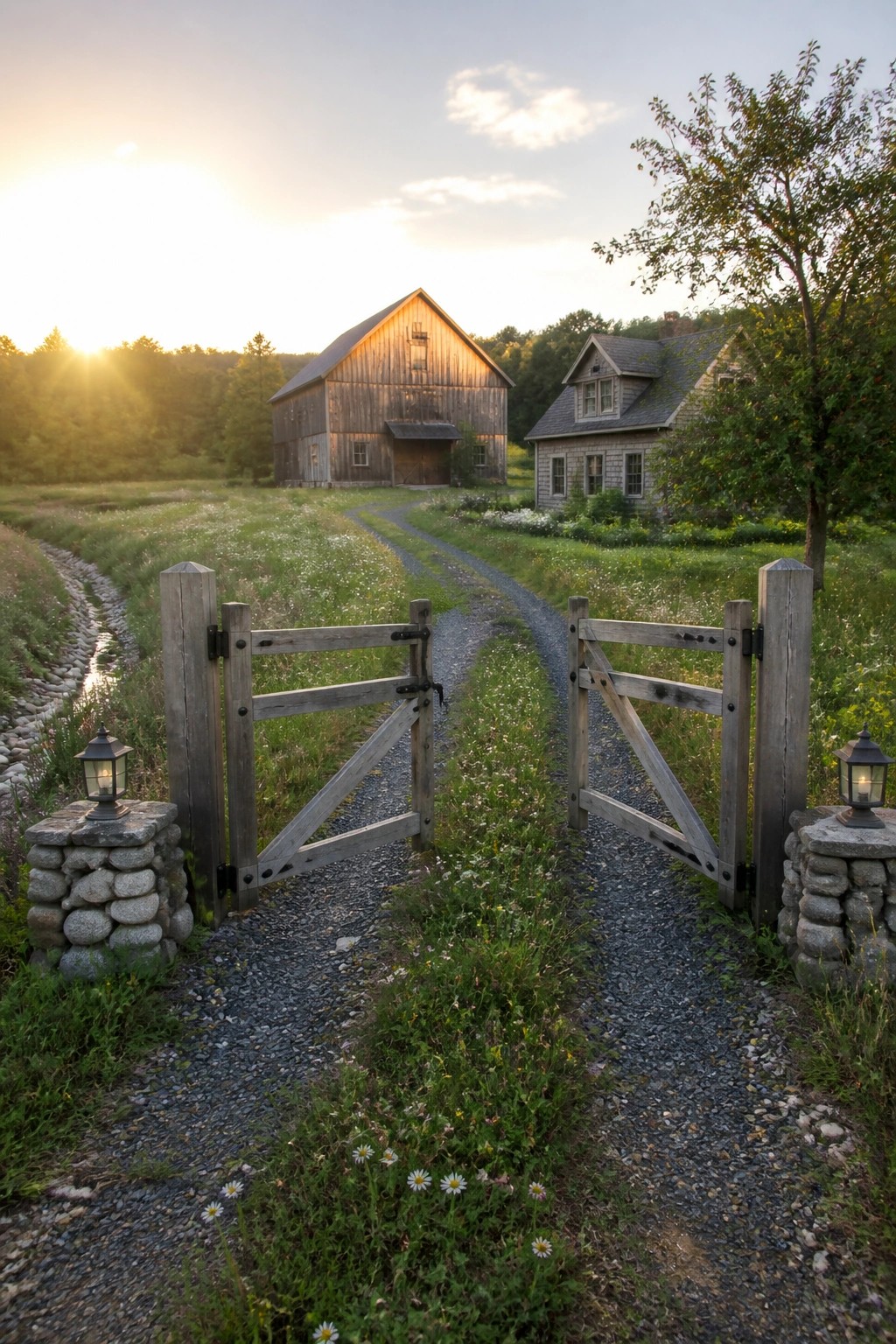
A gravel driveway feels more complete when it starts with a simple wooden gate. The gate marks the entrance without adding any fuss, and the weathered boards give it the right kind of age for a farmhouse setting.
Stone bases under the posts keep the gate steady and add a bit of weight to the whole look. This works best on properties that already have older outbuildings or open land, and it helps the driveway feel like part of the place instead of just a path across it.
Stone Edging For Gravel Driveways
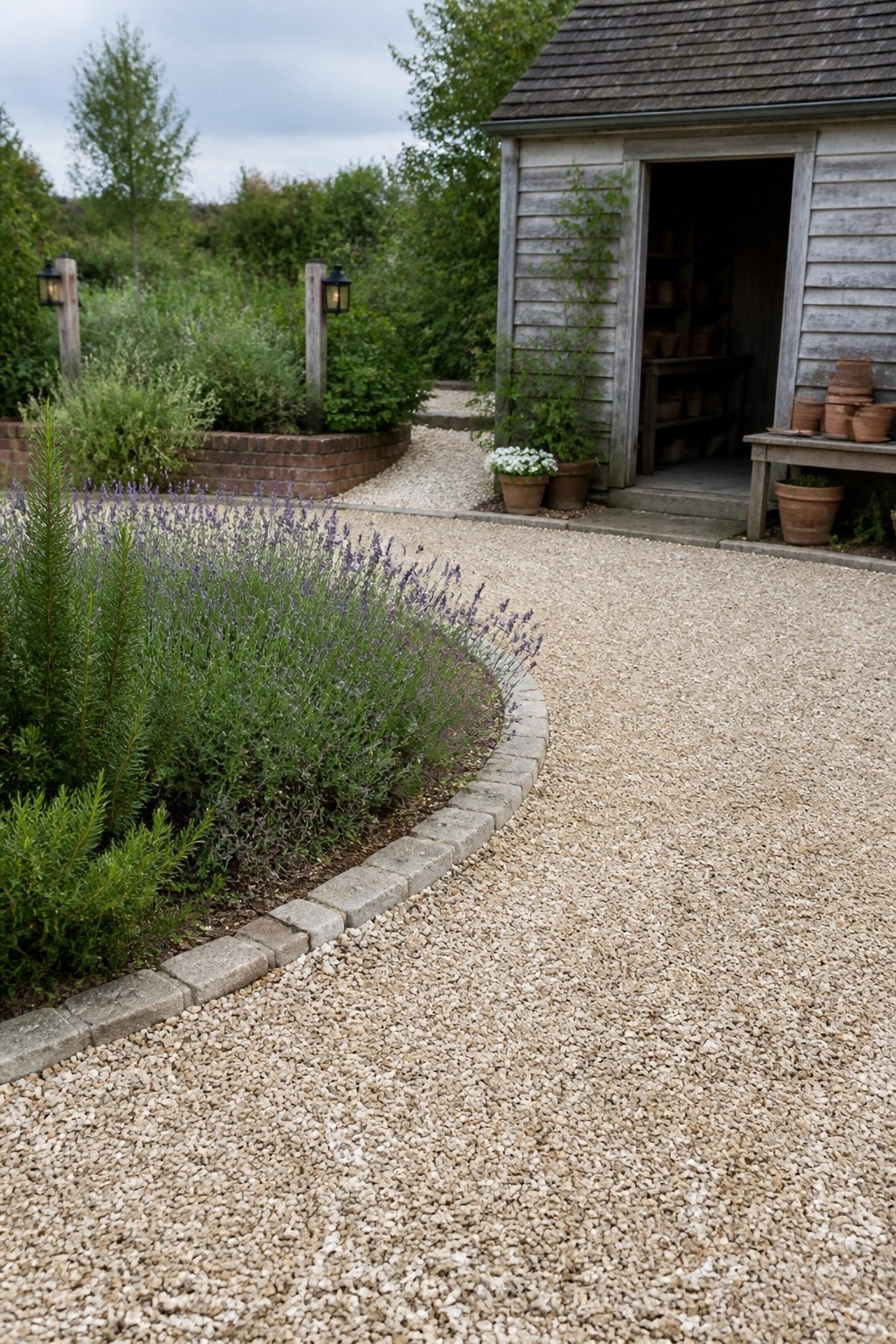
A low stone border gives gravel a finished edge without making it feel too formal. The curve here lets the lavender and shrubs spill over just enough to soften the line while still keeping the gravel contained.
This works best on longer driveways or side paths where you want the surface to blend into the garden rather than cut across it. Keep the stones simple and set them low so the planting can do most of the softening.
Stone Edging For Gravel Driveways
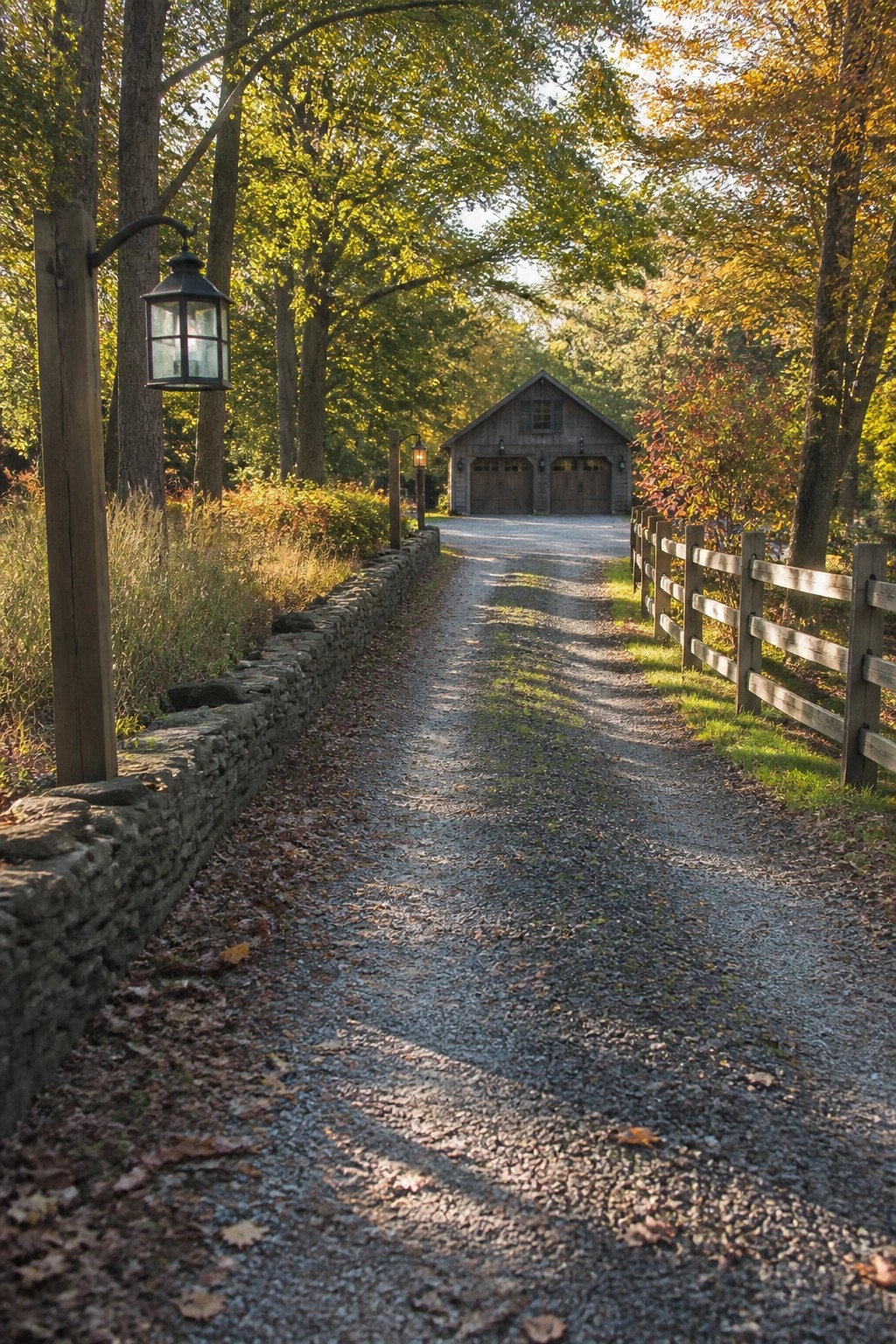
A low stone wall gives a gravel driveway clear edges without making it feel too formal. It holds everything in place, adds texture, and blends with the surrounding trees and fields.
This setup works well on older properties or places with gentle slopes. Keep the wall simple and low so the gravel stays the main feature.
Adding Pavers To A Gravel Driveway
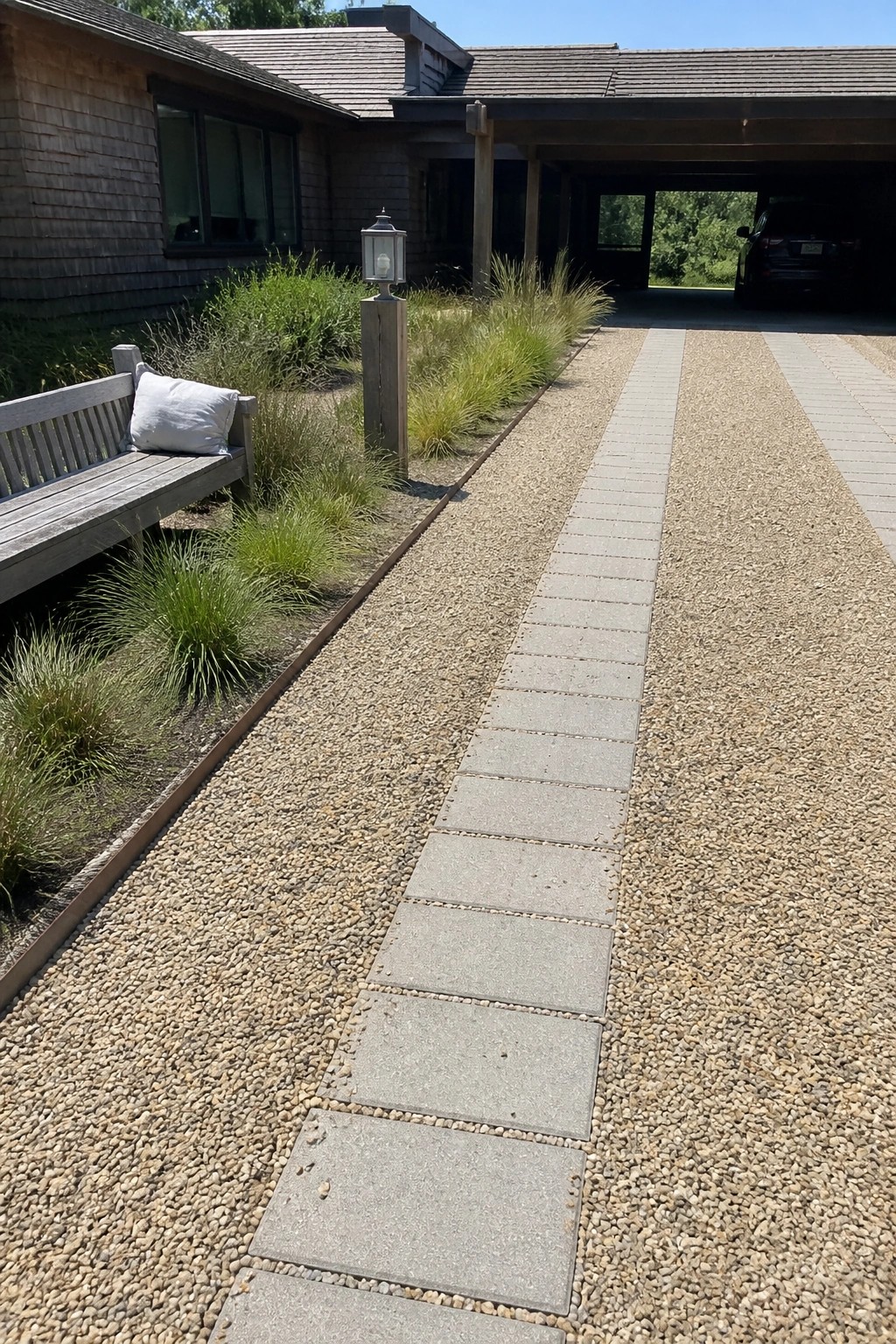
A strip of flat pavers running down the center of gravel gives the driveway a clear path for walking while keeping the loose, casual feel most people want in a farmhouse setting. The contrast between the solid stones and the surrounding gravel helps the whole area look more finished without adding much cost or upkeep.
This layout works best on straight or gently curving drives where the pavers can run the full length. It suits homes with room on either side for planting and simple edging, and it stays practical as long as the pavers sit even with the gravel surface.
Gravel Driveways With Stone Edging
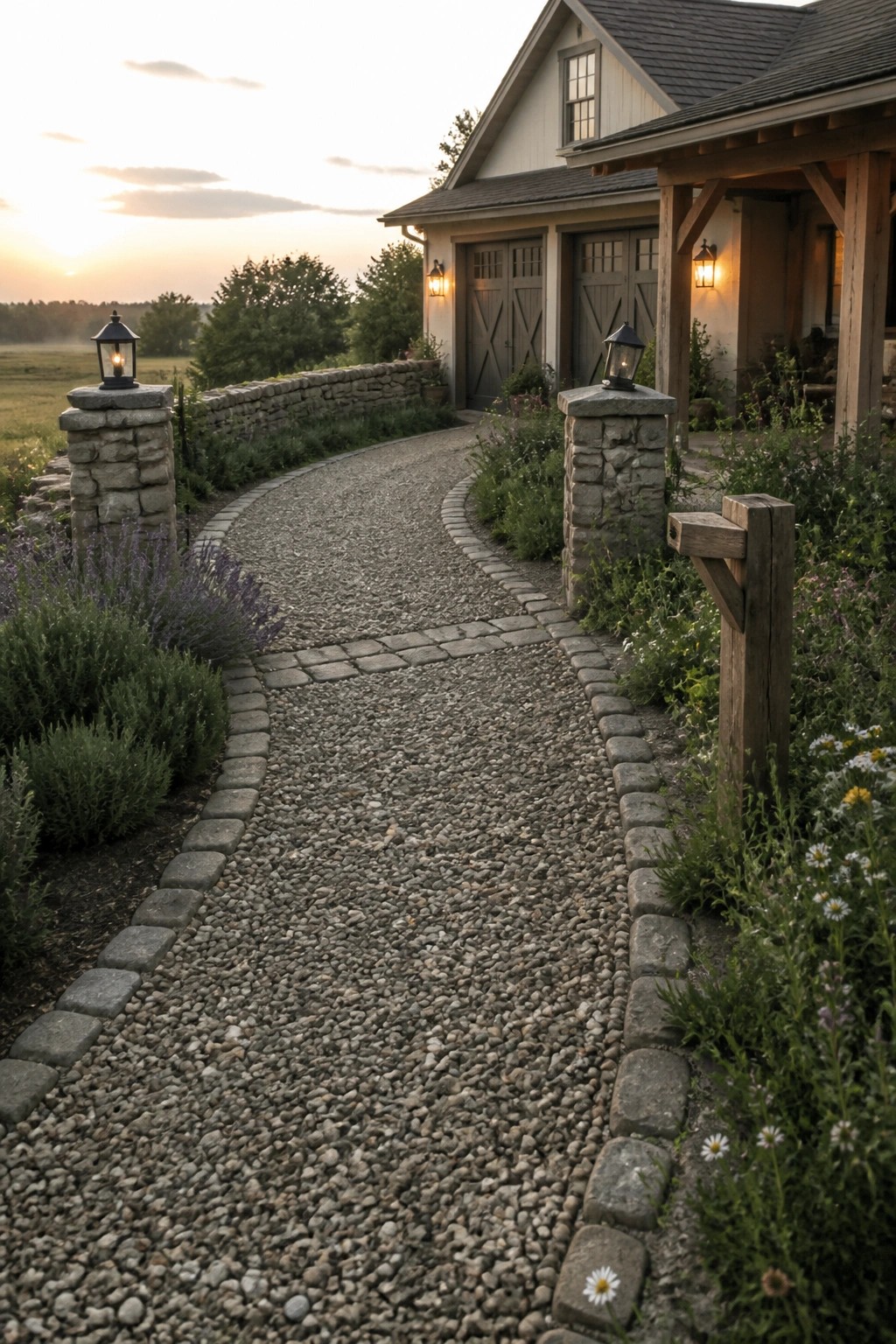
Gravel driveways feel right at home on a farmhouse because they stay simple and let the surrounding plants take the lead. Stone edging keeps the gravel from spilling into the beds and gives the path a clear shape that still looks relaxed rather than stiff.
This works best on properties where the driveway curves or sits at a slight distance from the road. Keep the edging low and use the same stone for a couple of entry pillars if you want a little extra definition without adding much cost or upkeep.
Gravel Paths With Stepping Stones
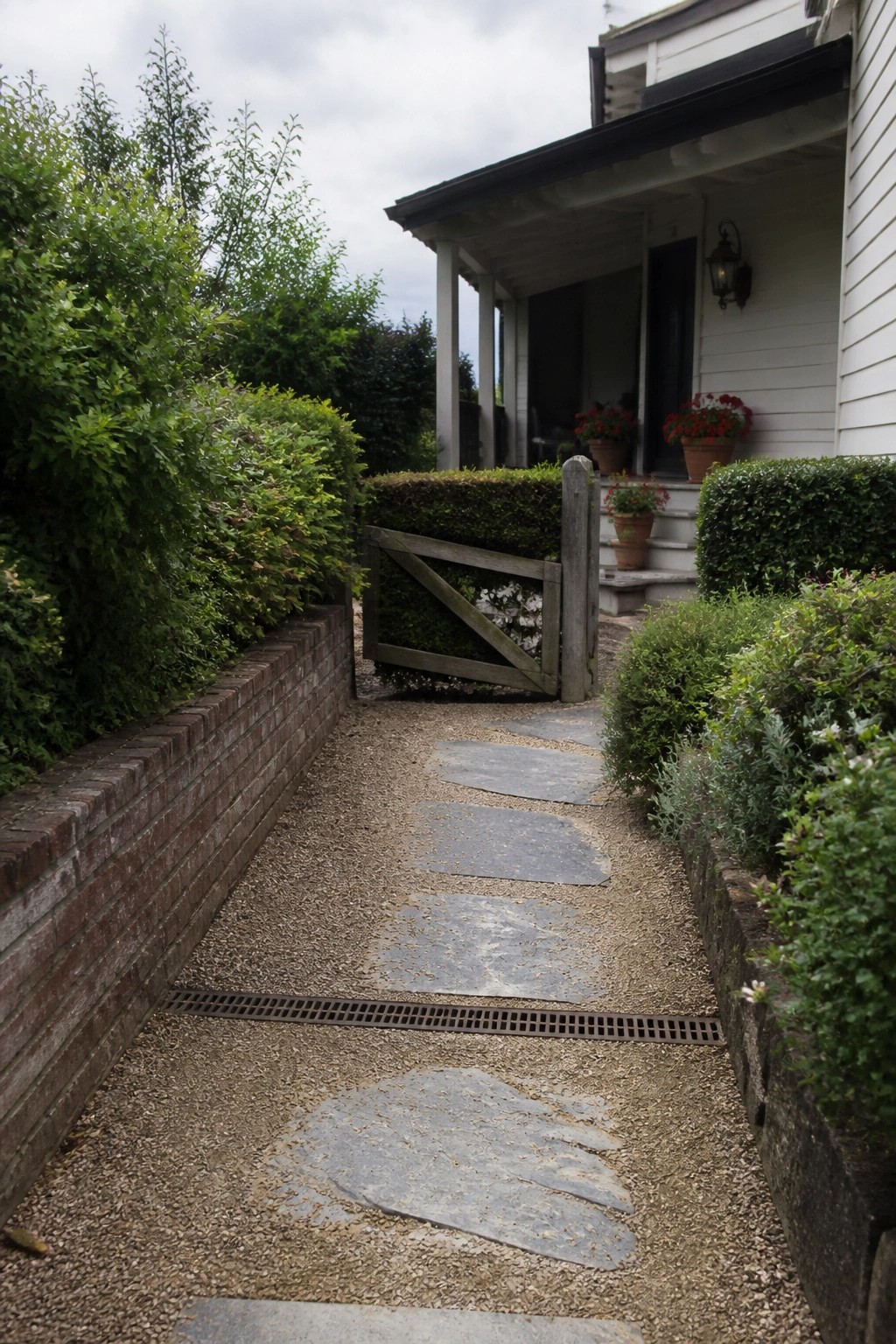
Gravel paths with stepping stones give a farmhouse entry a relaxed look that still feels practical. The stones make walking easy while the gravel handles drainage and blends right into the surrounding beds and borders.
This approach works well on homes where the path runs from the street or driveway up to the door. Keep the stones fairly level and spaced for normal steps, and use a simple border like brick or low planting to hold the gravel in place.
Stone Pillars Mark the Driveway Entrance
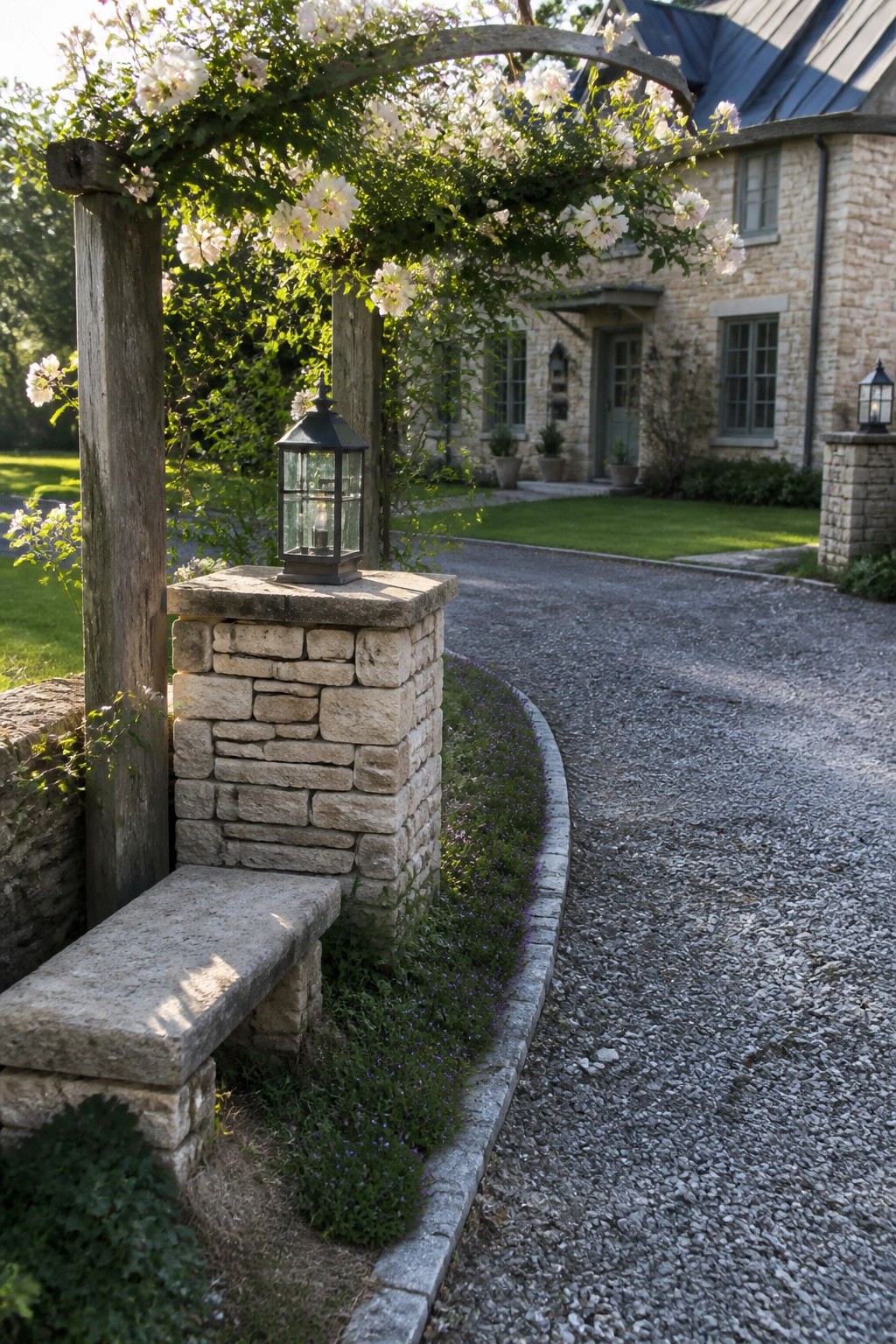
Stone pillars give a gravel driveway a clear starting point without making it feel formal. They hold a lantern at a useful height, provide a spot for climbing plants, and keep the whole entrance looking grounded and simple.
This setup works well on farmhouses where the drive curves or sits at a slight angle from the road. Keep the pillars modest in size, use the same stone as any nearby walls, and let vines or roses grow up the posts beside them so the look stays soft rather than rigid.
Gravel Paths With Inset Brick Pavers
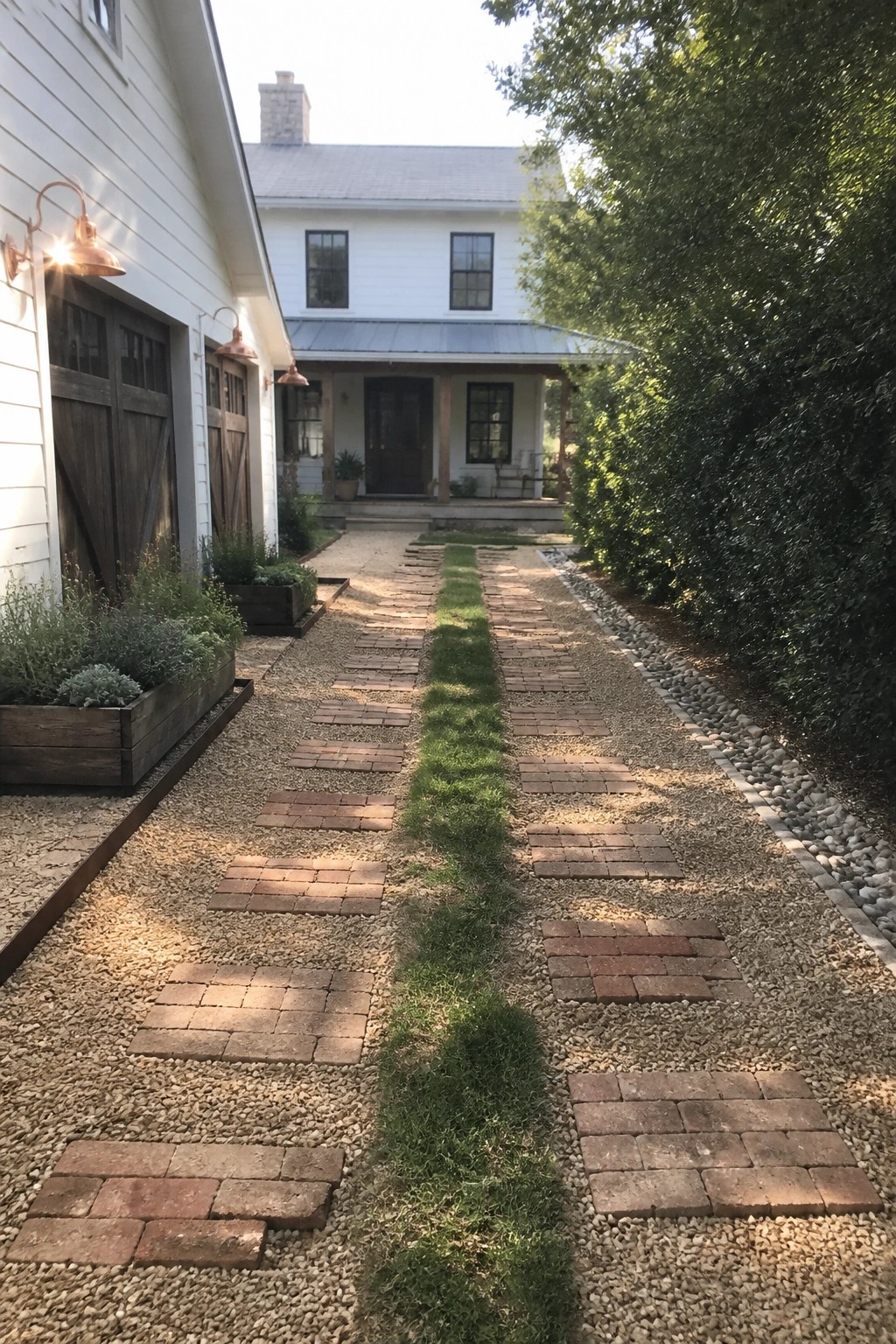
Gravel works well for farmhouse driveways because it drains easily and feels informal. Adding sections of brick pavers gives you solid footing where you need it most and breaks up the loose surface so it does not shift as much under tires.
A narrow grass strip down the center softens the look and helps the path feel narrower and more settled. This setup suits long approach drives on properties where you want low maintenance but still some visual order. Keep the brick pattern simple and let the gravel extend to the edges for the best effect.
Curved Beds With Stone Edging
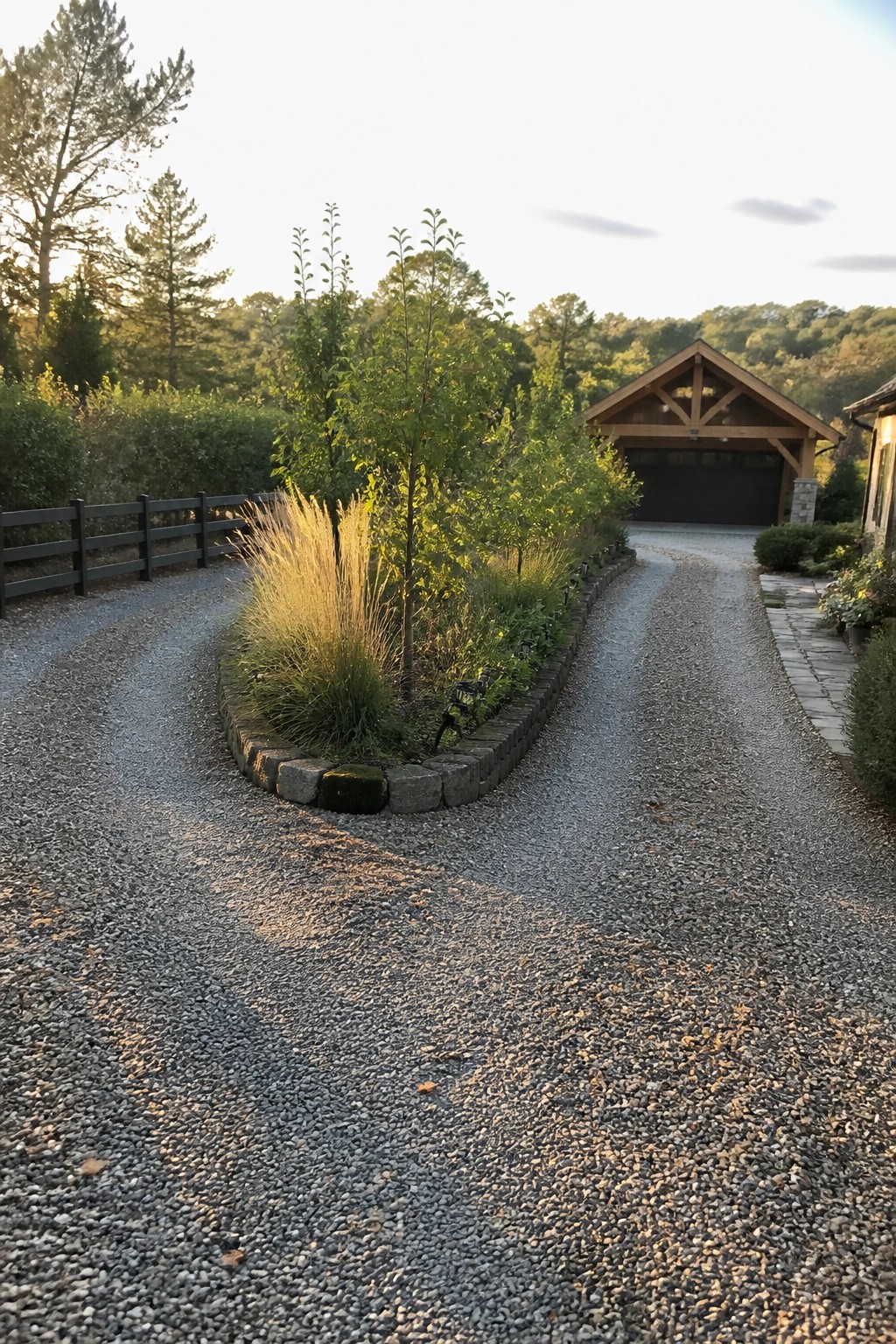
A simple stone border that follows the curve of a gravel drive keeps the edge clean without making the whole thing feel too formal. The low stones hold the plants in place while letting the bed flow naturally along the path, which softens the look of all that gravel.
This setup works best on longer drives or properties where the road bends around trees or beds. Use a mix of grasses and small trees inside the border so the planting stays loose and does not need constant trimming.
Stone Edging For Gravel Driveways
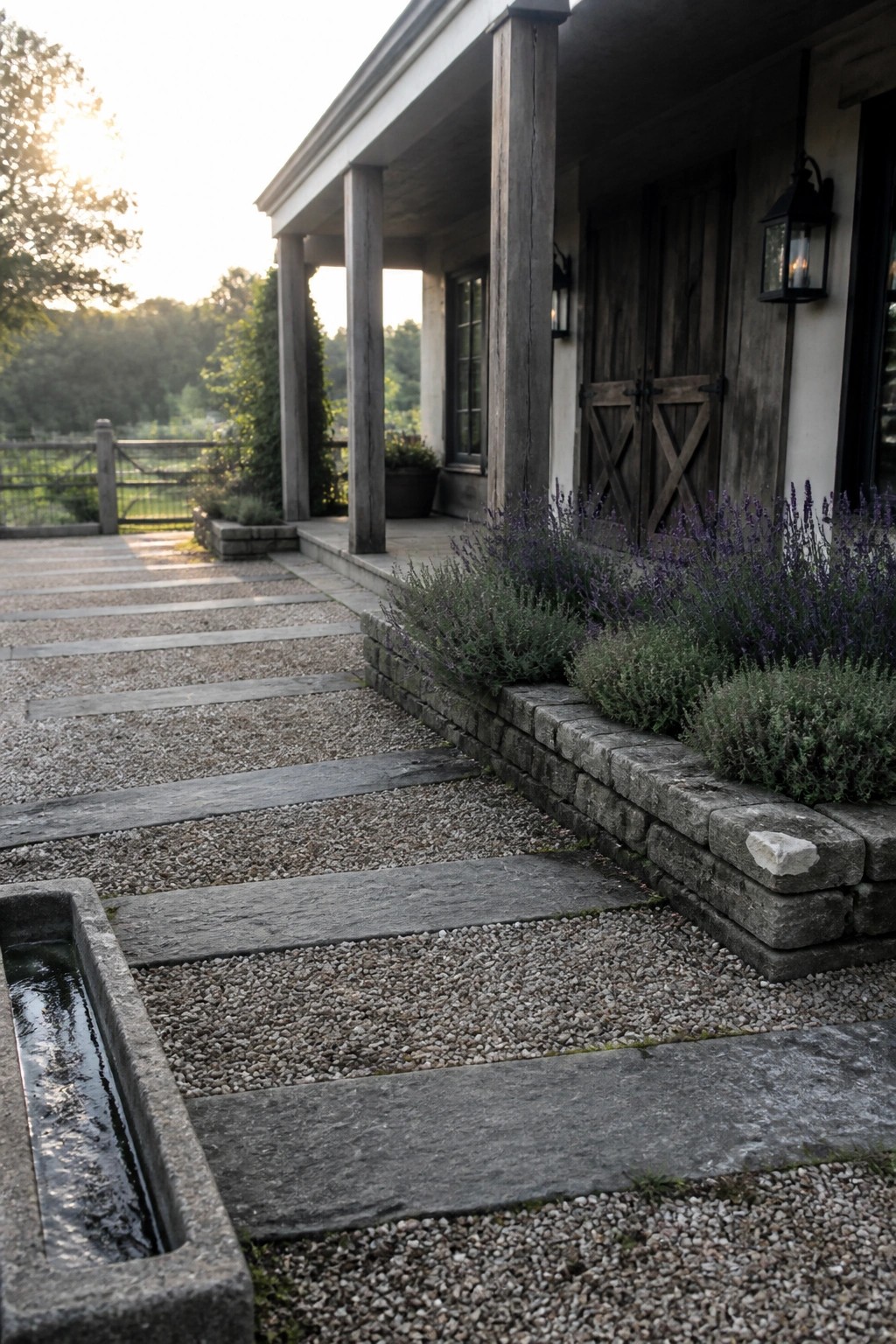
Gravel driveways often look better when they have a clear edge. A low stone wall keeps the gravel from spreading and gives the whole approach a settled, intentional feel that suits older homes.
This kind of border also creates a narrow planting strip that can hold lavender or similar tough plants. It softens the look without adding much maintenance, and the stone itself ages nicely over time.
Low Stone Walls That Double As Seating
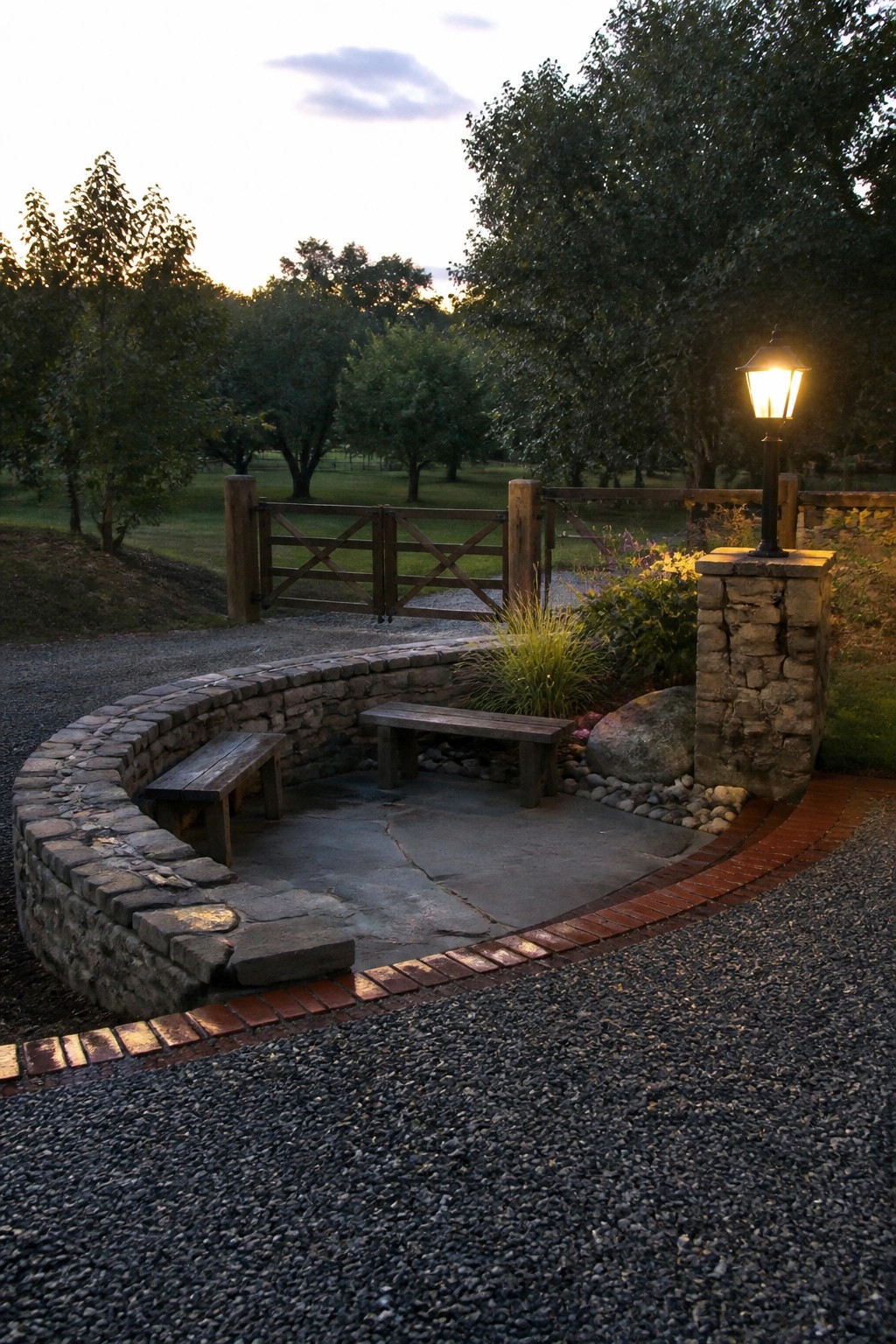
A low stone wall along a gravel driveway gives the entrance some structure without making it feel formal. The curve helps the wall follow the natural shape of the drive while the built-in benches turn the edge into a place you can actually use.
This works best on properties where the driveway opens into lawn or garden beds. Keep the wall height low so it still feels welcoming, and use the same stone or a close match on any nearby pillars or paths. It suits older farmhouses or homes with a bit of land where you want the drive to feel settled rather than just a strip of gravel.
Timber Edging Along Gravel Driveways
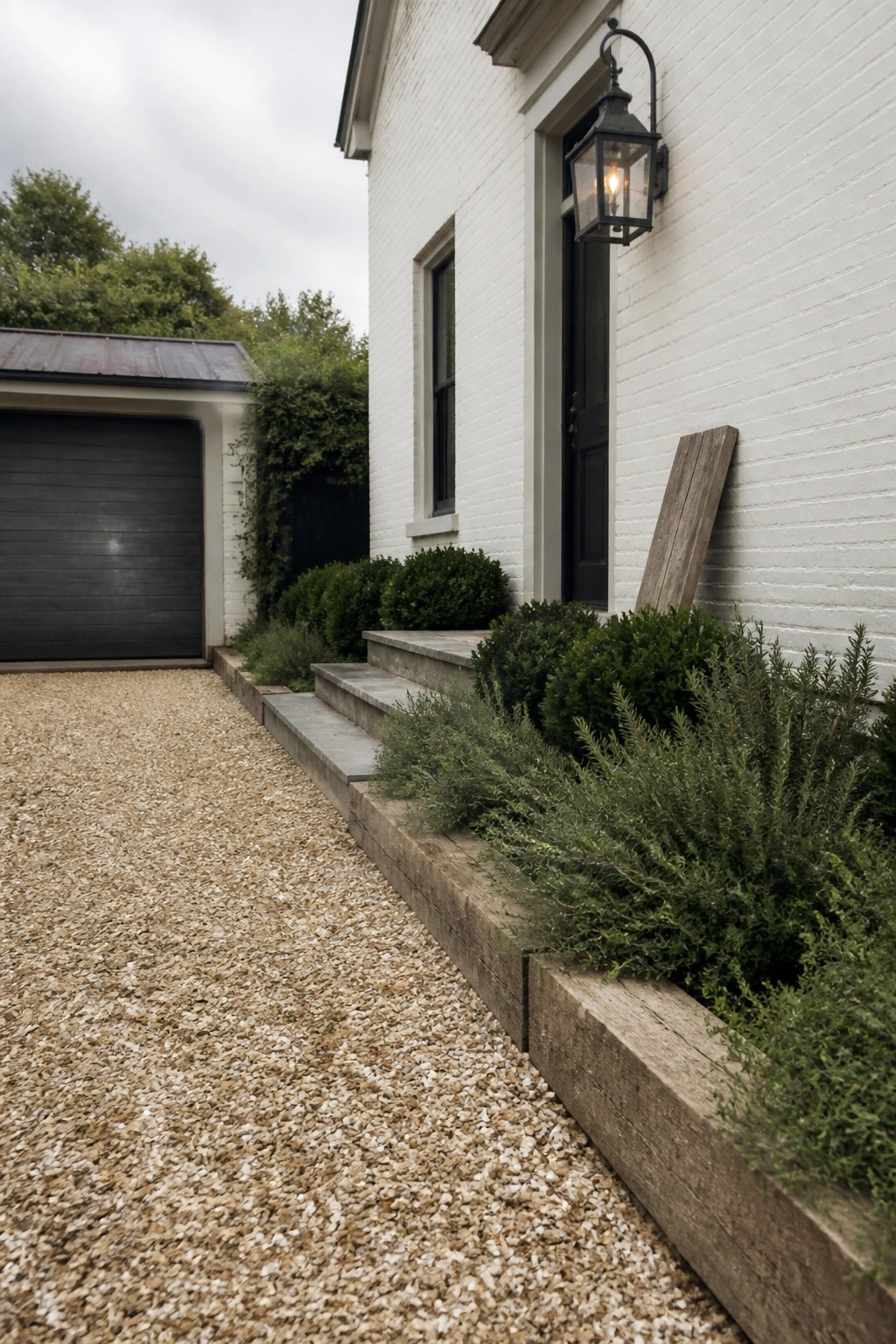
Timber edging gives a gravel driveway a settled look without making it feel too formal. The wood holds the gravel in place and creates a simple border that lets the planting feel connected to the house rather than separate from it.
This works best on homes that already have clean lines and light siding or brick. Keep the wood low and use a few layers of planting right behind it so the edge looks intentional but still relaxed. Reclaimed beams or pressure-treated lumber both hold up well in this spot.
Low Stone Walls Along Gravel Driveways
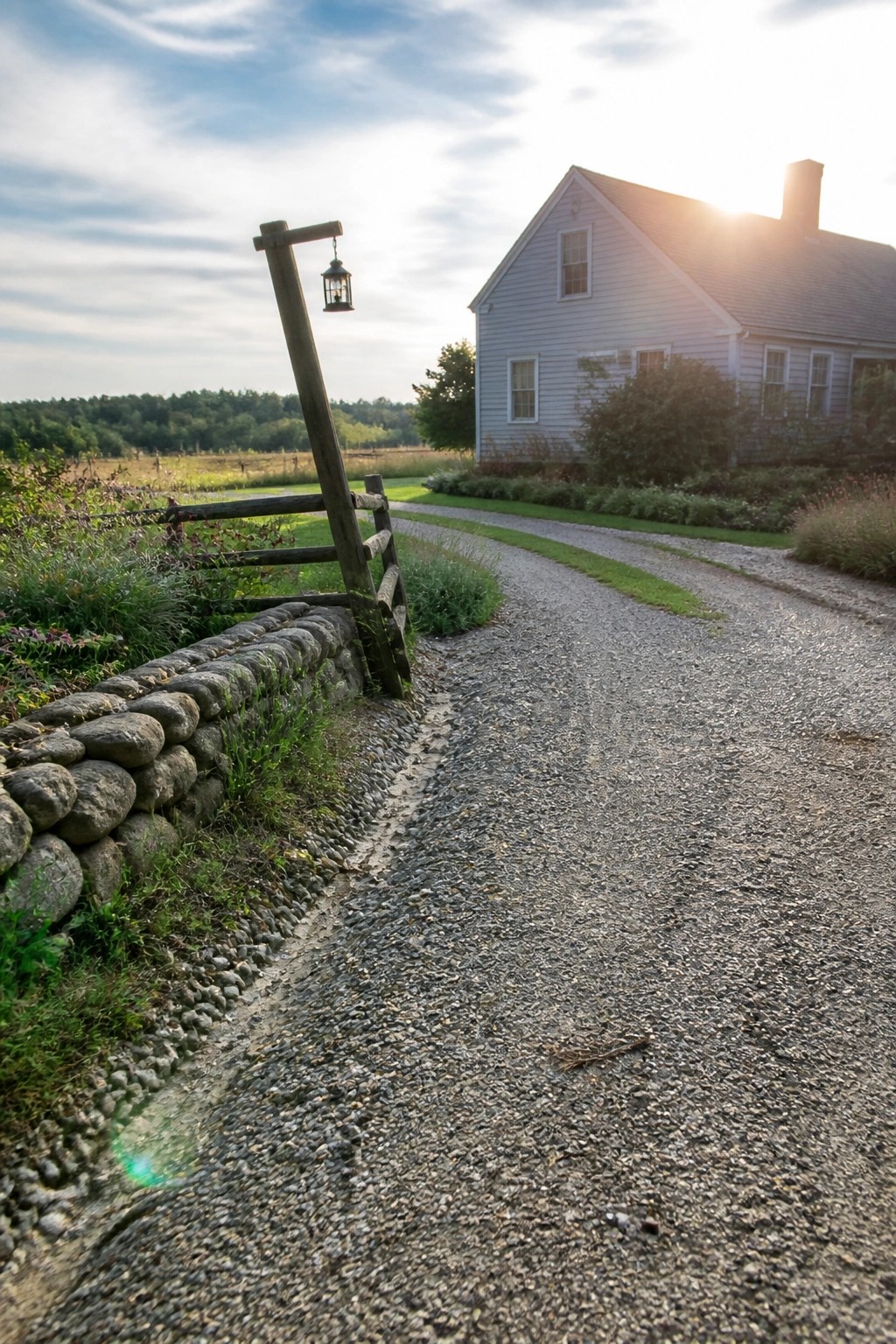
A low stone wall next to a gravel driveway gives the whole entrance a settled look that fits right in with older farmhouses. It keeps the gravel in place while adding texture that feels natural rather than added on later.
This approach works best on homes with open land or fields nearby. Use stones that match the local soil color and keep the wall no higher than knee height so the drive still feels open and easy to maintain.
Pavers Set Into Gravel Driveways
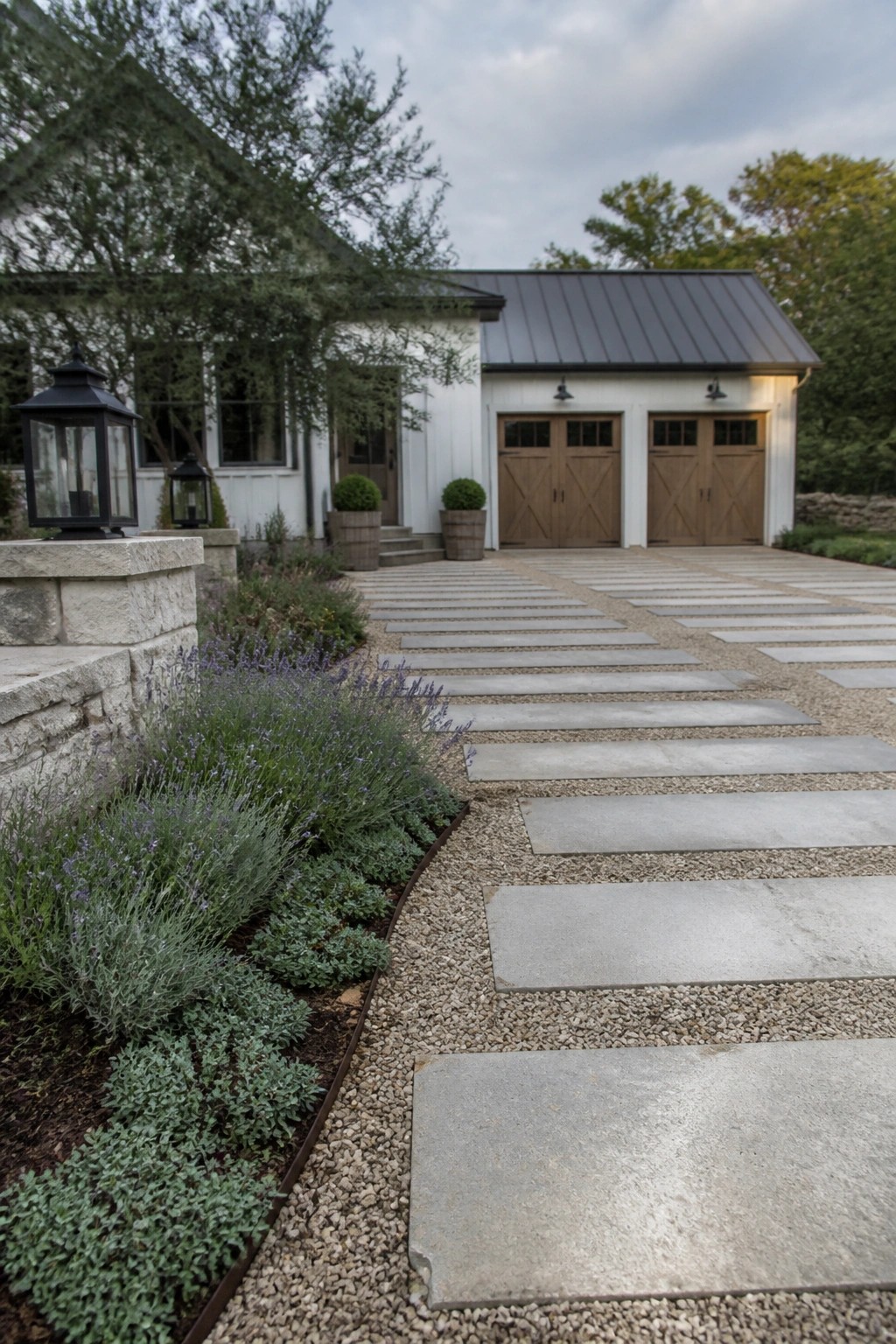
Setting large pavers into a gravel driveway gives you a firm path to walk on while the gravel keeps the whole surface looking relaxed and natural. This mix works especially well on farmhouse properties because it handles water runoff without needing a solid slab of concrete.
The look suits homes where the garden already comes close to the drive. Keep the edging simple and low so the plants can soften the line without fighting the gravel.
Gravel Driveways Edged With Hedges
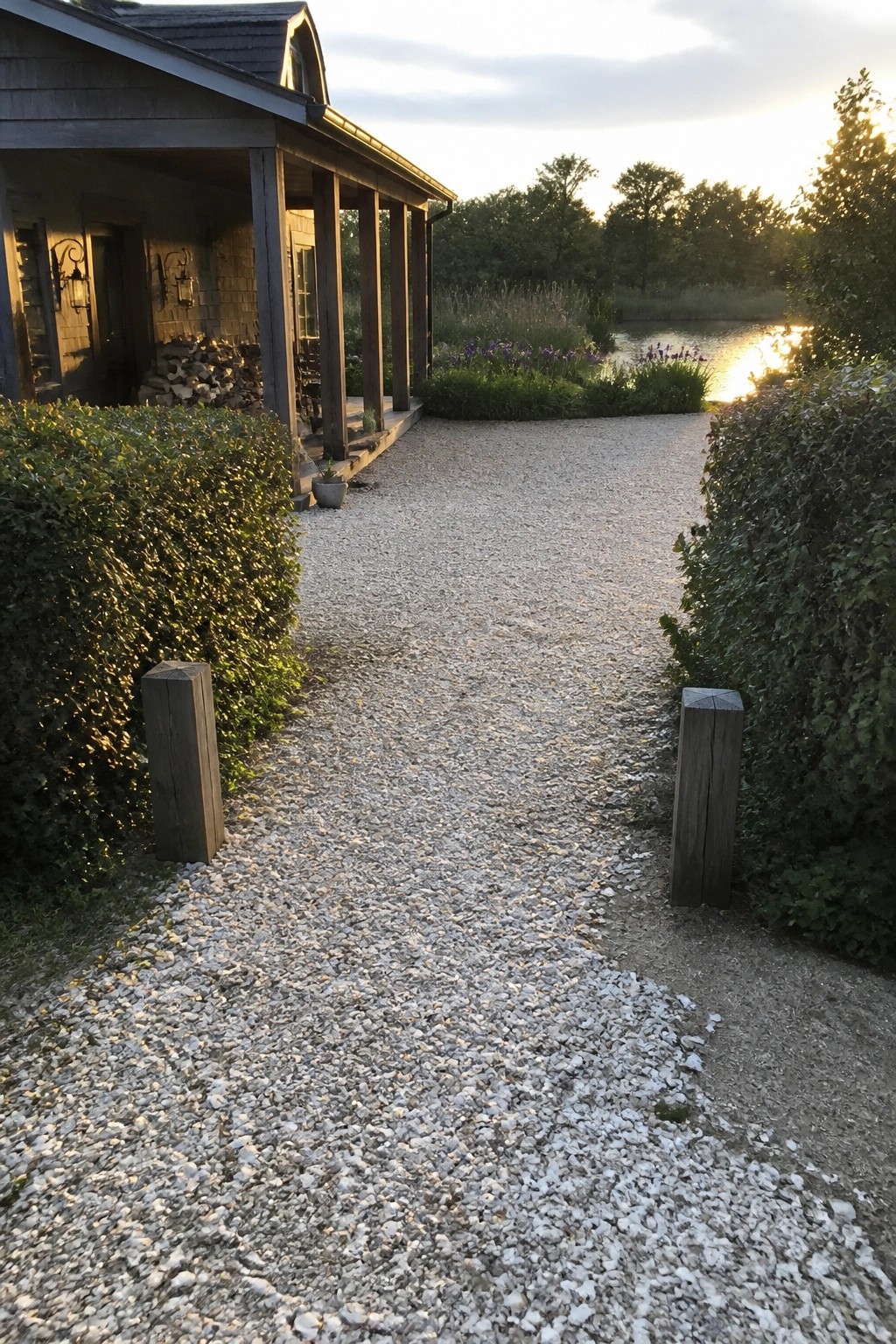
Hedges on both sides of a gravel driveway help keep the surface contained while giving the whole entrance a softer look. The plants create a natural boundary that feels less harsh than hard edging and still lets the gravel do most of the work.
This setup suits older homes or places with room on either side of the drive. Use evergreen varieties so the lines stay visible in winter, and space the plants so they can fill in without crowding the path.
Gravel for a Simple Farmhouse Driveway
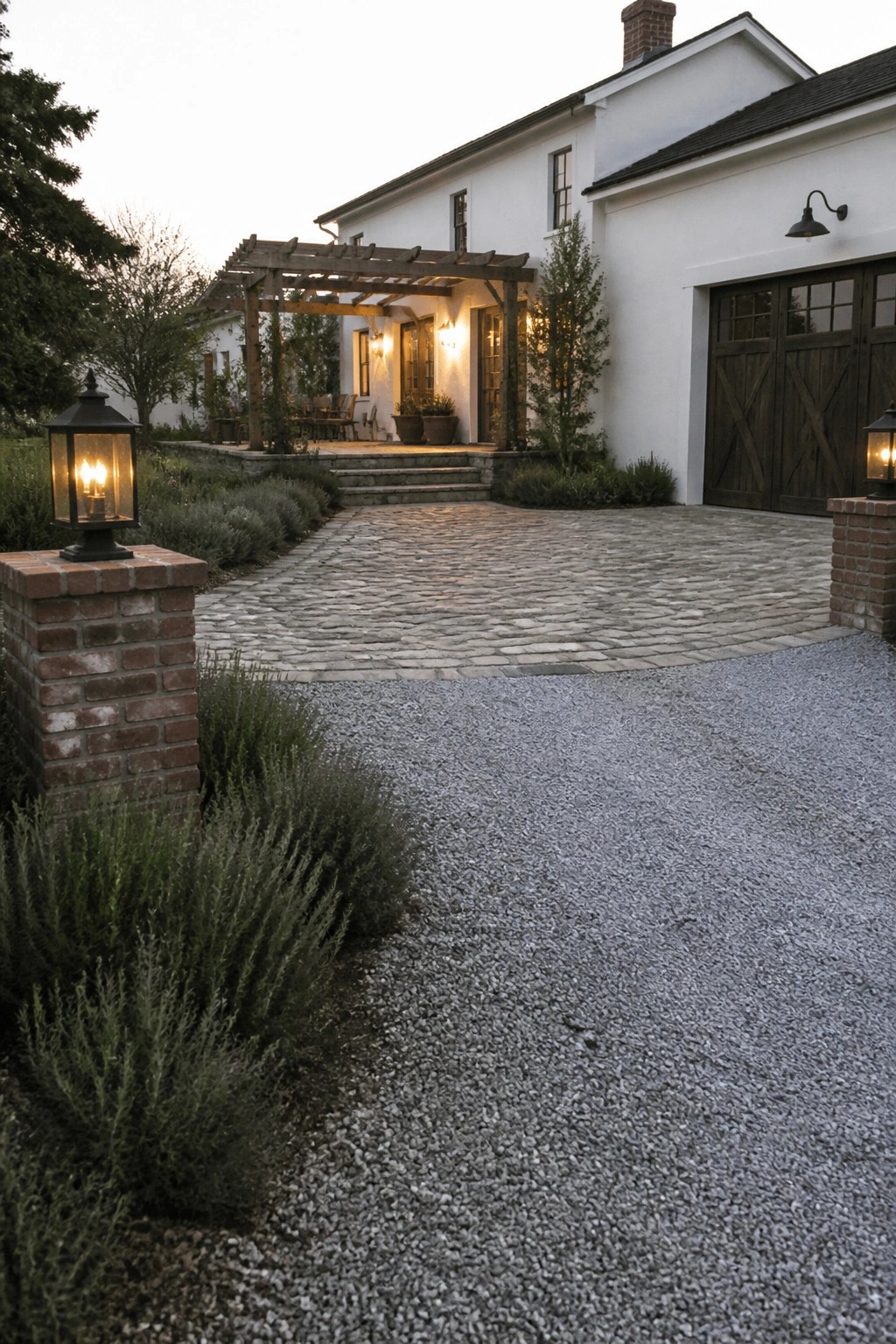
Gravel works well when you want the driveway to feel relaxed instead of overly finished. It pairs nicely with a farmhouse because it keeps the whole approach looking natural and unfussy while still giving enough structure for cars.
It suits homes that already have some brick or stone details around the entry, since the loose texture of the gravel softens those harder edges. Just make sure the gravel stays contained at the sides so it does not spill into planting beds or walkways over time.
Frequently Asked Questions
Q: How do I keep ruts from forming after daily use? A: Spread the gravel evenly with a rake after heavy traffic. Add a thin top layer once a year to fill any dips that start to show. This keeps the surface firm and level without much extra work.
Q: What can I use to hold the edges in place? A: Lay simple wooden planks or old landscape timbers along both sides. They keep the stones from spilling into the grass while still fitting the farmhouse feel. Set them just below the surface so tires roll over smoothly.
Q: Will heavy rain wash gravel down the slope? A: Pack a solid base of crushed rock underneath before adding the top layer. Slope the driveway gently toward the sides so water drains off instead of carving channels. Rake any loose stones back after big storms to keep things even.
