


When I look at a driveway the first thing I notice is how water moves across it after a storm.
Gravel can look solid at first but without the right slope or edging the surface starts to shift and collect in low spots over a single season.
Small fixes often make the biggest difference here.
I have tried adjusting the base layers on my own drive and learned that combining them with simple barriers along the sides keeps the material in place far better than I expected at the start.
Testing one or two of these approaches on a problem section feels like the smartest way to see what holds up before changing the rest.
Frame Driveway Drains with Stone

Gravel driveways handle rain better than solid pavement, but water still needs a clear exit point or it starts carving channels. Framing the drain with a square of flat stones gives the runoff a stable spot to drop while keeping the surrounding gravel from shifting or washing away.
This approach works best on homes with gentle slopes or long driveways where water tends to collect in one spot. Keep the stones level with the gravel surface so they do not catch on tires, and match the stone to any edging already running along the lawn edge.
River Rock Channels Help Control Runoff

One simple way to protect a gravel driveway from washing out is to line the low spots with larger stones. The bigger rock stays in place while water moves through, so the smaller gravel does not get carried away during heavy rain.
This setup works best along the edges of a driveway or near any low point where water collects. Set the stones around a grated drain so runoff has a clear path out, and keep the surrounding grade sloped slightly toward it. Homes with natural landscaping tend to suit this look, and it stays low maintenance once the stones are in place.
Metal Edging Holds Gravel In Place
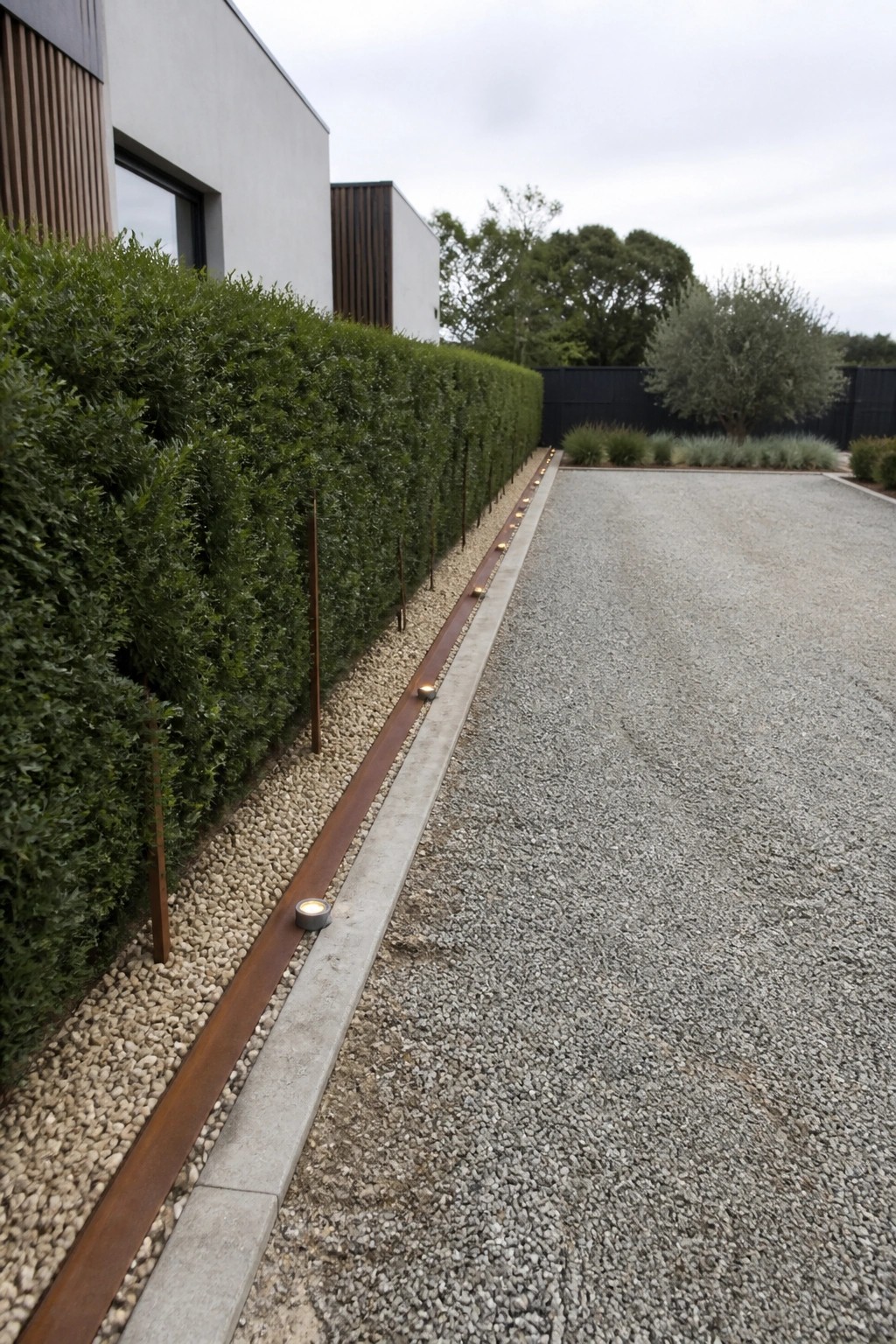
A simple metal strip along the edge of a gravel driveway can make a big difference in how well the surface holds up over time. It keeps the stones from spilling into the planting beds and gives water a clearer path to drain without carrying material away.
This works especially well on long straight edges next to hedges or borders. The edging can also support low lights if you want them, but the main job is keeping the gravel contained so it does not wash out during heavy rain. It suits homes with clean modern lines and low maintenance gardens.
Stone Lined Swales For Driveway Drainage

A stone lined swale beside a gravel driveway gives water a clear path to follow instead of letting it carve ruts or wash gravel away. Large flat stones set into the gravel slow the flow and keep the surface stable even after a heavy rain.
This setup works best on properties with any kind of slope or clay soil. Set the stones to create a shallow channel that follows the natural grade, then add a few low grasses along the edges to help hold the soil in place.
Gabion Walls With Drainage Pipes

A gabion wall with a pipe running through it gives water a clear path to follow without pulling gravel along with it. The rocks stay locked in the wire cage while the pipe moves the flow, which helps the rest of the driveway or path hold its shape after heavy rain.
This setup works best along the low edge of a gravel drive or walkway where water tends to collect. Place it where the ground slopes naturally toward the wall, and keep the surrounding plants low so they do not block the pipe opening.
Gravel Strips Between Pavers
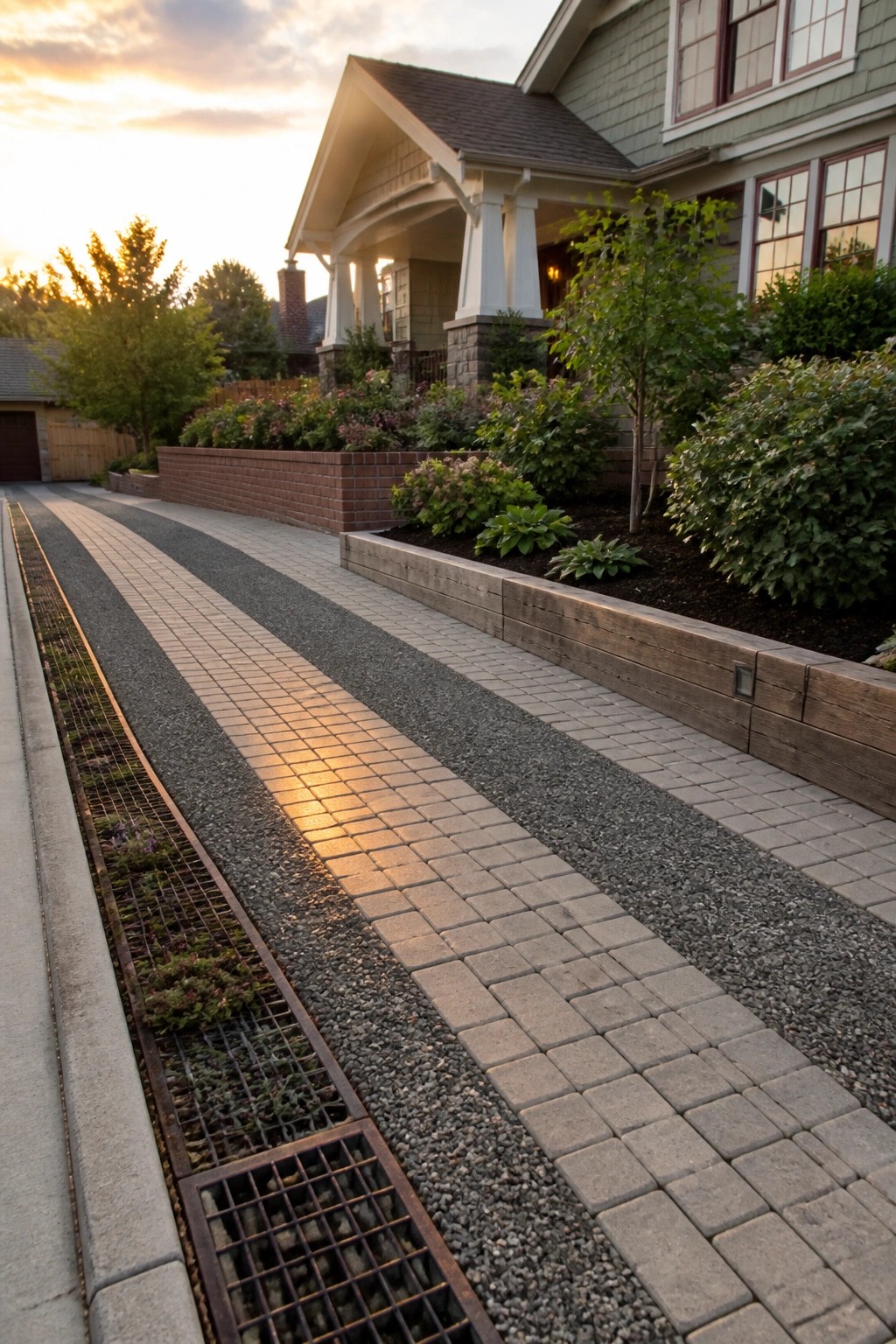
Running gravel strips between rows of pavers gives water a place to drain instead of rushing across the surface. This setup cuts down on erosion and keeps the driveway from washing out during heavy rain. The strips also add a bit of texture without making the whole surface feel too loose underfoot.
This approach works best on driveways that already have some slope or sit near garden beds. Keep the gravel contained with edging or low walls so it stays in place, and add a grate at the lowest point to catch excess flow. It suits homes where the driveway doubles as part of the landscape rather than a separate paved slab.
Stone Retaining Walls Slow Runoff on Sloped Gravel Driveways
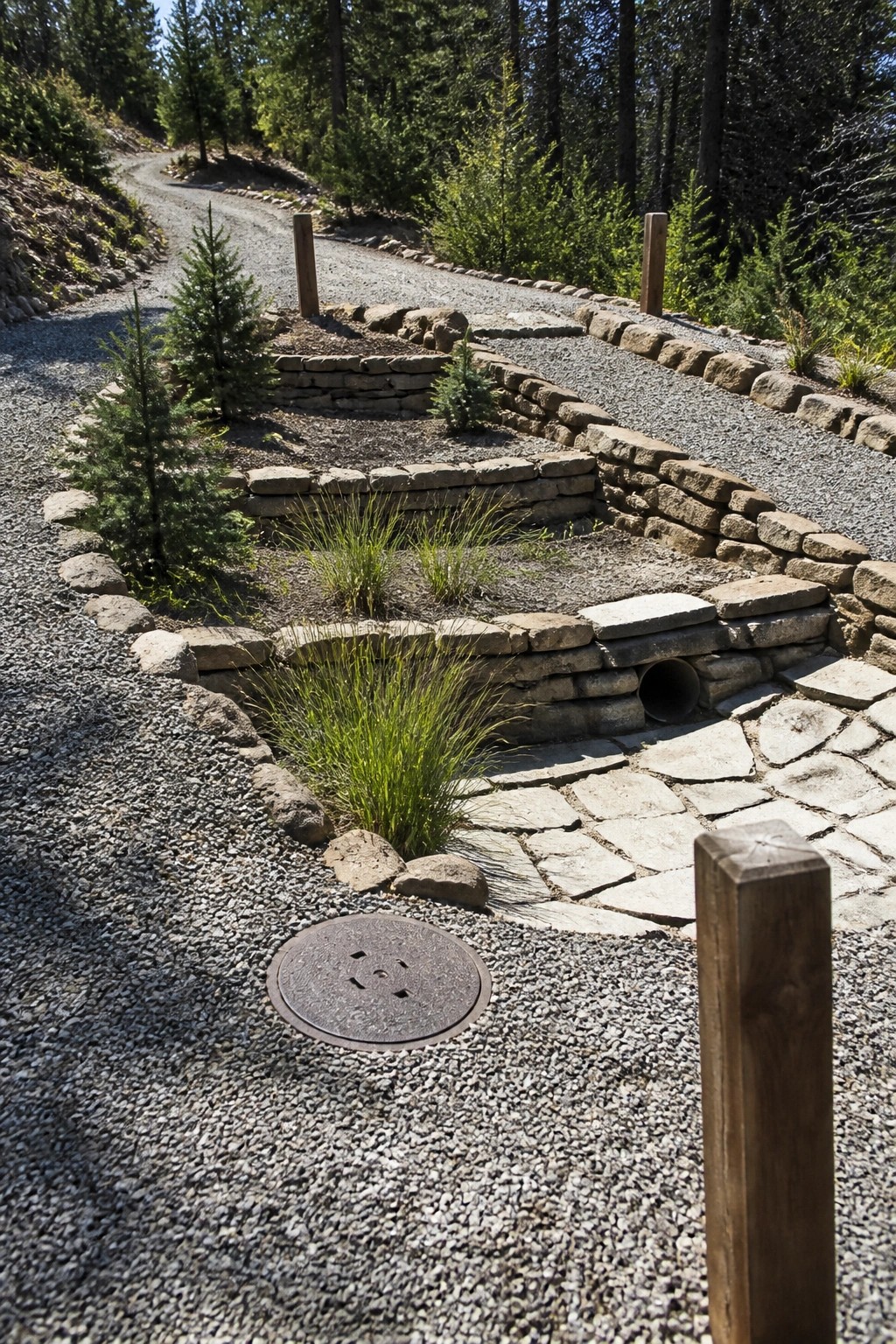
Stone retaining walls work well along gravel driveways on hills because they break the slope into smaller sections. Water moves slower across each level instead of gaining speed and carrying gravel with it.
These walls fit best on properties with noticeable drops where the driveway needs to stay solid after storms. Adding a drainage outlet through the lower wall and keeping the beds planted helps water exit without pooling or eroding the surface.
Add Stone Channels With Pipes Along Gravel Edges
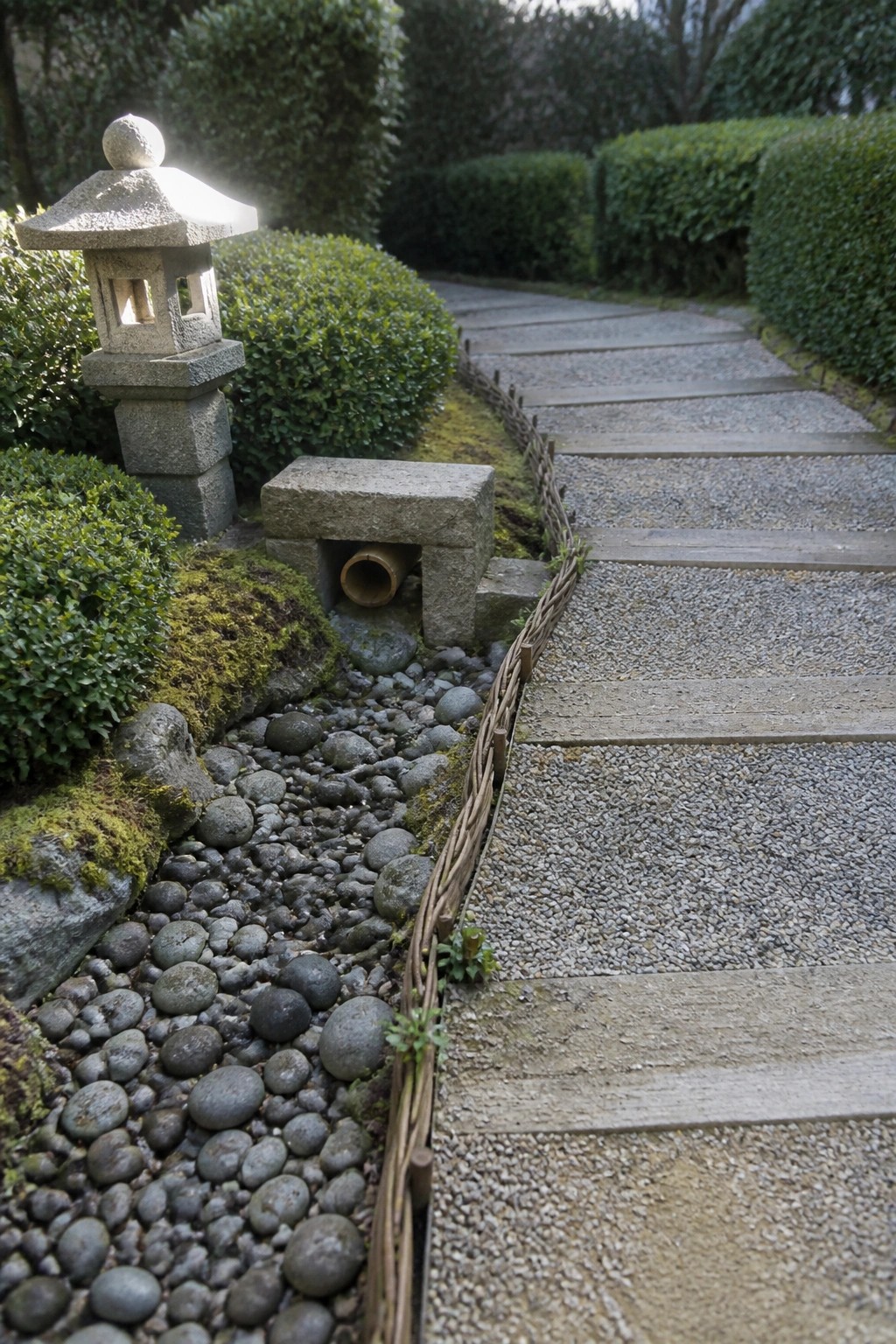
One simple way to stop gravel from washing away is to add a low stone channel right at the edge. The stone catches the water and funnels it into a pipe so it does not spread across the path or erode the gravel bed.
This setup works best on paths or driveways that slope or sit near garden beds. Keep the pipe outlet clear and make sure it leads to a spot where water can drain safely without creating new problems.
Linear Drains Keep Gravel Driveways From Washing Out
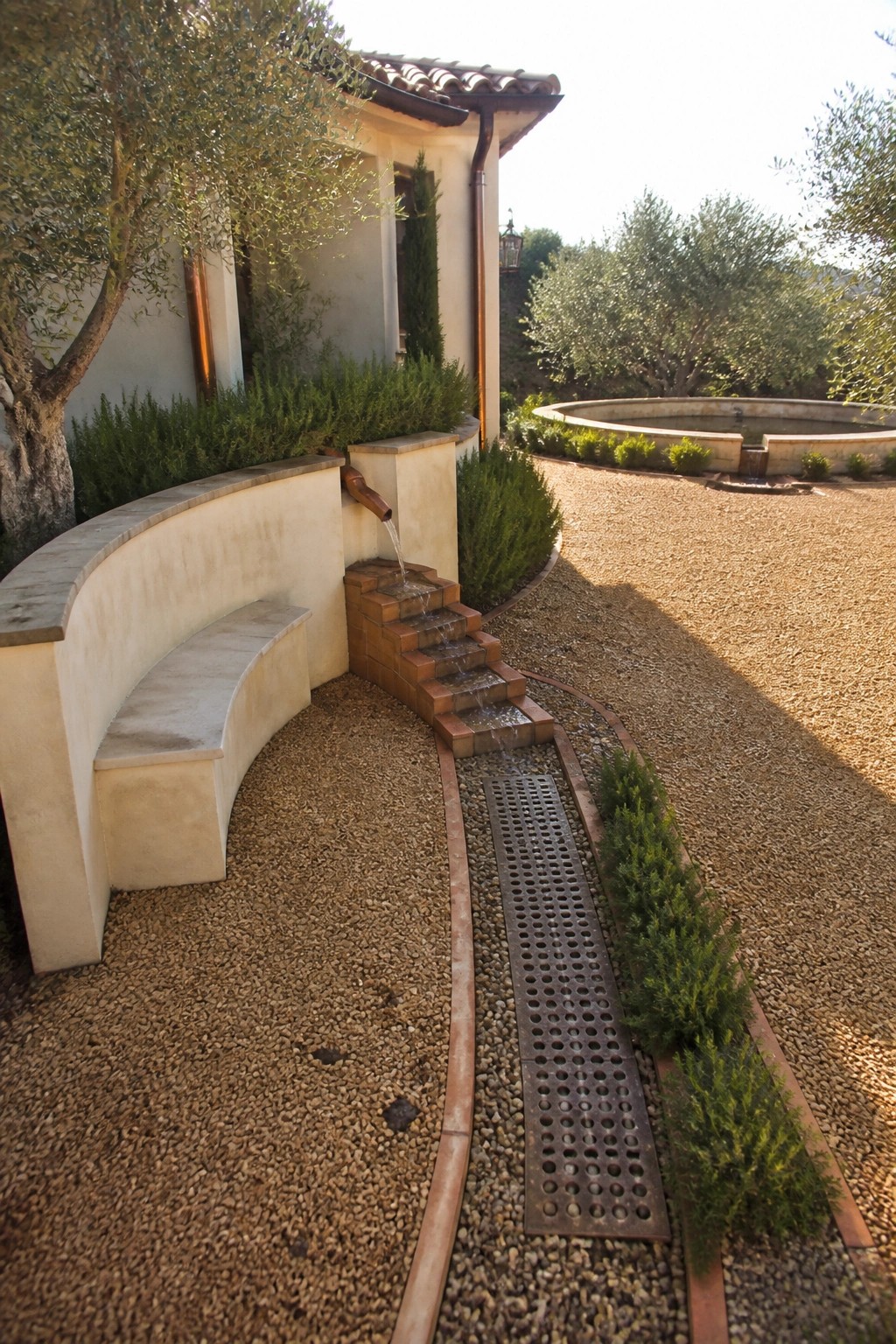
Gravel handles a lot of water on its own, but it still needs help when runoff comes from a slope or a spout. A long grated channel set right into the surface catches the flow before it can carve paths or carry stones away.
This setup works best on driveways with a slight grade or near garden features that release water. Run the drain to a safe outlet and keep the gravel level around it so everything stays put over time.
Gravel Paths With Metal Edging

Metal edging works well along gravel paths because it holds everything in place while still letting water move through. The clean lines also make it easier to add a drain grate where runoff tends to collect.
This setup suits homes with long front walks or narrow drive strips where you need something low maintenance. Just keep the edging straight and slightly lower than the gravel so water does not sit along the sides.
Span Drainage With A Low Bridge

Running a shallow channel next to a gravel driveway lets water move away from the surface instead of cutting into it. A simple wooden bridge keeps the drive usable while the channel below handles flow during heavy rain.
This setup works best on sloped lots where water tends to cross the drive. Keep the bridge low and wide enough for tires, and line the channel with rock so it slows water without washing out the banks.
Add a Bordered Trench Drain to Your Gravel Driveway

A trench drain with a steel border helps keep water from spreading across the gravel and washing it away. The metal edges hold the sides in place while the channel moves water quickly toward an outlet. This setup works especially well on driveways that slope or sit in areas with heavy runoff.
Place the drain along the low side or center where water naturally collects. Use concrete pavers set into the channel so you can still walk or drive across without sinking into loose rock. Make sure the outlet connects to a storm drain or dry well so water does not pool at the end.
Use Logs to Slow Water in Drainage Ditches
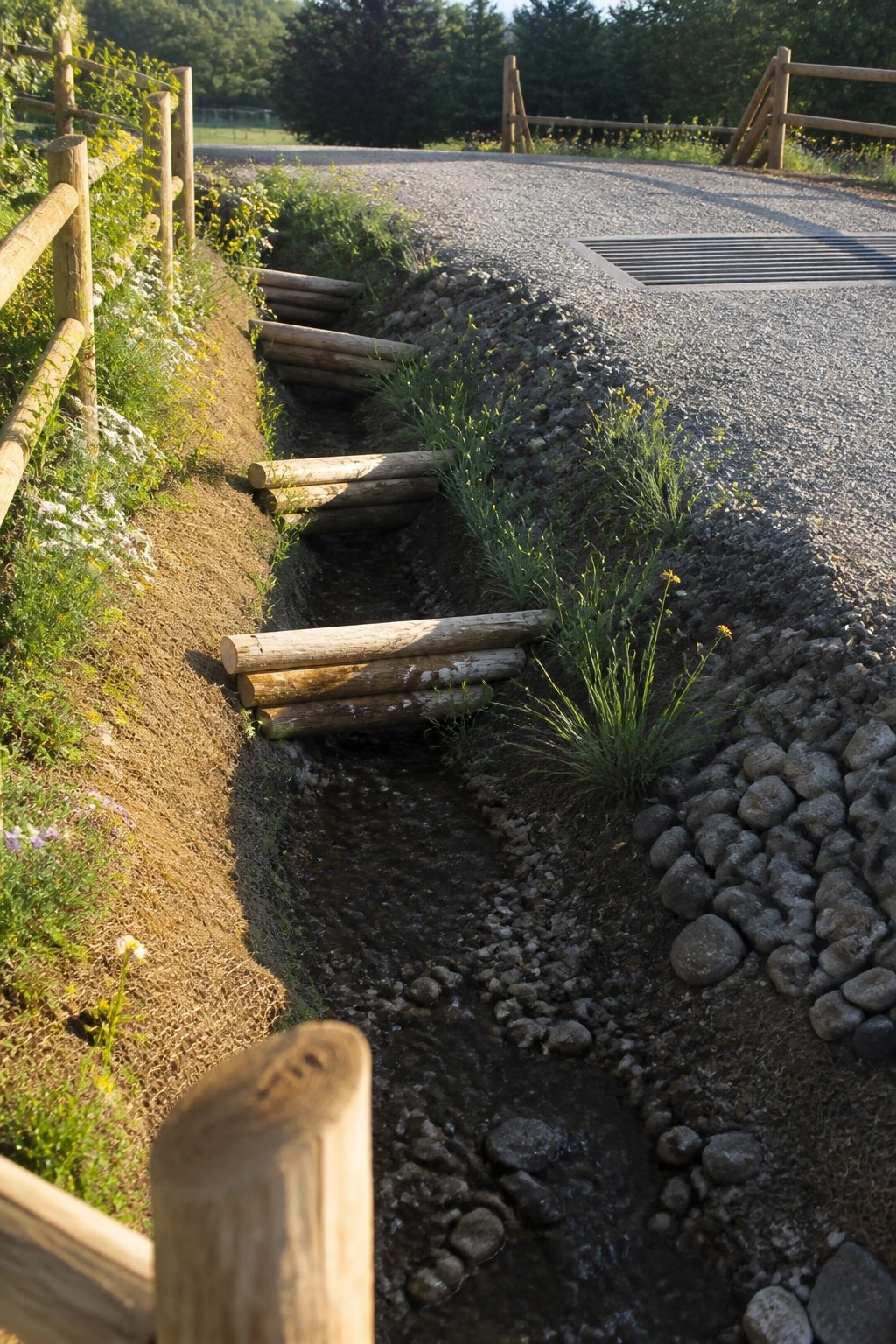
Logs placed across a drainage channel can break up the flow of water and keep it from carving out deep ruts. This simple step works especially well on sloped gravel drives where runoff picks up speed and starts moving the surface material. The wood blends in with the surroundings and lasts for years once it settles into the soil.
This approach suits homes with natural or rural settings where a more built look would feel out of place. Space the logs a few feet apart and make sure the ends sit firmly into the banks so water cannot sneak around them. Check the area each spring and replace any logs that have shifted or rotted.
Use Grass Grids In Gravel Areas

Grass grids set into gravel let water soak straight down instead of rushing across the surface. This setup cuts down on washouts and keeps the gravel from shifting during heavy rain. The concrete borders help hold the whole thing in place while still letting the area feel open.
This works best on driveways, side paths, or parking areas where you need drainage but still want a softer look. Make sure the base stays level and the grids sit low enough that tires roll over them without catching.
Add A Drain To Your Gravel Driveway
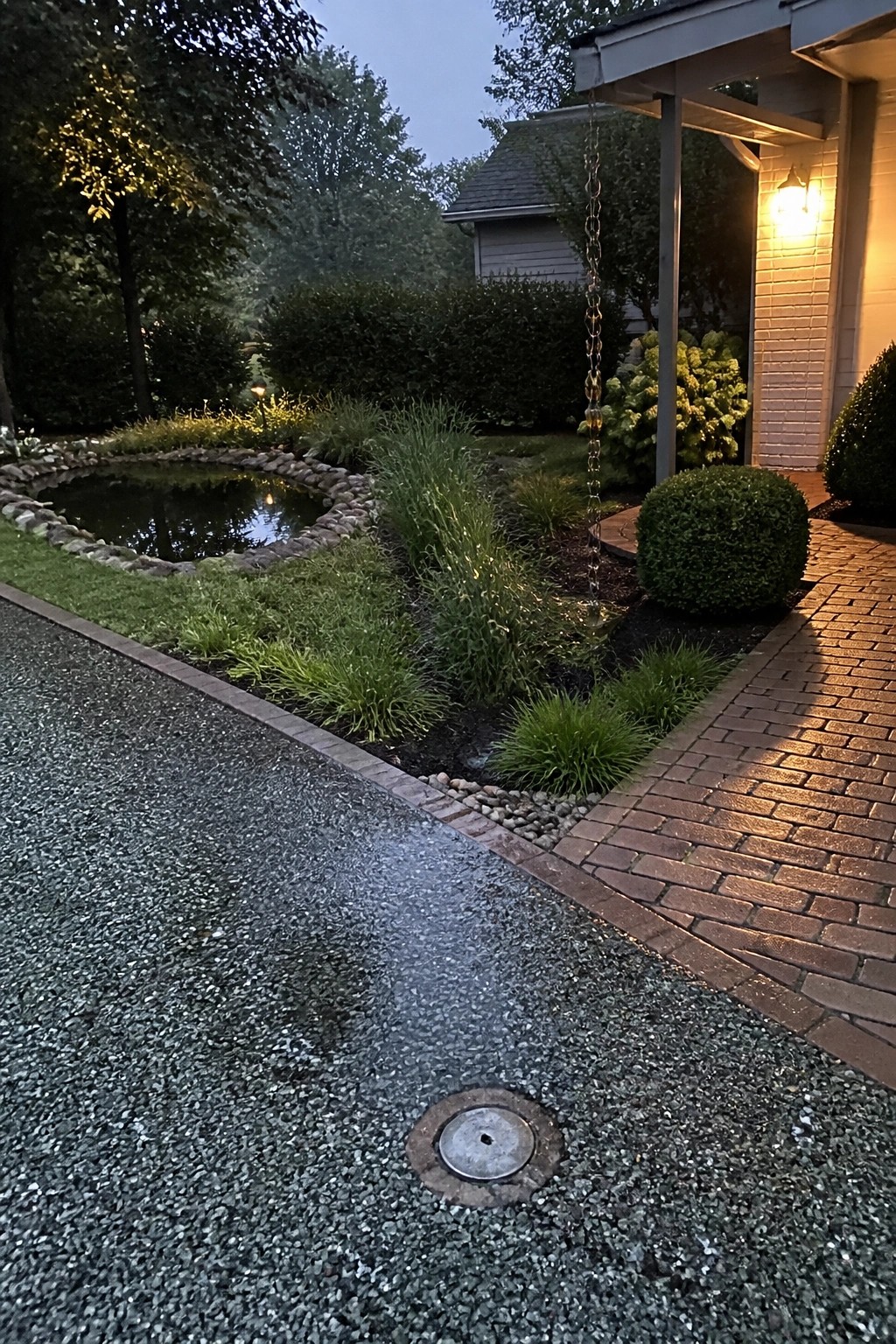
A drain set into the gravel makes a big difference when water starts to pool. It catches runoff before it can carve channels or wash the surface away, especially near the house where roof water and driveway slopes meet.
This setup works best on driveways that already have a slight pitch toward one low spot. Keep the grate low enough to sit flush with the gravel so tires and shovels clear it easily. Pair it with a rain chain or downspout extension if roof water lands nearby.
Large Rocks Help Direct Water Along Gravel Driveways
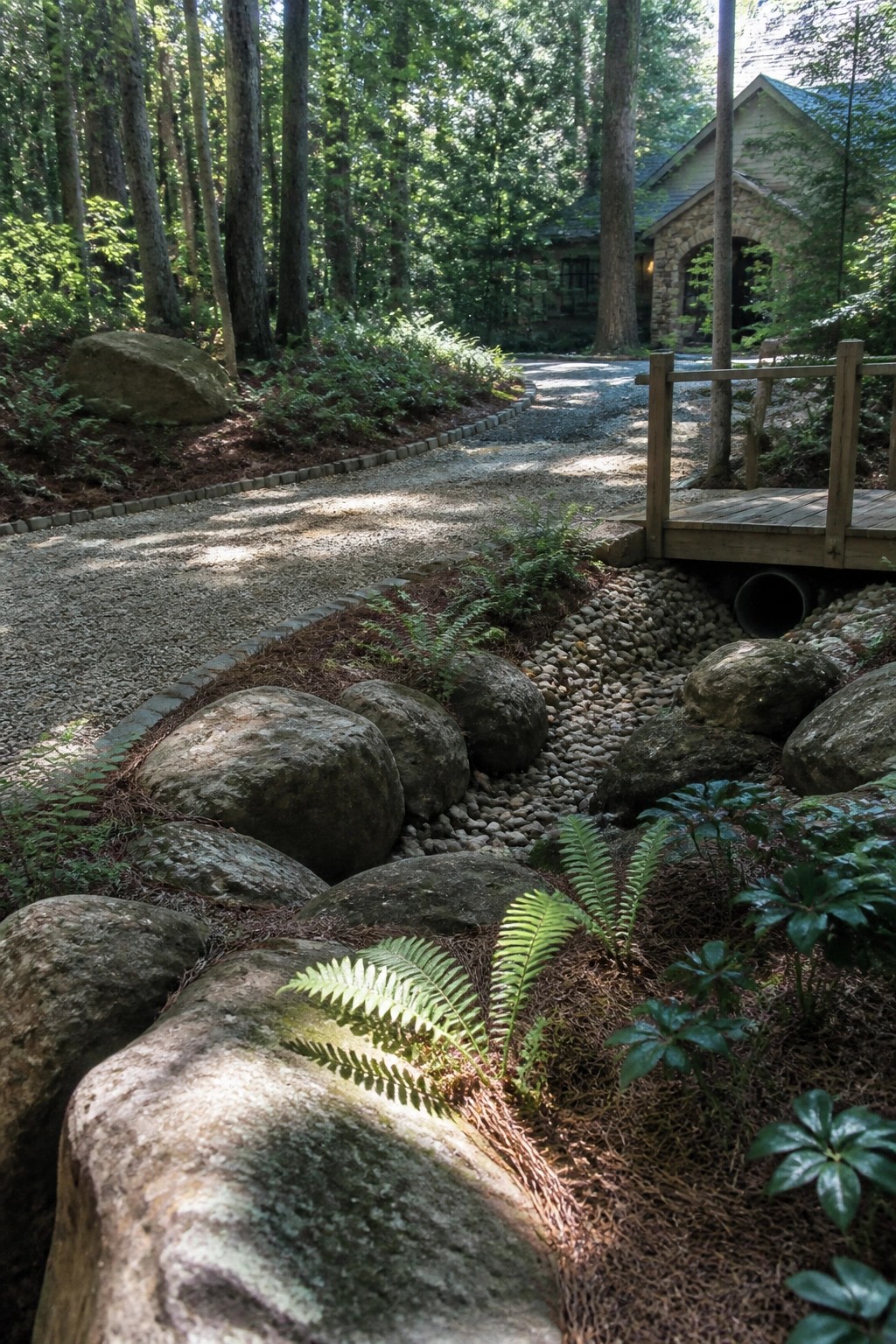
Large rocks set along the edges of a gravel driveway give water a place to slow down and drain instead of washing the surface away. They hold the gravel in place during storms and keep the path from eroding over time.
This setup works best on driveways with a slight slope or near low spots where water tends to collect. Place the rocks in groups with smaller gravel or plants between them so the water can still move through without creating new channels.
Linear Drains Keep Gravel From Washing Out

Gravel works well for driveways because it lets water pass through, but it can still shift or erode during heavy rain. Adding a linear drain gives the water a clear path to follow so it does not pool or carry the gravel away.
This setup works best on sloped entries or along the side of a house where runoff collects. Keep the drain level with the gravel surface and use solid edging on both sides to hold the material in place.
Embed Drainage Grates in Gravel Driveways
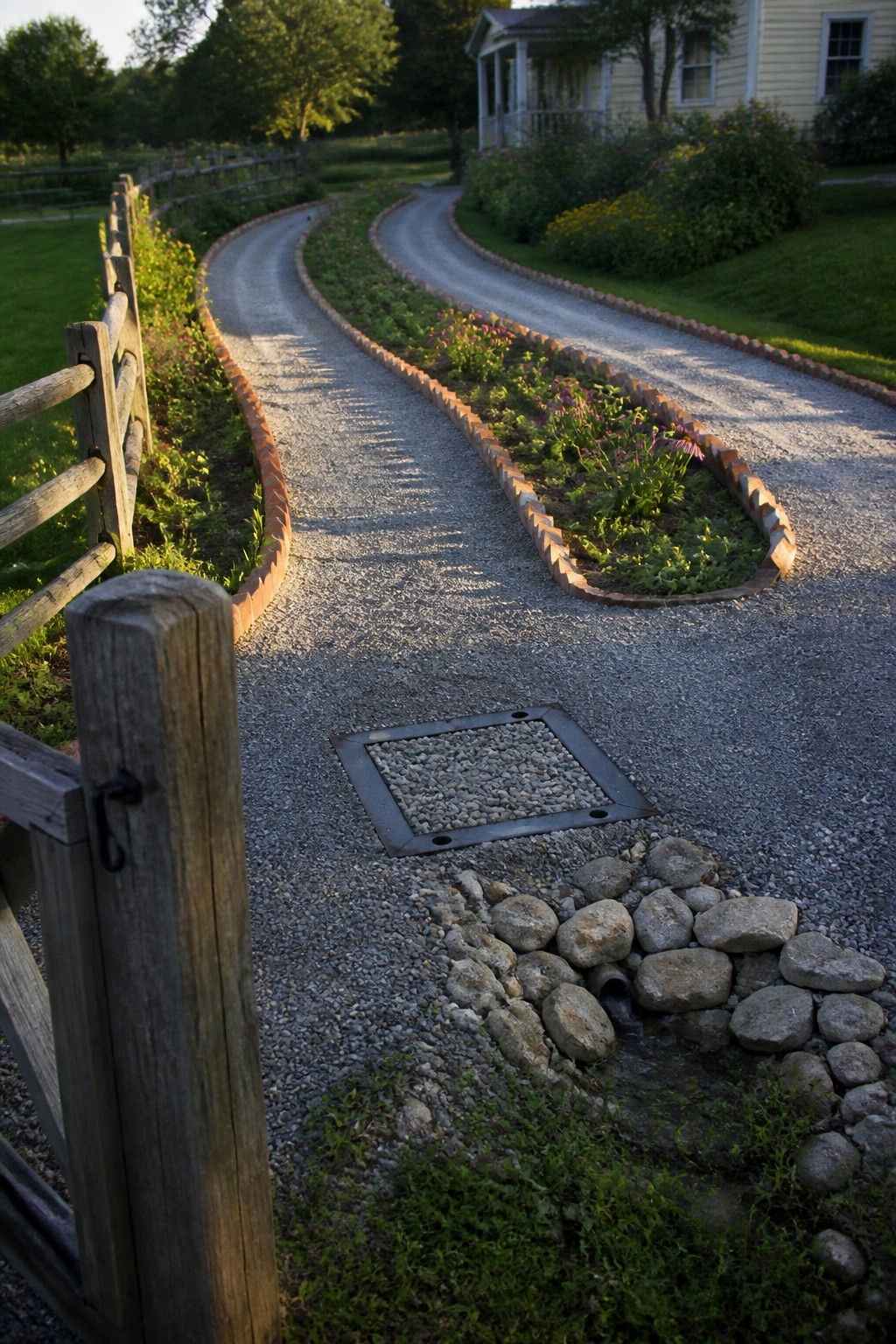
Gravel driveways often need extra help moving water off the surface before it starts carving channels. A simple grate set right into the gravel gives runoff a clear place to drop instead of spreading across the drive.
This setup works best on longer or gently sloped drives where water collects in one or two spots. Keep the grate flush with the gravel and run the outlet toward a lower area or dry well so the surrounding beds stay dry.
Stacked Stone Borders For Gravel Driveways
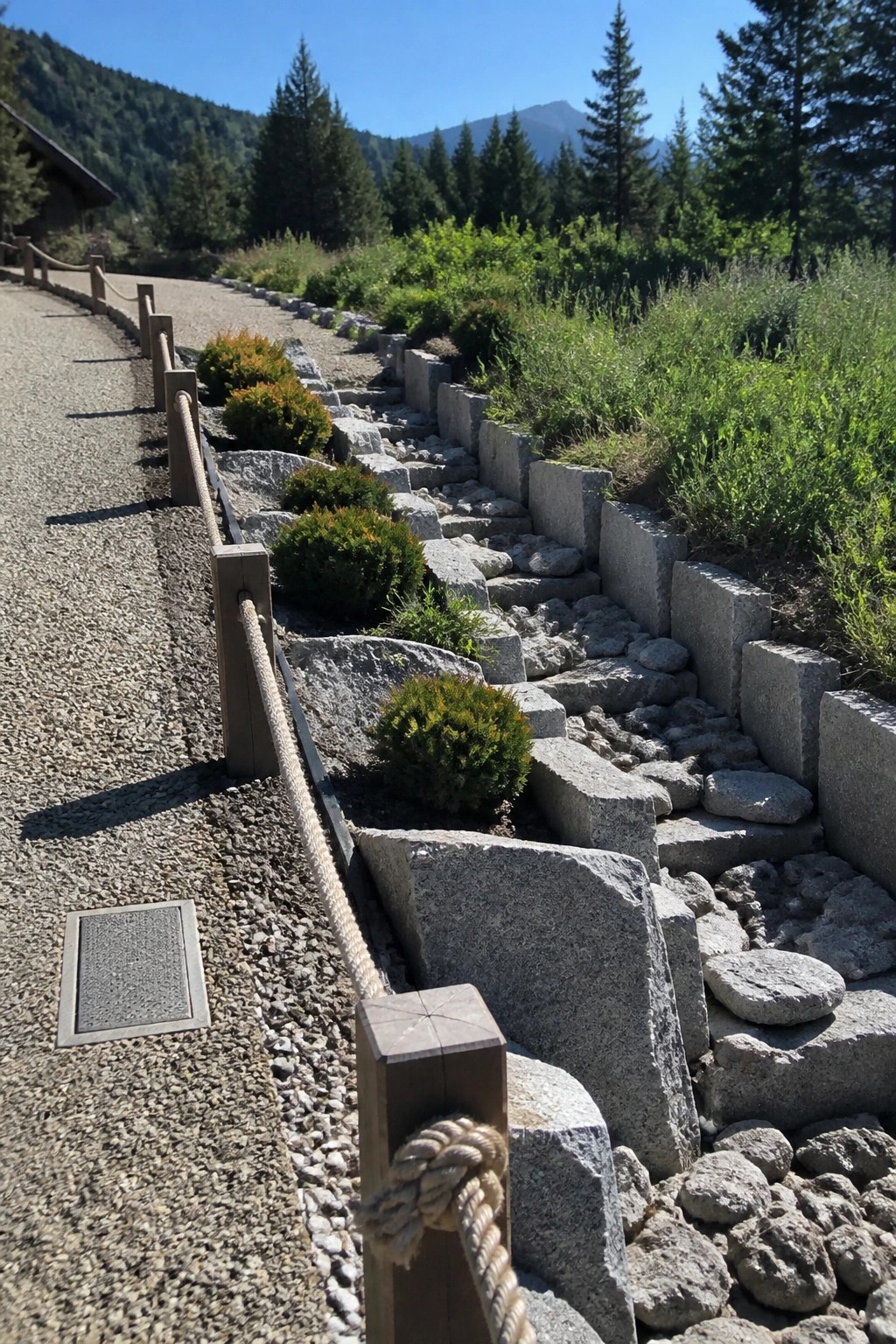
Stacked stone makes a solid border that keeps gravel from sliding away during heavy rain. The blocks sit at different heights to follow the slope, which helps slow water and reduces washouts along the edge. A simple rope fence adds a light boundary without blocking flow.
This approach works well on properties with gentle hills or long driveways where water tends to run. Use local stone if possible so it blends with the surroundings, and make sure the base is level before stacking. Keep the stones tight enough to hold soil but leave small gaps for drainage.
Gravel Paths With Stepping Stones For Drainage
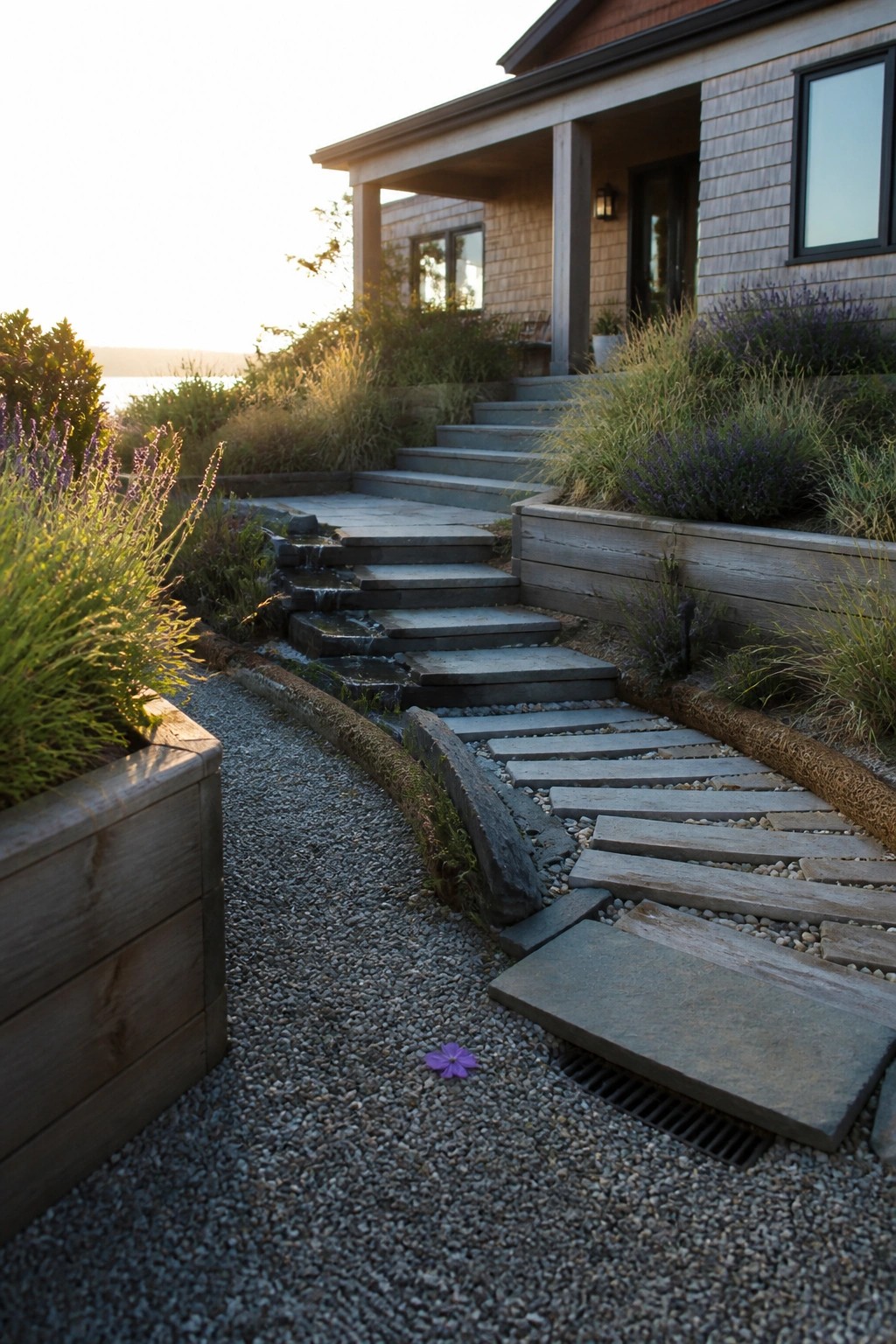
Gravel paths let water drain straight through instead of pooling or running off in sheets. Adding flat stones on top gives a solid walking surface while keeping the permeable base intact so runoff does not wash the whole thing away.
This works best on gentle slopes or near entries where rain tends to move soil. Make sure the gravel layer sits several inches deep and the stones stay level so the path feels firm underfoot and still handles water without extra structures.
Frequently Asked Questions
Q: How can I tell if the gravel is washing away too fast? A: Check the low areas after a heavy rain. If you see bare spots or ruts forming, add more gravel and pack it down firmly. This keeps the surface stable over time.
Q: What works if water keeps running down the middle of the drive? A: Dig a shallow ditch along the center and fill it with larger stones. The bigger rocks slow the flow and let water soak in better. You might need to do this every few years as things settle.
Q: Can I use these drainage ideas on a shared driveway? A: Talk to your neighbor first about where the water goes. Then install a small berm on your side to direct flow away from both properties. It usually takes just a weekend to build.
