

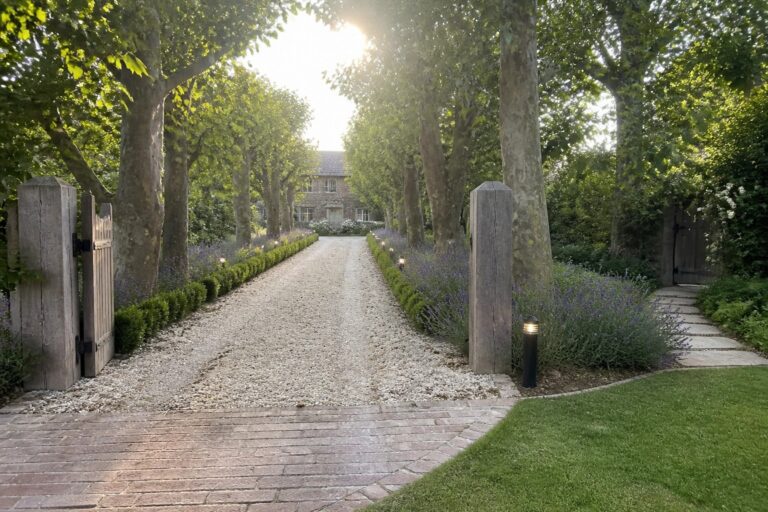
The driveway is usually the first thing visitors notice when they pull up, and gravel versions can either enhance or undercut the home’s presence depending on the details.
Choosing the right size and color of stone matters more than it seems at first, especially when it has to complement the facade and any plantings along the edges.
Not every option works in practice.
I always check how well a material drains and whether it will need constant maintenance before committing to it on my own property.
Looking at different approaches helps narrow down what might actually suit a specific house and its setting.
Line a Gravel Driveway With Trees
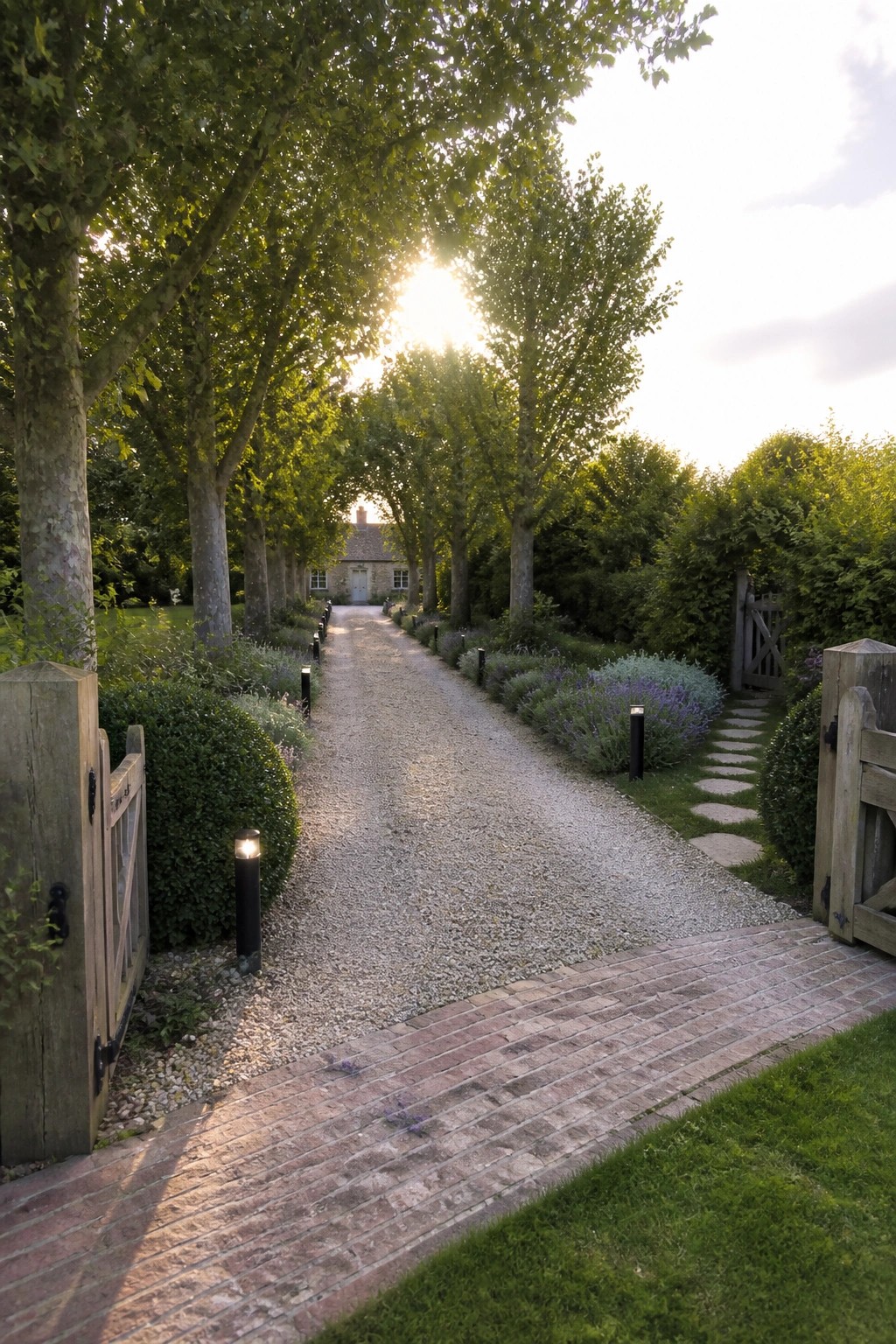
A row of trees on each side of a gravel drive gives the whole approach a settled feel. It turns what could feel like a plain stretch of gravel into something more structured and welcoming without needing much else.
This works especially well on longer drives where you have room for the trees to grow in over time. Space them evenly, keep the underplanting low like lavender or boxwood, and add a few simple path lights so the route stays clear at night. It suits homes set back from the road and gives a quiet sense of arrival.
Add a Central Planting Circle
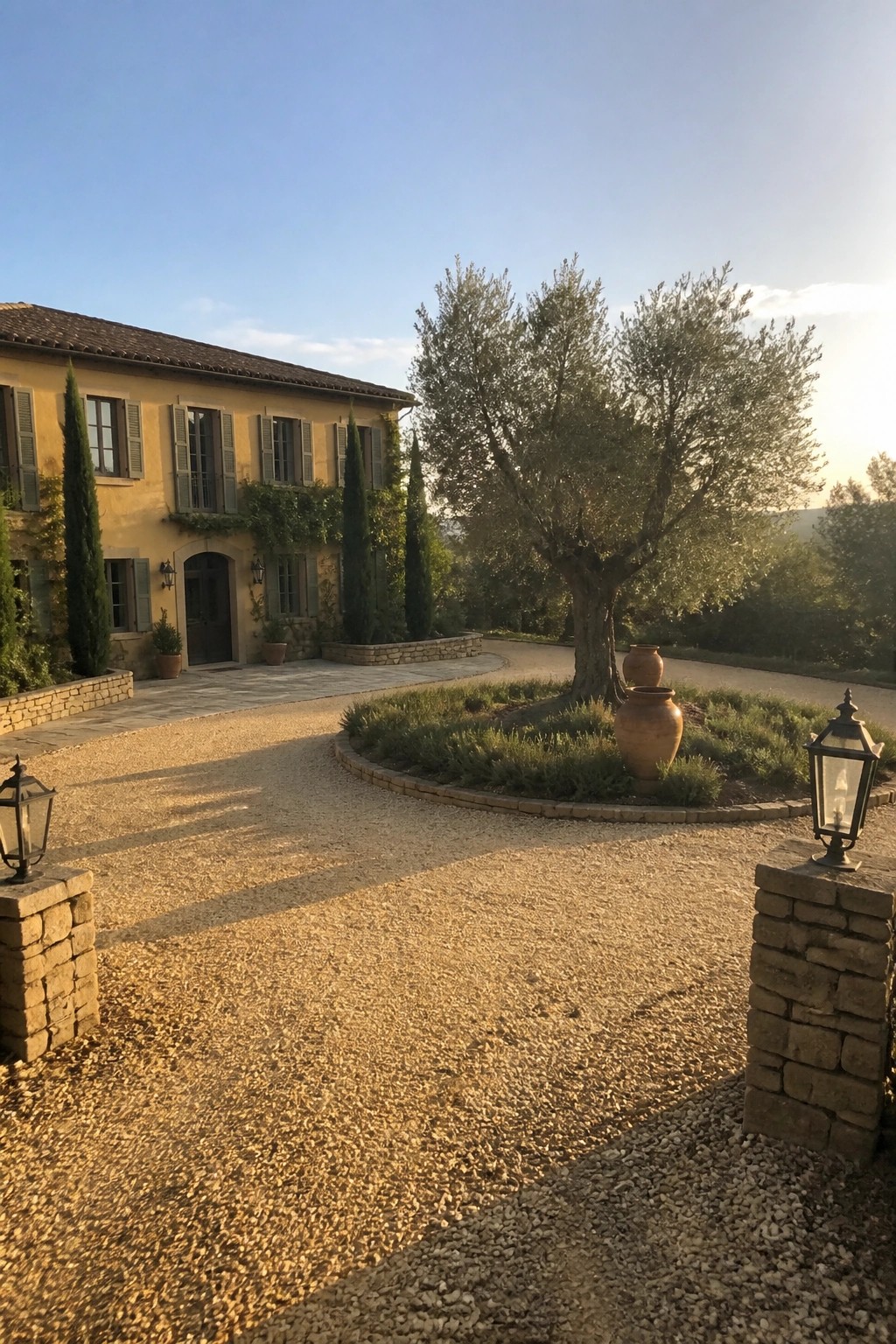
A central planting circle gives a long gravel driveway a clear focal point. It breaks the straight run of gravel and makes the approach feel more intentional without adding much extra work.
This layout suits homes with a bit of width at the entry. Use low shrubs and a couple of large pots to keep sight lines open, and edge the circle with stone so the gravel stays put over time.
Brick Edging Frames A Gravel Driveway
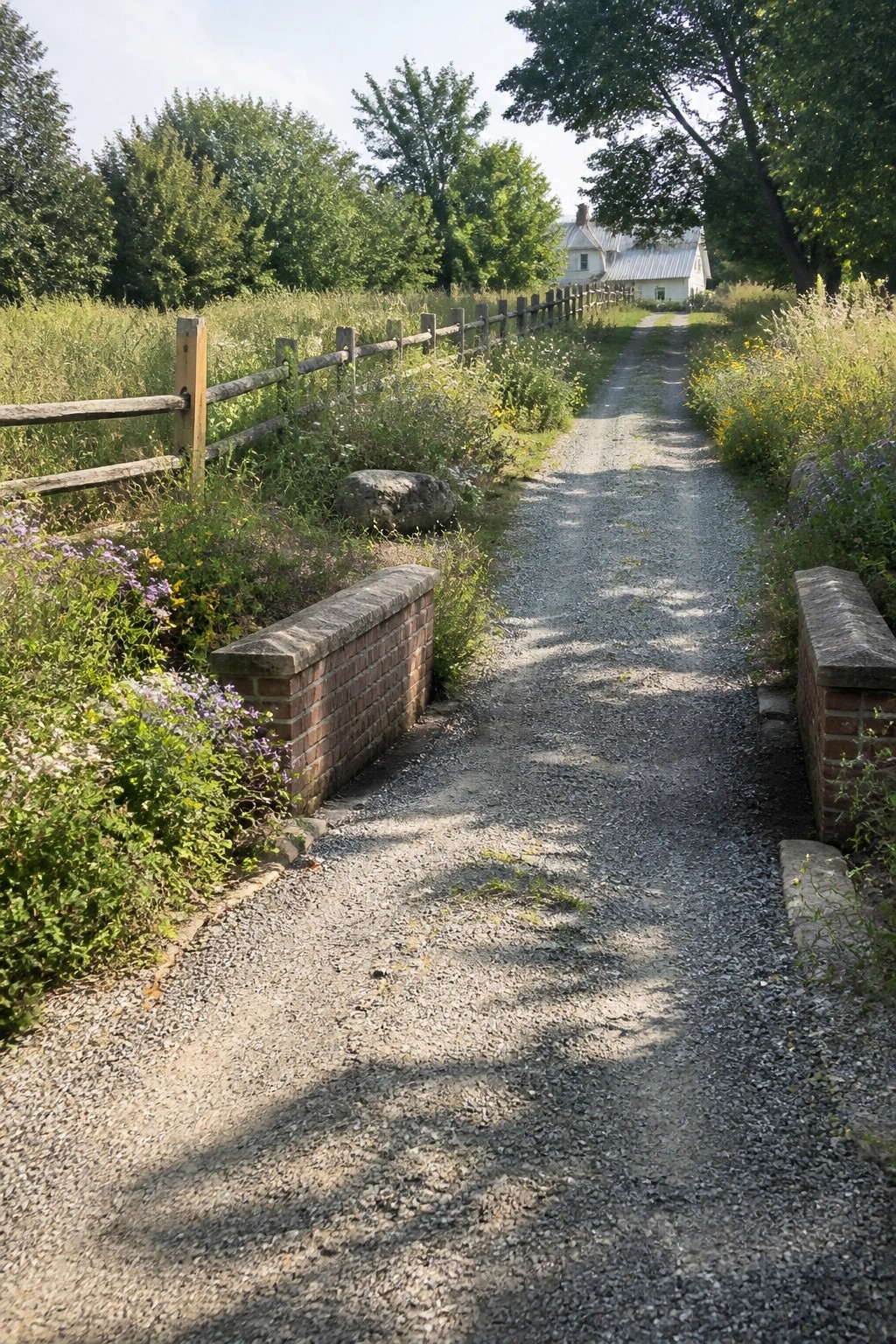
Brick edging gives a gravel driveway a clear boundary right from the start. It turns a simple path into something more defined without adding a lot of formality. The low walls help the gravel feel intentional and keep it from spreading into the surrounding plants.
This approach works best on homes with a bit of land and natural landscaping. Keep the bricks low and let the flowers and grasses grow right up to them. Just make sure the edging sits on a solid base so it stays in place through the seasons.
Edge A Gravel Driveway With Wooden Posts
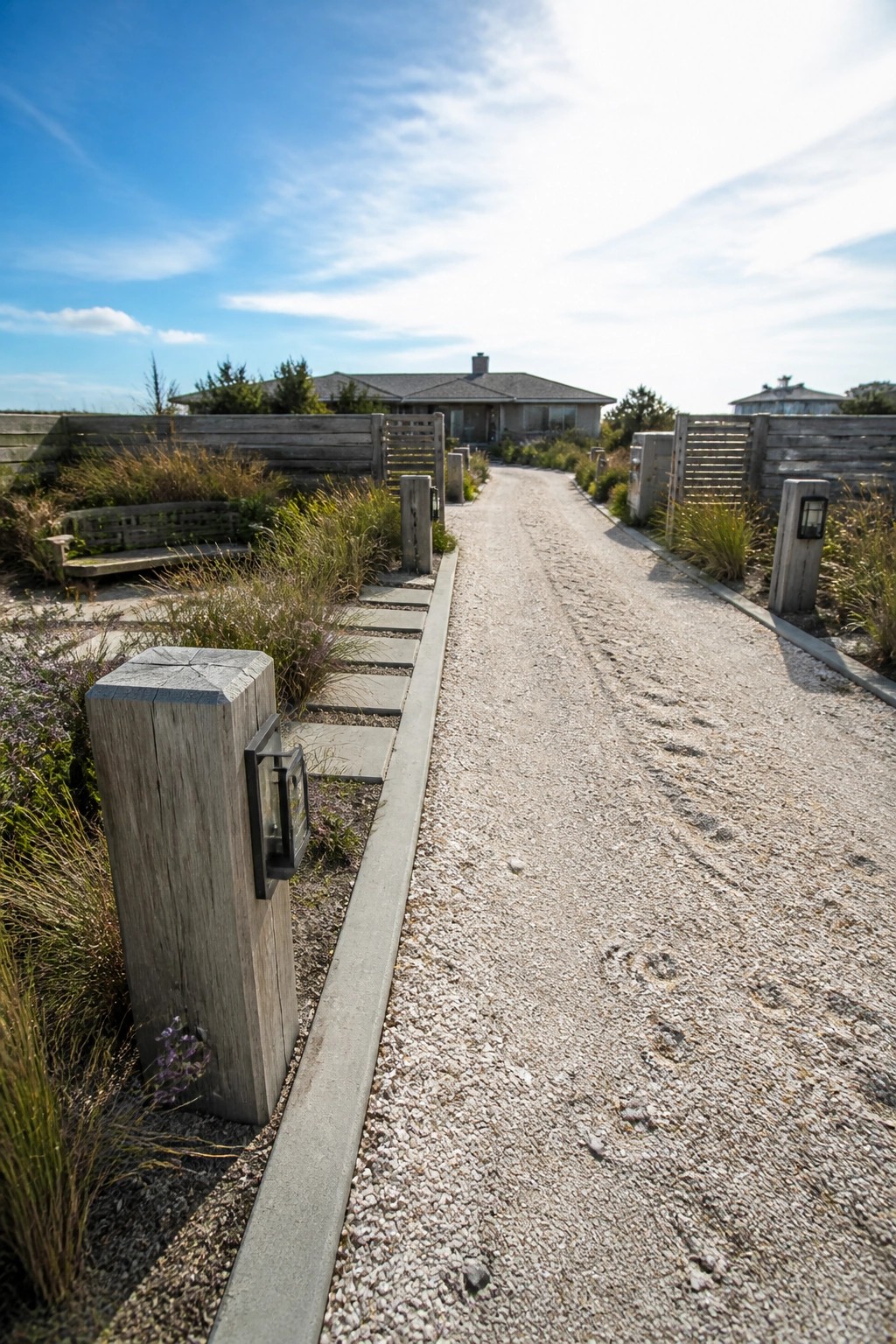
Wooden posts placed along a gravel driveway give the surface a clear edge and keep everything looking tidy. They add just enough structure without making the entrance feel too formal or built up.
This approach works well on longer drives where you want a natural look that still guides visitors in. Use simple square posts and add a light on a few of them if you need some low evening lighting.
Line a Gravel Driveway with Large Clipped Shrubs
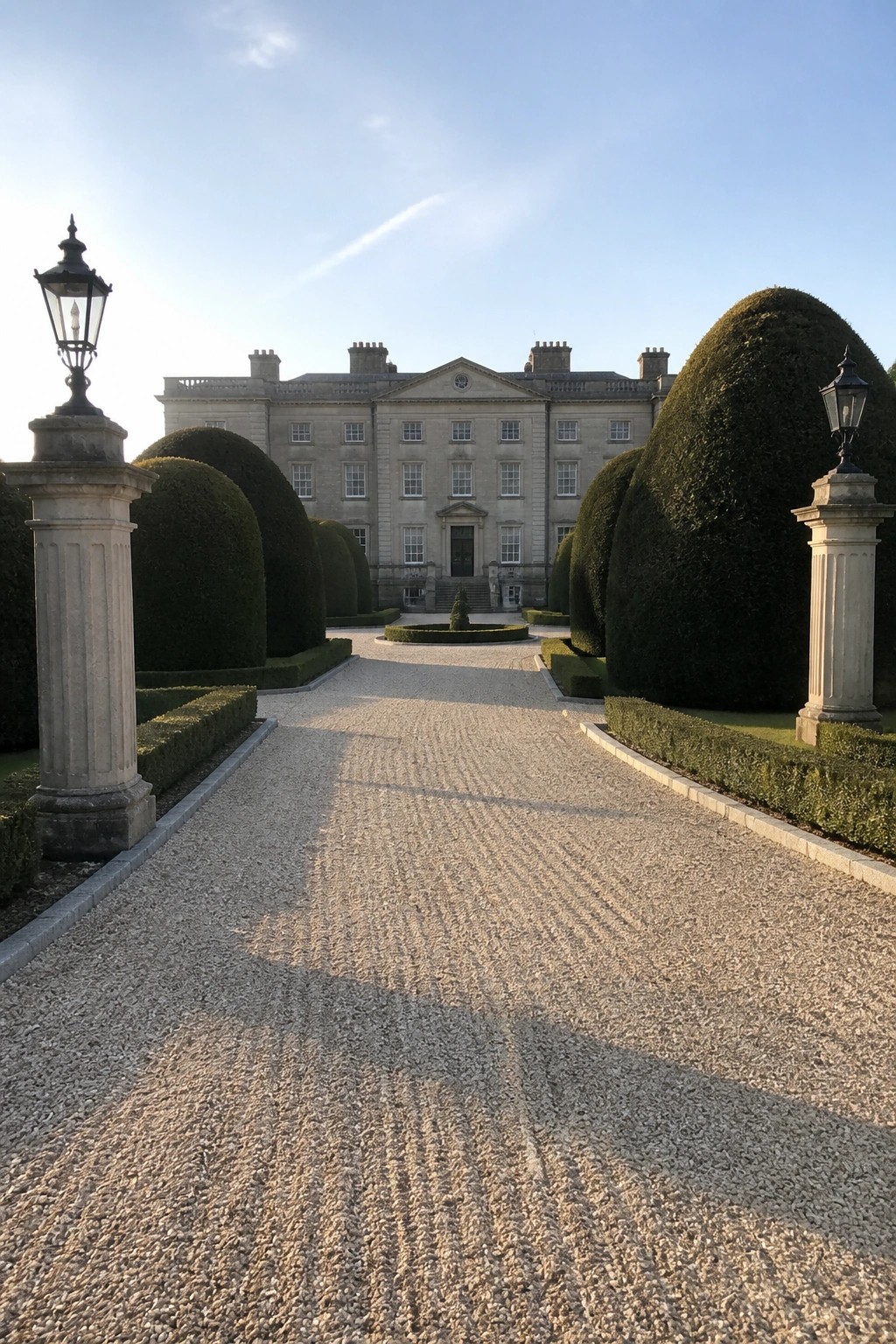
Large clipped evergreens give a long gravel driveway real presence. They turn a simple path into something more structured and formal, and the repetition makes the approach feel intentional rather than just functional. The rounded shapes also hold their own against a big house without competing with it.
This works best on properties that already have some scale. Keep the shapes consistent and space them evenly so the eye travels down the drive rather than stopping at each plant. Avoid mixing too many different sizes or letting the shrubs grow out of shape, or the clean look starts to fade.
Frame the Driveway With a Gate
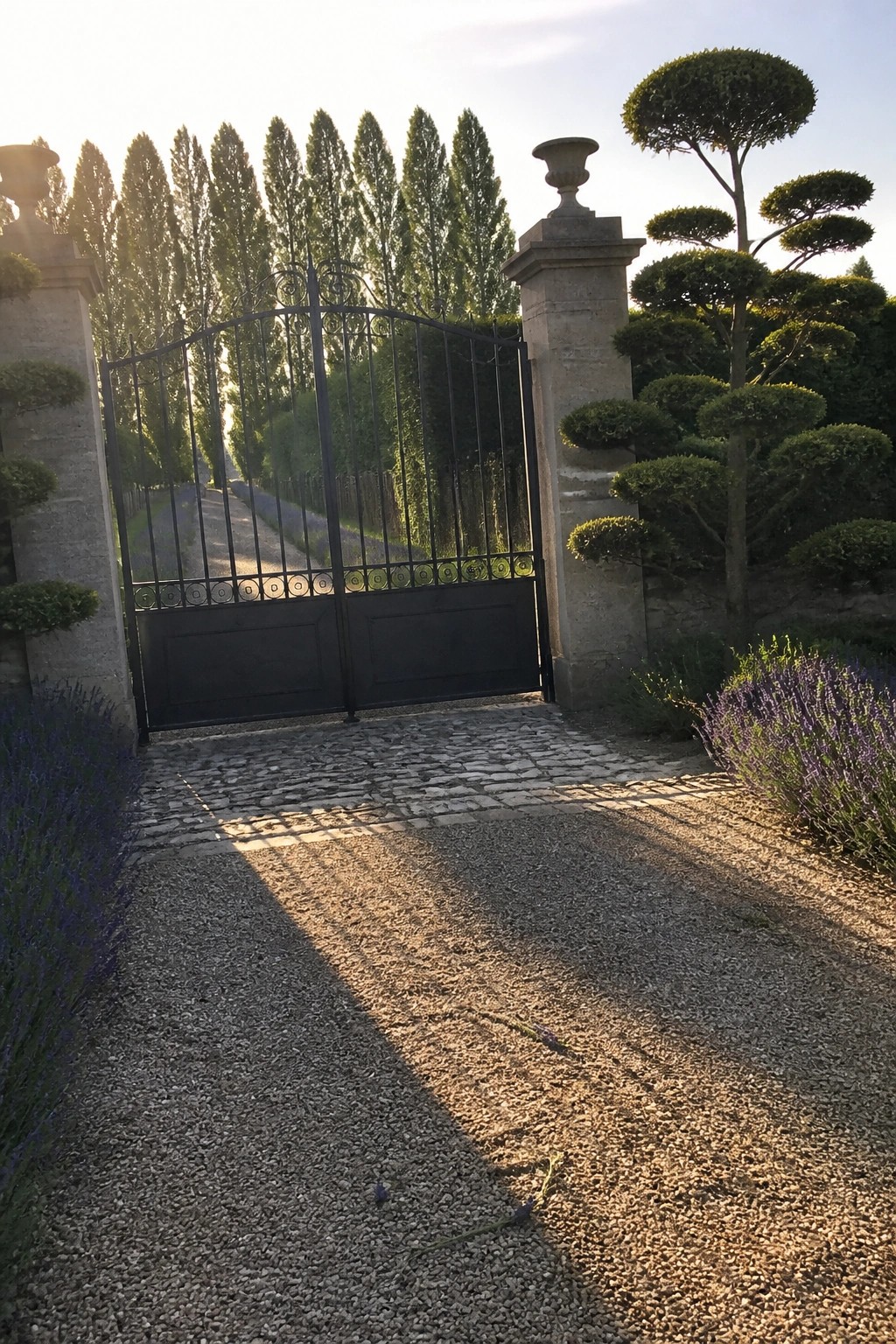
A gate gives a long gravel driveway a clear beginning. It turns the entrance into something deliberate instead of just an opening in the hedge or trees.
Stone pillars on either side help the gate feel grounded and lasting. This works best on properties where the drive runs for some distance, because the structure signals arrival without needing extra ornament. Keep the gate itself fairly simple so the focus stays on the drive ahead.
Concrete Walls Along Gravel Driveways
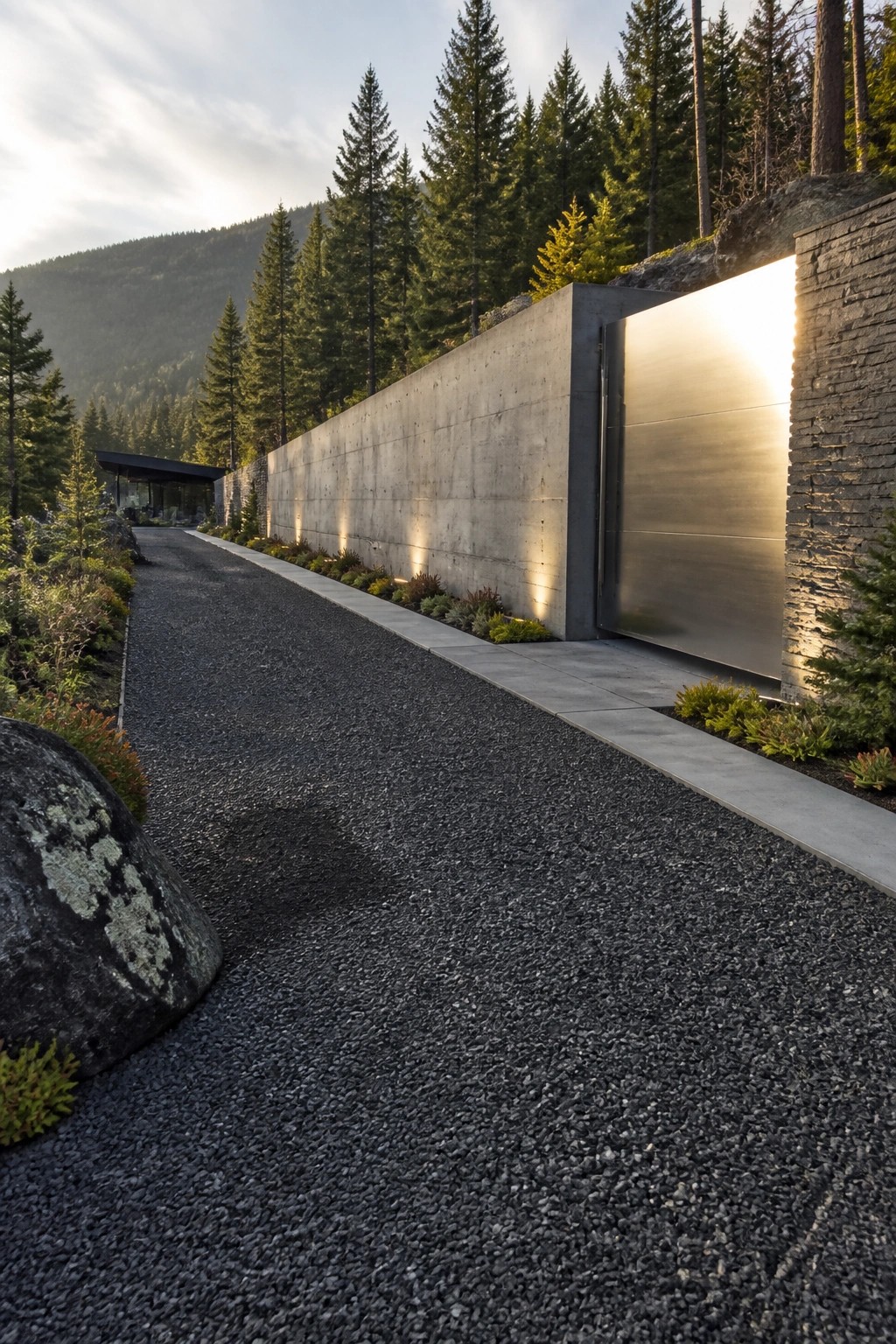
A concrete wall running the length of a gravel driveway adds clear structure and makes the approach feel more deliberate. The solid edge keeps the gravel contained while creating a strong visual line that leads the eye toward the house.
This setup works well on sloped or wooded lots where you want some separation from the surrounding landscape. Keep the wall height consistent and add simple lighting at the base so the drive stays easy to follow after dark.
Stone Edging Defines a Gravel Driveway

Stone edging gives a gravel driveway a finished look without making it feel too formal. It holds the gravel in place, stops it from spilling into the grass or beds, and creates a clear line that guides visitors right up to the gate. The mix of sizes and colors in the stones also adds a bit of texture that works well with simple plantings along the sides.
This approach suits long rural or suburban drives where you want something practical and low maintenance. Use larger river rocks or similar stones to border both sides, and keep the planting soft and layered so the edging stays visible but does not feel rigid. Avoid very small gravel if the stones are large, since it can shift and look messy over time.
Striped Gravel for a Longer Drive
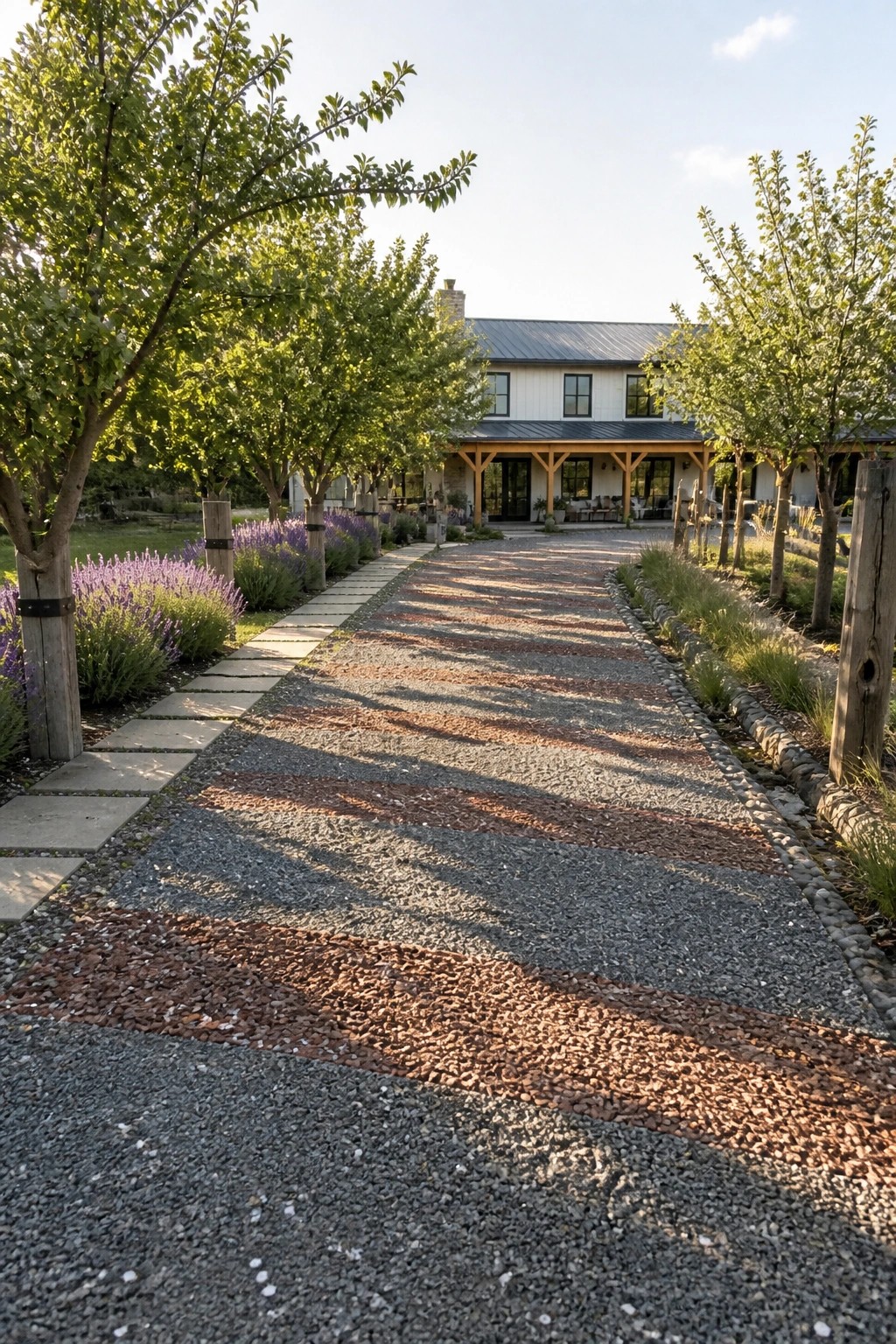
One simple way to break up a long gravel drive is to lay it in wide stripes of different colors. The shift between cool gray and warmer reddish tones keeps the eye moving forward and stops the surface from looking flat over distance.
This approach works best on straight runs where you can keep the edges clean with a low stone border. It suits farmhouse or modern country homes and holds up well if you use slightly different gravel sizes so water drains through instead of pooling on top.
Line A Gravel Drive With Statues
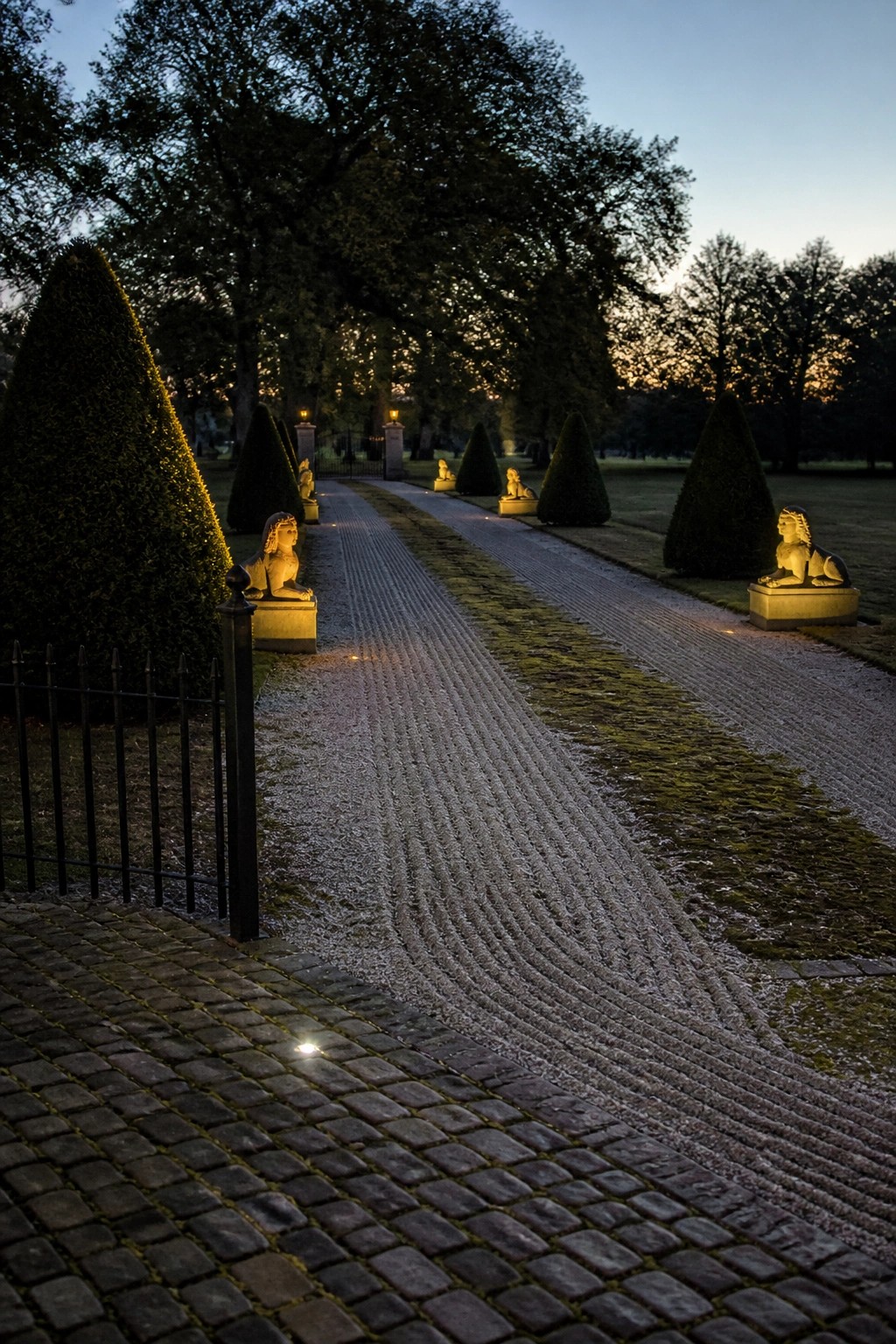
Placing statues at intervals along a gravel driveway adds structure and a sense of arrival that plain gravel alone rarely provides. The figures create rhythm as you approach the house and make the drive feel more intentional rather than just a path for cars.
This approach works best on longer drives where there is space to space the statues evenly. Keep the style of the figures consistent with the house, and think about low lighting at their bases so the effect lasts into the evening without looking busy.
Stone Pavers Set In Gravel
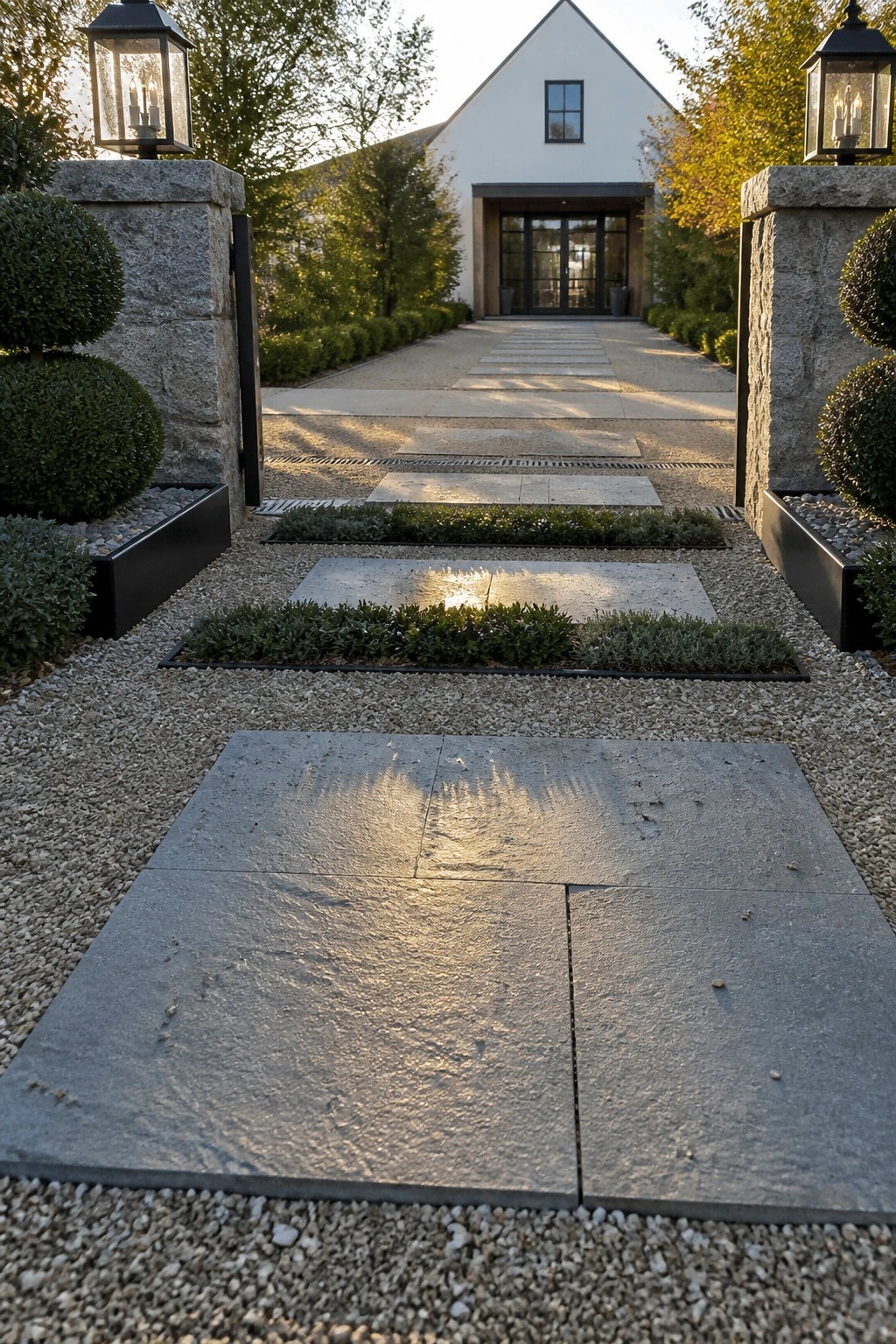
Large pavers placed right into the gravel give a long driveway clear direction without making it feel too formal. The stones create steady footing and keep the surface from looking like one flat stretch of gravel all the way to the house.
This approach works well on properties with a modern or transitional style where you want some structure but still like the softer look of gravel. Keep the pavers wide enough for tires and add a few narrow planting strips between them so the drive stays interesting without extra maintenance.
Let the Driveway Curve With the Slope
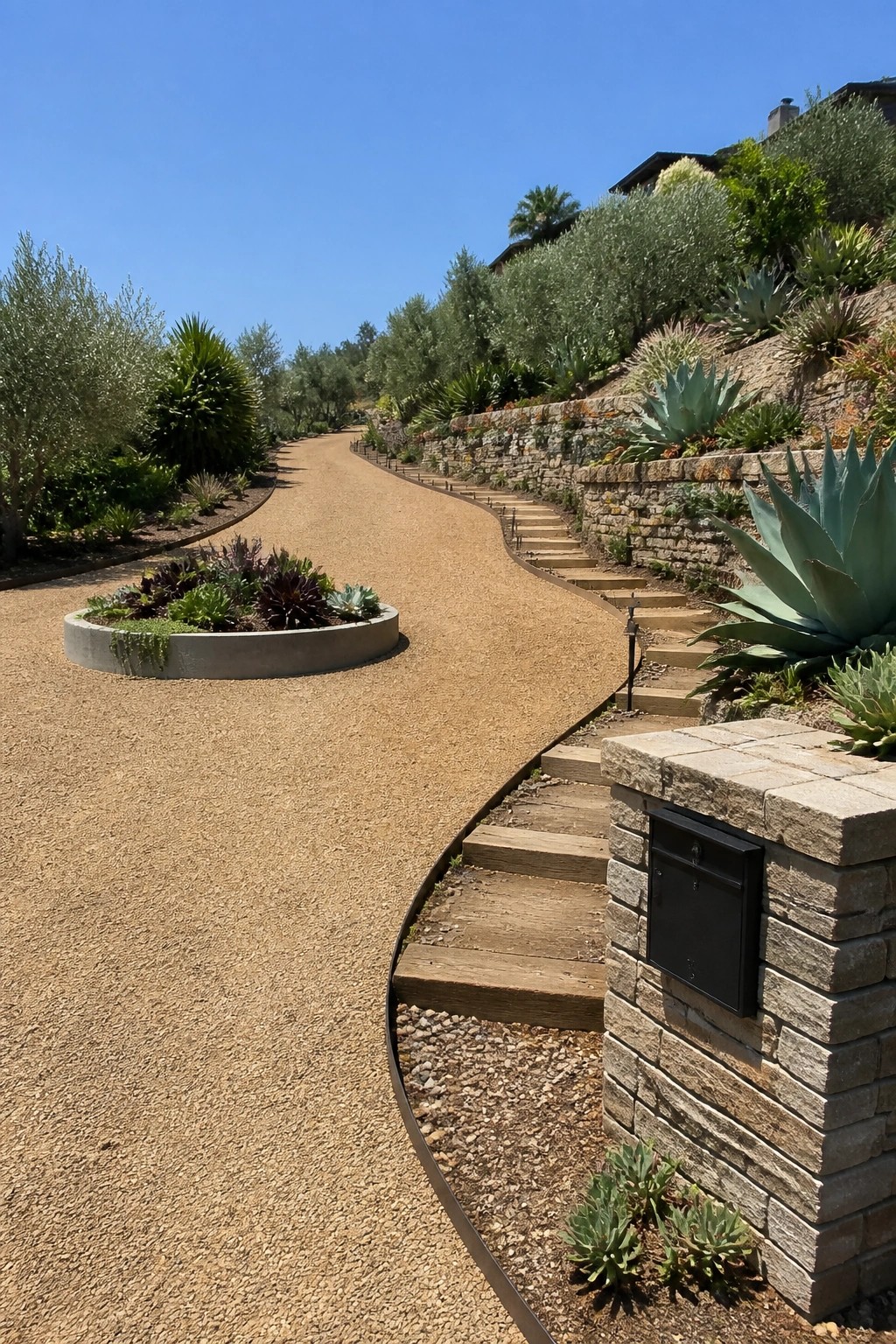
A curved gravel driveway works especially well on a sloped site because it follows the natural lay of the land instead of fighting it. The gentle bend keeps the approach from feeling too direct or steep while still giving a clear sense of arrival.
This layout suits homes built into hillsides or uneven lots. Keep the edges simple with low stone walls or plantings that match the surrounding garden so the drive feels like part of the landscape rather than an add-on.
Line Your Gravel Drive With Tall Hedges
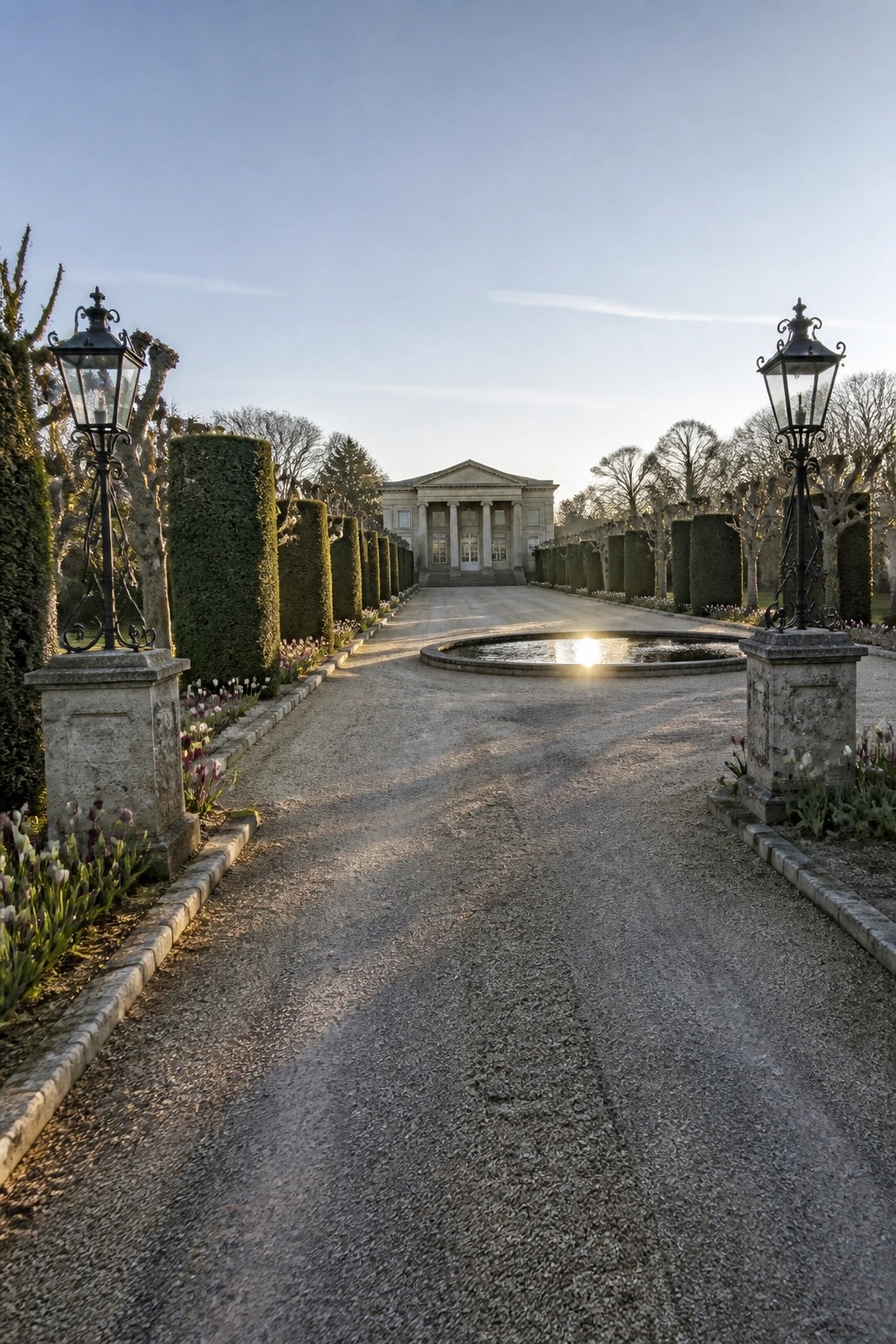
Tall hedges planted in straight rows on both sides of a gravel driveway give the whole entrance a clear structure. The repetition makes the approach feel deliberate and pulls the eye forward without needing extra ornaments or curves.
This layout works best on longer drives where you want to create a sense of arrival. It suits homes with classical or formal architecture and requires consistent trimming to keep the hedges sharp. The gravel surface helps the look stay simple rather than overly manicured.
Bridge the Start of a Gravel Driveway

A bridge makes a practical solution when a long gravel driveway has to cross a stream or low spot. It keeps the surface stable and gives the entrance a clear starting point without needing extra pavement.
This approach works best on properties with natural water features or uneven ground. Keep the bridge simple in wood or metal, match the width to the driveway, and let the gravel pick up right after so the whole thing feels like one continuous path.
Run a Water Feature Alongside the Gravel

A long gravel driveway can feel a little plain on its own, especially when it stretches out toward the house. Adding a narrow water channel along one side gives the eye something to follow and adds a quiet sense of movement that works even after dark.
This approach suits modern or minimalist homes where you want the drive to feel intentional rather than just functional. Keep the channel fairly slim so it does not crowd the gravel or create extra maintenance, and use simple edging to tie it into the surrounding planting.
Rope Between Stone Posts For Simple Edging
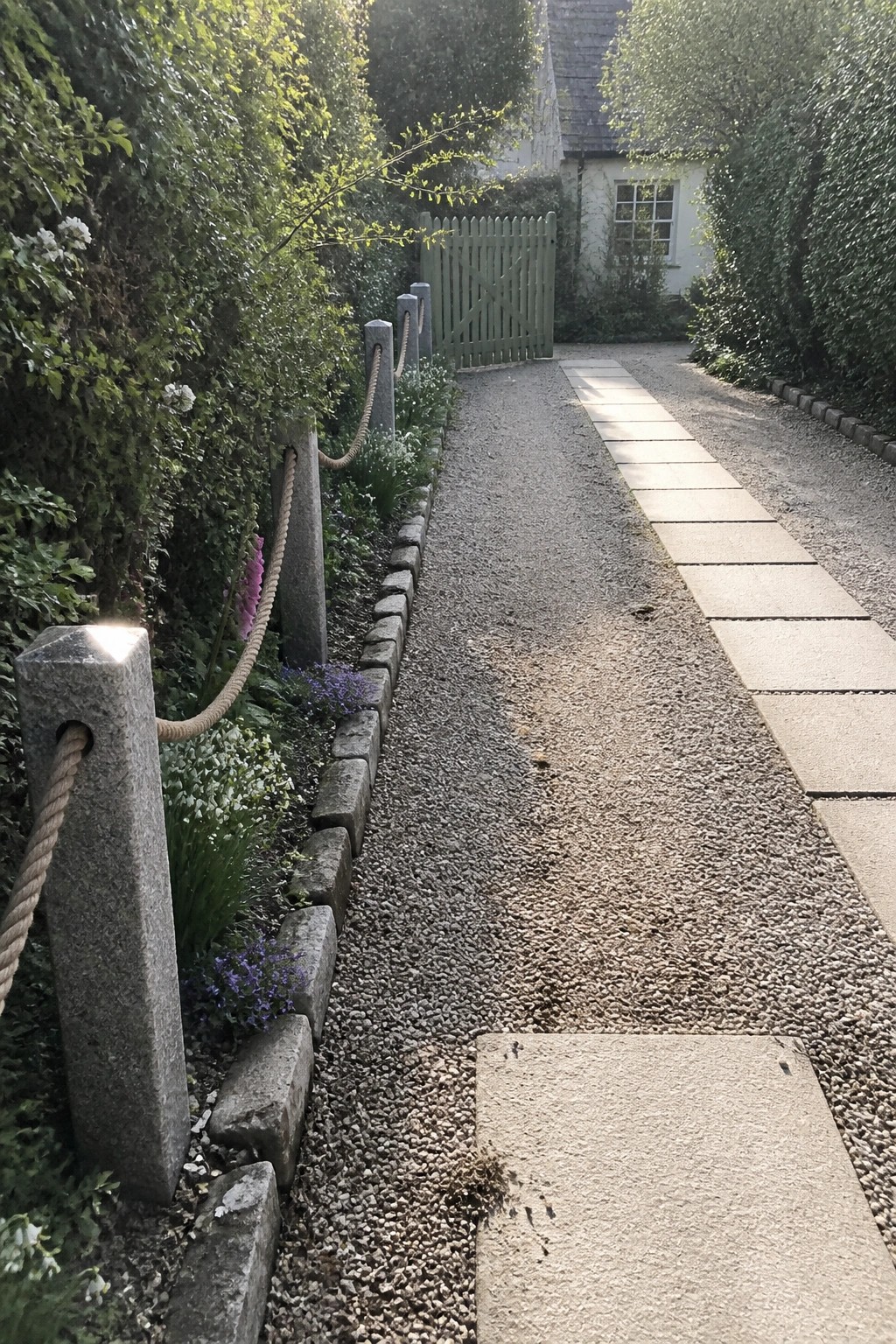
Rope strung between stone posts gives a gravel driveway a clear edge without making it feel walled in. The rope adds just enough structure to keep the gravel in place while letting the garden beds along the side stay visible.
This approach suits longer driveways on older or cottage style homes where a full curb or fence would feel too heavy. Set the posts at even intervals and run the rope through holes near the top so it stays level and does not sag.
Brick Bands Break Up a Gravel Driveway

Many people add strips of brick across a long gravel driveway to give it more shape. The bands stop the surface from looking like one flat stretch and help the eye move along the length without feeling rushed.
This approach works best on homes that already use brick somewhere on the exterior. Keep the bands the same width and space them evenly so the pattern feels intentional rather than random. It also gives you a chance to hide a drainage grate in one of the lines if the site needs it.
Frequently Asked Questions
Q: How do I stop weeds from growing through the gravel? A: Lay a weed barrier fabric on the soil before you spread the gravel. Rake the surface smooth every spring to catch anything that tries to sneak up. Pull the few that appear by hand before they spread.
Q: What if heavy rain starts washing the gravel away? A: Shape the middle of the driveway a little higher so water runs off the sides. This keeps most of the gravel in place after storms. Add a row of larger stones along the edges where water tends to pool.
Q: How often will I need to add more gravel? A: Rake and level the surface once a year. Add a light top layer every two or three years (nothing fancy needed). That keeps the driveway firm and even without constant work.
