

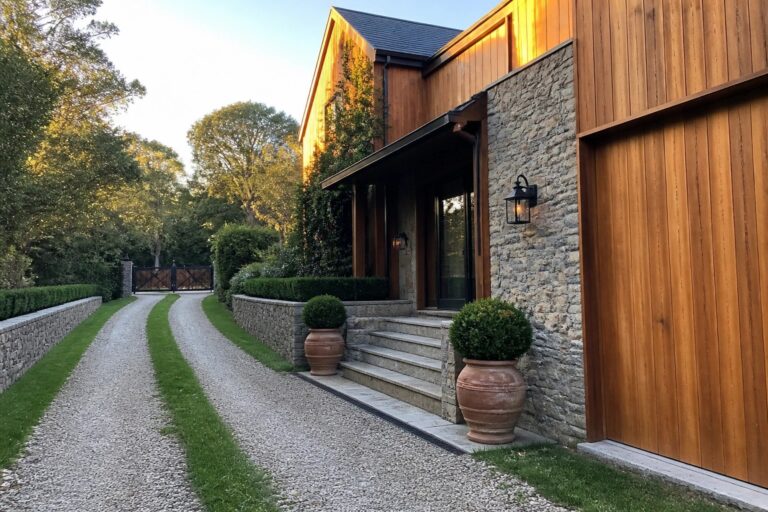
When you pull up to a house the driveway is usually the first thing that shapes how the whole property feels from the street.
I have spent more weekends than I care to count raking and weeding other surfaces before realizing gravel might cut that work down without losing too much curb appeal.
The key seems to be choosing the right size and color of stone so it stays put and still looks intentional next to the house.
Not every option ages the same.
A few of these approaches stand out because they consider drainage and edging from the beginning so the look lasts longer with less fuss.
Use Grass Strips to Break Up a Gravel Driveway
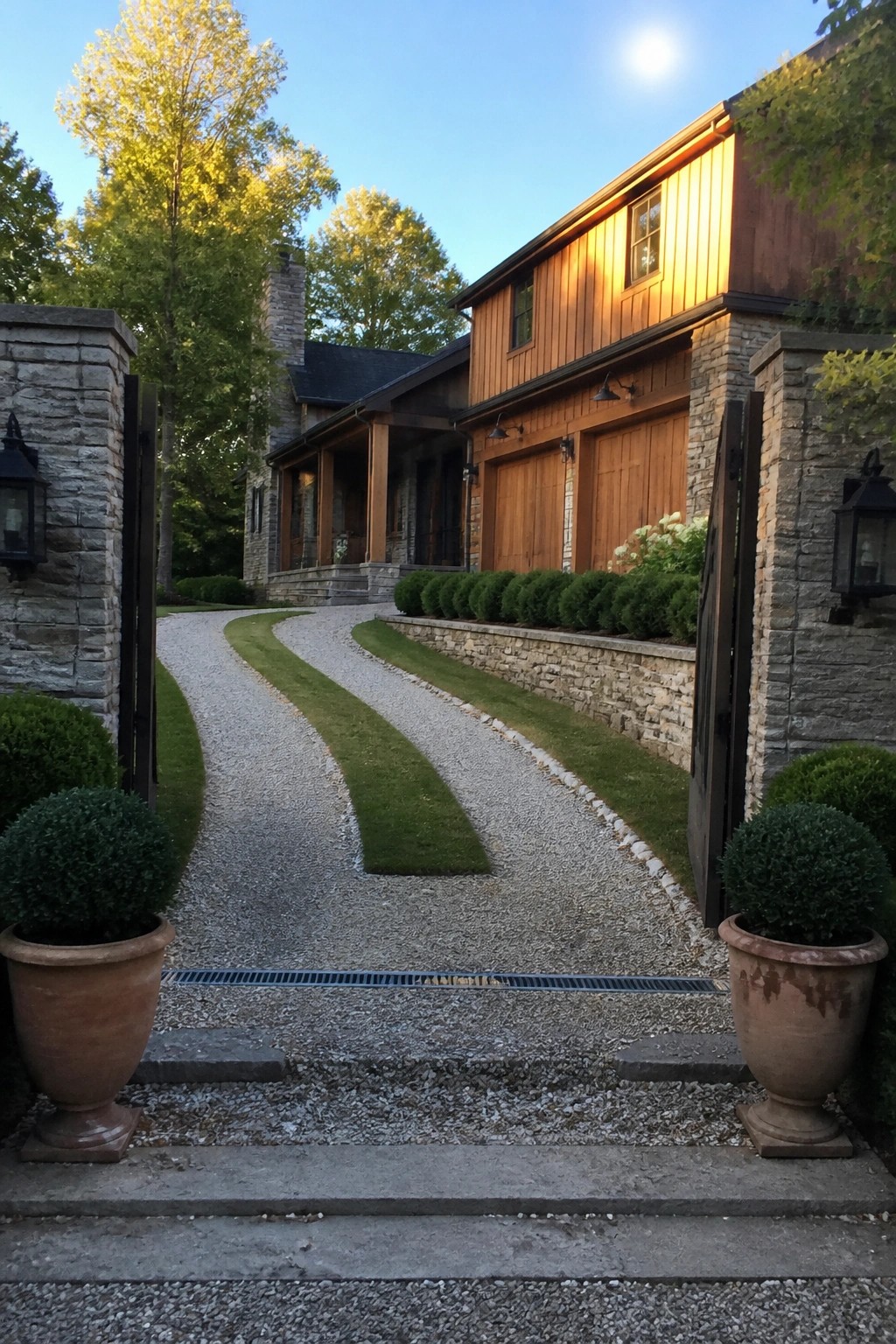
A gravel driveway with grass running down the middle gives the surface a bit more structure without adding much work. The strips help with drainage and keep the gravel from looking too flat or industrial, which works well on longer or curved approaches. Many people like the way it softens the look while still letting the driveway do its job.
This setup suits homes with a bit of land where a full lawn would be too much to mow. Keep the grass strips narrow enough for easy trimming with a regular mower, and use simple edging along the sides so the gravel stays contained. It stays practical as long as you choose a tough grass that handles occasional tire traffic.
Gravel Driveways With Concrete Strips
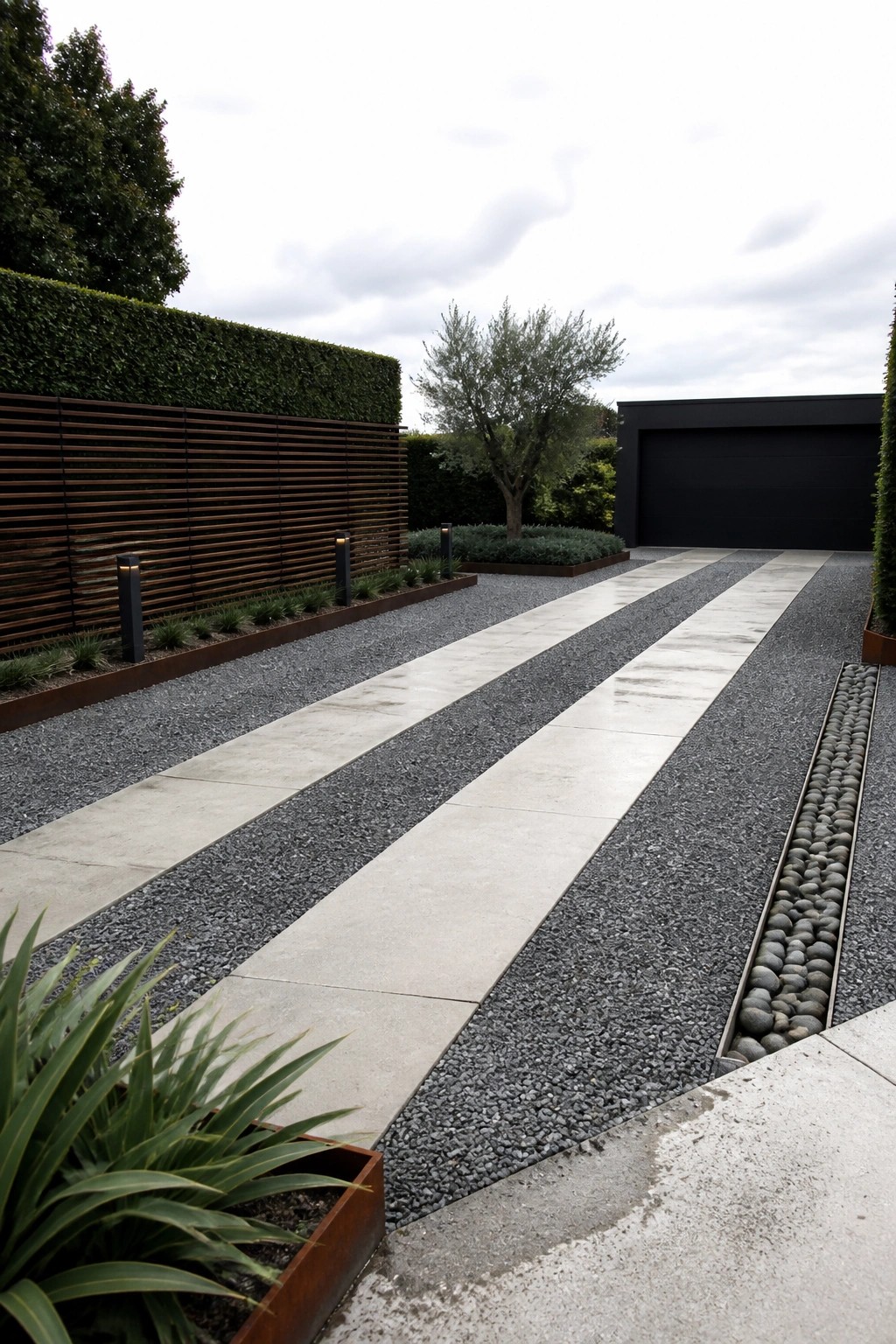
Many homeowners turn to this layout because it reduces the amount of solid paving while still giving cars a stable surface to drive on. The concrete strips carry the weight and keep the path clear, and the gravel handles drainage without pooling.
This approach suits long driveways or modern homes where you want something simple that does not require constant sweeping or sealing. Good edging along the sides helps keep the gravel in place and stops it from mixing with the concrete over time.
Stone Edging For Gravel Driveway Beds
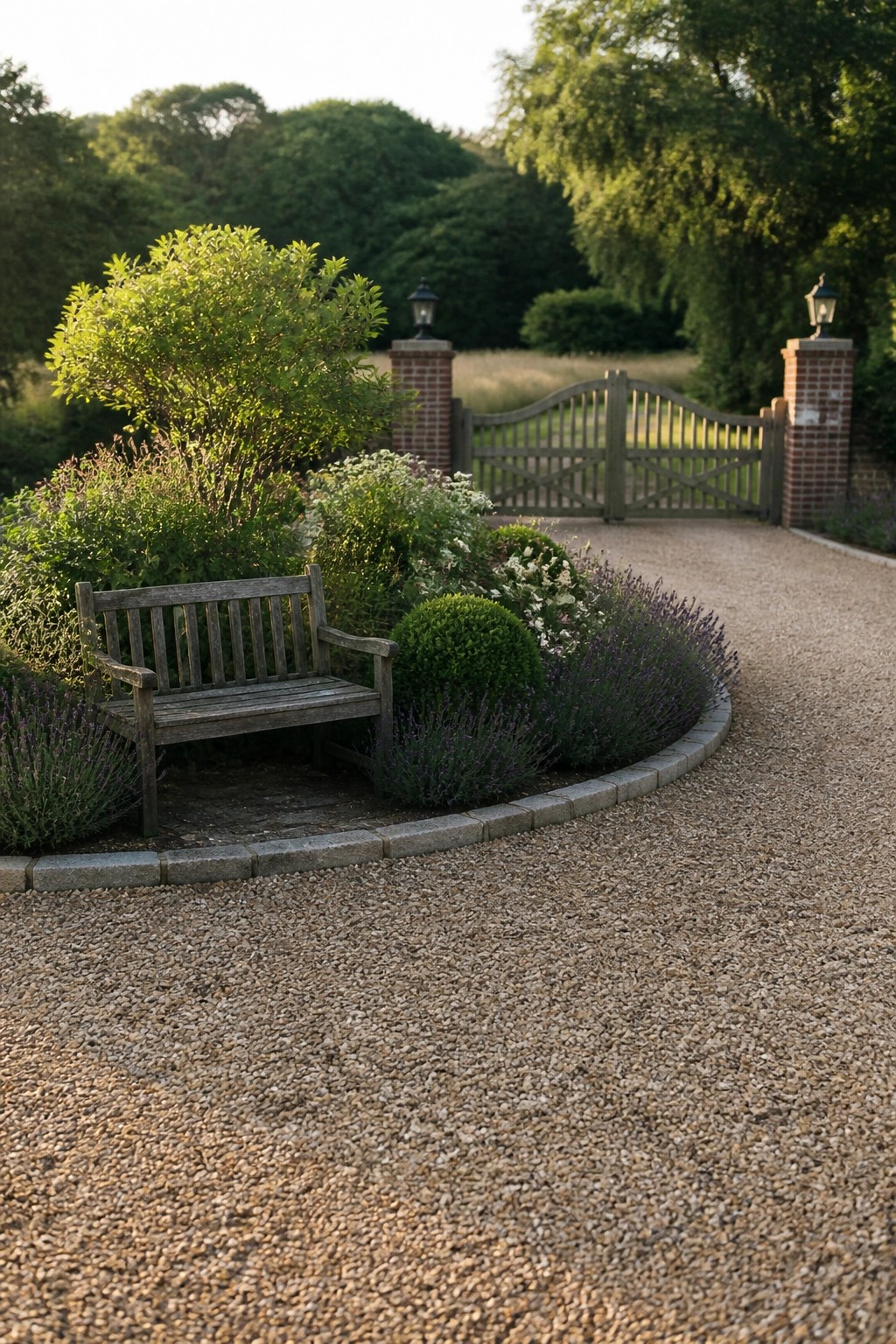
A low stone border does a good job of holding the gravel in place and keeping the planting beds looking tidy. It cuts down on the need to rake stones back into the drive or pull weeds that creep in from the edges.
This works best on homes with gentle curves or informal layouts where you want the beds to feel natural but still contained. Pick a simple material that matches your house and fill the beds with shrubs and easy perennials that do not require much trimming.
Gravel Driveways With Simple Concrete Borders
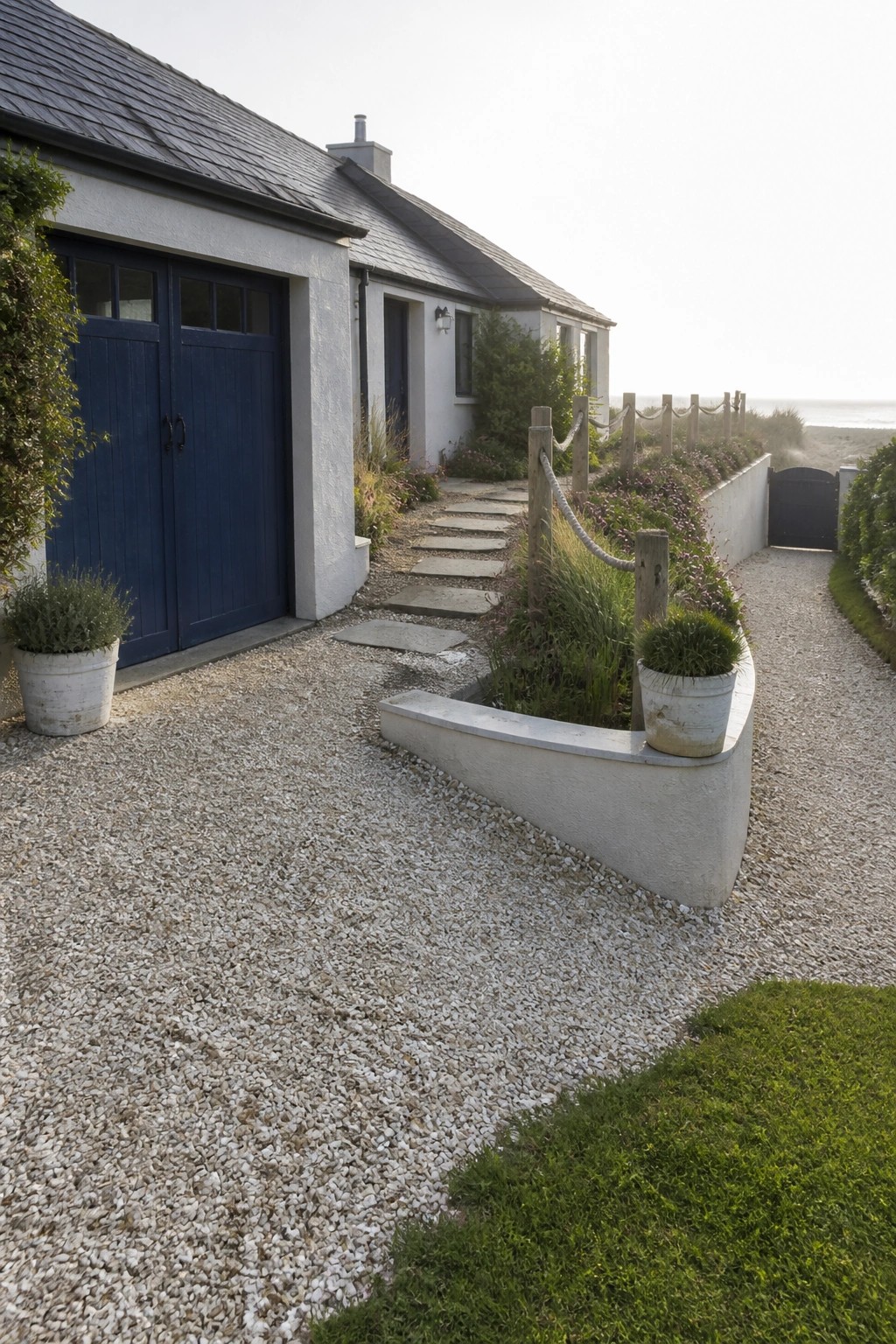
Gravel works well for driveways because it drains quickly and needs almost no regular upkeep once it is laid. There is no sealing or patching to worry about, and weeds stay manageable with occasional raking.
Add a low concrete edge like the one in this setup to hold the gravel in place and give planting beds a clean shape. This approach suits homes near the coast or in open settings where you want a practical surface that still looks tidy.
Gravel Driveways With Stone Borders
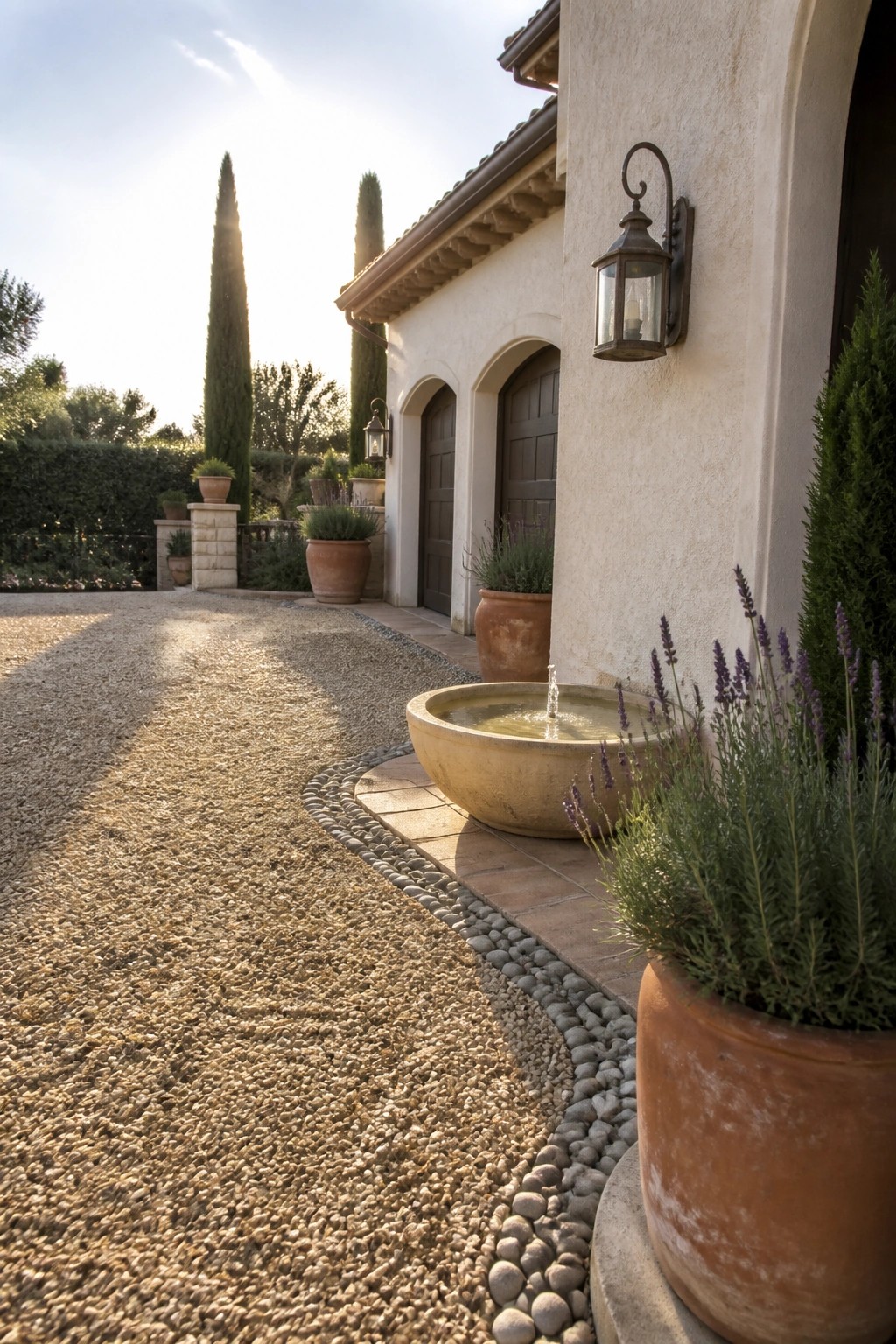
Gravel works well for driveways because it handles water runoff and stays low maintenance after the base goes in. A border of smaller stones keeps the edges clean and stops the gravel from drifting into nearby beds or lawn.
This approach suits homes with a classic or Mediterranean feel where the driveway needs to tie into the overall landscape without extra upkeep. Make sure the base layer is compacted so the surface stays even over the years.
Gravel With Tough Plants Reduces Yard Work
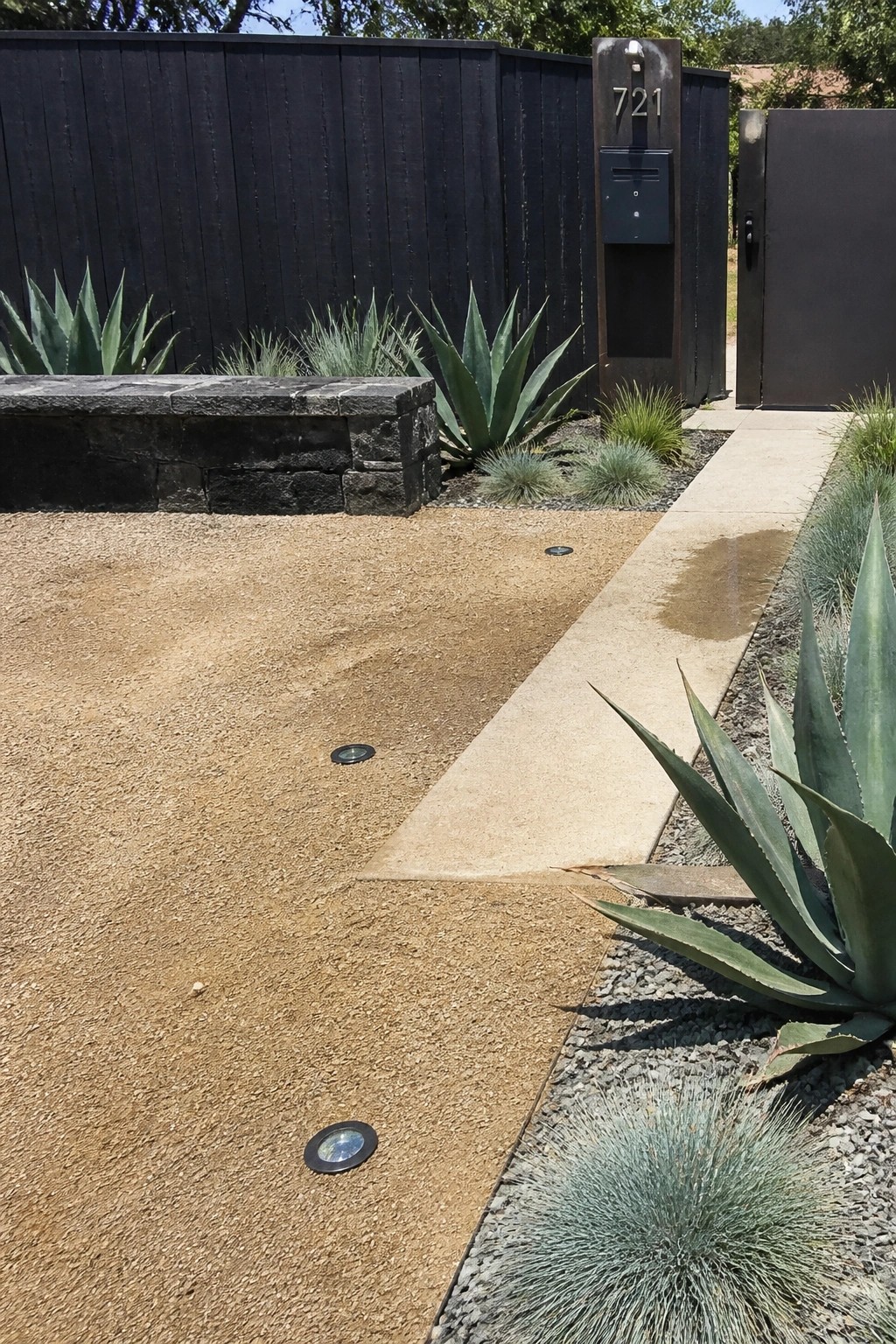
Gravel driveways appeal to people who want something that drains well and needs little ongoing care. They hold up better than grass in high traffic spots and avoid the cracking that can happen with full pavement.
Choose plants that handle dry conditions and do not need frequent trimming. Agaves and similar grasses work nicely along the edges because they stay green with minimal water once established.
Raised Planters Along Gravel Driveway Edges
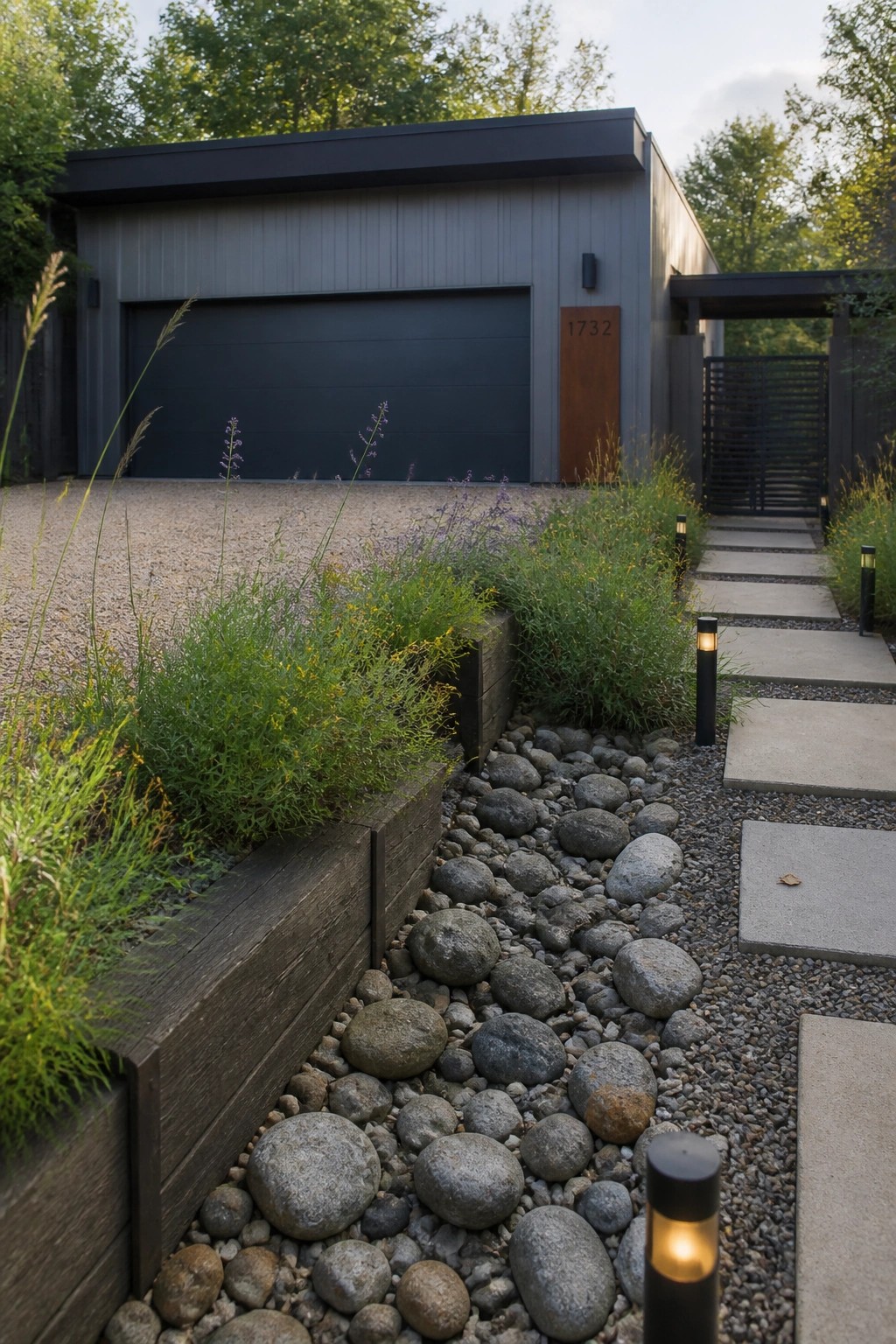
Raised planters give a gravel driveway a clean edge without a lot of extra work. The wood keeps plants from creeping into the gravel, and the contained beds make weeding and watering simpler than open ground planting. It also adds some height and greenery right where the car pulls in.
This setup works well on modern homes or any property where you want low upkeep but still like a bit of garden feel. Just make sure the planters are deep enough for the plants you choose and set on a level base so they stay put over time.
Gravel With Brick Edging

Gravel stays practical for driveways and paths because it handles water well and needs only occasional raking to look tidy. The brick border holds the material in place and gives the edge a clean line that lasts without constant repairs.
This setup works best on homes where the driveway leads right up to the entry. Prepare a solid base first and add a weed barrier if the area gets a lot of sun.
Stepping Stones Through Gravel
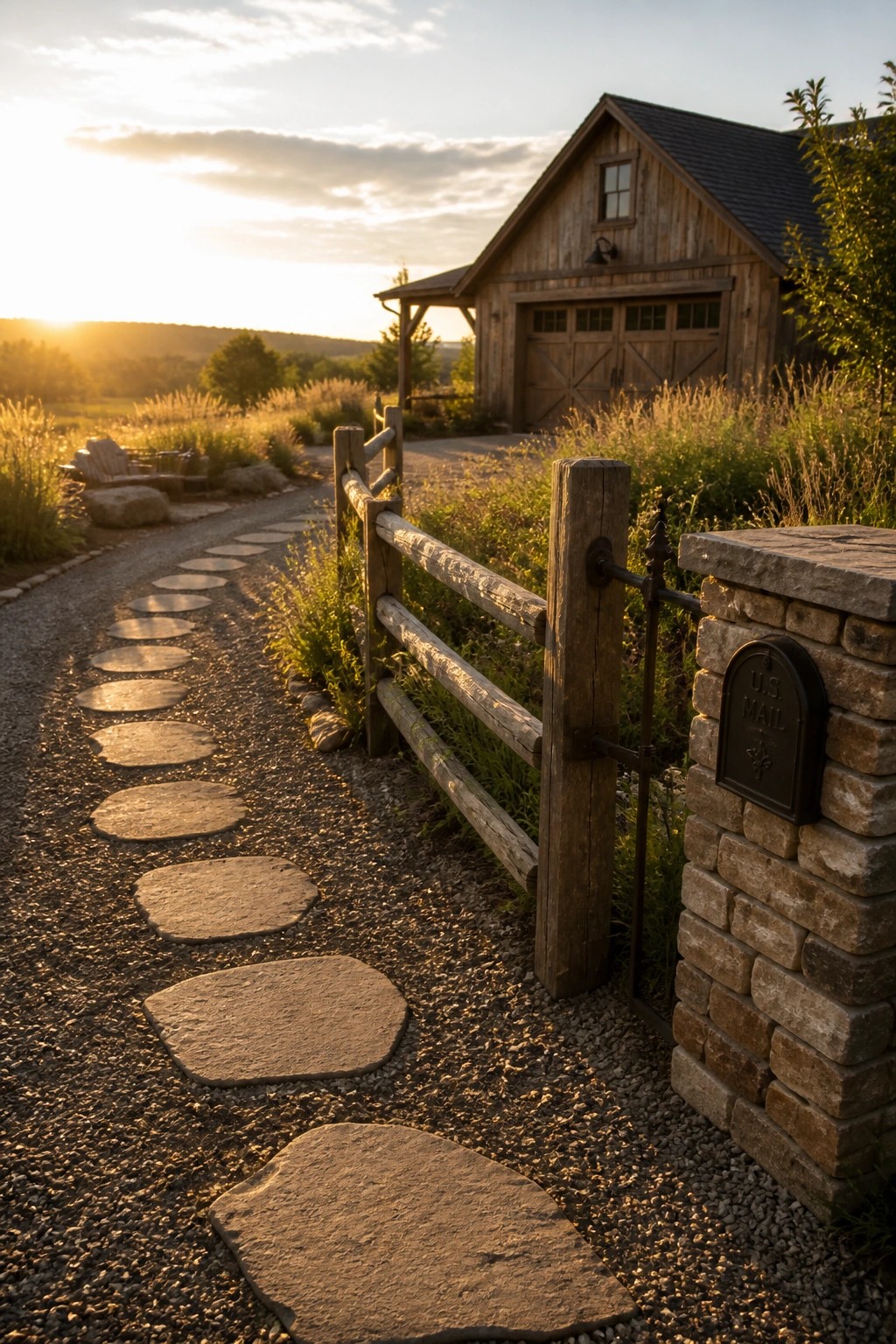
Stepping stones set into gravel give you a firm path to walk on without dealing with shifting stones underfoot. They also help hold the gravel in place so it does not spread as much over time.
This approach works best on driveways or side paths where regular foot traffic happens. It suits homes that already use natural materials like wood fencing or stone accents, and the stones can be spaced to match how people actually move through the space.
Stepping Stones Set In Gravel
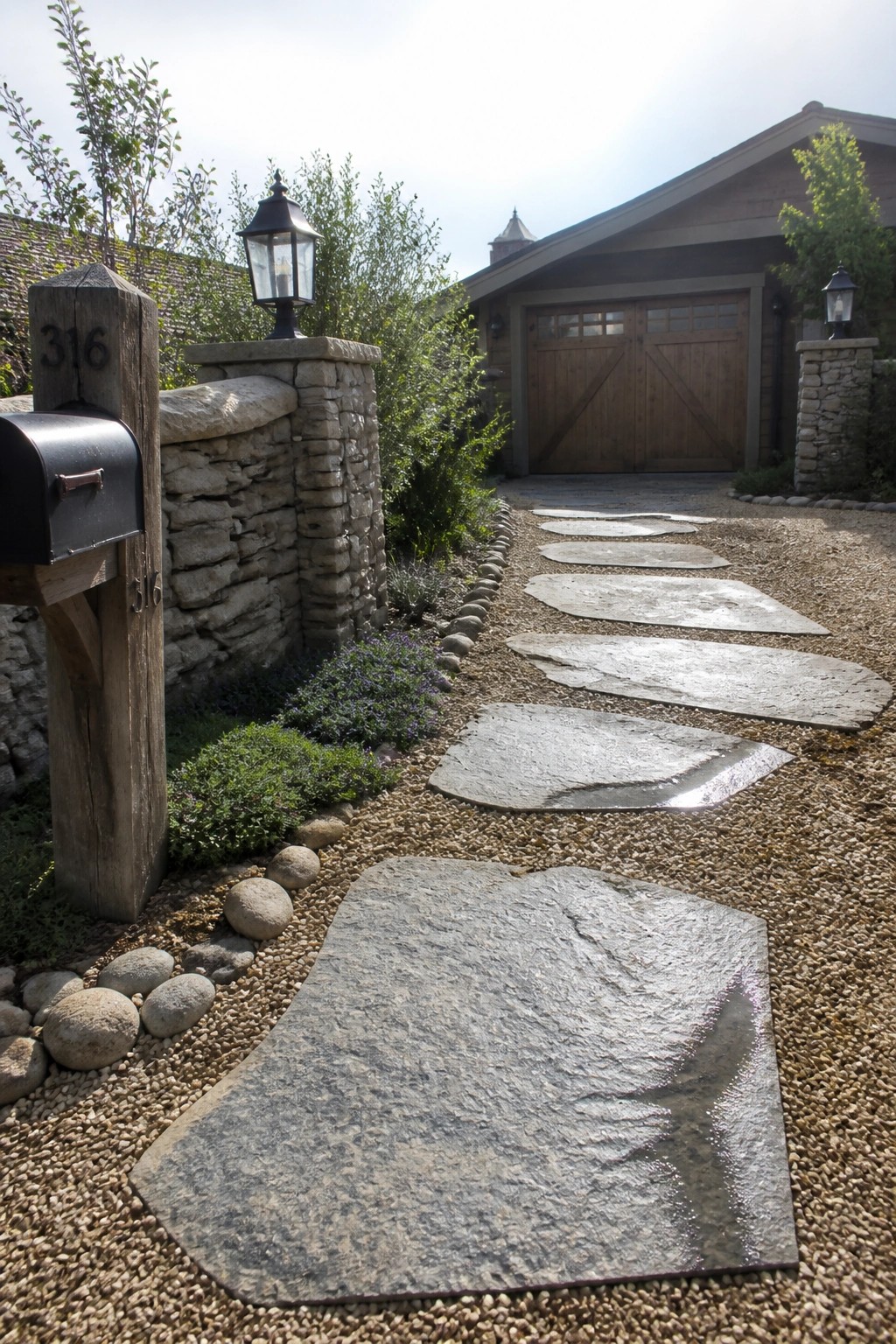
Large flat stones placed directly into gravel make a simple path that stays firm underfoot without turning the whole surface into a solid walkway. The gravel still handles drainage and keeps weeds down in most spots, so upkeep stays low even on longer driveways or entries.
This approach works best on homes with a natural or casual style where you want some structure but not a full paved look. Set the stones only where foot traffic is heaviest and keep them level so water moves off instead of sitting on the surface.
A Grass Strip Down the Center

A narrow strip of grass running through the middle of a gravel driveway helps break up the surface and keeps the whole thing from feeling too hard and uniform. It adds a bit of green without turning the area into a full lawn that needs constant mowing.
This approach works best on straight or gently curved driveways in front of modern homes. Keep the grass type tough enough for light tire traffic and make sure the gravel stays edged so it does not spill into the strip over time.
Gravel With A Central Brick Strip
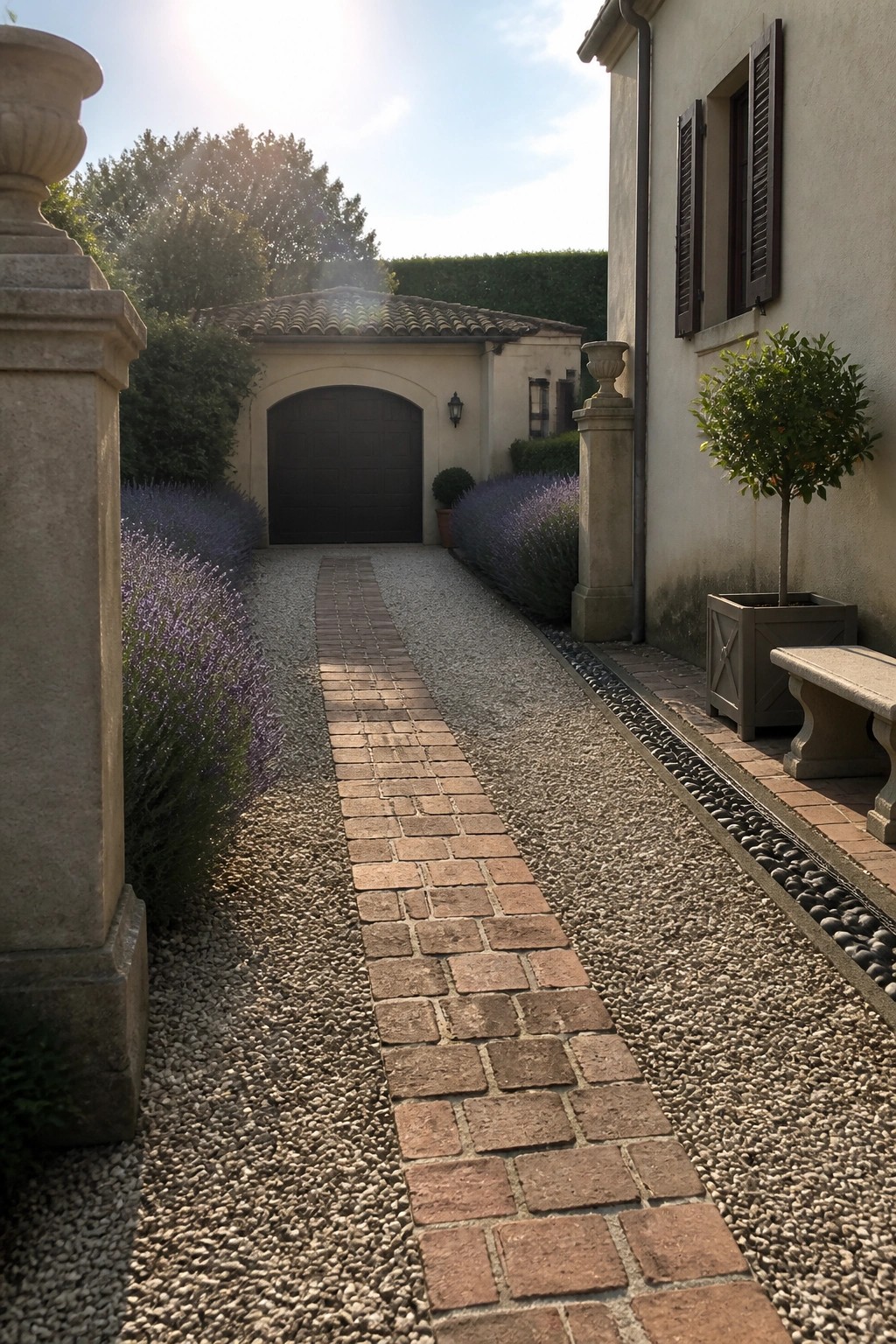
Gravel driveways stay popular because they handle rain well and cut down on weeding and sweeping. Adding a brick or paver strip right down the middle gives the surface a bit more order so it feels less loose underfoot while still keeping most of the low-maintenance benefits.
This layout works especially well on long side entries or narrow approaches where you need a steady walking path but do not want the cost or upkeep of a full paved drive. Keep the gravel depth even on both sides and edge the whole thing with tough plants that do not need constant trimming.
Colored Gravel Driveways Keep Upkeep Low
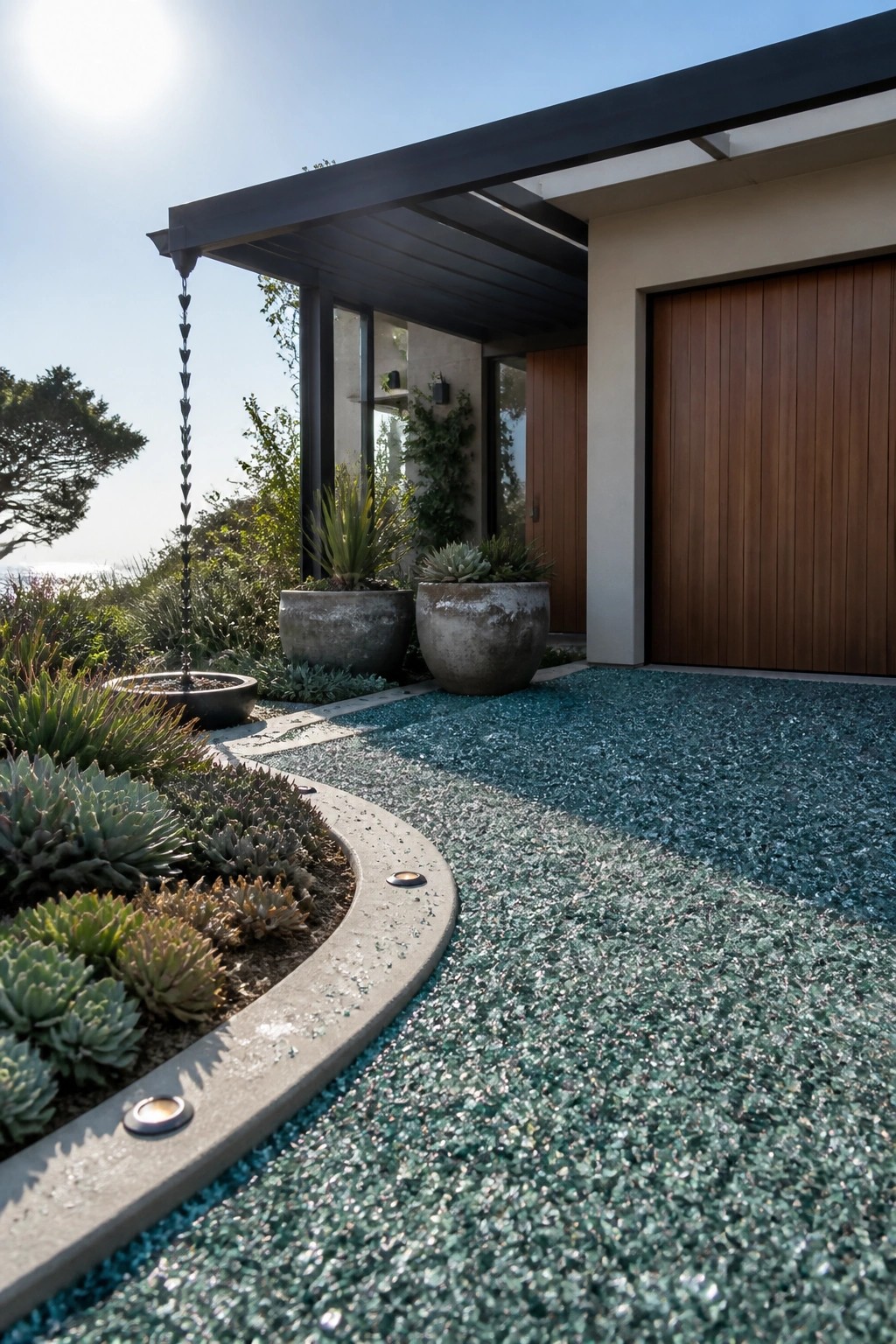
Colored gravel gives a driveway a distinct look without adding extra work. It drains well after rain and stays in place better than plain stone when the edges are held by a solid border. Many people like how it cuts down on weeding and sweeping compared with other surfaces.
This approach suits homes with clean lines and dry climates where plants stay simple. Keep the gravel layer thick enough to avoid weeds, and choose edging that follows gentle curves so the material does not spill into beds.
Gravel With A Stone Path Down The Middle
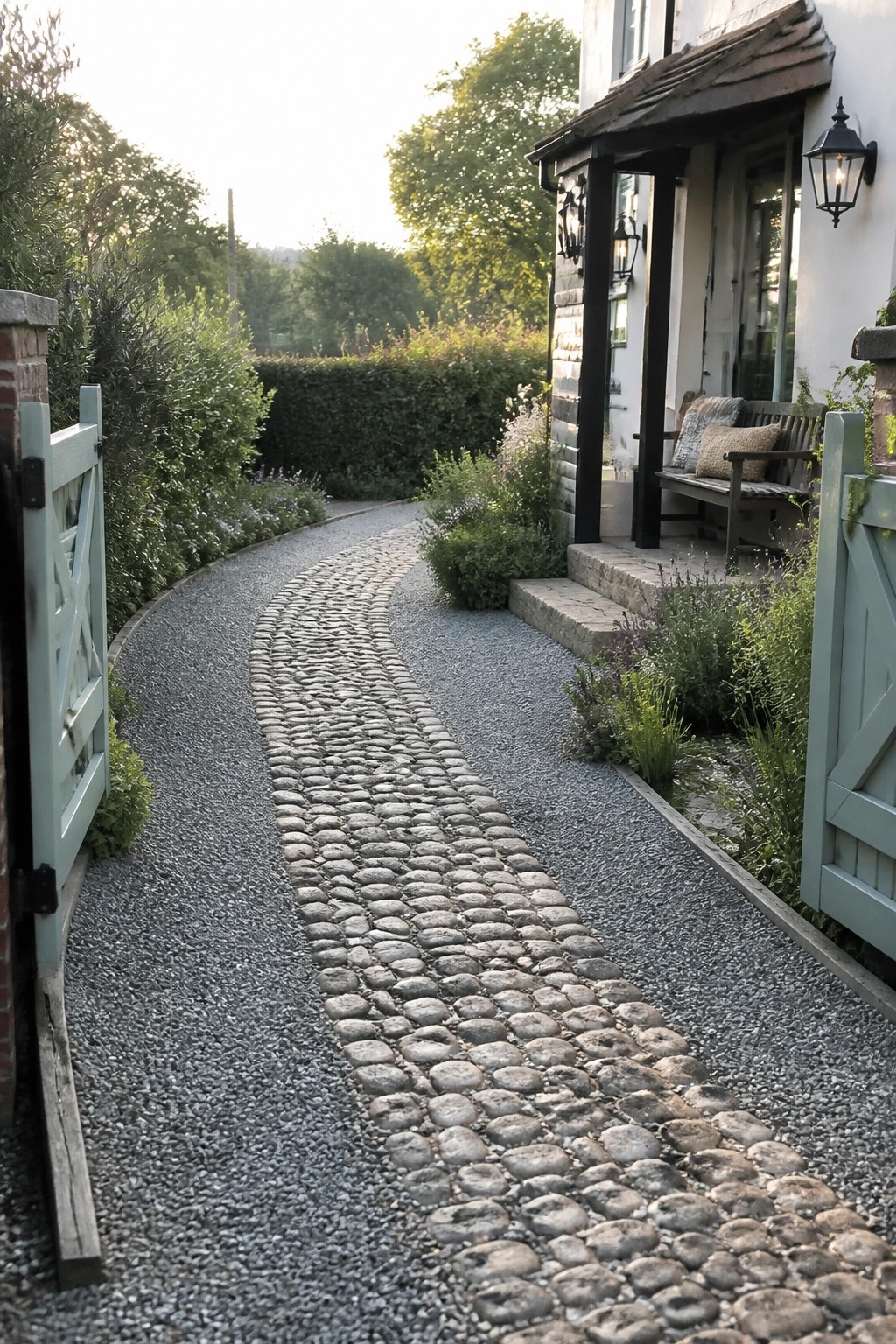
A strip of cobblestones set into gravel gives you a firm walking surface without turning the whole driveway into a big paved area. The gravel still does most of the work for drainage and weed control, while the stones keep the middle clean and easy to walk on even after rain.
This works best on homes with a gentle curve or a side approach where you want a clear path to the door. Keep the stone band fairly narrow, use the same gravel on both sides, and let the border plants soften the edges. It stays simple to maintain and looks settled after a season or two.
Gravel Driveways With Concrete Strips
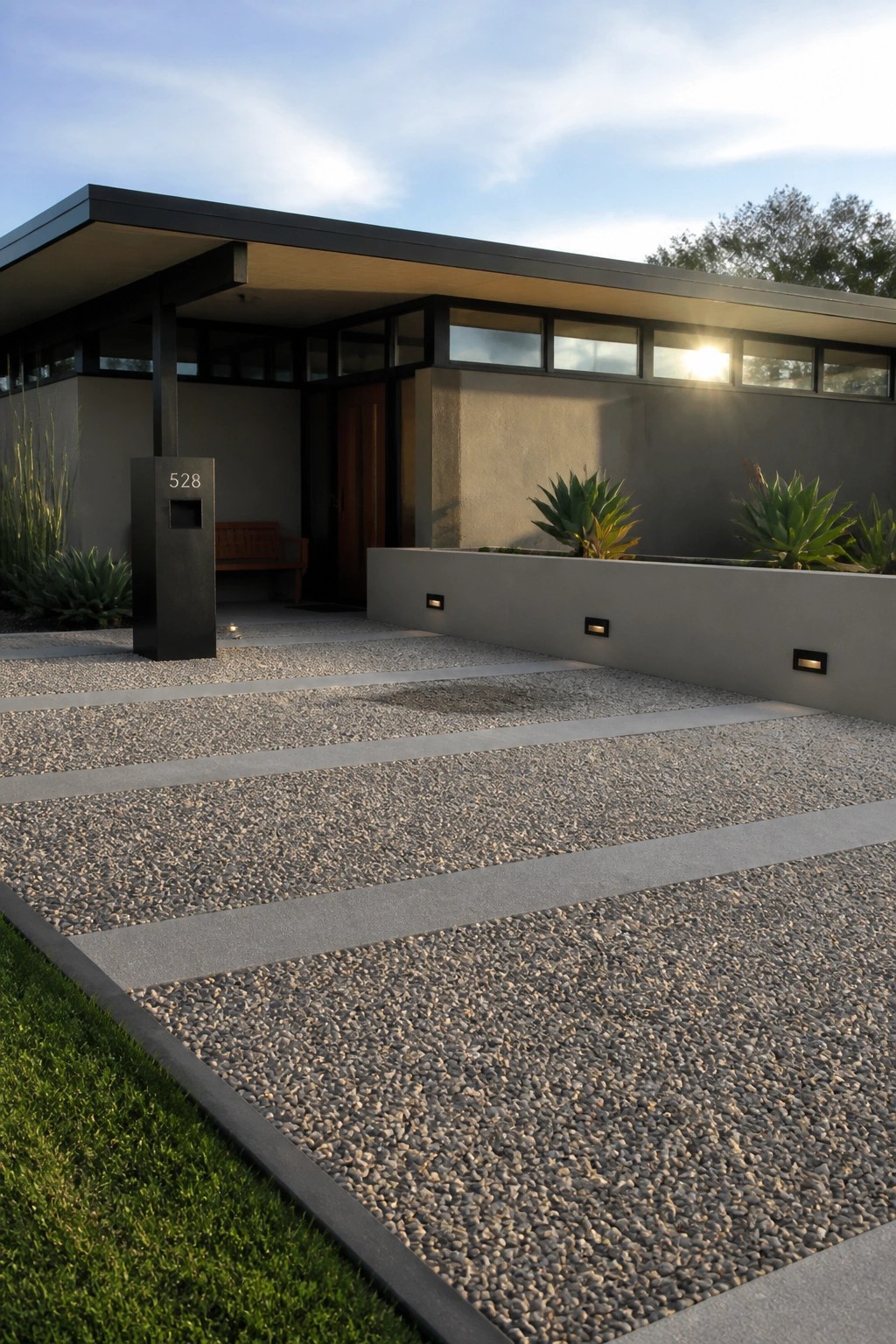
Gravel driveways already cut down on weeding and snow removal compared to solid pavement. Adding a few concrete strips across the gravel keeps the surface from spreading out and gives tires a steadier path without turning the whole thing into a poured slab.
This layout suits homes that need a clean front approach but still want the casual look and lower cost of gravel. Just compact the base well and choose a gravel size that stays put under regular traffic.
Gravel with Neatly Edged Planting
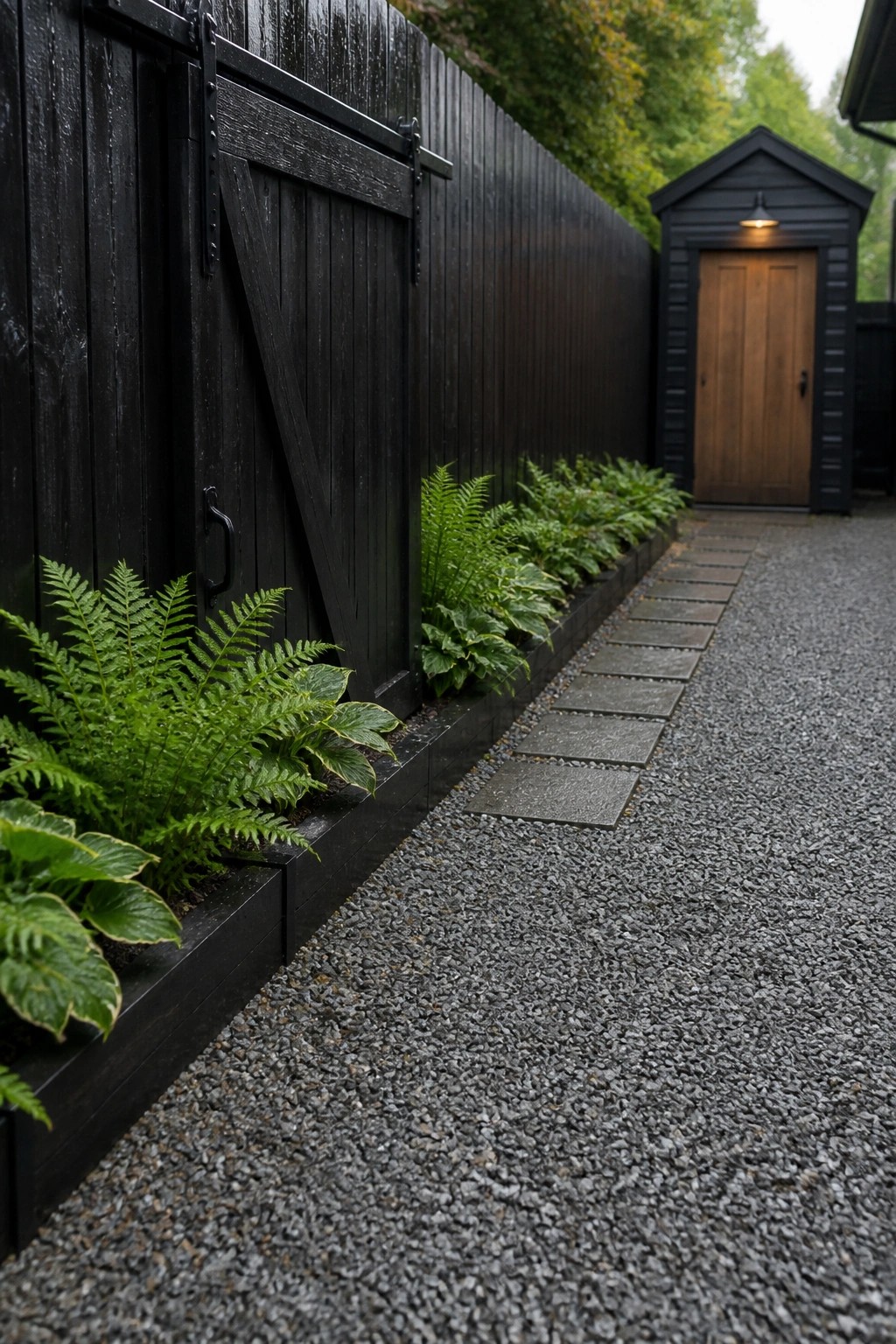
Gravel stays looking tidy longer when the planting next to it sits in a contained bed. The dark edging here keeps the stones from drifting into the soil and cuts down on the usual mess that creeps in over time.
This setup works best along side paths or narrow driveways where you want some greenery but not a lot of fuss. Tough plants like ferns and hostas do well in the strip since they fill in without much attention.
Gravel Paths With Hedge Borders
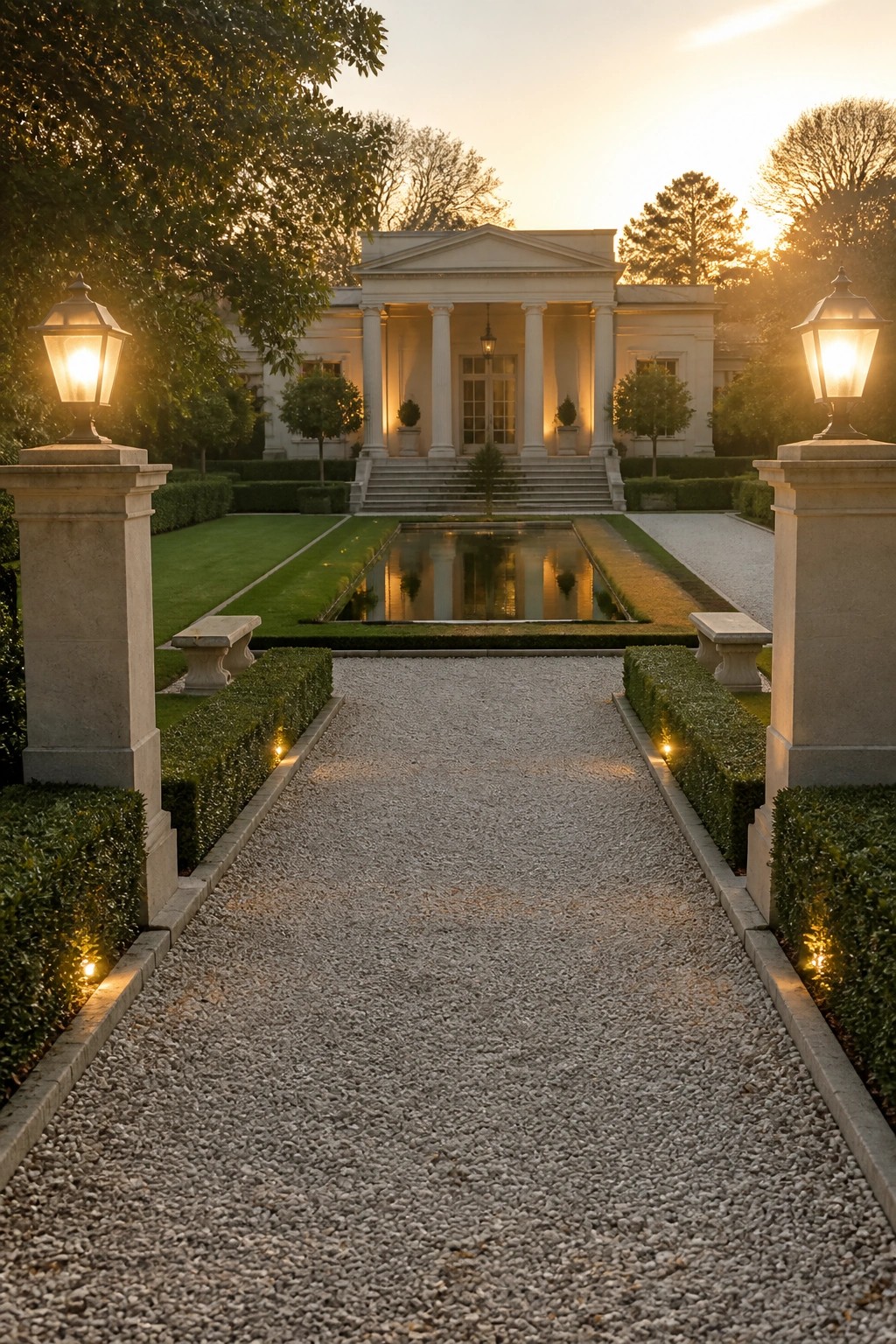
Gravel paths stay practical because they drain well and need almost no repairs over time. Adding low clipped hedges along both sides gives the surface a tidy edge so it does not spread into the lawn or beds.
This approach works best on longer entries or side drives where you want structure without daily care. Trim the hedges a couple of times each year and rake the gravel smooth now and then to keep the look neat.
Frequently Asked Questions
Q: How often should I rake my gravel driveway to keep it looking good?
A: Rake it lightly once a month during dry weather. Pay extra attention to the spots where you turn your car. This simple step stops ruts from getting deep.
Q: What works best to keep weeds out of the gravel?
A: Lay down a good weed barrier fabric before adding the gravel. It stops most growth without any sprays. Pull any that sneak through by hand right away.
Q: How do I deal with the gravel shifting on a slope?
A: Mix larger stones into the base layer. Drive slowly up the hill to limit shifting.
