

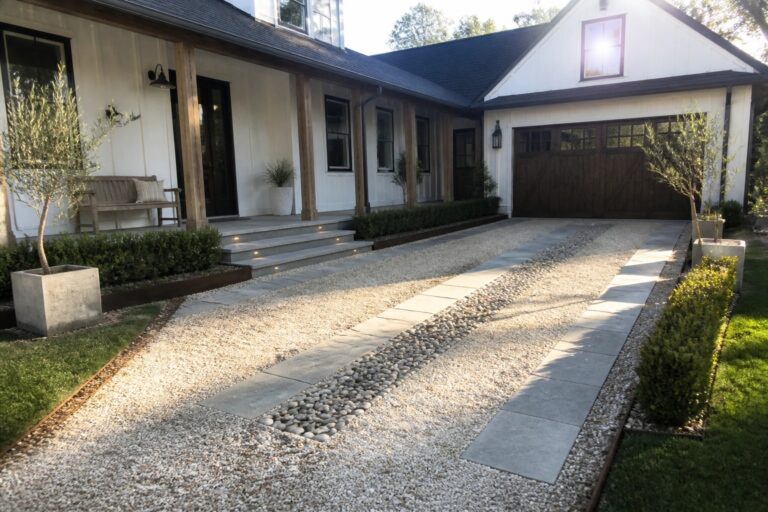
I’ve noticed that a driveway shapes the first impression of a home more than most people expect.
Mixing stone textures lets you create contrast along the edges and surface while keeping the layout practical for daily use.
In my own place I found that certain combinations settled better after a winter than the uniform looks I had considered first.
Thinking about how water drains and how tires wear the material helps avoid choices that look fine at the start but need constant fixes later.
A few mixes change the whole feel.
Stone Strips Bring Order To Gravel Driveways
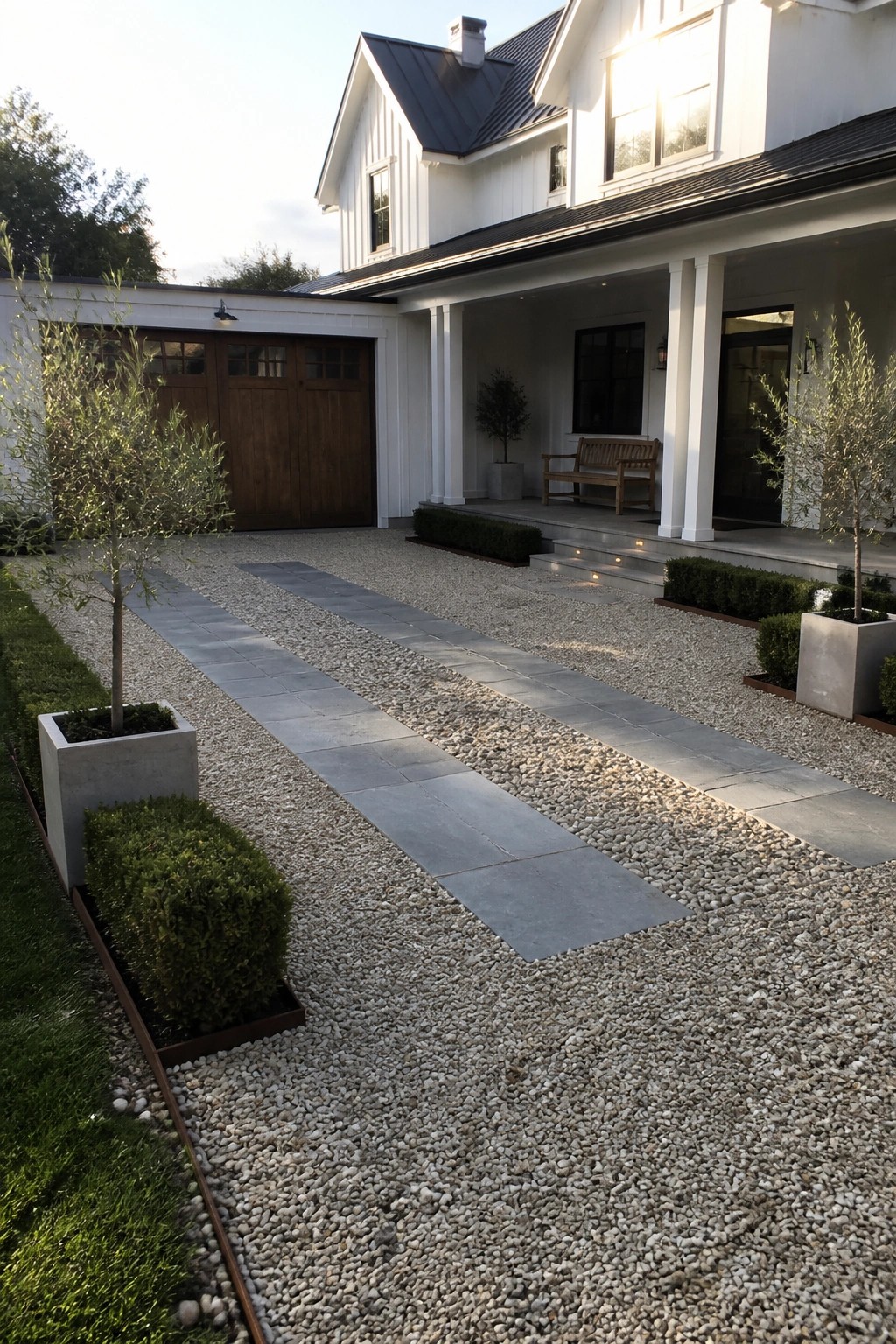
Many homeowners add flat stone pavers in long strips through a gravel driveway. The mix keeps the loose texture of gravel while giving a solid surface for walking and a bit more structure overall.
This layout suits homes with clean lines or simple landscaping. Lay the pavers level with the gravel so tires and feet move easily across both materials, and choose a stone color that blends with the gravel to avoid a patchy look.
Gravel With Large Pavers Forms A Low Maintenance Path
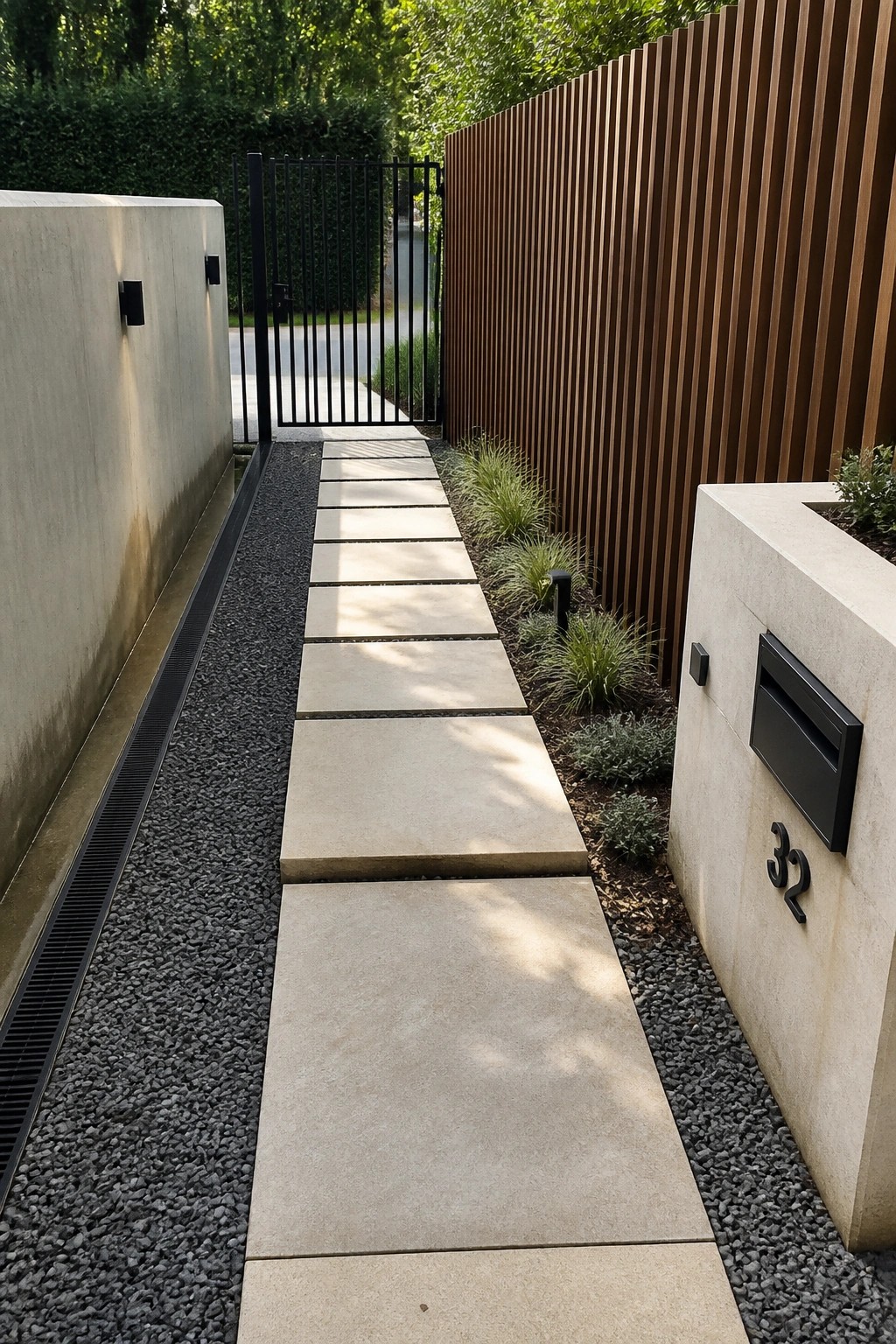
Mixing dark gravel with wide concrete pavers gives a path that stays firm underfoot while still showing the texture of the stone. The gravel fills the gaps and edges, so the whole thing drains well and needs little upkeep once it is set.
This works best along the side of a house or leading to a gate where you want access without covering everything in solid paving. Keep the pavers large and evenly spaced, and add a simple drain grate along one side if water tends to collect there.
Plant a Small Island Bed in Cobblestone Driveways

A planted island gives a cobblestone driveway some breathing room and softens all that hard surface. The gravel fill inside the bed keeps it simple while the surrounding stones create a clear edge that still feels connected to the rest of the drive.
This works best on wider approaches where cars can curve around the planting without trouble. Keep the bed low and use tough shrubs or a small tree so it does not need constant trimming or block access.
Combine Gravel With Large Stepping Stones
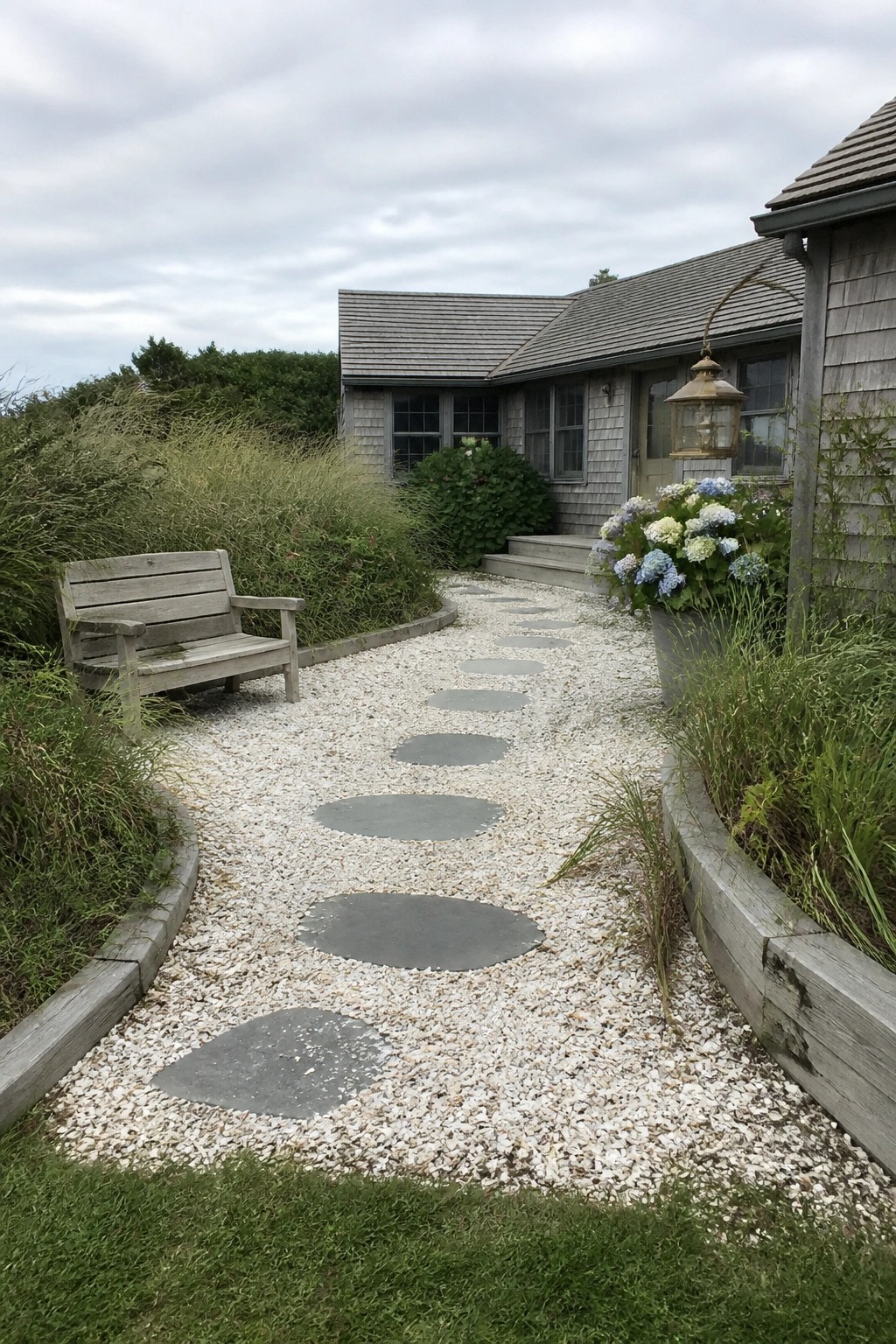
A path made of gravel and big flat stones feels practical and settled into the garden. The gravel gives a soft texture underfoot while the stones keep the walk steady and easy to follow without needing a solid surface.
This works best on homes with casual landscaping where you want something low maintenance that still directs people clearly. Space the stones so they match a natural stride and choose gravel that packs down well over time.
Mix Gravel With Pebble Inlays For Entry Paths

Gravel works well on its own, but adding a strip of small pebbles set in a simple pattern gives the surface more structure. It breaks up the loose look without needing a full paved driveway and helps keep the main gravel area from feeling too plain.
This approach works best on homes with a Mediterranean or Spanish style where the entry gets some foot traffic. Keep the pebble section narrow so it stays easy to maintain and does not compete with the larger gravel field.
Gravel Strips Between Concrete Slabs
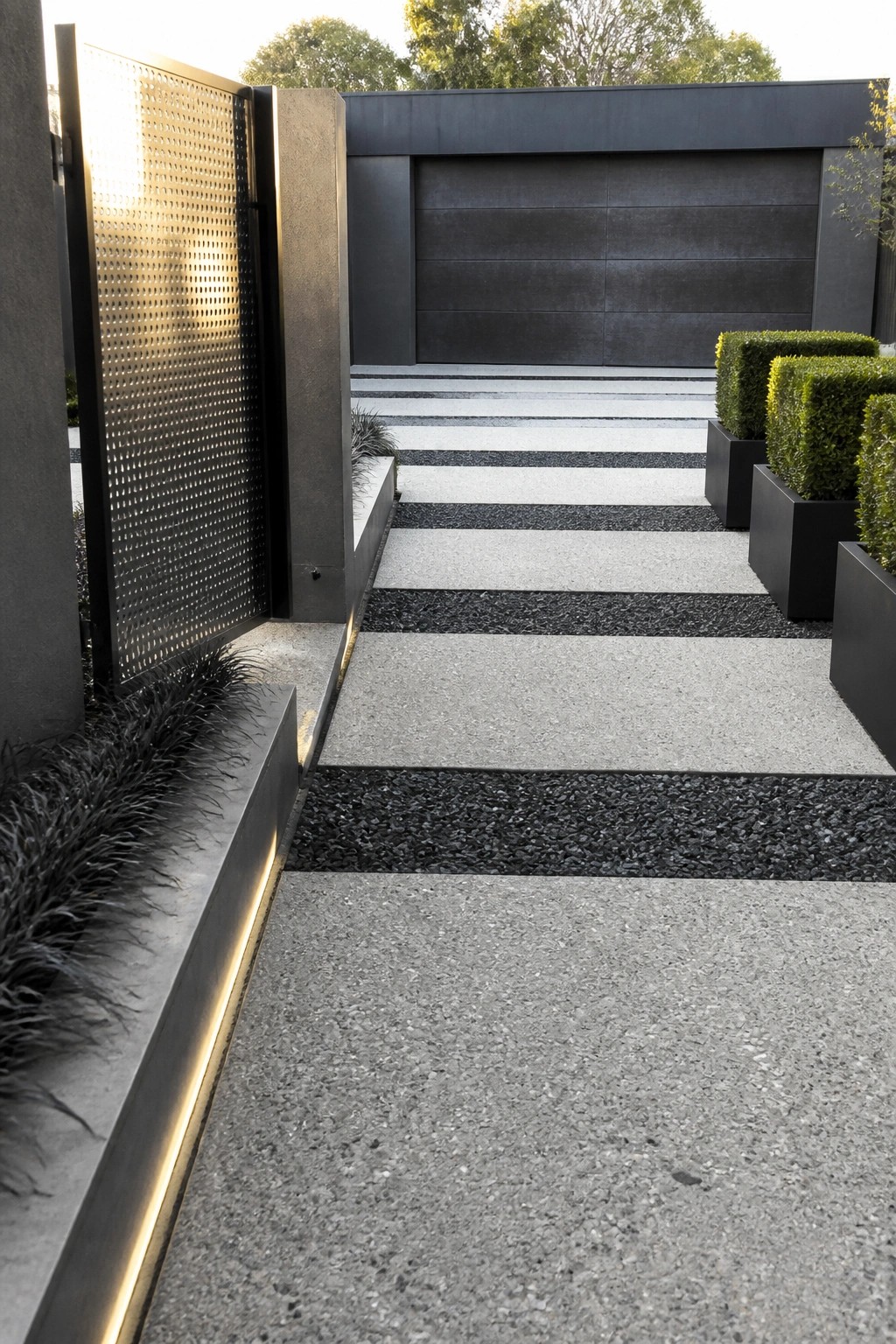
Mixing gravel strips with concrete slabs gives a driveway or path some texture while keeping the surface structured and practical. The dark gravel breaks up the light concrete and adds a bit of contrast that feels modern without looking fussy.
This works best on a front entry or a short driveway where you want drainage and a clean look. It suits contemporary homes and pairs easily with simple box planters along the sides. Keep the gravel contained so it stays neat over time.
Mix Stone Slabs With Gravel For A Garden Path
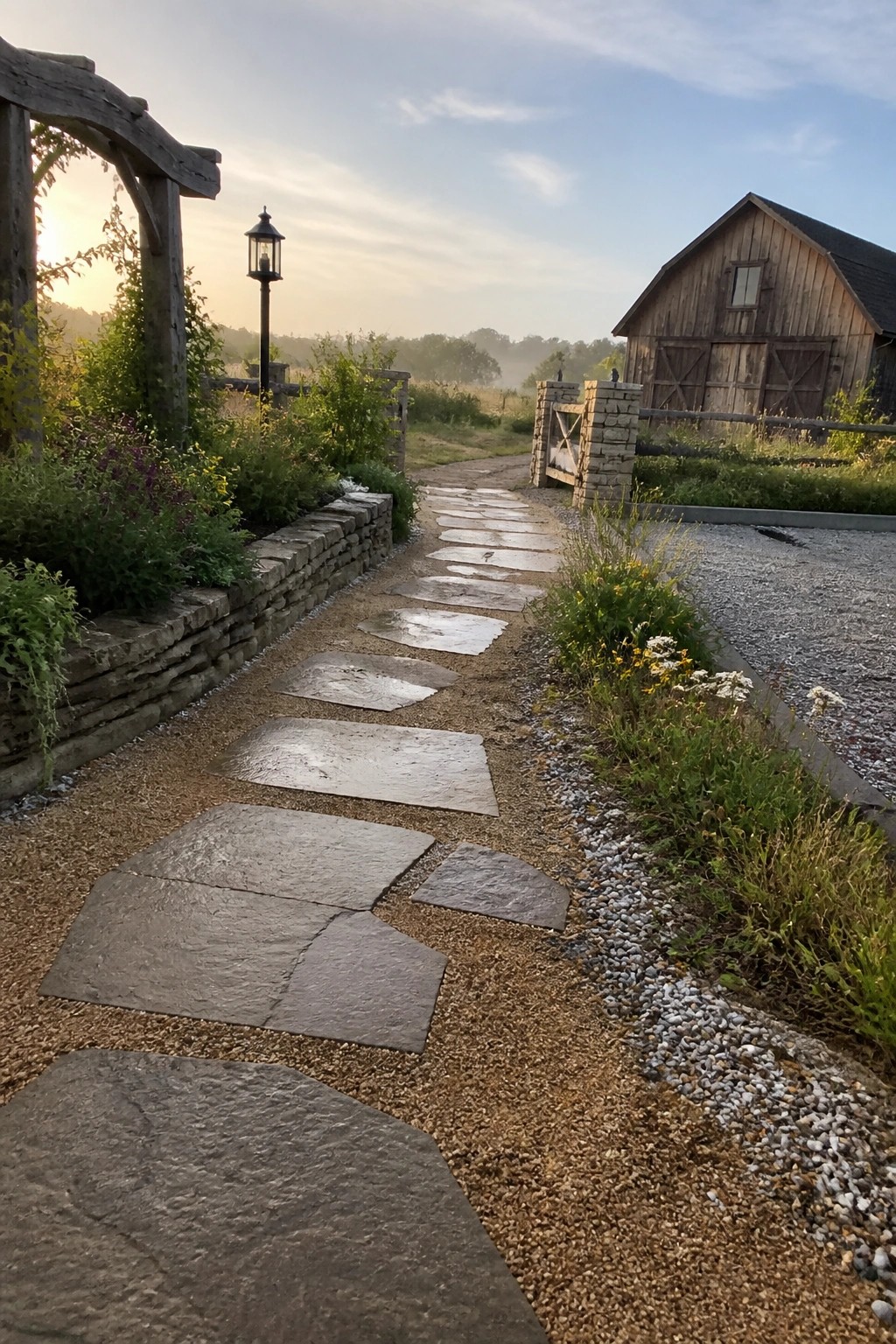
Large flat stones set right into gravel make a path that feels solid underfoot while still looking relaxed in the landscape. The mix of textures keeps the surface from feeling too uniform or too hard.
This works best along the side of a house or leading toward an outbuilding where you want something practical but not too formal. Level the stones well and use a gravel that packs down so the path stays easy to walk on year after year.
Mix Gravel With Paver Borders

Mixing gravel with paver borders gives a driveway path more shape and keeps the loose stone from spreading over time. The contrast between the rough gravel and the flat stones also adds texture without needing extra plants or features.
This approach works best on straight entrances or side paths where you want a clean line that still feels natural. It suits modern homes with simple architecture and holds up well if you add drainage where water tends to collect.
Mixing Gravel Textures For Added Driveway Interest
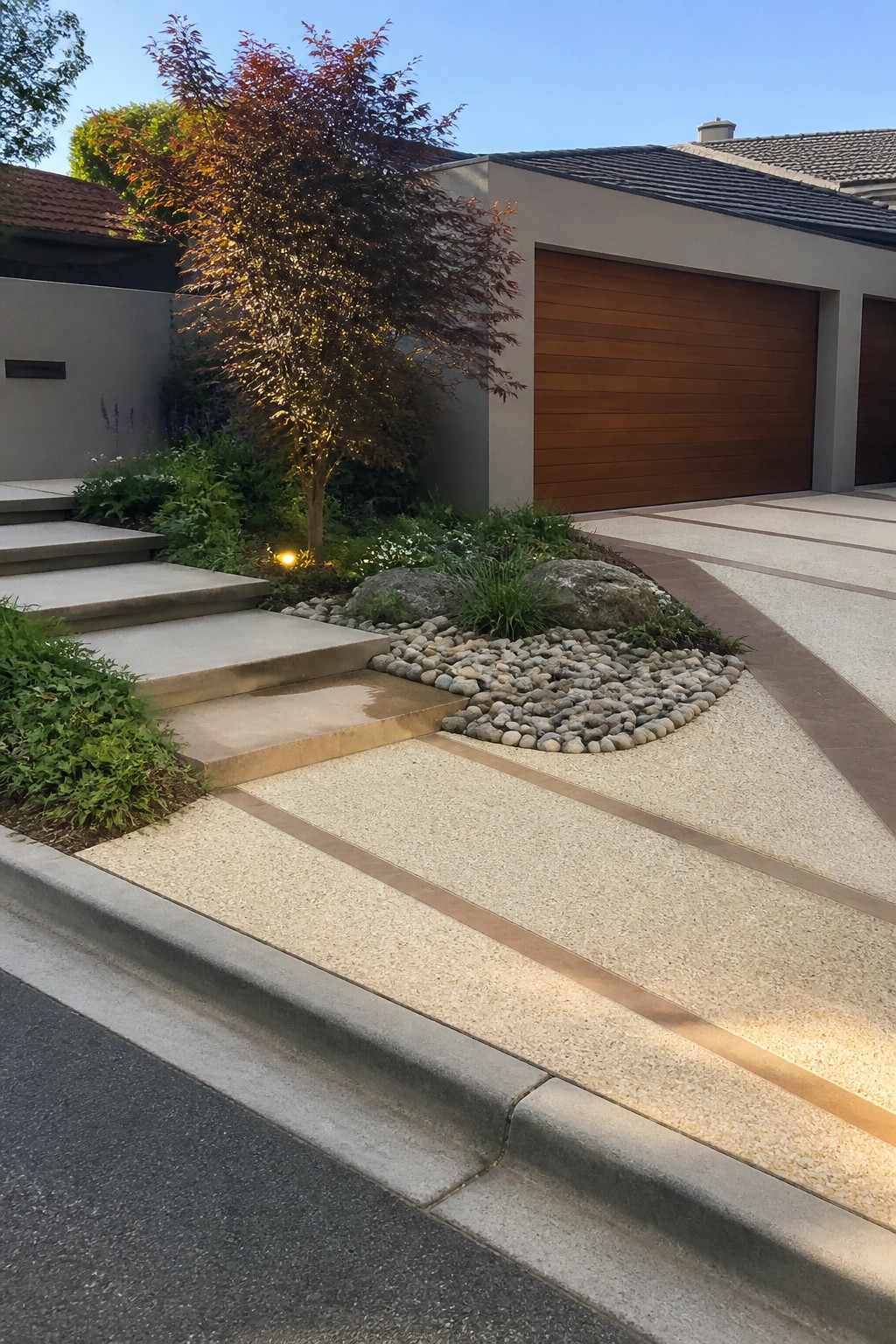
One way to keep a gravel driveway from looking flat is to bring in different stone sizes and finishes side by side. The linear paved strips break up the main gravel field while the tighter pebble section near the steps adds a finer texture that feels more finished.
This approach works best on homes that already have clean lines and simple plantings. It gives enough contrast to hold interest from the street without turning the driveway into a complicated pattern. Just make sure the different materials sit at the same level so cars and feet move across them easily.
Mixing Stone Sizes For A Textured Path
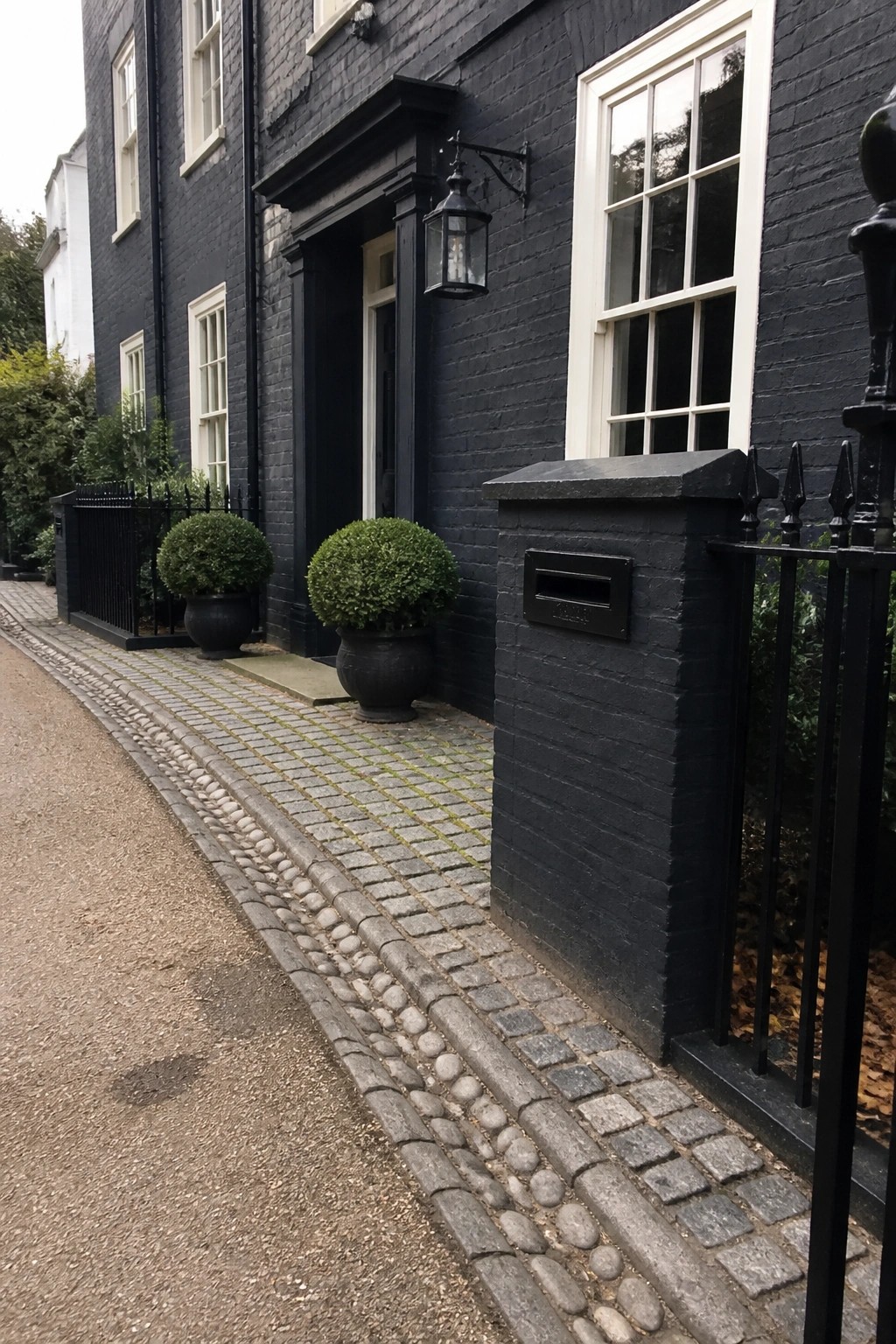
Mixing different stone sizes gives a driveway or path more character than a single uniform material. The varied cobbles here create a surface that feels solid underfoot while still showing plenty of texture and depth along the edge of the house.
This works best on older properties or homes with simple brick exteriors where you want the hardscaping to add interest without competing with the architecture. Keep the mix fairly tight so the path stays easy to walk on and does not shift too much over time.
Chevron Patterns With Mixed Gravels
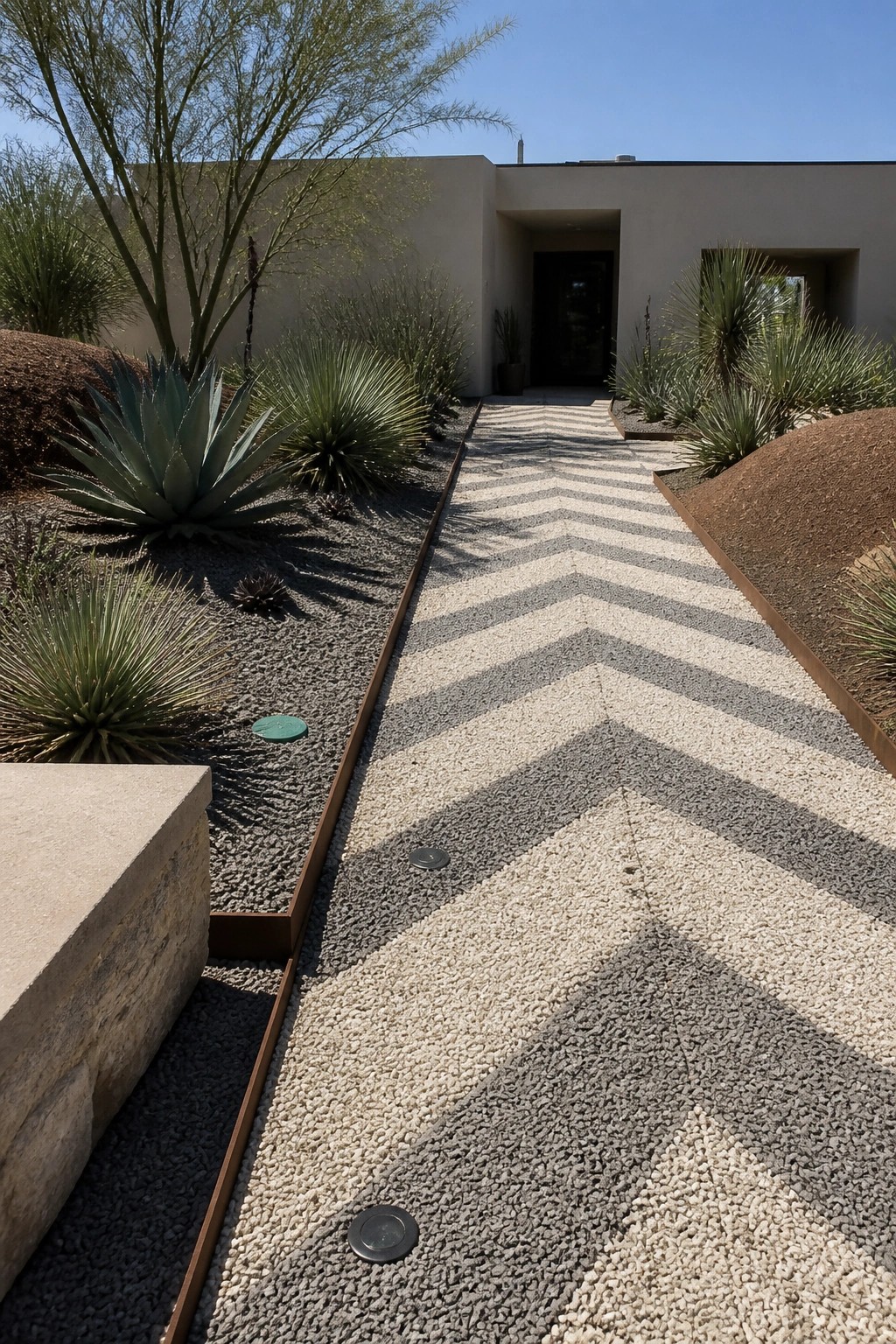
A chevron layout in two gravel tones gives a path clear direction and breaks up the flat look that often comes with plain gravel. The contrast between the lighter and darker stones makes the pattern easy to read from a distance and adds structure without extra cost.
This approach works best on straight or gently curving driveways in front of modern homes. Keep the bands consistent in width and use solid edging to hold the different stones in place over time.
Blend Gravel Strips Into A Concrete Driveway

Mixing gravel into a concrete driveway gives the surface more texture without losing the strength of a solid base. The strips break up the wide expanse and let light and shadow play across different materials, which keeps the whole approach from looking too heavy or plain.
This works well on homes with gentle curves in the drive or where you want a bit of contrast against clean lines. Keep the gravel pieces fairly uniform so they stay in place and do not scatter onto the concrete over time.
Stepping Stones In Gravel Paths
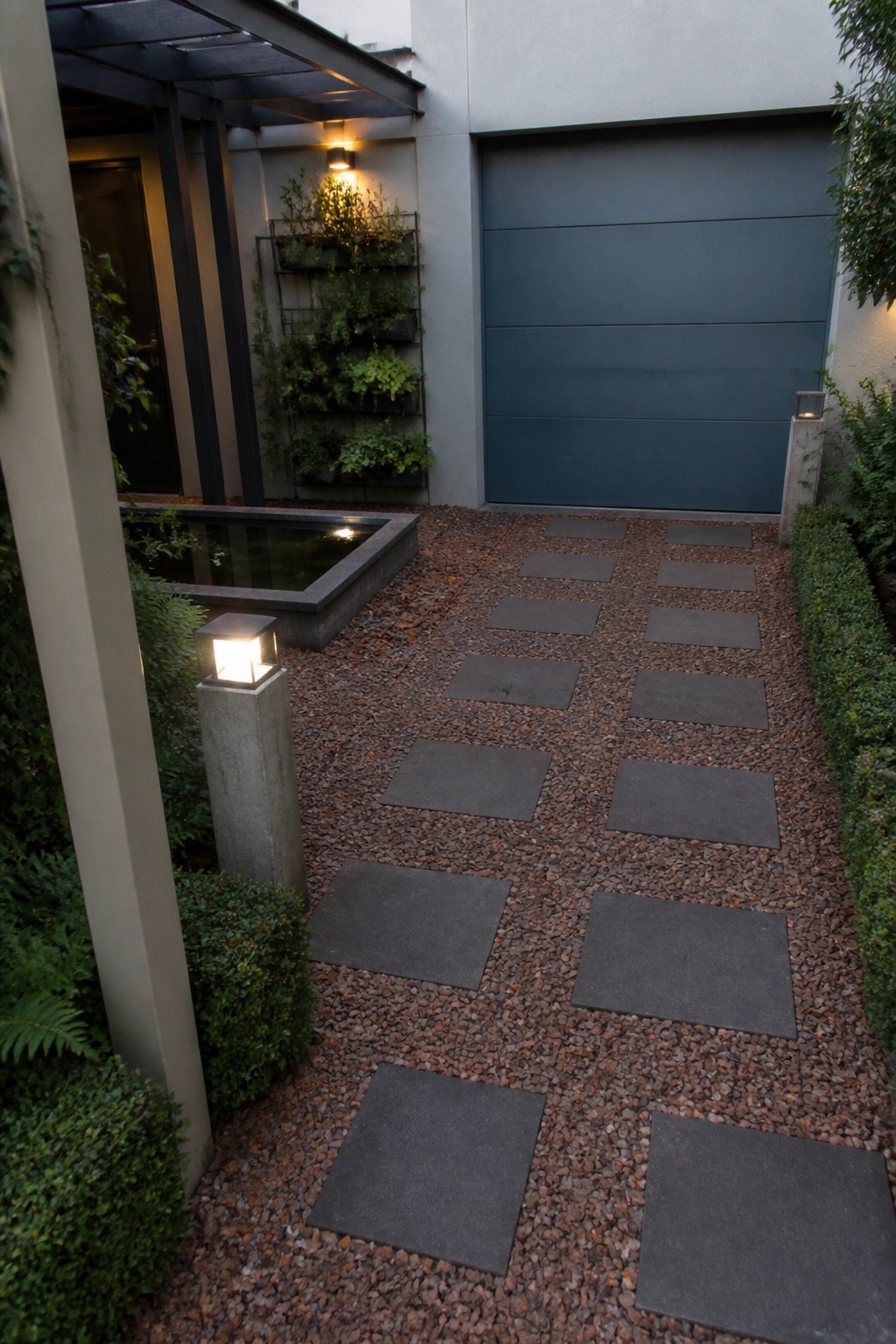
Stepping stones set into gravel give a path that feels intentional but still loose. The dark squares break up the smaller stones and keep the surface from looking too flat or uniform.
This layout suits side entries or narrow drive approaches on homes where a full concrete slab would feel too heavy. Space the stones evenly and set them level so they stay comfortable underfoot over time.
Gravel Driveways With Stone Edging
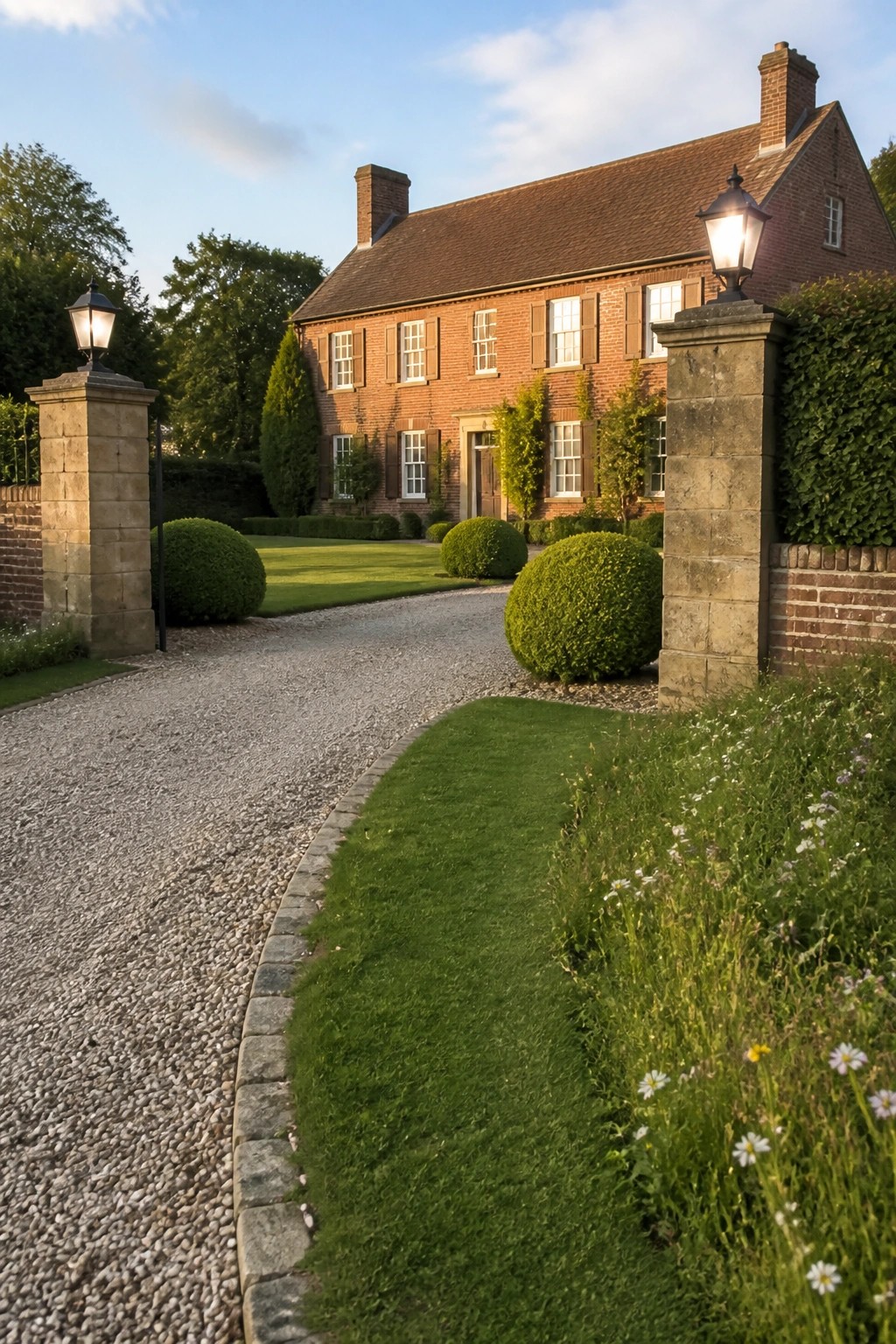
A gravel driveway feels more settled when it has a clear stone border. The edge keeps the material from spreading into the grass and gives the curve a clean finish that still looks natural.
This works best on homes with brick or stone exteriors where the border can echo those materials. Keep the gravel mix varied in size so it stays in place better and adds a bit of texture without extra cost.
Mix Gravel With Pavers For A Clear Path

Mixing gravel with a darker paver path gives a driveway more structure without losing that loose, natural feel. The contrast makes the route easy to follow and keeps the surface from looking flat or messy over time. It works especially well on longer or curved driveways where you want to guide cars and foot traffic at the same time.
This approach suits homes with simple siding and open yards where the driveway is part of the main view. Keep the gravel light and the pavers darker so the path stands out, and make sure the paver section is wide enough for tires. Avoid very narrow paths or letting the gravel creep over the edges too much.
Mixing Stone Sizes Along The Driveway
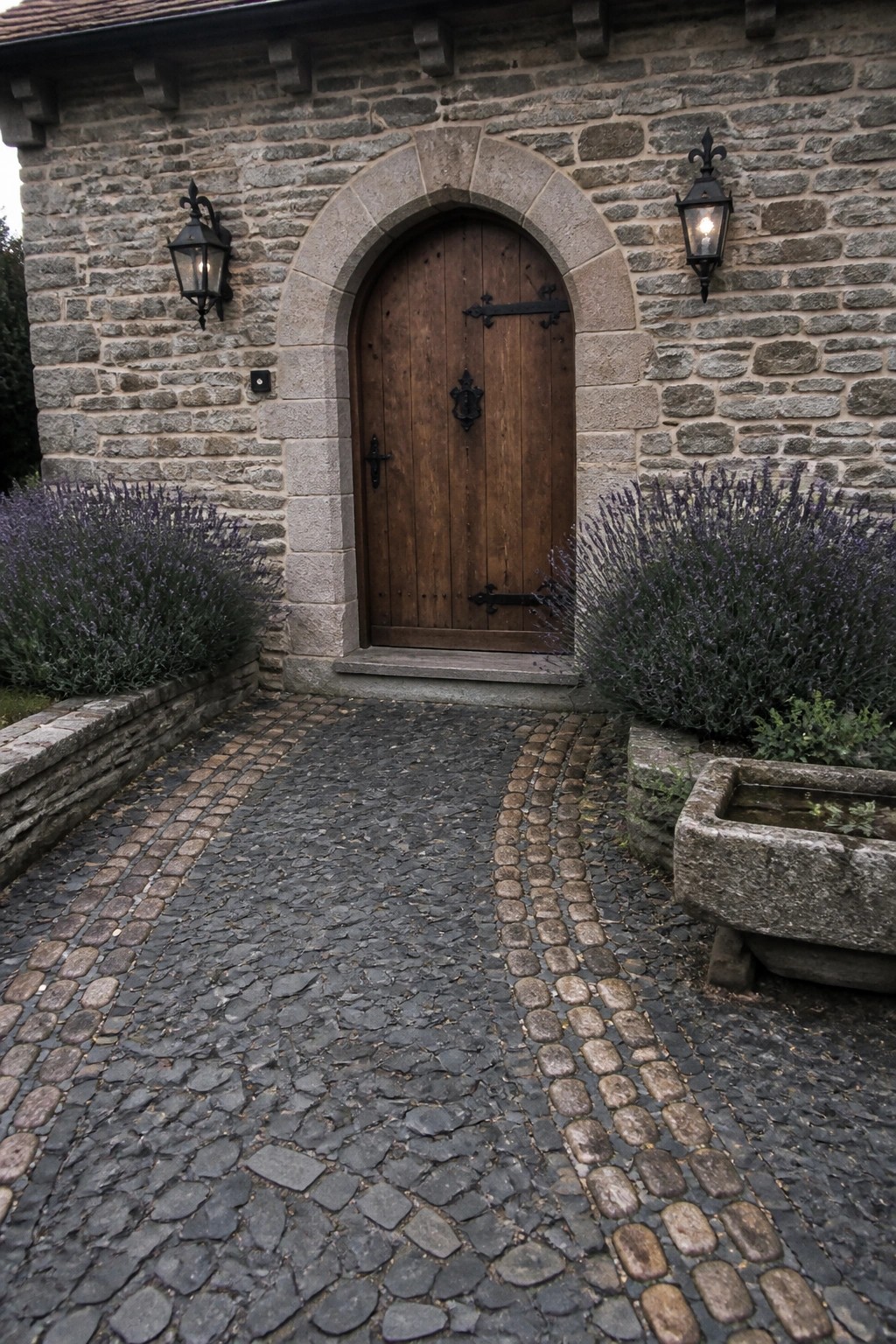
Using stones of different sizes and shapes together gives a driveway more texture and a settled look. The surface feels less flat and more tied to the house itself when the stones vary in scale.
This approach suits older homes or those with stone walls. Keep the largest pieces toward the edges and use smaller ones to fill in so the path stays comfortable to walk on.
Alternate Pavers And Gravel For Entry Paths
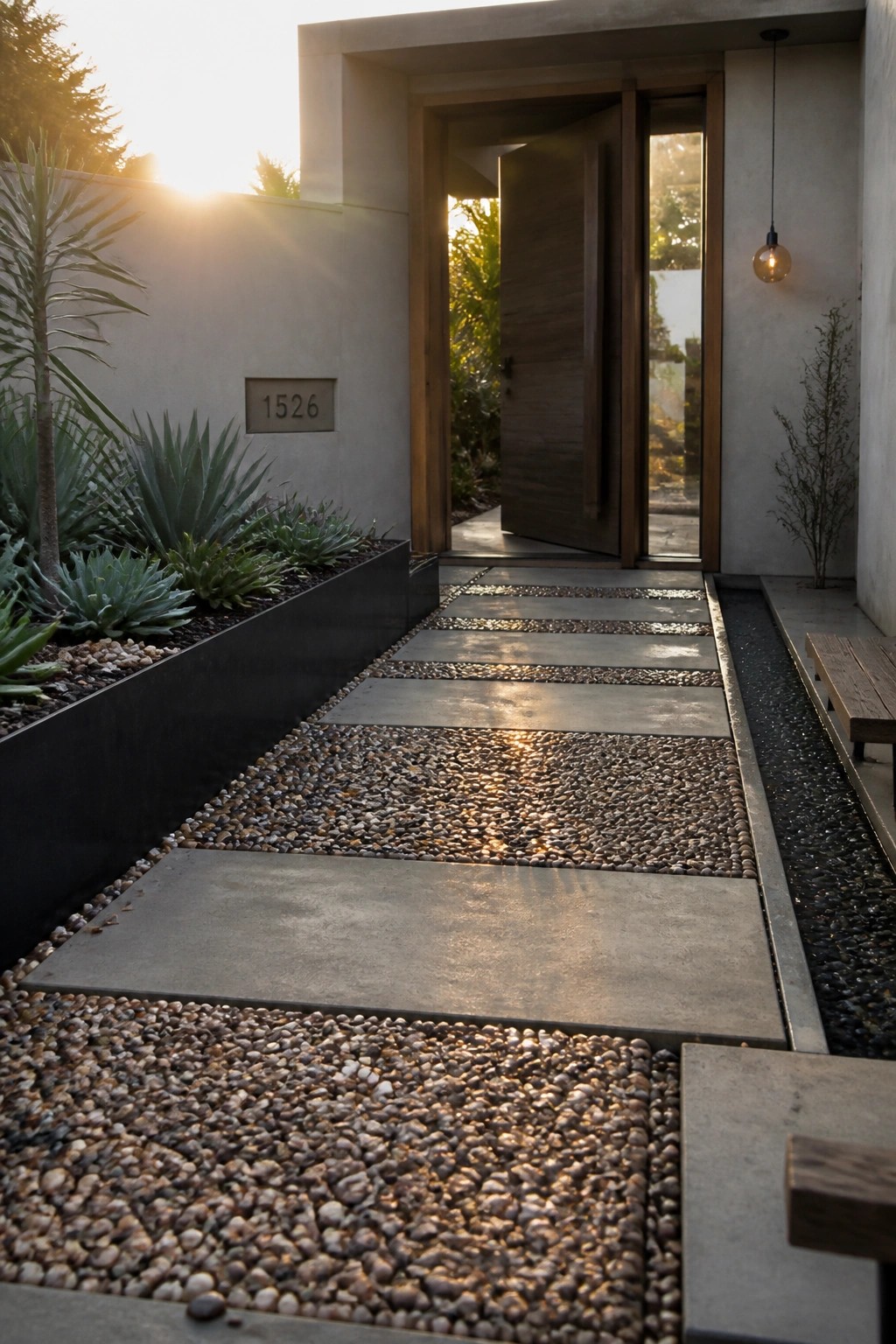
Many homeowners like this setup because it gives solid footing while still letting gravel do some of the visual work. The large concrete slabs keep the walk easy to use, and the gravel sections add texture and help with drainage along the way.
This approach suits modern or simple homes where you want the path to feel intentional but not overdone. Stick to similar neutral tones for both materials so the mix stays calm instead of busy, and make sure the gravel is compacted well so it does not shift underfoot.
Mixing Stone Textures Along Driveway Edges
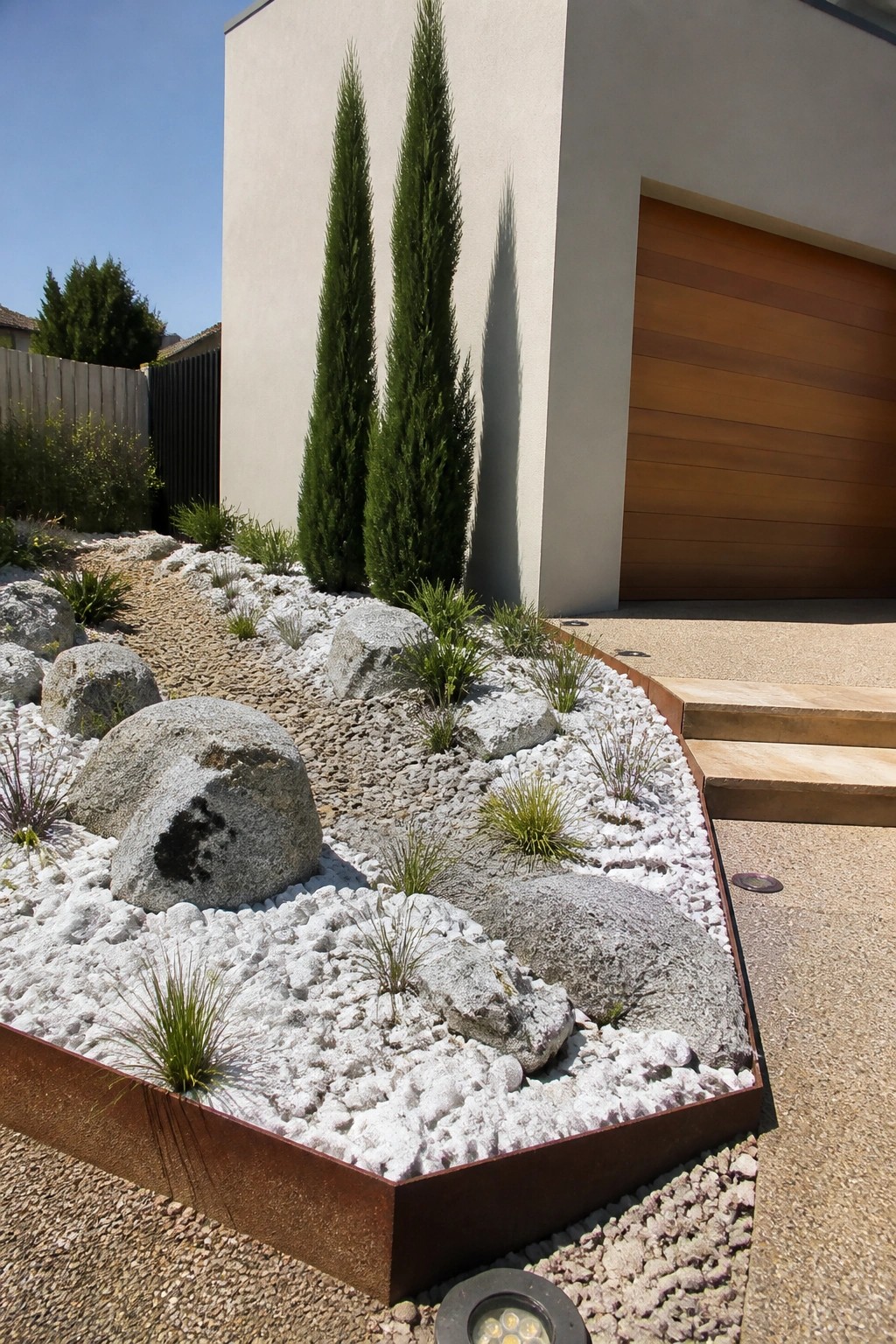
One simple way to add interest to a gravel driveway is by using a contained bed with different sizes of stone. The fine white gravel paired with larger boulders creates texture and breaks up the flat surface without needing constant work.
This approach suits modern homes with clean lines, where the metal border keeps everything neat and the plants add just enough softness. It works best in sunny spots with good drainage, and it helps the transition from driveway to house feel more finished.
Alternate Gravel And Concrete For A Textured Path

Mixing gravel sections between concrete strips gives an entry path more character than a solid slab. The gravel adds texture and helps with drainage while the concrete keeps the surface stable underfoot. This combination feels practical yet still has visual interest that stands out in a simple way.
It works especially well on modern homes where clean lines are already part of the architecture. Keep the gravel consistent in size and color so it does not look messy, and make sure the concrete edges are clean to hold everything in place. The metal planters along the sides help tie the planting into the hardscape without crowding the path.
Stepping Stones In Gravel Driveways

Flat stones set into gravel give a path some solid footing while keeping the loose texture of the drive. The mix feels practical and avoids the look of a fully paved surface that can seem heavy in a garden setting.
This works best on longer approaches or side paths where you want easy walking without committing to solid pavement the whole way. Level the stones well and use a gravel that stays in place around the edges so the surface does not shift too much over time.
Mix Pavers Into A Gravel Driveway
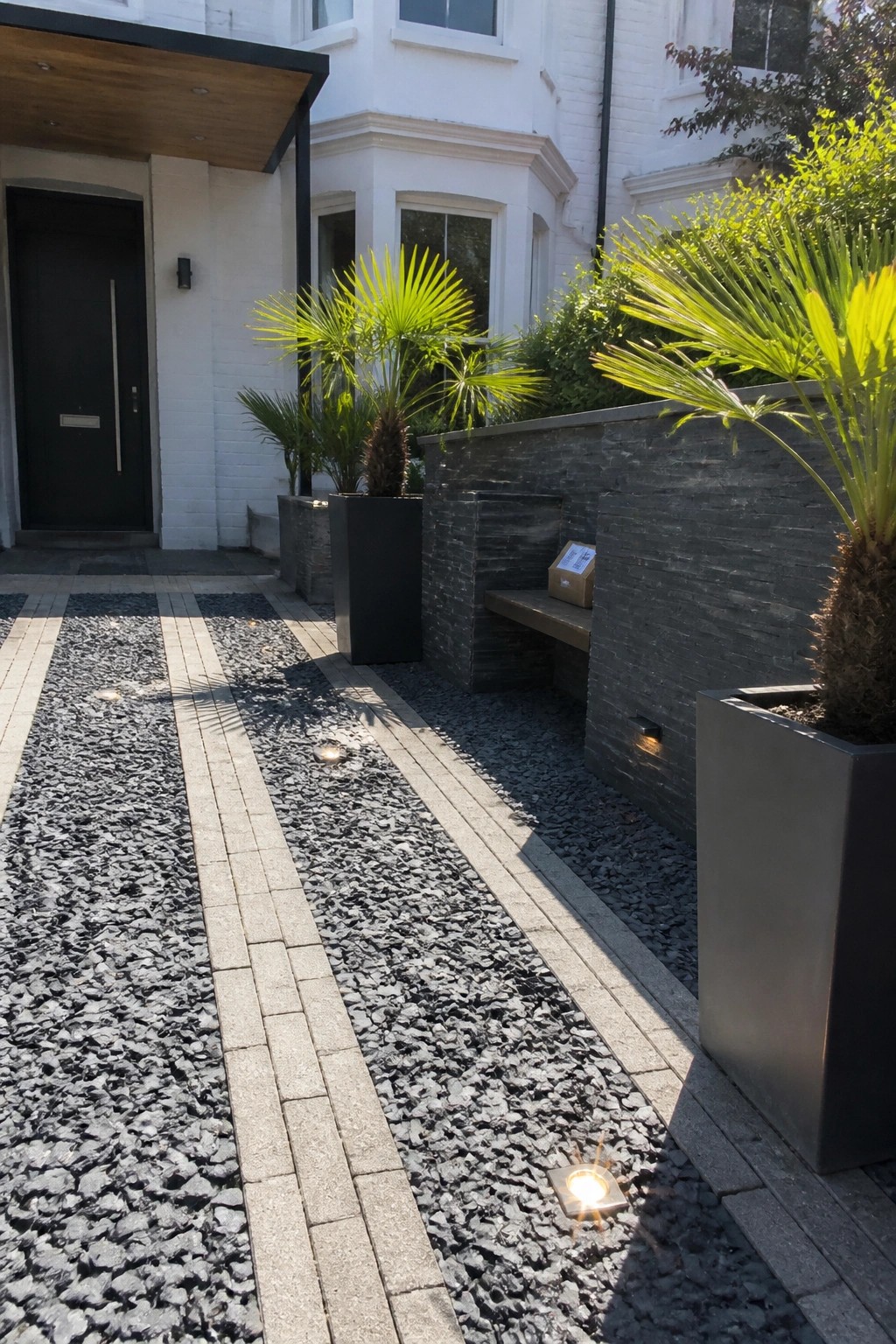
Running strips of pavers through gravel gives a driveway some structure without losing the natural look. The gravel still handles most of the surface, but the pavers create clean lines for tires and help the whole thing feel more finished.
This works best on homes where the entry is fairly simple and you want a bit of contrast. Keep the pavers level with the gravel so walking and driving stay easy, and add a few low lights along the edges if the path gets used at night.
Curved Gravel Driveways With Paver Borders
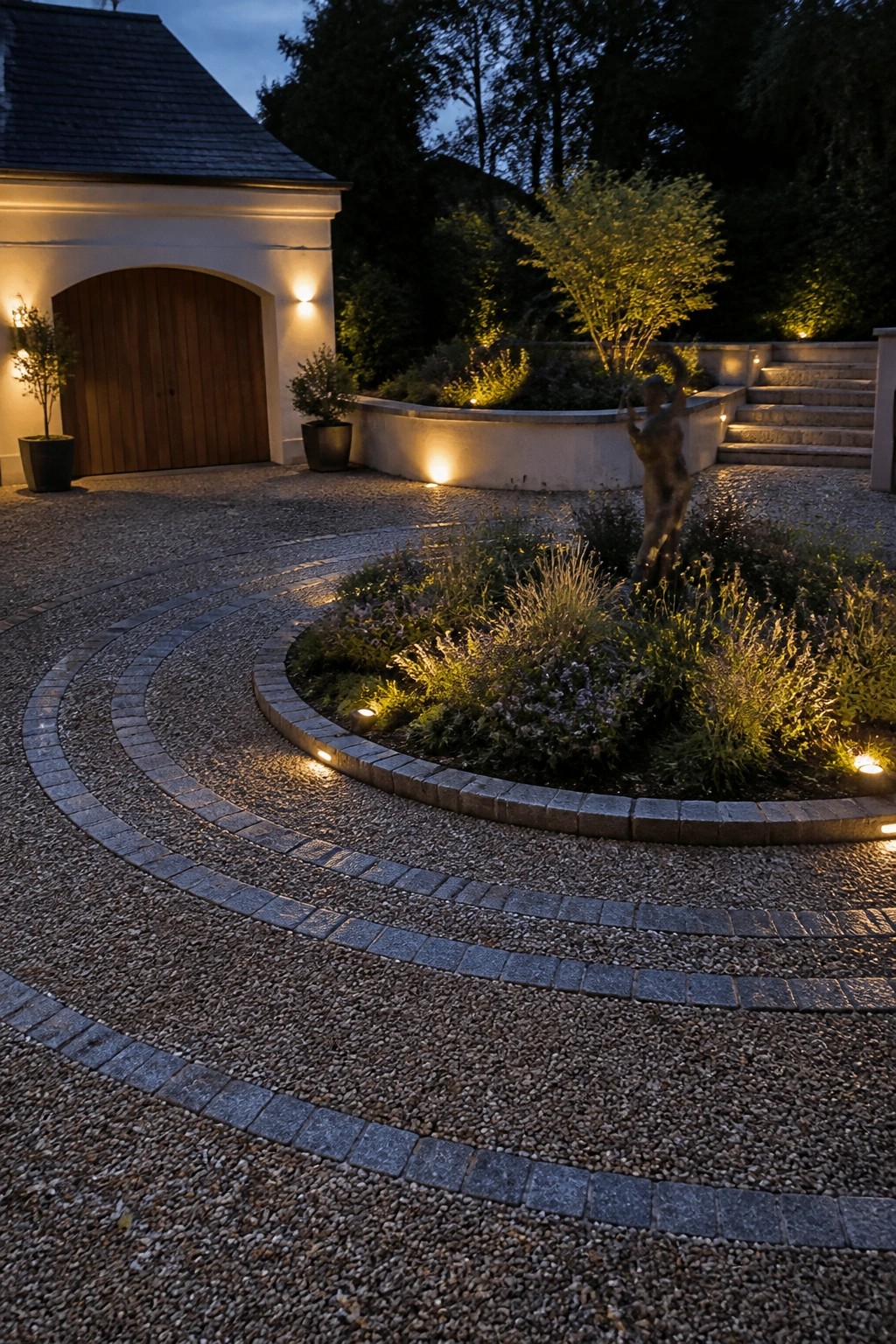
A curved gravel driveway laid out in concentric rings gives the front of a house a softer shape than a straight run. The brick-style pavers hold the gravel in place while adding a clear edge that keeps the surface looking neat.
This layout works well on larger properties where there is room for the full curve. Keep the inner bed planted low so the pattern stays visible and the gravel does not scatter onto the lawn.
Mixing Stone Sizes In Gravel Paths
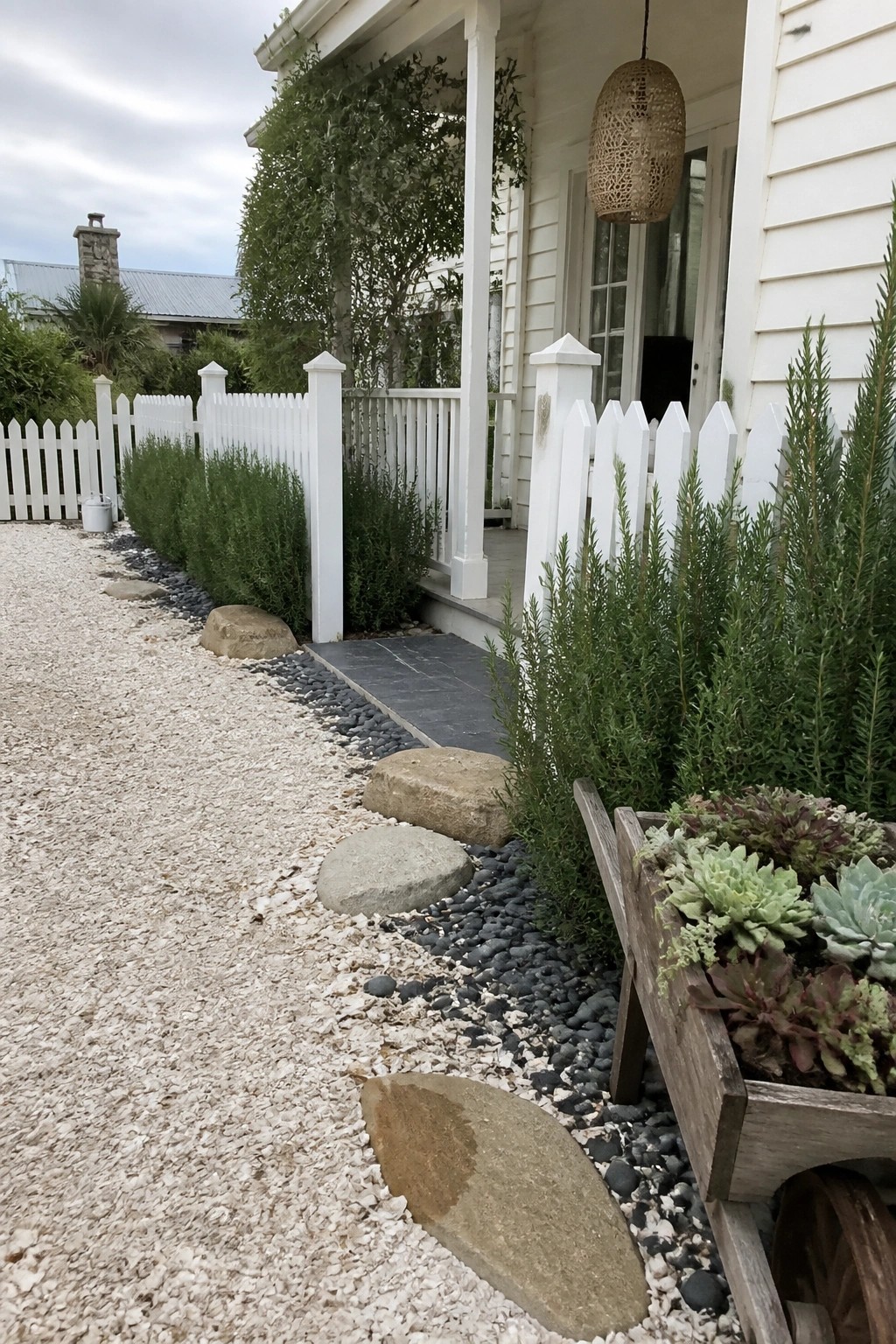
Mixing stone sizes gives a gravel path more texture without extra work. The larger pieces break up the surface so it feels less uniform and settles better over time.
This works well along the edge of a driveway or side path on homes with simple gardens. Place the bigger stones where feet land most often and let the smaller gravel fill in around them.
Frequently Asked Questions
Q: How do I stop weeds from popping up between all those mixed stones? A: Lay down a good weed barrier fabric before you spread the gravel. Check it once a year and pull anything that sneaks through.
Q: Does mixing textures change how much gravel I need to order? A: You still order by the ton based on your driveway size and depth. The mix itself does not affect the amount much at all.
Q: What if the colors in my stone mix start to look muddy after a while? A: Hose it down now and then to wash off the dirt. But pick stones that hold their color better in your local soil.
