

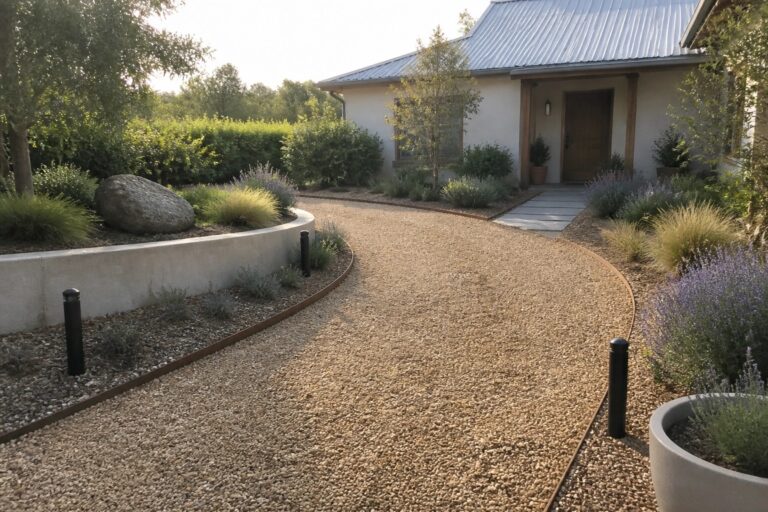
The driveway is often the first thing people notice when they approach a house, and the material choice can shape how the rest of the exterior reads from the street.
Gravel tends to work best when the color and texture sit comfortably with the siding, roof, and any stone already on the property.
I have found that some options look fine in photos but shift or sink once rain and tires start moving across them.
Testing a small patch in the actual spot helps show whether the gravel will stay put or need extra base work.
Simple edging details usually make the biggest difference in keeping the whole entrance looking deliberate rather than temporary.
Wood Edging For Gravel Driveways
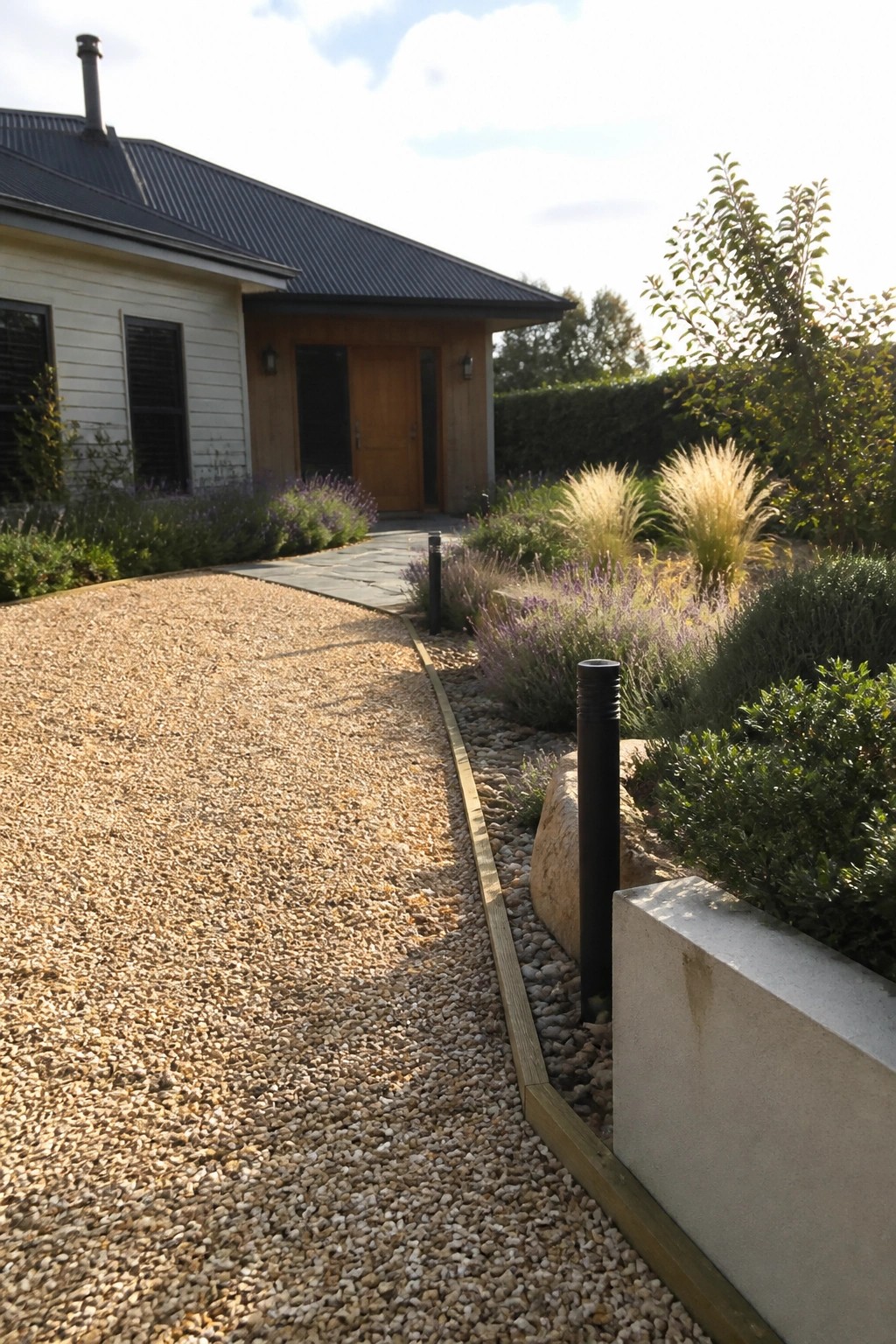
Gravel driveways cost less than concrete or pavers, but they often look unfinished unless the edges are held in place. Wood edging gives a straight, intentional line that keeps the gravel from spilling into the beds and makes the whole approach feel more put together.
This works best on homes where the drive runs close to planting areas. A simple timber border pairs easily with low shrubs or grasses and holds up well in most climates without needing much upkeep.
Gravel Paths With Inset Pavers

Mixing gravel with large rectangular pavers gives you a walkway that feels structured without costing much. The pavers create steady footing and keep the look from turning too casual, while the gravel fills in the rest at a lower price.
This setup works best on a straight run to the door and suits homes with simple brick or siding. Keep the gravel contained with metal edging so it stays neat and does not spill into the beds.
Keep A Grass Strip Down The Middle Of Your Gravel Driveway
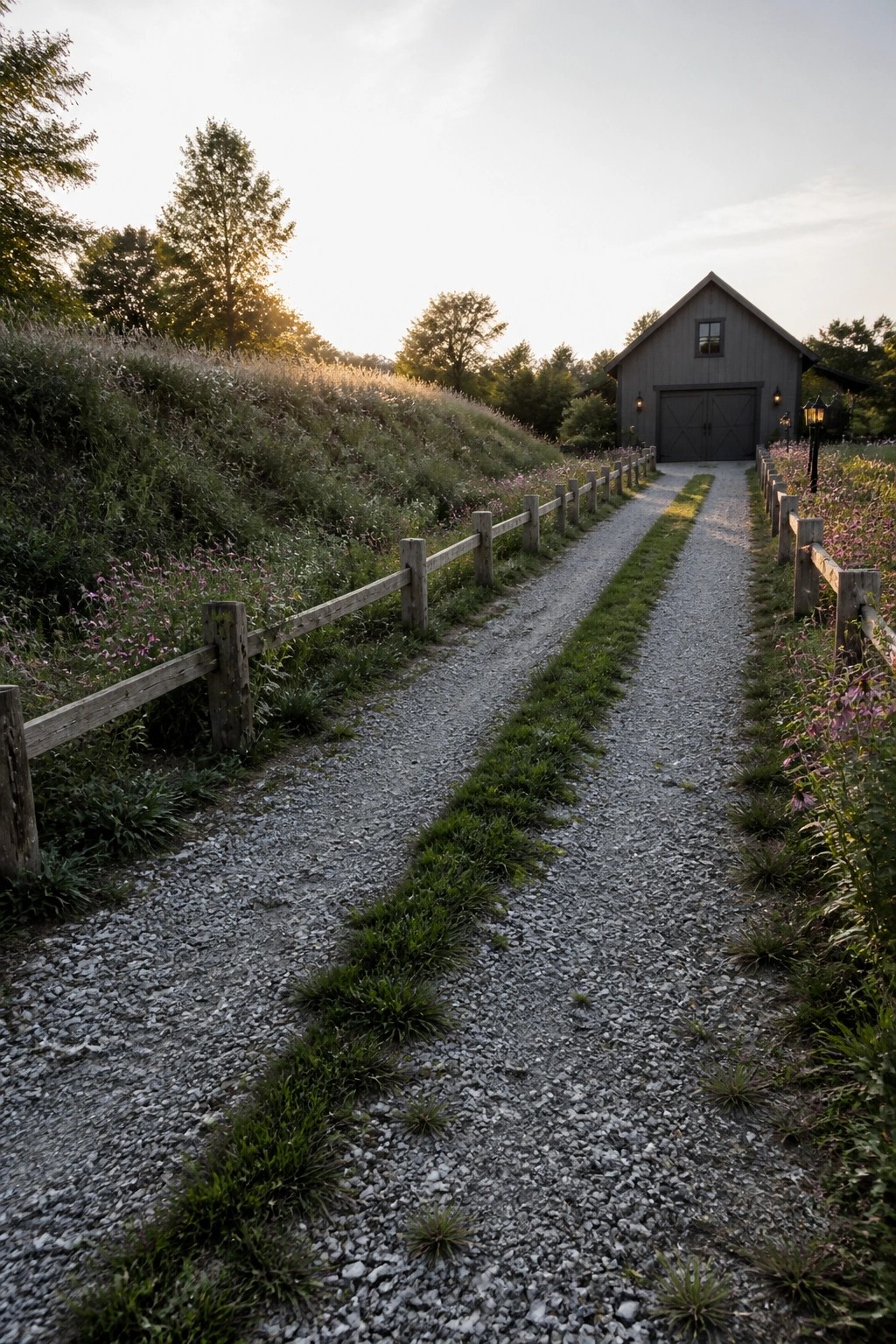
A grass strip running through the center of a gravel driveway helps break up the surface and makes the whole thing feel less harsh. It also cuts down on the amount of gravel you need while giving the path a softer look that blends into the surrounding landscape.
This works best on longer driveways or access roads where you want something practical but not too stark. Just make sure the grass strip is narrow enough for tires to stay on the gravel and wide enough to mow easily.
Edge Gravel With a Dark Border
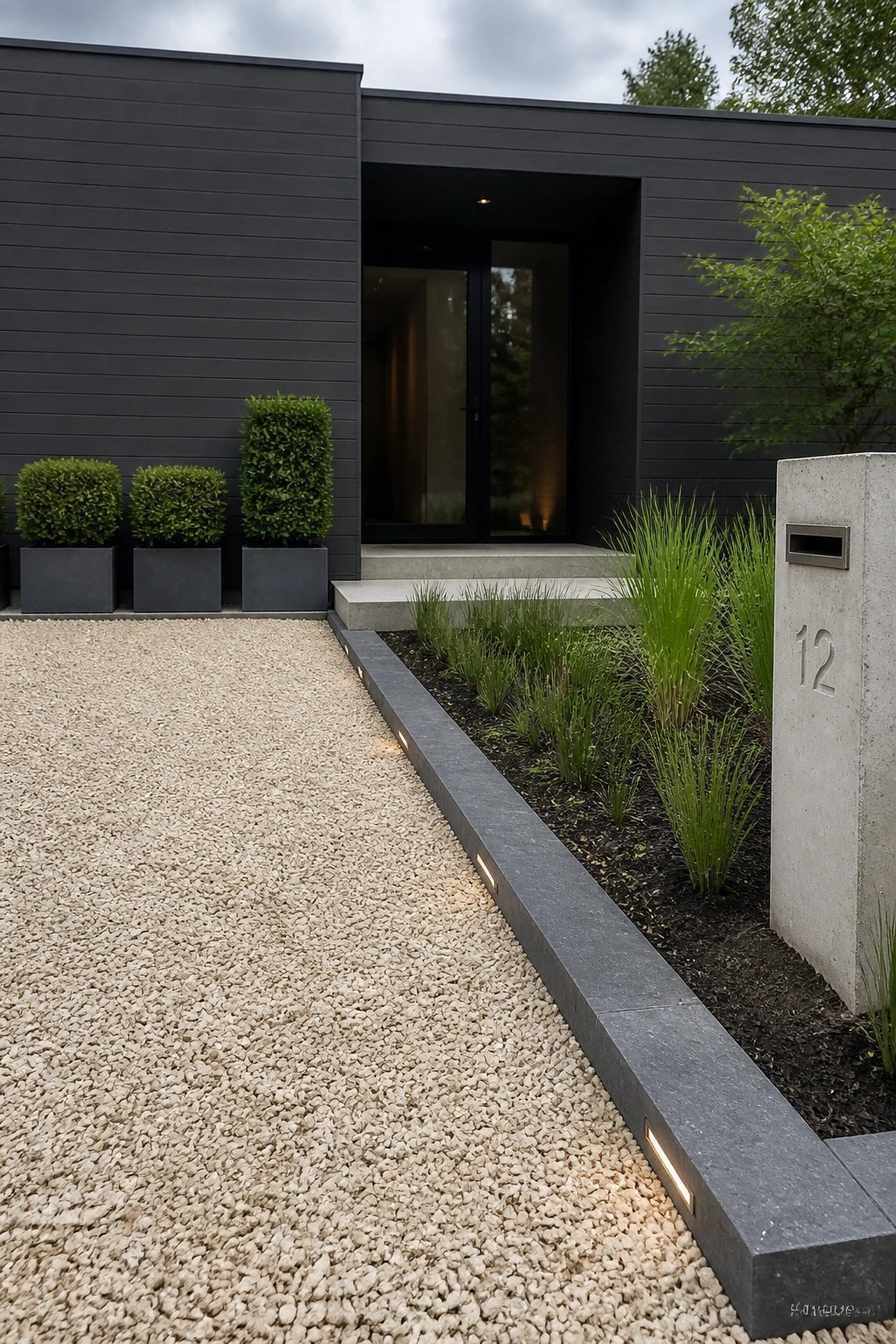
A dark border turns plain gravel into something that feels more finished. It holds the material in place and gives the driveway a straight, intentional line instead of a soft edge that can look messy over time.
This works best on smaller driveways or front paths where you want structure without extra cost. Keep the planting low and simple on one side so the border stays visible and the gravel remains the main surface.
Edge Gravel Driveways With Wood
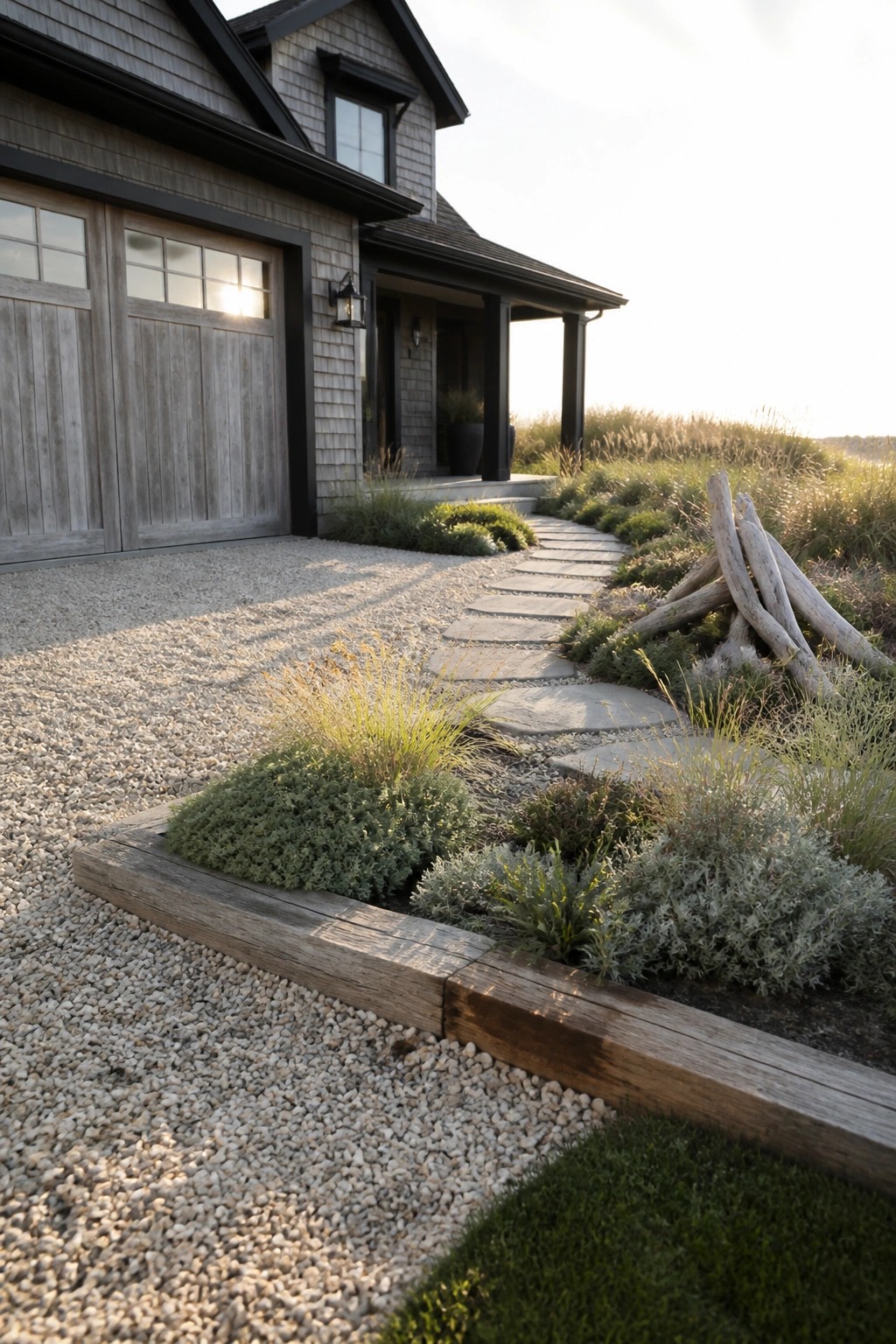
Wood edging gives a gravel driveway a finished look that feels more deliberate than just letting the stones spread out. It keeps the surface contained, cuts down on weeding along the edges, and adds a natural material that pairs well with most house styles.
This approach works best on homes where the driveway sits close to garden beds or lawn. Use pressure-treated or reclaimed boards set at ground level, then backfill the gravel right up to the wood so it stays put over time.
Gravel Borders Along a Brick Path

A brick walkway gains a lot of presence when you run gravel right up to the edges. The contrast keeps the path from feeling too formal or heavy, and the gravel handles drainage without extra work. It also cuts down on the amount of paver material you need to buy.
This setup suits homes with a clear front entry or a side approach where you want some structure but still need to watch costs. Keep the gravel layer fairly shallow and use a simple stone or concrete border to hold the edges in place. The potted plants shown here are optional, but they help soften the line where the gravel meets the house.
Gravel Driveways With Clean Concrete Edging
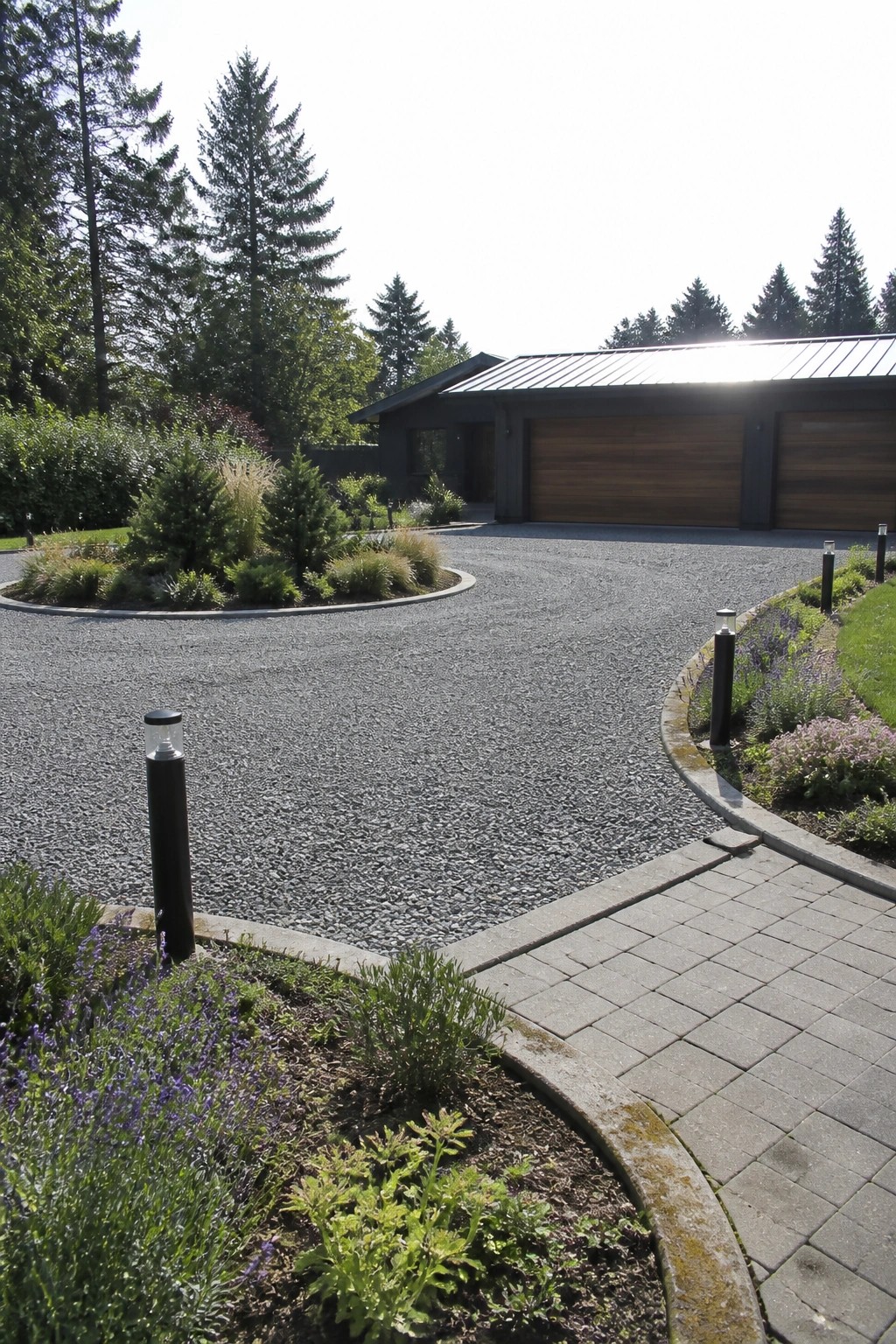
Gravel works well for driveways because it is affordable and drains easily. The key is adding a solid border along the edges so the surface stays in place and looks tidy instead of scattered.
This approach suits homes with gentle curves in the driveway layout. Keep the edging low and simple, then plant low beds right up against it. The contrast between the loose gravel and the firm border gives the whole entrance a finished look without extra cost.
Gravel Paths With Stepping Stones
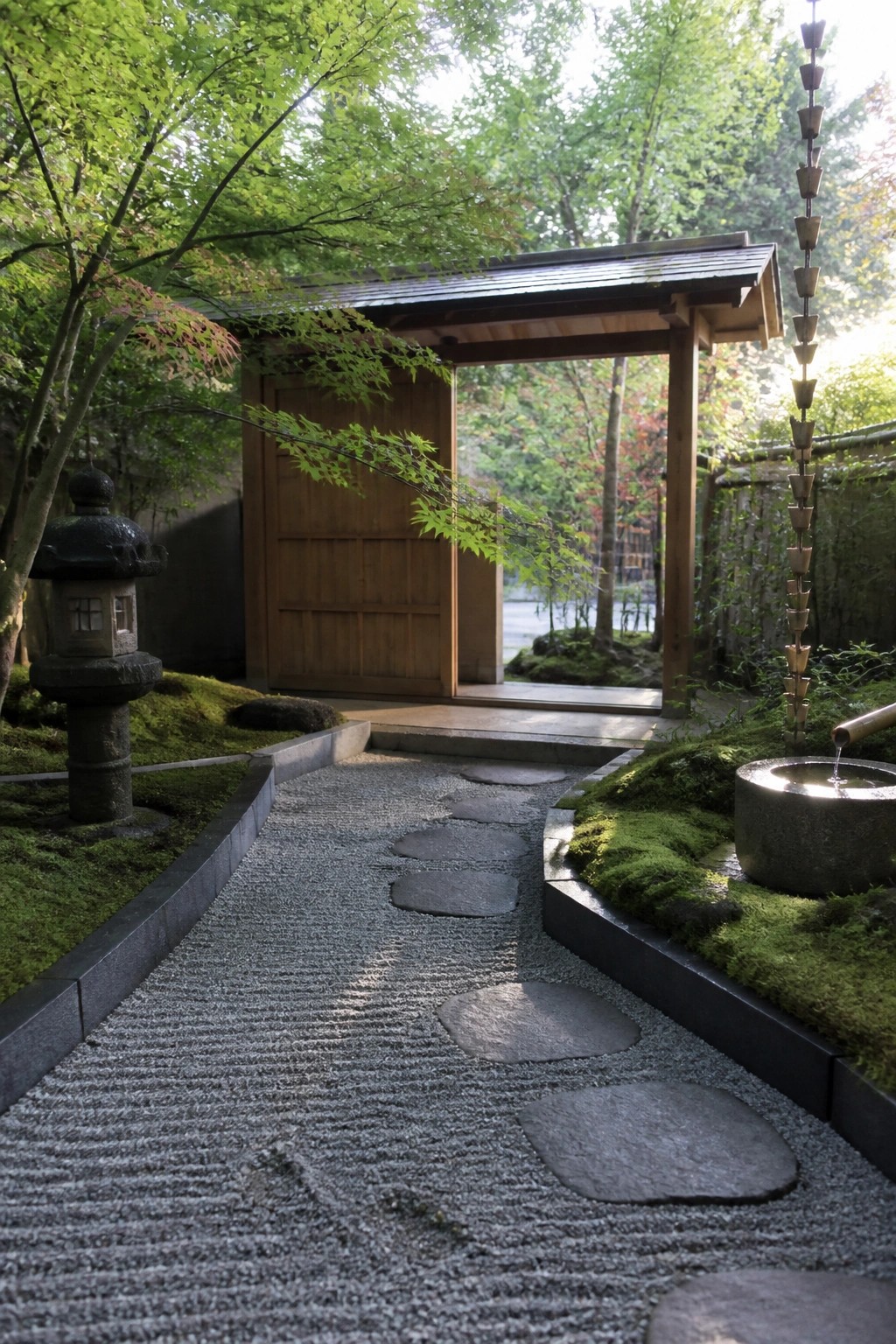
Gravel paths with stepping stones offer a low cost way to shape a garden route while keeping the surface practical. The stones give solid footing and break up the gravel so the path feels more finished than a plain spread of rock.
This setup works well in side yards or along the edge of a house where you want a clear line without heavy paving. Rake the gravel now and then to keep it looking neat, and choose stones that sit mostly level with the surface so they do not catch on a mower or wheelbarrow.
Timber Edging For A Gravel Driveway
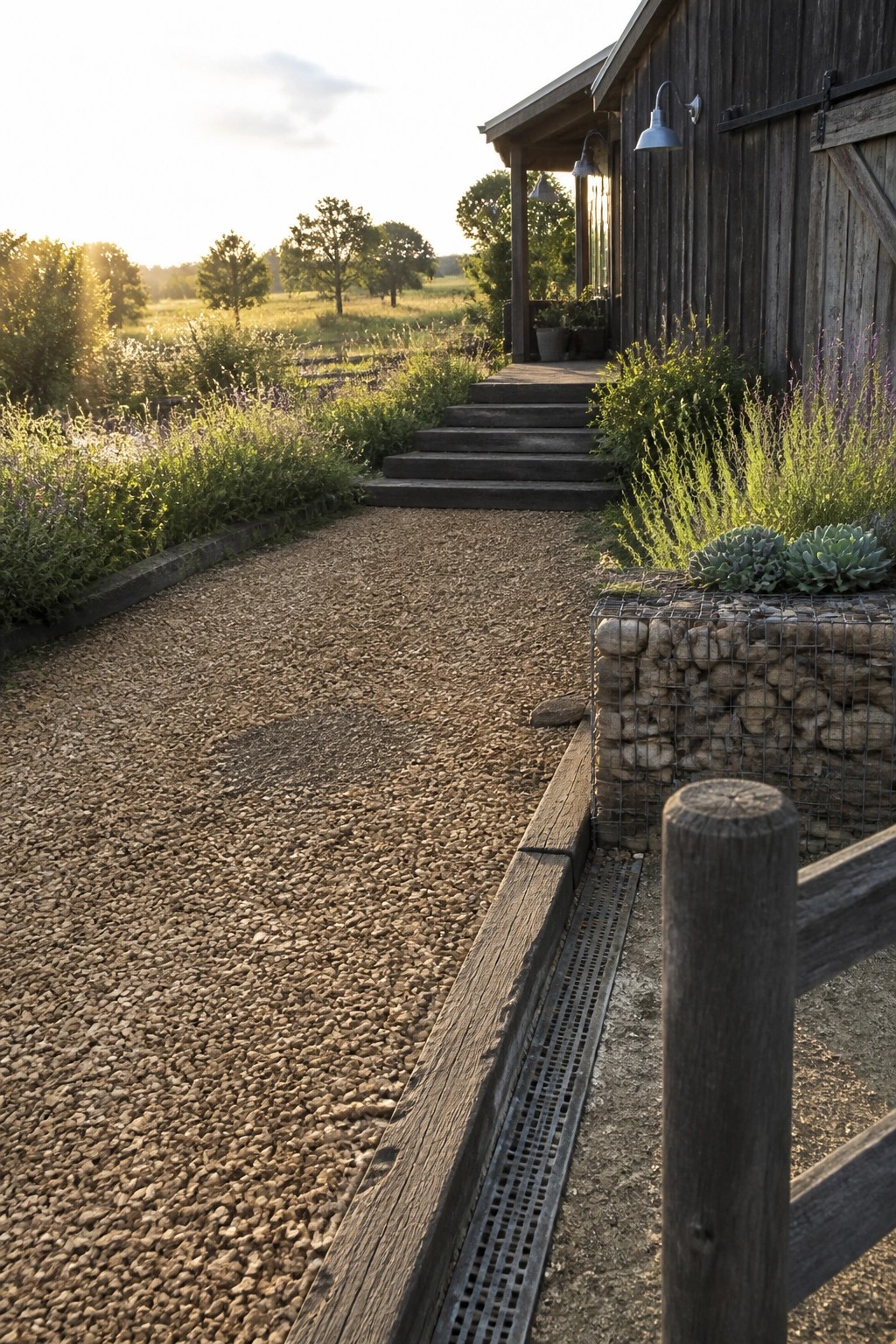
Gravel driveways often spread over time and start to look messy. Adding a simple timber border holds everything in place and gives the whole surface a finished look without much extra cost.
This works well on long drives or side paths where you want a low-maintenance surface that still feels intentional. Use pressure-treated wood or reclaimed beams set level with the ground, and add a drainage strip along the edge if water tends to collect.
Gravel Paths With Defined Edges
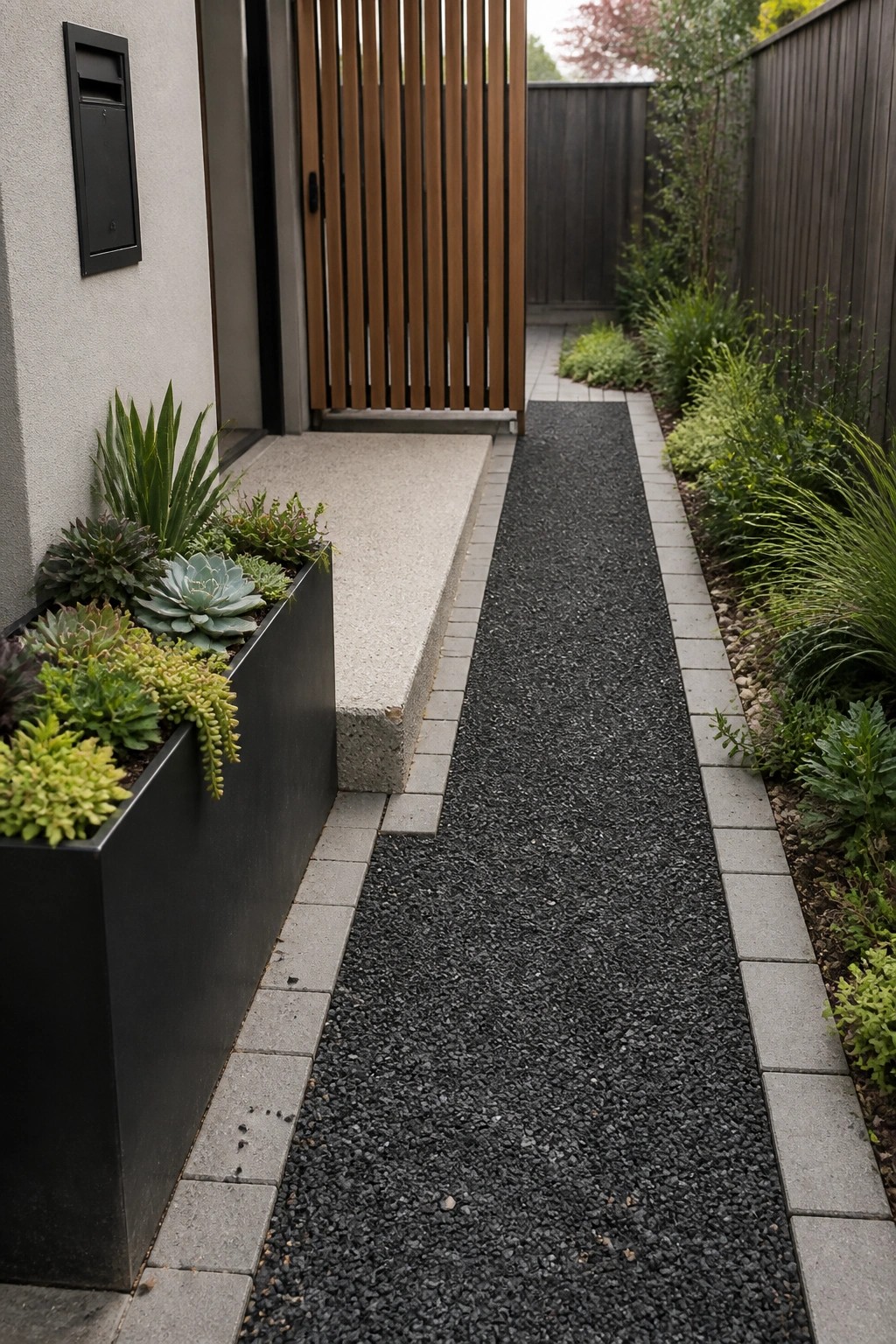
Gravel paths hold up well when they have a clear border to keep the stones in place. The paver edging here gives the surface a neat frame that feels intentional rather than temporary.
This approach suits narrow side yards or entries where you want something low cost but still tidy. A long planter along one side adds planting without taking up much width, and the whole setup stays simple to refresh later.
Stone Edging For Gravel Paths
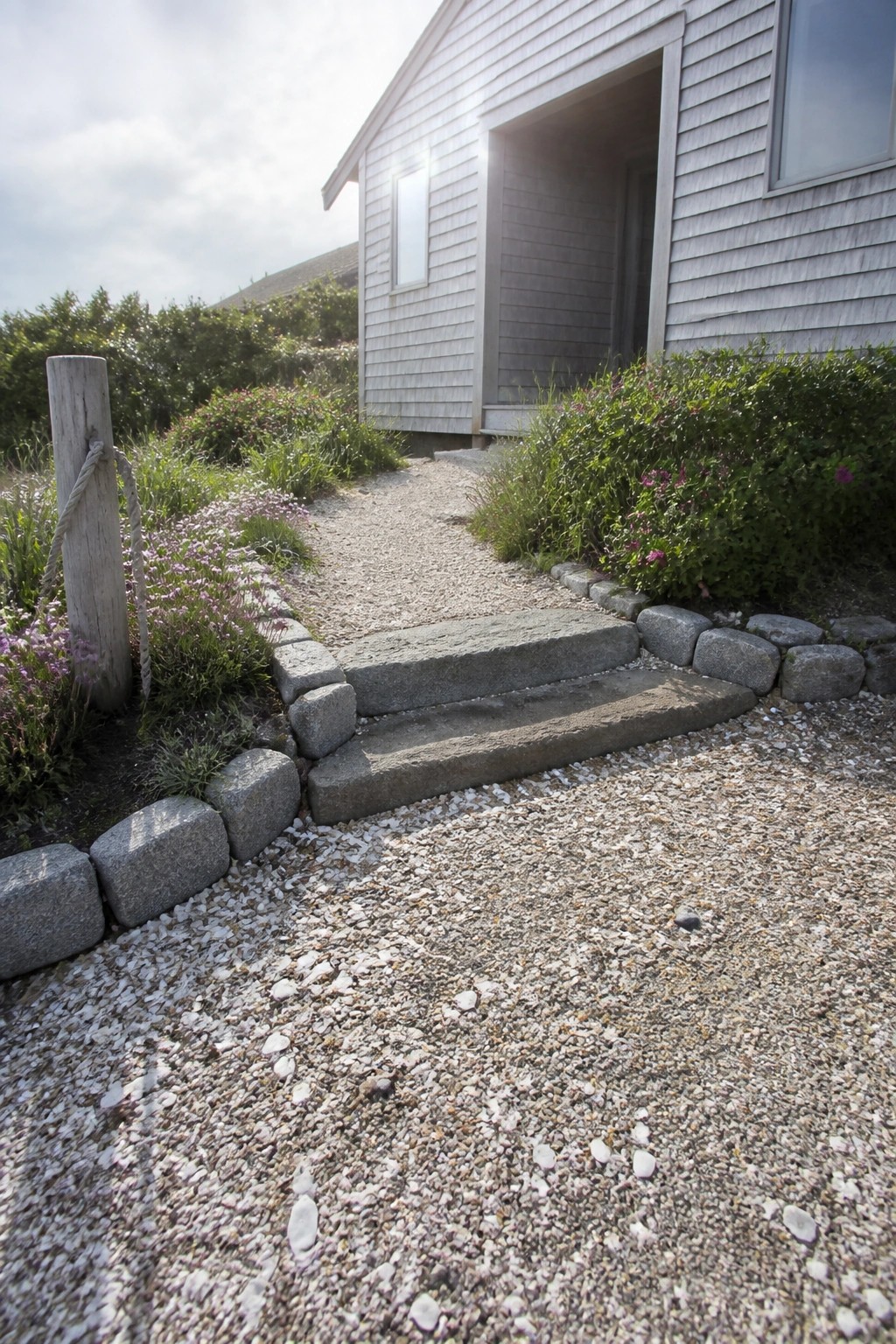
Gravel paths feel relaxed but can scatter without a clear edge. Using large stones to line them creates a firm boundary that keeps the surface contained and gives the path a settled, intentional shape.
This works well on homes with informal gardens or side entries. Set the stones close together so they sit slightly above the gravel level, and choose sizes that feel natural rather than perfectly uniform. The look holds up through seasons and can be added gradually if needed.
Mix Gravel With a Concrete Center Path
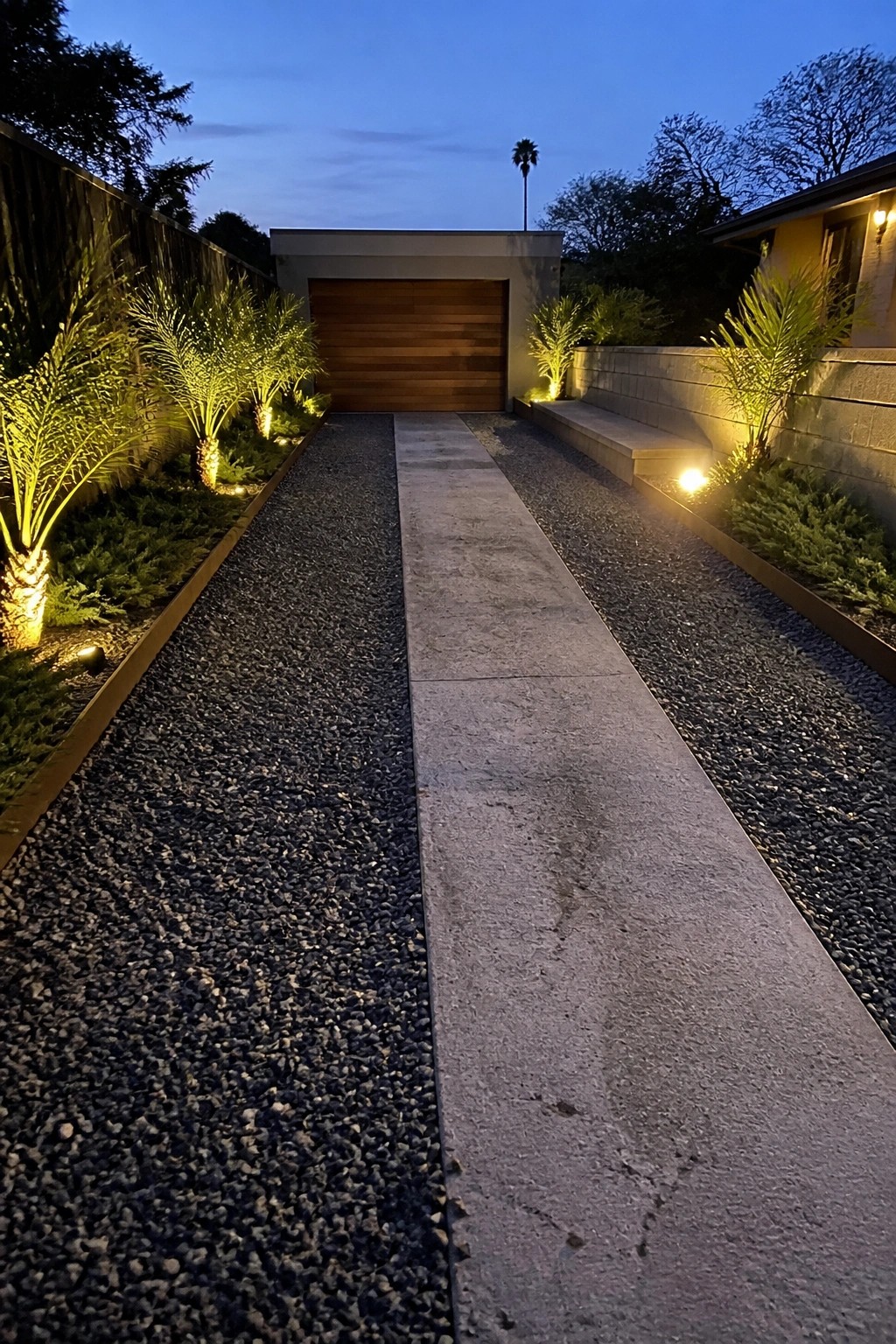
Gravel driveways can look unfinished fast if they are just a wide spread of rock. Adding a straight concrete runner down the middle gives the surface a clear walking path and keeps the whole thing looking tidy without much extra cost.
This setup works well on long or narrow driveways where you want something easy to maintain. Use metal edging along the planted borders to hold the gravel in place and keep the beds looking sharp. The plants and simple lighting then soften the edges without needing a big budget.
Stone Edging Gives Gravel A Finished Edge

Gravel driveways can look a little loose without something to hold the edges in place. Stone borders keep the gravel contained and give the whole entrance a sharper, more deliberate appearance that reads as intentional rather than temporary.
This approach works especially well on homes with stone or brick details already in place. Match the border material to existing walls or pillars when possible, and keep the line simple and low so it does not compete with the house. The result stays practical while looking more expensive than plain gravel alone.
Edge Gravel With A Low Stone Wall
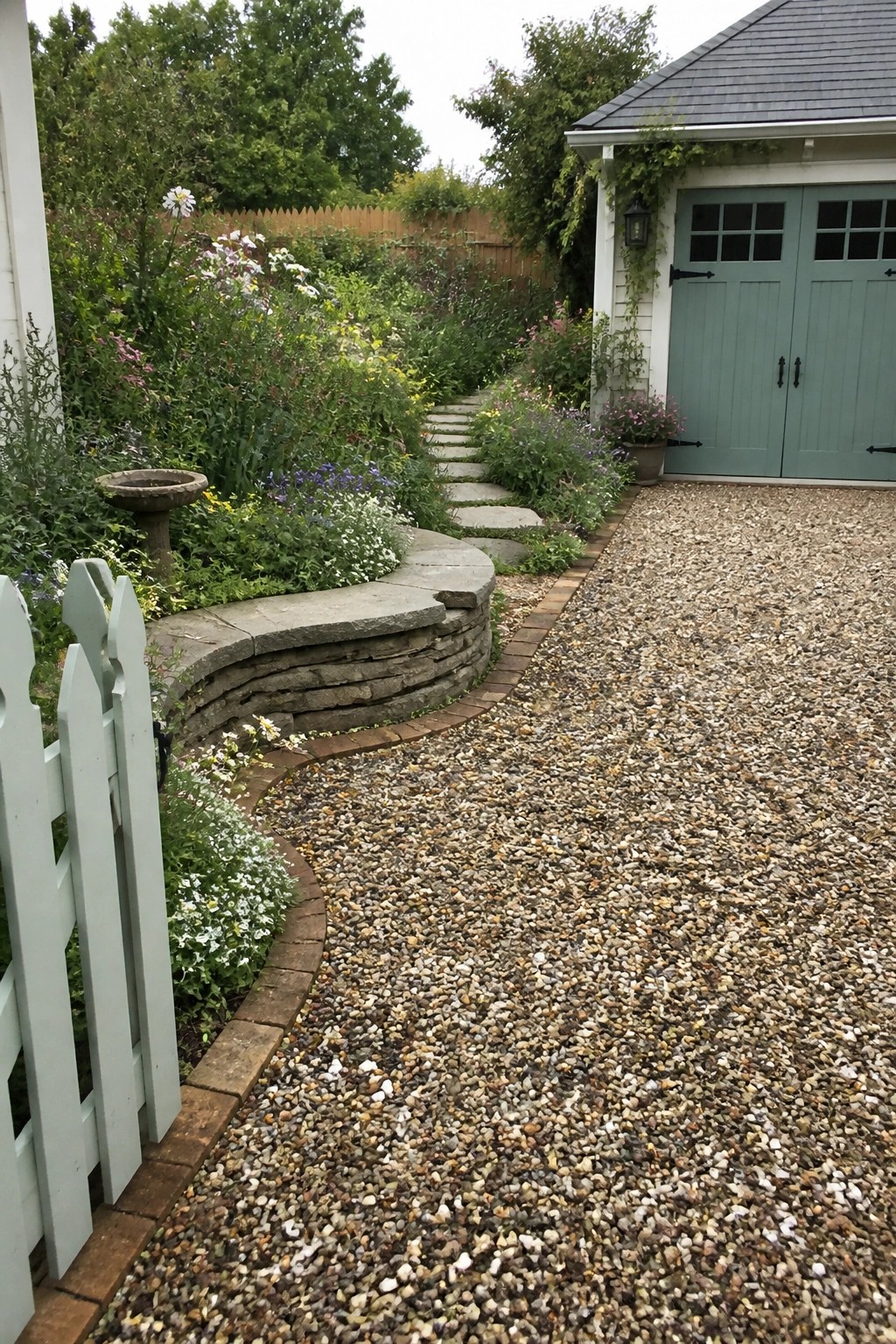
A low stone retaining wall paired with brick edging gives a gravel driveway clear shape and keeps the surface from looking loose or unfinished. It turns a simple material into something that feels more planned and substantial without adding much cost.
This approach works best on properties where the driveway runs close to garden beds. Build the wall just high enough to hold the soil and plants back, then run a narrow brick border along the gravel edge for a crisp line. It suits older homes or cottage style gardens where you want the driveway to feel integrated with the landscape rather than just a strip of stone.
Define Gravel Paths With Concrete Edging
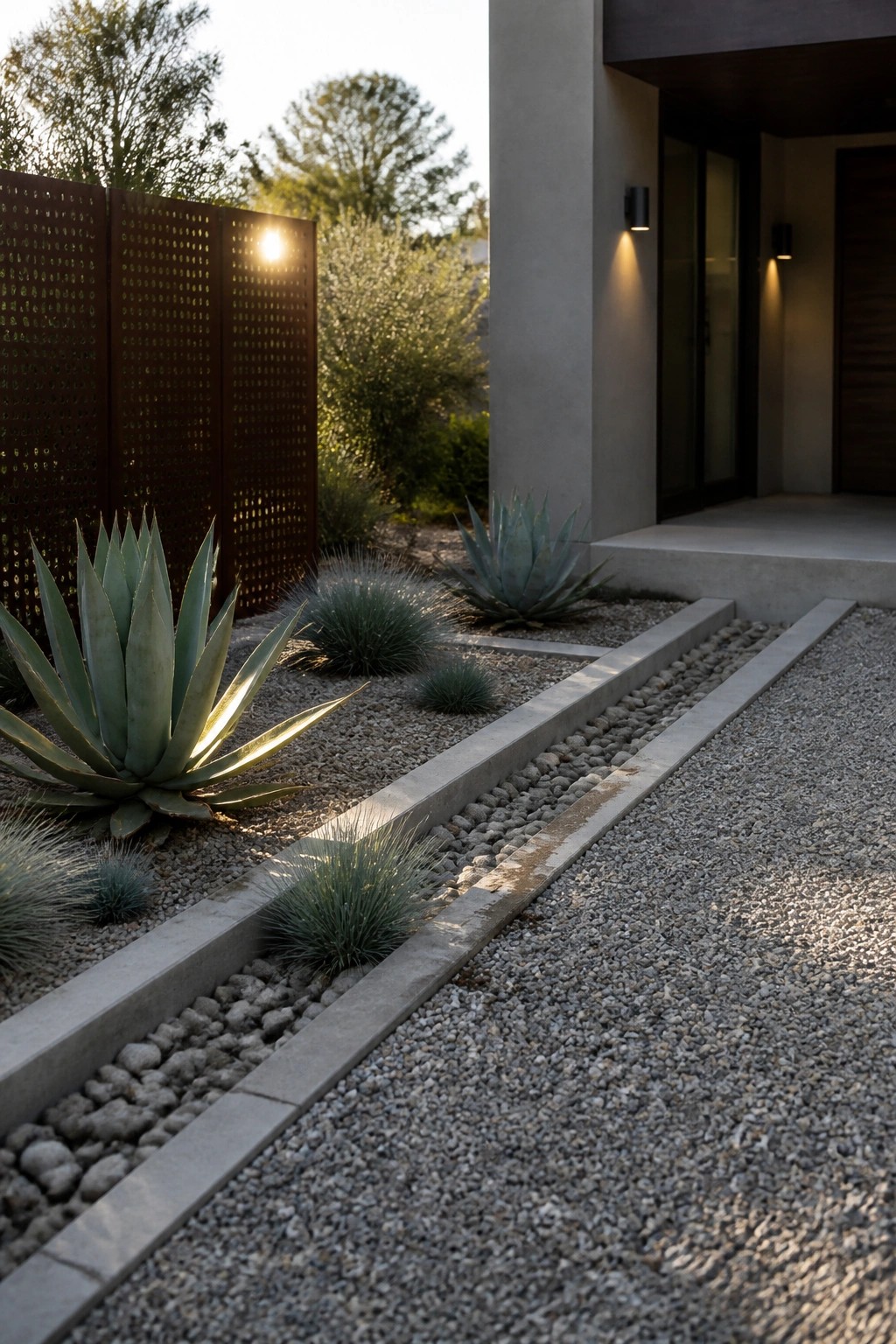
Gravel driveways often need a little structure to avoid looking scattered. Concrete edging creates a firm border that holds the gravel in place and gives the surface a finished appearance without adding much cost.
This setup works best on homes with clean architecture and dry-climate plantings. Keep the edging low and simple, and choose a few bold plants to break up the gravel rather than filling every gap.
Pavers Set in Gravel for the Front Walk
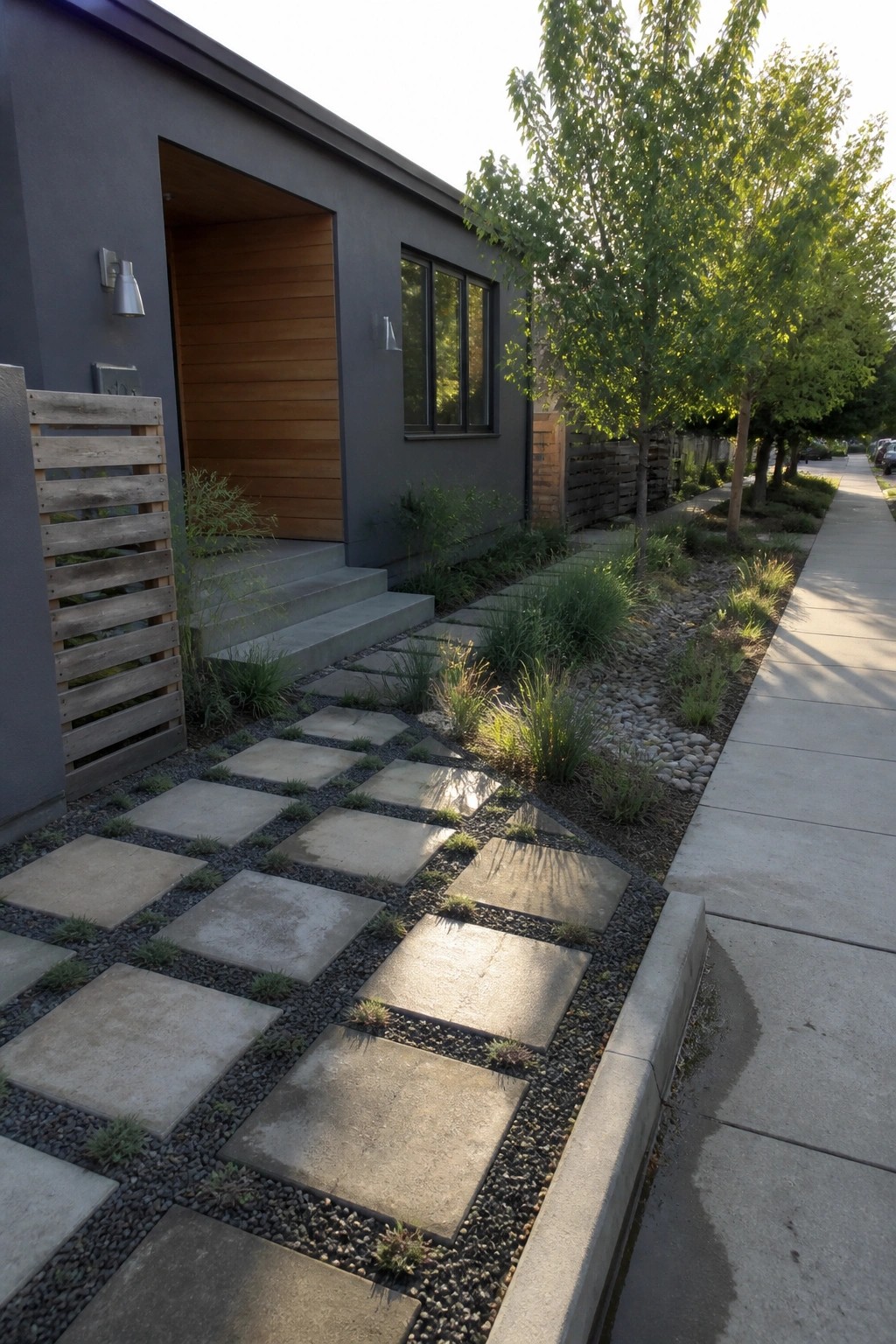
Large square pavers spaced evenly with gravel between them give a walkway a clean, finished look without needing a solid poured surface. The gravel fills the gaps and keeps the path level, while the pavers handle the foot traffic. This mix feels more intentional than plain gravel alone.
It works best on homes with a modern or simple exterior where you want the path to lead straight to the door without looking too formal. Keep the gravel a few inches deep and use edging along the sides so it stays in place over time.
Brick Edging On Gravel Driveways
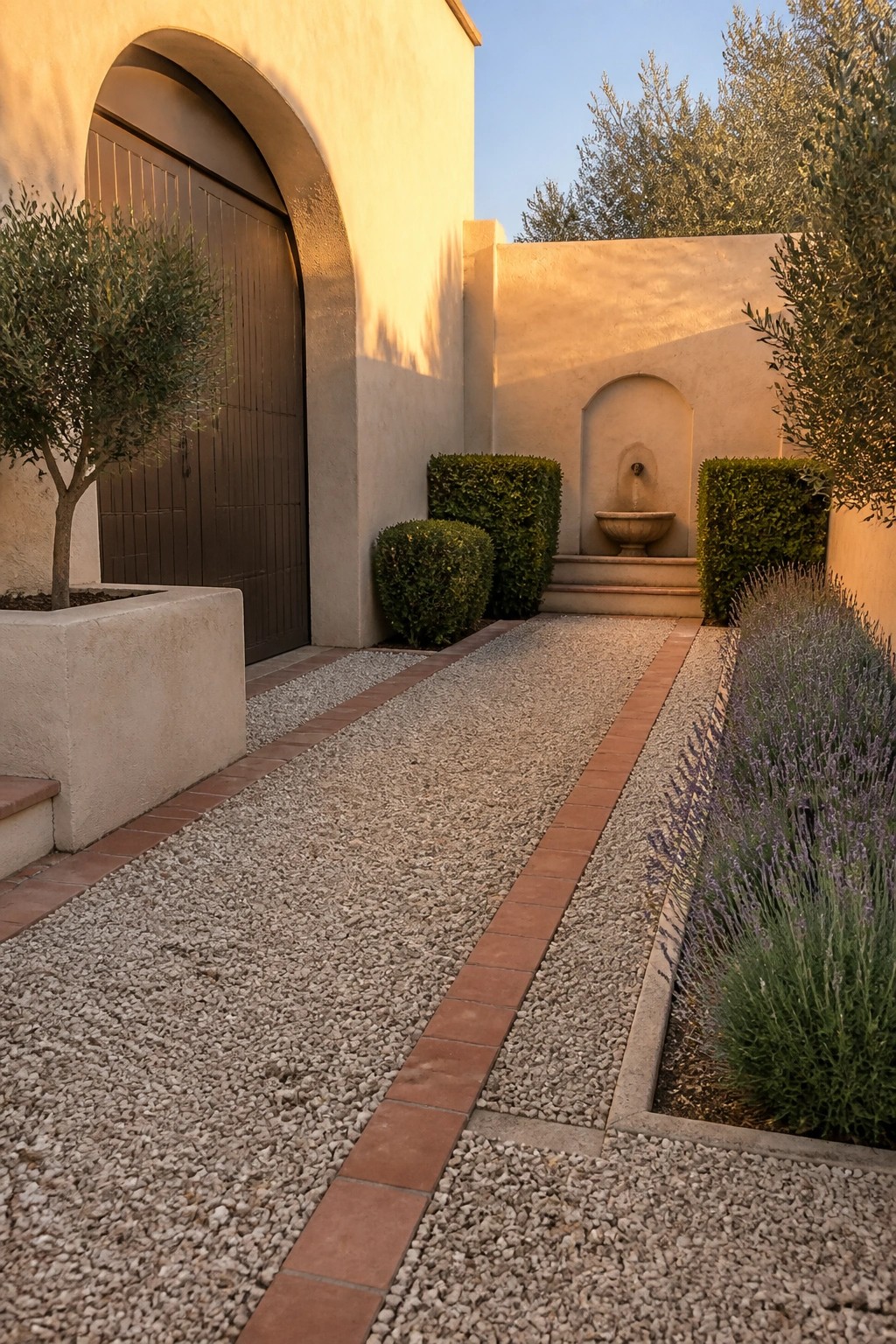
Gravel driveways often look better when they have a clear border. Brick edging holds the gravel in place and gives the path a neat line that feels more intentional than loose gravel alone.
This approach works well on homes with warm stucco walls or Mediterranean details. Keep the bricks low so they do not create a tripping hazard, and choose a color that matches nearby paving or roof tiles.
Gravel With a Paved Strip
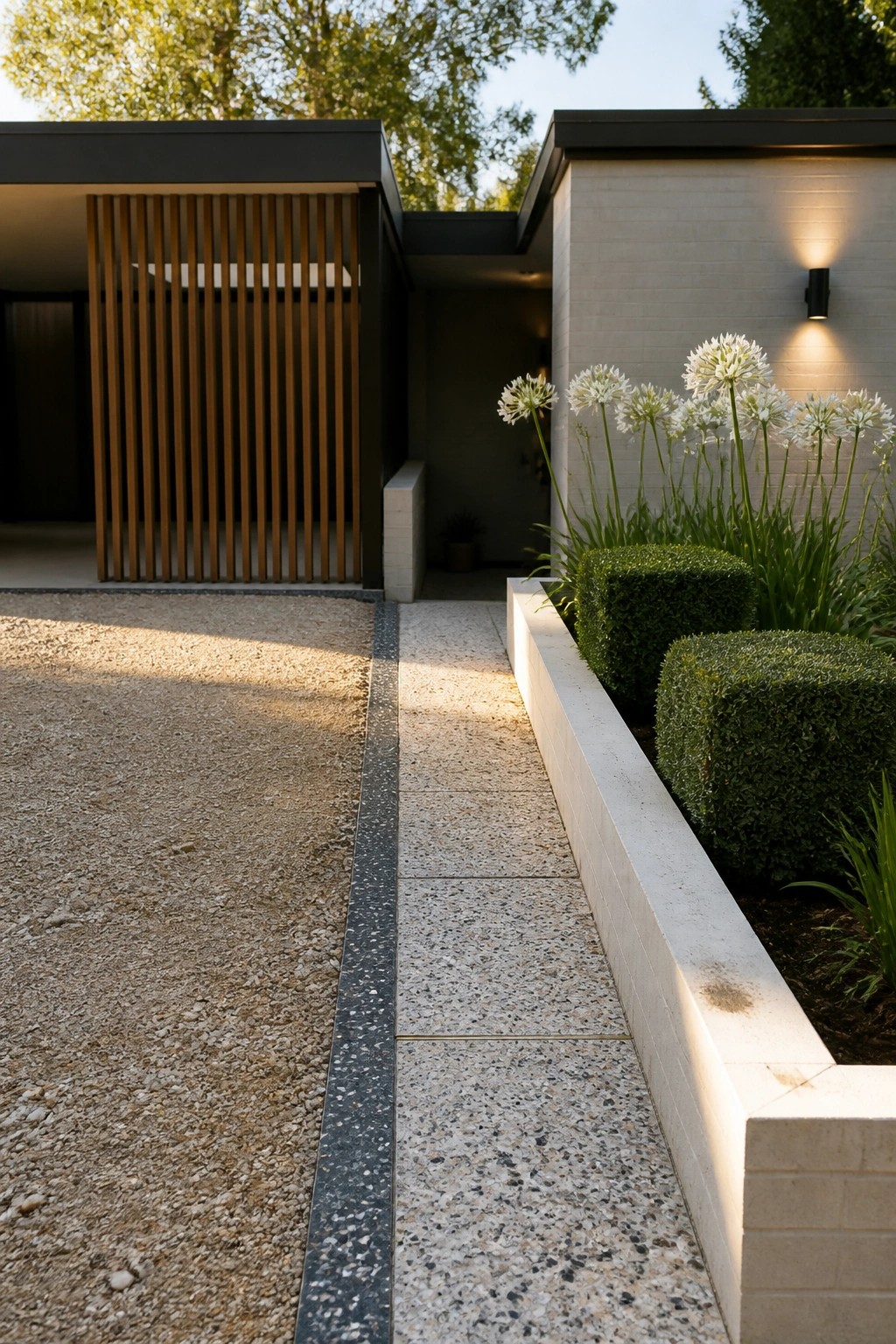
Many people like gravel for driveways because it costs less than full paving, but it can look a little loose without some structure. Adding a narrow paved strip along one side gives the gravel a clean edge and makes the whole entrance feel more finished.
This works well on homes with a simple modern or midcentury look. Keep the paved section narrow so it stays budget friendly, and use a raised bed or low shrubs to hold the line between the gravel and the walkway. The contrast keeps the gravel from feeling too casual.
Gravel Paths With Stone Pavers

Gravel paths feel more finished when you add flat stones as stepping points. The gravel stays affordable and drains well, while the stones keep the surface practical underfoot and give it a settled look.
This works best on homes with a natural setting or cottage style. Space the stones evenly, keep the gravel layer thin, and let low plants grow along the edges so the path blends in without looking too stark.
Gravel Paths With Defined Borders

Gravel paths feel more finished when you divide them into sections with simple borders. The lines keep the material from shifting and give the whole walkway a tidy, intentional look that reads as more expensive than plain gravel spread on the ground.
This layout works especially well in narrow side entries or along the house where full paving would cost too much. Use the same gravel throughout, keep the borders low, and let the plants on either side do the softening so the path stays low maintenance.
Frequently Asked Questions
Q: How do I stop gravel from washing away during heavy rain?
A: Shape the driveway with a gentle crown down the middle so water flows to the edges. Add a layer of crushed stone underneath the top gravel to lock everything in place. This setup handles most storms without constant fixes.
Q: What size gravel keeps tires from kicking it everywhere?
A: Go with angular pieces about three quarters of an inch across. They pack tighter than round stones and stay put under regular driving. Start with a test patch if your cars turn sharply often.
Q: Can I add edging later without tearing up the whole driveway?
A: Yes. Dig a shallow trench along the sides and set landscape timbers or metal strips in place. Pack fresh gravel against the new edge to blend it in. This keeps the look clean without a full redo.
