


I’ve noticed that a driveway shapes the first impression of a house more than most people expect, especially when the material needs to work with the existing facade and entry.
Choosing gravel means thinking through how it will settle, drain, and age alongside the rest of the exterior.
Some options hold up better once they are actually in place.
I usually picture how the surface will look after a few seasons of use before deciding on a style.
Small changes in the border or the way the gravel meets the walk can shift the whole balance of the front.
Concrete Strips In A Gravel Driveway
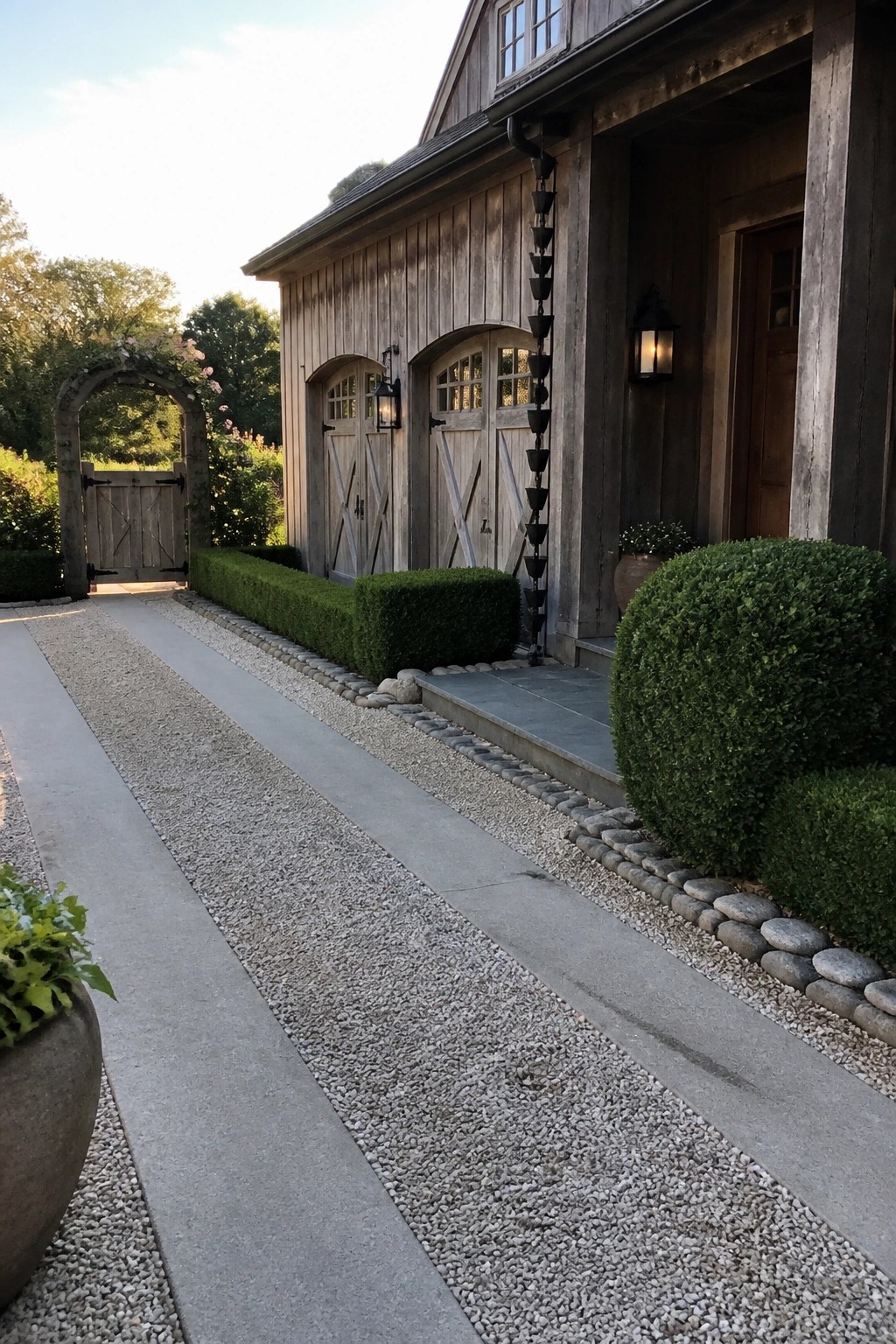
Many homeowners add concrete strips down the center of a gravel driveway to handle daily car traffic. The strips keep the surface stable and reduce the need to rake or refill gravel often, while the rest of the drive stays loose and drains easily after rain.
This setup works well on long or gently curved driveways at homes with a simple or rural look. Keep the gravel edges neat with a low border of stone or boxwood so the material stays put over time.
Gravel Driveways With Side Paver Paths
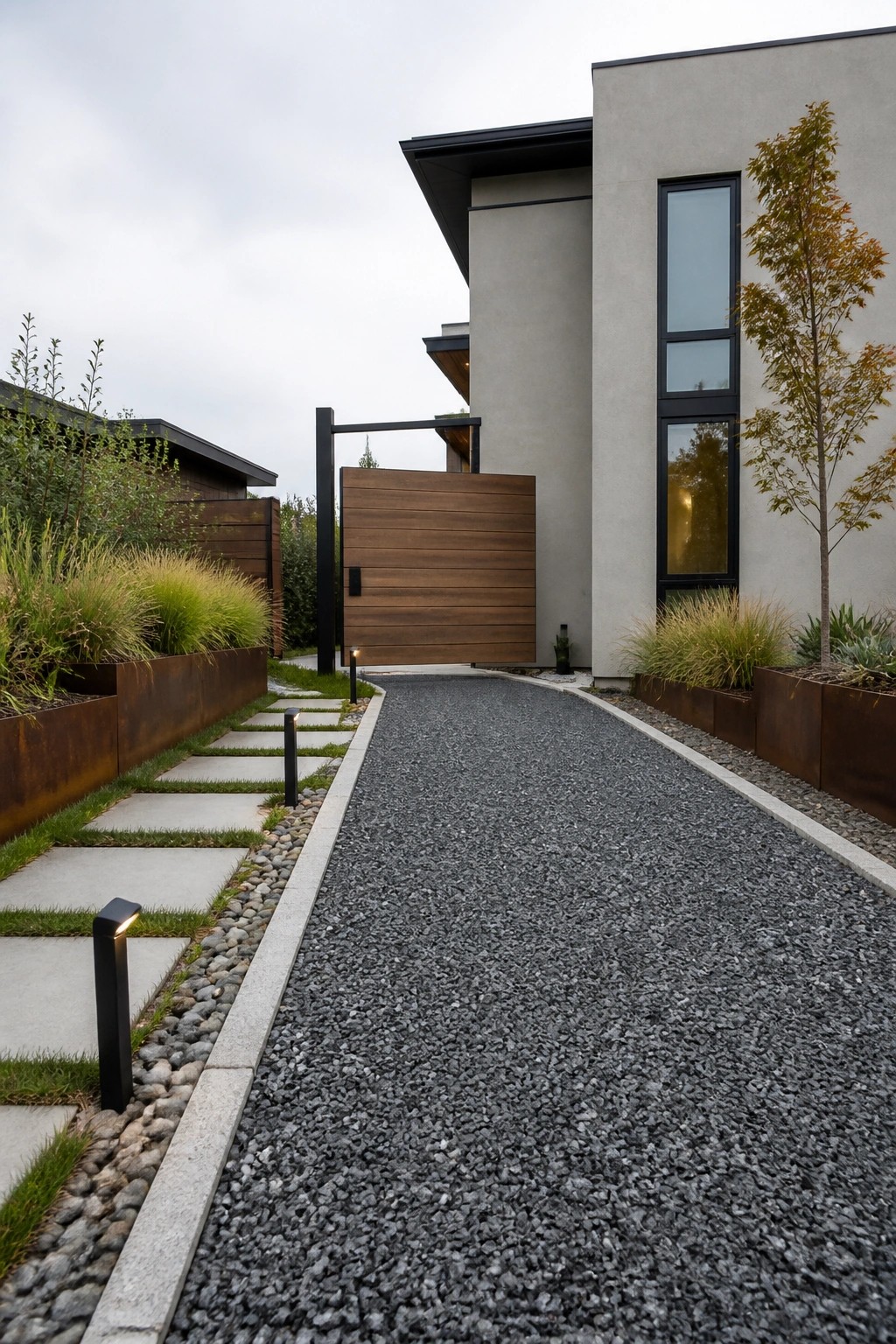
Gravel driveways can look too loose on their own, but adding a row of pavers along one side gives them structure without making the whole thing feel formal. The pavers create a clear walking path and help keep the gravel from spilling onto the lawn or beds.
This setup works best on homes with a modern or minimal look where you want the driveway to sit quietly in the landscape. Use a solid base under the gravel and keep the edges clean so the surface stays level over time.
Contrasting Gravel Strips For Driveways
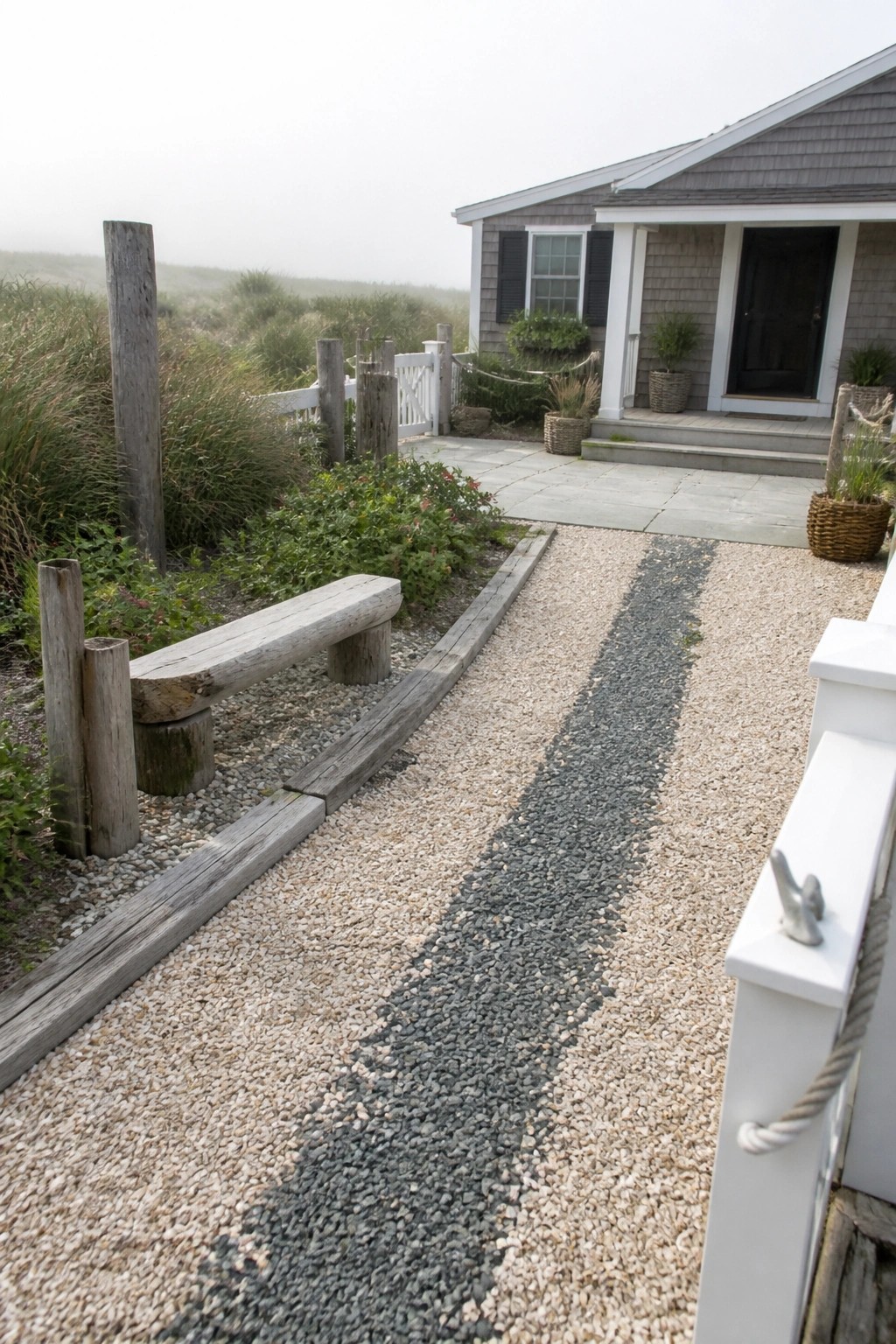
A darker band of gravel running down the center of a lighter driveway adds some structure without making the whole surface feel too formal. It breaks up the look of a wide gravel area and gives the eye something to follow toward the house. Many people like this because it feels practical yet still tidy.
This approach works best on homes with a casual or coastal style where you want the driveway to blend into the landscape rather than stand out. Keep the edging simple with weathered wood or landscape timbers so the gravel stays contained over time. Just make sure the two gravel sizes are close enough that they do not mix too much after rain or foot traffic.
Gravel Driveways That Follow The Land
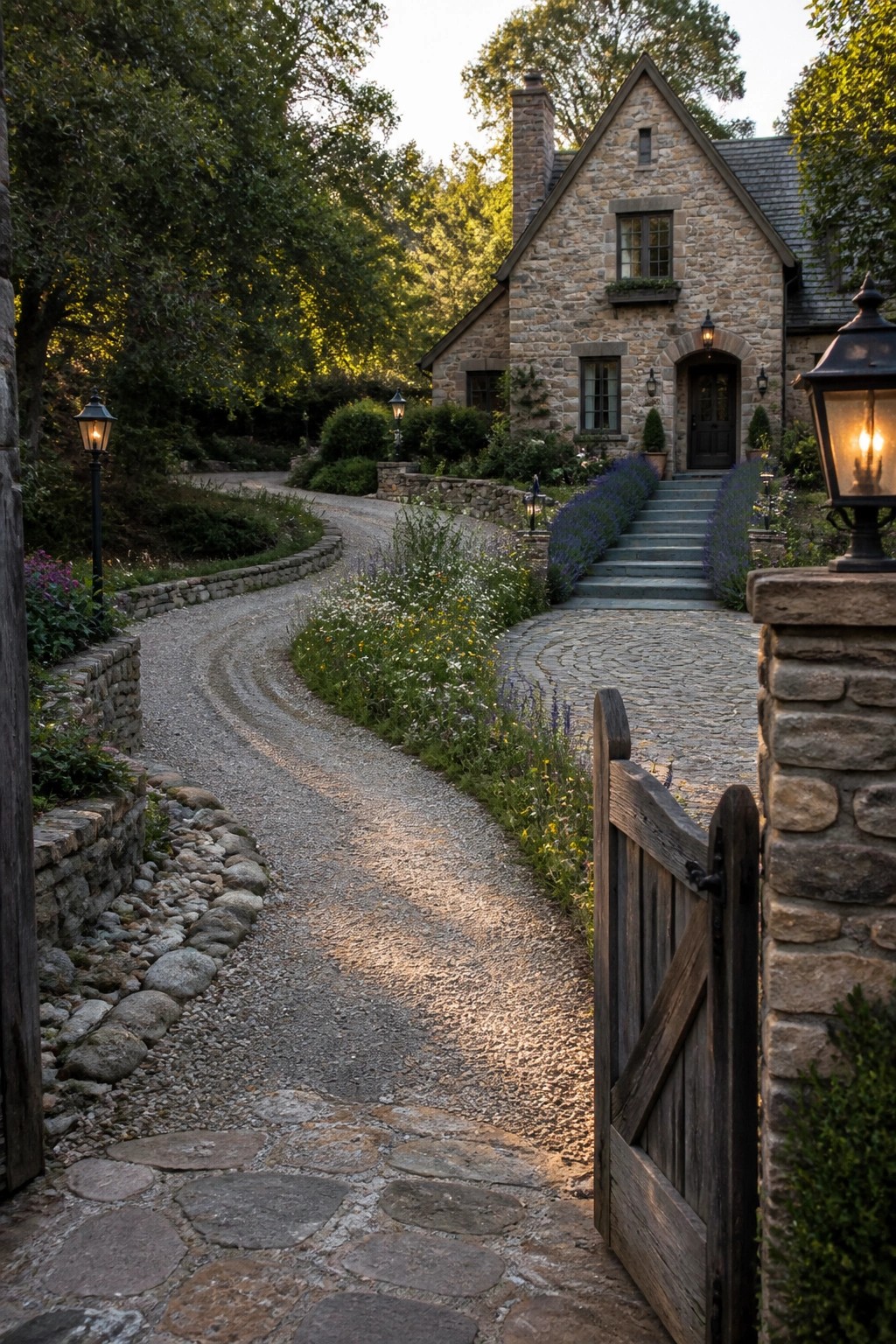
A curving gravel driveway often works better than a straight one because it can follow the natural shape of the yard instead of fighting it. The loose surface also softens the look of the whole approach and lets you add planting right along the edges without needing formal borders.
This layout suits homes with a bit of slope or existing trees. Use low stone walls to hold the gravel in place where the curve tightens, and let the plants grow a little loose so the drive feels like part of the garden rather than a separate road. Just make sure the base is well compacted so it stays smooth after rain.
Place a Circular Planting Bed in the Center of Your Gravel Driveway
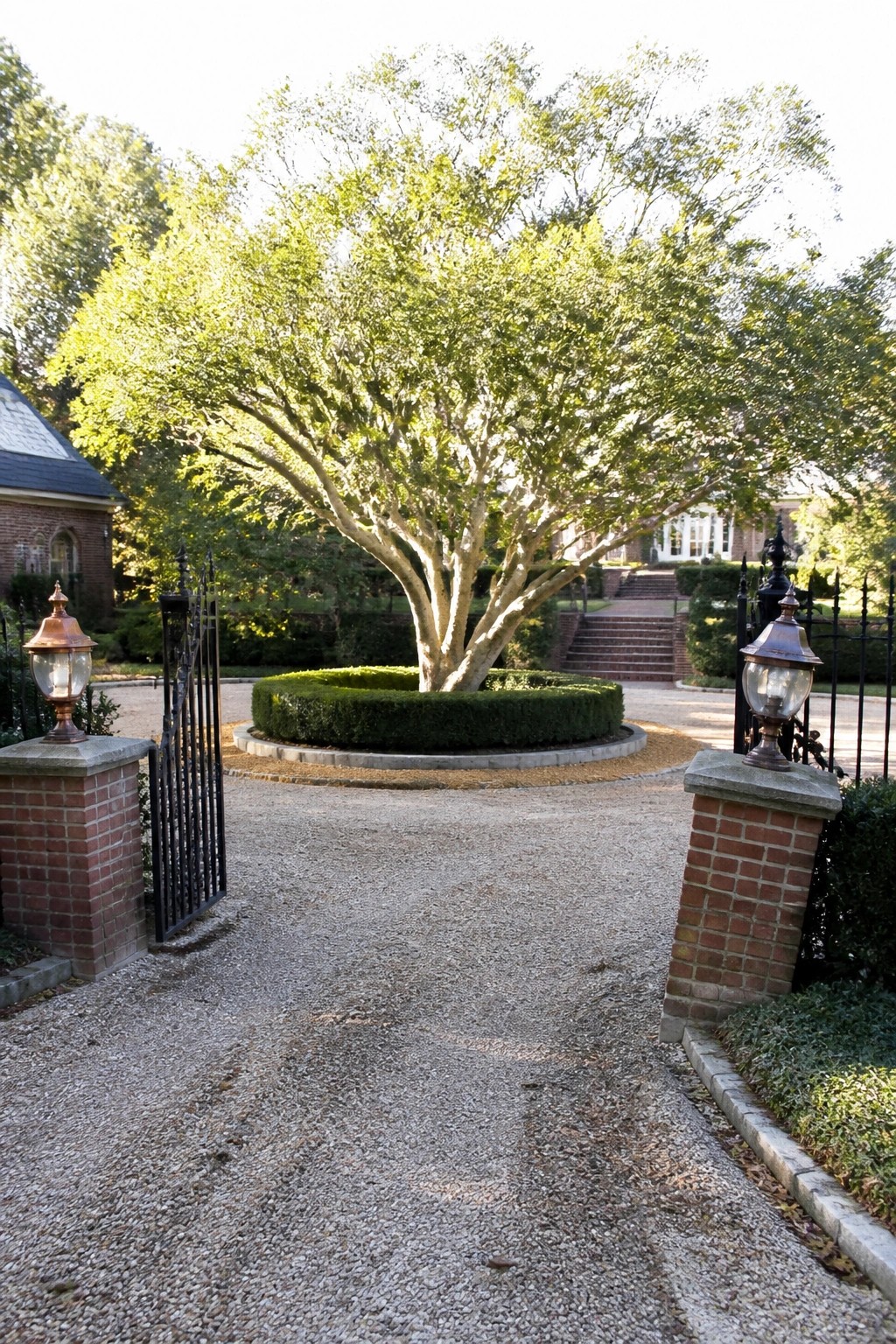
A round planting bed set into the middle of a gravel driveway adds structure without making the space feel too stiff. The loose gravel keeps things casual, while the planted circle gives the eye something solid to land on and helps the whole entrance feel more intentional.
This layout works well on homes that need a turnaround area. Keep the bed low and simple so it does not block sight lines or get in the way of cars, and use a clean edge like stone or brick to hold the gravel in place.
Edge A Gravel Driveway With Large Pots
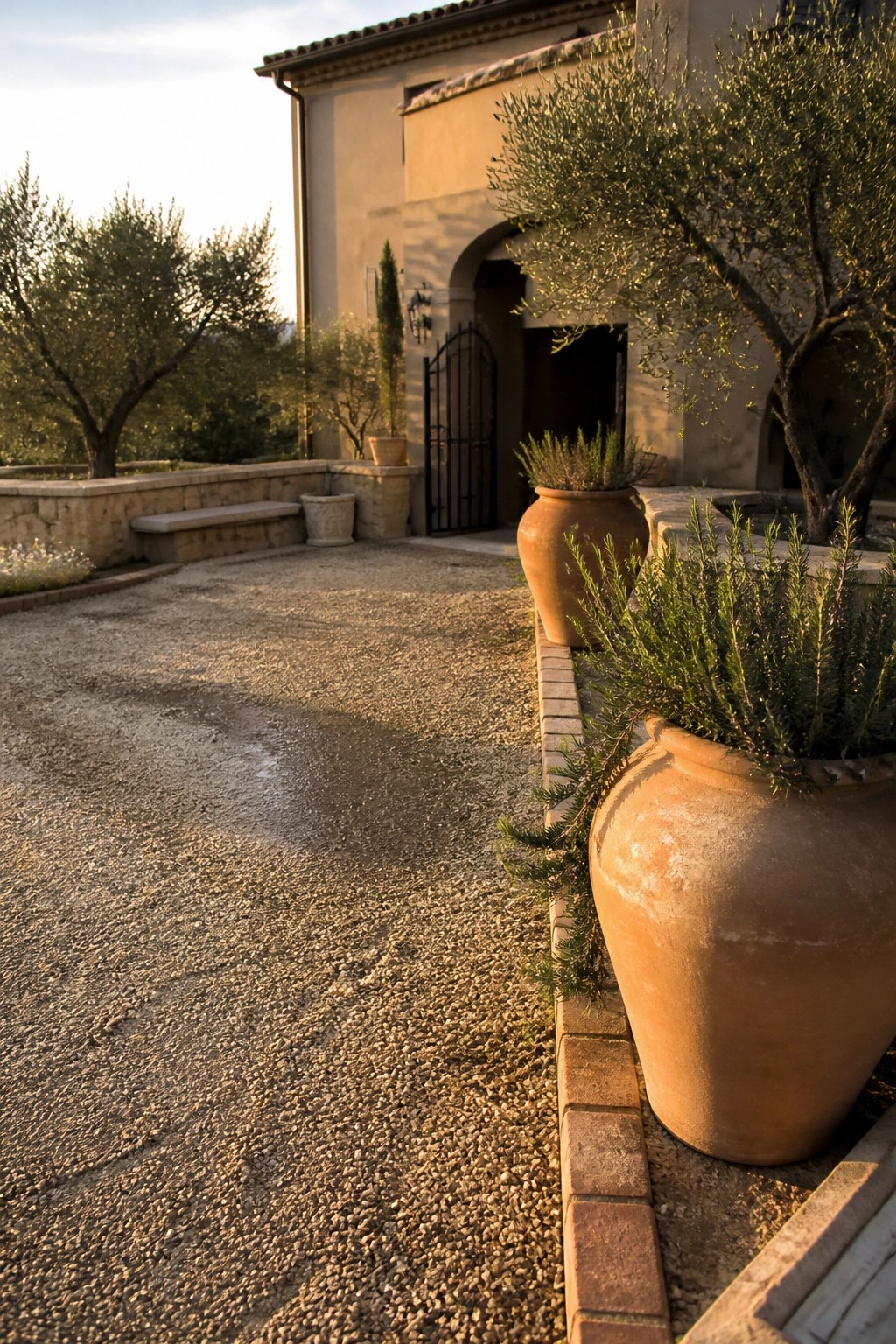
Large pots give a gravel driveway a finished look without needing permanent planting beds. They add height and greenery right at the edge, which keeps the gravel from feeling too bare or industrial while still letting it drain and stay low maintenance.
This approach works best on homes with a warm or Mediterranean style where the pots can match stone or stucco. Place them along one side only if space is tight, and choose plants that can handle full sun and occasional dry spells so they stay looking good with little fuss.
Gravel Driveways With Brick Edging
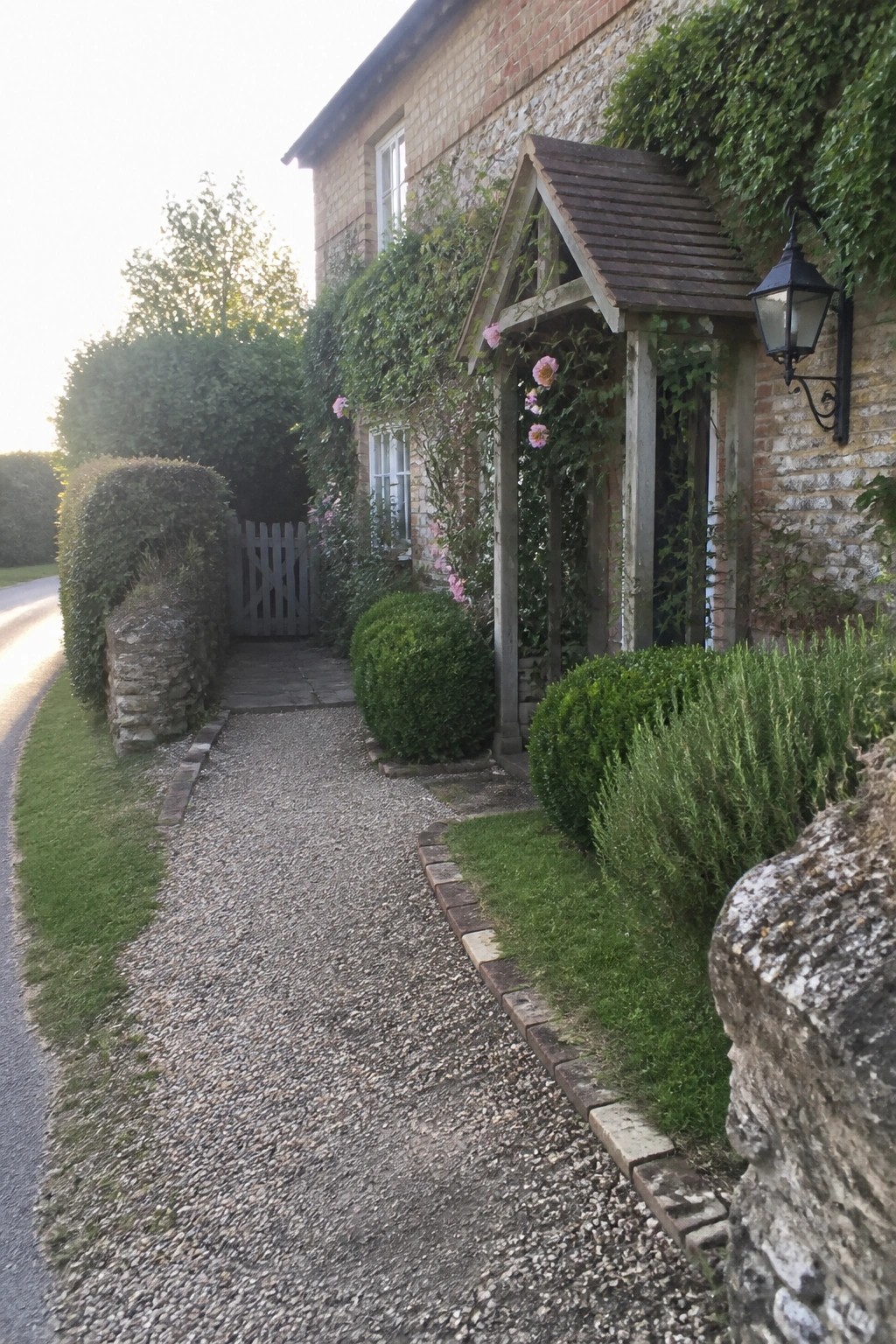
Gravel makes a practical choice for driveways because it handles water well and feels softer underfoot than solid paving. A simple brick border keeps the edges tidy and stops the stones from drifting into nearby grass or planting beds.
This look works best on smaller properties or older homes where you want something low-key rather than too polished. Keep the border low so it does not interfere with tires, and choose a gravel size that stays put without much raking.
Concrete Pavers In Gravel
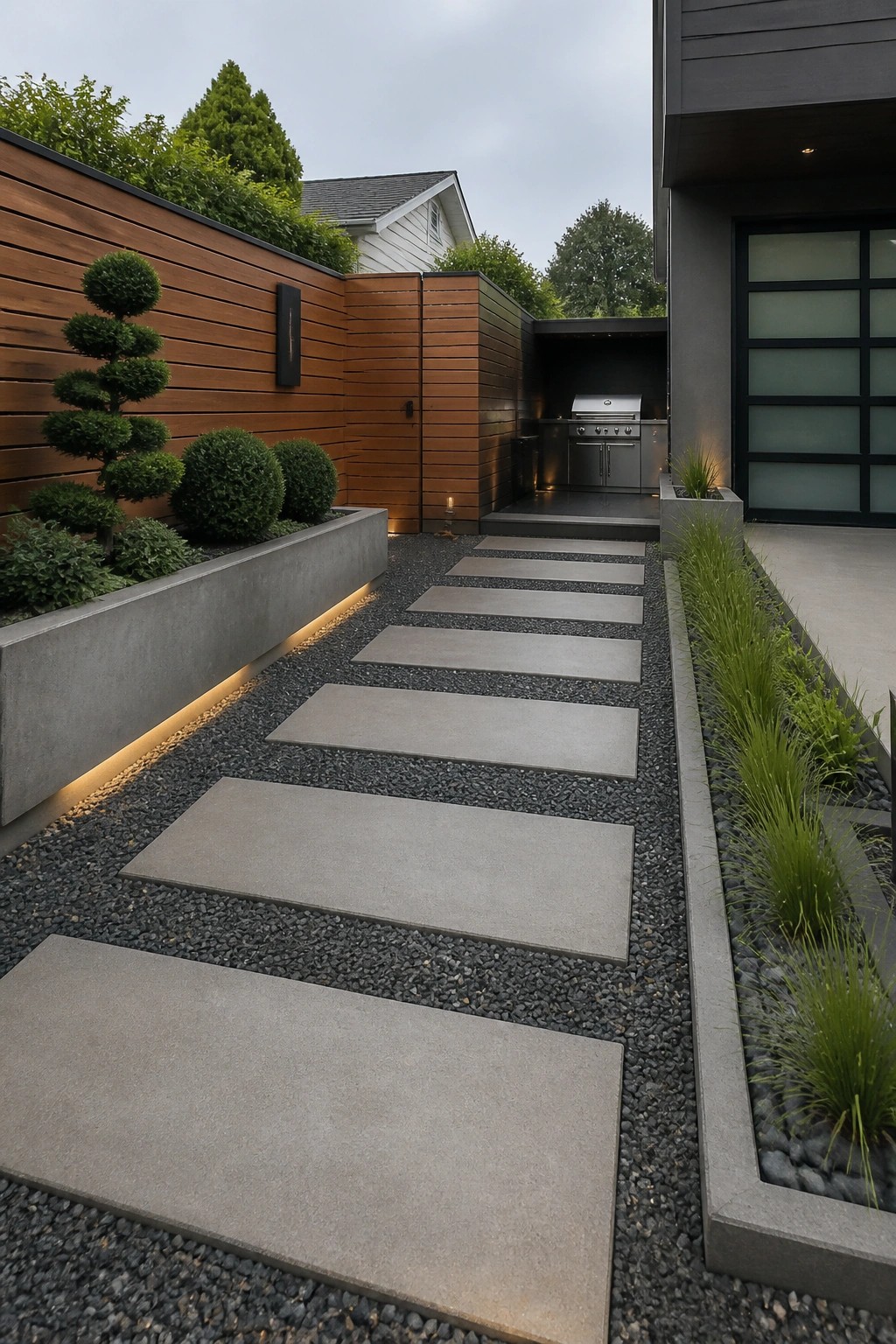
Large rectangular pavers laid directly into a gravel bed give a walkway a clean look without the fuss of a full concrete pour. The gravel handles drainage well and keeps the surface from feeling too hard or formal, which works especially well in side yards or along the edge of a house.
This approach suits modern homes that already use simple materials and straight lines. It stays low maintenance as long as the gravel is contained on the sides and the pavers are set level to begin with.
Raked Gravel Around Stepping Stones
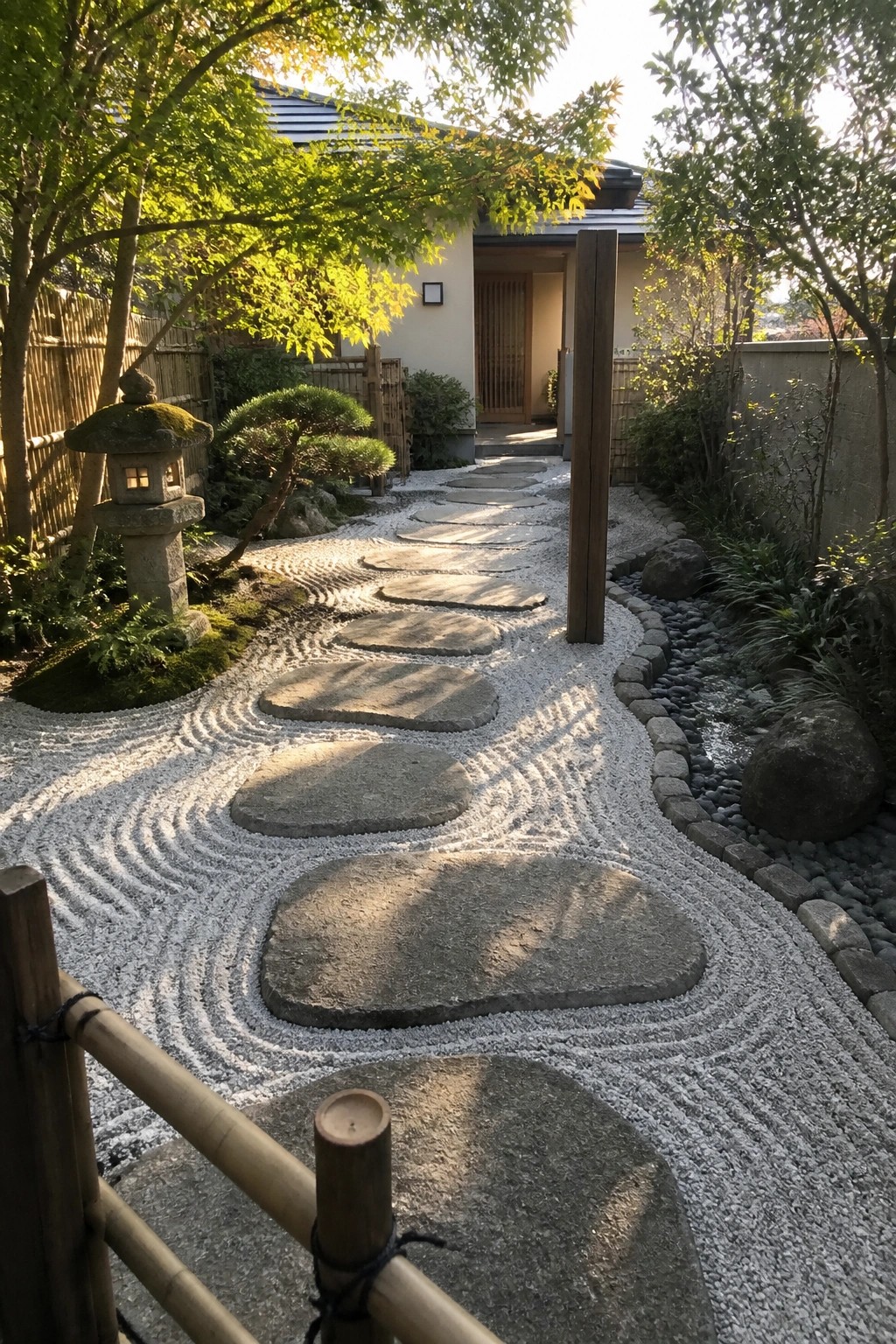
Raked gravel gives a stepping stone path a quiet sense of movement. The patterns catch light and shadow, so the walkway feels more intentional than a simple row of stones set in plain ground.
This approach works best on side paths or smaller gardens where you want low maintenance but still some structure. It suits homes that already lean toward clean lines and simple planting. Just keep the gravel raked every few weeks so the lines stay clear.
Gravel Paths With Timber Borders
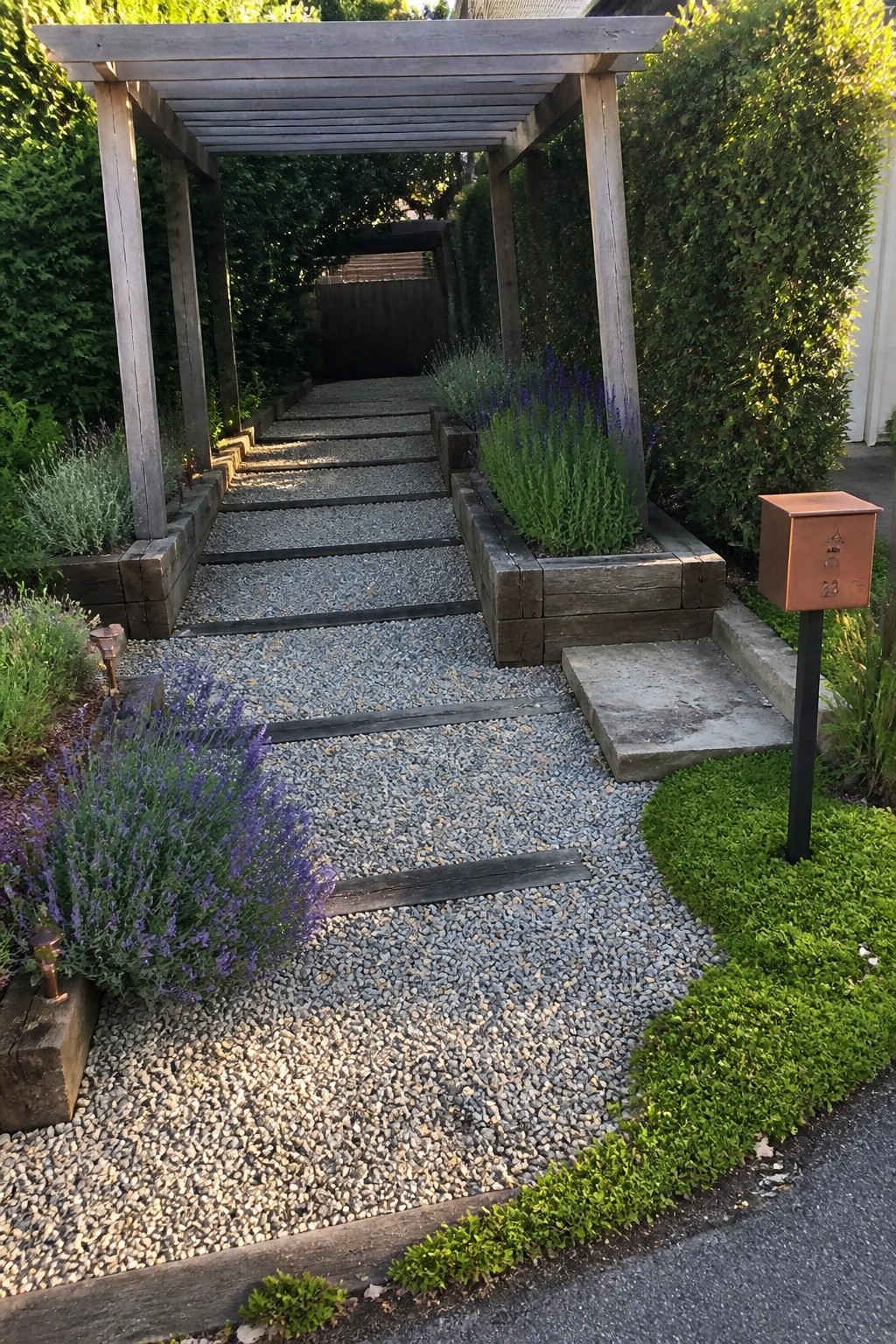
Gravel works well for entries because it drains easily and feels less formal than concrete or pavers. Adding timber borders keeps the gravel contained while giving the path a clean edge that lasts through seasons.
This setup suits homes where the drive or walkway runs beside garden beds. The raised wood planters let you tuck in low plants like lavender along the sides without extra hardscaping, and the wood keeps the whole look simple and tied to the landscape.
Gravel Paths With Concrete Pavers

Gravel paths hold up well in most climates because water drains right through and weeds stay manageable with a simple barrier underneath. Setting large concrete pavers into the gravel creates steady footing while keeping the loose material in place.
This approach works best on homes with a modern or minimalist style where you want a clean line from the street to the door. Keep the pavers spaced evenly and add a few low lights along the edges so the path stays visible without extra fixtures.
Gravel Driveways With Gentle Curves
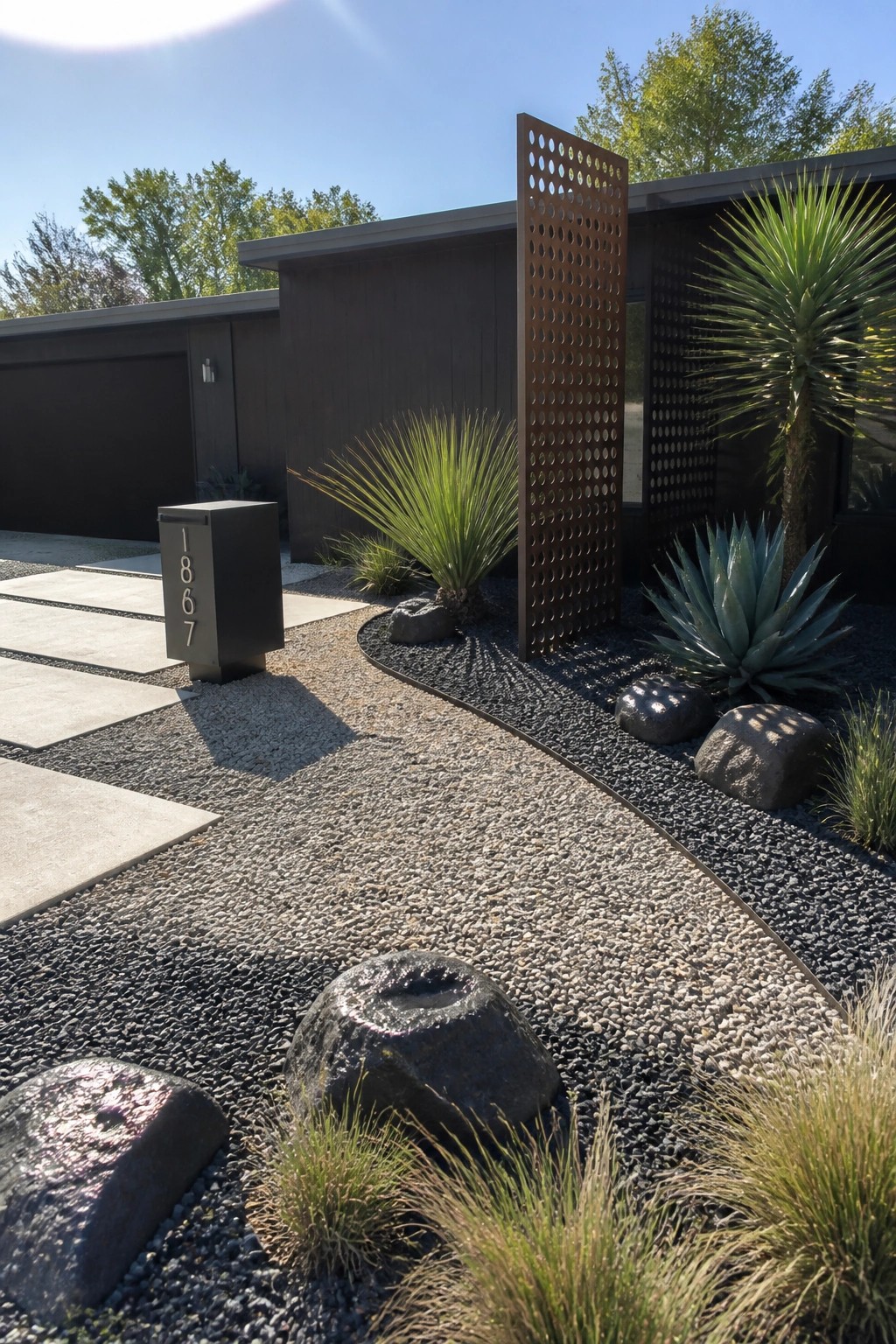
Curves make a gravel driveway feel less rigid and more welcoming. Straight lines can look harsh next to a modern house, but a soft bend helps the gravel flow around planting areas without looking forced.
This approach works best on homes with simple architecture and low-water gardens. Use a low metal or concrete edge to hold the gravel in place, then group tough plants like yuccas along the inside curve. Keep the shapes wide enough for easy mowing or weeding later.
Gravel That Transitions to Stone at the Entry
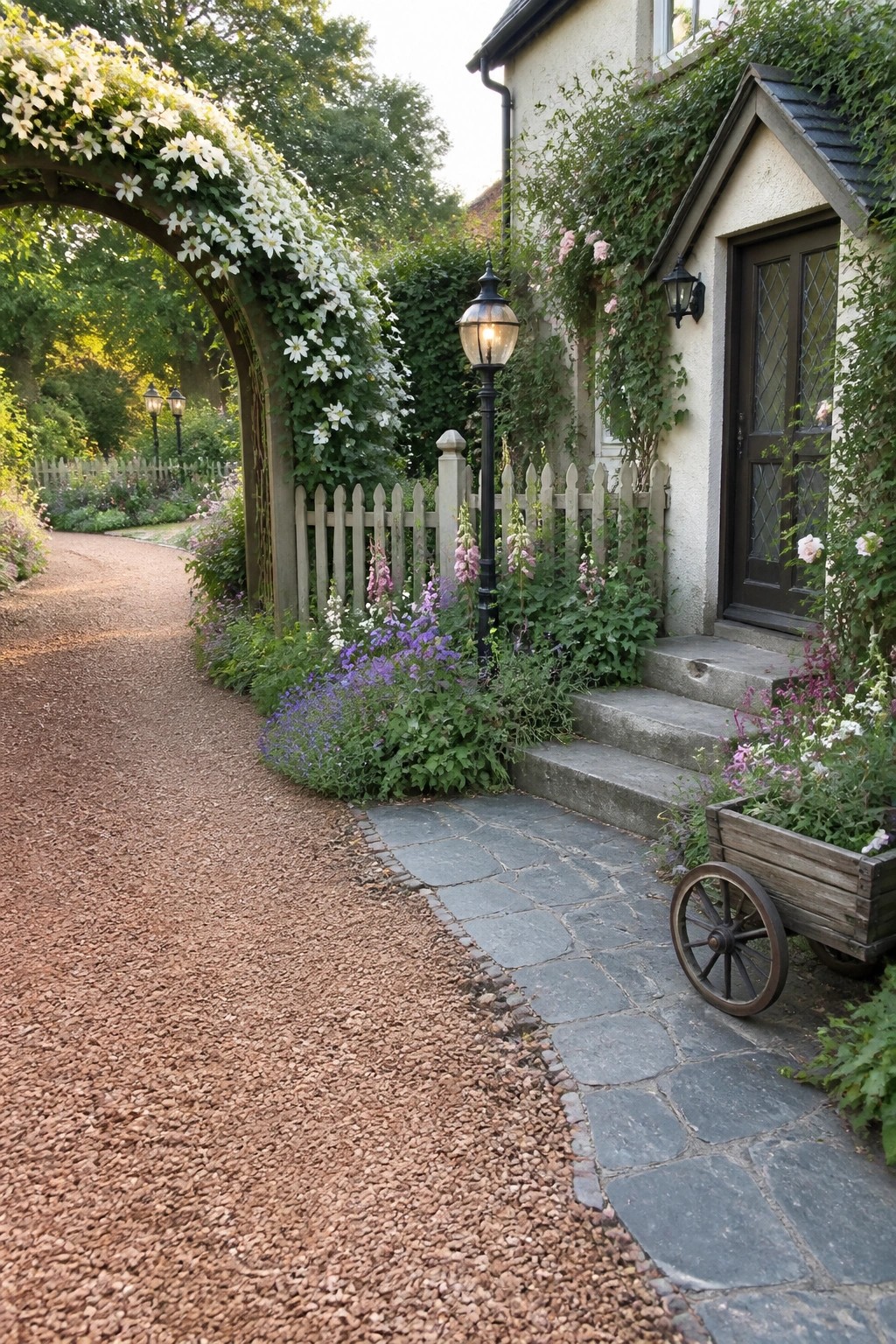
A gravel driveway often feels more welcoming when it shifts to stone paving near the house. The change gives you a firm surface right where people step out of the car and walk to the door.
This approach suits older homes and cottage style gardens where the drive should feel like part of the planting rather than a separate road. Keep the two materials close in tone so the shift reads as planned instead of patchy.
Metal Edging Keeps Gravel Sections In Place

Metal edging gives gravel driveways a sharper, more controlled look by holding each section exactly where it belongs. It lets you mix light and dark gravel or slip in a grass strip without the edges blurring over time.
This works best on modern homes where you want a neat pattern that still feels simple. Use it on straight runs or gentle curves, and pick edging thick enough to handle occasional car tires without bending.
Gravel Paths Edged With Brick
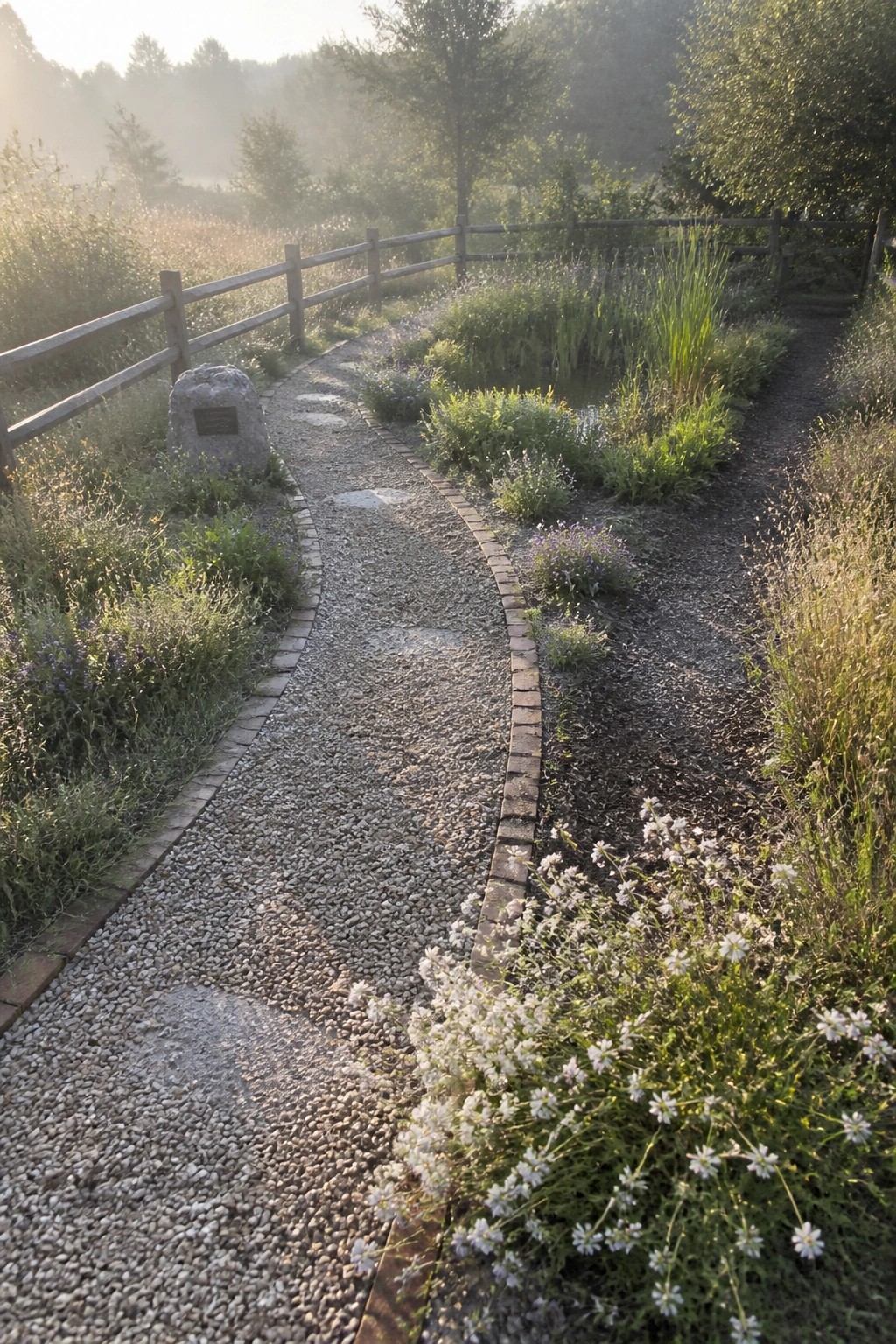
Gravel paths hold up better when they have a firm edge to contain them. Brick edging gives the surface a clean line while still letting the gravel feel loose and natural underfoot.
This style works best on properties with room for curves and plantings right up to the path. It keeps maintenance low and helps the walkway blend into the garden instead of standing out as a separate feature.
Gravel Courtyards Around Fire Pits

Gravel works well in outdoor living spaces because it feels casual and handles water without pooling. It pairs easily with a central fire pit and gives the area a settled look that does not require constant upkeep.
This layout suits homes with warm climates or Mediterranean style. Keep the gravel contained with stone edging so it stays neat, and add a few pavers for walking paths where needed.
Edging Gravel Driveways With Stone
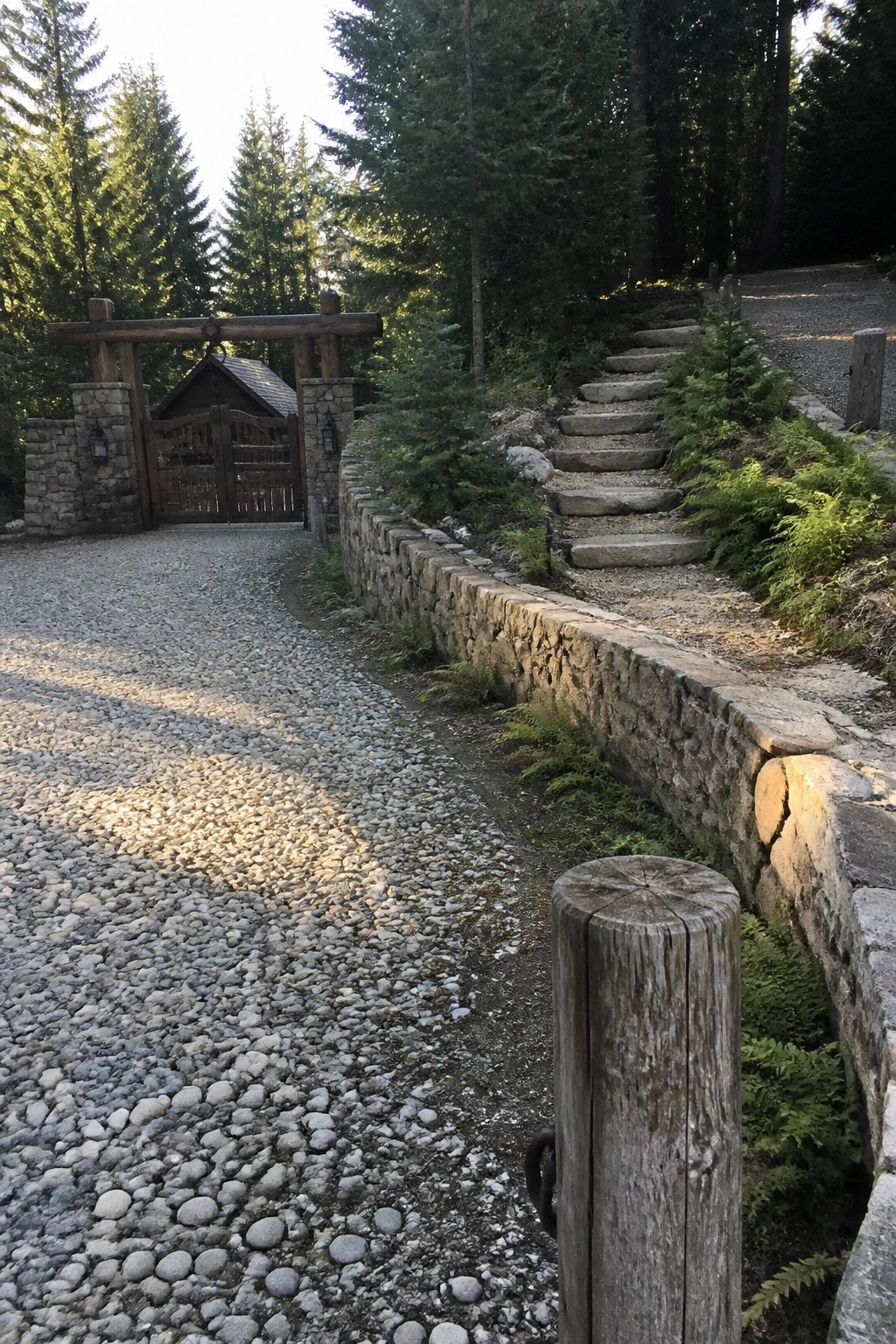
Stone edging gives a gravel driveway a finished look without making it feel too formal. The low wall keeps the gravel in place on a slope and helps the path blend into the surrounding trees and ground cover. It works especially well on properties where the driveway curves or rises.
This approach suits wooded lots or homes that already use natural materials. Keep the wall height modest so it guides the eye without blocking views. Check drainage along the base so water does not pool against the stones during heavy rain.
Striped Gravel Patterns
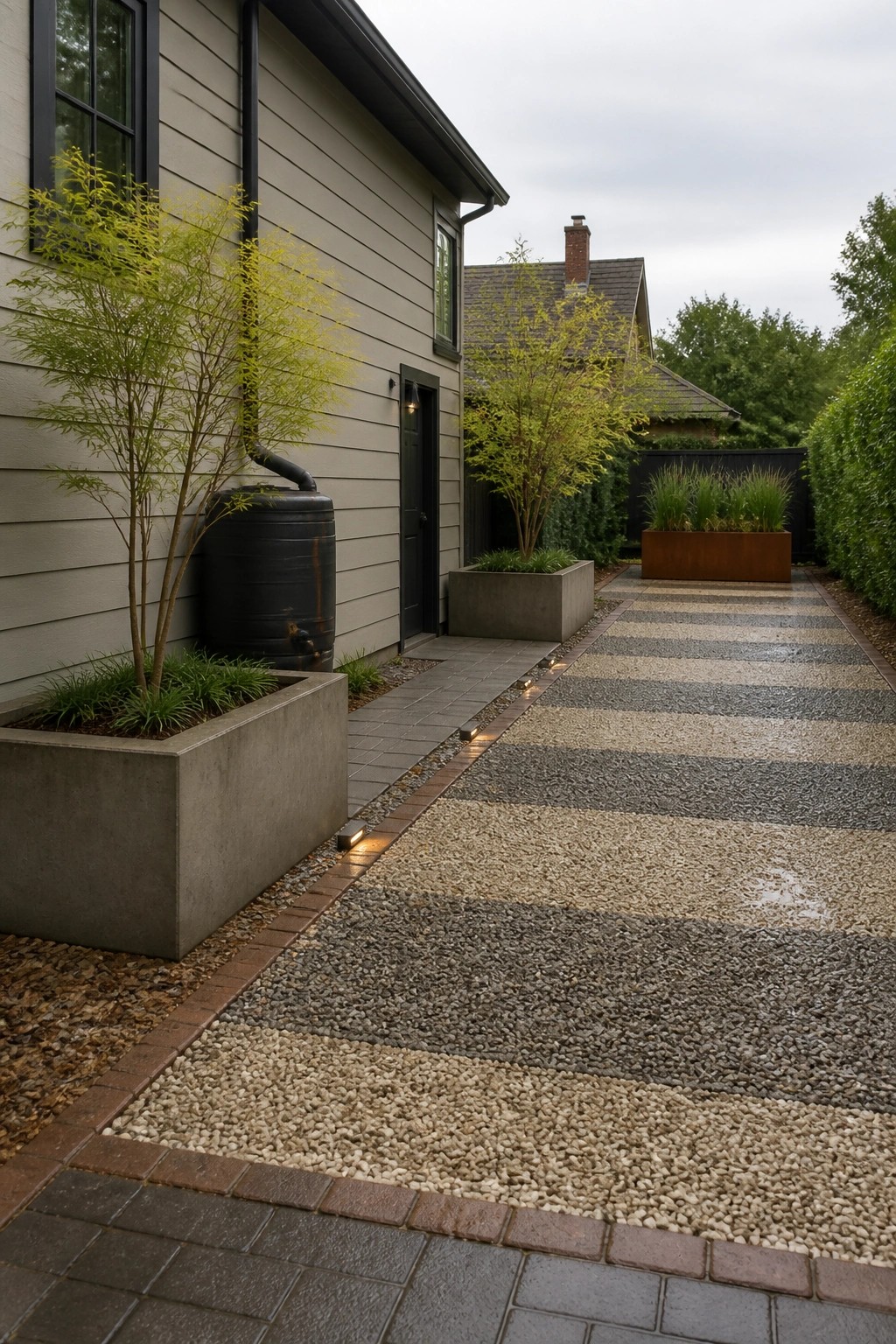
Many people like using stripes in a gravel driveway because the pattern adds order without making the surface feel too formal. Alternating bands of different gravel sizes keep the look simple while giving the path more visual weight.
This approach works best on straight or gently curving driveways where the stripes can run the full length. It suits homes with clean lines and pairs well with brick edging to hold the gravel in place. Keep the bands wide enough so the pattern stays clear as the surface settles.
Frequently Asked Questions
Q: Will these gravel designs stay put if cars drive over them every day?
A: Pick a crushed stone mix with angular edges so the pieces lock together under weight. Add a solid base layer of compacted gravel first and it holds the surface steady without constant raking. Most driveways need a quick touch-up once or twice a year after heavy use.
Q: How do I stop weeds from showing up between the stones?
A: Lay a heavy-duty landscape fabric right on the soil before you spread the gravel. This blocks light and keeps most roots from taking hold. Spot-treat any stragglers with a quick spray instead of pulling them all the time.
Q: What if my driveway slopes and rain starts washing the gravel away?
A: Install low timber or stone edging along the sides to catch loose stones before they slide. Slightly angle the surface toward the center so water runs off instead of carving channels. A thicker layer at the top helps too.
