

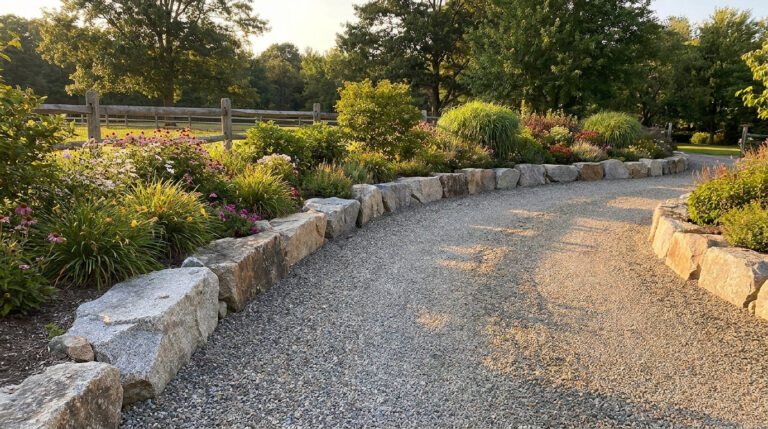
I have always noticed how the edges around a gravel driveway end up shaping how the whole front of the house feels when you pull up.
Without a clear boundary the gravel scatters into the lawn or garden beds and it quickly starts to look neglected even if the rest of the yard is in good shape.
Over the years I have seen how poor edging leads to constant raking and weeding just to keep the edges from disappearing.
It adds up fast.
A few of these approaches seem practical enough that I might test them out myself this spring to see what holds up without constant upkeep.
Brick Edging Gives Gravel Driveways a Clean Border
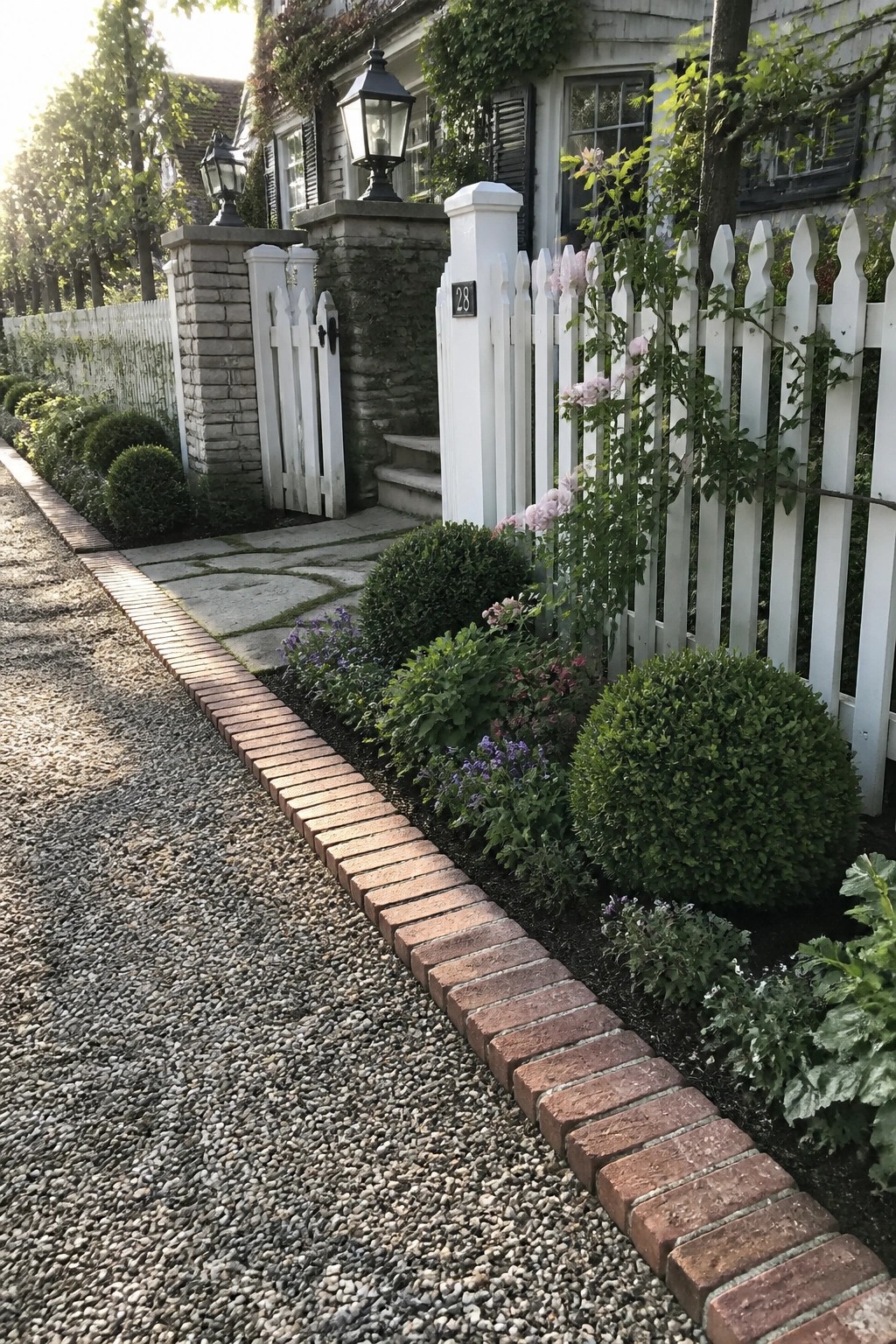
Brick edging works well because it holds the gravel in place and stops it from scattering into the beds. The straight line also gives the whole front a more finished look without much extra work.
This approach suits older homes or places with cottage style gardens. Lay the bricks on a level base so they stay put, and keep the plants low enough that they do not hide the edge completely.
Linear Drains Give Gravel Driveways a Polished Edge
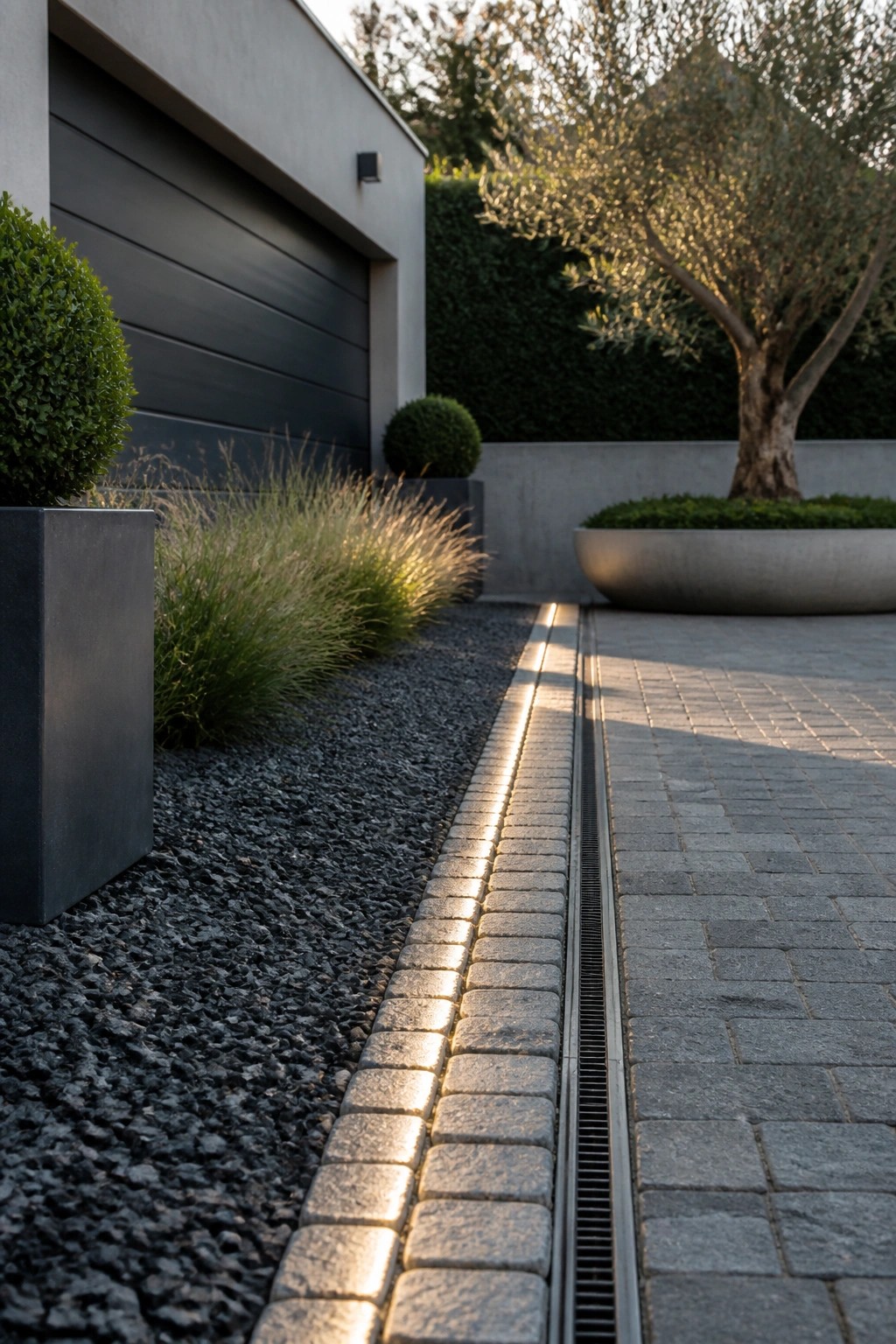
A linear drain along the edge of the gravel keeps the material from creeping onto the paved section. It creates a clear line that feels finished without needing extra borders or raised curbs.
This approach works best on homes where the driveway sits close to the house or other hard surfaces. Keep the grate flush with both the gravel and the pavers so water flows through and the surface stays even underfoot.
Boulders As Gravel Driveway Edging
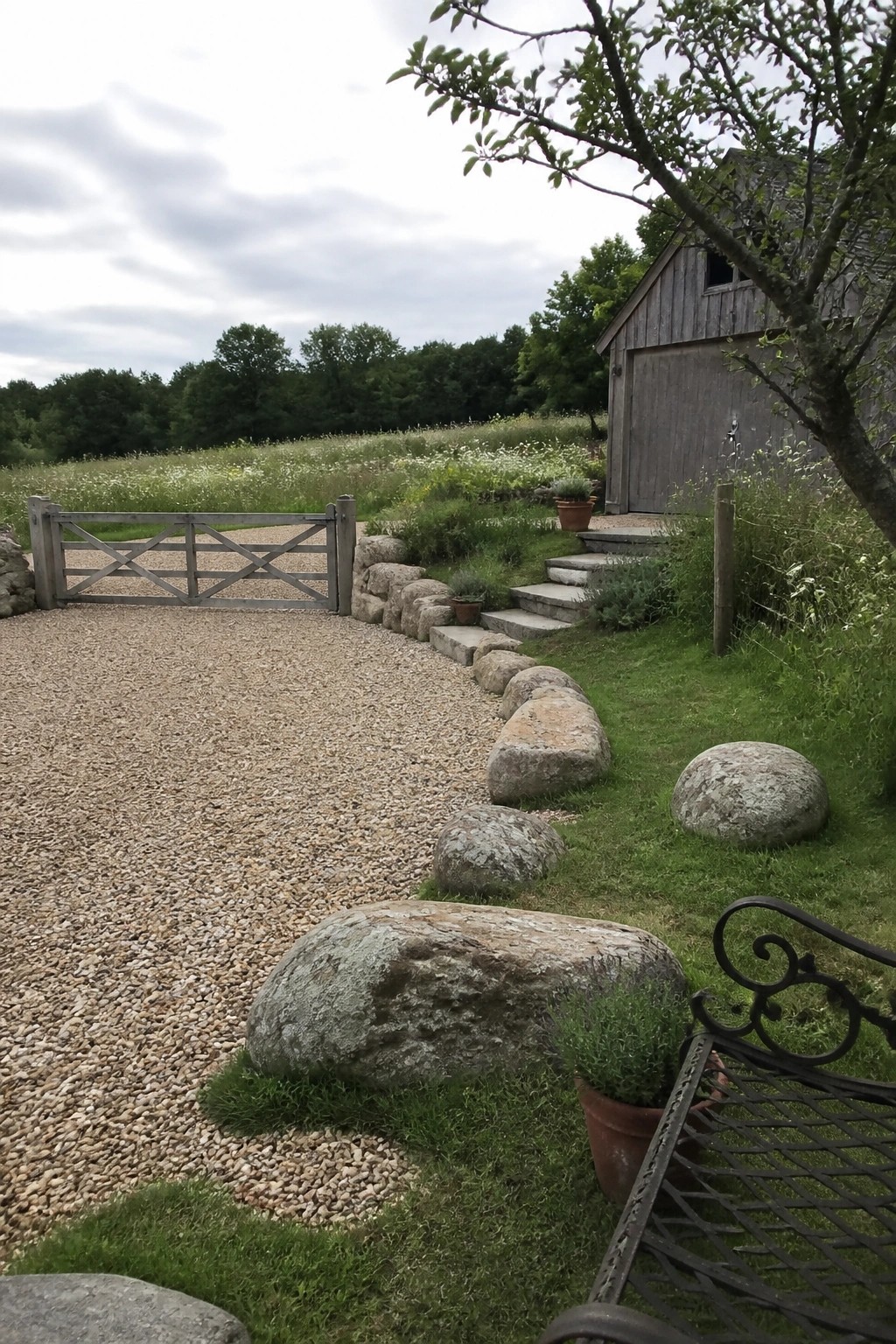
Large stones set along the edge of a gravel driveway give it a settled, finished look that feels natural. They hold the gravel in place and keep the edge from blurring into the grass over time.
This kind of edging works well on rural or older properties where a hard paved border would look out of place. Use stones that are big enough to stay put and space them loosely so the line still feels organic rather than rigid.
Metal Edging Keeps Gravel From Spreading

A metal border along the edge of a gravel driveway creates a simple, firm line that holds the stones in place. It stops them from drifting into the lawn or garden beds and gives the whole area a tidy finish that lasts.
This approach works well on long, narrow strips where the driveway sits right next to grass or planting. Set the edging slightly below the surface so it stays out of the way while still doing its job.
Wood Timbers With a Stone Border

Wood timbers create a sturdy edge that keeps gravel from drifting into planting beds or across the driveway. They hold up well under foot traffic and give the whole area a settled look without needing constant repairs.
Add a narrow band of stone pavers along the front of the timbers for extra definition. This combination suits homes with a natural or slightly rustic style and works best where the driveway curves or meets garden areas.
Stone Edging Keeps Gravel Driveways Looking Tidy
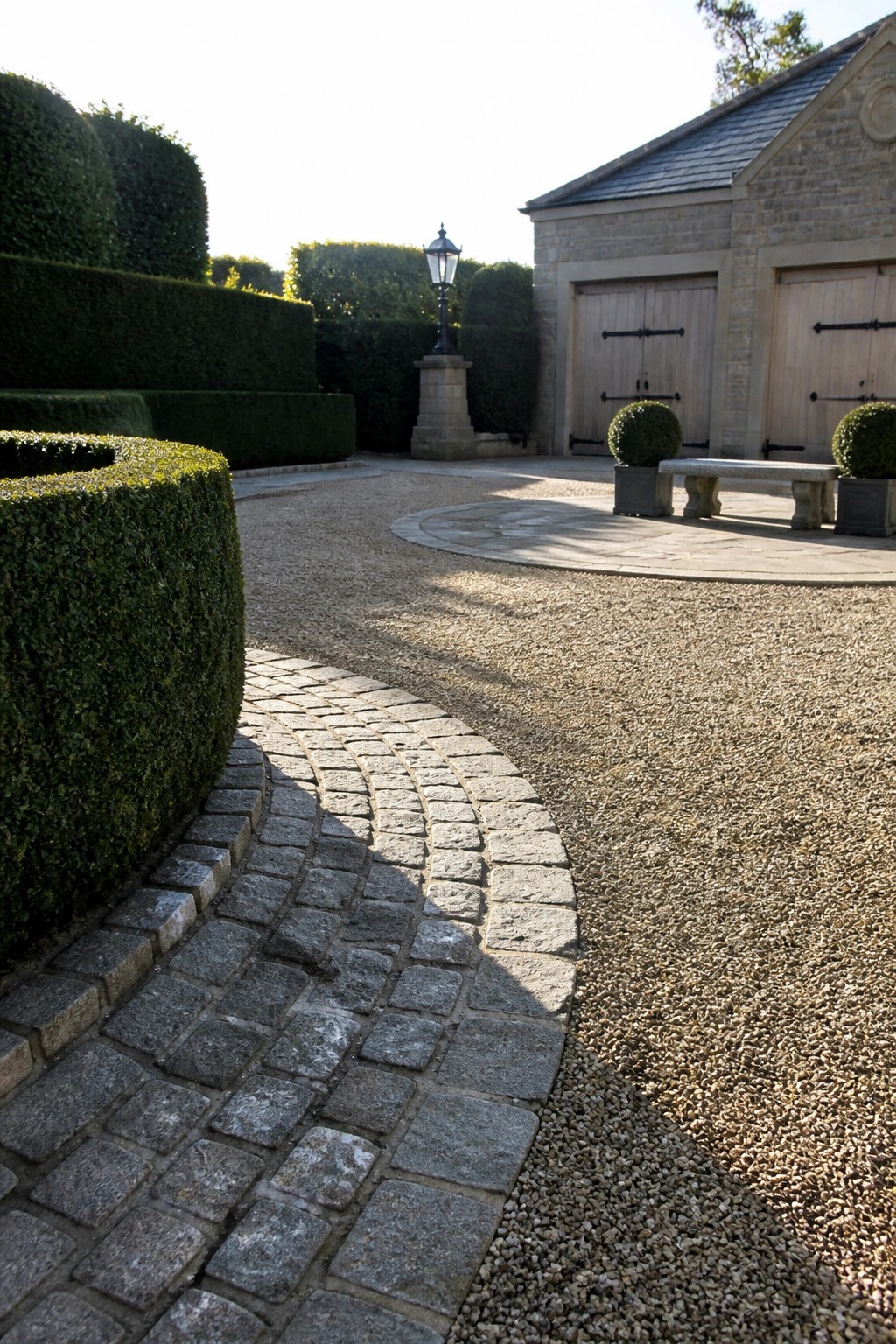
A low stone border gives a gravel driveway a clean stop that feels deliberate rather than accidental. It holds the gravel in place and stops it from drifting into grass or planting beds, which keeps the whole entrance looking cared for over time.
This approach suits homes where the driveway curves or sits beside clipped hedges. Lay the stones to follow the natural line of the drive and pick a size that feels in scale with the surrounding greenery rather than too delicate or too heavy.
Use Stacked Stone To Edge Gravel Driveways
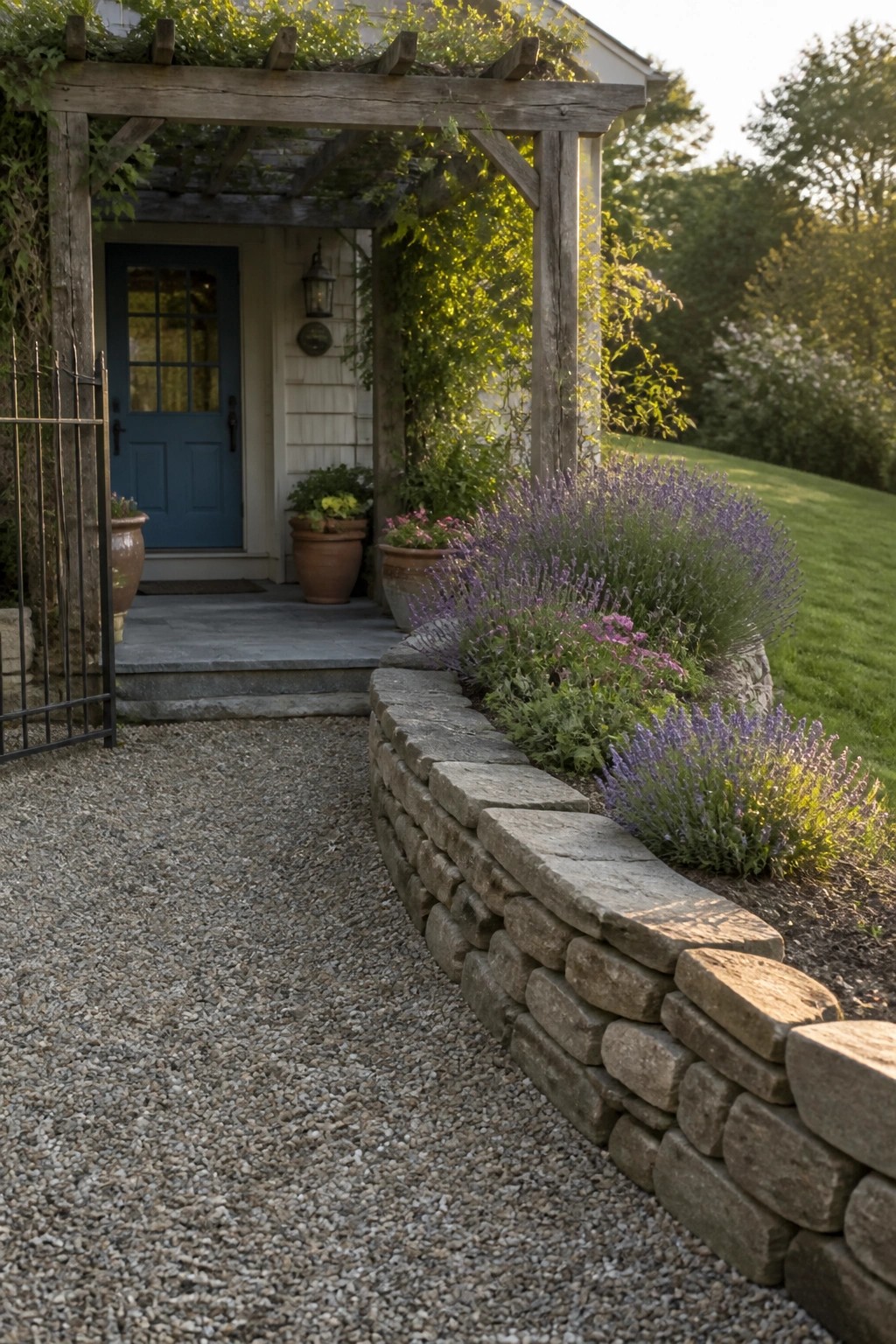
Stacked stone edging gives a gravel driveway a clear boundary without looking too formal. It holds the gravel in place and keeps the lawn or garden beds from creeping in over time. Many people like how the natural look of the stone blends with the loose gravel while still looking intentional.
This approach works best on homes with gentle slopes or open front yards where you want a low-maintenance edge that still feels finished. Just make sure the stones sit on a stable base so they stay level as the seasons change.
Concrete Edging Defines Gravel Driveways Cleanly
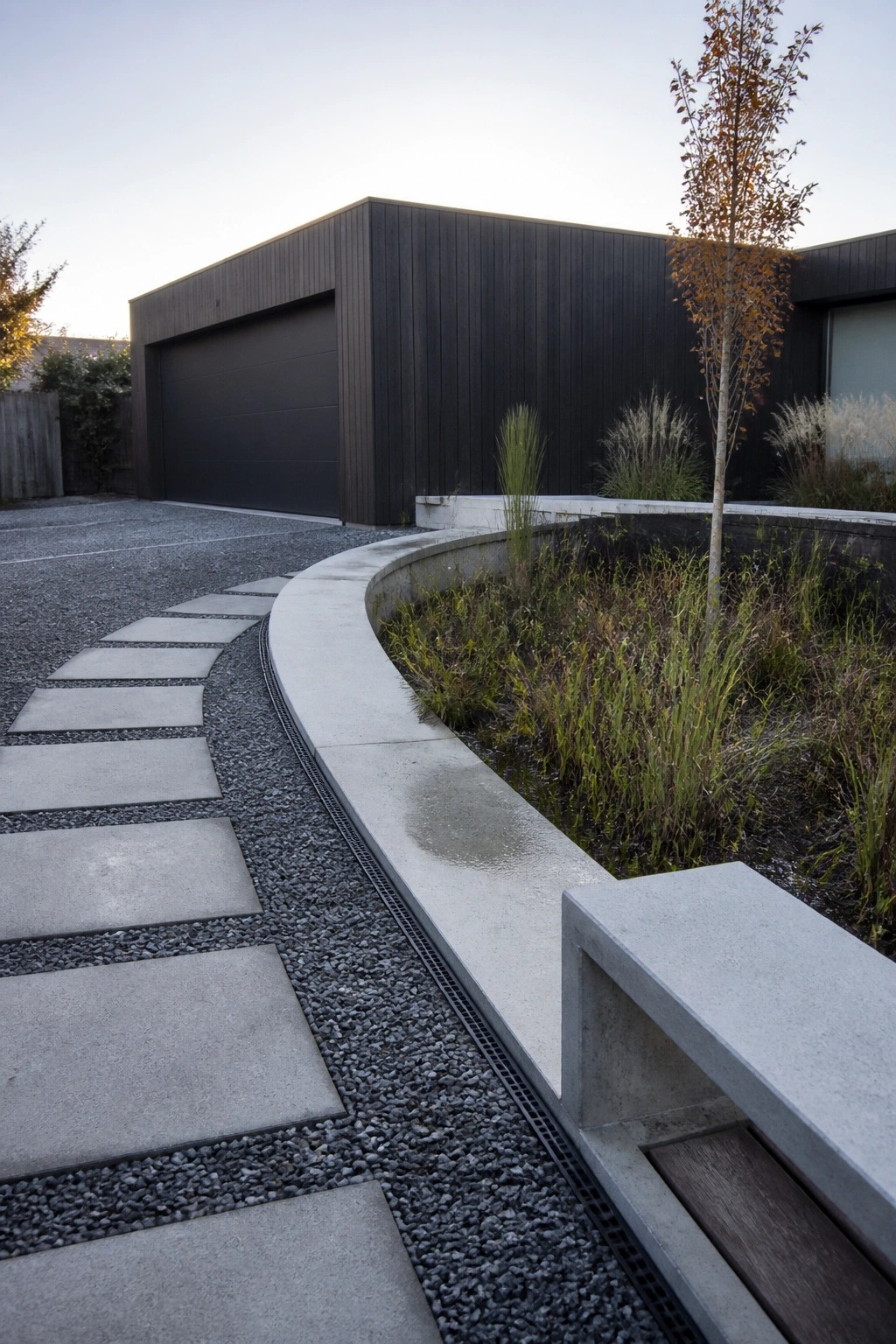
A low concrete border works well along gravel because it holds the stones in place and stops them from drifting into nearby planting beds. The result feels more finished and keeps the driveway looking intentional instead of messy over time.
This approach suits homes where the driveway sits close to garden areas. It works best when the edging follows gentle curves rather than sharp angles, and it pairs easily with simple paver paths that cross the gravel for easier walking.
Timber Edging Holds Gravel Driveways In Place
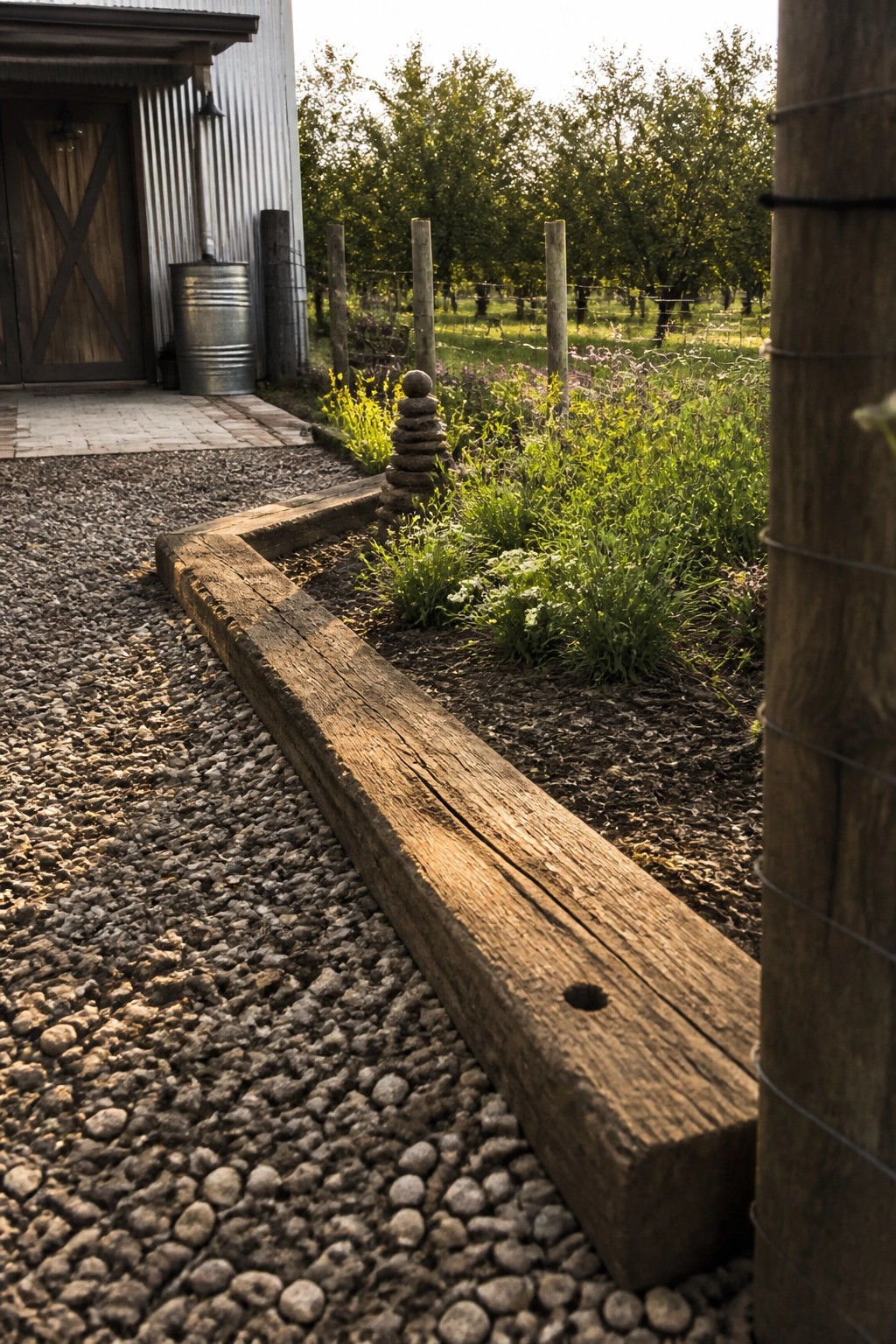
Thick wooden beams work well as edging because they create a firm line that keeps gravel from spilling into garden beds. The weight of the wood helps it stay put even with regular foot traffic or light vehicle use.
This style suits homes with a rural or farmhouse feel where you want something natural rather than plastic or metal borders. Choose beams that are already weathered or treated so they last longer without much upkeep.
Terracotta Edging For Gravel Driveways
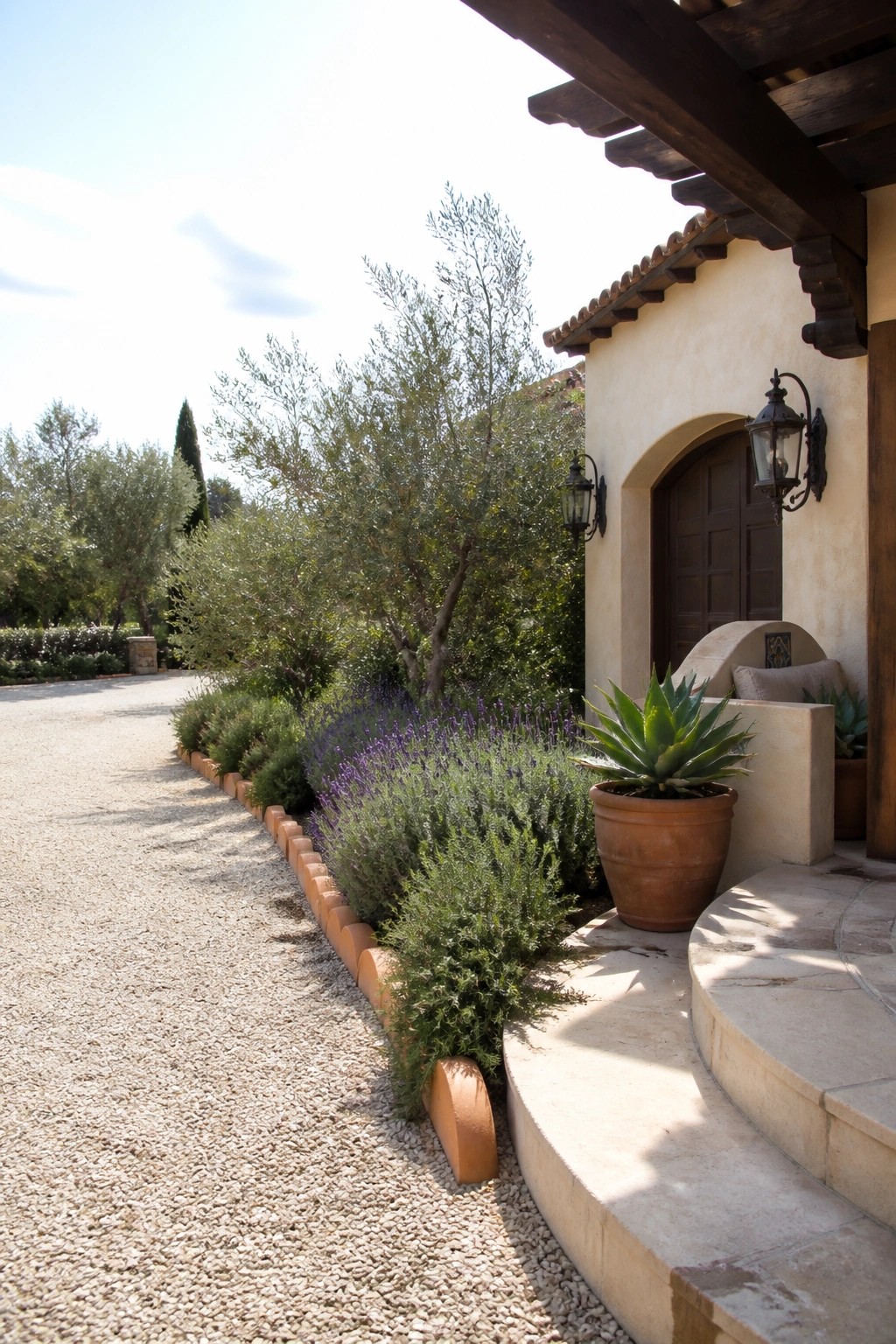
Terracotta edging gives a gravel driveway a finished border without looking too formal. The curved clay pieces sit low and create a clear line that keeps the gravel in place while letting the planting beds flow right up to the edge. It works especially well with Mediterranean or dry-climate gardens where the warm tone of the clay fits the rest of the landscape.
This approach suits homes with long driveways or side access areas where you want something simple but durable. Lay the sections end to end on a level base and backfill with soil so they stay put. Just keep the gravel slightly lower than the top of the edging so it does not spill over into the beds.
Gravel Next To Paved Areas For A Clean Line
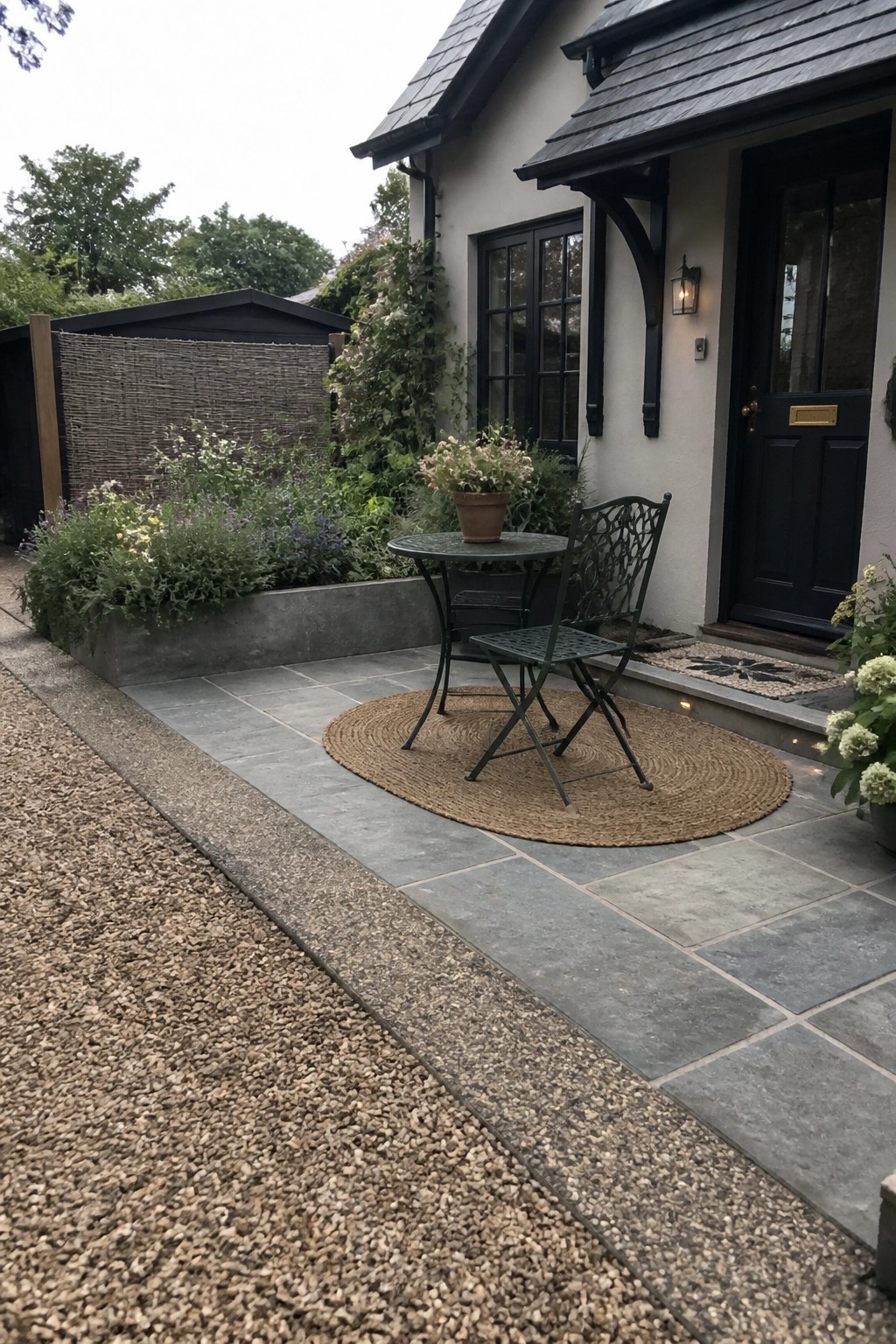
Gravel works well as an edging material when it sits right beside stone paving. The loose texture of the gravel stops the hard edge of the tiles from feeling too sharp, and it keeps the whole driveway or path looking neat without extra trim pieces.
This setup suits homes with a mix of driveway and patio space. Keep the gravel layer thin and contained so it does not spill onto the stone over time.
Stone Edging For Gravel Driveways

Stone edging gives a gravel driveway a finished border that keeps the loose stones from spilling into the lawn. The low line of pavers also adds a bit of structure so the drive looks intentional instead of just loose gravel spread across the yard.
This approach works best on homes with stone or brick exteriors and on driveways that curve around trees or planting beds. It is simple to add after the gravel is down and holds up well with little maintenance.
Gabion Brick Edging For Gravel Driveways
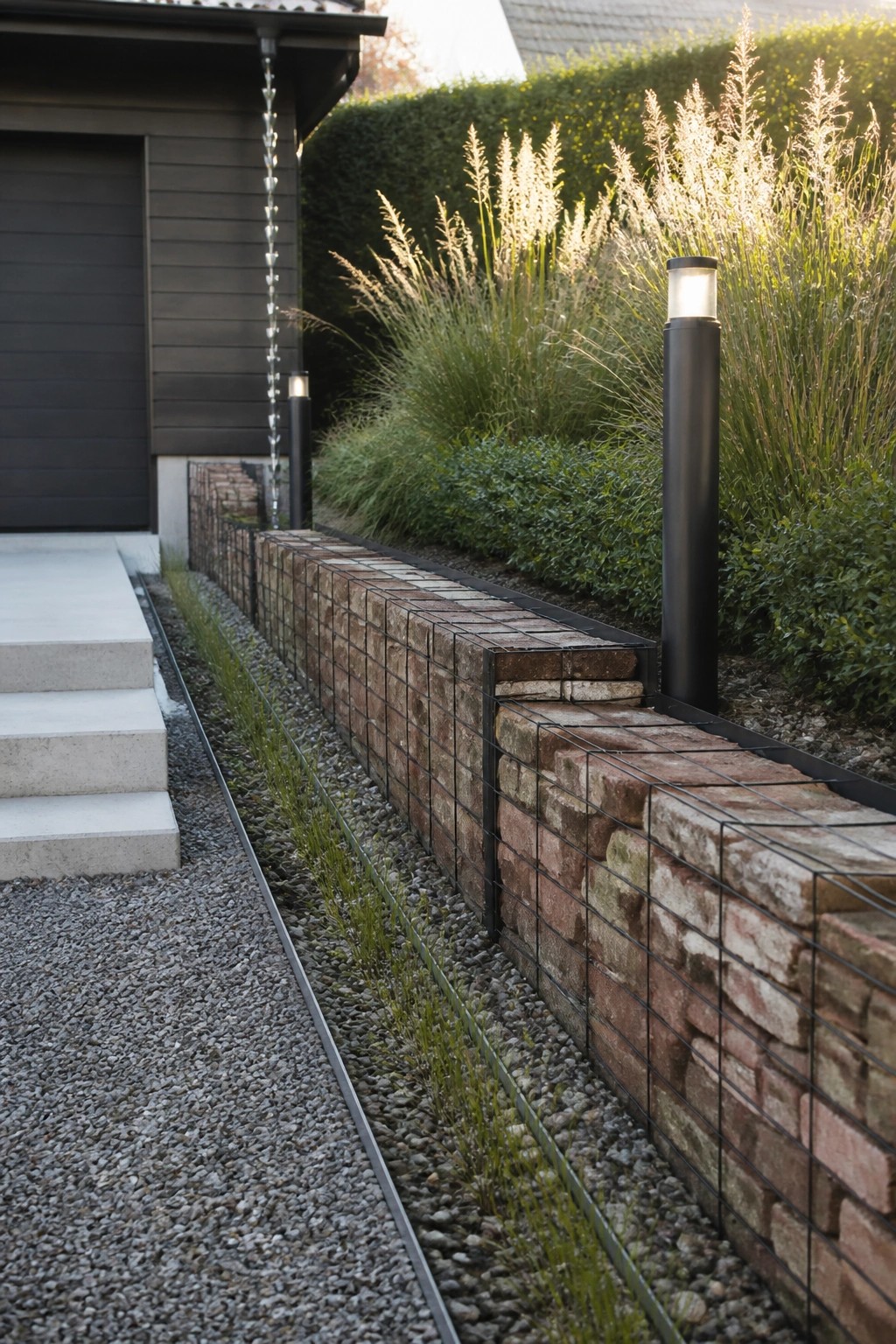
A low wall of bricks set inside wire mesh makes a solid border that holds gravel in place without letting it spill into the beds. It gives the path a more finished look than loose timber or thin metal strips, and it holds up well even where the ground slopes a little.
This kind of edging suits homes with simple modern lines and works best when the mesh is kept low so the plants can still spill over the top. Use galvanized wire so it lasts, and keep the gravel level a bit below the top of the bricks to stop it from creeping over the edge.
Scalloped Concrete Edging for Gravel Driveways
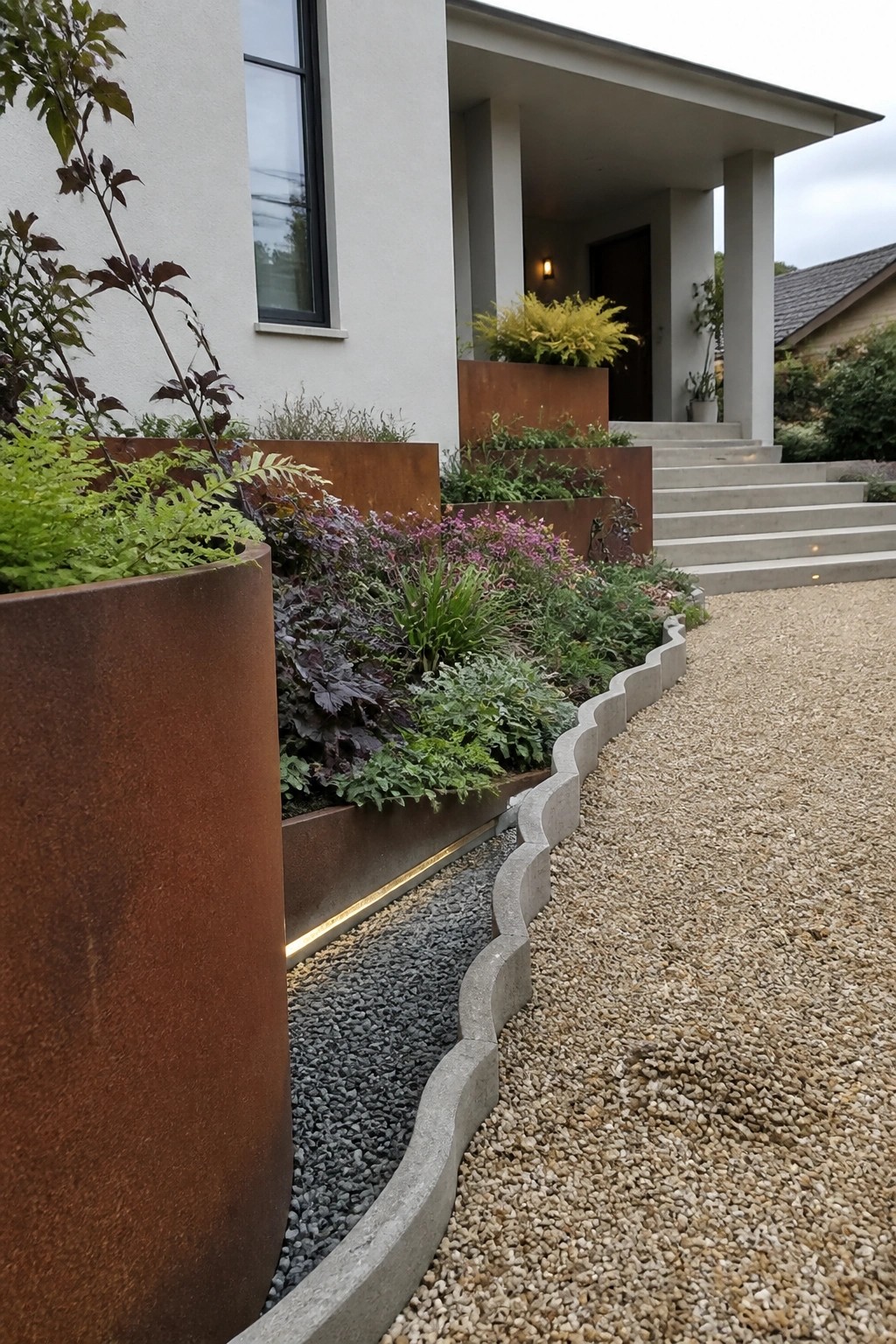
A scalloped concrete edge gives gravel driveways a finished look without much fuss. It holds the stones back while creating a soft curve that follows the planting beds.
This works well on homes where the driveway runs close to garden areas. Keep the curb low so plants can spill over slightly and the gravel stays contained.
Stepping Stones Along Gravel Edges
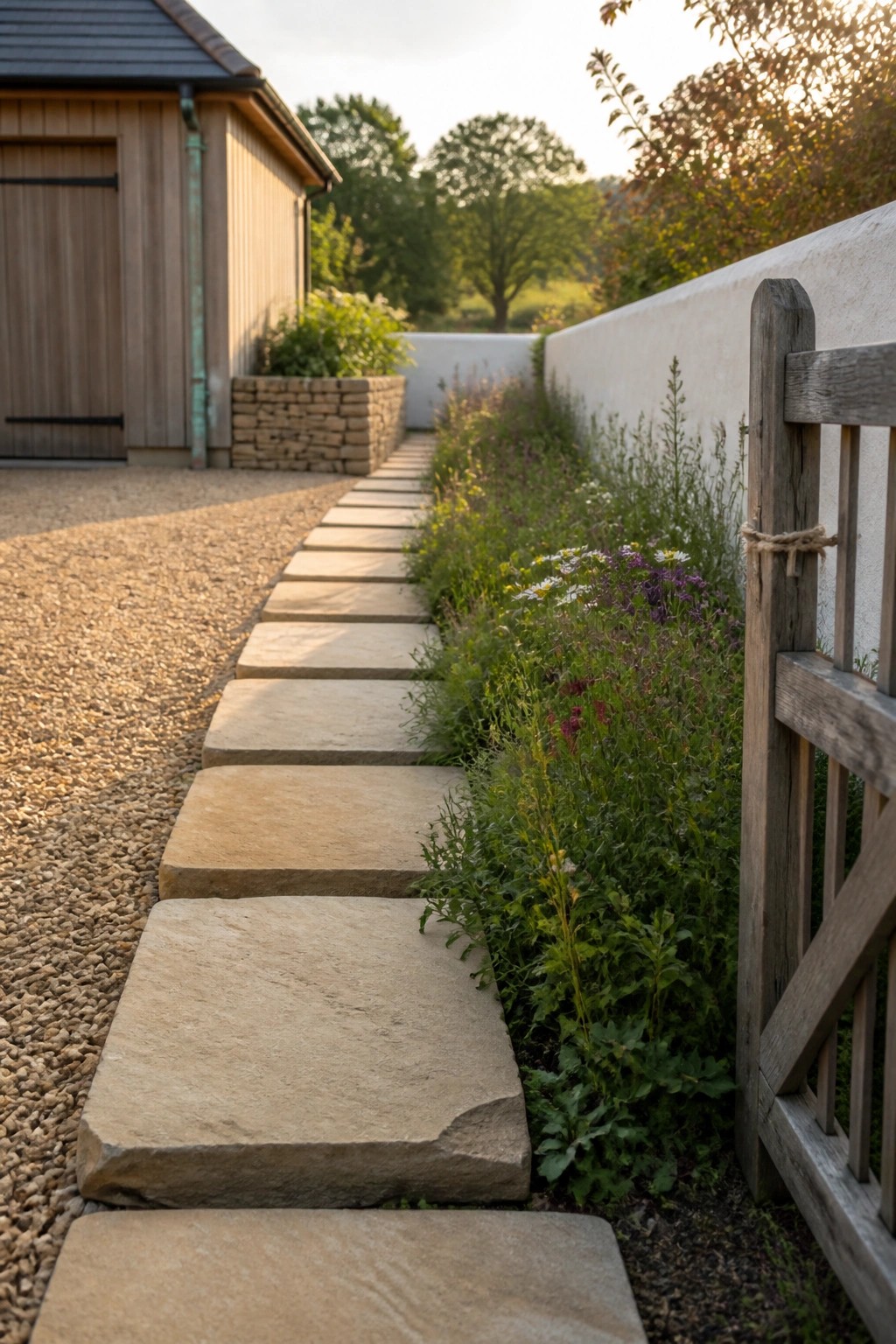
Stepping stones give gravel a clear walking line and help hold the loose surface in place. They turn a simple gravel area into something that feels more finished without adding a hard border.
This works best on side paths or long driveways where you want easy access to the garden or gate. Keep the stones level with the gravel and let planting spill over the edge a bit so the whole thing stays soft and natural.
Concrete Edging Gives Gravel A Finished Look
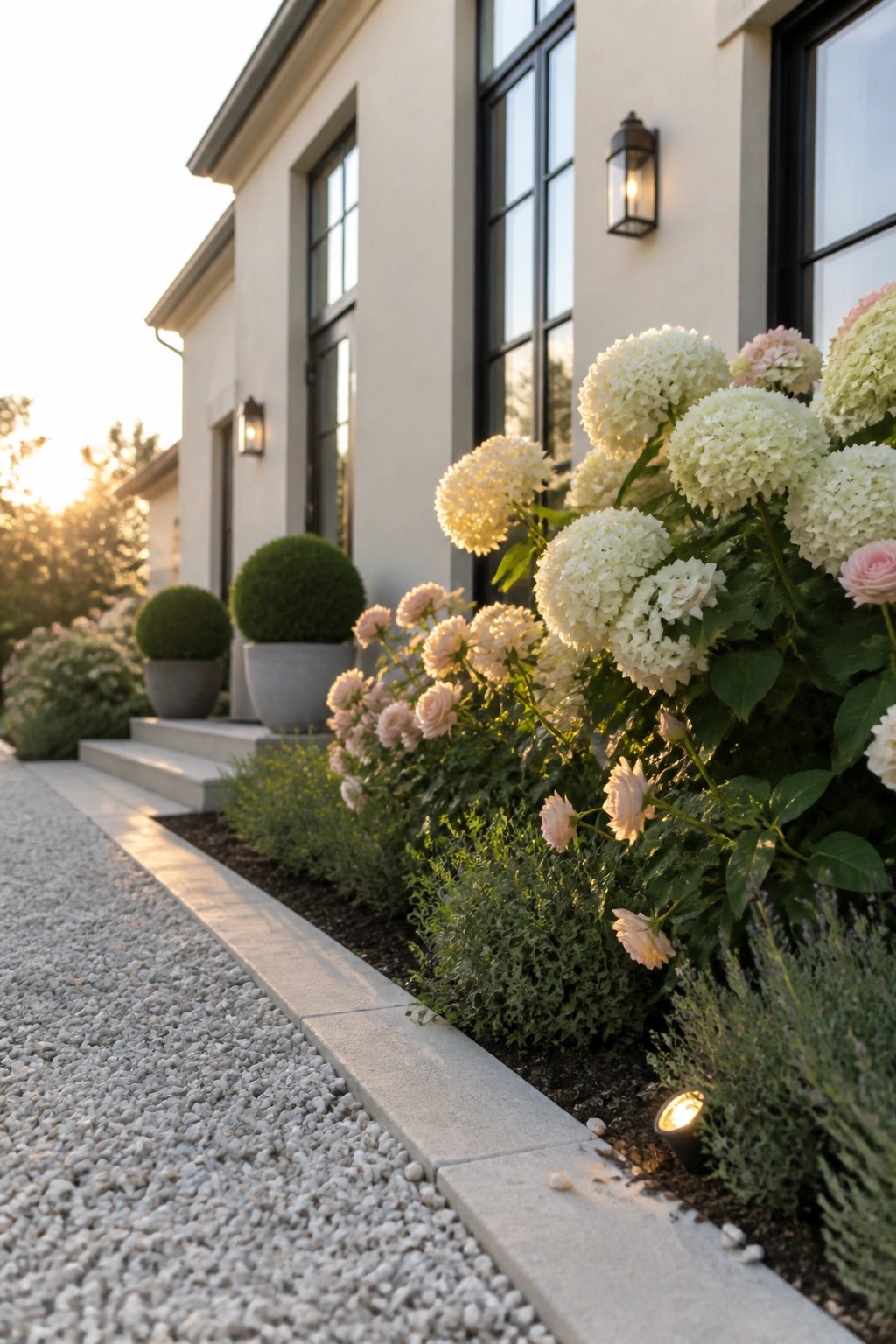
A low concrete border along a gravel driveway keeps the stones from drifting into the planting beds. It creates a clear separation that looks neat and holds up without much upkeep.
This approach suits homes where the driveway sits close to flower beds or shrubs. Set the curb just above the gravel level so it stays effective as the surface shifts over the seasons.
Wood Edging Keeps Gravel Sections Looking Sharp
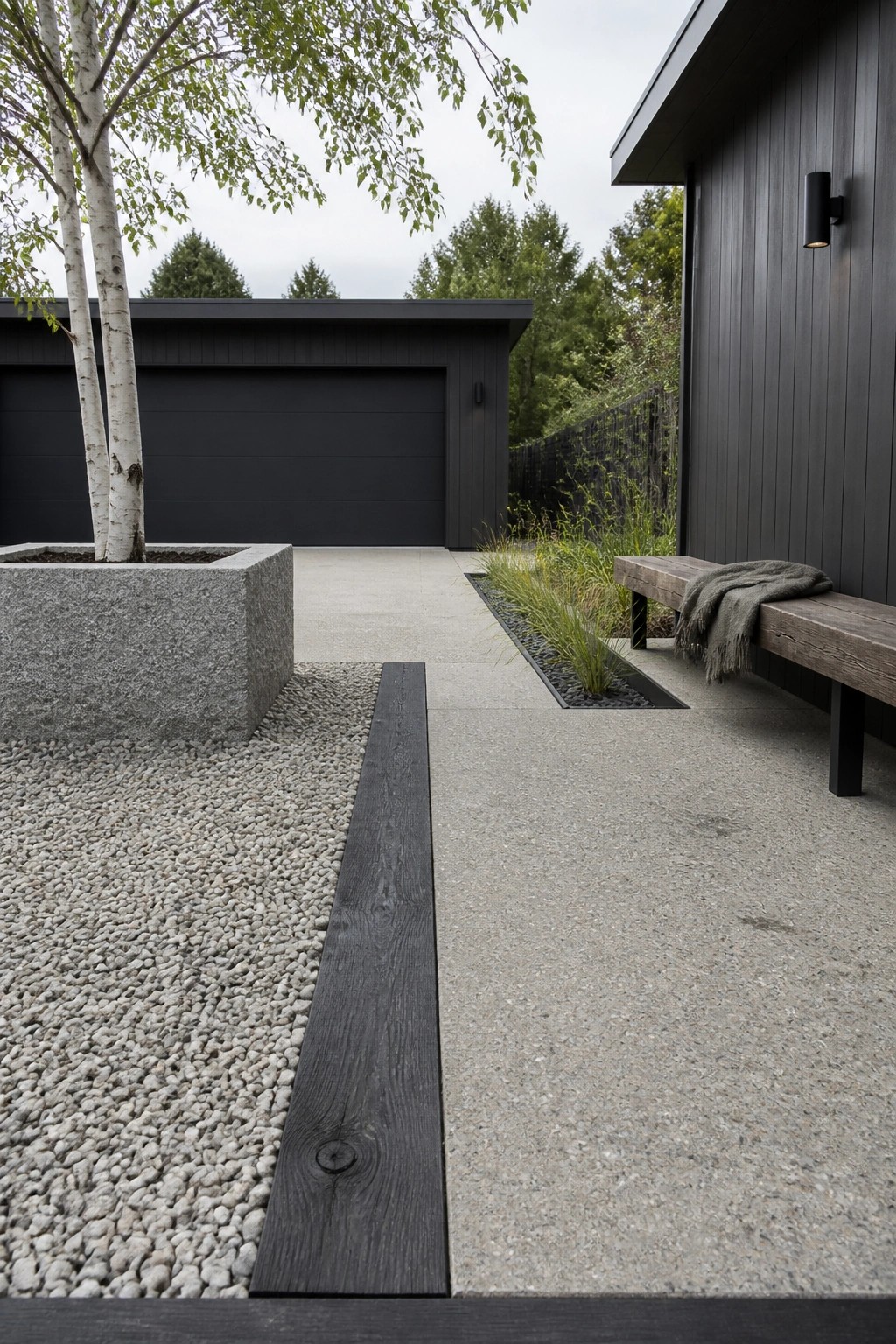
A straight wood divider between gravel and concrete gives the driveway a neat border without any fuss. It stops the stones from spilling over while adding a simple line that makes the whole area feel more put together.
This approach suits modern homes that already use mixed hard surfaces. Keep the wood dark and low so it blends in rather than drawing too much attention, and choose a rot-resistant type if the spot gets wet often.
Frequently Asked Questions
Q: How do I keep the gravel from spilling onto my lawn?
A: Install the edging a bit higher than the gravel surface so it acts like a barrier. This keeps most of the stones in place even after rain or sweeping.
Q: What edging holds up best in areas with lots of snow?
A: Concrete or stone borders handle freeze and thaw cycles without shifting much (even with heavy plowing). You can also use thick plastic if you secure it well at the base.
Q: Do I need to dig deep when putting in new edging?
A: A shallow trench works for most lightweight options like metal or wood. Just make sure the bottom sits level so water drains away from the driveway instead of pooling.
