


When I look at a house from the street the driveway is often the first surface that catches my eye and sets the tone for everything else.
Choosing a material that works with the siding and entry details can make the whole front feel more pulled together without any other changes.
I have noticed that some surfaces hold up well in daily use while others start to look tired after a single winter.
Small differences in texture and color end up mattering more than they do on a sample board.
A couple of these approaches seem worth testing on my own property if the budget ever allows.
Exposed Aggregate Concrete Driveways
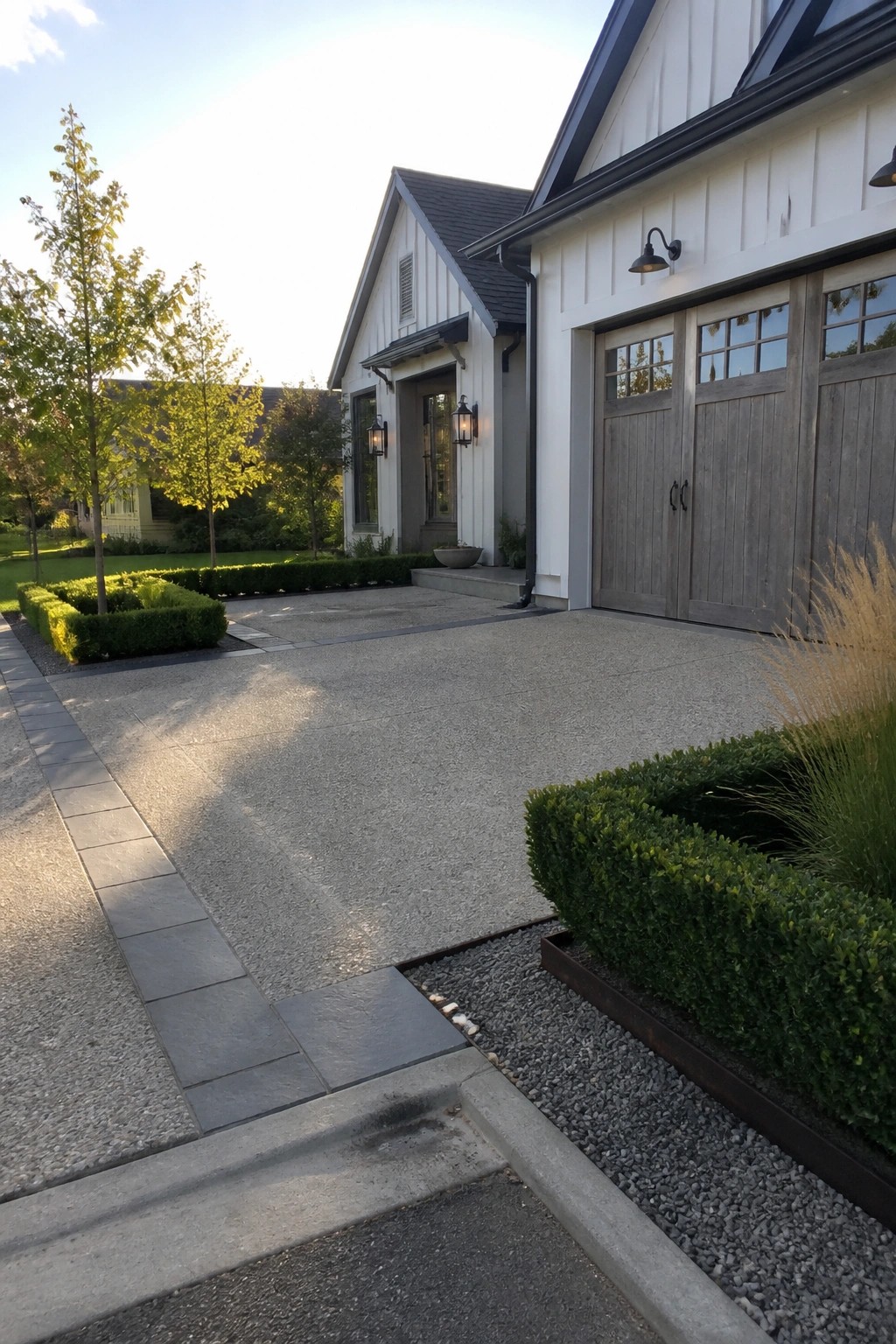
Exposed aggregate concrete gives a driveway some texture without making it look busy. The small stones show through the surface, which adds a little depth and helps it blend with the rest of the yard instead of standing out as a plain slab.
This finish works best on homes with clean lines or a farmhouse feel. It holds up well to cars and weather, and it looks good next to gravel edges or simple paver strips if you want to break up the area. Just plan on sealing it every few years to keep the texture looking fresh.
Herringbone Brick Driveway
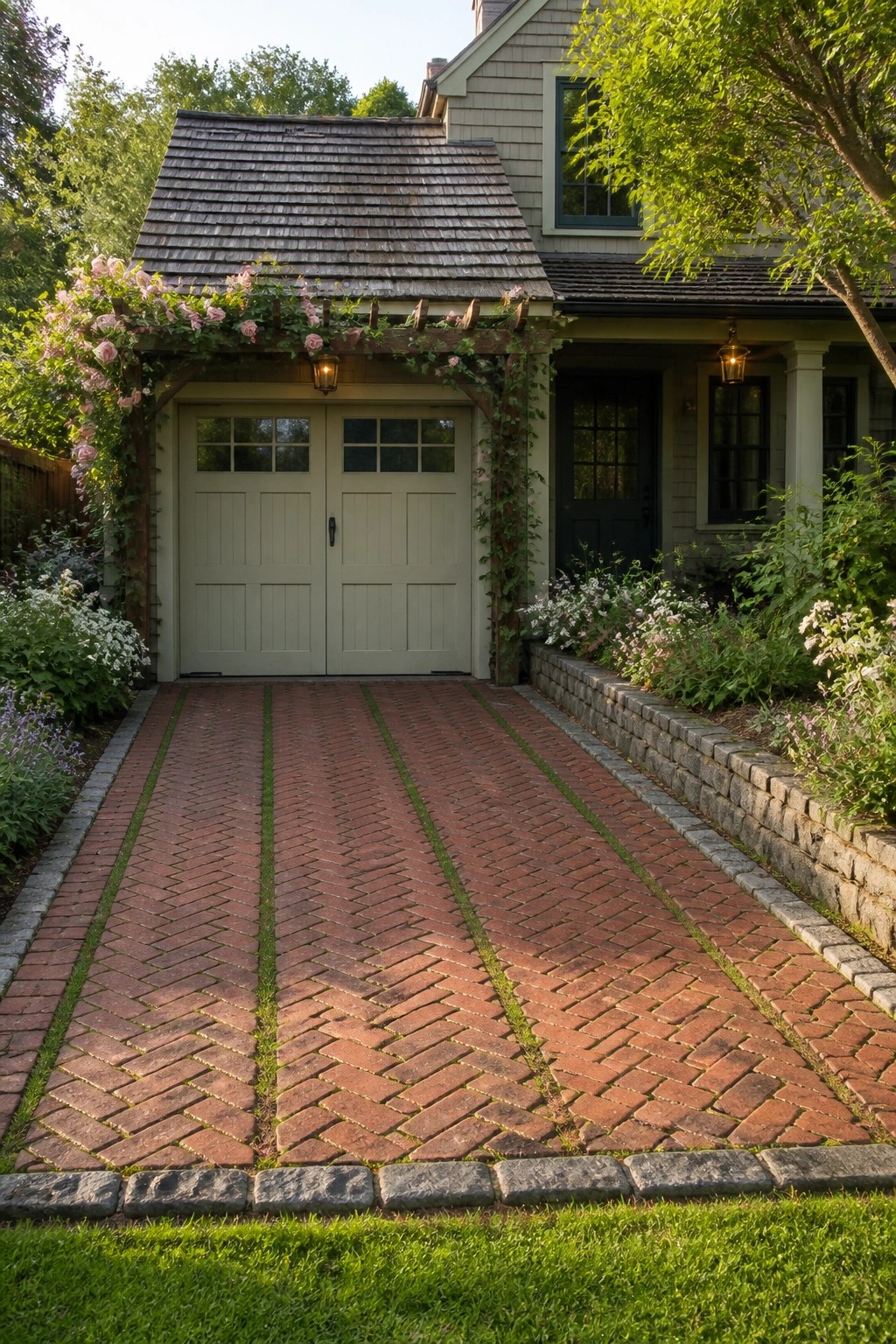
A brick driveway laid in herringbone gives the surface a bit more character than a solid slab of concrete or asphalt. The pattern holds up well under regular car traffic and pairs nicely with older homes or those with cottage details.
You can run thin strips of grass between the brick sections to soften the look and improve drainage. This setup suits homes with established gardens and works best when the brick color stays close to the tones already used on the house or walkways.
Gravel Strips Between Concrete Driveway Sections

This setup uses narrow bands of gravel running between wider concrete slabs to create a driveway surface. The gravel breaks up the solid look of concrete while helping with drainage and giving the area a bit more texture without adding much extra cost.
It works best on homes with a modern style where you want to keep the driveway from feeling too heavy or wide. Just keep the gravel contained with good edging so it stays in place over time and does not scatter onto the walking areas.
Flagstone Paths For Driveways
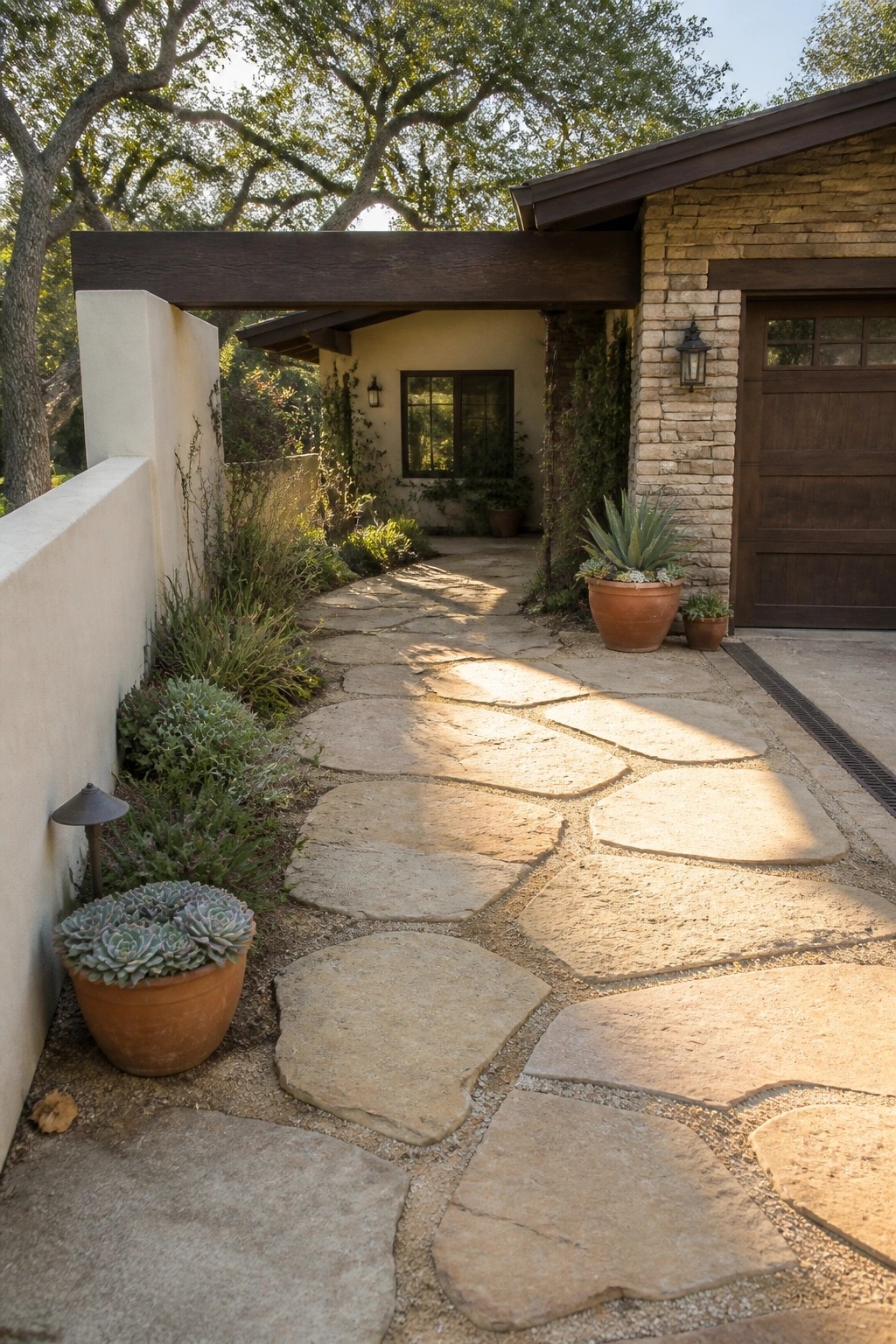
Flagstone paths give a driveway or entry a softer, more natural feel than poured concrete or brick. The uneven shapes and warm tones help the surface blend into the surrounding landscape instead of standing out as a separate hard element.
This approach works best on homes with some garden space on either side. Lay the stones with small gaps so water drains through and plants can creep in at the edges. Just check that the slabs sit level and thick enough if cars will pass over them regularly.
Gravel Driveways For Coastal Homes

Gravel makes a good choice for driveways near the beach since it drains well and sits comfortably with sand and dunes. The light color also keeps the surface from getting too hot and pairs easily with simple house exteriors.
It works best on homes that already lean toward a relaxed style. Add low edging along the sides so the gravel stays in place and does not spill into nearby plantings.
Stone Slabs With Gravel Borders
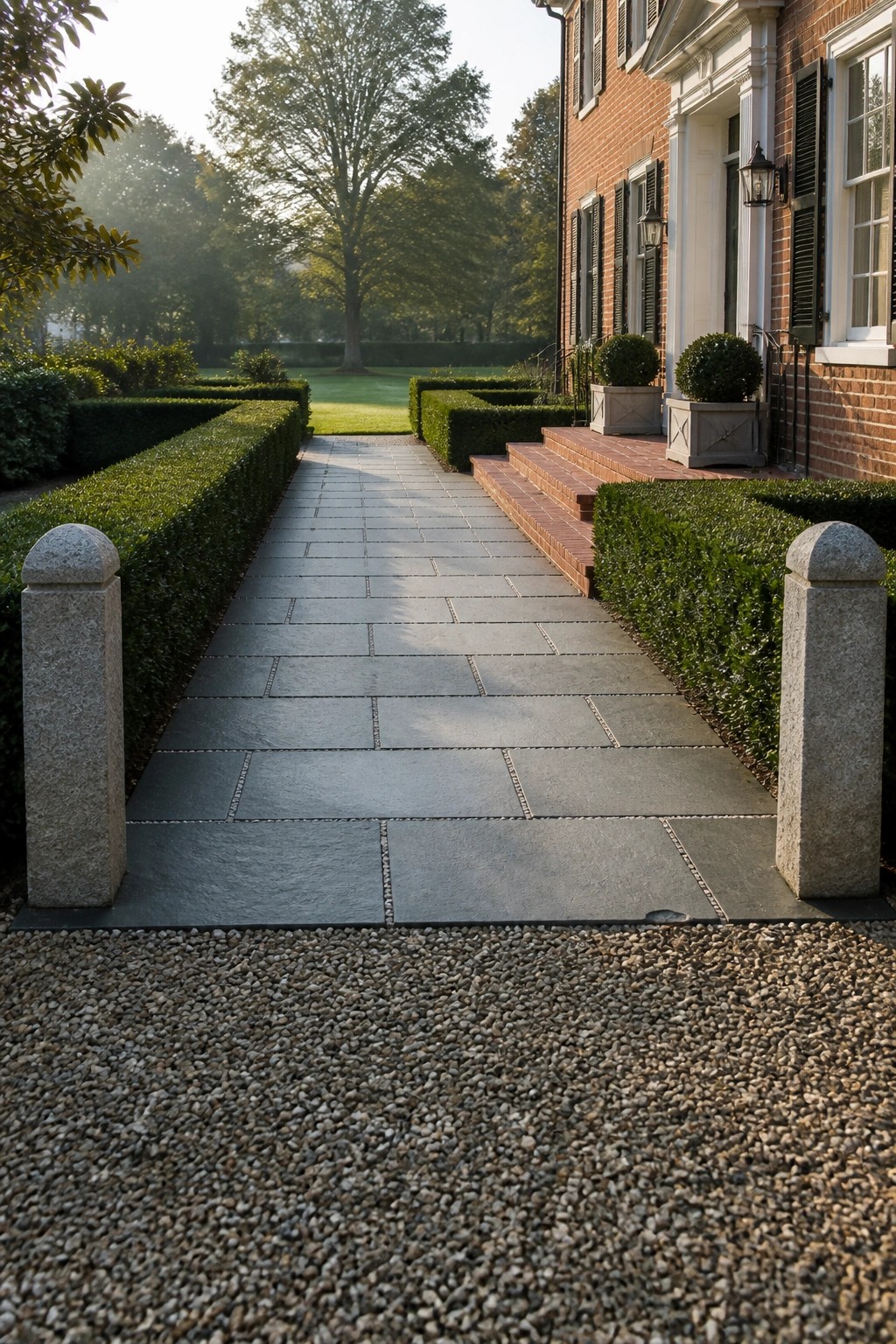
Large stone slabs give a driveway a cleaner, more finished look than plain gravel or poured concrete. The flat surface makes walking easier and keeps the path from feeling too loose underfoot, while the gravel edge softens the whole thing and helps with drainage.
This approach works best on homes with straight lines and trimmed planting, like brick houses or formal gardens. Keep the slabs level and use a solid base so the path stays even over time, especially if cars will drive on it regularly.
Cobblestone Driveways
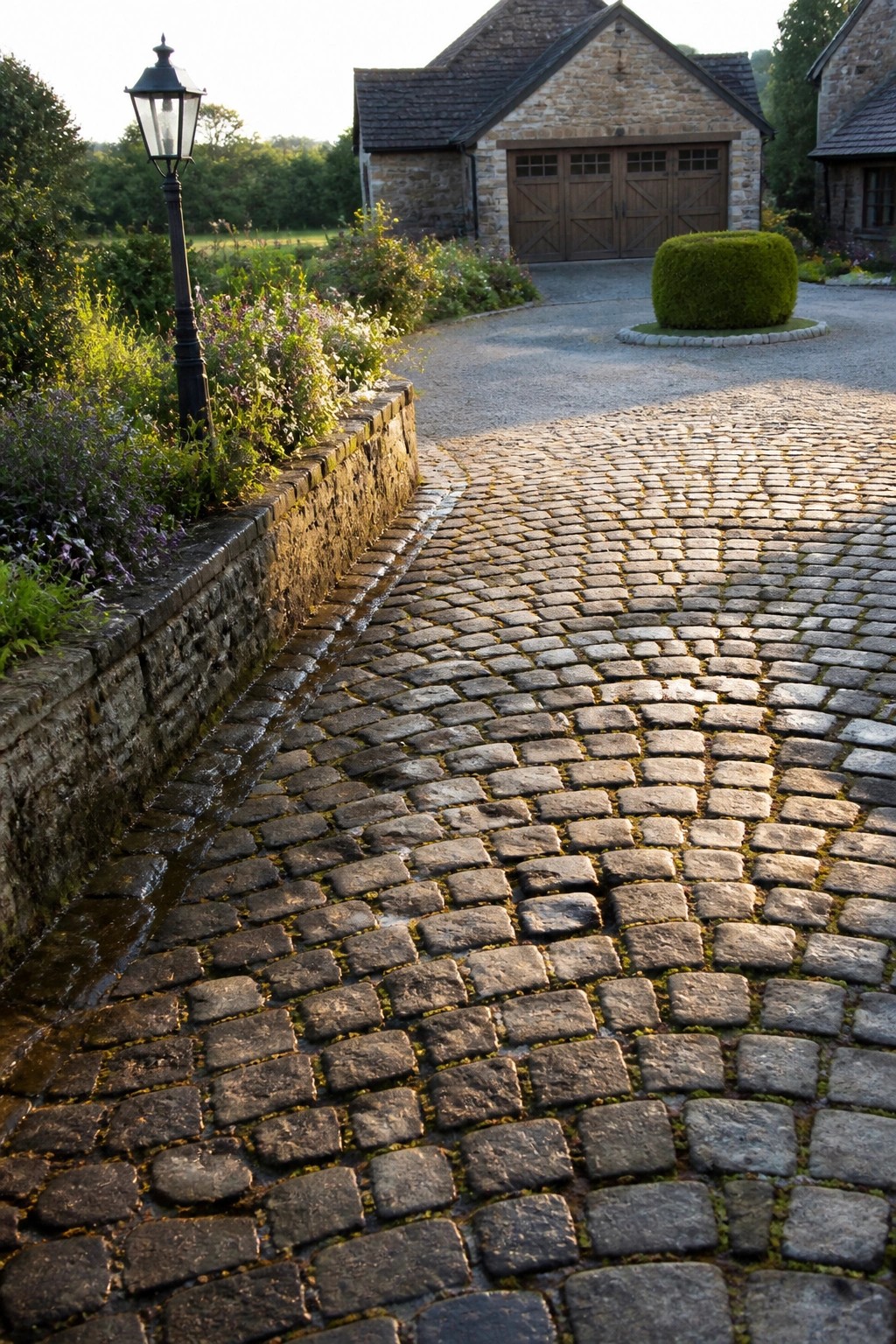
Cobblestone gives a driveway real staying power. It handles heavy use without looking worn down, and the uneven surface adds texture that feels settled rather than new. Many homes with stone walls or older architecture already lean on this material because it blends in without much effort.
It suits properties that want a traditional appearance and works especially well when the rest of the hardscaping stays simple. Just note that the surface can feel bumpy underfoot or under tires, so it may not be the best fit for every household.
Large Pavers With Gravel Joints

Large pavers create a simple, structured surface that still feels a bit different from plain concrete. The wide slabs keep the look clean while the narrow gravel lines between them add just enough texture and help with drainage.
This approach works best on modern or minimalist homes with straight driveways. Make sure the base is properly compacted so the pavers stay level, and choose a gravel color that contrasts enough to show the grid pattern without looking too busy.
Stone Pavers For Driveways
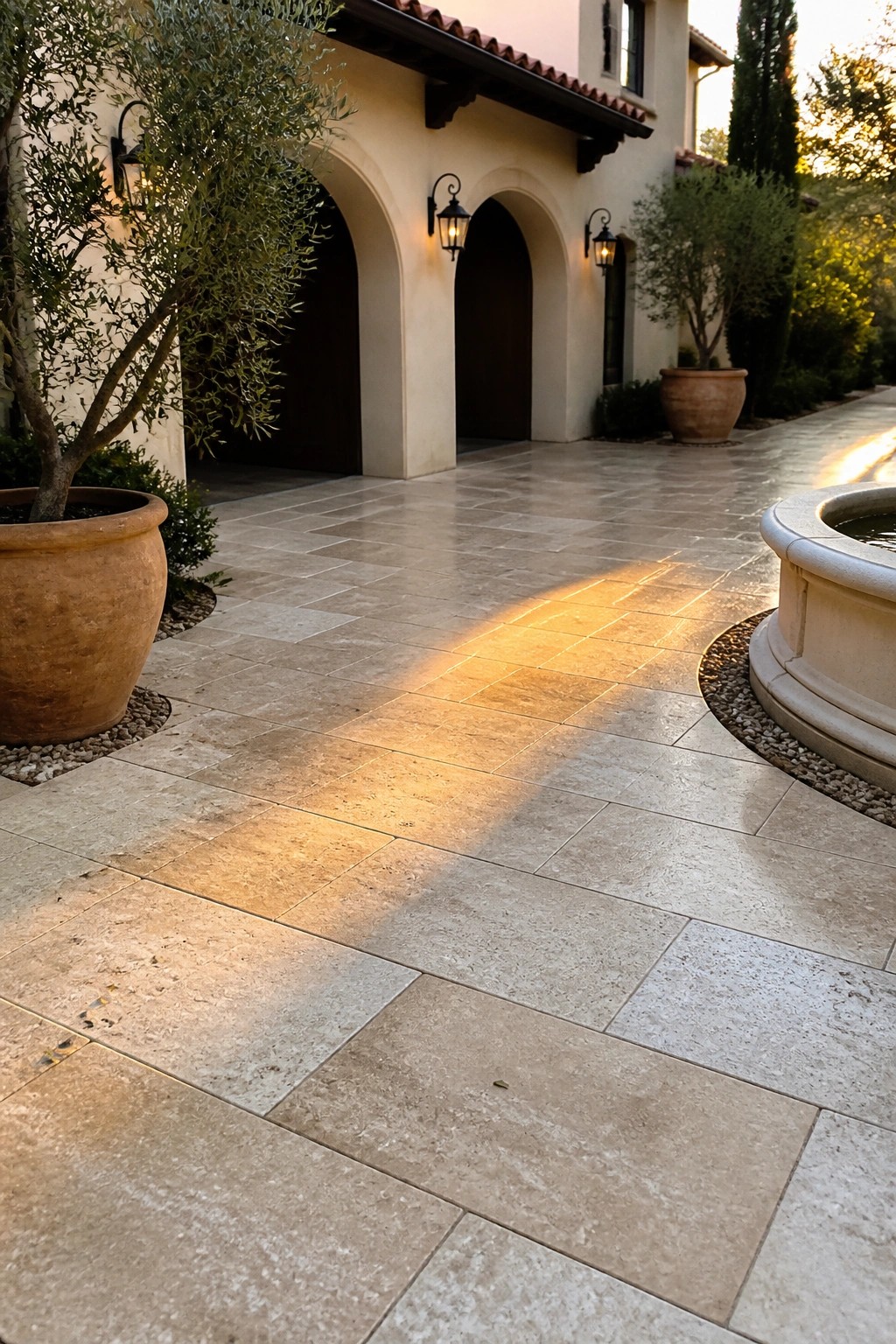
Large stone pavers give a driveway a solid base that feels finished without looking overly polished. They handle daily use well and create a surface that ages nicely over time.
This works best with homes that have stucco walls or simple architecture, where the pavers can tie the entry area together. Check the thickness and joint spacing before installation so the surface stays level under cars.
Paver Grids Filled With Grass

A grid of concrete pavers with grass growing between them gives a driveway a cleaner look than solid pavement while still handling regular car traffic. The pattern breaks up the surface so it feels less heavy and lets a bit of green show through without needing a full lawn.
This works best on homes with a modern or simple exterior where you want the driveway to blend into the landscaping rather than stand out as one big slab. Keep the grass low and choose a sturdy paver so the surface stays level over time.
Stone And Brick For The Path
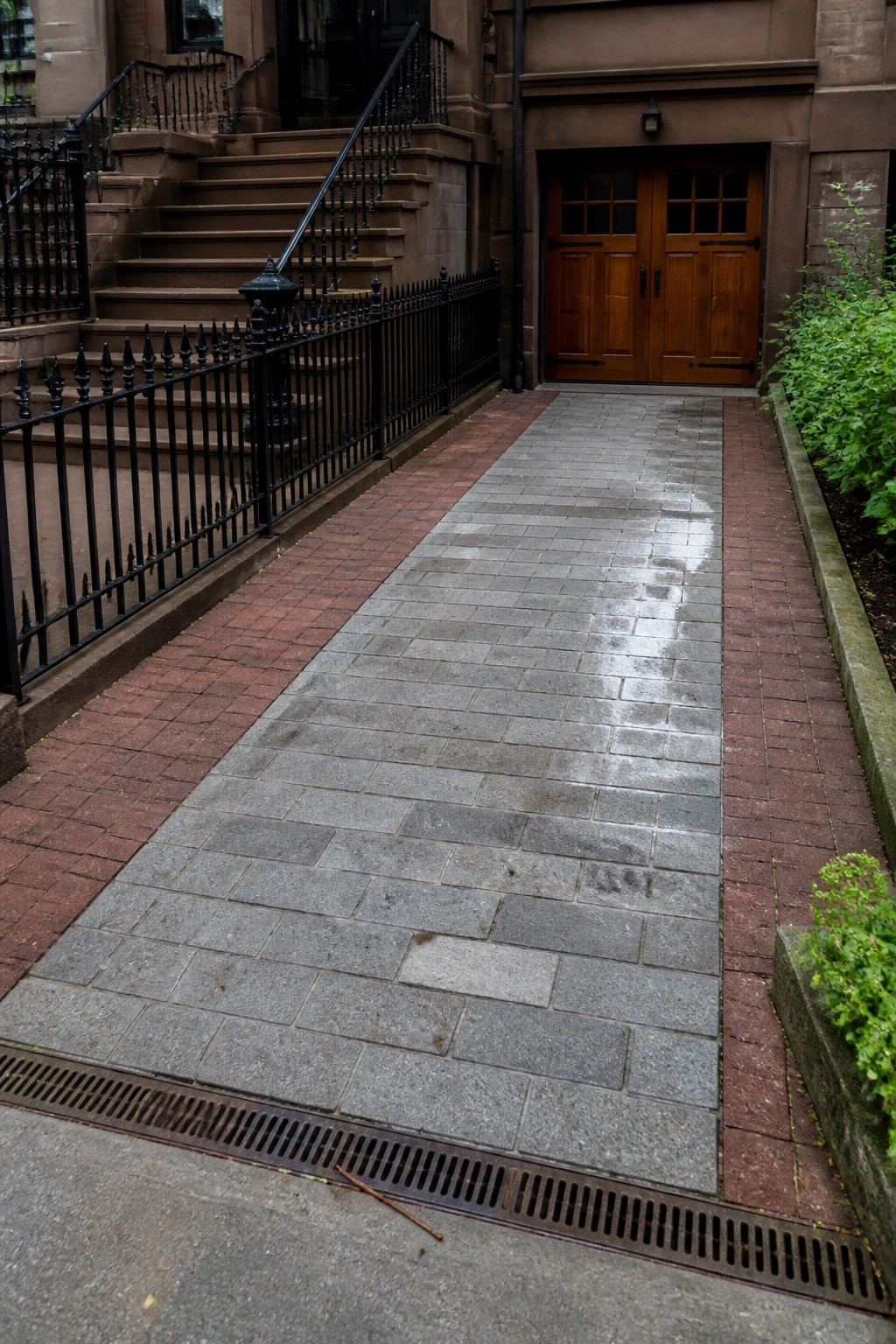
Mixing large stone pavers down the center with brick along the edges gives a driveway approach more weight and texture than a single material. The combination holds up to weather and foot traffic while keeping the look simple and grounded.
This works best on homes with traditional details where you want the entrance to feel solid rather than stark. Keep the center stones wide enough for easy walking and make sure the brick border sits slightly lower so water runs off toward the sides.
Resin Bound Gravel Driveways

Resin bound gravel gives a driveway a textured surface that still feels firm underfoot and under tires. The stones stay locked in place instead of scattering, and the look blends easily with garden beds and natural surroundings.
This surface works best on homes with simple modern lines where you want something practical but not too stark. It drains well during rain, though the base needs to be solid from the start so it holds up over time.
Concrete Pavers With Pebble Joints
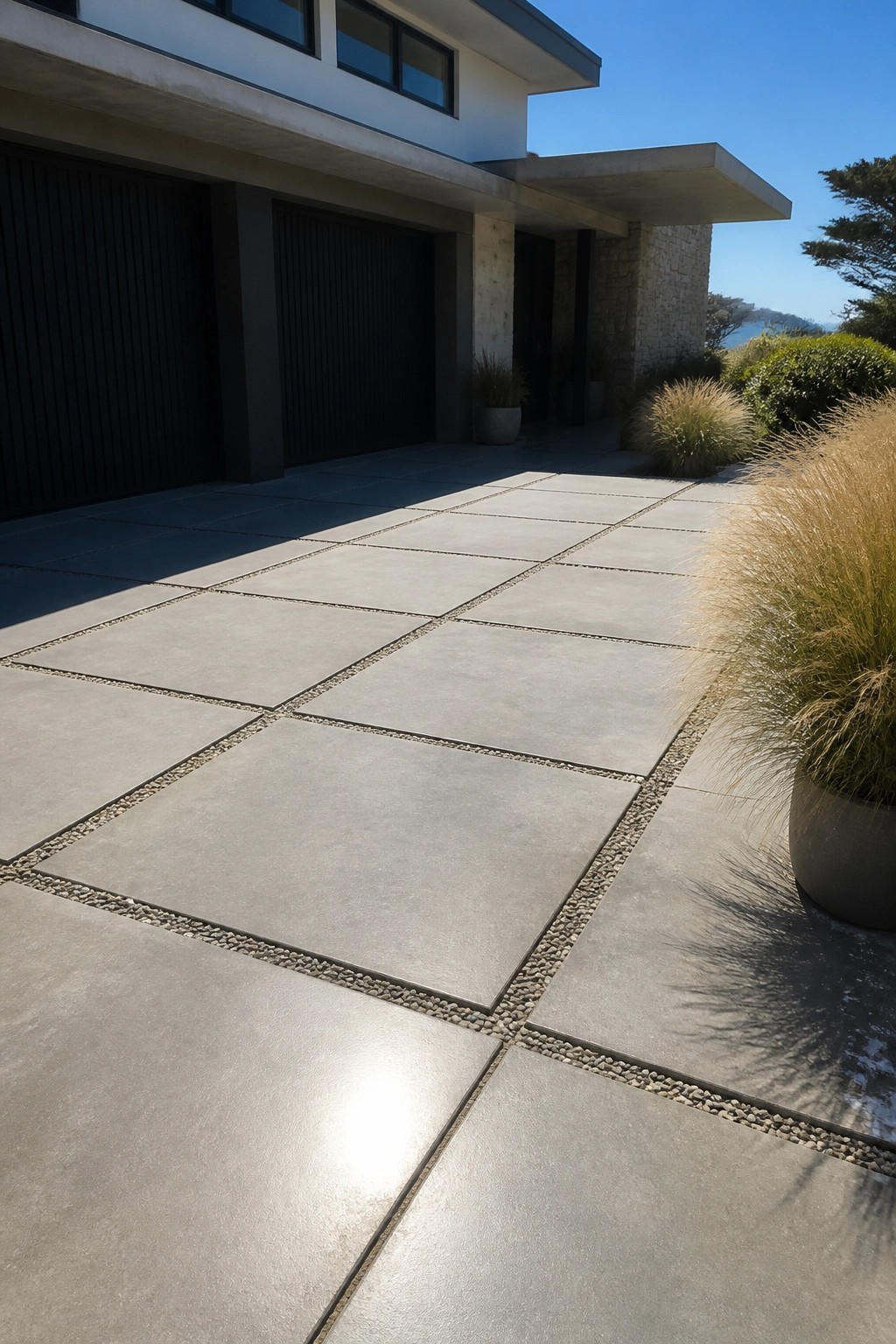
Large concrete pavers laid in a grid with narrow pebble lines between them give a driveway a neat, structured surface. The gaps break up the expanse of solid material and let a little water drain through instead of running straight off.
This approach suits modern homes or any property where you want something cleaner than gravel but less stark than a poured slab. Keep the base well compacted so the pavers do not shift, and choose pebbles that match the color of the pavers for a quieter look.
Cobblestone Driveways
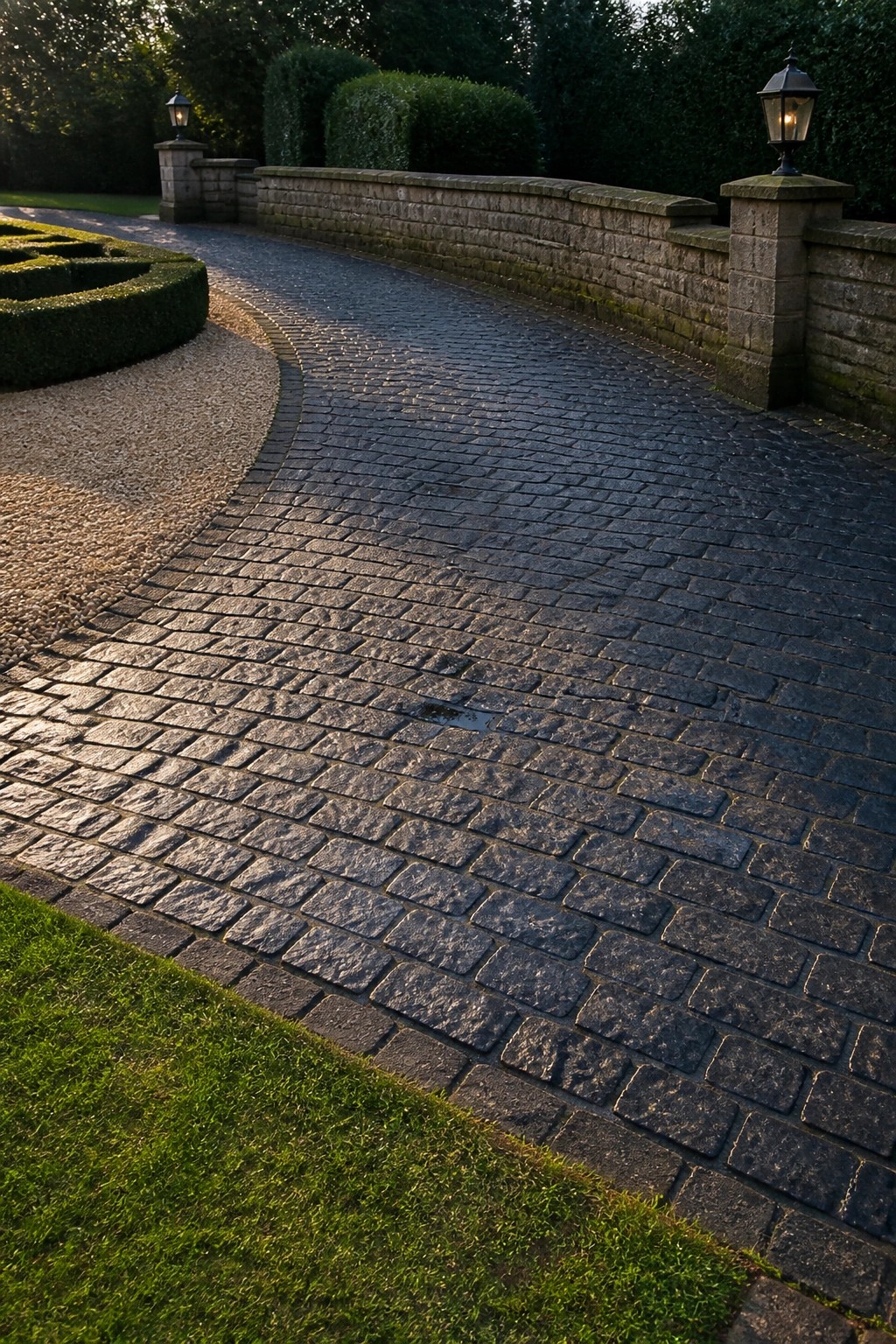
Cobblestone gives a driveway a durable surface that feels settled and lasting. The small stones lock together well under wheels and hold their shape through seasons without needing much repair.
This approach suits older homes or properties where the driveway should match stone walls or garden paths already in place. Keep the curve gentle and make sure the base drains properly so water does not sit between the joints.
Gravel With Timber Edging
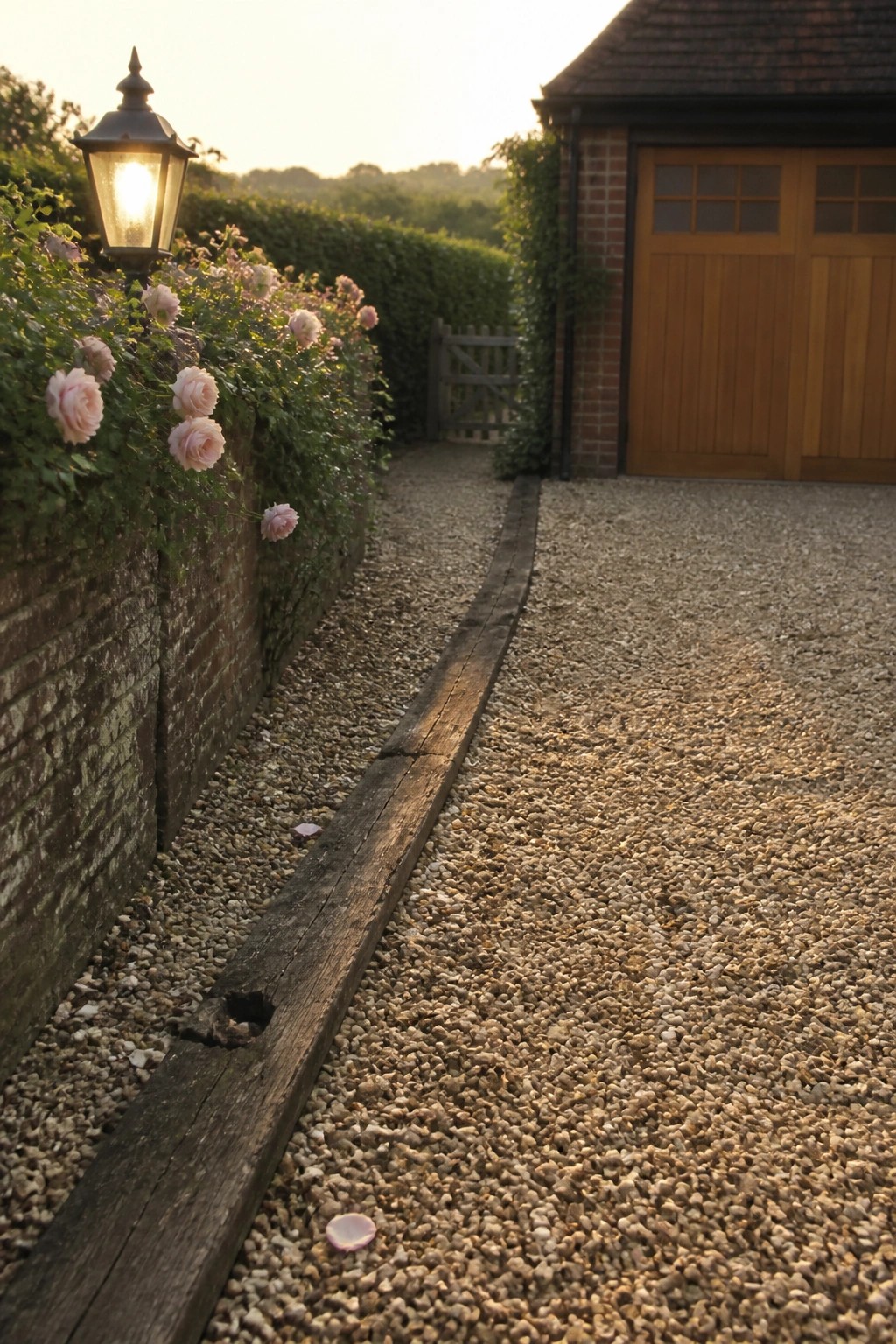
Gravel works well as a driveway surface because it drains easily and feels less harsh than solid paving. The timber edging keeps the stones in place and gives the whole thing a simple, finished look that blends with older brickwork and planting.
This setup suits homes with traditional or country exteriors where you want something practical that still looks settled. It is easy to install and repair, though you may need to top up the gravel every few years depending on traffic.
Timber Planks Set Into Gravel
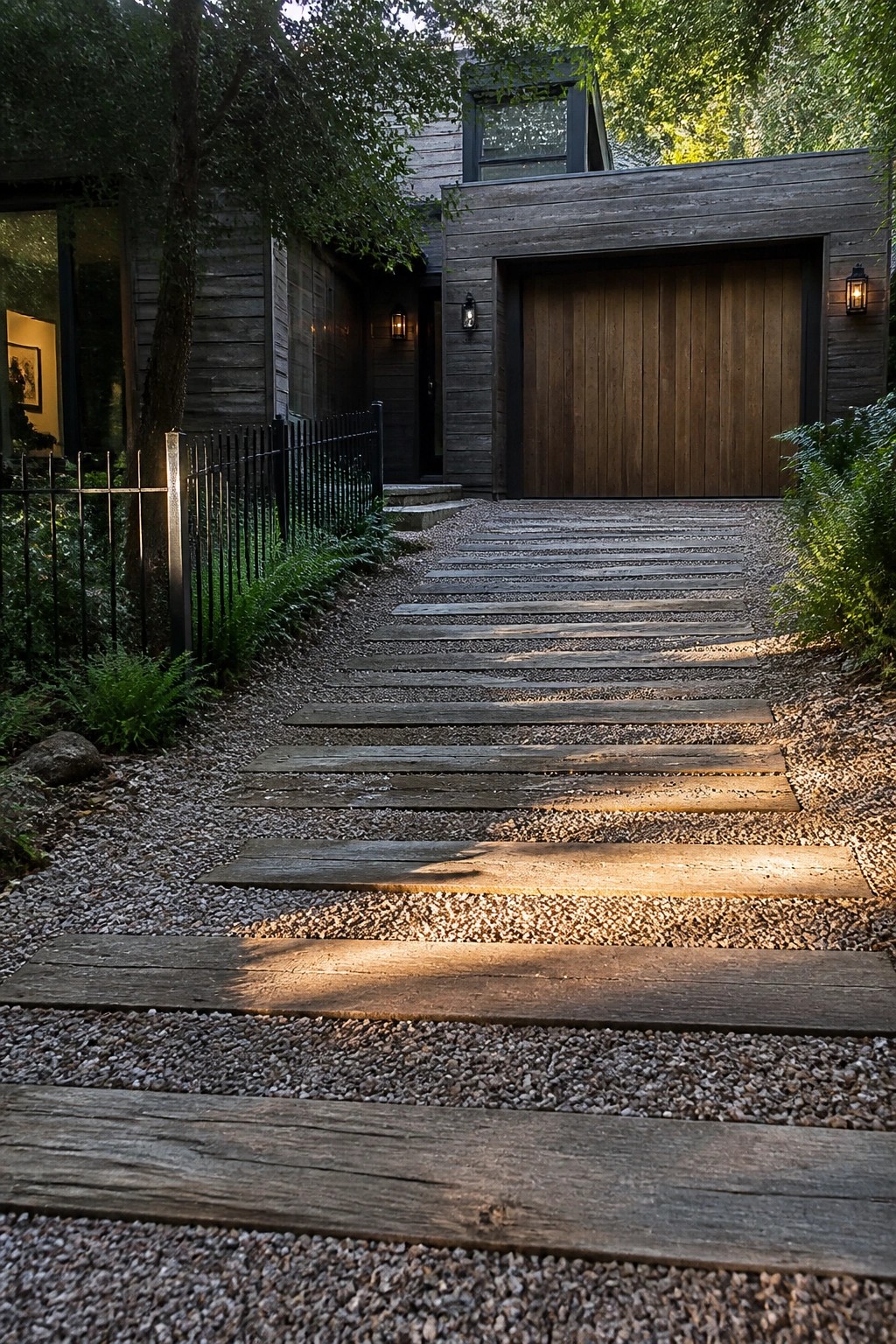
Wood planks laid right into a gravel base give a driveway path that feels solid underfoot without looking too formal. The wood breaks up the loose surface and makes walking easier, especially on a slope, while the gravel still handles drainage and keeps the whole thing looking relaxed.
This works best on homes that already lean modern or natural in style, where you want the entry to connect with surrounding planting rather than stand out as a hard paved surface. Treated lumber or reclaimed timber holds up fine as long as you set the planks level and add a good gravel layer underneath for stability.
Stepping Stones in Gravel
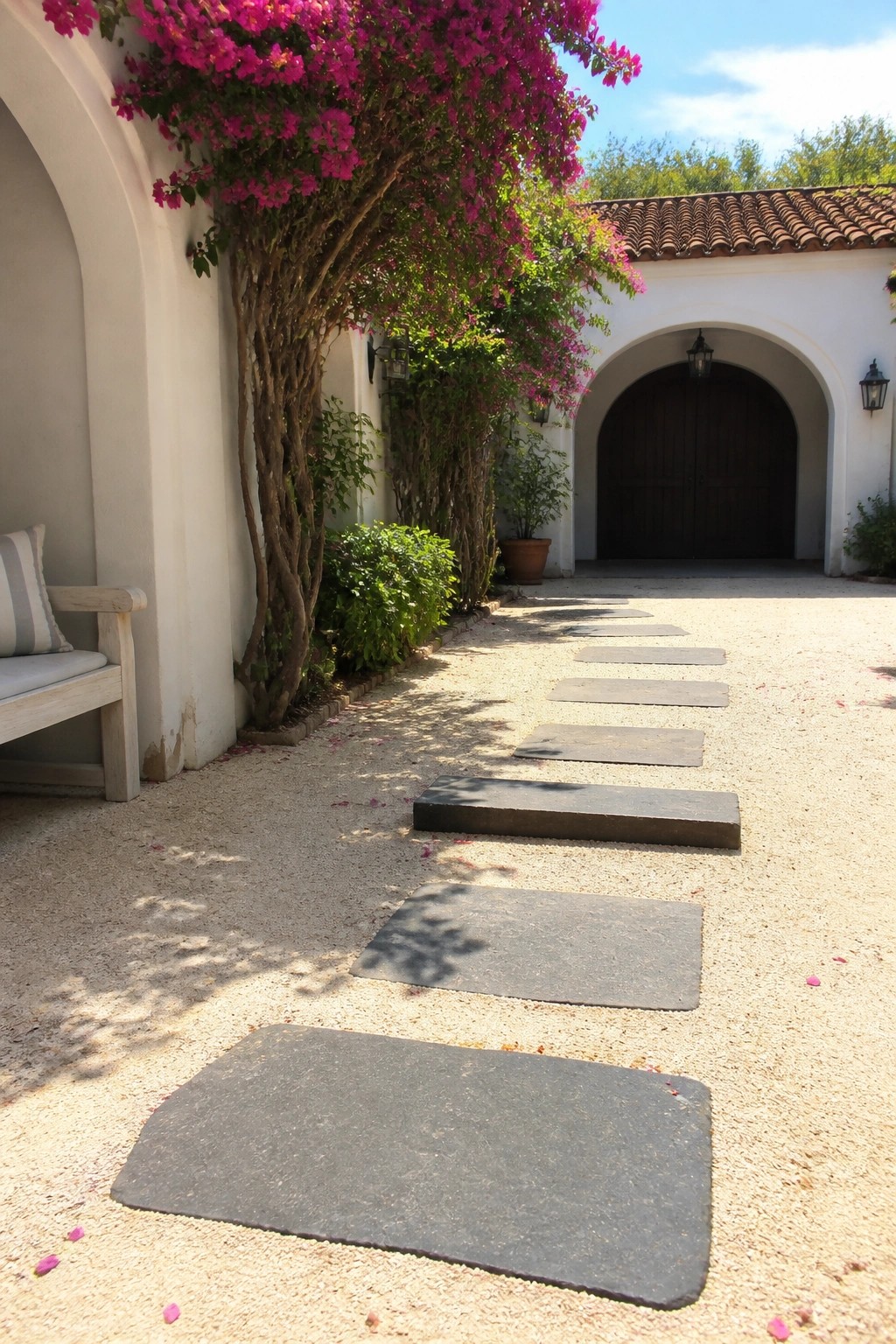
Large flat stones set into loose gravel make a clean path without turning the whole area into solid pavement. The look stays simple and blends easily with plants along the edges.
This works best on homes where the driveway or entry path needs to feel open rather than heavy. Space the stones for comfortable steps and keep the gravel raked so it stays even over time.
Aggregate Driveways With Glass Pebbles
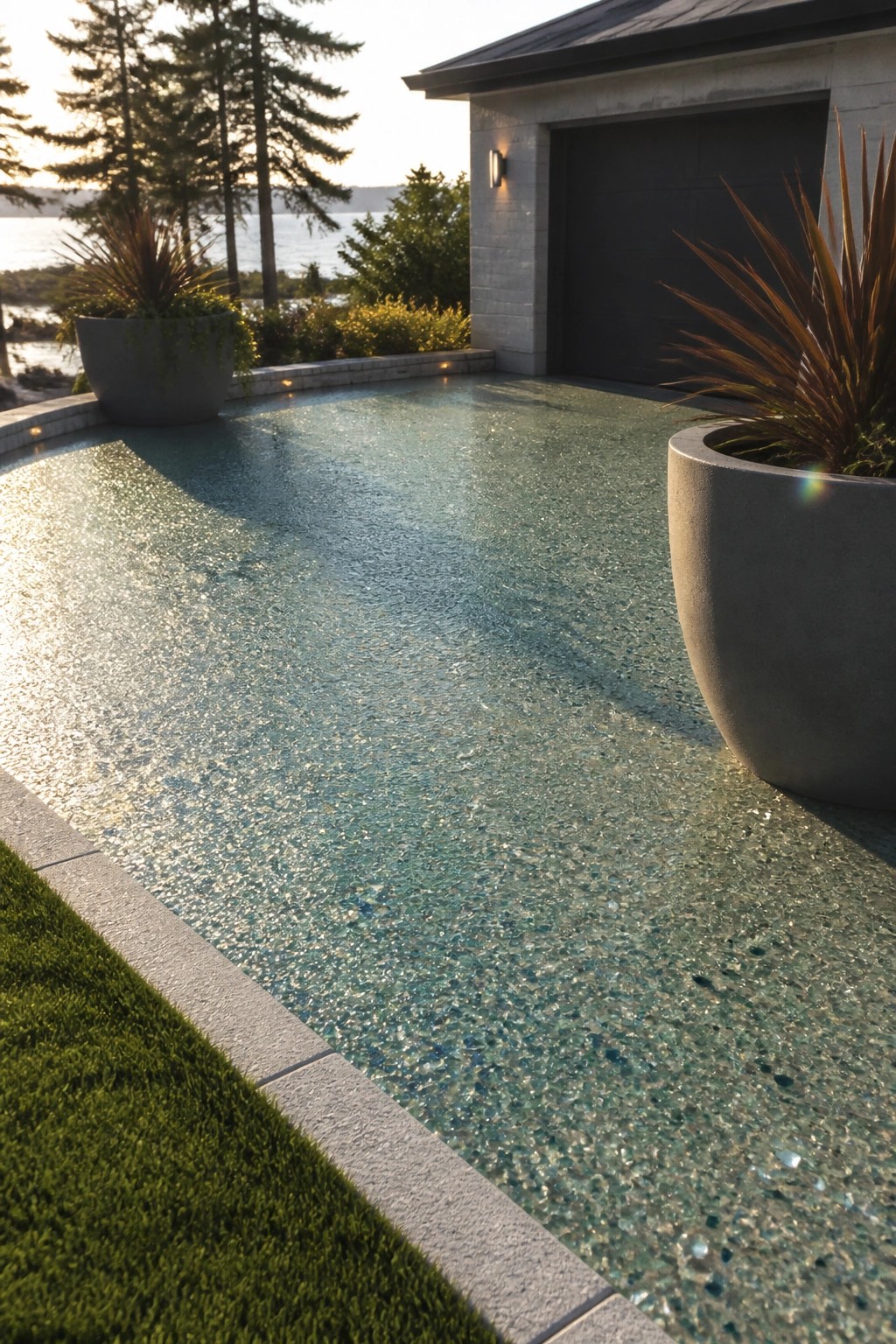
An aggregate driveway made with bits of colored glass mixed into the surface stands out because it reflects light instead of just sitting there flat. The small pebbles create texture that changes with the sun, giving the whole front a brighter feel without any extra lighting or ornaments.
This approach works best on modern homes or properties near water where the sparkle fits the setting. Keep the edges clean with a simple border and seal the surface so the glass stays put and the driveway remains easy to maintain over time.
Frequently Asked Questions
Q: How do I know if a surface will handle snow and ice without cracking? A: Check the material’s freeze-thaw rating before you buy. Some options like concrete with additives stand up better in cold spots. Seal it yearly to add extra protection.
Q: Can I mix two different surfaces on the same driveway? A: Yes, many people blend gravel with pavers for a custom look. Just make sure the edges stay stable so one side does not shift. Test a small section first to see how they wear together.
Q: What is the quickest way to clean oil stains from these driveways? A: Sprinkle cat litter on fresh spills and let it soak up the mess. Sweep it away after a few hours.
Q: Do I need to worry about drainage with these ideas? A: Pick a surface that lets water through if your yard floods easily. Gravel and certain pavers help avoid puddles. Slope the driveway slightly away from the house to guide runoff.
