

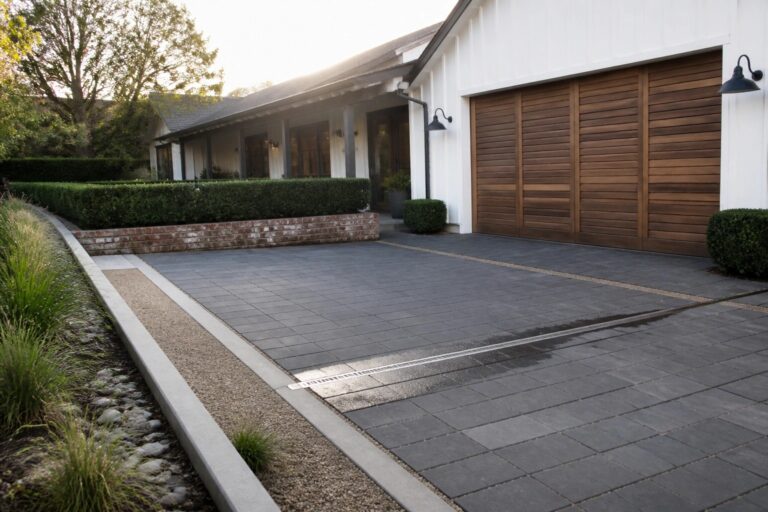
Water tends to collect right where the driveway meets the street, and that always seems to create the first visible problem when you pull up to a house.
I have seen how poor drainage can erode the edges and leave stains that are hard to ignore from the road.
Fixing it early saves a lot of hassle later.
Over time I started paying more attention to the slope and the materials because those choices shape how the whole front looks after a storm.
Testing a few simple adjustments on my own driveway showed me which ones actually keep the water moving away without constant upkeep.
Linear Drains Keep Water Moving On Driveways

A flat driveway often collects water near the garage or along the edges after heavy rain. Running a linear drain through the paved surface gives the water a direct route out instead of letting it sit and seep toward the house.
This setup works best on driveways that use large pavers or concrete sections with limited slope. The drain sits level with the surface so cars pass over it without issue, and any gravel strips between the pavers let extra water filter down rather than run across the whole area.
Add Gravel Strips Along Driveway Edges

A gravel strip running beside concrete pavers gives water a place to sink in instead of pooling on the surface. The small stones create a simple channel that moves runoff toward a drain without needing extra pipes or trenches. Many homes already have this setup because it keeps the driveway drier after rain and reduces the chance of cracks from standing water.
This approach works best on driveways that slope slightly toward the sides. Keep the gravel strip about six to eight inches wide and use crushed stone that packs down over time. Check the strip once a year to remove leaves or debris that could slow the flow.
Gravel Driveways With Drainage Grates

Gravel works well for driveways because water passes through the stones instead of sitting on the surface. A grate set along the side catches the extra flow and moves it away before it can wash out the edges or create puddles.
This approach fits homes with long or gently sloped driveways where rain tends to collect. Place the grate low enough to catch water but high enough to avoid constant debris buildup, and connect it to a simple outlet pipe.
Add a Linear Drain Along the Driveway Edge

A linear drain set right at the edge of the driveway catches water before it can spread across the pavement or soak into the lawn. This setup works especially well on homes where the driveway sits close to grass or garden beds, since it moves water away quickly without needing a big slope change.
It fits best on paved driveways that see regular rain or snowmelt. Choose a grate rated for vehicle weight and make sure it ties into a proper outlet so water does not just pool at the end of the run.
Add a Central Drain Grate to Handle Runoff

A circular paved section with a drain grate right in the middle gives water a clear place to go before it spreads across the rest of the driveway. This keeps the surface drier and reduces the chance of puddles forming near the house or along the edges.
The approach works best on driveways that slope toward a single low point. It suits homes with brick or stone paving and pairs well with grass strips or planted borders that need protection from excess water.
Gravel Strips Along Paved Paths

A gravel strip next to a stone path gives water a place to go instead of pooling on the hard surface. It works well because the loose stones let rain soak in or flow toward a drain without washing out the walkway edges.
This setup fits homes with sloped driveways or paths that collect runoff from lawns or roofs. Keep the gravel layer thick enough to handle heavy rain and add a grate at low points if the water needs to empty into a pipe.
Linear Drains Built Into the Driveway

A straight channel drain set into the pavement gives water a clear path to follow instead of letting it spread across the surface. This keeps the driveway drier after rain and cuts down on the chance of ice forming in colder months.
It works best on sloped or curved driveways where water tends to collect along one side. Set the grate at the lowest point, make sure it ties into a good outlet, and choose a finish that blends with the paving material so it does not stand out.
Add Gravel Edging For Driveway Drainage

A gravel border next to the paved surface gives water a place to go instead of sitting on the bricks. The stones let rain soak in quickly and keep the edge from washing out over time.
This setup works best on driveways with a slight slope or in spots that collect runoff. Keep the gravel a little lower than the paving so water moves toward it naturally, and add plants along the strip if you want to soften the look without blocking flow.
Embed A Drain Grate In Paved Driveways

A solid metal grate set into the middle of the paving gives water a clear place to go instead of letting it sit on the surface. This keeps the driveway drier and reduces the chance of cracks or erosion along the edges over time.
It works best on driveways that slope toward the center or where runoff collects after storms. Homeowners often choose a grate sized to match the paver pattern so it stays practical without interrupting the layout.
Gravel Strips Along the Edge Handle Runoff Well

A narrow gravel area with a few flat pavers set into it gives water a clear path to drain instead of pooling on the driveway surface. The metal border keeps the gravel in place and stops soil from washing out during heavy rain.
This kind of edge treatment works best on homes where the driveway sits close to the house or a retaining wall. It handles water from downspouts without needing a full trench system, and the plants next to it help absorb some of the moisture too.
Add a Culvert Under a Path Crossing

A simple culvert lets water move freely under a driveway or path instead of pooling on the surface. The stone arch in this setup shows how a basic structure can handle runoff from nearby fields without disrupting the route.
This approach suits rural homes or properties with existing ditches. Size the pipe for the expected flow and top it with a short bridge or reinforced section so vehicles and foot traffic stay dry.
Add A Central Stone Channel For Drainage

A paved path or driveway often ends up with standing water after rain because the surface has no easy place for runoff to go. Setting a narrow strip of larger rounded stones right down the center gives water a clear route to follow. The rest of the path stays firm underfoot while the center handles the flow.
This approach suits any sloped walkway or driveway that uses cobblestones or pavers. Keep the center stones slightly lower than the surrounding surface so water moves toward them on its own. It stays simple to install and avoids the need for extra drains or trenches along the sides.
Use Linear Drains With Paver Driveways

A linear drain set right into the pavers handles runoff without needing a big slope or extra channels. It keeps water from sitting on the surface and makes the whole driveway feel more finished at the same time.
This setup works well on homes where the driveway meets planting beds or a gravel edge. Just make sure the grate sits flush so tires and shovels do not catch on it.
Add Linear Drains To Your Driveway

Linear drains set into the concrete let water run off quickly without creating big puddles or needing a sloped surface everywhere. They sit flush with the paving so the driveway stays flat and easy to walk or drive on, and they work especially well when the house sits close to the street or on a site that gets heavy rain.
Place them along the edges where the driveway meets planting beds or along the center if the surface is wide. They pair nicely with raised planters that help direct flow and keep the overall look clean. Just make sure the grates are rated for vehicle weight and check them once a year for debris.
Add Drainage Outlets To Retaining Walls

Retaining walls on sloped properties often need a way to release water that builds up behind them. Placing small pipes through the wall lets that water escape into a gravel channel below instead of pushing against the structure or flooding nearby paths.
This setup works well along driveways or walkways where the ground drops away. The gravel strip helps water soak in quickly while the pipes keep the flow controlled. Just make sure the outlets sit low enough and point away from the house or paved areas.
Linear Drains Along the Driveway Edge

A linear drain set into the paving catches water before it pools on the surface or runs toward the house. It keeps the driveway usable even after heavy rain and protects the surrounding beds from washing out.
This setup works best on homes where the driveway sits close to garden areas or slopes toward the entry. Run the grate parallel to the edge so it lines up with the paving pattern and stays out of the main driving area.
Install a Gravel Drainage Strip Along the Driveway

A gravel strip next to the pavement lets water move off the surface and soak in instead of pooling or running across the drive. The stone border holds the gravel in place and gives the edge a clean look that still feels natural.
This approach works best on homes with gentle slopes or spots where water tends to collect after rain. Keep the strip wide enough for good flow and check the grate or outlet now and then to avoid clogs.
Frequently Asked Questions
Q: What happens if my driveway is already paved and I cannot add a swale? A: You can cut in a trench drain along the edge instead. It catches water before it spreads and directs it away from the house. Check the slope first so everything flows right.
Q: How do I stop water from washing gravel off my driveway? A: Add a slight crown down the middle when you grade it. This sends rain to the sides where you can put in some rock channels. Replenish the gravel every couple years as needed.
Q: Will roots from nearby trees clog my drainage pipes? A: Pick a spot away from big trees if you can. Wrap the pipe in filter fabric before you bury it to block roots while water flows through.
