


When I look at a house from the street the driveway often decides whether the whole exterior feels settled or slightly off.
Stone surfaces in particular can tie the entry, the facade, and the surrounding hardscape together or leave them looking disconnected.
I have watched a few homes lose their quiet appeal because the driveway material aged differently than the rest of the front.
It helps to picture how the chosen stone will meet the walkway, the garage doors, and the plantings that frame the approach.
A couple of these layouts strike me as worth sketching out for my own place before any work begins.
Curved Cobblestone Driveways
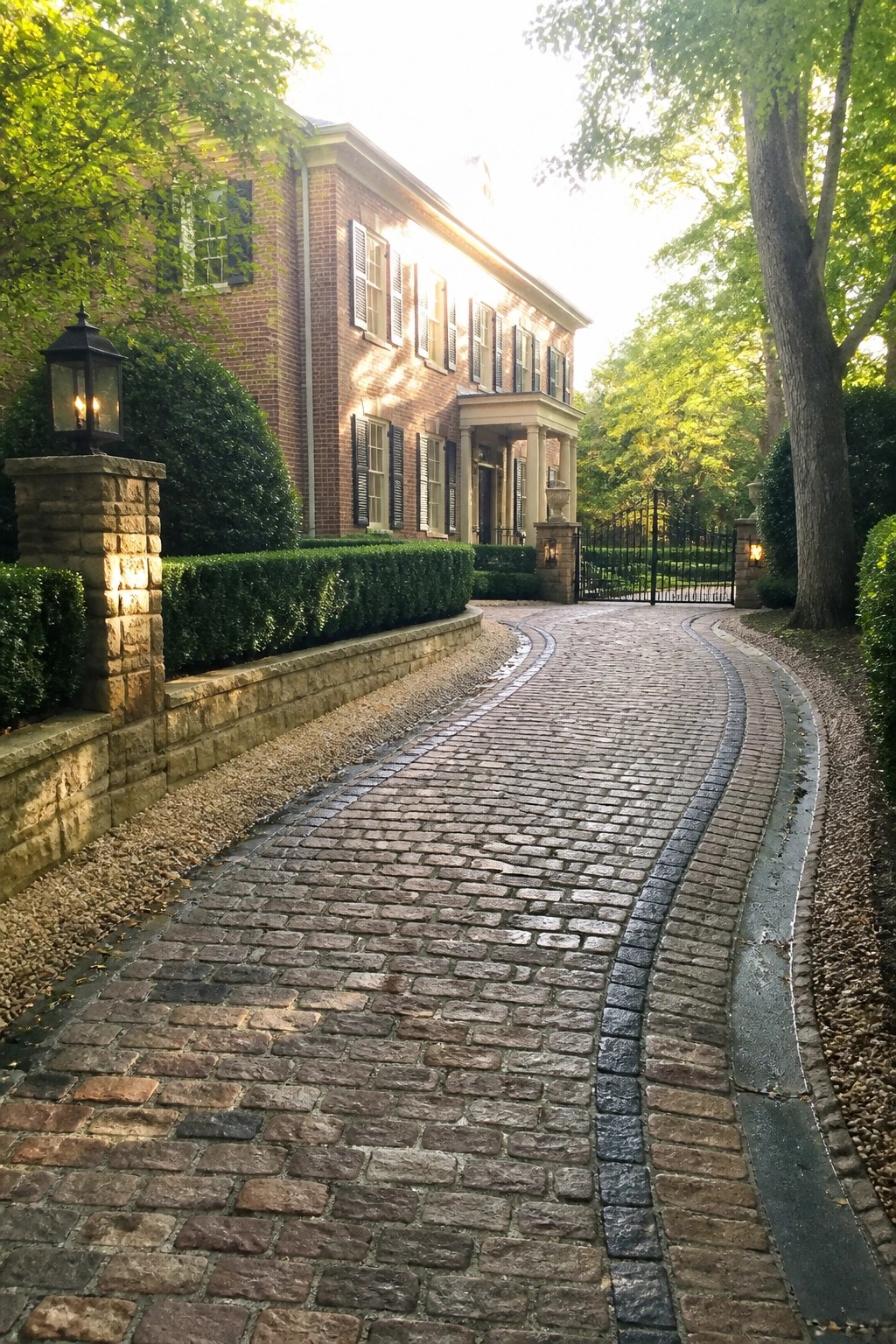
A gentle curve in a cobblestone driveway can make the approach feel more natural and less rigid than a straight run. It also helps the driveway blend with the surrounding landscape instead of cutting across it like a road.
This layout works especially well on properties with mature trees or slight slopes, where a straight line would look too formal. Keep the edging simple and consistent so the curve stays easy to maintain over time.
Circular Patterns in Stone Driveways
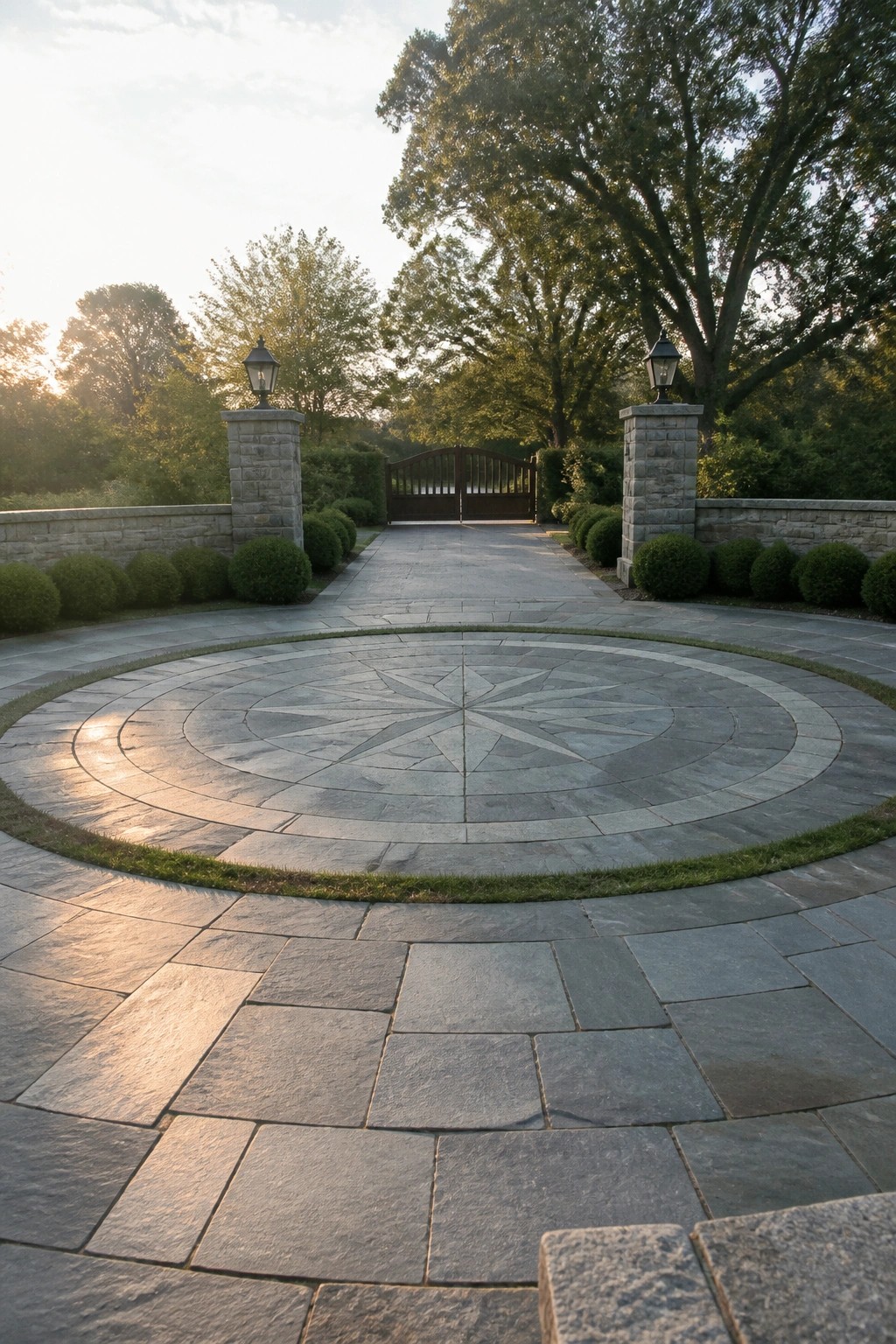
A circular pattern set into a stone driveway gives the surface more structure and breaks up long stretches of paving. The design draws the eye inward and makes the entry feel more intentional than a plain rectangle of stone.
This approach works well on properties with enough width for a turnaround or a formal approach to the gate. Keep the pattern in the same stone as the main drive so it reads as part of the whole surface rather than an added decoration.
Stone Slabs Set In Gravel
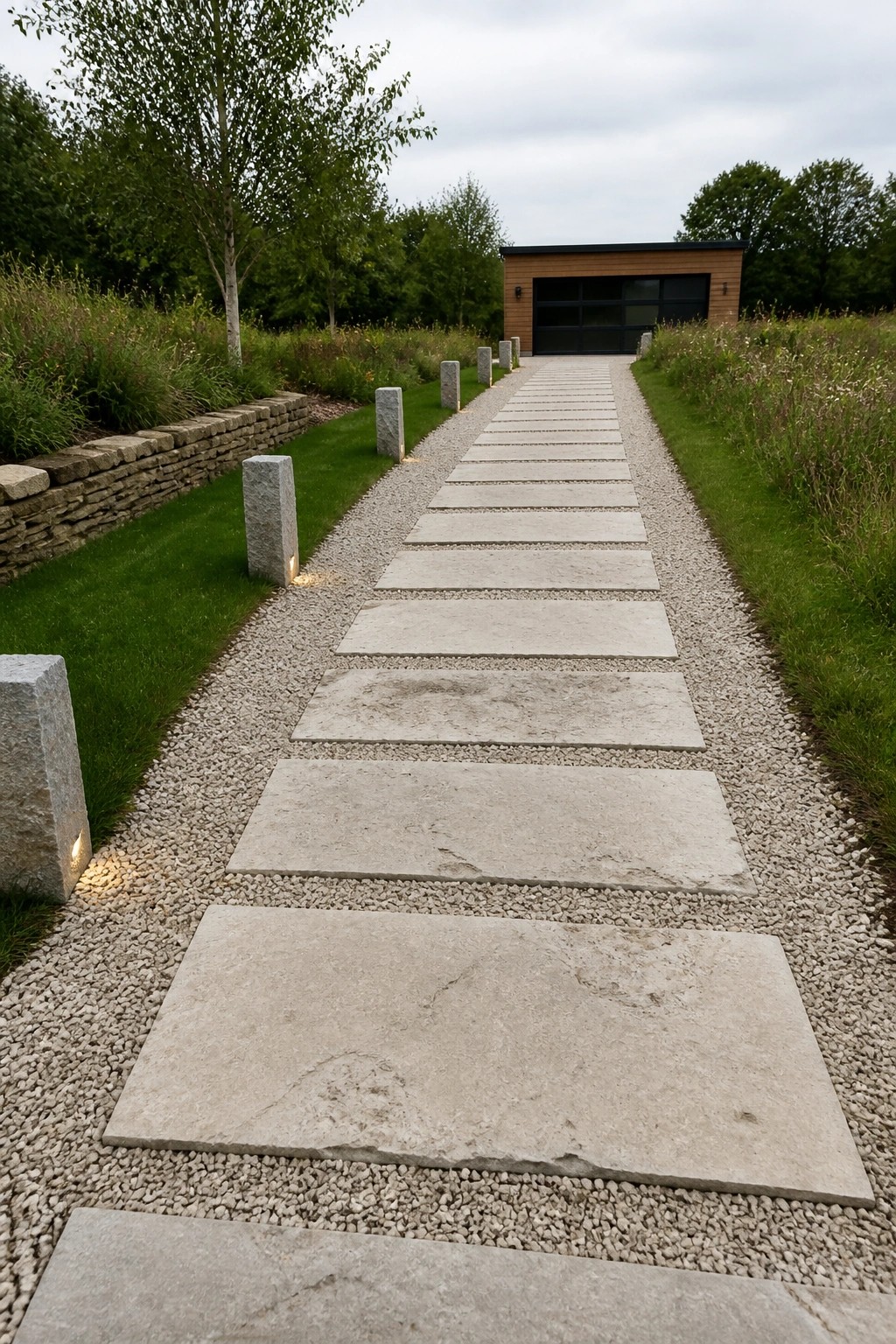
Large rectangular slabs laid with gravel between them make a simple path that still feels solid underfoot. The gaps keep the surface from looking too heavy while the stones give clear direction and a sense of order.
This approach suits longer entrances or side approaches on homes where you want something more interesting than plain gravel but less formal than a full driveway. It drains well and needs little upkeep beyond occasional raking.
Flagstone Paths Blend Into Garden Settings

Irregular flagstone paths feel settled and natural because the stones sit at different angles and sizes. The gravel between them keeps things from looking too rigid while still giving a firm walking surface.
This layout works best on homes with established beds and low stone edging already in place. Match the border height to the stones so the path reads as part of the garden rather than a separate strip.
Stone Strips In Concrete Driveways

Stone strips set into concrete give a driveway a clean, lasting structure without making it feel heavy. The narrow bands break up the wide slabs and add a bit of contrast that holds up over time. This approach works especially well on longer approaches where a single material can start to look flat.
It suits homes with simple lines and works best when the stone color stays close to the house or surrounding hardscape. Keep the rest of the edges simple with gravel or low plantings so the strips stay the main detail. Too many different materials next to it can start to compete.
Stone Pavers For A Classic Driveway

Stone pavers give a driveway a solid, lasting look that blends with the house instead of standing out as a separate surface. The light color and simple rectangular layout keep the entry feeling open and balanced with the surrounding walls and plantings.
This approach works best on homes with stucco or plaster exteriors and a Mediterranean or traditional style. Keep the pattern straightforward and avoid mixing too many sizes so the material itself stays the main feature.
Cobblestone Driveways

Cobblestone driveways have a way of looking settled and right from the start. The irregular stones settle into place over time and give the entrance a solid, finished feel without looking brand new. They also handle the weight of cars better than people expect once they are properly laid.
This approach works best on homes with some age or traditional details, where the texture of the stone can tie into brick or stonework already on the house. Keep the layout simple and let the curve follow the natural approach to the door rather than forcing straight lines. The main thing to watch is the base preparation, since a good foundation keeps the surface from shifting later on.
Large Pavers With Grass Joints
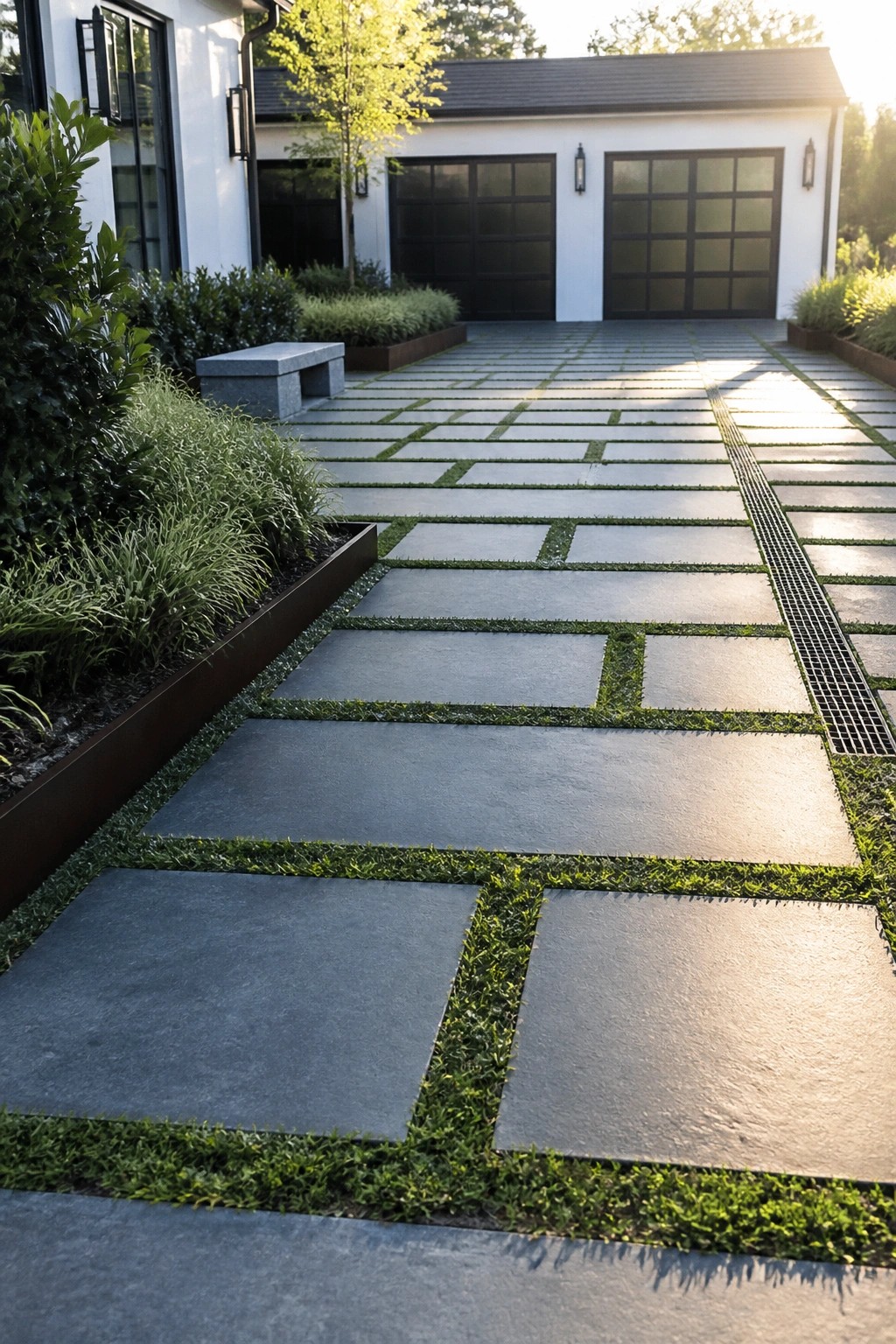
Large rectangular stone pavers set with narrow strips of grass between them create a driveway that feels more open and less heavy than a solid slab. The pattern breaks up the surface while still providing a stable place for cars, and the grass softens the overall look without needing much extra planting.
This works best on homes with clean lines and some garden space along the sides. Use thick pavers on a solid base so the surface stays level over time, and keep the grass strips narrow enough that they do not interfere with tires.
Classic Cobblestone Driveways

A cobblestone driveway brings a settled, old-world feel that works especially well with stone houses. The irregular shapes and natural tones help the surface look like it has always been there, rather than something added later. It also holds up to daily use without looking worn down too quickly.
This approach suits older homes or any property aiming for a traditional exterior. Keep the edges simple and let low planting along the sides soften the look, but avoid anything too tall that might narrow the drive. The main thing is to choose stones that match the color of the house so everything feels connected.
Stone Pillars for a Gravel Driveway Entrance

Stone pillars give a gravel driveway a clear starting point and a more finished appearance. They turn an otherwise simple path into something that feels intentional and lasting without adding much extra work.
This setup suits homes on larger lots or in rural settings where the driveway runs a longer distance. Match the stone to other walls or foundations on the property and keep the pillars modest in height so the entrance stays welcoming rather than imposing.
Stone Pavers With Defined Borders
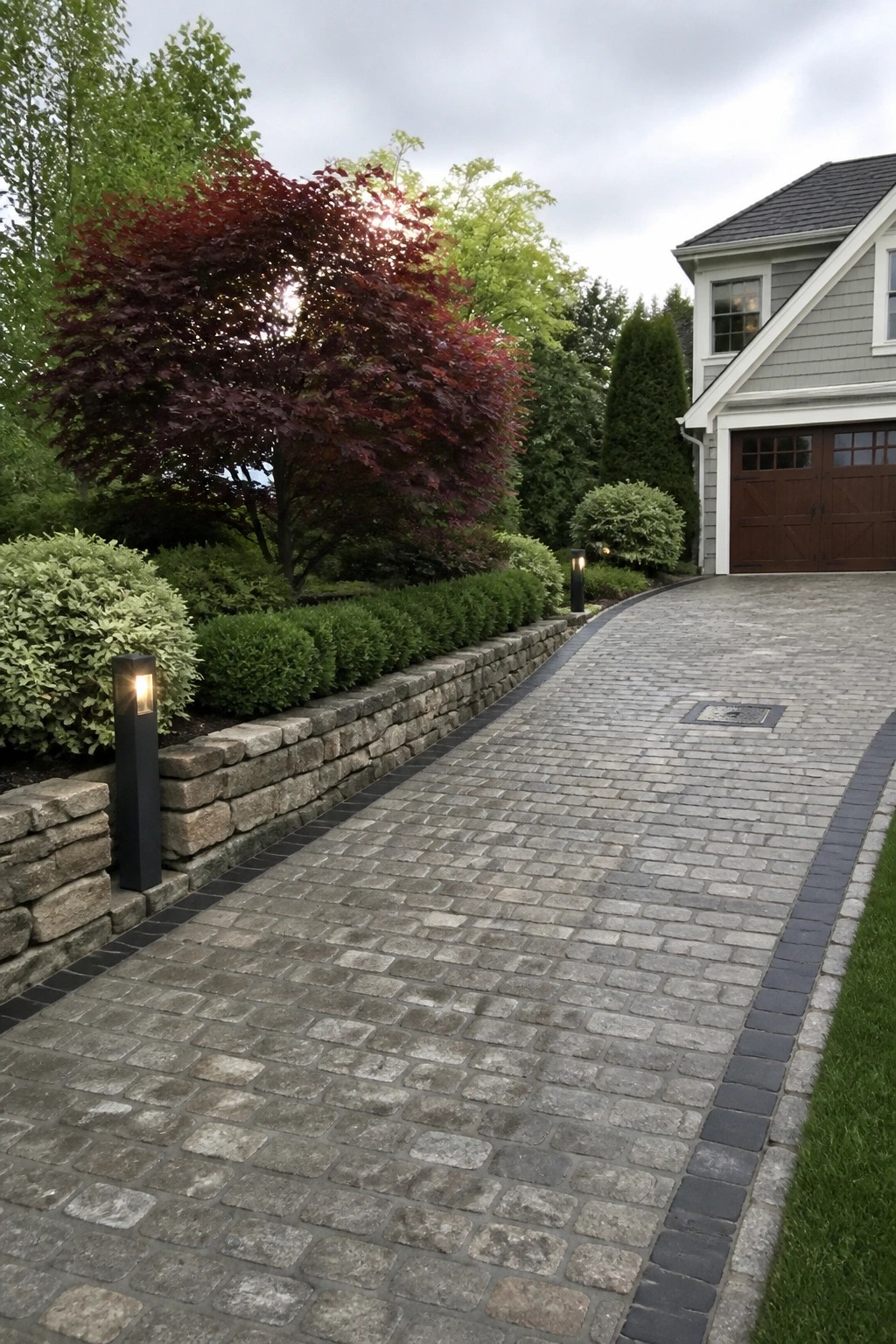
Stone pavers give a driveway real staying power because the material handles weather and traffic without looking worn down fast. The dark border running along the edges helps the whole surface read as neat and finished instead of just a big stretch of gray.
This approach works well on homes with gentle curves in the drive or where the paving needs to meet a retaining wall or lawn without looking messy. Keep the border material consistent with any nearby paths or steps so the look stays simple across the whole front.
Stone Pavers Set in Gravel

Large flat stones placed directly into gravel make a path that feels settled and easy on the eye. The mix keeps the surface stable while letting water drain through, so it stays practical in wet weather and needs very little upkeep.
This approach suits homes with simple landscaping or coastal settings where you want the walkway to blend into the surroundings rather than stand out. Keep the stones large enough for comfortable steps and let the gravel fill the gaps to hold everything in place.
Flagstone Paths Set In Gravel

Large irregular stones laid in a loose gravel base create a simple path that feels both structured and natural. The stones sit low enough to blend with the surrounding ground while the gravel fills the gaps and keeps the surface stable underfoot. This approach works especially well along the side of a house where you want something more permanent than mulch but softer than a solid paved drive.
It suits older homes or properties with established gardens because the stones can follow gentle curves without looking forced. Keep the gravel layer thin so it does not shift too much, and choose stones in a single muted tone to avoid a busy look. Maintenance stays low as long as you edge the path to stop grass or ground cover from creeping in.
Large Stone Pavers for Driveways
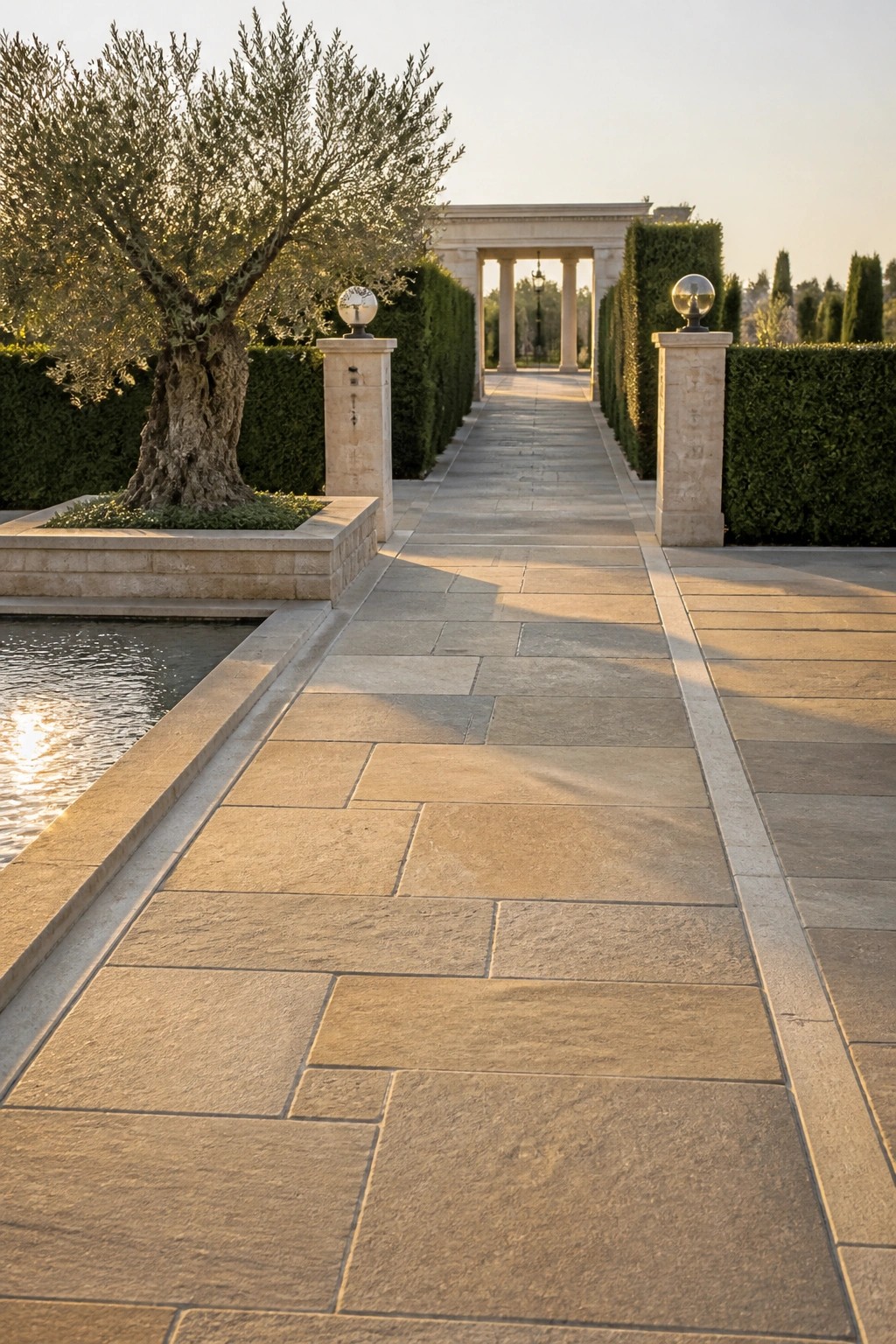
Large stone pavers give a driveway real weight and presence. They feel solid underfoot and hold up well over the years without cracking or shifting much. The simple rectangular layout keeps the look clean instead of busy.
This works best on homes that already have stone or classical details nearby. Match the paver color to any nearby walls or steps so everything reads as one material. Avoid small pieces that can feel fussy next to big plantings.
Stone Pavers For Driveway Texture
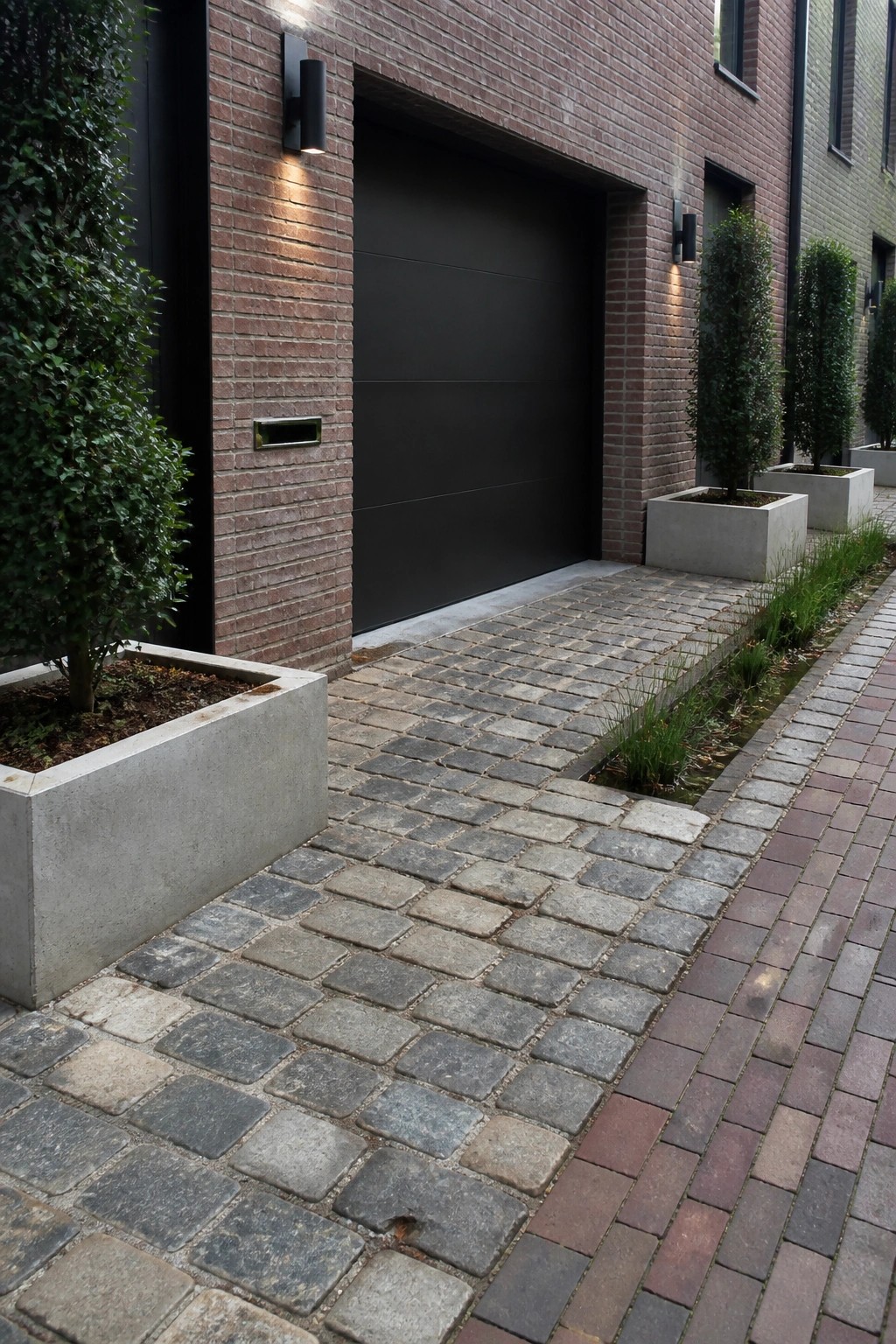
Stone pavers in mixed sizes and tones give a driveway a settled look that fits older homes and new builds alike. The irregular shapes break up the surface so it does not feel like one flat slab, and the natural colors sit well next to brick walls.
Lay them on a firm base and keep the pattern simple so cars can pass without trouble. This works best on homes with traditional materials where you want the driveway to look like it has always been there rather than added later.
Stone Pavers With A Cobblestone Strip

A simple way to give a driveway or path more character is to lay large stone pavers and run a narrow band of cobblestones down the center. The contrast in size and texture breaks up the surface without adding extra materials or patterns. It feels classic rather than fussy and works especially well on narrower entries or side approaches.
This layout suits older homes or any exterior that already uses stone or stucco. Keep the cobblestone band about a foot wide so it reads as an accent rather than a separate path. The main pavers should stay large and fairly uniform so the whole surface still feels solid underfoot and easy to maintain.
Natural Stone Pavers For A Classic Driveway

Irregular stone pavers give a driveway a settled look that concrete or asphalt rarely match. The varied shapes and tones help the surface blend into the surrounding ground instead of sitting on top of it like a separate layer.
This works best on properties where the drive can follow a gentle curve and sit between low stone walls or plantings. Keep the joints fairly tight and use a stable base so the stones stay level over time.
Stone Driveways with Inlaid Gravel Patterns

Large pavers laid in a repeating geometric layout give a driveway real structure without looking overly formal. The gravel strips between the slabs add texture and help with drainage, which keeps the surface looking clean over time. This approach works especially well on wider entries where a solid slab of concrete can feel too heavy.
It suits homes with simple architecture and low plantings that let the pattern stand out. Keep the gravel a dark neutral so it contrasts nicely with the pavers, and make sure the lines run straight at the edges where the driveway meets the house or walkways.
Stone Driveways That Follow Natural Curves
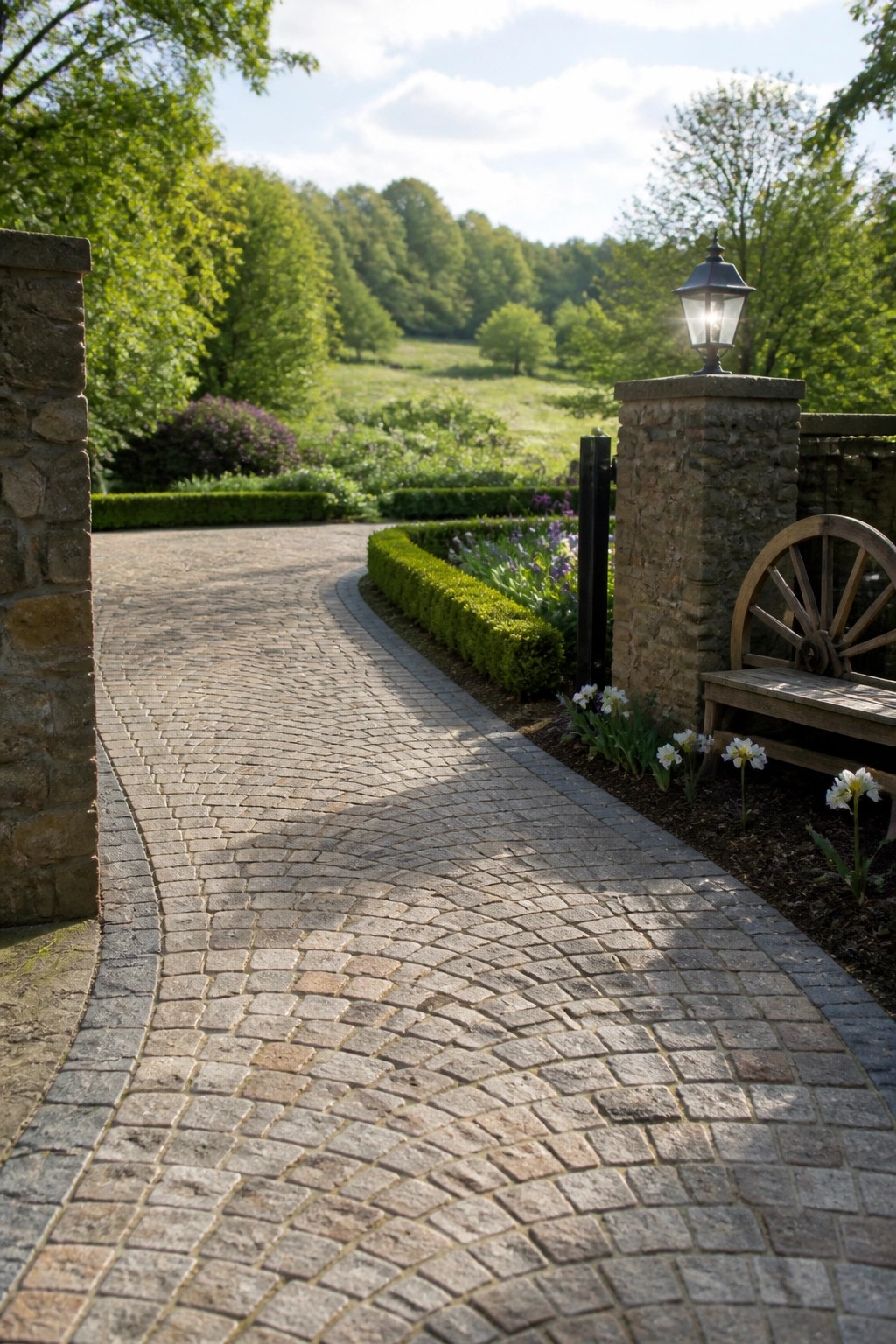
A cobblestone driveway works well when it curves instead of running in a straight line. The gentle bend lets the path feel like it belongs with the garden beds and trees rather than cutting across them.
This approach suits older homes or properties with uneven ground. Keep the edges simple with low shrubs or flowers so the stone blends in over time instead of looking like a separate surface.
Stone Driveways With Pebble Borders
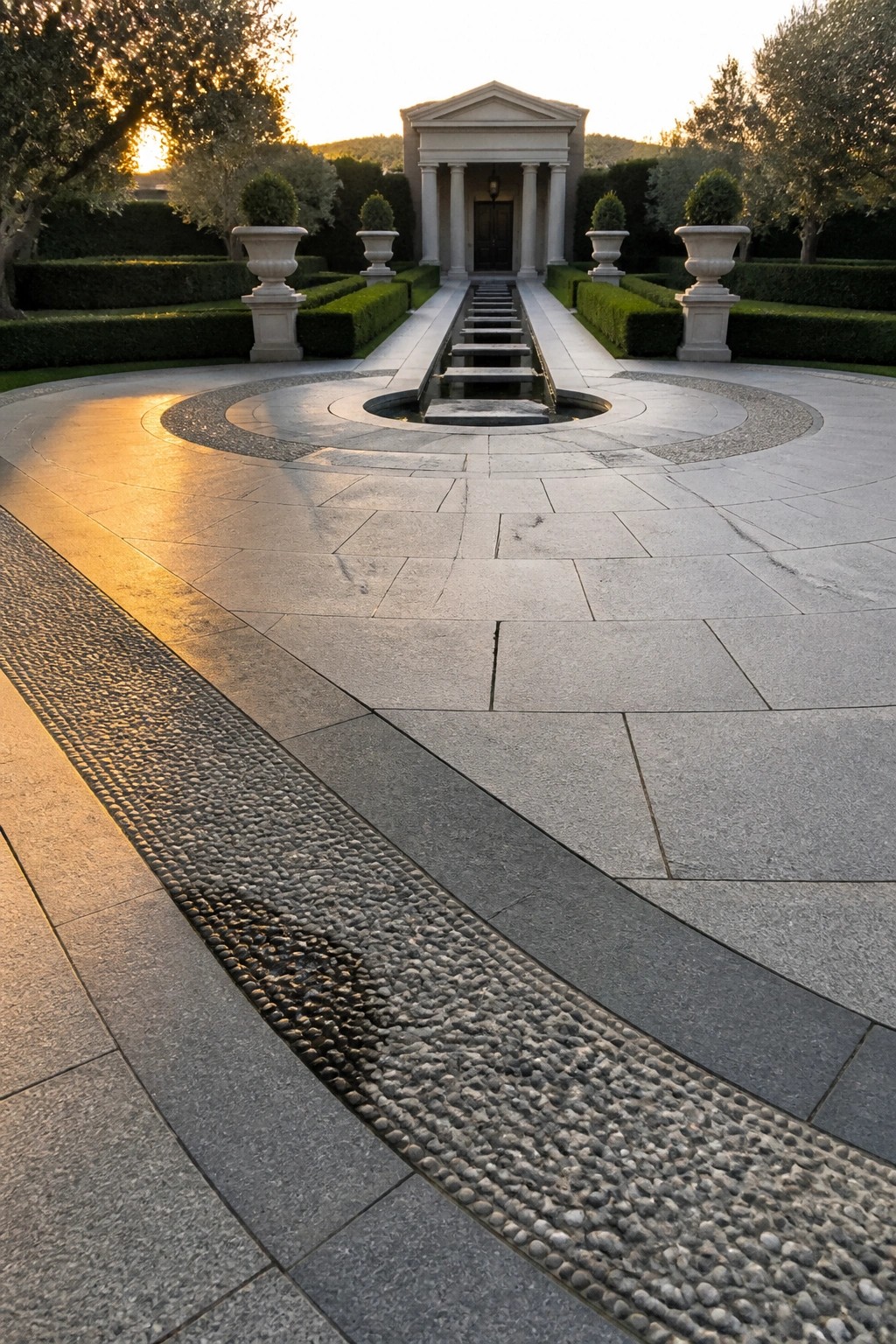
Large stone slabs make a solid base for a driveway, but adding a narrow band of pebbles along the edges gives it more character. The small stones create a clean line that breaks up the big flat surface and keeps the whole thing from looking too plain. This mix works especially well when the driveway curves or opens into a circle.
The approach suits homes with formal gardens or classical details. Keep the pebbles tightly packed so they stay in place over time, and choose a stone color that matches the main pavers. It adds texture without much extra cost or maintenance.
Stepping Stones Set In Gravel

Many homeowners like the way stepping stones break up a gravel surface without covering it completely. The stones give you solid footing while the gravel keeps the look soft and natural.
This approach works best on a side path or along the edge of a driveway where you want something practical but not too formal. It suits homes with trees nearby and needs little more than occasional raking to stay in good shape.
Frequently Asked Questions
Q: What if stones start shifting after a few seasons of heavy use? A: You can reset them by lifting the loose ones and adding a bit more compacted gravel underneath. Tamp everything down firmly so the surface stays level. This fixes the issue without starting over.
Q: How do I keep the driveway from looking patchy if I add stone in stages? A: Work in small sections and match the stone sizes and colors as you go. Rake the gravel base even each time so new areas settle at the same height. The surface will look consistent once everything ages together.
Q: Will rain wash away smaller stones on a sloped driveway? A: Use larger stones along the edges and mix in some angular ones that lock together better. Slope the base gently toward the sides so water flows off instead of cutting channels. Check the surface after the first big storm and adjust any spots that move.
