

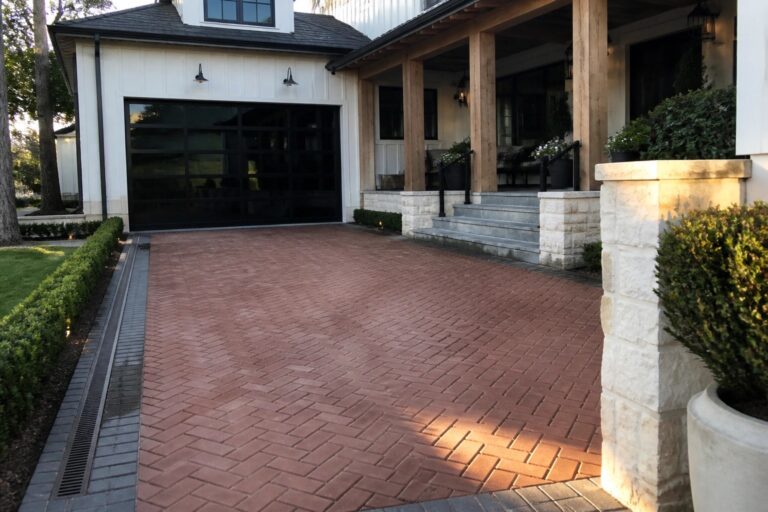
When I think about the front of a house the driveway often gets overlooked until it starts to look tired or mismatched with the rest of the exterior.
Paver choices can shift how the whole facade reads from the street especially if the pattern or color works with the siding and roof.
I learned this the hard way after picking something that looked fine in photos but felt out of place once installed.
Budget friendly versions now come in finishes that mimic more expensive stone without the cost.
Some patterns age better than others.
Herringbone Brick Pavers
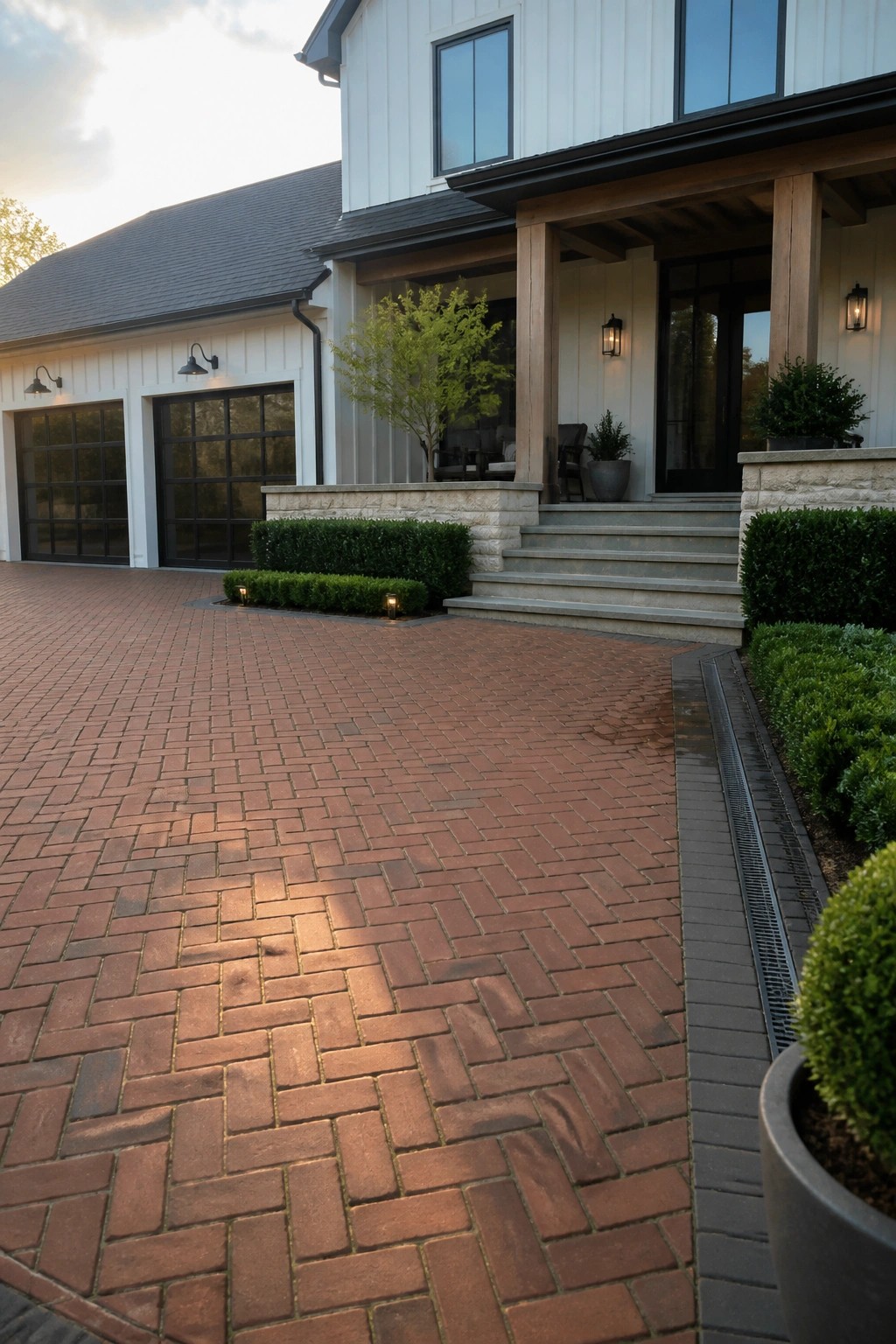
Brick pavers in a herringbone pattern give a driveway a finished look without needing fancy materials. The angled layout adds texture and helps the surface feel more substantial than a plain running bond.
This style suits homes with traditional or farmhouse details. Keep plantings low and simple along the edges so the pattern stays visible and the driveway does not feel crowded.
A Circular Cobblestone Driveway
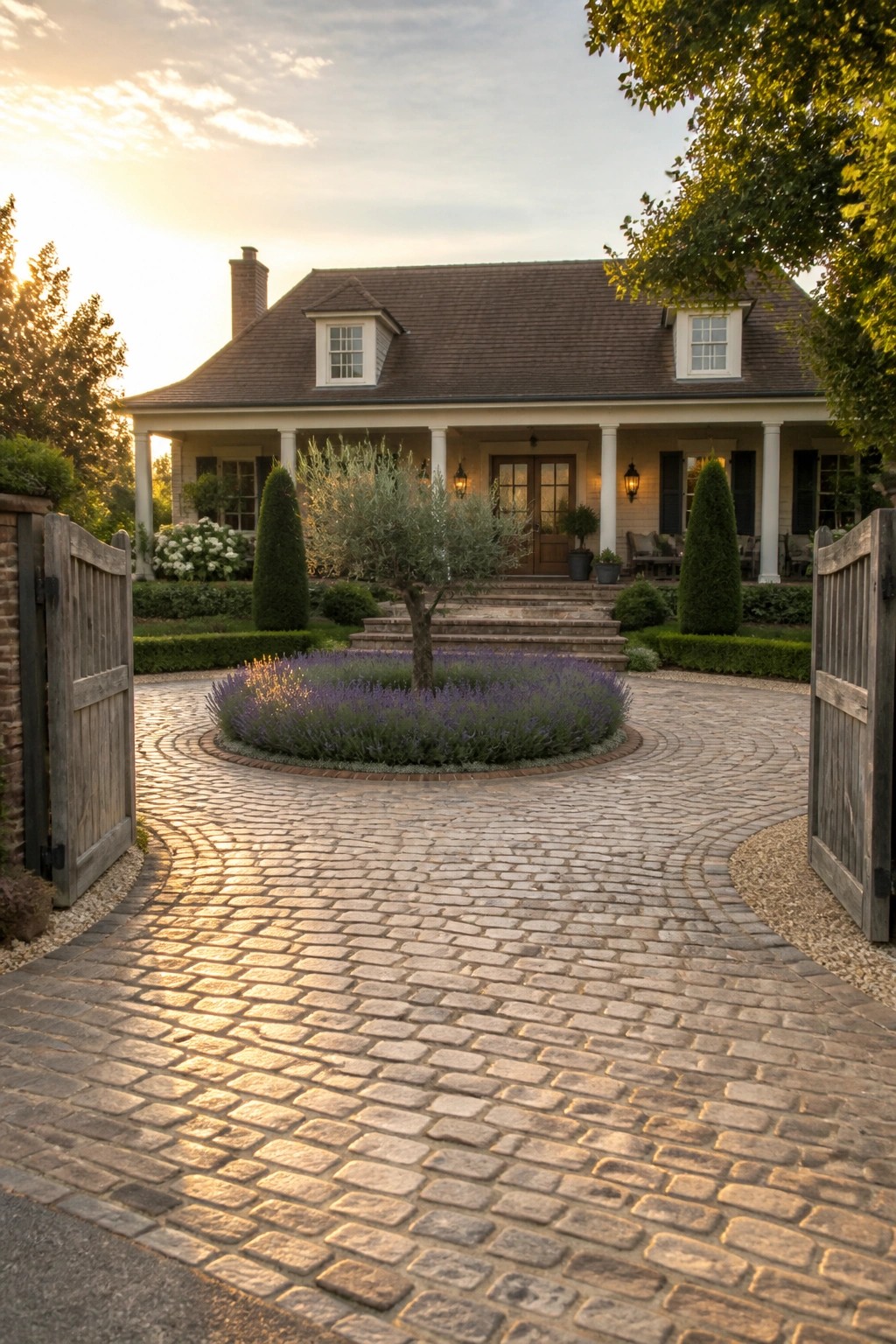
A circular layout lets the driveway become part of the landscape instead of just a strip of pavement. The pavers curve around a planted center bed, which softens the whole entrance and gives the house a more settled look. Many people like this setup because it feels finished without extra ornament.
This works best on lots that have a bit of width in front of the house. Keep the center bed simple with low shrubs or flowers that do not block the view of the door. It suits older or traditional homes where you want the driveway to look established rather than brand new.
Pavers Laid In Gravel For A Simple Driveway
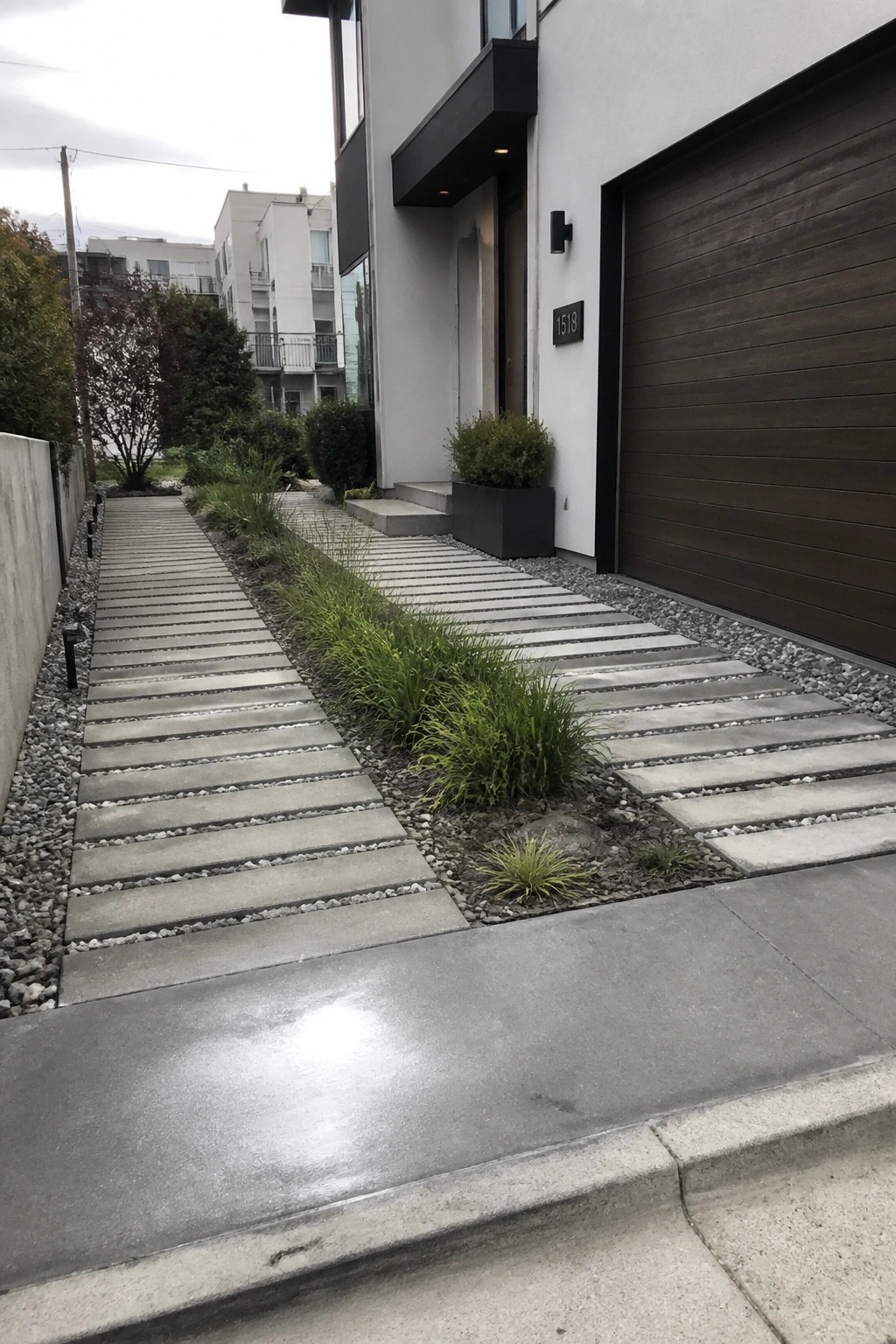
Many people like this approach because it keeps the surface looking neat without pouring a full slab of concrete. The straight paver lines give structure while the gravel fills the gaps and handles drainage, so the whole path stays low maintenance over time.
This layout works best on narrow driveways or side entrances to modern homes. Keep the paver strips wide enough for tires and let the gravel run between them and along the edges. Just watch that the gravel stays contained so it does not scatter onto the street.
Terracotta Pavers For A Simple Entry Courtyard
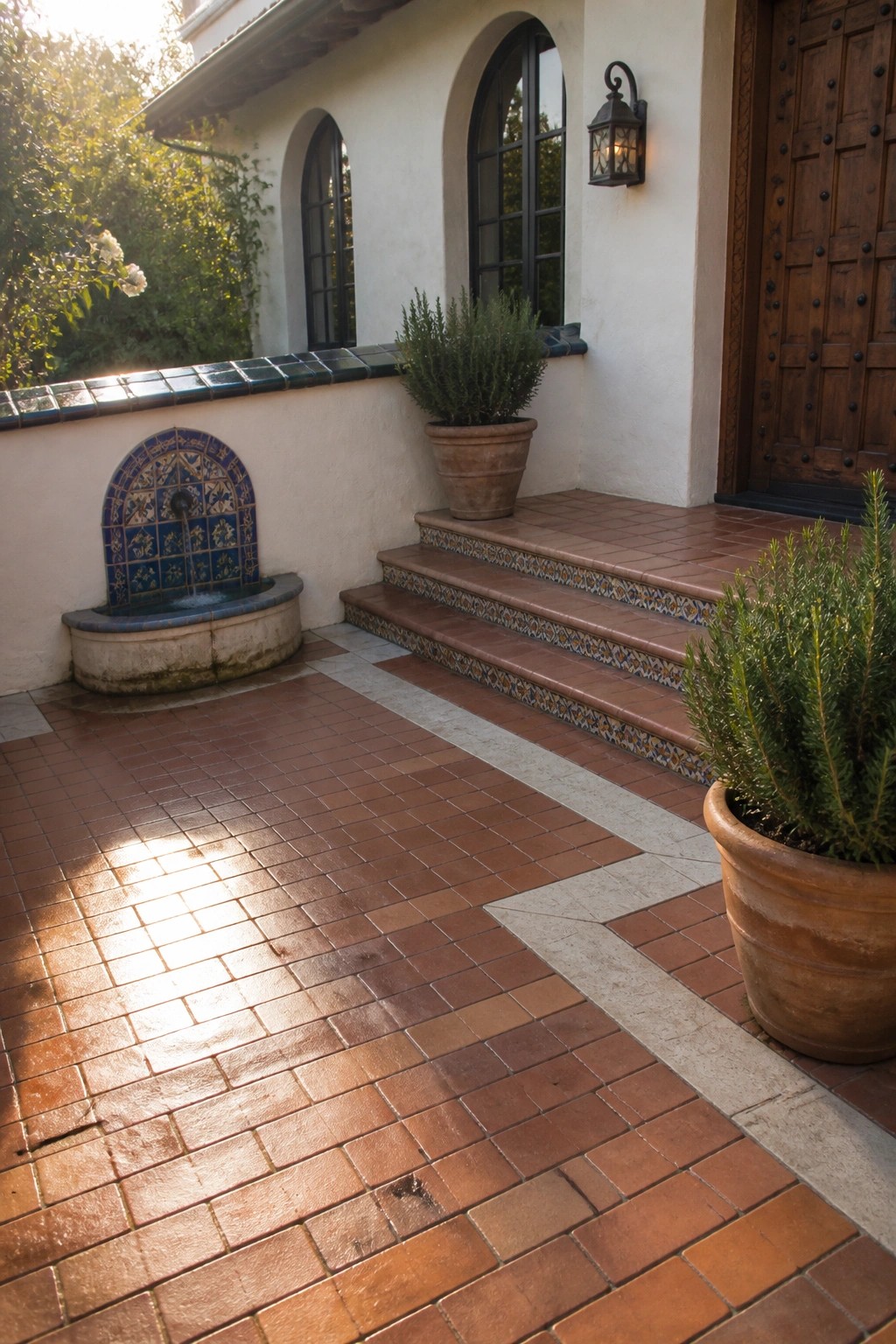
Terracotta pavers work well when you want the area right outside the front door to feel like part of the house instead of just a path. The warm color blends easily with stucco walls and clay roof tiles, and the material stays cooler underfoot than dark concrete.
This approach suits homes with a Mediterranean or Spanish style and smaller lots where a full driveway would feel too wide. Lay the pavers in a straightforward grid and add a simple border tile on the steps so the whole space reads as one surface.
Add Strip Lighting Between Pavers
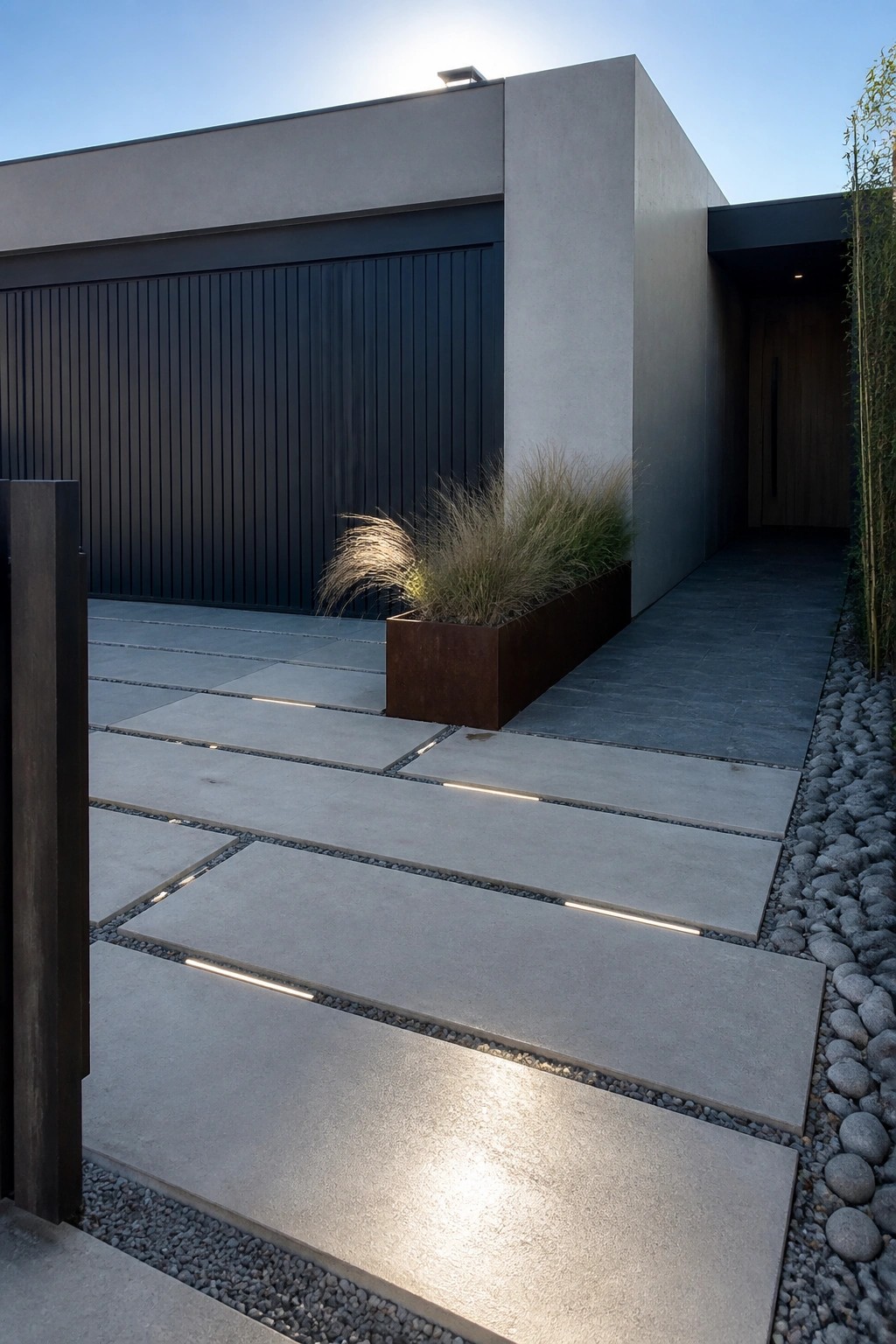
One simple way to lift a basic paver driveway is to tuck thin linear lights into the seams. The lights give the surface a clean, finished edge without adding much cost, and they make the path easy to follow after dark.
This approach works best with large, plain pavers set in a straightforward pattern. Pair them with gravel along the sides to keep the budget in check, and choose lights made for outdoor use so they hold up over time.
Herringbone Brick Pavers
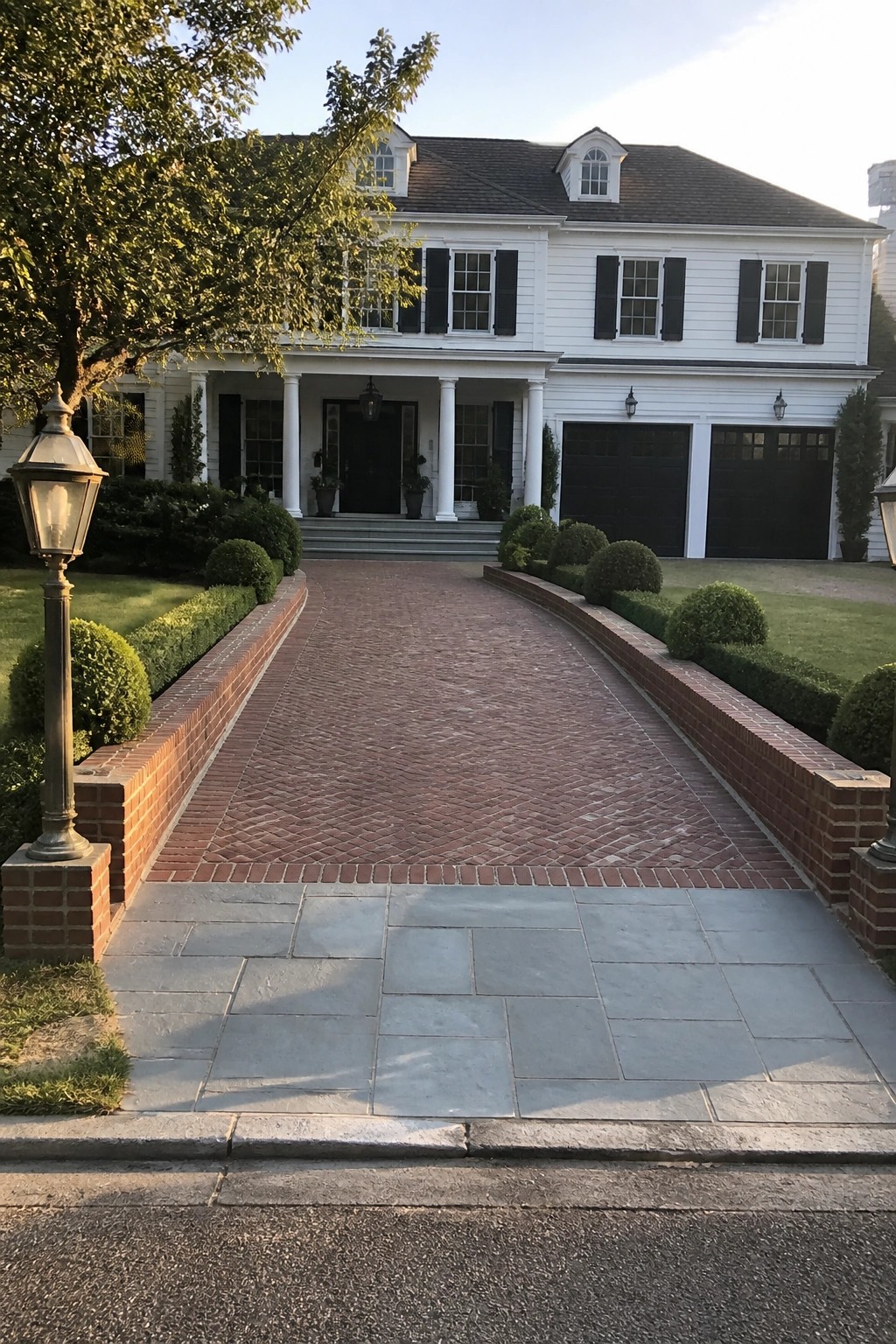
A herringbone pattern in brick pavers gives a driveway real structure without looking fussy. The angled layout feels solid underfoot and holds up well to daily use, which is why it shows up on so many older homes that still look sharp.
This approach works best on houses that already have brick or dark trim details. Keep the borders low and simple so the pattern does the work, and match the brick color to any existing walls or steps on the property.
Grass Between The Pavers
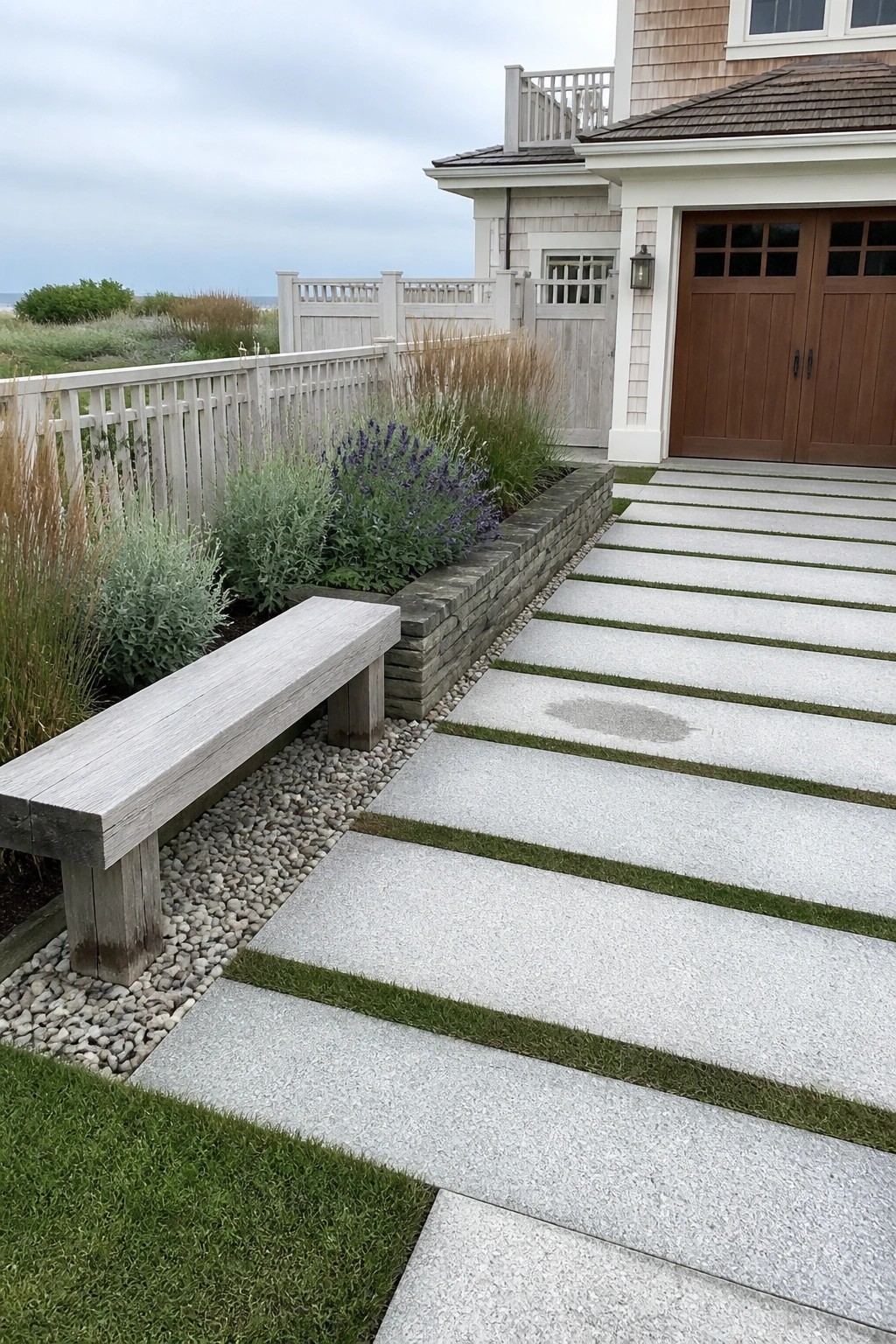
Large rectangular pavers with strips of grass running between them give a driveway a lighter feel than a solid slab of concrete. The lines break up the surface and let a bit of green run right up to the house without looking messy or cheap.
This approach suits homes with a lawn already in place and works best when the pavers sit level with the grass so mowing stays simple. Keep the joints narrow enough that weeds do not take over but wide enough for the green to read from the street.
Try Circular Paver Insets in Gravel
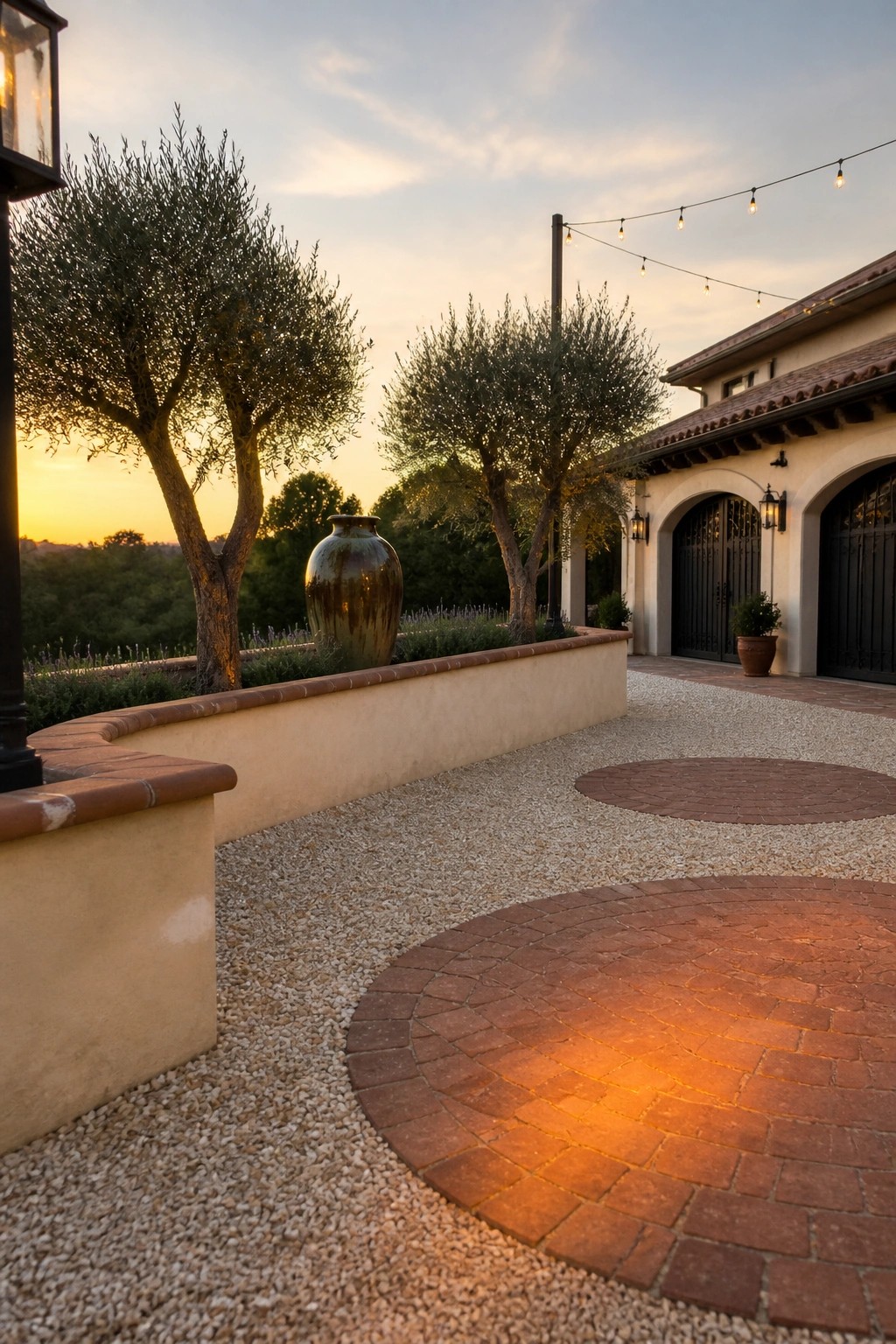
Many driveways look better when you do not pave the whole thing. Adding a few large circles of brick pavers into gravel gives the surface some shape and keeps the cost lower than a full paver install.
This approach works especially well on longer or gently curved driveways where you want a little rhythm without a solid hard surface. Just space the circles so tires hit them evenly and choose a paver color that blends with the gravel you already have.
Wide Pavers With A Gravel Strip
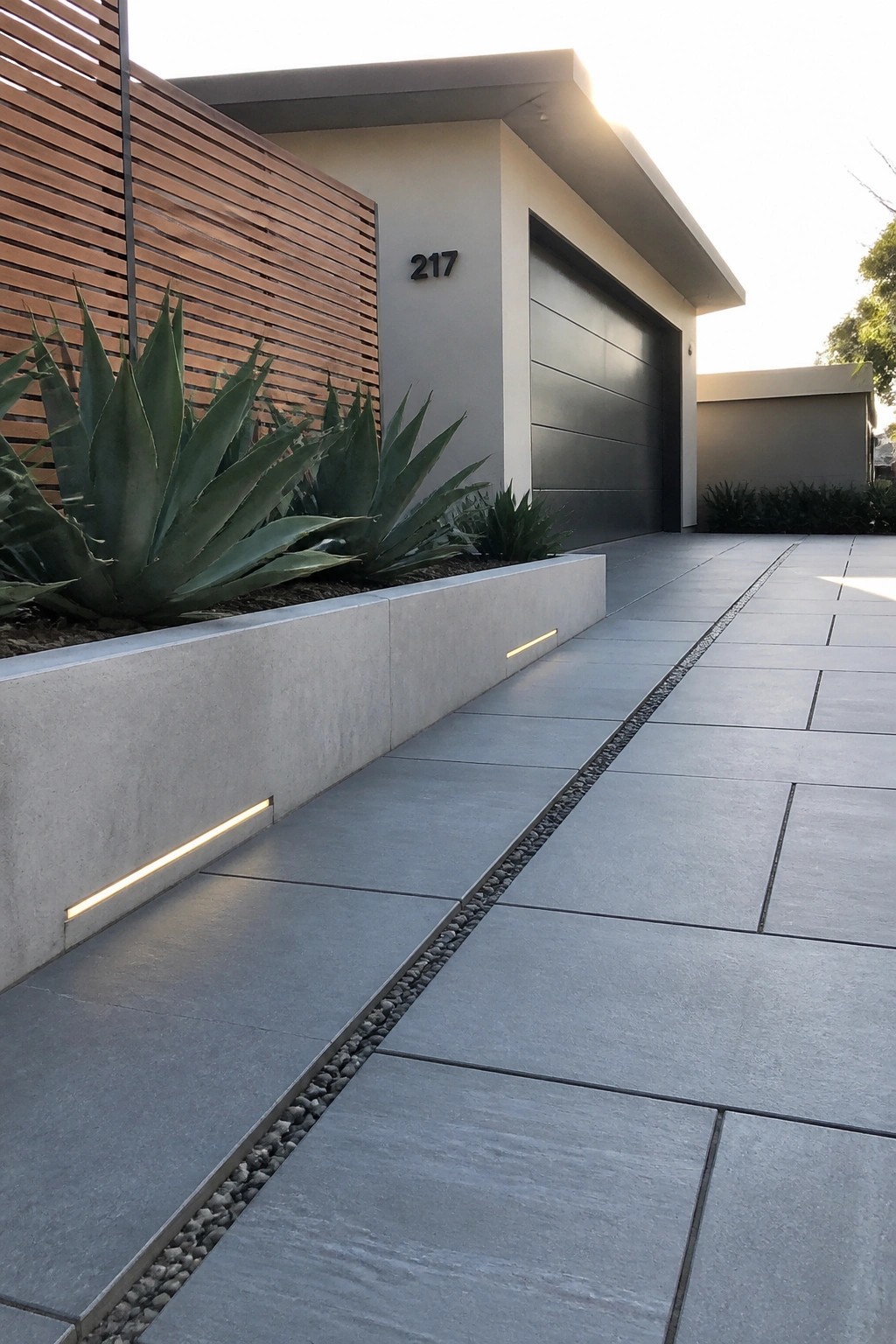
Large pavers make a driveway feel more finished and substantial than standard concrete or asphalt. The narrow gravel band running down the center adds a practical drainage line while breaking up the surface so it does not look like one solid slab.
This layout suits newer or modern homes that already use simple materials. Keep the pavers in one or two sizes, run the gravel in a straight line, and add low lighting along the edges if you want a bit more definition at night. Just contain the gravel well so it stays in place.
Curved Layouts In Mixed Pavers

A curved driveway made with pavers in several tones gives the whole front a softer, more finished look. The bend helps the approach feel less rigid, and the color mix keeps it from looking flat or cheap.
This style works best on homes with enough space in front for the curve to read clearly. Pair it with simple stone edging or low walls so the pavers stay in place and the shape stays easy to maintain.
Pavers With Grass Between Them
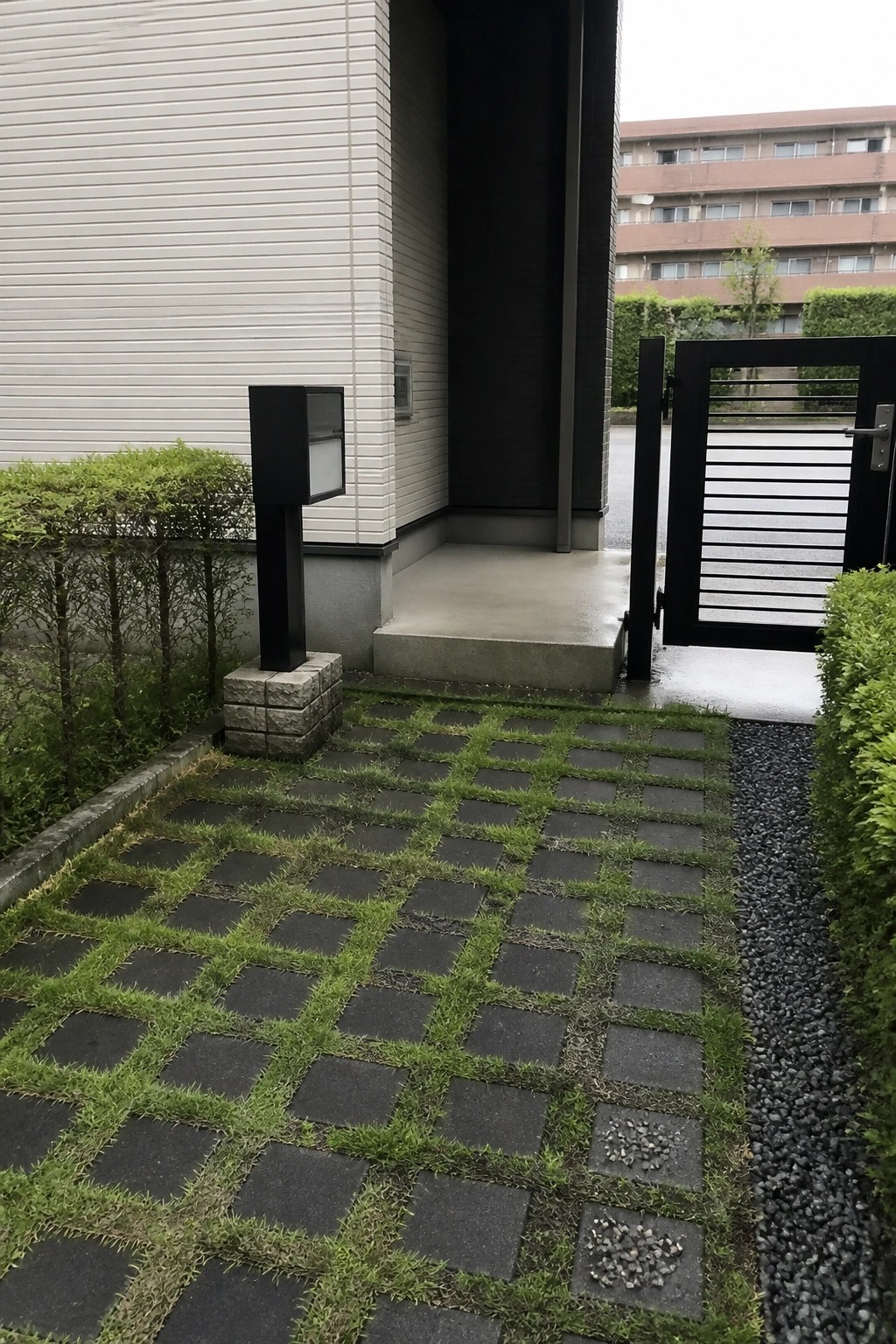
This setup uses a simple grid of pavers with grass filling the gaps. It gives a stable surface for walking or light use while letting the green show through, which keeps the path from looking too solid or heavy.
It suits front paths or narrow driveways where full concrete feels too stark. Level the pavers well and choose a grass type that handles some foot traffic without constant watering.
Large Format Pavers For Driveways
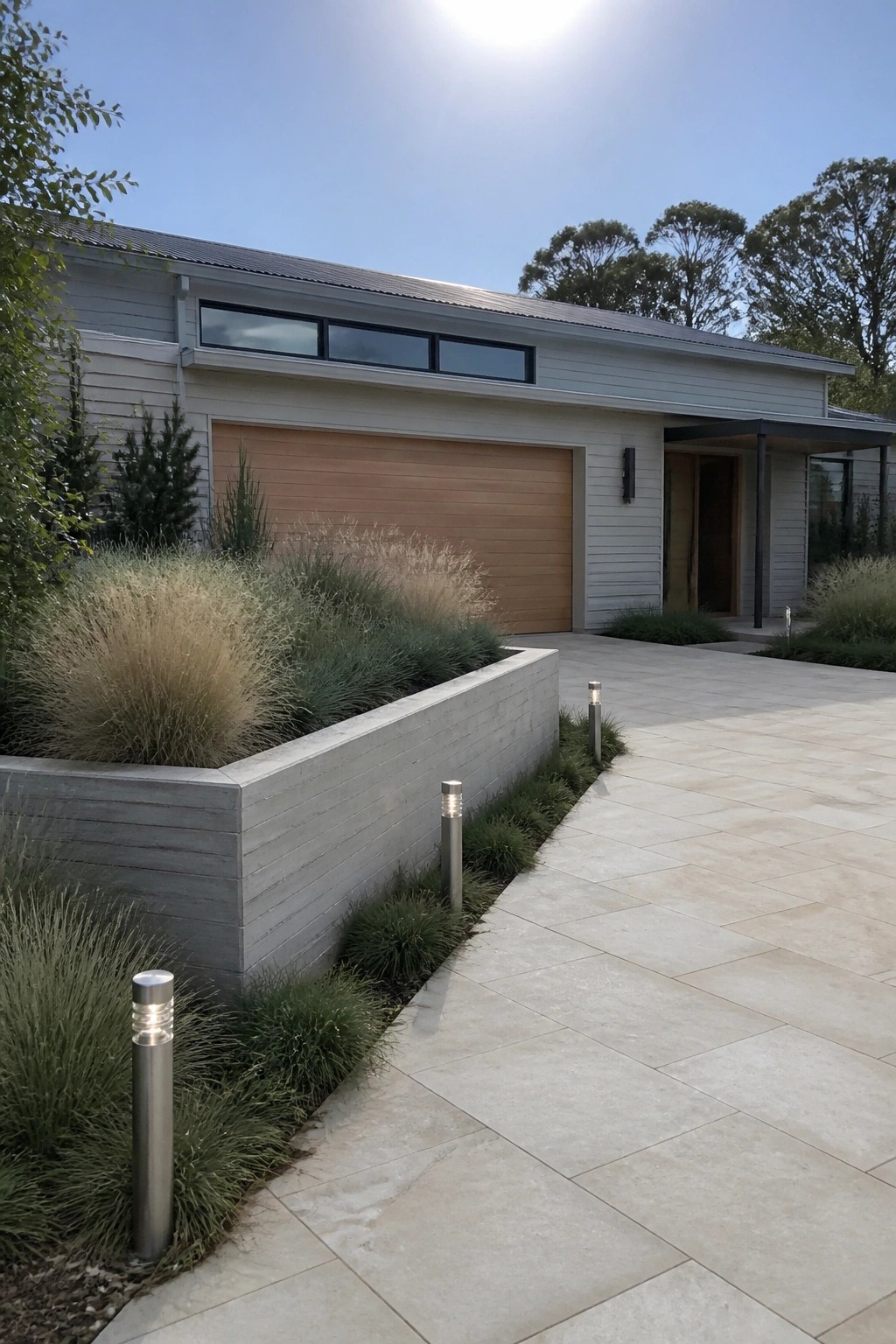
Large pavers give a driveway a cleaner, more finished look with fewer seams showing. That simplicity helps the surface feel more substantial and less like a standard poured slab, which is useful when you want the front of the house to read as intentional rather than basic.
This approach works best on homes with straight lines and minimal ornament, where the driveway can sit flat against the architecture without extra edging or patterns. Keep the color light and neutral so it does not fight the siding or plantings, and make sure the joints stay tight so weeds do not become an issue later.
Large Stone Pavers For The Driveway
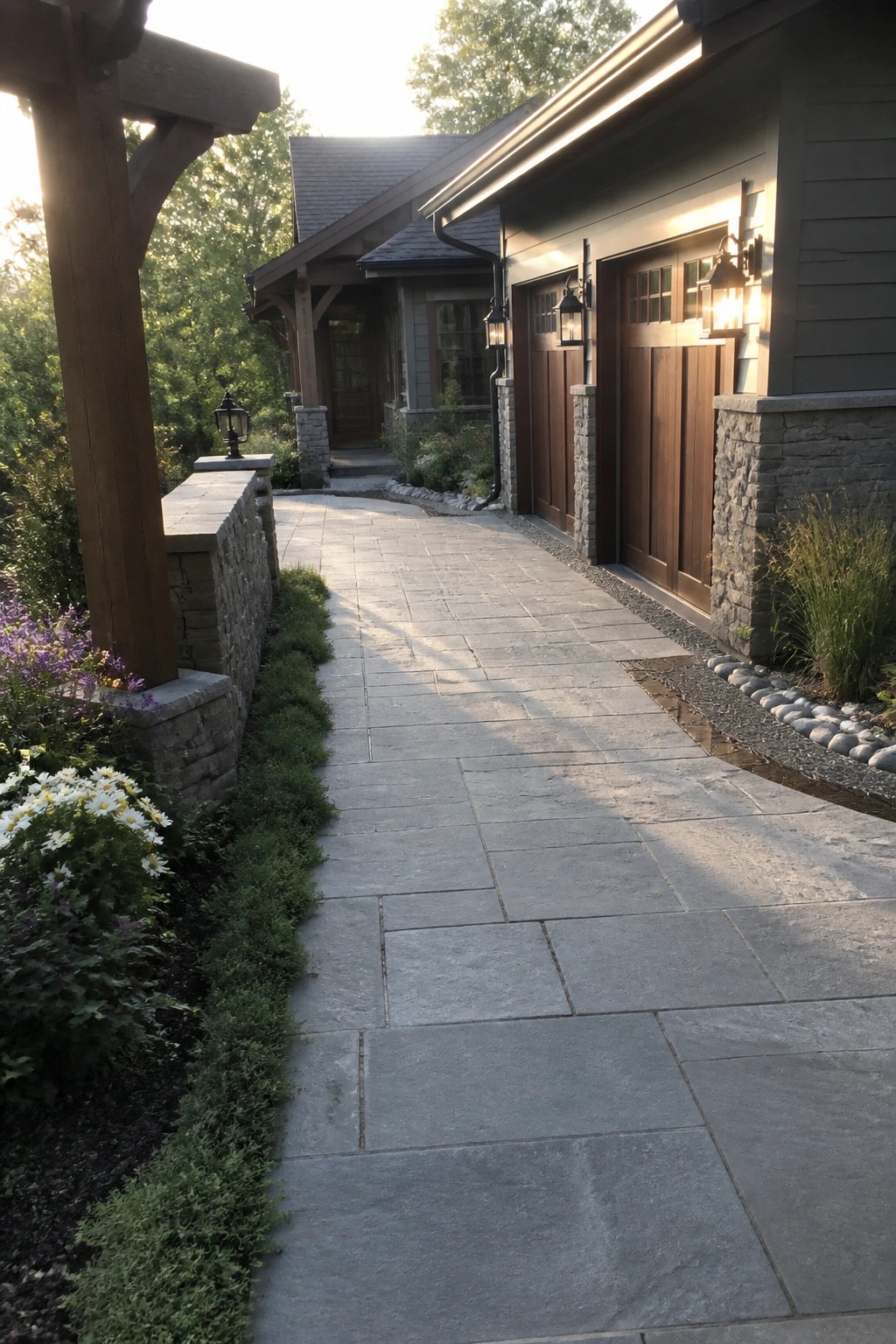
Large stone pavers give a driveway a more finished and lasting look than poured concrete or smaller units. The bigger scale reduces the number of joints so the surface reads as one clean plane instead of a busy pattern.
This approach works best on homes that already use stone for walls or foundations because the materials echo each other without extra effort. Keep the edges simple and let the surrounding planting soften the sides so the pavers stay the main feature.
Curved Paver Driveways With Stone Borders
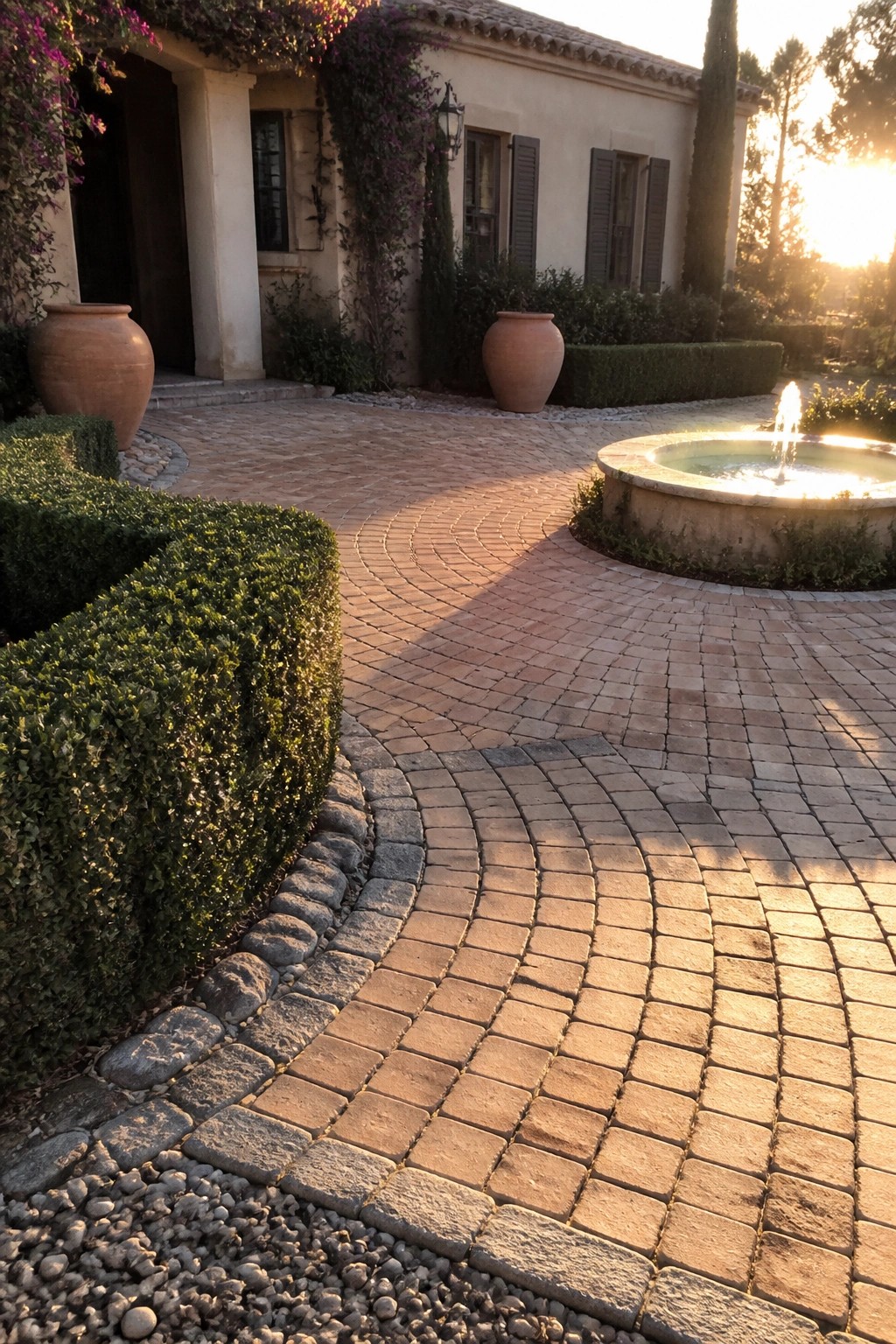
A curved layout in pavers can make a driveway feel more welcoming without spending a fortune. The gentle bend here keeps the surface from looking like a straight slab and helps it blend with the surrounding garden edges instead of fighting them.
This approach works best on properties where the drive has some room to sweep rather than run straight to the garage. Keep the paver color simple and let the stone border do the work of framing the curve. Just make sure the base stays solid so the pattern holds over time.
Add Stripes With Contrasting Pavers
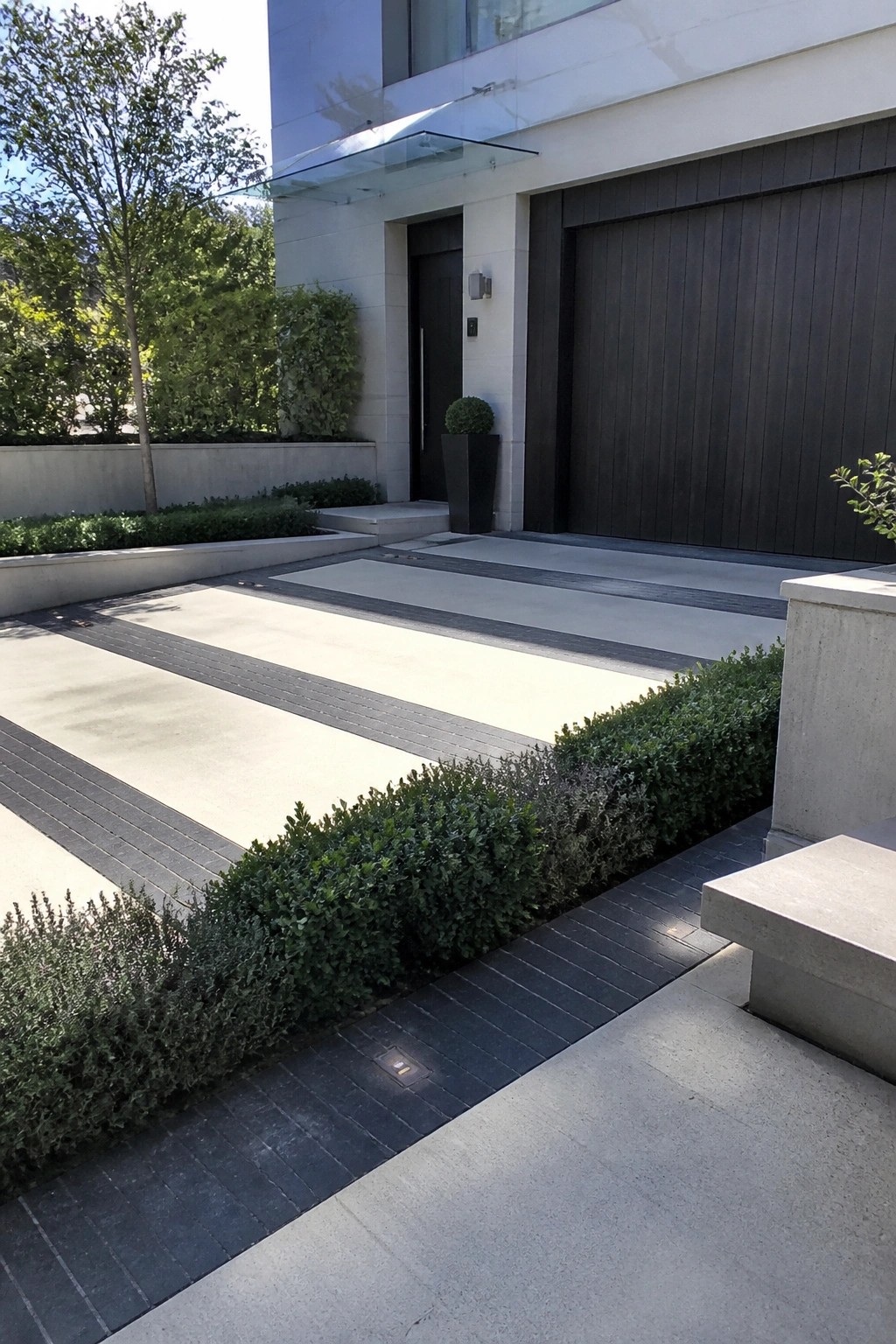
Striped pavers give a driveway a clean, custom look without spending a fortune on fancy materials. The alternating bands break up the surface and make the whole entrance feel more polished and intentional.
This works best on wider driveways where the pattern can show up clearly. Keep the colors simple, like a light base with a darker band, and let low shrubs along the edges do the rest of the work.
Large Pavers For A Simple Driveway

Large rectangular pavers give a driveway a solid, grounded look that feels more finished than smaller units. The size cuts down on joints, which keeps the surface cleaner and makes it easier to maintain over time.
This approach works well on properties where the path needs to curve or follow a gentle slope. Keep the edges soft with grass or low plantings so the pavers read as part of the landscape rather than a hard break.
Wide Pavers Give A Driveway A Clean Modern Feel
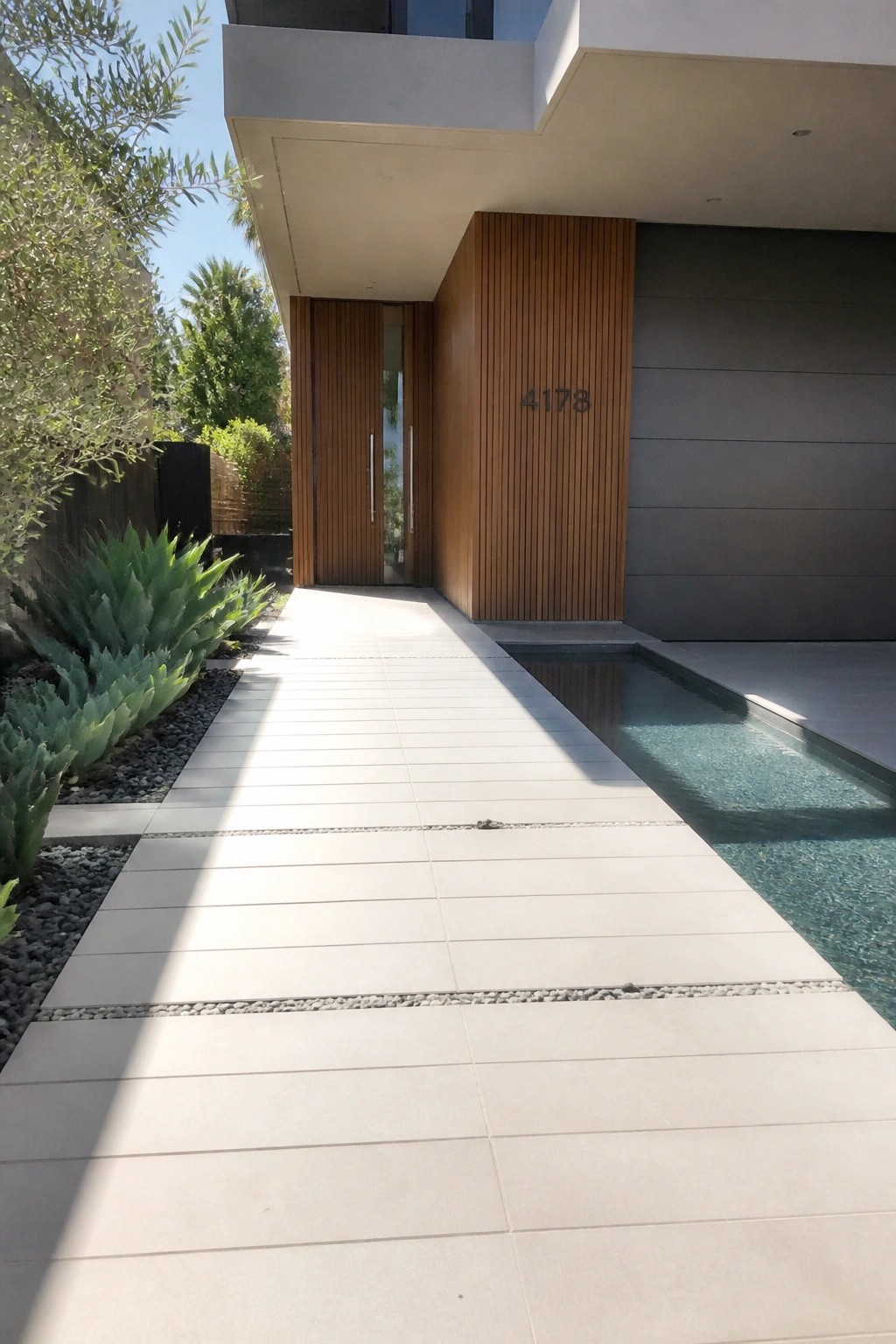
Large pavers cut down on the number of seams, so the surface reads as one smooth plane instead of a busy grid. That single change makes even a basic concrete paver look more expensive than it is.
They suit straight, uncomplicated runs that lead straight to the door. Stick with a light neutral tone and keep the pattern simple so the path stays calm rather than fussy.
Mix Large Pavers With Cobblestone Bands
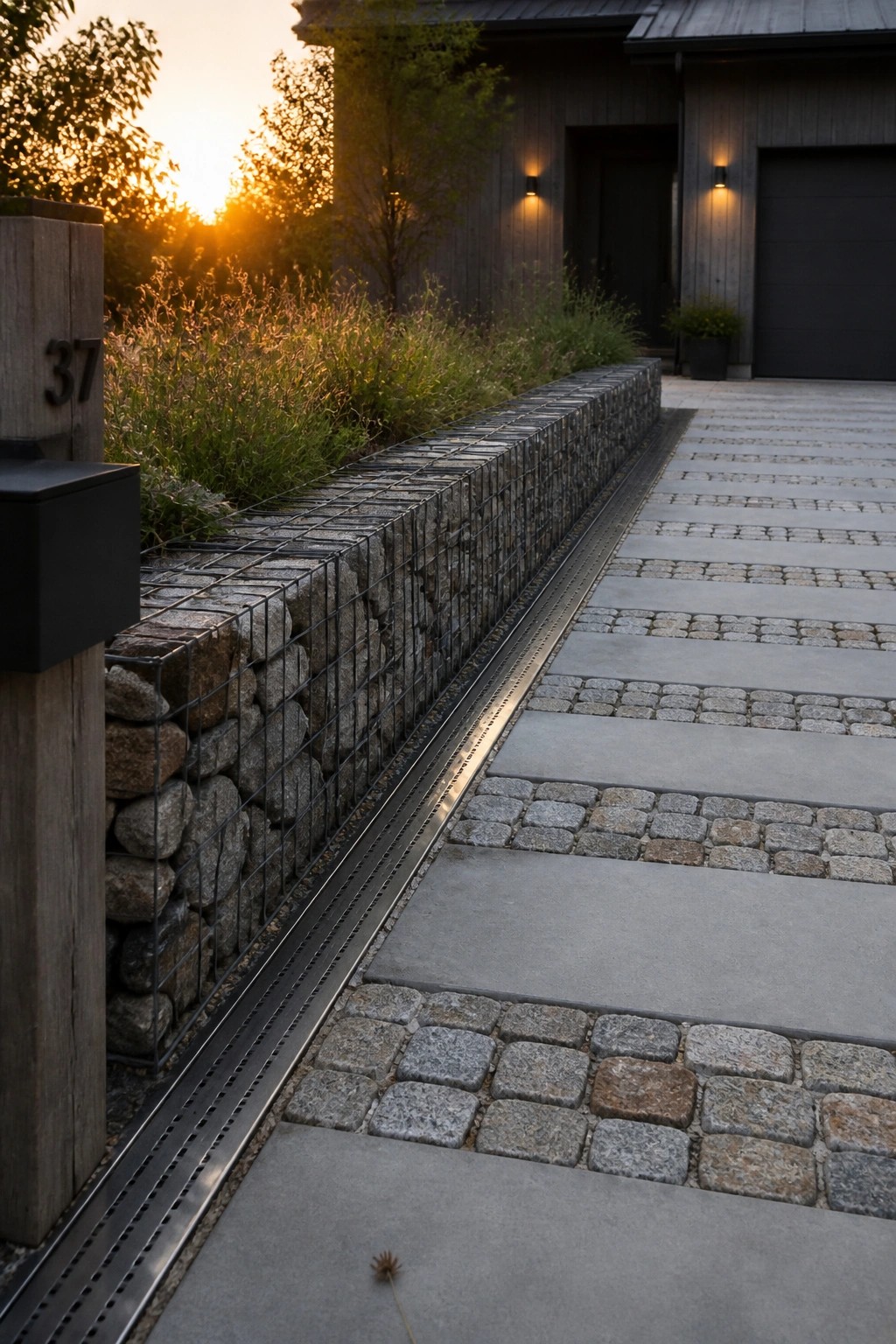
Mixing big concrete pavers with sections of smaller cobblestones gives a driveway more texture without spending a fortune on fancy materials. The large slabs keep the surface easy to walk and drive on, while the cobblestone areas break up the look and add some natural variation that feels more custom.
This approach works well on long driveways or side paths where you want to avoid a flat, plain expanse of one material. It suits homes with modern or farmhouse styles and pairs nicely with simple edging like a low stone wall. Just keep the cobblestone bands narrow so they do not affect drainage or create uneven spots over time.
Frequently Asked Questions
Q: How do I stop weeds from popping up between the pavers later? A: Lay landscape fabric under the sand bed before you set the pavers. Sweep polymeric sand into the joints and wet it down so it hardens. This blocks most growth without extra chemicals.
Q: Can I install these pavers myself if the ground already has a slight slope? A: Grade the area first so water runs toward the edges. Work in small sections and check level often with a long board. The slope actually helps drainage once the base sits firm.
Q: What happens if a few pavers crack after the first winter? A: Pull the broken ones, add fresh sand underneath, and drop in replacements from the extras you set aside. Match the pattern so the fix blends right in. Keep a small stack stored for quick patches like this.
