

I have always noticed how the driveway shapes the first impression of a house long before anyone reaches the front door.
When I looked at drainage around my own property after a few wet seasons, it became clear that solid surfaces often push water toward the foundation instead of letting it soak away.
Materials that allow water to pass through seem to hold up better over time without creating those muddy edges that appear along traditional paving.
I keep thinking about how the right choice here can tie into the rest of the exterior without needing major changes to the overall layout.
Some setups work best when they follow the natural slope of the lot rather than fighting it with extra grading.
Permeable Pavers With Grass Infill
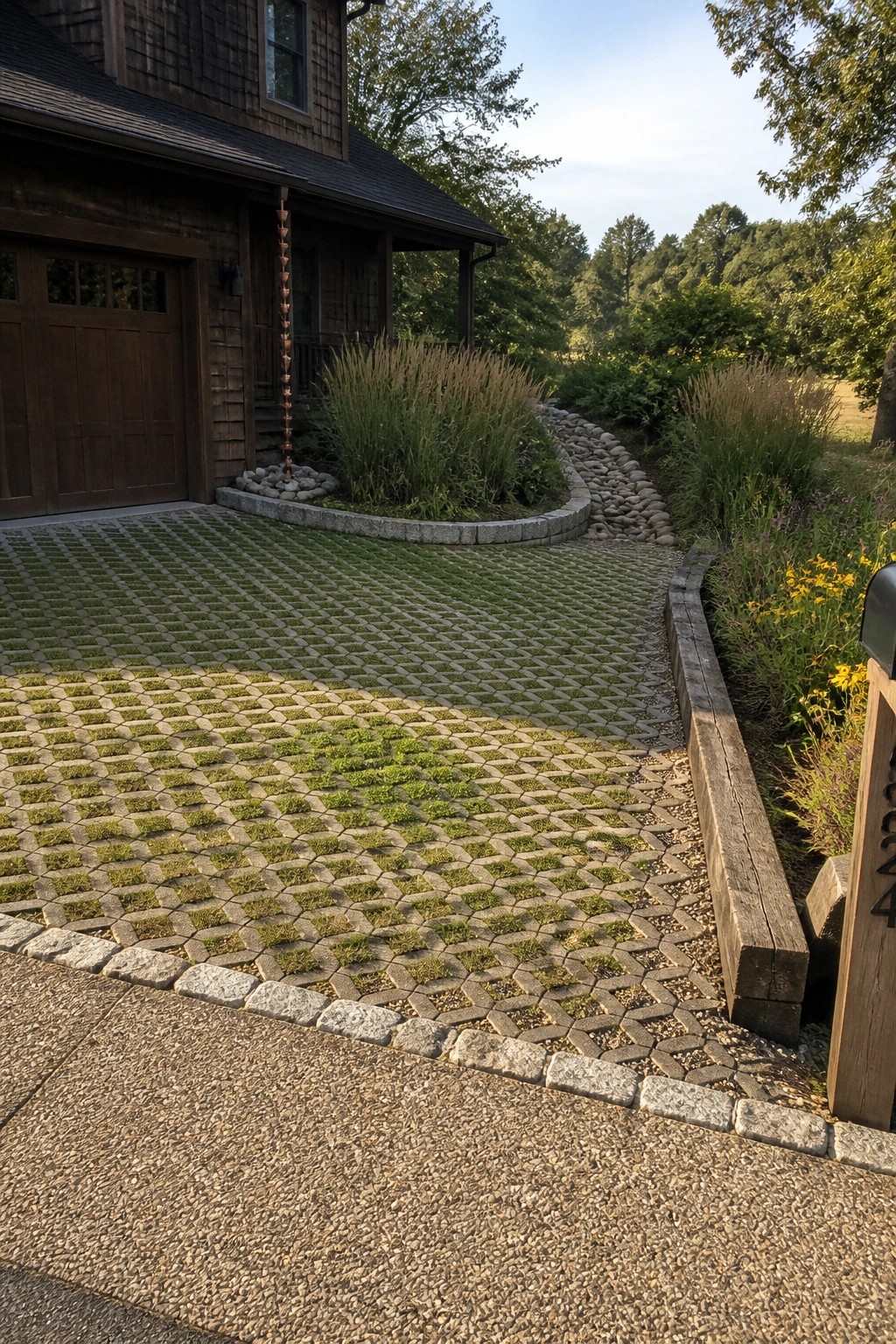
Many people like the look of a driveway that does not feel so hard and solid. Permeable pavers with grass growing in the open spaces let rainwater sink straight into the ground instead of running off into the street.
This approach suits homes where the driveway sits next to lawn or garden beds. It needs a solid base underneath so the surface stays even, but once installed it needs little extra care beyond occasional mowing.
Permeable Paving For The Driveway

Many driveways still use solid surfaces that push water toward the street or into low spots. Permeable paving changes that by letting rain pass through the material itself, which cuts down on runoff and helps the ground absorb moisture more naturally.
This approach suits homes on larger lots or in wetter climates where drainage can be an issue. The base needs solid preparation and the right gravel mix underneath so the surface stays stable over the years.
Pavers Set In Gravel For Permeable Driveways

Large pavers placed with gravel around them let water soak into the ground instead of running across the surface. This approach avoids the usual solid concrete slab and still gives a solid place to walk or drive.
It suits homes with a front path or side approach where full paving would create too much runoff. Keep the gravel layer thick enough underneath so water has room to drain, and choose pavers that sit level with the surrounding gravel.
Permeable Stone Paths

Stone paths set with gravel or pebbles between the slabs let water drain straight down instead of running across the surface. This simple setup reduces puddles and helps the ground absorb rain where it falls.
It works best in garden settings or side entries on homes that already lean toward natural materials. Keep the joints wide enough for drainage but tight enough that the path stays easy to walk on.
Gravel Strips With Built In Drains

Gravel sections next to a solid concrete driveway let rainwater soak through instead of running off. The dark metal grates across the surface catch extra flow and keep water from pooling on the pavement. This setup works especially well on homes where the driveway slopes toward the street or sits on clay soil.
Place the gravel bands on one or both sides of the main drive and run the grates at low points. The plants in the gravel help slow water even more while keeping the look simple. It suits newer homes or remodels that already use clean lines and low water landscaping.
Permeable Pavers With Grass Joints
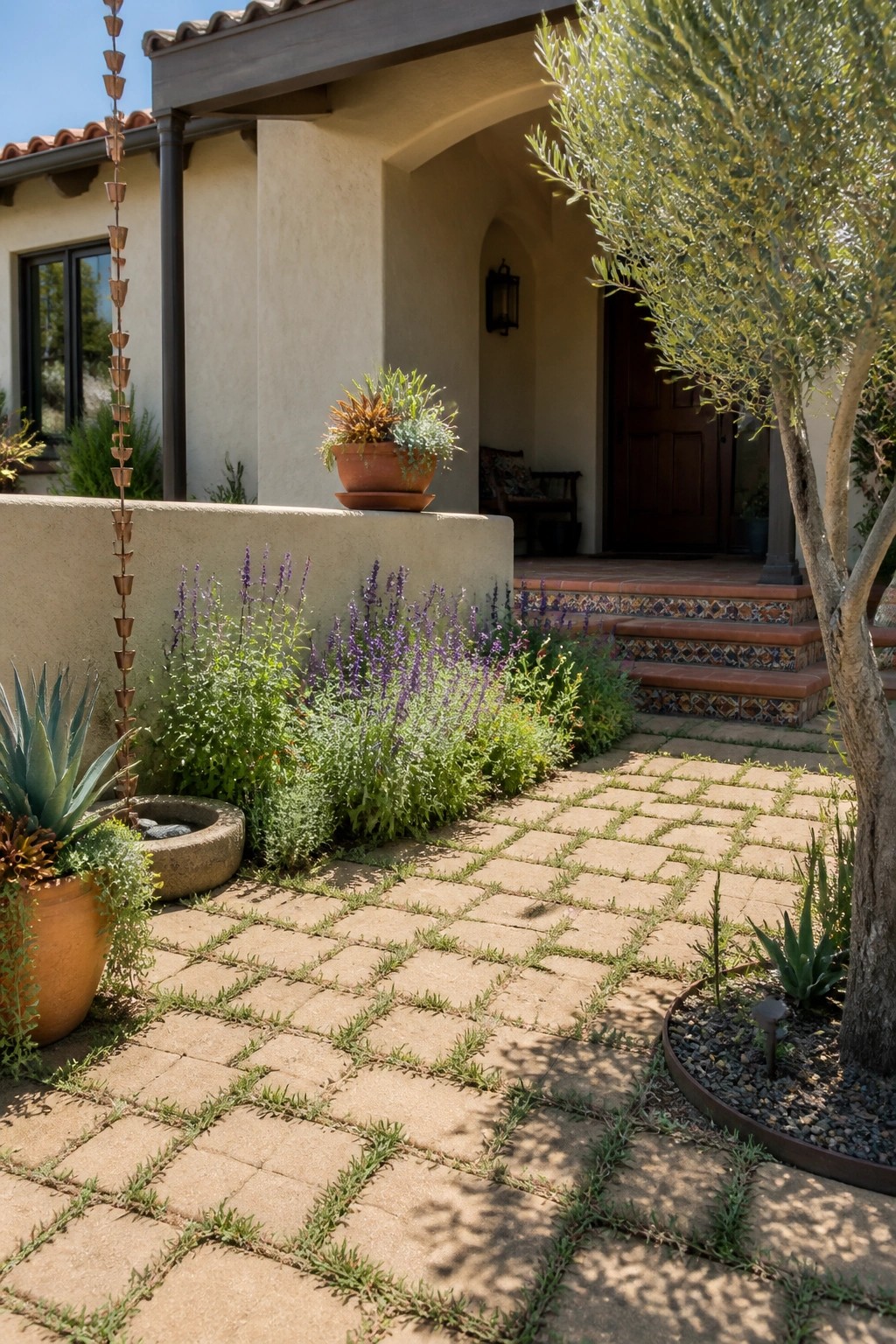
This approach uses pavers set with enough space for grass to grow between them. The gaps let rainwater soak into the ground instead of running off, which cuts down on puddling and helps with drainage around the house. It works especially well on paths or driveways where you want something sturdy underfoot but still need the surface to stay permeable.
It suits homes with moderate foot traffic or light vehicle use and pairs best with low-growing grass or ground cover that can handle some shade. Keep the joints wide enough for the plants to establish but not so wide that the pavers shift over time. Regular trimming keeps it looking tidy without much extra work.
Permeable Gravel Sections in Driveways

A permeable gravel area set into a paved driveway lets rainwater drain straight through instead of pooling or running into the street. It works especially well when the gravel sits slightly lower than the surrounding hard surface so water has a clear place to settle.
This approach suits homes with larger driveways or turnaround spaces where a full gravel surface would feel too loose underfoot. Keep the gravel contained with a clean stone edge and make sure the base layer underneath allows proper infiltration.
Stepping Stones Set In Gravel

Mixing large flat stones with a gravel base creates a path that lets rainwater drain straight through instead of running off. This approach keeps the surface drier after storms and reduces the chance of puddles forming along walkways.
It suits side yards, garden edges, or entries where a full paved driveway would feel too heavy. Keep the stones level and use a compacted gravel layer underneath so the path stays stable without needing much upkeep.
Grass Pavers For Permeable Driveways

A grid of concrete pavers filled with grass lets rainwater soak straight through instead of running off into the street. This setup works especially well on longer driveways where regular pavement would create too much runoff. The pattern also keeps the surface from looking like a solid slab of concrete.
It suits homes with a modern or minimalist style where you want the driveway to blend into the surrounding lawn. Just make sure the base is prepared properly so the pavers stay level over time. In wet climates the grass stays greener longer because it gets regular moisture from below.
Permeable Pavers For Driveway Drainage

Many people choose permeable pavers because they let water pass through instead of pooling on the surface. The gaps filled with gravel help reduce runoff and keep the ground drier after heavy rain.
This setup works well for homes near the water or in areas with frequent storms. Make sure the base layer is deep enough and properly compacted so drainage stays effective over time.
Permeable Stone Paving For Better Drainage
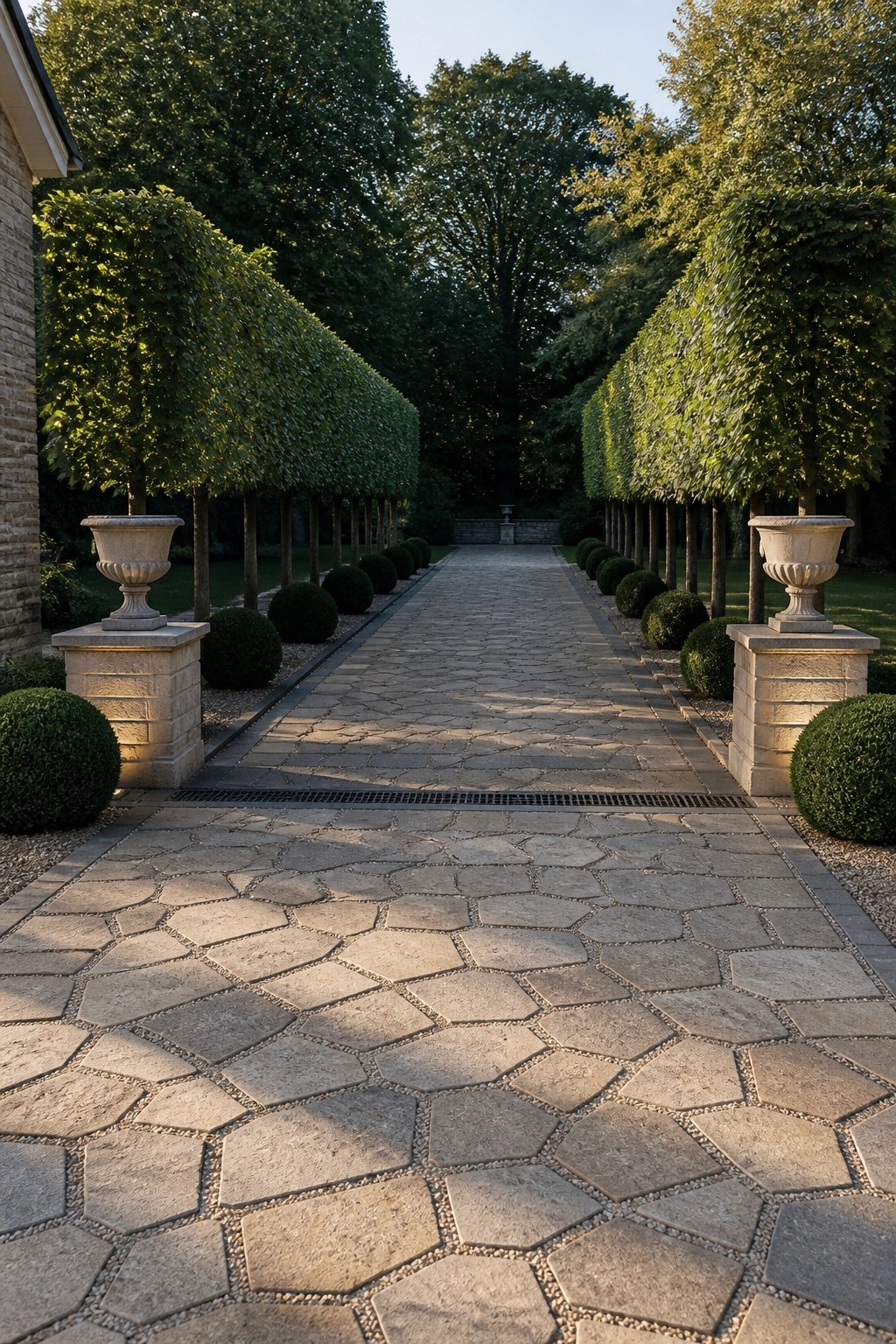
A driveway laid with irregular stone pavers lets water pass through the joints instead of pooling on top. This setup works especially well on long paths where heavy rain can otherwise create runoff problems.
It fits homes with open garden approaches or wide entry lanes that already use gravel beds or planted edges. Keep the base layer open and add a simple drain line at the start if the slope runs toward the house.
Gravel Strips Between Pavers Help With Drainage

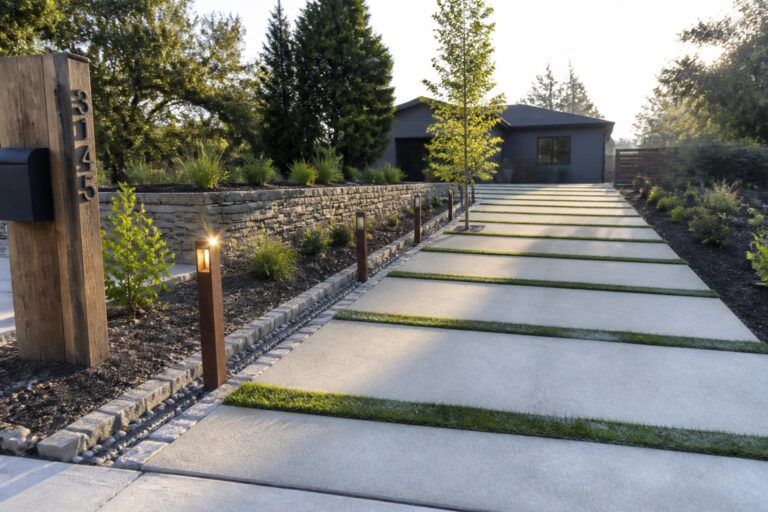
Large concrete slabs look clean on a driveway, but they do not let water soak in. Adding a narrow strip of cobblestones set in gravel down the center gives rain a place to drain without turning the whole surface into loose rock.
This setup works best on homes with long driveways or in dry climates where heavy runoff can cause problems. Keep the gravel slightly lower than the pavers so it stays in place and still allows quick infiltration.
Permeable Gravel Paths For Drainage
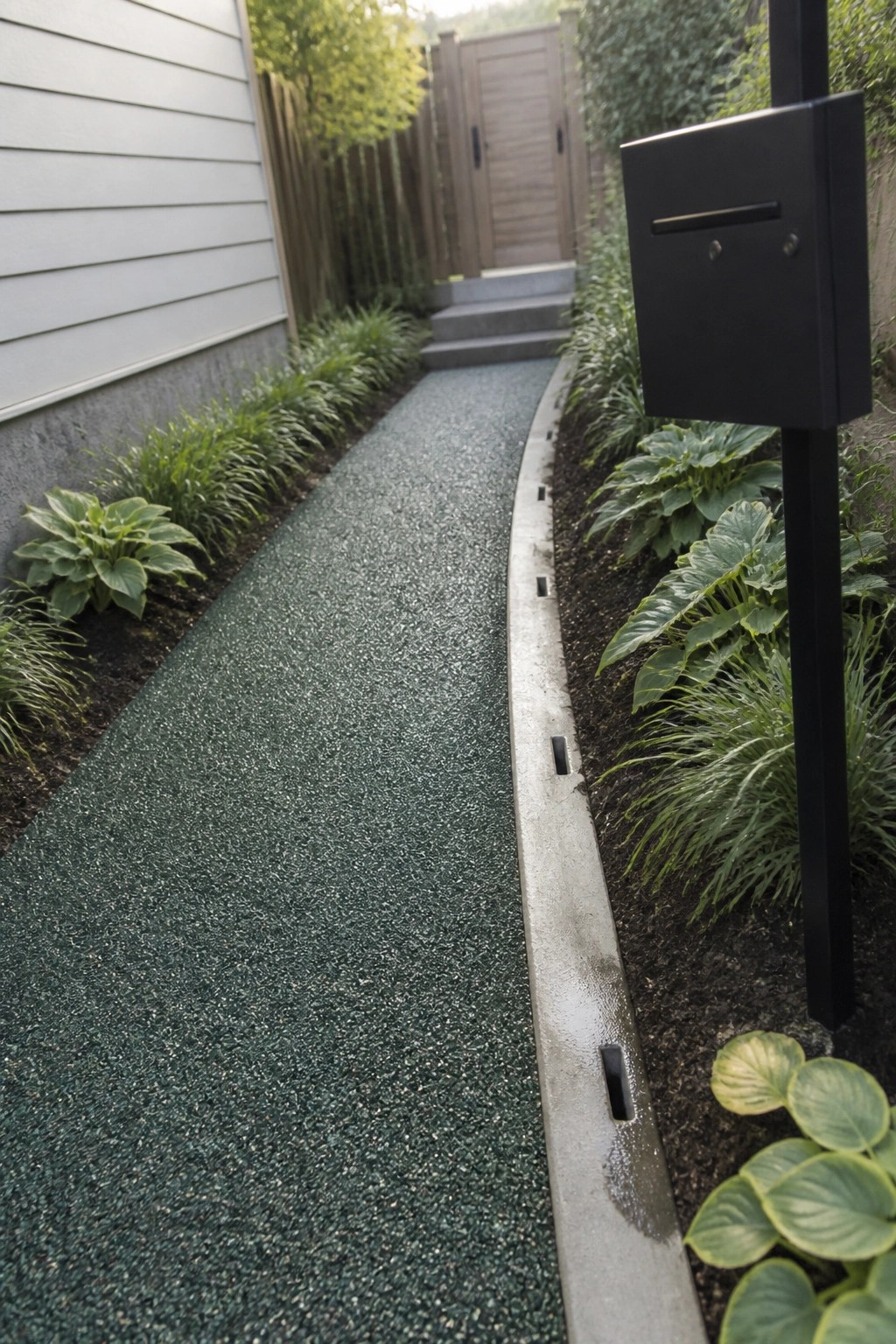
A permeable path like this one uses a bound gravel surface that lets water soak through instead of running off. It keeps the ground drier underfoot and reduces the load on storm drains during heavy rain.
This works best along the side of a house or in narrow garden areas where a full driveway is not needed. The concrete edging helps hold the material in place while the planting on both sides softens the look and supports natural drainage. Check the base layer during installation so the path stays even after a few seasons.
Gravel Paths With Timber Planks

Mixing timber planks with gravel makes a simple path that lets water drain through instead of running off. The gaps between the boards and the loose stone underneath handle rain well, which keeps the surface from turning muddy or slick after a storm.
This setup works best on gentle slopes or along garden edges where you want something easy to walk on without adding a solid paved strip. Keep the gravel layer thick and use pressure-treated wood so it lasts longer in wet ground.
Permeable Pavers With Room For Plants

Many driveways and side paths shed water too fast because the surface is completely solid. Leaving small gaps between pavers so moss or low plants can take hold lets rain soak straight down instead of pooling or running toward the house.
This approach works best on low-traffic areas where you still need a firm walking surface. The base needs to be prepared for drainage, and the plants should be tough enough to handle some weight without turning into mud.
Brick Paths With Gravel Strips For Drainage

Mixing brick pavers with gravel strips gives water a place to soak in instead of pooling on the surface. The combination keeps the path firm underfoot while letting rain pass through the gaps between materials.
This setup works best along garden paths or side driveways where runoff is a problem. Lay the bricks on a permeable base and keep the gravel sections at least a foot wide so water has room to drain without washing out the edges.
Permeable Cobblestone Paths For Drainage
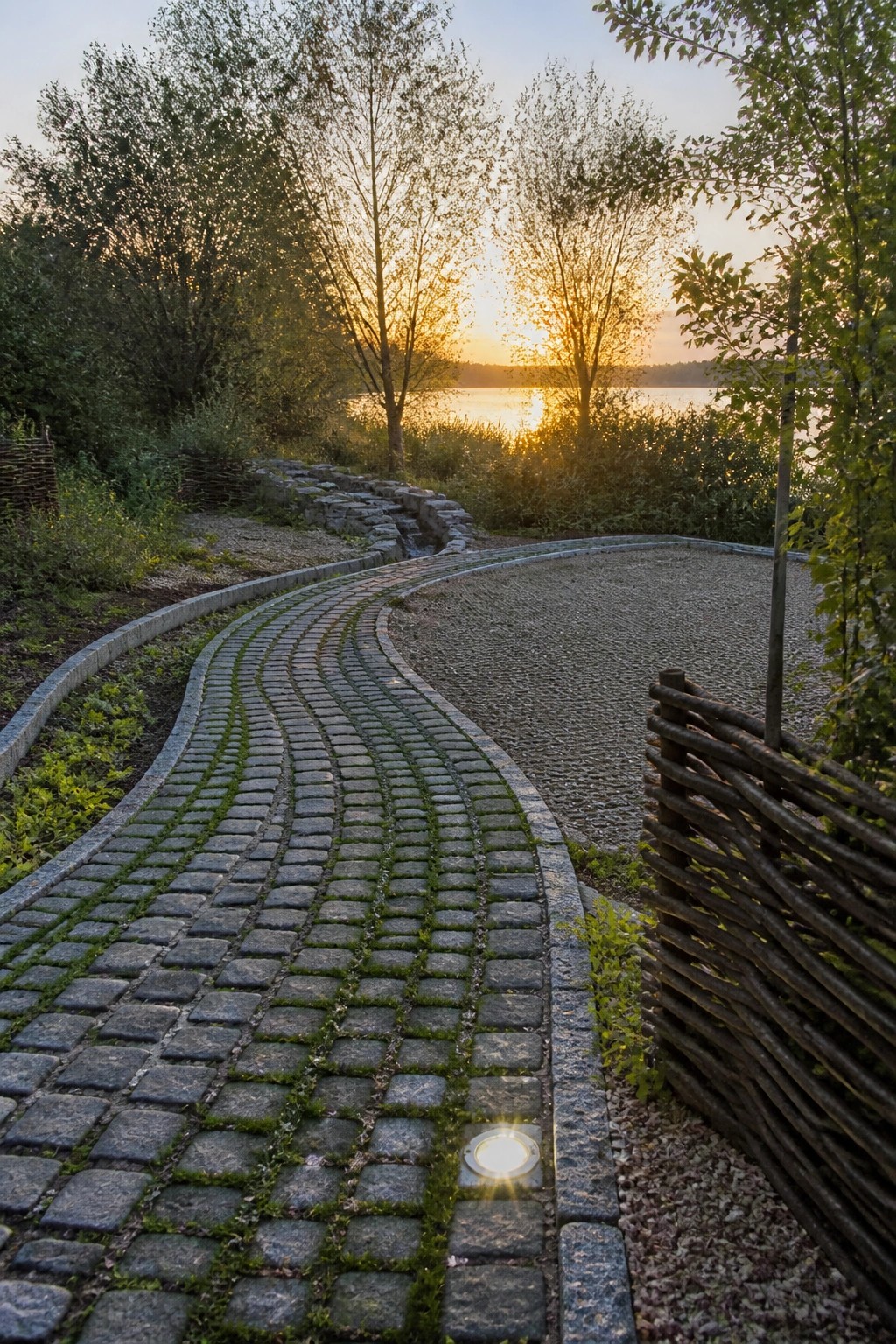
Mixing cobblestone sections with gravel gives water a place to soak in instead of pooling or running off. The gaps between the stones and the loose gravel surface both help with that, which keeps the ground drier after rain.
This approach suits homes with long driveways or paths near water or on sloped lots. Keep the base layer firm and level so the stones do not shift over the years.
Frequently Asked Questions
Q: My driveway gets a lot of oil leaks from the cars. Will that clog up the permeable surface?
A: Sweep up any spills right away with a broom and some absorbent material. Most eco friendly options like gravel or grass pavers let you replace small sections easily if oil soaks in deep. Check the area every few months during rain to see how fast water drains.
Q: Does adding a permeable driveway change how I shovel snow in winter?
A: You can still shovel like usual but avoid using salt on certain materials since it might wear them down faster. Try sand or a pet safe deicer instead to keep the surface working well.
Q: I have clay soil underneath. Will water still drain properly with these ideas?
A: Clay holds water so you might need to add a thicker gravel base below the permeable layer. Test a small spot first by pouring water and watching it disappear. This setup often works fine once the base lets excess moisture escape sideways.
Q: How do these options hold up if kids ride bikes and scooters on them every day?
A: Most permeable materials like reinforced grass or sturdy pavers handle light traffic without issue. Just pick ones rated for vehicles if the play gets rough.
