


I have noticed over time that the way a driveway meets the garage often decides whether the front of a house feels open or cramped from the curb.
When the parking space blocks easy access to the main door or creates odd angles against the siding, the exterior loses some of its balance.
Small shifts in layout can fix that without major construction.
I would try sketching a few of these patterns on my own property before committing to any big changes.
The ones that account for both daily use and how the house appears from the street tend to hold up better in practice.
Curve the Driveway to Serve Multiple Garages
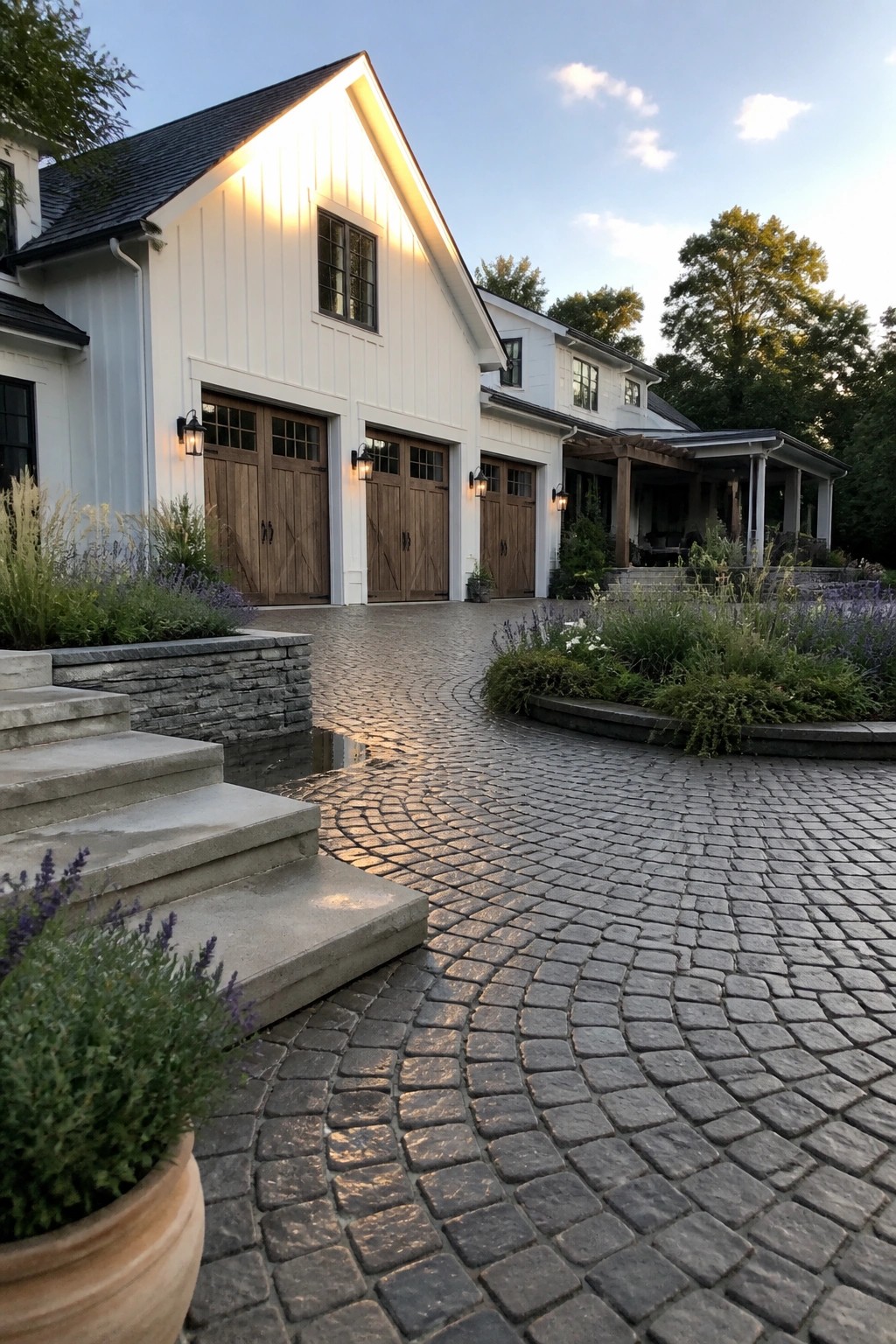
A curved driveway helps when a house has several garage doors in a row. It prevents the front from looking like a big flat parking area and lets cars ease into each bay without sharp turns or extra backing up.
This approach works best on wider lots where the garage takes up a good part of the facade. Stick with a simple paver material that drains well and holds up to daily use, and keep the curve wide enough for normal cars to handle without trouble.
Split Your Driveway With a Central Gravel Strip
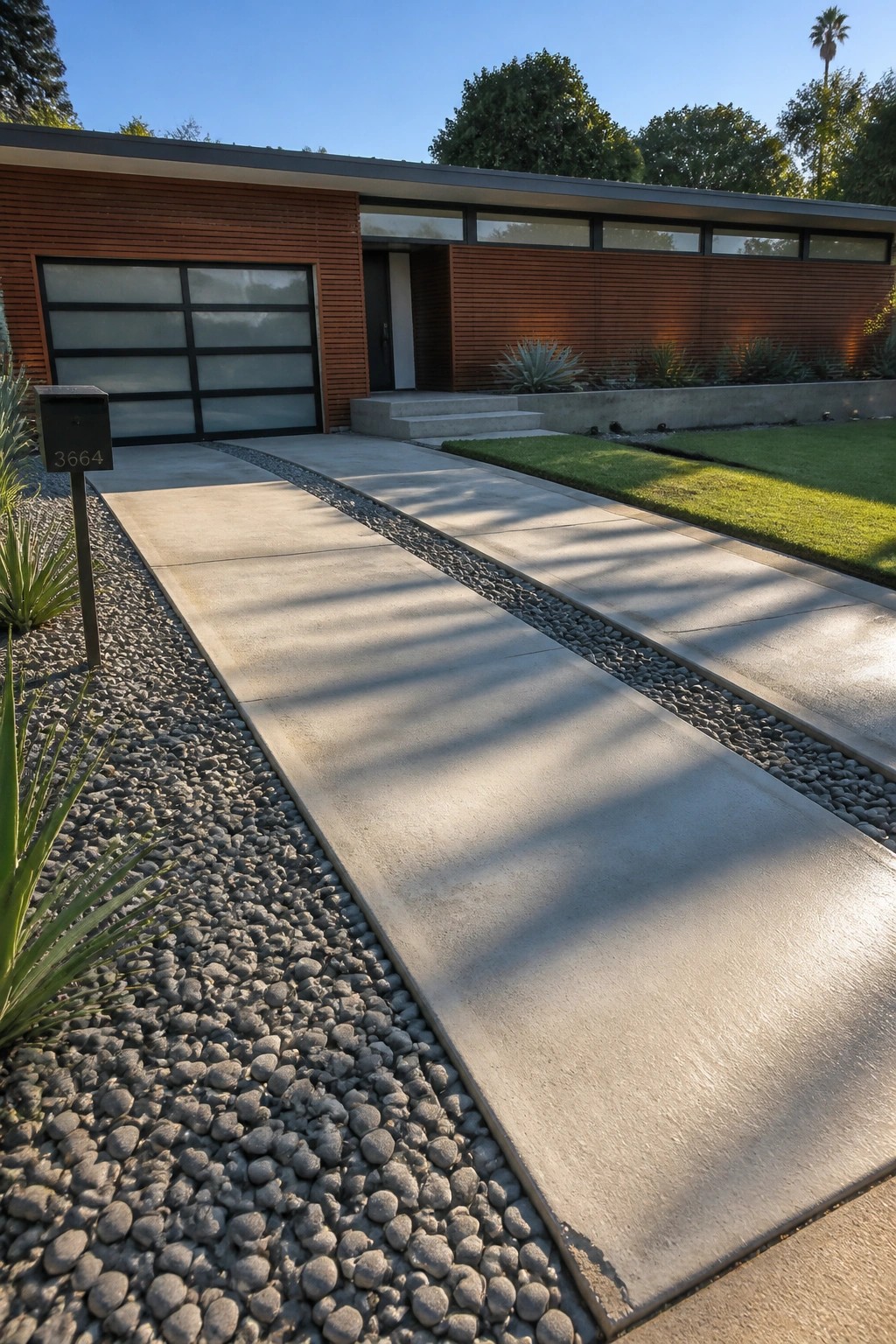
A long stretch of solid concrete can start to feel heavy, especially on a flat lot. Running a gravel strip down the middle breaks up the surface, softens the look, and still leaves two solid paths for tires. It also helps with drainage without adding extra structures.
This works best on homes with clean horizontal lines where the gravel can echo other ground materials nearby. Keep the strip narrow enough that wheels stay on the concrete but wide enough to read as a deliberate detail. Avoid it if your driveway has tight turns or steep slopes.
Grass Grid Pavers Soften the Driveway

A grid of concrete pavers with grass growing through the openings gives the driveway a much lighter look than a solid slab. It still handles cars fine but keeps the surface tied to the surrounding lawn instead of cutting the yard in half.
This approach works best on homes where the driveway sits right next to open grass or garden beds. It improves drainage and cuts down on the heat that comes off plain concrete, though you will need to mow the strips occasionally to keep them neat.
Light Entry Steps From the Driveway
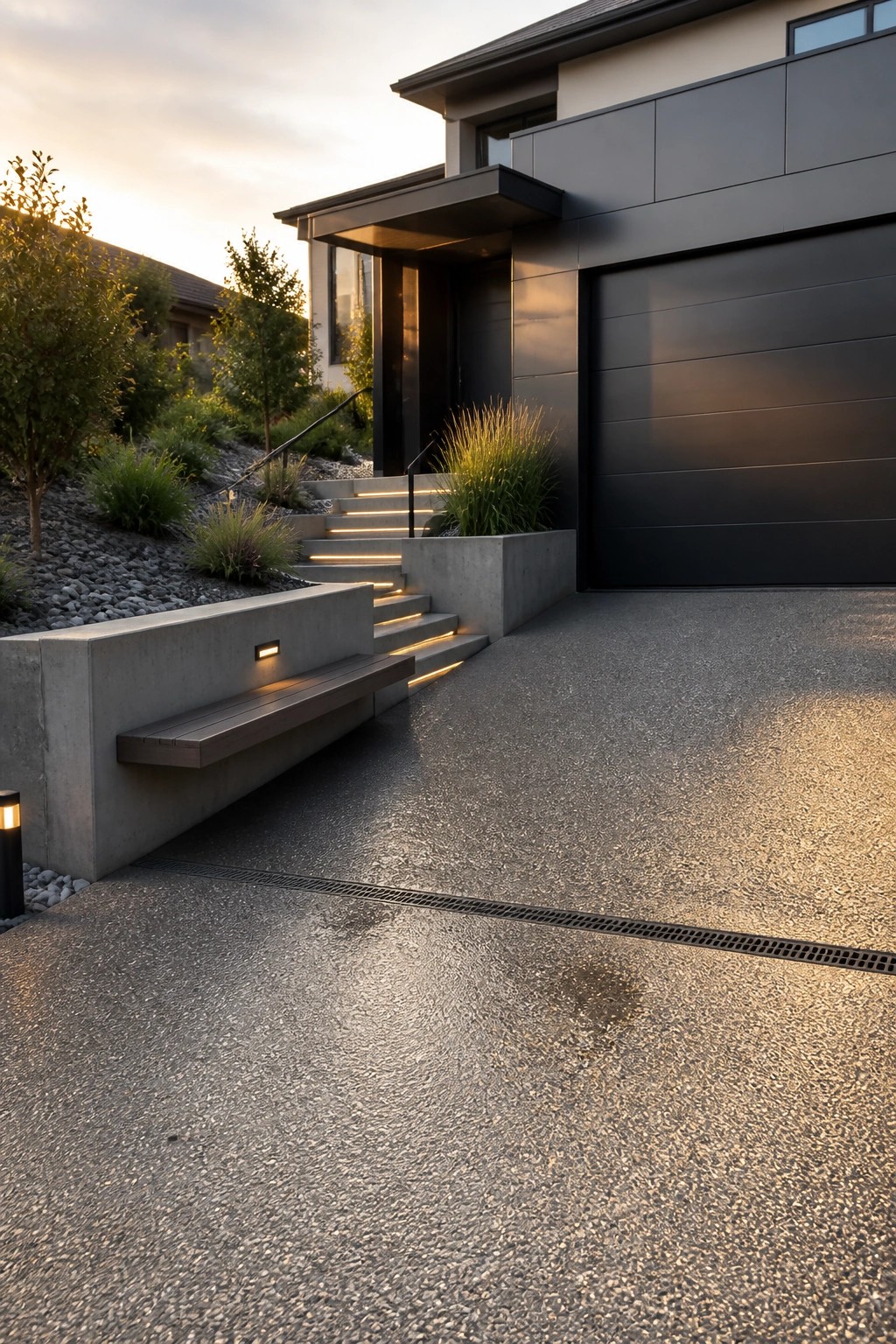
Step lighting makes a big difference when the front door sits above the driveway level. It marks the path clearly at night and helps people move from the car to the house without guessing where the next tread is. The lights stay low and built in, so they do not add extra fixtures that could clutter the view.
This setup works well on homes with a short rise from the pavement to the door. It suits modern houses where the garage sits close to the entry and you want the whole arrival area to feel open but still safe. Just keep the lights on a separate switch or timer so they do not stay on all day.
Curve the Driveway for Smoother Flow
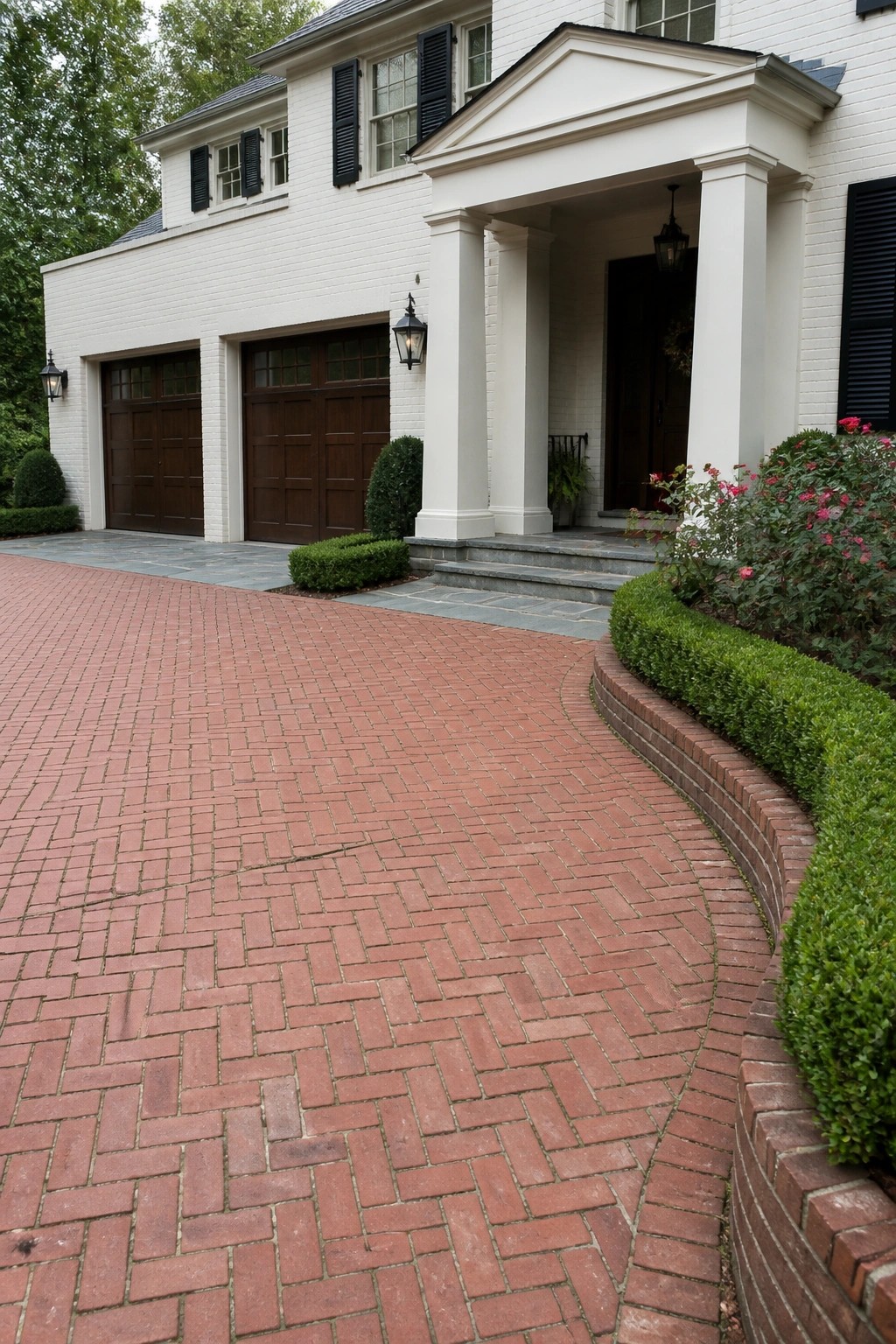
A curved driveway keeps cars moving naturally toward the garage without cutting right across the front of the house. The red brick pavers here make the turn feel intentional instead of like an afterthought, and the shape gives the whole front a quieter look.
This layout works best on lots that have a little extra width. Keep the curve wide enough for two cars to pass and use the same paver material all the way through so the path feels connected rather than patched together.
String Lights Along Narrow Driveways
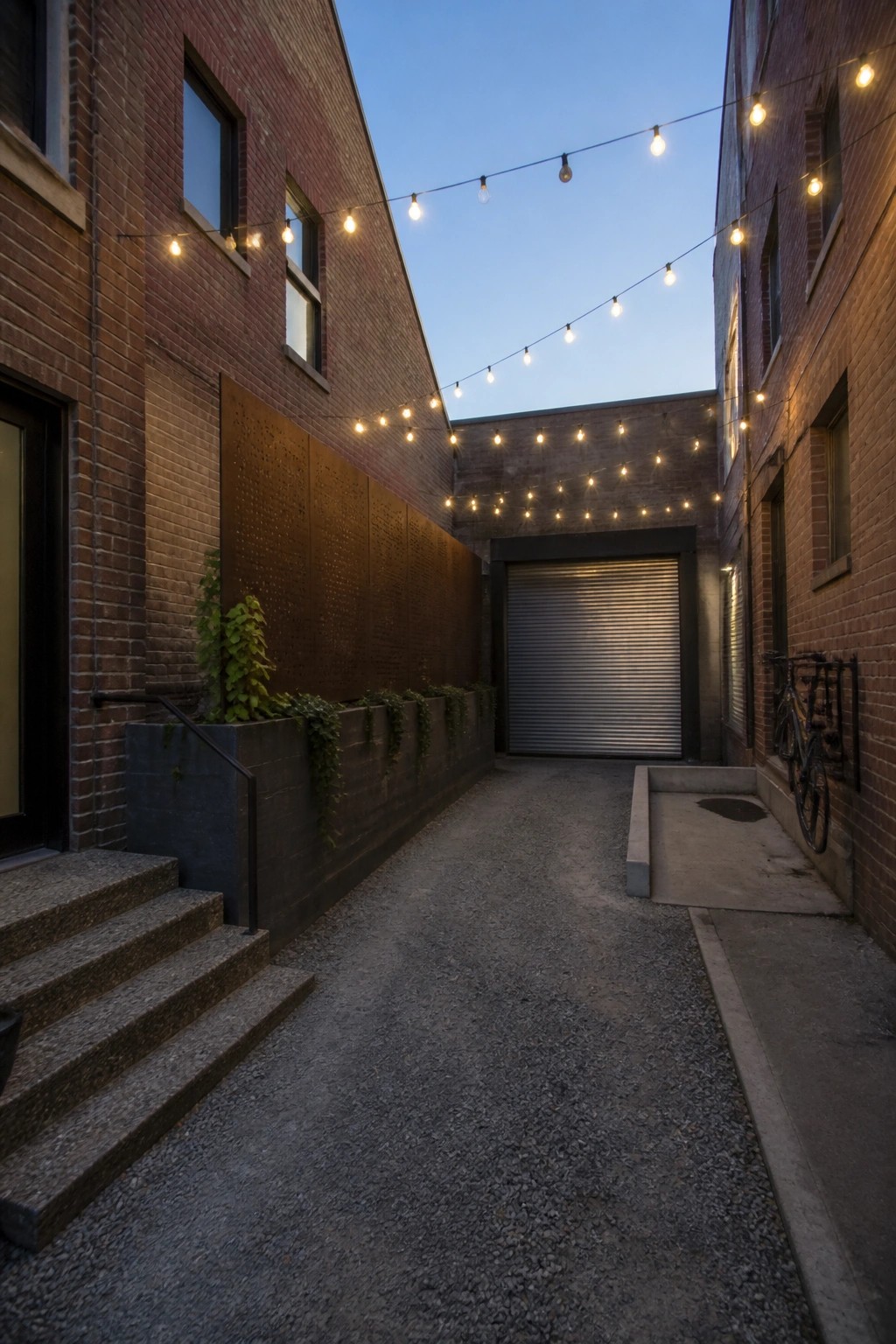
String lights work well over narrow driveways because they light the path without adding fixtures on the ground. In tight spots between buildings, they make it easier to see the edges and reach the garage safely at night.
This setup suits older homes or urban lots where the driveway runs along the side. Keep the lights on a timer so they come on automatically, and use a sturdy wire so the line stays straight over time.
Gravel Driveways That Curve To The Garage

A gravel driveway can handle daily use while still feeling tied to the land around it. The loose surface drains well after rain and avoids the stark look of solid pavement, so the whole approach blends in rather than cutting through the yard.
Keep the path fairly narrow and let it bend slightly on the way to the garage doors. That small curve helps slow traffic and makes the entrance feel more settled. It works best on properties that already have some trees or plantings along the edges, since the gravel needs those borders to stay looking neat over time.
Match The Garage Door To The House Siding

Matching the garage door to the house siding is one of the simplest ways to keep the whole front looking pulled together. In this setup the vertical wood slats on the door line up with the horizontal siding, so the garage does not break the line of the house. The result feels calmer and more intentional without any extra trim or decoration.
This approach works best on homes where the garage sits close to the main living areas or along a side path. Keep the wood tone consistent and avoid adding busy hardware or contrasting frames. It suits modern and mid-century houses especially well, and it helps the driveway feel like part of the architecture instead of a separate zone.
Curve the Driveway Toward the Garage

A gentle curve in the driveway helps cars line up with the garage doors without sharp turns or awkward backing. It also softens the whole front approach and keeps the space from feeling like a straight slab of pavement.
This works best on homes with two or more garage bays set side by side. Keep the radius wide enough for larger vehicles and use simple edging so the curve stays easy to maintain.
Make Room for EV Charging in the Driveway
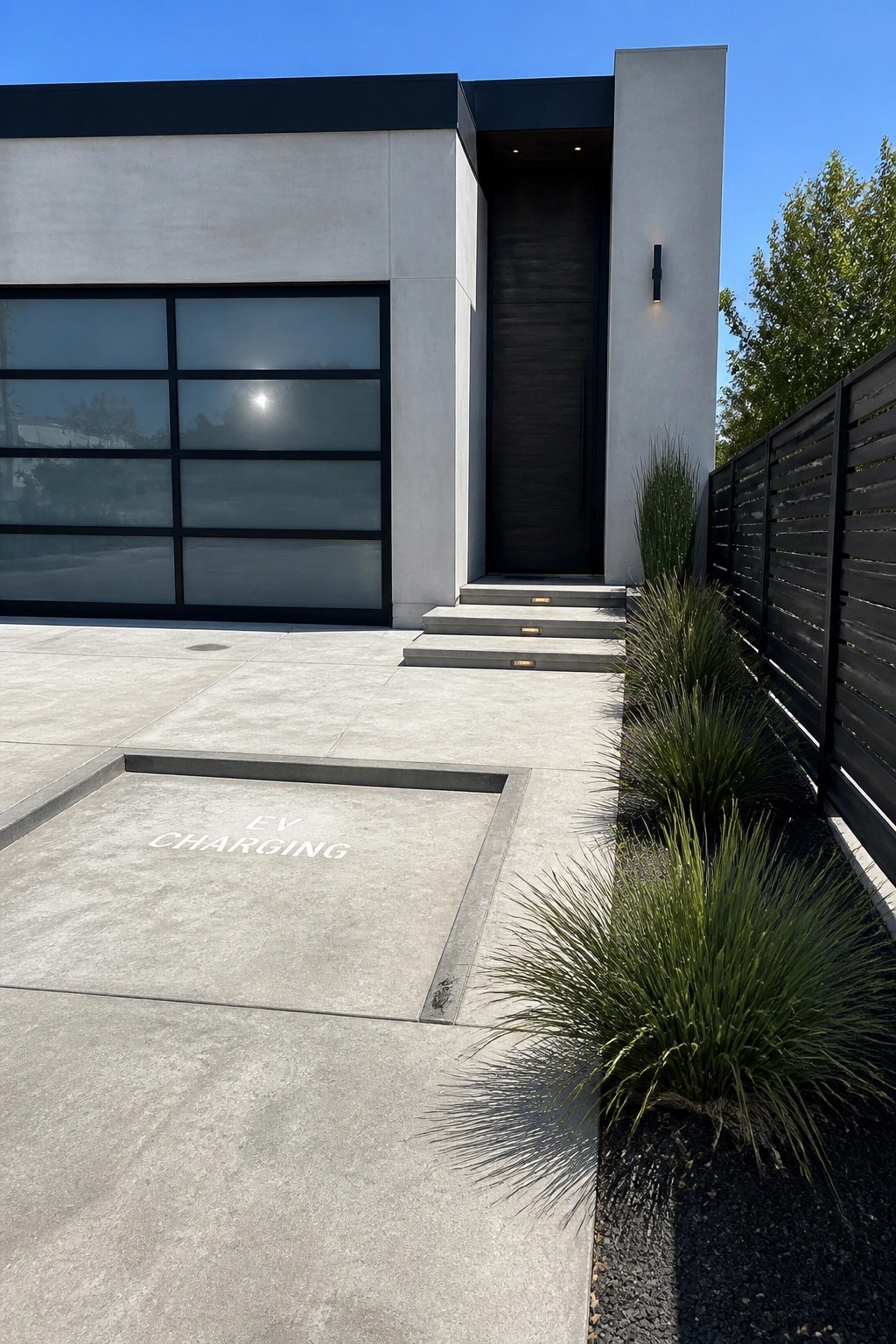
Many newer homes are setting aside a clear spot in the driveway for EV charging. It keeps the equipment in one place so the car can pull straight in without extra cords running across the pavement or blocking the garage.
This setup works well on homes where the driveway is being poured anyway. Run the wiring early and mark the area so it stays open for charging instead of getting used for storage or extra parking.
Curve Planting Beds Along the Driveway

A curved planting bed that follows the edge of the driveway helps the space feel less like a big slab of concrete. It guides the eye and the car toward the garage while softening the whole approach. Low lights tucked into the plants add just enough visibility at night without needing extra fixtures along the pavement.
This works best on homes where the garage sits a bit lower or off to the side. Keep the bed wide enough for real plants but not so wide that it crowds the turn. Stick with grasses and low shrubs that stay neat and do not drop a lot of debris onto the concrete.
Use a Gravel Strip to Handle Driveway Runoff

A narrow gravel and rock channel along the edge of the driveway lets water move off the paved surface instead of collecting at the curb. It also keeps the lawn from creeping in and makes the whole layout feel more intentional.
This approach works best on homes where the driveway sits close to garden beds or slopes toward the house. Keep the strip about a foot wide and use larger stones at the bottom for stability.
Divide a Wide Driveway With a Narrow Planting Strip
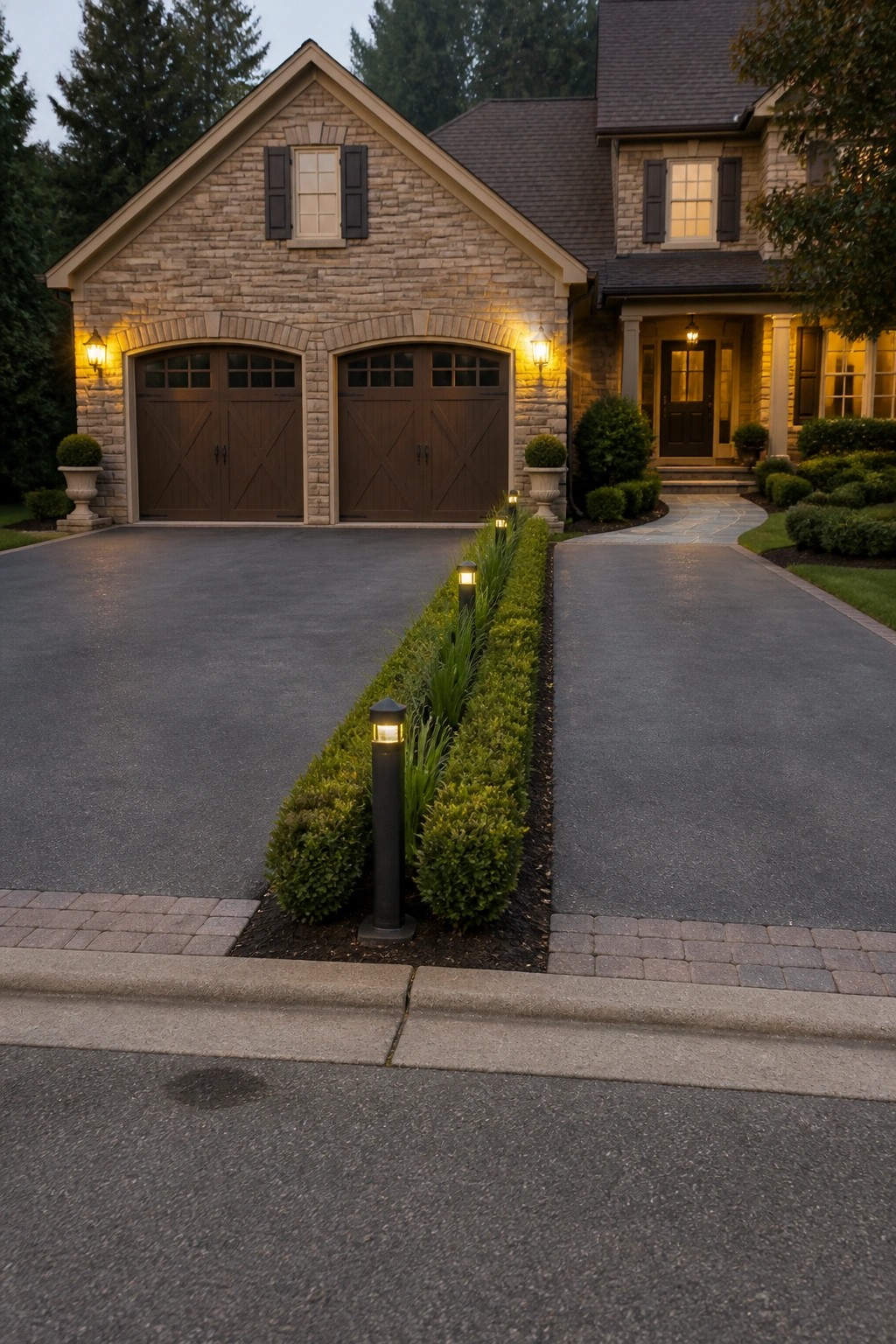
A central strip of low shrubs and grasses can break up a broad stretch of pavement and keep the whole entrance from feeling too hard. It also gives cars a clear path to follow without adding extra width or extra concrete.
This works best on larger lots where the drive runs straight and fairly flat. Keep the plants low enough for easy sight lines, and add a few simple lights along the strip so the layout stays easy to read after dark.
Add a Fountain to the Center of Your Driveway
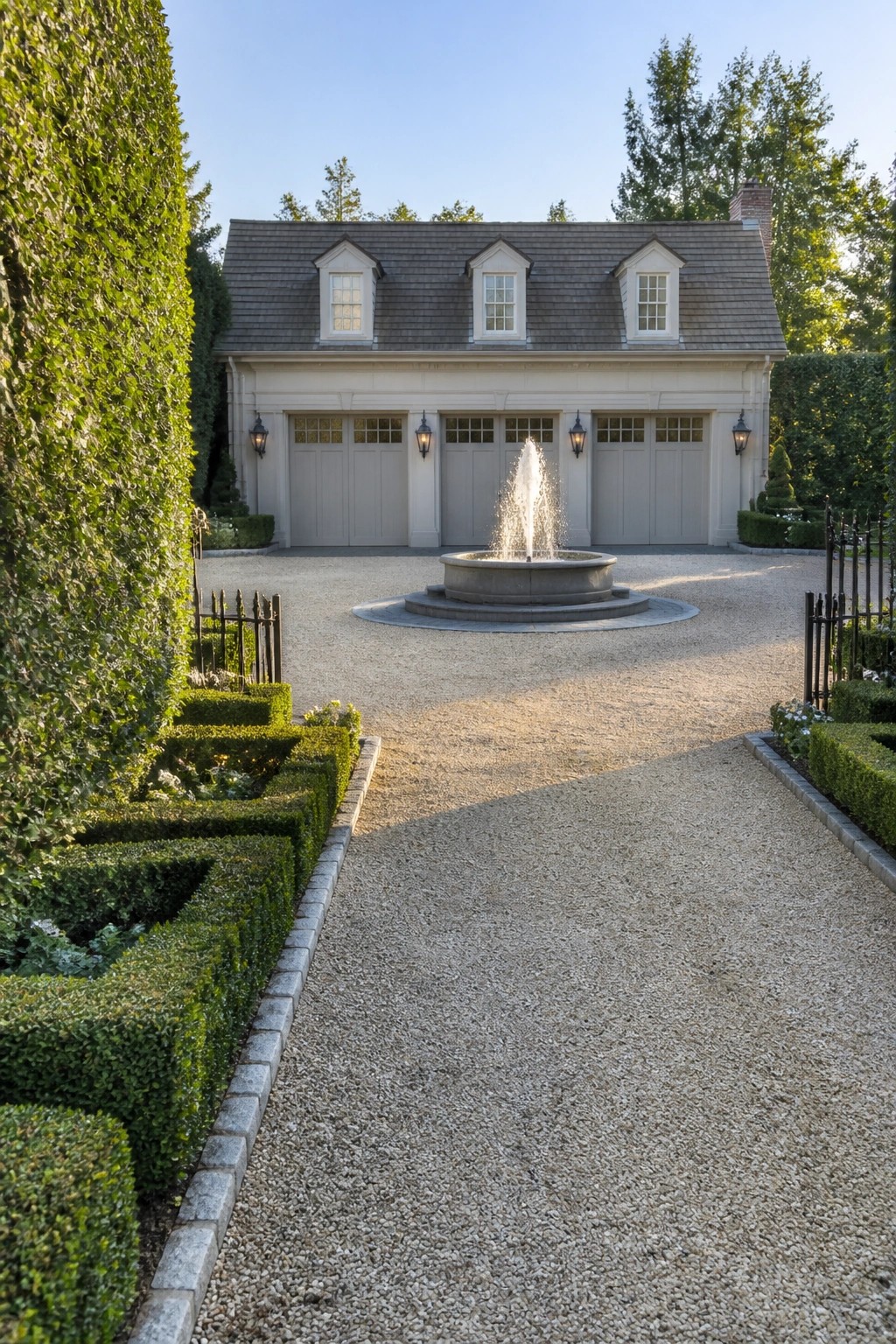
A fountain placed right in the middle of a gravel driveway gives the whole approach a clear center point. It breaks up what could feel like a big empty stretch of gravel and helps cars know where to loop around without crowding the garage doors. The water sound also softens the feel of a large paved area.
This setup works best on wider driveways that serve three or more garage bays. Keep the planting low and neat along the edges so the fountain stays the main focus. Just make sure the circle is wide enough for easy turns and that the fountain sits on a solid base that can handle occasional tire splash.
Curve the Driveway to Match the Land
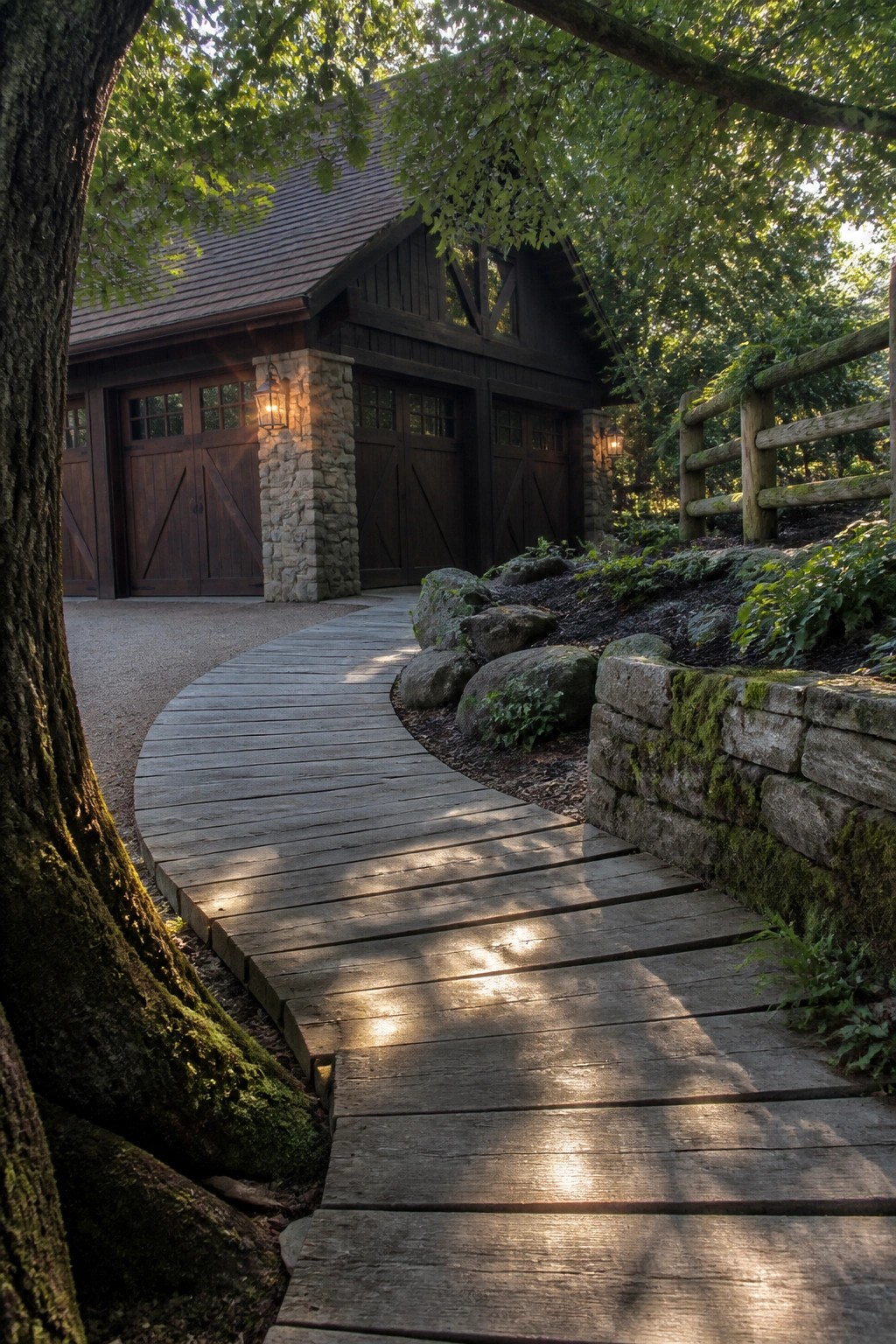
A curved driveway made of wood lets the path follow the natural shape of the yard instead of cutting straight across it. This keeps the approach feeling relaxed and avoids the stiff look of a long rectangular slab.
It works best on lots with trees, rocks, or gentle slopes where a straight line would fight the site. Keep the curve wide enough for easy turns and use pressure-treated wood so it holds up to cars and weather.
Raise the Garage Entry With a Concrete Platform
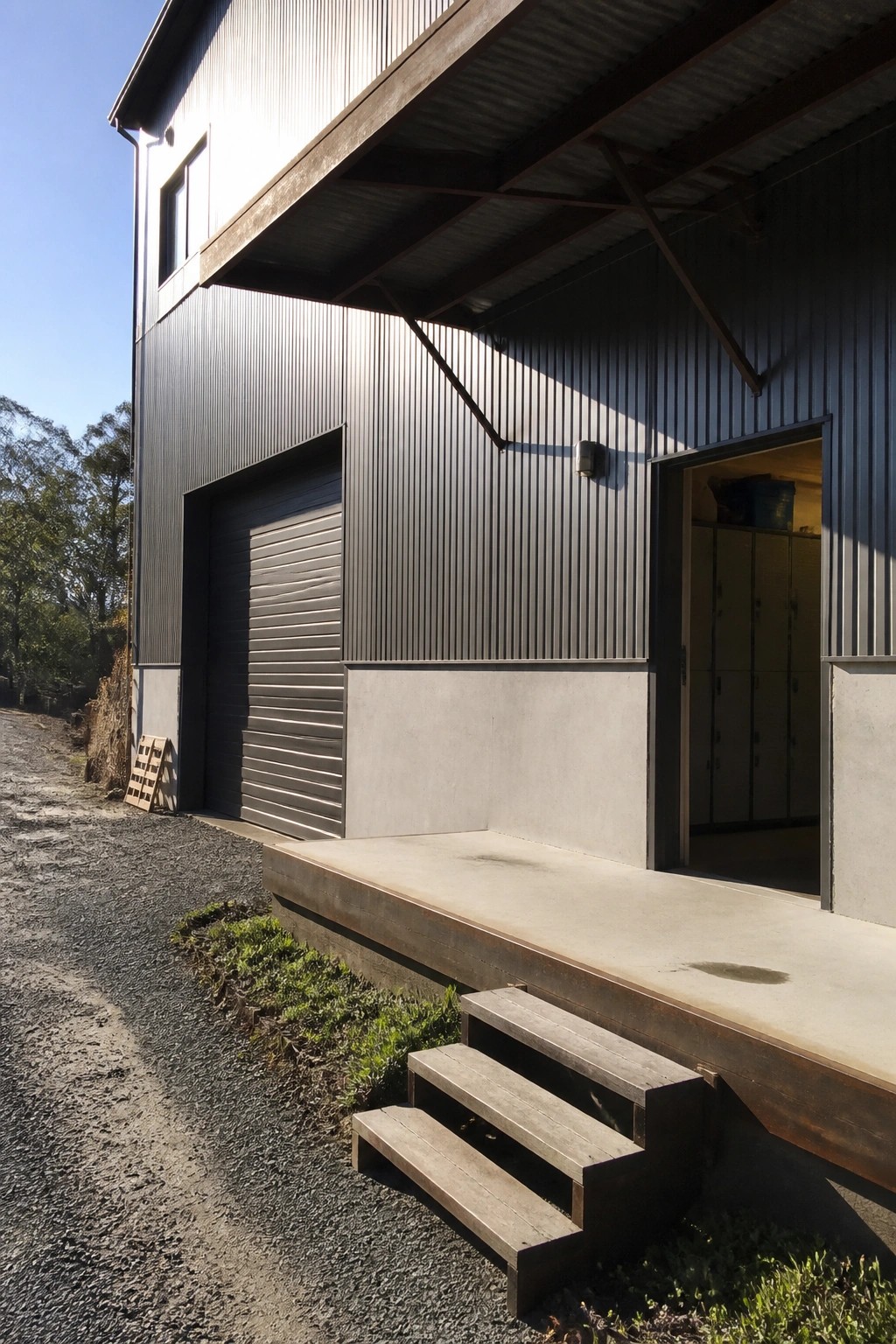
A raised concrete platform in front of the garage door gives the entry a clear edge and keeps the inside floor cleaner. It lifts the doorway above the driveway so water, mud, and gravel stay outside instead of tracking in every time a car pulls up.
This approach works best on sites where the driveway sits lower than the building floor. Simple steps make the height change easy to use, and the flat surface gives a stable spot for unloading items without stepping straight onto gravel.
Use Low Walls With Lights to Define Driveway Paths
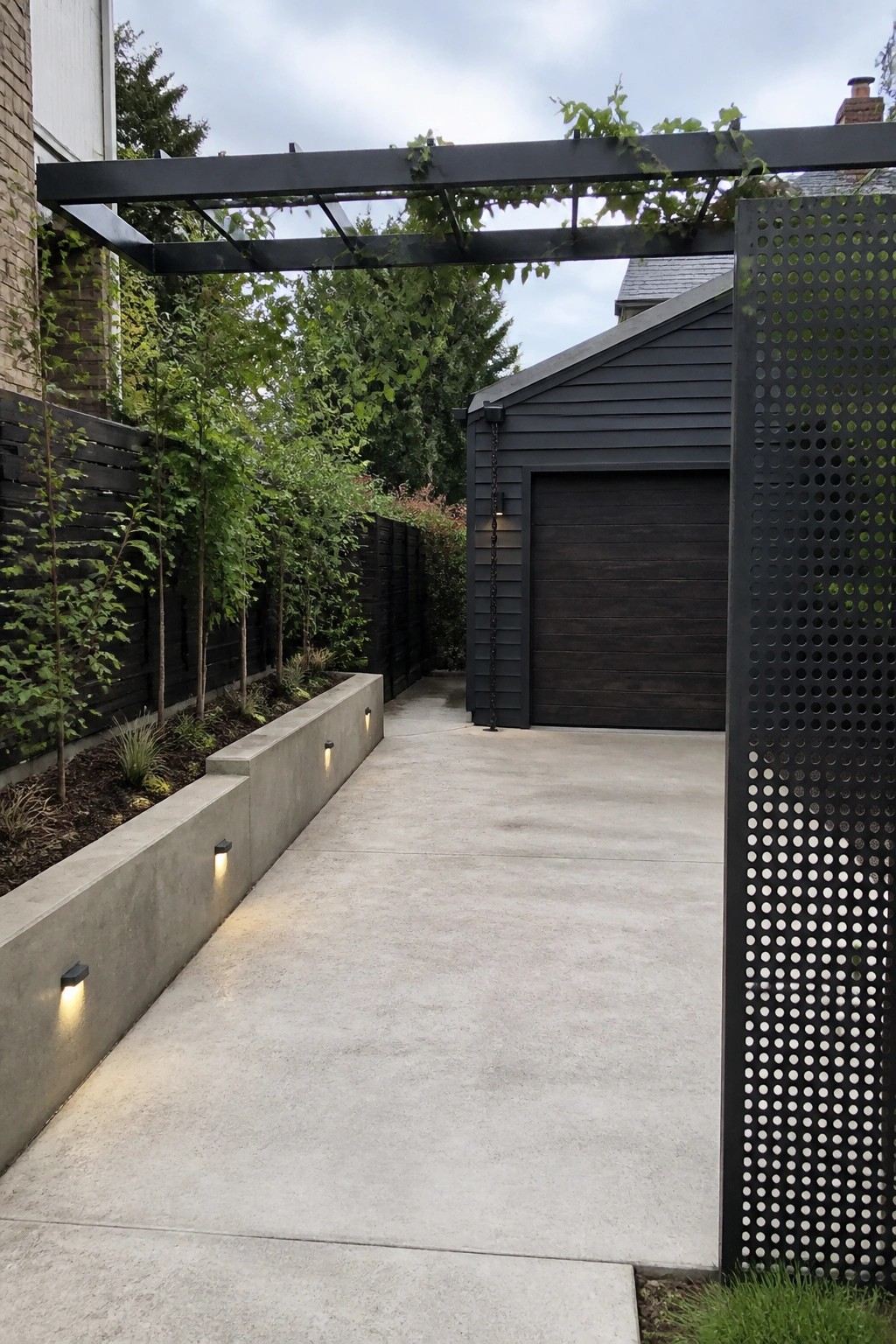
Low walls with built-in lights give the driveway a clear edge without making it feel closed in. The lights stay tucked into the concrete so they mark the path at night without shining into the house or up at the cars.
This setup works best on side or narrow driveways where you need to keep planting contained and still have safe footing after dark. Keep the wall height modest so it guides rather than blocks the space.
Plant a Border With Drainage Along the Driveway

A planted strip next to the driveway can handle runoff before it pools on the pavement. The concrete edge keeps everything neat while the drain at the low point moves water away quickly.
This setup works best on homes where the driveway slopes toward the garage or house. Keep the bed narrow so it does not eat into parking space, and choose plants that tolerate occasional wet soil.
Loop Gravel Driveways Around Central Plantings

A simple loop of gravel with planting beds in the middle keeps cars moving smoothly while cutting down on the wide, empty look many driveways get. The beds act as natural guides so drivers know where to go without needing extra signs or pavement markings. It also turns the approach to the garage into something that feels more like part of the garden instead of just a place to park.
This layout works best on properties where there is room to curve the drive rather than run it straight in. Keep the beds low enough not to block views when backing out, and choose gravel that packs well so it stays put under regular traffic. If the garage sits at the back of the lot, the loop also gives you space for a bench or a couple of chairs without crowding the actual parking spots.
Add a Paver Path Beside the Driveway
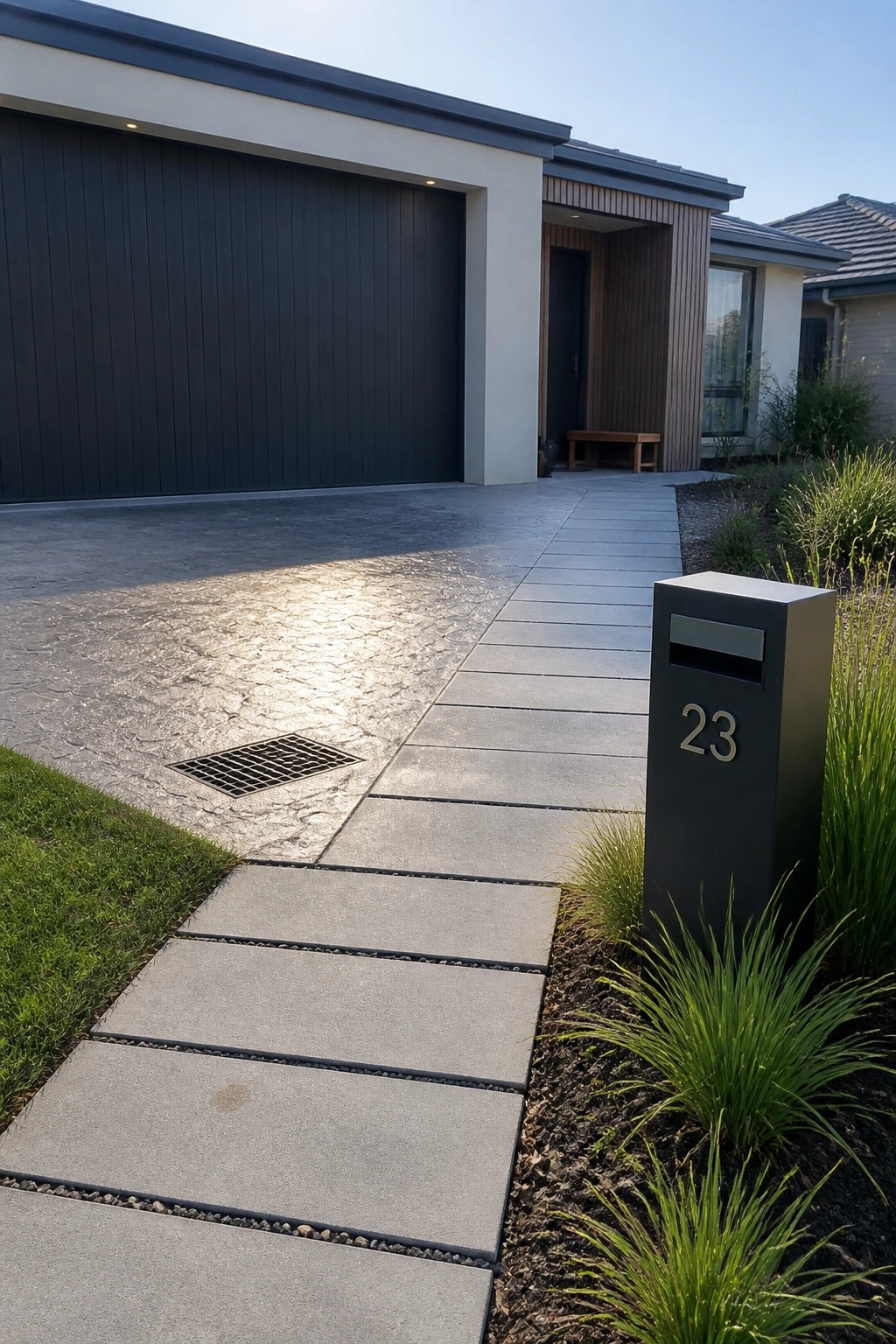
A separate walkway made of pavers keeps foot traffic away from the main driving surface. This layout works well when the driveway is wide or when you want visitors to reach the side entry without stepping on the car area. The clean lines also help the whole front look more organized.
This approach suits homes where the garage sits close to the street and the entry is slightly off to the side. Keep the pavers in a straight run and match their color to the house base so the path feels like part of the architecture rather than an afterthought. Avoid making the path too narrow or it will feel like an afterthought.
Stepping Stones in Gravel
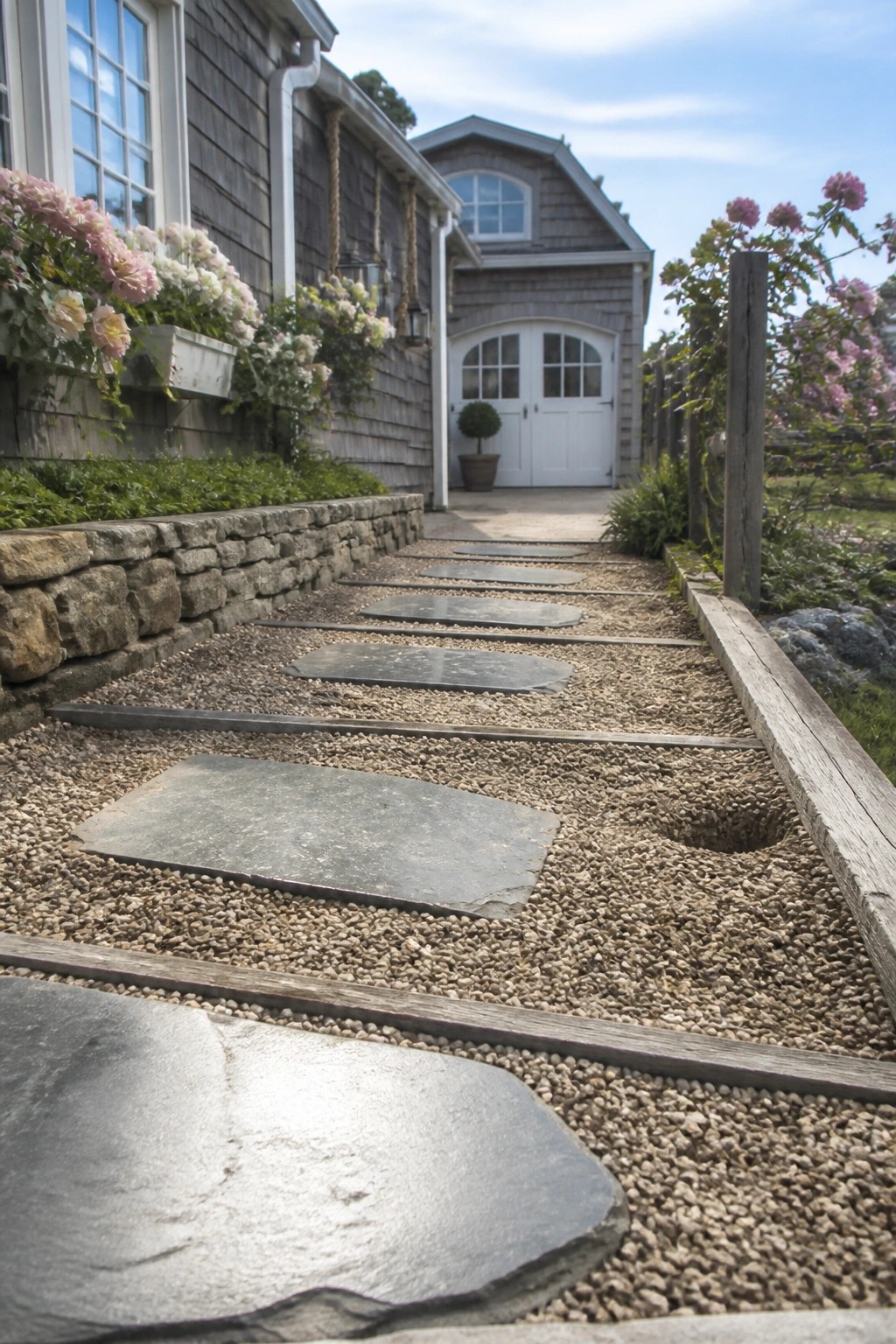
A gravel path with stepping stones gives a driveway or garage approach a clean line without turning the whole surface into pavement. The stones create steady footing and let rain soak through instead of pooling.
This layout suits homes where the garage sits back from the road or sits off to the side. Space the stones at a natural walking stride and keep the gravel layer shallow so the path stays level over time.
Add Bench Storage Along The Garage Wall
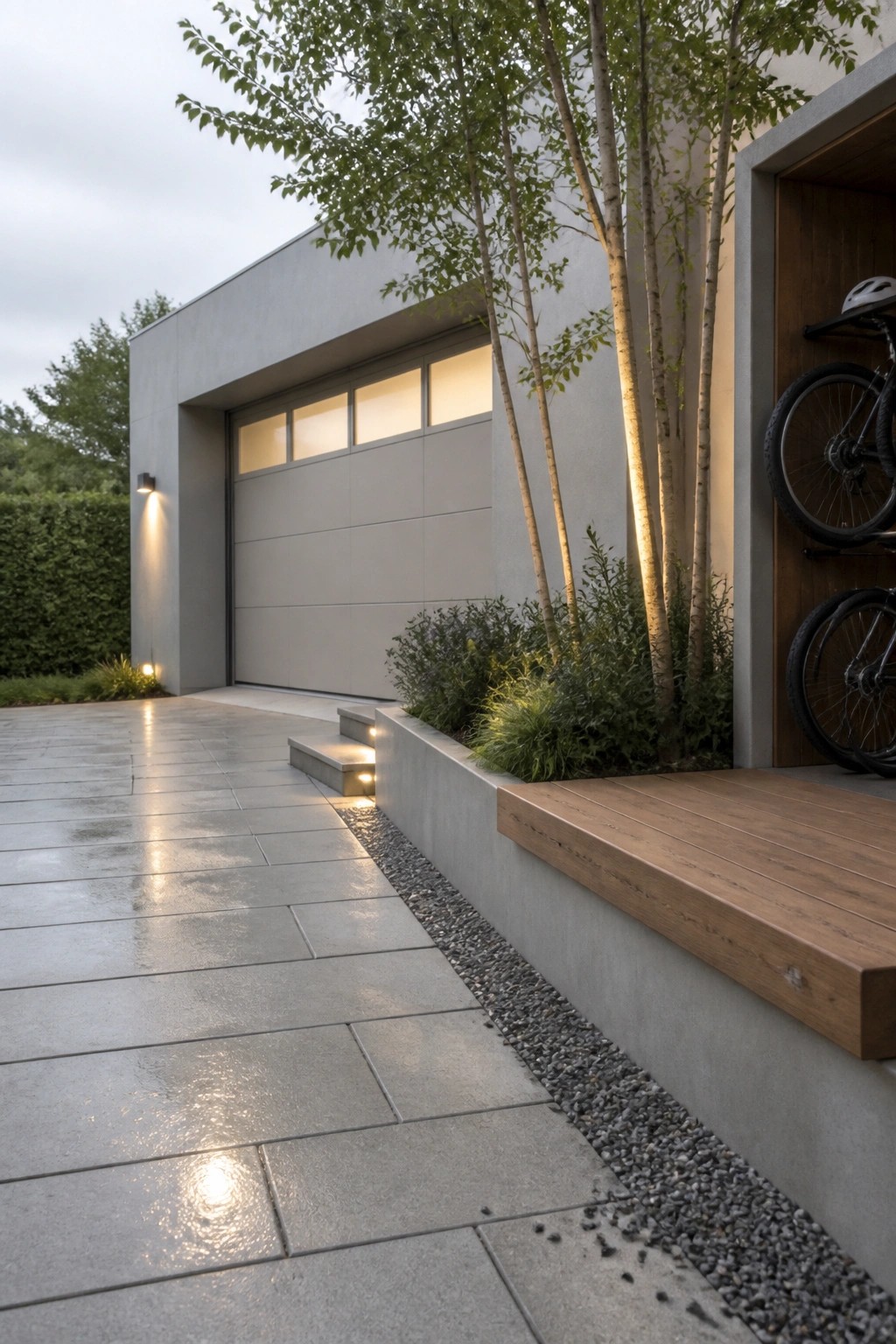
One simple way to keep a driveway from feeling crowded is to use the side wall of the garage for storage. A low wooden bench with wall racks above it holds bikes and gear off the ground so the paved area stays clear for walking and parking.
This setup works best on homes where the garage sits right next to the driveway. It turns an otherwise blank wall into a useful spot without adding extra structures that might block movement.
Frequently Asked Questions
Q: My lot is narrow. How can I still get good flow?
A: Angle the garage entrance slightly. Cars can pull in without sharp turns that eat up space. You keep the whole setup feeling open.
Q: Should I pave the entire area or leave some grass?
A: Mix in a strip of permeable pavers down the middle. This handles water runoff while giving tires a solid path. It also cuts down on the heat that full pavement creates.
Q: What about guests who park and then need to leave quickly?
A: Create a pull-through spot near the front. Drivers enter and exit in one smooth motion.
