

I have always noticed that the driveway shapes the first view of a house more than most people realize when they pull up.
When I walk past homes in my area the ones where the paving and edging match the front door and siding tend to feel more settled from the street.
Small choices in texture and layout often make the biggest difference in how the whole facade reads.
Some driveways I have seen pull the roofline and entry together without adding extra ornament that would clash later.
It helps to picture how any new surface would handle the slope and daily use before making changes.
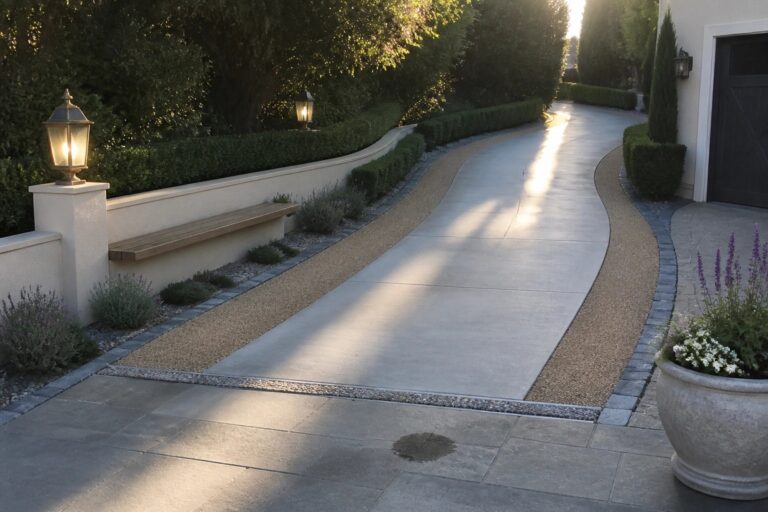
Give Your Driveway a Gentle Curve

A curved driveway softens the front of a house and keeps the approach from feeling too rigid. The bend lets the path work with the land instead of cutting straight across it, which often makes the whole entrance feel more settled.
This layout suits homes with established trees or garden beds because the curve can move around them. Keep the turn wide enough for cars and use a clear edge like gravel or pavers so the shape stays neat over time.
Pavers With Grass Between Them
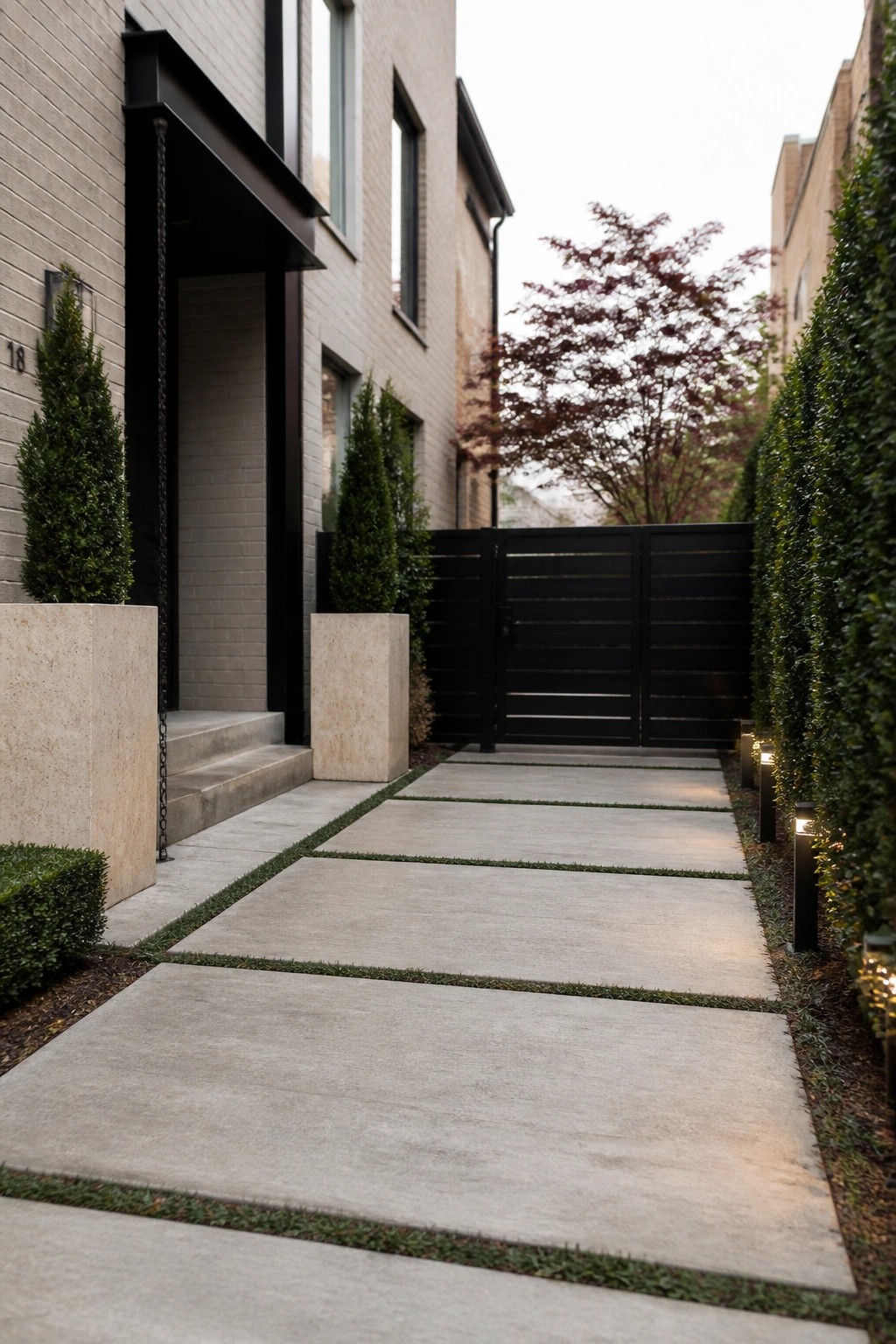
This layout uses large concrete pavers set in rows with narrow grass strips running between them. It breaks up the hard surface so the driveway feels less heavy while still providing a solid path for vehicles.
The style suits modern homes on smaller lots where you want the planting to continue right up to the house. Keep the grass strips narrow enough to stay neat but wide enough for a mower to pass without trouble.
Brick Edging Along Gravel Driveways

Gravel driveways often need a little help staying neat over time. A simple brick border keeps the stones in place and gives the path a finished look without making it feel too rigid.
This edging suits homes with a more natural or older style where you want the driveway to blend into the garden rather than stand out. It works best on gentle curves and holds up well as long as the bricks are set firmly on a level base.
Grass Infill Pavers for a Softer Driveway
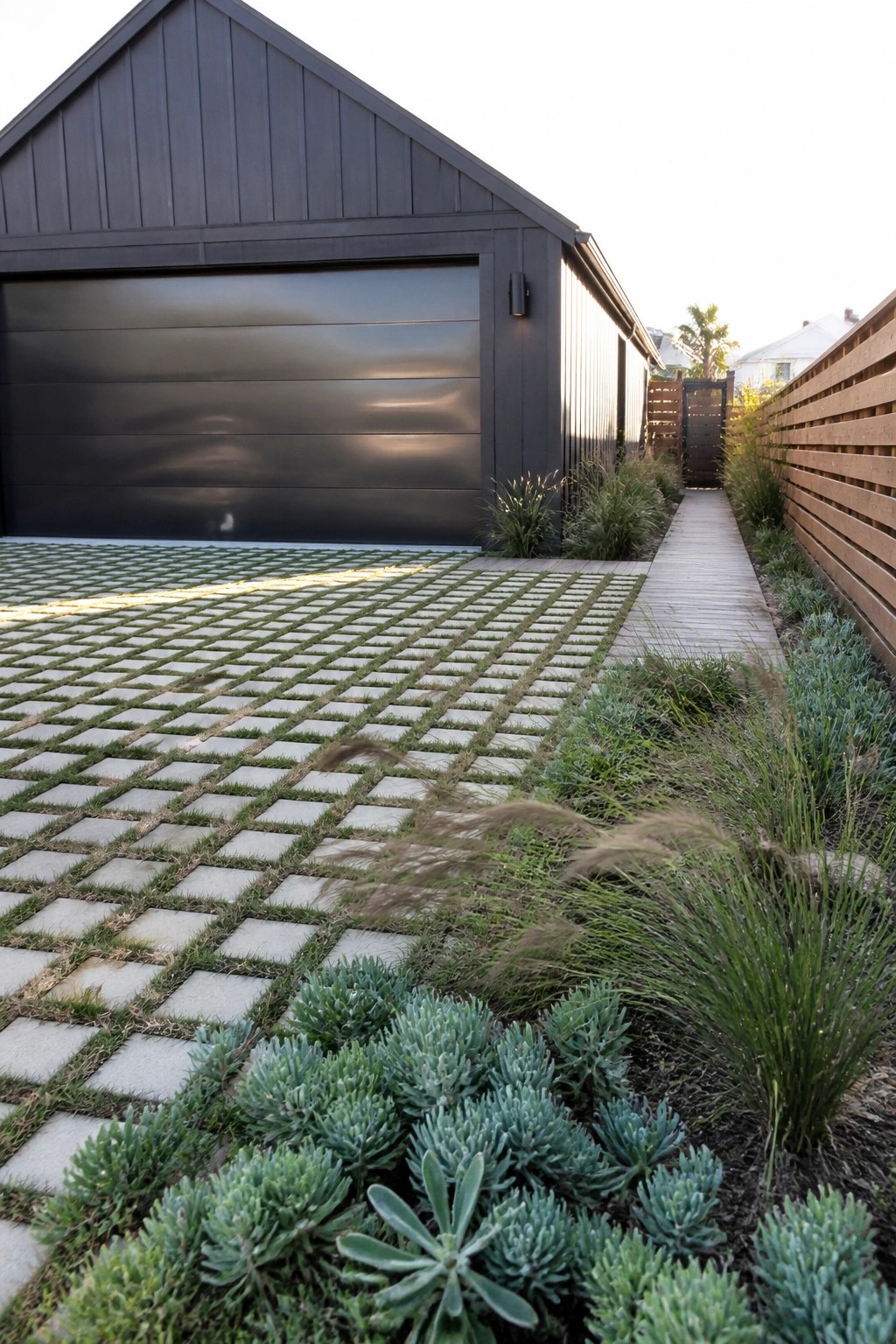
A grid of concrete pavers with grass growing between them gives the driveway a lighter look than a solid paved surface. It still handles cars but feels more connected to the surrounding planting instead of cutting across the yard like a hard barrier.
This setup works best on homes where the driveway runs close to garden beds or a side path. It helps with drainage and keeps the front area from looking too stark. Make sure the base is properly compacted so the pavers stay level over time.
Add a Planted Island to Your Driveway

A planted island gives the driveway some life without taking up much space. It breaks up the long stretch of paving and makes the entrance feel less like a road and more like part of the garden.
This works best on wider or curved driveways where there is room in the center. Keep the plants low and simple, use a clean edge like stone or brick, and choose evergreens so it looks good year round.
Brick Pavers For The Driveway

Brick pavers give a driveway a solid look that holds up well over time. The warm color works nicely with stucco walls and simple plantings without feeling too stark.
This approach suits homes with a traditional or Mediterranean feel. Keep the layout straightforward and add low walls or lights along the sides so the path stays easy to follow after dark.
Natural Stone Pavers Set In Gravel
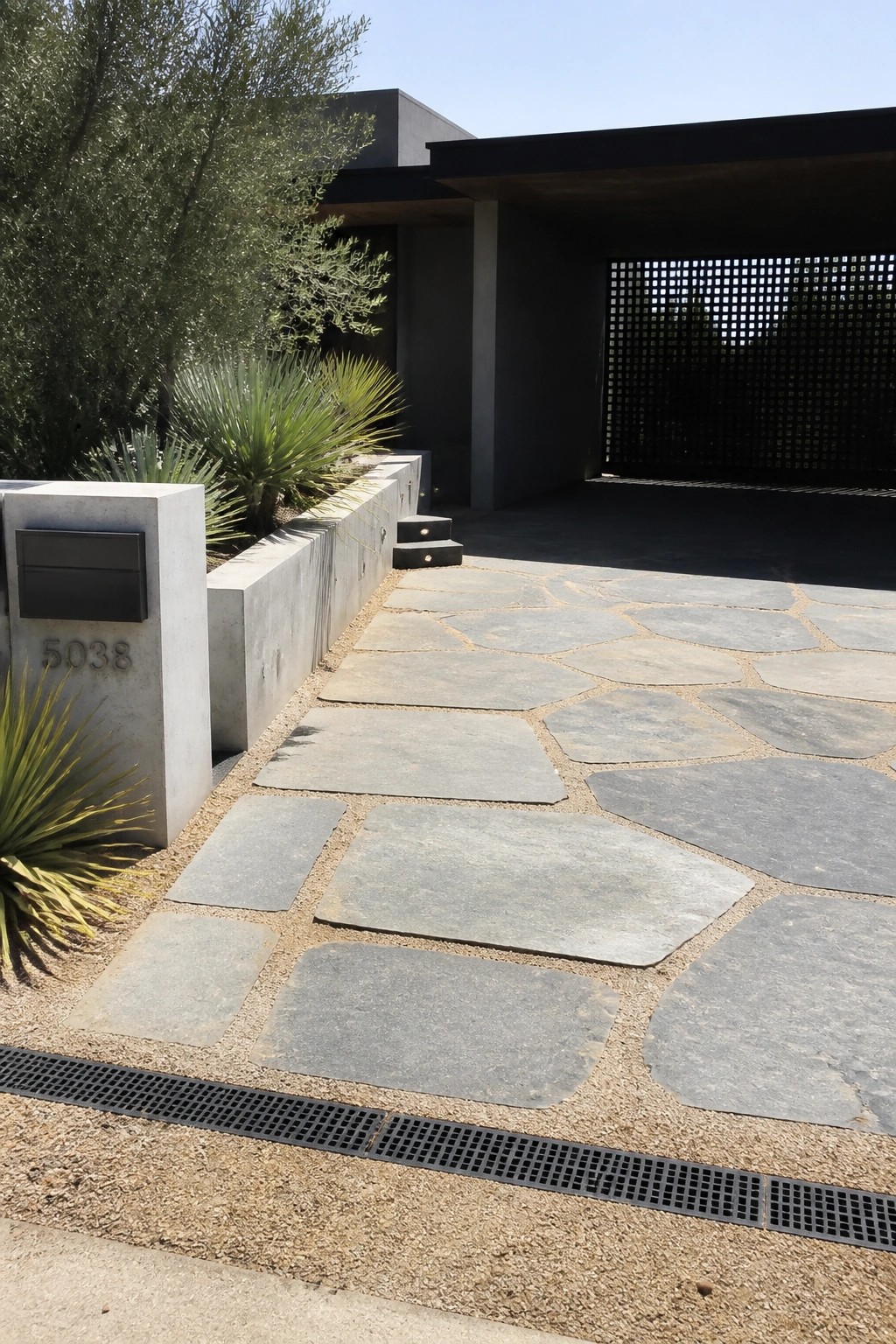
Large irregular stone pavers laid in gravel give a driveway a relaxed but solid feel. The gaps let water drain through easily and keep the surface from looking like one solid slab of concrete. This approach works especially well on homes with a modern or desert style where you want the hardscape to blend into the surrounding ground.
It suits longer driveways or homes on sloped lots because the gravel base stays stable and the pavers can follow gentle curves. Just make sure the gravel layer is thick enough and edged properly so the stones stay level over time.
Cobblestone Driveways

Cobblestone paving gives a driveway a settled, older look that works especially well when the rest of the property already has stone or garden walls. It feels more grounded than plain concrete and holds up to regular use without looking worn down too quickly.
This approach suits homes with established landscaping or older architecture. Keep the stones in a gentle curve rather than a straight line and let low walls or planting beds follow the same edge so the driveway reads as part of the garden instead of a separate surface.
Add a Dry Creek Bed to Your Driveway Bed

A dry creek bed gives the edge of a driveway a bit more shape and texture without adding clutter. The rocks create a clear line that separates the pavement from the planting area, and the curve helps the whole space feel less flat.
This works best on homes where the driveway wraps around a planting bed or island. Use larger stones in the center and smaller ones along the sides, then fill in with grasses that do not need much trimming. Keep the bed narrow enough that it does not get in the way of walking or snow removal.
Line Your Driveway With Trees And Lighting

A simple row of trees along one side of the driveway can turn a plain stretch of pavement into something more structured. When you add low lighting at the base of each trunk, the effect becomes even stronger after dark and gives the whole approach a quiet sense of order.
This idea works best on straight or gently curved drives where the trees can be spaced evenly. It suits modern homes that already have clean lines and a limited plant palette. Just make sure the lights point upward so they highlight the trunks without shining into the eyes of anyone pulling in.
Irregular Stone Pavers For Driveways
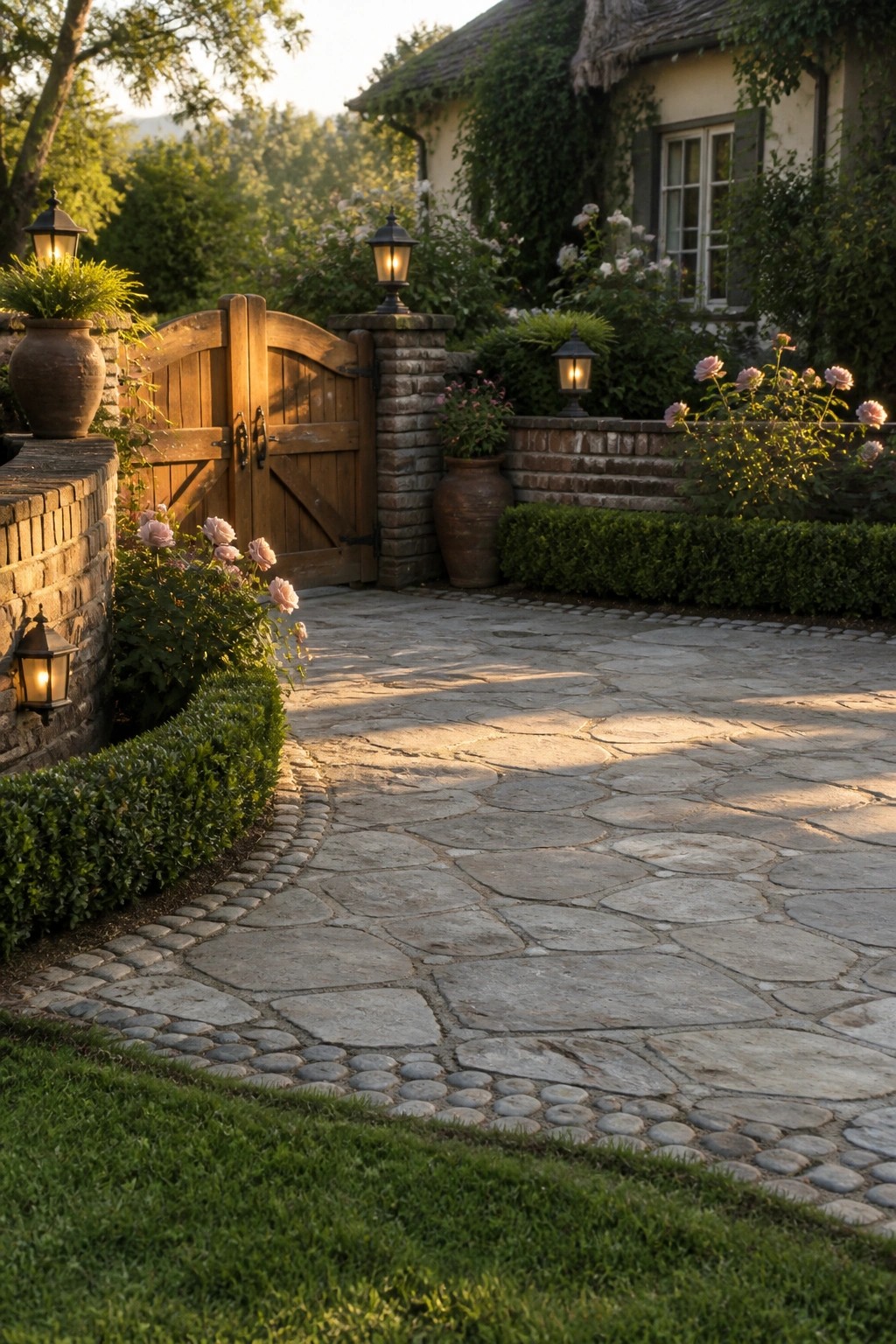
Many homeowners like the way large, uneven stone slabs look underfoot on a driveway. The surface feels softer and more natural than poured concrete, and it pairs well with older homes or those surrounded by gardens.
This style works best on properties where the drive curves slightly and meets low walls or plantings. Keep the edges defined with smaller stones so the paving stays practical while still blending into the landscape.
Gravel And Pavers For A Driveway

Gravel with concrete pavers set into it gives a driveway a clean look without needing a full paved surface. The dark gravel fills the spaces between the pavers and helps with drainage while keeping the whole area feeling open and simple. This setup works especially well when you want something low maintenance that still looks intentional.
It suits modern homes or any property where you want the driveway to blend into the surrounding landscape rather than stand out as a solid slab. Just make sure the pavers are spaced evenly and set deep enough so they stay stable under car tires. A narrow water channel along one side can add a bit of movement if the space allows it.
Herringbone Brick Driveways

A herringbone pattern in brick adds just enough detail to a driveway without making it feel busy. The angled layout breaks up the long stretch of paving and gives the entrance a more finished look than plain running bond or concrete.
This style works best on homes with traditional or brick exteriors. Keep the pattern tight at the edges and let it curve gently where the drive meets the house so the whole area feels intentional rather than just functional.
Add Lighting Along Your Driveway Edges
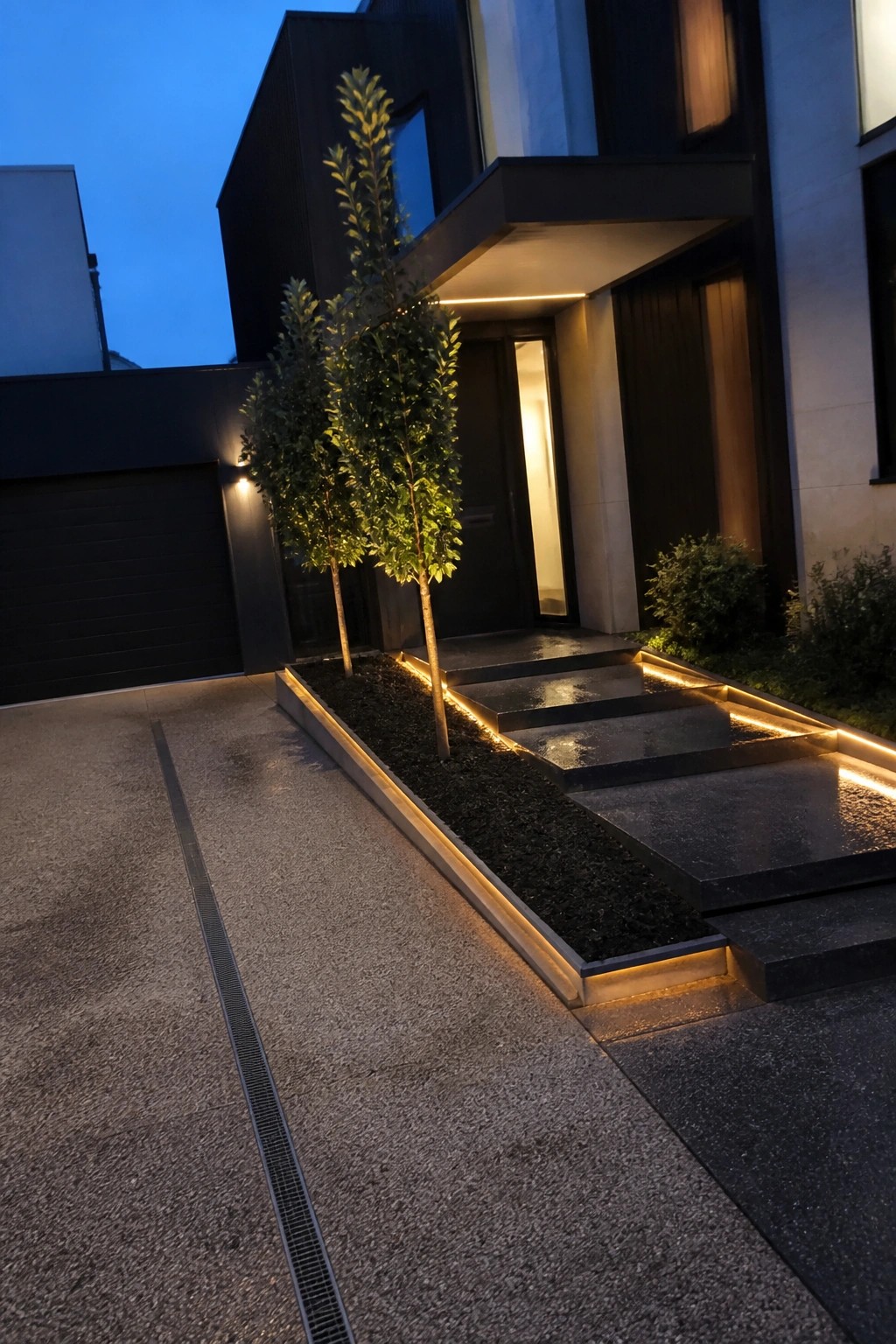
A narrow planted strip with built-in lights can make a driveway feel more finished without adding much width. The lights sit low in the bed and along the steps, so they mark the path clearly at night while keeping the overall look simple and modern.
This works best on homes with a clean, straight approach where you want to guide visitors without extra fixtures. Keep the plants low to medium so the lights stay visible, and make sure the bed has good drainage since it sits right next to the paved surface.
Concrete Driveways With Gravel Edging

A plain concrete driveway gains a lot from a narrow gravel border along one side. The edge keeps the surface looking intentional and helps separate the driving area from planting beds without adding extra materials or patterns.
This setup suits modern homes with straight lines and simple facades. Keep the gravel strip only a few inches wide so it stays subtle and does not compete with the concrete itself.
Flagstone Paths With Gravel Edging
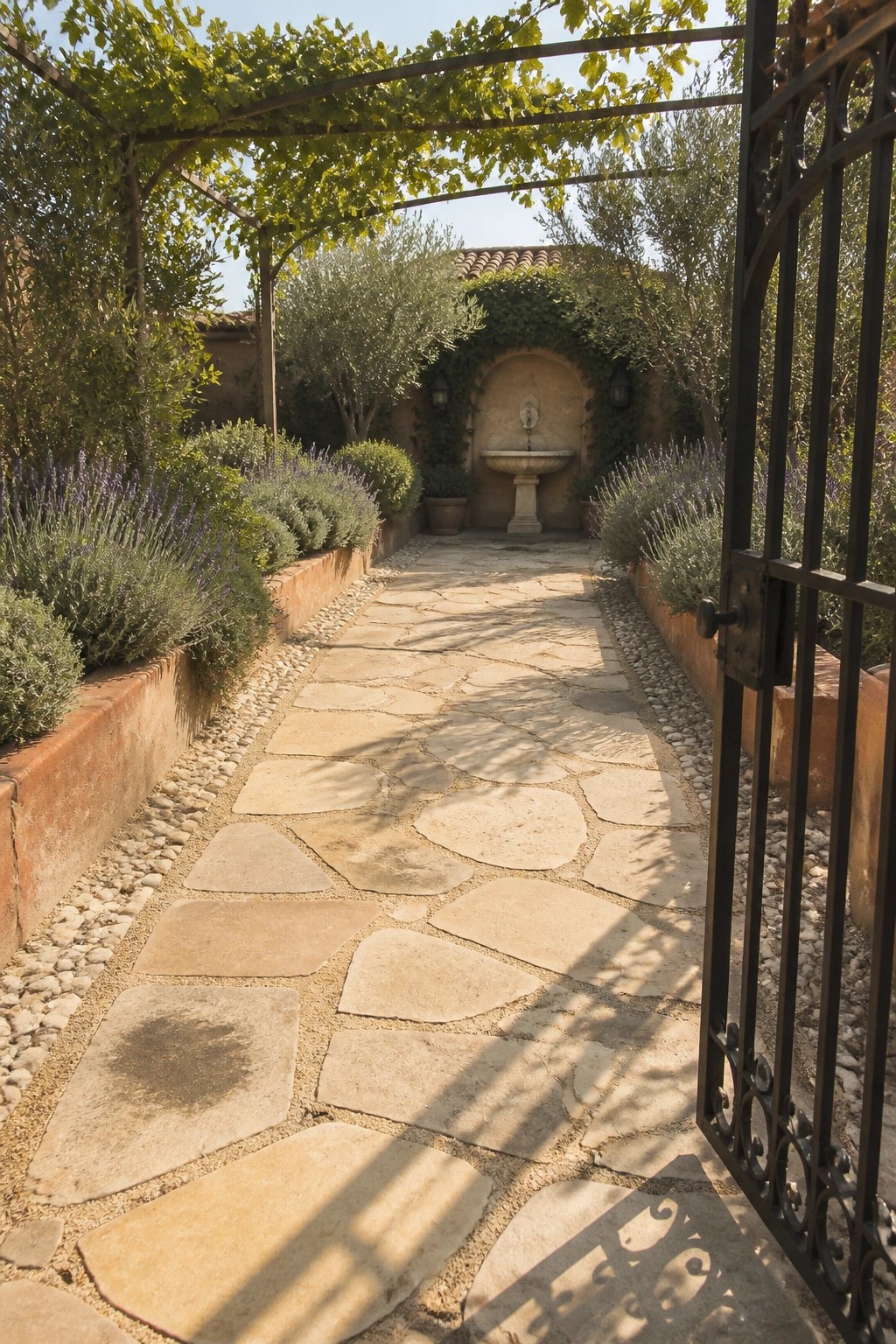
A flagstone path gives a driveway approach a relaxed, natural feel that still holds up to regular use. The gravel along the edges keeps the stones stable and helps with drainage so water does not pool after rain.
This style works best on homes with warm climates or Mediterranean details. Keep the planting simple with lavender or similar low shrubs along the sides so the path stays easy to maintain and does not feel overgrown.
Grass Strips Between Pavers
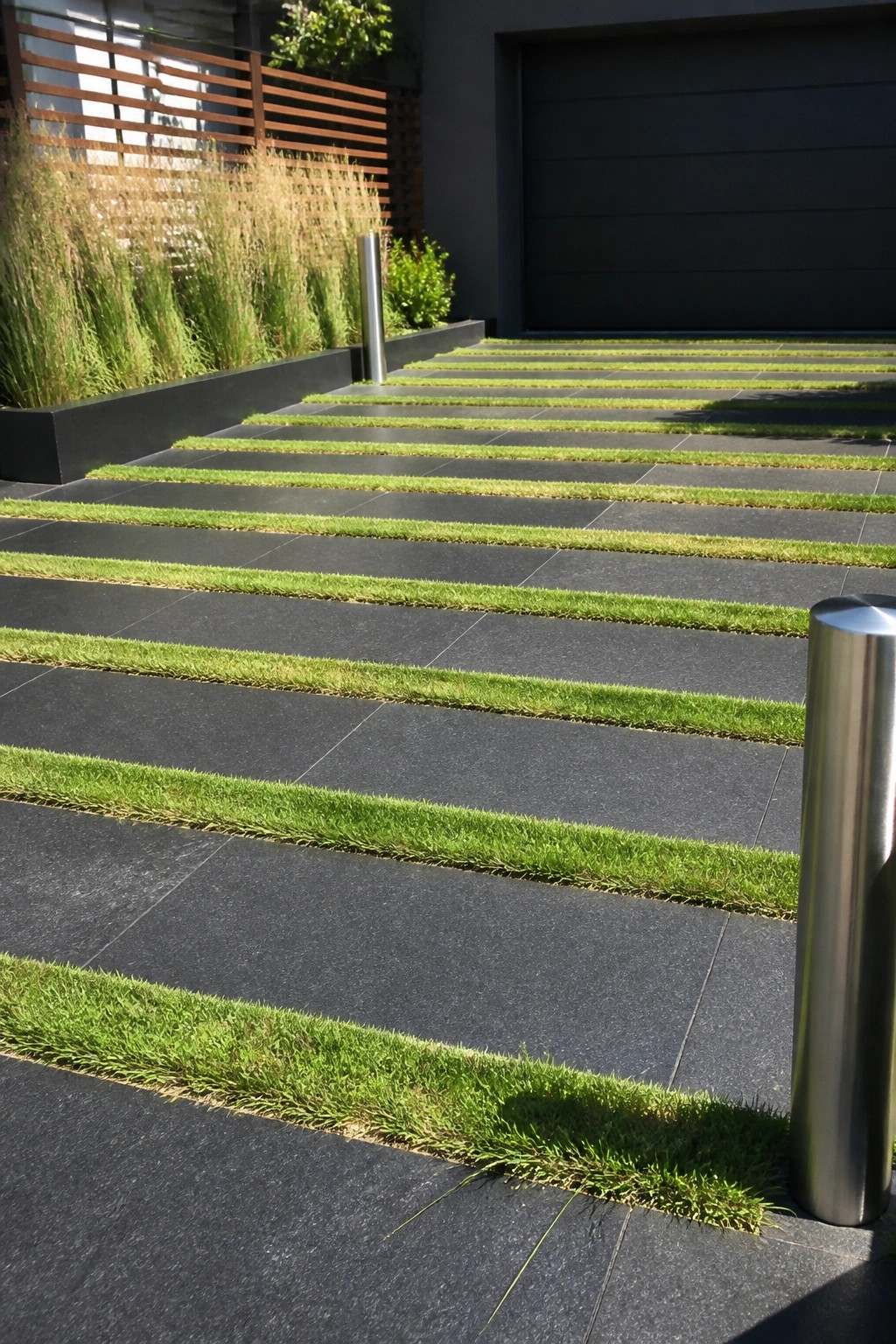
Many driveways feel too solid and heavy when they are just one big paved surface. Adding narrow strips of grass between the pavers breaks up the look and brings in a bit of softness without losing the clean structure.
This approach works best on modern homes with dark paving. It suits sloped driveways especially well since the grass lines help with drainage and keep the whole thing from feeling too stark.
Stone Paths With Soft Planting Borders
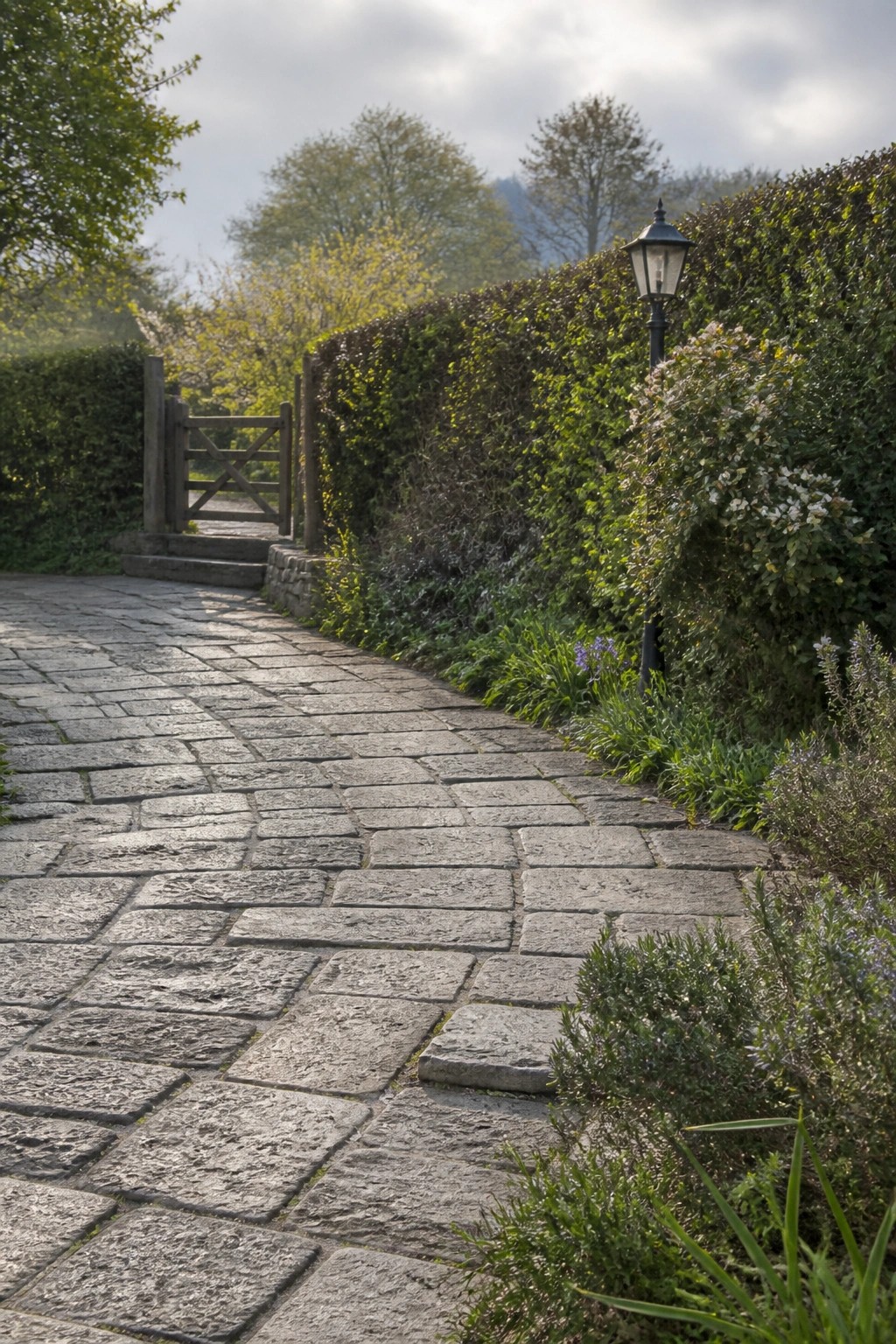
A stone path edged with thick hedges and layered greenery creates a simple, welcoming approach that feels established right away. The irregular pavers keep the surface interesting without looking overly designed, and the planting softens the hard edges so the whole thing blends into the landscape.
This style suits homes with some existing garden space and works especially well on longer driveways or side entries. Use stones that match local materials and keep the border plants dense but trimmed so the path stays easy to walk or drive along.
Patterned Tiles for the Driveway
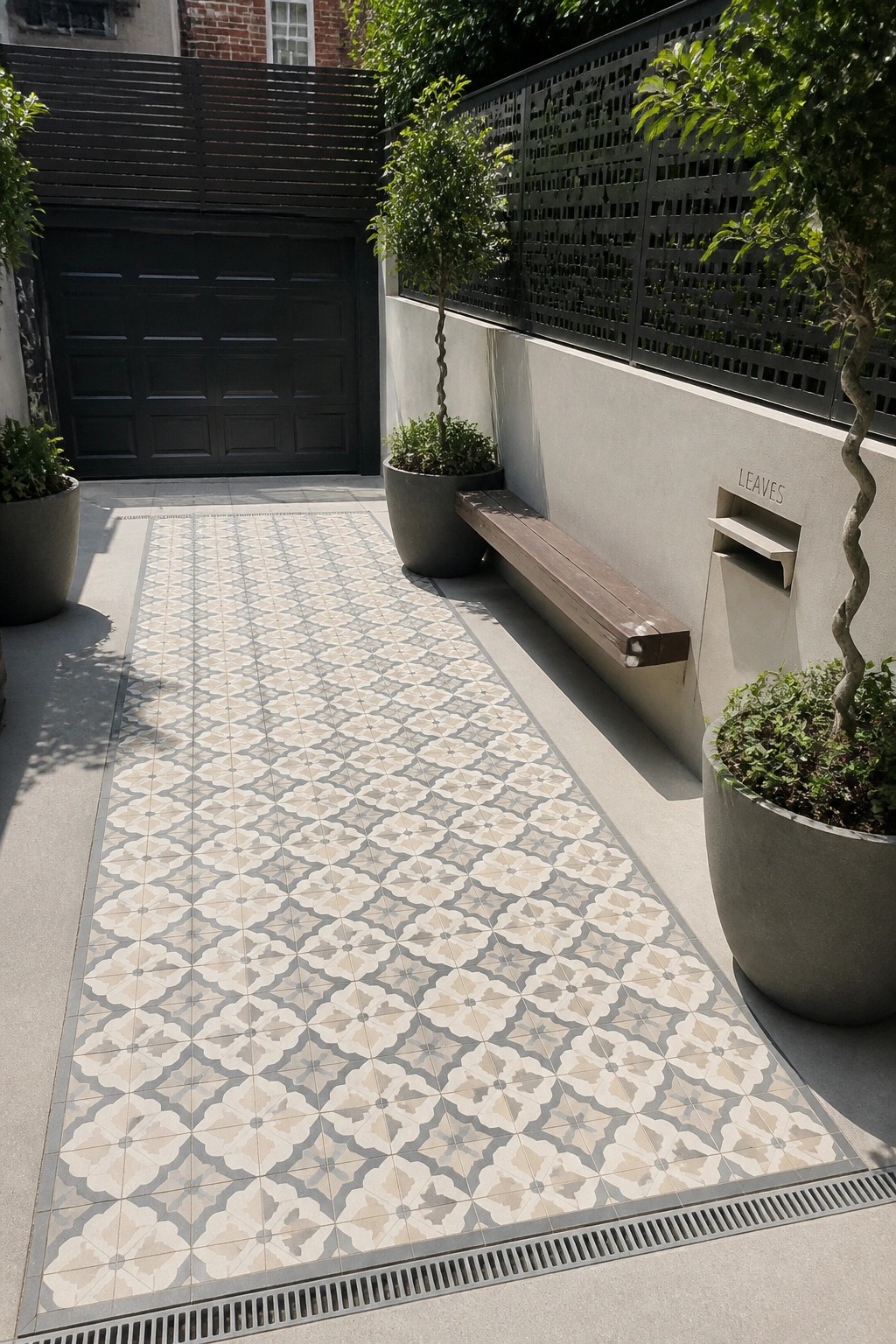
Many driveways end up plain because people default to concrete or asphalt. Patterned tiles change that by adding a repeating design that makes the whole front approach feel more intentional and put together.
This approach suits homes with a modern or updated look where the driveway sits close to the house. Stick with durable outdoor tiles and a simple repeat so the pattern stays easy to live with over time.
Let Grass Run Between Driveway Pavers
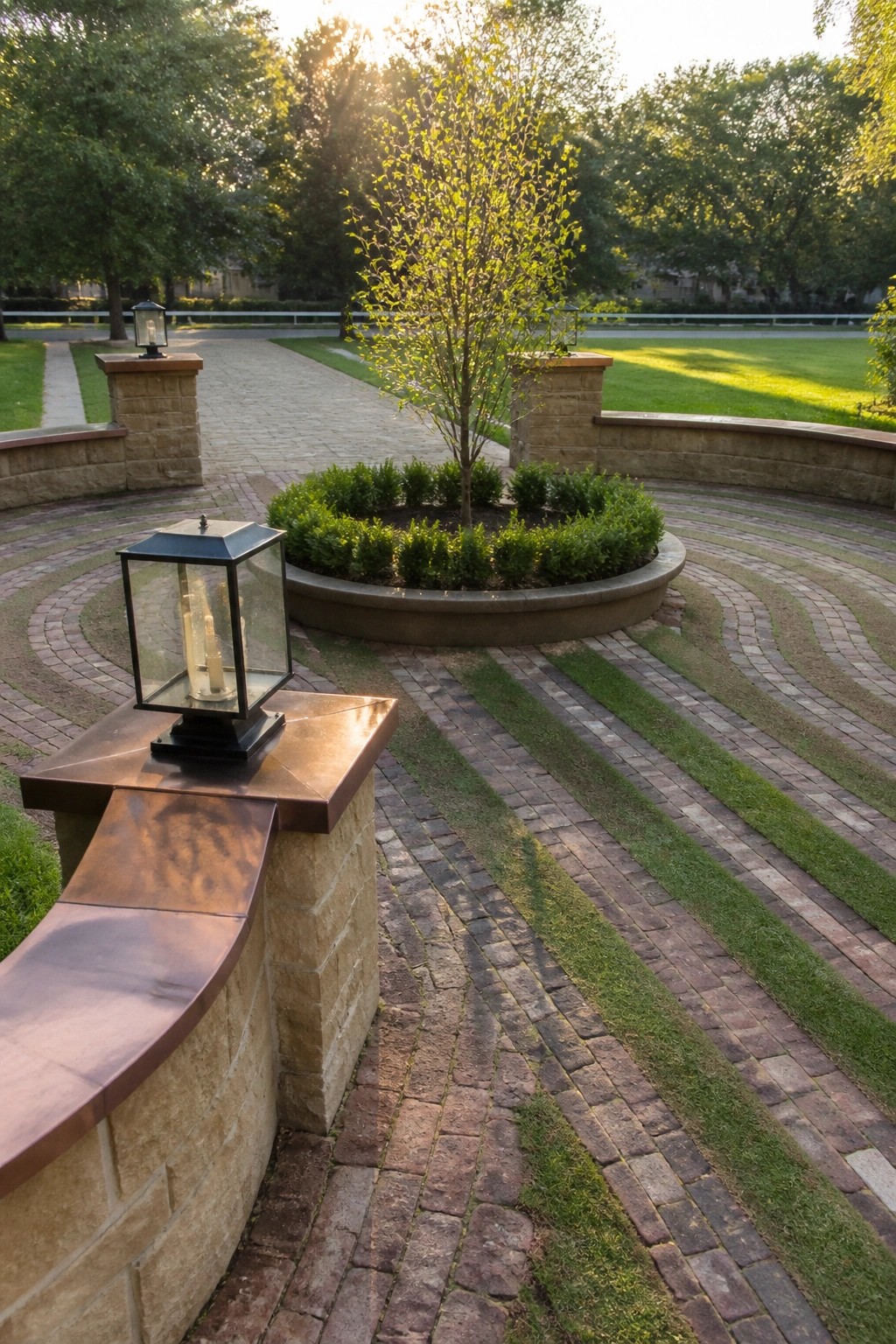
A solid stretch of paving can make a driveway look wider and harsher than it needs to be. Running narrow strips of grass between the bricks softens the surface and lets the driveway blend into the surrounding lawn instead of sitting on top of it like a separate slab.
This approach works best on larger lots where the drive has room to curve. Keep the grass strips narrow enough to mow easily and choose a brick pattern that follows the shape of the drive so the green lines feel intentional rather than random.
Add Metal Edging With Succulents To Your Driveway
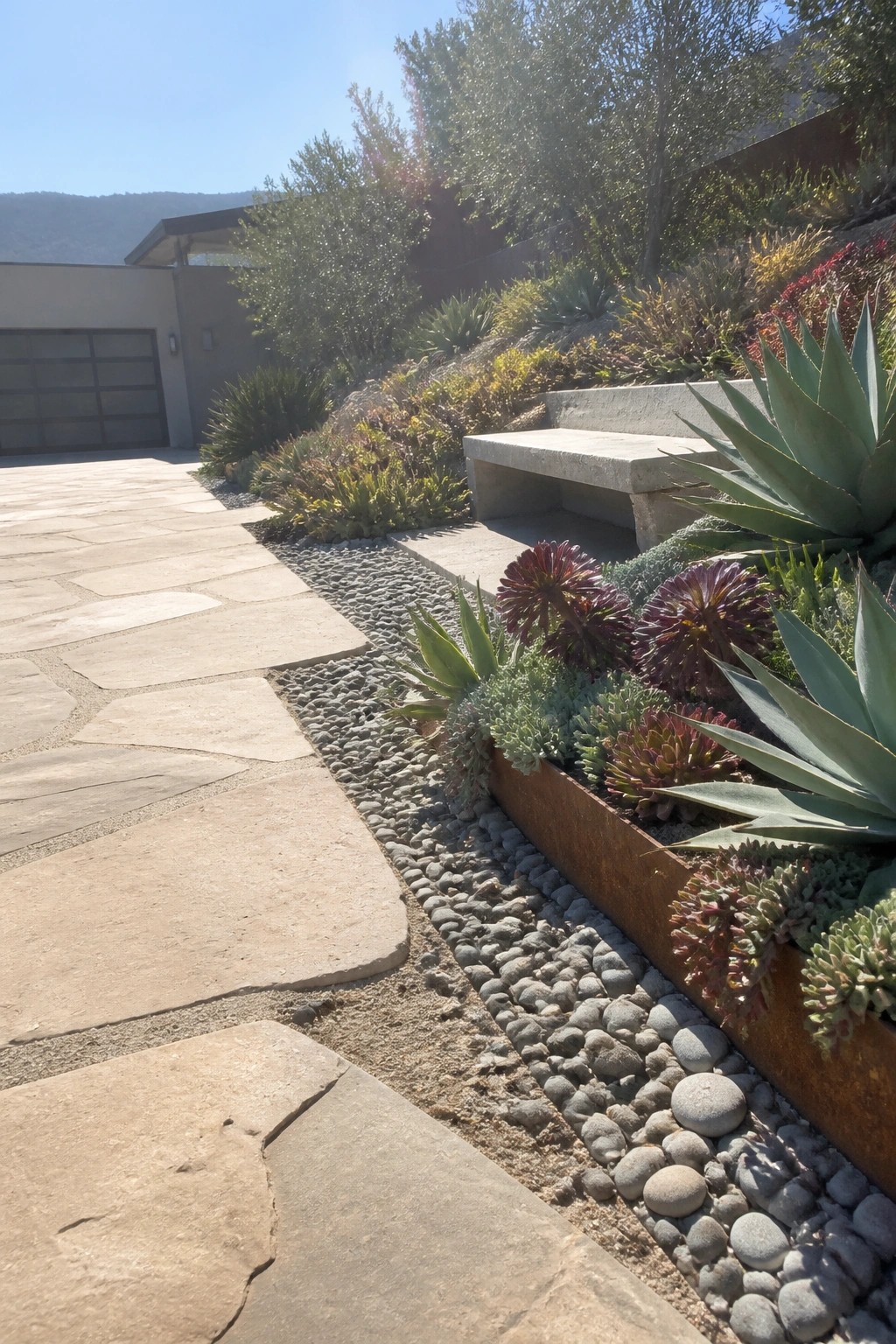
A simple metal planter can turn a plain driveway edge into something more finished. The rusted steel holds the plants in place and gives a clear border between the stone path and the gravel strip.
This setup works best on modern homes or in dry areas where low-water plants make sense. Keep the planter fairly narrow so it does not interfere with walking or parking.
Curved Cobblestone Driveways
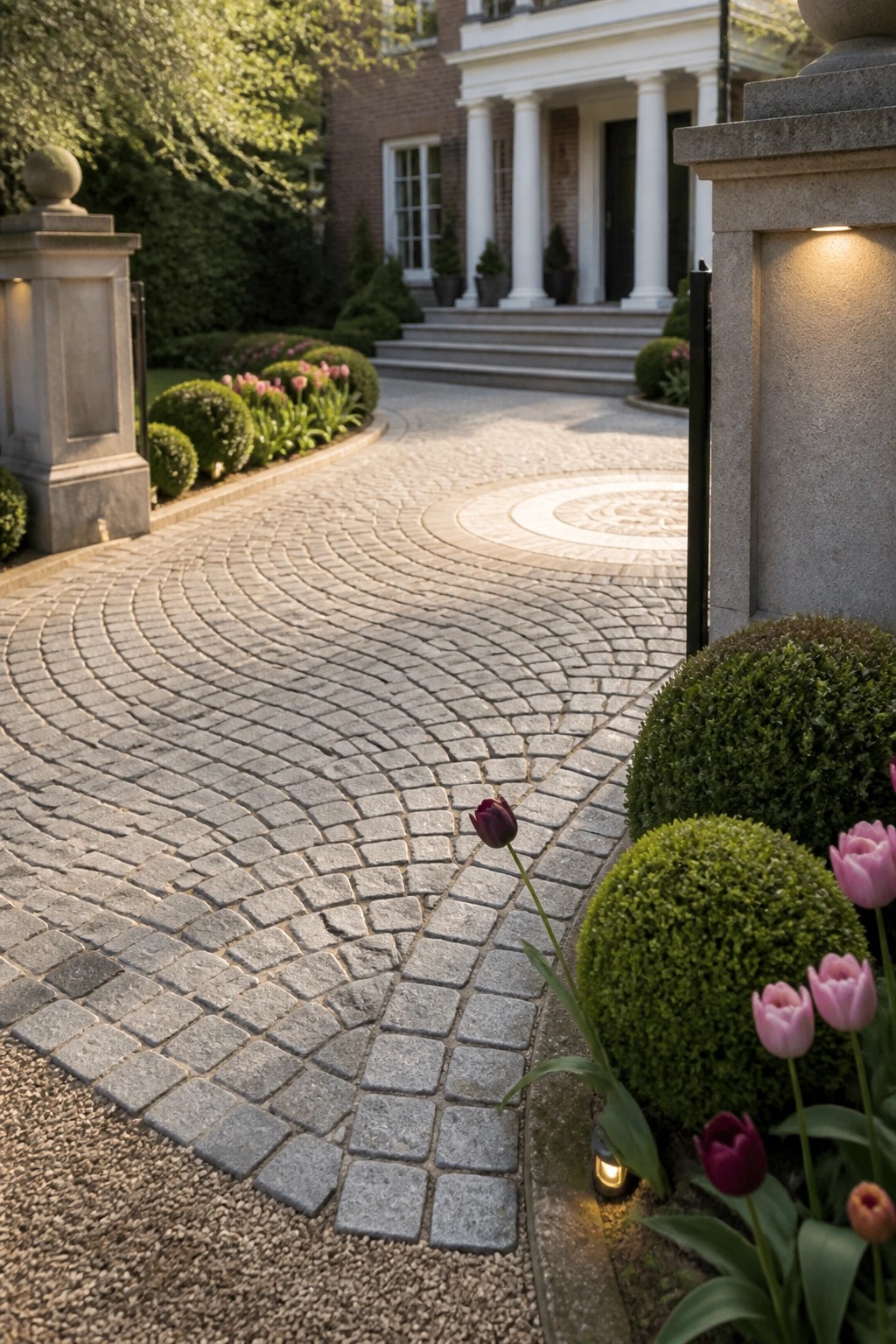
A driveway laid in a gentle curve with cobblestone gives the whole front approach more movement than a straight concrete slab. The pattern draws the eye along the path and makes even a modest entrance feel more considered.
This style suits homes with room for the curve to develop naturally and works best when the edges stay simple. Keep plantings low along the sides so the paving itself stays the focus.
Frequently Asked Questions
Q: Which driveway material holds up best if it rains a lot where I live?
A: Gravel drains well but you need to add a good base layer first. Check the slope so water flows away from your house. Replenish the stones every few years as they shift.
Q: How do I stop my new paver driveway from shifting?
A: Start with a solid compacted base under the pavers. Edge restraints keep everything in place over time. Avoid driving on it right after installation.
Q: Should I worry about drainage with these designs?
A: Direct water away from the foundation. A slight slope handles most issues.
