

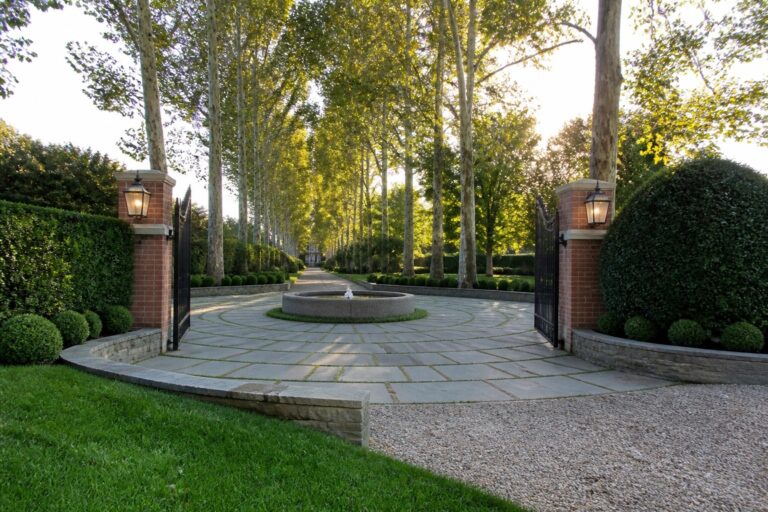
I’ve always paid attention to how a driveway entrance frames the house because it is the first thing visitors see when they arrive.
The choice of paving, gates, or plantings can shift how the entire facade reads from the street in ways that are hard to predict from drawings alone.
Small changes often make the biggest difference.
I remember walking past a place where a simple curve in the drive softened the whole approach and made the home feel more welcoming without any extra effort.
Testing a few of these ideas on paper first could help avoid mistakes that are expensive to fix later.
Run a Narrow Water Channel Next to the Driveway
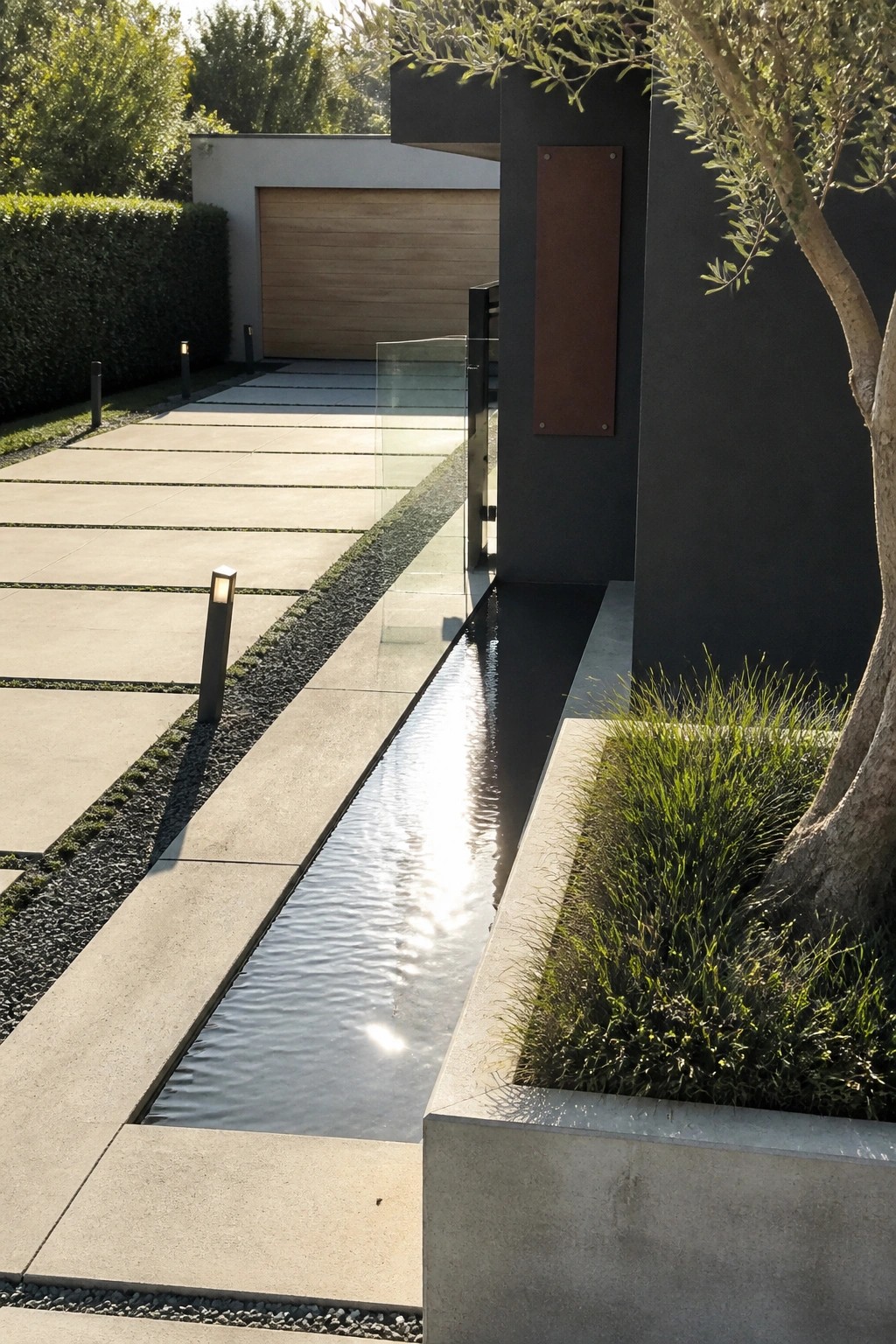
A narrow water feature running parallel to the driveway gives the entrance a quiet, steady presence. The moving surface catches light and breaks up the hardscape without adding clutter or extra plantings.
This works best on modern homes with clean paving and simple building lines. Keep the channel shallow, use dark edging to define it, and plan for easy access so cleaning stays simple over time.
Potted Trees Along the Entry Path
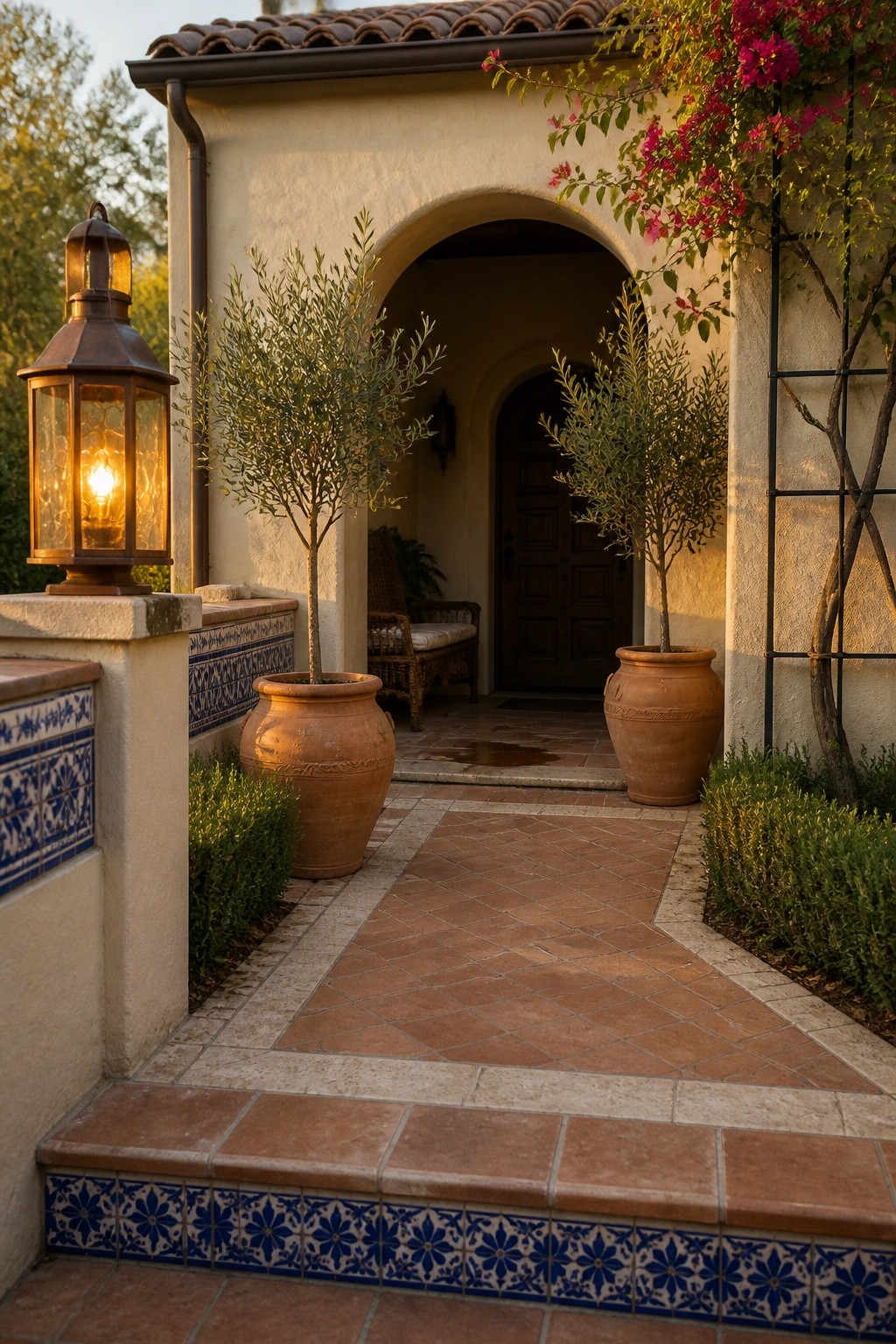
Large terracotta pots planted with small trees give an entrance path a simple, balanced look. They add height and greenery right where the walkway meets the door, and they work without needing a big garden bed or complicated planting.
This approach suits homes with warm stucco walls and clay roof tiles. Set the pots on either side of the path a few feet before the door, and keep the trees pruned so they stay in scale with the space.
Use a Gate Between Stone Pillars
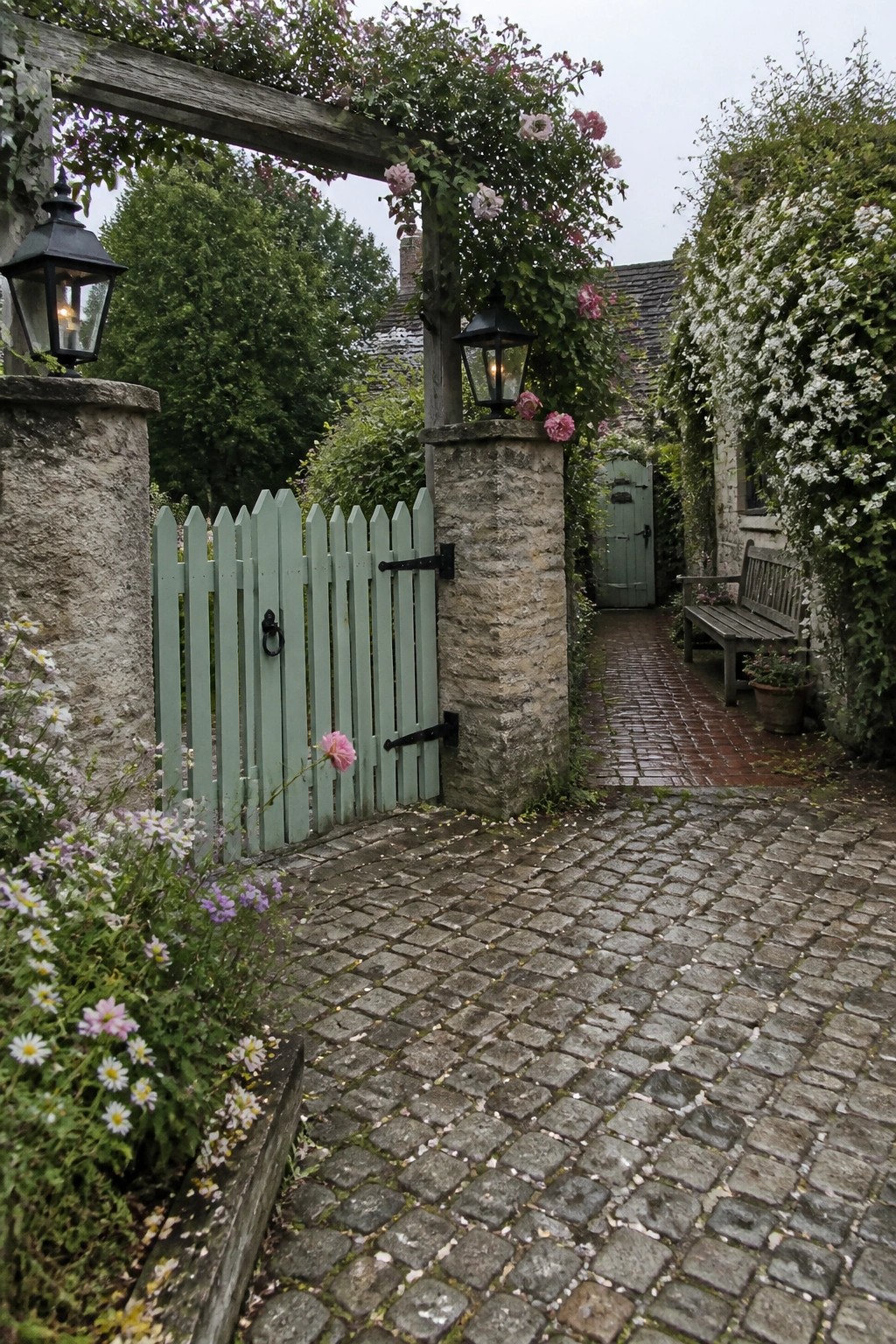
A gate placed between stone pillars gives a driveway entrance a clear starting point. It feels settled and welcoming, especially when the gate is painted a soft color that stands out against the stone.
This approach works best on homes with a cottage or traditional look. Keep the gate fairly simple, add lanterns on top of the posts for light, and let a few plants grow up around the base so the whole entrance feels part of the garden rather than just a barrier.
Large Planters at the Gate

Large planters work well when you want to give a driveway gate a finished look without adding walls or extra structures. Two big pots placed on either side create a clear point of arrival and bring some greenery right into the entry.
This approach suits homes with a straight path or a simple gate opening. Use sturdy pots in a warm clay tone and choose plants that hold their shape through the year so the entrance stays neat with little upkeep.
Rustic Wooden Gates at the Driveway Entrance

Wooden gates give a driveway a clear starting point without blocking the way. They add a simple boundary that feels natural with gravel and garden plantings.
These gates suit homes with a farmhouse or cottage style. They work best when left open most of the time and paired with basic materials like weathered wood and metal hardware.
Pavers With Grass Joints
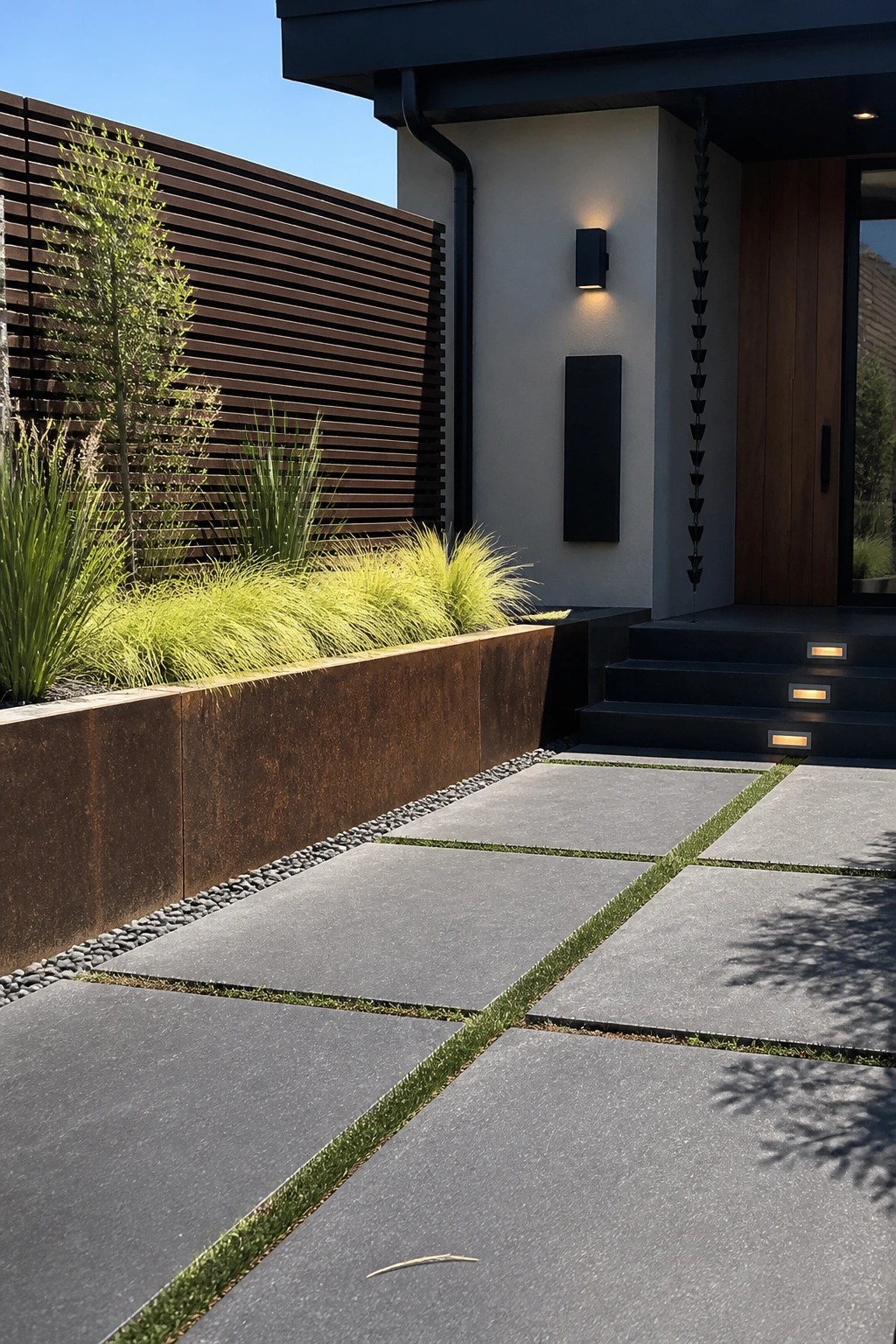
Large concrete pavers set with narrow strips of grass between them give an entrance path a structured yet open feel. The grass softens the hard surface and keeps the whole approach from looking too heavy or industrial. It works especially well when the pavers are sized generously so the pattern stays simple and the grass lines stay easy to mow.
This layout suits modern or minimalist homes where you want the walkway to feel connected to the surrounding planting. Keep the grass strips narrow enough that they do not turn into a maintenance chore, and pair the pavers with a clean edge like steel or stone so the pattern stays sharp over time.
Stone Pillars Mark The Driveway Entrance

Stone pillars give a driveway a clear starting point and a sense of order. They work especially well when the drive runs between rows of trees, because the height of the pillars lines up with the planting and keeps the whole approach feeling balanced.
This approach suits homes with a bit of land and a formal or traditional style. Keep the pillars simple in shape, use a matching gate, and place them just far enough apart for two cars to pass comfortably. Avoid overcrowding the base with too many plants so the structure stays easy to see.
Stepping Stones Set in Gravel
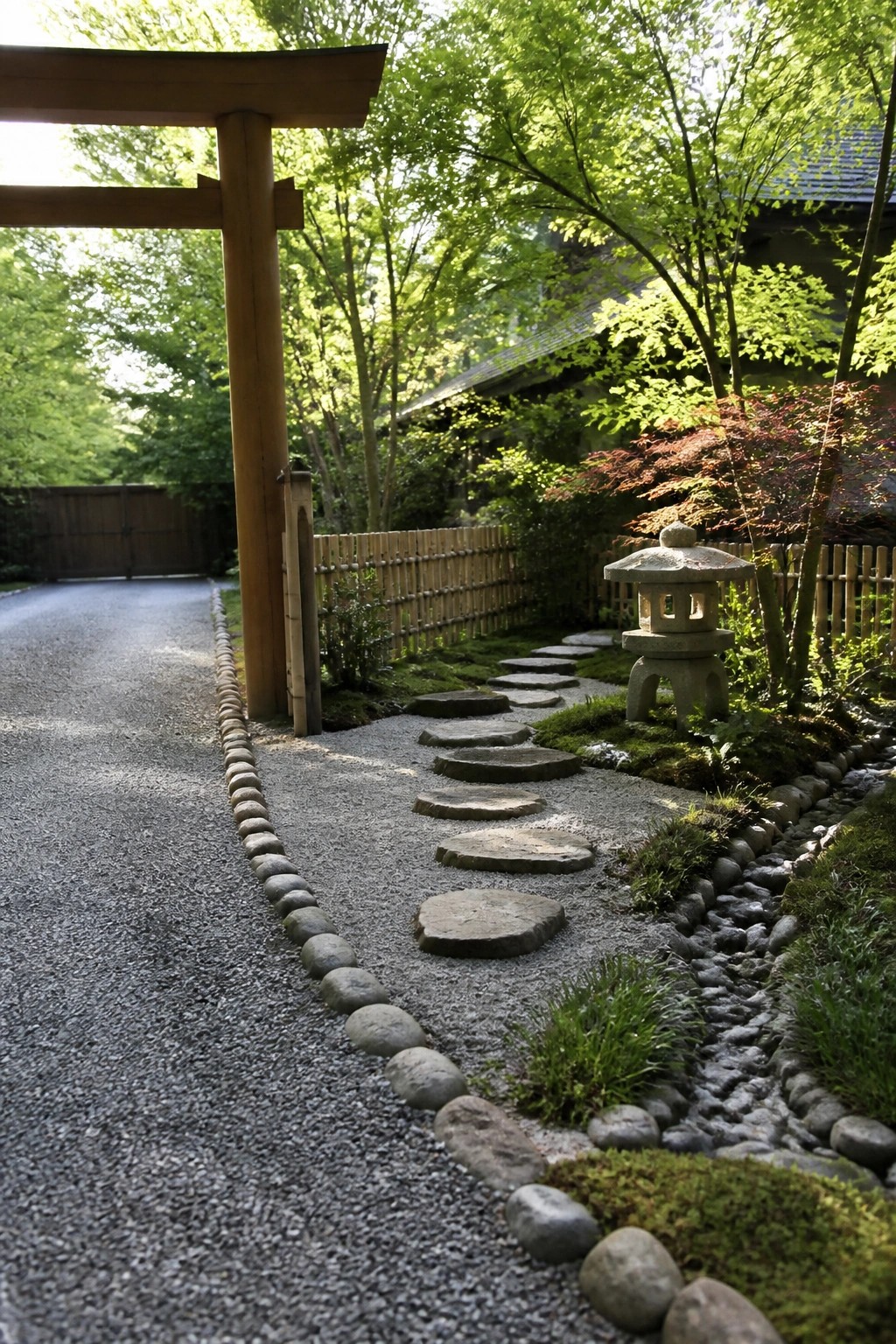
A gravel driveway can feel a little plain on its own. Adding flat stepping stones right into the surface gives people a clear place to walk and turns the entrance into something more welcoming without a lot of extra work.
This approach works best on homes where the drive sits next to a garden or side path. Keep the stones spaced evenly so the route feels natural, and let the gravel fill in around them. The wooden gate and stone lantern in the photo show how simple details can help the whole entrance feel settled.
Wrought Iron Gates Between Stone Pillars
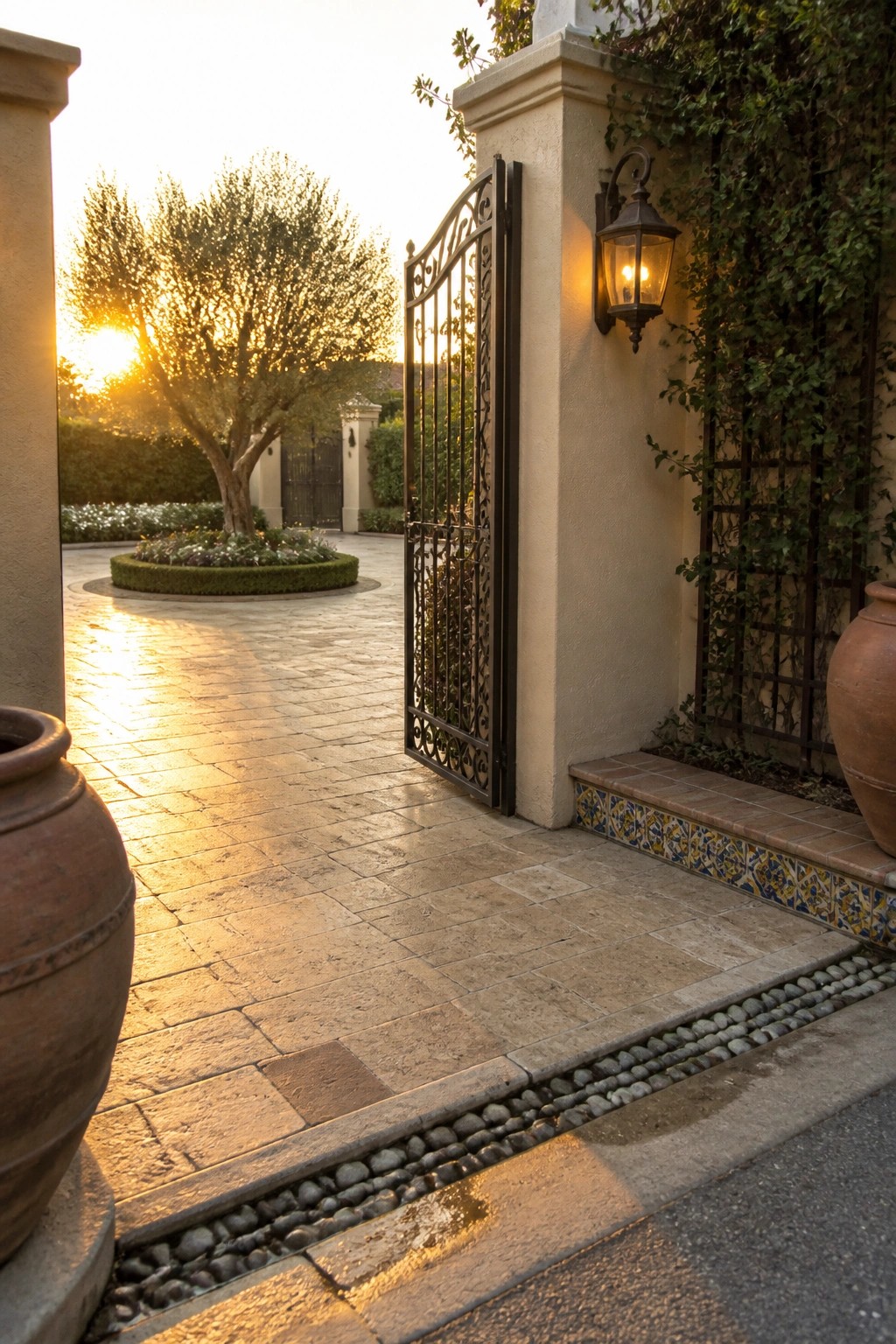
A simple gate like this one can turn an ordinary driveway into something that feels more finished. The dark metal stands out against the light stone, and the pillars give it real presence without needing a lot of extra decoration.
This setup works best on homes with a bit of frontage where the gate can sit back from the street. Keep the surrounding walls and paving in similar tones so the whole entrance reads as one piece rather than a collection of separate parts.
Pavers Set in Gravel for a Driveway Path

Many homeowners choose this setup because it keeps the entrance looking structured without turning the whole surface into a solid slab. The large pavers give a solid place to walk or drive while the gravel handles drainage and adds texture that feels less harsh than concrete.
This works best on homes with a modern or minimalist style where you want clean lines but still need good water flow. Space the pavers evenly and keep the surrounding plants clipped so the pattern stays visible and easy to maintain over time.
Brick Paths with Planted Edges
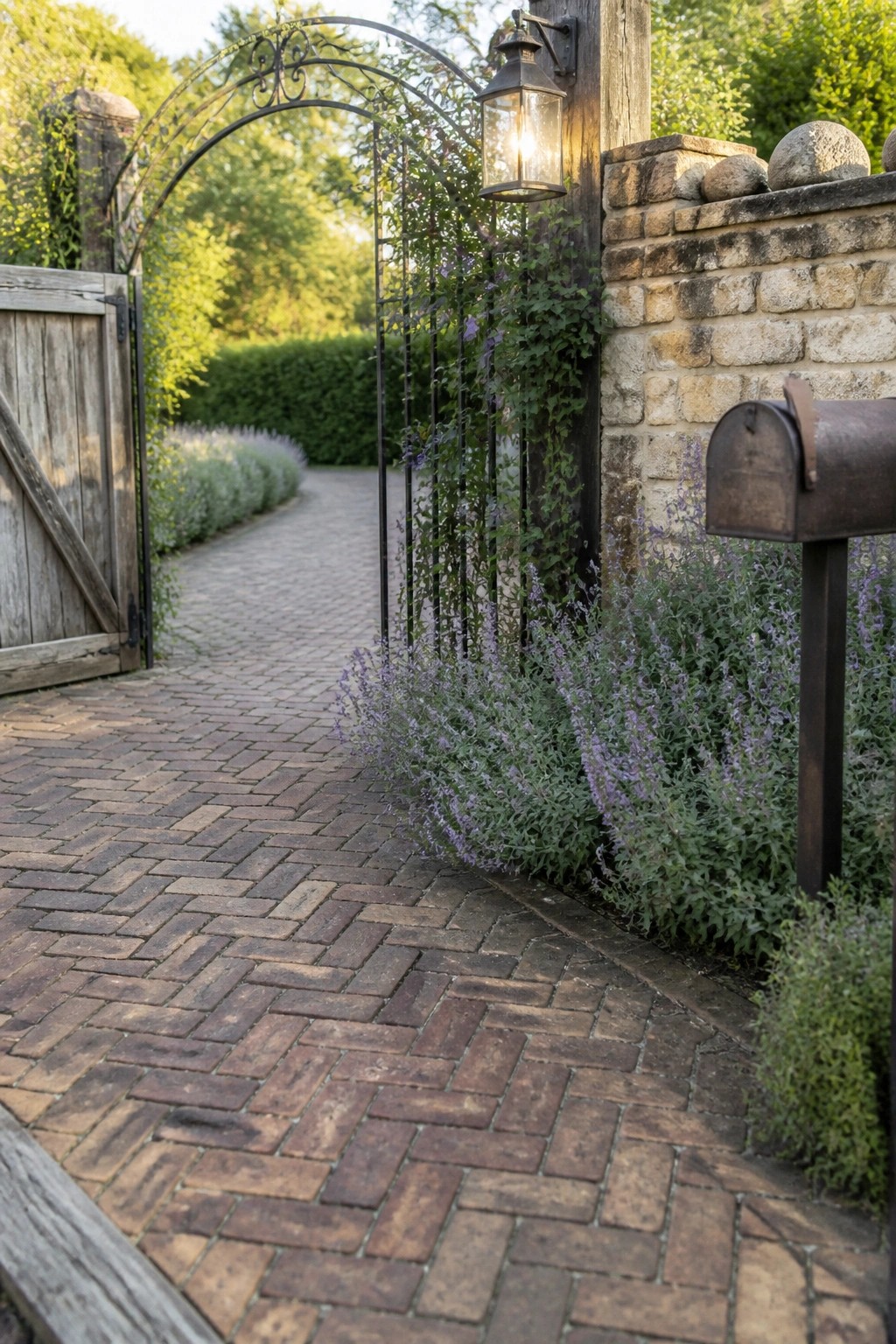
A brick path gives a driveway entrance a settled look that feels more personal than plain concrete or gravel. The material holds up well over time and pairs easily with gates or low walls.
Keep the planting simple along the edges so it can spill over without crowding the walkway. This works best on homes where the path curves gently or leads to a clear gate, and it helps the entrance feel connected to the garden rather than just functional.
Pavers With Gravel Between Them For Driveway Paths
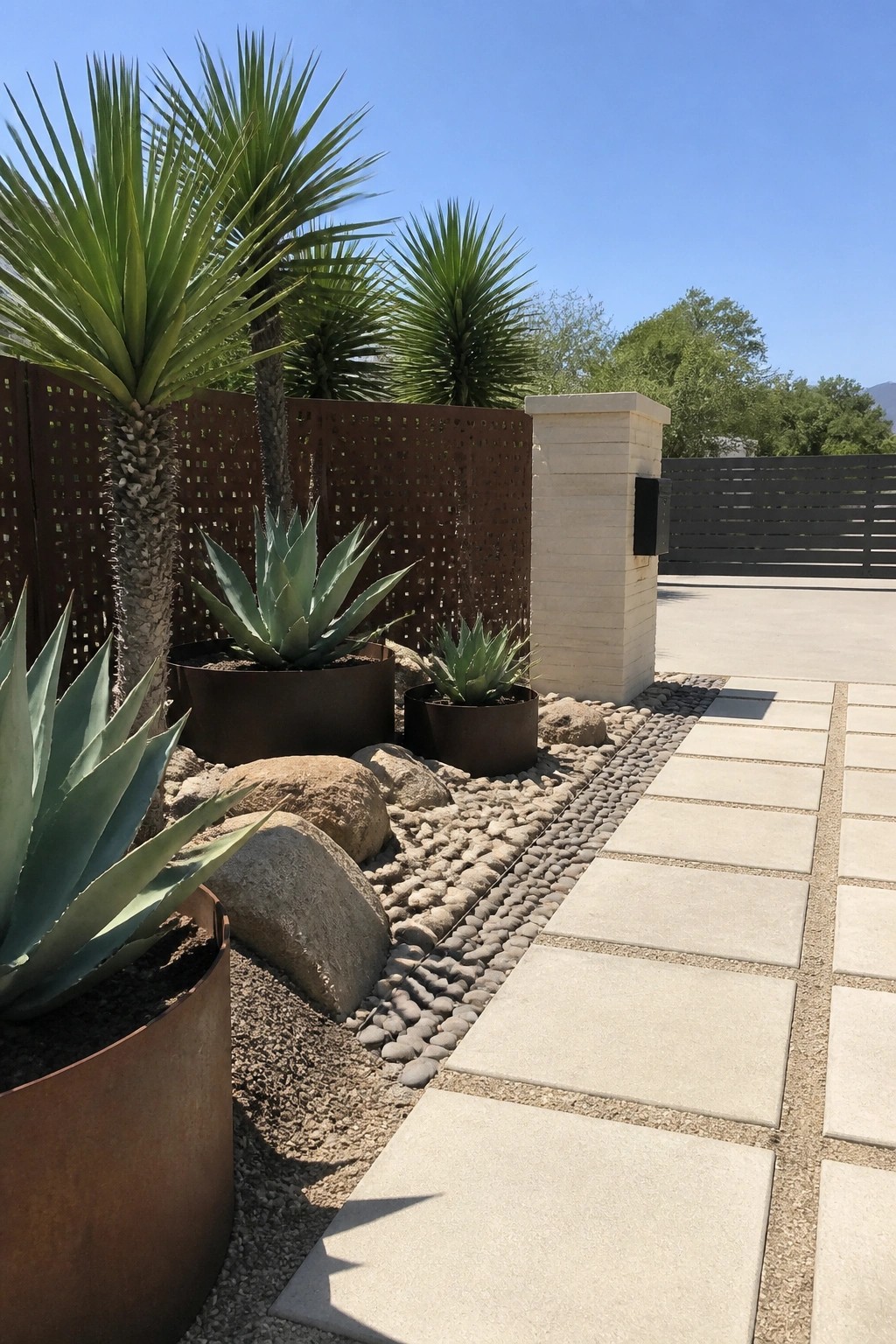
A row of large concrete pavers set into gravel gives a driveway a neat edge without making it feel too formal. The gravel fills the gaps and softens the look while still handling car traffic and foot traffic easily. It also helps with drainage and keeps the whole entrance looking simple and put together.
This works well on homes that already have gravel or decomposed granite in other parts of the yard. Keep the pavers large so the path stays wide enough for walking and the gravel stays in place. Just watch the depth of the gravel so it does not shift too much over time.
Frame Your Driveway Entrance With Climbing Roses

A rose-covered arch gives the start of a driveway or path a clear sense of arrival. It turns a simple opening into something more personal and welcoming without needing grand gates or heavy stonework.
This works best on homes where the path curves or leads through garden beds. Choose a sturdy wooden or metal arch that can handle the weight of mature climbers, and pick repeat-blooming varieties so the flowers last through the season. Keep the surrounding planting low so the arch stays the main focal point.
Grass Strips Between Driveway Pavers
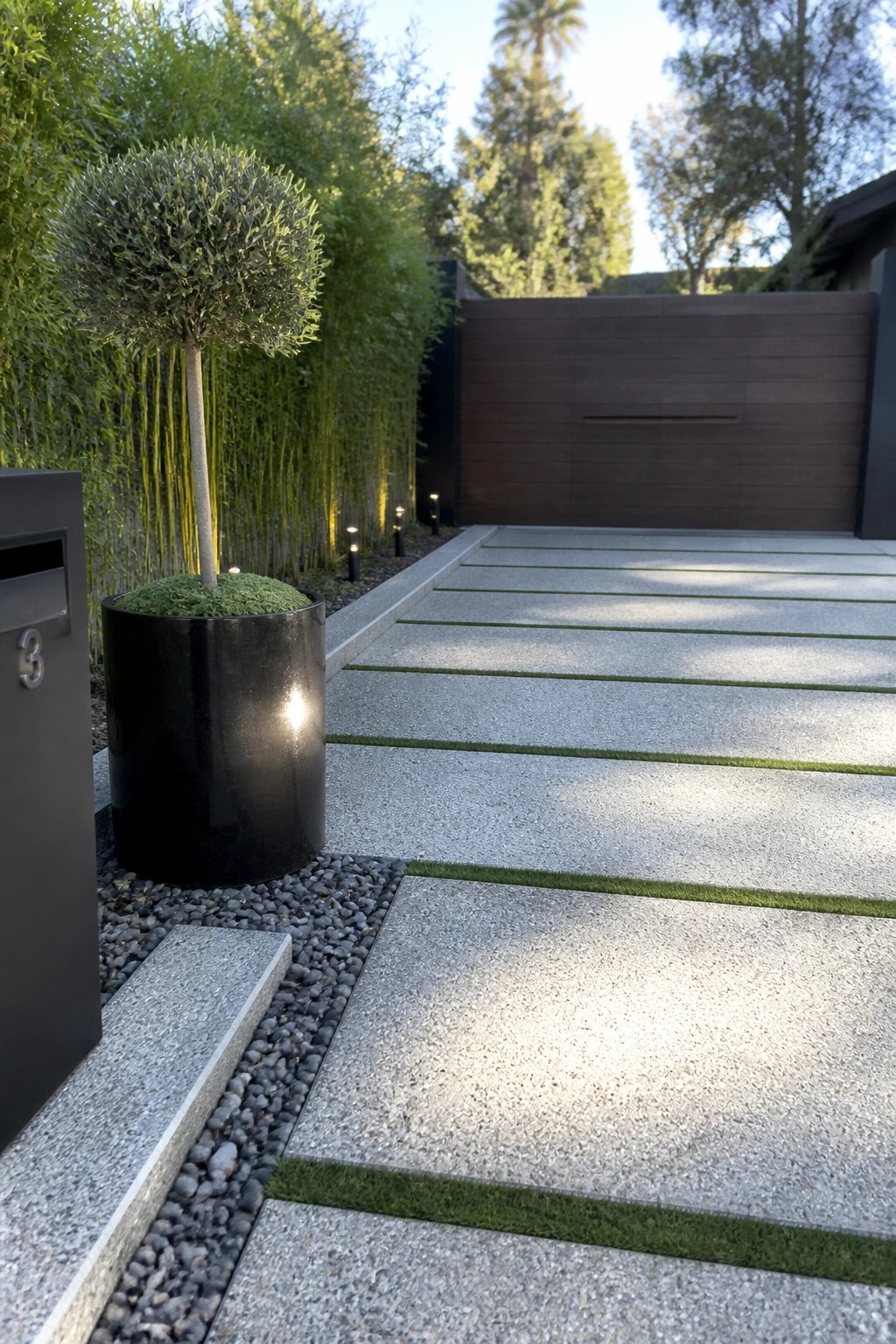
Many people like this layout because it breaks up a large hard surface without losing function. The gaps let a bit of green run through the path and help the driveway feel less like a parking lot and more like part of the garden.
It suits homes with clean modern lines and low planting beds on either side. Just keep the grass strips narrow so tires do not tear them up and choose pavers that sit level with the surrounding gravel or lawn edges.
Stone Pillars With Topiary Define The Entrance
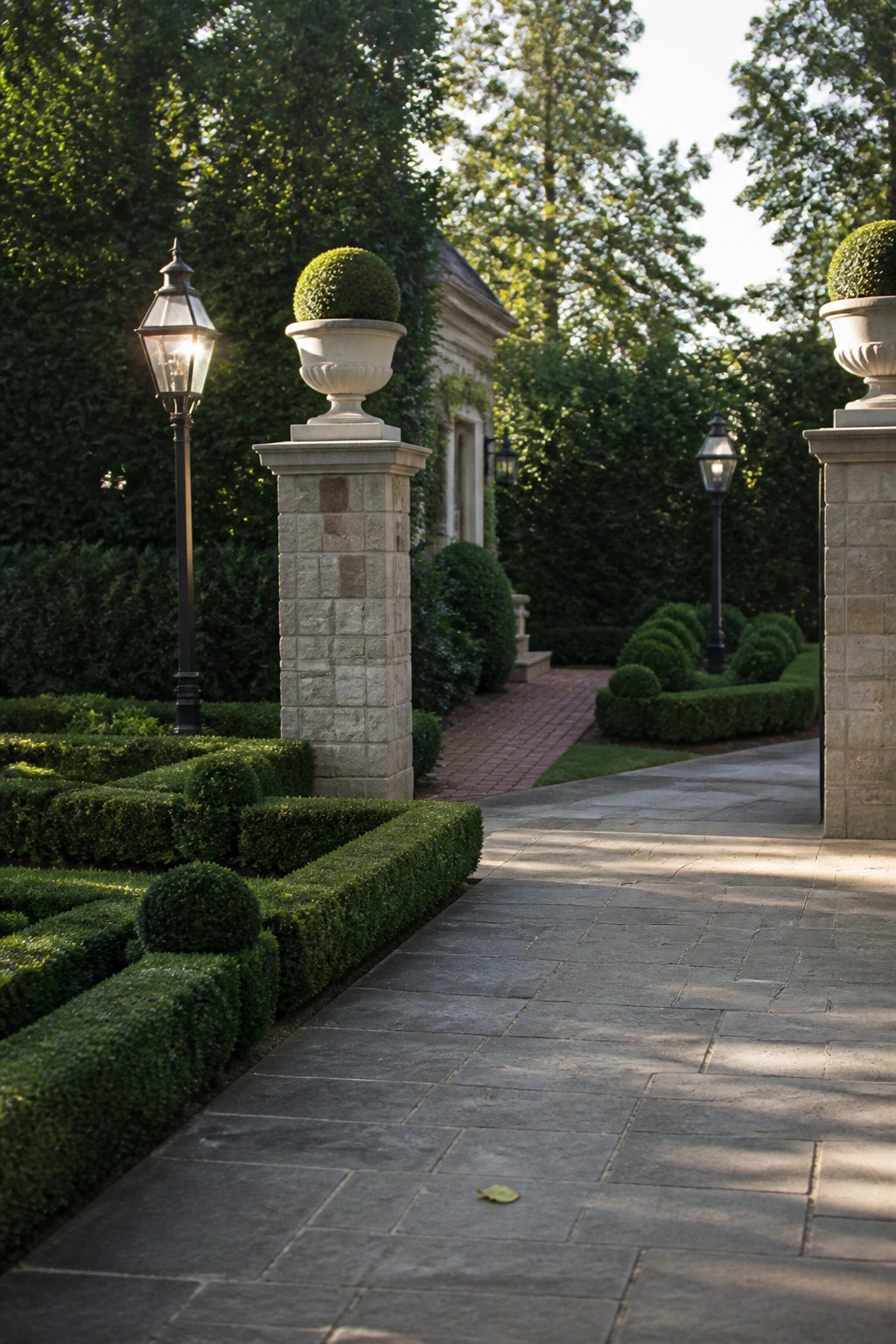
Stone pillars topped with urns give a driveway a clear starting point. They create structure without needing a gate or wall, and the clipped topiary on top adds a neat, finished look that feels intentional.
This approach works best on properties with some depth to the front yard. Keep the surrounding hedges low and simple so the pillars stand out, and match the stone to any other hardscape already on the site.
Add Low Lights Along the Driveway Edge

Low lights tucked into the landscaping make a driveway feel more welcoming after dark. They mark the edges without needing tall fixtures that can look harsh or block the view. This approach works especially well on curved paths where drivers need clear guidance at night.
Place the lights close to the ground so they wash over stone or gravel rather than shine straight up. They suit homes with natural materials like wood gates and stacked walls, and they keep the overall look simple. Just avoid spacing them too far apart or using overly bright bulbs that wash out the plants.
Central Circular Planters for Driveway Entrances

A raised circular planter placed right at the start of the driveway gives the whole entrance a clear center point. It breaks up the long stretch of paving and makes the approach feel more intentional without adding much extra work.
This layout works best on wider or slightly curved driveways where the circle can sit comfortably without getting in the way of cars. It suits homes that already use gravel and simple stone, and it stays low maintenance as long as the plants inside stay compact.
Line Your Driveway with Stone Planters
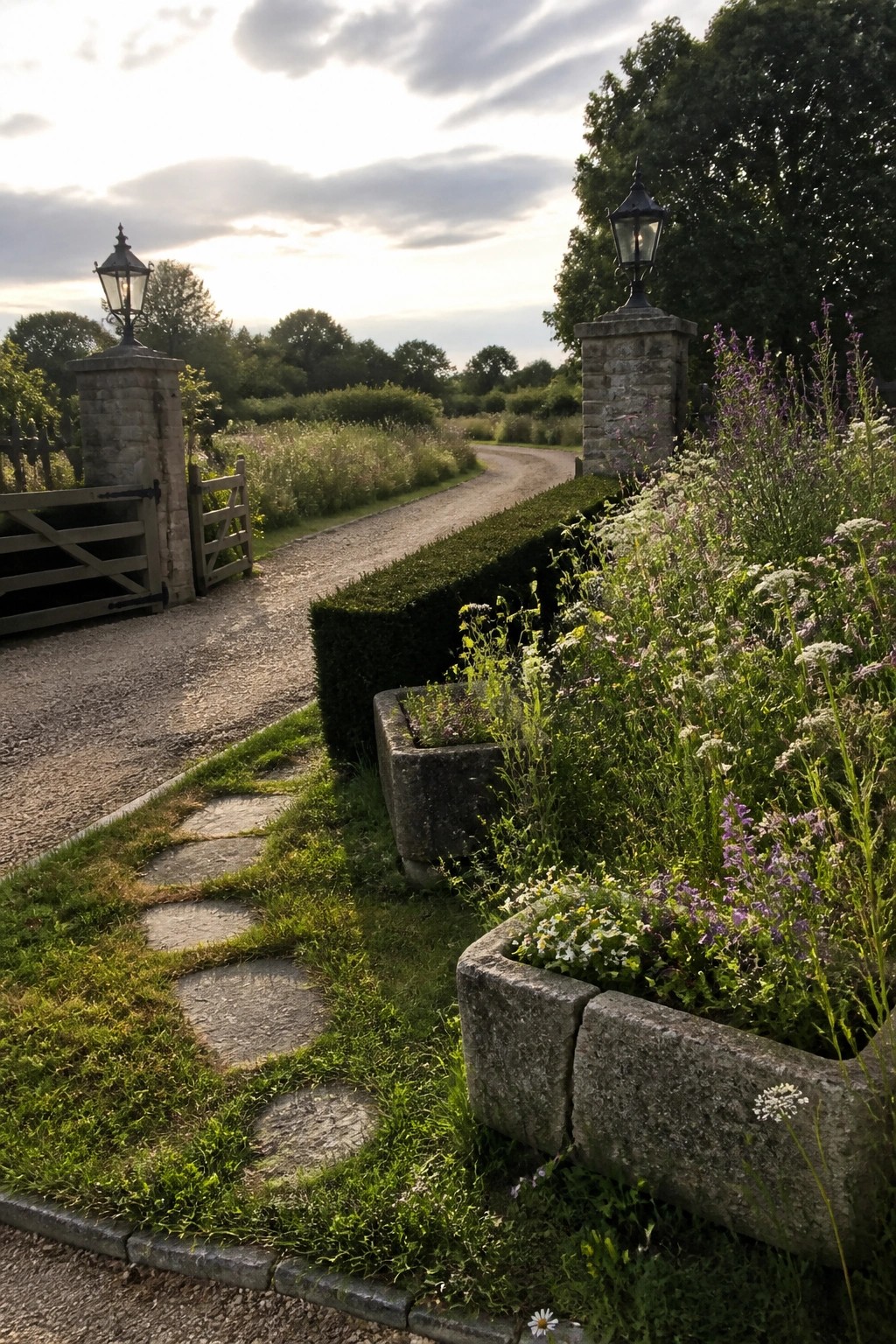
Stone planters give a driveway entrance a bit of weight and structure while still letting the planting feel relaxed. They sit right at the edge of the path and hold a full mix of flowers without needing a full garden bed dug out.
This works best on gravel drives or properties with some open space near the gate. Keep the planters low and fill them with plants that spill over the sides so the whole entrance feels softer and more lived in.
Gravel Borders With Grid Edging
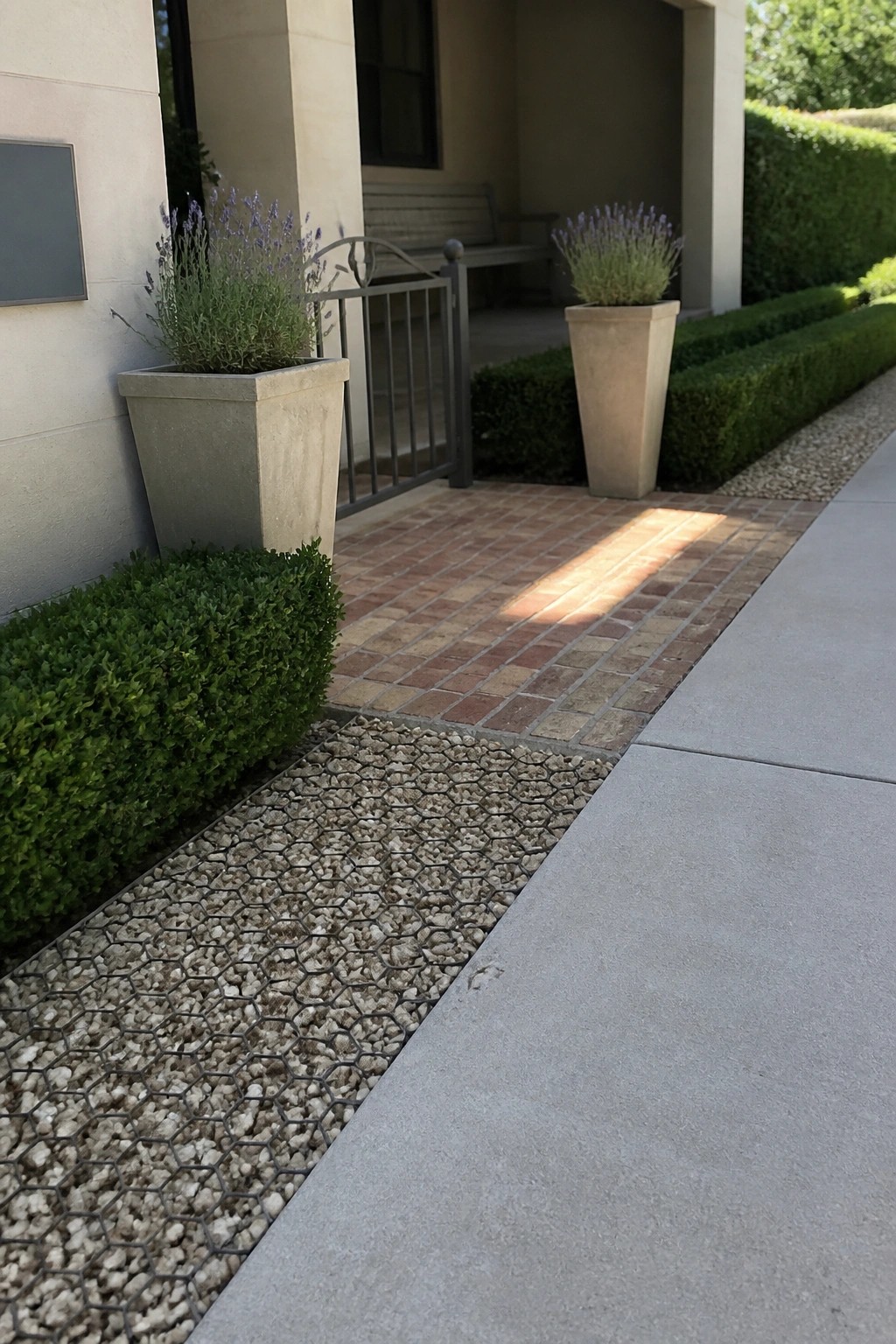
A gravel strip with a stabilizing grid gives the driveway a clean edge that stays in place even with regular foot traffic. It handles water well and keeps the planted beds from spilling over onto the paving. The look feels structured without needing constant weeding or trimming right at the border.
This approach works best on homes that already have brick or concrete driveways. It suits both traditional and simpler styles because the grid keeps the gravel neat while the planting stays contained in pots or low hedges. Just choose a sturdy grid so the surface does not sink or shift over the years.
Frequently Asked Questions
Q: How do I choose plants that stay neat without constant trimming? A: Go for compact evergreens or boxwoods that grow slowly on their own. Plant them in groups of three or five near the entrance posts to frame the view without crowding the path.
Q: What if my driveway sits on a slope? A: Use low stone steps or tiered beds to hold the soil in place. This keeps the entrance stable and adds gentle layers that guide visitors up to the house.
Q: Can I combine stone pillars with a metal gate? A: Pair them when the metal has a dark finish that matches the stone tones. The mix adds texture while keeping the whole entrance balanced and inviting.
