

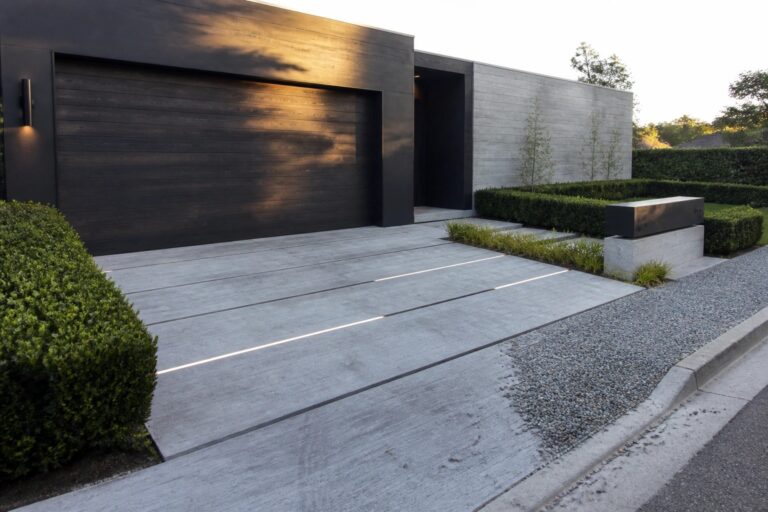
I have always noticed that the driveway shapes how the whole front of a house reads from the street long before anyone steps inside.
When choosing materials it helps to think about both the daily wear from cars and weather and the way the surface lines up with the entry and siding.
Some options end up looking flat once installed.
I often find myself testing small samples near the entry to see how they match the siding and trim in changing light.
That step has saved me from picking a finish that only works in photos.
Concrete Driveways With Built-In Lighting Strips
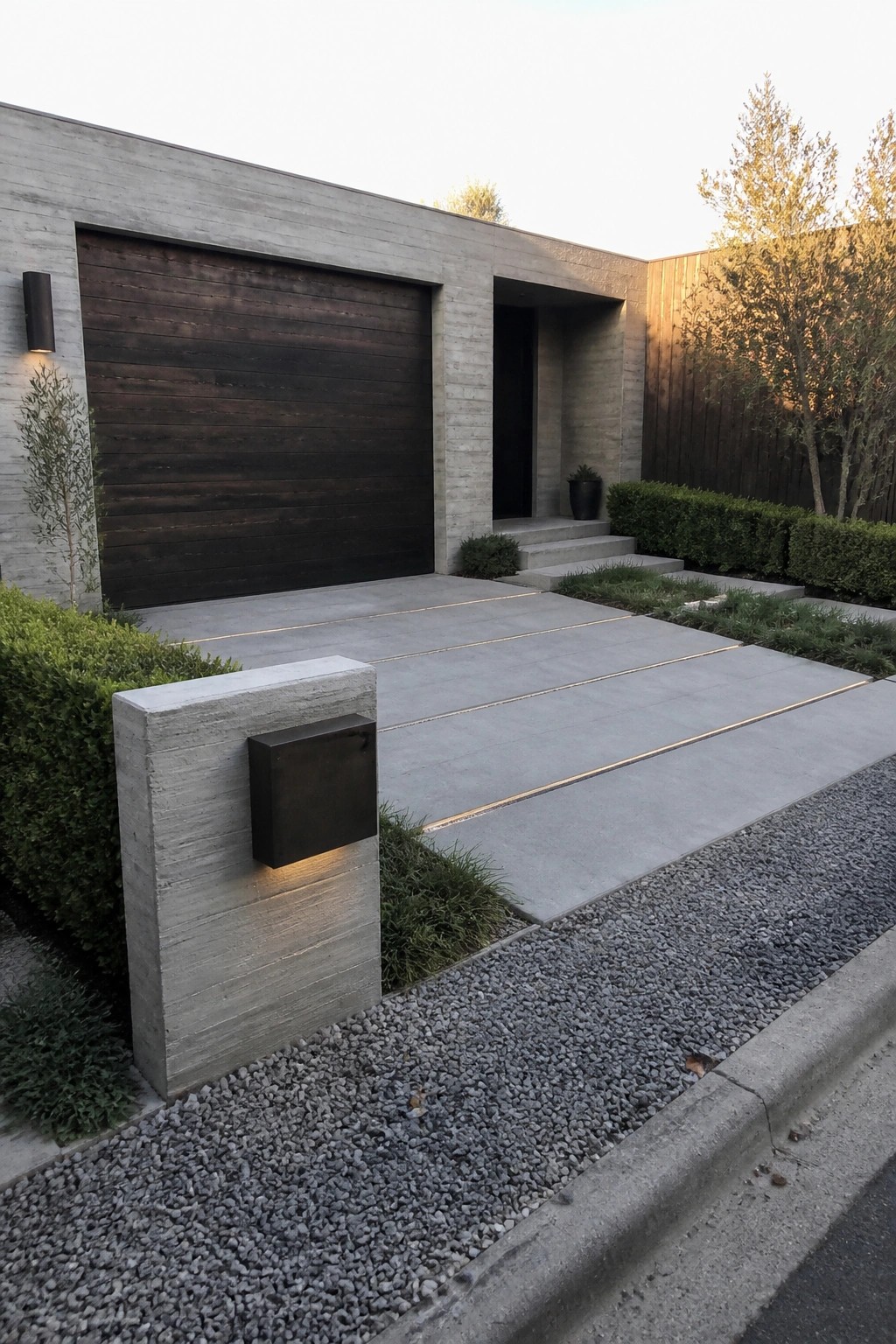
Many homeowners like the look of narrow light strips set directly into a concrete driveway. The lines stay low and clean, so the surface still reads as one solid material rather than a collection of separate fixtures. At night the light helps mark the edges and center without adding clutter along the sides.
This approach works best on homes that already lean modern or minimalist. Keep the strips narrow and evenly spaced, and choose fixtures rated for vehicle traffic so they hold up over time.
Concrete Pavers With Grass Joints

Concrete pavers laid in sections with grass growing between them give a driveway real durability while keeping the surface from looking too hard and flat. The gaps let water drain naturally and soften the look of all that concrete, which works especially well on longer approaches or homes where the driveway is very visible from the street.
This approach suits homes with some lawn or garden space already in place. Keep the paver size consistent and make sure the grass strips are narrow enough to drive on without issues. It also helps to edge the whole thing with stone or timber so the sections stay in line over time.
Concrete Driveway With a Center Pebble Strip
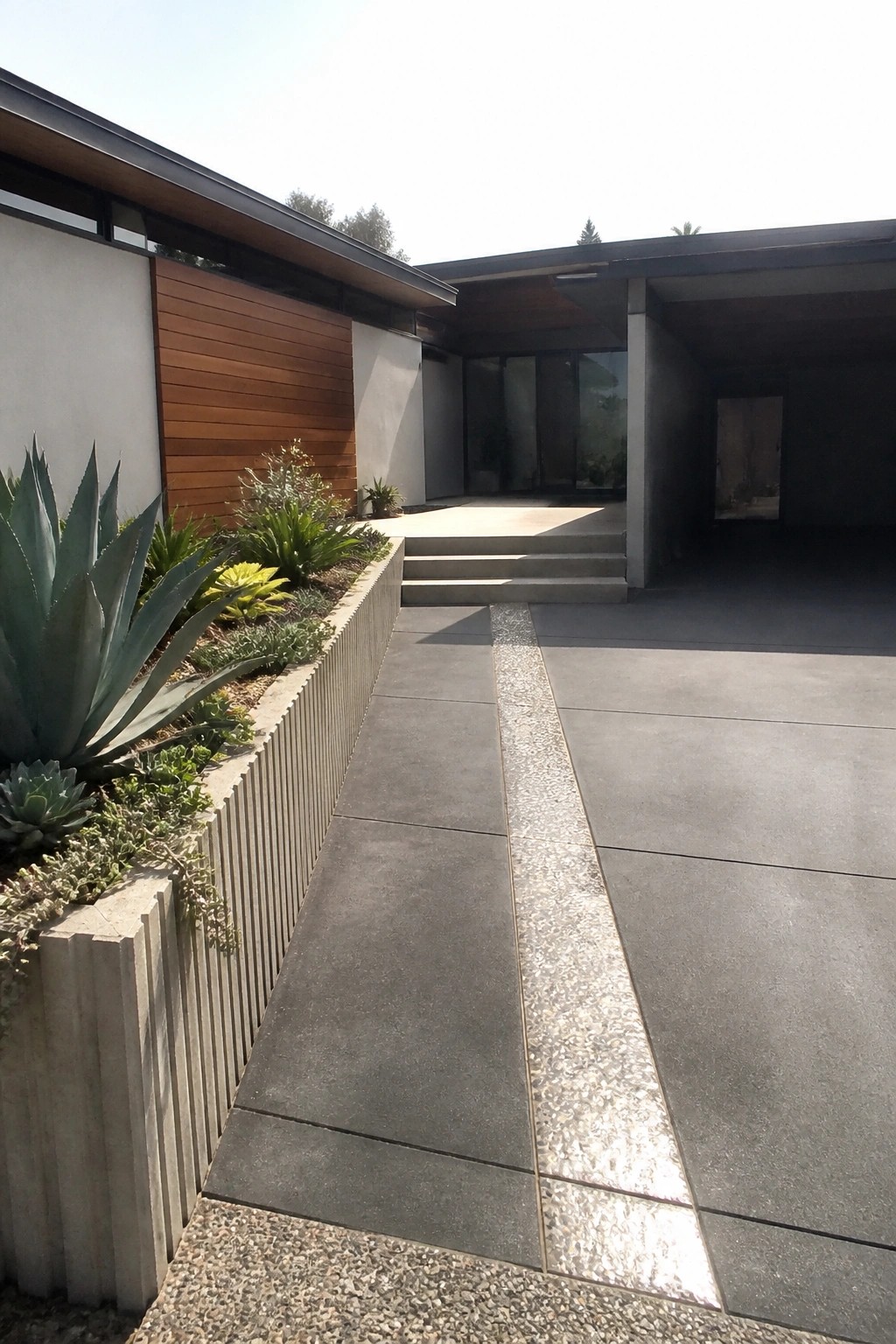
A pebble strip running down the middle of a concrete driveway gives the surface some visual break without losing any of the durability concrete provides. The textured line helps the whole thing feel less flat and more intentional, especially on a long or wide approach.
This approach works best on homes with clean modern lines where the contrast can stand out. Keep the strip narrow so it does not affect the strength of the main slab, and seal the concrete well so the two materials age evenly.
Flagstone Patterned Driveways
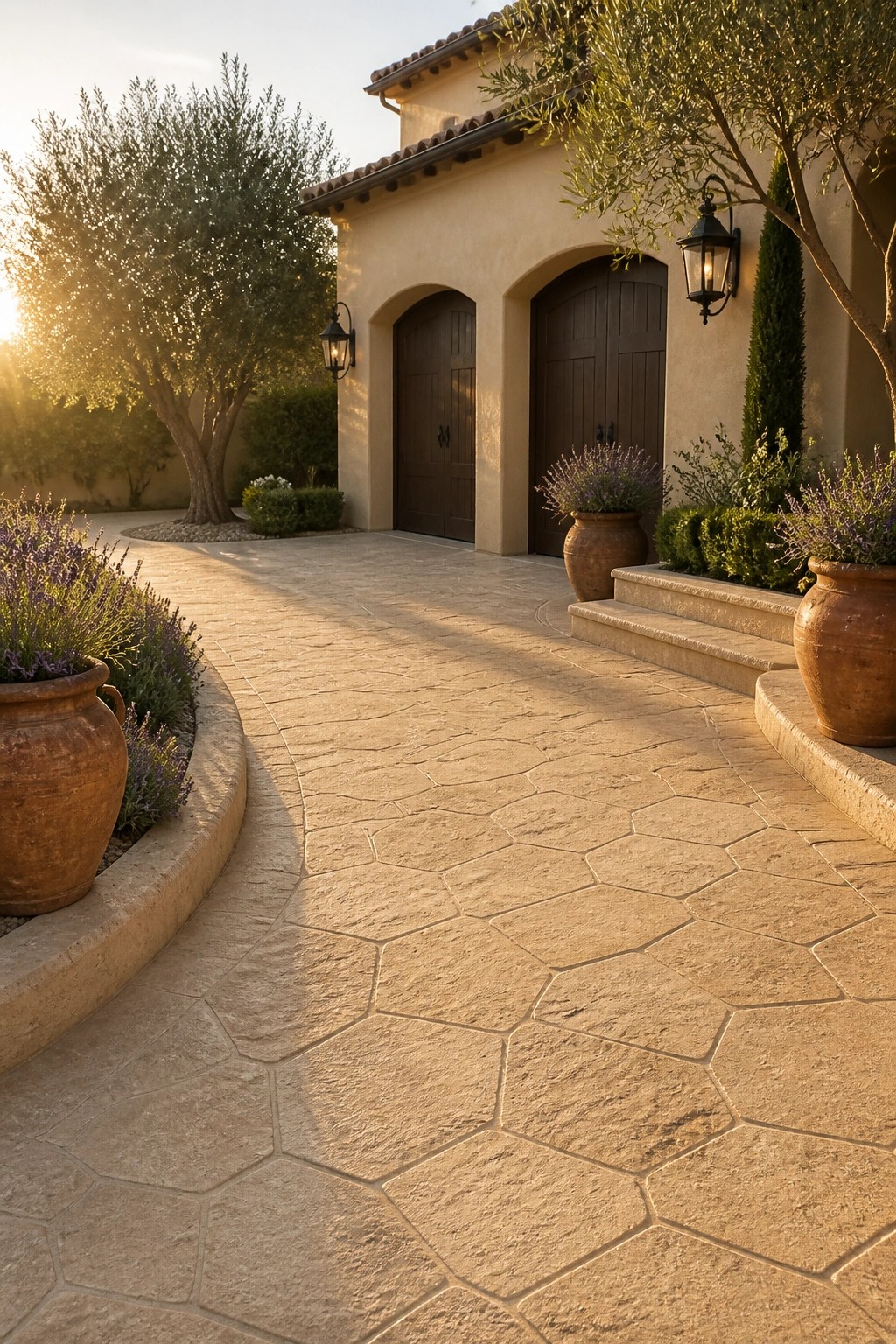
A stamped concrete driveway that mimics irregular stone slabs gives you the look of natural paving without the cost or upkeep. It holds up well to cars and weather while blending into a simple Mediterranean style home.
This approach works best on homes with stucco walls and warm earth tones. Keep the pattern loose and avoid sharp edges so it still feels natural once the concrete ages a bit.
Stone Pavers Set Into Concrete Driveways
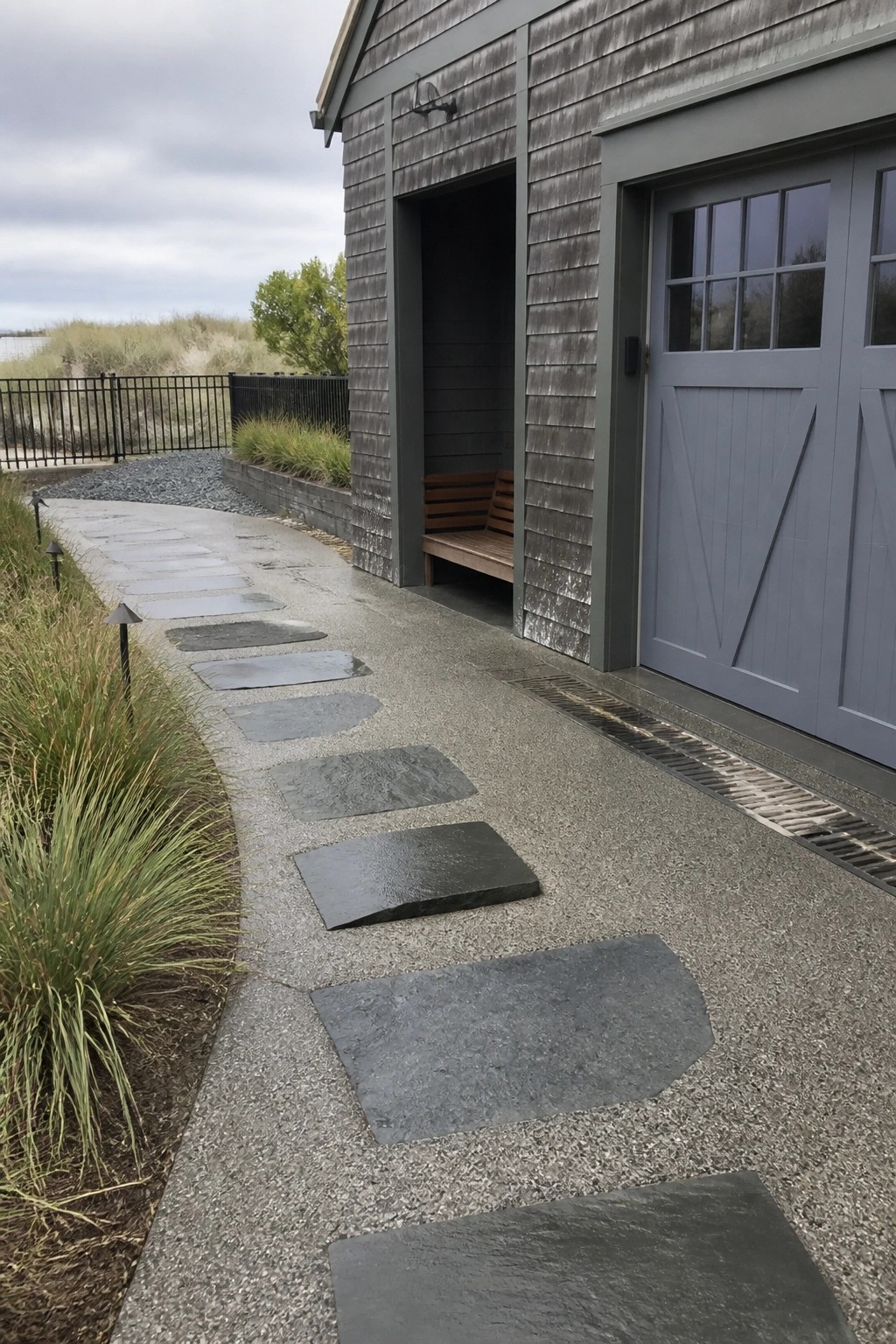
Many homeowners want a concrete driveway that feels less flat and uniform. Setting large stone pavers directly into the concrete adds texture and breaks up the surface while keeping the strength needed for daily use.
This approach works best on homes with curved driveways or side entries. It pairs well with gravel borders and simple plantings, and it suits both modern and coastal styles. Make sure the pavers are properly seated and sealed so they hold up to cars over time.
Chevron Patterns In Concrete Driveways
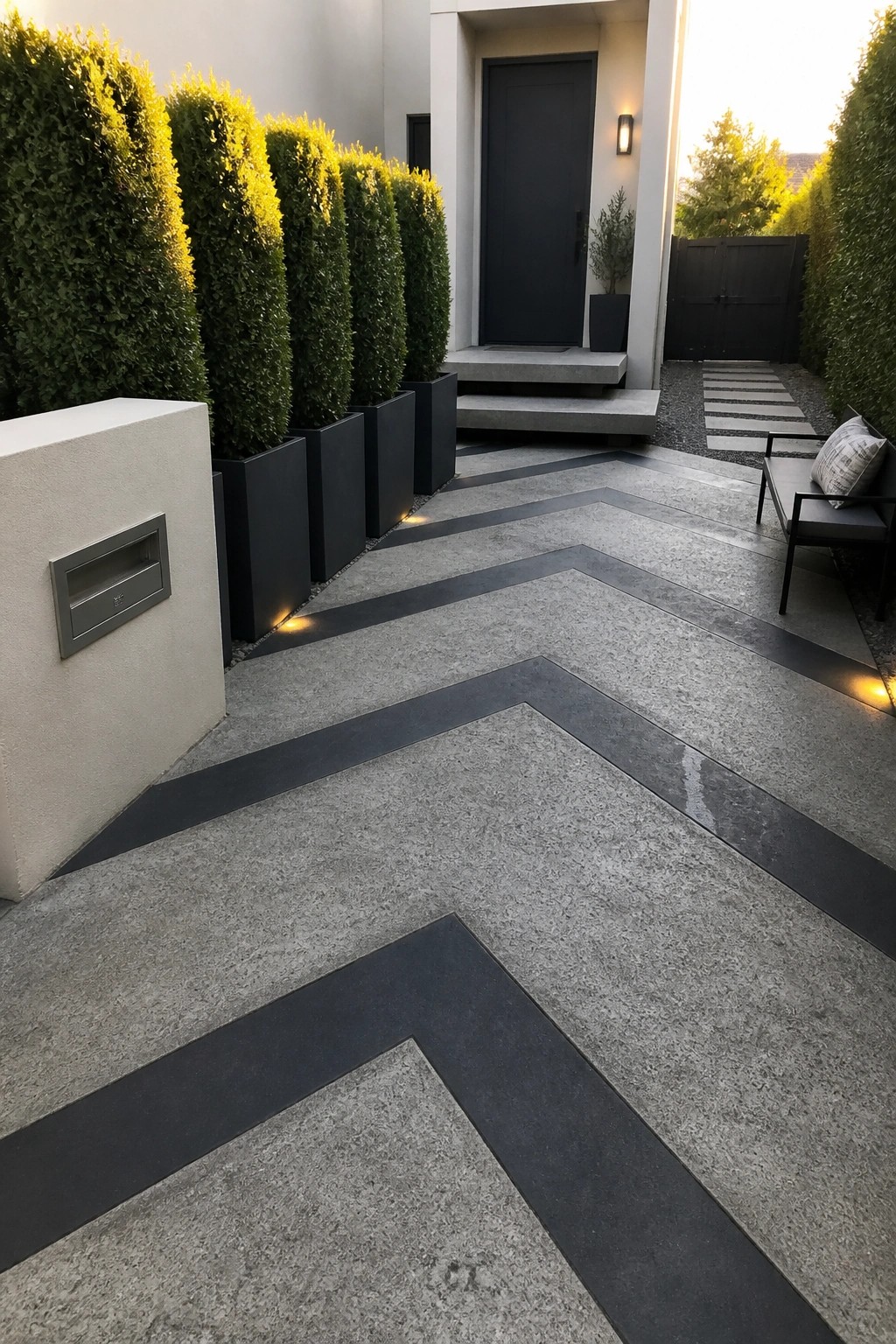
A chevron layout with dark bands running through lighter concrete gives a driveway more shape without adding extra materials. The angled lines break up the flat surface and make the whole approach feel more deliberate while still handling daily wear.
This works best on homes with clean lines and simple plantings where the pattern can stand out on its own. Keep the color contrast moderate so the surface stays easy to maintain and does not show every mark.
Circular Concrete Driveways
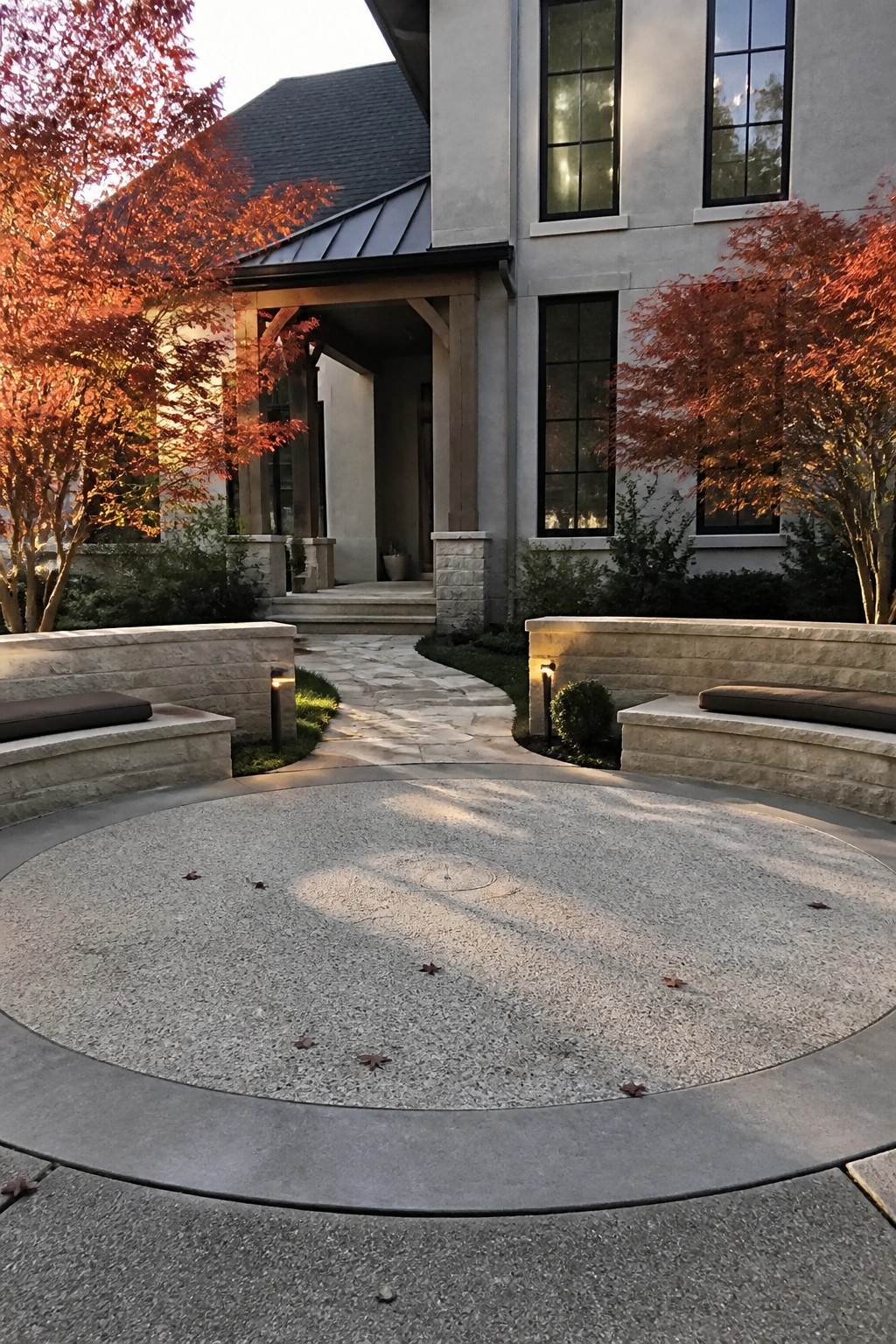
A circular concrete driveway gives you a simple way to handle turning and parking without needing a long straight run. The material holds up well to daily use and weather, and the shape keeps the front of the house from feeling like a plain strip of pavement.
This layout works best on lots with some width in front of the house. Keep the circle a bit larger than your car needs so the edges can hold low walls or lighting without crowding the drive surface. Pair it with matching concrete paths if you want the whole entry area to feel connected.
Concrete Driveways With Built-In Drainage

Concrete holds up well under cars and weather, and it gives a clean surface that does not need much upkeep. Running drainage grates straight across the slab lets water move off quickly without forcing extra slopes or side channels that break up the look.
This setup works on level sites or modern homes where you want the driveway to read as one simple plane. Set the grates flush with the concrete so tires pass over without noise, and space them to match the natural flow of water on your lot.
Concrete Driveways With Brick Borders
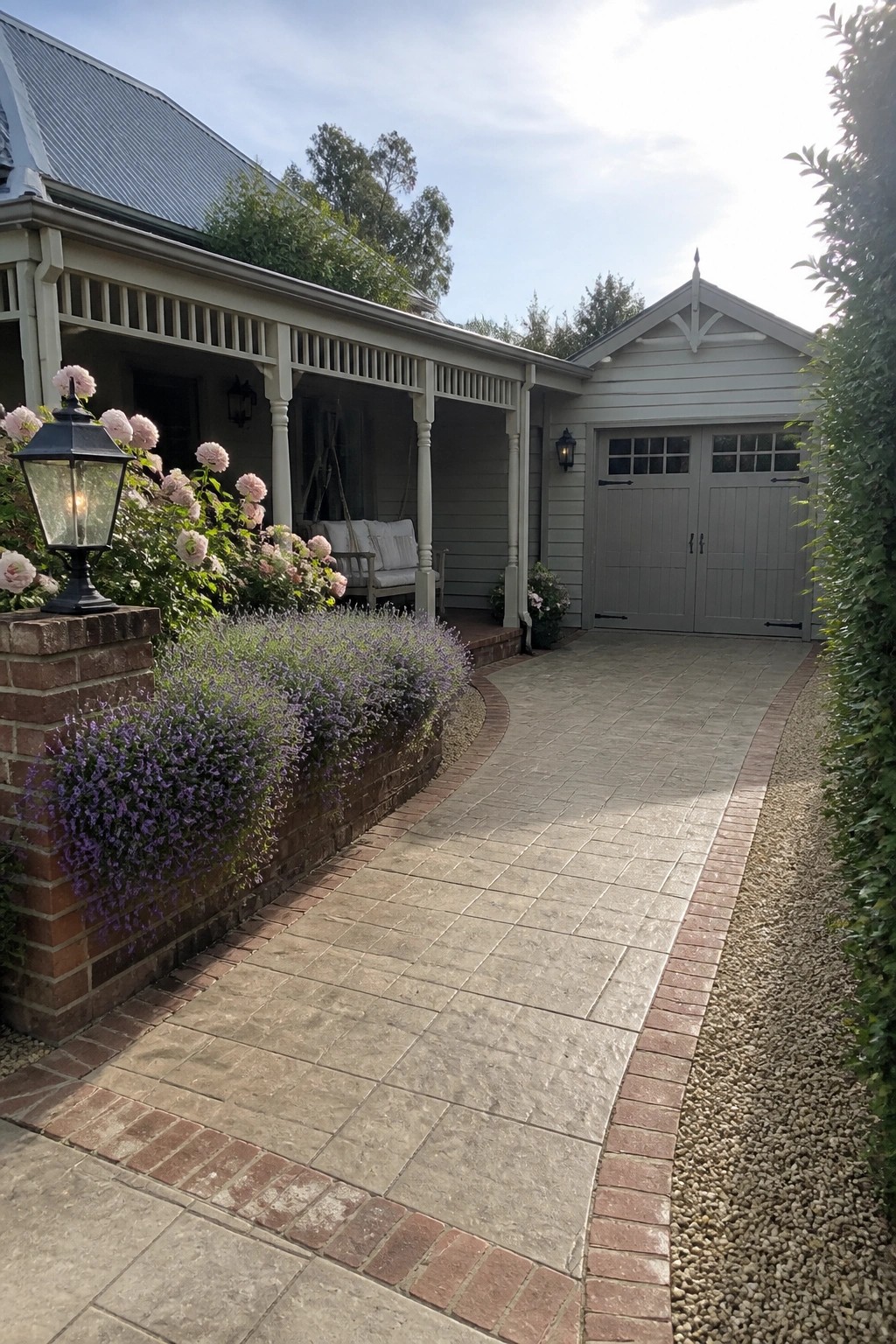
A brick border gives a concrete driveway a more finished and traditional look while keeping all the strength and low maintenance of concrete. The edging helps contain the slab, reduces cracking along the sides, and creates a clean line against grass or garden beds.
This approach works especially well on homes with classic or cottage style where you want the driveway to feel like part of the landscape rather than just a slab. It is also practical on curved driveways because the brick can follow the shape without extra forming costs. Keep the concrete slightly textured so it does not look too plain next to the brick.
Concrete Driveway With Metal Strips

Metal strips set into concrete pavers give a driveway extra definition and keep the surface from feeling too plain. The contrast breaks up the large slabs while still letting the concrete do the heavy work of supporting cars and daily traffic.
This setup suits modern or minimalist homes where simple materials need a little extra interest. Keep the strips narrow and evenly spaced so the look stays clean rather than busy.
Grass Infill Pavers For Driveways
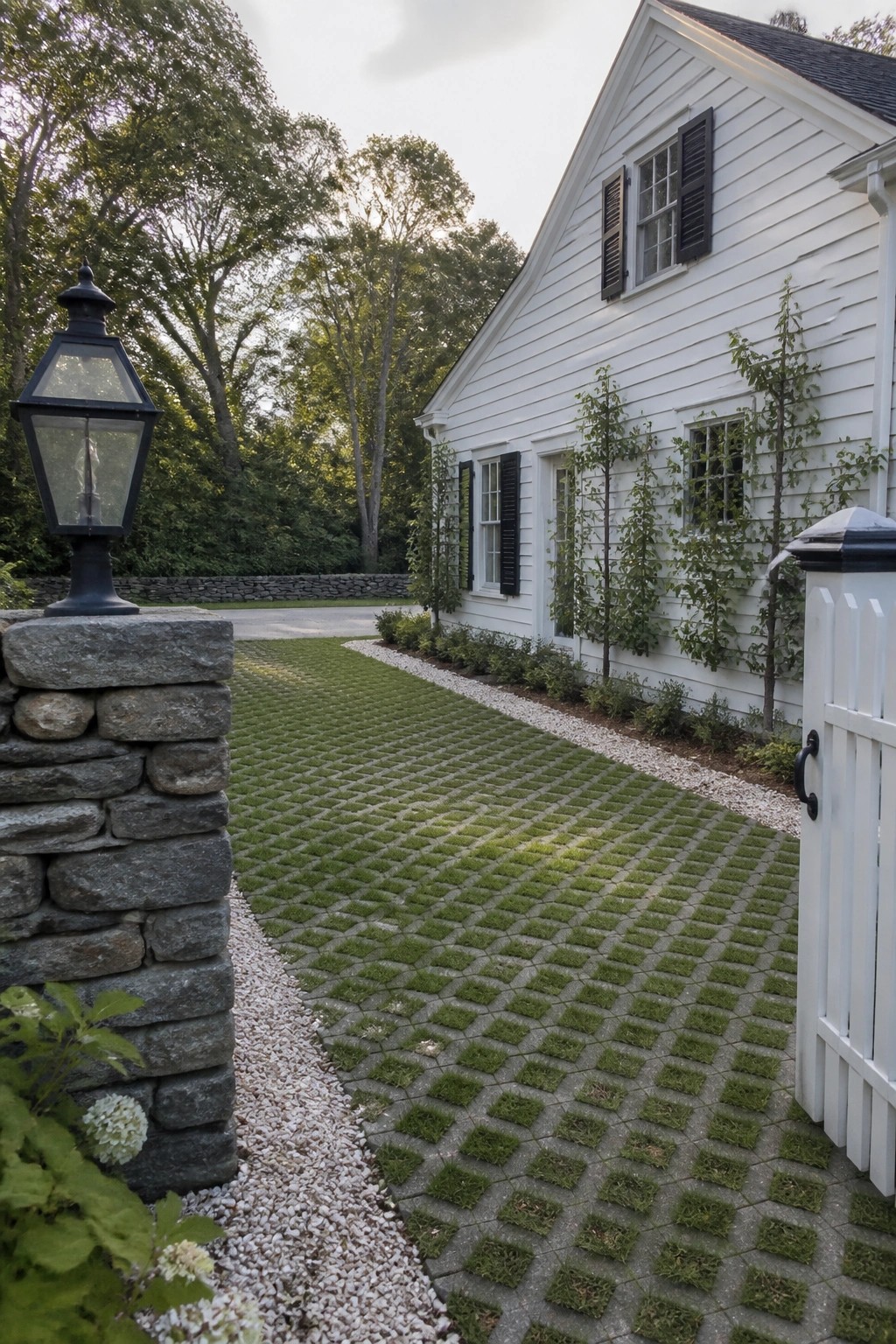
Grass infill pavers give a driveway a solid base for cars while keeping a softer green look across the surface. The concrete grid holds everything in place and lets grass grow in the open sections, so the drive blends into the surrounding lawn instead of standing out as a big hard patch.
This works well on properties where you want to cut down on the amount of exposed concrete but still need something that can handle regular vehicle traffic. It suits homes with longer driveways or open front yards, though you may need to reseed the grass in high use areas over time.
Run a Water Channel Down the Driveway
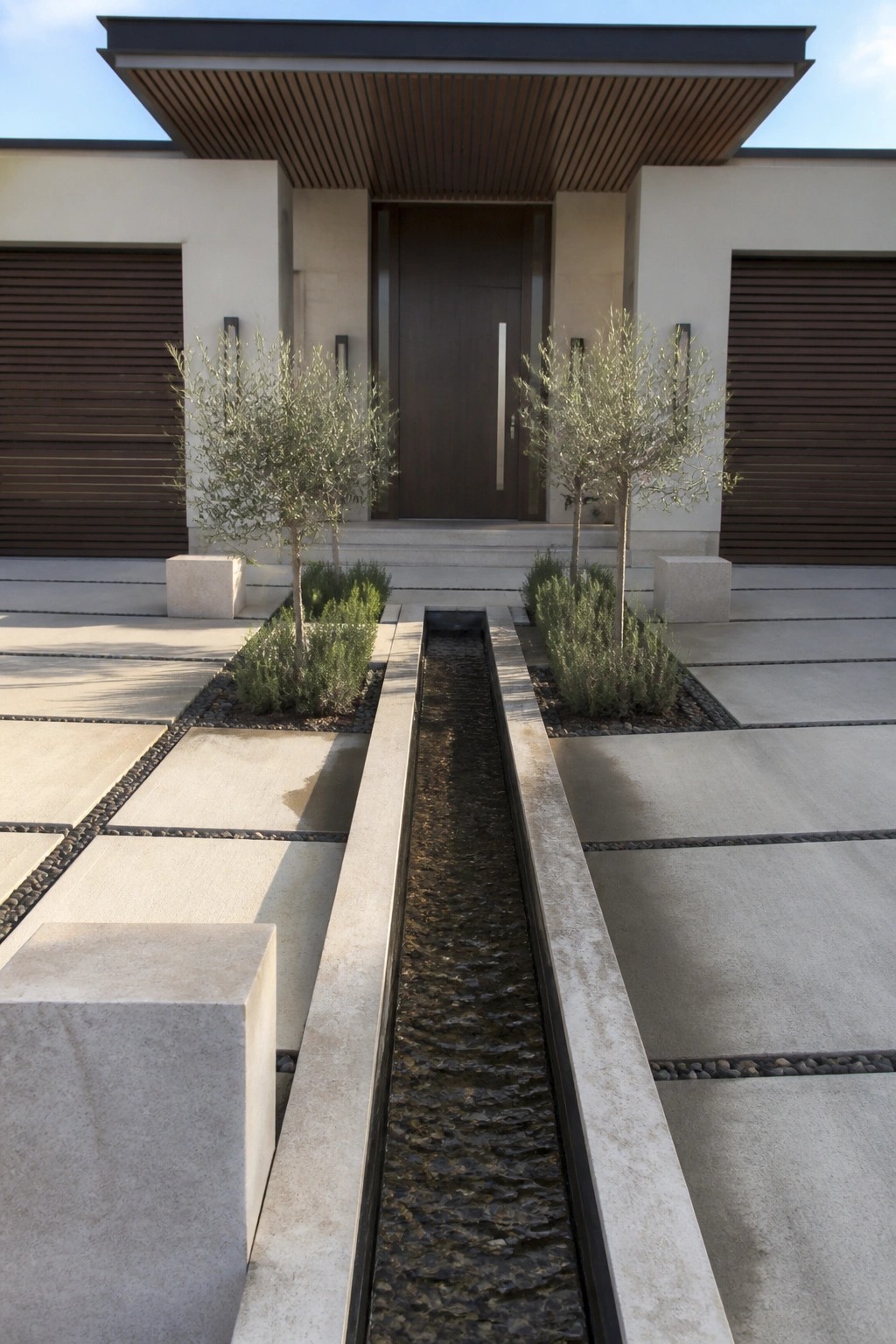
A slim water feature running straight through the middle of a concrete driveway gives the whole entry a quiet, steady rhythm. It keeps the surface durable while adding movement that plain concrete alone rarely provides.
This layout suits long, straight driveways on modern homes where the channel can stretch without feeling cramped. Just plan the edges carefully so water stays contained and the concrete sections remain easy to clean and repair over the years.
Concrete Pavers With Gravel Borders

Large concrete pavers laid in straight rows over a gravel base give a walkway real durability without looking heavy. The gaps let water drain through and keep the surface from cracking over time, which works well for areas that see regular foot traffic or light vehicle use.
This setup suits modern homes that already use simple materials like brick or stone on the facade. Keep the pavers wide and the gravel layer thick enough to stay put. Avoid mixing in too many plantings right next to the pavers if you want the clean lines to stay sharp.
Stamped Concrete Driveways With Texture

Stamped concrete gives a driveway more visual interest without losing any of its strength. The pattern in this example looks like irregular stone but stays solid under cars and weather, which makes it a practical choice for homes that want something beyond plain gray.
It works especially well on larger entry areas or curved approaches where a flat surface can feel too plain. Keep the pattern simple and match the color to nearby stone or stucco so it blends with the rest of the house rather than standing out on its own.
Paver Driveways With Planted Borders

A driveway made from concrete pavers gives you solid strength without looking too harsh or industrial. The grid layout holds up well under cars and weather, and the slight texture keeps it from feeling flat. Pairing it with a planted strip along one side softens the whole approach and helps the driveway feel like part of the yard instead of just a slab of hard surface.
This setup works best on homes where the driveway runs close to garden beds or lawn. Keep the border plants low and easy to maintain so they do not spill onto the driving surface. Watch the edge detail during installation, since a clean line between pavers and soil makes the whole thing look intentional and keeps weeds from creeping in.
Large Concrete Slabs for Driveways

Large concrete slabs give a driveway real presence without looking too flat or plain. They stand up to daily use and weather changes, and the bigger size helps the surface feel more grounded next to stone steps and walls.
These slabs work well on homes with a gentle slope or where the driveway needs to tie into other hardscape elements. Try keeping the edges slightly irregular so the whole approach feels natural rather than too formal.
Large Concrete Pavers That Look Like Stone
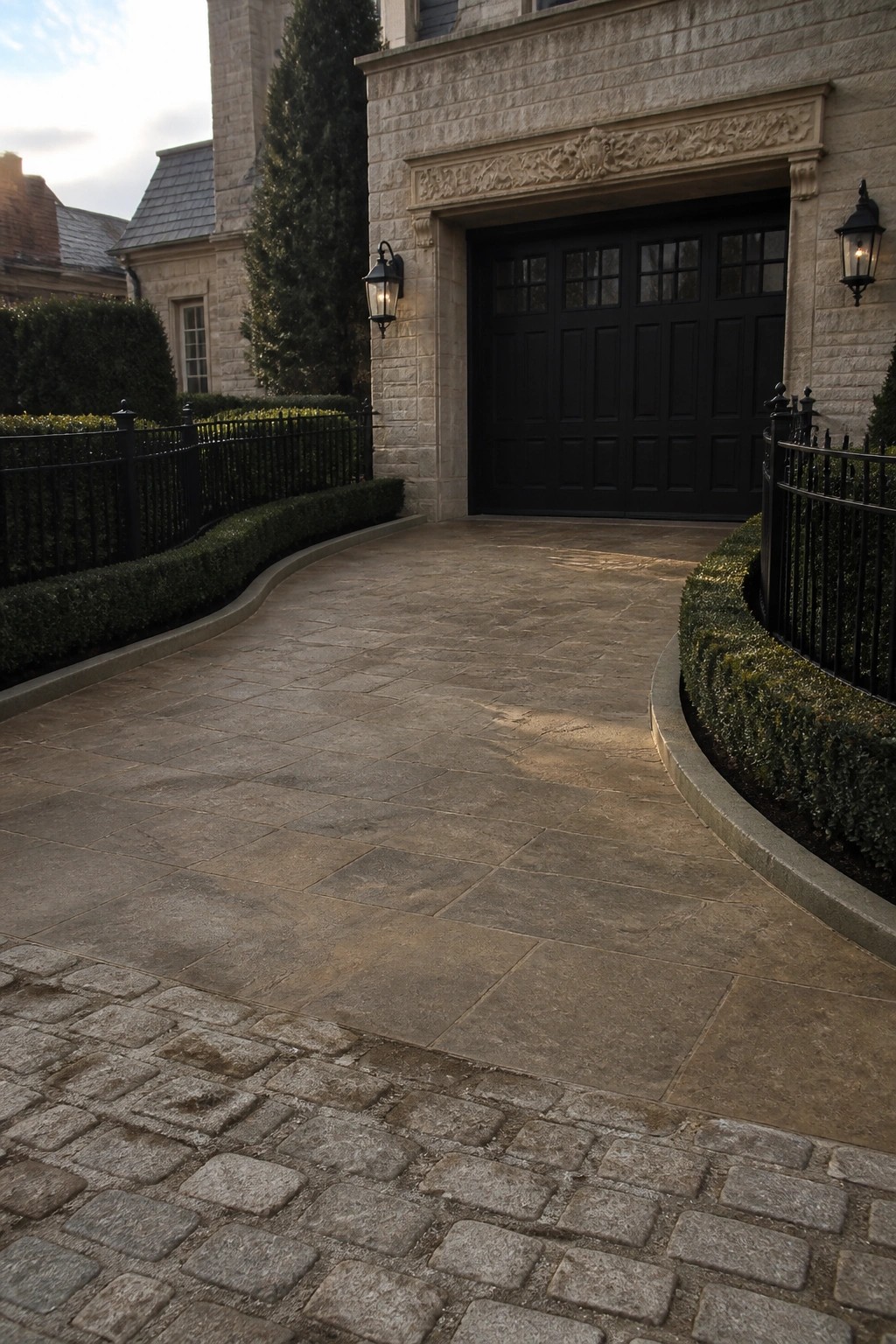
Large concrete pavers give a driveway the appearance of natural stone without the expense or upkeep that real stone often requires. The bigger format cuts down on seams, which helps the surface feel more solid underfoot and under tires.
This approach suits homes with stone or brick exteriors and works best on gently curved drives. The slight color shifts in the pavers keep the look from turning flat, while the cobblestone edge at the street adds a simple transition that holds up to daily use.
Concrete Slabs With Grass Joints

Large concrete slabs laid in straight rows with grass running between them create a simple and durable driveway surface. The gaps break up the solid look of the concrete without weakening it, and the grass helps the whole thing blend into the surrounding garden.
This layout suits long, flat driveways on modern homes where you want something sturdy that still feels tied to the landscape. Use thick pavers rated for vehicles and pick a low-growing grass that can handle occasional shade and light traffic.
Divide Concrete Driveways With Dark Stone Bands

Concrete driveways hold up well under daily use, but large unbroken slabs can look flat. Adding dark stone bands between the sections gives the surface some structure and helps manage cracking over time.
This works best on straight or gently curving driveways where the bands can run the full length. It suits homes with simple landscaping and keeps the focus on clean lines rather than busy patterns.
Frequently Asked Questions
Q: How often should I reseal a stamped concrete driveway?
A: Plan to reseal every two to three years depending on your weather. This step blocks moisture and keeps the color looking fresh. Skip it and you risk faster wear on the surface.
Q: What base preparation prevents sinking over time?
A: Compact the soil well and add a solid gravel layer first. Then pour at least four inches of concrete with reinforcement. Good prep stops most future movement issues.
Q: Is colored concrete as tough as plain gray?
A: The color mix does not change the strength if you use quality pigments. Focus on the mix design and curing process instead for long term durability.
