


I’ve always thought the way a driveway meets the house can quietly shape how the whole exterior feels from the road.
Gravel in particular tends to soften the approach without making the front look too polished or out of place with the rest of the property.
Some options hold up better than others once you factor in drainage and how the seasons change the ground underneath.
I would probably try a small section first on my own drive to see how it settles before going all in.
The ones that work best usually let the surrounding plants and trees do more of the work instead of trying to stand out on their own.
Gravel Driveways With Wood Post Edging
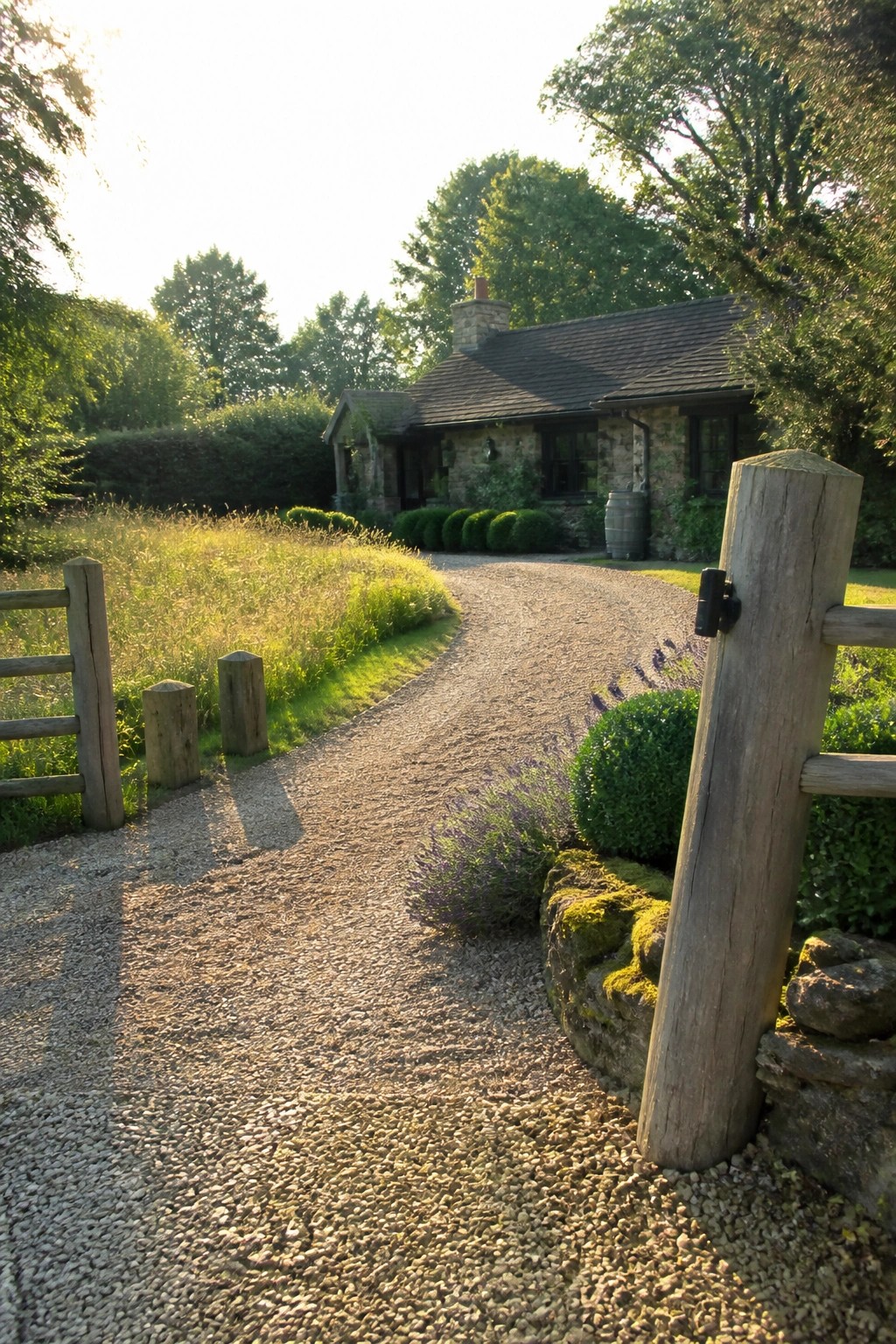
A gravel driveway feels more relaxed when you add simple wood posts along the edges instead of a solid border. The posts give it just enough definition while still letting grass and low plants grow right up to the edge.
This works best on properties with older homes or open landscapes where you want the drive to blend in rather than stand out. Space the posts a few feet apart and keep the plantings low and informal so the whole thing stays easy to maintain.
Mix Gravel With Stepping Stones
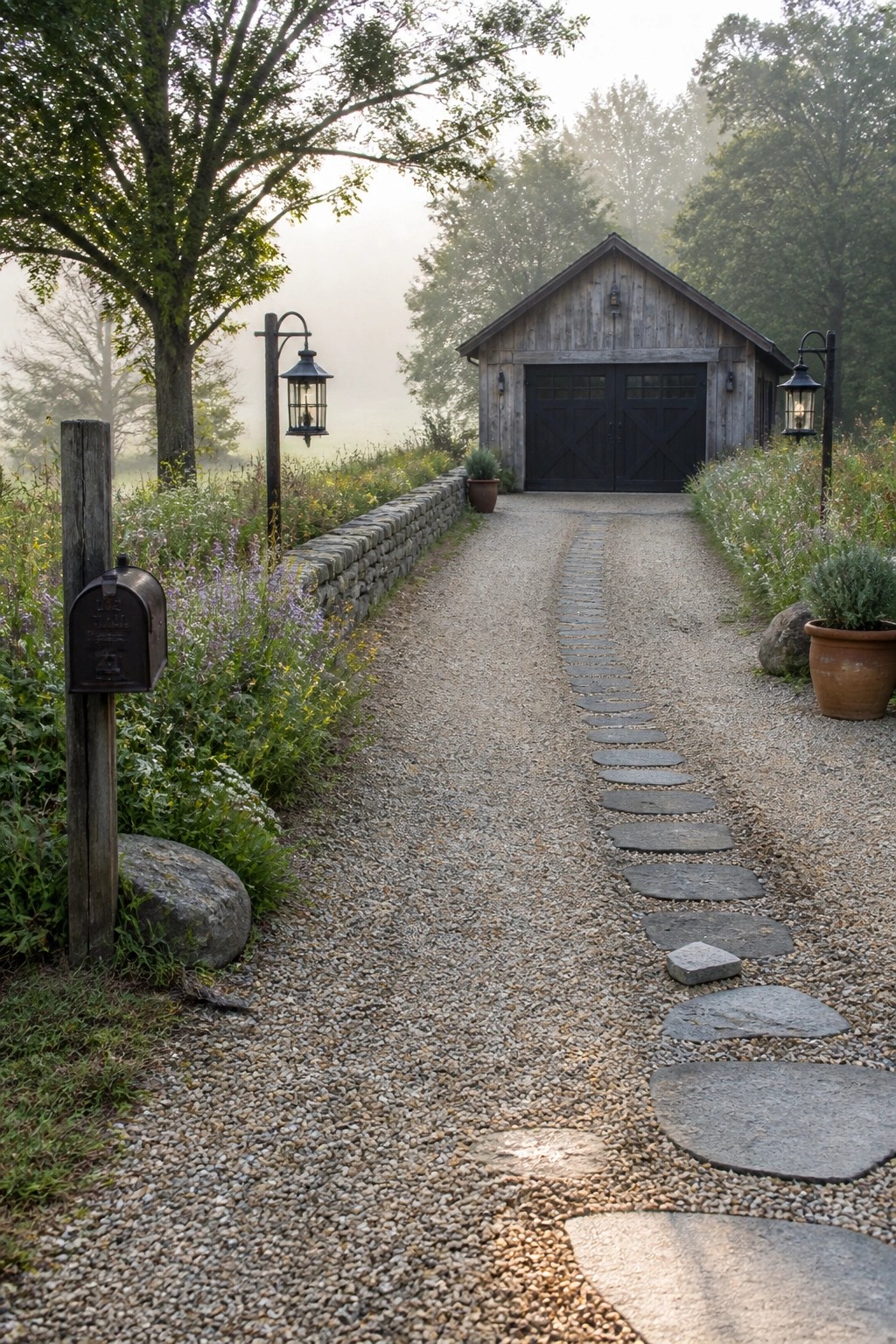
Stepping stones set into gravel give a driveway a clearer walking path while keeping the loose, natural surface. The stones break up the expanse of gravel and make it easier to cross without sinking in or tracking stones everywhere.
This works best on driveways that lead to a garage or side entry where people walk often. It suits homes with informal landscaping and gives the whole approach a settled look without adding formal paving. Just set the stones level and space them for a comfortable stride.
Grass Strips Through Gravel Drives
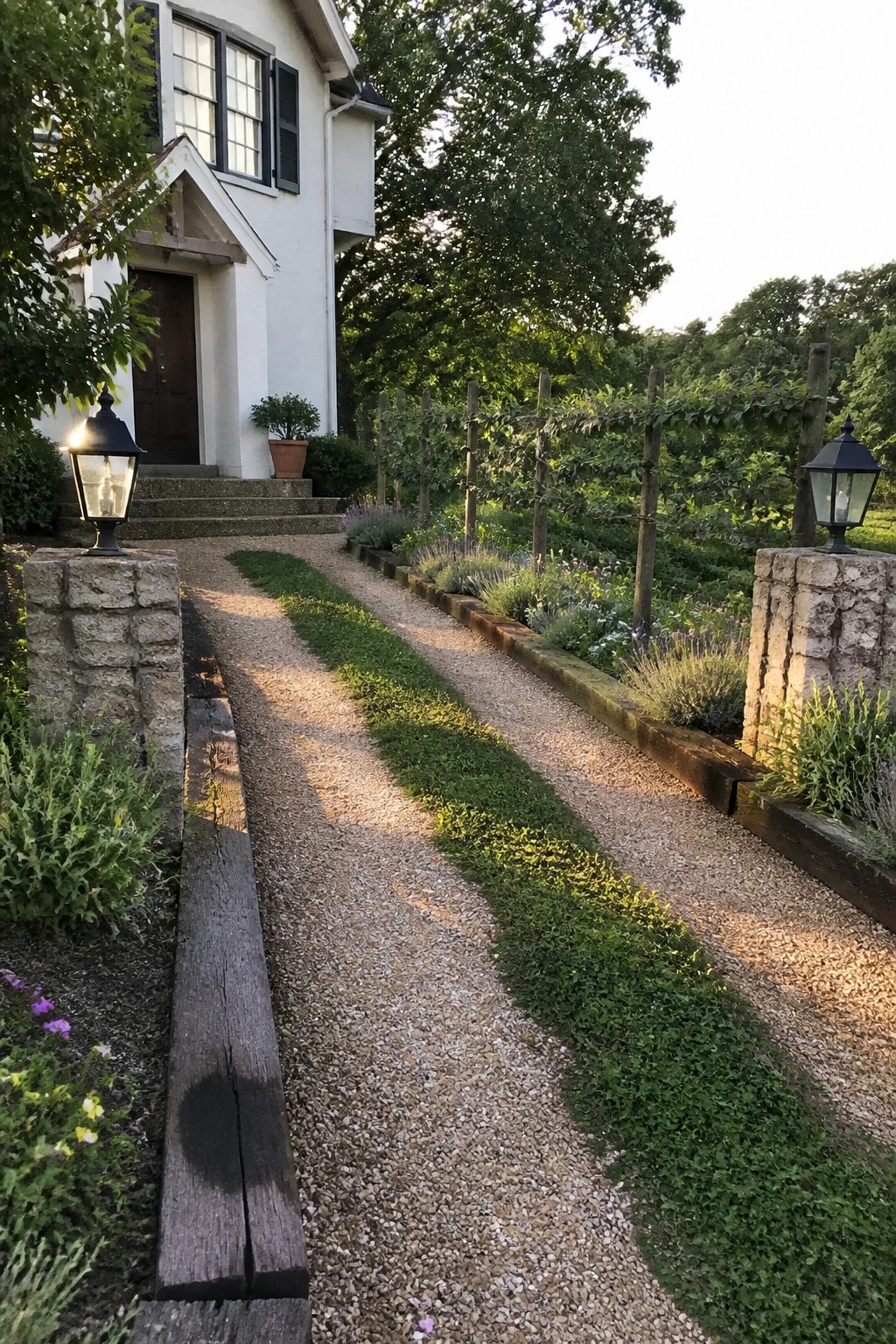
Grass strips running down the middle of a gravel drive help break up the surface and keep the whole approach from feeling too hard or heavy. The green adds a simple rhythm that works nicely with garden beds along the sides and makes the path feel more connected to the rest of the yard.
This layout suits homes with longer entries or side access where a fully paved look would stand out too much. Use low-growing grass that can handle some foot traffic, and hold the gravel in place with basic wood edging so the strips stay neat without extra work.
Gravel Driveways With Stone Borders
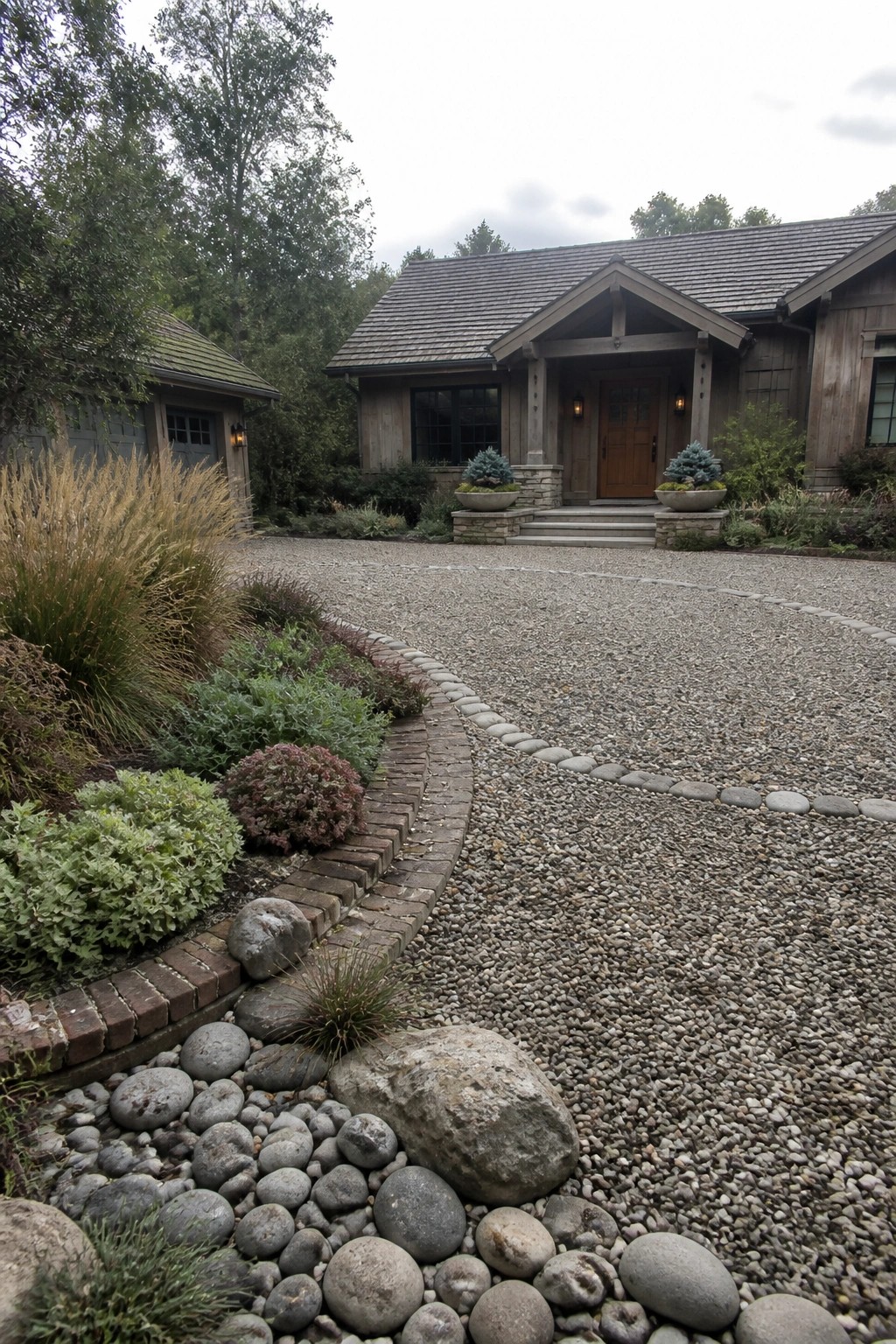
Gravel driveways feel more relaxed than paved ones, especially when the edges are kept simple. A low border of stones helps hold the gravel in place while letting the surface blend into the surrounding plants and ground cover.
This approach works best on homes with natural landscaping or wooded lots. It keeps maintenance low and avoids the hard look of concrete curbs, though the stones need to sit level so water can still drain properly.
Gravel Paths With Stepping Stones
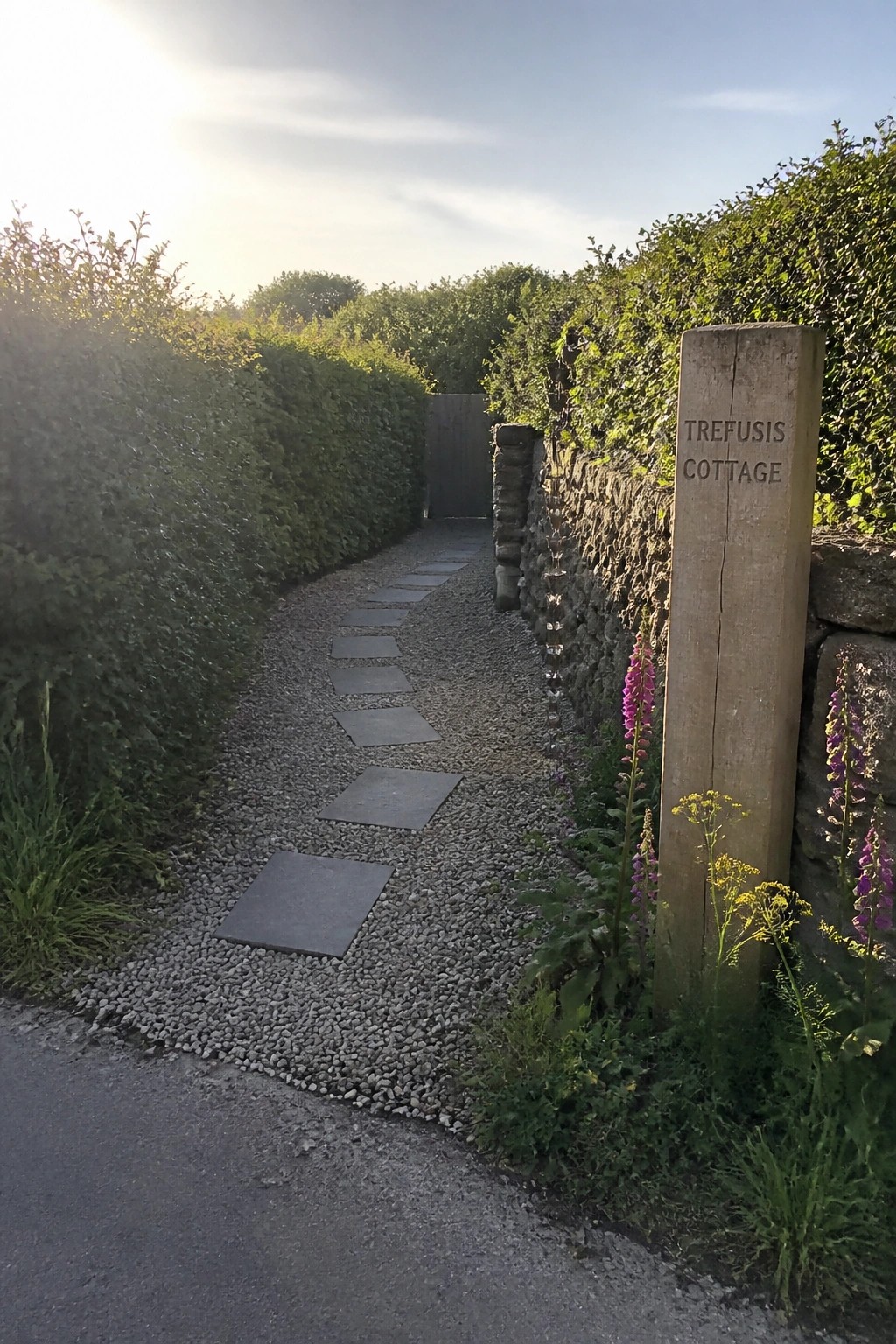
Gravel paths with stepping stones keep an entrance looking relaxed and natural. The stones give a clear route to follow while the gravel softens the whole look and blends into the surrounding plants and walls.
This setup works well on smaller properties or cottage style homes where a full paved drive would feel too heavy. Space the stones evenly for easy walking and choose gravel that stays in place without much shifting.
Gravel Driveways With Stone Edging
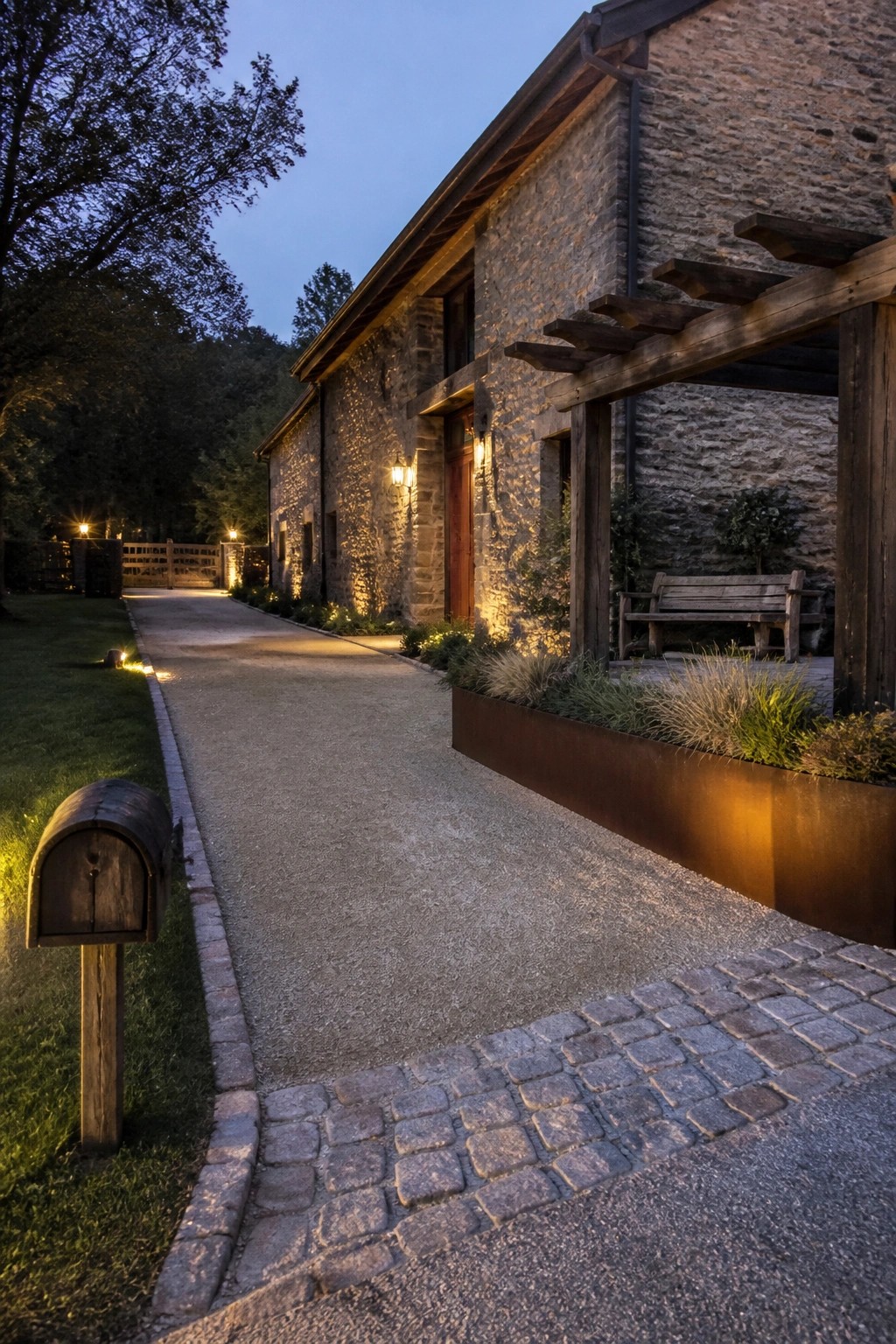
Gravel driveways feel more relaxed than paved ones and work especially well with older homes or natural surroundings. The loose surface drains easily and softens the whole approach without looking too finished.
A low stone border helps hold the gravel in place and gives the edge a clean line that still reads as casual. This setup suits homes with stone walls or wood siding where you want the entrance to stay simple and low maintenance.
Gravel Paths With Stepping Stones
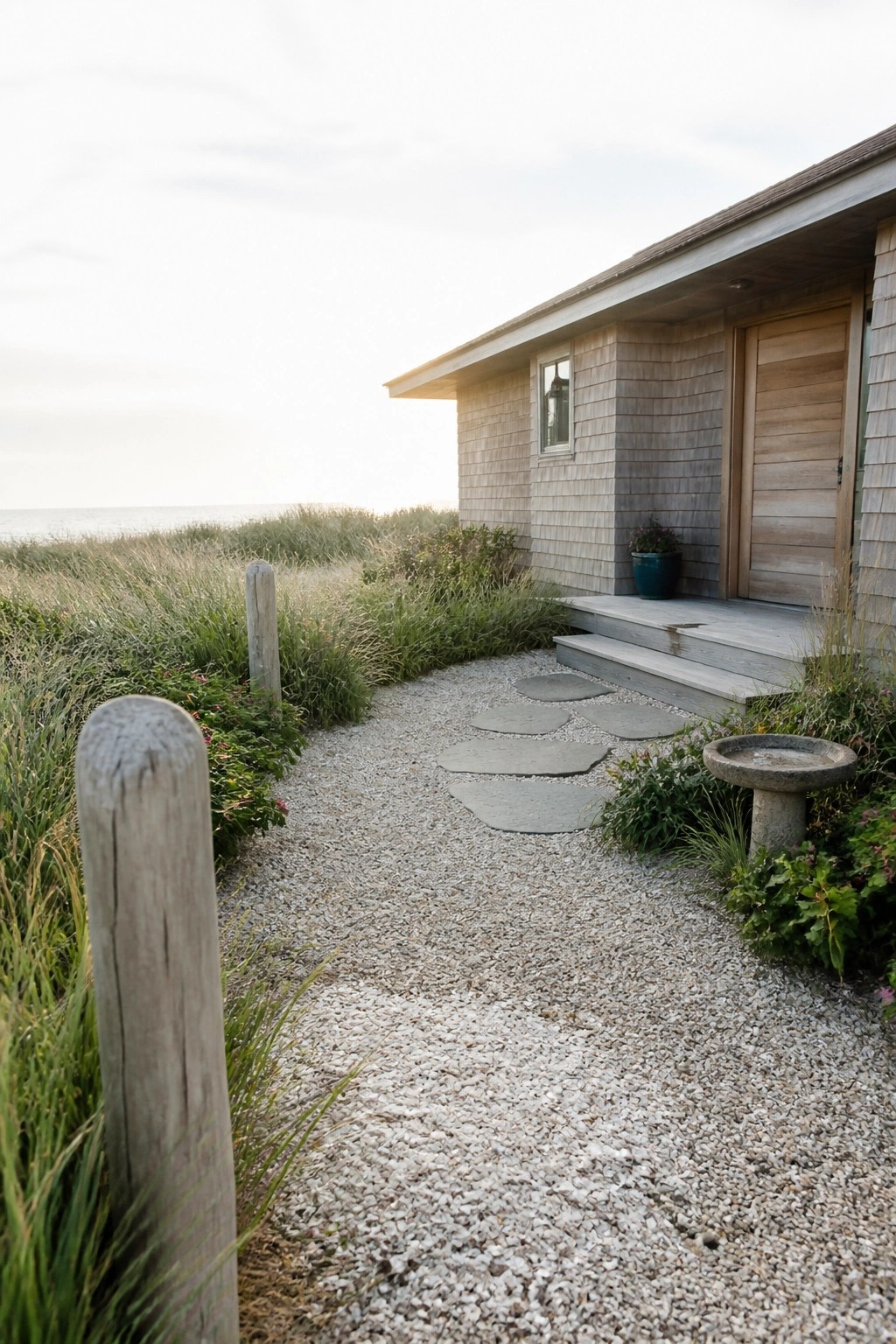
Gravel paths with stepping stones give an entry a relaxed feel without looking overly designed. The loose surface softens the approach while the flat stones keep the walk comfortable and direct.
This setup works best on homes near open land or water where a softer edge feels right. Use light gravel and space the stones a little uneven so the path blends into the surrounding grass and plants rather than cutting a hard line.
Rock Edging For Gravel Driveways
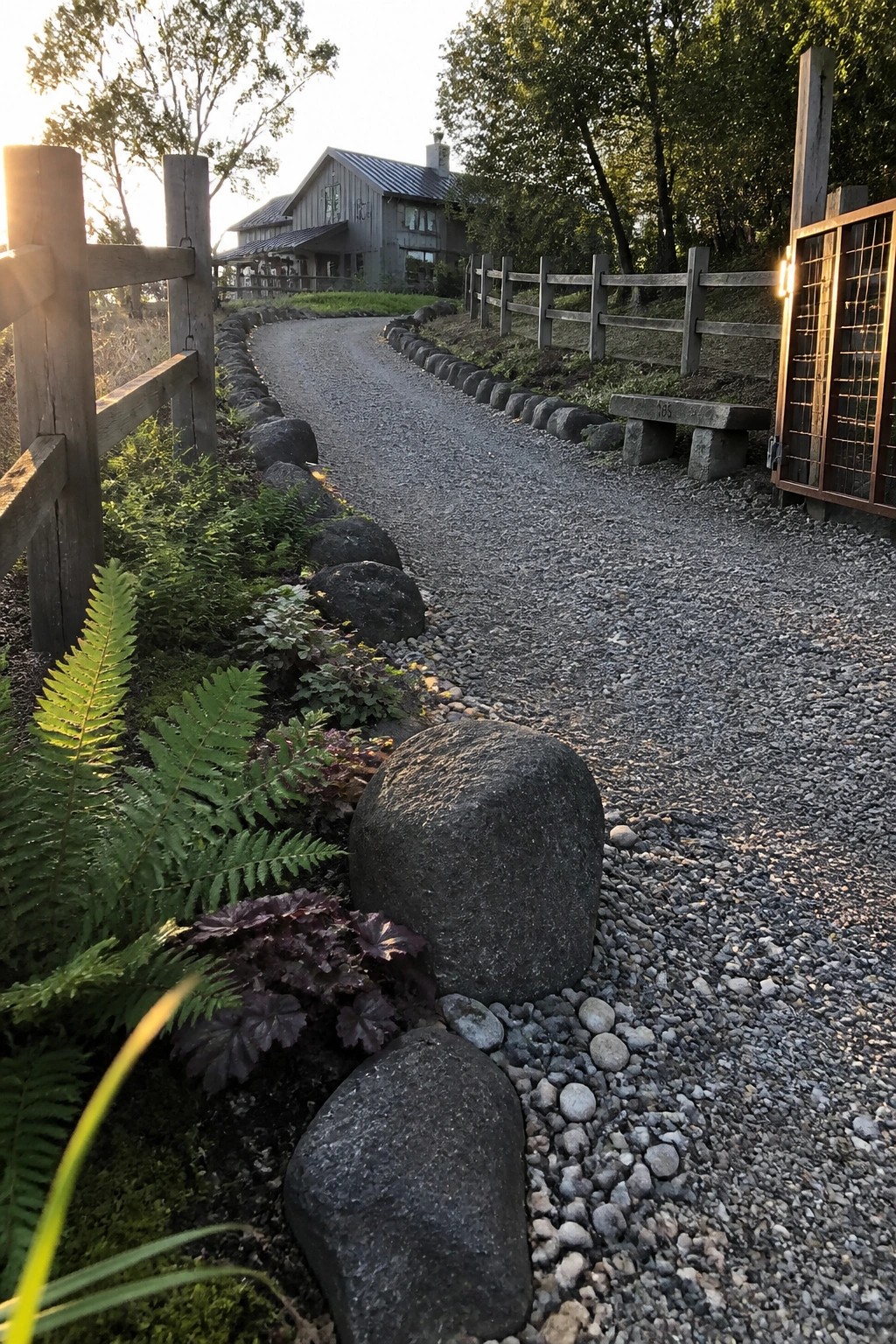
Large rocks give a gravel driveway a clean edge that still feels natural. They hold the gravel in place and create a simple border between the path and any planting beds along the side.
This approach works best on homes with open land or a wooded setting where you want the driveway to look like part of the landscape rather than a hard line. Keep the stones fairly large and set them close so the edge stays solid over time.
Timber Strips In A Gravel Driveway
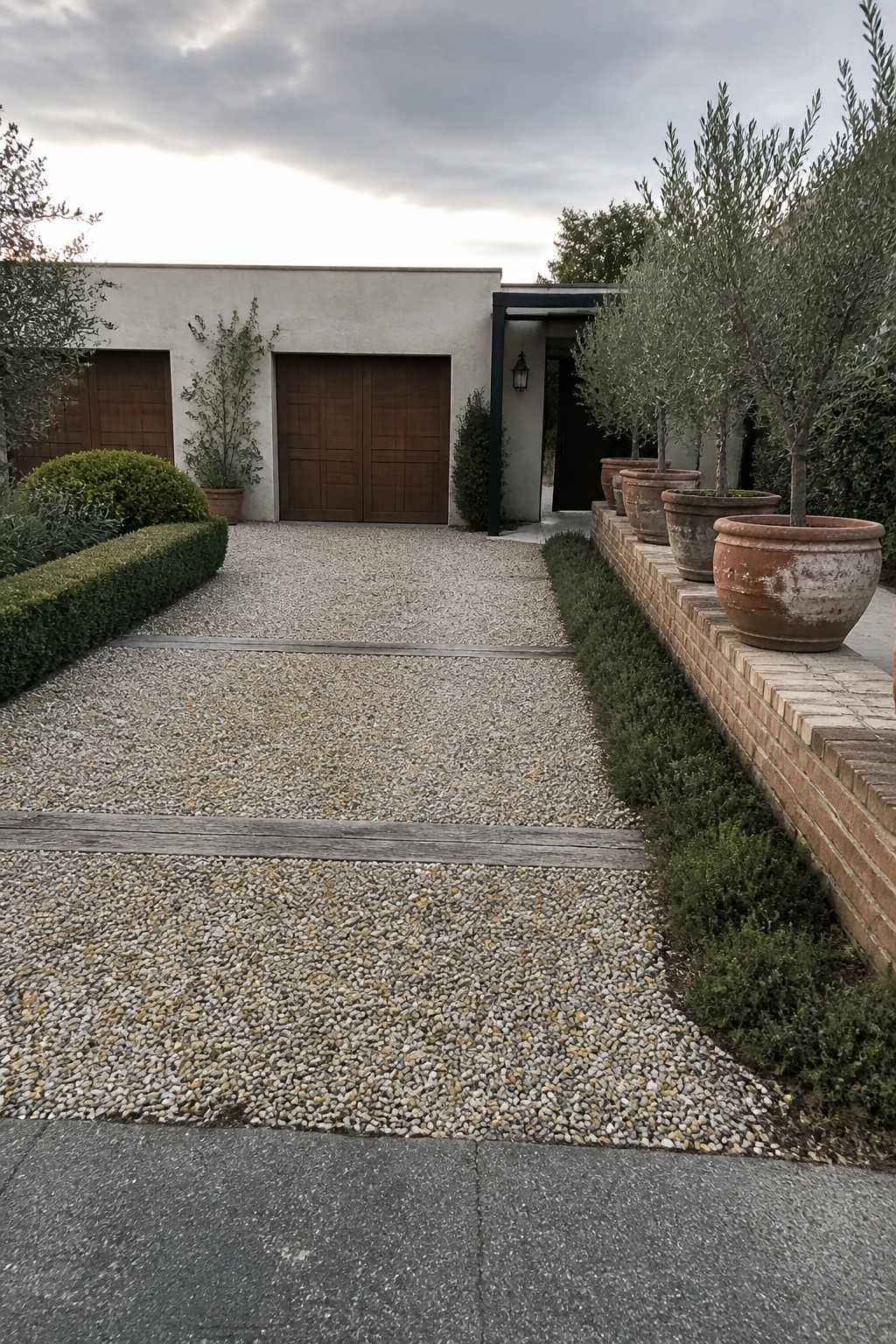
Gravel driveways can look a little loose and messy without some kind of structure. Adding timber strips across the surface gives the gravel a cleaner shape while still keeping the relaxed, natural feel that works well with a simple house exterior.
The strips also help stop the gravel from shifting too much under tires. They suit homes with a modern or minimalist style and work best when the wood is left to weather naturally so it blends in over time.
Keep A Grass Strip Down The Middle

A grass strip running through the center of a gravel driveway helps the surface feel less harsh and more tied to the land around it. It breaks up the stone without adding extra materials, and it lets a bit of green carry through even in drier months. The result is a driveway that reads as part of the landscape instead of sitting on top of it.
This works best on longer drives where you want to keep things simple and low key. It suits wooded or rural homes that already have grass or moss nearby, and it needs occasional mowing to stay neat. Skip it if the drive sees heavy daily traffic or if drainage tends to pool in the center.
Line Gravel Paths With Lavender
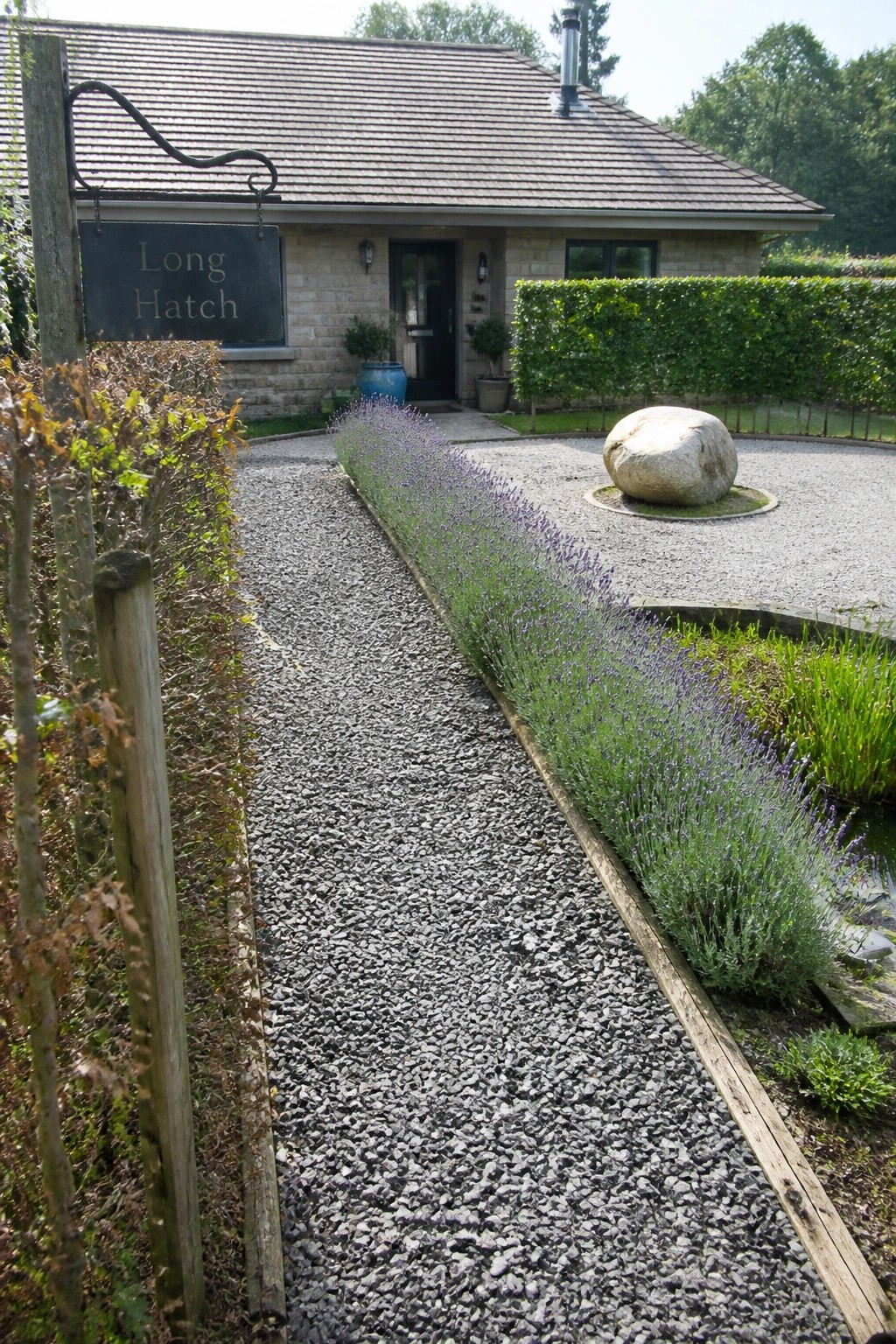
A gravel path feels more finished when you run a strip of lavender right along one side. The plants soften the hard edge of the stones and add color without any extra structure or hardscaping.
This works best on a simple country property or a smaller home where you want the drive or walkway to blend into the garden. Keep the lavender low and let it spill a little over the gravel so the line stays natural rather than neat.
Gravel Driveways That Blend Into The Garden
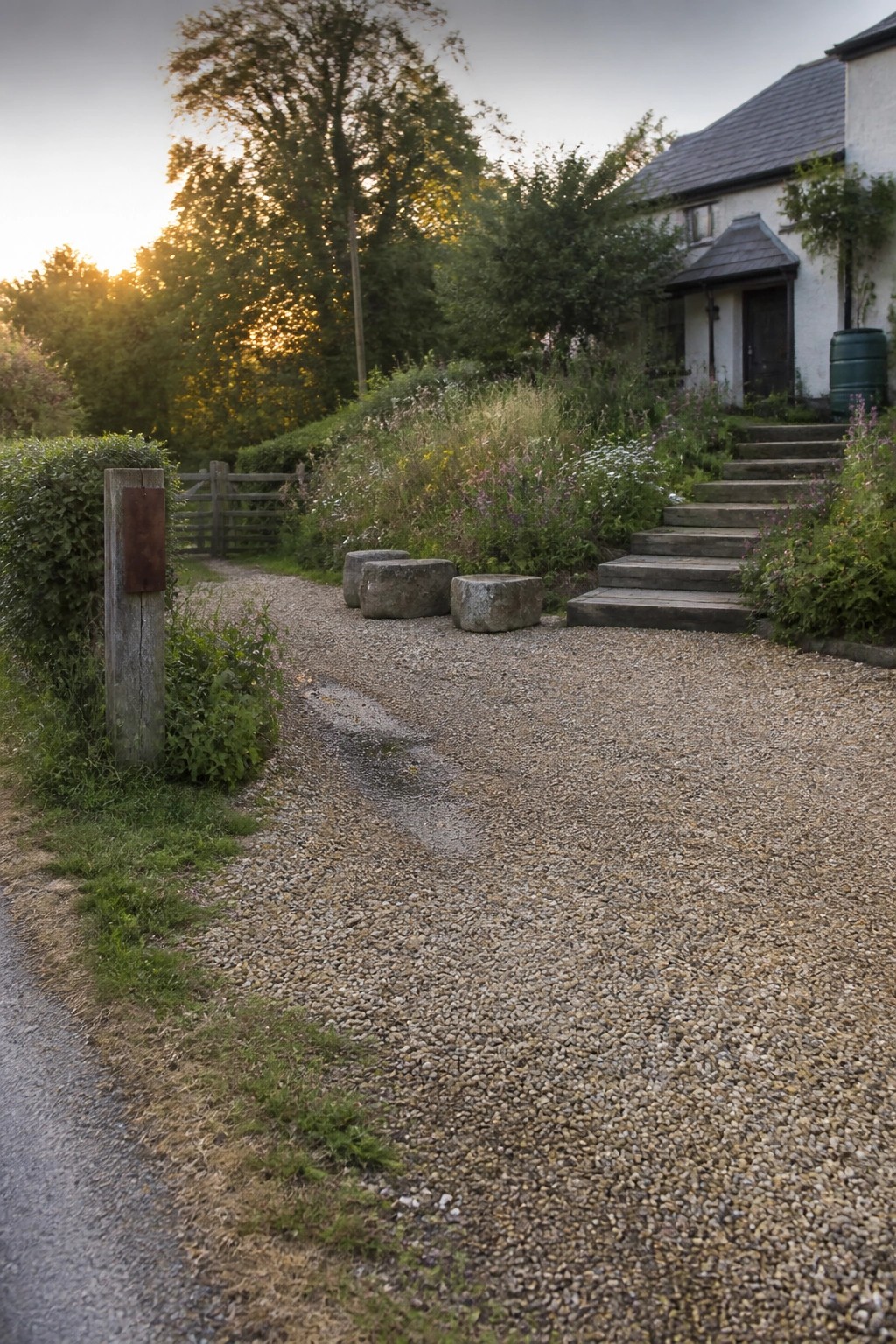
Gravel gives a driveway a softer edge than paved surfaces. It settles into the landscape instead of cutting a hard line through it, which works especially well on properties with lots of planting already in place.
This approach suits older homes or any place where you want the garden to feel continuous. Keep the gravel layer thick enough to stay stable, and add simple edging only where the drive meets lawn or beds so it does not creep into planted areas.
Stacked Stone Edging For Gravel Driveways
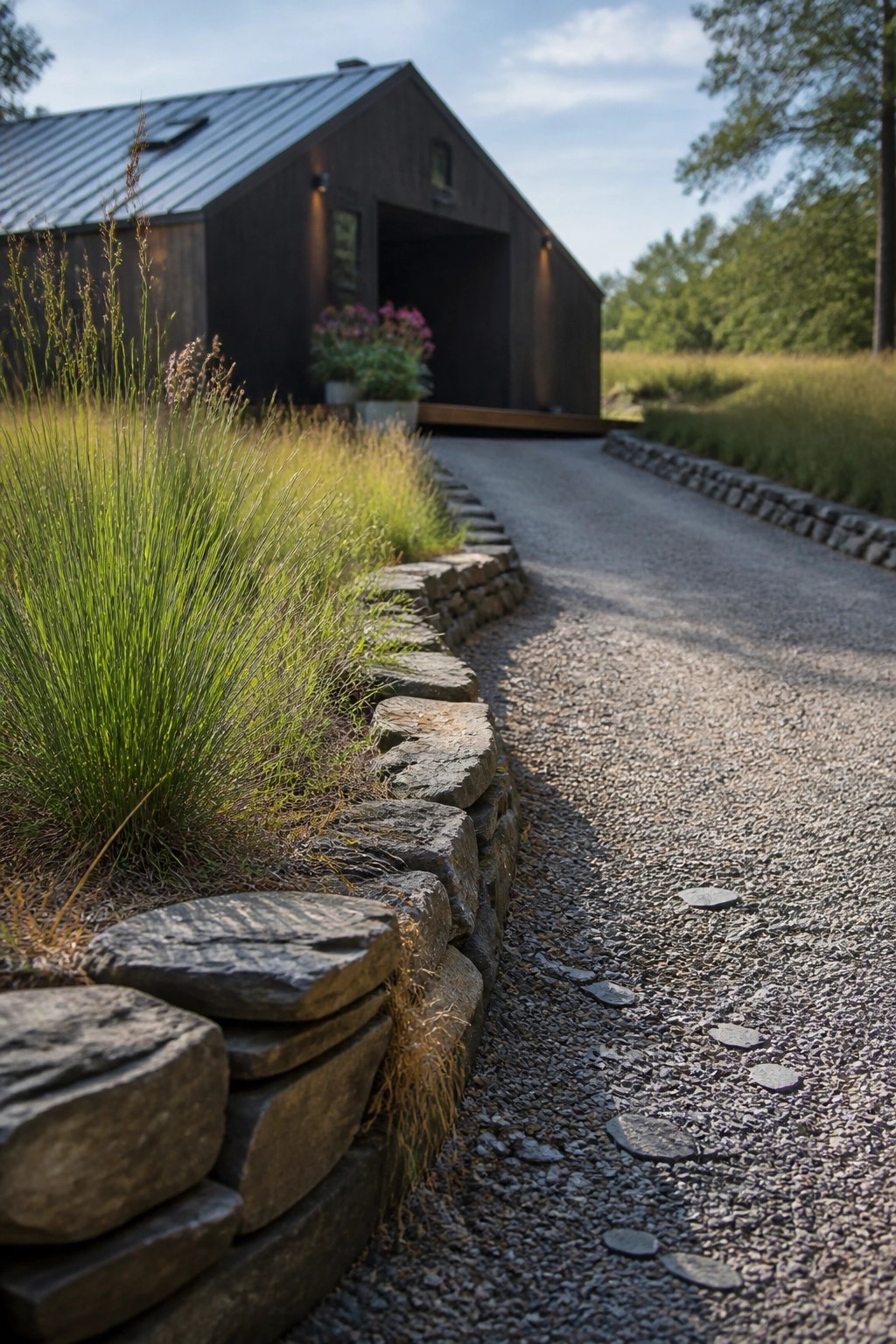
A low stone border helps hold gravel in place while letting the driveway feel part of the surrounding landscape. The rough texture of the stones pairs well with tall grasses and keeps the edge from looking too sharp or man-made.
This works best on homes set in open or rural settings where a softer transition matters. Keep the stones stacked low and slightly uneven so the border stays simple and does not compete with the rest of the yard.
Stone Edging For Gravel Driveways

Stone edging gives a gravel driveway a cleaner edge without making it look stiff or overly planned. The rounded stones hold the gravel in place while letting the surface feel soft and connected to the garden beds on either side.
This setup works best on homes with room for planting right up to the drive. Use stones that sit slightly proud of the gravel so they stay visible after rain and foot traffic. Keep any added features simple so the edging remains the main detail.
Gravel Paths With Planted Strips
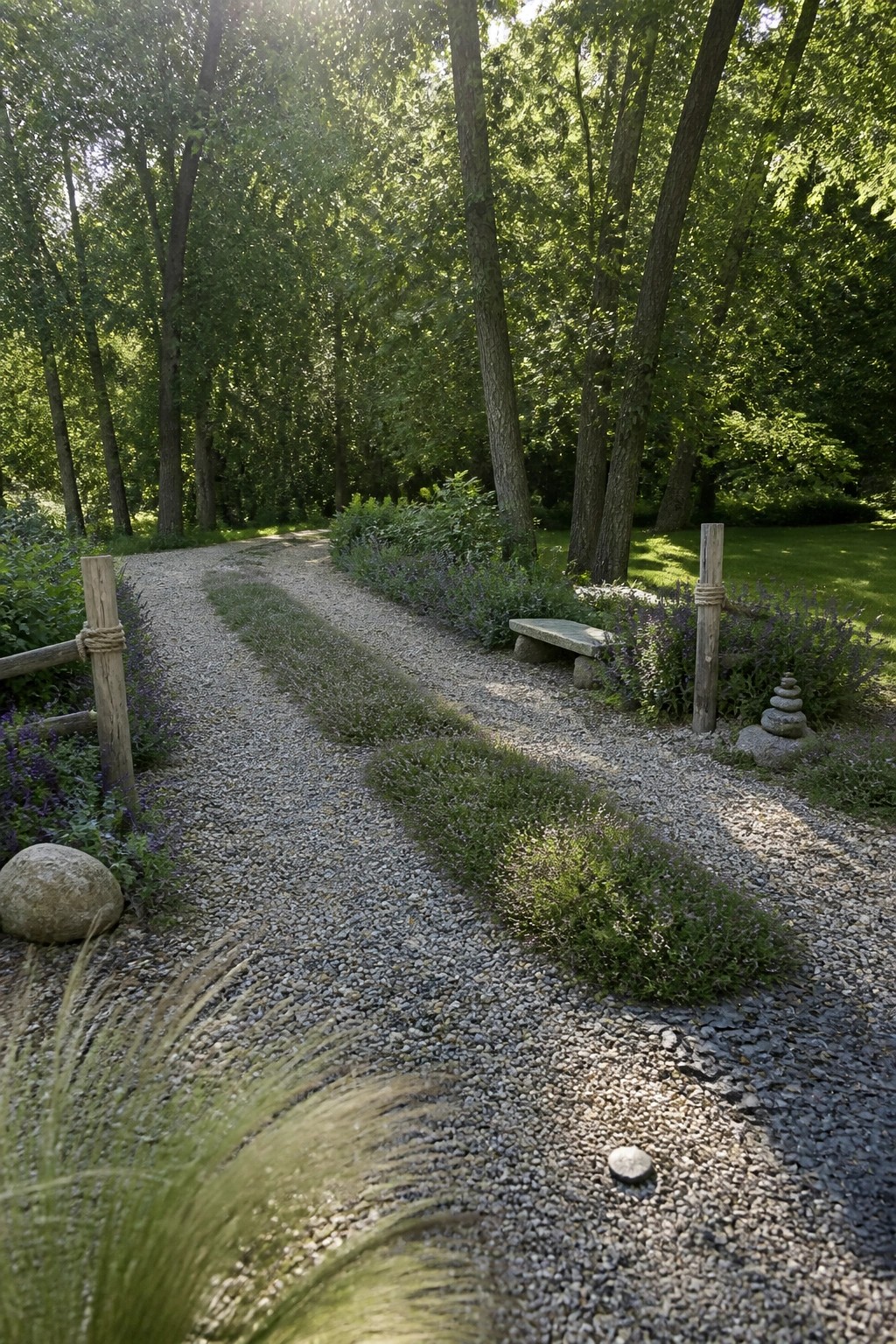
One simple way to soften a gravel driveway is to run narrow strips of grass or low plants right through the middle. The strips break up the wide gravel surface and help the path feel more like part of the garden instead of a separate hard feature.
This layout works best on longer or winding driveways where you want something durable underfoot but still natural looking. It suits wooded properties or rural homes that already have plenty of planting around the edges. Just keep the strips narrow enough for easy mowing and make sure the gravel stays contained on either side.
Embed Stones Into Gravel Paths
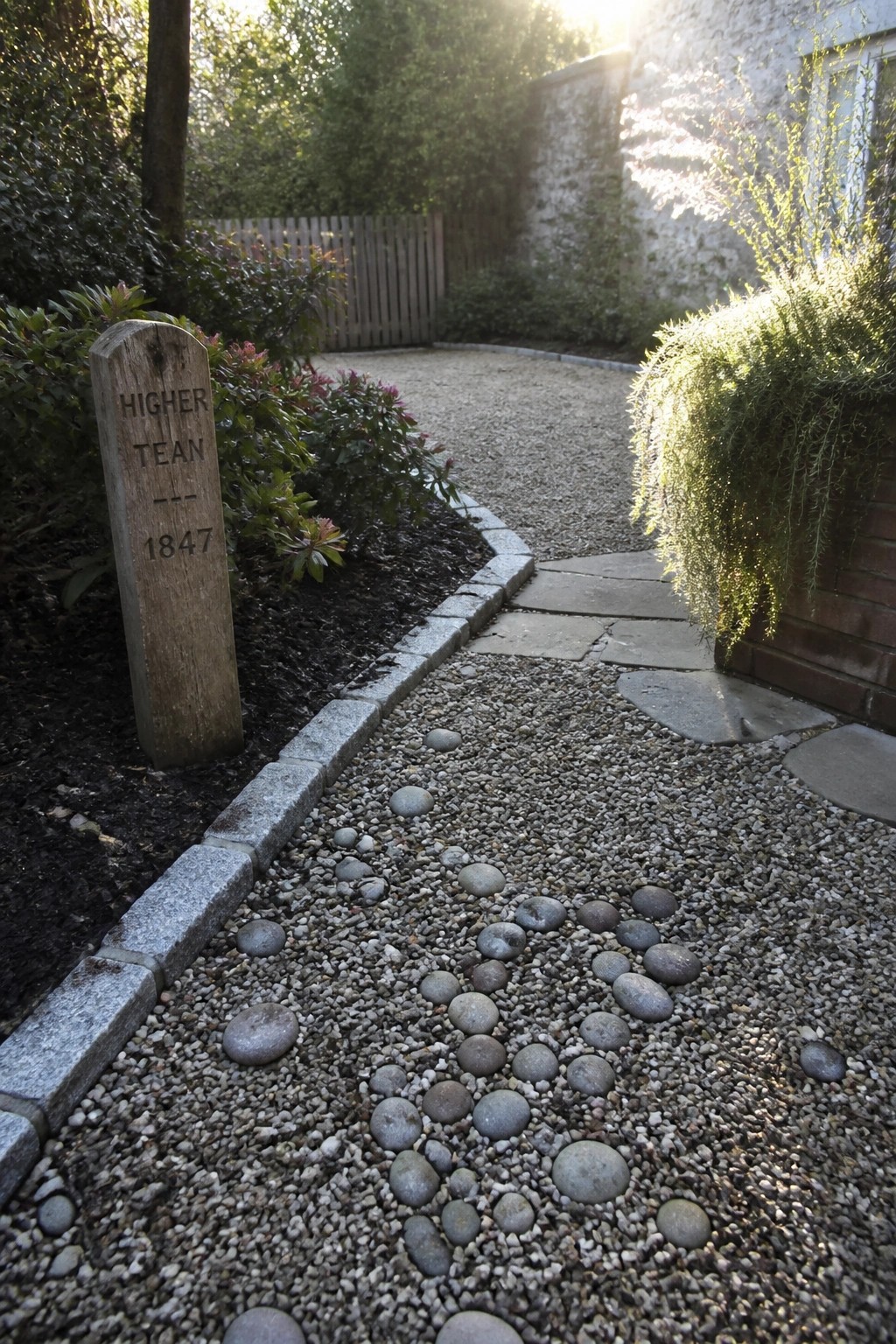
Setting a few larger stones right into the gravel gives a path some shape and rhythm without turning it into a full paved surface. The stones break up the flat look, guide feet along the route, and add texture that still feels relaxed and low key.
This works best on side paths or the edges of a driveway where you want a clear walking line. Use rounded stones that sit slightly proud of the gravel so they stay visible but do not trip anyone. Keep the rest of the surface simple so the pattern stays the main detail.
Gravel With Stepping Stones
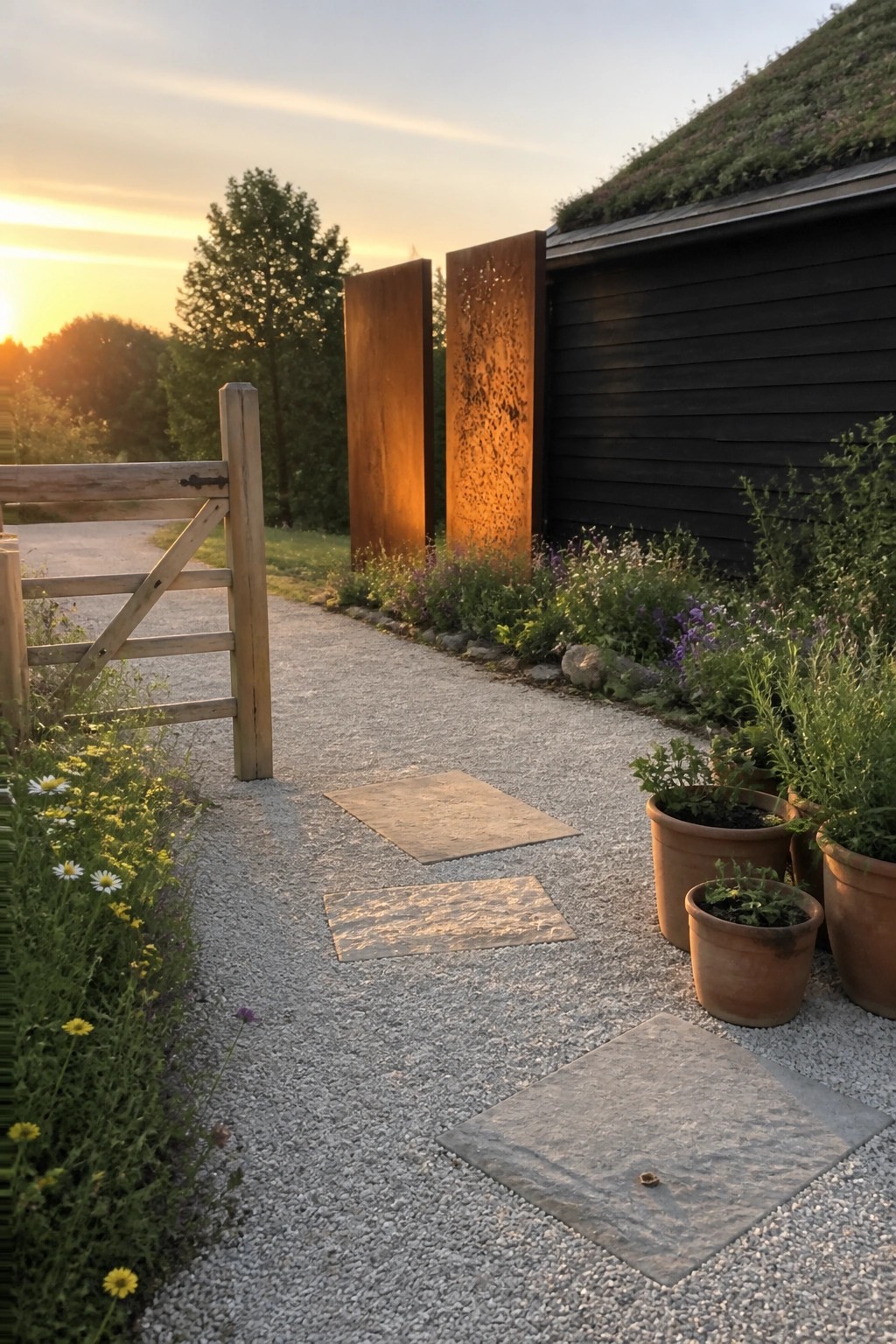
Gravel works well for driveways because it drains easily and feels relaxed, but walking on it can get tiring over time. Adding a few large stone pavers set into the gravel gives you solid spots to step on without losing the natural look of the surface.
This approach suits homes with long or curved driveways where you want both function and a simple country feel. Just space the pavers where foot traffic is heaviest and keep the gravel raked level around them so the whole path stays even.
Lavender Borders Along Gravel Paths

Lavender makes a gravel driveway feel softer and more welcoming without adding any fuss. The plants create a low, colorful edge that moves with the breeze and brings a gentle scent to the entrance area.
This works best on homes where the drive has a little width on each side. Keep the gravel loose and light in tone so the lavender can stand out, and use simple posts or rope to hold the shape if the path curves.
Stone Borders Along Gravel Paths
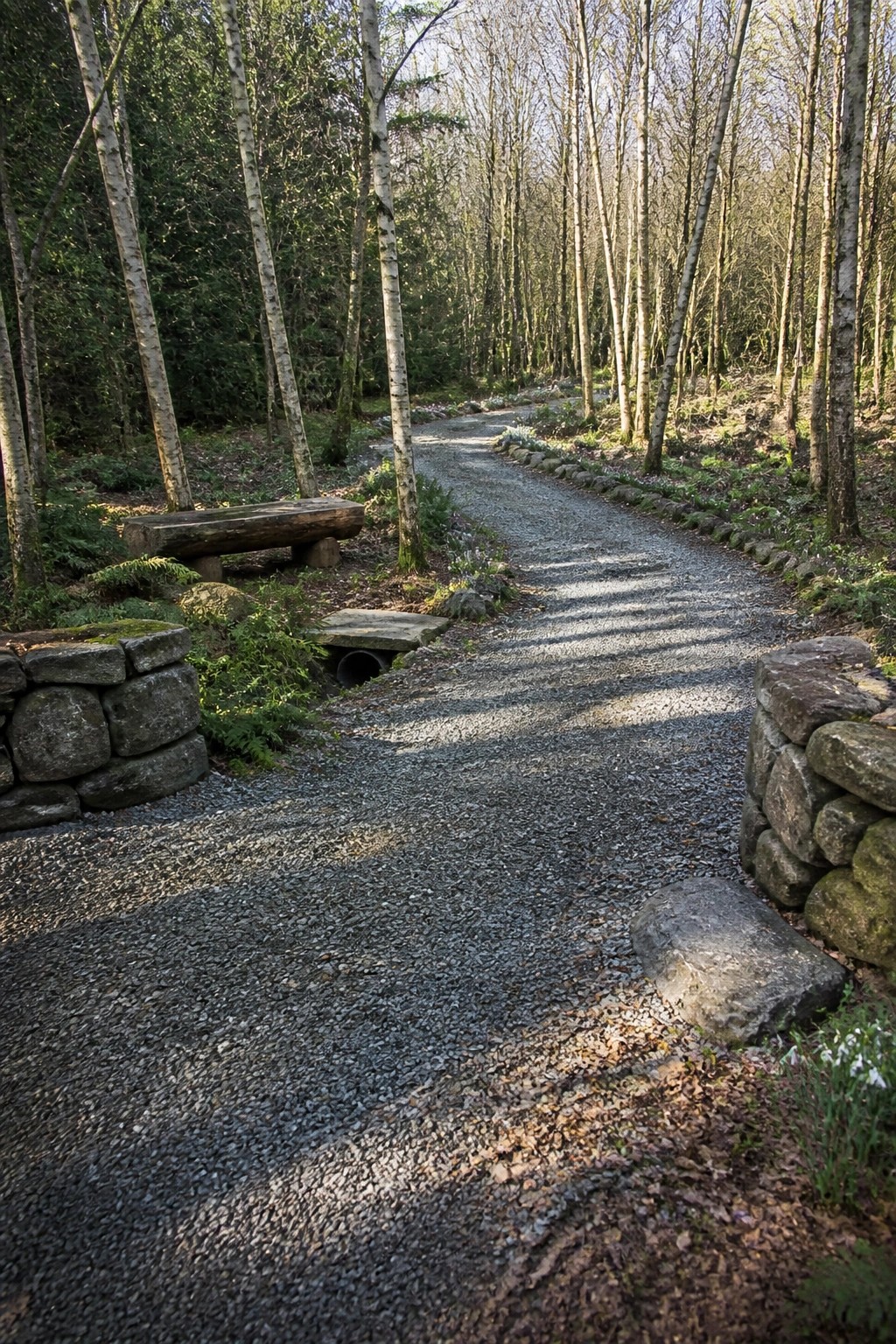
Gravel paths edged with stone feel easy and natural on properties with lots of trees. The low walls hold the gravel in place and give the path a finished look without adding much structure or formality.
This setup works best on homes where the driveway needs to blend into the landscape rather than stand out. Stack the stones loosely and keep the gravel layer thin so water drains well and maintenance stays simple.
Stepping Stones In Gravel
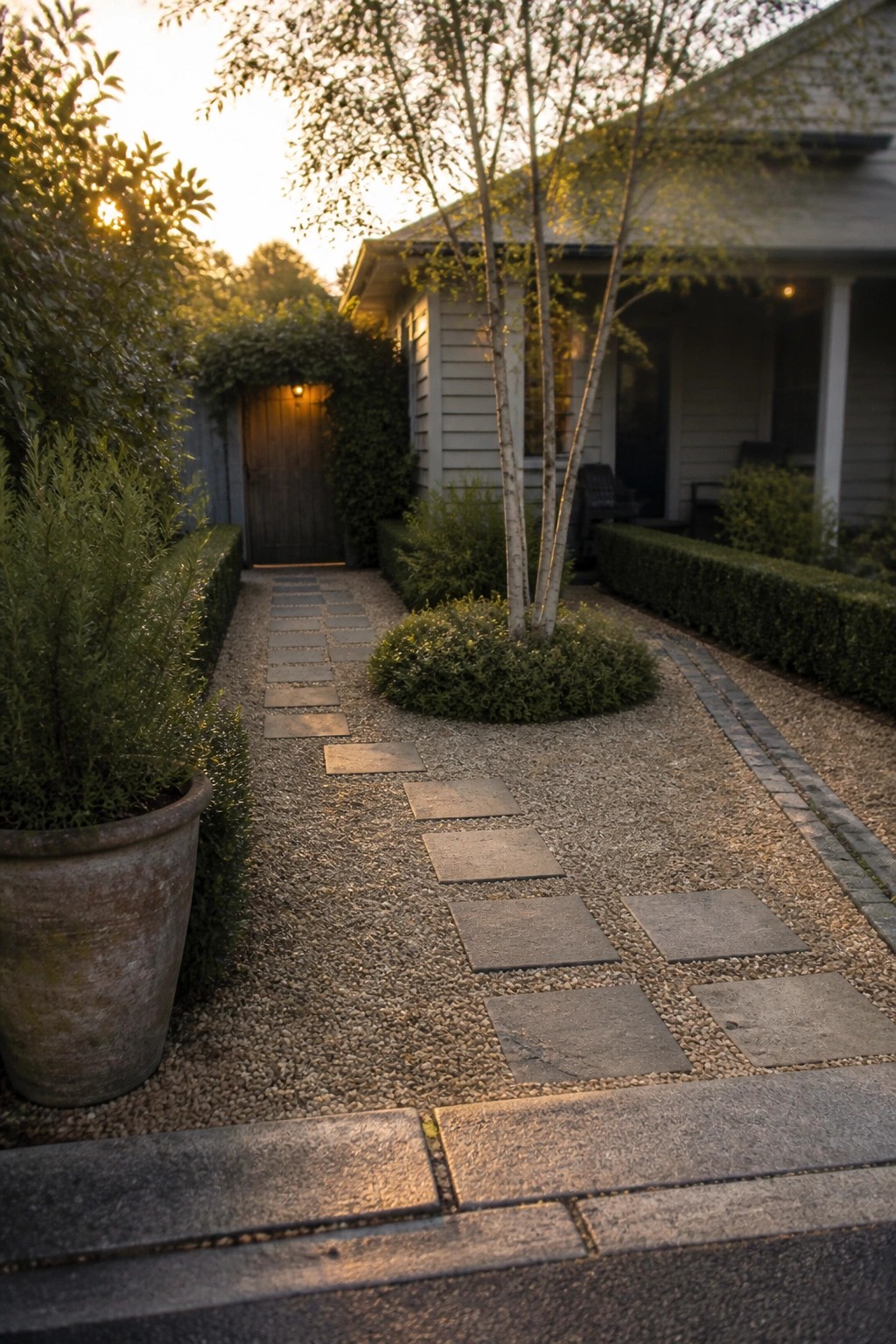
Stepping stones set into gravel make a path feel more relaxed and natural than a solid surface. The stones give steady footing while the gravel keeps the look loose and informal, which fits the easy vibe many people want around their home.
This works best on side paths or smaller driveways where you do not need heavy traffic strength. Space the stones evenly and let nearby shrubs or pots soften the edges so the path does not stand out too much from the garden.
Frequently Asked Questions
Q: Will weeds ruin the natural look over time?
A: Lay down fabric before pouring the gravel. Top it off with a fresh layer every couple years if needed. This keeps things clean and low maintenance.
Q: Does gravel work on a sloped driveway?
A: It does if you compact the base well first. Add larger stones at the bottom for stability. But test a small section before committing fully.
Q: How much does a basic gravel driveway cost compared to paved ones?
A: Gravel runs way cheaper upfront. Focus on quality base material to avoid sinking later. Skip fancy borders unless you want the extra work.
