

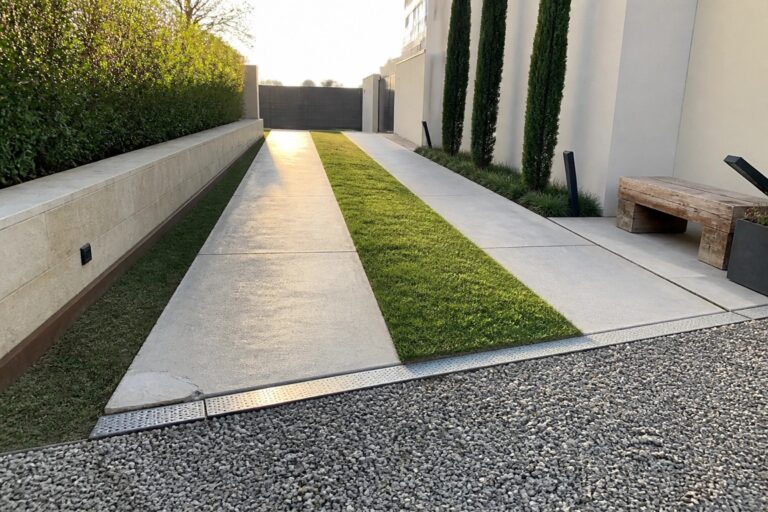
When I look at a house from the street the driveway often sets the tone for how the rest of the front holds together.
Tight spaces along the side or front can make the entry feel cramped if the layout does not line up with the materials and doors.
I found that out after trying to fix one at our last place.
Simple shifts in width or surface can help the whole facade read as more balanced without adding much extra work.
Those kinds of tweaks usually hold up better once you live with them day to day.
Add a Grass Strip Through the Driveway
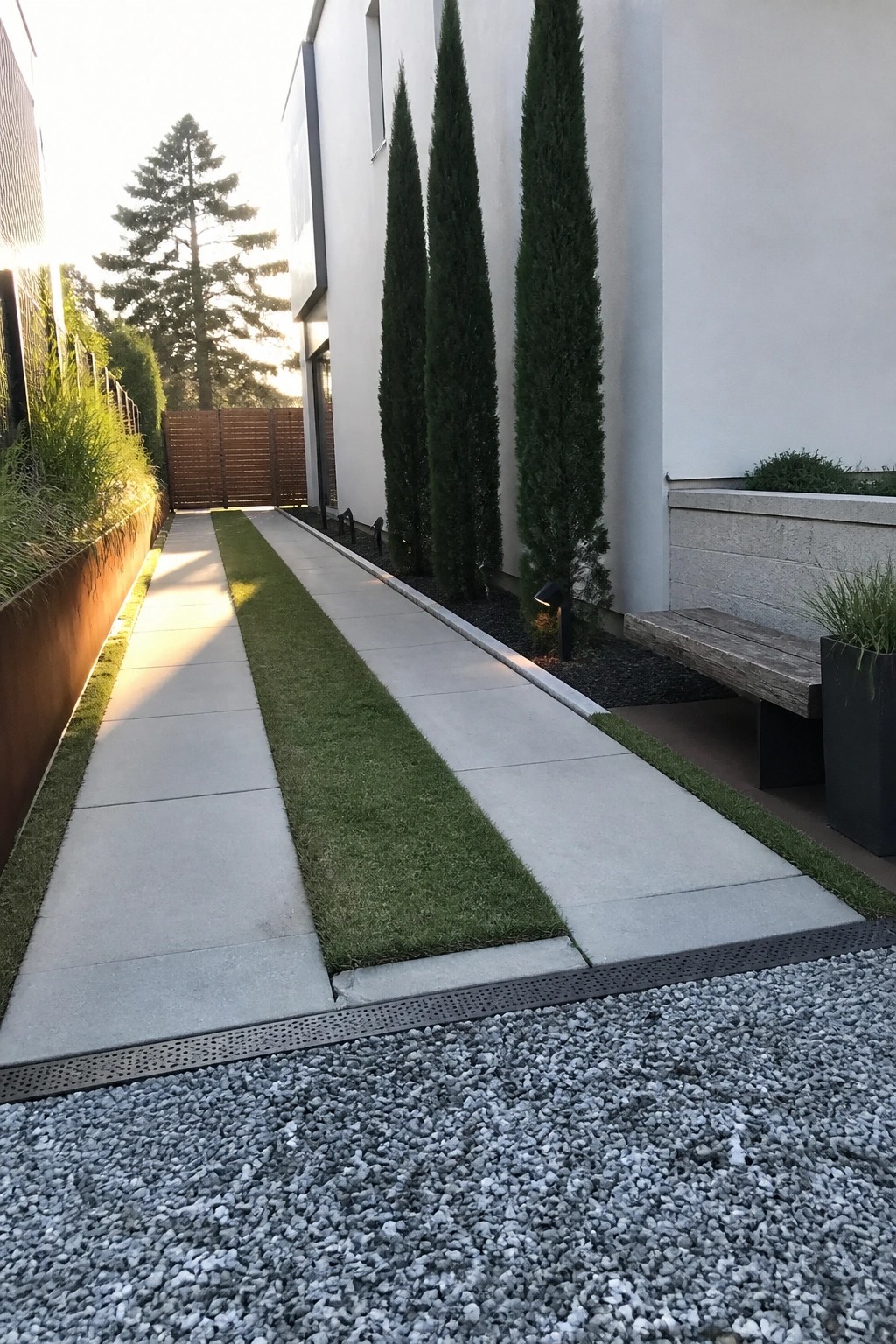
A narrow driveway can feel less cramped when you run a strip of grass right down the center. It breaks up the hard surface, lets a bit of green show through, and keeps the whole path looking lighter without losing any function for cars.
This works best on straight, tight lots where every extra foot of paving would crowd the space. Keep the grass strip wide enough to mow easily, use solid edging on both sides, and make sure the concrete sections stay wide enough for tires. It suits modern homes or any place where you want the driveway to blend into the garden instead of dominating it.
Mix Brick And Gravel For Narrow Paths
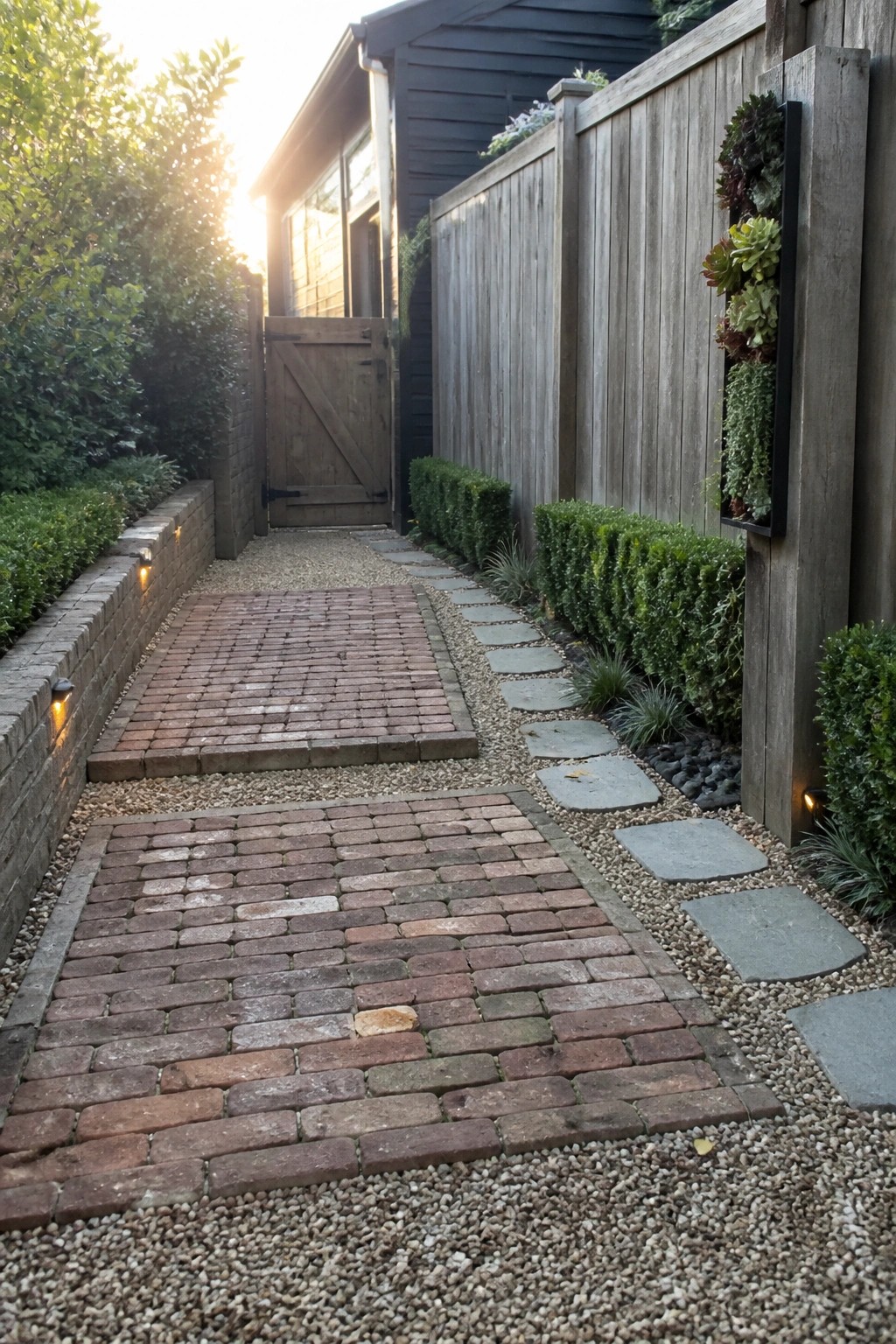
A mix of brick pavers and gravel works well when space is tight because it breaks up the surface without needing a full width of one material. The brick gives a solid walking area while the gravel keeps things simple and drains easily along the edges.
This approach suits side entries or small driveways on modest lots where a solid paved surface would feel cramped. Keep the brick sections straight and let the gravel fill in around stepping stones so the path stays easy to maintain over time.
Grass Pavers Blend Driveway And Garden
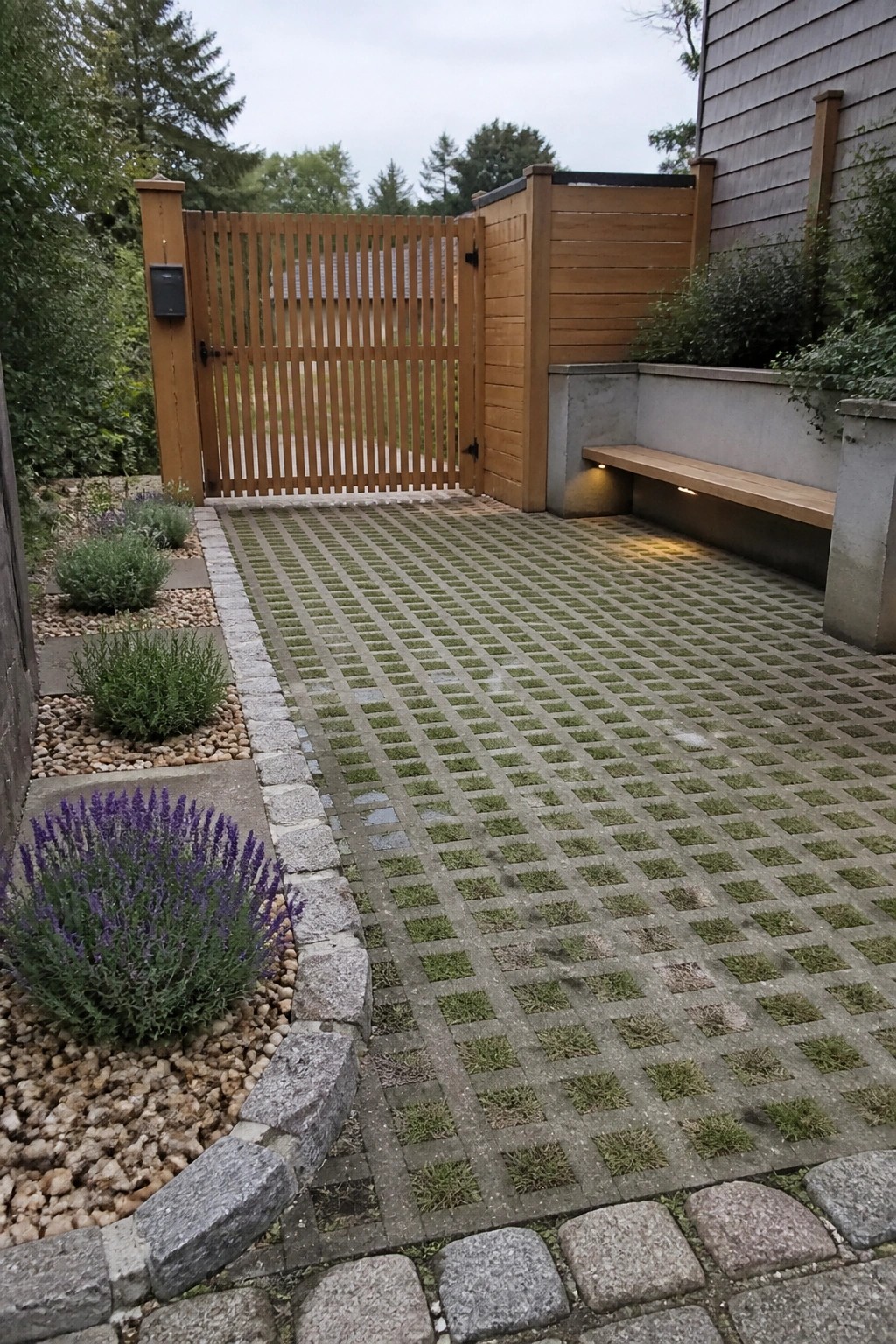
Grass pavers let a driveway carry some green instead of turning the whole surface into solid pavement. The grid holds the weight of a car while grass fills the open squares, which helps a narrow entry feel less cramped and more tied to the rest of the yard.
This setup works best on short drives where you already have planting nearby. Keep the edges simple with stone or low shrubs so the grass squares stay the main feature and do not get lost in too many materials.
Edge A Narrow Drive With Gravel And Planting
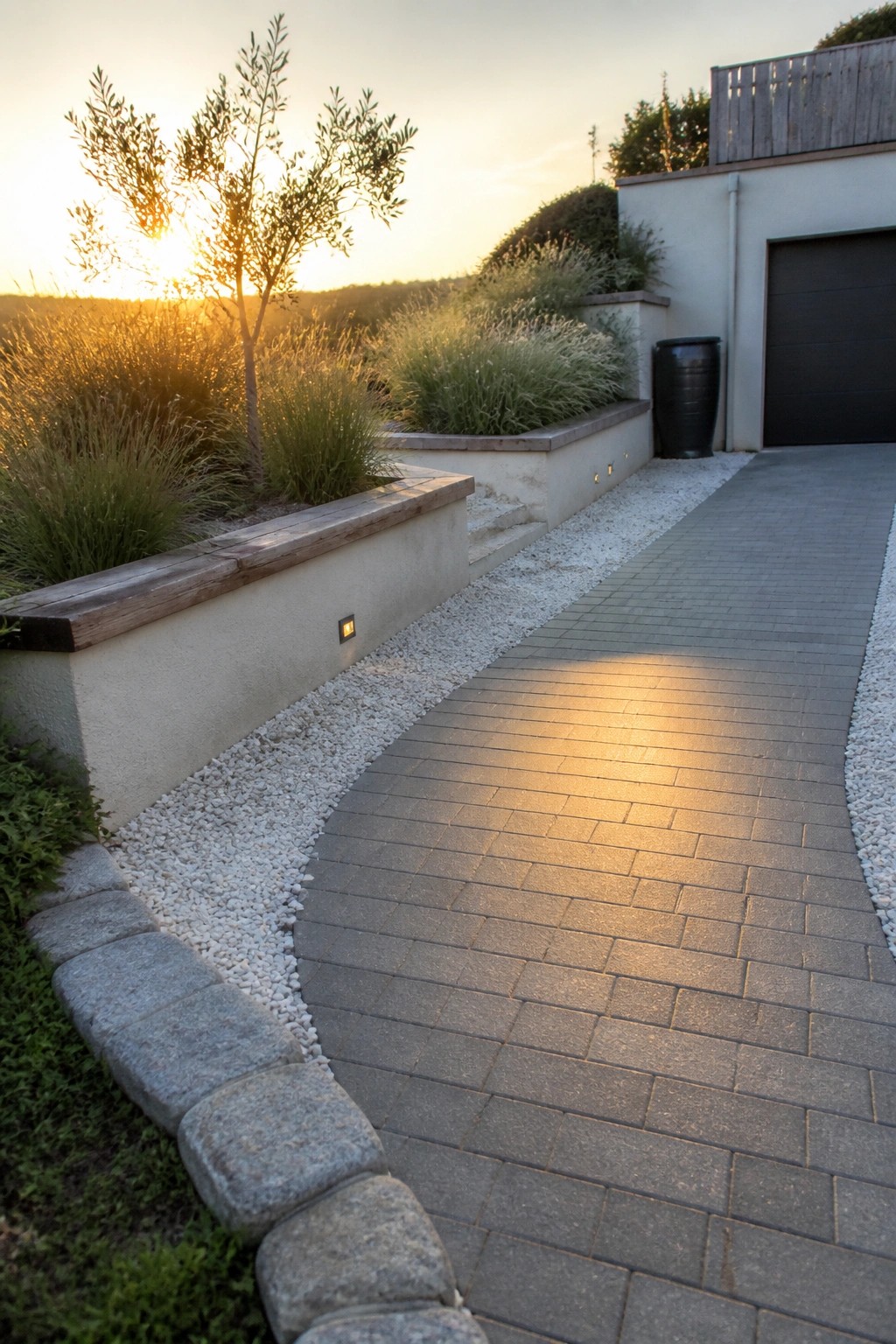
Many small driveways feel cramped when they are all one solid material from edge to edge. Adding a strip of gravel on one or both sides lets the paved area stay narrow while still giving the eye some breathing room and a place to add simple planting.
This setup works best on lots that slope or curve, since the gravel can follow the natural line without extra cutting. Keep the gravel contained with a low border so it stays neat and does not track onto the pavers.
Linear Paver Paths With Gravel Borders
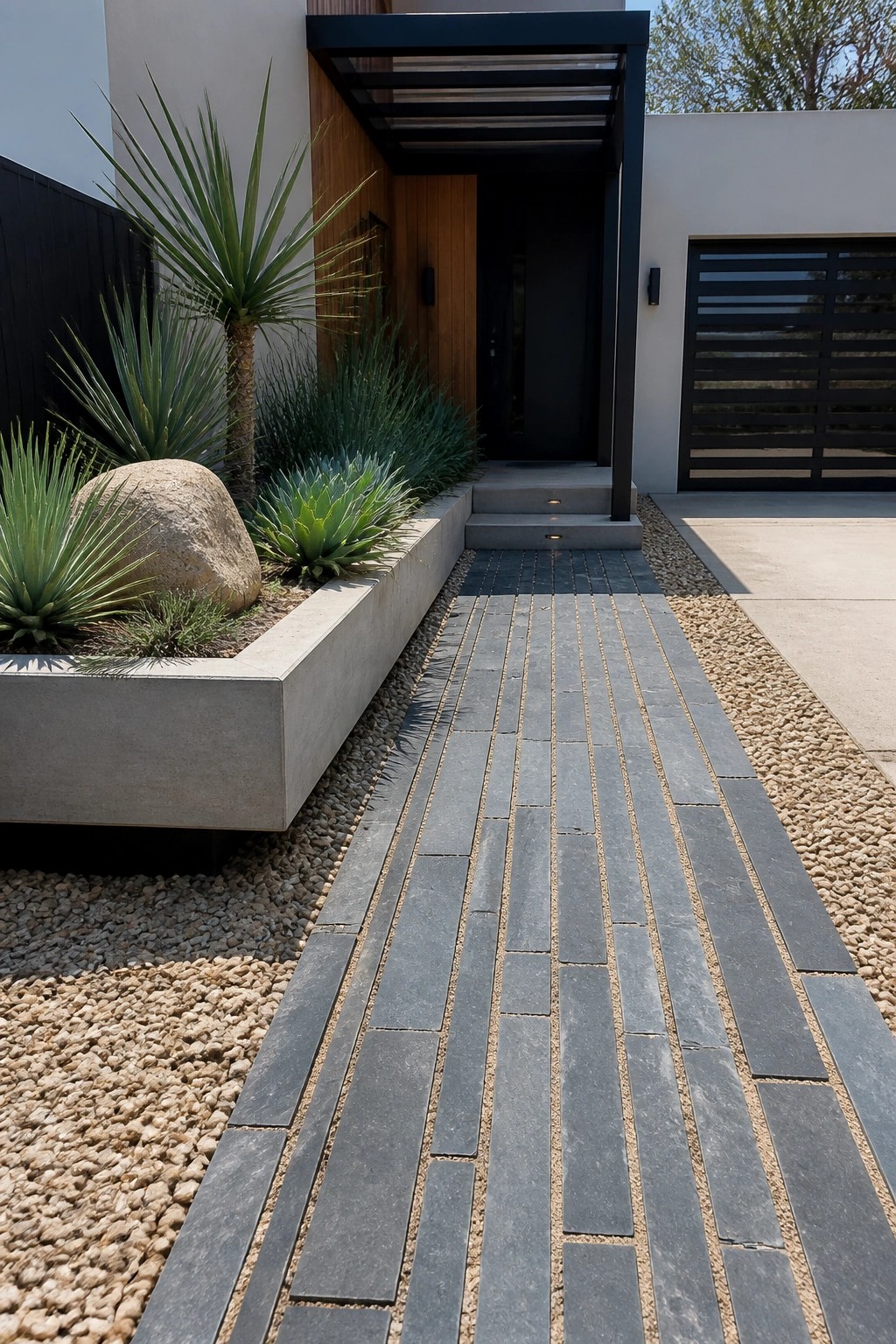
A straight run of long narrow pavers gives a small entry or driveway a tidy, organized look without taking up much width. The gravel on both sides adds texture, helps with drainage, and keeps the whole area low maintenance.
This layout works best on modern homes where space in front is limited. Keep any planting in a raised bed or tight border so it does not creep onto the path and make the space feel even smaller.
Curve the Path in a Tight Driveway
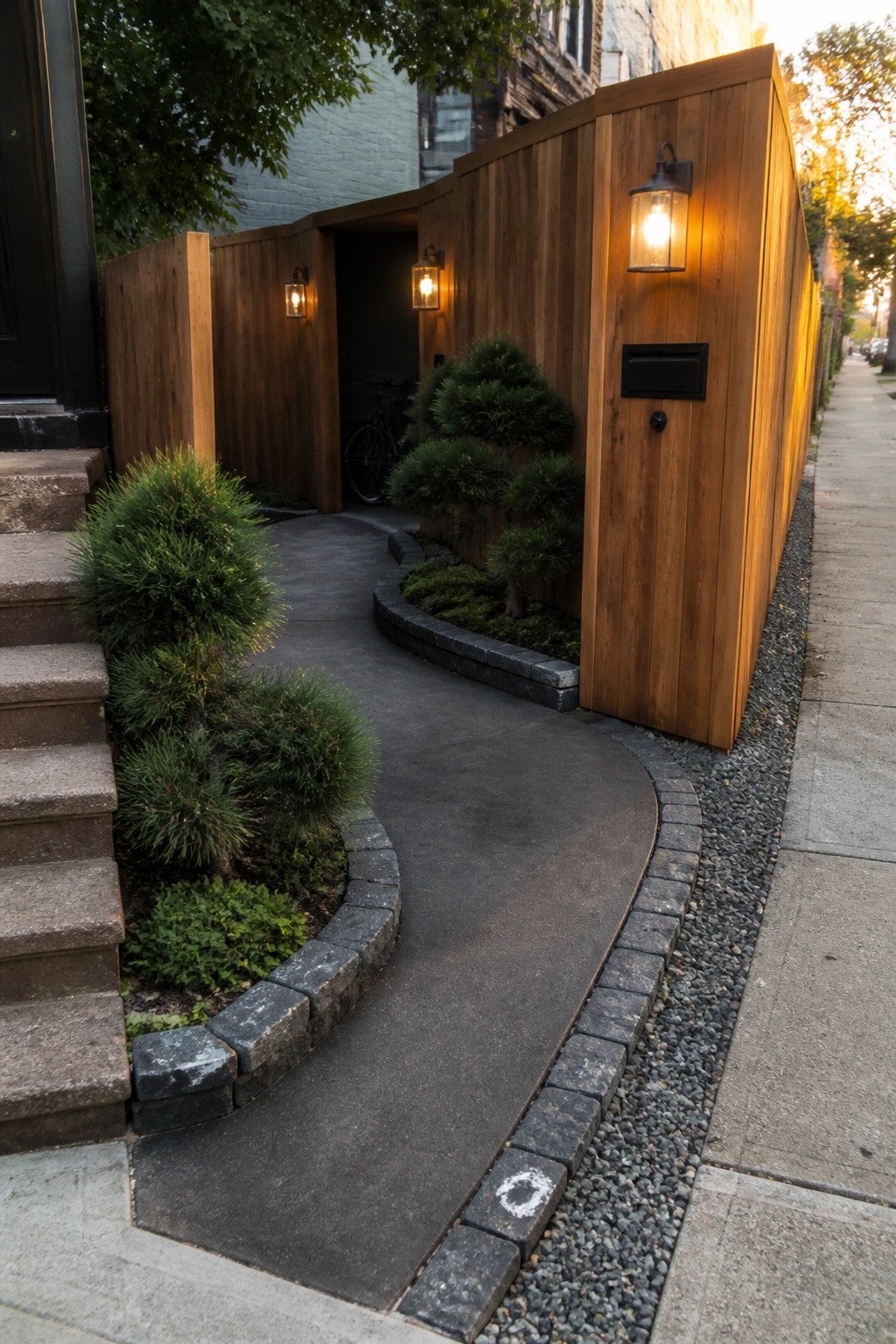
A gentle curve can make a narrow driveway feel wider and more welcoming without adding any extra width. It also gives you room to tuck in planting beds along the edges, which breaks up the hard surface and keeps the space from feeling like a straight tunnel.
This works best on urban lots where the driveway runs along the side of the house. Keep the curve gradual so cars can still turn easily, and use a simple border like stone or brick to hold the shape and contain the soil.
Wooden Planks Set In Gravel
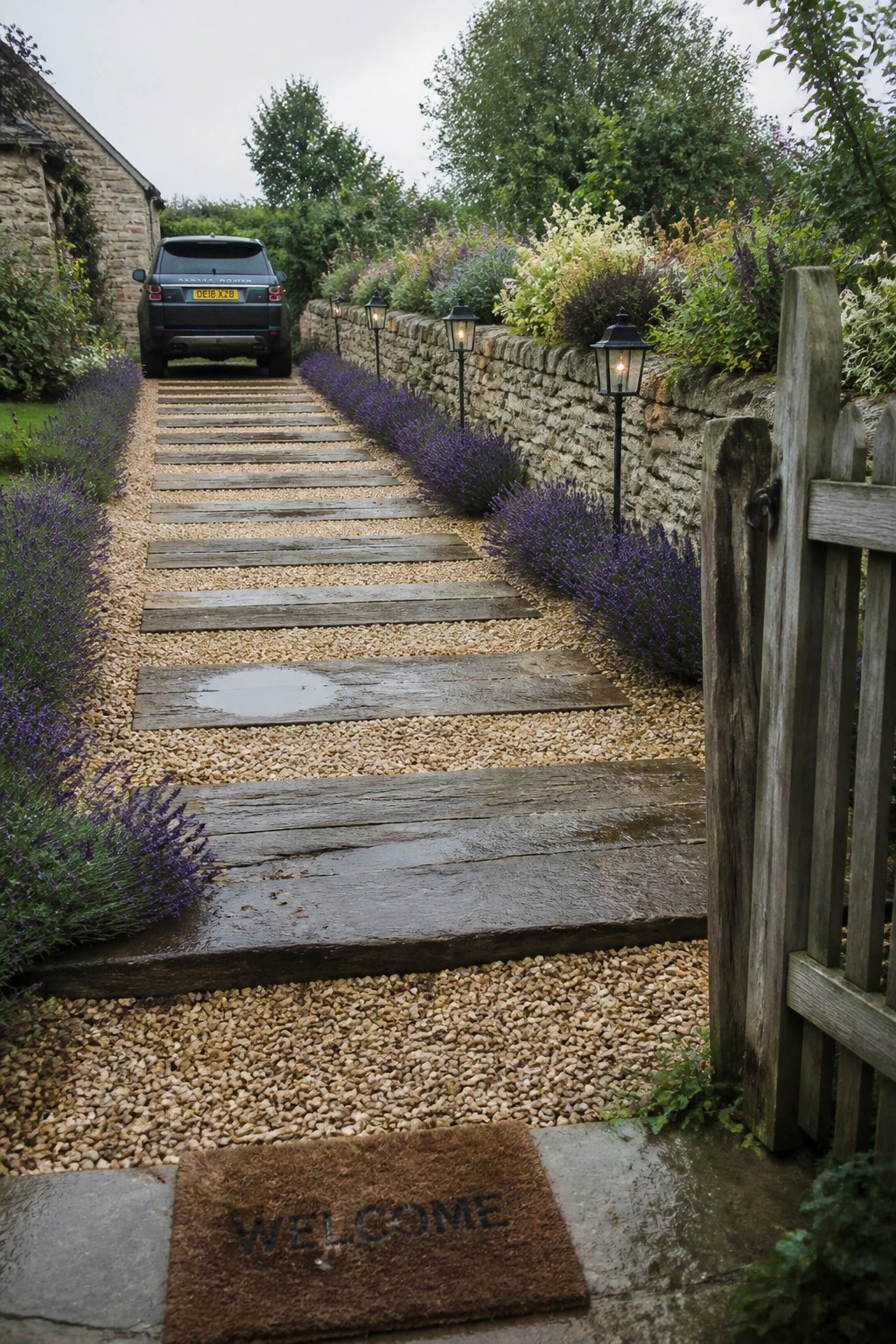
Wooden planks laid into gravel give a narrow driveway a clear path without needing a wide paved surface. The wood provides solid footing while the gravel handles drainage and keeps the overall width tight.
This works best on older homes or sloped entries where full concrete would feel too heavy. Choose treated timber, space the planks evenly, and keep low plants like lavender along the edges so the drive still feels part of the garden rather than just a road.
Hexagonal Pavers Fit Narrow Side Paths
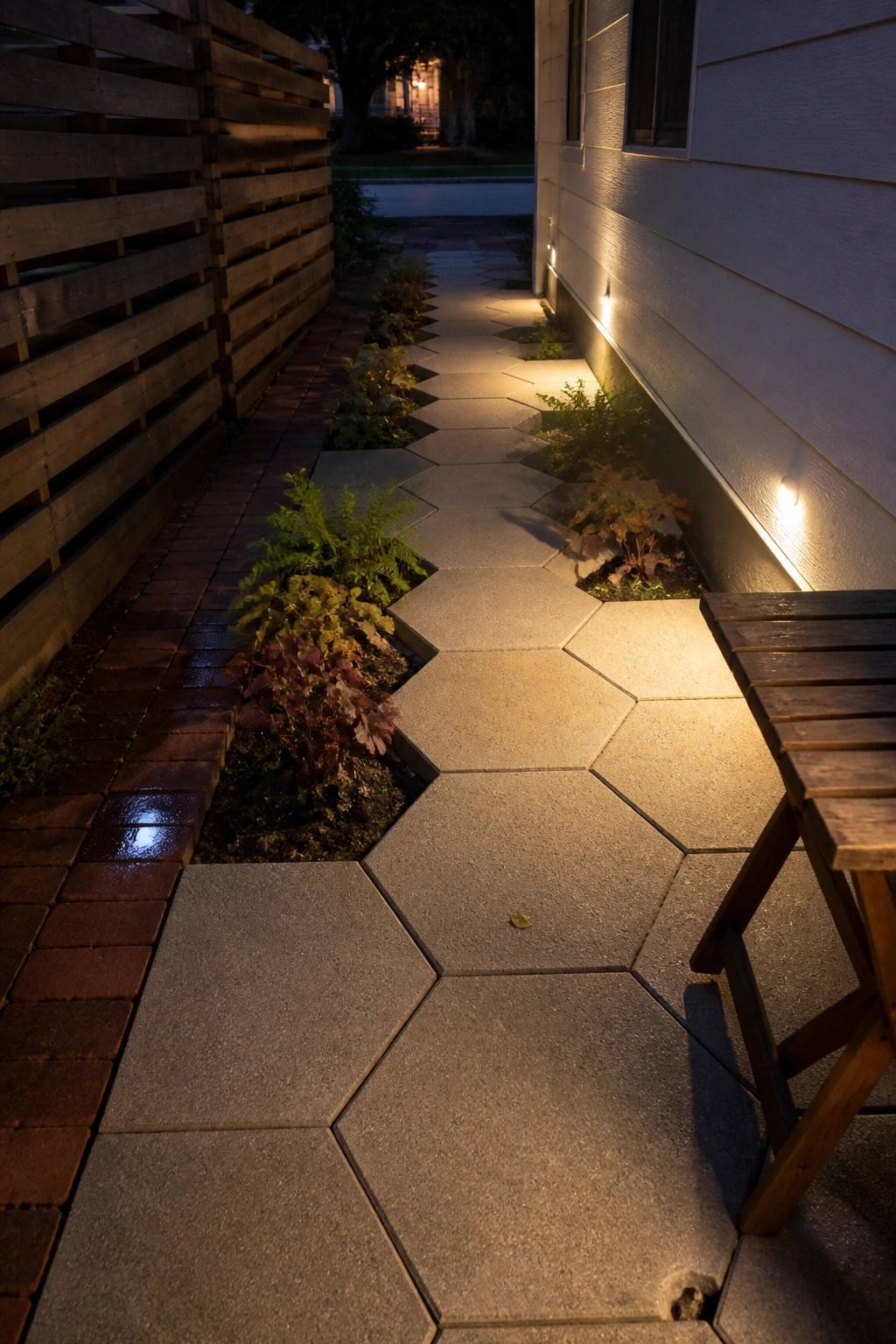
Hexagonal pavers give a clean layout that still leaves room for plants in a tight space. The shape lets the path shift slightly as it moves forward, so it does not feel boxed in between a fence and the house wall. Low lights along the edge keep the walkway safe at night without adding bulk.
This approach works best on homes where the side access is only a few feet wide. Tuck small plants into the open spots between pavers and along the edges. Skip large fixtures or heavy borders that would shrink the passage even more.
Line One Side of the Driveway With a Water Channel
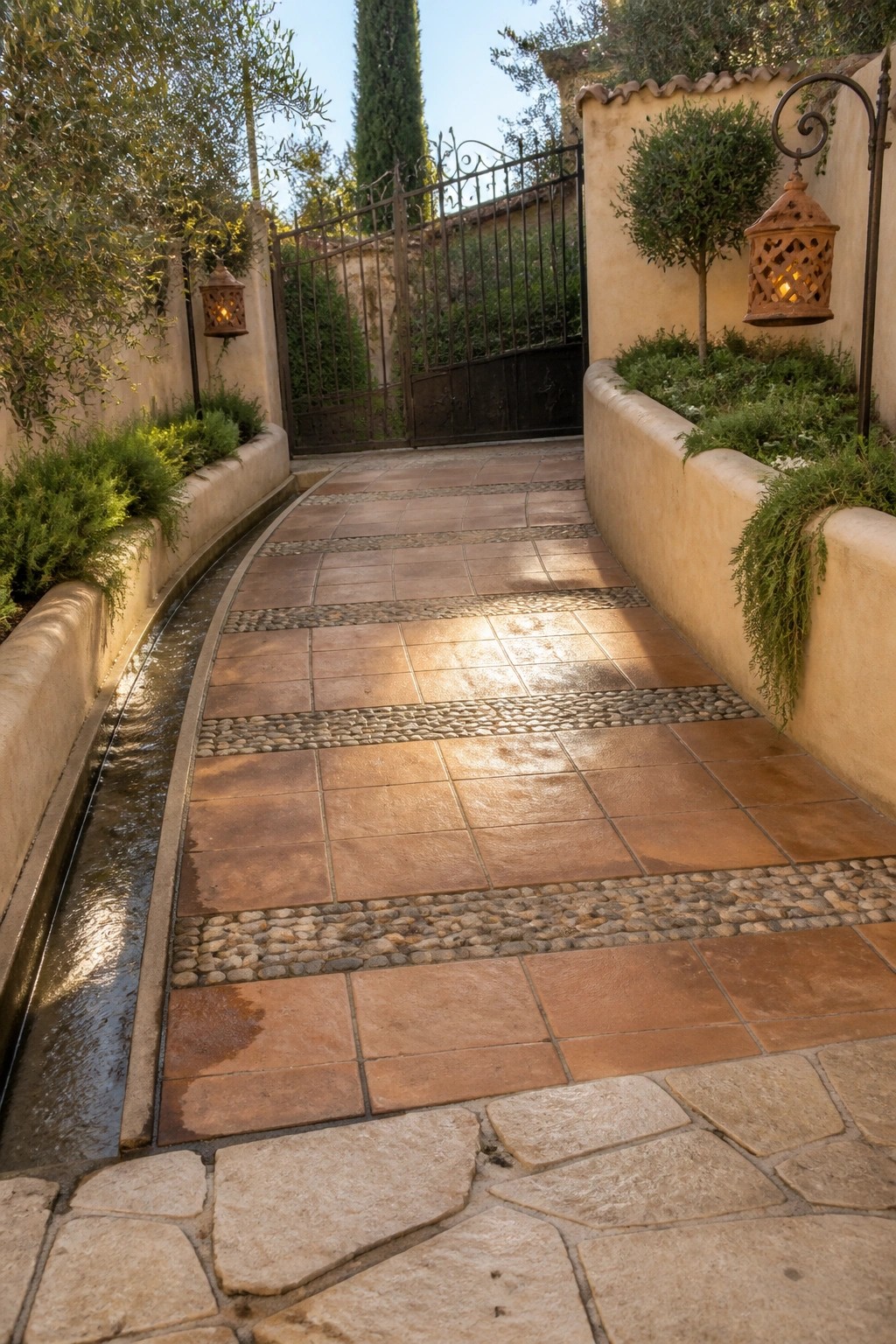
A narrow water channel works well in small driveways because it adds movement and a touch of coolness without taking up extra width. The steady flow draws the eye forward and softens the hard surface of the paving, which helps a tight space feel less cramped.
This idea suits homes with a courtyard feel or warm climate where you can run a slim trough along one edge. Use simple terracotta tiles for the main path and keep the channel shallow so it stays easy to maintain. Just watch the slope so water does not pool where it should not.
Grass Pavers Keep Narrow Driveways From Feeling Cramped

A grid of concrete pavers with grass growing in the gaps gives a driveway or entry path a lighter look. The open pattern lets some green show through instead of covering the whole surface with solid material, which helps the space feel less closed in when the area is tight.
This works best on homes with limited frontage or side access where a full-width driveway would crowd the yard. Keep the paver spacing even and use a stable base so the grass stays level and easy to mow.
Gravel Strips Between Pavers
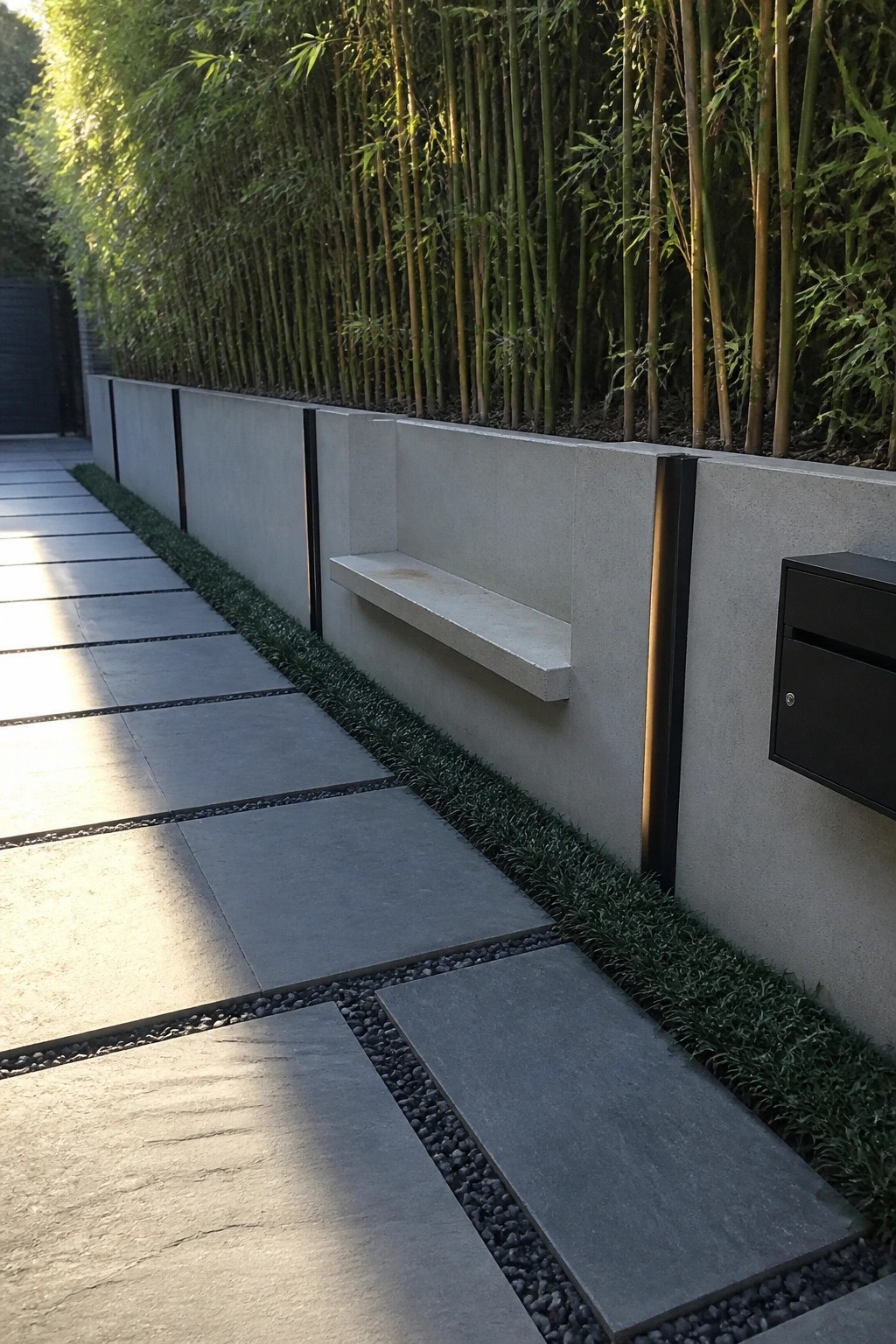
A gravel strip between pavers works well in a narrow driveway because it breaks up the surface and keeps the whole thing from feeling too solid or cramped. The small stones also help with drainage and give the path a slightly softer look next to a plain wall.
This layout works best along the side of a house where space is tight. Use large rectangular pavers, leave a consistent gap for gravel, and let tall planting grow right behind the wall to add privacy without eating into the walkway.
Recessed Lights For Narrow Paths
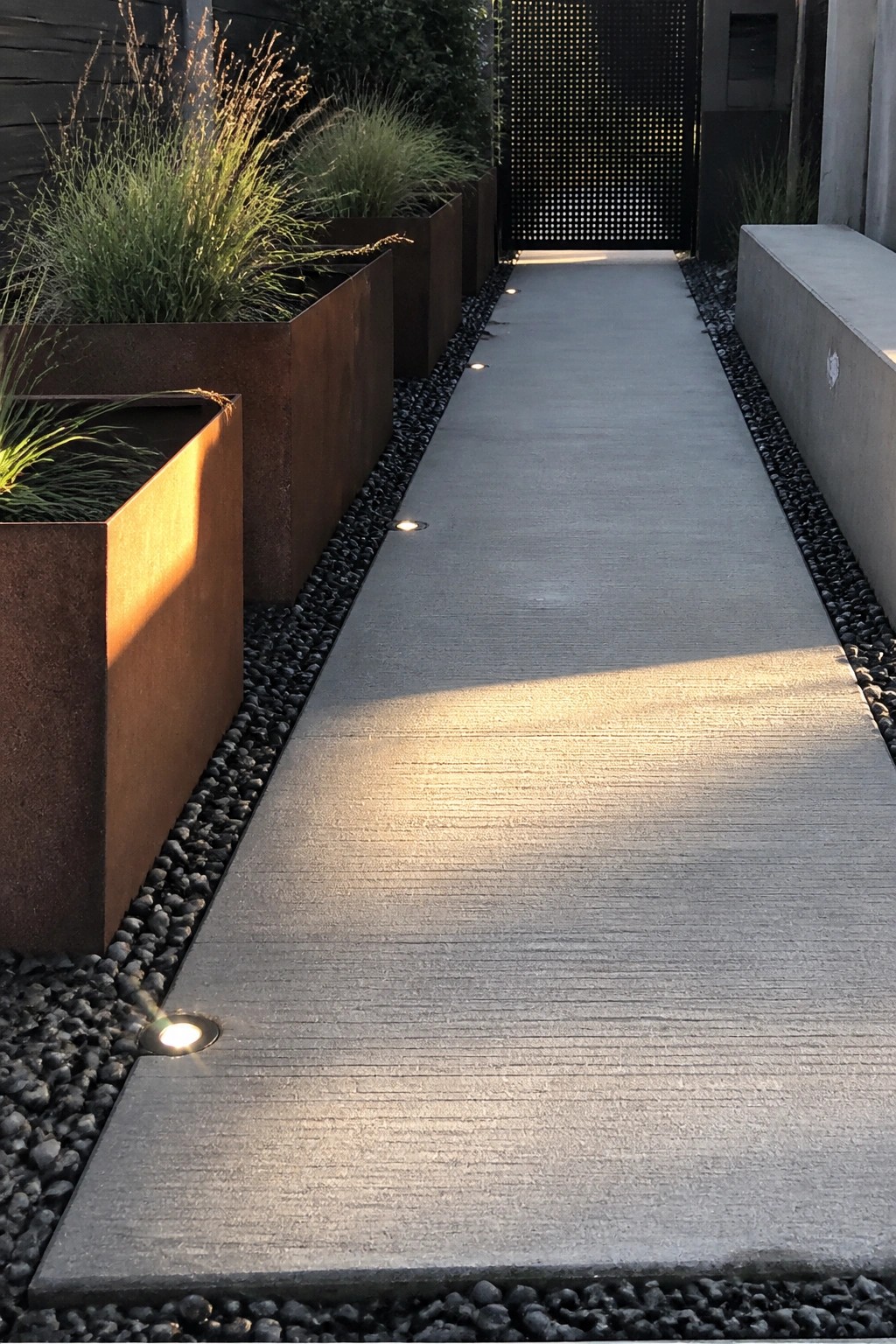
Recessed lighting works well in tight driveway spaces because it stays out of the way while still showing the edges clearly at night. The low profile keeps the whole area looking open instead of cluttered with poles or fixtures.
This approach suits homes with side access paths or slim front driveways where overhead lighting would feel too much. Place the lights every few feet along the center or edges, and keep the surrounding gravel or planting simple so the path stays easy to maintain.
Line Narrow Paths With Vertical Gardens
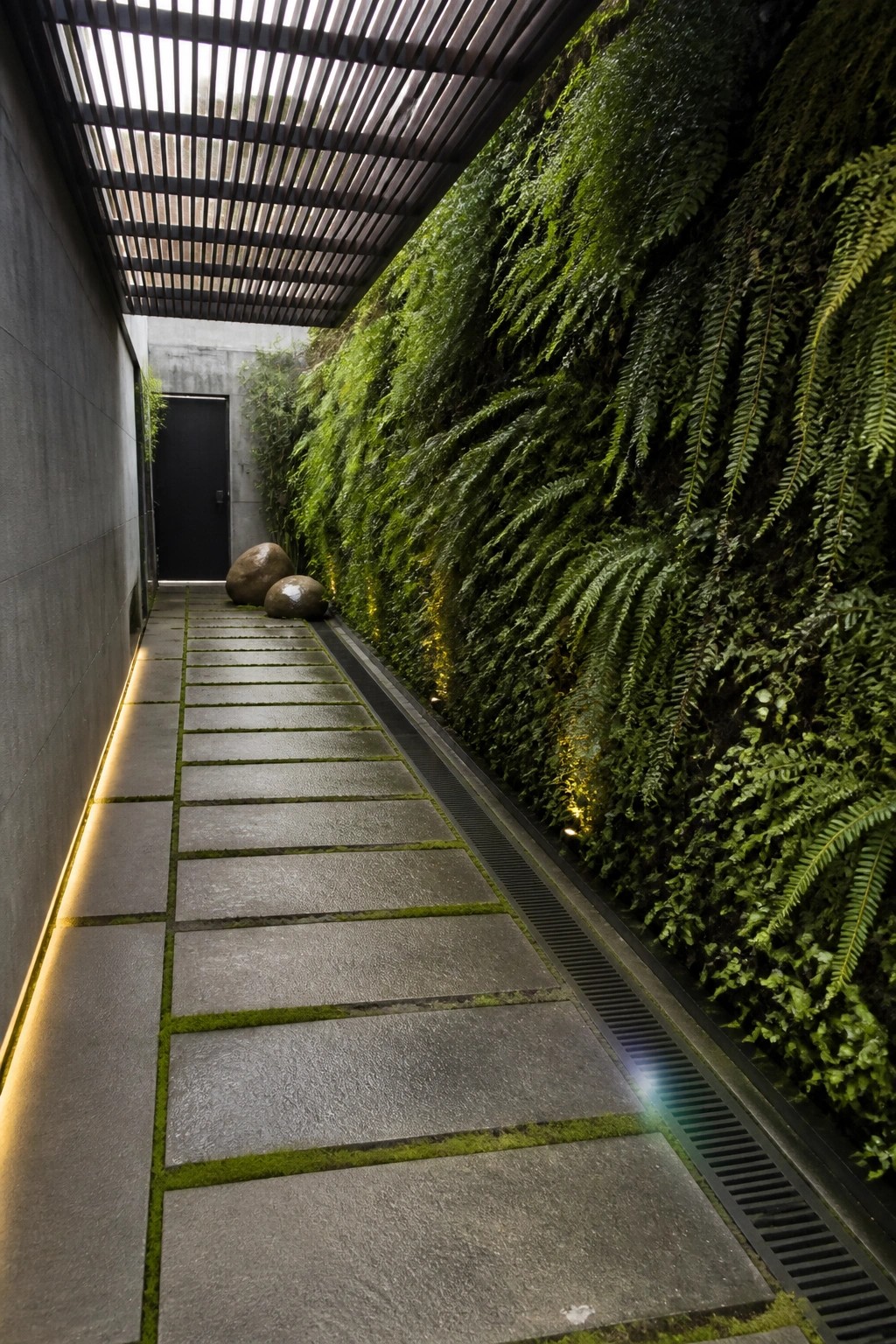
A living wall along one side of a tight driveway or walkway keeps the space from feeling closed in. The ferns and other greenery add texture and life without taking up floor space, while the simple paver path stays clear and easy to walk on.
This approach works best on homes where the access area is long and narrow. Keep the plants low maintenance and choose a drainage strip along the edge so water does not pool on the pavers.
Round Pavers In Gravel
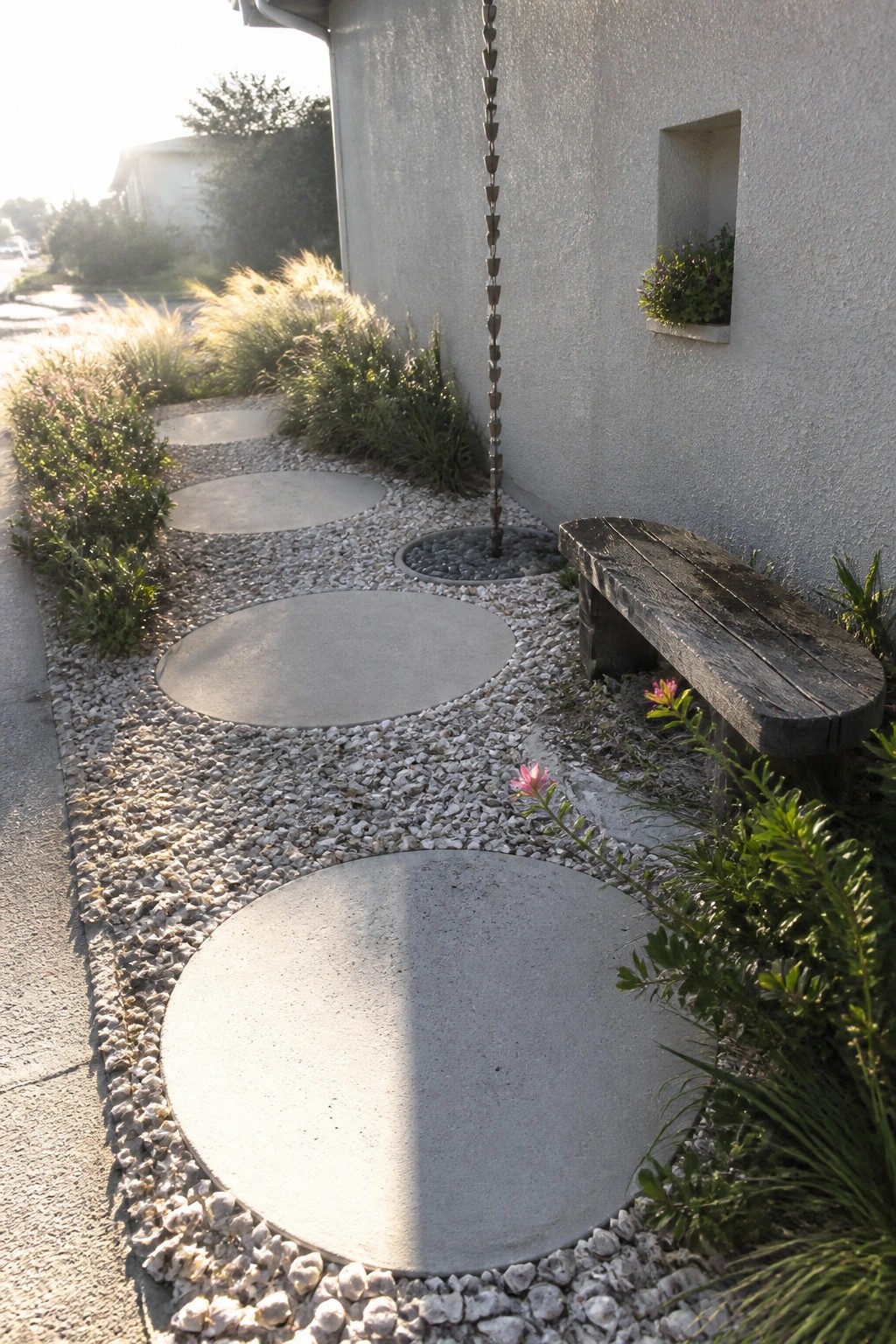
Large round concrete pavers set into gravel give a narrow side path a clean look without eating up much space. The circles break up the surface and let the gravel do most of the work, so the walkway feels open even when the area is tight.
This setup works best along the side of a house or in a small driveway strip where a full width path would feel cramped. Keep the circles spaced evenly and let low plants soften the edges. The gravel drains well and stays simple to maintain.
Frequently Asked Questions
Q: How do I stop weeds from popping up in a gravel driveway?
A: Lay down a solid weed barrier before you spread the gravel. Rake the surface every few months to keep it even. This keeps things looking neat without much work.
Q: What if my narrow driveway needs better drainage?
A: Slope the surface slightly toward the edges when you install pavers or concrete. Add a simple French drain along one side if water pools. You will avoid puddles that way.
Q: Can I add some greenery without losing parking space?
A: Tuck low growing plants into strips between tire tracks. They soften the look and need little room. Just choose ones that handle some foot traffic.
Q: Do these ideas cost a lot to try?
A: Start with cheap gravel or mulch for quick changes. Many options use basic materials you can haul yourself.
