


A circular driveway is one of the first things people notice from the street, but its lighting needs to do more than make an entrance look polished.
I find the best schemes make the loop easy to follow at night while keeping nearby planting, paving, and the front door in balance.
Too much light can flatten the scene, while poorly placed fixtures may leave dark gaps or create glare for drivers.
The ideas worth adapting tend to work with the driveway’s shape and the home’s exterior rather than compete with them.
Small changes in fixture height, spacing, or warmth can make a real difference.
Use Lanterns Around the Full Loop
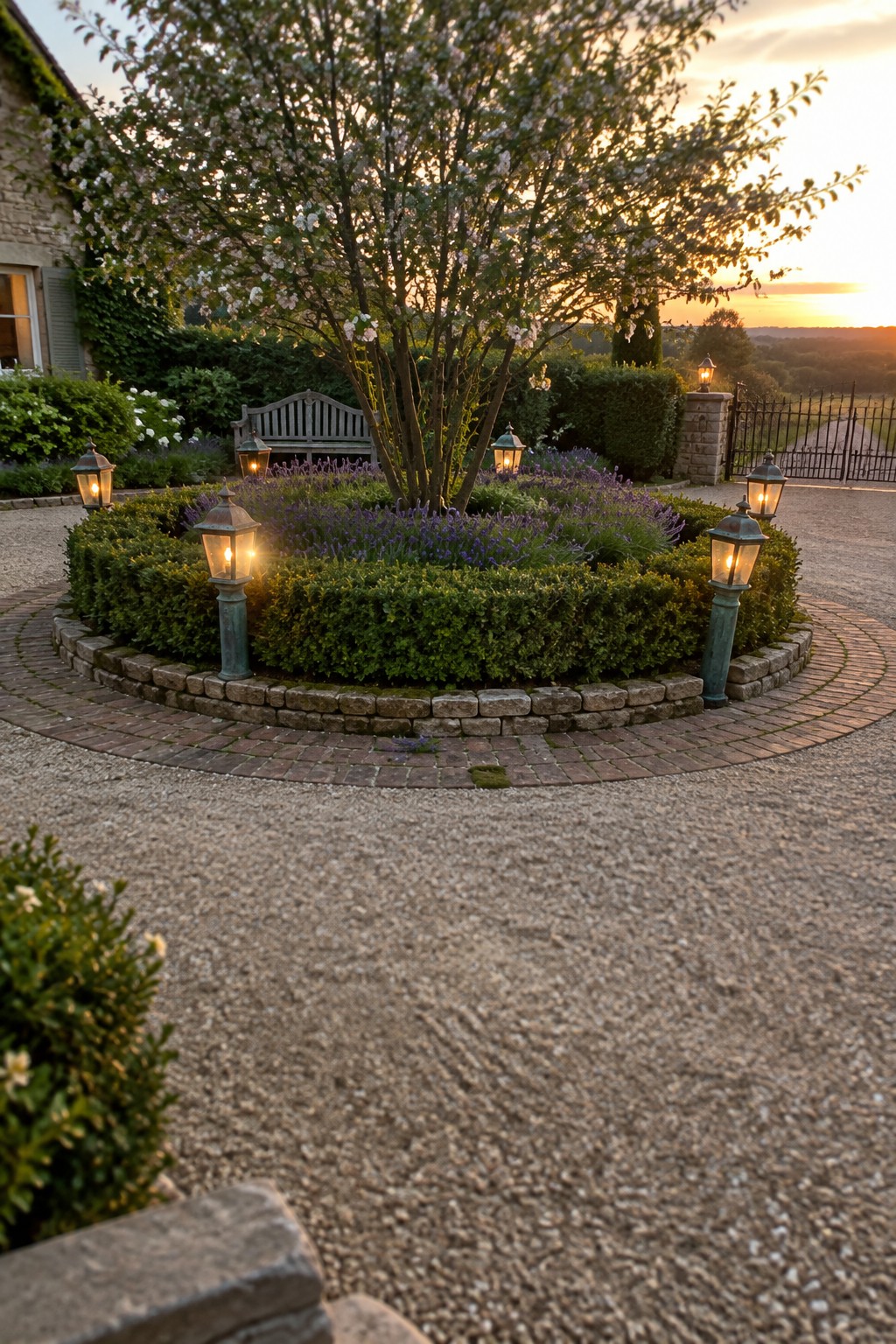
A circular planting bed can give a driveway a clear center, and lanterns placed around its edge help mark the curve after dark. The repeated lights make the loop easier to follow without relying on one bright fixture.
Space the lanterns evenly along the bed or its low stone border, keeping them far enough from the driving surface to avoid bumps or glare. This approach works especially well where a circular drive wraps around a garden feature.
Use Lighting Along the Full Driveway Loop
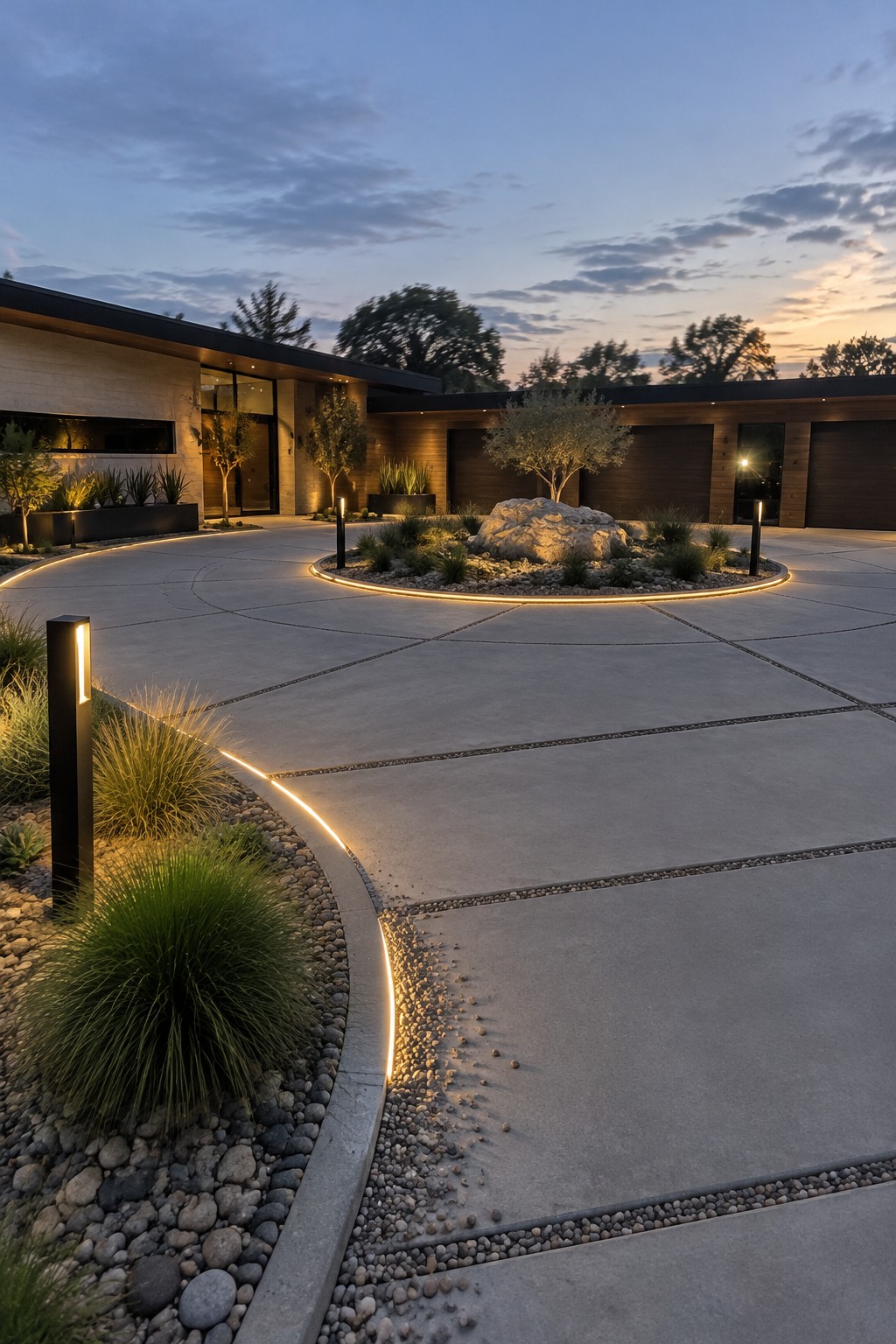
Lighting the entire edge of a circular driveway helps the route read clearly after dark. A continuous strip along the inside curve makes the loop feel connected, rather than leaving drivers to guess where the pavement ends.
For a similar look, install low-profile outdoor-rated lighting along the curb and keep the glow even around the circle. It works especially well where the driveway curves around a central planting bed. Check that the fixture is rated for weather and vehicle-adjacent use.
Use a Circular Fountain as a Garden Centerpiece

A round fountain can give a garden courtyard a clear center and make the paths around it feel intentional. The circular stone basin here suits a space where people approach from more than one direction.
This idea works well in a courtyard or broad entry garden with enough room to walk around the feature comfortably. Keep the surrounding paving simple, and make sure the fountain does not crowd the route through the space.
Use a Circular Bed to Define the Driveway Loop

A round planting bed gives a circular driveway a clear center and makes the route feel intentional. It works especially well when the planting stays low enough to preserve sightlines and let the lighting along the loop remain visible.
Use a durable border to keep gravel or other loose driveway material in place, then choose a few grasses or compact plants that won’t need frequent trimming. Small, low lights near the bed can mark the curve without crowding it.
Use Low Lights Around The Driveway Loop
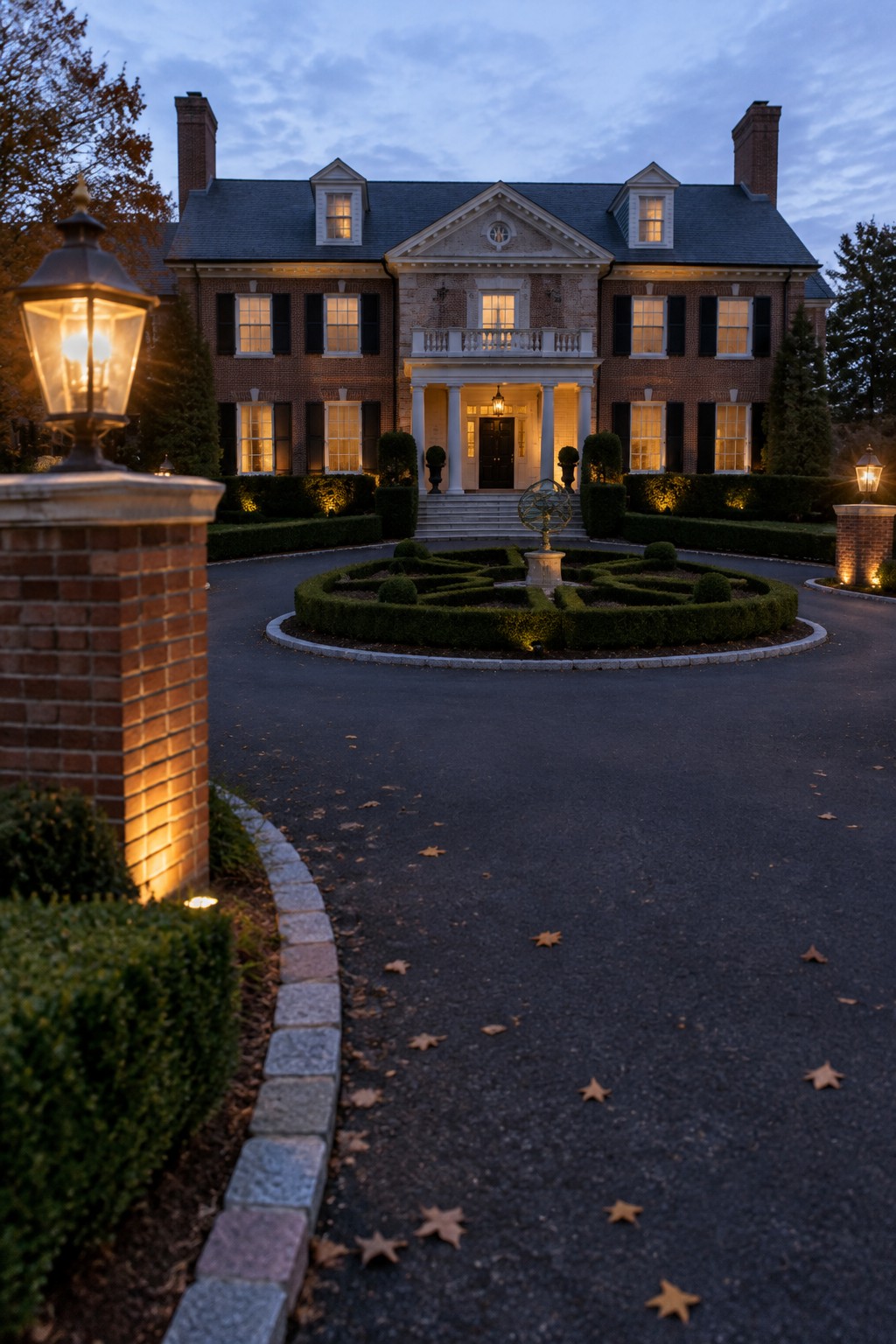
Low lights around a circular driveway help define the full route after dark, so drivers can follow the curve without relying on a bright spotlight. Here, small lights along the hedges and brick pillars mark the edge while keeping the house entrance easy to see.
Place fixtures at regular intervals around the loop, especially near the entrance and any tight turns. Shielded, low-glare lights are usually more comfortable than bright lamps aimed toward the road or windows.
Use a Stone Path to Guide the Way
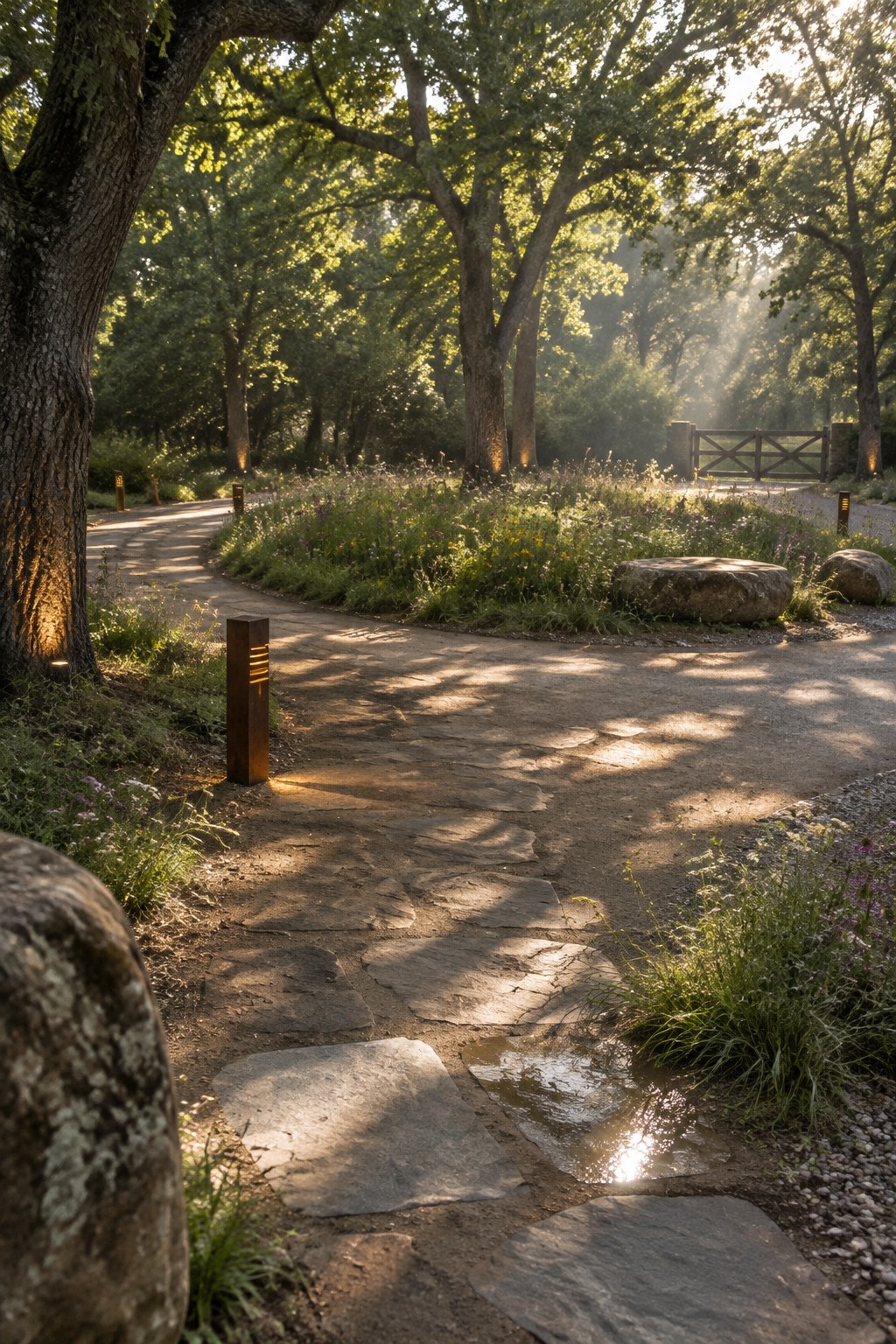
A gently curving stone path can make a garden feel easier to move through while giving the planting beds a clear shape. Low path lights help mark the route without needing tall fixtures that block the view.
This approach works well near a driveway entrance or along a garden walkway. Keep the lights spaced evenly and aim them toward the path so the stones are easy to see after dark.
Use In-Ground Lights Around the Driveway Loop

Lights set into the paving can mark the full circle without adding tall fixtures that interrupt the view. Here, small ground lights trace the edge of the paved loop around a central fountain, making the driveway easier to follow after dark.
This works well on a circular drive where guests need a clear route toward the entrance. Space the fixtures evenly and choose a warm, low-glare output so they guide drivers without shining into windows.
Add Recessed Lights Along the Driveway Edge
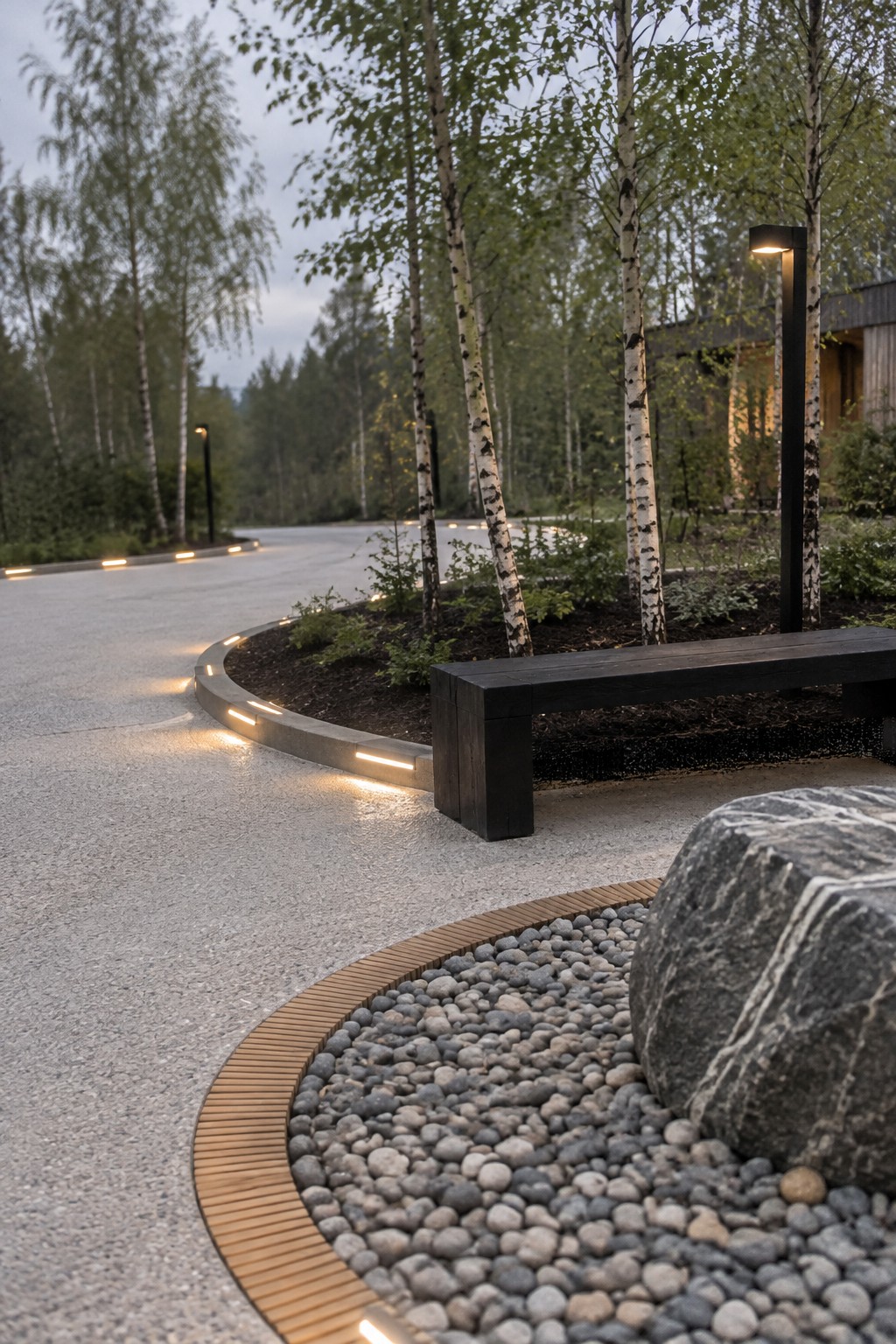
Small recessed lights set into the curved curb can make a circular driveway easier to follow after dark. They mark the loop without adding tall fixtures along the whole route, so the lighting stays close to the ground.
This works well where a driveway curves around a planted bed or island. Space the lights evenly and choose fixtures made for outdoor use, with a warm, modest glow that helps drivers see the edge without glare.
Use a Curved Brick Path to Shape the Driveway

A curved brick path can give a circular driveway a clear, welcoming route to the front door. The bend helps the loop feel like part of the garden rather than just a place to turn or park.
Choose pavers that suit the house, and make the path wide enough for comfortable walking. Low lights along the edge can help mark the curve after dark without crowding the paving.
Use a Sculpture to Mark the Center of the Loop

A circular driveway can feel more finished when its center has a clear focal point. A sculptural feature gives the loop a purpose beyond simply guiding cars around, and low lights around the central bed help define its shape after dark.
Choose a piece that suits the style of the house, and keep it low enough that drivers can see across the drive. A metal sculpture on a simple stone base works well when you want a strong focal point without adding a fountain or a lot of planting.
Use String Lights to Mark a Circular Garden Path

String lights can help define a curved outdoor route without adding fixtures along the ground. Hung above a circular path, they make the loop easier to follow after dark while keeping the planting beds clear.
This approach suits a garden courtyard or driveway loop with places to pause along the way. Hang the lights high enough to leave the route open, and use weather-rated bulbs and wiring. Stone lantern posts can add light at the path’s edges if the overhead glow is not enough.
Use Post Lights to Mark the Driveway Loop
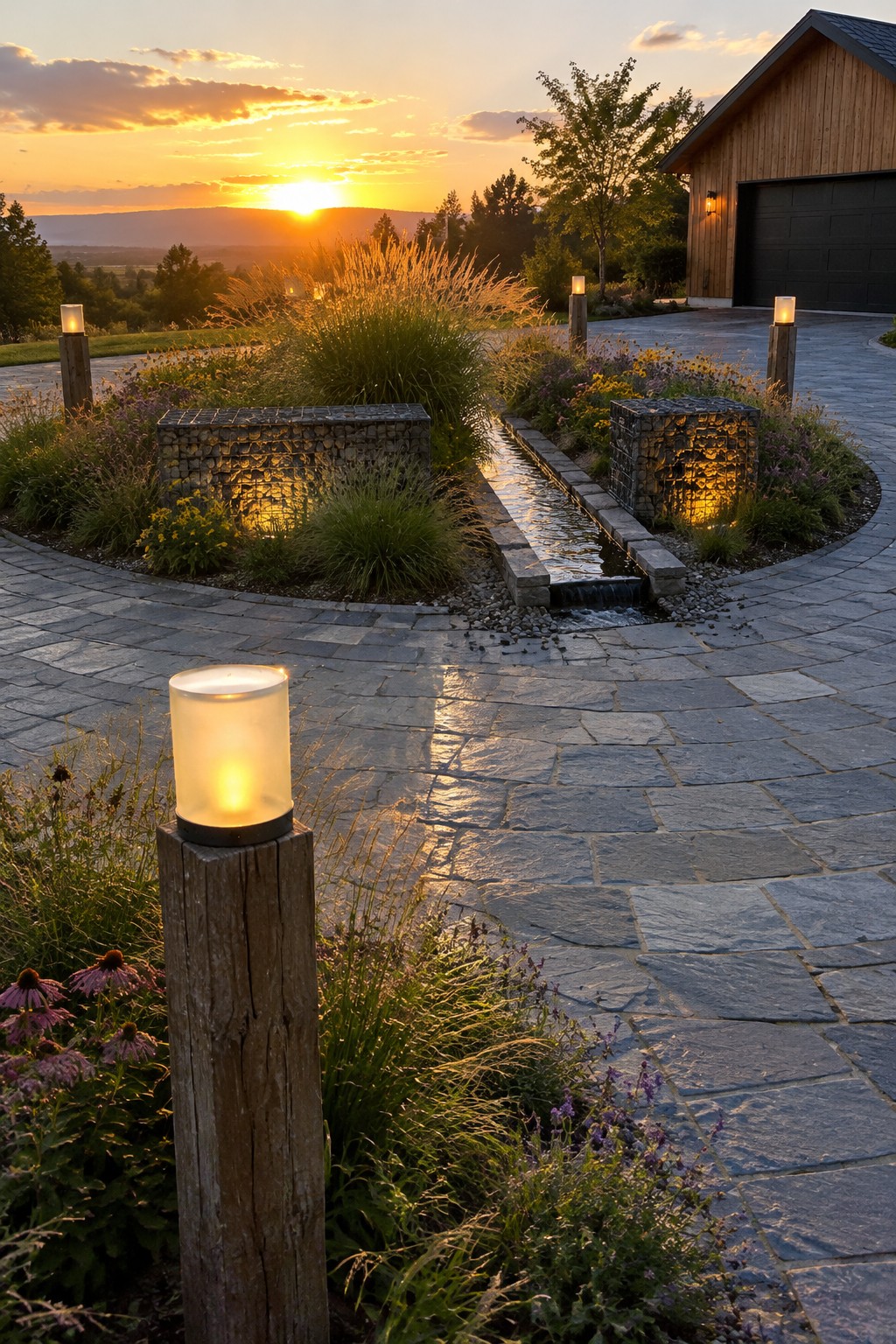
Short post lights can help define a circular driveway without making the edges feel crowded. Their steady spacing makes the route easier to follow after dark, while keeping the planting bed visible.
Place the lights just outside the driving surface and keep them low enough that they do not shine into drivers’ eyes. A few matching posts can work well around a curved drive, especially where the paving meets garden beds.
Use a Garden Path to Connect the Circular Layout

A curved garden path can make a circular outdoor space feel easy to move through, rather than leaving the center as a patch of lawn or planting. Here, irregular stone pavers lead through a clipped circular bed toward a small bench, giving the garden a clear route and a place to pause.
This approach works well in a courtyard or broad garden where people need a path between the entrance and a seating spot. Keep the paving wide enough for comfortable walking, and choose a surface that stays steady underfoot when wet.
Use Color-Changing Lights Around the Driveway Loop

Small in-ground lights can make a circular driveway easier to follow after dark. Blue and purple lights trace the curve clearly, while the low placement keeps them from getting in the way of cars.
Use lights made for outdoor ground installation and space them evenly around the loop. A simple color setting may be easier to live with than changing colors, especially if the lights are close to the home’s entrance.
Use Low Lighting Along the Garden Path

A few low lights can make a winding garden path easier to follow after dark without competing with the planting. Here, small path lights sit beside a gravel walkway, while the stone edging helps show where the garden bed ends.
This approach works well on a curved driveway or a path leading to one, especially where nearby flowers could hide taller fixtures. Space the lights evenly and keep them close to the route so the way around the loop stays clear.
Use Recessed Lights Along the Curved Drive

Recessed lights set into the edge of a circular drive can mark the curve without adding posts or cluttering the path. They sit flush with the paving, so the route stays clear while the loop is easier to follow after dark.
This approach works well on a wide concrete drive with a defined edge. Space the fixtures evenly and choose models rated for outdoor use and vehicle loads, especially where cars may pass over them.
Use a Curved Driveway Edge to Guide Lighting

A low line of lighting along a curved raised bed can help define the full loop without adding tall fixtures. It also makes the driveway edge easier to see after dark, which is useful where paving curves close to a planting bed.
For a similar setup, place weather-rated low-voltage lights just beneath the bed’s cap or along its inner edge. Keep the light even around the curve, and avoid a bright point aimed toward drivers.
Use a Circular Driveway Bed as a Lighting Guide
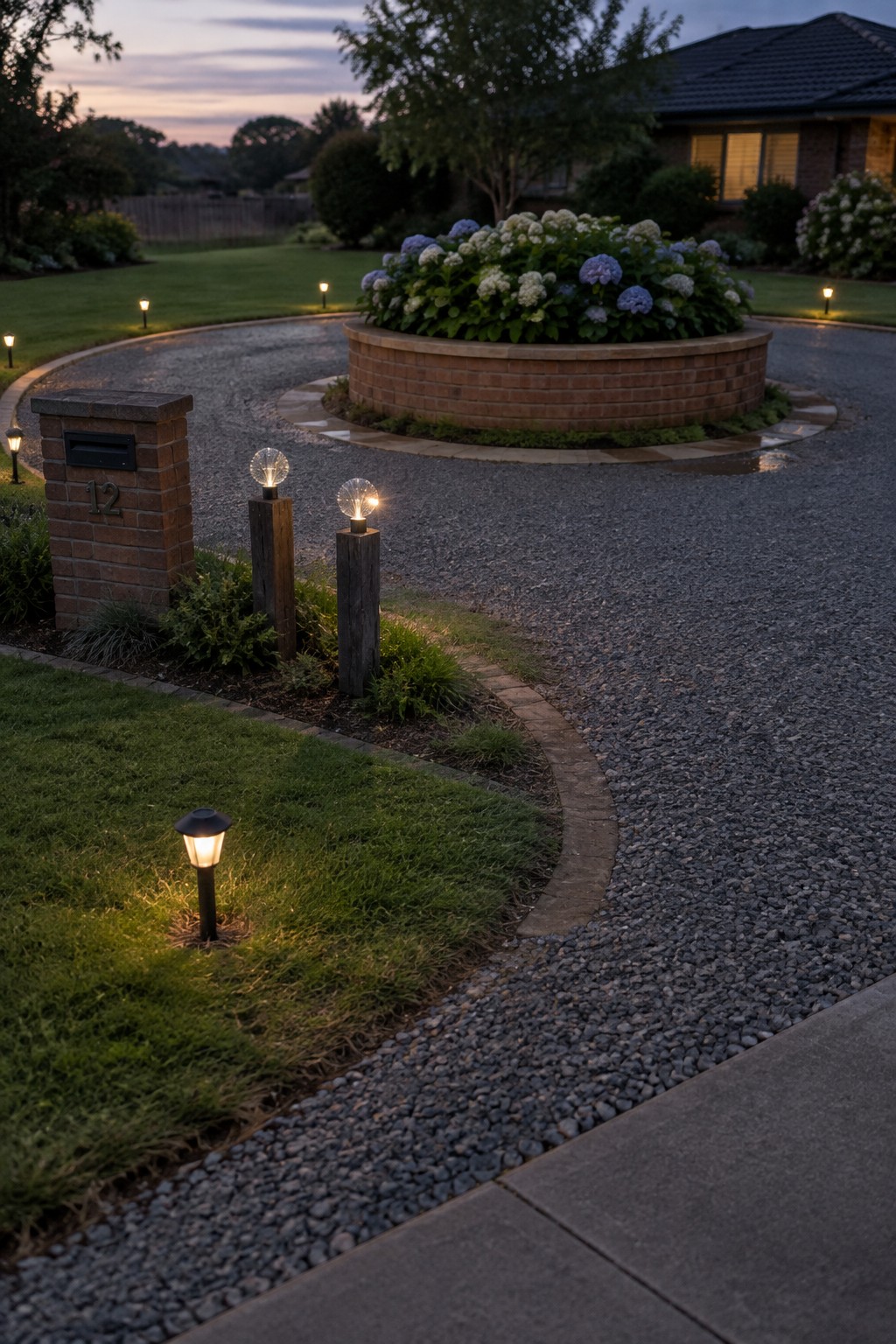
A planted island gives a circular driveway a clear center, and low lights around the loop make the curve easier to follow after dark. Here, the raised brick bed keeps the hydrangeas contained while the small path lights mark the driveway edge.
This approach suits a wide entrance where cars need room to turn without cutting across the lawn. Keep lights low and spaced evenly, and aim them toward the ground so they guide drivers without shining into the house.
Use a Mosaic Ring to Shape the Circular Path

A decorative mosaic ring can give a circular paved area a clear center and make the curve feel intentional. It’s a useful way to break up a broad brick surface without adding more objects to the route.
For a driveway or garden entrance, use a durable outdoor tile and keep the pattern contained within the loop. Check that the surrounding paving stays even and easy to drive or walk across.
Add Bollard Lights Along a Curved Path

A gently curving path can guide visitors around a circular driveway, while low bollard lights make its route easier to follow after dark. Perforated metal fixtures are useful here because they cast patterned light onto the paving without taking over the garden.
Space the lights along the outer edge of the path, keeping them low enough that they do not block views across the planting. This approach suits a driveway with a defined walking route; aim the light onto the path rather than toward drivers’ eyes.
Use a Full Ring of Lights Around the Circle

A full ring of in-ground lights makes the circular layout easy to read after dark. The different colors give the loop a festive look, while the evenly spaced fixtures clearly mark its edge.
This idea works well on a broad paved circle where the lights can follow a smooth curve. Choose weather-rated fixtures and leave enough room between them so the ring stays clear without making the surface feel crowded.
Frequently Asked Questions
Q: How far apart should lights be around a circular driveway?
A: Space them so the loop reads clearly without turning into a runway. A few well-placed lights at the entrance, along the curve, and near the center island often look better than lining the whole edge.
Q: Should I light the center island or the driveway edge?
A: Both can work, but the island is a natural focal point, especially if it has a tree or planting bed. Low lights along the edge help drivers follow the curve, so you can use a gentle mix of the two.
Q: What kind of lighting helps guests see the driveway without glare?
A: Choose shielded fixtures that send light down onto the path rather than into drivers’ eyes. Warm, steady light also feels more welcoming than bright, cool bulbs.
Q: Can solar lights work around a circular driveway?
A: Yes, if the spots get enough direct sun during the day. For dependable lighting through cloudy weather or winter, wired fixtures are usually the safer bet.
